Research Articles
HILIC-UPLC for Glycan Quantitation: A Comprehensive Guide to Precision, Accuracy, and Method Validation in Biotherapeutics
This article provides a comprehensive analysis of Hydrophilic Interaction Liquid Chromatography coupled with Ultra-Performance Liquid Chromatography (HILIC-UPLC) for the precise and accurate quantitation of glycans in biopharmaceuticals.
Advancing Glycomics: How HILIC-UPLC Outperforms Other Techniques for Minor Glycan Detection and Analysis
This article provides a comprehensive technical review of Hydrophilic Interaction Liquid Chromatography coupled with Ultra-Performance Liquid Chromatography (HILIC-UPLC) for the sensitive detection and characterization of minor glycan species—critical yet challenging...
HILIC-UPLC for mAb Batch Consistency: A Complete Guide to Method Development and Quality Control
This article provides a comprehensive guide for researchers and drug development professionals on implementing Hydrophilic Interaction Liquid Chromatography coupled with Ultra-Performance Liquid Chromatography (HILIC-UPLC) for monitoring batch-to-batch consistency of monoclonal...
Mastering mAb Glycosylation Analysis: A Complete HILIC-UPLC Method Guide for Biopharma Researchers
This comprehensive guide details the development, optimization, and application of Hydrophilic Interaction Liquid Chromatography coupled with Ultra-Performance Liquid Chromatography (HILIC-UPLC) for the critical characterization of monoclonal antibody (mAb) glycosylation.
HILIC-UPLC Glycan Analysis: Principles, Applications, and Best Practices for Biopharmaceuticals
This article provides a comprehensive guide to Hydrophilic Interaction Liquid Chromatography coupled with Ultra-Performance Liquid Chromatography (HILIC-UPLC) for glycan analysis.
Mastering Isomeric N-Glycan Analysis: A Comprehensive Guide to HILIC-UPLC Separation and Characterization
This article provides a complete guide to Hydrophilic Interaction Liquid Chromatography coupled with Ultra-Performance Liquid Chromatography (HILIC-UPLC) for the detailed separation and characterization of isomeric N-glycans.
HILIC-UPLC Analysis of Salivary IgG N-Glycans: A Non-Invasive Window to Biomarker Discovery and Disease Profiling
This article provides a comprehensive guide to Hydrophilic Interaction Liquid Chromatography coupled with Ultra-Performance Liquid Chromatography (HILIC-UPLC) for profiling N-glycans from salivary immunoglobulin G (IgG).
Validating IgG N-Glycan Analysis: A Complete Guide to HILIC-UPLC Method Development and Implementation
This comprehensive guide details the complete validation pathway for Hydrophilic Interaction Liquid Chromatography coupled with Ultra-Performance Liquid Chromatography (HILIC-UPLC) in the analysis of Immunoglobulin G (IgG) N-glycans.
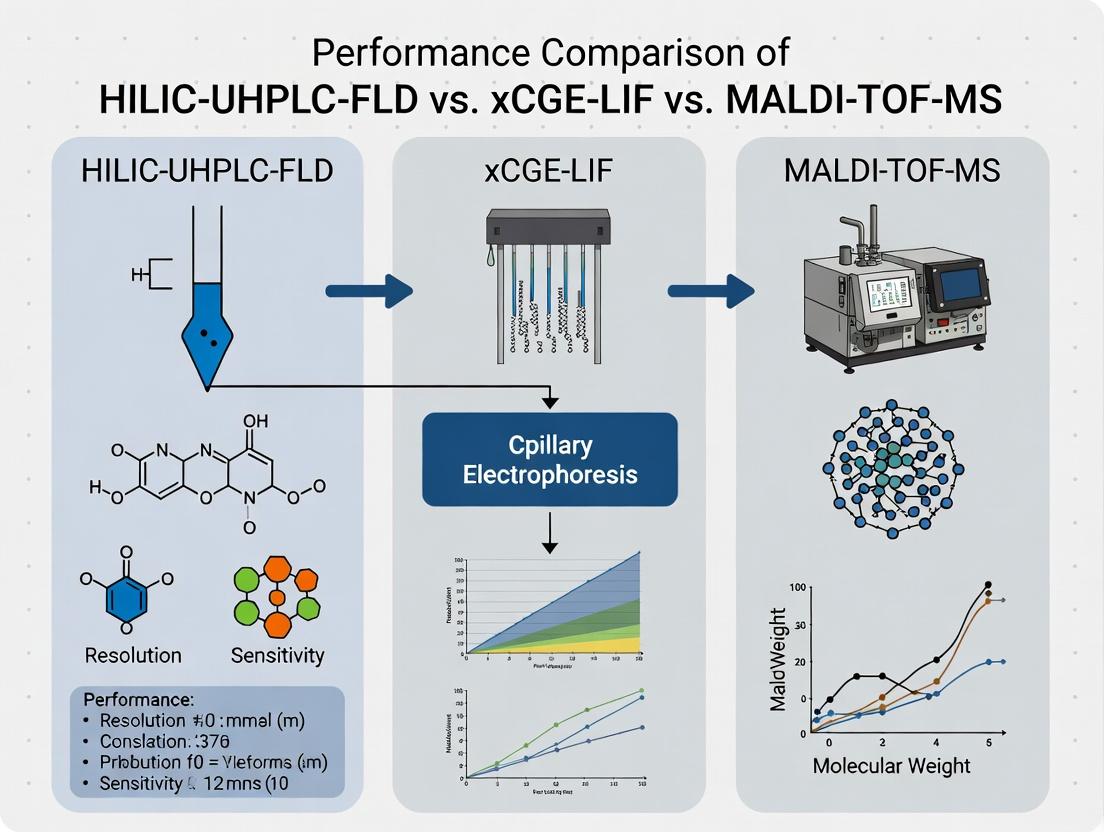
Glycan Analysis Face-Off: HILIC-UHPLC-FLD vs xCGE-LIF vs MALDI-TOF-MS - Choosing the Right Tool for Biopharma
This comprehensive review compares the performance, applications, and practical considerations of three leading glycan analysis platforms: Hydrophilic Interaction Liquid Chromatography with Ultra-High Performance and Fluorescence Detection (HILIC-UHPLC-FLD), multiplexed Capillary Gel...
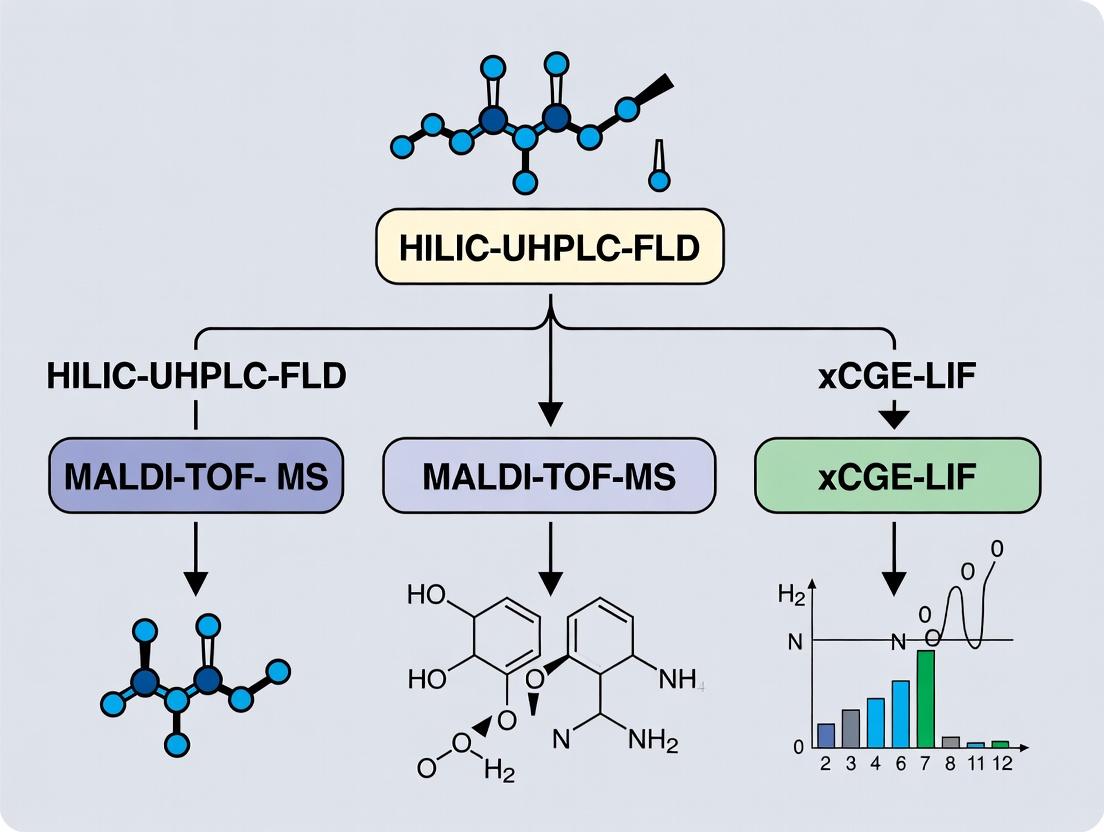
Choosing the Right Tool: HILIC-UHPLC-FLD, MALDI-TOF-MS, and xCGE-LIF Compared for N-Glycan Analysis in Biopharmaceuticals
This article provides a comprehensive comparison of three high-resolution analytical methods for N-glycan profiling in biopharmaceutical development and quality control: Hydrophilic Interaction Liquid Chromatography with Fluorescence Detection (HILIC-UHPLC-FLD), Matrix-Assisted Laser...