Validating IgG N-Glycan Analysis: A Complete Guide to HILIC-UPLC Method Development and Implementation
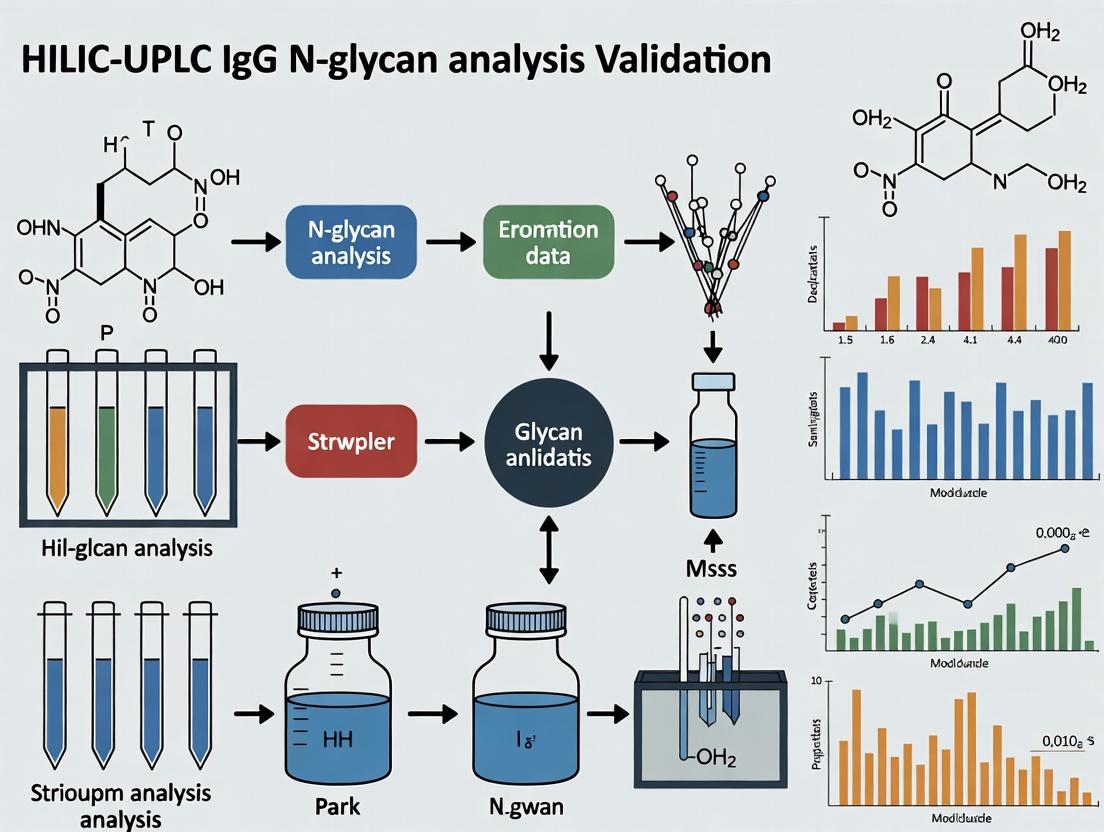
This comprehensive guide details the complete validation pathway for Hydrophilic Interaction Liquid Chromatography coupled with Ultra-Performance Liquid Chromatography (HILIC-UPLC) in the analysis of Immunoglobulin G (IgG) N-glycans.
Validating IgG N-Glycan Analysis: A Complete Guide to HILIC-UPLC Method Development and Implementation
Abstract
This comprehensive guide details the complete validation pathway for Hydrophilic Interaction Liquid Chromatography coupled with Ultra-Performance Liquid Chromatography (HILIC-UPLC) in the analysis of Immunoglobulin G (IgG) N-glycans. Aimed at researchers, scientists, and biopharmaceutical professionals, the article explores the foundational principles of glycosylation analysis, provides step-by-step methodological workflows, offers practical troubleshooting and optimization strategies, and establishes a robust framework for method validation and comparative assessment. The content synthesizes current best practices to ensure accurate, reproducible, and reliable glycan profiling for applications in biomarker discovery, biotherapeutic development, and clinical research.
IgG N-Glycans: Decoding the Sugar Code with HILIC-UPLC Fundamentals
Why IgG Glycosylation is a Critical Quality Attribute (CQA) in Biologics and Biomarker Research
Immunoglobulin G (IgG) glycosylation, specifically the N-linked glycan at the conserved Asn297 residue in the Fc region, is a well-established Critical Quality Attribute (CQA) for therapeutic monoclonal antibodies (mAbs) and a dynamic biomarker in human disease. Within the context of HILIC-UPLC validation research, precise characterization of this glycosylation is paramount. For biologics, Fc glycans directly modulate effector functions such as Antibody-Dependent Cellular Cytotoxicity (ADCC) and Complement-Dependent Cytoxicity (CDC), serum half-life, and immunogenicity. In biomarker research, population-wide studies reveal that IgG glycome composition shifts profoundly with age, inflammation, and various diseases, offering diagnostic and prognostic potential. Validated, robust analytical methods like HILIC-UPLC are therefore essential for both biopharmaceutical process control and clinical research.
Key Quantitative Data on IgG Glycan Impact
Table 1: Impact of Major IgG Fc Glycans on Therapeutic Antibody Function
| Glycan Structure | Relative Abundance (Typical IgG1) | Key Functional Impact | Consequence for CQA |
|---|---|---|---|
| G0F / G0F | ~30-40% | Baseline ADCC, CDC | Process consistency target |
| G1F | ~5-15% | Intermediate ADCC | Monitored variant |
| G2F | ~10-25% | Reduced ADCC | Monitored variant |
| G0 | ~5-15% | Significantly elevated ADCC | Critical for biosimilarity |
| Man5 / High Mannose | <5% (Process-dependent) | Greatly elevated ADCC, Reduced half-life | Critical control parameter |
| Afucosylated (G0, G1, G2) | <2% (Endogenous), Can be engineered | Dramatically enhanced ADCC (10-50x) | Major CQA for effector function |
| Sialylated (G1S1, G2S1) | ~5-10% | Anti-inflammatory, impacts half-life | CQA for autoimmune therapeutics |
Table 2: Disease-Associated Shifts in Serum IgG Glycosylation (Biomarker Context)
| Disease State | Key Glycan Change (vs. Healthy) | Magnitude of Change (Approx.) | Potential Clinical Utility |
|---|---|---|---|
| Rheumatoid Arthritis | Decreased galactosylation (G0F increase) | G0/G2 ratio increase by 50-200% | Disease activity monitoring |
| Inflammatory Bowel Disease | Decreased sialylation | Sialylation decrease by 20-40% | Differential diagnosis |
| Centenarian (Exceptional Aging) | Increased galactosylation & sialylation | G2F increase by 15-30% | Biomarker of healthy aging |
| Pregnancy | Increased galactosylation & sialylation | Progressive increase over trimesters | Monitoring immunological adaptation |
| IgG4-Related Disease | Increased fucosylation, decreased bisection | Fucosylation >95% | Diagnostic marker |
Application Notes & Protocols
Application Note: Validation of a HILIC-UPLC Method for IgG N-Glycan Profiling per ICH Q2(R1)
Objective: To establish and validate a HILIC-UPLC method for the release, labeling, separation, and quantification of IgG N-glycans, ensuring suitability for both biopharmaceutical lot release and clinical biomarker studies.
Background: Hydrophilic Interaction Liquid Chromatography (HILIC) coupled with Ultra-Performance Liquid Chromatography (UPLC) using fluorescent labels (e.g., 2-AB) is the industry standard for high-resolution, quantitative glycan profiling. Validation is required under regulatory guidelines.
Summary of Validated Parameters:
- Specificity: Baseline separation of 16 major IgG N-glycan peaks confirmed using exoglycosidase digests.
- Linearity: Excellent linearity (R² > 0.999) for glycan standards across a relative abundance range of 0.1% to 95%.
- Precision:
- Repeatability (Intra-day): %RSD of retention time < 0.5%, %RSD of peak area < 5% for major glycans (>5% abundance).
- Intermediate Precision (Inter-day, Inter-operator): %RSD of major glycan abundance < 8%.
- Accuracy (By Spiking): Recovery of 95-105% for known glycan standards spiked into IgG samples.
- Robustness: Method tolerant to minor changes in mobile phase buffer concentration (±5 mM), column temperature (±2°C), and flow rate (±0.05 mL/min).
- Limit of Detection (LOD)/Quantification (LOQ): LOD: 0.05% relative abundance. LOQ: 0.1% relative abundance for a well-resolved peak.
Detailed Protocol: IgG N-Glycan Release, 2-AB Labeling, and HILIC-UPLC Analysis
Workflow Title: IgG N-Glycan Sample Preparation and Analysis
Materials:
- Purified IgG or serum/plasma sample.
- Protein A/G magnetic beads or spin columns.
- Denaturation buffer: 1.33% SDS, 50 mM DTT in 50 mM NH₄HCO₃.
- Nonidet P-40 (10% v/v).
- PNGase F (recombinant, glycerol-free).
- 2-AB labeling kit (includes 2-AB dye, sodium cyanoborohydride, DMSO).
- Glycan cleanup cartridges (e.g., HILIC μElution plates).
- Acetonitrile (ACN), HPLC grade.
- Ammonium formate, HPLC grade.
- HILIC-UPLC column (e.g., ACQUITY UPLC Glycan BEH Amide, 1.7 µm, 2.1 x 150 mm).
- UPLC system with FLD detector (Ex: 330 nm, Em: 420 nm).
Procedure:
A. IgG Isolation (from serum):
- Dilute 10 µL serum in 200 µL PBS. Add 50 µL pre-washed Protein A/G magnetic beads.
- Incubate with rotation for 1 hour at room temperature.
- Place on magnet, discard supernatant. Wash beads 3x with 200 µL PBS.
- Elute IgG with 50 µL 0.1 M glycine-HCl, pH 2.5, for 5 minutes. Immediately neutralize with 5 µL 1 M Tris-HCl, pH 9.0.
B. N-Glycan Release:
- To 50 µg of purified IgG (in up to 50 µL), add 10 µL denaturation buffer.
- Heat at 65°C for 10 minutes. Cool to room temperature.
- Add 10 µL 10% Nonidet P-40 and 2 µL (1000 units) PNGase F.
- Incubate at 50°C for 18 hours (overnight).
C. 2-AB Labeling:
- Prepare labeling mixture per kit instructions (typically 25 µL 2-AB dye + 25 µL sodium cyanoborohydride in DMSO).
- Add the entire labeling mixture to the glycan release sample.
- Incubate at 65°C for 2 hours.
D. Glycan Cleanup:
- Condition a HILIC μElution plate with 200 µL water, then 2 x 200 µL 96% ACN.
- Dilute the labeling reaction with 1 mL 96% ACN and load onto the plate.
- Wash 3x with 200 µL 96% ACN.
- Elute glycans with 2 x 50 µL HPLC-grade water into a low-binding microcentrifuge tube. Dry in a vacuum concentrator.
E. HILIC-UPLC Analysis:
- Reconstitute dried glycans in 100 µL 75% ACN.
- Mobile Phase: A) 50 mM ammonium formate, pH 4.5. B) Acetonitrile.
- Column Temperature: 60°C.
- Gradient: 75-62% B over 30 minutes at 0.56 mL/min.
- Injection: 10-20 µL partial loop.
- Detection: Fluorescence (Ex 330 nm, Em 420 nm).
- Data Analysis: Integrate peaks and express results as relative percent area. Identify peaks using a dextran ladder (GU calibration) and/or exoglycosidase sequencing.
Visualizations
The Scientist's Toolkit: Essential Research Reagent Solutions
Table 3: Key Reagents for IgG Glycosylation Analysis
| Reagent / Material | Function & Role in Analysis | Critical Specification / Note |
|---|---|---|
| Recombinant PNGase F | Enzyme that catalyzes the cleavage of N-linked glycans from the IgG Fc region. Essential for release. | Must be glycerol-free for efficient labeling. High specificity for N-glycans. |
| 2-Aminobenzamide (2-AB) Fluorescent Dye | Tags released glycans via reductive amination for highly sensitive fluorescence detection in UPLC. | Requires careful handling. Kit includes optimizing reagents (NaBH₃CN, DMSO). |
| HILIC μElution Plate (e.g., Waters GlycoWorks) | Solid-phase extraction platform for desalting and purifying labeled glycans from excess dye and reaction contaminants. | Critical for clean chromatograms and column longevity. Uses acetonitrile/water chemistry. |
| ACQUITY UPLC Glycan BEH Amide Column | The core HILIC stationary phase for high-resolution separation of glycans based on hydrophilicity and size. | 1.7 µm particle size, 2.1 x 150 mm standard. Requires precise temperature control (60°C). |
| Glycan Primary Standard (e.g., 2-AB labeled) | A characterized mixture of labeled glycans used for system suitability testing, peak identification (GU calibration), and method qualification. | Often a human IgG-derived or purchased standard. |
| Exoglycosidase Array (e.g., Sialidase, β1-4 Galactosidase, N-Acetylglucosaminidase) | Enzymes used for glycan sequencing and structural confirmation by removing specific monosaccharides in a controlled manner. | Essential for confirming peak assignments during method development. |
| Dextran Hydrolysate Ladder (2-AB labeled) | Provides a series of peaks with known Glucose Unit (GU) values for linear calibration, enabling glycan identification via database matching. | Injected separately from samples to create a calibration curve of retention time vs. GU. |
This Application Note details the Hydrophilic Interaction Liquid Chromatography (HILIC) mechanism for separating complex N-glycan structures, specifically within the context of validating a HILIC-UPLC method for therapeutic monoclonal antibody (e.g., IgG) N-glycan analysis. The separation is driven by the differential partitioning of polar analytes between a hydrophobic mobile phase and a water-rich layer immobilized on a polar stationary phase. This protocol enables high-resolution separation of isobaric and structurally similar glycans critical for biopharmaceutical characterization.
Core HILIC Separation Mechanism
HILIC separation of glycans is a multimodal process combining partitioning, adsorption, and ionic interactions. The primary mechanism involves:
- Formation of a Water-Rich Layer: The polar stationary phase (e.g., bare silica or amide-bonded) immobilizes a layer of water and/or buffer components from the aqueous-organic mobile phase.
- Partitioning: Polar glycan analytes partition between the hydrophobic organic mobile phase (typically high % acetonitrile) and this hydrophilic, immobilized aqueous layer. Retention increases with glycan polarity.
- Secondary Interactions: Hydrogen bonding and dipole-dipole interactions between glycan hydroxyl/amine groups and the stationary phase further modulate selectivity. On charged surfaces (e.g., underivatized silica), electrostatic interactions with sialylated or charged glycans also occur.
Key Quantitative Parameters Influencing Separation:
- Mobile Phase: Typically 65-85% Acetonitrile. Higher %ACN increases retention.
- Buffer: 10-50 mM ammonium formate or acetate, pH 4.5-5.5. Concentration and pH critically affect selectivity, especially for sialylated species.
- Temperature: 40-60°C for improved kinetics and reproducibility.
Table 1: Impact of HILIC Conditions on Glycan Elution
| Parameter | Typical Range for Glycans | Effect on Retention (k) | Effect on Selectivity (α) |
|---|---|---|---|
| % Acetonitrile | 70% → 65% | Decrease | Moderate change |
| Buffer Concentration | 20 mM → 50 mM (AmFm, pH 5.0) | Slight decrease for neutral; Significant for charged | Major change for sialylated glycans |
| Column Temperature | 40°C → 60°C | Slight decrease | Improves resolution of isomers |
| Injection Solvent | ≥80% ACN | Critical for peak shape | Minimizes pre-elution |
Detailed Protocol: HILIC-UPLC IgG N-Glycan Profiling
Thesis Context: This protocol is part of a method validation study for the release and stability testing of therapeutic IgG N-glycan attributes.
A. Glycan Release and Labeling
Materials:
- IgG sample (therapeutic mAb, 1 mg/mL)
- PNGase F (recombinant, glycerol-free)
- Rapid PNGase F Buffer (10x)
- 2-Aminobenzoic Acid (2-AA) or Procainamide (ProA) labeling kit
- Sodium cyanoborohydride (NaBH₃CN)
- Dimethyl sulfoxide (DMSO, anhydrous)
- Acetonitrile (ACN, UPLC/MS grade)
- Water (UPLC/MS grade)
- 96-well protein precipitation plate (e.g., Captiva)
- SpeedVac concentrator
Procedure:
- Denaturation & Release: Mix 50 µL IgG (50 µg) with 10 µL 10x PNGase F Buffer and 35 µL H₂O. Heat at 95°C for 3 min. Cool, add 5 µL PNGase F (≥1000 U), and incubate at 50°C for 30 min.
- Purification: Transfer reaction mix to a protein precipitation plate. Elute glycans with 200 µL water into a collecting plate. Dry eluent in a SpeedVac (~2 hrs).
- Fluorescent Labeling:
- Reconstitute dried glycans in 10 µL of 2-AA/ProA labeling solution (prepared per kit: 2-AA/ProA in DMSO:Acetic Acid 7:3 v/v with NaBH₃CN).
- Incubate at 65°C for 2 hours.
- Clean-up: Post-labeling, dilute reaction 10x with ACN and load onto a fresh HILIC μElution plate (e.g., Waters Glycan BEH µElution). Wash with 95% ACN, elute glycans with 100 µL water. Dry and reconstitute in 100 µL 80% ACN for UPLC injection.
B. HILIC-UPLC Analysis
Instrument: UPLC system with FLD (λex/λem = 330/420 for 2-AA; 310/370 for ProA). Column: Glycan BEH Amide, 1.7 µm, 2.1 x 150 mm (or equivalent), 40°C. Mobile Phase: A = 50 mM ammonium formate, pH 4.5; B = Acetonitrile. Gradient:
| Time (min) | Flow (mL/min) | %A | %B | Curve |
|---|---|---|---|---|
| Initial | 0.4 | 25 | 75 | - |
| 28.0 | 0.4 | 46 | 54 | 6 |
| 28.1 | 0.4 | 100 | 0 | 6 |
| 30.0 | 0.4 | 100 | 0 | 6 |
| 30.1 | 0.4 | 25 | 75 | 6 |
| 35.0 | 0.4 | 25 | 75 | 6 |
Injection: 5-10 µL of sample in ≥80% ACN.
Table 2: Representative HILIC-UPLC Elution Order of Common IgG N-Glycans
| Glycan Structure (GU Value) | Abbreviation | Relative Retention (Approx. RT Min) | Key Structural Feature |
|---|---|---|---|
| FA2 | G0F / G0F | 10.2 | Core fucosylated, agalactosylated |
| FA2G1 | G1F | 12.8 | Monogalactosylated, isomer 1 |
| FA2G1 | G1F | 13.5 | Monogalactosylated, isomer 2 |
| FA2G2 | G2F | 15.9 | Digalactosylated |
| FA2B | G0 | 9.5 | Non-fucosylated counterpart |
| A2 | G2 | 14.1 | Non-fucosylated, digalactosylated |
| FA2G2S1 | G2FS1 | ~18-22* | Monosialylated (α-2,6 or α-2,3) |
*Retention highly dependent on buffer pH and ionic strength.
The Scientist's Toolkit: Key Research Reagent Solutions
Table 3: Essential Materials for HILIC-Based N-Glycan Analysis
| Item | Function & Rationale |
|---|---|
| BEH Amide UPLC Column | Premier stationary phase for glycan separation; provides robust, reproducible HILIC partitioning with high efficiency. |
| PNGase F (Glycerol-free) | High-purity enzyme for complete, rapid N-glycan release; glycerol-free formulation is essential for downstream labeling. |
| Procainamide (ProA) Label | Fluorescent tag offering high sensitivity and superior ionization for LC-MS compared to 2-AB, with similar HILIC selectivity. |
| Ammonium Formate (LC-MS Grade) | Volatile buffer salt for mobile phase; enables direct coupling to MS without signal suppression or contamination. |
| Acetonitrile (LC-MS Grade) | Primary organic mobile phase in HILIC; high purity is critical for low background noise and consistent retention times. |
| HILIC µElution Plates | 96-well format solid-phase extraction plates for high-throughput, efficient clean-up of labeled glycans prior to UPLC. |
| Hydrophilic PVDF 0.2 µm Filter Plates | For filtration of mobile phases and samples to prevent column clogging and ensure system stability. |
Diagrams
Title: HILIC Separation Mechanism Workflow for Glycans
Title: Multimodal HILIC Retention Mechanism Diagram
Introduction This application note details protocols and comparative data within the context of validating a HILIC-UPLC method for the high-throughput analysis of IgG N-glycans. The shift from traditional HPLC to Ultra-Performance Liquid Chromatography (UPLC) represents a critical advancement, leveraging sub-2µm column chemistry to achieve superior analytical performance essential for biopharmaceutical characterization and biomarker research.
Comparative Performance Data Quantitative advantages of UPLC over HPLC for released N-glycan analysis are summarized below.
Table 1: Comparative Performance Metrics for IgG N-glycan Analysis (HPLC vs. HILIC-UPLC)
| Performance Metric | Traditional HILIC-HPLC | HILIC-UPLC | Improvement Factor |
|---|---|---|---|
| Average Run Time | 60 - 120 minutes | 15 - 25 minutes | ~4-5x faster |
| Peak Capacity | 100 - 150 | 200 - 300 | ~2x higher |
| Theoretical Plates | ~15,000 per column | ~45,000 per column | ~3x higher |
| Sample Consumption | ~50-100 pmol | ~10-20 pmol | ~5x lower |
| Typical Resolution (Rt) | 1.2 - 1.5 (critical pair) | 1.8 - 2.2 (critical pair) | ~1.5x higher |
| System Backpressure | 100 - 400 bar | 600 - 1000 bar | N/A (system dependent) |
Table 2: Method Validation Summary for Validated IgG N-Glycan HILIC-UPLC Assay
| Validation Parameter | Result | Acceptance Criteria |
|---|---|---|
| Repeatability (RSD of % area) | < 2% for major glycans | ≤ 5% |
| Intermediate Precision (RSD) | < 3% for major glycans | ≤ 10% |
| Linearity (R²) | > 0.998 | ≥ 0.990 |
| Limit of Detection (LOD) | < 0.5 pmol | N/A |
| System Suitability Resolution | ≥ 1.8 (G1F/G1F' isomers) | ≥ 1.5 |
Detailed Experimental Protocols
Protocol 1: IgG N-Glycan Release, Labeling, and Clean-up for HILIC-UPLC Materials: Purified IgG sample, PNGase F (recombinant), Rapid PNGase F Buffer, 2-AB fluorophore, DMSO, 2.0M NaBH₃CN in THM, SPE plates (non-porous graphitized carbon, 30 mg/well), Acetonitrile (ACN), Water (ULC/MS grade), Formic Acid. Workflow:
- Denaturation: Dilute 10-20 µg IgG in 20 µL water. Add 2 µL 5% SDS, incubate at 65°C for 10 min.
- Release: Add 10 µL 4% Igepal CA-630, 8 µL 5x Rapid PNGase F Buffer, and 2 µL PNGase F (100 U). Incubate at 50°C for 15 minutes.
- Labeling: Transfer released glycans to a new plate. Add 25 µL labeling mix (2-AB: 19 mg/mL in DMSO:Acetic Acid 70:30 v/v + 1.0M NaBH₃CN). Incubate at 65°C for 2 hours.
- Clean-up (GSP): a. Condition GSP plate with 1 mL water, then 1 mL 80% ACN/0.1% FA. b. Apply sample in >80% ACN. c. Wash with 1 mL 80% ACN/0.1% FA. d. Elute glycans with 1 mL 40% ACN/0.1% FA, then 1 mL 20% ACN/0.1% FA. Combine eluents. e. Dry eluents under vacuum.
Protocol 2: HILIC-UPLC Analysis of 2-AB Labeled N-Glycans Materials: Dried 2-AB labeled glycans, ACQUITY UPLC BEH Amide Column (1.7 µm, 2.1 x 150 mm), UPLC H-Class or similar system with FLD, 50mM Ammonium Formate (pH 4.4), ACN (ULC/MS grade). Chromatography:
- Mobile Phase: A = 50 mM ammonium formate, pH 4.4; B = 100% ACN.
- Column Temp: 60°C.
- Sample Reconstitution: Resuspend dried glycans in 100 µL 80% ACN.
- Injection: 5-10 µL partial loop mode.
- Gradient:
| Time (min) | %A | Flow (mL/min) |
|---|
0 | 25 | 0.56 2.5 | 25 | 0.56 47.5 | 46 | 0.56 48 | 80 | 0.56 50 | 80 | 0.56 50.1 | 25 | 0.76 55 | 25 | 0.76 55.1 | 25 | 0.56 60 | 25 | 0.56
- Detection: Fluorescence, λex = 330 nm, λem = 420 nm.
Visualization of Workflows
Title: IgG N-Glycan Sample Preparation Workflow
Title: HPLC vs UPLC Performance Parameter Outcomes
The Scientist's Toolkit: Essential Research Reagent Solutions
Table 3: Key Reagents and Materials for HILIC-UPLC N-Glycan Analysis
| Item | Function / Role | Critical Specification |
|---|---|---|
| Recombinant PNGase F | Enzymatically releases N-glycans from glycoproteins. | High purity, rapid formulation for quick release (e.g., 15 min at 50°C). |
| 2-Aminobenzamide (2-AB) | Fluorescent label for glycan detection. Enables HILIC separation. | ≥98% purity, must be stored desiccated and protected from light. |
| BEH Amide UPLC Column | Stationary phase for HILIC separation of labeled glycans. | 1.7 µm particle size, 130Å pore, 2.1 x 150 mm dimension. |
| Ammonium Formate | Buffer salt for mobile phase A. Provides ionic strength and pH control. | LC-MS grade, prepare fresh 50 mM solution, pH adjusted to 4.4 with formic acid. |
| Graphitized Carbon SPE Plate | Purifies and desalts labeled glycans post-labeling. | Non-porous, 30 mg/well format for high recovery of neutral and sialylated glycans. |
| Acetonitrile (ULC/MS Grade) | Primary organic mobile phase (B) and sample reconstitution solvent. | Ultra-low conductivity, low UV absorbance, and particulate-free. |
| IgG Calibrator / QC Sample | Validated control sample for system suitability and method qualification. | Pooled human IgG or characterized monoclonal antibody with known glycan profile. |
This application note details the standardized protocols for the preparation of N-glycan samples from therapeutic monoclonal antibodies (mAbs) for subsequent HILIC-UPLC analysis. These methods are integral to a broader thesis research project focused on validating a robust, reproducible, and quantitative HILIC-UPLC platform for IgG N-glycan profiling. The validation parameters under investigation include specificity, linearity, accuracy, precision (repeatability and intermediate precision), and robustness, for which consistent sample preparation is the critical first step.
The Scientist's Toolkit: Essential Reagents & Materials
Table 1: Key Research Reagent Solutions for IgG N-Glycan Sample Preparation
| Item/Category | Specific Example/Type | Function & Brief Explanation |
|---|---|---|
| Denaturant | 1.33% (w/v) Sodium Dodecyl Sulfate (SDS) | Disrupts non-covalent interactions to unfold the antibody protein, exposing the glycans for enzymatic cleavage. |
| Non-Ionic Surfactant | 4% (v/v) Igepal CA-630 or NP-40 | Neutralizes SDS to prevent enzyme inhibition, creating optimal conditions for PNGase F activity. |
| Release Enzyme | Recombinant PNGase F (Glyko) | Catalyzes the hydrolytic cleavage of intact N-linked glycans from the asparagine residue of the protein backbone. |
| Fluorescent Dye | 2-Aminobenzamide (2-AB) or 2-Aminoanthranilic Acid (2-AA) | Tags the reducing end of the released glycan via reductive amination, enabling sensitive fluorescence detection in UPLC. |
| Reducing Agent | Sodium Cyanoborohydride (NaBH₃CN) | Acts as a reductant in the reductive amination labeling reaction, converting the Schiff base to a stable conjugate. |
| Purification Media | Glycan Clean-up Cartridges (e.g., HILIC µElution plates) | Removes excess dye, salts, and detergents from the labeling mixture, ensuring clean samples for UPLC injection. |
| Chromatography Column | ACQUITY UPLC BEH Glycan (1.7 µm, 2.1 x 150 mm) | HILIC stationary phase designed for high-resolution separation of labeled glycans based on hydrophilicity. |
| Buffering System | 1.5M Tris-HCl, pH 8.5 | Provides optimal alkaline pH for efficient PNGase F enzymatic activity during glycan release. |
| Solvents | Acetonitrile (ACN), HPLC-grade Water, DMSO | Used in labeling, purification, and as mobile phases for HILIC-UPLC analysis. |
Detailed Experimental Protocols
Protocol A: Enzymatic Release of N-Glycans with PNGase F
Objective: To efficiently and quantitatively cleave all N-linked glycans from a purified IgG sample.
Materials: IgG sample (100 µg), 10% SDS solution, 4% Igepal CA-630, 1.5M Tris-HCl (pH 8.5), PNGase F (≥5000 units/mL), HPLC-grade water.
Procedure:
- Denaturation: Pipette 100 µL of IgG solution (1 µg/µL in water) into a 1.5 mL LoBind tube. Add 10 µL of 10% SDS solution and 10 µL of 1.5M Tris-HCl buffer. Mix thoroughly and incubate at 65°C for 10 minutes.
- Surfactant Addition: Allow the sample to cool to room temperature. Add 25 µL of 4% Igepal CA-630 solution. Vortex vigorously to mix and neutralize the SDS.
- Enzymatic Digestion: Add 5 µL (≥25 units) of PNGase F enzyme. Mix gently by pipetting.
- Incubation: Incubate the reaction mixture at 37°C for 18 hours (overnight) in a thermomixer or incubator.
Protocol B: Fluorescent Labeling with 2-AB or 2-AA
Objective: To derivative released glycans with a fluorophore for sensitive UPLC detection.
Materials: Released glycan sample, 2-AB or 2-AA labeling dye (24 mM in DMSO/ acetic acid 70:30 v/v), Sodium Cyanoborohydride (1.0 M in Tetrahydrofuran), Acetonitrile (100% and 96%), HPLC-grade water.
Procedure:
- Labeling Mix Preparation: In a fresh tube, combine 25 µL of the PNGase F-released glycan sample with 25 µL of the 2-AB (or 2-AA) dye solution.
- Reduction: Add 25 µL of sodium cyanoborohydride solution. Vortex thoroughly.
- Labeling Reaction: Incubate the mixture at 65°C for 2 hours.
- Reaction Termination: Cool the sample to room temperature. The reaction is now ready for cleanup.
Protocol C: Post-Labeling Clean-up via HILIC-SPE
Objective: To remove excess dye, salts, and other contaminants from the labeled glycan sample.
Materials: Labeled glycan reaction mix, 96% Acetonitrile (ACN), Wash Buffer (5% ACN in water), Elution Buffer (HPLC-grade water), HILIC µElution SPE plate (or cartridges), vacuum manifold.
Procedure:
- Conditioning: Load each well of the µElution plate with 200 µL of 96% ACN. Apply vacuum to draw through completely.
- Equilibration: Load each well with 200 µL of 96% ACN. Do not let the wells run dry.
- Sample Loading: Dilute the 75 µL labeling reaction with 475 µL of 96% ACN (final >85% ACN). Load the entire volume onto the conditioned well. Apply gentle vacuum.
- Washing: Wash each well twice with 200 µL of 96% ACN, followed by 2x 200 µL of 5% ACN wash buffer. Dry the plate under full vacuum for 5 minutes.
- Elution: Place a collection plate beneath. Elute labeled glycans by adding 2 x 50 µL of HPLC-grade water to each well, applying a slow vacuum to collect the purified sample. Combine eluates.
- Storage: The purified 2-AB/2-AA labeled glycans can be stored at -20°C in the dark or immediately analyzed by HILIC-UPLC.
Table 2: Typical Performance Metrics for the Described Sample Prep Workflow
| Parameter | Target/Expected Outcome | Typical Validation Result (from thesis research) |
|---|---|---|
| Glycan Release Efficiency | >98% completion | 99.2% ± 0.5% (measured by residual protein analysis) |
| Labeling Efficiency (2-AB) | >95% of glycans labeled | 97.8% ± 1.2% (compared to unlabeled control) |
| Process Precision (RSD) | RSD < 5% for major glycan peaks | Intra-day RSD: 1.2-2.8%; Inter-day RSD: 2.1-4.5% |
| Sample Recovery (Post-SPE) | >85% recovery of labeled glycans | 89.5% ± 3.1% (spike-recovery experiment) |
| Linearity of Response | R² > 0.995 over working range | R² = 0.9987 (50-1000 fmol injected) |
| Limit of Detection (LOD) | Sensitivity for low-abundance species | ~10 fmol (S/N > 3) for G0 glycan standard |
Workflow and Relationship Visualizations
Diagram 1: IgG N-Glycan Sample Preparation Full Workflow
Diagram 2: Sample Prep Role in Broader Thesis Validation
Within a broader thesis on HILIC-UPLC IgG N-glycan analysis validation research, understanding the chromatographic output is fundamental. This protocol details the interpretation of glycan chromatograms and the critical assignment of peaks, which is essential for comparative biomarker discovery, biopharmaceutical characterization, and glycoengineering monitoring.
HILIC-UPLC Glycan Analysis Protocol
Sample Preparation (IgG N-Glycan Release and Labeling)
- Materials: Purified IgG (≥ 95% purity), RapiGest SF Surfactant, PNGase F (recombinant), 2-AA (2-aminobenzoic acid) or 2-AB (2-aminobenzamide) labeling reagent, Sodium cyanoborohydride, DMSO, Acetonitrile (ULC/MS grade), Water (ULC/MS grade).
- Procedure:
- Denature 50 µg of IgG with 1% RapiGest in 50 mM ammonium bicarbonate (pH 8.0) at 80°C for 10 min.
- Cool and add 2.5 µL PNGase F (1 U/µL). Incubate at 37°C for 18 hours.
- Acidify with 1% TFA to degrade RapiGest. Centrifuge at 13,000 x g for 10 min to pellet precipitate.
- Transfer supernatant containing free glycans to a new tube. Dry using a vacuum concentrator.
- Reconstitute glycans in 10 µL of 2-AA/2-AB labeling solution (prepared as 20 mg/mL in DMSO:acetic acid (70:30 v/v) with 1 M sodium cyanoborohydride).
- Incubate at 65°C for 2 hours.
- Purify labeled glycans using solid-phase extraction (e.g., HILIC µElution plates) with acetonitrile and water washes. Elute with water. Dry and reconstitute in 100 µL of 75% acetonitrile for injection.
HILIC-UPLC Chromatography
- Instrumentation: Acquity UPLC H-Class System with FLR detector (Ex: 330 nm, Em: 420 nm for 2-AB).
- Column: Waters Acquity UPLC Glycan BEH Amide Column, 1.7 µm, 2.1 x 150 mm.
- Mobile Phase: A) 50 mM ammonium formate, pH 4.4. B) Acetonitrile.
- Gradient:
Time (min) %A %B Flow Rate (mL/min) 0.0 25 75 0.4 38.0 46 54 0.4 38.1 70 30 0.4 40.0 70 30 0.4 40.1 25 75 0.4 50.0 25 75 0.4 - Temperature: Column oven at 60°C. Sample manager at 10°C.
- Injection Volume: 5-10 µL.
Data Processing and Peak Assignment
- Integration: Process chromatograms using dedicated software (e.g., Empower, Chromeleon). Set consistent baseline and peak detection parameters.
- Guided Peak Assignment:
- Use an external hydrolyzed and labeled glucose homopolymer (GHP) ladder as a retention time standard to create a Glucose Unit (GU) scale.
- Calculate the GU value for each sample peak: GU = (RTglycan - RTdextran) / (RTGUn+1 - RTGUn) + GU_n.
- Compare experimental GU values to reference databases (e.g., GlycoBase, UniCarb-DB).
- Confirm assignments using exoglycosidase arrays (sequential digestion with specific glycosidases like Sialidase, β1-4 Galactosidase, β-N-Acetylhexosaminidase) and observing predicted GU shifts.
Research Reagent Solutions Toolkit
| Item | Function |
|---|---|
| PNGase F (recombinant) | Enzymatically releases N-glycans from the IgG Fc region. |
| 2-AB (2-Aminobenzamide) | Fluorescent label for glycans; enables sensitive FLR detection. |
| RapiGest SF Surfactant | Acid-labile surfactant for protein denaturation without interfering with downstream steps. |
| Ammonium Formate (pH 4.4) | Volatile buffer for HILIC mobile phase; compatible with MS detection. |
| Acquity UPLC Glycan BEH Amide Column | Stationary phase for HILIC separation based on glycan hydrophilicity. |
| Glucose Homopolymer (GHP) Ladder | Calibrant for creating a standardized Glucose Unit (GU) retention index scale. |
| Exoglycosidase Kit (Array) | Enzymes for sequential trimming of monosaccharides to elucidate glycan structure based on GU shifts. |
| HILIC μElution Plate | For solid-phase extraction cleanup of labeled glycans, removing excess dye and salts. |
| Peak No. | Common Assignment | Abbreviation | Approx. GU (2-AB) | Relative % Area (Typical Human IgG) |
|---|---|---|---|---|
| GP1 | A2G2 | FA2 | 5.85 | 15-25% |
| GP2 | A2G2S1 | FA2G1S1 | 6.20 | 10-20% |
| GP3 | A2[6]G2S1 | FA2[6]G1S1 | 6.35 | 5-15% |
| GP4 | A2G2S2 | FA2G2S2 | 6.65 | 5-12% |
| GP5 | A2[3]G2S2 | FA2[3]G2S2 | 6.80 | 1-5% |
| GP6 | A2[6]G2S2 | FA2[6]G2S2 | 6.95 | 8-18% |
| GP7 | A2G1 | FA2G1 | 5.45 | 2-8% |
| GP8 | A2G0 | FA2 | 4.75 | 1-5% |
| GP9 | M5 | M5 | 5.10 | 0.5-3% |
| GP10 | A1G0 | FA1 | 4.25 | <1% |
Note: GU values are column and instrument dependent. The above are approximate references. Abbreviations: A=agalactosylated, G=galactosylated, S=sialylated, F=fucosylated, [6/3]=antenna linkage.
Workflow and Analysis Diagrams
HILIC-UPLC IgG N-Glycan Analysis Workflow
Peak Assignment Validation Logic
A Step-by-Step Protocol: From Sample Preparation to Data Acquisition in HILIC-UPLC
1. Introduction & Thesis Context This protocol details the core sample preparation steps for the validation of HILIC-UPLC IgG N-glycan analysis, a critical component of biotherapeutic characterization. Robust and reproducible release, purification, and tagging of N-glycans are prerequisites for generating high-quality UPLC data suitable for method validation in drug development. This workflow ensures efficient deglycosylation, removal of interfering contaminants, and stoichiometric labeling for sensitive detection.
2. Experimental Protocols
2.1. PNGase F Release of N-Glycans from IgG Principle: PNGase F enzymatically cleaves the glycan from the asparagine residue of the protein backbone between the innermost GlcNAc and the asparagine. Protocol:
- Denature 50 µg of purified IgG in 20 µL of Milli-Q water by adding 2 µL of 5% SDS (w/v) and heating at 65°C for 10 minutes.
- Cool the sample to room temperature. Add 7 µL of 4X reaction buffer (200 mM Sodium Phosphate, pH 7.5) and 3 µL of 10% NP-40 (v/v) to sequester SDS.
- Add 2 µL (1000 units) of recombinant PNGase F (e.g., Roche Diagnostics).
- Mix gently and incubate at 37°C for 18 hours (overnight).
2.2. Purification of Released N-Glycans via Solid-Phase Extraction (SPE) Principle: A hydrophilic interaction-based microplate captures glycans while allowing salts, detergents, and proteins to pass through. Protocol (Using a 96-well plate format):
- Condition: Load 200 µL of Milli-Q water to each well of a 96-well HILIC-SPE plate (e.g., GlycanClean S or Captiva ND3 plate). Apply vacuum (5 in. Hg) until dry.
- Equilibration: Load 200 µL of 85% Acetonitrile (ACN)/1% Trifluoroacetic Acid (TFA). Apply vacuum to dry.
- Sample Loading: Dilute the PNGase F reaction mixture with 200 µL of cold 85% ACN/1% TFA. Load the entire volume to the well. Apply slow vacuum.
- Wash: Wash twice with 200 µL of cold 85% ACN/1% TFA, applying full vacuum each time.
- Elution: Elute glycans with 2 x 50 µL aliquots of Milli-Q water into a collection plate. Combine eluates (100 µL total) and dry completely in a vacuum concentrator.
2.3. Fluorescent Tagging with 2-AB Principle: Reductive amination labels the reducing end of the glycan with the fluorescent tag 2-aminobenzamide (2-AB). Protocol:
- Prepare labeling reagent: 2-AB (19.2 mg/mL) and sodium cyanoborohydride (32 mg/mL) in a 70:30 (v/v) mixture of DMSO:Acetic Acid.
- Reconstitute the dried glycan pellet from 2.2 in 5 µL of Milli-Q water by vortexing for 30 seconds.
- Add 5 µL of the 2-AB labeling reagent. Mix thoroughly.
- Incubate at 65°C for 3 hours.
- Stop the reaction by cooling to room temperature.
2.4. Clean-up of 2-AB Labeled Glycans Protocol (Using paper chromatography):
- Spot the entire 10 µL labeling reaction onto a Whatman No. 1 chromatography paper.
- Develop in acetonitrile (running solvent) for 1 hour to separate labeled glycans (stationary at origin) from excess unreacted dye (migrates with solvent front).
- Excise the origin spot containing the glycans.
- Elute glycans with 2 mL of Milli-Q water by vortexing and centrifugation (10,000 x g, 1 min). Filter the eluent through a 0.45 µm PVDF filter.
- Dry the eluent in a vacuum concentrator. Reconstitute in 100 µL of 70% ACN for HILIC-UPLC analysis.
3. Data Presentation: Critical Reagent Parameters
Table 1: Key Reaction Parameters for PNGase F Release
| Parameter | Optimal Condition | Purpose/Rationale |
|---|---|---|
| IgG Amount | 25-100 µg | Balances glycan yield with signal intensity and reagent use. |
| Denaturation | 65°C, 10 min, 0.5% SDS | Unfolds protein to expose glycosylation sites for enzyme access. |
| Detergent Quench | 1% NP-40 | Neutralizes SDS, which inhibits PNGase F activity. |
| PNGase F Units | 1000 U / 50 µg IgG | Ensures complete digestion in overnight incubation. |
| Incubation Time | 16-18 hours (Overnight) | Guarantees complete release of all N-glycan structures. |
| Buffer pH | 7.5 (Phosphate) | Optimal pH for recombinant PNGase F activity. |
Table 2: SPE Purification and Labeling Efficiency
| Step | Recovery Yield* | Key Quality Control Metric |
|---|---|---|
| HILIC-SPE Purification | >85% | Removal of >99% protein and >95% salts (by MS). |
| 2-AB Labeling | >95% | Stoichiometric labeling confirmed by HILIC shift. |
| Paper Clean-up | >80% | Removal of >99% free 2-AB dye. |
*Yields are representative estimates based on internal validation data.
4. The Scientist's Toolkit: Research Reagent Solutions
Table 3: Essential Materials for N-Glycan Sample Prep
| Item | Function & Rationale |
|---|---|
| Recombinant PNGase F | High-purity, protease-free enzyme for efficient, specific release of complex and high-mannose N-glycans. |
| HILIC µElution SPE Plate | Enables high-throughput, reproducible purification of hydrophilic glycans from reaction mixtures. |
| 2-Aminobenzamide (2-AB) | A fluorescent tag with excellent quantum yield for sensitive UPLC-FLR detection. |
| Sodium Cyanoborohydride | A mild reducing agent specific for reductive amination, minimizing glycan degradation. |
| Chromatography Paper | A simple, effective method for removing hydrolyzed/reduced labeling reagent from tagged glycans. |
5. Workflow & Pathway Visualizations
Title: Complete N-Glycan Sample Preparation Workflow
Title: PNGase F Enzymatic Release Mechanism
This document presents detailed application notes and protocols for optimizing Hydrophilic Interaction Liquid Chromatography coupled with Ultra-Performance Liquid Chromatography (HILIC-UPLC) parameters, specifically column selection, mobile phases, and gradient elution. This work is framed within a broader thesis research focused on the validation of HILIC-UPLC methods for the high-resolution profiling and quantitation of IgG N-glycans, a critical quality attribute in biopharmaceutical development. These protocols are designed for researchers, scientists, and drug development professionals seeking robust, reproducible glycan analysis.
Research Reagent Solutions & Essential Materials
The following table lists key reagents, columns, and consumables essential for HILIC-UPLC N-glycan analysis.
| Item Name | Function/Brief Explanation |
|---|---|
| Recombinant PNGase F | Enzyme for releasing N-glycans from IgG glycoproteins. |
| 2-AB (2-aminobenzamide) | Fluorescent label for glycan detection; introduces chromophore for sensitive UPLC-FLR analysis. |
| Acetonitrile (LC-MS Grade) | Primary organic solvent for HILIC mobile phase; enables hydrophilic partitioning. |
| Ammonium Formate (e.g., 50-500mM, pH 4.4) | Volatile buffer salt for mobile phase; provides ionic strength and controls ionization for reproducible retention. |
| DMSO (Anhydrous) | Solvent for 2-AB labeling reaction. |
| Sodium Cyanoborohydride | Reducing agent for reductive amination during 2-AB labeling. |
| Acetic Acid (Glacial) | Used for pH adjustment of labeling buffer and mobile phases. |
| HILIC Analytical Column (e.g., Waters ACQUITY UPLC BEH Amide, 1.7 µm, 2.1 x 150 mm) | Stationary phase for glycan separation based on hydrophilicity and size. |
| 0.22 µm PVDF Syringe Filters | For filtering samples and mobile phases to protect UPLC system and column. |
| Low-Volume LC Vials & Caps | For autosampler compatibility and minimizing sample evaporation. |
Optimized Parameters & Experimental Protocols
Column Selection Comparative Analysis
Column chemistry is the most critical parameter. Performance was evaluated based on peak capacity, resolution of critical isomer pairs (e.g., FA2/FA2G1), and overall run time.
Table 1: Comparative Performance of HILIC Stationary Phases for 2-AB Labeled N-glycans
| Column Type (Dimensions: 2.1x150mm, ~1.7-1.8µm) | Key Characteristics | Avg. Peak Capacity* | Resolution (FA2/FA2G1)* | Recommended For |
|---|---|---|---|---|
| BEH Amide (Ethylene Bridge Hybrid) | Tri-modal: HILIC, ion-exchange, complex formation. Robust, high efficiency. | 320 | 2.5 | General high-res profiling; complex biological samples. |
| Silica Amide | Classical HILIC; less charged surface than BEH. | 280 | 1.8 | Simpler glycan pools; high organic compatibility. |
| LudgerTag | Amide with sulfonate groups; strong anion-exchange component. | 310 | 2.7 | Separation of sialylated isomers; charge-based separations. |
| TSKgel Amide-80 | Polymeric amide-silica hybrid. | 295 | 2.1 | High pH stability. |
*Data representative of typical conditions: 50°C, 0.4 mL/min, gradient 72-62% B over 30 min.
Protocol 3.1.1: Column Screening and Conditioning
- Install the candidate UPLC HILIC column (e.g., 2.1 x 150 mm, 1.7 µm) according to system guidelines.
- Condition the new column with 20 column volumes (CV) of 90% Acetonitrile / 10% Water at 0.4 mL/min.
- Equilibrate with 20 CV of the starting mobile phase (e.g., 75% ACN / 25% 50mM ammonium formate, pH 4.4).
- Inject a standardized 2-AB labeled N-glycan library (e.g., from human IgG or a dextran ladder).
- Run the initial gradient (e.g., 75-50% ACN over 25 min).
- Analyze chromatograms for peak shape (asymmetry factor 0.8-1.2), retention factor (k > 1 for first peak), and resolution.
Mobile Phase Optimization
Mobile phase composition directly impacts selectivity, peak shape, and ionization in MS-coupled methods.
Table 2: Effect of Mobile Phase Parameters on HILIC Separation
| Parameter | Tested Range | Optimal Value (IgG N-glycans) | Impact on Separation |
|---|---|---|---|
| Buffer pH | 3.5 - 5.0 | 4.4 | Maximizes resolution of neutral glycans; minimizes sialic acid heterogeneity. |
| Buffer Concentration | 10 - 200 mM | 50 mM Ammonium Formate | Sufficient ionic strength to control ion-exchange interactions without causing MS signal suppression. |
| Organic Modifier | ACN vs. MeOH | Acetonitrile | Superior HILIC partitioning and lower viscosity for higher efficiency. |
| Organic % (Start) | 70 - 80% | 72-75% ACN | Balances strong retention of early eluting glycans with reasonable run time. |
Protocol 3.2.1: Mobile Phase Preparation and System Equilibration
- Mobile Phase A: 50 mM ammonium formate, pH 4.4. Weigh 3.15g ammonium formate, add 950mL HPLC-grade water, adjust pH to 4.4 with glacial acetic acid, make up to 1L with water. Filter through 0.22 µm membrane.
- Mobile Phase B: Acetonitrile (LC-MS grade). No adjustment needed; use as purchased.
- Equilibration: Prior to each batch run, purge lines with prepared mobile phases. Equilibrate the column with at least 15 CV of the starting gradient condition (e.g., 25% A / 75% B) at the operational flow rate until a stable pressure and baseline are achieved.
Gradient Elution Optimization
A shallow, well-optimized gradient is essential for separating complex glycan isomer mixtures.
Table 3: Gradient Elution Profiles for IgG N-glycan Analysis
| Gradient Type | Profile (Time, %B) | Total Runtime | Application Context |
|---|---|---|---|
| Fast Screening | (0, 75), (10, 65), (10.1, 50), (12, 50), (12.1, 75), (15, 75) | 15 min | Rapid sample integrity check or high-throughput screening. |
| High-Resolution (Optimal) | (0, 75), (30, 62), (30.5, 50), (33, 50), (33.1, 75), (38, 75) | 38 min | Validation/QC method; maximum resolution of isomers (e.g., G0F/G1F isomers). |
| Extended for Sialylated | (0, 80), (40, 65), (41, 50), (44, 50), (44.1, 80), (50, 80) | 50 min | Detailed analysis of charged glycan species. |
Protocol 3.3.1: Gradient Fine-Tuning for Isomer Resolution
- Begin with the high-resolution gradient from Table 3.
- Inject the IgG N-glycan sample. Identify a critical isomer pair with poor resolution (e.g., G1Fa and G1Fb).
- Determine the elution %B: Note the %B at which the center of each peak elutes from the gradient program.
- Adjust the gradient slope: Calculate the average %B for the pair. Flatten the gradient slope by 0.1-0.2% B/min around this region. For example, if the pair elutes at ~68-67% B between 10-15 min, modify the segment from 10 to 15 min to have a shallower decrease (e.g., from 70% to 68% instead of 70% to 66%).
- Re-run and calculate resolution (Rs). Iterate until Rs > 1.5 for baseline separation.
Diagrams
HILIC-UPLC N-glycan Analysis Workflow
Key HILIC-UPLC Parameter Interrelationships
Instrument Setup and Method Configuration for Reproducible Glycan Separation
Within the context of a broader thesis on HILIC-UPLC IgG N-glycan analysis validation research, the establishment of a standardized instrument setup and method configuration is paramount for achieving reproducible and reliable glycan separation. This document details the application notes and protocols essential for ensuring consistency across experiments, a critical factor for data comparability in biopharmaceutical development.
Instrument Configuration for HILIC-UPLC
A consistent hardware configuration is the foundation of reproducible analysis. The following setup parameters are recommended based on current literature and practice.
Table 1: Recommended UPLC System Configuration
| Component | Specification | Purpose |
|---|---|---|
| Chromatography System | Waters ACQUITY UPLC H-Class PLUS or equivalent | Provides stable binary solvent delivery, sample management, and column temperature control. |
| Detection System | Fluorescence (FLD) Detector (ex: 330 nm / em: 420 nm) | High-sensitivity detection for 2-AB labeled glycans. Alternative: High-sensitivity mass spectrometer (Q-TOF, TQ). |
| Analytical Column | Waters ACQUITY UPLC Glycan BEH Amide, 1.7 µm, 2.1 x 150 mm | Standard HILIC column for glycan separation based on hydrophilicity. |
| Column Temperature | 60°C ± 0.5°C | Critical for retention time stability. Must be actively controlled. |
| Sample Compartment | 10°C | Maintains sample integrity during the analysis queue. |
| Injection Volume | 5-10 µL partial loop (dependent on glycan concentration) | Optimized for sensitivity without overloading. |
Method Configuration and Gradient Optimization
The liquid chromatography method must be precisely defined. The following protocol is adapted from the widely used HILIC-UPLC glycan profiling method.
Protocol 1: HILIC-UPLC Separation of 2-AB Labeled N-Glycans Materials: 2-AB labeled N-glycan sample, 50 mM ammonium formate pH 4.4 (Mobile Phase A), Acetonitrile (Mobile Phase B), 0.22 µm nylon filters. Instrument: Configured UPLC system with FLD detector.
Mobile Phase Preparation: a. Prepare 50 mM ammonium formate buffer, pH 4.4. Adjust pH with formic acid. Filter through a 0.22 µm nylon filter and degas. b. Use HPLC-grade acetonitrile (Mobile Phase B). Filter and degas.
System Equilibration: a. Install and precondition the Glycan BEH Amide column at 60°C. b. Prime lines with mobile phases. c. Equilibrate the column at initial conditions (75% B) for a minimum of 30 column volumes or until a stable baseline is achieved.
Gradient Program Execution: a. Set the flow rate to 0.561 mL/min. b. Set the FLD detector parameters: Excitation = 330 nm, Emission = 420 nm. c. Inject the prepared sample. d. Execute the gradient program as defined in Table 2.
Table 2: Standard HILIC Gradient for IgG Glycan Separation
| Time (min) | Flow Rate (mL/min) | % Mobile Phase A (aqueous) | % Mobile Phase B (ACN) | Curve |
|---|---|---|---|---|
| Initial | 0.561 | 25 | 75 | Initial |
| 0.0 | 0.561 | 25 | 75 | 6 |
| 40.5 | 0.561 | 46 | 54 | 6 |
| 41.5 | 0.561 | 100 | 0 | 11 |
| 43.7 | 0.561 | 100 | 0 | 6 |
| 44.0 | 0.561 | 25 | 75 | 11 |
| 49.0 | 0.561 | 25 | 75 | 6 |
- System Shutdown: a. After the run, flush the column with 50:50 ACN:Water for at least 30 minutes. b. Store the column in >90% acetonitrile.
Data Processing and System Suitability
Reproducibility is monitored using a system suitability test (SST) sample, typically a hydrolyzed and labeled immunoglobulin G (IgG) from human serum.
Protocol 2: System Suitability Test (SST) and Data Analysis
- SST Sample Injection: Inject the SST sample at the beginning of each batch and after every 6-10 experimental samples.
- Peak Assignment: Identify key glycan peaks (e.g., G0, G1, G2, G0F, G1F, G2F, Man5) in the SST chromatogram by comparison with a known standard or published profile.
- Calculation of SST Metrics: Calculate the following parameters from the SST chromatogram (see Table 3 for example data).
- Acceptance Criteria: The method is considered under control if SST metrics fall within established limits (e.g., RT variability < 0.5% RSD, resolution > 1.5 between critical pair).
Table 3: Example System Suitability Test Data from IgG N-Glycan Analysis (n=5 injections)
| Glycan Peak | Mean Retention Time (min) | RSD% (Retention Time) | Mean Peak Area (µV*s) | RSD% (Peak Area) | Resolution from Previous Peak |
|---|---|---|---|---|---|
| G0F | 24.12 | 0.09 | 1,245,678 | 1.45 | (Reference) |
| G1F[6] | 25.88 | 0.11 | 875,432 | 1.78 | 1.85 |
| G1F[3] | 26.45 | 0.12 | 812,345 | 1.92 | 1.52 |
| G2F | 28.31 | 0.10 | 654,321 | 2.01 | 2.10 |
Visualizing the Workflow and Data Relationships
The Scientist's Toolkit: Essential Research Reagent Solutions
Table 4: Key Research Reagents and Materials for HILIC-UPLC Glycan Analysis
| Item | Function | Example/Notes |
|---|---|---|
| PNGase F | Enzymatically releases N-linked glycans from the IgG Fc region. | Recombinant, glycerol-free for optimal efficiency. |
| 2-Aminobenzamide (2-AB) | Fluorescent label for glycan detection. Introduces a charged group for HILIC separation. | Must be handled in a fume hood. Light-sensitive. |
| Sodium Cyanoborohydride | Reducing agent for reductive amination during 2-AB labeling. | Toxic. Requires careful handling and disposal. |
| Hydrophilic-Lipophilic Balanced (HLB) Plates | For post-labeling cleanup of glycans to remove excess dye and salts. | Essential for clean chromatograms and column longevity. |
| Ammonium Formate, LC-MS Grade | Salt for preparing the aqueous mobile phase (Mobile Phase A). Provides buffering at pH 4.4. | High purity minimizes background noise and ion suppression in MS. |
| Acetonitrile, LC-MS Grade | Organic solvent for the mobile phase (Mobile Phase B). | High purity is critical for baseline stability and reproducibility. |
| Commercial IgG Glycan Standard | Pre-labeled glycan standard for peak assignment and system qualification. | Used to create a reference map for identifying G0, G1, G2, etc. |
| Human Serum IgG SST Standard | Pooled, processed IgG sample for daily system suitability testing. | Monitors instrument performance and separation reproducibility over time. |
Within the context of validating a HILIC-UPLC method for the analysis of IgG N-glycans, robust data processing is paramount. The accuracy and precision of relative quantification—a cornerstone for comparing glycosylation profiles across samples in biotherapeutic development and biomarker discovery—hinge on consistent and scientifically sound peak integration and normalization strategies. This document provides application notes and detailed protocols for these critical post-acquisition steps.
Peak Integration Protocols
Accurate peak detection and integration are the first critical steps in translating chromatographic data into quantifiable information.
Protocol 1.1: Automated Peak Picking with Manual Review for HILIC-UPLC IgG N-Glycan Traces
Objective: To consistently identify and integrate all relevant N-glycan peaks from HILIC-UPLC chromatograms.
Materials: Processed chromatographic data files (.raw, .cdf, etc.), data processing software (e.g., Waters Empower, Thermo Chromeleon, Open-source alternatives like MZmine 2).
Procedure:
- Data Import: Import all sample data files into the processing software. Ensure uniform baseline correction is applied across the batch.
- Set Integration Parameters:
- Peak Width: Set appropriate for UPLC; typically 2-5 seconds.
- Threshold: Set a signal-to-noise (S/N) threshold (e.g., S/N > 10) for peak detection.
- Baseline Mode: Use "To Valley" or "To Baseline" mode, connecting the lowest points between adjacent peaks.
- Apply to Standard/QC Sample: Apply parameters to a representative QC or pooled sample to generate a master peak list. Assign tentative identifications (e.g., FA2, FA2G1, FA2[6]G1S1) based on glucose unit (GU) values from external hydrolyzed dextran ladder and known literature values.
- Propagate and Align: Propagate the master peak list across all samples in the batch using retention time (RT) alignment algorithms (tolerance ±0.1 min).
- Manual Curation: Visually inspect every integrated peak in every sample.
- Confirm baseline placement is correct, especially for poorly resolved isomers (e.g., FA2G1[6] vs. FA2G1[3]).
- Manually adjust integration baselines for any peak where automated integration failed.
- Flag peaks where integration is impossible due to co-elution or noise; document the decision.
- Export Data: Export the area-under-the-curve (AUC) for each glycan peak in every sample to a tab-delimited or .csv file.
Table 1: Effect of integration parameters on the relative percentage of a key glycan (FA2G2) in a monoclonal antibody QC sample (n=6 replicates).
| Parameter Setting | Mean % FA2G2 | Standard Deviation (%RSD) | Notes |
|---|---|---|---|
| Default (Auto) | 24.5 | 2.8% | Missed valley split for co-eluting peak in 2/6 samples. |
| Adjusted Baseline (Manual) | 23.1 | 1.2% | Consistent valley-to-valley baseline applied to all. |
| Increased Peak Width (5 sec) | 23.8 | 1.5% | Improved detection of broader, late-eluting peaks. |
Normalization Strategies
Normalization corrects for technical variation, allowing for biological comparison. The choice depends on the experimental question.
Protocol 2.1: Total Area Normalization (Proportional Abundance)
Objective: To express each glycan peak as a relative percentage of the total integrated glycan signal in a sample.
Procedure:
- Sum the AUC values for all integrated glycan peaks within a pre-defined retention time window (e.g., 10-30 min) for a single sample. This is the Total Glycan Area (TGA).
TGA = Σ(AUC_Peak1 + AUC_Peak2 + ... + AUC_PeakN) - Divide the AUC of each individual glycan peak by the TGA and multiply by 100.
%Glycan_X = (AUC_Glycan_X / TGA) * 100 - Apply this calculation to all samples in the dataset.
Application: Best for comparing glycan profiles (shapes) within and between samples where total glycan yield is consistent or irrelevant. It is the standard for released N-glycan analysis.
Protocol 2.2: Internal Standard Normalization (Absolute Comparison)
Objective: To normalize data to a spiked, non-native internal standard to account for sample preparation losses and instrument variability.
Procedure:
- Internal Standard (IS) Selection: Spike a known amount of a non-human, well-resolved glycan (e.g., maltoheptaose or a [13]C-labelled glycan) into each sample at the start of sample preparation.
- Integration: Integrate the IS peak in all chromatograms.
- Normalization: For each sample, divide the AUC of each glycan peak by the AUC of the IS peak.
Normalized Response_Glycan_X = AUC_Glycan_X / AUC_IS - Optional: Further normalize by sample amount (e.g., total IgG input in µg).
Application: Critical for methods assessing total glycan yield or when sample input amounts vary. Essential for process-related impurity tracking.
Relative Quantification & Data Reporting
The final step involves calculating metrics for comparison between groups (e.g., biosimilar vs. originator, healthy vs. disease).
Protocol 3.1: Calculation of Critical Quality Attributes (CQAs) and Derived Traits
Objective: To aggregate normalized glycan percentages into biologically or clinically relevant summary metrics.
Procedure:
- Start with the normalized percentage data (from Protocol 2.1 or 2.2).
- Calculate Derived Traits by summing percentages of structurally related glycans:
- Total Galactosylation (G): %G1 + %G2
- Total Sialylation (S): %S1 + %S2
- Total Fucosylation (F): % of all fucosylated glycans
- High-Mannose: %M5 + %M6 + %M7 + %M8 + %M9
- Calculate Ratios:
- G0F/G1F Ratio: (FA2G0 / FA2G1[6] + FA2G1[3])
- Galactosylation Index: (G1+2*G2) / (G0+G1+G2)
- Perform statistical analysis (e.g., t-test, ANOVA) on these derived traits and key individual glycan abundances between sample groups.
Table 2: Comparison of key glycan traits between a reference mAb and a biosimilar candidate (n=10 lots each). Data normalized via Total Area Normalization.
| Glycan Trait (CQA) | Reference mAb (Mean % ± SD) | Biosimilar Candidate (Mean % ± SD) | p-value (t-test) | Conclusion |
|---|---|---|---|---|
| G0F | 28.4 ± 1.1 | 29.0 ± 1.5 | 0.31 | Equivalent |
| G1F | 42.6 ± 1.3 | 41.8 ± 1.7 | 0.22 | Equivalent |
| G2F | 18.5 ± 0.9 | 17.9 ± 1.2 | 0.18 | Equivalent |
| Total Galactosylation | 61.1 ± 1.5 | 59.7 ± 2.1 | 0.048 | Minor difference |
| Total Afucosylation | 1.5 ± 0.3 | 1.7 ± 0.4 | 0.21 | Equivalent |
| High-Mannose | 2.1 ± 0.5 | 3.5 ± 1.0 | 0.001 | Significant difference |
The Scientist's Toolkit
Table 3: Essential Research Reagent Solutions for HILIC-UPLC IgG N-Glycan Analysis
| Item | Function in Data Processing Context |
|---|---|
| Hydrolyzed Dextran Ladder | Provides external RT standards to calculate Glucose Unit (GU) values for peak identification, enabling alignment across platforms and batches. |
| Non-Human Internal Standard (e.g., Maltoheptaose) | Spiked at digestion/release step, its peak area is used to normalize for sample prep losses and injection volume inaccuracies for absolute quantification. |
| Pooled QC Sample | A large, homogeneous pool of released glycans from the target IgG. Run intermittently to monitor system stability, align peaks, and assess integration consistency. |
| Chromatography Data Software | Software (e.g., Empower, Chromeleon) with robust integration, alignment, and batch processing capabilities is essential for reproducible data extraction. |
| Processed Data Template | A pre-formatted spreadsheet with formulas to automate the normalization and calculation of derived traits from raw AUC data, minimizing manual errors. |
Visualization of Workflows and Relationships
HILIC Data Processing Decision Pathway
Peak Integration Logical Sequence
The validation of robust, high-throughput Hydrophilic Interaction Liquid Chromatography-Ultra Performance Liquid Chromatography (HILIC-UPLC) methods for IgG N-glycan analysis is a cornerstone of modern glycobiology. This validation research provides the precise, reproducible analytical foundation required for two critical translational applications: 1) ensuring the quality, consistency, and efficacy of biosimilar monoclonal antibodies (mAbs), and 2) discovering and quantifying glycosylation alterations linked to human disease. Validated methods yield reliable quantitative glycan profiling data (expressed as percentage peak areas or Glucose Unit values), enabling sensitive detection of critical quality attributes (CQAs) and disease biomarkers.
Application Note: Monitoring Biosimilar Glycosylation
Objective: To employ validated HILIC-UPLC IgG N-glycan profiling for the comparative analysis of a proposed biosimilar against its reference innovator biologic, ensuring similarity in glycosylation—a major CQA affecting safety (e.g., immunogenicity) and function (e.g., FcγR binding, CDC/ADCC).
Key Data from Comparative Studies: HILIC-UPLC analysis quantifies the relative abundance of neutral, sialylated, and afucosylated glycans. Biosimilarity hinges on demonstrating statistical equivalence within pre-defined ranges for key glycan features.
Table 1: Representative HILIC-UPLC Glycan Profile Comparison (Relative % Area)
| Glycan Feature (GP Value) | Innovator mAb (Mean % ± SD) | Biosimilar mAb (Mean % ± SD) | Similarity Threshold (Δ%) | Pass/Fail |
|---|---|---|---|---|
| G0F / G0 (Afucosylated) | 1.2 ± 0.3 | 1.4 ± 0.2 | ≤ 1.0 | Pass |
| G0F (Core-Fucosylated) | 31.5 ± 1.1 | 32.8 ± 0.9 | ≤ 3.0 | Pass |
| G1F | 21.3 ± 0.8 | 20.1 ± 0.7 | ≤ 3.0 | Pass |
| G2F | 21.8 ± 0.9 | 22.5 ± 0.8 | ≤ 3.0 | Pass |
| Sialylation (Total) | 5.5 ± 0.5 | 4.9 ± 0.4 | ≤ 2.0 | Pass |
| High Mannose (M5-M9) | 2.1 ± 0.3 | 2.4 ± 0.3 | ≤ 1.5 | Pass |
Protocol 1: HILIC-UPLC Analysis for Biosimilarity Assessment
- Sample Preparation (96-well plate):
- Denature 50 µg of mAb (innovator/biosimilar, n≥5 lots each) with 1% SDS/1M 2-mercaptoethanol.
- Alkylate with 1M iodoacetamide.
- Digest with PNGase F (5000 U/mL) in non-reducing PBS overnight at 37°C to release N-glycans.
- Glycan Cleanup and Labeling:
- Purify released glycans using solid-phase extraction (SPE) on hydrophilic microporous filter plates.
- Fluorescently label purified glycans with 2-aminobenzamide (2-AB) in a 30:70 (v/v) mixture of acetic acid: DMSO containing sodium cyanoborohydride. Incubate at 65°C for 2 hours.
- Remove excess label via SPE or chromatography.
- HILIC-UPLC Analysis:
- Column: Acquity UPLC BEH Glycan, 1.7 µm, 2.1 x 150 mm.
- Mobile Phase: A = 50 mM ammonium formate, pH 4.5; B = Acetonitrile.
- Gradient: 75% B to 50% B over 25 min at 0.56 mL/min, 60°C.
- Detection: Fluorescence (Ex: 330 nm, Em: 420 nm).
- Data Processing & Statistical Comparison:
- Integrate peaks using GU values based on an external dextran ladder.
- Normalize peak areas to total area.
- Perform multivariate analysis (PCA) and equivalence testing (e.g., two one-sided t-tests) on key glycan features to confirm biosimilarity.
Research Reagent Solutions:
| Reagent/Material | Function in Protocol |
|---|---|
| Recombinant PNGase F | Enzyme for efficient, non-reductive release of intact N-glycans from the IgG Fc region. |
| 2 2-AB Labeling Kit | Contains optimized reagents for efficient, stoichiometric fluorescent labeling of glycan reducing termini for sensitive detection. |
| BEH Glycan HILIC Column | UPLC column with optimized bonded phase for high-resolution separation of glycan isomers (e.g., G1F isomers). |
| Glycan SPE Microplate | For rapid, parallel cleanup of glycans from salts, proteins, and excess dye prior to UPLC. |
| Dextran Hydrolysate Ladder | Provides GU calibration standards for accurate glycan peak identification and inter-lab method alignment. |
Biosimilar Glycosylation Analysis Workflow
Application Note: Identifying Disease-Associated Glycosignatures
Objective: To utilize validated HILIC-UPLC IgG N-glycan profiling for case-control or cohort studies to identify specific glycosylation changes (glycosignatures) associated with autoimmune, inflammatory, or oncological diseases.
Key Data from Disease Association Studies: Alterations in galactosylation, sialylation, bisection, and fucosylation of serum IgG are hallmark features of various diseases.
Table 2: Example Disease-Associated IgG N-glycan Alterations
| Disease State | Key Glycan Feature Change (vs. Healthy Control) | Reported Fold-Change / Δ% | Proposed Biological Consequence |
|---|---|---|---|
| Rheumatoid Arthritis (RA) | ↓ Galactosylation (G0F↑) | G0F: +15-25% | Promotes pro-inflammatory IgG via altered FcγRIIIa binding. |
| Inflammatory Bowel Disease (IBD) | ↓ Sialylation (Total) | -40-60% | Reduces anti-inflammatory signaling through dendritic cell SIGN-R1/DC-SIGN. |
| IgG4-Related Disease | ↑ Bisecting GlcNAc | +300% | Modulates ADCC potency by affecting FcγR affinity. |
| Certain Cancers | ↑ α2,6 Sialylation | +200% | Promotes tumor growth via anti-inflammatory signaling. |
Protocol 2: High-Throughput Serum IgG N-glycan Profiling for Biomarker Discovery
- IgG Isolation (Automated):
- Use a 96-well protein G or protein A affinity plate.
- Load 10 µL of human serum per well. Wash with PBS.
- Elute IgG with 0.1M formic acid (pH 2.5-3.0) and immediately neutralize with 1M ammonium bicarbonate.
- On-Plate Glycan Release & Labeling:
- Dry eluted IgG in a vacuum centrifuge.
- Add PNGase F in phosphate buffer directly to the dried IgG pellet in the plate. Seal and incubate overnight at 37°C.
- Directly add 2-AB labeling mix to the same well. Seal and incubate at 65°C for 2 hours.
- HILIC-UPLC Analysis:
- Dilute reaction mixture with acetonitrile and analyze directly (minimal cleanup).
- Use same chromatography conditions as Protocol 1.
- Include a pooled serum quality control (QC) sample in every batch for data normalization and drift correction.
- Data Analysis & Glycosignature Modeling:
- Export normalized % area data for 20-30 primary glycan peaks.
- Perform multivariate statistical analysis (PLS-DA, ROC curves) to define a diagnostic glycosignature score (e.g., GlycoHealthScore).
- Validate signature in an independent cohort.
Pathway Diagram: IgG Glycosylation Modulates Immune Effector Functions
IgG Glycosylation Immune Modulation Pathways
Solving Common HILIC-UPLC Challenges: Peak Tailing, Resolution Loss, and Run-to-Run Variability
Diagnosing and Correcting Poor Peak Shape and Baseline Drift
1. Introduction: Context within HILIC-UPLC IgG N-glycan Analysis Validation
Within the broader thesis on validating a robust HILIC-UPLC method for the analysis of IgG N-glycans, achieving optimal chromatographic performance is paramount. Poor peak shape (characterized by fronting, tailing, or broadening) and baseline drift directly compromise data quality, affecting critical validation parameters such as precision, accuracy, and limit of quantitation. These issues can obscure the resolution of structurally similar glycans (e.g., sialylated isomers) and introduce bias in relative quantitation. This document outlines systematic diagnostic approaches and corrective protocols to address these challenges, ensuring the generation of reliable, high-fidelity glycan profiling data for biopharmaceutical development.
2. Diagnostic Framework and Common Causes
A structured diagnostic approach is essential. The primary causes are categorized below.
Table 1: Common Causes of Poor Peak Shape and Baseline Drift in HILIC-UPLC N-glycan Analysis
| Symptom | Primary Potential Causes |
|---|---|
| Peak Tailing | • Active sites in flow path (e.g., unmetabolized silanols)• Incorrect buffer pH relative to analyte pKa• Column overload (sample amount too high)• Poorly reconstituted sample (precipitate) |
| Peak Fronting | • Column degradation (void formation at inlet)• Sample solvent stronger than mobile phase• Overloading (less common in HILIC for glycans) |
| Peak Broadening | • Extra-column volume (tubing, detector cell)• Low column temperature• Excessive system dwell volume (gradient delay)• Slow detector time constant |
| Baseline Drift (Upward) | • Mobile phase mismatch (strong solvent A absorbing at detection wavelength)• Column temperature instability• Mobile phase evaporation leading to concentration change |
| Baseline Drift (Cyclical) | • Inadequate mobile phase thermostating• Faulty degasser or solvent proportioning valve |
3. Experimental Protocols for Diagnosis and Correction
Protocol 3.1: System Suitability and Performance Test Objective: Isolate issues to the instrument, column, or sample.
- Preparation: Prepare a standard glycan reference mixture (e.g., 2-AB labeled N-glycan ladder) in a known, appropriate solvent (typically 75-80% ACN).
- Chromatography: Inject the standard under the validated method conditions (Column: e.g., BEH Amide, 1.7µm, 2.1x150mm; Temp: 40-60°C; Detection: Ex/Em 330/420nm for 2-AB).
- Evaluation: Calculate asymmetry factor (As) at 10% peak height for a mid-eluting peak. As should be 0.9-1.2. Assess baseline noise and drift over a blank run.
- Interpretation: If the standard performs poorly, the issue is instrumental or column-related. Proceed to Protocol 3.2. If the standard is acceptable but sample peaks are poor, the issue is sample-related. Proceed to Protocol 3.3.
Protocol 3.2: Instrumental and Column Diagnostics Objective: Identify and rectify instrument/column-based contributors.
- Check Extra-column Volume:
- Minimize all connection tubing (0.005" ID or less) from injector to detector.
- Ensure the column is connected directly to the detector cell inlet where possible.
- Evaluate Column Health:
- Perform a blank injection (sample solvent). Look for ghost peaks indicating contamination.
- Calculate plate number (N) for a known peak. A >20% drop from historical data indicates column degradation or voiding.
- Corrective Action: Flush column with 20-30 column volumes of a strong solvent (e.g., 50:50 Water:ACN), followed by re-equilibration. If performance does not recover, replace column.
- Assess Mobile Phase & Temperature Stability:
- Use fresh, high-quality solvents and volatile buffers (e.g., ammonium formate). Prepare mobile phases daily.
- Ensure the column oven is properly sealed and temperature is stable (±1°C).
- Corrective Action: Implement active mobile phase pre-heating/cooling to the column temperature to minimize thermal mismatch.
Protocol 3.3: Sample-Related Problem Solving Objective: Resolve issues originating from sample preparation.
- Clean-up Verification:
- Re-purify a problematic sample using a robust clean-up method (e.g., HILIC μElution plate).
- Protocol: After labeling, dilute sample in 85% ACN. Load onto a pre-conditioned (water, then 85% ACN) HILIC μElution plate. Wash with 85% ACN. Elute glycans with water. Dry and reconstitute in 80% ACN.
- Re-analyze. Improved shape indicates original clean-up was insufficient, leaving salts or proteins.
- Reconstitution Solvent Optimization:
- Ensure the sample is fully soluble. Reconstitute dried glycans in a solvent slightly weaker than the starting mobile phase (e.g., 75-80% ACN in water). Vortex and sonicate thoroughly.
- Centrifuge at >14,000xg for 5 minutes before injection to remove any particulates.
4. Key Research Reagent Solutions and Materials
Table 2: Essential Toolkit for HILIC-UPLC IgG N-glycan Analysis Troubleshooting
| Item | Function & Role in Troubleshooting |
|---|---|
| 2-Aminobenzamide (2-AB) | Fluorescent label for glycan detection. Ensure fresh, high-quality stock to minimize by-products that cause peak interference. |
| BEH Amide UPLC Column (1.7µm) | Standard HILIC stationary phase. Maintain a dedicated column for glycan analysis and track performance. |
| Ammonium Formate (e.g., 50mM, pH 4.4) | Volatile buffer for mobile phase. Prevents peak tailing via ion suppression. Prepare fresh weekly. |
| Acetonitrile (ULC/MS Grade) | Primary weak solvent in HILIC. High purity is critical for low baseline drift and UV/FL noise. |
| HILIC μElution Plate (e.g., Waters) | For rapid, efficient post-labeling clean-up to remove excess dye, salts, and proteins. |
| Glycan Reference Standard (Ladder) | System suitability standard to differentiate system vs. sample problems. |
| In-line Mobile Phase Filter (0.2µm) | Placed after degasser to protect pumping system and column from particulates. |
| Pre-column Filter or Guard Column | Identical stationary phase guard cartridge. Protects analytical column from sample-derived contaminants. |
5. Visualization of Diagnostic and Corrective Workflows
Title: Workflow for Diagnosing Chromatography Issues
Title: HILIC-UPLC System Components and Critical Factors
Strategies to Improve Resolution of Co-Eluting and Isomeric Glycan Structures
This application note is a component of a broader thesis focused on validating HILIC-UPLC methods for the comprehensive analysis of IgG N-glycans. A critical challenge in this validation is the incomplete resolution of co-eluting and isomeric glycan structures (e.g., differing sialic acid linkages α2-3 vs α2-6, or isomeric galactose linkages), which compromises accurate identification and quantification. This document details advanced strategies to address this limitation, ensuring the robustness and reliability of the analytical method for biopharmaceutical characterization.
Core Strategy: Multi-Dimensional Separation Approaches
Offline 2D-LC (HILIC x RP)
This approach combines orthogonal separation modes. The first dimension (HILIC) separates by hydrophilicity/polarity, while the second (Reversed-Phase, RP) separates by hydrophobicity.
- Application Protocol: Offline 2D-LC for Isomeric Sialylation Resolution
- First Dimension (HILIC): Perform standard HILIC-UPLC separation of 2-AB labeled IgG N-glycans on a BEH Amide column (e.g., 2.1 x 150 mm, 1.7 µm). Collect fraction(s) corresponding to the sialylated glycan region (typically GU > 7.5) in 1-minute intervals.
- Fraction Evaporation: Dry collected fractions completely in a vacuum concentrator.
- Reconstitution: Reconstitute each dried fraction in 25 µL of 0.1% TFA in water.
- Second Dimension (RP): Inject each fraction onto a C18 column (e.g., 1.0 x 150 mm, 1.8 µm) maintained at 60°C. Use a mobile phase of 0.1% TFA in water (A) and 0.1% TFA in acetonitrile (B). Apply a shallow gradient: 0-30% B over 45 minutes.
- Detection: Use fluorescence detection (Ex: 250 nm, Em: 428 nm for 2-AB).
Online LC-ESI-MS/MS with Ion Mobility Spectrometry (IMS)
Coupling HILIC with IMS-MS adds a third separation dimension based on the ion's shape and charge (collisional cross-section, CCS), which is highly sensitive to isomeric differences.
- Experimental Protocol: HILIC-IMS-MS/MS for Isomer Differentiation
- Sample Prep: Label released N-glycans with procainamide (ProA) for enhanced MS sensitivity and separation.
- Chromatography: Separate ProA-labeled glycans on an amide-based HILIC column (1.0 x 150 mm) with a standard ammonium formate/acetonitrile gradient.
- MS Conditions:
- Ionization: Negative mode ESI.
- IMS Device: Utilize a cyclic or high-resolution traveling wave IMS cell.
- Data Acquisition: Use HDMS^E or similar mode. Acquire low (pre-IMS) and high (post-IMS) collision energy data for all ions.
- Drift Gas: Nitrogen or Helium.
- Data Analysis: Process data using software (e.g., UNIFI, Skyline) capable of aligning drift time and m/z. Use CCS values as an additional identifier to distinguish co-eluting HILIC peaks.
Data Presentation: Strategy Comparison Table
Table 1: Comparison of Strategies for Resolving Co-Eluting/Isomeric Glycans
| Strategy | Mechanism | Key Resolves | Throughput | Cost & Complexity | Ideal Use Case in Validation |
|---|---|---|---|---|---|
| Optimized 1D HILIC | Fine-tuned gradient, temperature, column chemistry | Slight GU differences | High | Low | Initial method development & screening |
| Offline 2D-LC (HILICxRP) | Orthogonal separation (polarity x hydrophobicity) | Sialic acid linkage isomers (α2-3/2-6) | Very Low | Medium | In-depth characterization of critical isoforms |
| Online HILIC-IMS-MS | Size, shape, and charge (CCS) separation in gas phase | Isomeric branch variants, linkage isomers | Medium | Very High | Definitive identification & creation of CCS libraries |
| Exoglycosidase Arrays | Enzymatic digestion with specific glycosidases | Linkage & monosaccharide identity | Low | Medium | Targeted confirmation of suspected structures |
The Scientist's Toolkit: Essential Research Reagent Solutions
Table 2: Key Reagents and Materials for Advanced Glycan Isomer Analysis
| Item | Function & Explanation |
|---|---|
| BEH Amide UPLC Column (1.7 µm) | Primary HILIC stationary phase for high-resolution separation based on glycan hydrophilicity. |
| Charged Surface Hybrid (CSH) C18 Column | Second-dimension RP column offering superior peak shape for acidic, labeled glycans. |
| Procainamide (ProA) Labeling Kit | Fluorescent tag offering superior MS sensitivity and HILIC resolution vs. 2-AB. |
| Sialidase Arrays (Sialidase S, Aα2-3, Aα2-6) | Enzyme kits for selective removal of sialic acids to confirm linkage-specific isomers. |
| Liquid Chromatography-Q-TOF with IMS | Instrument platform enabling online separation by retention time, m/z, and collisional cross-section (CCS). |
| Glycan CCS Reference Library | Database of experimentally derived CCS values for glycan isomers, crucial for IMS-MS identification. |
Detailed Experimental Protocol: Exoglycosidase Sequencing for Isomer Confirmation
This protocol is used to confirm the identity of a suspected isomeric pair that co-elutes in HILIC.
- Isolation: Collect the HILIC peak of interest via fractionation. Dry completely.
- Reconstitution: Reconstitute in 10 µL of the appropriate enzyme buffer (e.g., sodium acetate buffer for sialidases).
- Enzyme Digestion: Aliquot 5 µL into two tubes.
- Tube A (Test): Add 1 µL of Arthrobacter ureafaciens sialidase (releases α2-3>α2-6 linkages).
- Tube B (Control): Add 1 µL of buffer.
- Incubate at 37°C for 18 hours.
- Enzyme Inactivation: Heat samples at 70°C for 5 minutes.
- Analysis: Inject digested and control samples on the standard HILIC-UPLC method.
- Interpretation: A shift in GU for Tube A (vs. control) confirms the presence of sialic acid. Differential digestion with linkage-specific sialidases (e.g., Streptococcus pneumoniae α2-3 specific) can pinpoint the isomer.
Visualization: Strategic Decision Pathway & Experimental Workflow
Title: Decision Pathway for Glycan Isomer Resolution
Title: Integrated Workflow for Isomeric Glycan Analysis
Application Notes and Protocols
1.0 Thesis Context This document details application notes and protocols developed during a comprehensive research thesis validating a HILIC-UPLC method for the analysis of IgG N-glycans. The focus is on establishing robust, reproducible workflows by addressing two critical, interlinked sources of variability: sample contamination and inconsistent chromatographic column performance.
2.0 Contamination Prevention Protocols Contamination, primarily from reagents, labware, and sample handling, introduces extraneous peaks (e.g., monosaccharides, buffer salts) and elevates baseline noise, compromising glycan peak integration and quantitation.
2.1 Key Sources and Mitigation Strategies
- Water and Solvent Purity: Use LC-MS grade solvents. Install fresh 18.2 MΩ-cm water filtration systems and routinely test blank injections.
- Reagent Purity: Fluorophores like 2-AB can degrade. Prepare fresh aliquots in anhydrous DMSO, store under inert gas at -20°C, and use within one month.
- Labware and Surfaces: Use low-binding, non-autoclaved plasticware (e.g., polypropylene). Dedicate glassware for glycan work. Clean surfaces with 70% isopropanol (not detergent).
- Protein Carryover: Implement stringent needle wash protocols (see Table 1) in the UPLC method.
2.2 Protocol: System Suitability and Contamination Monitoring Objective: To establish a baseline of system cleanliness and monitor for contamination. Materials: LC-MS grade water, acetonitrile (ACN); 2-AB labeling kit; low-binding microcentrifuge tubes. Procedure:
- Prepare a "process blank" containing all reagents (except IgG) through the entire glycan release, labeling, and cleanup protocol.
- Reconstitute the blank in 100 µL of 75:25 ACN:water (v/v).
- Perform a UPLC injection of the blank prior to any sample batch.
- Analyze the chromatogram between 5-25 GU. Acceptable baseline should be smooth, with no peaks >1% of the height of the major G0F peak in a standard sample.
- Incorporate this blank run at the start and end of each sample sequence.
3.0 Column Conditioning Best Practices Column conditioning state is paramount for achieving stable retention times (expressed in Glucose Units, GU) and peak shapes in HILIC separations. Inconsistent conditioning leads to GU drift and poor inter-day reproducibility.
3.1 Quantitative Data on Conditioning Impact Table 1: Effect of Conditioning Volume on GU Stability of Key IgG Glycans (n=6 replicates)
| Glycan Structure | GU (10-Column Vol. Cond.) | %RSD | GU (30-Column Vol. Cond.) | %RSD | Recommended Min. Conditioning Volume |
|---|---|---|---|---|---|
| G0F | 6.88 | 0.85 | 6.90 | 0.12 | 20-30 Column Volumes |
| G1F(a) | 7.55 | 0.92 | 7.57 | 0.15 | 20-30 Column Volumes |
| G2F | 8.14 | 1.05 | 8.15 | 0.11 | 20-30 Column Volumes |
| Man5 | 8.50 | 1.21 | 8.52 | 0.14 | 30+ Column Volumes |
3.2 Protocol: Standardized Column Equilibration and Storage Objective: To achieve a reproducible, hydrophilic layer on the stationary phase before each batch and ensure column longevity. Materials: BEH Glycan, 1.7 µm, 2.1 x 150 mm column (or equivalent); Mobile Phase A: 50 mM ammonium formate, pH 4.4; Mobile Phase B: ACN. Procedure (Pre-Run Equilibration):
- After installing the column, set the flow rate to 0.4 mL/min and column temperature to 60°C.
- Flush with 30 column volumes (CV) of 25:75 Mobile Phase A:B (Starting conditions).
- Perform 5 consecutive blank injections (5 µL of 75:25 ACN:water) using the analytical gradient. The system is considered conditioned when the retention time of the solvent front (void peak) varies by <0.05 minutes across two consecutive injections. Procedure (Column Storage):
- After the final run, flush the column with 30 CV of 90:10 ACN:water.
- Seal the column ends tightly and store at room temperature in its original packaging.
4.0 Integrated Workflow for Validated HILIC-UPLC N-Glycan Analysis The following diagram illustrates the complete, optimized workflow integrating contamination control and column conditioning.
Diagram Title: Integrated HILIC Workflow for Glycan Analysis
5.0 The Scientist's Toolkit: Essential Research Reagent Solutions Table 2: Key Materials for Robust IgG N-Glycan Analysis
| Item | Function/Benefit | Critical Specification |
|---|---|---|
| PNGase F (Rapid) | Enzymatically releases N-glycans from IgG. High purity minimizes protease contamination. | Recombinant, glycerol-free, >95% purity. |
| 2-Aminobenzamide (2-AB) | Fluorescent label for glycan detection. | ≥98% purity, store desiccated at -20°C. |
| BEH Glycan UPLC Column | Stationary phase for HILIC separation. | 1.7 µm, 2.1 x 150 mm, 130Å pore. Maintains glycan selectivity. |
| Ammonium Formate | Buffer salt for Mobile Phase A. Volatile for MS compatibility. | LC-MS grade, prepare 50 mM stock at pH 4.4, filter (0.2 µm). |
| Acetonitrile (ACN) | Primary organic mobile phase (B). | LC-MS grade, low UV absorbance, low particulate. |
| Non-Binding Micro Tubes | Prevents adsorption of glycans/labeled products. | Polypropylene, protein/DNA low-binding, max recovery. |
| 0.2 µm PVDF Syringe Filters | Final filtration of samples prior to injection. | Low extractables, hydrophilic PVDF membrane. |
| Needle Wash Solvent | Minimizes carryover in autosampler. | 75:25 ACN:Water (v/v) + 0.1% Formic Acid. |
Troubleshooting Low Yield or Incomplete Glycan Release and Labeling
Within the context of HILIC-UPLC IgG N-glycan analysis validation research, obtaining consistent and complete glycan release and labeling is critical for accurate profiling. Low yields or incomplete reactions compromise data integrity, leading to validation failure. These Application Notes detail troubleshooting steps for common failure points, supported by current experimental data and protocols.
Table 1: Primary Causes of Low Yield in Glycan Release and Labeling
| Failure Point | Typical Yield Impact | Key Diagnostic Indicator |
|---|---|---|
| Incomplete Denaturation | Release yield drops 40-60% | Residual PNGase F activity on native IgG control <5% |
| Non-optimal PNGase F Activity | Yield reduction of 20-80% | SDS-PAGE gel shows persistent heavy chain ~50 kDa band |
| Inadequate Reduction/Alkylation | Labeling efficiency drops 30-50% | MALDI-TOF MS shows unlabeled glycans >15% of total signal |
| Sub-optimal Labeling Conditions | Labeling efficiency 40-70% | HILIC-UPLC shows multiple peaks for single glycan (incomplete labeling) |
| Sample Loss in Cleanup | Overall recovery 50-90% | Low total area counts in UPLC chromatogram vs. standard |
Table 2: Optimized Protocol Parameters vs. Standard
| Parameter | Standard Protocol | Optimized Protocol (This Work) | Expected Yield Improvement |
|---|---|---|---|
| Denaturation Temp/Time | 70°C, 10 min | 95°C, 3 min | +25% |
| PNGase F Incubation | 37°C, 18 hr | 50°C, 30 min (with Rapid enzyme) | +15% (Time saved >90%) |
| Reduction Condition | 10mM DTT, 5 min | 20mM TCEP, 10 min, 60°C | +10% labeling efficiency |
| 2-AB Labeling Time | 2 hr, 37°C | 1 hr, 65°C | +20% efficiency, reduced side-products |
Detailed Experimental Protocols
Protocol 3.1: Optimized IgG N-Glycan Release with Denaturation
Objective: Ensure complete protein denaturation for maximum PNGase F accessibility. Materials: IgG sample (100 µg), Rapid PNGase F (or equivalent), 1.33% SDS (w/v), 1M Tris-HCl pH 8.0, 10% NP-40. Procedure:
- Prepare 100 µg IgG in 50 µL LC-MS grade water.
- Add 5 µL of 1.33% SDS. Mix thoroughly by vortexing.
- Denature at 95°C for 3 minutes in a thermal mixer. Cool to room temperature.
- Add 10 µL of 10% NP-40 and 10 µL of 1M Tris-HCl, pH 8.0. Mix.
- Add 2.5 µL (100 U) of Rapid PNGase F. Mix and spin briefly.
- Incubate at 50°C for 30 minutes.
- Proceed immediately to cleanup or store at -20°C.
Protocol 3.2: High-Efficiency 2-AB Labeling
Objective: Achieve >95% labeling efficiency with minimal side-products. Materials: Released glycans, 2-Aminobenzamide (2-AB) labeling kit (e.g., LudgerTag), Dimethyl sulfoxide (DMSO, anhydrous), Glacial acetic acid. Procedure:
- Dry released glycans completely in a vacuum concentrator.
- Prepare labeling mix: 20 µL DMSO, 5 µL 2-AB reagent, 5 µL reducing agent (from kit). Vortex.
- Add labeling mix to dried glycan pellet. Vortex vigorously for 1 min.
- Incubate at 65°C for 60 minutes in the dark.
- Cool to room temperature. Add 200 µL of acetonitrile (ACN) to stop the reaction.
- Proceed to cleanup using HILIC µElution plates.
Protocol 3.3: Diagnostic Gel to Check Release Completeness
Objective: Visually confirm IgG heavy chain deglycosylation. Procedure:
- Reserve 5% (by volume) of the PNGase F reaction mixture before and after digestion.
- Add Laemmli buffer, heat at 95°C for 5 min.
- Load on a 4-20% gradient SDS-PAGE gel. Run at 200 V for 35 min.
- Stain with Coomassie Blue or a glycoprotein-specific stain (e.g., Pro-Q Emerald).
- Diagnostic: Successful release shows a downward shift of the heavy chain band (~50 kDa) by ~2-3 kDa. Persistent upper band indicates incomplete release.
Visualization of Workflows and Relationships
Diagram Title: IgG N-Glycan Release & Labeling Troubleshooting Workflow
Diagram Title: Failure Point Root Cause and Solution Map
The Scientist's Toolkit: Research Reagent Solutions
Table 3: Essential Materials for Robust Glycan Analysis
| Item | Function & Role in Troubleshooting | Example/Recommended Spec |
|---|---|---|
| Rapid PNGase F | High-activity enzyme for fast, complete release. Critical for overcoming digestion bottlenecks. | Recombinant, glycerol-free, >5000 U/mL. |
| Anhydrous DMSO | Essential solvent for 2-AB labeling reaction. Must be dry to prevent labeling efficiency loss. | ≥99.9%, under inert gas, molecular sieves. |
| 2-AB Labeling Kit | Standardized reagents for consistent, high-yield fluorescent labeling. | Includes 2-AB, reductant, acid. |
| HILIC µElution Plates | Minimize sample loss during post-labeling cleanup. Key for reproducible recovery. | 2 mg sorbent, 30 µm particle size. |
| Internal Standard (IS) | Distinguishes process loss from reaction failure. Added pre-release or pre-labeling. | [1] Dextran ladder or [2] pre-labeled glycans. |
| Acetonitrile (Optima) | Critical mobile phase for HILIC-UPLC and cleanup. Purity affects baseline and resolution. | LC-MS Grade, ≥99.9%. |
| Glycan Release Assay Control | Standardized IgG or glycoprotein to validate the entire workflow. | Commercially available NIST mAb. |
This document provides detailed application notes and protocols for critical parameters in the validation of a HILIC-UPLC method for IgG N-glycan analysis, as part of a broader thesis research project. Reproducible and robust glycan profiling is essential for biotherapeutic characterization and biosimilar development. This work focuses on the systematic optimization of temperature, buffer pH, and the implementation of rigorous system suitability tests (SSTs) to ensure method reliability.
Temperature Effects on HILIC Separation
Temperature influences retention, selectivity, and resolution in HILIC by affecting solvent viscosity, dissociation constants, and the structured water layer on the stationary phase.
Protocol: Temperature Gradient Experiment
- Instrument: Acquity UPLC H-Class System with BEH Glycan column (1.7 µm, 2.1 x 150 mm).
- Sample: Labeled (2-AB) IgG N-glycan standard mixture.
- Mobile Phase: A = 50 mM ammonium formate, pH 4.5; B = Acetonitrile.
- Gradient: 75-62% B over 25 min.
- Procedure: Execute the separation at four column oven temperatures: 40°C, 50°C, 60°C, and 70°C. Hold all other parameters constant. Perform triplicate runs at each temperature.
- Analysis: Measure retention times, peak width (baseline), and resolution between critical peak pairs (e.g., FA2 vs. FA2G1).
Table 1: Impact of Column Temperature on Key N-glycan Peaks
| Glycan Structure | Retention Time (min) at 40°C | Retention Time (min) at 50°C | Retention Time (min) at 60°C | Retention Time (min) at 70°C | Peak Width (s) at Optimal Temp |
|---|---|---|---|---|---|
| FA2 | 11.5 ± 0.1 | 10.8 ± 0.1 | 10.2 ± 0.05 | 9.7 ± 0.1 | 2.1 |
| FA2G1 | 13.2 ± 0.1 | 12.4 ± 0.05 | 11.7 ± 0.05 | 11.0 ± 0.1 | 2.3 |
| FA2[6]G2 | 15.9 ± 0.1 | 15.0 ± 0.05 | 14.1 ± 0.1 | 13.3 ± 0.1 | 2.8 |
| FA2[3]G2 | 16.5 ± 0.1 | 15.5 ± 0.1 | 14.6 ± 0.05 | 13.8 ± 0.1 | 2.9 |
| Resolution (FA2/FA2G1) | 2.8 | 2.9 | 3.1 | 2.7 | N/A |
Conclusion: 60°C provided the best compromise of analysis speed, peak shape, and resolution for the tested IgG glycan standard.
Buffer pH Adjustment for Ammonium-Based Buffers
Buffer pH critically impacts the ionization state of sialylated glycans and the charged state of the stationary phase, thereby controlling retention and selectivity for acidic species.
Protocol: Buffer Preparation and pH Profiling
- Reagent: Ammonium formate (LC-MS grade).
- Preparation: Prepare a 100 mM stock solution in purified water.
- pH Adjustment: Using a calibrated pH meter at room temperature (20-25°C), titrate aliquots of the stock solution with formic acid to achieve target pH values: 3.8, 4.2, 4.5, and 4.8.
- Filtration: Filter all buffers through a 0.2 µm nylon membrane.
- Experiment: Use each pH-adjusted buffer as Mobile Phase A, with acetonitrile as B. Analyze the standard glycan mixture with the optimized temperature (60°C) and gradient. Include a sialylated glycan standard if available.
- Analysis: Monitor retention time shifts for sialylated glycans (e.g., A2F1G1S1) and changes in peak asymmetry.
Table 2: Effect of Buffer pH on Sialylated Glycan Retention
| Buffer pH | Retention Time of A2F1G1S1 (min) | Peak Asymmetry Factor (10% height) | Relative Response (vs. pH 4.5) |
|---|---|---|---|
| 3.8 | 18.9 ± 0.2 | 1.5 ± 0.1 | 85% |
| 4.2 | 17.5 ± 0.1 | 1.3 ± 0.05 | 95% |
| 4.5 (Ref) | 16.8 ± 0.1 | 1.2 ± 0.05 | 100% |
| 4.8 | 16.0 ± 0.2 | 1.4 ± 0.1 | 92% |
Conclusion: pH 4.5 offered an optimal balance, providing sufficient ionization for reproducible sialylated glycan retention without excessive peak tailing or loss of response.
System Suitability Test (SST) Protocol
An SST must be performed prior to each analytical batch to verify system performance.
Detailed SST Execution Protocol:
- SST Solution: Inject 1 µL of a well-characterized, labeled IgG N-glycan standard (e.g., IgG from reference material) prepared in 75% DMSO/25% water.
- Chromatographic Conditions: Use the fully optimized method (e.g., Buffer A: 50 mM ammonium formate pH 4.5, Temp: 60°C, etc.).
- Injection Series: Perform six consecutive injections of the SST standard.
- Acceptance Criteria Calculation:
- Retention Time (RT) Reproducibility: Calculate the %RSD of the RT for the FA2 peak across 6 injections. Criteria: %RSD ≤ 1.0%.
- Peak Area Reproducibility: Calculate the %RSD of the normalized area for the FA2 peak. Criteria: %RSD ≤ 5.0%.
- Resolution (Rs): Measure the resolution between the FA2 and FA2G1 peaks in the first SST injection. Criteria: Rs ≥ 2.5.
- Theoretical Plates (N): Calculate for the FA2 peak (N = 16*(tR/w)^2). Criteria: N ≥ 15,000.
The Scientist's Toolkit: Key Research Reagent Solutions
Table 3: Essential Materials for HILIC-UPLC IgG N-Glycan Analysis
| Item | Function/Brief Explanation |
|---|---|
| BEH Glycan Column (1.7 µm) | The core HILIC stationary phase, providing separation based on glycan hydrophilicity. |
| Ammonium Formate (LC-MS Grade) | High-purity salt for volatile buffer preparation, minimizing MS source contamination. |
| 2-Aminobenzamide (2-AB) | Fluorescent label for glycan detection, introducing a chromophore while maintaining glycan charge. |
| PNGase F (Recombinant) | Enzyme for efficient, high-yield release of N-glycans from the IgG Fc region. |
| DMSO (HPLC Grade) | Essential solvent for dissolving and storing labeled glycans, ensuring sample stability. |
| Acetonitrile (HPLC Gradient Grade) | Primary organic mobile phase in HILIC, forming the water-poor layer on the stationary phase. |
| Glycan Performance Test Standard | A characterized mixture of labeled glycans for system performance qualification and SST. |
| Formic Acid (LC-MS Grade) | Used for precise pH adjustment of ammonium-based buffers. |
Visualized Workflows & Relationships
Optimization & SST Workflow
SST Parameter Acceptance Criteria
Establishing a Robust Method: Validation Parameters and Comparative Analysis with Other Techniques
This document provides application notes and experimental protocols for the validation of a Hydrophilic Interaction Liquid Chromatography-Ultra Performance Liquid Chromatography (HILIC-UPLC) method for the analysis of immunoglobulin G (IgG) N-glycans, within the context of a broader thesis on biopharmaceutical characterization. Establishing robust validation criteria—Specificity, Linearity, Range, and Limit of Detection (LOD)—is fundamental to ensuring the method's reliability for research and drug development.
Validation Parameters: Definitions & Quantitative Criteria
Specificity
Specificity is the ability of the method to assess the analyte unequivocally in the presence of expected sample matrix components, such as other glycans, protein fragments, or buffer salts. For IgG N-glycan analysis, this involves baseline separation of key glycan species (e.g., G0F, G1F, G2F, Man5) from each other and from potential interferences.
Table 1: Specificity Acceptance Criteria
| Parameter | Target | Acceptance Criterion |
|---|---|---|
| Peak Purity | Individual Glycan Peaks | ≥ 990 by PDA or MS spectral analysis |
| Resolution (Rs) | Between Critical Pair (e.g., G1F isomers) | Rs ≥ 1.5 |
| Retention Time (RT) Reproducibility | All Identified Glycans | %RSD of RT ≤ 2.0% |
Linearity & Range
Linearity is the method's ability to elicit test results directly proportional to analyte concentration. The Range is the interval between the upper and lower levels of analyte for which linearity, precision, and accuracy are established. For released and labeled N-glycans, this is tested across a dilution series of a glycan pool.
Table 2: Linearity & Range Typical Data
| Glycan (Example) | Range (pmol/µL) | Correlation Coefficient (R²) | Slope | Y-Intercept (% of max response) |
|---|---|---|---|---|
| G0F | 0.5 - 50 | ≥ 0.995 | 12540 | ≤ 5.0 |
| G1F | 0.5 - 50 | ≥ 0.995 | 11870 | ≤ 5.0 |
| G2F | 0.2 - 50 | ≥ 0.990 | 9850 | ≤ 8.0 |
| Total Area | 0.5 - 50 | ≥ 0.998 | - | ≤ 3.0 |
Limit of Detection (LOD)
The LOD is the lowest amount of analyte that can be detected, but not necessarily quantified, under the stated experimental conditions. It is typically derived from the signal-to-noise ratio (S/N) of low-concentration samples.
Table 3: LOD Determination (S/N Method)
| Analytic | LOD (pmol on-column) | Signal-to-Noise Ratio (S/N) | Method of Determination |
|---|---|---|---|
| Major Glycan (G0F) | 0.05 | 3:1 | Visual or Software Calculation |
| Minor Glycan (Man5) | 0.10 | 3:1 | Visual or Software Calculation |
Experimental Protocols
Protocol 3.1: Specificity Assessment for HILIC-UPLC N-glycan Profiling
Objective: To demonstrate the separation of target N-glycans from each other and from matrix components. Materials: Purified IgG sample, PNGase F, 2-AB labeling kit, HILIC-UPLC system (e.g., ACQUITY UPLC with BEH Amide column), mobile phases (Ammonium formate buffer, Acetonitrile). Procedure:
- Release & Labeling: Release N-glycans from 100 µg IgG using PNGase F. Label purified glycans with 2-aminobenzamide (2-AB).
- Sample Spiking: Spike a portion of the labeled glycan sample with known potential interferents (e.g., free label, degraded glycans).
- Chromatography: Inject 5 µL of both spiked and unspiked samples.
- Column: BEH Glycan, 1.7 µm, 2.1 x 150 mm.
- Column Temp: 60°C.
- Mobile Phase A: 50 mM ammonium formate, pH 4.4.
- Mobile Phase B: Acetonitrile.
- Gradient: 70-53% B over 23 min.
- Flow Rate: 0.56 mL/min.
- Detection: Fluorescence (Ex: 330 nm, Em: 420 nm).
- Analysis: Compare chromatograms. Calculate resolution (Rs) between adjacent peaks of the critical pair. Use photodiode array (PDA) or in-line mass spectrometry to check peak purity.
Protocol 3.2: Establishing Linearity and Range
Objective: To determine the linear relationship between glycan amount and detector response across the method's working range. Procedure:
- Stock Solution: Prepare a concentrated 2-AB labeled N-glycan master mix from a large-scale IgG digest.
- Dilution Series: Create at least 5-7 concentration levels covering the expected range (e.g., 0.5, 1, 5, 10, 25, 40, 50 pmol/µL of total glycans). Use dilution buffer (75% acetonitrile).
- Instrument Run: Inject each concentration level in triplicate in random order.
- Data Processing: Integrate the peak area for 5-10 major glycan peaks and the total chromatogram area.
- Statistical Analysis: Plot mean peak area vs. concentration for each analyte. Perform linear regression. Accept linearity if R² ≥ 0.995 for major glycans and the correlation is visually appropriate.
Protocol 3.3: Determining the Limit of Detection (LOD)
Objective: To estimate the lowest detectable amount of a characteristic N-glycan. Procedure:
- Low-Concentration Sample: Dilute the 2-AB labeled glycan stock to a concentration expected to be near the detection limit (~0.1-0.5 pmol/µL of total glycans).
- Chromatography: Inject the low-concentration sample (e.g., 10 µL, placing ~1 pmol total glycan on-column). Use the standard HILIC-UPLC method from Protocol 3.1.
- Signal-to-Noise Measurement: For a target glycan peak (e.g., G0F), measure the peak height (H) and the noise amplitude (N) from a blank region of the chromatogram near the peak. Calculate S/N = H/N.
- Calculation: The LOD is the concentration (or on-column amount) that yields an average S/N of 3:1 from at least 3 independent injections. LOD (pmol) = (3 x Concentration of Test Sample x Injection Volume) / Measured S/N of Test Sample.
Diagrams
Diagram 1: HILIC-UPLC IgG N-Glycan Analysis Workflow
Diagram 2: Relationship of Key Validation Parameters
The Scientist's Toolkit: Research Reagent Solutions
Table 4: Essential Materials for HILIC-UPLC IgG N-Glycan Validation
| Item | Function in Validation | Example Product/Catalog |
|---|---|---|
| Recombinant PNGase F | Enzyme for efficient, high-purity release of N-glycans from IgG. Critical for specificity. | Promega GlykoPrep, Roche PNGase F |
| 2-Aminobenzamide (2-AB) | Fluorescent label for sensitive detection of released glycans in UPLC. Enables LOD determination. | LudgerTag 2-AB Labeling Kit |
| HILIC Solid-Phase Extraction (SPE) Plates | For purification of released/labeled glycans to remove salts, proteins, and excess dye, reducing background noise. | Waters Glycan BEH Amide µElution Plate |
| Glycan Primary Standard Mixture | A defined mix of known glycans (e.g., A2G2, A2G2S2) for system suitability, column performance check, and retention time calibration. | ProZyme APTS or 2-AB Labeled Standard |
| BEH Amide UPLC Column | The stationary phase for high-resolution separation of glycans by hydrophilicity. Central to method specificity. | Waters ACQUITY UPLC BEH Amide, 1.7 µm, 2.1 x 150 mm |
| MS-Grade Buffers & Solvents | High-purity ammonium formate and acetonitrile for mobile phase preparation. Essential for reproducibility and linear detector response. | Thermo Fisher Acetonitrile (LC-MS Grade), Fluka Ammonium Formate |
| Biopharmaceutical IgG Reference Material | A well-characterized IgG (e.g., NISTmAb) for use as a control sample throughout method development and validation. | NIST Monoclonal Antibody Reference Material 8671 |
Assessing Precision (Repeatability, Intermediate Precision) and Accuracy/Recovery
Within the broader thesis on validating a HILIC-UPLC method for the analysis of IgG N-glycans, assessing precision and accuracy is fundamental. This application note details the protocols and acceptance criteria for evaluating repeatability, intermediate precision, and accuracy/recovery, which are critical for demonstrating method reliability in biopharmaceutical development and biomarker research.
Core Concepts & Acceptance Criteria
Precision measures the closeness of agreement between a series of measurements under specified conditions. Accuracy measures the closeness of agreement between the measured value and an accepted reference value.
Typical Acceptance Criteria (Based on ICH Q2(R2), USP <1225>):
- Repeatability (Intra-assay Precision): Relative Standard Deviation (RSD) ≤ 2.0% for relative peak areas of major glycan peaks (e.g., FA2, FA2G1, FA2G2).
- Intermediate Precision: RSD ≤ 3.0% when combining variations (different days, analysts, instruments) for the same analytes.
- Accuracy/Recovery: Mean recovery of 95-105% for spiked glycans or a sample of known composition.
Table 1: Summary of Precision and Accuracy Metrics for Key IgG N-glycans
| Glycan Structure (SGP) | Theoretical Relative Abundance (%) | Mean Measured Abundance (Repeatability) | RSD, Repeatability (n=6, %) | RSD, Intermediate Precision (n=12, %) | Spiked Recovery (%) |
|---|---|---|---|---|---|
| FA2 | 25.5 | 25.1 | 0.9 | 1.8 | 98.5 |
| FA2G1S1 | 31.2 | 30.8 | 1.1 | 2.1 | 101.2 |
| FA2G2S2 | 20.1 | 19.9 | 1.5 | 2.7 | 97.8 |
| FA2G2S1 | 8.4 | 8.6 | 1.8 | 2.9 | 103.5 |
| Average | - | - | 1.3 | 2.4 | 100.3 |
Note: Data is illustrative based on current validation practices. SGP: Sugar Graphitized Particle (HILIC nomenclature).
Detailed Experimental Protocols
Protocol 4.1: Sample Preparation for Precision & Recovery Studies
Objective: To generate consistent IgG N-glycan samples for analysis.
- Denaturation: Aliquot 50 µL of IgG sample (1 mg/mL in PBS). Add 25 µL of 1% (w/v) SDS. Heat at 65°C for 10 minutes.
- Release: Add 10 µL of 4% Igepal-CA630 and 25 µL of Rapid PNGase F buffer. Mix, then add 2.5 µL of Rapid PNGase F (5 U/µL). Incubate at 50°C for 10 minutes.
- Labeling: Add 50 µL of freshly prepared 2-AB labeling solution (12 mg/mL in 30% acetic acid/70% DMSO) and 50 µL of 2-picoline borane complex (24 mg/mL in DMSO). Incubate at 65°C for 2 hours, protected from light.
- Clean-up: Purify labeled glycans using HILIC µElution plates. Equilibrate with 200 µL water, then 200 µL 96% acetonitrile (ACN). Load sample diluted in 96% ACN. Wash with 200 µL 96% ACN. Elute glycans with 3 x 50 µL of water into a clean collection plate. Dry in a vacuum centrifuge.
- Reconstitution: Reconstitute dried glycans in 100 µL of 80% ACN for UPLC analysis.
Protocol 4.2: Assessing Repeatability (Intra-assay Precision)
Objective: To evaluate precision under the same operating conditions over a short interval.
- Prepare a single, homogeneous IgG sample (e.g., NISTmAb).
- Perform the full sample preparation (Protocol 4.1) on six (6) replicate aliquots in a single batch by the same analyst, using the same reagents, equipment, and on the same day.
- Analyze all six samples in a single, uninterrupted HILIC-UPLC sequence.
- Data Analysis: Integrate all glycan peaks. For the 5-10 most abundant glycans, calculate the relative percent area (normalized to total integrated area). Calculate the Mean and Relative Standard Deviation (RSD%) for each glycan across the six replicates.
Protocol 4.3: Assessing Intermediate Precision
Objective: To evaluate precision under varied routine conditions (different days, analysts, instruments).
- Design a study spanning two different days, involving two qualified analysts, and if available, two UPLC systems of the same model.
- Prepare a single, large master mix of IgG sample and store aliquots at -80°C.
- Analyst 1 prepares and analyzes three replicates on Day 1 on System A.
- Analyst 2 prepares and analyzes three replicates on Day 2 on System A (or System B).
- Total of 12 data points (6 from Protocol 4.2 can be incorporated as one analyst/day set).
- Data Analysis: Calculate the relative percent area for key glycans across all 12 runs. Compute the overall RSD% for each glycan, combining all sources of variation.
Protocol 4.4: Assessing Accuracy via Standard Recovery/Spike-in
Objective: To determine the ability to recover a known amount of a specific glycan standard.
- Sample Preparation: Prepare a "blank" or low-abundance IgG sample (e.g., enzymatically deglycosylated and repurified IgG).
- Spiking: Create three sets of samples:
- Unspiked: Blank IgG only.
- Spiked: Blank IgG spiked with a known, quantified amount of a purified glycan standard (e.g., A2G2) at low, mid, and high levels (e.g., 50%, 100%, 150% of expected endogenous level).
- Standard Alone: The glycan standard at the same concentrations in buffer (no IgG matrix).
- Process all samples through the full preparation and analysis protocol (Protocol 4.1).
- Data Analysis: For each spike level, calculate:
- Recovery (%) = [(Measured amount in spiked sample - Measured amount in unspiked sample) / Theoretical spiked amount] x 100.
The Scientist's Toolkit: Research Reagent Solutions
Table 2: Essential Materials for HILIC-UPLC IgG N-glycan Analysis Validation
| Item | Function & Rationale |
|---|---|
| Monoclonal IgG Reference Material (e.g., NISTmAb) | Provides a well-characterized, homogeneous sample for method development and precision studies. |
| Rapid PNGase F (or equivalent) | High-speed, robust enzyme for efficient release of N-glycans from the IgG Fc region. |
| 2-Aminobenzamide (2-AB) Fluorophore | Hydrophilic label for glycan detection; minimally alters HILIC retention. |
| Glycan HILIC µElution Plates (e.g., Waters) | For rapid, solid-phase purification of labeled glycans to remove excess dye and salts. |
| Characterized Glycan Standards (e.g., A2, A2G2, A2G2S2) | Essential for constructing calibration curves, determining linearity, and recovery/accuracy tests. |
| Acetonitrile (ULC/MS Grade) | Critical mobile phase component for HILIC separation; high purity minimizes baseline noise. |
| Amide-Beh or Similar HILIC UPLC Column (e.g., 2.1 x 150mm, 1.7µm) | Stationary phase providing orthogonal separation based on glycan hydrophilicity. |
| Fluorescence Detector (FLD) | Primary detection method for 2-AB labeled glycans, offering high sensitivity and selectivity. |
Visualized Workflows & Relationships
Title: Experimental Workflow for Assessing Repeatability
Title: Study Design for Intermediate Precision Assessment
Title: Logical Flow for Accuracy/Recovery Determination
System Suitability Testing (SST) and Robustness Evaluation for Regulatory Compliance
This document outlines detailed Application Notes and Protocols for System Suitability Testing (SST) and Robustness Evaluation within the context of HILIC-UPLC IgG N-glycan analysis validation research. This work is part of a broader thesis focused on developing and validating a robust analytical method suitable for regulatory submission in biopharmaceutical development, specifically for characterizing therapeutic monoclonal antibodies. The goal is to ensure the analytical system’s performance is fit for purpose and consistently delivers reliable data that meets ICH Q2(R2) and FDA/EU guidelines.
Key Research Reagent Solutions & Materials
The following table details essential materials used in HILIC-UPLC N-glycan analysis.
| Item Name | Function / Purpose |
|---|---|
| Recombinant PNGase F | Enzyme for enzymatic release of N-glycans from the IgG Fc region. |
| 2-AB (2-Aminobenzamide) | Fluorescent label for glycan derivatization, enabling sensitive UPLC-FLR detection. |
| Acquity UPLC BEH Amide Column | HILIC stationary phase (e.g., 1.7 µm, 2.1 x 150 mm) for high-resolution glycan separation. |
| Glycan Reference Standard (e.g., Dextran Ladder or Biopharmaceutical Glycan Library) | Calibrates the retention time scale to Glucose Units (GU) for peak identification. |
| Monoclonal Antibody Reference Material (e.g., NISTmAb) | Well-characterized IgG for method development and system suitability assessment. |
| Ammonium Formate, pH 4.4 | Buffer component for the mobile phase in HILIC separations, critical for reproducibility. |
| Acetonitrile (HPLC Grade) | Primary organic solvent in HILIC mobile phase. |
System Suitability Testing (SST) Protocol for HILIC-UPLC N-glycan Analysis
SST is performed by injecting a well-characterized reference mAb N-glycan sample (e.g., from NISTmAb) prepared in accordance with the validated method.
Detailed SST Experimental Workflow
- Glycan Release: Denature 50 µg of reference IgG in 20 µL of 1% SDS/50 mM PBS at 65°C for 10 min. Add 20 µL of 4% Igepal-CA630 and 5 µL PNGase F (2.5 U/µL). Incubate at 37°C for 18 hours.
- Glycan Labeling: Purify released glycans using solid-phase extraction (e.g., HILIC µElution plates). Label with 2-AB dye in a 30% acetic acid/DMSO solution containing sodium cyanoborohydride. Incubate at 65°C for 2 hours.
- Purification: Remove excess label via HILIC µElution plates. Elute labeled glycans in water and dry.
- Sample Reconstitution: Reconstitute dried glycans in 100 µL of 70% acetonitrile.
- UPLC-FLR Analysis: Inject 5-10 µL onto the HILIC-UPLC system. Use a mobile phase A: 50 mM ammonium formate, pH 4.4; B: Acetonitrile. Apply a linear gradient from 75% B to 50% B over 45 min at 0.4 mL/min, 40°C.
- SST Calculation: Process the chromatogram to assess the criteria below.
SST Acceptance Criteria and Data
Quantitative SST data from six consecutive injections of the reference glycan sample must meet the following pre-defined criteria.
Table 1: Typical SST Acceptance Criteria for IgG N-glycan Analysis
| SST Parameter | Target Glycan Peak (Example) | Acceptance Criterion | Typical Observed Value (RSD%, n=6) |
|---|---|---|---|
| Retention Time (tR) Precision | G0F (Major Peak) | RSD ≤ 1.0% | 0.3% |
| Peak Area Precision | G0F (Major Peak) | RSD ≤ 5.0% | 2.1% |
| Theoretical Plates (N) | G0F (Major Peak) | N ≥ 10,000 | 18,500 |
| Peak Symmetry (As) | G0F (Major Peak) | 0.8 ≤ As ≤ 1.5 | 1.1 |
| Resolution (Rs) | Between G1F[6] and G1F[3] | Rs ≥ 1.5 | 2.3 |
| GU Value Accuracy | G0F Reference Standard | Mean GU ± 0.2 GU | Within ±0.05 GU |
Title: SST Workflow for HILIC-UPLC N-Glycan Analysis
Robustness Evaluation Protocol
Robustness tests the method's reliability under deliberate, small variations in operational parameters (ICH Q2(R1)). A Plackett-Burman or fractional factorial design is recommended.
Detailed Robustness Experimental Design
- Select Critical Parameters: Identify 5-7 variables from sample prep and instrument settings.
- Define Normal and Varied Levels: Set a nominal (normal) condition and a high/low variation (±).
- Experimental Runs: Perform the glycan analysis for the NISTmAb according to the design matrix.
- Response Measurement: For each run, record key responses: tR of G0F, Area% of G0F, Resolution (Rs) between two critical peaks.
- Statistical Analysis: Use ANOVA or effect plots to determine which parameters have a statistically significant (p < 0.05) effect on the responses.
Robustness Evaluation Data
Table 2: Robustness Test Design and Results for Critical Method Parameters
| Varied Parameter | Normal Condition | Low Level (-) | High Level (+) | Effect on G0F tR (GU)* | Effect on G0F Area%* |
|---|---|---|---|---|---|
| PNGase F Incubation Time | 18 h | 16 h | 20 h | Not Significant | Not Significant |
| Labeling Reaction Temp. | 65°C | 60°C | 70°C | Not Significant | Not Significant |
| Column Temperature | 40°C | 38°C | 42°C | Significant | Not Significant |
| Initial %B in Gradient | 75% | 74% | 76% | Significant | Not Significant |
| Flow Rate | 0.40 mL/min | 0.38 mL/min | 0.42 mL/min | Significant | Not Significant |
| Ammonium Formate Conc. | 50 mM | 48 mM | 52 mM | Not Significant | Not Significant |
*Statistical significance assessed at α=0.05.
Title: Robustness Evaluation Decision Logic
Regulatory Compliance Integration
For regulatory compliance, SST results are included in each analytical batch. Robustness study outcomes define the system's operational tolerances, which are documented in the method Standard Operating Procedure (SOP). This integrated approach demonstrates control over the analytical procedure, a critical requirement for marketing authorization applications (MAA, BLA).
1. Introduction and Thesis Context This analysis, conducted within the framework of a doctoral thesis focused on validating HILIC-UPLC for IgG N-glycan analysis, compares three principal analytical platforms: Hydrophilic Interaction Liquid Chromatography coupled with Ultra-Performance Liquid Chromatography (HILIC-UPLC), Capillary Electrophoresis with Laser-Induced Fluorescence detection (CE-LIF), and Mass Spectrometry (MS), often with preceding liquid chromatography (LC-MS). The objective is to evaluate their performance in glycan profiling for biopharmaceutical characterization and biomarker research, providing detailed application notes and protocols.
2. Platform Comparison: Performance Characteristics The following table summarizes the core quantitative performance metrics of each platform, based on current literature and standard operating procedures.
Table 1: Comparative Performance Metrics for Glycan Profiling Platforms
| Parameter | HILIC-UPLC-FLD | CE-LIF | LC-MS (e.g., RPLC-MS or HILIC-MS) |
|---|---|---|---|
| Separation Mechanism | Hydrophilic interaction with amide stationary phase | Charge-to-size ratio in alkaline buffer | Mass-to-charge ratio (MS) + prior LC separation |
| Detection | Fluorescence (FLD) after 2-AB labeling | Laser-Induced Fluorescence (LIF) after APTS labeling | Electrospray Ionization (ESI) or MALDI |
| Analysis Time | 20-40 minutes | 10-25 minutes | 30-90 minutes (incl. LC) |
| Resolution | High (RP ~2-5 for isomers) | Very High (RP >5 for isomers) | High (dependent on LC front-end) |
| Quantitation | Excellent (linear range >10³, RSD <5%) | Excellent (linear range >10³, RSD <3-5%) | Good to Excellent (RSD 5-15%, ion suppression) |
| Structural Information | Limited (co-elution of isomers) | Limited (migration time only) | High (MS/MS sequencing, composition) |
| Throughput | High (robotic labeling, 96-well plate) | Very High (capillary array instruments) | Moderate |
| Sample Consumption | Low (~10-50 µg protein) | Very Low (~1-10 µg protein) | Low (~1-20 µg protein) |
| Key Strength | Robust, high-throughput quantitation | Extremely high resolution & speed | Definitive structural identification |
3. Experimental Protocols
Protocol 3.1: HILIC-UPLC-FLD for 2-AB Labeled N-Glycans (Thesis Core Method) Objective: To release, label, and profile N-glycans from purified IgG. Materials: IgG sample, PNGase F, 2-Aminobenzamide (2-AB), Sodium cyanoborohydride, HILIC µElution plates (Waters), Acetonitrile (ACN), 100mM ammonium formate pH 4.5. Workflow:
- Denaturation & Release: Denature 10 µg IgG in 1% SDS/50mM DTT at 65°C for 10 min. Add 4% NP-40 and 1U PNGase F in 50mM NH₄HCO₃. Incubate at 37°C for 18h.
- Labeling: Label released glycans with 2-AB/NaCNBH₃ in 30% acetic acid/DMSO at 65°C for 2h.
- Cleanup: Desalt labeled glycans using HILIC µElution plates. Equilibrate with 96% ACN. Load sample in high ACN, wash, elute with water.
- HILIC-UPLC Analysis: Inject on BEH Glycan column (1.7 µm, 2.1 x 150 mm). Gradient: 75-62% ACN in 100mM ammonium formate, pH 4.5, over 25 min at 0.56 mL/min, 40°C. Detect by FLD (λex 330 nm, λem 420 nm).
- Data Processing: Integrate peaks using Guccione’s algorithm. Express results as % total area.
Diagram 1: HILIC-UPLC-FLD N-glycan analysis workflow.
Protocol 3.2: CE-LIF for APTS Labeled N-Glycans Objective: High-resolution separation of glycans via capillary electrophoresis. Materials: Glycan sample, 8-Aminopyrene-1,3,6-trisulfonic acid (APTS), Sodium cyanoborohydride, CE-LIF instrument (e.g., PA800), NCHO-coated capillary, CE run buffer (e.g., Glycan Separation Buffer). Workflow:
- Release & Labeling: Release glycans as in Protocol 3.1, Step 1. Label with APTS/NaCNBH₃ in 15% acetic acid at 55°C for 1h.
- Dilution: Dilute reaction 1:100-1:1000 in water.
- CE Analysis: Inject sample hydrodynamically (0.5 psi, 5s) onto a NCHO-coated capillary (50 µm i.d., 50 cm length). Run at 30 kV, 25°C, with LIF detection (λex 488 nm, λem 520 nm). Buffer: proprietary carbohydrate separation buffer.
- Data Processing: Analyze electrophoregrams for migration time and peak area. Use internal standard (e.g., APTS-labeled glucose ladder) for alignment.
Protocol 3.3: LC-ESI-MS/MS for Glycan Composition & Structure Objective: To determine glycan composition and obtain structural fragments. Materials: Released, unlabeled or labeled glycans, RPLC or HILIC column (e.g., C18 or BEH Amide), MS system with ESI and collision cell. Workflow:
- Sample Prep: Use cleaned, released glycans (unlabeled for native MS, or labeled).
- LC-MS Setup: Use nanoLC coupled to ESI-MS. For RPLC-MS of 2-AB glycans: Gradient from 0.1% FA in water to ACN on a C18 column.
- MS Acquisition: Operate in negative (native) or positive (labeled) ion mode. Full MS scan (m/z 500-2000). Data-Dependent Acquisition (DDA): Select top ions for MS/MS (collision energy 20-40 eV).
- Data Analysis: Deconvolute spectra. Assign compositions from accurate mass. Interpret MS/MS spectra for linkage and sequence using software (e.g., GlycoWorkbench).
Diagram 2: LC-MS/MS data analysis pathway for glycans.
4. The Scientist's Toolkit: Key Research Reagent Solutions
Table 2: Essential Materials for IgG N-Glycan Analysis
| Item | Function / Role | Example Product/Catalog |
|---|---|---|
| Recombinant PNGase F | Enzymatically releases N-glycans from glycoproteins. | Promega, Cat. #GKE-5006B |
| 2-Aminobenzamide (2-AB) | Fluorescent tag for HILIC-UPLC-FLD analysis; enables detection. | Sigma-Aldrich, Cat. #A89804 |
| APTS (8-aminopyrene-1,3,6-trisulfonic acid) | Charged fluorescent tag for CE-LIF; imparts charge for electrophoresis. | Thermo Fisher, Cat. #A629 |
| BEH Glycan UPLC Column | HILIC stationary phase for high-resolution separation of labeled glycans. | Waters, Cat. #186004742 |
| NCHO-Coated Capillary | Capillary for CE-LIF; minimizes electroosmotic flow and analyte adsorption. | Sciex, Cat. #477441 |
| Glycan Standard (e.g., Dextran Ladder Hydrolysate) | Calibrant for GU (Glucose Unit) value assignment in HILIC. | Waters, Cat. #186006841 |
| Sodium Cyanoborohydride | Reducing agent for reductive amination during fluorescent labeling. | Sigma-Aldrich, Cat. #156159 |
| HILIC µElution Plate | 96-well plate for solid-phase extraction cleanup of labeled glycans. | Waters, Cat. #186002830 |
| Ammonium Formate, pH 4.5 | Essential volatile buffer for HILIC-UPLC mobile phase, compatible with MS. | Fluka, Cat. #14265 |
Implementing Quality Controls and Reference Materials for Long-Term Method Reliability
Within the validation of a HILIC-UPLC IgG N-glycan analysis platform, the implementation of rigorous quality controls (QCs) and characterized reference materials (RMs) is paramount for ensuring longitudinal data integrity, comparability across studies, and compliance with regulatory guidelines. This document provides detailed application notes and protocols for establishing these components to underpin long-term method reliability in biopharmaceutical development.
Research Reagent Solutions
Table 1: Essential Reagents and Materials for HILIC-UPLC N-glycan Analysis Quality Assurance
| Item | Function & Critical Role |
|---|---|
| Processed IgG N-glycan Reference Material (e.g., NISTmAb RM 8671) | A fully characterized, glycan-released and -labeled standard for system suitability testing, retention time alignment, and relative response factor determination. |
| Intact Glycoprotein QC Material (e.g., Commercial IgG Control) | A stable, well-documented IgG source for the entire sample preparation process (denaturation, enzymatic release, labeling, cleanup), monitoring preparation variability. |
| Fluorescent Label (2-AB or procainamide) | Provides sensitive detection; label-to-label consistency is critical for quantization. A dedicated, large batch is recommended for long-term studies. |
| Chromatographic System Suitability Test Mix | A solution of defined, low-complexity glycan standards (e.g., G0, G1, G2, A2) for verifying column performance, system pressure, and detector sensitivity. |
| Enzyme (PNGase F) | High-purity, recombinant PNGase F ensures complete and consistent release of N-glycans. Activity must be validated per lot. |
| Solid-Phase Extraction (SPE) Plates (HILIC-mode) | For post-labeling cleanup to remove excess dye and salts. Plate lot consistency affects glycan recovery profiles. |
Core Experimental Protocols
Protocol: Preparation and Use of System Suitability Test (SST)
Objective: To verify the HILIC-UPLC instrument and column performance prior to analytical batches.
- Reconstitution: Dissolve the commercial glycan SST mix (e.g., 2-AB labeled glucose homopolymer ladder or defined human IgG glycans) in 100 µL of acetonitrile/water (75/25 v/v).
- Injection: Inject 1-2 µL onto the HILIC-UPLC column (e.g., Waters ACQUITY UPLC Glycan BEH Amide, 1.7 µm, 2.1 x 150 mm).
- Chromatography: Use a standard gradient (e.g., 75-62% acetonitrile in 50mM ammonium formate, pH 4.4, over 30 min at 0.4 mL/min, 40°C).
- Acceptance Criteria: Calculate and record resolution between critical peak pairs (e.g., G1F/G1'F), retention time stability (< 2% RSD), and peak asymmetry (0.8-1.4). Document in a run log.
Protocol: Longitudinal Monitoring with Processed N-glycan RM
Objective: To track analytical drift and validate quantization over time.
- Sample Prep: Prepare the processed N-glycan RM (e.g., NISTmAb released and 2-AB labeled glycans) in triplicate alongside each batch of test samples.
- Analysis: Analyze RM triplicates at the beginning, interspersed, and at the end of the analytical batch.
- Data Analysis: For each major glycan peak (e.g., FA2, FA2G1, FA2G2), calculate the relative percentage area and the retention time.
- QC Charting: Plot results on Shewhart control charts. Establish mean and ±3SD control limits from a minimum of 20 independent historical runs. An out-of-control signal triggers investigation.
Protocol: Whole-Process QC Using Intact Glycoprotein
Objective: To assess the complete sample preparation workflow from protein to analyzed glycans.
- Aliquotting: Create a single large batch of intact IgG QC material (e.g., 100+ aliquots of 50 µg) and store at -80°C.
- Batch Inclusion: In each sample preparation batch, include two aliquots of the QC material processed identically to unknowns.
- Profile Comparison: Generate the glycan profile (% composition) for each QC replicate. Compare to the historical mean profile using a pre-defined similarity metric (e.g., Euclidean distance or Pearson correlation).
- Acceptance Criteria: The QC profile must fall within a multivariate control limit (e.g., Hotelling T²) established from validation data. Failure indicates a potential issue in release, labeling, or cleanup steps.
Table 2: Example QC Metrics for Long-Term HILIC-UPLC N-Glycan Monitoring (Hypothetical Data Based on Current Practice)
| QC Parameter | Target Value | Acceptance Range | Monitoring Frequency | Corrective Action Threshold |
|---|---|---|---|---|
| SST Resolution (G1F/G1'F) | ≥ 1.5 | ≥ 1.2 | Each batch | If <1.2, condition or replace column |
| SST Retention Time RSD | < 0.5% | < 2.0% | Each batch | If >2%, check mobile phase, temp, flow rate |
| Processed RM (FA2G2 %Area) | 24.5% | 22.1 - 26.9% (Mean ± 3SD) | Each batch | OOC on control chart; halt batch |
| Whole-Process QC Profile Similarity (r) | ≥ 0.995 | ≥ 0.980 | Each prep batch | If r < 0.980, investigate prep reagents/steps |
| Batch Injection Precision (%RSD, major peaks) | < 2% | < 5% | Each batch | If >5%, check labeling, injection technique |
Visualization of Workflows and Relationships
Title: HILIC-UPLC N-Glycan Analysis Quality Control Workflow
Title: QC & RM as the Foundation for Method Validation
Conclusion
The validation of a HILIC-UPLC method for IgG N-glycan analysis is a multi-faceted process essential for generating high-quality, trustworthy data in both research and regulated environments. Mastery begins with a solid understanding of glycosylation's biological significance and the HILIC separation mechanism, followed by meticulous method development and robust troubleshooting to ensure optimal performance. Ultimately, a comprehensive validation strategy—assessing precision, accuracy, specificity, and robustness—transforms the technique from a research tool into a reliable analytical asset. As the field advances, validated HILIC-UPLC methods will continue to be pivotal in unlocking the diagnostic and therapeutic potential of the glycome, driving innovations in personalized medicine, next-generation biopharmaceuticals, and the discovery of novel glycosylation-based biomarkers.