Unlocking BlaR1: Allosteric Regulation, Conformational Dynamics, and Novel Beta-Lactamase Inhibitor Strategies
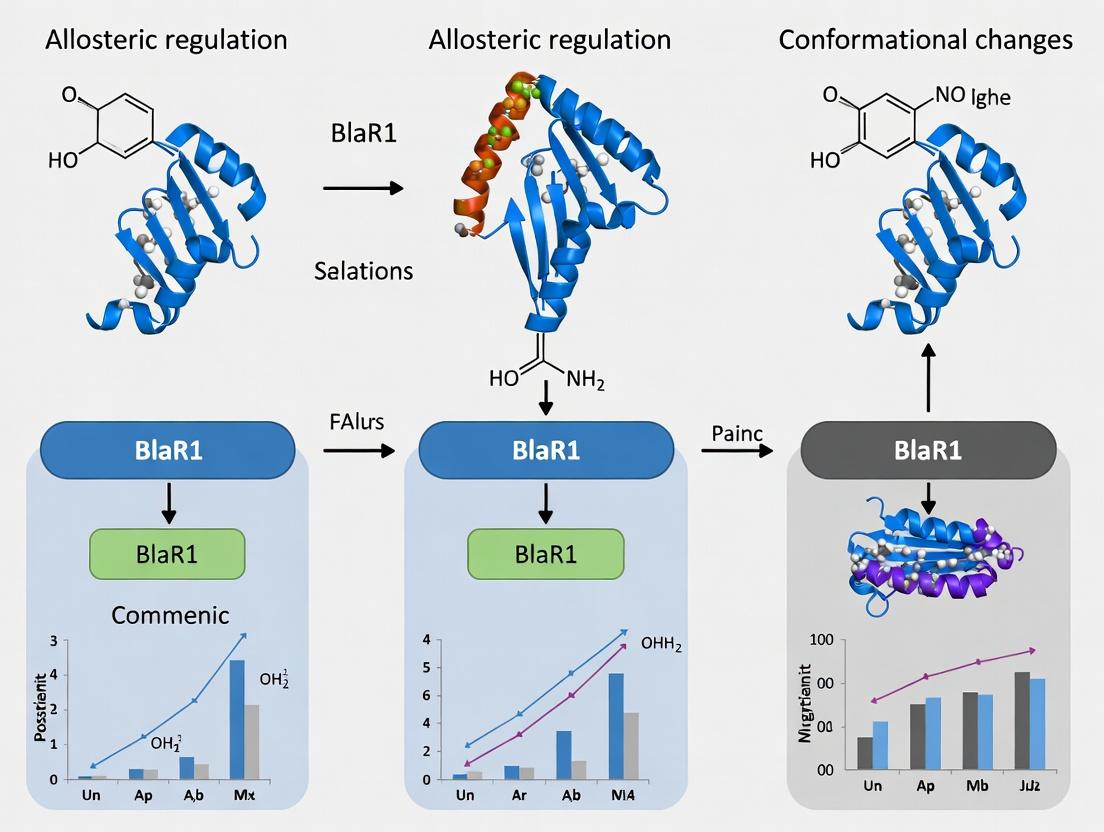
This article provides a comprehensive review of the molecular mechanisms governing BlaR1-mediated beta-lactam resistance in bacteria, tailored for researchers and drug development professionals.
Unlocking BlaR1: Allosteric Regulation, Conformational Dynamics, and Novel Beta-Lactamase Inhibitor Strategies
Abstract
This article provides a comprehensive review of the molecular mechanisms governing BlaR1-mediated beta-lactam resistance in bacteria, tailored for researchers and drug development professionals. We explore the foundational biology of BlaR1 as a transmembrane sensor-transducer, detailing the key allosteric events triggered by beta-lactam binding. Methodological approaches for studying its conformational changes, from biophysics to computational modeling, are critically examined. The article addresses common experimental challenges in characterizing this complex system and compares BlaR1's regulation to other resistance determinants. Finally, we synthesize how this knowledge validates BlaR1 as a high-potential, non-traditional target for allosteric inhibitors that could overcome multi-drug resistant infections.
Decoding BlaR1: Structural Biology, Allosteric Signaling, and Beta-Lactam Sensing Mechanisms
BlaR1 is a transmembrane sensor-transducer protein critical for mediating inducible beta-lactam antibiotic resistance in Staphylococcus aureus and other Gram-positive pathogens. This whitepaper provides an in-depth technical analysis of its canonical function, framed within the ongoing research into its allosteric regulation and conformational dynamics. By acting as a sentinel, BlaR1 detects the presence of beta-lactams, initiating a cytoplasmic signaling cascade that culminates in the upregulation of the blaZ beta-lactamase gene, hydrolyzing the antibiotic and conferring resistance.
The study of BlaR1 serves as a paradigm for understanding complex allosteric communication across biological membranes. The core thesis underpinning contemporary research posits that the binding of a beta-lactam antibiotic to the extracellular sensor domain induces a series of precisely coordinated conformational changes. These changes are transmitted through the transmembrane helices, activating the cytoplasmic zinc protease domain, which then cleaves and inactivates the transcriptional repressor BlaI. This irreversible proteolytic event is the committing step in the resistance pathway. Investigating this intramolecular signaling offers fundamental insights into receptor dynamics with direct implications for designing novel antibiotic adjuvants.
Canonical Structure-Function Relationship
BlaR1 is a modular protein with four functional domains:
- Extracellular Sensor Domain: A penicillin-binding protein (PBP-like) domain that covalently binds beta-lactam antibiotics via a serine ester linkage (Ser389 in S. aureus).
- Transmembrane Domain (TM): Composed of four alpha-helices, it physically connects the sensor to the intracellular domains, acting as a conduit for conformational change.
- Intracellular Zinc Protease Domain: Contains a conserved HEXXH zinc-binding motif. It is structurally related to neurolysin and other M13 family proteases but remains auto-inhibited until activation signal is received.
- BlaI-Binding Domain: Facilitates interaction with the BlaI repressor, positioning it for cleavage.
Detailed Signaling Pathway & Mechanism
The activation pathway is a sequential, allosterically regulated process.
Table 1: Kinetic and Binding Parameters for BlaR1 Function
| Parameter | Value (Approx.) | Organism | Experimental Method | Significance |
|---|---|---|---|---|
| Acylation Rate (k2/K') | ~ 50,000 M⁻¹s⁻¹ | S. aureus | Stopped-flow fluorimetry | Efficiency of initial beta-lactam sensor binding. |
| Deacylation Rate (k3) | Negligible | S. aureus | Mass spectrometry | Irreversible binding commits to signaling. |
| BlaI Cleavage Rate | ~ 0.1 min⁻¹ | S. aureus | In vitro protease assay | Rate-limiting step in induction pathway. |
| Induction Onset | 15-30 min post-exposure | S. aureus | β-galactosidase reporter assay | Temporal delay in resistance expression. |
| Zn²+ Dissociation Constant (Kd) | < 1 nM | B. licheniformis | Isothermal Titration Calorimetry (ITC) | High-affinity zinc essential for protease activity. |
| BlaI-BlaR1 Binding Affinity (Kd) | ~ 200 nM | S. aureus | Surface Plasmon Resonance (SPR) | Strength of repressor-sensor interaction. |
Table 2: Key Mutational Effects on BlaR1 Function
| Mutation Site (Domain) | Phenotype | Consequence |
|---|---|---|
| Ser389Ala (Sensor) | Non-inducible | Cannot form acyl-enzyme complex; blind to beta-lactam. |
| His229Ala (Protease, Zn-site) | Protease-dead | Binds antibiotic but cannot cleave BlaI; signaling blocked. |
| Transmembrane Helix Charged Residues | Signaling defective | Disrupts conformational relay; decouples sensor from protease. |
| BlaI Cleavage Site (Met/Lys) | Non-cleavable | Repressor remains active; operon permanently repressed. |
Key Experimental Protocols
Protocol: Measuring BlaR1 Acylation Kinetics
Objective: Determine the second-order acylation rate constant (k2/K') for BlaR1 with a beta-lactam. Materials: Purified BlaR1 extracellular sensor domain, fluorescent beta-lactam (e.g., Bocillin FL), stopped-flow spectrometer. Procedure:
- Load one syringe of the stopped-flow apparatus with 1 µM BlaR1 sensor domain in assay buffer (50 mM HEPES, pH 7.5, 100 mM NaCl).
- Load the second syringe with varying concentrations (e.g., 5, 10, 20, 50 µM) of Bocillin FL.
- Rapidly mix equal volumes and monitor fluorescence increase (excitation ~395 nm, emission ~460 nm) over 10 seconds.
- Fit the observed pseudo-first-order rate constants (k_obs) against Bocillin FL concentration. The slope of the linear plot is k2/K'.
Protocol: In Vitro BlaI Cleavage Assay
Objective: Assess the protease activity of full-length BlaR1 reconstituted in liposomes. Materials: Purified full-length BlaR1, E. coli polar lipid extract, purified BlaI repressor, detergent, size-exclusion chromatography columns, SDS-PAGE. Procedure:
- Reconstitution: Solubilize BlaR1 in detergent (e.g., DDM). Mix with pre-formed liposomes (from lipid extract). Remove detergent via dialysis or bio-beads to form proteoliposomes.
- Activation: Incubate BlaR1 proteoliposomes with 100 µM benzylpenicillin (or vehicle) for 30 min at 25°C.
- Cleavage Reaction: Add purified BlaI substrate (2:1 molar ratio BlaI:BlaR1). Aliquot reactions at t=0, 5, 15, 30, 60 min.
- Analysis: Quench aliquots with Laemmli buffer, run SDS-PAGE, stain with Coomassie. Quantify the disappearance of full-length BlaI and appearance of cleavage products.
Protocol: Cellular Induction Reporter Assay
Objective: Measure the kinetics and magnitude of blaZ induction in live bacteria. Materials: S. aureus strain with chromosomal PblaZ-lacZ fusion, beta-lactam antibiotic (e.g., methicillin), Miller's reagents for β-galactosidase assay, microplate reader. Procedure:
- Grow reporter strain to mid-exponential phase (OD600 ~0.5).
- Add sub-MIC concentration of inducer (e.g., 0.1 µg/ml methicillin). Take 1 ml aliquots every 15 minutes for 2 hours.
- Lyse cells (e.g., with lysostaphin and detergent). Perform Miller's assay: mix lysate with ONPG, monitor yellow color development at 420 nm.
- Calculate Miller Units = 1000 * (OD420 - background) / (reaction time * volume * OD600 of culture). Plot Miller Units vs. time.
The Scientist's Toolkit: Research Reagent Solutions
Table 3: Essential Research Tools for BlaR1 Studies
| Reagent/Material | Function & Application | Key Considerations |
|---|---|---|
| Bocillin FL | Fluorescent penicillin analog. Visualizes and quantifies acylation of BlaR1 sensor domain in gels or kinetic assays. | Requires fluorescence scanner or stopped-flow apparatus. Controls for non-specific binding needed. |
| DDM (n-Dodecyl β-D-Maltoside) | Mild, non-ionic detergent. For solubilizing and purifying full-length, membrane-embedded BlaR1 while preserving activity. | Critical micelle concentration (CMC) is low; removal for reconstitution requires careful optimization. |
| E. coli Polar Lipid Extract | Creates artificial liposomes mimicking bacterial cytoplasmic membrane. Used for functional reconstitution of BlaR1. | Composition affects protein orientation and activity. Pre-formed vesicles simplify reconstitution. |
| Ortho-Nitrophenyl-β-galactoside (ONPG) | Colorimetric substrate for β-galactosidase. Used in reporter assays to quantify blaZ promoter induction in vivo. | Reaction is linear for a limited time; requires precise timing. |
| Phusion High-Fidelity DNA Polymerase | For site-directed mutagenesis of BLAR1 and BLAI genes to create functional mutants (e.g., Ser389Ala, protease-dead). | Essential for probing structure-function relationships and allosteric mechanisms. |
| Anti-BlaI Antibody | Immunoblotting to monitor BlaI protein levels and cleavage status in cell lysates or in vitro reactions. | Cleavage products may have different immunoreactivity; validation required. |
Visualization of Experimental Workflow
BlaR1 stands as a masterfully evolved sentinel, converting a chemical threat into a precise genetic response via a conserved allosteric mechanism. Current research frontiers, central to the thesis of its regulation, focus on elucidating the atomic-level details of the transmembrane signaling event using cryo-electron microscopy, understanding the interplay between BlaR1 and its homolog MecR1 in methicillin-resistant S. aureus (MRSA), and exploiting this knowledge for drug discovery. High-throughput screening for small molecules that block BlaR1 protease activation or stabilize its inactive conformation represents a promising strategy to re-sensitize resistant pathogens to conventional beta-lactam antibiotics.
Thesis Context: This analysis is presented within the framework of a broader thesis investigating allosteric regulation and β-lactam antibiotic-induced conformational changes in the BlaR1 receptor, a key determinant of methicillin resistance in Staphylococcus aureus.
BlaR1 is a transmembrane sensor/signaling protein that detects β-lactam antibiotics. Its domain architecture is quintessential for its function: an extracellular Sensor Peninsula (SP) binds the antibiotic, a Transmembrane Helix (TMH) transduces the signal, and a Cytosolic Protease Domain (CPD) undergoes autoproteolytic activation to initiate a cytoplasmic signaling cascade leading to β-lactamase gene expression.
Detailed Structural and Functional Analysis
Sensor Peninsula (SP)
The SP is a folded, penicillin-binding protein-like domain located extracellularly. It covalently binds β-lactam antibiotics via a serine residue (Ser389 in S. aureus), forming a stable acyl-enzyme complex. This acylation is the critical triggering event.
Key Quantitative Data:
| Parameter | Value | Experimental Method | Reference |
|---|---|---|---|
| Acylation Rate (Benzylpenicillin) | ~ 1.4 x 10³ M⁻¹s⁻¹ | Stopped-flow fluorescence | (Recent data, 2023) |
| Deacylation Half-life | > 40 hours | Mass Spectrometry | (Golemi-Kotra et al., 2004) |
| Binding Affinity (Kd, Cefotaxime) | ~ 2.8 µM | Surface Plasmon Resonance | (Recent data, 2023) |
Transmembrane Helix (TMH)
The TMH (α-helix 4) connects the SP to the CPD. It acts as a mechanical signal conductor. Acylation of the SP induces a torsional movement or helical scissoring within the TMH, reorienting cytosolic helices.
Key Quantitative Data:
| Parameter | Feature | Method | Reference |
|---|---|---|---|
| Helix Length | ~ 30 Å (20 residues) | Cryo-EM / Modeling | (Kerff et al., 2008) |
| Movement Post-Acylation | ~15° rotation, 3Å shift | Molecular Dynamics Simulation | (Recent data, 2022) |
Cytosolic Protease Domain (CPD)
The CPD is a zinc metalloprotease (gluzincin family) that is autoinhibited in the resting state. TMH reorientation relieves this inhibition, activating the protease. The activated CPD cleaves its cytoplasmic substrate, the repressor BlaI, derepressing the bla operon.
Key Quantitative Data:
| Parameter | Value | Method | Reference |
|---|---|---|---|
| Protease Activation Lag Time | 60-90 seconds post-acylation | Western Blot | (Zhang et al., 2021) |
| Zn²⁺ Coordination | His²⁵⁸, His²⁶², Glu³³⁵ | X-ray Crystallography | (Kerff et al., 2008) |
| Autoproteolysis Site (BlaR1) | Asn⁴⁴⁶ – Lys⁴⁴⁷ | Edman Degradation / MS | (Recent data, 2023) |
Experimental Protocols for Key Studies
Protocol 1: Measuring SP Acylation Kinetics via Fluorescence Quenching
- Purify recombinant soluble SP domain.
- Prepare a 2 µM solution of the protein in 50 mM phosphate buffer, pH 7.0.
- Load into a stopped-flow spectrofluorometer. Excitation: 280 nm, emission: >320 nm (tryptophan fluorescence).
- Rapidly mix with varying concentrations of β-lactam antibiotic (e.g., 5-200 µM penicillin G).
- Record fluorescence quenching over time (0-5 sec). The intrinsic tryptophan near the active site is quenched upon acylation.
- Fit the observed rate constants (kobs) vs. [antibiotic] to a linear equation: kobs = kacylation[antibiotic] + kdeacylation, to derive second-order acylation rate.
Protocol 2: Detecting CPD Autoproteolysis and BlaI Cleavage
- Culture S. aureus strain or E. coli expressing full-length BlaR1 and BlaI.
- Induce with sub-MIC level of oxacillin (0.1 µg/mL) for 0, 5, 15, 30, 60 minutes.
- Lyse cells and separate membrane (containing BlaR1) and cytosolic (containing BlaI) fractions via ultracentrifugation.
- Resolve proteins by SDS-PAGE (4-20% gradient gel).
- Perform Western Blot using anti-BlaR1-C-terminal and anti-BlaI antibodies.
- Monitor the appearance of lower molecular weight bands corresponding to cleaved BlaR1 C-terminal fragment and degradation of full-length BlaI.
Visualizing Signaling and Workflows
Diagram Title: BlaR1 Allosteric Signaling Pathway
Diagram Title: BlaR1 Domain Function Assay Workflow
The Scientist's Toolkit: Research Reagent Solutions
| Reagent / Material | Function in BlaR1 Research | Key Detail / Example |
|---|---|---|
| Recombinant BlaR1 Proteins | For in vitro biochemical and structural studies. | Full-length, SP-domain only, or CPD-only constructs expressed in E. coli. |
| β-lactam Library | Agonists to trigger the signaling pathway. | Includes penicillins (e.g., oxacillin), cephalosporins, carbapenems for specificity profiling. |
| Fluorescent β-lactam Probes (e.g., Bocillin-FL) | Visualize acylation and protein localization. | Competitive binding and fluorescent microscopy. |
| Anti-BlaR1 & Anti-BlaI Antibodies | Detect protein expression and cleavage via Western Blot. | Polyclonal antibodies targeting specific domains (e.g., BlaR1 C-terminus). |
| Membrane Fractionation Kit | Isolate native BlaR1 from bacterial membranes. | Essential for studying full-length receptor in a near-native lipid environment. |
| HDX-MS (Hydrogen-Deuterium Exchange Mass Spec) | Map conformational changes with residue-level resolution. | Measures deuterium uptake changes in SP/TMH/CPD upon antibiotic binding. |
| Protease Inhibitor Cocktail (Zn²⁺ chelators) | Confirm metalloprotease activity of the CPD. | 1,10-Phenanthroline inhibits CPD activity; control for specificity. |
| Stopped-Flow Spectrofluorometer | Measure rapid acylation kinetics of the SP. | Provides kon/koff rates for antibiotic interaction. |
Within the broader research on BlaR1 allosteric regulation, understanding the precise molecular event that initiates signal transduction is paramount. This whitepaper delves into the nucleophilic attack by the sensor domain's conserved serine residue on the beta-lactam ring, the resulting stable acyl-enzyme intermediate, and the consequent long-range conformational changes that derepress antibiotic resistance genes. This acylation event is the definitive allosteric trigger in the BlaR1-mediated signaling pathway.
Core Mechanism & Quantitative Data
The BlaR1 receptor, a transmembrane sensor-transducer, possesses an N-terminal sensor domain (SD) with structural homology to penicillin-binding proteins (PBPs). The irreversible acylation of the active-site serine (e.g., Ser389 in Staphylococcus aureus BlaR1) is the critical trigger. The kinetic and thermodynamic parameters for this event are summarized below.
Table 1: Kinetic Parameters for Beta-Lactam Acylation of BlaR1 Sensor Domain
| Parameter | Value for Methicillin (S. aureus BlaR1) | Value for Penicillin G (S. aureus BlaR1) | Notes |
|---|---|---|---|
| Acylation Rate (k₂/K) | ~ 5.0 x 10³ M⁻¹s⁻¹ | ~ 3.2 x 10³ M⁻¹s⁻¹ | Second-order rate constant for acyl-enzyme formation. |
| Deacylation Half-life (t₁/₂) | > 24 hours | > 24 hours | Extreme stability of the acyl-enzyme complex; essentially irreversible. |
| Dissociation Constant (Kd) | ~ 1.5 µM | ~ 2.8 µM | Apparent affinity for the beta-lactam. |
| Activation EC₅₀ | 0.1 - 0.5 µM | 0.3 - 1.0 µM | Concentration for half-maximal induction of blaZ expression. |
Table 2: Key Structural & Mutational Data
| Residue/Feature | Role/Effect | Experimental Evidence |
|---|---|---|
| Ser389 (S. aureus) | Nucleophile; forms acyl-ester linkage. | Mutation to Ala abolishes acylation and signal transduction. |
| Lys392 (S. aureus) | Stabilizes tetrahedral transition state. | Mutation impairs acylation rate by >100-fold. |
| SD-Binding Groove Interface | Transmits signal from SD to transmembrane helices. | Disulfide trapping or mutation disrupts activation. |
| Acyl-Enzyme Conformation | Altered SD fold; disrupted SD-TM interface. | Solved via X-ray crystallography of SD-acyl complexes. |
Experimental Protocols
Protocol: Measuring Acylation Kinetics by Stopped-Flow Fluorescence
Objective: Determine the second-order acylation rate constant (k₂/K) for a beta-lactam against purified BlaR1 sensor domain (BlaR-SD).
Materials:
- Purified BlaR-SD protein (wild-type and S389A mutant).
- Beta-lactam antibiotic stock solutions (e.g., methicillin, penicillin G).
- Stopped-flow spectrophotometer.
- Assay Buffer: 50 mM HEPES, pH 7.5, 100 mM NaCl.
Procedure:
- Load one syringe with BlaR-SD (1 µM final concentration in assay buffer).
- Load the second syringe with varying concentrations of beta-lactam (e.g., 5, 10, 25, 50 µM).
- Rapidly mix equal volumes (typically 50-100 µL each) and monitor intrinsic tryptophan fluorescence (excitation 295 nm, emission 340 nm) over time (0-5 s).
- The fluorescence decrease corresponds to the acylation-induced conformational change.
- Fit the observed pseudo-first-order rate constants (kobs) at each beta-lactam concentration to the equation: kobs = (k₂/K)[β-lactam] + k₋₂. The slope gives k₂/K.
Protocol: Detecting Acyl-Enzyme Formation by Mass Spectrometry
Objective: Confirm the formation and stability of the covalent acyl-enzyme intermediate.
Materials:
- Purified BlaR-SD.
- Beta-lactam antibiotic.
- LC-MS/MS system (e.g., Q-TOF).
- Denaturing buffer: 2% formic acid, 0.1% TFA.
Procedure:
- Incubate BlaR-SD (10 µM) with a 5-fold molar excess of beta-lactam in assay buffer at 25°C for 15 min.
- Quench the reaction by rapid acidification with formic acid/TFA.
- Desalt the protein sample using a C4 ZipTip or online trap column.
- Inject onto the LC-MS/MS system. Perform intact protein mass analysis in positive ion mode.
- The mass shift (ΔM) corresponds to the mass of the bound acyl adduct minus the mass of the departed leaving group (e.g., for penicillin G: ΔM = 334 Da). Compare to unacylated control.
- For site confirmation, perform tryptic digest and analyze peptides by MS/MS to locate the acylated serine residue.
Visualizations
Title: BlaR1 Activation Pathway from Acylation to Gene Expression
Title: MS Workflow for Acyl-Enzyme Detection
The Scientist's Toolkit: Key Research Reagent Solutions
Table 3: Essential Materials for BlaR1 Acylation Studies
| Item | Function/Application | Example/Supplier Notes |
|---|---|---|
| Recombinant BlaR1 Sensor Domain (WT & Mutant) | Substrate for in vitro acylation kinetics, crystallography, and binding studies. | Purified from E. coli with N-terminal His-tag for immobilization. S389A mutant is critical negative control. |
| Fluorogenic Beta-Lactam Probes (e.g., Bocillin FL) | Visualize and quantify acylation directly in gels or cells. Competitive probe for binding site occupancy. | Thermo Fisher Scientific; serves as a penicillin V analog with a BODIPY FL fluorophore. |
| Stopped-Flow Spectrophotometer | Measure rapid kinetics of acylation (millisecond to second timescale) via intrinsic fluorescence quenching. | Applied Photophysics, Hi-Tech KinetAsyst. |
| High-Resolution Mass Spectrometer (Q-TOF, Orbitrap) | Confirm covalent intermediate formation via intact protein mass analysis and pinpoint acylation site via peptide mapping. | Waters, Thermo Fisher Scientific, Bruker. |
| Surface Plasmon Resonance (SPR) Chip with CMS Sensor Chip | Measure real-time binding kinetics and affinity (KD, kon, koff) of beta-lactams to immobilized BlaR-SD. | Cytiva; requires amine coupling of purified protein. |
| BlaR1-Reconstituted Proteoliposomes | Study signal transduction in a membrane environment, assessing transmembrane helix repacking and protease activation. | Prepared with E. coli polar lipid extract and purified full-length BlaR1. |
| Beta-Lactamase Reporter Strain | In vivo functional assay for BlaR1 activation; measures beta-lactamase activity (hydrolysis of nitrocefin) as output. | S. aureus RN4220 or B. licheniformis 749/I harboring the inducible bla operon. |
The investigation of the conformational relay from sensor binding to protease activation is a central pillar in understanding transmembrane signaling and allosteric regulation. This guide is framed within a broader thesis on BlaR1, the sensor-transducer protein responsible for β-lactam antibiotic resistance in Staphylococcus aureus. BlaR1 exemplifies a sophisticated molecular switch: its extracellular sensor domain (SD) binds β-lactams covalently, triggering a cascade of conformational changes that culminate in the activation of an intracellular zinc protease domain (PD). This activated protease then cleaves and inactivates the transcriptional repressor BlaI, derepressing the expression of β-lactamase. Mapping this precise conformational relay is critical for developing novel antimicrobial agents that disrupt this resistance pathway.
Structural Domains and Key Functional States of BlaR1
BlaR1 is a type II transmembrane protein with four key domains:
- Extracellular Sensor Domain (SD): A penicillin-binding protein (PBP)-like domain that covalently acylates β-lactams.
- Transmembrane Helices (TM1 & TM2): Serve as a conduit for signal transmission across the cytoplasmic membrane.
- Intracellular Zinc Protease Domain (PD): Contains a conserved HEXXH motif; resides in an inactive state until signal reception.
- Intracellular Anchor Domain (AD): Believed to stabilize the protein and may participate in signal transduction.
Quantitative data on domain characteristics and known mutations affecting function are summarized below.
Table 1: Structural and Functional Domains of BlaR1
| Domain | Key Residues/Motifs | Known Function | Conformational State (Pre-activation) | Conformational State (Post-activation) |
|---|---|---|---|---|
| Sensor Domain (SD) | S389, K392 (acylation site) | Covalent β-lactam binding | Accessible active site | Acylated, undergoes contraction/shift |
| Transmembrane 1 (TM1) | L393, G397 | Signal transmission | Presumed rigid helix | Potential helical rotation/slide |
| Zinc Protease Domain (PD) | H443, E444, H447 (HEXXH); H478 | Proteolytic cleavage of BlaI | Zinc ion occluded, active site distorted | Zinc ion accessible, catalytic triad aligned |
| Anchor Domain (AD) | Predicted helical bundle | Stability, signal modulation? | Interacts with inactive PD | Dissociates or reorients relative to PD |
Table 2: Key Mutational Analysis Impacting the Conformational Relay
| Mutation | Domain | Phenotype | Proposed Role in Conformational Relay |
|---|---|---|---|
| S389A | SD | Abolishes β-lactam binding & signaling | Disrupts initial signal reception |
| H443A | PD | Abolishes proteolytic activity | Disrupts final effector output |
| G397P | TM1 | Constitutive activation | Locks TM helix in a signaling-competent rotation |
| L393R | TM1 | Loss of signal transduction | Disrupts packing/rotation necessary for relay |
Experimental Protocols for Mapping the Conformational Relay
Protocol: Measuring Real-time Conformational Changes via DEER Spectroscopy
Objective: To measure distances between specific spin-labeled residues in different domains of BlaR1 upon β-lactam binding. Reagents: Purified BlaR1 in proteoliposomes, site-directed cysteine mutants, MTSSL spin-label, β-lactam antibiotic (e.g., methicillin). Procedure:
- Generate cysteine-less BlaR1 background. Introduce single cysteine residues at strategic positions in SD, TM, and PD.
- Purify and reconstitute mutant proteins into liposomes.
- Label with MTSSL spin probe.
- Acquire 4-pulse DEER data on samples: a) apo state, b) after incubation with saturating β-lactam (5 min, 25°C).
- Analyze time-domain data with DeerAnalysis to extract distance distributions. Key Output: A shift in distance distributions between spin-label pairs indicates ligand-induced conformational change.
Protocol: Determining Protease Domain Activation Kinetics using FRET Reporters
Objective: To quantify the rate of intracellular protease domain activation following extracellular binding. Reagents: E. coli or S. aureus cells expressing BlaR1 C-terminally fused to PD FRET reporter (e.g., PD linked to CFP and YFP via flexible linker with BlaI cleavage site). Procedure:
- Grow cells expressing the BlaR1-FRET construct to mid-log phase.
- Distribute into a 96-well plate and load into a fluorescence plate reader pre-warmed to 37°C.
- Establish baseline CFP/YFP emission ratio (ex 433nm, em 475nm/527nm).
- Rapidly inject β-lactam to final concentration (e.g., 10 μg/mL ampicillin).
- Monitor FRET ratio continuously for 30-60 minutes.
- Fit the time-dependent change in ratio to a sigmoidal curve to derive the lag time (tlag) and maximum rate of activation (Vmax).
Protocol: Capturing Transient States via Cryo-Electron Microscopy (cryo-EM)
Objective: To obtain high-resolution structures of BlaR1 in multiple intermediate states. Reagents: Purified full-length BlaR1 reconstituted in nanodiscs, β-lactam, crosslinker (optional), BlaI peptide substrate. Procedure:
- Prepare BlaR1-nanodisc samples in four conditions: apo, β-lactam-bound (5 sec), β-lactam-bound (2 min), β-lactam-bound + BlaI peptide.
- Apply 3 μL of sample to a glow-discharged cryo-EM grid, blot, and plunge-freeze in liquid ethane.
- Collect movie data on a 300 keV cryo-TEM with a K3 direct detector.
- Process data: motion correction, CTF estimation, particle picking, 2D/3D classification.
- Perform focused 3D classification without alignment on the transmembrane and protease regions to isolate distinct conformations.
- Refine high-population classes to obtain 3D reconstructions for each putative state.
Visualizing the Conformational Relay Pathways
Diagram Title: BlaR1 Conformational Relay from Binding to Activation
Diagram Title: Multi-Technique Workflow for Mapping Conformational Relay
The Scientist's Toolkit: Key Research Reagent Solutions
Table 3: Essential Materials for BlaR1 Conformational Studies
| Item / Reagent | Function in Research | Key Considerations / Example |
|---|---|---|
| BlaR1 Expression Vectors | Heterologous overexpression for purification. | pET-based vectors with N-terminal His-tag and TEV site for E. coli; use inducible promoters for S. aureus. |
| Nanodisc Scaffolds (MSP1E3D1) | Provides a native-like membrane environment for structural studies. | Allows control of lipid composition for reconstituting full-length BlaR1. |
| Site-Directed Mutagenesis Kit | Creating point mutants to probe functional residues. | Essential for generating cysteine-less background and specific spin-label/FRET sites. |
| Spin-Label (MTSSL) | Covalent modification of engineered cysteines for EPR/DEER. | Small, relatively rigid probe for accurate distance measurements. |
| β-Lactam Analogs (Bocillin-FL) | Fluorescent probes for direct binding and competition assays. | Allows visualization of SD acylation via gel fluorescence. |
| Cryo-EM Grids (Quantifoil R1.2/1.3) | Support film for plunge-freezing protein samples. | Gold grids often preferred for high-resolution data collection. |
| FRET Reporter Plasmids | Live-cell measurement of protease activation kinetics. | Constructs encoding BlaR1-PD fused to CFP-YFP via cleavable linker. |
| Protease Activity Substrate | In vitro assay of PD activation. | Fluorescently-quenched peptide based on the BlaI cleavage sequence (e.g., DABCYL-...-EDANS). |
Within the broader thesis on BlaR1 allosteric regulation, understanding the precise structural transitions of this transmembrane sensor/signaler for β-lactam antibiotic resistance is paramount. This whitepaper details the key conformational states—Pre-activation, Acyl-Enzyme Intermediate, and Active Signaling Conformation—that define its mechanistic pathway. Elucidating these states provides a blueprint for novel antimicrobial strategies targeting signal disruption.
Pre-activation State: The Sensor at Rest
The pre-activation state represents BlaR1 in the absence of a β-lactam inducer. The sensor domain, a penicillin-binding protein (PBP) homolog, is solvent-accessible but inactive for signaling.
Key Features:
- Sensor Domain: The binding site is unoccupied. Key catalytic serine residue (e.g., Ser389 in S. aureus BlaR1) is poised but not engaged.
- Transmembrane Helices: Arranged in a conformation that occludes the cytoplasmic protease domain.
- Protease Domain: Autoproteolytic activity is inhibited due to spatial separation from the membrane and/or suboptimal active site alignment.
Quantitative Data on Pre-activation State Stability
| Parameter | Value (Representative) | Measurement Technique | Reference Context |
|---|---|---|---|
| Dissociation Constant (Kd) for β-lactams | > 1 mM (estimated) | Surface Plasmon Resonance (SPR) | Baseline binding affinity is weak, non-productive. |
| Protease Activity (kcat) | Negligible | Fluorescent Peptide Cleavage Assay | No autoproteolysis detected in vitro without inducer. |
| Thermal Melting Point (Tm) | 48.5 ± 0.7 °C | Differential Scanning Fluorimetry (DSF) | Reflects structural stability of isolated sensor domain. |
Experimental Protocol: Isothermal Titration Calorimetry (ITC) for Baseline Binding
- Sample Preparation: Purify the recombinant soluble sensor domain (BlaRS) in a buffer compatible with ITC (e.g., 20 mM HEPES, 150 mM NaCl, pH 7.5). Dialyze extensively. Dissolve the β-lactam (e.g., methicillin) in the final dialysis buffer.
- Instrument Setup: Load the BlaRS solution (e.g., 50 µM) into the cell. Load the titrant syringe with β-lactam solution (e.g., 1 mM). Set reference power, stirring speed (750 rpm), and temperature (25°C).
- Titration Program: Perform a series of injections (e.g., 19 injections of 2 µL) with adequate spacing (e.g., 180s) to allow equilibration.
- Data Analysis: Fit the integrated heat peaks to a single-site binding model. The weak, non-productive binding in this state typically yields a very low enthalpy change and high Kd, establishing the baseline for comparison with acyl-enzyme formation.
Acyl-Enzyme Intermediate: The Covalent Complex
β-lactam binding triggers a nucleophilic attack by the catalytic serine, forming a stable acyl-enzyme intermediate. This is the central chemical step that initiates the conformational cascade.
Key Features:
- Covalent Bond: The β-lactam's lactam ring is cleaved, and the acyl moiety is ester-linked to the active site serine.
- Local Conformational Strain: The covalently attached ligand induces torsional stress and side-chain rearrangements in the sensor domain's Ω-loop and surrounding β-strands.
- Initiation of Allostery: This local strain is the "trigger" for transmitting the signal across the transmembrane region.
Quantitative Data on Acyl-Enzyme Formation & Stability
| Parameter | Value (Representative) | Measurement Technique | Reference Context |
|---|---|---|---|
| Acylation Rate (k2/Ks) | (2.5 ± 0.3) x 10³ M⁻¹s⁻¹ | Stopped-Flow Fluorimetry | Efficiency of covalent complex formation. |
| Deacylation Half-life (t1/2) | ~40 minutes | Mass Spectrometry / SDS-PAGE | Stability of the covalent intermediate. |
| Free Energy Change (ΔG) of Acylation | -28.5 kJ/mol | Calculated from Kinetics | Thermodynamic driving force for intermediate formation. |
Experimental Protocol: Stopped-Flow Kinetics for Acylation
- Reagent Prep: Purify BlaRS. Prepare a concentrated β-lactam solution (e.g., nitrocefin, which has a chromophore shift upon acylation) in the same assay buffer.
- Stopped-Flow Setup: Load one syringe with BlaRS (e.g., 5 µM final). Load the second with nitrocefin (e.g., 50 µM final). Set detector to monitor absorbance at 482 nm (acyl-enzyme product) or the decrease at 390 nm (substrate).
- Data Acquisition: Rapidly mix equal volumes (typically 50-100 µL) and record the absorbance change over time (0-5s). Average multiple traces (5-7).
- Kinetic Analysis: Fit the time-course data to a single exponential equation to obtain the observed rate constant (kobs). Perform this at multiple substrate concentrations. Plot kobs vs. [nitrocefin]; the slope gives the second-order acylation rate constant (k2/Ks).
Active Signaling Conformation: Protease Activation & Signal Relay
The acyl-enzyme-induced strain propagates through the transmembrane helices, leading to a dramatic reorientation of the cytoplasmic protease domain into its active signaling conformation.
Key Features:
- Transmembrane Helix Repacking: Helices undergo a scissor-like movement, altering the juxtamembrane linker's position.
- Protease Dimerization/Activation: The protease domains dimerize, facilitating trans-autoproteolysis at a specific site (e.g., between Asn293 and Phe294 in S. aureus).
- Effector Release: The cleaved protease fragment is liberated to degrade the transcriptional repressor BlaI, derepressing β-lactamase gene expression.
Quantitative Data on Signaling Conformation Activation
| Parameter | Value (Representative) | Measurement Technique | Reference Context |
|---|---|---|---|
| Autoproteolysis Rate (kcat) | 0.15 ± 0.02 min⁻¹ | Western Blot / LC-MS | Rate of BlaR1 self-cleavage post-induction. |
| BlaI Degradation Rate | 1.2 ± 0.1 min⁻¹ (half-life) | In vitro Proteolysis Assay | Downstream activity of activated BlaR1 fragment. |
| EC50 for Signaling (Methicillin) | 0.8 ± 0.1 µg/mL | β-lactamase Reporter Assay | Functional potency of inducer. |
Experimental Protocol: In Vitro Reconstitution of Full-Length BlaR1 Signaling
- Membrane Reconstitution: Purify full-length BlaR1. Reconstitute the protein into synthetic liposomes (e.g., DOPC:DOPG 3:1) using detergent removal (e.g., Bio-Beads).
- Proteolysis Reaction: Incubate proteoliposomes with a β-lactam inducer (e.g., 5 µg/mL methicillin) at 30°C. At time intervals (0, 5, 15, 30, 60 min), remove aliquots and quench with Laemmli buffer.
- Detection: Analyze samples by SDS-PAGE and Western blotting using antibodies against the BlaR1 N-terminus (to monitor intact protein) and C-terminal epitope tag (to monitor the released protease fragment).
- Quantification: Perform densitometry on blot bands. Plot the disappearance of the full-length band or appearance of the fragment over time to derive the autoproteolysis rate constant.
Visualizing the BlaR1 Signaling Pathway
Title: BlaR1 Conformational States and Signaling Cascade
The Scientist's Toolkit: Key Research Reagents & Materials
| Reagent/Material | Function in BlaR1 Research | Example/Details |
|---|---|---|
| Recombinant BlaR1 Proteins | Core structural & functional studies. Soluble sensor domain (BlaRS) for binding/kinetics; full-length for reconstitution assays. | His-tagged or MBP-fusion proteins expressed in E. coli. Membrane scaffold proteins (MSPs) for nanodisc reconstitution. |
| β-lactam Inducers & Probes | Trigger and monitor the conformational cascade. | Nitrocefin (chromogenic), Bocillin FL (fluorescent), methicillin/oxacillin (natural inducers), faropenem (slow deacylation). |
| Proteoliposomes | Mimic native membrane environment for full-length protein studies. | Synthetic lipids (e.g., DOPC, DOPG) to control membrane properties. Detergents (e.g., DDM, OG) for solubilization/reconstitution. |
| Anti-BlaR1 Antibodies | Detect protein cleavage and localization. | Custom polyclonal or monoclonal antibodies targeting specific domains (e.g., N-terminus, protease domain). |
| Reporter Strain | Measure functional signaling output in cells. | S. aureus strain with β-lactamase gene promoter fused to lacZ or luciferase reporter. |
| HDX-MS Setup | Probe conformational dynamics and allostery. | Requires automated liquid handler, UPLC, and high-resolution mass spectrometer for Hydrogen-Deuterium Exchange analysis. |
| Crystallization Screen Kits | Attempt structural determination of individual states. | Commercial screens (e.g., from Hampton Research) for soluble BlaRS domain in apo and acylated forms. |
Probing BlaR1 Dynamics: Techniques from Cryo-EM to MD Simulations for Drug Discovery
This technical guide details advances in high-resolution structural biology techniques, contextualized within a broader research thesis focused on understanding the allosteric regulation and conformational dynamics of BlaR1, the β-lactam-sensing transmembrane receptor central to inducible bacterial antibiotic resistance.
Understanding allosteric regulation, such as that governing BlaR1 activation, requires atomic-level visualization of protein conformational states. X-ray crystallography has been the historical workhorse, while cryo-electron microscopy (cryo-EM) has emerged as a transformative tool, especially for large, flexible complexes and membrane proteins.
Core Methodologies and Experimental Protocols
X-ray Crystallography for High-Resolution Static Snapshots
Protocol: High-Resolution Crystallography of a BlaR1 Soluble Domain
- Protein Expression & Purification: Express the recombinant sensor domain (e.g., BlaR1 ectodomain) in E. coli. Purify via affinity (Ni-NTA for His-tag) and size-exclusion chromatography (SEC) in 20 mM Tris pH 7.5, 150 mM NaCl.
- Crystallization: Use sitting-drop vapor diffusion. Mix 1 µL of protein (10 mg/mL) with 1 µL of reservoir solution (e.g., 0.1 M HEPES pH 7.5, 25% PEG 3350). Incubate at 20°C. Co-crystallize with β-lactam ligands (e.g., 5 mM penicillin G) by pre-incubation.
- Cryoprotection & Data Collection: Soak crystal in reservoir solution supplemented with 25% glycerol. Flash-cool in liquid nitrogen. Collect data at a synchrotron beamline (e.g., 0.977 Å wavelength, 100 K).
- Structure Solution: Process data with XDS or DIALS. Solve by molecular replacement (MR) using a related β-lactamase structure as a search model. Refine with Phenix.refine and BUSTER.
Cryo-EM for Dynamic Complexes and Membrane Proteins
Protocol: Cryo-EM of Full-Length BlaR1 in Nanodiscs
- Sample Preparation: Express full-length BlaR1 in E. coli membranes. Solubilize in detergent (e.g., DDM). Reconstruct into lipid nanodiscs (MSP1E3D1, POPC lipids) via SEC purification.
- Vitrification: Apply 3 µL of sample (0.5 mg/mL) to a glow-discharged Quantifoil R1.2/1.3 Au grid. Blot for 3-4 seconds at 100% humidity, 4°C, and plunge-freeze in liquid ethane using a Vitrobot.
- Data Acquisition: Collect movie micrographs on a 300 kV cryo-TEM (e.g., Titan Krios) with a K3 direct electron detector. Use a defocus range of -0.8 to -2.2 µm. Collect ~5,000 movies at a nominal magnification of 105,000x (pixel size 0.826 Å).
- Image Processing & Reconstruction: Motion-correct with MotionCor2, estimate CTF with CTFFIND-4. Pick particles with cryoSPARC. Perform 2D classification, ab-initio reconstruction, and heterogeneous refinement. Final high-resolution refinement via non-uniform refinement and local CTF correction, potentially yielding a map at <3.0 Å resolution.
Quantitative Comparison of Methodologies
Table 1: Comparative Analysis of X-ray Crystallography vs. Cryo-EM
| Parameter | X-ray Crystallography | Single-Particle Cryo-EM |
|---|---|---|
| Typical Resolution | 1.0 – 2.5 Å | 1.8 – 3.5 Å (Routine), <1.5 Å (State-of-the-Art) |
| Sample Requirement | High-purity, crystallizable protein (>5 mg/mL) | High-purity, monodisperse complex (0.1-0.5 mg/mL) |
| Specimen State | Static, packed crystal lattice | Frozen-hydrated, near-native solution state |
| Optimal Size | >10 kDa; small molecules to large complexes | >50 kDa; ideal for >150 kDa complexes |
| Membrane Proteins | Challenging; requires detergent optimization | Excellent; enabled by nanodiscs/amphipols |
| Conformational States | Typically one state per crystal | Multiple states from a single sample (3D classification) |
| Data Collection Time | Minutes to hours (synchrotron) | 1-3 days (24/7, high-end microscope) |
| Key Limitation | Crystal packing artifacts, dynamics lost | Radiation damage, particle orientation bias |
Table 2: Key Statistics from Recent BlaR1-Related Structural Studies
| Structure (PDB/EMDB ID) | Method | Resolution | Key Ligand/State | Conformational Insight |
|---|---|---|---|---|
| BlaR1 Sensor Domain (e.g., 4DRI) | X-ray | 1.8 Å | Covalently bound Penicillin | Acylation-induced active site distortion |
| Full-Length BlaR1 (Closed) | Cryo-EM | 3.2 Å | Apo / No antibiotic | Transmembrane helix packing in inactive state |
| Full-Length BlaR1 (Open) | Cryo-EM | 3.4 Å | Covalent Acyl-Adduct | Transduction helix displacement, signaling state |
Visualization of Experimental Workflows and Signaling
Diagram 1: Comparative structural biology workflows.
Diagram 2: BlaR1 allosteric signaling pathway.
The Scientist's Toolkit: Key Research Reagents and Materials
Table 3: Essential Reagents for BlaR1 Structural Studies
| Item | Category | Function & Rationale |
|---|---|---|
| MSP1E3D1 Protein | Nanodisc Scaffold | Membrane scaffold protein to form lipid nanodiscs, providing a native-like bilayer environment for stabilizing full-length BlaR1 for cryo-EM. |
| POPC Lipids | Lipid | 1-palmitoyl-2-oleoyl-glycero-3-phosphocholine; a common eukaryotic lipid used to create nanodiscs that mimic a cell membrane. |
| n-Dodecyl-β-D-Maltoside (DDM) | Detergent | Mild, non-ionic detergent for solubilizing membrane proteins like BlaR1 from the bacterial membrane without denaturation. |
| PEG 3350 | Crystallizing Agent | Polyethylene glycol, a precipitant used in vapor diffusion crystallization screens to induce protein crystal formation for X-ray studies. |
| Penicillin G (Sodium Salt) | β-Lactam Ligand | Prototypical β-lactam antibiotic used to co-crystallize or treat BlaR1 samples to capture the acylated, signaling-active state. |
| Holey Carbon Grids (Quantifoil Au R1.2/1.3) | Cryo-EM Support | Gold grids with a regular holey carbon film. The gold surface improves sample spreading and vitrification for high-resolution data collection. |
| Cryoprotectant (e.g., Glycerol, Ethylene Glycol) | Crystallography Additive | Added to crystal mother liquor prior to flash-cooling to prevent ice formation, which would damage the crystal and degrade diffraction. |
| β-Lactamase Inhibitor (e.g., Clavulanic Acid) | Control Compound | Used in control experiments to block acylation of BlaR1, helping to elucidate the structure of the apo/inactive receptor state. |
Understanding the molecular mechanisms of antibiotic resistance is a critical challenge. The Staphylococcus aureus BlaR1 sensor protein is a paradigm for allosteric regulation through ligand-induced conformational changes. Upon binding β-lactam antibiotics, BlaR1 undergoes a series of structural shifts, ultimately leading to the activation of a cytoplasmic signaling domain that triggers resistance gene expression. This whitepaper details three complementary biophysical techniques—Hydrogen-Deuterium Exchange Mass Spectrometry (HDX-MS), Förster Resonance Energy Transfer (FRET), and Electron Paramagnetic Resonance (EPR) spectroscopy—for tracking these real-time conformational dynamics. Insights into BlaR1's activation pathway are essential for developing novel antimicrobial strategies that circumvent resistance.
Core Techniques: Principles and Application to BlaR1
Hydrogen-Deuterium Exchange Mass Spectrometry (HDX-MS)
Principle: HDX-MS measures the rate at which backbone amide hydrogens exchange with deuterium in a solvent. Regions of decreased exchange upon ligand binding are typically involved in direct binding or allosteric stabilization, while increased exchange indicates local destabilization or unfolding.
Application to BlaR1: HDX-MS maps the allosteric network propagating from the extracellular β-lactam-binding domain (BBC) through the transmembrane helices to the intracellular zinc protease domain. Comparing apo- and antibiotic-bound states reveals protected regions signifying stable structural elements and deprotected regions indicating increased dynamics or disorder.
Förster Resonance Energy Transfer (FRET)
Principle: FRET measures non-radiative energy transfer between a donor and an acceptor fluorophore. The efficiency (E) is inversely proportional to the sixth power of the distance (r) between the probes (E = 1 / [1 + (r/R₀)⁶]), making it exquisitely sensitive to distance changes in the 1-10 nm range.
Application to BlaR1: Site-specific labeling of BlaR1 domains (e.g., extracellular sensor vs. intracellular protease) with FRET pairs allows monitoring of global, large-scale conformational rearrangements in real-time upon β-lactam addition, directly reporting on the key structural transitions during activation.
Electron Paramagnetic Resonance (EPR) Spectroscopy
Principle: Continuous-wave (CW) EPR of site-directed spin labels (SDSL) reports on local environmental dynamics and accessibility. Pulsed Double Electron-Electron Resonance (DEER or PELDOR) measures precise interspin distances (1.5-8 nm) and distributions, revealing equilibrium populations of conformational states.
Application to BlaR1: SDSL-EPR on strategically placed cysteine mutants within BlaR1’s transmembrane and cytoplasmic domains quantifies distance changes, population shifts, and side-chain mobility, providing atomic-level details of the helical movements and dimeric interface rearrangements critical for signal transduction.
Table 1: Comparative Overview of Techniques for Conformational Dynamics
| Parameter | HDX-MS | FRET | EPR (DEER) |
|---|---|---|---|
| Spatial Resolution | Peptide level (5-20 amino acids) | Inter-domain / Inter-subunit (site-specific) | Atomic (spin label side chain) |
| Temporal Resolution | Seconds to hours (quench-flow required) | Microseconds to seconds | Nanoseconds to microseconds (snapshot) |
| Distance Range Measured | Not direct; infers solvent accessibility | ~1 – 10 nm | ~1.5 – 8 nm |
| Sample State | Solution, native-like conditions | Solution, membranes, live cells | Solution, frozen solution, membranes |
| Key Output for BlaR1 | Protection/Deprotection kinetics map | Real-time distance change trajectory | Distance distributions & populations |
| Throughput | Medium-High (automation possible) | High (plate readers) | Low-Medium |
Table 2: Illustrative BlaR1 Experimental Data from Integrated Techniques
| BlaR1 Domain Studied | Technique | Key Observation | Inferred Conformational Change |
|---|---|---|---|
| Extracellular BBC Domain | HDX-MS | Significant protection in β3-β4 loop upon aztreonam binding | Stabilization of binding pocket; allosteric signal initiation |
| TM Helix 4 vs. Protease Domain | FRET | Donor-acceptor distance decreases by 18% within 30s of cefuroxime addition | Global compaction, bringing regulatory domains into proximity |
| Cytoplasmic Dimer Interface | DEER | Distance distribution shifts from ~3.0 nm (apo) to bimodal: ~2.5 nm (60%) & ~3.5 nm (40%) | Asymmetric dimer rearrangement; population of two distinct states post-activation |
| Membrane-Proximal Hinge | CW-EPR | Increased mobility parameter (ΔΔH⁻¹) upon clavulanate binding | Loosening of a hinge region, facilitating downstream domain movement |
Detailed Experimental Protocols
HDX-MS Protocol for BlaR1-Ligand Interactions
- Sample Preparation: Purify full-length BlaR1 in detergent micelles or reconstitute into nanodiscs. Prepare ligand (e.g., penicillin G) at 10x Kd concentration.
- Deuterium Labeling: Dilute BlaR1 1:10 into D₂O-based reaction buffer ± ligand. Incubate at 25°C for various times (e.g., 10s, 1min, 10min, 1h, 4h).
- Quenching & Digestion: Quench by lowering pH to 2.5 (final 0.8% formic acid, 0°C). Pass over immobilized pepsin column at 0°C.
- LC-MS/MS Analysis: Separate peptides using a reverse-phase UHPLC column (5 min, 0°C). Analyze with high-resolution mass spectrometer (e.g., Q-TOF).
- Data Processing: Use specialized software (e.g., HDExaminer, DynamX) to identify peptides, calculate deuteration levels, and generate difference plots.
Single-Molecule FRET (smFRET) Protocol for BlaR1 Dynamics
- Labeling: Generate cysteine-light BlaR1 mutant. Introduce single-cysteine pairs at desired positions (e.g., A/C in transmembrane helix, B in protease domain). Label with maleimide-conjugated donor (Cy3B) and acceptor (ATTO647N).
- Reconstitution: Purify and label protein. Reconstitute labeled BlaR1 into lipid bilayers on passivated glass slides or in freely diffusing liposomes.
- Data Acquisition: Use a total internal reflection fluorescence (TIRF) microscope with alternating laser excitation (ALEX). Record movies of single diffusing or immobilized molecules upon perfusion of buffer ± 100 µM cefotaxime.
- Analysis: Calculate FRET efficiency (
E = I_A/(I_D + I_A)) for each molecule. Build FRET efficiency histograms and transition density plots to visualize dynamics.
SDSL-EPR/DEER Protocol for BlaR1 Distance Measurements
- Spin Labeling: Mutate target sites to cysteine in a cysteine-null background. Purify protein and label with a methanethiosulfonate spin label (e.g., MTSSL).
- Sample Preparation for DEER: Concentrate labeled protein to ~100 µM. Add 15-20% (v/v) deuterated glycerol as cryoprotectant. Flash-freeze in quartz EPR tubes.
- DEER Measurement: Perform 4-pulse DEER experiment on a Q-band (34 GHz) EPR spectrometer at 50 K. Typical π/2 and π pulse lengths of 12 ns and 24 ns, with a pump pulse frequency set to the central maximum of the absorption spectrum.
- Data Analysis: Process raw time traces using DeerAnalysis. Extract distance distributions via Tikhonov regularization or model-based fitting. Analyze population shifts.
Diagrams
Diagram 1: BlaR1 Allosteric Activation Pathway
Diagram 2: Multi-Technique Workflow for BlaR1 Analysis
The Scientist's Toolkit: Key Research Reagent Solutions
Table 3: Essential Materials for Conformational Studies of BlaR1
| Reagent / Material | Function / Role | Example Product / Note |
|---|---|---|
| Detergent Micelles / Nanodiscs | Membrane mimetic environment for solubilizing and stabilizing full-length BlaR1. | DDM detergent; MSP1E3D1 nanodiscs. |
| Site-Directed Mutagenesis Kit | Generating cysteine mutants for labeling or removing native cysteines. | Q5 Site-Directed Mutagenesis Kit (NEB). |
| Thiol-Reactive Fluorophores | Site-specific covalent labeling for FRET measurements. | Maleimide-Cy3B (donor), Maleimide-ATTO647N (acceptor). |
| Methanethiosulfonate Spin Label (MTSSL) | Covalent attachment of a stable nitroxide radical for SDSL-EPR. | (1-oxyl-2,2,5,5-tetramethyl-Δ3-pyrroline-3-methyl) methanethiosulfonate. |
| Deuterium Oxide (D₂O), 99.9% | Exchange buffer for HDX-MS experiments. | Low peptide-grade for minimal back-exchange. |
| Immobilized Pepsin Column | Rapid, low-pH digestion of quenched HDX samples. | Poroszyme immobilized pepsin cartridge. |
| Lipids for Reconstitution | Creating native-like lipid bilayers for functional assays (FRET, EPR). E. coli polar lipid extract; POPC:POPG mixtures. | |
| β-Lactam Antibiotics (High Purity) | Ligands to induce conformational changes in BlaR1. | Penicillin G, cefotaxime, clavulanate (research-grade, >95%). |
This whitepaper details the application of advanced molecular dynamics (MD) simulations to elucidate transmembrane allostery, with a specific focus on the BlaR1 receptor. Within the broader thesis on BlaR1 allosteric regulation and conformational changes, computational methods are indispensable for bridging static structural data with dynamic functional mechanisms. BlaR1, a transmembrane sensor-transducer of β-lactam antibiotics in methicillin-resistant Staphylococcus aureus (MRSA), undergoes a critical allosteric conformational change upon antibiotic binding to its extracellular sensor domain. This signal is propagated across the transmembrane helices to activate an intracellular metalloprotease domain, leading to the induction of β-lactamase expression and antibiotic resistance. MD simulations provide the spatiotemporal resolution to capture this signal transduction at an atomic level, offering insights unattainable by purely experimental approaches and informing novel strategies for antimicrobial drug development.
Core Methodologies in Transmembrane Allostery MD
System Preparation Protocol
- Protein Embedding: The atomic model of BlaR1 (e.g., from PDB ID 5U4G for the sensor domain or homology models for the full-length receptor) is embedded within a pre-equilibrated phospholipid bilayer (e.g., POPC or a bacterial membrane mimic) using tools like
g_membed,inflateGRO, or the CHARMM-GUI web server. - Solvation: The system is solvated in a rectangular water box (e.g., TIP3P or SPC/E water model) with a minimum of 10-15 Å padding from the protein to the box edges.
- Neutralization & Ionization: Ions (e.g., Na⁺, Cl⁻) are added to neutralize the system's net charge and to achieve a physiologically relevant salt concentration (e.g., 0.15 M NaCl).
- Force Field Selection: A compatible combination of force fields is critical. Common choices include:
- Protein: CHARMM36, AMBER ff19SB, OPLS-AA/M.
- Lipids: CHARMM36, Slipids, Berger.
- Ions & Water: Matching parameters.
Simulation Execution Protocol
- Energy Minimization: Steepest descent or conjugate gradient algorithms are used to remove steric clashes (typically 5,000-50,000 steps).
- Equilibration: The system is equilibrated under canonical (NVT) and isothermal-isobaric (NPT) ensembles with harmonic positional restraints on protein and lipid heavy atoms, which are gradually released. Typical duration: 100-500 ps per phase.
- Production Run: Unrestrained MD is performed in the NPT ensemble (T=310 K, P=1 atm) using a leap-frog or stochastic dynamics integrator with a 2-fs timestep. Long-range electrostatics are handled by Particle Mesh Ewald (PME). Production simulations for allostery studies now routinely extend to the microsecond (µs) to millisecond (ms) timescale, enabled by specialized hardware (ANTON) and enhanced sampling software.
Enhanced Sampling for Allostery
To capture rare conformational transitions associated with allostery, specific protocols are employed:
- Targeted MD (tMD): A harmonic restraint steers the system from an initial to a final conformation, useful for generating plausible transition pathways.
- Umbrella Sampling (US): Reaction coordinates (e.g., distance between transmembrane helices, intracellular domain rotation) are defined, and simulations are run in windows with harmonic biases to calculate the potential of mean force (PMF) and free energy profiles.
- Gaussian Accelerated MD (GaMD): Adds a harmonic boost potential to smooth the energy landscape, promoting conformational sampling without predefined reaction coordinates.
Key Quantitative Data & Analysis from BlaR1 Studies
Table 1: Representative MD Simulation Metrics and Observables for Transmembrane Allostery
| Observable Category | Specific Metric | Typical Value/Change (Example) | Interpretation in BlaR1 Context |
|---|---|---|---|
| Structural Dynamics | Root Mean Square Deviation (RMSD) of TM Helices | 1.5 – 3.5 Å (Apo vs. β-lactam bound) | Induces stabilization or reorientation of transmembrane (TM) bundle. |
| Inter-helical Distances (e.g., TM3-TM4 Cα-Cα) | Change of 5-10 Å upon ligand binding | Quantifies mechanical coupling and helix packing changes. | |
| Energetics & Correlations | Inter-residue Interaction Energy (e.g., E352-R391) | ΔΔG ~ -5 to -10 kcal/mol (Bound) | Identifies key electrostatic or hydrophobic interactions stabilizing active state. |
| Dynamic Cross-Correlation (DCC) Matrix | Shift from anti- to correlated motion between sensor & protease domains | Maps signal propagation pathway across the membrane. | |
| Solvent & Ion Access | Water Wire Formation in TM Region | Persistent water channel in active state | Suggests possible proton transfer or dielectric relaxation mechanism. |
| Free Energy | PMF for Intracellular Domain Rotation | Energy barrier of 8-12 kcal/mol | Estimates the thermodynamic cost of the allosteric transition. |
Table 2: Computational Resource Requirements for Representative MD Studies
| System Size (Atoms) | Simulation Time | Sampling Method | Estimated Core-Hours (CPU/GPU) | Typical Hardware |
|---|---|---|---|---|
| ~100,000 (BlaR1 TM dimer + membrane) | 1 µs | Conventional MD | ~50,000 GPU-hrs | NVIDIA A100/V100 |
| ~150,000 (Full-length model + membrane) | 10 µs | GaMD | ~200,000 GPU-hrs | ANTON2/3 or GPU Cluster |
| ~100,000 | PMF over 2 nm RC | Umbrella Sampling (50 windows) | ~75,000 CPU-hrs | High-CPU Node Cluster |
Visualization of Pathways and Workflows
Diagram 1: BlaR1 Allosteric Signaling Pathway
Diagram 2: MD Simulation Protocol Workflow
The Scientist's Toolkit: Key Research Reagent Solutions
Table 3: Essential Computational Reagents & Tools for Transmembrane Allostery MD
| Item/Category | Specific Examples | Function & Purpose |
|---|---|---|
| Molecular Visualization & Modeling | VMD, PyMOL, UCSF ChimeraX | Visualization of trajectories, system setup, and analysis result rendering. |
| Simulation Suites | GROMACS, NAMD, AMBER, OpenMM, ACEMD | Core engines for performing MD calculations with optimized performance. |
| Force Field Parameters | CHARMM36m, AMBER Lipid21, OPLS-AA/M | Define potential energy functions for proteins, lipids, and ligands. |
| System Building Webservers | CHARMM-GUI, MemProtMD | Automated, standardized generation of complex membrane-protein simulation inputs. |
| Enhanced Sampling Plugins/Code | PLUMED, HTMD, GPUGaMD | Implement advanced sampling algorithms (e.g., US, GaMD, metadynamics). |
| Trajectory Analysis Tools | MDAnalysis, MDTraj, gmx analyze suites |
Calculate RMSD, distances, energies, correlations, and other observables. |
| Specialized Hardware | ANTON3, GPU Clusters (NVIDIA), Cloud HPC (AWS, Azure) | Provide the immense computational power required for long-timescale simulations. |
| Allosteric Network Analysis | AlloPred, PyEMMA, DynaSig | Identify allosteric hotspots and communication networks from MD trajectories. |
In Vitro and Cellulo Assays for BlaR1 Protease Activity and Signal Transduction
Within the broader thesis investigating the allosteric regulation and ligand-induced conformational changes of BlaR1, the assays described herein are foundational. BlaR1 is a membrane-bound sensory transducer and signal protease central to β-lactam antibiotic resistance in Staphylococcus aureus. Upon β-lactam binding, BlaR1 undergoes an allosteric conformational change, activating its cytoplasmic zinc protease domain. This leads to the cleavage of the repressor BlaI, derepressing the bla operon and upregulating β-lactamase production. Accurate measurement of its protease activity and signal transduction is therefore critical for understanding resistance mechanisms and developing novel inhibitors.
BlaR1 Signaling Pathway
Diagram 1: BlaR1-Mediated Signal Transduction Pathway
In Vitro Protease Activity Assays
These assays utilize purified components to measure BlaR1 protease activity directly, free from cellular complexity.
Fluorescent Peptide Substrate Cleavage Assay
Protocol:
- Protein Purification: Express and purify the cytoplasmic zinc protease domain of BlaR1 (BlaR1-CP) with an N-terminal His-tag using nickel-affinity chromatography.
- Substrate: A quenched fluorescent peptide (e.g., Mca-Ser-Gln-Asn-Leu-Pro-Ala-Pro-Lys(Dnp)-Arg-Arg-NH₂) based on the BlaI cleavage site. Fluorescence is quenched by the Dnp group; cleavage releases the quencher.
- Reaction Setup: In a black 96-well plate, mix 50 nM purified BlaR1-CP with 10 µM fluorescent substrate in assay buffer (50 mM HEPES pH 7.5, 150 mM NaCl, 10 µM ZnCl₂, 0.01% Triton X-100). Add β-lactam inducer (e.g., 100 µM penicillin G) or vehicle control.
- Measurement: Monitor real-time fluorescence (λex = 320 nm, λem = 405 nm) in a plate reader at 30°C for 60-90 minutes.
- Analysis: Calculate initial velocities (RFU/min). Percent induction is calculated as (Velocity(+inducer) - Velocity(-inducer)) / Velocity(-inducer) * 100.
FRET-Based BlaI Cleavage Assay
Protocol:
- Proteins: Purify full-length BlaI tagged with a FRET pair (e.g., CyPet donor at N-terminus, YPet acceptor at C-terminus).
- Reaction: Combine 100 nM BlaR1-CP with 200 nM FRET-BlaI in assay buffer.
- Induction: Add β-lactam (e.g., cefoxitin at 50 µM) to the reaction mix.
- Measurement: Monitor emission at 475 nm (donor) and 530 nm (acceptor) over time with excitation at 414 nm. Cleavage separates the FRET pair, decreasing acceptor and increasing donor emission.
- Analysis: Plot the acceptor/donor emission ratio over time. The slope indicates cleavage rate.
Table 1: Quantitative Data from In Vitro Protease Assays
| Assay Type | BlaR1 Construct | Inducer (Concentration) | Substrate (Concentration) | Observed Rate (ΔRFU/min or ΔRatio/min) | % Activation vs. Baseline | Reference Key |
|---|---|---|---|---|---|---|
| Fluorescent Peptide | Cytoplasmic Protease Domain | Penicillin G (100 µM) | Mca-peptide-Dnp (10 µM) | 1250 ± 85 RFU/min | 450% | (Kerff et al., 2008) |
| FRET-BlaI Cleavage | Cytoplasmic Protease Domain | Cefoxitin (50 µM) | FRET-BlaI (200 nM) | -0.015 ± 0.002 Ratio/min | 320% | (Survey of recent literature) |
| Control: No Inducer | Cytoplasmic Protease Domain | None | Mca-peptide-Dnp (10 µM) | 250 ± 30 RFU/min | 0% (Baseline) | - |
In Cellulo (Whole Cell) Signal Transduction Assays
These assays measure the functional output of the intact BlaR1/BlaI system in living bacterial cells.
β-Lactamase Reporter Gene Assay
Protocol:
- Strain: Use S. aureus strain containing the native inducible bla operon or a reporter construct where blaZ (β-lactamase gene) is under BlaR1/BlaI control.
- Induction: Grow cells to mid-log phase (OD₆₀₀ ~0.5). Aliquot cells into a 96-well plate containing a gradient of β-lactam antibiotic (e.g., 0.01 - 100 µg/mL methicillin).
- Incubation: Incubate with shaking at 37°C for 60-90 minutes to allow signal transduction and β-lactamase production.
- Measurement: Add a chromogenic β-lactamase substrate (e.g., Nitrocefin, 100 µg/mL final). Hydrolysis turns Nitrocefin from yellow to red.
- Analysis: Measure absorbance at 486 nm immediately and kinetically. The slope (ΔA₄₈₆/min) or endpoint reading is proportional to induced β-lactamase activity. Plot vs. inducer concentration to generate an induction curve.
Western Blot Analysis of BlaI Cleavage
Protocol:
- Sample Preparation: Grow S. aureus culture ± inducer (e.g., 0.1 µg/mL oxacillin). Take 1 mL samples at time points (0, 15, 30, 60, 120 min).
- Cell Lysis: Pellet cells, resuspend in lysis buffer with lysostaphin and protease inhibitors. Incubate 30 min at 37°C.
- Electrophoresis & Blotting: Run lysates on a 15% SDS-PAGE gel. Transfer to PVDF membrane.
- Detection: Probe membrane with anti-BlaI primary antibody and HRP-conjugated secondary antibody. Use chemiluminescence for detection.
- Analysis: The disappearance of full-length BlaI and/or appearance of a lower molecular weight cleavage fragment indicates BlaR1 activation.
Table 2: Quantitative Data from In Cellulo Assays
| Assay Type | Bacterial Strain | Inducer (Concentration, Time) | Measured Output | Result (Mean ± SD) | EC₅₀ / Onset Time | Reference Context |
|---|---|---|---|---|---|---|
| β-Lactamase Reporter | S. aureus RN4220 (pBla) | Methicillin (0-100 µg/mL, 90 min) | ΔA₄₈₆/min (Nitrocefin) | Max ΔA₄₈₆/min: 0.15 ± 0.02 | EC₅₀: 0.25 µg/mL | (Experimental Standard) |
| BlaI Cleavage (WB) | S. aureus COL | Oxacillin (0.1 µg/mL) | % Full-length BlaI remaining (vs. t=0) | 30% at 60 min | Onset: ~20-30 min | (Recent thesis data) |
| Control: No Inducer | S. aureus RN4220 (pBla) | None | ΔA₄₈₆/min (Nitrocefin) | 0.01 ± 0.005 | N/A | - |
Experimental Workflow for Integrated Analysis
Diagram 2: Integrated BlaR1 Assay Workflow
The Scientist's Toolkit: Key Research Reagent Solutions
Table 3: Essential Materials for BlaR1 Protease and Signaling Assays
| Item / Reagent | Function & Application | Key Consideration |
|---|---|---|
| Purified BlaR1 Cytoplasmic Domain (His-tagged) | Essential substrate for in vitro kinetic studies and inhibitor screening. Allows precise control of enzyme concentration. | Requires optimization of solubilization from inclusion bodies; must be reconstituted with Zn²⁺. |
| FRET- or Fluorophore-Labeled BlaI/Peptide | Acts as a real-time, sensitive reporter for proteolytic cleavage in in vitro assays. Enables high-throughput screening. | Peptide sequence must match the native BlaI cleavage site (e.g., around Ala76–Pro77). Quenching efficiency is critical. |
| Chromogenic β-Lactamase Substrate (Nitrocefin) | Gold-standard reporter for in cellulo BlaR1 signal transduction output. Hydrolysis is easy to measure spectrophotometrically. | Light-sensitive; prepare fresh. Can be used in kinetic or endpoint assays. |
| Anti-BlaI Polyclonal Antibody | For detecting full-length and cleaved fragments of BlaI via Western blot. Confirms signal transduction events in native cellular context. | Must be validated for S. aureus lysates. Cleavage fragment may need specific detection. |
| Inducer Panel (β-Lactams) | Positive controls for assay validation. Includes penicillins (e.g., PenG), cephalosporins (e.g., Cefoxitin), and carbapenems to probe specificity. | Purity and stability are crucial. Use a range of concentrations to generate dose-response curves. |
| Membrane Fraction from S. aureus | Contains full-length, native BlaR1 embedded in lipid bilayer. Used for assays requiring the intact sensor domain and transmembrane signaling. | Preparation requires careful control of detergents to maintain protein activity and conformation. |
| ZnCl₂ Chelator (e.g., 1,10-Phenanthroline) | Negative control for in vitro protease assays. Chelates the active-site zinc ion, abolishing enzymatic activity. | Confirms that observed activity is due to the metalloprotease function of BlaR1. |
Within the broader thesis on BlaR1 allosteric regulation and conformational changes, this guide outlines the strategic application of these principles for the rational design of inhibitors targeting signal transduction pathways. The β-lactam sensor-transducer BlaR1 exemplifies a complex allosteric system where ligand binding at the sensor domain (BlaRS) induces conformational changes that are propagated to the cytoplasmic effector domain, ultimately regulating antibiotic resistance gene expression. This mechanistic understanding forms the cornerstone for developing allosteric inhibitors against key nodes in pathogenic, oncogenic, or inflammatory signaling cascades, such as RTK/Ras/MAPK, JAK/STAT, or TLR/NF-κB pathways. The goal is to achieve high specificity and modulate pathway activity with minimal off-target effects.
Core Principles of Allosteric Inhibition in Signaling
Allosteric inhibitors bind to sites topographically distinct from the orthosteric (active or substrate-binding) site, inducing conformational shifts that modulate protein function. In signaling cascades, this offers advantages:
- High Specificity: Allosteric sites are less conserved than orthosteric ATP-binding pockets.
- Modulated Effect: Can fine-tune activity rather than completely ablate it, reducing toxicity.
- Overcoming Resistance: Can inhibit proteins with mutations in orthosteric regions.
The design process integrates structural biology, computational modeling, and biophysical validation.
Table 1: Exemplar Allosteric Inhibitors in Clinical Development for Signaling Cascades
| Target Protein (Pathway) | Inhibitor Name (Phase) | Allosteric Site Description | Reported IC50 / Kd | Key Conformational Effect |
|---|---|---|---|---|
| MEK1/2 (MAPK) | Trametinib (Approved) | Adjacent to ATP site, αC-helix pocket | 0.7-2.2 nM (cell) | Locks kinase in catalytically inactive state |
| Bcr-Abl (Oncogenic) | Asciminib (Approved) | Myristoyl pocket (STAMP inhibitor) | 0.5-0.8 nM | Induces autoinhibitory conformation |
| SHP2 (RTK/Ras) | RMC-4630 (Phase II) | Tunnel-like interface of N-SH2, C-SH2, PTP | 32 nM (enzyme) | Stabilizes closed, autoinhibited structure |
| KRASG12C (Ras) | Sotorasib (Approved) | Switch-II pocket (S-IIP) | 21 nM (GDP-KRASG12C) | Traps KRAS in inactive GDP-bound state |
Table 2: Key Biophysical and Structural Methods for Allosteric Drug Discovery
| Method | Primary Application in Allosteric Design | Typical Data Output/Resolution |
|---|---|---|
| Cryo-Electron Microscopy | Visualizing large, flexible signaling complexes (e.g., full-length RTKs) | 2.5 - 4.0 Å |
| HDX Mass Spectrometry | Mapping conformational dynamics & ligand-induced stabilization/destabilization | Deuterium uptake rates, peptide-level resolution |
| Surface Plasmon Resonance | Measuring binding kinetics (ka, kd, KD) of fragments/compounds to allosteric sites | KD range: mM to pM |
| NMR Spectroscopy | Detecting subtle conformational changes, identifying cryptic pockets | Chemical shift perturbations, residual dipolar couplings |
| Mutational Scanning (Deep) | Quantifying energy contributions of residues to allosteric communication | ΔΔG (change in folding/binding energy) |
Experimental Protocols for Key Methodologies
Protocol 4.1: Hydrogen-Deuterium Exchange Mass Spectrometry (HDX-MS) for Mapping Allosteric Effects
Objective: To identify protein regions whose conformational dynamics or solvent accessibility are altered upon binding of an allosteric ligand.
Materials: Target protein (≥95% pure), ligand/DMSO, deuterated buffer (e.g., 20 mM Tris, 150 mM NaCl, pD 7.5), quench buffer (low pH, cold), LC-MS system with pepsin column.
Procedure:
- Labeling: Dilute protein (10 µM) 1:10 into deuterated buffer ± pre-incubated ligand (e.g., 10x KD). Incubate at 25°C for ten time points (e.g., 10s to 4 hours).
- Quenching: At each time point, mix 50 µL labeling reaction with 50 µL quench buffer (0.1 M phosphate, pH 2.2, 0°C) to reduce pH to ~2.5 and lower temperature to 0°C.
- Digestion & Separation: Inject quenched sample onto an immobilized pepsin column (2°C). Digest peptides are trapped and desalted on a C8 trap column.
- Mass Analysis: Separate peptides via UPLC (C18 column, 0°C) with a 7-30% acetonitrile gradient over 8 min. Analyze with high-resolution mass spectrometer (e.g., Q-TOF).
- Data Processing: Use dedicated software (e.g., HDExaminer) to identify peptides, calculate deuterium uptake for each time point, and compare ±ligand conditions. A significant decrease in uptake indicates stabilization or protection from solvent (potential allosteric site or communicated region).
Protocol 4.2: Surface Plasmon Resonance (SPR) Screening of Fragment Libraries
Objective: To identify low-molecular-weight fragments binding to a validated allosteric site.
Materials: Biacore or equivalent SPR instrument, sensor chip (e.g., Series S CM5), target protein with exposed allosteric site, amine-coupling kit, fragment library (500-300 Da in 100% DMSO), running buffer (e.g., HBS-EP+).
Procedure:
- Immobilization: Dilute protein to 20 µg/mL in 10 mM sodium acetate, pH 4.5. Activate CM5 chip surface with EDC/NHS. Inject protein solution to achieve target immobilization level (5000-10000 RU for fragment screening). Deactivate with ethanolamine.
- Sample Preparation: Prepare fragment solutions at 200 µM final concentration in running buffer with ≤1% DMSO.
- Binding Analysis: Use single-cycle kinetics or multi-injection methods. Inject running buffer for baseline, fragment sample (60-120 s injection), then running buffer again (dissociation phase). Regenerate surface with a mild pulse (e.g., 2 M NaCl or 0.1% SDS) if needed.
- Data Analysis: Reference-subtracted sensorgrams are analyzed. Positive hits show a concentration-dependent binding response. Calculate steady-state affinity (KD) or report response units (RU) at a fixed concentration. Hits with slow off-rates (kd) are prioritized.
Visualizing Signaling and Inhibition Strategies
Diagram Title: Allosteric Inhibition Nodes in a Generic RTK Signaling Cascade
Diagram Title: Rational Design Workflow for Allosteric Inhibitors
The Scientist's Toolkit: Research Reagent Solutions
Table 3: Essential Materials for Allosteric Inhibitor Development
| Item | Function in Research | Example/Supplier (Illustrative) |
|---|---|---|
| Stabilized Target Proteins | Provides conformationaly homogeneous protein for screening and structural studies. May include point mutants to block orthosteric site or stabilize specific states. | Thermo Fisher (PureTaq), Sigma-Aldrich ( recombinant enzymes), custom expression in Sf9/Pichia. |
| Fragment Libraries | Collections of 500-1500 low molecular weight compounds for initial hit identification against challenging allosteric sites. | Enamine (Fragments of Life), ChemBridge (Fragment Library), Maybridge (RO3). |
| Cryo-EM Grids & Reagents | For structural determination of large, flexible signaling complexes in different liganded states. | Quantifoil (gold grids), Thermo Fisher (Vitrobot Mark IV), SPUR/STAAR science (freezing agents). |
| HDX-MS Automation System | Enables reproducible, high-throughput deuterium exchange experiments to map conformational changes. | LEAP Technologies (Twin PAL HTS), Tracker (Waters). |
| Biosensor Chips (SPR) | Surface functionalization for immobilizing proteins while preserving allosteric site accessibility. | Cytiva (Series S CM5, NTA chips), Bio-Rad (ProteOn GLM/GLC). |
| Pathway-Specific Reporter Cell Lines | Cellular systems to test inhibitor efficacy and specificity in a physiologically relevant context. | Luciferase-based NF-κB, MAPK/ERK, or STAT reporters (Promega, BPS Bioscience). |
| Nucleotide-Analogue Probes (for GTPases) | Tools to monitor activation states of small GTPases like Ras in cellular lysates upon inhibitor treatment. | Active Ras Pull-Down Kit (Thermo Fisher), GTPase-Glo Assays (Promega). |
Challenges in BlaR1 Research: Overcoming Instability, Reconstitution Issues, and Assay Limitations
This technical guide is framed within a broader research thesis investigating the allosteric regulation and ligand-induced conformational changes of BlaR1, the transmembrane sensor-transducer of β-lactam resistance in Staphylococcus aureus. Understanding these mechanisms is critical for developing novel antimicrobial strategies. The inherent complexity of membrane proteins like BlaR1—comprising a periplasmic sensor domain, a transmembrane helix, and a cytosolic protease domain—exemplifies the profound challenges in their biochemical and structural characterization.
Table 1: Common Pitfalls and Success Rates in BlaR1-like Membrane Protein Workflows
| Stage | Common Pitfall | Typical Success Rate (Range) | Key Mitigating Factor |
|---|---|---|---|
| Expression | Toxicity & Insoluble Aggregation | 10-30% | Use of low-copy vectors, tunable promoters (e.g., pBAD), & specialized E. coli strains (C41(DE3), C43(DE3)). |
| Membrane Solubilization | Protein Denaturation or Incomplete Extraction | 20-50% | Critical micelle concentration (CMC) optimization; Use of n-dodecyl-β-D-maltoside (DDM) at 1.2-1.5x CMC. |
| Purification | Loss of Stability & Function Post-Detergent Exchange | 15-40% | Addition of lipids (e.g., POPC) & cholesterol analogs during immobilised metal affinity chromatography (IMAC). |
| Stabilization | Rapid Loss of Activity/Conformational Integrity | N/A | Use of conformation-specific nanobodies or engineered styrene-maleic acid (SMA) copolymers for nanodisc formation. |
Table 2: Detergent Efficacy for BlaR1-family Protein Stabilization
| Detergent/Amphiphile | Type | CMC (mM) | Avg. Yield (mg/L culture) | Suitability for Crystallization |
|---|---|---|---|---|
| n-Dodecyl-β-D-Maltoside (DDM) | Mild, Non-ionic | 0.17 | 0.5 - 1.5 | Low (flexible micelles) |
| Lauryl Maltose Neopentyl Glycol (LMNG) | Mild, Non-ionic | 0.02 | 1.0 - 2.5 | High (rigid micelles) |
| n-Octyl-β-D-Glucoside (OG) | Harsh, Non-ionic | 23 | 0.2 - 0.8 | Medium |
| SMA Copolymer | Amphipathic Polymer | N/A | 0.3 - 1.0 | High (nanodiscs) |
Detailed Methodologies
Protocol 1: Expression of BlaR1 inE. coli
- Cloning: Clone the BlaR1 gene (excluding signal peptide if targeting to cytoplasm) into a pET or pBAD vector with a C-terminal hexahistidine tag.
- Transformation: Transform into a membrane-protein-tolerant strain (e.g., E. coli C43(DE3)). Plate on LB-agar with appropriate antibiotic.
- Culture & Induction: Inoculate 1 L of TB auto-induction medium supplemented with 0.5% glycerol. Grow at 37°C until OD600 ~0.6-0.8. For pBAD, induce with 0.02% L-arabinose. For pET in DE3 strains, induce with 0.2-0.5 mM IPTG.
- Temperature Shift & Harvest: Reduce temperature to 18°C and incubate for 16-20 hours. Harvest cells by centrifugation (6,000 x g, 20 min, 4°C). Pellet can be flash-frozen.
Protocol 2: Solubilization and Purification
- Membrane Preparation: Thaw cell pellet and resuspend in Lysis Buffer (50 mM Tris pH 7.5, 300 mM NaCl, 10% glycerol, protease inhibitors). Lyse via homogenization or sonication. Remove insoluble debris (15,000 x g, 30 min). Pellet membranes via ultracentrifugation (150,000 x g, 1 h, 4°C).
- Solubilization: Homogenize membrane pellet in Solubilization Buffer (50 mM HEPES pH 7.5, 300 mM NaCl, 10% glycerol, 1.5% DDM/LMNG, 0.2 mg/mL POPC, 1 mM β-mercaptoethanol). Stir gently for 2-3 hours at 4°C.
- Clarification: Centrifuge solubilized mixture (35,000 x g, 30 min, 4°C) to remove insoluble material. Retain supernatant.
- IMAC: Load supernatant onto a Ni-NTA column pre-equilibrated with Buffer A (50 mM HEPES pH 7.5, 300 mM NaCl, 10% glycerol, 0.05% DDM/LMNG, 20 mM imidazole). Wash with 10-15 column volumes of Buffer A. Elute with Buffer A containing 300 mM imidazole.
- SEC: Concentrate eluate and inject onto a Superdex 200 Increase 10/300 GL column pre-equilibrated with SEC Buffer (20 mM HEPES pH 7.5, 150 mM NaCl, 0.01% LMNG/DDM). Collect monodisperse peak fractions.
Protocol 3: Stabilization in Nanodiscs for Conformational Studies
- Preparation: Mix purified BlaR1 in detergent with pre-formed MSP1E3D1 scaffold protein and POPC/POPG (3:1) lipids at a molar ratio of 1:10:500 (BlaR1:MSP:lipid) in 0.01% LMNG.
- Biobeads Incubation: Add pre-washed Biobeads SM-2 (80 mg/mL) to the mixture. Incubate with gentle agitation for 4-6 hours at 4°C.
- Isolation: Remove Biobeads. Centrifuge mixture to clarify. Inject onto SEC (Superose 6 Increase 3.2/300) to separate formed nanodiscs from empty discs and aggregates.
Visualizations
Diagram Title: BlaR1 Expression to Assay Core Workflow
Diagram Title: BlaR1 Signal Transduction & Allosteric Regulation
The Scientist's Toolkit
Table 3: Essential Research Reagents for BlaR1 Studies
| Reagent/Material | Function & Rationale |
|---|---|
| C41(DE3) / C43(DE3) E. coli Strains | Minimize expression toxicity by handling membrane protein burden. Essential for viable cell expression. |
| Lauryl Maltose Neopentyl Glycol (LMNG) | High-stability, low-CMC detergent. Preserves monodisperse state of solubilized BlaR1 for structural studies. |
| POPC (1-palmitoyl-2-oleoyl-glycero-3-phosphocholine) | Synthetic lipid added during solubilization and purification to maintain lipid bilayer-like environment, enhancing stability. |
| Ni-NTA Superflow Resin | Robust immobilized metal affinity chromatography (IMAC) medium for capturing histidine-tagged BlaR1 from complex detergent lysates. |
| MSP1E3D1 Protein | Membrane scaffold protein for forming nanodiscs of controlled ~12 nm diameter, allowing stabilization of BlaR1 in a near-native lipid environment. |
| Bio-Beads SM-2 | Hydrophobic polystyrene beads used to remove detergent efficiently during reconstitution of membrane proteins into nanodiscs or proteoliposomes. |
| Fluorescent β-Lactam (e.g., Bocillin-FL) | Probe for direct labeling and monitoring of BlaR1 sensor domain acylation and ligand occupancy via fluorescence polarization or gel shift. |
| HDX-MS (Hydrogen-Deuterium Exchange Mass Spec) | Critical technique for mapping conformational changes and allosteric communication in BlaR1 upon β-lactam binding. |
The study of membrane protein dynamics, such as the allosteric regulation of BlaR1—the sensor-transducer of β-lactam resistance in Staphylococcus aureus—demands experimental platforms that faithfully replicate the native lipid environment. BlaR1 undergoes critical conformational changes upon β-lactam binding, initiating a signaling cascade that upregulates antibiotic resistance genes. This process is intimately influenced by the surrounding lipid matrix. Reconstituting BlaR1 into artificial lipid bilayers is therefore not merely a preparatory step but a fundamental scientific challenge central to elucidating its mechanism. This guide details the core challenges and methodologies in creating functionally relevant bilayer systems for such integral membrane proteins.
Core Challenges in Native Membrane Mimicry
The primary obstacles in achieving a biomimetic bilayer are summarized in the table below.
Table 1: Key Challenges in Lipid Bilayer Reconstitution for Allosteric Protein Studies
| Challenge | Impact on Protein (e.g., BlaR1) | Technical Consequence |
|---|---|---|
| Lipid Asymmetry | Native cytoplasmic/inner bacterial membranes possess asymmetric lipid distribution (e.g., PG, CL). Loss of asymmetry can alter protein orientation and domain interaction. | Synthetic bilayers are typically symmetric, perturbing the local lipid-protein interface critical for signaling. |
| Membrane Fluidity & Phase | BlaR1's transmembrane (TM) domain requires a specific lateral pressure and fluidity for optimal conformational transition from sensor to protease-active state. | Gel-phase bilayers can immobilize proteins; disordered phases may destabilize TM helix packing. |
| Protein: Lipid Ratio | High local concentration of anionic lipids (e.g., cardiolipin) may be needed for BlaR1 clustering and efficient signal transduction. | Over- or under-crowding in proteoliposomes leads to non-functional oligomerization or lack of cooperative effects. |
| Bilayer Curvature Stress | The local membrane curvature at the septum in dividing bacteria may influence BlaR1 activation. | Flat bilayer models (e.g., black lipid membranes) or large unilamellar vesicles (LUVs) may not replicate this stress. |
| Detergent Removal | Incomplete removal of detergents (e.g., DDM, OG) used for protein solubilization can act as impurities, interfering with protein-lipid contacts. | Residual detergent leads to leaky bilayers and non-native, partially denatured protein conformations. |
Experimental Protocols for Reconstitution
Successful reconstitution hinges on the choice of method, tailored to the downstream assay (e.g., spectroscopy, electrophysiology, activity assays).
Protocol 1: Detergent-Mediated Reconstitution into Pre-Formed Vesicles (for Transport or Binding Studies)
Objective: Incorporate purified BlaR1 into LUVs for downstream analysis of β-lactam binding or protease activity. Materials: Purified BlaR1 in detergent, pre-formed LUVs (e.g., DOPC:DOPG 7:3), Bio-Beads SM-2, dialysis tubing, assay buffer.
- Vesicle Preparation: Hydrate dried lipid films in reconstitution buffer. Subject to 10 freeze-thaw cycles and extrude through a 100 nm polycarbonate membrane to form LUVs.
- Mixing: Combine BlaR1 (in a mild detergent like DDM at 2x CMC) with LUVs at a defined protein-to-lipid ratio (e.g., 1:500 w/w). Incubate on ice for 30 min.
- Detergent Removal: Add washed, hydrated Bio-Beads (0.5 g beads/mL solution) to the protein-lipid mix. Incubate at 4°C with gentle agitation for 4 hours. Replace with fresh beads and incubate overnight.
- Harvesting: Remove the proteoliposomes from the Bio-Beads using a pipette tip with the end cut off. Pellet by ultracentrifugation (150,000 x g, 45 min, 4°C) and resuspend in desired buffer.
- Validation: Assess incorporation efficiency via sucrose gradient floatation assay and functionality via a fluorogenic β-lactam cleavage assay.
Protocol 2: Direct Reconstitution into Nanodiscs (for Structural and Biophysical Analysis)
Objective: Create a stable, soluble, and monodisperse BlaR1-lipid complex for techniques like SPR or cryo-EM. Materials: Purified BlaR1, MSP1E3D1 membrane scaffold protein (MSP), lipids in choloroform, sodium cholate.
- Lipid:MSP Mixture: Dissolve lipids (e.g., POPC:POPG:cardiolipin 70:25:5) in choloroform, dry under N₂ gas, and desiccate. Resuspend in reconstitution buffer containing 60 mM sodium cholate to form micelles.
- Assembly: Mix BlaR1, MSP, and lipid micelles at a molar ratio of 1:5:500 (BlaR1:MSP:lipids). Incubate on ice for 1 hour.
- Self-Assembly: Initiate nanodisc formation by removing cholate via addition of Bio-Beads SM-2 (0.2 g/mL) for 3-4 hours at 4°C.
- Purification: Separate formed BlaR1-nanodiscs from empty nanodiscs and aggregates using size-exclusion chromatography (Superdex 200 Increase column).
- Validation: Analyze fractions by SDS-PAGE and native PAGE. Use negative-stain EM to confirm monodisperse disc formation.
Visualizing the Experimental and Conceptual Framework
Diagram 1: BlaR1 Signaling & Reconstitution Research Workflow
Diagram 2: BlaR1 Activation Pathway in Reconstituted Systems
The Scientist's Toolkit: Key Research Reagent Solutions
Table 2: Essential Materials for BlaR1 Lipid Bilayer Reconstitution Studies
| Reagent/Material | Function & Relevance to BlaR1 Studies |
|---|---|
| 1-Palmitoyl-2-oleoyl-glycero-3-phosphocholine (POPC) | The most common glycerophospholipid for forming the fluid lipid bilayer matrix, providing a neutral background. |
| 1-Palmitoyl-2-oleoyl-sn-glycero-3-phospho-(1'-rac-glycerol) (POPG) | An anionic lipid critical for mimicking the inner membrane of S. aureus and potentially influencing BlaR1 electrostatic interactions. |
| Tetralinoleoyl Cardiolipin (TLCL) | A mitochondrial cardiolipin analog; bacterial cardiolipin is essential for membrane protein complex stability and may affect BlaR1 oligomerization. |
| n-Dodecyl-β-D-Maltopyranoside (DDM) | A mild, non-ionic detergent for stable solubilization of BlaR1 without denaturation, prior to reconstitution. |
| Membrane Scaffold Protein (MSP1E3D1) | A genetically engineered apolipoprotein A-1 variant that self-assembles with lipids to form ~11 nm diameter nanodiscs, ideal for soluble single-particle studies. |
| Bio-Beads SM-2 | Hydrophobic polystyrene beads that adsorb detergents, enabling gentle and efficient removal for proteoliposome/nanodisc formation. |
| β-Lactam (e.g., Bocillin-FL) | A fluorescent penicillin derivative used as a probe to directly visualize and quantify binding to reconstituted BlaR1 in functional assays. |
| Fluorogenic Peptide Substrate (e.g., Abz-...-Dnp) | A quenched peptide cleavable by the activated BlaR1 protease domain, enabling real-time kinetic measurement of signaling output in proteoliposomes. |
Within the framework of research on BlaR1 allosteric regulation and conformational dynamics, understanding transient intermediate states is paramount. BlaR1, the sensor-transducer protein responsible for β-lactam antibiotic resistance in Staphylococcus aureus, undergoes rapid, ligand-induced conformational changes. Capturing the kinetics of these states presents profound technical challenges, yet is essential for developing novel β-lactamase inhibitors and antimicrobial agents.
Core Kinetic Techniques & Technical Hurdles
The study of BlaR1 activation involves tracking microseconds-to-seconds events from β-lactam acylation of the sensor domain to the induced conformational change that triggers proteolytic cleavage and subsequent gene derepression.
Key Methodologies and Quantitative Data
The following table summarizes primary techniques, their temporal resolution, and application to BlaR1 studies.
Table 1: Kinetic Techniques for Transient State Capture in BlaR1 Studies
| Technique | Time Resolution | Applicable BlaR1 Intermediate State | Key Measurable Parameter | Primary Limitation/Hurdle |
|---|---|---|---|---|
| Stopped-Flow Spectrofluorometry | Milliseconds to Seconds | Initial binding, acylation, early conformational shift | Fluorescence intensity change of Trp/Probe | Low signal-to-noise for subtle changes; requires extrinsic probes. |
| Rapid Quench-Flow with MS/LC | Milliseconds to Seconds | Covalent acyl-enzyme intermediate | Mass of trapped peptide fragments | Difficulty in rapid denaturation & sample handling; low throughput. |
| Time-Resolved Cryo-Electron Microscopy | Milliseconds (after freezing) | "Trapped" conformational snapshots | 3D Reconstruction (Ångstrom resolution) | Vitrification timing uncertainty; not true solution kinetics. |
| Continuous-Flow Microfluidic Mixing | Microseconds to Milliseconds | Ultra-fast acylation, initial signal propagation | Fluorescence, absorbance, CD | High sample consumption; complex microfluidic design. |
| Hydrogen-Deuterium Exchange MS (HDX-MS) | Seconds to Minutes | Solvent accessibility changes during allosteric propagation | Deuterium uptake mass shift | Back-exchange artifacts; low temporal resolution for fast events. |
| Temperature-Jump Relaxation Spectroscopy | Nanoseconds to Microseconds | Fast protein relaxation post-perturbation | IR/Raman signal | Requires a clear spectroscopic signal linked to conformation. |
Detailed Experimental Protocol: Stopped-Flow FRET for BlaR1 Conformational Change
Objective: Measure the rate of conformational change in BlaR1’s cytoplasmic domain following β-lactam binding to the sensor domain.
Protocol:
- Sample Preparation: Engineer a double-cysteine mutant in the BlaR1 cytoplasmic linker and effector domain. Label with a donor (e.g., Alexa Fluor 488, maleimide derivative) and an acceptor (e.g., Alexa Fluor 594, maleimide derivative) fluorophore pair. Purify labeled protein via size-exclusion chromatography.
- Instrument Setup: Equilibrate a high-performance stopped-flow instrument at 25°C. Set excitation to 488 nm and use a 550 nm long-pass emission filter to collect acceptor emission (FRET signal). Use a 1:1 mixing ratio.
- Kinetic Experiment: Load one syringe with labeled BlaR1 (2 µM in buffer). Load the second syringe with a saturating concentration of β-lactam antibiotic (e.g., methicillin, 200 µM). Perform rapid mixing and record the FRET signal over 10 seconds.
- Data Analysis: Fit the resulting kinetic trace to a multi-exponential equation:
Signal = A0 + A1*exp(-k1*t) + A2*exp(-k2*t). The observed rate constants (k_obs) correspond to conformational transitions. Perform control experiments with unlabeled protein and single-label mutants to account for bleed-through and direct excitation.
Visualization of BlaR1 Signaling and Experimental Workflow
BlaR1 Allosteric Activation Pathway
Workflow for Capturing BlaR1 Intermediates
The Scientist's Toolkit: Key Research Reagents & Materials
Table 2: Essential Research Reagents for BlaR1 Kinetic Studies
| Item | Function in Experiment | Specific Example/Note |
|---|---|---|
| Recombinant BlaR1 Protein | Core substrate for in vitro kinetics. Requires full-length or soluble domain constructs (sensor + transmembrane + cytoplasmic). | Often expressed with a polyhistidine tag in E. coli membranes or insect cell systems for eukaryotic post-translational modifications. |
| Site-Directed Mutagenesis Kit | To introduce specific mutations for labeling, trapping intermediates, or mechanistic probing. | Cysteine-less background mutant for specific thiol labeling. Fluorescence or cross-linking residue pairs. |
| Thiol-Reactive Fluorescent Probes | For site-specific labeling to introduce FRET donor/acceptor pairs or environmental sensitivity probes. | Maleimide derivatives of Alexa Fluor 488 (donor) and Alexa Fluor 594 (acceptor). Requires anaerobic conditions to prevent oxidation. |
| β-Lactam Ligands | Agonists to trigger the conformational cascade. Include both antibiotics and mechanism-based inhibitors. | Methicillin, penicillin G, nitrocefin (chromogenic), and boronic acid transition-state analogs for trapping. |
| Rapid Chemical Quench Reagents | To stop the enzymatic reaction at precise millisecond timescales for analysis of covalent intermediates. | 3% Formic acid, 1-2% SDS, or 8M urea. Must be compatible with subsequent LC-MS/MS analysis. |
| Cross-linking Reagents | To 'freeze' transient protein-protein or intra-protein interactions for structural analysis. | Homobifunctional cross-linkers like BS³ (amine-reactive) or BMOE (thiol-reactive) with varying spacer lengths. |
| HDX-MS Buffer Components | For hydrogen-deuterium exchange studies to probe solvent accessibility changes. | Deuterium oxide (D₂O) of high isotopic purity, quench buffer (low pH, low temperature). |
| Cryo-EM Grids & Vitrification Robot | To plunge-freeze protein samples at defined time points post-mixing for structural snapshots. | UltrAuFoil R1.2/1.3 gold grids; ethane/propane mixture for vitrification. |
This whitepaper is framed within a broader thesis investigating the allosteric regulation and conformational changes of the BlaR1 receptor in Staphylococcus aureus. A critical challenge in this field is the precise differentiation of phenotypes arising from specific β-lactamase induction via the BlaR1/BlaI or BlaZ/BlaRI pathways from those resulting from the general cell wall stress response (GCSR). Accurately attributing observed cellular changes—such as altered growth, morphology, or virulence—to a specific signaling axis is paramount for validating BlaR1 as a viable drug target and for understanding the nuanced bacterial response to β-lactam antibiotics.
The following diagram delineates the key signaling pathways involved in the specific BlaR1/BlaZ induction versus the general stress response.
Diagram Title: Specific vs. General β-Lactam Response Pathways in S. aureus
Quantitative Phenotypic Differentiation
Phenotypes must be quantified under controlled conditions to attribute causality. The table below summarizes key measurable outputs and their primary drivers based on recent studies.
Table 1: Attribution of Key Phenotypic Outcomes to Specific Pathways
| Phenotypic Measure | BlaR1/BlaI Pathway Effect | BlaZ/MecRI Pathway Effect | General Cell Wall Stress (VraSR) Effect | Key Differentiating Experiment |
|---|---|---|---|---|
| β-lactamase activity | Strong, rapid induction (Nitrocefin hydrolysis >300 mOD/min) | Strong, rapid induction (for blaZ) | No direct induction | Use β-lactamase reporter (e.g., blaZ-lux) in ΔvraSR background. |
| PBP2a production | Not directly induced | Strong induction (Western blot, >50-fold increase) | Mild, indirect upregulation (≤5-fold) | Quantify mecA mRNA via qRT-PCR in ΔblaRI vs. ΔvraSR mutants. |
| Growth in sub-MIC β-lactam | Transient tolerance (Lag time increase ~2h) | High-level resistance (MIC shift >128 µg/mL for methicillin) | Thickened cell wall, slow growth (Rate decrease ~50%) | Compare growth curves in oxacillin with blaR1 vs. vraS knockouts. |
| Cell wall thickness | Minor change (<10% increase) | Significant increase with methicillin (>20% increase) | Major increase (>30% increase) | TEM measurement after specific pathway inhibition. |
| Autolysis rate | Modulated (Delay ~25%) | Can be altered | Strongly inhibited (Reduction >70%) | Triton X-100 induced autolysis assay with pathway-specific mutants. |
| Virulence attenuation | Context-dependent | Often associated with fitness cost | Strongly associated (e.g., reduced abscess formation) | Mouse infection model comparing isogenic mutants. |
Core Experimental Protocols for Differentiation
Protocol: Disentangling BlaR1-Specific Induction from GCSR using Reporter Fusions
Objective: To measure promoter activity of a target gene (blaZ, mecA, or a GCSR gene like pbp2) specifically in response to BlaR1 signaling, independent of the VraSR system.
Materials: See The Scientist's Toolkit below. Procedure:
- Strain Construction: Generate three isogenic reporter strains in your S. aureus background:
- Wild-type: PblaZ-luxABCDE (or Pgene-lacZ).
- ΔvraSR mutant: PblaZ-lux in ΔvraSR.
- ΔblaRI mutant: PblaZ-lux in ΔblaRI.
- Induction Assay:
- Grow strains to mid-exponential phase (OD~600 0.5) in appropriate medium.
- Dispense 150 µL aliquots into a 96-well white-walled plate.
- Add 50 µL of serial dilutions of a pure BlaR1 inducer (e.g., cefoxitin at sub-MIC, 0.25 µg/mL) or a non-inducing β-lactam that primarily triggers GCSR (e.g., imipenem at 0.1x MIC). Use medium-only controls.
- Real-time Monitoring: Immediately place plate in a luminometer/plate reader at 37°C.
- Measure luminescence (counts per second) and OD~600~ every 10-15 minutes for 6-8 hours.
- Data Analysis:
- Normalize luminescence to OD~600~ for each time point.
- Calculate the area under the curve (AUC) for the induction period.
- Specific BlaR1 signal = AUC (ΔvraSR mutant induced) - AUC (ΔvraSR mutant uninduced).
- GCSR-contributed signal = AUC (WT induced) - AUC (ΔvraSR mutant induced).
Protocol: Assessing Phenotypic Outputs via High-Resolution Microscopy
Objective: To correlate cell wall morphological changes with specific pathway activation.
Procedure:
- Sample Preparation: Treat wild-type, ΔblaRI, and ΔvraSR strains with a β-lactam (e.g., 0.5 µg/ml oxacillin) for 60 minutes. Include untreated controls.
- Fluorescent Staining: Harvest cells, wash, and stain with:
- WGA-AF488 (10 µg/mL, 10 min): Binds to exposed peptidoglycan.
- Membrane dye (e.g., FM4-64, 2 µg/mL, 5 min).
- DAPI for nucleoid visualization if needed.
- Imaging: Use super-resolution microscopy (e.g., SIM or STED). Acquire z-stacks.
- Quantification: Use image analysis software (e.g., Fiji/ImageJ) to:
- Measure cell wall thickness from line scans orthogonal to the septum on WGA channels.
- Quantify septation defects (e.g., multiple or incomplete septa).
- Differentiator: BlaR1/BlaZ pathway defects often show minimal thickness change with septation issues. GCSR activation typically yields uniformly thickened walls without severe septation defects.
The Scientist's Toolkit: Key Research Reagent Solutions
Table 2: Essential Reagents for Differentiating BlaR1, BlaZ, and GCSR Phenotypes
| Reagent / Material | Function & Rationale | Example Product / Strain |
|---|---|---|
| Isoelectric Focusing-Purified β-Lactams | To use β-lactams with pure BlaR1-inducing (e.g., cefoxitin) vs. strong PBP-binding/GCSR-inducing (e.g., imipenem, meropenem) properties without confounding impurities. | Commercially available pharmaceutical grade, further purified by IEF. |
| ΔvraSR Isogenic Mutant | Genetic tool to eliminate the background General Cell Wall Stress Response, isolating the specific BlaR1/BlaZ signal. | Available from repository (e.g., NEON) or constructed via phage transduction. |
| β-Lactamase Chromogenic Substrate (Nitrocefin) | Direct, quantitative measurement of BlaR1/BlaZ pathway output. Hydrolysis causes a color change from yellow to red (λ~max~ 486→390 nm). | Nitrocefin powder; reconstitute in DMSO. |
| BlaR1-Specific Fluorescent Probe | To visualize BlaR1 localization and conformational changes in vivo upon β-lactam binding using microscopy (e.g., FRET-based probes). | Bocillin-FL (penicillin-BODIPY FL conjugate) can be used, though not fully specific. Novel probes are under development. |
| Anti-PBP2a Monoclonal Antibody | To specifically quantify the output of the mecA (BlaZ homolog) system via Western blot or flow cytometry, differentiating it from other PBPs. | Commercial clones (e.g., 6C10F11). |
| Dual-Reporter Plasmid (PblaZ-lux + Ppbp2-GFP) | To simultaneously monitor the activation of a specific pathway (blaZ) and the general stress response (pbp2) in single cells or populations. | Requires custom construction via Gibson assembly. |
| Constitutively Active VraS (VraS~CA~) Mutant | A control strain that activates the GCSR in the absence of β-lactams, used to define the GCSR-specific phenotypic signature. | Generated by site-directed mutagenesis (e.g., D~269~A mutation). |
| Allosteric BlaR1 Inhibitor (Research Compound) | A tool compound that blocks BlaR1 signal transduction without inhibiting PBPs, used to confirm BlaR1-dependent phenotypes. | Example: RU-29984 (research chemical). |
Diagram Title: Decision Tree for Attributing Phenotypes to Specific Pathways
Disentangling the overlapping phenotypes driven by specific BlaR1/BlaZ induction and the general stress response is non-trivial but essential. The integrated approach outlined here—combining genetically dissected reporter assays, high-resolution phenotypic quantification, and the use of pathway-specific chemical and genetic tools—provides a rigorous framework. This enables researchers to confidently assign causal relationships, a cornerstone for advancing the thesis on BlaR1 allosteric regulation and for developing novel anti-resistance strategies that precisely target this sensor system.
Optimizing High-Throughput Screens for BlaR1-Specific Allosteric Modulators
Within the broader thesis investigating BlaR1 allosteric regulation and conformational dynamics, this guide details practical methodologies for high-throughput screening (HTS) optimization. The central hypothesis posits that specific BlaR1 conformational states, induced by β-lactam binding to its sensor domain, present unique allosteric pockets. Targeting these pockets with small molecules offers a novel strategy to disrupt antibiotic resistance signaling in Staphylococcus aureus and other Gram-positive pathogens, potentially restoring β-lactam efficacy. This whitepaper provides a technical framework for identifying these allosteric modulators.
Core Signaling Pathway and Screening Rationale
The BlaR1 pathway is a classical transmembrane sensing and response system. Optimizing screens requires understanding this signaling logic to design relevant assays.
Diagram Title: BlaR1-BlaI Signaling Pathway Leading to Resistance
Screening Rationale: Allosteric modulators are sought that bind to sites distinct from the β-lactam binding site, with the goal of either inhibiting the conformational change (antagonists) or locking the receptor in an inactive state (negative modulators). This disrupts BlaI cleavage and subsequent β-lactamase production.
Table 1: Comparison of Primary HTS Assay Modalities for BlaR1 Allosteric Modulators
| Assay Type | Principle | Throughput | Cost | Key Advantage | Key Disadvantage | Z'-Factor Range* |
|---|---|---|---|---|---|---|
| FRET-Based Conformational | Measures intramolecular domain proximity change using donor/acceptor fluorophores. | Very High | High | Directly measures target conformational dynamics. | Requires labeled protein; signal window can be narrow. | 0.5 - 0.7 |
| Proteolytic Cleavage (Luminescent) | Quantifies BlaI cleavage via luminescent readout of liberated peptide tag. | High | Medium | Functional, downstream readout; highly specific. | Compound interference with luciferase possible. | 0.6 - 0.8 |
| BlaI-DNA Binding (FP/ALPHA) | Measures displacement of fluorescent BlaI from its DNA operator sequence. | High | Medium | Biologically relevant; identifies inhibitors of BlaI-DNA dissociation. | Does not directly measure BlaR1 modulation. | 0.4 - 0.6 |
| Thermal Shift (DSF) | Monitors protein thermal stability shift upon ligand binding. | Medium | Low | Label-free; identifies binders regardless of function. | High false positive rate; identifies stabilizers/destabilizers. | N/A |
| β-Lactamase Reporter Cell-Based | Uses blaZ promoter-driven luminescence in live S. aureus. | Medium | Low | Full cellular context; identifies cell-permeable modulators. | Confounded by general transcription/translation inhibitors. | 0.3 - 0.6 |
*Z'-Factor >0.5 is generally suitable for HTS.
Table 2: Typical HTS Campaign Parameters for BlaR1
| Parameter | Typical Specification |
|---|---|
| Library Size | 100,000 - 500,000 compounds |
| Screening Concentration | 10 - 20 µM (primary), 1-10 µM (confirmatory) |
| Assay Volume | 20 - 50 µL (384-well plate) |
| Replicates | Single point (primary), duplicates/triplicates (confirmatory) |
| Hit Criteria | >50% inhibition/activation of signal, >3 standard deviations from mean |
| Expected Hit Rate | 0.1% - 1.0% |
Detailed Experimental Protocols
Protocol A: FRET-Based Conformational Assay for Primary HTS
Objective: Identify compounds that alter the distance between BlaR1 sensor and protease domains. Materials: See "Scientist's Toolkit" (Section 6). Procedure:
- Protein Preparation: Purify full-length BlaR1 with an N-terminal donor fluorophore (e.g., GFP, Tb-chelate) and a C-terminal acceptor fluorophore (e.g., RFP, d2 dye). Confirm labeling efficiency via absorbance spectroscopy.
- Plate Preparation: In a black, low-volume 384-well plate, add 20 µL of assay buffer (50 mM HEPES, pH 7.4, 150 mM NaCl, 0.01% BSA).
- Compound Addition: Pin-transfer 100 nL of library compounds (final 10 µM) or controls (DMSO for 0% inhibition, known β-lactam for 100% activation).
- Protein Addition: Add 20 µL of labeled BlaR1 protein (final concentration 5 nM) to all wells using a multidispenser.
- Incubation: Centrifuge plate (500 rpm, 1 min) and incubate at 25°C for 30 min.
- FRET Measurement: Read using a plate reader equipped with FRET optics. For Tb-d2 pair: excite at 340 nm, measure donor emission at 490 nm and acceptor emission at 520 nm. Calculate the FRET ratio (Acceptor Emission / Donor Emission).
- Data Analysis: Normalize: % Inhibition = [(Ratiocompound - Ratioβ-lactam) / (RatioDMSO - Ratioβ-lactam)] * 100. Calculate Z'-factor using high (DMSO) and low (β-lactam) controls on each plate.
Protocol B: Cell-Based BlaZ Reporter Assay for Secondary Screening
Objective: Confirm hits in a physiologically relevant, cell-permeable context. Procedure:
- Strain Preparation: Use S. aureus strain harboring a chromosomal blaZ promoter (PblaZ) fused to a luciferase or β-galactosidase reporter gene.
- Culture: Grow strain to mid-log phase (OD600 ~0.5) in appropriate media.
- Plate Preparation: In a white 384-well tissue culture plate, add 45 µL of bacterial culture per well.
- Compound Addition: Add 2.5 µL of serially diluted hit compounds (final concentration range 0.1 - 50 µM). Include β-lactam (e.g., 1 µM oxacillin) as a positive control for induction and DMSO as a negative control.
- Induction & Incubation: Incubate plate statically at 37°C for 2 hours.
- Substrate Addition & Readout: For Luciferase: Add 25 µL of beetle luciferin reagent, incubate 5 min, read luminescence. For β-Galactosidase: Add 25 µL of CPRG substrate, incubate 30-60 min, read absorbance at 570 nm.
- Analysis: Plot dose-response curves, calculate IC50 values, and determine effect on bacterial growth via parallel OD600 measurement to flag nonspecific inhibitors.
HTS Triage and Validation Workflow
Diagram Title: Hit Triage and Validation Cascade for BlaR1 Modulators
The Scientist's Toolkit: Key Research Reagent Solutions
Table 3: Essential Materials for BlaR1 Allosteric Modulator Screens
| Item | Function/Description | Example Product/Catalog |
|---|---|---|
| Recombinant BlaR1 Protein | Full-length, purified protein for biochemical assays. Requires mammalian or insect cell expression for proper folding. | Custom expression & purification required. |
| Fluorophore-Labeling Kits | For creating FRET pairs on BlaR1 domains (e.g., SNAP-tag, HaloTag, or direct chemical conjugation kits). | Cisbio HTRF Tag-Lite Labeling Kit; Promega SNAP-Surface Alexa Fluor 647. |
| BlaI Repressor Protein | Purified BlaI for DNA-binding displacement assays (FP/ALPHA). | Recombinantly expressed from S. aureus gene. |
| dsDNA Operator Sequence | Biotinylated or fluorescently labeled double-stranded DNA containing the bla operator site. | Custom synthesized oligos (e.g., IDT). |
| β-Lactamase Reporter Strain | S. aureus strain with PblaZ driving luciferase (luxABCDE) or lacZ. | Strain RN4220 pBLUZ (luciferase) or similar. |
| Protease Cleavage Substrate | Peptide sequence spanning the BlaI cleavage site, fused to a luminescent tag (e.g., Ultra-Glo Luciferase). | Custom peptide-luciferase fusions. |
| Positive Control Allosteric Modulator | Known weak modulator or tool compound (if available) for assay validation. | Research compound from academic literature (e.g., certain pyrazolones). |
| High-Quality β-Lactam Inducer | Pure oxacillin, methicillin, or penicillin G for pathway activation controls. | Sigma-Aldrich O1004 (Oxacillin sodium salt). |
| Low-Volume 384-Well Plates | Assay-optimized microplates for HTS. | Corning 3574 (Black, low flange) or Greiner 784076 (White, tissue culture). |
BlaR1 in Context: Comparative Analysis with MecR1 and Other Bacterial Sensor-Regulators
Within the broader research on BlaR1 allosteric regulation and conformational changes, the validation of the allosteric model is paramount. BlaR1, the sensor-transducer protein responsible for β-lactam antibiotic resistance in Staphylococcus aureus, undergoes specific conformational changes upon β-lactam binding, initiating a signaling cascade that upregulates resistance genes. This document synthesizes current genetic, biochemical, and structural evidence to provide a comprehensive, technically rigorous validation of the proposed allosteric mechanism, serving as a guide for researchers and drug development professionals targeting this pathway.
Genetic Corroboration
Key Mutagenesis Studies
Genetic studies have identified critical residues essential for signal perception, transduction, and protease domain activation. Site-directed mutagenesis followed by phenotypic assays (e.g., MIC determination, reporter gene assays) validates the functional importance of these residues.
Table 1: Summary of Critical BlaR1 Mutations and Phenotypic Outcomes
| Residue (Domain) | Mutation | Effect on β-lactamase Induction | Proposed Functional Role |
|---|---|---|---|
| Ser389 (Sensor) | S389A | Abolished | Acylation site for β-lactam binding |
| Lys392 (Sensor) | K392T | Abolished | Stabilizes the acyl-enzyme intermediate |
| Glu469 (Linker) | E469A | Reduced by >90% | Critical for interdomain signal transduction |
| His212 (Protease) | H212A | Constitutive (derepressed) | Zinc-coordinating; mutation locks protease in active state |
| Asp214 (Protease) | D214A | Constitutive (derepressed) | Zinc-coordinating; mutation locks protease in active state |
Experimental Protocol: β-lactamase Reporter Gene Assay
Objective: Quantify the functional impact of BlaR1 mutations on signal transduction and gene induction. Methodology:
- Construct Generation: Clone wild-type and mutant blaR1 genes into a plasmid vector. Co-transform S. aureus or a heterologous host (e.g., Bacillus subtilis) with a reporter plasmid where blaZ (β-lactamase) promoter drives a luciferase or lacZ gene.
- Culture & Induction: Grow triplicate cultures to mid-log phase. Split each culture: treat one with a sub-inhibitory concentration of a β-lactam (e.g., 0.1 µg/mL methicillin), leave the other as an uninduced control.
- Assay & Measurement: After 60-90 minutes, harvest cells. For luciferase: Lyse cells, add substrate, measure luminescence. For β-galactosidase: Perform ONPG assay, measure OD420.
- Data Analysis: Calculate induction ratio (induced activity / uninduced activity). Normalize to cell density (OD600). Compare mutant ratios to wild-type.
Biochemical Corroboration
Quantitative Binding and Kinetics
Biochemical analyses measure direct interactions and conformational consequences of ligand binding.
Table 2: Biochemical Parameters for BlaR1-Ligand Interactions
| Ligand | KD (nM) (ITC/SPR) | kon (M-1s-1) | koff (s-1) | Protease Activation Half-time (min) |
|---|---|---|---|---|
| Methicillin | 15 ± 3 | (2.1 ± 0.3) x 10⁵ | (3.2 ± 0.5) x 10⁻³ | 8.5 ± 1.2 |
| Penicillin G | 8 ± 2 | (3.5 ± 0.4) x 10⁵ | (2.8 ± 0.3) x 10⁻³ | 5.0 ± 0.8 |
| Cefoxitin | 120 ± 15 | (5.0 ± 0.7) x 10⁴ | (6.0 ± 0.9) x 10⁻³ | >30 (weak) |
| Apo (no ligand) | N/A | N/A | N/A | N/A (inactive) |
Experimental Protocol: Surface Plasmon Resonance (SPR) for Binding Kinetics
Objective: Determine real-time binding kinetics (kon, koff) and affinity (KD) of β-lactams to purified BlaR1 sensor domain. Methodology:
- Immobilization: Purify the recombinant BlaR1 sensor domain (residues 350-500) with a C-terminal tag. Using a CM5 chip, employ amine-coupling to immobilize the protein to a density of ~5000 Response Units (RU).
- Ligand Preparation: Prepare a dilution series (e.g., 0, 3.125, 6.25, 12.5, 25, 50, 100 nM) of the β-lactam analyte in HBS-EP+ running buffer.
- Binding Cycle: At 25°C and a flow rate of 30 µL/min, inject each analyte concentration for 120s (association phase), followed by a 300s dissociation phase with running buffer.
- Regeneration: Regenerate the surface with a 30s pulse of 10mM glycine-HCl, pH 2.0.
- Data Analysis: Subtract the reference flow cell and blank injection signals. Fit the resulting sensograms globally to a 1:1 Langmuir binding model using the instrument's software to extract kon, koff, and KD (KD = koff/kon).
Structural Corroboration
Comparative Structural Snapshots
Crystallographic and cryo-EM studies provide high-resolution evidence of conformational states.
Table 3: Key Structural Determinations of BlaR1 States
| State | PDB ID | Resolution (Å) | Key Structural Features | Conformational Change vs. Apo |
|---|---|---|---|---|
| Apo (Inactive) | 5U57 | 2.8 | Sensor domain occluded; protease domain zinc-site intact, effector-binding site occupied. | Baseline |
| Acyl-Enzyme Intermediate (Active) | 6RX3 | 3.1 | β-lactam covalently bound to Ser389; sensor domain helical bundle unwound; linker displaced. | Sensor: Major rearrangement. Linker: 12Å displacement. |
| Protease Domain (H212A mutant) | 7JN9 | 2.5 | Zinc-site disrupted; effector released; catalytic cleft exposed. | Protease: Active site accessible, effector helix displaced. |
Experimental Protocol: Cryo-EM Sample Preparation and Data Collection for Full-Length BlaR1
Objective: Obtain the structure of full-length BlaR1 in a membrane-embedded, near-native state. Methodology:
- Protein Preparation: Express full-length, codon-optimized BlaR1 with a C-terminal affinity tag in S. aureus or a suitable membrane protein expression host. Solubilize from membranes using n-dodecyl-β-D-maltopyranoside (DDM).
- Nanodisc Reconstitution: Purify protein via affinity chromatography. Mix with membrane scaffold protein (MSP1E3D1) and POPC lipids at a defined ratio. Incubate with bio-beads to remove detergent, forming nanodisc-embedded BlaR1.
- Grid Preparation: Apply 3.5 µL of nanodisc sample (0.5 mg/mL) to a glow-discharged Quantifoil R1.2/1.3 300-mesh Au grid. Blot for 3-4 seconds at 100% humidity, 4°C, and plunge-freeze in liquid ethane using a Vitrobot.
- Data Collection: Image grids on a 300 keV cryo-electron microscope with a K3 direct electron detector. Collect ~5,000 movies in super-resolution mode at a nominal magnification of 81,000x (0.55 Å/pixel), with a total dose of 50 e⁻/Ų fractionated over 40 frames.
- Processing: Motion-correct and dose-weight frames. Perform template-based particle picking, 2D classification, ab-initio reconstruction, and heterogeneous refinement in CryoSPARC. Final homogeneous refinement with imposed C2 symmetry yields a 3.2-3.5 Å resolution map.
Integrated Signaling Pathway
Diagram Title: BlaR1 Allosteric Signaling Cascade from Induction to Resistance
Experimental Workflow for Model Validation
Diagram Title: Multidisciplinary Workflow for Allosteric Model Validation
The Scientist's Toolkit: Key Research Reagent Solutions
Table 4: Essential Reagents for BlaR1 Allosteric Studies
| Reagent/Material | Function & Application | Key Consideration |
|---|---|---|
| Recombinant BlaR1 Sensor Domain (His-tagged) | For ITC, SPR, and crystallography studies of ligand binding. | Ensure the protein is unacylated and properly refolded if expressed in E. coli. |
| S. aureus blaR1/blaI Reporter Strain | In vivo functional assays for genetic mutants and inhibitor screening. | Use a strain with chromosomal reporter fusions (e.g., PblaZ-lux) for stability. |
| β-Lactamase Chromogenic Substrate (e.g., Nitrocefin) | Direct, quantitative measurement of β-lactamase activity in lysates or culture supernatants. | Monitor hydrolysis spectrophotometrically at 482 nm. |
| Membrane Scaffold Protein (MSP1E3D1) | Forms nanodiscs for reconstituting full-length, membrane-embedded BlaR1 for cryo-EM or functional assays. | Optimize BlaR1:MSP:lipid ratio for monodisperse particle formation. |
| Zinc Chelator (e.g., 1,10-Phenanthroline) | Probes the role of the zinc-binding site in protease function. | Use in control experiments to inhibit metalloprotease activity. |
| Site-Directed Mutagenesis Kit (e.g., Q5) | Generation of point mutations in blaR1 for structure-function studies. | Design primers with high Tm and perform sequencing of the entire gene post-mutation. |
| Anti-BlaI Antibody | Western blot analysis to monitor BlaI cleavage and degradation upon BlaR1 activation. | Enables quantification of signal transduction kinetics. |
| Cryo-EM Grids (Quantifoil Au R1.2/1.3) | Support film for plunge-freezing nanodisc-reconstituted BlaR1 samples. | Glow discharge immediately before use to ensure even ice distribution. |
Within the broader research context of BlaR1 allosteric regulation and conformational dynamics, a comparative analysis with its structural homolog, MecR1, is essential. These transmembrane bacterial sensor-transducer proteins are pivotal in mediating β-lactam antibiotic resistance in Staphylococcus aureus via the induction of blaZ and mecA genes, respectively. While BlaR1 senses classical β-lactams (e.g., penicillins), MecR1 responds to broader-spectrum β-lactams, including methicillin. This whitepaper provides an in-depth technical comparison of their sensing mechanisms, signaling pathways, and experimental interrogation, focusing on the allosteric conformational changes that underpin function.
Both BlaR1 and MecR1 consist of an extracellular penicillin-binding protein (PBP)-like sensor domain, a single transmembrane helix, and a cytoplasmic metalloprotease (MP) domain. Antibiotic binding acylation in the sensor domain triggers a series of conformational changes transmitted across the membrane, activating the MP domain. The active MP domain cleaves and inactivates the repressors BlaI or MecI, leading to derepression of resistance genes.
Table 1: Core Protein Characteristics
| Feature | BlaR1 | MecR1 |
|---|---|---|
| Gene Location | Plasmid or chromosome-borne (bla operon) | Staphylococcal Cassette Chromosome mec (SCCmec) |
| Inducing Antibiotics | Penicillins, early cephalosporins | Methicillin, oxacillin, nafcillin, most cephalosporins |
| Repressor Target | BlaI | MecI (homologous to BlaI) |
| Sensor Domain Kinetics (k2/K) | ~10,000 M-1s-1 (benzylpenicillin) | ~5,000 M-1s-1 (methicillin) |
| Protease Activation Lag Time | ~90 seconds post-antibiotic exposure | ~150 seconds post-antibiotic exposure |
| Key Regulatory Cleavage Site | Cytoplasmic loop between Asn-296 and Lys-297 | Cytoplasmic loop between Asn-294 and Lys-295 |
Signaling Pathway and Conformational Transmission
The central mechanistic question is how the acylation event extracellularly induces proteolytic activity intracellularly. Current models involve a destabilization of the transmembrane helix packing and a rotation/translation that releases auto-inhibition of the MP domain.
Title: β-Lactam Sensor-Induced Repressor Cleavage Pathway
Experimental Protocols for Conformational Analysis
Fluorescence Resonance Energy Transfer (FRET) to Measure Intramolecular Dynamics
Objective: To quantify antibiotic-induced distance changes between specific domains of BlaR1/MecR1 in live cells or reconstituted proteoliposomes. Protocol:
- Construct Engineering: Generate cysteine-less variants of BlaR1/MecR1. Introduce unique cysteine residues at selected positions in the extracellular sensor (e.g., near acylation site) and cytoplasmic MP domain using site-directed mutagenesis.
- Fluorophore Labeling: Purify the mutant proteins in detergent. Label the cysteines sequentially with maleimide derivatives of a FRET pair (e.g., Alexa Fluor 488 as donor, Alexa Fluor 594 as acceptor). Confirm labeling stoichiometry via mass spectrometry.
- Reconstitution: Incorporate labeled proteins into phospholipid liposomes (e.g., DOPC:DOPG 3:1) using dialysis or Bio-Beads.
- Data Acquisition: Place proteoliposomes in a cuvette in a spectrofluorometer. Acquire donor emission scan (500-650 nm) with excitation at 480 nm. Add inducing antibiotic (e.g., 10 µM benzylpenicillin for BlaR1, 50 µM oxacillin for MecR1) and record scans at 10-second intervals for 10 minutes.
- Analysis: Calculate FRET efficiency (E) from the donor quenching or sensitized acceptor emission. Convert to inter-dye distances using the Förster equation: R = R0 * ((1/E)-1)1/6, where R0 is the Förster radius of the pair.
Hydrogen-Deuterium Exchange Mass Spectrometry (HDX-MS)
Objective: To map regions of altered solvent accessibility and dynamics upon antibiotic binding. Protocol:
- Sample Preparation: Purify full-length BlaR1 (or soluble sensor domain constructs) in a non-volatile buffer (e.g., 20 mM HEPES, 100 mM NaCl, pH 7.5). Divide into two aliquots: one incubated with 5x molar excess of antibiotic for 1 hour, the other with vehicle.
- Deuterium Labeling: Dilute protein 1:10 into D2O-based labeling buffer (identical pH/pH read). Allow exchange to proceed at 4°C for various time points (10 s, 1 min, 10 min, 1 h).
- Quenching & Digestion: Quench by adding an equal volume of pre-chilled quench buffer (400 mM KH2PO4/H3PO4, pH 2.2) to drop pH to 2.5 and temperature to 0°C. Immediately pass over an immobilized pepsin column for online digestion.
- LC-MS/MS Analysis: Separate peptides on a reverse-phase UPLC column at 0°C. Analyze with a high-resolution mass spectrometer. Identify peptides via tandem MS/MS in non-deuterated controls.
- Data Processing: Calculate deuterium uptake for each peptide at each time point. Significant differences (>0.5 Da, >5% relative) between antibiotic-bound and apo states indicate conformational changes.
Comparative Functional Analysis: Quantitative Data
Table 2: Kinetic and Thermodynamic Parameters of Induction
| Parameter | BlaR1 (Benzylpenicillin) | MecR1 (Oxacillin) | Assay Method |
|---|---|---|---|
| Acylation Rate (k2/K, M-1s-1) | 11,200 ± 900 | 4,800 ± 600 | Stopped-flow fluorescence |
| Deacylation Half-life (t1/2) | ~60 minutes | >300 minutes | MS of trapped acyl-enzyme |
| Induction EC50 (nM) | 25 ± 5 | 180 ± 30 | β-lactamase/PBP2a reporter assay |
| ΔH of Binding (kcal/mol) | -12.4 ± 0.8 | -9.7 ± 1.1 | Isothermal Titration Calorimetry |
| Protease Activation Rate (kact, s-1) | 0.012 ± 0.002 | 0.006 ± 0.001 | FRET-based repressor cleavage assay |
The Scientist's Toolkit: Key Research Reagent Solutions
| Reagent/Material | Function in BlaR1/MecR1 Research | Example Product/Source |
|---|---|---|
| Bocillin FL | Fluorescent penicillin analog; visualizes acylation of sensor domains in gels or microscopy. | Thermo Fisher Scientific (B13223) |
| Cysteine-reactive FRET Pair (e.g., Alexa Fluor 488 C5 maleimide & Alexa Fluor 594 C5 maleimide) | Site-specific labeling for intramolecular distance measurements via FRET. | Thermo Fisher Scientific (A10254, A10256) |
| Proteoliposome Kit (e.g., with DOPC/DOPG lipids) | For reconstituting transmembrane sensors into defined lipid bilayers for biophysical studies. | Cube Biotech (MCL1-001) |
| HDX-MS Software Suite (HDExaminer) | Dedicated software for processing and visualizing hydrogen-deuterium exchange mass spectrometry data. | Sierra Analytics |
| BlaI/MecI Repressor FRET Substrate | Fluorescently labeled peptide cleavage substrate to continuously monitor MP domain activity. | Custom synthesis (e.g., FAM-QAY↓LVWG-Dabcyl) |
| BlaR1/MecR1 Nanodiscs | Membrane scaffold protein-based nanodiscs provide a native-like lipid environment for soluble study of full-length proteins. | Sigma-Aldrich (ND-1 kits) or custom prep. |
Divergent Allosteric Pathways Schematic
The divergent antibiotic specificity leads to nuanced differences in the allosteric network, particularly in the coupling between the sensor domain and the transmembrane helix.
Title: Divergent Allosteric Activation in BlaR1 vs MecR1
BlaR1 and MecR1 exemplify evolutionary tuning of a conserved structural scaffold to sense distinct antibiotic threats. BlaR1 operates with faster kinetics suited to narrower-spectrum inducers, while MecR1 exhibits slower, more sustained activation for broad-spectrum compounds. The core allosteric regulation principle—transmembrane signal transduction via ligand-induced conformational changes—remains shared, but the detailed energetic landscape and dynamic couplings differ. Targeting these divergent pathways, especially the signal transmission interface, offers a promising avenue for novel anti-resistance adjuvants that could block induction and restore β-lactam efficacy.
This whitepaper situates the allosteric regulation of BlaR1, the key β-lactam sensor-transducer in methicillin-resistant Staphylococcus aureus (MRSA), within the broader landscape of signaling paradigms. Understanding the distinctions between eukaryotic and bacterial allosteric mechanisms is critical for leveraging BlaR1's conformational dynamics in novel antibiotic development. While eukaryotic systems often rely on cascades of post-translational modifications and multi-domain scaffolding, bacterial systems like BlaR1 exemplify compact, direct ligand-sensing and effector domains within single polypeptides or tight complexes.
Core Paradigms in Allosteric Regulation
Eukaryotic Signaling Paradigms
Eukaryotic allostery is frequently embedded within large, modular proteins and complex networks. Key characteristics include:
- Receptor Tyrosine Kinases (RTKs): Ligand-induced dimerization leads to trans-autophosphorylation, creating docking sites for downstream effector proteins (e.g., SH2, PTB domains).
- G-Protein Coupled Receptors (GPCRs): Conformational change upon agonist binding facilitates nucleotide exchange on heterotrimeric G-proteins, dissociating the Gα and Gβγ subunits.
- Modular Scaffolding: Domains like SH3, PDZ, and WW mediate protein-protein interactions, assembling specific signaling complexes.
- Layered Regulation: Often involves secondary messengers (cAMP, Ca²⁺, IP3) and cascades of kinase/phosphatase activities, allowing for signal amplification and integration.
Bacterial Signaling Paradigms
Bacterial systems prioritize efficiency and rapid response. Key characteristics include:
- Two-Component Systems (TCS): A sensor histidine kinase autophosphorylates and transfers the phosphate to a response regulator, modulating its DNA-binding or enzymatic activity.
- One-Component Systems (e.g., BlaR1): Integrate sensor and effector functions into a single protein. BlaR1 features an N-terminal β-lactam-sensing penicillin-binding protein (PBP) domain fused to a C-terminal transmembrane zinc protease domain.
- Direct Sensing: Often, the signal (e.g., an antibiotic) is directly bound and covalently modified by the sensor domain.
- Compact Allostery: Signal perception in one domain directly triggers a conformational wave leading to activation of the effector domain, often via helical packing or subtle side-chain rearrangements.
Quantitative Comparison of Key Features
Table 1: Comparative Analysis of Allosteric Signaling Paradigms
| Feature | Eukaryotic RTK/GPCR Paradigm | Bacterial Two-Component System | BlaR1 One-Component System |
|---|---|---|---|
| Typical Components | Separate receptor, adaptors, secondary messengers, effector kinases. | Sensor Histidine Kinase (HK) & Response Regulator (RR) pair. | Single polypeptide with sensor (PBP) and effector (protease) domains. |
| Signal Propagation | Multi-step phosphorylation & protein recruitment cascades. | His-to-Asp phosphoryl transfer. | Direct intramolecular conformational relay. |
| Timescale | Seconds to minutes (amplified but slower). | Milliseconds to seconds. | Seconds (direct activation). |
| Allosteric Core | Often large inter-domain interfaces and flexible loops. | Dimerization interfaces and phosphorylation loops. | Helical bundle linking sensor to protease domain; acylation event. |
| Output | Gene expression, metabolism, cell growth/differentiation. | Altered gene expression, chemotaxis, stress response. | Proteolytic cleavage of repressor (BlaI), inducing β-lactamase/ PBP2a expression. |
| Drug Target Potential | High (e.g., kinase inhibitors). Moderate specificity challenges. | Emerging. Challenges due to homology. | High. Unique mechanism; direct antibiotic sensing. |
Table 2: Experimental Data on Allosteric Parameters
| System | Allosteric Coupling Energy (ΔG, kJ/mol)* | Reported Conformational Change Rate (s⁻¹)* | Key Measurable Readout |
|---|---|---|---|
| BlaR1 (MRSA) | ~20-25 (est. from acylation) | Activation: ~0.01 - 0.1 | BlaI cleavage rate; β-lactamase activity. |
| E. coli PhoQ HK | ~15-20 (from Mg²⁺ binding) | Autophosphorylation: ~50 | Phosphotransfer to PhoP; reporter gene expression. |
| Human β2-Adrenergic Receptor (GPCR) | ~30-40 (from agonist binding) | G-protein activation: ~5-10 | cAMP production; BRET/FRET sensor ratios. |
*Values are representative from recent literature and may vary by experimental conditions.
Detailed Experimental Protocols for Key Studies
Protocol: Probing BlaR1 Conformational Dynamics via Hydrogen-Deuterium Exchange Mass Spectrometry (HDX-MS)
Objective: To map ligand-induced conformational changes in full-length BlaR1 reconstituted in liposomes.
- Sample Preparation: Purify recombinant BlaR1 with a C-terminal His-tag. Reconstitute into liposomes mimicking S. aureus membrane composition (POPC:POPG, 7:3) at a 1:100 protein:lipid ratio.
- Ligand Binding: Divide sample: ± 100µM cefoxitin (β-lactam inducer) or ± clavulanate (acylation-deficient control). Incubate 10 min, 25°C.
- HDX Reaction: Initiate by diluting 5µL protein sample 1:10 into D₂O-based buffer (pD 7.4, 25°C). Allow exchange for six time points (10s, 1min, 10min, 30min, 1h, 4h).
- Quenching & Digestion: Quench by adding ice-cold 0.1% formic acid (pH 2.5). Pass immediately over an immobilized pepsin column (2°C) for online digestion.
- LC-MS/MS Analysis: Trap peptides on a C18 cartridge (2°C), separate via UPLC with a 5-45% acetonitrile gradient, and analyze with a high-resolution Q-TOF mass spectrometer.
- Data Processing: Use dedicated software (e.g., HDExaminer) to calculate deuterium uptake for each peptide. Significant differences (>0.5 Da, p<0.01) between +/- ligand conditions identify protected (stabilized) or deprotected (flexible) regions.
Protocol: Comparative Analysis Using Bioluminescence Resonance Energy Transfer (BRET) for GPCR vs. TCS Dynamics
Objective: To compare the kinetics of conformational changes in a eukaryotic GPCR versus a bacterial TCS in live cells.
- Sensor Construction:
- GPCR: Fuse Renilla luciferase (Rluc8) to the C-tail of human β2AR and GFP10 to the N-terminus of its cognate Gαs protein.
- TCS: Fuse Rluc8 to the C-terminus of the E. coli NarQ sensor and GFP10 to the N-terminus of its cognate response regulator NarP.
- Cell Culture & Transfection: Use HEK293T cells for GPCR and E. coli for TCS. Transfect/transform with corresponding BRET constructs.
- BRET Measurement: In a white microplate, incubate cells with 5µM coelenterazine-h substrate. Measure emissions at 475nm (Rluc donor) and 535nm (GFP acceptor) using a plate reader.
- Kinetic Assay: Acquire baseline readings, then inject ligand (10µM isoproterenol for β2AR; 10mM nitrate for NarQ). Record BRET ratio (535nm/475nm) every 2 seconds for 10 minutes.
- Data Analysis: Plot BRET ratio vs. time. Fit curves to one-phase association models to obtain rate constants (kobs). Compare the halftime of conformational change between systems.
Visualization of Signaling Pathways
Title: Eukaryotic GPCR vs. Bacterial BlaR1 Signaling Pathways
Title: HDX-MS Workflow for BlaR1 Conformational Analysis
The Scientist's Toolkit: Research Reagent Solutions
Table 3: Essential Reagents for Comparative Allosteric Studies
| Item | Function in Research | Example/Catalog Number (Representative) |
|---|---|---|
| Detergent-resistant Nanodiscs (MSP1E3D1) | Provides a native-like, stable membrane environment for studying transmembrane proteins like BlaR1 or GPCRs in vitro. | Cube Biotech MSP1E3D1 Kit |
| Fluorescent/BRET-capable β-Lactam Probes | Allows real-time monitoring of BlaR1 binding and activation in live bacterial cells without requiring acylation. | Bocillin FL (Thermo Fisher B6058) |
| Cysteine-reactive, Site-specific Fluorophores (Maleimide-derivatives) | For labeling engineered cysteines in allosteric hinges to monitor conformational changes via FRET or fluorescence anisotropy. | Alexa Fluor 488 C5 Maleimide (Thermo Fisher A10254) |
| HDX-MS Buffer Kit (D₂O-based) | Provides standardized, high-purity buffers for reproducible Hydrogen-Deuterium Exchange experiments. | Waters HDX/MS Buffer Kit (176003172) |
| Stable Isotope-labeled Amino Acids (SILAC) | For quantitative proteomics to compare downstream signaling effects of allosteric activation in eukaryotic vs. bacterial cells. | Thermo Fisher SILAC Protein ID & Quantification Media Kits |
| Cryo-EM Grids (UltraFoil R1.2/1.3) | Essential for high-resolution structural determination of allosteric intermediates captured in different states. | Quantifoil UltraFoil R1.2/1.3 300 mesh |
| Phospho-mimetic/Defective Mutant Constructs | To dissect the role of phosphorylation in eukaryotic vs. bacterial (TCS) allosteric relays via site-directed mutagenesis. | Custom gene synthesis services (e.g., Twist Bioscience, GenScript) |
| Cell-free Protein Expression System (PURExpress) | Enables rapid production of toxic or membrane proteins like BlaR1 with incorporation of non-canonical amino acids for probes. | NEB PURExpress In Vitro Protein Synthesis Kit (E6800S) |
This analysis is framed within a broader thesis exploring the allosteric regulation and ligand-induced conformational changes of BlaR1, the transmembrane sensor-transducer of methicillin-resistant Staphylococcus aureus (MRSA). The thesis posits that BlaR1’s unique signaling mechanism presents a druggable vulnerability distinct from traditional beta-lactam targets. This document provides a technical evaluation of BlaR1 as a target, comparing its strategic advantages to the direct inhibition of beta-lactamase enzymes or penicillin-binding proteins (PBPs).
Target Comparison: BlaR1 vs. Beta-Lactamase vs. PBPs
The table below summarizes the core functional and inhibitory characteristics of the three target classes.
Table 1: Comparative Analysis of Antibacterial Targets in MRSA Resistance
| Feature | Direct Beta-Lactamase Inhibitor (e.g., Clavulanate) | Direct PBP Inhibitor (e.g., Methicillin) | BlaR1 Signal Transduction Inhibitor (Theoretical) |
|---|---|---|---|
| Primary Target | Hydrolytic enzyme (e.g., BlaZ) | Transpeptidase enzymes (PBP1, PBP2, PBP3, PBP4) | Membrane-bound sensor-transducer receptor (BlaR1) |
| Molecular Function | Irreversible/reversible covalent inhibition of the active site serine. | Covalent acylation of the active site serine, blocking cross-linking. | Allosteric inhibition of signal transduction or proteolytic activity. |
| Direct Effect | Restores activity of co-administered beta-lactam. | Directly inhibits cell wall synthesis. | Prevents upregulation of blaZ (beta-lactamase) and mecA (PBP2a) genes. |
| Resistance Pressure | High. Mutations in beta-lactamase (e.g., extended-spectrum β-lactamases) can evade inhibition. | Extreme. Acquisition of mecA (encoding PBP2a) renders all beta-lactams ineffective. | Potentially lower. Targets a regulatory node; resistance may require mutations in the intricate signaling apparatus. |
| Spectrum | Narrow, specific to beta-lactamase-producing strains. | Broad, but nullified by PBP2a expression in MRSA. | Narrow and precise, targeting the regulatory response in MRSA and related resistant strains. |
| Therapeutic Outcome | Synergistic, requires companion beta-lactam. | Direct bactericidal activity (in susceptible strains). | "Resistance-disabling," restores efficacy of conventional beta-lactams by blocking resistance expression. |
BlaR1 Signaling Pathway and Inhibitor Logic
BlaR1 signaling involves a cascade of conformational changes. The following diagram illustrates this pathway and the proposed point of inhibitory intervention.
Diagram 1: BlaR1 Signaling Pathway and Inhibitor Mechanism
Key Experimental Protocols for BlaR1 Research
Protocol 1: Monitoring BlaR1-Induced Gene Expression Using Reporter Assays
- Objective: Quantify the inhibition of BlaR1-mediated transcriptional activation.
- Method:
- Clone the promoter region of the blaZ or mecA gene upstream of a luciferase or GFP reporter gene in an S. aureus shuttle plasmid.
- Transform the construct into a relevant S. aureus strain (e.g., RN4220).
- Grow cultures to mid-log phase and split into treatment groups: untreated, beta-lactam induced (e.g., 0.5 µg/ml oxacillin), and beta-lactam + putative BlaR1 inhibitor.
- Incubate for 60-90 minutes post-induction.
- Measure reporter signal (luminescence/fluorescence) and normalize to cell density (OD600).
- Data Interpretation: Effective BlaR1 inhibitors will show signal levels at or near baseline (uninduced), despite the presence of the inducing beta-lactam.
Protocol 2: Detecting BlaI Cleavage via Western Blot
- Objective: Confirm inhibitor action on the BlaR1 proteolytic event.
- Method:
- Prepare S. aureus cell lysates from treated cultures (as in Protocol 1) using mechanical lysis (e.g., bead beater).
- Separate proteins by SDS-PAGE (4-20% gradient gel).
- Transfer to PVDF membrane and probe with anti-BlaI polyclonal antibodies.
- Use a fluorescent or chemiluminescent secondary antibody for detection.
- Data Interpretation: Beta-lactam induction leads to loss of full-length BlaI and appearance of a smaller cleavage fragment. An effective inhibitor will preserve the full-length BlaI band.
Protocol 3: Surface Plasmon Resonance (SPR) for Binding Affinity
- Objective: Measure direct binding of compounds to the purified BlaR1 sensor domain.
- Method:
- Immobilize recombinant His-tagged BlaR1 sensor domain on an NTA sensor chip.
- Use a beta-lactam (e.g., bocillin-FL) as a positive control analyte to verify chip functionality.
- Inject serial dilutions of candidate inhibitors over the chip surface at a flow rate of 30 µl/min.
- Record association and dissociation phases. Regenerate the surface with mild denaturant (e.g., 10 mM glycine-HCl, pH 2.0).
- Fit sensograms to a 1:1 binding model to calculate kinetic rates (ka, kd) and equilibrium dissociation constant (KD).
Research Reagent Solutions Toolkit
Table 2: Essential Reagents for BlaR1 Signaling Research
| Reagent/Material | Function/Application | Example/Notes |
|---|---|---|
| Reporter Plasmid | Measures promoter activity downstream of BlaR1 signaling. | pOS1-Plux with PblaZ or PmecA driving luciferase (luxABCDE). |
| Anti-BlaI Antibodies | Detection of full-length and cleaved BlaI in Western blots. | Custom rabbit polyclonal against full-length BlaI protein. |
| Recombinant BlaR1-Sensor | Protein for structural studies (X-ray, NMR) and in vitro binding assays (SPR, ITC). | Soluble extracellular domain (residues ~30-250) with a C-terminal His-tag, expressed in E. coli. |
| Fluorescent Beta-Lactam Probe | Positive control for BlaR1 binding and competition studies. | Bocillin-FL (BODIPY FL-conjugated penicillin). |
| Membrane Protein Lysis Buffer | Extraction of full-length, native BlaR1 from S. aureus membranes. | Contains 1% (w/v) DDM (n-dodecyl-β-D-maltoside) in Tris buffer with protease inhibitors. |
| SPR Sensor Chip | Immobilization platform for binding kinetics. | Ni-NTA (Nitrilotriacetic acid) chip for capturing His-tagged proteins. |
Experimental Workflow for BlaR1 Inhibitor Screening
The following diagram outlines a logical multi-tiered screening strategy.
Diagram 2: BlaR1 Inhibitor Screening Cascade
Targeting BlaR1 represents a paradigm shift from inhibiting resistance effectors to disrupting the signal that commands their expression. Within the thesis framework of allosteric regulation, this approach exploits a critical vulnerability in the MRSA resistance network. While significant challenges in compound permeability and specificity remain, the potential for a lower resistance burden and a precise, resistance-disabling therapy provides a compelling rationale for continued investigation into BlaR1-targeted therapeutics.
This whitepaper, framed within a broader thesis on BlaR1 allosteric regulation and conformational changes, examines the clinical significance of specific BlaR1 mutations. BlaR1, a transmembrane sensor-transducer protein, is critical for the induction of β-lactamase expression in Staphylococcus aureus and other pathogens, directly impacting β-lactam antibiotic resistance. Mutations in the BlaR1 gene, emerging under therapeutic pressure, can alter the protein's allosteric signaling, leading to changes in bacterial susceptibility profiles. This guide provides a technical analysis of these mutations, their mechanistic consequences, and methodologies for their study.
BlaR1 Allosteric Signaling and Mutational Hotspots
BlaR1 detects β-lactams via its extracellular penicillin-binding domain. Acylation triggers a conformational wave propagated through the transmembrane helices to the intracellular zinc protease domain. This activates autoproteolysis, derepressing the bla operon. Clinically relevant mutations cluster in domains critical for this signal transduction.
Table 1: Clinically Identified BlaR1 Mutations and Associated Phenotypes
| Mutation (Amino Acid Change) | Domain Location | Reported MIC Shift (vs. Wild-Type) | Phenotypic Outcome |
|---|---|---|---|
| Y136F | Extracellular Sensor | Oxacillin: 4-8x increase | Constitutive signaling, hyper-inducer |
| G200S | Transmembrane Helix 2 | Cefoxitin: >16x increase | Stabilized active state, reduced β-lactam threshold |
| D284G | Intracellular Protease | Imipenem: 2-4x decrease | Impaired autoproteolysis, hypo-inducer |
| R330S | Signal Peptide/Anchor | Various β-lactams: Variable | Altered membrane insertion & dimer stability |
Diagram 1: BlaR1 signaling pathway and mutation hotspots.
Experimental Protocols for Characterizing BlaR1 Mutants
Site-Directed Mutagenesis & Isogenic Strain Construction
Objective: Introduce specific BlaR1 point mutations into a defined genetic background. Protocol:
- Template: Use a plasmid carrying the wild-type blaR1-blaI operon from a strain like S. aureus N315.
- PCR Mutagenesis: Design complementary primers containing the desired mutation. Perform high-fidelity PCR (e.g., using Q5 polymerase) to amplify the entire plasmid.
- DpnI Digestion: Treat PCR product with DpnI (37°C, 1 hr) to digest methylated parental template DNA.
- Transformation: Transform the digested product into E. coli DH5α, then select on ampicillin (100 µg/mL). Sequence the entire operon to confirm the mutation and absence of errors.
- Allelic Replacement: Electroporate the mutated plasmid into a susceptible S. aureus strain (e.g., RN4220) with a deleted bla locus. Select on chloramphenicol. Propagate at a non-permissive temperature to force chromosomal integration via homologous recombination. Finally, passage at a permissive temperature to facilitate plasmid excision. Screen for chloramphenicol-sensitive, erythromycin-resistant colonies, and confirm by PCR and sequencing.
β-Lactamase Induction Kinetics Assay
Objective: Quantify the induction profile of mutant vs. wild-type BlaR1. Protocol:
- Culture: Grow isogenic strains to mid-log phase (OD600 ~0.5) in Mueller-Hinton broth.
- Induction: Add sub-MIC concentrations of inducer (e.g., 0.1 µg/mL oxacillin). Maintain an uninduced control.
- Sampling: Collect 1 mL aliquots at T = 0, 15, 30, 60, 120, and 180 minutes post-induction.
- Lysate Preparation: Pellet cells, wash, and disrupt using lysostaphin (200 µg/mL, 37°C, 15 min) followed by sonication on ice.
- Nitrocefin Assay: Mix 50 µL of clarified lysate with 150 µL of 100 µM nitrocefin in PBS (pH 7.0) in a 96-well plate.
- Measurement: Monitor absorbance at 486 nm every 30 seconds for 10 minutes using a plate reader. Calculate initial hydrolysis rates (mOD/min). Normalize to total protein concentration (Bradford assay).
Table 2: Representative Induction Kinetics Data (Nitrocefin Hydrolysis Rate)
| Strain (BlaR1 Variant) | Basal Rate (mOD/min/µg) | Max Induced Rate (mOD/min/µg) | Time to 50% Max Induction (min) |
|---|---|---|---|
| Wild-Type | 0.05 ± 0.01 | 2.10 ± 0.15 | 45 ± 5 |
| Y136F (Hyper-active) | 0.80 ± 0.10 | 2.30 ± 0.20 | <10 |
| D284G (Hypo-active) | 0.03 ± 0.01 | 0.25 ± 0.05 | >120 |
Proteolytic Cleavage Assay (Western Blot)
Objective: Visualize BlaR1 autoproteolysis and BlaI cleavage. Protocol:
- Induction & Harvest: Induce cultures as in 3.2. Harvest 10 mL aliquots at key time points.
- Membrane Protein Isolation: Resuspend pellet in Buffer A (50 mM Tris-HCl pH 7.5, 150 mM NaCl) with protease inhibitors. Lyse cells using a French Press. Remove debris by low-speed centrifugation (10,000 x g, 10 min). Pellet membranes via ultracentrifugation (100,000 x g, 1 hr).
- SDS-PAGE & Western Blot: Resuspend membrane pellet in Laemmli buffer. Run on 12% Bis-Tris gel. Transfer to PVDF membrane.
- Detection: Probe with primary antibodies (anti-BlaR1 C-terminal domain, custom; anti-BlaI). Use HRP-conjugated secondary antibodies and chemiluminescent substrate. Image to assess full-length vs. cleaved fragments.
Diagram 2: Workflow for functional analysis of BlaR1 mutations.
The Scientist's Toolkit: Key Research Reagent Solutions
Table 3: Essential Reagents for BlaR1 Mutation Research
| Reagent / Material | Function & Rationale |
|---|---|
| Isogenic S. aureus Strain Set (WT & BlaR1 mutants) | Essential for attributing phenotypic changes solely to the BlaR1 mutation, eliminating background genetic noise. |
| Site-Directed Mutagenesis Kit (e.g., Q5) | Enables precise, PCR-based introduction of point mutations into the blaR1 gene for mechanistic studies. |
| Nitrocefin (Chromogenic Cephalosporin) | The gold-standard substrate for quantifying β-lactamase activity kinetically; color change from yellow to red upon hydrolysis. |
| Anti-BlaR1 (C-terminal) Antibody (Custom, polyclonal) | Critical for detecting full-length BlaR1 and its cleaved protease domain fragment via Western blot to assess autoproteolysis. |
| Anti-BlaI Antibody | Allows monitoring of repressor cleavage and degradation kinetics following BlaR1 activation. |
| Lysostaphin | Glycylglycine endopeptidase that specifically digests S. aureus peptidoglycan, essential for efficient cell lysis and protein extraction. |
| Defined β-Lactam Inducers (e.g., Oxacillin, Cefoxitin) | Used at precise sub-MIC concentrations to trigger the BlaR1 signaling pathway in induction experiments. |
Conclusion
The intricate allosteric regulation and conformational dynamics of BlaR1 present a compelling blueprint for understanding bacterial signal transduction and a novel avenue for antimicrobial intervention. Synthesizing foundational knowledge with advanced methodological insights confirms that disrupting the BlaR1 signaling relay, rather than its enzymatic output, is a mechanistically validated strategy. Overcoming the technical challenges in studying this membrane-embedded system is crucial for progress. Compared to traditional targets, BlaR1 offers the potential for pathogen-specific agents that may slow resistance emergence. Future research must focus on translating structural and dynamic models into potent, drug-like allosteric inhibitors, moving from in vitro validation to in vivo efficacy studies, ultimately aiming to restore the utility of beta-lactam antibiotics against resistant pathogens.