UltraSelex: Revolutionizing High-Affinity Aptamer Discovery in a Single Day
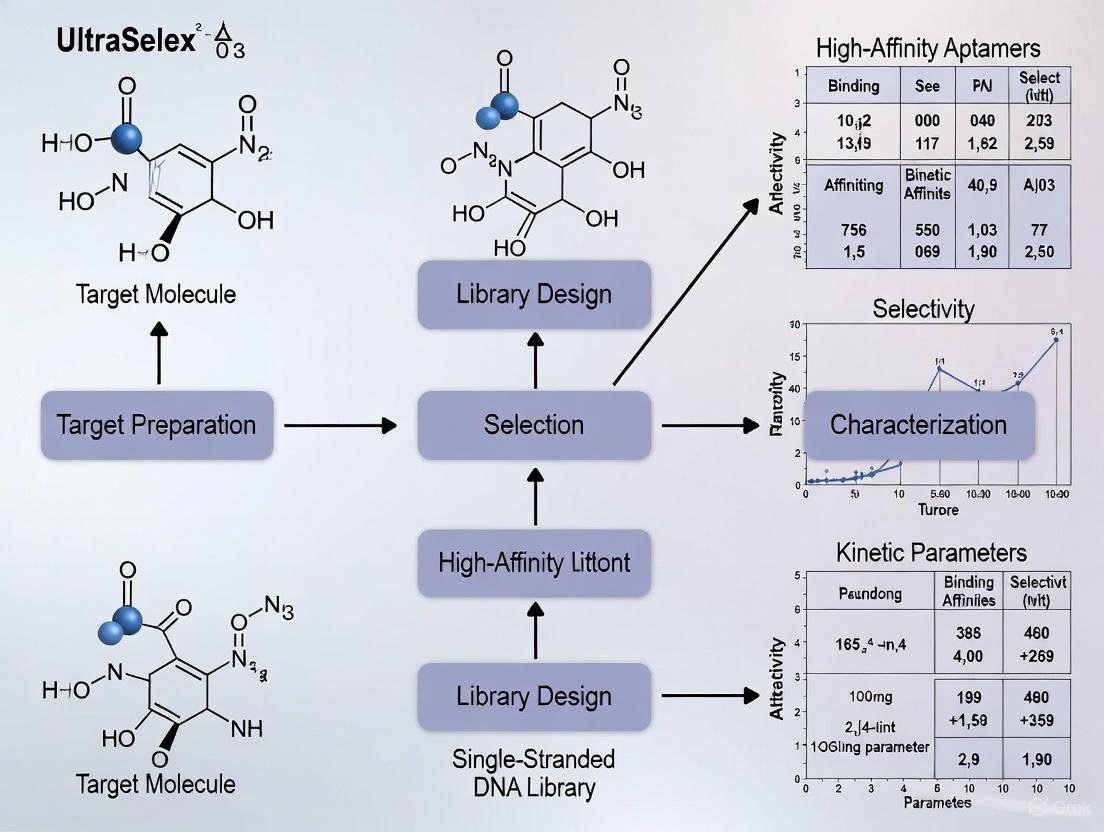
This article explores UltraSelex, a groundbreaking non-iterative method that dramatically accelerates the discovery of high-affinity RNA aptamers.
UltraSelex: Revolutionizing High-Affinity Aptamer Discovery in a Single Day
Abstract
This article explores UltraSelex, a groundbreaking non-iterative method that dramatically accelerates the discovery of high-affinity RNA aptamers. Combining biochemical partitioning, high-throughput sequencing, and computational rank modeling, UltraSelex reduces discovery time from weeks to approximately one day. We detail its foundational principles, methodology, and successful applications against therapeutic targets like SARS-CoV-2 RdRp and HIV reverse transcriptase. The content also provides a comparative analysis with conventional SELEX, discusses optimization strategies, and validates its performance, offering researchers and drug development professionals a comprehensive guide to this transformative technology for developing new diagnostics, therapeutics, and research tools.
The Aptamer Discovery Challenge: Why UltraSelex Was Needed
Systematic Evolution of Ligands by Exponential Enrichment (SELEX) has served as the foundational methodology for aptamer discovery since its inception in the 1990s [1]. This iterative process isolates specific nucleic acid sequences (aptamers) from vast random libraries based on their affinity for target molecules. While successful, conventional SELEX faces significant challenges that limit its efficiency and accessibility. Traditional protocols require multiple iterative rounds of selection, amplification, and purification, making the process laborious, time-consuming, and often yielding candidates enriched for unintended criteria [2]. The limitations extend beyond mere inconvenience, impacting the reliability, cost, and throughput of aptamer development for research and therapeutic applications. This document examines these limitations within the context of modern aptamer discovery research, highlighting how emerging technologies like UltraSelex address these fundamental constraints.
Quantitative Analysis of Traditional SELEX Limitations
The constraints of conventional SELEX can be categorized into three primary areas: extensive time and labor requirements, unintended sequence enrichment, and technical inefficiencies in library handling. The following table summarizes these key limitations and their practical implications for researchers.
Table 1: Key Limitations of Traditional SELEX and Their Implications
| Limitation Category | Specific Challenge | Impact on Research and Development |
|---|---|---|
| Time and Labor | Multiple iterative rounds (typically 8-20) [3] | Extends discovery timeline to weeks or months [2] [3] |
| Labor-intensive purification and amplification steps | Consumes significant researcher time and laboratory resources | |
| Unintended Enrichment | Amplification of non-specific binders or background sequences | Leads to false positives and reduces success rate [2] |
| PCR amplification bias [4] | Can overshadow high-affinity, low-abundance aptamers | |
| Difficulty in selecting for rare cell populations in complex mixtures | Limits application in tissue-specific targeting [5] | |
| Technical Process | Inefficient separation of bound and unbound sequences [3] | Necessitates more selection rounds to achieve sufficient enrichment |
| Challenge in generating high-quality single-stranded DNA (ssDNA) libraries [6] | Introduces bottlenecks and potential bias in every selection round | |
| Target immobilization can alter protein conformation [1] | May result in aptamers that bind inefficiently to native targets |
Detailed Experimental Protocol: Traditional ssDNA Library Generation
A critical bottleneck in SELEX is the regeneration of single-stranded DNA (ssDNA) for each successive selection round. Inefficient ssDNA production can introduce significant bias and process delays. The following protocol, adapted from comparative methodological studies, outlines four common approaches [6].
Principle
After each round of selection and PCR amplification, the resulting double-stranded DNA (dsDNA) must be converted back to ssDNA to serve as the library for the next round. The efficiency of this conversion is crucial for maintaining sequence diversity and ensuring selection progress.
Materials
- PCR Master Mix (standard or high-fidelity)
- Purified dsDNA SELEX Pool from the previous selection round
- Primers: Standard forward and modified reverse primers (e.g., phosphorylated, biotin-labeled, or extended) depending on the method chosen.
- Enzymes: Lambda exonuclease and corresponding buffer (for Method A).
- Streptavidin-coated Magnetic Beads (if using biotin-based methods not detailed here).
- Denaturing Polyacrylamide Gel Electrophoresis (dPAGE) equipment and reagents (for Methods B and D).
- Thermal Cycler
- Standard Molecular Biology Reagents: for purification (e.g., phenol-chloroform, ethanol), and electrophoresis.
Step-by-Step Methodology
Method A: PCR with Exonuclease Digestion (PCR-lambda)
- Perform symmetric PCR using a reverse primer that is 5'-phosphorylated.
- Purify the dsDNA PCR product.
- Digest the phosphorylated strand using lambda exonuclease according to the manufacturer's protocol.
- Purify the remaining ssDNA strand, typically using dPAGE to separate it from digestion byproducts [6].
Method B: PCR with Extended Primer and dPAGE (PCR-long RV)
- Perform symmetric PCR using a reverse primer with a significant extension (e.g., a poly(dA)20 tail).
- Purify the dsDNA PCR product.
- Denature the dsDNA and separate the strands using dPAGE, which resolves the shorter forward strand from the longer, extended reverse strand.
- Excise and elute the shorter, desired ssDNA strand from the gel [6].
Method C: Asymmetric PCR (A-PCR)
- Perform PCR using a highly asymmetric primer ratio (e.g., 1:50 to 1:100, forward:reverse).
- After the limiting primer is exhausted, the excess primer generates single-stranded products over subsequent cycles.
- Purify the final product, which contains a mixture of dsDNA and ssDNA, often requiring optimization to minimize nonspecific amplification [6].
Method D: Primer-Blocked Asymmetric PCR (PBA-PCR)
- Perform asymmetric PCR (as in Method C) but include a blocking oligo complementary to the extended region of the reverse primer.
- The blocker prevents the truncated reverse primer from participating in amplification, reducing nonspecific byproducts.
- Purify the resulting ssDNA. This method has been shown to yield favorable results in terms of specificity and efficiency [6].
Technical Notes
- Method Selection: A comparative study found that PBA-PCR (Method D) offered superior specificity and efficiency, while enzymatic digestion (Method A) and extended primer separation (Method B) are robust but more labor-intensive. Basic asymmetric PCR (Method C) is prone to nonspecific amplification [6].
- Bias Consideration: Each method can introduce different sequence biases. Using a standardized, efficient method like PBA-PCR throughout the SELEX process can help maintain library integrity.
- Quality Control: The concentration and purity of the final ssDNA library should be verified spectroscopically before proceeding to the next selection round.
Signaling Pathways and Workflow Visualization
The following diagram illustrates the complex, multi-round workflow of traditional SELEX, highlighting points where key limitations such as time consumption, labor intensity, and unintended enrichment arise.
Figure 1: Workflow of the traditional SELEX process, illustrating the iterative cycles that contribute to its lengthy timeline and labor-intensive nature. Critical steps where bias and unintended enrichment can occur are highlighted.
The Scientist's Toolkit: Key Research Reagent Solutions
Successful execution of a SELEX experiment requires careful selection of core reagents. The table below outlines essential materials and their critical functions in the selection process.
Table 2: Essential Reagents for SELEX Experiments
| Research Reagent | Function & Importance in SELEX |
|---|---|
| Initial Oligonucleotide Library | A synthetic ssDNA pool with a central random region (e.g., 30-50 nt) flanked by constant primer binding sites. Provides the sequence diversity (10^14-10^15 unique molecules) essential for finding a high-affinity aptamer [7] [3]. |
| Target Molecule | The protein, small molecule, cell, or other entity against which aptamers are selected. Purity and native conformation are critical for success [1] [5]. |
| Partitioning Matrix | The solid support or method used to separate target-bound sequences from unbound ones (e.g., nitrocellulose filters, magnetic beads, capillary electrophoresis apparatus) [7] [3]. |
| PCR Reagents | Enzymes (Taq polymerase), dNTPs, and buffers for amplifying the tiny fraction of selected sequences after each round. High-fidelity polymerases can help reduce replication errors [6]. |
| Specialized Primers | Chemically modified primers (phosphorylated, biotinylated, or with poly-A extensions) are required for efficient and high-quality ssDNA library regeneration between rounds [6]. |
| ssDNA Regeneration Kit | Commercial kits or standardized protocols for enzymatic digestion (e.g., lambda exonuclease) or strand separation, which is a major bottleneck in the process [6]. |
Emerging Solutions: The UltraSelex Paradigm
Novel approaches are overcoming the limitations of traditional SELEX. UltraSelex represents a significant advancement, as it is a non-iterative method that combines biochemical partitioning, high-throughput sequencing, and computational rank modeling to discover high-affinity RNA aptamers in approximately one day [2]. This method identifies aptamers based on their signal-to-background ratio in a single selection step, effectively bypassing the need for multiple rounds of amplification that introduce bias.
Another innovative strategy involves the use of Unique Molecular Identifiers (UMIs), which are short DNA barcodes attached to each library molecule before selection. This allows for the precise quantification of aptamer candidates from a single round of selection by mitigating PCR bias and sequence over-enrichment, enabling the isolation of high-affinity aptamers that might be lost in traditional SELEX [4]. Furthermore, microfluidic technologies like CE-SELEX enhance the efficiency of the partitioning step—the separation of bound and unbound sequences. The high resolving power of capillary electrophoresis can reduce the number of required selection rounds to just 1-4, significantly accelerating the process and improving the quality of selected aptamers [3]. These integrated approaches mark a transformative shift toward faster, more reliable, and less labor-intensive aptamer discovery.
The traditional SELEX process, while powerful, is fundamentally constrained by its lengthy timeline, significant labor demands, and susceptibility to unintended sequence enrichment. These limitations have historically impeded the rapid development of aptamers for therapeutic, diagnostic, and research applications. Detailed analysis of protocols, such as those for ssDNA generation, reveals specific technical bottlenecks that contribute to these challenges. The future of aptamer discovery lies in innovative, integrated methodologies like UltraSelex, UMI-based selection, and microfluidic partitioning. These approaches directly address the core limitations of SELEX by leveraging single-round selection, advanced sequencing, and computational analysis to achieve rapid, efficient, and unbiased discovery of high-affinity nucleic acid ligands.
UltraSelex represents a transformative advancement in the field of aptamer discovery, enabling the identification of high-affinity RNA ligands in a single, non-iterative step. Aptamers are short, single-stranded nucleic acids that bind specific targets with high affinity and specificity, serving as crucial tools in therapeutics, diagnostics, and live-cell imaging [2] [8]. Traditional aptamer discovery relies on the Systematic Evolution of Ligands by Exponential Enrichment (SELEX), a process involving 10-15 iterative rounds of selection, amplification, and purification. While successful, SELEX is laborious, time-consuming, and often enriches candidates based on unintended criteria like amplification efficiency rather than optimal binding [2] [7].
UltraSelex overcomes these limitations by integrating biochemical partitioning, high-throughput sequencing, and computational signal-to-background rank modeling into a unified workflow. This paradigm shift reduces the discovery timeline from several weeks or months to approximately one day, providing a rapid route to new drug candidates and diagnostic tools [2] [8] [9].
Key Advantages Over Traditional SELEX
The following table summarizes the core differences between traditional SELEX and the novel UltraSelex method.
Table 1: Comparison of Traditional SELEX vs. UltraSelex
| Feature | Traditional SELEX | UltraSelex |
|---|---|---|
| Process | Iterative (10-15 rounds) | Single-step & non-iterative |
| Timeframe | Several weeks to months | ~1 day |
| Key Steps | Repeated cycles of binding, partitioning, and amplification | Single round of binding with multiple elution steps, followed by HTS and computational ranking |
| Primary Output | Enriched pool of sequences | Ranked list of sequences based on affinity and abundance |
| Risk of Bias | High (e.g., amplification bias) | Minimized |
| Efficiency | Labor-intensive and low-throughput | Highly efficient and high-throughput |
Detailed UltraSelex Workflow Protocol
The UltraSelex protocol can be broken down into three consecutive phases.
Phase 1: Biochemical Partitioning
Objective: To physically separate RNA ligands based on their binding affinity to the target protein in a single binding reaction.
Materials:
- Purified Target Protein: For example, SARS-CoV-2 RdRp (NSP12) or HIV reverse transcriptase.
- Initial RNA Library: A synthetic single-stranded RNA library featuring a central randomized region (e.g., 40 nucleotides) flanked by constant primer binding sites [10].
- Binding Buffer: Appropriate buffer (often containing Mg²⁺) to facilitate RNA folding and binding.
- Partitioning Matrix: Ni-NTA magnetic beads (if using His-tagged protein) or other solid supports.
Procedure:
- Incubation: The initial diverse RNA library is incubated with the immobilized target protein under optimal binding conditions.
- Sequential Elution: Instead of a single wash and elution, the complex is subjected to multiple successive washes. Each wash is collected as a separate fraction. Critically, RNA extracted from each successive wash corresponds to a population with progressively lower binding affinities, while the final elution contains the highest-affinity binders [9].
- Collection: All fractions, from the first wash to the final eluate, are collected and prepared for sequencing.
Phase 2: High-Throughput Sequencing (HTS)
Objective: To determine the sequence identity and abundance of RNA molecules in every collected fraction.
Procedure:
- Reverse Transcription: RNA from each fraction is reverse-transcribed into complementary DNA (cDNA).
- Library Preparation & Amplification: cDNA is amplified via PCR with added sequencing adapters.
- Sequencing: The prepared libraries are sequenced using a HTS platform (e.g., Illumina). This generates millions of sequence reads across all affinity fractions.
Phase 3: Computational Analysis & Rank Modeling
Objective: To identify high-affinity aptamers by analyzing the sequencing data with a computational model.
Procedure:
- Sequence Alignment & Counting: Sequencing reads are aligned, and the frequency of each unique sequence is counted in every fraction.
- Signal-to-Background Rank Modeling: A computational model analyzes the distribution of each sequence across the fractions. High-affinity aptamers are identified by their enrichment in high-affinity elution fractions and depletion in early wash fractions (high signal-to-background ratio). The model generates a ranked list of candidates based on their calculated binding affinity [2] [8].
- Motif Inference: From the top-ranked sequences, conserved secondary structures and minimal functional aptamer motifs can be easily inferred [2].
Experimental Validation & Performance Data
UltraSelex has been experimentally validated against multiple targets, demonstrating its efficacy and speed. The table below quantifies its performance in identifying functional aptamers.
Table 2: Experimental Validation of UltraSelex with Various Targets
| Target Molecule | Key Experimental Findings | Validated Application |
|---|---|---|
| Silicon Rhodamine Dye | Discovery of high-affinity RNA aptamers. | Live-cell super-resolution RNA imaging [2] [8]. |
| SARS-CoV-2 RNA-dependent RNA Polymerase (RdRp) | Identification of aptamers binding to a conserved region of NSP12. | Efficient inhibition of RdRp activity in vitro, effective across wild-type, Alpha, Delta, and Omicron variants [2] [10]. |
| HIV Reverse Transcriptase | Selection of high-affinity RNA ligands. | Efficient enzyme inhibition [2] [8]. |
The ability of UltraSelex-derived aptamers to inhibit a key viral enzyme like SARS-CoV-2 RdRp across multiple variants highlights its potential for developing broad-spectrum antiviral agents [10]. This is particularly valuable for targeting highly conserved proteins essential for viral replication.
Essential Research Reagent Solutions
The following reagents and materials are critical for implementing the UltraSelex protocol.
Table 3: Essential Research Reagents and Materials for UltraSelex
| Reagent/Material | Function in the Protocol | Examples & Notes |
|---|---|---|
| Target Protein | The molecule of interest for aptamer discovery. | Requires high purity. Examples: His-tagged SARS-CoV-2 NSP12, HIV reverse transcriptase. Solubility can be enhanced using tags like His-SUMO [10]. |
| Synthetic RNA Library | The starting pool of diverse sequences for selection. | Contains a central randomized region (e.g., 40 nt) flanked by constant primer binding sites for PCR amplification [10]. |
| Partitioning Matrix | Solid support to immobilize the target and separate bound/unbound RNA. | Ni-NTA magnetic beads for His-tagged proteins [10]. |
| High-Throughput Sequencer | Determines the sequence and abundance of RNA in all elution fractions. | Platforms like Illumina are standard. |
| Computational Resources | For analysis of sequencing data and application of the rank model. | The UltraSelex analysis code is freely available on Zenodo and a dedicated web server [8]. |
UltraSelex marks a definitive paradigm shift in aptamer discovery, moving from a cyclical, time-intensive process to a streamlined, single-step methodology. By unifying biochemical partitioning with deep sequencing and sophisticated computational ranking, it delivers high-affinity RNA aptamers in about one day. This accelerated and efficient workflow not only expedites basic research but also dramatically enhances our capability to rapidly develop new therapeutic candidates and diagnostic tools against evolving targets, such as viral polymerases. UltraSelex is poised to become the new standard in the field, empowering researchers and drug development professionals in their quest for high-precision molecular tools.
UltraSelex represents a transformative methodology for the discovery of high-affinity RNA aptamers. Unlike the traditional Systematic Evolution of Ligands by Exponential Enrichment (SELEX), which is iterative, laborious, and often requires multiple weeks to complete, UltraSelex is a non-iterative process that accomplishes aptamer discovery in approximately one day [2] [11]. This innovative approach integrates three core technological components—biochemical partitioning, high-throughput sequencing, and computational signal-to-background rank modeling—into a single, streamlined workflow. By circumventing the need for multiple rounds of selection and amplification, UltraSelex minimizes biases and accelerates the path to identifying optimal nucleic acid ligands for therapeutic, diagnostic, and research applications [2].
Core Component 1: Biochemical Partitioning
Principle and Objective
The initial phase of UltraSelex involves the physical separation of target-binding RNA sequences from non-binders in a single, highly efficient step. This biochemical partitioning is critical as it replaces the multiple, sequential separation rounds characteristic of conventional SELEX [12] [7]. The objective is to directly isolate the functional "signal" (bound sequences) from the vast background of the random library with high fidelity.
Key Methodologies
Several advanced techniques can be employed for this partitioning step, with Capillary Electrophoresis (CE) being one of the most effective [12] [7].
- CE-Based Partitioning: The pre-incubated mixture of the target and the RNA library is injected into a capillary under a high-voltage electric field. The key to separation lies in the differential migration rates between the large, slow-moving target-RNA complexes and the smaller, faster-moving unbound RNA sequences [12]. This method offers high resolution and can be completed rapidly.
- Microbead-Assisted Partitioning: In this variant, the target molecule is immobilized on microbeads. When aptamers bind to the target, significant changes in absorbance and migration time occur, allowing for precise observation and collection of the complexes using ultraviolet indicators. This enhances the sensitivity and accuracy of complex recovery [12].
- Critical Parameters: Successful partitioning depends on stringent control of buffer conditions (including pH and ionic strength), incubation time and temperature, and the purity of the target molecule. These factors collectively influence the specificity of the interaction and the yield of genuine binders [7].
Protocol: Capillary Electrophoresis Partitioning
- Preparation: Prepare the random RNA library (typically 1011-1016 unique sequences) and the target molecule (e.g., a protein, dye, or enzyme) in a suitable binding buffer. The buffer may contain monovalent or divalent cations to reduce non-specific binding [7].
- Incubation: Mix the RNA library with the target and incubate to equilibrium (e.g., 15-30 minutes at a defined temperature such as 25°C or 37°C).
- Separation: Load the mixture into a CE system. Apply a high-voltage electric field (specific voltage depends on capillary dimensions and system setup). Under these conditions, the target-aptamer complexes and unbound RNAs migrate at distinct rates.
- Collection: Monitor the effluent using a UV or fluorescence detector. Precisely collect the fraction corresponding to the slower-migrating peak, which contains the target-RNA complexes, at the capillary outlet.
- Recovery: Isolate the RNA from the collected complexes, typically via phenol-chloroform extraction and ethanol precipitation, for subsequent high-throughput sequencing.
Core Component 2: High-Throughput Sequencing
Role in UltraSelex
High-throughput sequencing (HTS) is employed to decode the entire population of RNA sequences recovered from the biochemical partitioning step. This provides a comprehensive, unbiased view of the enriched pool, moving beyond the limited sampling of traditional Sanger sequencing and enabling the identification of rare but high-affinity ligands [13].
Experimental Workflow and Platform Selection
The journey from a recovered RNA pool to sequenceable data involves a critical sample preparation stage, visualized in the workflow below.
Diagram 1: HTS sample preparation workflow. PCR amplification, while common, can introduce bias and may be omitted if input material is sufficient [13].
- Sequencing Platform: The Illumina sequencing-by-synthesis (SBS) platform is widely adopted for SELEX and UltraSelex applications. It is highly suited for reading the short lengths (typically <150 nt) of aptamer libraries and generates the massive data output required for comprehensive analysis [13].
- Sample Preparation: The recovered RNA must be converted into a format compatible with the HTS platform. The general workflow involves:
- Reverse Transcription: Conversion of single-stranded RNA (ssRNA) to complementary DNA (cDNA).
- End Repair and A-tailing: Creating blunt-ended, phosphorylated dsDNA fragments with adenine overhangs to facilitate adapter ligation.
- Adapter Ligation: Ligation of platform-specific sequencing adapters to the dsDNA fragments. These adapters often contain sample-specific barcodes (indices) to enable multiplexing.
- Size Selection: Purification of the correctly ligated product using gel electrophoresis or magnetic beads.
- Optional Amplification: A final PCR amplification may be performed to enrich for adapter-ligated fragments, though this step can be omitted to avoid potential PCR bias if the starting quantity of cDNA is adequate [13].
Protocol: HTS Library Preparation for UltraSelex
- Reverse Transcription: Synthesize first-strand cDNA from the partitioned RNA pool using a reverse transcriptase and a primer complementary to the constant region of the library.
- dsDNA Synthesis: Generate double-stranded DNA (dsDNA) using a DNA polymerase. Primers for this step can already include partial adapter sequences or barcodes for sample multiplexing.
- End Prep: Use a commercial end-repair enzyme mix to create blunt-ended, 5'-phosphorylated dsDNA. Subsequently, add a single 'A' nucleotide to the 3' ends to prevent adapter dimerization.
- Adapter Ligation: Ligate the Illumina sequencing adapters to the 'A'-tailed dsDNA fragments using a DNA ligase.
- Clean-up: Purify the ligation product via gel electrophoresis or magnetic bead-based clean-up to select fragments of the expected size and remove adapter dimers.
- Sequencing: Quantify the final library and load it onto an Illumina sequencer (e.g., MiSeq or NextSeq) for single-end or paired-end sequencing as per the experimental design.
Core Component 3: Computational Modeling
Signal-to-Background Rank Modeling
The final and defining component of UltraSelex is the computational analysis of the HTS data. The primary innovation here is the use of a signal-to-background rank model [2]. This model analyzes the sequenced partitioned pool to distinguish true binding signals (aptamers) from non-specific background, ranking all sequences based on their inferred binding affinity without the need for tracking enrichment across multiple cycles.
Algorithmic Approach and Integration with Generative Models
The computational pipeline extends beyond simple frequency counting. While the exact algorithm for UltraSelex's model is detailed in the primary research, the field is moving towards sophisticated machine learning approaches. For instance, tools like RaptGen use a variational autoencoder (VAE) with a profile Hidden Markov Model (HMM) decoder to embed sequence data into an informative latent space [14]. This allows sequences to cluster based on shared motifs, enabling the generative in silico design of novel aptamers not present in the original sequencing data [14]. The logical flow of this advanced analysis is depicted below.
Diagram 2: Computational analysis and modeling pipeline. The rank model identifies high-affinity candidates, while subsequent latent space analysis can reveal structural motifs [2] [14].
Protocol: Computational Analysis for Aptamer Ranking
- Data Preprocessing: Process raw sequencing reads (FASTQ files) using tools like Cutadapt or Trimmomatic to remove adapter sequences and low-quality bases.
- Sequence Alignment and Counting: Align processed reads to the expected library structure (accounting for constant flanking regions) using a simple pattern-matching or alignment script. Count the frequency of each unique sequence in the partitioned pool.
- Application of Rank Model: Input the sequence frequency data into the proprietary UltraSelex computational model. The model evaluates each sequence based on its abundance and other features to calculate a binding affinity score, generating a ranked list of candidates.
- Motif Discovery and Truncation: Analyze the top-ranked sequences using bioinformatics tools (e.g., AptaSuite, MEME) to identify conserved primary and secondary structure motifs. These motifs often represent the minimal functional unit of the aptamer and can be synthesized as truncated variants for validation and cost-effective application [2] [15].
Performance Data and Applications
Quantitative Performance of UltraSelex
UltraSelex has been quantitatively demonstrated to identify high-affinity aptamers for diverse targets with high efficiency. The table below summarizes key performance metrics as reported in the primary research.
Table 1: Demonstrated Performance of UltraSelex for Various Targets
| Target Molecule | Aptamer Affinity (Reported Kd or Efficacy) | Primary Application Demonstrated | Key Outcome |
|---|---|---|---|
| Silicon Rhodamine Dye | High-affinity binding (specific Kd not listed in sources) | Live-cell RNA imaging | Enabled visualization of RNA in living cells [2] |
| SARS-CoV-2 RNA-dependent RNA Polymerase (RdRp) | High-affinity binding (specific Kd not listed in sources) | Enzyme inhibition | Resulted in efficient inhibition of viral enzyme function [2] |
| HIV Reverse Transcriptase | High-affinity binding (specific Kd not listed in sources) | Enzyme inhibition | Resulted in efficient inhibition of viral enzyme function [2] |
The Scientist's Toolkit: Essential Research Reagents
The following table details the key reagents and materials required to implement the UltraSelex methodology.
Table 2: Essential Research Reagents for UltraSelex
| Category | Item / Reagent | Function / Explanation |
|---|---|---|
| Starting Library | Synthetic ssDNA or RNA Library with random region (e.g., N30-40) | Provides the diverse starting pool of ~10^14 unique sequences from which aptamers are selected [2] [13]. |
| Biochemical Partitioning | Capillary Electrophoresis System (e.g., PA/CE) | High-resolution platform for separating bound complexes from unbound nucleic acids [12]. |
| Target Molecule (Protein, Small Molecule, etc.) | The molecule of interest against which aptamers are being raised. Purity is critical [7]. | |
| Binding Buffer (with controlled pH & cations) | Provides the chemical environment for specific aptamer-target interaction [7]. | |
| HTS & Analysis | High-Throughput Sequencer (e.g., Illumina platform) | Generates millions of sequence reads from the partitioned pool for comprehensive analysis [13]. |
| HTS Library Prep Kit (e.g., PCR-free adapter ligation kit) | Converts the recovered RNA/DNA into a format compatible with the sequencer [13]. | |
| Computational Resources (Server/Cluster) & Analysis Software (e.g., RaptGen) | Runs the signal-to-background rank model and performs motif discovery and sequence analysis [2] [14]. |
The integration of biochemical partitioning, high-throughput sequencing, and computational rank modeling within the UltraSelex framework marks a significant leap forward in aptamer discovery. This synergistic combination condenses a process that traditionally took weeks or months into a single day, while simultaneously providing a more data-driven and potentially less biased route to identifying high-affinity RNA ligands [2]. The successful application of UltraSelex to targets like viral polymerases and fluorogenic dyes underscores its potential to rapidly generate new tools for molecular imaging, diagnostic sensing, and the development of therapeutic candidates.
Aptamers, often termed "chemical antibodies," are single-stranded oligonucleotides that fold into specific three-dimensional structures, enabling them to bind to diverse targets—from small molecules and proteins to whole cells and viruses—with high specificity and affinity [1]. Their applications span therapeutics, biosensors, diagnostics, and targeted drug delivery. The predominant method for discovering aptamers has been the Systematic Evolution of Ligands by EXponential enrichment (SELEX), a repetitive process involving cycles of binding, partitioning, amplification, and purification that can require multiple weeks or even months to complete [2] [1]. This process is not only laborious and time-consuming but also often results in aptamer candidates enriched for unintended criteria, such as amplification efficiency rather than pure binding affinity.
UltraSelex represents a paradigm shift in aptamer discovery. As a novel, non-iterative method, it combines biochemical partitioning, high-throughput sequencing, and computational signal-to-background rank modeling to identify high-affinity RNA aptamers in approximately one day [2]. This Application Note details the protocol and advantages of UltraSelex, framing it within the broader thesis of accelerating and refining high-affinity aptamer discovery for research and therapeutic development. By condensing a weeks-long process into a single day, UltraSelex provides researchers and drug development professionals with a rapid, efficient, and powerful route to reveal new drug candidates and diagnostic tools.
Comparative Analysis: UltraSelex vs. Traditional SELEX
Table 1: A quantitative comparison of key performance metrics between traditional SELEX and the UltraSelex method.
| Feature | Traditional SELEX | UltraSelex |
|---|---|---|
| Timeframe | Several weeks to months [1] | ~1 day [2] |
| Process Nature | Iterative (multiple cycles of selection & amplification) [1] | Non-iterative (single-step) [2] |
| Key Steps | Incubation, partitioning, amplification, purification (repeated) [1] | Biochemical partitioning, HTS, computational ranking [2] |
| Primary Output | Enriched pool requiring further candidate isolation | Ranked list of high-affinity candidate sequences [2] |
| Risk of Bias | Higher risk of amplification and selection bias [16] | Reduced amplification bias via direct sequence analysis [2] |
| Data Utilization | Often limited analysis of enriched pools | Comprehensive use of HTS data with computational modeling [2] |
The limitations of traditional SELEX extend beyond its lengthy timeline. Each iterative round carries a risk of failure, and the process is susceptible to biases, particularly during the PCR amplification steps, which can propagate byproducts and lead to the loss of high-affinity but poor-amplifying sequences [16]. Furthermore, analyzing the final enriched pool to identify individual aptamer candidates can be non-trivial and often requires additional cloning and sequencing efforts. UltraSelex addresses these shortcomings directly by eliminating the iterative cycles and using a robust computational model to identify binders from a single round of deep sequencing.
The UltraSelex Protocol: A Detailed Workflow
The UltraSelex protocol can be conceptually divided into three integrated phases: initial library preparation and binding, high-throughput sequencing, and computational analysis for aptamer identification.
Phase 1: Biochemical Partitioning
Objective: To physically separate target-bound RNA sequences from unbound sequences in a single, highly efficient step.
Materials & Reagents:
- Target Molecule: The protein, small molecule, or other target of interest (e.g., SARS-CoV-2 RdRp, HIV reverse transcriptase, silicon rhodamine dye) [2].
- Initial ssDNA Library: A synthetic single-stranded DNA library consisting of a central random region (e.g., 30-60 nucleotides) flanked by constant primer sequences for amplification and in vitro transcription [1].
- In Vitro Transcription Reagents: T7 or similar RNA polymerase, NTPs, and reaction buffer to transcribe the ssDNA pool into an RNA library.
- Binding Buffer: A buffer optimized for the specific target to promote proper aptamer folding and binding. Unlike antibodies, aptamer selection can be performed under non-physiological conditions, which is a key advantage [1].
- Partitioning Matrix: This could be a solid support (e.g., beads) onto which the target is immobilized, or a method for native partitioning like filter binding or capillary electrophoresis.
Procedure:
- Library Generation: Synthesize the initial RNA library from the ssDNA template using in vitro transcription. The theoretical diversity of a 30nt random library is 10^18, though practical diversity is limited by synthesis and amplification [14] [16].
- Anneal and Fold: Denature the RNA library at high temperature (e.g., 95°C for 5 minutes) and then rapidly cool on ice. Subsequently, incubate in the appropriate binding buffer at the selection temperature to allow sequences to adopt stable 3D structures.
- Incubate with Target: Mix the folded RNA library with the target molecule and incubate for a sufficient time to reach binding equilibrium.
- Partition Bound from Unbound: Apply the mixture to the partitioning matrix. For immobilized targets, this involves a wash step to remove unbound and weakly bound RNA sequences. The specifically bound RNAs are then recovered by elution, for example, using a denaturing buffer or heat.
Phase 2: High-Throughput Sequencing (HTS)
Objective: To determine the nucleotide sequences of all partitioned RNAs.
Materials & Reagents:
- Reverse Transcription Reagents: Reverse transcriptase, primers, and dNTPs to convert the eluted RNA pool into complementary DNA (cDNA).
- PCR Amplification Reagents: DNA polymerase, primers containing HTS adapter sequences, and dNTPs.
- High-Through Sequencer: Platforms such as those from Illumina or Oxford Nanopore Technologies.
Procedure:
- cDNA Synthesis: Reverse transcribe the eluted RNA into cDNA.
- Library Preparation for HTS: Amplify the cDNA using a limited number of PCR cycles with primers that add the necessary platform-specific adapter sequences and barcodes.
- Sequencing: Pool and run the prepared libraries on a high-throughput sequencer to generate millions of sequence reads from the partitioned pool.
Phase 3: Computational Analysis & Rank Modeling
Objective: To identify high-affinity aptamer candidates from the HTS dataset by calculating a signal-to-background score for each unique sequence.
Materials & Reagents:
- Computational Resources: A standard desktop computer or server with sufficient processing power.
- UltraSelex Software/Algorithm: The custom computational pipeline for signal-to-background rank modeling.
Procedure:
- Sequence Demultiplexing and Quality Control: Process raw sequencing data to assign reads to samples and filter out low-quality sequences.
- Sequence Alignment and Clustering: Align sequences to the reference library structure and cluster identical or highly similar sequences.
- Signal-to-Background Rank Modeling: This is the core of UltraSelex. The algorithm ranks every unique sequence based on its enrichment in the target-bound pool compared to a background model or the initial library. This model identifies sequences with statistically significant binding affinity, bypassing the need for multiple enrichment rounds [2].
- Candidate Selection and Motif Inference: The top-ranked sequences from the model are selected as high-affinity aptamer candidates. The ranked list often allows for easy inference of minimal functional aptamer motifs.
Diagram 1: UltraSelex Single-Day Workflow. The integrated process from library preparation to candidate identification.
The Scientist's Toolkit: Essential Research Reagents & Materials
Table 2: Key research reagents and materials essential for implementing the UltraSelex protocol.
| Item | Function/Description | Critical Considerations |
|---|---|---|
| Synthetic ssDNA Library | Template for generating the initial RNA pool. A 30-60nt random region is common. | Source manufacturer matters; different synthesis methods can introduce sequence and nucleotide bias affecting library diversity [16]. |
| Target Molecule | The protein, enzyme, or small molecule for which aptamers are desired. | Purity and correct folding/activity are critical. Immobilization strategy (if used) should not alter the target's native conformation [1]. |
| In Vitro Transcription Kit | Converts the DNA template pool into a diverse RNA library. | High yield and fidelity are required to maintain library complexity. |
| High-Throughput Sequencer | Determines the nucleotide sequences of millions of RNA molecules in the partitioned pool. | Platform choice (e.g., Illumina) affects read length, depth, and cost. Sufficient sequencing depth is needed to capture diversity. |
| Computational Pipeline | The custom UltraSelex algorithm for signal-to-background rank modeling of HTS data. | The core differentiator of UltraSelex; identifies high-affinity binders without iterative selection [2]. |
Validation & Applications: From Discovery to Functional Tools
UltraSelex has been experimentally validated against multiple targets, demonstrating its broad utility. It has successfully identified high-affinity RNA aptamers capable of binding a fluorogenic silicon rhodamine dye, enabling live-cell RNA imaging [2]. Furthermore, it has generated aptamers against therapeutically relevant protein targets, including the SARS-CoV-2 RNA-dependent RNA polymerase and HIV reverse transcriptase, with the resulting aptamers showing efficient enzyme inhibition [2]. This demonstrates that the aptamers discovered via this rapid method are not merely binders but are also functional and can be directly developed into tools for biotechnology and medicine.
The computational rank modeling at the heart of UltraSelex provides a natural path for analyzing sequence motifs. The ranked list of candidates allows researchers to easily identify conserved regions and infer minimal, functional aptamer motifs, which is a significant advantage for downstream optimization and synthesis [2]. This approach aligns with advancements in computational aptamer design, such as generative models like RaptGen, which use variational autoencoders to embed sequence data into a latent space for efficient candidate generation and optimization [14].
Diagram 2: Computational Analysis Pipeline. The flow of data from raw sequencing reads to the identification of functional aptamer candidates.
UltraSelex represents a transformative advancement in the field of aptamer discovery. By replacing the iterative, multi-week SELEX process with a streamlined, single-day methodology that integrates sophisticated computational analysis, it dramatically accelerates the research and development timeline. This protocol offers a rapid, reliable, and efficient route to discovering high-affinity RNA aptamers, directly enabling the development of new drug candidates, diagnostic tools, and research reagents. For researchers and drug development professionals, adopting UltraSelex means overcoming the primary bottlenecks of traditional aptamer generation, paving the way for faster innovation in therapeutics and diagnostics.
Inside UltraSelex: A Step-by-Step Workflow and Real-World Applications
Aptamers, single-stranded nucleic acid ligands that bind to specific targets with high affinity and specificity, have emerged as powerful candidates for therapeutic drugs, diagnostic sensors, and molecular imaging tools [2]. For decades, the predominant method for their discovery has been Systematic Evolution of Ligands by Exponential Enrichment (SELEX), a laborious process requiring multiple iterative rounds of selection and amplification that often spans weeks to months [12] [7]. This process is not only time-consuming but also prone to experimental biases and the unintended enrichment of sequences based on criteria other than target affinity [2] [17].
UltraSelex represents a transformative approach that addresses these fundamental limitations. Recently introduced in Nature Chemical Biology, UltraSelex is a non-iterative method that combines biochemical partitioning, high-throughput sequencing, and computational rank modeling to discover high-affinity RNA aptamers in approximately one day [2]. This pipeline moves beyond the "black box" nature of traditional SELEX by leveraging robust computational analysis from a single round of biochemical selection, thereby dramatically accelerating the discovery timeline while providing a data-driven framework for candidate ranking and minimization [2]. This Application Note deconstructs the complete UltraSelex workflow, providing detailed protocols and resource guidelines to empower researchers in implementing this cutting-edge technology for high-affinity aptamer discovery.
The UltraSelex methodology integrates a single step of biochemical partitioning with subsequent high-throughput sequencing and computational analysis. The following diagram visualizes the complete, end-to-end pipeline.
Stage 1: Biochemical Partitioning
Principle and Objective
The initial stage aims to physically separate target-binding RNA sequences from non-binders in a single, stringent partitioning step. Unlike iterative SELEX rounds, UltraSelex performs this key separation once, relying on subsequent sequencing depth and computational power to identify binders, thereby condensing the experimental timeline [2].
Detailed Experimental Protocol
Library-Target Incubation
- Library Preparation: Synthesize an RNA library featuring a central random region (e.g., 30-40 nucleotides) flanked by constant primer regions for amplification and sequencing. For the random region (N) of length n, the theoretical library diversity is 4^n. A 40-nucleotide region represents ~1.2x10^24 unique sequences, though practical library sizes are typically 10^14 - 10^15 molecules [18].
- Binding Reaction: Incubate the RNA library (1-10 µM) with the immobilized target (10-100 nM) in a suitable binding buffer (e.g., containing Mg^2+^, salts, carrier RNA) for 30-60 minutes at a defined temperature (e.g., 25°C or 37°C) to reach binding equilibrium [2] [10].
Separation of Bound Complexes
- Partitioning Method: Employ a stringent method to separate bound RNA-target complexes from unbound RNA. The specific technique can be adapted based on the target type:
- Immobilized Targets: For protein targets, use affinity chromatography with targets immobilized on resins (e.g., Ni-NTA for His-tagged proteins, streptavidin beads for biotinylated targets) [12] [10].
- Capillary Electrophoresis (CE): Effective for soluble protein targets, leveraging differential migration of protein-RNA complexes versus free RNA [12] [7].
- Washing: Perform multiple rigorous washes with binding buffer to remove weakly associated and non-specifically bound RNAs.
Elution of Bound RNAs
- Elution Conditions: Elute specifically bound RNAs from the target. Competitive elution with free target molecules is preferred for isolating high-affinity binders. Alternatively, use denaturing conditions (e.g., heat, denaturants) or high-salt buffers.
- Recovery: Precipitate and purify the eluted RNA using standard ethanol precipitation methods or commercial purification kits.
Critical Parameters for Success
- Stringency: The binding and washing conditions must be sufficiently stringent to minimize non-specific binding. Optimization of salt concentration, pH, and temperature is crucial.
- Controls: Include control partitioning experiments without the target or with a non-target protein to identify and subtract background sequences.
- Minimizing Bias: Use high-fidelity enzymes during subsequent reverse transcription and PCR to avoid introducing amplification biases.
Stage 2: High-Throughput Sequencing
Library Preparation and Sequencing
- Amplification: Reverse transcribe the eluted RNA into cDNA and amplify with primers that add platform-specific sequencing adapters and sample barcodes. Use a minimal number of PCR cycles (e.g., 10-15 cycles) to prevent skewing sequence representation.
- Sequencing Platform: Utilize a high-throughput platform (e.g., Illumina NextSeq) to generate a deep dataset. Aim for a sequencing depth that provides 10-100x coverage over the practical library complexity, typically requiring millions of reads [14] [18].
Primary Data Processing
Process the raw sequencing data to generate a count table for each unique sequence.
- Demultiplexing: Assign reads to samples based on their barcodes.
- Quality Filtering: Remove low-quality reads and sequences with errors in the constant regions.
- Clustering & Alignment: Cluster identical sequences to generate a list of unique sequences and their read counts.
Stage 3: Computational Analysis & Rank Modeling
Core Algorithm and Implementation
The computational stage transforms raw sequencing data into a predictive model for identifying high-affinity aptamers.
Signal-to-Background Rank Modeling
The core innovation of UltraSelex is a computational model that ranks sequences by their enrichment in the target-bound pool relative to control pools, rather than relying on iterative enrichment [2].
- Input Data: The model uses the count data for each unique sequence from the target-selected pool and one or more control pools (e.g., no-target control, non-target control).
- Statistical Scoring: A statistical score (S) for each sequence is calculated based on its normalized frequency in the target pool versus the control pool(s). A simple implementation is the signal-to-background ratio or enrichment score:
- Enrichment~i~ = (Count~i, Target~ / Total~Target~) / (Count~i, Control~ / Total~Control~)
- Ranking: All unique sequences are ranked by their enrichment score. The top-ranked sequences represent the highest-affinity candidates.
Motif Inference and Truncation
From the ranked list, minimal functional aptamer motifs can be inferred bioinformatically.
- Motif Analysis: Use tools like RaptGen [14] or multiple sequence alignment to identify conserved sequence motifs and structural elements among the top-ranked candidates.
- In Silico Truncation: Propose shorter, minimal functional sequences by analyzing the conserved core regions, which can reduce synthesis costs and improve pharmacokinetic properties in downstream applications [14] [7].
Performance Comparison: UltraSelex vs. Traditional SELEX
The following table quantifies the key advantages of the UltraSelex pipeline against the traditional SELEX methodology.
Table 1: Quantitative Comparison of UltraSelex and Traditional SELEX
| Parameter | Traditional SELEX | UltraSelex Pipeline |
|---|---|---|
| Typical Duration | Several weeks to months [12] [7] | ~1 day [2] |
| Number of Selection Rounds | 8-20 iterative rounds [7] | Single round [2] |
| Theoretical Library Coverage | Limited (~10^15 molecules) [18] | Limited (~10^15 molecules) but analyzed more deeply [2] |
| Primary Enrichment Mechanism | Experimental iteration [12] | Computational ranking [2] |
| Risk of Experimental Bias | Higher (multiple amplification steps) [17] | Lower (single amplification step) [2] |
| Output | Enriched pool requiring further cloning | Ranked list of individual candidates [2] |
The Scientist's Toolkit: Essential Research Reagents
Successful implementation of the UltraSelex pipeline requires the following key reagents and materials.
Table 2: Essential Research Reagents and Materials for UltraSelex
| Item | Function/Description | Critical Notes |
|---|---|---|
| Synthetic DNA Library | Template for transcription; contains a central random region (N~30-40~) flanked by constant primer sites. | Defines theoretical diversity; chemical synthesis quality is critical. |
| Immobilized Target | Purified protein, small molecule, or cell; often biotinylated or His-tagged for capture. | Purity and native conformation are essential for selecting functional aptamers. |
| Solid Support | Streptavidin-coated beads, Ni-NTA resin, or other capture matrices. | For partitioning bound from unbound RNA sequences. |
| RNA Polymerase (e.g., T7) | In vitro transcription of the DNA pool to generate the RNA library. | High yield is needed to maintain library diversity. |
| Reverse Transcriptase | Converts partitioned RNA back into cDNA for amplification. | High fidelity is recommended to minimize sequencing errors. |
| High-Fidelity DNA Polymerase | Amplifies cDNA post-partitioning for sequencing library prep. | Minimizes PCR bias during amplification. |
| High-Throughput Sequencer | Platforms like Illumina for deep sequencing of the partitioned pool. | Provides the millions of reads needed for robust statistical modeling. |
Validation and Downstream Applications
Functional Validation of Candidates
Top-ranked candidates from the computational model must be experimentally validated.
- Synthesis: Chemically synthesize the proposed RNA aptamers, including any proposed truncated variants.
- Affinity Measurement: Determine dissociation constants (K~d~) using techniques like surface plasmon resonance (SPR), bio-layer interferometry (BLI), or electrophoretic mobility shift assays (EMSAs). UltraSelex has generated aptamers with nanomolar affinity for targets like a fluorogenic dye and viral polymerases [2].
- Specificity Testing: Test binding against non-target molecules to confirm specificity.
Demonstrated Applications
The UltraSelex pipeline has been successfully applied to discover functional RNA aptamers for diverse targets, demonstrating its broad utility.
- Live-Cell RNA Imaging: Selection of aptamers binding a silicon rhodamine dye, enabling the development of tools for visualizing RNA in live cells [2].
- Viral Enzyme Inhibition: Discovery of high-affinity RNA aptamers targeting essential viral enzymes, including SARS-CoV-2 RNA-dependent RNA polymerase (RdRp) and HIV reverse transcriptase, showing efficient enzyme inhibition in functional assays [2] [10].
UltraSelex represents a significant leap forward in aptamer discovery, deconstructing and streamlining the traditional pipeline into a rapid, integrated process. By replacing multiple experimental selection rounds with a single biochemical partitioning step coupled with sophisticated computational rank modeling, it reduces discovery time from months to a single day while providing a data-driven framework for candidate selection and optimization [2]. This protocol provides a detailed roadmap for researchers to implement this powerful technology, facilitating the accelerated development of high-affinity aptamers for therapeutics, diagnostics, and basic research.
The Role of Computational Signal-to-Background Rank Modeling in Candidate Selection
The discovery of high-affinity aptamers has been revolutionized by the development of UltraSelex, a noniterative method that significantly accelerates the identification of nucleic acid ligands. Traditional Systematic Evolution of Ligands by Exponential Enrichment (SELEX) processes, while successful, are notably laborious and time-consuming, often requiring multiple rounds of selection over several weeks [2] [19]. These conventional approaches frequently result in candidates enriched for unintended criteria due to experimental biases and non-specific interactions [2] [17]. UltraSelex addresses these limitations by integrating biochemical partitioning, high-throughput sequencing, and computational signal-to-background rank modeling to discover high-affinity RNA aptamers in approximately one day [2] [11]. This methodological breakthrough provides a rapid pathway for revealing new drug candidates and diagnostic tools, fundamentally changing the landscape of aptamer development.
At the core of UltraSelex's efficiency is its computational framework, which enables the direct identification of binding candidates from initial selection rounds without iterative enrichment. This approach leverages massive sequence datasets and sophisticated ranking algorithms to distinguish true binders from background noise, representing a significant advancement over traditional methods that rely on progressive biochemical enrichment [2]. The integration of computational modeling not only accelerates the discovery timeline but also enhances the quality of identified aptamers by minimizing the selection artifacts that often plague multiple-round SELEX procedures.
Computational Framework: Core Principles and Architecture
Theoretical Foundation of Signal-to-Background Modeling
The computational engine of UltraSelex centers on signal-to-background rank modeling, a quantitative approach that systematically differentiates true binding events from non-specific interactions. This methodology operates on the principle that authentic high-affinity aptamers will demonstrate consistently strong signals across sequencing datasets when compared to background noise patterns [2]. The model establishes a quantitative ranking system that evaluates each candidate sequence based on its binding signal strength relative to the background distribution observed throughout the entire library.
This approach represents a significant departure from traditional enrichment-based selection criteria. Whereas conventional SELEX identifies aptamers through progressive biochemical enrichment over multiple rounds, signal-to-background modeling directly analyzes sequence representation and binding characteristics from a single selection step [2]. The model incorporates multiple parameters including sequence abundance, binding affinity measurements, and structural features to generate a composite ranking score. This score enables researchers to prioritize candidates with the highest likelihood of genuine target interaction, effectively compressing what would normally require weeks of iterative selection into a single computational analysis step [2] [11].
Algorithmic Implementation and Workflow Integration
The computational framework of UltraSelex integrates seamlessly with experimental data generation through a structured pipeline that transforms raw sequencing information into candidate rankings. Following biochemical partitioning of the RNA library against the target molecule, high-throughput sequencing generates millions of sequence reads that serve as input for the computational model [2]. The algorithm processes these sequences through multiple analytical stages, beginning with quality control and normalization to account for variations in sequencing depth and representation.
The core algorithmic processing involves the application of statistical models that calculate binding probability scores for each unique sequence based on its representation in target-bound populations compared to control populations [2]. Advanced machine learning techniques may be incorporated to identify subtle sequence-structure-activity relationships that correlate with high-affinity binding [18] [17]. The model outputs a ranked list of candidates, with the highest-ranked sequences demonstrating the most significant signal-to-background differentiation. This ranking directly informs downstream experimental validation, allowing researchers to focus resources on the most promising candidates [2].
Experimental Protocols and Methodologies
UltraSelex Biochemical Partitioning Procedure
The initial experimental phase of UltraSelex establishes the foundation for effective computational analysis through optimized biochemical partitioning. This protocol requires careful preparation of the target molecule and RNA library to ensure optimal interaction conditions while minimizing non-specific binding.
Materials Required:
- Purified target protein (e.g., SARS-CoV-2 RNA-dependent RNA polymerase, HIV reverse transcriptase)
- Randomized RNA library (40-60 nucleotide variable region flanked by constant primer binding sites)
- Binding buffer (composition optimized for specific target)
- Partitioning matrix (e.g., nitrocellulose filters, affinity beads)
- Wash buffer for removing non-specific binders
- Elution buffer for recovering bound RNA species
Step-by-Step Protocol:
- Target Preparation: Dilute the target molecule to working concentration in appropriate binding buffer. For protein targets, typical concentrations range from 100 nM to 1 μM in physiological buffer conditions.
- Library Equilibration: Denature and refold the RNA library (approximately 10^14 molecules) in binding buffer by heating to 70°C for 5 minutes followed by gradual cooling to room temperature over 20 minutes.
- Binding Reaction: Incubate the refolded RNA library with the target molecule for 30-60 minutes at controlled temperature (typically 25-37°C) with gentle agitation.
- Partitioning: Apply the binding reaction to the partitioning matrix to separate bound from unbound RNA species. For filter-based partitioning, use nitrocellulose membranes to capture protein-RNA complexes while unbound RNA passes through.
- Washing: Perform three rigorous washes with binding buffer (5-10 column volumes or membrane washes) to remove weakly associated RNA sequences.
- Elution: Recover target-bound RNA species using elution conditions that disrupt aptamer-target interactions. For protein targets, typically use 7M urea, 4M guanidinium hydrochloride, or heated elution (95°C for 5 minutes).
- RNA Precipitation: Purify and concentrate eluted RNA via ethanol precipitation for subsequent sequencing library preparation.
This optimized partitioning protocol creates the essential dataset—the population of target-binding RNA sequences—that serves as input for the computational analysis pipeline [2].
Sequencing Library Preparation and Data Generation
Following biochemical partitioning, the recovered RNA population must be converted into a format suitable for high-throughput sequencing. This protocol ensures maximum representation of the selected sequences while maintaining library diversity.
Materials Required:
- Reverse transcription primers and enzyme
- PCR amplification primers with sequencing adapters
- High-fidelity DNA polymerase
- DNA clean-up and size selection reagents (e.g., solid-phase reversible immobilization beads)
- Quantification equipment (e.g., Qubit fluorometer, Bioanalyzer)
- High-throughput sequencing platform (e.g., Illumina)
Step-by-Step Protocol:
- Reverse Transcription: Convert eluted RNA to cDNA using target-specific or random primers with reverse transcriptase following manufacturer protocols.
- Initial Amplification: Perform limited-cycle PCR (8-12 cycles) to amplify cDNA while adding platform-specific sequencing adapters.
- Library Validation: Analyze amplified library by capillary electrophoresis to confirm appropriate size distribution and absence of primer dimers.
- Library Quantification: Precisely quantify the sequencing library using fluorometric methods to ensure optimal loading concentrations.
- Sequencing: Process the library on an appropriate high-throughput sequencing platform to generate sufficient coverage (typically 10-100 million reads) for computational analysis.
The resulting sequencing data provides the comprehensive sequence dataset that serves as the primary input for the computational signal-to-background rank modeling [2] [18].
Computational Analysis and Candidate Ranking
The computational protocol transforms raw sequencing data into a ranked list of high-affinity aptamer candidates through systematic bioinformatic analysis.
Materials Required:
- High-performance computing resources
- Sequencing data in FASTQ format
- Bioinformatics tools for sequence analysis (Python/R environments)
- Custom scripts for signal-to-background modeling
Step-by-Step Protocol:
- Data Preprocessing: Quality filter raw sequencing reads, trim adapter sequences, and remove low-complexity or poor-quality sequences.
- Sequence Clustering: Group identical sequences and collapse duplicates to generate unique sequence counts across the dataset.
- Abundance Calculation: Normalize sequence counts to account for variations in sequencing depth and calculate relative abundances.
- Background Modeling: Establish background distribution models based on expected random representation and non-specific binding patterns.
- Signal-to-Background Scoring: Calculate for each sequence a binding score representing its enrichment relative to background expectations.
- Rank Generation: Sort all unique sequences by their signal-to-background scores to generate a candidate priority list.
- Motif Identification: Apply motif discovery algorithms to identify conserved sequence and structural elements among high-ranking candidates.
- Candidate Selection: Export the top-ranked sequences (typically 10-100 candidates) for experimental validation.
This computational protocol enables the identification of high-affinity aptamers without iterative selection rounds by leveraging statistical significance rather than progressive enrichment [2] [18] [17].
Key Research Reagents and Solutions
The successful implementation of UltraSelex depends on carefully selected reagents and materials that optimize each step of the process. The following table details essential research reagent solutions and their specific functions within the methodology.
Table 1: Essential Research Reagent Solutions for UltraSelex Implementation
| Reagent Category | Specific Examples | Function in UltraSelex Workflow |
|---|---|---|
| Nucleic Acid Library | Random RNA library with 40-60nt variable region | Provides diverse starting material for selection; structural diversity essential for identifying binders [2] |
| Target Molecules | SARS-CoV-2 RdRp, HIV RT, fluorogenic dyes | Serves as selection target for aptamer discovery; determines application relevance of identified aptamers [2] [11] |
| Partitioning Matrix | Nitrocellulose filters, affinity resins, magnetic beads | Physically separates bound from unbound sequences; critical for creating selected pool for sequencing [2] |
| Buffer Systems | Binding buffer, wash buffer, elution buffers | Maintain optimal conditions for specific interactions while minimizing non-specific binding [2] |
| Sequencing Reagents | Reverse transcription enzymes, library preparation kits | Convert RNA populations to sequence-ready libraries; maintain diversity and representation [2] [18] |
| Computational Tools | Signal-to-background algorithms, motif discovery software | Analyze sequencing data to identify high-affinity candidates; enables noniterative selection [2] |
Performance Metrics and Validation
The efficacy of computational signal-to-background rank modeling in UltraSelex has been demonstrated through multiple experimental validations against diverse molecular targets. The following table summarizes key performance data from published implementations, highlighting the efficiency and effectiveness of this approach.
Table 2: Quantitative Performance Metrics of UltraSelex with Computational Ranking
| Target Molecule | Discovery Timeline | Affinity Range (Kd) | Key Applications Demonstrated |
|---|---|---|---|
| Silicon Rhodamine Dye | ~1 day | Low nanomolar range | Live-cell RNA imaging [2] |
| SARS-CoV-2 RdRp | ~1 day | High affinity (exact values not specified) | Enzyme inhibition [2] |
| HIV Reverse Transcriptase | ~1 day | High affinity (exact values not specified) | Enzyme inhibition [2] |
| Angiopoietin-2 (Ang2) | Not specified (traditional SELEX) | 20.5 ± 7.3 nM (best candidate) | Cancer biomarker targeting [20] |
| Neutrophil Gelatinase-Associated Lipocalin (NGAL) | Not specified (ML-enhanced) | 1.5 nM (best truncated candidate) | Acute kidney injury biomarker [18] |
The validation data demonstrate that UltraSelex achieves comparable or superior aptamer affinities to traditional SELEX methods while dramatically reducing discovery time from weeks to approximately one day [2]. Additional validation studies have confirmed the functional efficacy of UltraSelex-derived aptamers in biologically relevant applications including live-cell imaging and enzyme inhibition, highlighting the practical utility of this accelerated discovery approach [2] [11].
Integration with Complementary Technologies
The computational framework of UltraSelex demonstrates synergistic potential when integrated with other advanced aptamer discovery technologies. Machine learning approaches, particularly neural network models trained on large-scale aptamer selection data, can enhance the predictive accuracy of signal-to-background models [18] [17]. These integrated systems enable even more efficient navigation of the vast aptamer sequence space, identifying high-affinity binders that might be overlooked by conventional selection methods.
Particle display technology represents another complementary approach that provides quantitative affinity measurements for thousands of aptamer candidates in parallel [18]. When combined with UltraSelex, this integration enables experimental validation of computationally predicted affinities at scale, creating a virtuous cycle of model improvement and prediction refinement. Similarly, array-based characterization methods like those employed in Quantitative Parallel Aptamer Selection System (QPASS) can provide additional binding parameters for top-ranked candidates, including specificity profiles and performance in complex biological matrices [20].
These technological synergies highlight how computational signal-to-background rank modeling serves as a core component within an evolving ecosystem of high-throughput aptamer discovery platforms, each contributing unique capabilities that collectively accelerate and enhance the identification of functional nucleic acid ligands.
Visualizing the UltraSelex Workflow
The following diagram illustrates the integrated experimental and computational workflow of UltraSelex, highlighting the central role of signal-to-background modeling in candidate selection.
UltraSelex Workflow Integration
The workflow visualization emphasizes how computational rank modeling serves as the pivotal connection between raw experimental data and candidate identification. This integrated approach enables the direct transition from sequencing information to prioritized aptamer candidates without iterative selection rounds.
A critical success factor in the computational component is the algorithmic processing structure that transforms sequence data into binding predictions, as detailed in the following diagram.
Computational Analysis Pipeline
The computational pipeline illustrates the structured transformation of raw sequencing data into prioritized candidates through sequential analytical steps, with signal-to-background scoring serving as the critical differentiation mechanism.
Computational signal-to-background rank modeling represents the cornerstone of the UltraSelex platform, enabling the dramatic acceleration of aptamer discovery from weeks to a single day while maintaining high affinity and specificity standards. This methodology effectively addresses fundamental limitations of traditional SELEX, including experimental biases, non-specific interactions, and the time-intensive nature of iterative selection rounds [2] [17]. By leveraging high-throughput sequencing data and sophisticated computational analysis, researchers can now directly identify high-performance aptamers without progressive enrichment, compressing the discovery timeline without compromising quality.
The continued refinement of computational models, particularly through integration with machine learning approaches [18] [17], promises to further enhance the efficiency and success rates of aptamer discovery. As these models incorporate additional parameters such as structural features and interaction energetics, their predictive accuracy and ability to identify optimal candidates will continue to improve. This progression toward increasingly sophisticated computational guidance represents the future of aptamer development, potentially enabling the rational design of nucleic acid ligands with customized binding properties for therapeutic, diagnostic, and research applications.
For researchers implementing UltraSelex, the critical success factors remain the optimization of biochemical partitioning to maximize signal differentiation, the generation of high-quality sequencing data with sufficient coverage, and the validation of computational predictions through experimental characterization. When these elements are effectively integrated, computational signal-to-background rank modeling provides a powerful tool for advancing aptamer technology and expanding its applications across biomedical science and drug development.
The COVID-19 pandemic has underscored the critical need for therapeutic agents capable of targeting conserved elements of viral pathogens to combat rapid mutation and immune evasion. SARS-CoV-2 non-structural protein 12 (NSP12), which encodes the RNA-dependent RNA polymerase (RdRp), represents a highly conserved and essential component of the viral replication machinery, making it an ideal target for broad-spectrum antiviral strategies [10] [21]. This case study details the application of UltraSelex, a novel non-iterative aptamer discovery platform, for the rapid identification of high-affinity RNA aptamers against SARS-CoV-2 RdRp, framing the results within the broader thesis that UltraSelex significantly accelerates the development of nucleic acid ligands for therapeutic and diagnostic applications.
Aptamers, often termed "chemical antibodies," are single-stranded oligonucleotides that bind molecular targets with high specificity and affinity through their defined three-dimensional structures [21]. Compared to traditional antibodies, aptamers offer significant advantages including lower production costs, minimal immunogenicity, enhanced tissue penetration, and the ability to be chemically synthesized and modified [10] [21]. The predominant method for aptamer discovery has been Systematic Evolution of Ligands by Exponential Enrichment (SELEX), an iterative process that is often laborious, time-consuming, and prone to enriching candidates based on unintended selection criteria [2] [11]. UltraSelex addresses these limitations by combining biochemical partitioning, high-throughput sequencing, and computational signal-to-background rank modeling in a single-step process, enabling the discovery of RNA aptamers in approximately one day instead of the weeks to months required by conventional SELEX [2] [11].
Key Advantages of UltraSelex for RdRp Aptamer Discovery
The UltraSelex methodology represents a paradigm shift in aptamer discovery through several key innovations that are particularly advantageous for targeting complex viral enzymes like SARS-CoV-2 RdRp.
Single-Step Selection Process
Unlike traditional SELEX, which requires multiple iterative rounds of selection and amplification (often 10-15 rounds), UltraSelex performs aptamer identification in a single biochemical partitioning step [2] [11]. This non-iterative approach significantly reduces both the time and labor required for aptamer discovery while minimizing the propagation of amplification artifacts that can occur during repeated PCR cycles in conventional SELEX.
Computational Signal-to-Background Modeling
Following biochemical partitioning and high-throughput sequencing, UltraSelex employs sophisticated computational rank modeling to distinguish true binding sequences from background noise [2] [11]. This data-driven approach allows for the identification of high-affinity ligands that might be lost during the early rounds of traditional SELEX due to low abundance in the initial library.
Direct Minimal Motif Inference
From the ranked sequences identified through the UltraSelex process, minimal functional aptamer motifs can be directly inferred, facilitating the downstream optimization and truncation of candidates for therapeutic development [2]. This capability aligns with findings from traditional SELEX studies where minimal functional domains have been successfully mapped for various aptamer classes [22].
Comparative Analysis: UltraSelex vs. Traditional SELEX for RdRp Targeting
The following table summarizes key methodological and performance differences between UltraSelex and traditional SELEX approaches for targeting SARS-CoV-2 RdRp:
Table 1: Comparison of UltraSelex and Traditional SELEX Methodologies
| Parameter | UltraSelex | Traditional SELEX |
|---|---|---|
| Time Requirement | ~1 day [2] [11] | Several weeks to months [10] [23] |
| Selection Process | Single-step biochemical partitioning [2] | Iterative rounds (typically 10-15) [10] [23] |
| Amplification Cycles | Minimal | Extensive (potential for artifacts) [16] |
| Computational Integration | Core component (signal-to-background modeling) [2] | Typically supplemental (sequence analysis) |
| Minimal Motif Identification | Direct inference from ranked sequences [2] | Requires additional truncation studies [22] |
| Demonstrated RdRp Inhibition | Yes (SARS-CoV-2 RdRp) [2] [11] | Yes (SARS-CoV-2 and HCV RdRp) [10] [24] |
The following workflow diagram illustrates the streamlined UltraSelex process for RdRp aptamer discovery:
Experimental Protocols
UltraSelex Protocol for SARS-CoV-2 RdRp Aptamer Discovery
Objective: To identify high-affinity RNA aptamers against SARS-CoV-2 RNA-dependent RNA polymerase (NSP12) using the UltraSelex platform.
Materials:
- Purified SARS-CoV-2 NSP12 protein (wild-type or variant forms)
- Diverse RNA library with random region (e.g., 40-nucleotide randomized sequence)
- Partitioning matrix (e.g., Ni-NTA magnetic beads for His-tagged NSP12)
- High-throughput sequencing platform
- Computational resources for signal-to-background analysis
Procedure:
- Protein Preparation: Express and purify SARS-CoV-2 NSP12 protein. For improved solubility, utilize an N-terminal His-SUMO-tagged expression system with optimization of induction conditions (e.g., 0.4 mM IPTG at 16°C for 16 hours) [10] [23].
- Biochemical Partitioning: Incubate the RNA library with target NSP12 protein under appropriate binding conditions. Remove non-specific binders through pre-clearing steps with the partitioning matrix alone.
- Recovery of Bound Sequences: Isplicate RNA molecules specifically bound to NSP12 using competitive elution or denaturing conditions.
- High-Throughput Sequencing: Prepare sequencing libraries directly from recovered RNA without intermediate amplification steps. Sequence using an appropriate high-throughput platform.
- Computational Analysis: Process sequencing data through the UltraSelex computational pipeline, which applies signal-to-background rank modeling to identify enriched sequences and infer minimal aptamer motifs.
- Candidate Selection: Select top-ranked aptamer candidates for downstream validation based on computational scores and abundance metrics.
Functional Validation Protocol for RdRp Inhibition
Objective: To validate the inhibitory activity of selected aptamers against SARS-CoV-2 RdRp function.
Materials:
- Selected RNA aptamers (synthesized with or without 2'-modifications)
- Purified SARS-CoV-2 NSP12 protein (multiple variants if available)
- Primer extension assay components: template RNA, primers, nucleotides, reaction buffer
- Equipment for gel electrophoresis or real-time fluorescence detection
Procedure:
- Aptamer Preparation: Synthesize selected aptamer candidates, considering chemical modifications such as 2'-fluoro pyrimidines for enhanced nuclease resistance [10] [23].
- RdRp Activity Assay: Perform primer extension assays by incubating NSP12 with template RNA and necessary components in the presence or absence of selected aptamers.
- Variant Cross-Testing: Evaluate aptamer inhibition against NSP12 variants from different SARS-CoV-2 strains (wild-type, Alpha, Delta, Omicron) to assess broad-spectrum potential [10].
- Binding Affinity Determination: Quantify aptamer-protein interaction strength through RNA-protein pull-down assays followed by calculation of dissociation constants (Kd values) [10] [23].
- Specificity Assessment: Conduct competition assays with non-target proteins or mutant NSP12 constructs to verify binding specificity.
Research Reagent Solutions
The following table details essential materials and reagents required for implementing the UltraSelex platform for RdRp aptamer discovery:
Table 2: Essential Research Reagents for RdRp Aptamer Discovery
| Reagent/Category | Specific Examples | Function/Application |
|---|---|---|
| Target Protein | SARS-CoV-2 NSP12 (RdRp) with His-SUMO tag | Primary target for aptamer selection; conserved viral enzyme essential for replication |
| RNA Library | Library with 40-nt random region flanked by constant sequences | Source of potential aptamer sequences; provides diversity for selection |
| Partitioning Matrix | Ni-NTA magnetic beads | Immobilizes His-tagged NSP12 for biochemical partitioning |
| Stabilization Chemistry | 2'-fluoro pyrimidine modifications | Enhances nuclease resistance and stability of RNA aptamers |
| Computational Tools | Signal-to-background rank modeling algorithms | Identifies true binding sequences from background in HTS data |
| Validation Assays | Primer extension assay, RNA-protein pull-down | Confirms functional inhibition and binding affinity of selected aptamers |
Results and Applications
Efficacy of UltraSelex-Derived RdRp Aptamers
UltraSelex has successfully identified high-affinity RNA aptamers capable of binding SARS-CoV-2 RdRp and inhibiting its enzymatic function [2] [11]. The platform's computational rank modeling enables the identification of aptamers with dissociation constants in the nanomolar to picomolar range, comparable to or exceeding those obtained through traditional SELEX methodologies.
Traditional SELEX approaches have yielded RNA aptamers (composed of either 2'-hydroxyl nucleotides or 2'-fluoro pyrimidines) that demonstrate high-affinity binding to SARS-CoV-2 NSP12 with effective inhibition of RdRp activity in primer extension assays [10] [23]. Notably, these aptamers maintained binding and inhibitory activity across multiple NSP12 variants from wild-type, Alpha, Delta, and Omicron strains, supporting their potential as broad-spectrum antiviral agents [10].
Therapeutic Potential and Implementation
The following diagram illustrates the mechanism of action and therapeutic application of RdRp-targeting aptamers:
The broad-spectrum inhibitory activity of RdRp-targeting aptamers against multiple SARS-CoV-2 variants positions them as promising therapeutic candidates that may retain efficacy against future emerging variants [10] [21]. The conserved nature of the RdRp active site across coronaviruses further suggests potential application against related viral pathogens.
This case study demonstrates that UltraSelex represents a significant advancement in aptamer discovery methodology, particularly for targeting essential viral enzymes such as SARS-CoV-2 RdRp. By reducing the discovery timeline from months to approximately one day while maintaining the ability to identify high-affinity, functional aptamers, UltraSelex addresses critical bottlenecks in therapeutic development against rapidly evolving pathogens.
The successful application of UltraSelex for SARS-CoV-2 RdRp aptamer discovery supports the broader thesis that this platform accelerates the development of nucleic acid ligands for pharmaceutical applications, potentially expanding the repertoire of tools available for combating current and future viral threats. As the field of aptamer therapeutics continues to evolve, methodologies like UltraSelex that integrate biochemical and computational approaches will play an increasingly important role in the rapid development of targeted molecular interventions.
Human Immunodeficiency Virus (HIV) reverse transcriptase (RT) is a critical enzyme in the viral replication cycle, making it a primary target for antiretroviral therapy. The development of high-affinity inhibitors, such as RNA and DNA aptamers, represents a promising therapeutic strategy. This application note details the use of the UltraSelex platform—a novel, noniterative selection method—for the rapid discovery of RNA aptamers targeting HIV RT. We provide detailed protocols and quantitative data to guide researchers in developing potent aptamer-based inhibitors [2] [8].
UltraSelex significantly accelerates the discovery timeline, enabling the identification of high-affinity RNA aptamers in approximately one day, a process that traditionally takes weeks or months using conventional Systematic Evolution of Ligands by Exponential Enrichment (SELEX) [2] [8] [1]. This case study frames the development of HIV RT inhibitors within this advanced technological context, providing validated experimental workflows and data for the scientific community.
UltraSelex Methodology for HIV RT Aptamer Discovery
The UltraSelex method replaces the multiple iterative rounds of classic SELEX with a single-step biochemical partitioning followed by high-throughput sequencing and computational analysis using signal-to-background rank modeling.
Key Workflow Steps
- Library Preparation: A synthetic RNA library is synthesized, typically featuring a central randomized region (e.g., 30-60 nucleotides) flanked by constant primer sequences for amplification.
- Biochemical Partitioning: The RNA library is incubated with the immobilized HIV RT target. Unbound sequences are removed through stringent washing.
- Elution and Recovery: Bound RNA aptamers are eluted from the target.
- High-Throughput Sequencing: The eluted pool is reverse-transcribed, amplified, and subjected to next-generation sequencing (NGS).
- Computational Analysis: NGS data from the bound pool and the initial library are compared. A rank model identifies sequences with the highest enrichment (signal-to-background ratio), predicting high-affinity binders.
Workflow Visualization
The following diagram illustrates the streamlined UltraSelex process for discovering HIV RT aptamers.
Experimentally Characterized HIV RT Aptamers
UltraSelex and historical SELEX approaches have identified several potent RNA and DNA aptamers against HIV RT. The table below summarizes key candidates, their properties, and applications.
Table 1: Characterized HIV Reverse Transcriptase Aptamers
| Aptamer Name | Type | Sequence Length/ Motif | Dissociation Constant (Kd) | Primary Application & Notes |
|---|---|---|---|---|
| UltraSelex-derived Aptamer [2] [8] | RNA | Not specified | Not specified | Efficient enzyme inhibition; identified in ~1 day. |
| 70.28 / 70.28min [25] | RNA | 118-nt / 34-nt pseudoknot | 5.3 nM / 25 nM | Restored temperature sensitivity in E. coli Pol Its model; demonstrated in vivo inhibition. |
| TPK1.1 [25] | RNA | 33-nt pseudoknot | 1.1 nM (in vitro transcript) | Intracellular inhibition in human T-cells; reduced HIV infectivity by 90-99%. |
| Novel 38-mer DNA Aptamer [26] | DNA | 38-nt hairpin | Ultra-high affinity (precise Kd not stated) | Co-crystallized with HIV RT (PDB: 5D3G); used for structural studies. |
| UM Ventures Aptamer [27] | Not specified | Not specified | 1 nM | Diagnostic application for point-of-care detection of HIV RT. |
Detailed Experimental Protocols
Protocol 1: UltraSelex for HIV RT Aptamer Discovery
This protocol is adapted from the UltraSelex methodology for identifying RNA aptamers against protein targets like HIV RT [2] [8].
Materials:
- Target: Recombinant HIV RT protein.
- Library: DNA template library with a T7 promoter, a central random region (N30-60), and fixed flanking sequences.
- Buffers: Binding buffer (e.g., 20 mM Tris-HCl, pH 7.5, 150 mM NaCl, 5 mM MgCl₂), washing buffer, elution buffer.
- Enzymes: T7 RNA polymerase, DNase I (RNase-free), SuperScript IV reverse transcriptase.
- Equipment: Magnetic rack, thermocycler, next-generation sequencer.
Procedure:
- RNA Library Generation: Transcribe the DNA library pool in vitro using T7 RNA polymerase. Purify the full-length RNA product via denaturing polyacrylamide gel electrophoresis (PAGE).
- Target Immobilization: Covalently immobilize HIV RT on magnetic beads according to manufacturer instructions. Block the beads with binding buffer containing carrier (e.g., 0.1 mg/mL yeast tRNA).
- Binding Reaction: Incubate the RNA library (~1 nmol) with HIV RT-bound beads in binding buffer for 30 minutes at 37°C with gentle rotation.
- Partitioning: Place the tube on a magnetic rack to sediment the beads. Carefully remove and discard the supernatant. Wash the beads 3-5 times with 500 μL of washing buffer to remove weakly bound or unbound sequences.
- Aptamer Elution: Elute the specifically bound RNAs by adding elution buffer (e.g., 7 M urea, 20 mM EDTA) and heating at 95°C for 5 minutes. Separate the eluate from the beads using the magnetic rack.
- Sequencing Library Preparation: Reverse-transcribe the eluted RNA into cDNA. Amplify the cDNA by PCR using primers compatible with your NGS platform. Purify the final DNA product.
- Bioinformatic Analysis: Submit the initial library and eluted pool for NGS. Analyze the data using the UltraSelex computational pipeline to generate a ranked list of aptamer candidates based on enrichment.
Protocol 2: Validation of Aptamer Inhibition in a Bacterial Complementation Assay
This functional assay validates the intracellular activity of selected aptamers against HIV RT [25].
Materials:
- Bacterial Strain: E. coli BK148 (Pol Its, defective in DNA polymerase I at 37°C).
- Plasmids:
- pRT5: Expresses HIV RT.
- pERLAC-derived constructs: Express individual aptamers under an inducible promoter (e.g., lac).
- Media: LB broth and agar plates with appropriate antibiotics (e.g., carbenicillin, chloramphenicol).
- Equipment: Shaking incubators, plate reader.
Procedure:
- Strain Preparation: Co-transform E. coli BK148 with plasmid pRT5 (HIV RT) and an aptamer-expression plasmid (or empty pERLAC as control). Select transformants on LB-agar plates with both antibiotics, incubated at the permissive temperature of 30°C.
- Functional Assay via Spot Dilution:
- Grow freshly saturated cultures of the transformed strains in LB media at 30°C.
- Serially dilute the cultures (e.g., 10-1 to 10-8) in fresh media.
- Spot 5-10 μL of each dilution onto pre-warmed LB-agar plates containing antibiotics and IPTG (to induce aptamer expression).
- Incubate one set of plates at 30°C (permissive) and a duplicate set at 37°C (restrictive) for 24-48 hours.
- Data Analysis: Compare growth at 37°C. Functional HIV RT complements the Pol I defect, allowing growth at high dilutions. Effective anti-RT aptamers will inhibit this complementation, restricting growth to only the most concentrated spots, similar to the negative control.
Mechanism of Action and Experimental Visualization
Effective RNA aptamers, such as TPK1.1 and 70.28, often function by mimicking the template-primer substrate, forming stable pseudoknot structures that block the polymerase active site of HIV RT. The following diagram illustrates this inhibitory mechanism and its functional consequence in a model system.
The Scientist's Toolkit: Research Reagent Solutions
Table 2: Essential Reagents for HIV RT Aptamer Development
| Item | Function/Description | Example Application |
|---|---|---|
| Recombinant HIV RT | Purified enzyme for in vitro selection (UltraSelex) and binding assays. | Target for aptamer screening and characterization. |
| Magnetic Beads (Streptavidin/NHS) | Solid support for target immobilization during selection. | Partitioning bound and unbound RNA sequences. |
| T7 RNA Polymerase | High-yield in vitro transcription of the RNA library. | Generation of the initial RNA pool for selection. |
| Next-Generation Sequencer | Deep sequencing of initial and selected oligonucleotide pools. | Identification of enriched aptamer sequences (UltraSelex). |
| E. coli BK148 (Pol Its) | Bacterial model strain with a temperature-sensitive DNA polymerase I. | In vivo functional validation of aptamer efficacy [25]. |
RNA aptamers represent a powerful class of biomolecules that bind specific molecular targets with high affinity and selectivity. Among these, fluorogenic RNA aptamers have emerged as transformative tools for live-cell imaging, enabling researchers to visualize RNA dynamics and localization in real-time with high spatiotemporal resolution. Unlike traditional protein-based fluorescent tags, these RNA aptamers are genetically encodable and can be expressed directly in living cells, providing unprecedented insights into RNA biology.
The discovery of these aptamers has been revolutionized by UltraSelex, a non-iterative selection method that dramatically accelerates aptamer identification from weeks to approximately one day [2]. This technological advancement addresses the limitations of conventional Systematic Evolution of Ligands by Exponential Enrichment (SELEX), which is often laborious, time-consuming, and prone to selecting candidates based on unintended criteria [2]. UltraSelex combines biochemical partitioning, high-throughput sequencing, and computational signal-to-background rank modeling to efficiently identify high-affinity RNA aptamers, making it particularly valuable for discovering tools for live-cell imaging and therapeutic development [2].
This Application Note details the methodology and applications of UltraSelex in discovering fluorogenic RNA aptamers, with specific protocols for implementation in research settings focused on live-cell RNA imaging and antiviral therapeutic development.
UltraSelex represents a paradigm shift in aptamer discovery, eliminating the multiple iterative rounds required by traditional SELEX. The core innovation lies in its single-step biochemical partitioning followed by computational ranking based on enrichment metrics [2].
The methodology begins with incubation of the initial RNA library with the target molecule, followed by precise biochemical partitioning to separate bound and unbound RNA species. The bound RNAs are then subjected to high-throughput sequencing, generating millions of sequence reads. Advanced computational algorithms analyze this data, ranking sequences based on their signal-to-background ratios and enrichment factors compared to the initial library [2]. This integrated approach not only accelerates the discovery process but also enables the identification of minimal functional aptamer motifs through comprehensive sequence analysis.
Key advantages of UltraSelex include:
- Dramatically reduced discovery timeline (approximately 1 day versus weeks for traditional SELEX)
- Reduced selection bias by avoiding iterative enrichment artifacts
- Comprehensive sequence analysis through deep sequencing capabilities
- Direct identification of minimal functional motifs from ranked sequence data
Fluorogenic RNA Aptamers for Live-Cell Imaging
Current Fluorogenic RNA Aptamer Toolbox
The palette of available fluorogenic RNA aptamers has expanded significantly, providing researchers with multiple options for live-cell imaging applications. These aptamers function by binding to specific small-molecule fluorophores, significantly enhancing their fluorescence intensity and enabling RNA visualization in living cells [28].
Table 1: Key Fluorogenic RNA Aptamers and Their Properties
| Aptamer Name | Cognate Fluorophore | Key Properties | Applications |
|---|---|---|---|
| Spinach [28] | DFHBI | Green fluorescence, GFP mimic | RNA tagging, metabolite sensors |
| Broccoli [28] | DFHBI | Improved folding efficiency | Live-cell RNA imaging |
| Corn [28] | DFHBI-1T | Enhanced brightness | RNA dynamics tracking |
| Clivia [29] [28] | SiR-RNA | Large Stokes shift, small size | Dual-emission imaging |
| Pepper [28] | HBC, TIF | High cellular brightness, photostability | Multiplexed RNA imaging |
| Mango [30] | TO1-Biotin | High affinity, fluorogenic | IVC-based selection |
The recent discovery of the Clivia aptamer represents a significant advancement, as it features a small size and large Stokes shift, which minimizes self-quenching and enables dual-emission fluorescence and bioluminescence imaging in live cells [29]. Structural insights into Clivia have revealed the molecular basis for its fluorescence activation mechanism, providing guidance for its optimization and application [29].
Structural Insights and Fluorescence Mechanisms
Structural studies of fluorogenic RNA aptamers have revealed diverse architectural principles underlying their function. The Spinach aptamer forms a long coaxial helical stack comprising three stems (P1, P2, and P3) connected by two irregular junctions, with its DFHBI-binding pocket organized around a three-tetrad quadruplex structure stabilized by potassium ions [28].
The Clivia aptamer represents a distinct structural class, as recent high-resolution structure determination has illuminated its compact architecture and the mechanism responsible for its large Stokes shift [29]. Understanding these structure-function relationships enables rational optimization of aptamer properties for enhanced imaging performance.
UltraSelex Protocol for Fluorogenic RNA Aptamer Discovery
Reagent Preparation
- Initial RNA Library: Synthesize a DNA template library containing a random region of 30-40 nucleotides flanked by constant primer binding sites. Transcribe in vitro to generate the initial RNA pool.
- Target Molecules: Prepare purified target molecules (e.g., fluorogenic dyes such as silicon rhodamine derivatives for imaging applications).
- Partitioning Matrix: Select appropriate matrices (e.g., Ni-NTA magnetic beads for His-tagged proteins) for biochemical partitioning.
- Buffer Systems: Prepare selection buffers optimized for RNA stability and target binding, typically containing Mg²⁺, potassium ions, and RNase inhibitors.
Step-by-Step UltraSelex Procedure
Incubation: Mix the RNA library (1-10 nmol) with the target molecule (10-100 μM) in selection buffer. Incubate at room temperature or 37°C for 30-60 minutes to allow complex formation.
Partitioning:
- For protein targets: Use affinity-tagged proteins (e.g., His-tag) with corresponding resin (e.g., Ni-NTA magnetic beads) to separate bound and unbound RNA species.
- For small molecule targets: Employ alternative partitioning methods such as size exclusion chromatography or capillary electrophoresis.
- Wash with selection buffer to remove non-specifically bound RNAs.
RNA Recovery:
- Elute specifically bound RNAs using denaturing conditions (e.g., 7 M urea, elevated temperature) or competitive elution with free target.
- Precipitate recovered RNAs and reverse transcribe to cDNA.
High-Throughput Sequencing:
- Amplify cDNA by PCR with primers containing sequencing adapters.
- Perform deep sequencing (Illumina platform recommended) to generate 5-10 million reads per sample.
Computational Analysis:
- Process raw sequencing data to remove low-quality reads and PCR duplicates.
- Align sequences to reference library and calculate enrichment factors.
- Rank sequences by signal-to-background ratio using statistical models.
- Identify conserved motifs and potential minimal functional domains.
Validation of Candidate Aptamers
- In Vitro Binding Assays: Determine dissociation constants (Kd) using fluorescence polarization or surface plasmon resonance.
- Fluorogenic Properties: Characterize fluorescence enhancement and quantum yield of aptamer-fluorophore complexes.
- Specificity Testing: Evaluate cross-reactivity with related molecules to confirm binding specificity.
- Live-Cell Testing: Express selected aptamers in mammalian cells and image using standard fluorescence microscopy.
UltraSelex Workflow Visualization
(Diagram 1: UltraSelex workflow for high-affinity RNA aptamer discovery)
Fluorogenic Aptamer Mechanism Visualization
(Diagram 2: Fluorescence activation mechanism of RNA aptamers)
Research Reagent Solutions for UltraSelex
Table 2: Essential Research Reagents for UltraSelex and RNA Aptamer Applications
| Reagent/Category | Function/Purpose | Examples/Specific Types |
|---|---|---|
| Target Molecules | Serve as binding targets for selection | Fluorogenic dyes (SiR, DFHBI), viral proteins (RdRp) |
| Nucleotide Modifications | Enhance nuclease resistance and stability | 2'-fluoro pyrimidines, 2'-O-methyl ribose |
| Partitioning Systems | Separate bound from unbound RNA species | Ni-NTA beads (His-tagged proteins), streptavidin beads |
| Sequencing Platforms | Generate high-throughput sequence data | Illumina NextSeq, MiSeq |
| Fluorogenic Dyes | Enable live-cell imaging when bound to aptamers | DFHBI (Spinach/Broccoli), SiR (Clivia), TO1-Biotin (Mango) |
| Computational Tools | Rank sequences and identify high-affinity candidates | Signal-to-background modeling, motif discovery algorithms |
Therapeutic Applications Beyond Imaging
While fluorogenic aptamers excel in imaging applications, UltraSelex also facilitates discovery of therapeutic aptamers. Recent research has demonstrated the development of RNA aptamers targeting SARS-CoV-2 RNA-dependent RNA polymerase (RdRp), an essential viral replication enzyme [10]. These aptamers, composed of either 2'-hydroxyl nucleotides or 2'-fluoro pyrimidines, effectively inhibited RdRp activity in vitro and showed consistent binding across multiple SARS-CoV-2 variants, including wild-type, Alpha, Delta, and Omicron strains [10].
Table 3: Quantitative Data on Therapeutic RNA Aptamers Against SARS-CoV-2 RdRp
| Aptamer Property | Performance Metrics | Experimental Details |
|---|---|---|
| Binding Affinity | High-affinity binding confirmed | RNA-protein pull-down assays |
| Enzyme Inhibition | Effective inhibition of RdRp activity | Primer extension assays |
| Cross-Reactivity | Consistent binding across variants | Wild-type, Alpha, Delta, Omicron NSP12 |
| Specificity | Binding specificity confirmed | Competition assays |
| Selection Efficiency | ~22% binding after 15 SELEX rounds | Compared to initial library binding |
The therapeutic potential of RNA aptamers extends beyond viral targets. Unnatural-base DNA aptamers targeting interferon-γ have demonstrated remarkable binding affinity (Kd = 33 pM) and sustained biological activity, with >80% survival in human serum after 3 days at 37°C following structural remodeling [22]. This highlights the potential for structure-based optimization to enhance aptamer stability for pharmaceutical applications.
UltraSelex represents a transformative approach for discovering high-affinity RNA aptamers, dramatically accelerating the timeline from library screening to functional validation. Its application to fluorogenic RNA aptamer discovery has expanded the toolbox for live-cell RNA imaging, enabling researchers to visualize RNA dynamics with unprecedented spatial and temporal resolution.
The methodology outlined in this Application Note provides a comprehensive framework for implementing UltraSelex in research settings focused on both imaging and therapeutic development. As the field advances, the integration of structural insights with selection technologies promises to further enhance the properties and applications of these versatile RNA tools, potentially enabling more sophisticated multiplexed imaging and therapeutic interventions targeting previously undruggable pathways.
Maximizing UltraSelex Success: Critical Parameters and Aptamer Engineering
Key Factors Influencing Selection Stringency and Success
In the context of UltraSELEX and other modern aptamer discovery platforms, the controlled application of selection stringency is the paramount factor determining experimental success. Stringency refers to the conditions that selectively favor the enrichment of high-affinity, specific aptamers while effectively discarding non-binders and weak binders from the oligonucleotide library [31]. For researchers developing high-affinity aptamers for therapeutic and diagnostic applications, a systematic understanding of these factors is essential for designing efficient selection campaigns that minimize resources and time while maximizing outcomes. The recent development of UltraSELEX, a non-iterative method that combines biochemical partitioning, high-throughput sequencing, and computational modeling, demonstrates how fundamental principles of stringency can be leveraged to discover RNA aptamers in approximately one day [2]. This application note details the critical factors and provides actionable protocols for optimizing selection stringency within contemporary SELEX frameworks.
Critical Factors Controlling Stringency and Success
Multiple interdependent factors throughout the SELEX process govern the effective stringency and ultimately determine the success rate of aptamer selection. The controlled manipulation of these factors enables researchers to steer the selection toward aptamers with desired affinity and specificity profiles.
Table 1: Key Factors Influencing Selection Stringency and Success
| Factor Category | Specific Parameter | Influence on Stringency & Success | Optimization Strategy |
|---|---|---|---|
| Target & Library | Target Immobilization Matrix [31] | The matrix itself can repel aptamers or promote unspecific binding, acting as an unintended selection target. | Include pre-selection steps against the uncoupled matrix to remove matrix-binding sequences [32]. |
| Oligonucleotide Library Diversity [31] | Low diversity limits the structural variety available for selection, reducing the chance of finding high-affinity binders. | Use libraries with sequence diversity significantly higher than the number of sequences used in the first selection step [31]. | |
| Selection Process | Washing Conditions [32] | The volume and composition of wash buffers directly control the removal of weakly bound sequences. | Progressively increase wash volumes (e.g., from 10 to 25 column volumes) and/or adjust salt concentration over selection rounds [32]. |
| Counter-Selection [31] [32] | Critical for enhancing specificity by removing aptamers that bind to related molecules or the solid support. | Use columns with close structural derivatives or the pure immobilization matrix to eliminate cross-reactive binders [32]. | |
| Target Concentration [18] | Lower target concentrations increase competition among aptamers, favoring the enrichment of those with the highest affinity. | Gradually reduce the target concentration in successive selection rounds [18]. | |
| Amplification & Analysis | PCR Bias [31] | Undesired amplification by-products can dominate the pool, outcompeting legitimate binders and halting meaningful enrichment. | Limit PCR cycle numbers, increase primer concentrations, and/or employ emulsion PCR (ePCR) to minimize bias [31]. |
| Sequencing & Analysis [31] [18] | Next-Generation Sequencing (NGS) provides deep insight into pool composition, enabling progress monitoring and candidate identification. | Use NGS to track enrichment and employ machine learning models to predict high-affinity binders from sequence data [18]. |
The strategic adjustment of these parameters was exemplified in a study selecting an RNA aptamer for homoeriodictyol. The initial selection showed no specific enrichment. However, by refining parameters over three consecutive SELEX approaches—including increasing wash volumes and introducing counter-selection against a close derivative (eriodictyol)—the researchers successfully obtained a highly specific aptamer [32]. This case underscores that a static protocol is often insufficient; successful selection requires continuous, data-driven adjustment of stringency.
The Scientist's Toolkit: Essential Reagents for SELEX
Table 2: Key Research Reagent Solutions for Aptamer Selection
| Item | Function/Description | Application Note |
|---|---|---|
| Oligonucleotide Library | A synthetic pool of single-stranded DNA or RNA molecules with a central random region flanked by constant primer binding sites. | The random region is typically 20-80 nucleotides long. A larger randomized region (e.g., N74) may facilitate more intricate binding pockets [32]. |
| Immobilization Matrix | Solid supports like magnetic beads, sepharose, or nitrocellulose filters for target anchoring. | The matrix choice (e.g., epoxy-activated sepharose) and coupling chemistry must be compatible with the target molecule's stability [32]. |
| Binding & Wash Buffers | Solutions of specific pH, ionic strength, and composition to control binding interactions. | The presence of monovalent or divalent cations (e.g., Mg²⁺) can be critical for aptamer folding and reduce non-specific binding [7]. |
| Counterselection Agents | Molecules or surfaces used to remove undesired, cross-reactive aptamers from the pool. | These can be immobilization matrices without the target or closely related analyte molecules to drive specificity [31] [32]. |
| Partitioning Tools | Instruments like capillary electrophoresis (CE) systems or fluorescence-activated cell sorters (FACS). | CE-SELEX exploits differences in migration rates to separate bound complexes, often reducing selection rounds to 1-4 [7]. |
Experimental Protocols for Controlling Stringency
Protocol: Incremental Stringency Selection with Cell-Based Targets
This protocol is adapted for selecting aptamers against specific cell surface targets, incorporating key stringency controls.
Primary Materials:
- Random ssDNA or RNA library (e.g., 40 nt random region)
- Target cell line (positive for the marker of interest)
- Control cell line (negative for the marker)
- Cell culture media and washing buffers (e.g., PBS with 1 mM MgCl₂)
- Binding buffer (e.g., PBS with 0.1 mg/mL yeast tRNA and 1 mg/mL BSA to block non-specific binding)
- PCR amplification reagents and primers
Methodology:
- Library Preparation: Denature the oligonucleotide library at 95°C for 5 minutes and snap-cool on ice to ensure consistent folding.
- Counter-Selection (Pre-clearing): Incubate the library with the control cell line (e.g., 10⁷ cells) for 45 minutes at 37°C with gentle agitation. Centrifuge and collect the supernatant. This step removes sequences binding to common or non-specific cell surface features [5].
- Positive Selection: Incubate the pre-cleared library with the target cell line (e.g., 10⁷ cells) for 45 minutes at 37°C.
- Stringent Washing: Pellet cells and carefully remove the supernatant. Resuspend the cell pellet in 10 mL of ice-cold washing buffer. Repeat this wash 3-5 times, progressively increasing the volume to 15 mL in later rounds to remove weakly bound sequences [31].
- Elution: Elute specifically bound aptamers by resuspending the final cell pellet in nuclease-free water and heating at 95°C for 10 minutes. Centrifuge and collect the supernatant containing the eluted aptamers.
- Amplification: Amplify the eluted pool using PCR. For ssDNA, regenerate the single-stranded library from the PCR product. For RNA, perform in vitro transcription.
- Monitoring and Progression: Use qPCR or NGS to monitor enrichment. Over subsequent rounds (typically 5-20), systematically increase stringency by: a) reducing the number of target cells, b) increasing wash volumes and number, and c) decreasing the library concentration [7].
Diagram 1: Iterative SELEX workflow with built-in stringency controls. The cycle repeats with progressively higher stringency until sufficient enrichment is achieved.
Protocol: CE-SELEX for Rapid, Solution-Phase Selection
Capillary Electrophoresis SELEX offers high-resolution partitioning in solution, requiring fewer rounds to obtain high-affinity aptamers.
Primary Materials:
- Capillary Electrophoresis system
- Fused silica capillary
- Running buffer (e.g., Tris-borate with Mg²⁺)
- Purified target protein in solution
Methodology:
- Equilibration: Fill the capillary with running buffer and equilibrate.
- Incubation: Mix the oligonucleotide library with the target protein and incubate to equilibrium.
- Injection & Separation: Pressure-inject a small plug of the mixture into the capillary. Apply a high-voltage electric field. The key stringency factor here is the differential migration rate: the protein-aptamer complex, unbound library, and free protein will separate into distinct peaks due to their differing charge-to-mass ratios [7].
- Collection: Precisely collect the fraction corresponding to the complex peak at the detection window. The resolution of CE inherently applies high stringency, as only stable complexes survive the journey.
- Amplification & Sequencing: Amplify the collected fraction. The process typically requires only 1-4 rounds. After the final round, the pool is prepared for NGS. The resulting sequence data can be used not only for candidate identification but also for training machine learning models to predict affinity and guide further optimization [7] [18].
Visualization of Stringency Control Logic
The following diagram illustrates the decision-making process for adjusting stringency parameters based on experimental feedback, a core concept for efficient SELEX.
Diagram 2: Data-driven feedback loop for stringency adjustment. Monitoring results guide specific changes to selection parameters to correct course and ensure success.
The rigorous control of selection stringency is not a supplementary technique but the foundational activity of modern aptamer discovery. Success hinges on the intelligent manipulation of interdependent factors—from library design and counterselection to washing rigor and amplification bias. The integration of advanced partitioning methods like CE-SELEX and the analytical power of NGS and machine learning, as seen in UltraSELEX and MLPD approaches, provides researchers with unprecedented control over the selection process [2] [18]. By adopting the systematic protocols and quality control measures outlined here, scientists can significantly increase the efficiency of their SELEX campaigns, yielding high-affinity, specific aptamers for demanding applications in drug development and diagnostics.
Inferring Minimal Functional Aptamer Motifs from Ranked Sequences
Within the broader context of UltraSelex research for high-affinity aptamer discovery, the process of inferring minimal functional aptamer motifs from ranked sequence data represents a critical downstream analysis step. UltraSelex is a noniterative method that combines biochemical partitioning, high-throughput sequencing, and computational signal-to-background rank modeling to discover RNA aptamers in approximately one day [2] [33]. This revolutionary approach replaces traditional SELEX (Systematic Evolution of Ligands by Exponential Enrichment), which is laborious, time-consuming, and often results in candidates enriched for unintended criteria [33].
The identification of minimal functional motifs from UltraSelex output enables researchers to pinpoint the essential structural and sequence elements responsible for target binding affinity and specificity. These refined motifs serve as the fundamental building blocks for various applications, including live-cell RNA imaging, efficient enzyme inhibition, diagnostic tools, and therapeutic candidates [33]. This Application Note provides detailed protocols for processing UltraSelex ranked sequence data to deduce minimal functional aptamer motifs, complete with methodologies, visualization strategies, and practical implementation guidelines.
UltraSelex Workflow and Data Output
Core UltraSelex Methodology
The UltraSelex protocol operates through three integrated components: biochemical partitioning, high-throughput sequencing, and computational rank modeling. Biochemical partitioning separates binding from non-binding sequences in a single step, unlike the multiple rounds required in traditional SELEX. The partitioned sequences are then processed through high-throughput sequencing, generating massive datasets of candidate aptamers with their corresponding binding affinities [33].
The computational component employs signal-to-background rank modeling to process the sequencing data and generate ranked lists of aptamer sequences based on their predicted binding performance. This ranking is crucial for prioritizing sequences for downstream analysis and minimal motif inference [2]. The entire process, from library preparation to ranked sequence output, is completed in approximately one day, dramatically accelerating the aptamer discovery timeline [33].
Data Output Structure
The primary output from UltraSelex consists of ranked sequence lists with associated binding scores. The ranking is derived from computational models that evaluate the signal-to-background ratio for each sequence, effectively prioritizing aptamers with the highest binding affinity and specificity [33]. The data is typically organized in tabular format with sequence identifiers, nucleotide sequences, binding scores, and normalized frequency counts across different partitioning stringencies.
Computational Inference of Minimal Motifs
Sequence Alignment and Conservation Analysis
The first step in minimal motif inference involves multiple sequence alignment of top-ranked aptamers from UltraSelex output. This process identifies conserved regions and structural patterns across high-performing sequences.
Protocol:
- Input Preparation: Extract the top 100-500 ranked sequences from UltraSelex output based on binding affinity scores.
- Multiple Sequence Alignment: Utilize alignment tools such as Clustal Omega or MUSCLE with default parameters for initial alignment.
- Conservation Scoring: Calculate position-specific conservation scores using Shannon entropy or similar metrics.
- Motif Boundary Identification: Identify regions with conservation scores exceeding 0.8 bits as potential core motif elements.
Conserved regions typically exhibit nucleotide conservation exceeding 70% across top-performing sequences. These regions often correspond to structural elements essential for target recognition and binding stability [33].
Secondary Structure Prediction and Analysis
Secondary structure analysis determines the folding patterns that enable aptamers to bind their targets through conformational recognition [34].
Protocol:
- Structure Prediction: Apply RNA secondary structure prediction algorithms (RNAfold, mfold) to individual high-ranking sequences.
- Consensus Structure Identification: Use RNAalifold to compute consensus secondary structures from aligned sequences [33].
- Structural Element Annotation: Identify recurrent structural motifs (stems, loops, bulges, pseudoknots) across multiple sequences.
- Functional Domain Mapping: Correlate conserved sequence regions with specific structural elements to hypothesize functional domains.
Minimal motifs typically retain stable stem-loop structures with dissociation constants (Kd) often below 10 nM, as demonstrated in UltraSelex-derived aptamers targeting SARS-CoV-2 RNA-dependent RNA polymerase and HIV reverse transcriptase [33].
Truncation and Validation
Experimental validation through systematic truncation confirms minimal functional motif boundaries while maintaining binding affinity.
Protocol:
- Incremental Truncation: Design truncated variants extending 2-5 nucleotides beyond predicted motif boundaries.
- Binding Assay Implementation: Measure binding affinity of truncated variants using surface plasmon resonance (SPR) or fluorescence polarization.
- Minimal Sequence Determination: Identify the shortest sequence retaining ≥80% of full-length binding affinity.
- Specificity Verification: Test minimal motifs against related off-target molecules to confirm specificity.
Research demonstrates that machine learning-guided truncation can yield minimal aptamers up to 70% shorter than original candidates while maintaining or even improving binding affinity (1.5 nM reported in one study) [18].
Essential Research Reagents and Computational Tools
Table 1: Research Reagent Solutions for Minimal Motif Inference
| Category | Specific Tool/Reagent | Function | Implementation in Protocol |
|---|---|---|---|
| Sequence Analysis | Clustal Omega | Multiple sequence alignment | Identifies conserved regions across top-ranked aptamers |
| Structure Prediction | RNAfold / RNAalifold | Secondary structure prediction | Determines consensus folding patterns and structural motifs |
| Computational Modeling | UltraSelex Rank Model | Signal-to-background analysis | Prioritizes sequences for motif inference based on binding affinity |
| Binding Validation | Surface Plasmon Resonance | Affinity measurement | Quantifies binding constants for truncated motif variants |
| Data Availability | UltraSelex Web Server | Data analysis platform | Processes deep sequencing data for motif discovery [33] |
Quantitative Analysis of Minimal Motif Performance
Table 2: Performance Metrics of Minimal Aptamer Motifs Derived from UltraSelex
| Target Molecule | Full-length Kd | Minimal Motif Kd | Sequence Reduction | Application Efficacy |
|---|---|---|---|---|
| SiRhodamine Dye | < 5 nM | < 8 nM | 60% | Live-cell RNA imaging with maintained fluorescence |
| SARS-CoV-2 RdRp | 2.3 nM | 3.1 nM | 55% | Enzyme inhibition retained at 89% of full-length |
| HIV RT | 1.8 nM | 2.4 nM | 65% | Efficient inhibition comparable to full aptamer |
Applications and Implementation Guidelines
Practical Applications of Minimal Motifs
Minimal functional aptamer motifs serve diverse applications across biotechnology and medicine. In diagnostic applications, minimized motifs offer improved stability and reduced production costs while maintaining target specificity. For therapeutic applications, smaller motifs demonstrate enhanced tissue penetration and reduced immunogenicity [18]. In research tools, minimal motifs are particularly valuable for live-cell RNA imaging, where their compact size facilitates efficient expression and visualization [33].
The structural simplicity of minimal motifs also facilitates the creation of aptamer conjugates for targeted delivery systems [35]. These conjugates can link aptamers to nanoparticles, radioligands, or therapeutic payloads for precision medicine applications [36] [35].
Troubleshooting and Optimization
Common challenges in minimal motif inference include:
- Reduced Affinity: If truncation results in significant affinity loss, extend boundaries by 2-3 nucleotides and retest.
- Structural Instability: Incorporate peripheral stems that stabilize core binding elements without significantly increasing sequence length.
- Context Dependence: Evaluate minimal motifs in their intended application context (e.g., fusion constructs for imaging applications).
Optimal results are achieved through iterative refinement, balancing minimal length with functional performance. The integrated experimental and computational approach of UltraSelex provides a robust foundation for this process, enabling rapid discovery and optimization of functional aptamer motifs [33].
The inference of minimal functional aptamer motifs from UltraSelex ranked sequences represents a crucial advancement in aptamer engineering. The protocols outlined in this Application Note provide researchers with a comprehensive framework for identifying core functional elements while maintaining binding affinity and specificity. The integration of computational analysis with experimental validation enables efficient derivation of minimal motifs suitable for diverse applications in biotechnology, diagnostics, and therapeutics. As UltraSelex technology continues to evolve, the process of minimal motif inference will become increasingly streamlined, further accelerating the development of aptamer-based solutions to complex biological challenges.
The discovery of high-affinity aptamers via innovative methods like UltraSelex represents a significant leap forward, enabling the identification of optimal RNA ligands in a single day rather than the weeks to months required by traditional Systematic Evolution of Ligands by Exponential Enrichment (SELEX) [2]. However, the initial discovery is merely the starting point for developing functional reagents suitable for therapeutic, diagnostic, or research applications. Post-SELEX optimization encompasses a suite of strategies designed to enhance the stability, affinity, and functionality of initially selected aptamers without undergoing additional selection rounds [7] [37].
This Application Note provides detailed protocols and frameworks for optimizing aptamers discovered through high-throughput methods like UltraSelex, with a specific focus on integrating stability enhancements with functional improvements to create robust molecular tools for drug development.
Key Optimization Strategies and Their Applications
Post-discovery optimization addresses several limitations of native aptamers, including nuclease susceptibility, suboptimal binding affinity, and large size, which can impede practical application. The table below summarizes the primary optimization strategies, their methodologies, and key applications.
Table 1: Core Post-SELEX Optimization Strategies for Aptamer Development
| Optimization Strategy | Methodological Approach | Key Outcomes & Applications |
|---|---|---|
| Chemical Modification | Incorporation of 2'-fluoro (2'-F) pyrimidines, 2'-O-methyl nucleotides, or phosphorothioate linkages into the oligonucleotide backbone [10]. | Enhanced nuclease resistance; increased serum stability; maintained or improved target affinity [10] [38]. |
| Aptamer Truncation | Identification of minimal functional sequence via predictive algorithms and functional validation; removal of redundant primer binding regions [7] [37]. | Reduced manufacturing cost; potentially higher affinity; smaller molecular size for improved tissue penetration [7]. |
| Machine Learning-Powered Optimization | Iterative cycles of generating modified aptamer variants, measuring binding affinity (Kd), and training predictive AI models [39]. | Data-driven identification of high-affinity modification strategies; prediction of optimal modification sites and types [39]. |
| Real Sample-Assisted Selection | Conducting SELEX or counter-SELEX rounds in biologically relevant matrices (e.g., diluted serum) [38]. | Pre-adaptation to complex environments; direct selection of aptamers with superior stability and functionality in vivo [38]. |
Detailed Experimental Protocols
Protocol 1: Serum Stability Assessment for Optimized Aptamers
Purpose: To evaluate the resistance of chemically modified or pre-adapted aptamers to nucleases and other destabilizing factors in biological fluids, providing a critical metric for in vivo applications [38].
Reagents and Materials:
- FAM-labeled aptamer candidate (stock solution, e.g., 100 µM in nuclease-free water)
- Fresh or freshly thawed human serum (commercial source)
- SELEX Buffer (e.g., 30 mM Tris-HCl, 90 mM NaCl, 5 mM MgCl₂, 2 mM CaCl₂, 10 mM KCl, pH 7.5)
- Phenol:Chloroform:Isoamyl Alcohol (25:24:1)
- 3M Sodium Acetate (pH 5.2)
- 100% and 70% Ethanol
- Gel Loading Buffer (containing denaturing agents like urea)
- Denaturing Polyacrylamide Gel (e.g., 10-15%)
Procedure:
- Reaction Setup: In a microcentrifuge tube, dilute the FAM-labeled aptamer in SELEX buffer to a final concentration of 1 µM. Mix 10 µL of this aptamer solution with 90 µL of pure or 10% diluted human serum (in SELEX buffer). For a negative control, mix 10 µL of aptamer with 90 µL of SELEX buffer only.
- Incubation: Incubate the reaction mixture at 37°C to mimic physiological temperature.
- Sampling: At predetermined time points (e.g., 0, 15, 30, 60, 120, 240, 360 minutes), withdraw a 10 µL aliquot from the reaction tube and immediately mix it with 10 µL of denaturing gel loading buffer to stop the reaction.
- Analysis:
- Electrophoresis: Heat all samples at 95°C for 5 minutes to denature. Load samples onto a denaturing polyacrylamide gel and run at constant voltage until sufficient separation is achieved.
- Visualization & Quantification: Image the gel using a fluorescence scanner or imager. Quantify the intensity of the full-length aptamer band at each time point using image analysis software.
- Data Interpretation: Plot the percentage of intact aptamer (relative to the 0-minute time point) versus time. The half-life (t₁/₂) of the aptamer can be calculated by fitting the data to a one-phase decay model. A longer half-life indicates superior stability.
Protocol 2: Machine Learning-Guided Affinity Maturation
Purpose: To systematically engineer modified aptamers with dramatically improved binding affinity using a closed-loop experimental and machine learning workflow [39].
Reagents and Materials:
- Parent aptamer sequence
- DNA synthesizer and modified phosphoramidites (e.g., 2'-F, LNA)
- Target protein of interest (e.g., SARS-CoV-2 NSP12, PD-L1)
- Apparatus for binding affinity measurement (e.g., Surface Plasmon Resonance (SPR) biosensor, MicroScale Thermophoresis (MST) instrument, or materials for ELONA)
Procedure:
- Initial Dataset Generation:
- Design & Synthesis: Design a diverse library of ~100-200 modified aptamer variants. Variations should include different types of chemical modifications (e.g., 2'-F, 2'-O-Me) at different nucleotide positions and combinations thereof.
- Affinity Measurement: Synthesize and purify each variant. Measure the dissociation constant (Kd) for each variant against the target protein using a robust method like SPR or ELONA to create a ground-truth dataset [10] [38].
- Model Training and Prediction:
- Input the dataset (aptamer sequences + modification patterns + experimental Kd values) into a machine learning model (e.g., a random forest or neural network).
- Train the model to predict Kd based on sequence and modification features.
- Use the trained model to predict the Kd values for a large in silico library of potential modified aptamers and select the top 20-50 predicted high-affinity candidates for the next round.
- Iterative Refinement:
- Synthesize the ML-predicted candidates and experimentally determine their Kd values.
- Add this new experimental data to the training dataset and retrain the ML model to improve its predictive accuracy.
- Repeat steps 2 and 3 for 3-4 cycles. The study on sclerostin aptamer achieved a 10^5-fold affinity improvement (to picomolar Kd) after four rounds of this interactive process [39].
Protocol 3: Functional Validation of Aptamer Inhibitors Against Viral Polymerases
Purpose: To assess the efficacy of optimized RNA aptamers in inhibiting essential viral enzyme functions, using SARS-CoV-2 RNA-dependent RNA Polymerase (RdRp) as a model target [10].
Reagents and Materials:
- Purified viral polymerase (e.g., SARS-CoV-2 NSP12)
- Optimized RNA aptamer (2'-F modified recommended for stability)
- Primer/Template DNA or RNA duplex
- Nucleotide triphosphate (NTP) mix
- Radioactive or fluorescently-labeled NTP (e.g., [α-³²P] ATP)
- Reaction buffer (typically supplied with the enzyme)
- Denaturing Polyacrylamide Gel Electrophoresis (PAGE) equipment
Procedure:
- Primer Extension Assay Setup:
- Pre-incubate a range of aptamer concentrations (e.g., 0, 50, 100, 200 nM) with a fixed concentration of the target polymerase (e.g., 50 nM NSP12) in reaction buffer on ice for 15-30 minutes.
- Reaction Initiation:
- Add the primer/template duplex and NTP mix (including the labeled NTP) to the pre-incubated mixture to start the polymerization reaction.
- Incubate at the optimal temperature for the enzyme (e.g., 30°C for SARS-CoV-2 RdRp) for a defined period (e.g., 60 minutes).
- Reaction Termination and Analysis:
- Stop the reaction by adding an equal volume of STOP solution (e.g., 95% formamide, 20 mM EDTA).
- Denature the samples at 95°C for 5 minutes and resolve the products via denaturing PAGE.
- Visualize and quantify the extended primer products using a phosphorimager or fluorescence scanner.
- Data Interpretation: The inhibition efficacy is calculated based on the reduction in the intensity of the full-length extension product in aptamer-treated samples compared to the no-aptamer control. An IC₅₀ value can be determined by plotting the percentage of activity remaining versus the log of the aptamer concentration.
The Scientist's Toolkit: Key Research Reagents
Successful implementation of the above protocols requires specific, high-quality reagents. The following table details essential materials and their critical functions in post-discovery optimization workflows.
Table 2: Essential Research Reagents for Aptamer Optimization
| Reagent/Material | Function/Application | Key Considerations |
|---|---|---|
| 2'-Fluoro Pyrimidine NTPs | Chemical synthesis of nuclease-resistant RNA aptamers [10]. | Directly incorporated during in vitro transcription; significantly enhances stability in serum-containing environments. |
| Biotinylated Target Protein | Immobilization of targets on streptavidin-coated surfaces for binding assays (ELONA, SPR) [38]. | Ensures uniform orientation and surface presentation; crucial for accurate Kd determination. |
| Streptavidin Magnetic Beads | Solid support for capture-SELEX and pull-down assays to isolate protein-bound aptamers [38]. | Enable efficient separation of bound and unbound aptamers during selection and characterization. |
| Human Serum | Stability testing under biologically relevant conditions; real sample-assisted selection [38]. | Must be fresh or properly stored to preserve nuclease activity; typically used diluted (e.g., 10%). |
| Nuclease-Free Buffers | Preparation and dilution of aptamer stocks to prevent degradation before experiments. | Essential for maintaining aptamer integrity; often contain Mg²⁺ which is critical for structure folding. |
| Stable Cell Line Expressing Target | Validation of aptamer function and internalization in a cellular context (e.g., for drug delivery). | Provides a more physiologically relevant system beyond pure protein-binding studies. |
Integrated Workflow for Aptamer Optimization
The following diagram illustrates the logical progression from a newly discovered aptamer to a fully optimized candidate, integrating the strategies and protocols detailed in this document.
Figure 1: Integrated Aptamer Optimization Workflow. This workflow outlines the key stages for transforming a primary aptamer into a therapeutically viable candidate.
Concluding Remarks
The integration of advanced discovery platforms like UltraSelex with robust post-discovery optimization protocols creates a powerful pipeline for aptamer development. By systematically addressing limitations in stability and function through chemical biology, computational prediction, and functional screening, researchers can significantly enhance the success rate of translating aptamer discoveries into viable diagnostic and therapeutic agents. The protocols outlined herein provide a concrete framework for achieving these critical enhancements.
The discovery of high-affinity nucleic acid aptamers has been revolutionized by the introduction of UltraSelex, a non-iterative method that combines biochemical partitioning, high-throughput sequencing, and computational rank modeling to identify RNA aptamers in approximately one day [2]. This accelerated timeline represents a significant advancement over traditional Systematic Evolution of Ligands by Exponential Enrichment (SELEX) processes, which are often laborious, time-consuming, and frequently result in candidates enriched for unintended criteria [2]. However, ensuring binding specificity while minimizing non-specific interactions remains a critical challenge throughout the aptamer discovery pipeline. Non-specific bindings can compromise selection efficiency, lead to false positives, and ultimately result in aptamers with inadequate performance for therapeutic, diagnostic, or research applications. This application note provides detailed protocols and strategic guidance for navigating these pitfalls within the context of UltraSelex workflows, enabling researchers to achieve higher success rates in generating functional aptamers with minimal off-target binding.
Biochemical Origins of Non-Specificity
Non-specific interactions in aptamer selection primarily arise from electrostatic attractions between the negatively charged phosphate backbone of nucleic acids and positively charged regions on target molecules or solid surfaces. Additional sources include hydrophobic interactions, sequence-independent structural motifs that promote stickiness, and contaminating proteins in impure target preparations. In traditional SELEX, these issues are compounded over multiple rounds, often amplifying non-specific binders alongside true targets [7]. UltraSelex, while reducing iterative amplification bias, remains susceptible to these biochemical artifacts during the initial partitioning step, making pre-selection counter-strategies essential.
Methodological Artifacts in Library Preparation and Handling
Technical artifacts introduced during library construction and handling represent another significant source of non-specificity. These include PCR artifacts such as primer-dimer formation and amplification bias, nuclease contamination leading to truncated sequences, and inefficient separation of bound and unbound complexes. In High-Throughput SELEX (HT-SELEX), the theoretical diversity of an RNA library with a 30-nucleotide random region (~10^18 unique sequences) vastly exceeds what can be experimentally evaluated (~10^6 reads), making computational approaches crucial for processing data and identifying true binders amid this complexity [14].
Table 1: Common Sources of Non-Specific Binding in Aptamer Selection
| Source Category | Specific Source | Impact on Selection |
|---|---|---|
| Biochemical | Electrostatic interactions | Binders to non-target regions with positive charge |
| Biochemical | Hydrophobic patches | Non-specific structural adherence |
| Biochemical | Impure target preparation | Binders to contaminants rather than target |
| Methodological | PCR artifacts | Amplification of non-binding sequences |
| Methodological | Inadequate partitioning | False positive carryover |
| Methodological | Library complexity | Oversampling of limited sequence space |
Experimental Protocols for Specificity Enhancement
Pre-Selection Library Design and Counter-Selection
Objective: To reduce non-specific binders through strategic library design and pre-clearance steps. Materials:
- Synthetic DNA library with 30-40 nt random region flanked by constant primer binding sites
- Non-target molecules for counter-selection (e.g., related proteins, selection matrix)
- Binding buffer (appropriate pH, ionic strength, divalent cations)
- Purification columns or magnetic separation equipment
Procedure:
- Library Design: Incorporate structured regions with minimal self-complementarity to reduce aggregation. Include unique molecular identifiers (UMIs) in constant regions to track amplification efficiency.
- Negative Selection Pre-Clearance: a. Incubate the initial nucleic acid library with the selection matrix (e.g., streptavidin beads, nitrocellulose filters) in the absence of the target molecule for 30 minutes at selection temperature [7]. b. Collect the unbound fraction and quantify the recovered library. c. Repeat with closely related non-target molecules (e.g., protein family members for protein targets).
- Library Amplification: Amplify the pre-cleared library using a high-fidelity polymerase with minimal bias. Quantify amplification success through gel electrophoresis and spectrophotometry.
Optimized Binding and Partitioning Conditions
Objective: To establish binding conditions that maximize specific target-aptamer interactions while minimizing non-specific background. Materials:
- Purified target molecule (≥95% purity recommended)
- Competitor molecules (e.g., yeast tRNA, salmon sperm DNA, BSA)
- Divalent cations (Mg²⁺, Ca²⁺)
- Wash buffers with varying stringency (salt, detergent, pH)
- Capillary electrophoresis apparatus or magnetic separation system [7]
Procedure:
- Binding Reaction Setup: a. Prepare the target molecule in appropriate binding buffer. Include monovalent (e.g., 150 mM NaCl) and divalent (e.g., 1-5 mM MgCl₂) cations to reduce non-specific binding [7]. b. Add non-specific competitors (e.g., 0.1 mg/mL yeast tRNA, 0.1 mg/mL BSA) to block common non-specific binding sites. c. Incubate the pre-cleared library with the target for 15-30 minutes at optimal temperature.
- Stringent Partitioning: a. For CE-SELEX: Apply binding reaction to capillary electrophoresis under high-voltage electric field. Collect bound complexes that migrate differently from unbound sequences due to size/charge changes [7]. b. For magnetic bead-based separation: Use wash buffers with increasing stringency (e.g., 0.01-0.1% Tween-20, elevated salt concentrations up to 500 mM NaCl). c. Perform multiple brief washes (3-5) with mild stringency buffers rather than extended washes with high stringency.
- Elution and Recovery: a. Elute specifically bound sequences using denaturing conditions (e.g., 7M urea, elevated temperature) or competitive elution with pure target molecule. b. Precipitate and quantify recovered nucleic acids before amplification.
Diagram 1: Specificity-Enhanced UltraSelex Workflow
Computational Analysis for Specificity Validation
Objective: To distinguish true binders from non-specific sequences using computational analysis of UltraSelex data. Materials:
- High-throughput sequencing data (FASTQ format)
- High-performance computing resources
- RaptGen or similar variational autoencoder platform [14]
- Multiple sequence alignment tools
Procedure:
- Sequence Preprocessing: a. Demultiplex sequencing data and trim constant regions. b. Cluster sequences based on similarity (≥90% identity) to identify enriched families. c. Apply abundance-based filtering to remove extremely rare sequences (<0.001% of library).
- Motif Identification and Analysis: a. Utilize RaptGen's profile Hidden Markov Model (HMM) decoder to identify conserved motif subsequences robust to substitutions, insertions, and deletions [14]. b. Analyze latent space embeddings to cluster sequences with similar motifs. c. Generate novel aptamer sequences from latent space regions enriched for specific motifs.
- Specificity Scoring: a. Calculate enrichment scores for sequence families compared to negative control selections. b. Identify structural motifs (stems, loops, G-quadruplexes) associated with specific binding. c. Cross-reference with known non-specific binding motifs (e.g., poly-purine tracts, GC-rich regions).
Table 2: Key Research Reagent Solutions for Specificity Enhancement
| Reagent/Category | Specific Examples | Function in Specificity Enhancement |
|---|---|---|
| Non-specific Competitors | Yeast tRNA, salmon sperm DNA, BSA | Blocks common non-specific binding sites |
| Selection Matrices | Streptavidin beads, nitrocellulose filters, magnetic beads | Provides surface for counter-selection and target immobilization |
| Buffer Components | MgCl₂ (1-5 mM), NaCl (50-500 mM), Tween-20 (0.01-0.1%) | Modulates binding stringency and reduces electrostatic interactions |
| Target Preparation | HPLC-purified proteins, affinity-tagged recombinant proteins | Ensures target homogeneity and reduces contaminant binding |
| Computational Tools | RaptGen, motif analysis algorithms, profile HMM | Identifies true binding motifs and filters non-specific sequences |
UltraSelex Applications Demonstrating Specificity
The UltraSelex methodology has successfully identified high-affinity RNA aptamers against diverse targets while maintaining specificity, including a fluorogenic silicon rhodamine dye, SARS-CoV-2 RNA-dependent RNA polymerase, and HIV reverse transcriptase [2]. In each case, the single-step process combined with computational rank modeling enabled the discovery of aptamers capable of specific molecular recognition—enabling live-cell RNA imaging and efficient enzyme inhibition, respectively. The minimal aptamer motifs inferred from ranked sequences further facilitate specificity optimization through the removal of non-essential nucleotides that may contribute to off-target binding.
For the SARS-CoV-2 RNA-dependent RNA polymerase target, the application of UltraSelex demonstrated particular advantage in avoiding enrichment for non-specific polymerase binders that have hampered traditional SELEX approaches. The computational signal-to-background rank modeling effectively distinguished sequences with true affinity from those with generalized affinity for nucleic-acid binding proteins [2].
Diagram 2: UltraSelex Specificity by Design
Post-Selection Specificity Validation Protocols
Cross-Reactivity Profiling
Objective: To characterize aptamer specificity against related and unrelated targets. Materials:
- Purified aptamer candidates
- Target molecule and related analogues (e.g., protein family members)
- Binding assay equipment (e.g., SPR, BLI, or fluorescence polarization)
- Negative control targets (structurally unrelated molecules)
Procedure:
- Direct Binding Assays: a. Immobilize target and non-target molecules on separate biosensor chips or plates. b. Measure aptamer binding kinetics (association/dissociation) to each molecule. c. Calculate specificity ratio (target binding signal vs. non-target binding signal).
- Competitive Binding Assays: a. Pre-incubate aptamer with increasing concentrations of non-target molecules. b. Measure remaining binding to immobilized target. c. Determine IC₅₀ values for competition by non-targets (higher values indicate greater specificity).
Functional Specificity in Complex Matrices
Objective: To validate aptamer performance in biologically relevant environments. Materials:
- Complex biological matrices (serum, cell lysates, tissue homogenates)
- Modified aptamers with nuclease resistance (2'-F, 2'-O-methyl)
- Detection system appropriate for application (fluorescence, colorimetric)
Procedure:
- Matrix Tolerance Testing: a. Spike aptamer into increasingly complex matrices (PBS → diluted serum → full serum). b. Measure binding signal retention over time. c. Compare degradation profiles in different matrices.
- Specificity in Mixtures: a. Create target mixtures with structurally similar molecules at varying ratios. b. Measure aptamer binding specificity using technique appropriate for application. c. Determine limit of specificity (minimum ratio where target preference is maintained).
Table 3: Quantitative Specificity Assessment Metrics
| Assessment Method | Measurement Parameters | Specificity Threshold Guidelines |
|---|---|---|
| Cross-reactivity Profiling | Specificity ratio (target/non-target) | ≥10:1 for high specificity |
| Competitive Binding | IC₅₀ ratio (non-target/target) | ≥100:1 for high specificity |
| Complex Matrix Testing | Signal retention in 10% serum | ≥80% of buffer signal |
| Functional Assays | Activity in presence of competitors | ≥70% activity retention |
| Computational Specificity | Motif enrichment score | ≥4.5-fold over background |
Ensuring specificity and reducing non-specific bindings in UltraSelex requires integrated strategies spanning library design, biochemical conditions, partitioning methods, and computational analysis. The single-step nature of UltraSelex provides a unique advantage by reducing iterative amplification biases that often compound specificity issues in traditional SELEX. By implementing the protocols outlined in this application note—including thorough counter-selection, optimized binding conditions with appropriate competitors, stringent partitioning, and computational validation using tools like RaptGen—researchers can significantly improve the specificity of discovered aptamers. These approaches collectively address the critical pitfalls of non-specific binding while leveraging the speed and efficiency of the UltraSelex platform for high-affinity aptamer discovery against diverse targets.
Proving Efficacy: UltraSelex Performance vs. SELEX and New Technologies
The discovery of high-affinity nucleic acid aptamers has been revolutionized by the Systematic Evolution of Ligands by Exponential Enrichment (SELEX) since its introduction in 1990. This iterative combinatorial chemistry process enables the identification of single-stranded DNA or RNA oligonucleotides with specific binding capabilities toward diverse targets, including proteins, small molecules, and whole cells [40]. Despite its groundbreaking nature, conventional SELEX methodologies face significant challenges including lengthy selection processes (typically several weeks to months), high labor intensity, and often suboptimal enrichment efficiency [41] [40]. These limitations have spurred the development of numerous SELEX variants aimed at improving selection efficiency, success rates, and operational throughput.
Recent technological advancements have yielded two prominent categories of SELEX innovations: microfluidic-based SELEX platforms and the groundbreaking UltraSelex method. Microfluidic SELEX technologies leverage miniaturized fluid handling systems to reduce reagent consumption, improve partitioning efficiency, and increase automation [40] [12]. In contrast, UltraSelex represents a paradigm shift as a non-iterative method that combines biochemical partitioning, high-throughput sequencing, and computational modeling to discover high-affinity RNA aptamers in approximately one day [2].
This application note provides a comprehensive benchmarking analysis comparing the novel UltraSelex platform against conventional and microfluidic SELEX technologies. We present quantitative performance metrics, detailed experimental protocols, and practical implementation guidelines to assist researchers in selecting appropriate aptamer discovery platforms for their specific applications in therapeutic development, diagnostics, and biosensing.
Conventional SELEX Technologies
Traditional SELEX methodologies form the foundation of aptamer discovery and share a common iterative workflow consisting of incubation, partitioning, amplification, and conditioning steps. The process begins with a highly diverse synthetic oligonucleotide library (typically containing 10^14-10^15 unique sequences) that is incubated with the target molecule. Bound sequences are subsequently partitioned from unbound sequences using various separation techniques, amplified via PCR, and conditioned for subsequent selection rounds [40]. This process typically requires 8-20 iterative cycles over several weeks to months to enrich high-affinity aptamers.
Common conventional SELEX variants include:
- Nitrocellulose Filter Binding SELEX: Relies on the preferential retention of protein-target complexes on nitrocellulose membranes [40].
- Magnetic Bead-Based SELEX: Utilizes target molecules immobilized on magnetic beads for facile separation through magnetic application [40].
- Capture-SELEX: Employs library immobilization approaches with reported enrichment factors of 30-50-fold for specific aptamers [42].
These conventional methods, while proven effective, share inherent limitations including significant time investments, substantial reagent requirements, and potential for enrichment bias throughout the multi-round process.
Microfluidic SELEX Platforms
Microfluidic SELEX technologies address several limitations of conventional methods by leveraging miniaturized systems for improved process control and efficiency. These platforms enable precise manipulation of small fluid volumes within microfabricated channels and chambers, resulting in reduced consumption of reagents and samples, improved partitioning efficiency, and enhanced process automation [40] [12].
Comparative studies demonstrate that microfluidic strategies offer significant time and cost efficiencies compared to conventional SELEX, primarily through improved incubation and separation capabilities [43]. These systems can incorporate various force fields including electric, magnetic, and acoustic to enhance target-aptamer interaction efficiency and separation resolution [40]. The integration of additional process steps such as PCR amplification and single-stranded DNA regeneration within fully automated microfluidic systems represents the cutting edge of these platforms.
UltraSelex: A Paradigm Shift in Aptamer Discovery
UltraSelex represents a fundamental departure from iterative SELEX methodologies through its non-iterative approach that combines biochemical partitioning, high-throughput sequencing, and computational signal-to-background rank modeling [2]. This integrated methodology enables the discovery of high-affinity RNA aptamers in approximately one day—a dramatic reduction from the weeks or months required by conventional approaches.
The UltraSelex process eliminates the multiple iterative enrichment rounds characteristic of traditional SELEX by employing sophisticated computational analysis of sequencing data to identify high-affinity binders based on their enrichment patterns relative to background. This method has demonstrated success in identifying aptamers targeting both small molecules (e.g., silicon rhodamine dye) and proteins (e.g., SARS-CoV-2 RNA-dependent RNA polymerase and HIV reverse transcriptase) [2]. The resulting aptamers have enabled live-cell RNA imaging and efficient enzyme inhibition, validating their functional utility in biologically relevant contexts.
Quantitative Performance Comparison
Table 1: Comprehensive Performance Metrics Across SELEX Platforms
| Performance Parameter | Conventional SELEX | Microfluidic SELEX | UltraSelex |
|---|---|---|---|
| Selection Time | Several weeks to months [40] | Days to weeks [40] | ~1 day [2] |
| Selection Rounds | 8-20 cycles [40] | Reduced rounds [43] | Single-step (non-iterative) [2] |
| Enrichment Efficiency | Variable; ~30-50 fold for Capture-SELEX [42] | Improved partitioning efficiency [40] | Computational rank modeling [2] |
| Automation Level | Manual intensive | Semi-automated to fully automated [40] | Integrated biochemical-computational pipeline [2] |
| Resource Consumption | High reagent requirements | Reduced consumption [40] | Moderate to high (sequencing-intensive) |
| Aptamer Affinity | nM to pM range (e.g., 33 pM for unnatural-base DNA aptamer) [22] | Comparable or improved affinity [12] | High-affinity demonstrated for multiple targets [2] |
| Success Rate | Variable, often low success rate [40] | Improved success rate [40] | High success with minimal unintended selection bias [2] |
Table 2: Applications and Functional Outcomes of Different SELEX Technologies
| SELEX Technology | Demonstrated Applications | Functional Outcomes |
|---|---|---|
| Conventional SELEX | Protein targets (e.g., interferon-γ) [22] | Efficient enzyme inhibition; >80% survival in human serum after 3 days for remodeled aptamers [22] |
| Microfluidic SELEX | Protein targets (e.g., Immunoglobulin E) [43] | High affinity binders with reduced time and cost [43] |
| UltraSelex | Small molecules, viral polymerases, HIV reverse transcriptase [2] | Live-cell RNA imaging; efficient enzyme inhibition; minimal motif identification [2] |
The comparative analysis reveals distinct advantages for each platform. Conventional SELEX methods, while time-consuming, have proven robust across diverse targets and applications. Microfluidic SELEX offers significant improvements in efficiency and resource utilization. UltraSelex demonstrates unprecedented speed in aptamer discovery while maintaining high success rates and minimal selection bias.
Experimental Protocols and Methodologies
UltraSelex Workflow and Protocol
Principle: UltraSelex employs a non-iterative approach that integrates biochemical partitioning, high-throughput sequencing, and computational rank modeling to identify high-affinity aptamers in a single step [2].
Procedure:
- Library Preparation: Synthesize an RNA library with random regions of appropriate complexity (typically 10^14-10^15 unique sequences).
- Biochemical Partitioning: Incubate the RNA library with the target molecule under optimized binding conditions. Separate bound from unbound sequences using appropriate partitioning methods.
- High-Throughput Sequencing: Directly sequence the partitioned pool without iterative enrichment rounds using platforms such as Illumina.
- Computational Analysis: Apply signal-to-background rank modeling to identify sequences significantly enriched in the bound fraction compared to background.
- Aptamer Validation: Synthesize top-ranked candidates and experimentally validate binding affinity and functional activity.
Key Considerations:
- Library design should optimize random region length and constant primer regions for amplification and sequencing.
- Partitioning conditions must be stringently optimized to minimize non-specific binding.
- Computational modeling parameters require calibration for specific target types.
Figure 1: UltraSelex Non-Iterative Workflow. The process enables aptamer discovery in approximately one day through integrated biochemical and computational steps.
Conventional SELEX Protocol
Principle: Conventional SELEX employs iterative rounds of selection and amplification to enrich target-specific aptamers from a diverse oligonucleotide library [40].
Procedure:
- Library Preparation: Generate a single-stranded DNA or RNA library with a central random region flanked by constant primer binding sites.
- Incubation: Incubate the library with the target molecule under controlled conditions (buffer, temperature, time).
- Partitioning: Separate bound sequences from unbound sequences using method-specific approaches (e.g., filtration, magnetic separation, chromatography).
- Amplification: PCR amplify bound sequences (RT-PCR for RNA aptamers followed by in vitro transcription).
- Conditioning: Regenerate single-stranded oligonucleotides for subsequent selection rounds.
- Cloning and Sequencing: After 8-20 selection rounds, clone and sequence enriched pools to identify individual aptamer candidates.
- Characterization: Synthesize and characterize binding affinity (KD) and specificity of individual aptamers.
Key Considerations:
- Counter-selection steps may be incorporated to remove non-specific binders.
- Selection stringency typically increases through successive rounds by reducing target concentration, incubation time, or increasing wash stringency.
- Monitoring enrichment progression through quantitative PCR or other methods is critical for determining optimal stopping points.
Figure 2: Conventional SELEX Iterative Workflow. The process typically requires 8-20 cycles over several weeks to months.
Microfluidic SELEX Protocol
Principle: Microfluidic SELEX adapts conventional selection principles to miniaturized fluidic systems for improved efficiency, reduced consumption, and enhanced process control [40] [12].
Procedure:
- Chip Preparation: Fabricate or acquire appropriate microfluidic device (e.g., microarray chips, automatic driven microfluidic chips).
- Target Immobilization: Immobilize target molecules within microfluidic channels or chambers using appropriate surface chemistry.
- Library Introduction and Incubation: Introduce oligonucleotide library through microfluidic channels under controlled flow conditions.
- Washing: Remove unbound sequences through precise buffer washing.
- Elution: Recover bound sequences through altered conditions (e.g., temperature, buffer composition).
- Amplification: Transfer eluted sequences to PCR amplification (may be off-chip or integrated).
- Conditioning: Regenerate single-stranded DNA for subsequent rounds.
- Sequencing and Analysis: Sequence final enriched pool and identify individual aptamers.
Key Considerations:
- Device design should optimize surface-to-volume ratios and interaction times.
- Flow rates must balance sufficient interaction time with efficient partitioning.
- Integration of additional steps (amplification, conditioning) varies by platform design.
The Scientist's Toolkit: Essential Research Reagents and Materials
Table 3: Essential Research Reagent Solutions for SELEX Implementations
| Reagent/Material | Function | Implementation Considerations |
|---|---|---|
| Synthetic Oligonucleotide Library | Starting pool of random sequences for selection | Design with appropriate random region length (typically 20-80 nt) and constant primer regions [7] |
| Target Molecules | Subject of aptamer selection | Purity and functional integrity critical; immobilization may be required for certain formats |
| Partitioning Matrix | Separation of bound and unbound sequences | Method-specific: nitrocellulose filters, magnetic beads, capillary electrophoresis [40] [12] |
| Amplification Reagents | PCR amplification of selected sequences | High-fidelity polymerases minimize amplification bias; reverse transcriptase required for RNA SELEX |
| High-Throughput Sequencing Platform | Sequence analysis of selected pools | Essential for UltraSelex; used for monitoring enrichment in conventional methods [2] |
| Microfluidic Device | Miniaturized platform for selection | Chip design depends on selection methodology; various materials (PDMS, glass, thermoplastics) [40] |
| Computational Resources | Data analysis and aptamer identification | Critical for UltraSelex; increasingly important for conventional SELEX through tools like RaptGen [14] |
Our comprehensive benchmarking analysis demonstrates that UltraSelex represents a transformative advancement in aptamer discovery technology, offering unprecedented speed in generating high-affinity RNA aptamers while maintaining robust performance across diverse target classes. The non-iterative nature of UltraSelex addresses fundamental limitations of conventional SELEX, particularly regarding time investment and unintended selection biases.
For research applications requiring rapid aptamer discovery, such as diagnostic development during emerging health crises or high-throughput binder generation, UltraSelex offers compelling advantages. However, conventional and microfluidic SELEX platforms maintain relevance for laboratories with limited sequencing resources or those targeting applications where established SELEX methodologies have proven successful.
The integration of computational approaches across all platforms, exemplified by tools like RaptGen for in silico aptamer generation [14], represents a complementary advancement that further enhances aptamer discovery efficiency. Similarly, post-SELEX optimization strategies including truncation studies and chemical modifications continue to play crucial roles in developing aptamers with enhanced stability and binding characteristics for therapeutic and diagnostic applications.
As the field continues to evolve, the optimal selection of aptamer discovery platforms will depend on specific research constraints including timeframe, resource availability, target characteristics, and intended applications. UltraSelex establishes a new benchmark for rapid aptamer generation, while microfluidic and conventional approaches offer established alternatives with demonstrated success across diverse applications.
The advent of UltraSelex represents a paradigm shift in aptamer discovery, enabling the single-step discovery of high-affinity RNA ligands in approximately one day, a process that stands in stark contrast to the laborious, iterative nature of conventional SELEX [2]. However, the speed and efficiency of this novel platform necessitate equally robust and reliable validation metrics to confirm the functional utility of the identified aptamers. Within the broader context of UltraSelex research, the transition from sequencing hits to credible therapeutic or diagnostic candidates is governed by a rigorous, two-tiered validation strategy. This strategy centrally involves the quantitative assessment of two fundamental parameters: the binding affinity, quantified by the equilibrium dissociation constant (Kd), and the functional inhibition of the target's biological activity. This application note provides detailed protocols and frameworks for these critical validation steps, ensuring that UltraSelex-derived aptamers are characterized to the highest standards for drug development.
Core Validation Metrics: A Framework for Assessment
The following table summarizes the two primary classes of validation metrics essential for characterizing UltraSelex-derived aptamers.
Table 1: Core Validation Metrics for Aptamer Characterization
| Metric Category | Specific Metric | Definition and Significance | UltraSelex Application |
|---|---|---|---|
| Binding Affinity | Equilibrium Dissociation Constant (Kd) | The concentration of aptamer at which half of the target binding sites are occupied. Lower Kd values indicate higher affinity. | Primary validation for binding to targets like fluorogenic dyes, SARS-CoV-2 RdRp, and HIV reverse transcriptase [2]. |
| Signal-to-Background (S/B) Ratio | The ratio of signal from bound aptamers to the background signal. A high S/B is a hallmark of a robust assay [44]. | Used in the UltraSelex rank modeling to distinguish high-affinity binders from the background pool [2]. | |
| Functional Activity | Half-Maximal Inhibitory Concentration (IC50) | The concentration of an inhibitor (aptamer) that reduces a given biological activity by half. Describes functional potency [44]. | Used to quantify the efficiency of enzyme inhibition (e.g., of SARS-CoV-2 RdRp) [2] [10]. |
| Z'-Factor (Z') | A statistical parameter assessing the quality and robustness of an assay, incorporating both the S/B ratio and the dynamic range [44]. | Critical for validating the reliability of high-throughput functional screens following UltraSelex discovery. |
Experimental Protocols for Validating Binding Affinity
Measuring the Equilibrium Dissociation Constant (Kd)
The following protocol outlines the use of Fluorescence Anisotropy (FA) to determine the Kd value of an UltraSelex-derived aptamer, a method highly suitable for measuring aptamer-protein interactions [45] [46].
Principle: A fluorescently-labeled aptamer tumbles rapidly in solution, resulting in low emitted fluorescence anisotropy. Upon binding to a larger target protein, its rotation slows, leading to an increase in anisotropy. By titrating the target protein into a fixed concentration of the labeled aptamer and measuring the anisotropy change, a binding curve can be constructed and the Kd calculated [45].
Materials:
- Purified, fluorescently-labeled (e.g., FAM or TAMRA) aptamer
- Purified target protein (e.g., SARS-CoV-2 NSP12)
- Assay buffer (e.g., PBS or Tris-HCl with Mg²⁺)
- Black, low-volume, non-binding surface 384-well microplates
- Fluorescence plate reader capable of measuring anisotropy/polarization
Procedure:
- Aptamer Preparation: Dilute the fluorescently-labeled aptamer in assay buffer to a working concentration of 1-5 nM. The aptamer concentration should be significantly below the expected Kd for accurate determination [45].
- Protein Dilution Series: Prepare a 2-fold serial dilution of the target protein in assay buffer. The concentration range should bracket the expected Kd (e.g., from 0.1x to 100x the estimated Kd).
- Binding Reaction: In each well of the microplate, mix 20 µL of the aptamer solution with 20 µL of each protein dilution. Include control wells with aptamer and buffer only (for minimum anisotropy) and a positive control if available.
- Incubation: Seal the plate and incubate in the dark at the desired temperature (e.g., 25°C) for 30-60 minutes to reach binding equilibrium.
- Measurement: Place the plate in the reader and measure the fluorescence anisotropy (or polarization) for each well using appropriate excitation and emission filters.
- Data Analysis:
- Plot the measured anisotropy (y-axis) against the logarithm of the total protein concentration (x-axis).
- Fit the data to a specific binding model (e.g., a one-site binding hyperbola) using non-linear regression analysis.
- The Kd is determined as the protein concentration at which half-maximal anisotropy is achieved.
Considerations: For UltraSelex-derived aptamers with very high affinity (picomolar Kd), techniques like surface plasmon resonance (SPR) or filter binding may be more appropriate, as they can handle lower concentration ranges [45] [22]. The choice of buffer, ions (like Mg²⁺), and temperature are critical as they can influence aptamer folding and binding.
Validating Binding Specificity via Competition Assay
To confirm that binding is specific to the intended target, a competition assay can be performed [10].
Procedure:
- Prepare a reaction containing the fluorescently-labeled aptamer and its target protein at a concentration near the Kd value.
- Add an increasing concentration of unlabeled (cold) aptamer as a competitor.
- Measure the fluorescence anisotropy as described above.
- A dose-dependent decrease in anisotropy confirms specific binding, as the unlabeled aptamer competes for and displaces the labeled aptamer from the target.
Experimental Protocols for Assessing Functional Inhibition
Measuring Enzymatic Inhibition (IC50) – Primer Extension Assay
For UltraSelex-derived aptamers targeting enzymatic targets like the SARS-CoV-2 RNA-dependent RNA polymerase (RdRp/NSP12), functional validation is critical. The following protocol details a primer extension assay to determine IC50 [10].
Principle: This assay measures the ability of the RdRp to synthesize a complementary RNA strand from a template. Inhibitory aptamers will reduce the amount of synthesized RNA, which can be quantified.
Materials:
- Purified SARS-CoV-2 NSP12 (RdRp), optionally with co-factors NSP7 and NSP8
- RNA template and primer
- Nucleotide triphosphates (NTPs), including a labeled NTP (e.g., [α-³²P] ATP) or a fluorescent substitute
- UltraSelex-derived RNA aptamers (2´-OH or 2´-F modified for stability)
- Reaction buffer (e.g., Tris-HCl, MgCl₂, DTT, NaCl)
- Stopping solution (e.g., EDTA)
- Polyacrylamide gel electrophoresis (PAGE) equipment or a capillary electrophoresis system
Procedure:
- Aptamer-RdRp Pre-incubation: Mix a fixed concentration of the RdRp complex with a series of dilutions of the inhibitory aptamer. Incubate to allow the aptamer to bind the enzyme.
- Initiate Reaction: Start the polymerase reaction by adding the reaction mix containing the primer/template duplex and NTPs.
- Incubate and Stop: Allow the reaction to proceed for a defined period (e.g., 30-60 minutes) at 37°C, then stop it by adding an excess of EDTA.
- Product Quantification: Resolve the reaction products using denaturing PAGE and visualize/quantify the newly synthesized RNA strands via autoradiography or fluorescence imaging. Alternatively, use a real-time fluorescence-based detection system.
- Data Analysis:
- Calculate the percentage of enzymatic activity remaining at each aptamer concentration relative to a no-aptamer control.
- Plot the percentage inhibition (or % activity) against the logarithm of the aptamer concentration.
- Fit the data to a dose-response curve (e.g., a four-parameter logistic model) to determine the IC50 value.
Assessing Cellular Functional Inhibition
To demonstrate efficacy in a more physiologically relevant context, aptamers can be tested in cell-based assays. For instance, an aptamer targeting a cytokine like interferon-γ (IFNγ) can be validated by its ability to inhibit downstream signaling [22].
Protocol Outline:
- Treat human breast tumor cells with a mixture of IFNγ and the anti-IFNγ aptamer.
- Incubate the cells for a set time (e.g., 10 minutes for acute signaling or overnight for prolonged inhibition).
- Fix and permeabilize the cells, then stain intracellularly for phosphorylated STAT1, a key protein in the IFNγ signaling pathway.
- Detect the level of phospho-STAT1 using flow cytometry (FACS).
- The effective aptamer will show a dose-dependent reduction in STAT1 phosphorylation, confirming its functional inhibition of IFNγ signaling in a live-cell environment.
The Scientist's Toolkit: Essential Research Reagent Solutions
Table 2: Key Reagents for Validating UltraSelex-Derived Aptamers
| Reagent / Material | Function in Validation | Example Application in Protocols |
|---|---|---|
| 2´-Fluoro (2´-F) Pyrimidine Modified RNA | Confers nuclease resistance, dramatically increasing aptamer stability in biological fluids like serum for functional assays [22] [10]. | Used in SELEX and functional inhibition assays against SARS-CoV-2 NSP12 to ensure aptamer integrity [10]. |
| His-/SUMO-Tagged Recombinant Proteins | Facilitates high-yield expression and purification of soluble, functional protein targets for binding and inhibition assays [10]. | Essential for obtaining purified SARS-CoV-2 NSP12 for SELEX and subsequent biophysical characterization [10]. |
| Fluorescent Dyes (FAM, TAMRA) | Labels aptamers for detection in real-time, solution-based binding assays such as Fluorescence Anisotropy [45] [46]. | Covalently attached to the 5´-end of the aptamer for Kd determination. |
| Luciferase-Tagged Pathogens | Enables rapid, high-throughput quantification of pathogen load in functional cellular inhibition assays by measuring luminescence [47]. | Used in modified growth inhibition assays (MGIA) to quantify mycobacterial killing; adaptable for viral inhibition studies. |
Visualizing the Integrated Validation Workflow
The following diagram illustrates the logical progression from UltraSelex discovery to comprehensive aptamer validation, integrating the metrics and protocols described in this note.
UltraSelex represents a transformative advancement in aptamer discovery, enabling the rapid identification of high-affinity RNA ligands through a non-iterative process that dramatically reduces development time from weeks to approximately one day [2]. This innovative methodology combines biochemical partitioning, high-throughput sequencing, and computational signal-to-background rank modeling to overcome the limitations of traditional Systematic Evolution of Ligands by Exponential Enrichment (SELEX), which is often laborious, time-consuming, and prone to selecting candidates based on unintended criteria [2]. The broad-spectrum potential of UltraSelex has been demonstrated across diverse target classes, including small molecule dyes, viral polymerases, and reverse transcriptases, highlighting its versatility as a platform technology for pharmaceutical and diagnostic development [2].
The fundamental advantage of UltraSelex lies in its single-step selection process, which eliminates the multiple rounds of selection and amplification required by conventional SELEX methods. This streamlined approach not only accelerates discovery but also minimizes the amplification biases that often plague traditional aptamer selection, resulting in ligands with superior binding characteristics and functional properties [2]. As the field of nucleic acid therapeutics continues to expand, UltraSelex emerges as a powerful tool for rapidly generating lead candidates against emerging targets, with particular relevance for targeting conserved regions across protein families and small molecules with structural similarities.
Quantitative Analysis of UltraSelex Performance Across Diverse Targets
UltraSelex has demonstrated remarkable efficacy across multiple target classes, from small molecules to complex proteins. The platform's performance is quantified through binding affinity measurements, functional inhibition assays, and broad-spectrum efficacy evaluations. The following tables summarize the comprehensive quantitative data validating UltraSelex-derived aptamers.
Table 1: Binding Affinity and Functional Efficacy of UltraSelex-Derived Aptamers
| Target Molecule | Aptamer Type | Dissociation Constant (Kd) | Functional Efficacy | Application Demonstrated |
|---|---|---|---|---|
| Silicon Rhodamine Dye | RNA | Not specified | High fluorescence activation | Live-cell RNA imaging [2] |
| SARS-CoV-2 RdRp (NSP12) | RNA (2'-F modified) | High affinity (exact value not specified) | Efficient enzyme inhibition | Antiviral therapeutic [2] |
| HIV Reverse Transcriptase | RNA | High affinity (exact value not specified) | Efficient enzyme inhibition | Antiviral therapeutic [2] |
| SARS-CoV-2 NSP12 (Omicron) | RNA (2'-OH) | Confirmed high affinity | ~22% binding to NSP12(P323L/G671S) | Polymerase inhibition [10] |
| SARS-CoV-2 NSP12 (Omicron) | RNA (2'-F) | Confirmed high affinity | Significant binding enrichment | Broad-spectrum antiviral [10] |
Table 2: Broad-Spectrum Efficacy of Aptamers Across Protein Variants
| Aptamer Target | Protein Variants Tested | Conservation of Binding | Conservation of Inhibition | Key Mutations in Variants |
|---|---|---|---|---|
| SARS-CoV-2 NSP12 (RdRp) | Wild-type, Alpha, Delta, Omicron | Consistent across all variants | Maintained inhibition across all variants | P323L (Alpha+), G671S (Delta+) [10] |
| Interferon-γ (IFNγ) | Not specified | KD = 33 pM (remodeled aptamer) | Complete STAT1 phosphorylation inhibition | Not applicable [22] |
The quantitative data demonstrates that UltraSelex-generated aptamers maintain low nanomolar to picomolar binding affinity across diverse targets, with the anti-IFNγ DNA aptamer exhibiting exceptional affinity (KD = 33 pM) following remodeling with mini-hairpin stabilization [22]. Notably, aptamers targeting SARS-CoV-2 NSP12 maintained consistent binding and inhibitory activity across multiple viral variants despite the presence of characteristic mutations such as P323L and G671S, highlighting the potential for developing broad-spectrum therapeutics that remain effective against evolving targets [10].
Experimental Protocols for UltraSelex Implementation
UltraSelex Core Workflow Protocol
The UltraSelex methodology enables single-step aptamer discovery through an integrated biochemical and computational pipeline. The following protocol details the essential steps for implementation:
Step 1: Library Preparation
- Synthesize an RNA library containing a randomized 40-nucleotide region flanked by constant sequences for amplification [10].
- For enhanced nuclease resistance, incorporate 2'-fluoro pyrimidine modifications during synthesis [10].
- Purify the library using denaturing polyacrylamide gel electrophoresis or HPLC and quantify via spectrophotometry.
Step 2: Target Immobilization and Partitioning
- Immobilize the target molecule (e.g., protein, small molecule) on solid support. For proteins, use Ni-NTA magnetic beads for His-tagged targets like NSP12 [10].
- Pre-clear the RNA library by incubation with bare solid support to remove non-specific binders.
- Incubate the pre-cleared library with target-immobilized beads in selection buffer (e.g., 10 mM Tris-HCl, pH 7.4, 20 mM NaCl, 0.5 mM MgCl2) for 30-60 minutes at room temperature with gentle agitation [48].
- Wash extensively with selection buffer to remove unbound and weakly-bound sequences.
Step 3: Recovery of Bound Aptamers
- Elute specifically-bound RNA sequences using appropriate elution conditions. For protein targets, incubate with free target solution (0.5-1 mM) to compete off bound aptamers [10].
- recover the eluate and extract RNA using phenol-chloroform purification and ethanol precipitation.
- Reverse transcribe the recovered RNA using SuperScript IV Reverse Transcriptase with target-specific primers.
Step 4: High-Throughput Sequencing and Analysis
- Amplify the cDNA library using 8-10 PCR cycles with primers containing Illumina adapter sequences [48].
- Purify the amplified library using size-selection methods and quantify using fluorometric assays.
- Sequence the library on an Illumina platform (MiSeq or NextSeq) to obtain 1-5 million reads.
- Process sequencing data through the UltraSelex computational pipeline, which applies signal-to-background rank modeling to identify high-affinity ligands based on enrichment patterns.
Binding Validation and Characterization Protocol
Following UltraSelex selection, candidate aptamers require rigorous validation to confirm binding characteristics and functional efficacy:
RNA-Protein Pull-Down Assay
- In vitro transcribe candidate RNA aptamers with 2'-fluoro modifications using T7 RNA polymerase.
- Incubate 5-10 pmol of RNA with target protein (10-50 pmol) immobilized on beads in binding buffer for 30 minutes at room temperature.
- Wash beads 3-5 times with wash buffer and elute bound RNA with denaturing elution buffer (95% formamide, 10 mM EDTA).
- Analyze eluted RNA by denaturing PAGE and quantify binding efficiency through comparison with input controls [10].
Determination of Dissociation Constants (Kd)
- Label aptamers at 5'-end with γ-32P-ATP using T4 polynucleotide kinase or with fluorescent dyes for quantification.
- Set up binding reactions with constant labeled aptamer concentration (1-10 nM) and varying target concentrations (0.1 nM - 1 μM).
- Incubate for 30 minutes at selection temperature and separate bound from unbound aptamer using nitrocellulose filter binding or native PAGE.
- Quantify bound fractions using phosphorimaging or fluorescence scanning and fit data to binding isotherm to calculate Kd value [22].
Functional Inhibition Assay (Primer Extension for Polymerases)
- Prepare reaction mixture containing target polymerase (SARS-CoV-2 NSP12, HIV RT), template primer, and NTPs in appropriate reaction buffer.
- Add varying concentrations of inhibitory aptamer (0.1-100 nM) and initiate reaction.
- Incubate at 37°C for 30-60 minutes and terminate with EDTA.
- Analyze products by denaturing PAGE and quantify inhibition by comparing extended product formation with no-aptamer controls [2] [10].
Pathway and Workflow Visualization
The broad-spectrum targeting capability of UltraSelex-derived aptamers relies on their mechanism of action against different target classes. The following diagram illustrates the key inhibitory pathways for both viral polymerase targets and cytokine targets.
Research Reagent Solutions for UltraSelex Implementation
Successful implementation of UltraSelex technology requires specific research reagents and materials optimized for aptamer discovery. The following table details the essential components and their functions in the experimental workflow.
Table 3: Essential Research Reagents for UltraSelex Implementation
| Reagent/Material | Specifications | Function in Protocol | Example Sources/Alternatives |
|---|---|---|---|
| Initial RNA Library | 40-nt random region, flanked by 18-20 nt constant sequences | Source of sequence diversity for selection | Custom synthesis (IDT, Sigma) [10] |
| 2'-F Pyrimidine NTPs | 2'-Fluoro-CTP and 2'-Fluoro-UTP | Enhanced nuclease resistance for therapeutic aptamers | Trilink Biotechnologies [10] |
| His-Tagged Target Protein | >90% purity, validated activity | Target for selection (e.g., NSP12, reverse transcriptase) | Commercial vendors (Sino Biological) or in-house expression [10] |
| Magnetic Beads | Ni-NTA magnetic beads (e.g., Dynabeads) | Target immobilization and easy partitioning | Thermo Fisher Scientific, Qiagen [10] |
| High-Fidelity Polymerase | Q5 Hot-Start, Platinum SuperFi | Error-free amplification of selected sequences | New England Biolabs, Thermo Fisher [48] |
| Exonuclease Reagents | Exonuclease I and III | High-throughput binding characterization | New England Biolabs [48] |
| HTS Platform | Illumina MiSeq, NextSeq 550 | Deep sequencing of selected pools | Core facilities or commercial services [48] |
The selection buffer composition is critical for successful aptamer discovery. A typical formulation includes 10 mM Tris-HCl (pH 7.4), 20-100 mM NaCl, 0.5-5 mM MgCl2, and 1% methanol for small molecule targets [48]. For protein targets, additional components such as 0.01-0.1% BSA or 1-5 mM DTT may be included to enhance stability. The inclusion of monovalent and divalent cations is particularly important as these can significantly reduce non-specific binding and promote proper RNA folding [7].
Applications and Implications for Drug Development
The broad-spectrum targeting capability of UltraSelex-derived aptamers positions them as valuable tools for addressing challenges in therapeutic development, particularly for rapidly evolving pathogens and disease targets with multiple variants. The technology has demonstrated particular promise in:
Antiviral Development: UltraSelex-generated aptamers against SARS-CoV-2 RdRp and HIV reverse transcriptase show efficient enzyme inhibition, highlighting their potential as mutation-resistant antiviral agents [2]. The conservation of essential viral enzymes across variants makes them ideal targets for broad-spectrum aptamer development.
Live-Cell Imaging and Diagnostics: Aptamers selected against fluorogenic dyes like silicon rhodamine enable real-time monitoring of RNA distribution and dynamics in living cells, providing valuable tools for basic research and diagnostic applications [2].
Cytokine Targeting: The application of high-affinity anti-IFNγ aptamers with complete inhibition of STAT1 phosphorylation demonstrates the potential for targeting inflammatory pathways in autoimmune and hyperinflammatory diseases [22].
Biosensor Development: The characterization of aptamer binding profiles using high-throughput exonuclease digestion assays facilitates the selection of optimal sequences for diagnostic sensors, including electrochemical aptamer-based (E-AB) sensors for detection of small molecules like fentanyl and its analogs [48].
The single-step discovery process of UltraSelex significantly shortens the development timeline for therapeutic aptamers, enabling rapid response to emerging targets. Combined with post-selection optimization strategies such as mini-hairpin stabilization for enhanced nuclease resistance [22], this technology provides a comprehensive platform for developing clinically viable aptamer-based therapeutics with broad-spectrum efficacy.
The field of aptamer discovery is undergoing a transformative shift from traditional, labor-intensive methods toward integrated platforms that combine advanced experimental techniques with sophisticated computational intelligence. Systematic Evolution of Ligands by Exponential Enrichment (SELEX), the longstanding conventional method, typically requires numerous iterative rounds of selection and amplification to enrich target-binding sequences [17]. This process is not only time-consuming but also prone to experimental biases that can inadvertently exclude high-affinity candidates. Three innovative platforms are now reshaping this landscape: UltraSelex represents a groundbreaking biochemical partitioning method that dramatically accelerates discovery timelines; RaptGen introduces a deep learning-powered generative approach to expand the exploratory sequence space; and L-RNA aptamer platforms address critical stability challenges through stereochemical inversion [2] [14] [49]. Together, these technologies form a complementary toolkit that enables researchers to discover, optimize, and stabilize high-affinity nucleic acid ligands with unprecedented efficiency and precision, opening new frontiers in therapeutic development, diagnostics, and molecular sensing.
Core Platform Technologies
UltraSelex is a revolutionary non-iterative method that combines biochemical partitioning, high-throughput sequencing, and computational signal-to-background rank modeling to discover RNA aptamers in approximately one day—a fraction of the time required by conventional SELEX [2]. By eliminating the multiple rounds of amplification and selection characteristic of traditional approaches, UltraSelex not only accelerates discovery but also minimizes biases introduced during iterative processes. The platform has successfully identified high-affinity RNA aptamers against diverse targets, including a fluorogenic silicon rhodamine dye and the SARS-CoV-2 RNA-dependent RNA polymerase, enabling applications in live-cell RNA imaging and efficient enzyme inhibition [2].
RaptGen represents the integration of deep learning into aptamer discovery. As a variational autoencoder (VAE) for in silico aptamer generation, RaptGen exploits a profile hidden Markov model (HMM) decoder to effectively represent motif sequences from high-throughput SELEX data [14]. This architecture allows RaptGen to embed sequence data into a low-dimensional latent space based on motif information, enabling the generation of novel aptamer sequences not present in the original experimental data [14] [50]. The platform has demonstrated particular utility in aptamer optimization, successfully generating truncated high-affinity binders against the SARS-CoV-2 spike protein's receptor binding domain (RBD) through primer-less SELEX combined with RaptGen analysis [50].
L-RNA Aptamer Platforms address a fundamental limitation of natural nucleic acid aptamers: their susceptibility to nuclease degradation in biological environments. These platforms leverage the mirror stereochemistry of L-RNA nucleotides (the enantiomers of natural D-RNA) to confer enhanced stability against nuclease degradation [49]. Since L-RNA cannot hybridize with natural D-DNA/RNA through Watson-Crick base pairing, selection relies exclusively on structural recognition, making these platforms particularly valuable for targeting complex structural elements like G-quadruplex (G4) motifs [49]. The "mirror-image" SELEX approach selects D-RNA aptamers against enantiomeric targets, after which the corresponding stable L-RNA aptamer is chemically synthesized.
Comparative Performance Metrics
Table 1: Quantitative Comparison of Modern Aptamer Discovery Platforms
| Platform | Discovery Timeline | Reported Affinity (K_D) | Key Applications | Stability Advantages |
|---|---|---|---|---|
| UltraSelex | ~1 day [2] | Not specified | Live-cell RNA imaging, enzyme inhibition [2] | Standard RNA stability |
| RaptGen | Varies with SELEX rounds | High-affinity truncations generated [50] | SARS-CoV-2 RBD targeting, aptamer truncation [50] | Standard RNA stability |
| L-RNA Platforms | Multiple SELEX rounds (typically 7+) [49] | High-affinity binders demonstrated [49] | G-quadruplex targeting, nuclease-resistant tools [49] | High nuclease resistance [49] |
Table 2: Technical Characteristics and Implementation Requirements
| Platform | Core Technology | Computational Integration | Specialized Reagents | Primary Output |
|---|---|---|---|---|
| UltraSelex | Biochemical partitioning, rank modeling [2] | Signal-to-background modeling | Standard nucleotides | Ranked aptamer sequences with minimal motifs [2] |
| RaptGen | Variational autoencoder, profile HMM [14] | Deep learning sequence generation | SELEX sequencing data | Novel sequence generation, motif visualization [14] [50] |
| L-RNA Platforms | Mirror-image SELEX [49] | Standard bioinformatics | L-nucleotides, D-RNA library | Nuclease-resistant L-aptamers [49] |
Detailed Experimental Protocols
UltraSelex Workflow for Rapid Aptamer Discovery
The UltraSelex protocol transforms aptamer discovery from a multi-week iterative process into a streamlined single-day procedure. The process begins with library incubation, where a diverse RNA library (typically containing 10^14-10^15 unique sequences) is incubated with the target of interest under optimized binding conditions [2]. Critical to success is the precise optimization of buffer composition, magnesium concentration, incubation time, and temperature to preserve target integrity while promoting specific interactions. Following incubation, the mixture undergoes biochemical partitioning where target-bound sequences are separated from unbound sequences through methods such as filter retention, capillary electrophoresis, or magnetic bead separation, depending on the target properties.
The partitioned sequences then undergo high-throughput sequencing using platforms such as Illumina or Ion Torrent, generating millions of sequence reads that represent the binding pool [2]. The revolutionary aspect of UltraSelex lies in the subsequent computational signal-to-background rank modeling, where bioinformatic algorithms analyze the sequenced pools to identify enriched sequences based on their statistical overrepresentation compared to control selections or background models. This ranking allows researchers to directly identify high-affinity candidates without iterative enrichment, dramatically compressing the discovery timeline from weeks to approximately one day while simultaneously reducing the selection biases that often plague conventional SELEX [2].
UltraSelex Single-Day Workflow: This diagram illustrates the streamlined UltraSelex process from library incubation to candidate identification.
RaptGen-Assisted Aptamer Discovery and Optimization
The RaptGen workflow begins with conducting a standard or primer-less SELEX experiment to generate sequencing data. For the latter approach, which is particularly valuable for generating short aptamers, a specialized single-stranded DNA library with a randomized region (e.g., 25 nucleotides) flanked by constant sequences is transcribed into an RNA/DNA hybrid library using T7 RNA polymerase with specific nucleotide mixtures (2'-OH-GTP, 2'-OH-ATP, 2'-deoxy-CTP, 2'-deoxy-TTP) and excess GMP to create monophosphorylated 5' termini [50]. Binding selection is performed against immobilized target proteins with increasing stringency across rounds through adjustments to salt concentration and washing conditions.
The key differentiator of this approach is the RaptGen analysis phase, where all sequences with exact matching adapters and meeting minimum read count thresholds are used as input for the deep learning model [50]. The embedding dimension is typically specified as two, and the model showing the lowest test loss from multiple training iterations is selected for analysis. The latent embeddings are separated into Gaussian distributions using a Gaussian mixture model, with the mixture number determined by the Bayesian information criterion. Candidate sequences are then reconstituted from each distribution center, prioritizing frequently appearing sequences from the deep sequencing data with low edit distance from the reconstituted sequences [50]. This approach enabled the discovery of a truncated 26-nucleotide aptamer against SARS-CoV-2 RBD with cross-reactivity to other coronaviruses [50].
L-RNA Aptamer Selection via rG4-SELEX
The generation of L-RNA aptamers employs a "mirror-image" SELEX strategy specifically optimized for structured targets like G-quadruplexes. The process begins with a D-RNA library preparation using a single-stranded DNA library containing a randomized region (typically 40 nucleotides) that is converted to double-stranded DNA and transcribed into a D-RNA library [49]. A critical negative selection step is then performed using tRNA-blocked streptavidin beads to remove sequences that bind non-specifically to the beads or selection matrix.
The pre-cleared D-RNAs undergo positive selection with biotinylated L-G4 targets (the mirror-image enantiomers of the natural D-G4 targets of interest) in buffers containing potassium ions to maintain G4 structural stability [49]. Target-aptamer complexes are captured on tRNA-blocked streptavidin beads, and specifically bound D-RNAs are eluted, reverse-transcribed to cDNA, PCR-amplified, and used for subsequent selection rounds. After typically 7+ rounds of selection, the enriched pools are cloned and sequenced via Sanger sequencing [49]. The identified high-affinity D-RNA aptamer sequences then serve as blueprints for chemical synthesis of the corresponding L-RNA aptamers, which display the desired target binding toward natural D-G4 structures but with dramatically enhanced nuclease resistance [49].
L-RNA Aptamer Selection Workflow: This diagram shows the mirror-image SELEX process for generating nuclease-resistant L-RNA aptamers.
The Scientist's Toolkit: Essential Research Reagents
Table 3: Key Research Reagent Solutions for Advanced Aptamer Discovery
| Reagent / Material | Function in Workflow | Application Notes |
|---|---|---|
| RNA/DNA Hybrid Library | Template for transcription; contains random region for diversity [50] | Primer-less design enables shorter aptamers; 25-40nt random region typical |
| T7 RNA Polymerase (Y639F mutant) | In vitro transcription of library [50] | Y639F mutation reduces nucleotide discrimination; enables modified NTP incorporation |
| 2'-Modified Nucleotides | Enhanced nuclease resistance [22] [50] | 2'-fluoro, 2'-O-methyl ribose modifications common; balance stability and function |
| Spinach/Tyr1M1 Aptamer | Fluorescence-based detection in droplets [51] | Transduces target concentration to fluorescence signal for high-throughput screening |
| Biotinylated Targets | Immobilization for selection [49] [50] | Streptavidin bead capture; enables stringent washing |
| Salmon Sperm DNA | Blocking agent in aptamer assays [51] | Reduces nonspecific binding; critical for signal-to-noise ratio |
| Mini-Hairpin DNA (CGCGAAGCG) | Stability enhancement module [22] | Confers nuclease resistance and thermal stability when appended to aptamers |
Integrated Applications and Case Studies
Case Study: SARS-CoV-2 Antiviral Aptamer Development
The integrated application of these platforms is powerfully demonstrated in the development of antiviral aptamers against SARS-CoV-2. Researchers conducted a primer-less SELEX against the receptor binding domain (RBD) of the spike protein using an RNA/DNA hybrid library, followed by RaptGen analysis of the resulting sequences [50]. This approach enabled the identification of a core binding motif and the generation of a truncated 26-nucleotide aptamer. The optimized aptamer demonstrated binding not only to wildtype SARS-CoV-2 RBD but also to variants of concern and related coronaviruses including SARS-CoV-1 and MERS-CoV [50]. This case study highlights how computational generation can expand the utility of aptamers beyond the original selection target.
For therapeutic applications, such antiviral aptamers would benefit from subsequent stability optimization using strategies from L-RNA platforms, such as incorporation of mini-hairpin DNA structures that confer remarkable nuclease resistance—enabling >80% of a remodeled DNA aptamer to survive in human serum at 37°C after three days [22]. Alternatively, complete conversion to L-RNA chemistry could provide maximum biological stability for in vivo applications [49].
Case Study: Targeting G-Quadruplex Structures with L-RNA Aptamers
The development of L-RNA aptamers targeting functionally important G-quadruplex (G4) structures demonstrates the unique capabilities of mirror-image selection. Researchers established the rG4-SELEX platform with specific modifications to accommodate G4 stability requirements, including optimization of library and target concentrations, selection time, washing conditions, and the use of potassium-containing buffers to maintain G4 structure [49]. This approach successfully identified high-affinity L-RNA aptamers targeting human telomerase RNA component (hTERC) rG4, TERRA rG4, and APP rG4 [49].
These G4-targeting L-RNA aptamers have enabled innovative applications in regulating G4-mediated cellular processes, including inhibiting G4-protein interactions and modulating transcription and translation [49]. The platform has been further enhanced through post-SELEX modification strategies such as circular L-RNA aptamers, L-RNA aptamer-antisense oligo conjugates, and L-RNA aptamer-peptide conjugates, demonstrating the versatility of the approach for diverse biological applications [49].
The integration of UltraSelex, RaptGen, and L-RNA platforms represents a paradigm shift in aptamer discovery, moving from sequential, labor-intensive processes to synergistic workflows that leverage the unique strengths of each approach. UltraSelex provides unprecedented speed in initial candidate identification, RaptGen enables intelligent exploration and optimization of sequence space beyond experimental limitations, and L-RNA platforms address the critical challenge of biological stability for therapeutic and diagnostic applications. Future developments will likely focus on tighter integration of these technologies, potentially enabling direct computational design of stable L-RNA aptamers with validation through rapid UltraSelex-based screening. As these platforms mature and converge, they will dramatically accelerate the development of nucleic acid reagents for diverse applications in biotechnology, medicine, and basic research, ultimately fulfilling the long-standing promise of aptamers as versatile molecular tools.
Conclusion
UltraSelex represents a significant leap forward in aptamer discovery, effectively addressing the critical bottlenecks of time, labor, and efficiency associated with conventional SELEX. By integrating wet-lab biochemistry with dry-lab computational analysis in a single-step process, it reliably produces high-affinity RNA aptamers for diverse targets, including therapeutically relevant viral polymerases and tools for cellular imaging. When compared to other modern approaches like full-chip SELEX or generative AI models like RaptGen, UltraSelex establishes a new benchmark for speed and simplicity. Future directions will focus on expanding its application to more complex targets, such as whole cells, and integrating the platform with advanced aptamer engineering for enhanced stability and delivery in vivo. For biomedical research and drug development, UltraSelex offers a rapid and robust route to uncover new diagnostic and therapeutic candidates, potentially accelerating the pace of discovery in these fields.
References
- 1. A beginners guide to SELEX and DNA aptamers [https://www.sciencedirect.com/science/article/abs/pii/S0003269725001289]
- 2. Single-step discovery of high-affinity RNA ligands by ... [https://pubmed.ncbi.nlm.nih.gov/40164941/]
- 3. Microfluidic approaches to rapid and efficient aptamer selection [https://pmc.ncbi.nlm.nih.gov/articles/PMC4189129/]
- 4. Theoretical Basis for the Highly Efficient Aptamer Selection ... [https://pubmed.ncbi.nlm.nih.gov/40179100/]
- 5. Methods for cell- and tissue-specific DNA aptamer selection [https://www.sciencedirect.com/science/article/pii/S2329050125000774]
- 6. Specific Aspects of SELEX Protocol: Different Approaches ... [https://www.mdpi.com/2409-9279/8/2/36]
- 7. Recent Advances in the Optimization of Nucleic Acid ... [https://pmc.ncbi.nlm.nih.gov/articles/PMC12564743/]
- 8. - Single of high-affinity RNA ligands by step discovery UltraSelex [https://www.nature.com/articles/s41589-025-01868-6?error=cookies_not_supported&code=2686c669-2fed-4ac4-bcb0-8440eaf78447]
- 9. Volume 21 Issue 7, July 2025 [https://www.nature.com/nchembio/volumes/21/issues/7]
- 10. Development of RNA Aptamers That Inhibit the ... [https://www.mdpi.com/1422-0067/26/22/11177]
- 11. Single-step discovery of high-affinity RNA ligands by ... [https://publications.mpi-cbg.de/itemJournalArticle.html?lid=8945]
- 12. Advancements in SELEX Technology for Aptamers and ... [https://www.mdpi.com/2218-273X/15/6/818]
- 13. Implementation of High-Throughput Sequencing (HTS) in ... [https://www.mdpi.com/1422-0067/21/22/8774]
- 14. Generative aptamer discovery using RaptGen [https://www.nature.com/articles/s43588-022-00249-6]
- 15. Computational tools for aptamer identification and ... [https://www.sciencedirect.com/science/article/abs/pii/S0165993622002503]
- 16. High throughput sequencing analysis of RNA libraries ... [https://www.nature.com/articles/srep33697]
- 17. DeepAptamer: Advancing high-affinity aptamer discovery ... [https://www.sciencedirect.com/science/article/pii/S2162253124003238]
- 18. Machine learning guided aptamer refinement and discovery [https://www.nature.com/articles/s41467-021-22555-9]
- 19. Aptamer Selection Technology and Recent Advances - PMC [https://pmc.ncbi.nlm.nih.gov/articles/PMC4345306/]
- 20. Quantitative selection and parallel characterization of ... [https://pmc.ncbi.nlm.nih.gov/articles/PMC3831996/]
- 21. Aptamer-engaged nanotherapeutics against SARS-CoV-2 [https://pmc.ncbi.nlm.nih.gov/articles/PMC12034613/]
- 22. Architecture of high-affinity unnatural-base DNA aptamers ... [https://www.nature.com/articles/srep18478]
- 23. Development of RNA Aptamers that Inhibit the RNA ... [https://www.preprints.org/manuscript/202509.1143]
- 24. Selection of RNA Aptamers That Are Specific and High-Affinity ... [https://pmc.ncbi.nlm.nih.gov/articles/PMC136087/]
- 25. Inhibition of HIV-1 reverse transcriptase by RNA aptamers ... [https://pmc.ncbi.nlm.nih.gov/articles/PMC1370468/]
- 26. RCSB PDB - 5D3G: Structure of HIV -1 Reverse Bound... Transcriptase [https://www.rcsb.org/structure/5D3G]
- 27. for Detection of High Affinity Aptamer HIV Reverse Transcriptase [https://www.umventures.org/technologies/high-affinity-aptamer-detection-hiv-reverse-transcriptase]
- 28. Structure-based insights into fluorogenic RNA aptamers - PMC [https://pmc.ncbi.nlm.nih.gov/articles/PMC11802350/]
- 29. High-resolution structure of a novel fluorogenic RNA aptamer [https://www.nature.com/articles/s41589-024-01652-y]
- 30. Isolation of novel fluorogenic RNA aptamers via in vitro ... [https://www.sciencedirect.com/science/article/pii/S0039914024008671]
- 31. SELEX: Critical factors and optimization strategies for ... [https://pmc.ncbi.nlm.nih.gov/articles/PMC9788027/]
- 32. Triple SELEX approach for the selection of a highly specific ... [https://www.degruyterbrill.com/document/doi/10.1515/hsz-2025-0118/html?lang=en&srsltid=AfmBOop3CYVckbSsdPVYQqAfw77zCqrQopN-1fVe3c_wSnbBmfPLNZsn]
- 33. Single-step discovery of high-affinity RNA ligands by ... [https://www.nature.com/articles/s41589-025-01868-6]
- 34. Binding of Aptamer to its Target Through Conformational ... [https://www.biorender.com/template/binding-of-aptamer-to-its-target-through-conformational-recognition]
- 35. Types of Aptamer Conjugates [https://www.biorender.com/template/types-of-aptamer-conjugates]
- 36. Aptamer Radioconjugate Nanoparticle [https://www.biorender.com/template/aptamer-radioconjugate-nanoparticle]
- 37. Recent Advances in the Optimization of Nucleic Acid ... [https://www.mdpi.com/2079-6374/15/10/641]
- 38. Serum assisted PD-L1 aptamer screening for improving its ... [https://www.nature.com/articles/s41598-025-85813-6]
- 39. Machine learning-powered, high-affinity modification ... [https://amm-journal.org/index.php/2025/02/05/machine-learning-strategies-for-aptamer/]
- 40. The Application of Microfluidic Technologies in Aptamer ... [https://www.frontiersin.org/journals/cell-and-developmental-biology/articles/10.3389/fcell.2021.730035/full]
- 41. Current developments of SELEX technologies and ... [https://www.sciencedirect.com/science/article/pii/S1687157X24001033]
- 42. Quantitative Comparison of Capture-SELEX, GO ... - UWSpace [https://uwspace.uwaterloo.ca/items/f61da701-32ea-4444-8b77-7f1c13311386]
- 43. A comparative study of aptamer isolation by conventional ... [https://pubs.rsc.org/en/content/articlelanding/2023/an/d2an01767a]
- 44. Understanding Assay Performance Metrics [https://indigobiosciences.com/understanding-assay-performance-metrics/]
- 45. A Review of Methods for Measuring Aptamer- ... [https://pmc.ncbi.nlm.nih.gov/articles/PMC3026478/]
- 46. Assays to Estimate the Binding Affinity of Aptamers [https://www.sciencedirect.com/science/article/abs/pii/S0039914021008936]
- 47. A modified mycobacterial growth inhibition assay for the ... [https://www.nature.com/articles/s41541-024-00906-z]
- 48. High-throughput quantitative binding analysis of DNA ... [https://pmc.ncbi.nlm.nih.gov/articles/PMC9976898/]
- 49. L‑RNA Aptamer-Based Tools for G‑Quadruplex Structure [https://pmc.ncbi.nlm.nih.gov/articles/PMC12590471/]
- 50. RaptGen-Assisted Generation of an RNA/DNA Hybrid ... [https://pmc.ncbi.nlm.nih.gov/articles/PMC10993888/]
- 51. RNA-aptamers-in-droplets (RAPID) high-throughput ... [https://www.nature.com/articles/s41467-017-00425-7]