The Cellular Antenna: How Microtubule-Associated Proteins Govern the Primary Cilium
Unveiling the molecular architects behind one of the cell's most sophisticated sensory organelles
The Once-Forgotten Organelle
For nearly a century, scientists considered primary cilia to be evolutionary relics—useless remnants of our cellular past with no apparent function. How times have changed! Today, we recognize these hair-like structures as vital cellular antennas that detect chemical and mechanical signals from the environment, playing fundamental roles in development and tissue maintenance. When cilia malfunction, the consequences can be severe, leading to a class of disorders known as ciliopathies that affect multiple organ systems including the kidney, retina, and brain 2 . At the heart of this tiny but mighty organelle lies an intricate scaffold of microtubules and their associated proteins—the master regulators that control the cilium's structure, assembly, and disassembly.
Key Insight: Primary cilia are now recognized as sophisticated sensory organelles, not evolutionary relics. Their dysfunction leads to ciliopathies affecting multiple organs.
Understanding the Primary Cilium: Cellular GPS and More
What Exactly is a Primary Cilium?
Imagine each of your cells equipped with a microscopic antenna that senses its environment—that's essentially what a primary cilium does. This solitary, membrane-bound organelle protrudes from the surface of most vertebrate cells, functioning as a sophisticated sensory hub. Unlike their motile cousins that beat rhythmically to move fluids, primary cilia are typically non-motile and specialize in signal detection 2 .
These organelles act as cellular information processors, tuning their protein composition to effectively sense the environment and compute cellular responses. Recent research has revealed that an astonishing 69% of the ciliary proteome is cell-type specific, meaning that cilia in different tissues have distinct protein makeup tailored to their specific functions 5 . This specialization allows your kidney cells to detect fluid flow differently than your brain cells process signaling molecules.
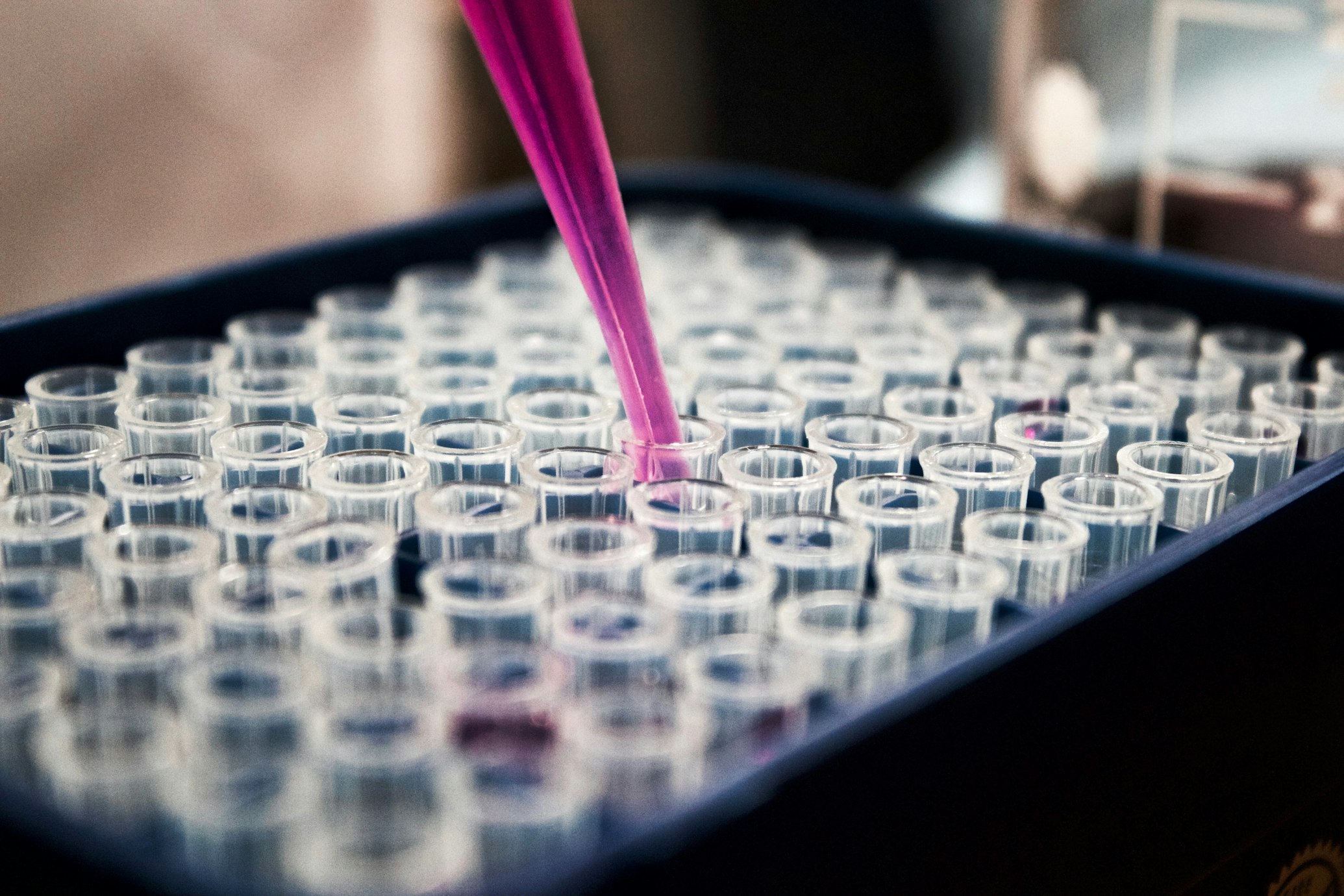
Visualization of cellular structures resembling primary cilia
Architecture of a Cellular Antenna
To appreciate how microtubule-associated proteins work their magic, we first need to understand the primary cilium's structure:
-
The axoneme: The microtubule-based structural core that supports the cilium
-
The basal body: Derived from the mother centriole, this structure anchors the cilium and initiates its assembly
-
The transition zone: A selective gate at the cilium base that controls which proteins enter and exit
The axoneme typically follows a "9+0" pattern—nine outer microtubule doublets with no central pair—though recent studies have revealed this is an oversimplification. The reality is far more complex, with the axonemal architecture changing along the ciliary length and varying between cell types 1 6 .
| Structural Component | Description | Key Functions |
|---|---|---|
| Basal Body | Derived from mother centriole with distal and subdistal appendages | Cilium anchoring, initiation of assembly, recruitment of ciliary proteins |
| Transition Zone | Gate between basal body and axoneme with Y-shaped linkers | Diffusion barrier, controls protein entry/exit, "ciliary gatekeeper" |
| Axoneme | Microtubule-based core scaffold with varying arrangements | Structural support, track for intracellular transport, determines cilium shape |
| Ciliary Tip | Distal end where microtubules form singlet extensions | Site of microtubule assembly/disassembly, signaling integration, vesicle release |
Microtubule-Associated Proteins: The Cilium's Master Regulators
What Are MAPs and What Do They Do?
Microtubule-associated proteins (MAPs) are specialized molecules that bind to microtubules to control their stability, organization, and dynamics. In the context of primary cilia, MAPs serve as directors of ciliary life cycle—orchestrating when cilia form, how long they become, when they disassemble, and how they maintain their structural integrity 1 .
These proteins are particularly crucial for building and maintaining the unique architecture of ciliary microtubules. Unlike cytoplasmic microtubules that undergo rapid cycles of growth and shrinkage, ciliary microtubules are remarkably stable—a necessary feature for a structure that must persist for extended periods .
MAPs Influence on Ciliary Life Cycle
MAPs in Action: Regulation Throughout the Ciliary Life Cycle
MAPs influence cilia through several key mechanisms:
Axoneme Assembly
During ciliogenesis, MAPs help initiate and extend the microtubule axoneme from the basal body
Stability Maintenance
They stabilize the assembled microtubules against depolymerization
Length Control
They regulate ciliary length by balancing assembly and disassembly activities
Targeted Disassembly
They facilitate ciliary resorption when the cell needs to re-enter the cell cycle 1
The precise control of ciliary length is especially important, as it directly impacts the cilium's signaling capacity. Too short, and it might not adequately sample the extracellular environment; too long, and it could become mechanically vulnerable or dysregulated 3 .
Pathbreaking Research: How MAP6d1 Builds Cellular Antennas
The Discovery of a Doublet Microtubule Architect
In a groundbreaking 2025 study, researchers uncovered how a specific microtubule-associated protein called MAP6d1 plays a critical role in building the fundamental architecture of ciliary microtubules . This brain-specific protein contains what's known as Mn-motifs—structural elements that allow it to bind inside microtubules, a region called the microtubule lumen.
What makes this discovery particularly exciting is that MAP6d1 solves a fundamental problem in cell biology: how do cells construct the specialized doublet microtubules that form the cilium's core? These doublets consist of a complete A-tubule joined to an incomplete B-tubule, but the assembly mechanism had remained elusive.
Step-by-Step: How Researchers Uncovered MAP6d1's Role
The research team employed sophisticated techniques to unravel MAP6d1's function:
In Vitro Reconstitution
Using total internal reflection fluorescence (TIRF) microscopy, they observed MAP6d1 interacting with tubulin in real-time
Architecture Analysis
Through negative staining electron microscopy and cryo-electron tomography, they visualized the structures formed with and without MAP6d1
Functional Validation
They studied the effects of MAP6d1 depletion in cultured hippocampal neurons
The experiments revealed that MAP6d1 does something remarkable: it recruits tubulin dimers onto existing microtubule lattices, essentially building platforms where B-tubules can nucleate and grow. This process transforms single microtubules into the doublet structures essential for cilia .
| Experimental Approach | Key Finding | Biological Significance |
|---|---|---|
| TIRF Microscopy | MAP6d1 induces microtubule pausing and stabilizes against depolymerization | Explains how ciliary microtubules maintain stability in dynamic cellular environment |
| Tubulin Recruitment Assays | MAP6d1 recruits free tubulin onto existing microtubules | Reveals mechanism for doublet microtubule formation |
| Cryo-Electron Tomography | MAP6d1 promotes formation of doublet microtubules with varying B-tubule protofilaments | Demonstrates protein's role in creating authentic ciliary structures |
| Neuronal Studies | MAP6d1 localizes to proximal cilia; its loss shortens cilia | Connects molecular function to biological outcome relevant to ciliopathies |
Implications and Future Directions
The discovery of MAP6d1's role extends beyond basic cell biology. When researchers removed MAP6d1 from neurons, the result was shortened primary cilia—a characteristic abnormality seen in ciliopathies . This suggests that defects in MAPs could underlie certain human diseases, opening new avenues for therapeutic development.
The study also revealed that MAP6d1 promotes the formation of luminal protofilaments—structural features inside microtubules that likely enhance their stability. This represents a previously unknown mechanism for regulating microtubule architecture .
The Scientist's Toolkit: Modern Methods for Ciliary Research
Cutting-Edge Technologies Revealing Hidden Worlds
The remarkable progress in understanding cilia and their regulatory proteins stems from revolutionary technologies that allow scientists to see cellular structures in unprecedented detail. Several key approaches have been particularly transformative:
| Technique/Reagent | Category | Primary Function | Key Insight Enabled |
|---|---|---|---|
| Cryo-Electron Tomography | Imaging | Reveals 3D macromolecular structures in near-native state | Visualized microtubule doublet formation and luminal structures |
| Volume Electron Microscopy | Imaging | Generates nanometer-scale 3D images of tissue environments | Revealed cilia diversity and contacts in native brain tissue |
| TIRF Microscopy | Live Imaging | Real-time observation of microtubule dynamics in vitro | Showed MAP6d1-induced pausing and tubulin recruitment |
| Spatial Proteomics | Protein Analysis | Maps protein locations within organelles using antibodies | Identified 715 ciliary proteins and cell-type-specific variations |
| AlphaFold Prediction | Computational Modeling | Predicts protein structures from amino acid sequences | Accelerated identification of ciliary tip proteins |
How These Tools Transformed Our Understanding
Volume electron microscopy has been particularly revolutionary for cilia research. As one researcher noted, "Repurposing these large-volume EM datasets to look at cell biology has given us a view that you couldn't get before" 8 . Traditional microscopy struggled with cilia because they're minuscule—just microns long—and extend into a jumble of other structures. Volume EM lets scientists see dozens of cilia in their native tissue environment, revealing how they interact with neighboring cells.
Similarly, spatial proteomics has uncovered an astonishing level of complexity in ciliary composition. By examining over 128,000 individual cilia across three cell types, researchers found that 78% of ciliary proteins show single-cilium heterogeneity, meaning that even within the same cell type, individual cilia can have variations in their protein makeup 5 . This heterogeneity suggests that cilia are highly dynamic sensors that continuously adapt their composition to functional needs.

Advanced research tools enable unprecedented insights into cellular structures
Conclusion: From Basic Biology to Human Health
The journey to understand microtubule-associated proteins and their role in primary cilia exemplifies how basic cell biology research can illuminate fundamental processes with significant implications for human health. What began as curiosity about a forgotten cellular structure has evolved into a rich field of study with connections to development, tissue homeostasis, and disease.
Summary: The emerging picture reveals primary cilia as dynamic, adaptable sensors that tune their proteome to compute cellular responses. Microtubule-associated proteins serve as the master conductors of this process, regulating ciliary architecture throughout its life cycle. As research continues to unravel the complexities of these relationships, we move closer to understanding—and potentially treating—the myriad diseases that arise when our cellular antennas fail.
The next time you consider the intricate workings of the human body, remember that within each cell, microscopic antennas are diligently sampling the environment, making decisions, and maintaining health—all under the careful guidance of microtubule-associated proteins.