Targeting BlaR1: Strategies, Techniques, and Best Practices for Interfering with Staphylococcal β-Lactam Resistance Signaling
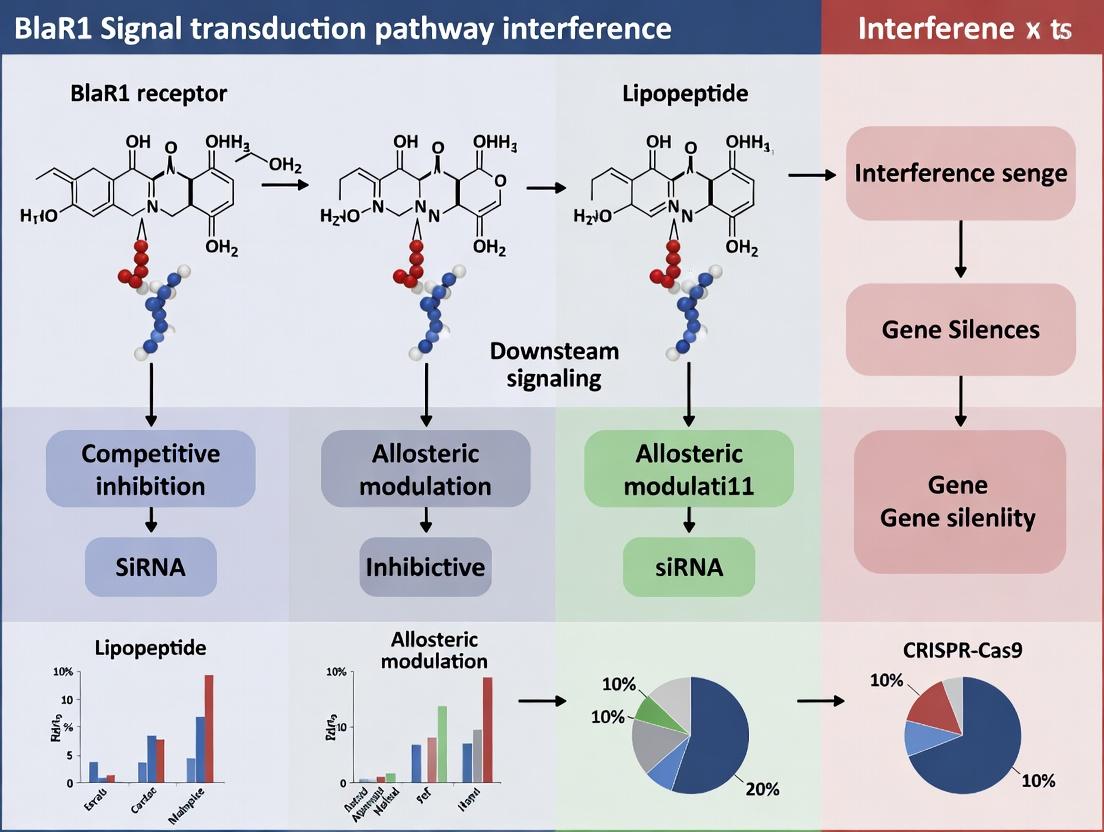
This comprehensive guide for researchers and drug development professionals explores the BlaR1 signal transduction pathway, a key mediator of inducible β-lactam resistance in Staphylococcus aureus.
Targeting BlaR1: Strategies, Techniques, and Best Practices for Interfering with Staphylococcal β-Lactam Resistance Signaling
Abstract
This comprehensive guide for researchers and drug development professionals explores the BlaR1 signal transduction pathway, a key mediator of inducible β-lactam resistance in Staphylococcus aureus. The article details the molecular mechanism of BlaR1 activation, from β-lactam binding to blaZ gene derepression, and systematically reviews current and emerging interference methods. It covers methodologies from genetic knockout and siRNA to small-molecule inhibitors and β-lactamase-resistant β-lactam design, providing practical application protocols. The guide further addresses common experimental challenges, optimization strategies for assay development, and validation techniques including comparative efficacy analysis and resistance profiling. The conclusion synthesizes the therapeutic potential of BlaR1 targeting and outlines future research directions for overcoming MRSA resistance.
Decoding the BlaR1 Pathway: Molecular Mechanisms of Staphylococcal β-Lactam Resistance Induction
Technical Support Center: Troubleshooting BlaR1 Pathway Research
FAQs & Troubleshooting Guides
Q1: In our β-lactam induction assay, our reporter strain shows no increase in β-lactamase activity despite antibiotic exposure. What could be the cause? A: This is a common issue. Follow this diagnostic checklist:
- Verify Strain Integrity: Confirm your S. aureus strain possesses the functional bla operon (blaZ, blaR1, blaI). Re-streak from a master stock and check for contamination.
- Check Antibiotic Inducer: Ensure you are using a potent inducer (e.g., methicillin, cephalothin at 0.5-1 µg/mL) and not a poor inducer like certain penicillins. Prepare fresh antibiotic stock solution.
- Confirm Assay Conditions: β-lactamase expression peaks ~90-120 minutes post-induction. Measure activity within this window. Use a positive control (e.g., known inducible strain RN4220/pI258).
- Reporter Methodology: If using a nitrocefin hydrolysis assay, ensure the substrate is fresh and not degraded. Use the protocol below.
Q2: Our recombinant BlaR1 protein (sensor domain) shows no binding to β-lactam antibiotics in our Surface Plasmon Resonance (SPR) assay. What are potential troubleshooting steps? A:
- Protein Folding: The sensor domain must be correctly folded with the active-site serine (S389 in S. aureus). Verify folding via circular dichroism. Ensure purification buffers contain Zn²⁺ (10-50 µM) to maintain metalloprotease fold integrity.
- Immobilization: Improper immobilization can block the binding pocket. Try alternative coupling chemistries (e.g., His-tag capture on NTA chip instead of amine coupling).
- Ligand Choice: Use a high-affinity covalent binder like bocillin-FL (fluorescent penicillin). Perform a pre-incubation experiment and run the complex over the chip.
- Control: Run a positive control with a known penicillin-binding protein (PBP2a).
Q3: When attempting to measure signal transduction via BlaR1 proteolytic cleavage, we cannot detect the cytoplasmic protease domain fragment. How can we optimize this? A: Detection of the cleaved cytoplasmic domain (BlaR1-CT) is challenging due to rapid turnover.
- Use Protease Inhibitors: Harvest cells 60 min post-induction in the presence of a proteasome inhibitor (e.g., MG-132 at 50 µM for S. aureus lysates).
- Tag Strategy: Insert an epitope tag (e.g., FLAG, His₆) at the N-terminus of the BlaR1-CT in the native chromosomal locus via allelic replacement. This allows specific immunoprecipitation and Western blotting.
- Antibody Specificity: Use a custom antibody raised against the unique C-terminal 10-amino acid peptide of BlaR1, not the full-length protein.
- Pulse-Chase: Implement a pulse-chase experiment with ³⁵S-methionine to track the fragment's appearance and degradation.
Q4: Our high-throughput screen for BlaR1 pathway inhibitors yields an unmanageably high rate of false positives (general growth inhibitors). How can we design a more specific secondary screen? A: Implement a tiered screening strategy:
- Primary Screen: Whole-cell reporter (e.g., β-lactamase/GFP under blaP promoter) + sub-inhibitory inducer.
- Secondary Counterscreen 1: Identical reporter strain with a constitutive promoter (e.g., sarA) driving the same reporter. This eliminates general transcription/translation inhibitors.
- Secondary Counterscreen 2: A ΔblaR1 strain with the inducible reporter. Compounds that still inhibit signal in this background are acting downstream or non-specifically; discard them. True BlaR1-pathway specific compounds will show no effect here.
Experimental Protocols
Protocol 1: Nitrocefin-Based β-Lactamase Induction Assay Objective: Quantify inducible β-lactamase activity in S. aureus cultures. Materials: Tryptic Soy Broth (TSB), inducing β-lactam (e.g., 0.5 µg/mL methicillin), nitrocefin (0.5 mg/mL stock in DMSO), phosphate buffer (50 mM, pH 7.0), spectrophotometer. Steps:
- Grow test strain to mid-log phase (OD₆₀₀ ~0.5).
- Split culture. Induce one half with methicillin. Leave the other as an uninduced control.
- Incubate with shaking for 90 minutes.
- Pellet cells, wash, and resuspend in phosphate buffer. Normalize to same OD₆₀₀.
- Add 50 µL nitrocefin stock to 950 µL cell suspension.
- Immediately measure absorbance at 486 nm (A₄₈₆) every 30 seconds for 5 minutes.
- Calculate activity as ∆A₄₈₆/min/OD₆₀₀ of cells.
Protocol 2: Detection of BlaR1 Autoproteolytic Cleavage by Western Blot Objective: Detect the cleaved cytoplasmic domain of BlaR1. Materials: S. aureus strain with epitope-tagged BlaR1, anti-tag antibody (e.g., anti-FLAG M2), protease inhibitor cocktail (including MG-132), glycine-SDS lysis buffer, Tris-Tricine gels for better separation of small fragments. Steps:
- Grow and induce cultures as in Protocol 1. Add MG-132 (50 µM final) 30 minutes before harvest.
- Harvest 10 mL culture by centrifugation. Lyse cells with lysostaphin (100 µg/mL, 37°C, 30 min) followed by glycine-SDS buffer.
- Resolve 20 µg of total protein on a 12% Tris-Tricine SDS-PAGE gel.
- Transfer to PVDF membrane. Block with 5% BSA.
- Probe with primary anti-FLAG antibody (1:2000), then HRP-conjugated secondary antibody.
- Develop. Expected bands: Full-length BlaR1 (~60 kDa) and BlaR1-CT (~25 kDa). Cleavage fragment intensity increases with induction time.
Data Tables
Table 1: Common β-Lactam Inducers and Their Efficacy in S. aureus BlaR1 Signaling
| Inducer Compound | Class | Typical Working Concentration | Induction Strength (Relative to Methicillin=1.0) | Notes |
|---|---|---|---|---|
| Methicillin | Penicillinase-resistant penicillin | 0.5 - 1.0 µg/mL | 1.0 | Gold standard; poor substrate for BlaZ. |
| Cephalothin | Cephalosporin (1st gen) | 0.1 - 0.5 µg/mL | 1.2 | Strong inducer, hydrolyzed by BlaZ. |
| Benzylpenicillin | Natural penicillin | 0.05 - 0.1 µg/mL | 0.8 | Good inducer but rapidly hydrolyzed. |
| Cefoxitin | Cephamycin | 1.0 - 5.0 µg/mL | 0.3 | Weak inducer; often used as a negative control. |
| Cloxacillin | Penicillinase-resistant penicillin | 0.5 µg/mL | 0.6 | Moderate inducer. |
Table 2: Key Mutations in BlaR1 Affecting Signal Transduction
| Mutation Site (S. aureus) | Domain | Phenotype | Molecular Consequence |
|---|---|---|---|
| S389A | Sensor (Active Site) | Constitutive Resistance | Abolishes acylation, locking receptor in "ON" state. |
| H393A | Sensor | No Induction | Disrupts zinc binding, destabilizes fold. |
| E481A | Cytoplasmic Protease | No Induction | Abolishes autoproteolytic activity, no BlaI cleavage. |
| ΔLD Linker | Linker | No Signal Transduction | Prevents transmembrane signal relay. |
| K495R | Cytoplasmic Protease | Slowed De-induction | Impairs ubiquitination and degradation of fragment. |
Diagrams
Title: BlaR1 Signal Transduction Pathway Upon β-Lactam Binding
Title: Tiered Screening Workflow for BlaR1 Pathway Inhibitors
The Scientist's Toolkit: Key Research Reagent Solutions
| Reagent / Material | Function in BlaR1 Research | Key Consideration |
|---|---|---|
| Bocillin-FL | Fluorescent penicillin derivative. Visualizes binding to BlaR1 sensor domain in gels or microscopy. | Light-sensitive. Use for in vitro binding assays, not live-cell (impermeant). |
| Nitrocefin | Chromogenic cephalosporin. Hydrolyzed by BlaZ β-lactamase, turning from yellow to red (A₄₈₆). | Standard for measuring induction kinetics. Prepare fresh in DMSO. |
| Methicillin (Inducer) | Penicillinase-resistant β-lactam. Potent inducer of the bla system; poor BlaZ substrate. | Use at sub-MIC (0.5 µg/mL) to induce without killing. |
| MG-132 Proteasome Inhibitor | Peptide aldehyde. Inhibits proteasomal degradation of cleaved BlaR1-CT fragment in S. aureus. | Critical for stabilizing the cytoplasmic fragment for detection. Use 50-100 µM. |
| Anti-BlaR1-CT Custom Antibody | Polyclonal antibody targeting the unique C-terminus of BlaR1. Detects cleaved fragment specifically. | Pre-adsorb against ΔblaR1 lysate to remove non-specific signals. |
| S. aureus RN4220/pI258 | Model strain containing the prototypical inducible β-lactamase plasmid pI258. | Essential positive control for all induction and reporter assays. |
| Tris-Tricine Gels | Polyacrylamide gel system. Optimal resolution for small proteins (10-25 kDa). | Required for clear separation of the ~25 kDa BlaR1-CT from background. |
Technical Support Center: Troubleshooting BlaR1 Experiments
Context: This support content is designed for researchers investigating methods to interfere with the BlaR1 signal transduction pathway, a key mechanism in β-lactam antibiotic resistance.
Troubleshooting Guides & FAQs
Q1: My recombinant BlaR1 sensor domain protein is insoluble when expressed in E. coli. What could be the issue? A: The BlaR1 sensor domain is an integral membrane protein segment. Expression in the cytoplasm often leads to inclusion body formation.
- Solution: Use an expression vector with a solubilizing tag (e.g., MBP, GST) and induce at a lower temperature (18-22°C). Consider using E. coli C41(DE3) or C43(DE3) strains optimized for membrane protein expression. If studying the extracellular sensor, express only the soluble ectodomain (residues ~30-200, species-dependent) without the transmembrane anchor.
Q2: I cannot detect BlaR1 autoproteolysis in my in vitro assay. What are the critical factors? A: Autoproteolysis (self-cleavage) of the cytosolic protease domain is activation-dependent.
- Checklist:
- Activation: Ensure the sensor domain is properly presented with a potent β-lactam inducer (e.g., methicillin, cefoxitin at 10-100 µM). For isolated domains, confirm the transmembrane helix is correctly reconstituted in liposomes or nanodiscs to allow signal transduction.
- Time Course: The cleavage is slow. Extend the reaction time from minutes to several hours.
- Reducing Conditions: The protease domain requires a reduced environment. Maintain 1-5 mM DTT or TCEP in all buffers.
- Positive Control: Run a known active BlaR1 cytoplasmic fragment (e.g., expressed with an N-terminal histidine tag that mimics the cleaved product) alongside your full-length assay.
Q3: My signaling interference compound shows promise in a cell-free assay but no effect in live bacterial assays. Why? A: This typically indicates a compound penetration issue.
- Troubleshooting Path:
- Permeability: Gram-positive bacteria have a thick peptidoglycan layer. Check if your compound is compatible with known penetration enhancers or if it's too large/hydrophilic.
- Efflux Pumps: Many bacteria possess efflux pumps. Test your compound in the presence of a broad-spectrum efflux pump inhibitor like PaβN (Phe-Arg-β-naphthylamide).
- Off-Target Effects: Confirm the compound is not degraded or sequestered by other cellular components. Use a radiolabeled or fluorescently tagged analog to track uptake.
Q4: How do I quantify the efficiency of pathway interference? What are the key quantitative readouts? A: Key quantitative metrics are listed below.
Table 1: Key Quantitative Readouts for BlaR1 Pathway Interference
| Assay Type | Primary Readout | Measurement Method | Typical Baseline (S. aureus) | Successful Interference Indicator |
|---|---|---|---|---|
| Transcriptional Response | blaZ mRNA level | qRT-PCR | >100-fold induction post-β-lactam | Reduction in induction (>50%) |
| Proteolytic Activity | Cleavage product formation | Western Blot (anti-BlaR1 cytosol) | Cleavage visible at 1-2h post-induction | Delay or absence of cleavage |
| Functional Resistance | MIC (Minimum Inhibitory Concentration) | Broth microdilution | MIC increase of 4-32x after induction | Blunted MIC increase upon challenge |
| Binding Affinity (Compound) | KD (Dissociation Constant) | Surface Plasmon Resonance (SPR) / ITC | β-lactam KD in nM range | Compound KD < 10 µM for target domain |
| Bacterial Survival | CFU Count | Plate counting | Viable count after antibiotic exposure | Increased killing vs. induced control |
Experimental Protocols
Protocol 1: Reconstitution of Full-Length BlaR1 in Liposomes for In Vitro Signaling Assay
- Protein Purification: Purify full-length BlaR1 with a C-terminal histidine tag from detergent-solubilized membrane fractions.
- Lipid Preparation: Dissect 70% DOPC, 20% DOPG, 10% cardiolipin in chloroform. Dry under nitrogen gas to form a thin film, then desiccate for 1h.
- Rehydration & Sonication: Rehydrate lipid film in reconstitution buffer (20 mM HEPES, 150 mM KCl, 5% glycerol, pH 7.5) to 10 mg/mL. Sonicate to clarity to form small unilamellar vesicles (SUVs).
- Reconstitution: Mix purified BlaR1 (in 0.05% DDM) with SUVs at a 1:100 (w/w) protein:lipid ratio. Incubate on ice for 30 min.
- Detergent Removal: Add Bio-Beads SM-2 (20 mg per mg detergent) and incubate with gentle rotation at 4°C for 3h. Change beads once.
- Harvest: Remove beads. Collect proteoliposomes by ultracentrifugation (100,000 x g, 45 min). Resuspend in assay buffer.
Protocol 2: BlaR1 Cytosolic Protease Domain Autoproteolysis Assay
- Protein: Express and purify the cytosolic protease domain of BlaR1 (residues ~250-600) with an N-terminal 6xHis-SUMO tag.
- Activation Mimic: Cleave the SUMO tag using SenP2 protease. This mimics the in vivo cleavage event that releases the active protease domain.
- Reaction Setup: In a 50 µL volume, combine 5 µM of cleaved protease domain in reaction buffer (25 mM Tris, 150 mM NaCl, 5 mM DTT, pH 7.5).
- Induction/Inhibition: Pre-incubate with potential interfering compound (10-100 µM) or DMSO control for 10 min.
- Incubation: Incubate reaction at 25°C for 0, 15, 30, 60, 120, and 180 minutes.
- Termination: At each time point, remove 8 µL and add to 2 µL of 5x SDS-PAGE loading buffer with 50 mM EDTA.
- Analysis: Run samples on 12% SDS-PAGE. Visualize by Coomassie staining or Western blotting. Quantify the disappearance of the full-length band over time.
Diagrams
Diagram 1: BlaR1 Activation & Interference Pathways
Diagram 2: In Vitro Proteolysis Assay Workflow
The Scientist's Toolkit: Key Research Reagent Solutions
Table 2: Essential Reagents for BlaR1 Pathway Research
| Reagent / Material | Function / Purpose | Example Product / Note |
|---|---|---|
| BlaR1-Expressing Strains | Provides native context for whole-cell assays. | S. aureus RN4220 carrying pBlaR1 plasmid or MRSA clinical isolates. |
| Anti-BlaR1 Antibodies | Detection of full-length and cleaved BlaR1 via Western Blot. | Custom polyclonal against cytosolic domain peptides are most common. |
| β-Lactam Inducers | Specific activators of the BlaR1 pathway. | Methicillin, Cefoxitin, Cloxacillin (10-100 µM working concentration). |
| Protease Domain Construct | For structural and in vitro biochemical studies. | pET28a-His-SUMO-BlaR1(250-601) for soluble expression. |
| Detergents for Solubilization | Extracts and stabilizes membrane-bound BlaR1. | n-Dodecyl-β-D-Maltoside (DDM), Lauryl Maltose Neopentyl Glycol (LMNG). |
| Lipids for Reconstitution | Creates a native-like membrane environment. | E. coli Polar Lipid Extract or defined mixtures (DOPC/DOPG). |
| Bio-Beads SM-2 | Removes detergent for protein reconstitution into liposomes. | Critical for forming functional proteoliposomes. |
| Fluorescent β-Lactam Probes | Visualize binding and competition assays. | Bocillin-FL (penicillin-based), commercially available. |
| Broad-Spectrum Efflux Pump Inhibitor | Tests compound penetration in live-cell assays. | Phe-Arg-β-naphthylamide (PaβN). |
Technical Support Center: Troubleshooting BlaR1 Pathway Experiments
This technical support center is designed to assist researchers working on the BlaR1-mediated signal transduction pathway, as part of a broader thesis on interference methods. Below are common experimental issues and detailed solutions.
FAQs & Troubleshooting Guides
Q1: In my β-lactam binding assay using purified BlaR1 sensor domain, I observe weak or inconsistent binding signals (e.g., in Surface Plasmon Resonance or ITC). What could be the cause? A1: Inconsistent binding often stems from protein or ligand integrity.
- Troubleshooting Steps:
- Verify Protein Stability: Ensure the BlaR1 sensor domain is freshly purified or properly aliquoted and flash-frozen. Avoid repeated freeze-thaw cycles. Check for aggregation via dynamic light scattering or native PAGE.
- Confirm β-Lactam Integrity: Prepare fresh antibiotic stocks in the correct buffer (e.g., phosphate buffer, pH 7.0). Many β-lactams are hydrolytically unstable in aqueous solution. Use a chromogenic nitrocefin assay to verify activity.
- Optimize Buffer Conditions: Include 100-150 mM NaCl to reduce non-specific interactions. Ensure no chelating agents (like EDTA) are present if your protein requires zinc, as the BlaR1 sensor domain is a metalloprotease.
Q2: I cannot detect autolytic cleavage of BlaR1 in my bacterial membrane fractions after β-lactam exposure. What should I check? A2: The autoproteolysis event is rapid and transient. Failure to detect it is common.
- Troubleshooting Steps:
- Time-Course Experiment: Perform a very short time-course. Take samples at 0, 1, 2, 5, 10, and 30 minutes post-β-lactam addition. Use a quick, efficient membrane protein denaturation method (e.g., boiling in strong SDS-PAGE buffer).
- Antibody Selection: Use antibodies specific for the BlaR1 C-terminal cytoplasmic domain (the repressor-binding domain). Cleavage separates this from the N-terminal sensor, causing a gel shift.
- Positive Control: Use a high, inducing concentration of a potent β-lactam (e.g., 10 µg/ml methicillin for Staphylococcus aureus BlaR1). See Table 1 for reference concentrations.
- Protease Inhibition: After sampling, immediately add a broad-spectrum protease inhibitor cocktail to prevent nonspecific degradation.
Q3: My transcriptional reporter assay (e.g., using a blaZ-GFP fusion) shows high background activation or no induction upon β-lactam addition. A3: This indicates dysregulation in the signal transduction or reporter system.
- Troubleshooting Steps:
- Check Strain Background: Ensure the host strain has a functional chromosomal blaR1-blaI system and no other resistant determinants that could rapidly degrade the β-lactam.
- Verify Repressor Inactivation: Clone and express the BlaI repressor alone. Co-express with BlaR1 and treat with β-lactam. Perform an EMSA with a bla operator DNA probe to visually confirm loss of BlaI-DNA binding.
- Control for Cell Wall Stress: Use a sub-inhibitory concentration of β-lactam (see Table 1). High concentrations causing cell lysis can induce non-specific stress responses. Include a control with a cell wall stressor like vancomycin to assess specificity.
- Measure Reporter Kinetics: GFP accumulation lags behind transcription. Monitor fluorescence over 2-4 hours.
Q4: When attempting to screen for BlaR1 pathway inhibitors (interference methods), how do I distinguish between general antibacterial effects and specific pathway inhibition? A4: This is a critical control for interference research.
- Troubleshooting Protocol:
- Dual Reporter System: Construct two reporter strains:
- Strain A: PblaZ-GFP (BlaR1/BlaI dependent).
- Strain B: Pconstitutive-RFP (BlaR1/BlaI independent).
- Assay Setup: Expose both strains to your candidate inhibitor compound and a sub-inducing concentration of a β-lactam.
- Interpretation: A specific BlaR1 pathway inhibitor will reduce GFP signal in Strain A without affecting RFP signal in Strain B. A general growth inhibitor will reduce both signals. See workflow in Diagram 2.
- Dual Reporter System: Construct two reporter strains:
Table 1: Reference β-Lactam Concentrations for BlaR1 Induction Studies in S. aureus
| β-Lactam Antibiotic | Typical Induction Concentration (µg/ml) | Key Property for Experimentation |
|---|---|---|
| Methicillin | 5 - 10 | Classic inducer; penicillinase-stable. |
| Penicillin G | 0.05 - 0.1 | Potent inducer but hydrolyzed by BlaZ. |
| Cefoxitin | 1 - 5 | Strong inducer; poor substrate for BlaZ. |
| Nitrocefin | 10 - 20 | Chromogenic; useful for in vitro binding/competition. |
| Sub-Inhibitory Level* | 0.01 - 0.5 | Crucial for interference studies to avoid killing. |
*Based on typical MICs of 1-2 µg/ml for susceptible strains.
Table 2: Expected Molecular Weights for Key BlaR1 Proteolytic Events
| Protein / Fragment | Approx. Molecular Weight (kDa) | Description & Detection Tip |
|---|---|---|
| Full-length BlaR1 | ~65 kDa | Membrane-bound; detected in total membrane fractions. |
| Cytoplasmic Domain (C-term) Post-Cleavage | ~35 kDa | Released upon autolysis; detect with anti-C-term antibody. |
| BlaI Repressor (Dimer) | ~14 kDa | Binds DNA; runs at ~18-20 kDa on non-reducing gel in EMSA. |
| Cleaved BlaI (Monomer) | ~7 kDa | May be difficult to detect on standard gels; use Tricine-SDS-PAGE. |
Experimental Protocols
Protocol 1: Detecting BlaR1 Autolytic Cleavage by Immunoblot
- Objective: To capture the transient cleavage of BlaR1 in response to β-lactam binding.
- Materials: Bacterial culture with blaR1, inducing β-lactam (e.g., Methicillin), membrane protein extraction kit, anti-BlaR1 C-terminal antibody, SDS-PAGE/WB equipment.
- Method:
- Grow bacteria to mid-log phase (OD600 ~0.6).
- Add β-lactam inducer (e.g., 10 µg/ml methicillin) to the culture. For a control, add an equal volume of solvent (e.g., water or DMSO).
- At precise intervals (0, 2, 5, 10, 30 min), remove 1 ml aliquots and immediately mix with 100 µl of 10x Stop Solution (100 mM EDTA, 10 mg/ml Chloramphenicol, protease inhibitors).
- Pellet cells, resuspend in lysis buffer, and isolate the membrane fraction using a commercial kit or differential centrifugation.
- Solubilize membrane proteins in SDS-PAGE loading buffer, boil for 10 minutes.
- Perform SDS-PAGE (12% gel) and immunoblot using an antibody against the cytoplasmic domain of BlaR1.
- Expected Result: A shift from full-length (~65 kDa) to a smaller C-terminal fragment (~35 kDa) over time in the induced sample.
Protocol 2: Electrophoretic Mobility Shift Assay (EMSA) for BlaI Repressor Inactivation
- Objective: To demonstrate loss of BlaI DNA-binding capability upon BlaR1 activation.
- Materials: Purified BlaI protein, cell lysates from β-lactam treated/untreated cultures, biotin-labeled double-stranded DNA probe containing the bla operator sequence, native PAGE kit, chemiluminescent detection kit.
- Method:
- Prepare Probe: Anneal complementary oligonucleotides containing the bla operator consensus sequence (e.g., 5'-TTTACAATAAATATTATAAAAGT-3'). Label with biotin at the 5' end.
- Prepare Samples: Generate two lysates: (i) Cells expressing BlaI+BlaR1, uninduced. (ii) Same cells induced with β-lactam for 30 min. Use gentle lysis (lysozyme/sonication) to preserve protein-DNA interactions.
- Binding Reaction: Mix 10 fmol of labeled DNA probe with 5-10 µg of total protein from each lysate in binding buffer (10 mM Tris, 50 mM KCl, 1 mM DTT, 5% glycerol, 0.1 µg/µl poly dI-dC). Incubate 20 min at RT.
- Electrophoresis: Load samples onto a pre-run 6% non-denaturing polyacrylamide gel in 0.5x TBE buffer. Run at 100V for 60-90 min at 4°C.
- Detection: Transfer to a nylon membrane, crosslink DNA, and detect biotinylated probe using a chemiluminescent kit.
- Expected Result: A shifted DNA-protein complex (retarded band) in the uninduced sample. This shift will be diminished or absent in the β-lactam-induced sample, indicating BlaI inactivation/dissociation.
Diagrams
Title: BlaR1 Signaling Pathway: From β-Lactam Binding to Gene Activation.
Title: Screening Workflow for Specific BlaR1 Pathway Inhibitors.
The Scientist's Toolkit: Key Research Reagent Solutions
| Item | Function in BlaR1 Pathway Research | Example / Note |
|---|---|---|
| Anti-BlaR1 (C-term) Antibody | Critical for detecting the autoproteolytic cleavage event by Western Blot. Must be specific to the cytoplasmic domain released after cleavage. | Commercial polyclonal or monoclonal; validate for specificity in your strain. |
| Biotinylated bla Operator DNA Probe | Essential for EMSA assays to monitor BlaI repressor binding and inactivation. | Typically a 25-30 bp double-stranded oligonucleotide containing the consensus bla operator sequence. |
| Nitrocefin | Chromogenic β-lactam. Used to verify β-lactamase (BlaZ) activity in vitro and as a competitor ligand in binding assays. | Color change from yellow to red upon hydrolysis. Prepare fresh. |
| Membrane Protein Isolation Kit | For extracting and solubilizing BlaR1, an integral membrane protein, from bacterial cultures. | Ensures high purity and native conformation of BlaR1 for in vitro studies. |
| Protease Inhibitor Cocktail (EDTA-free) | Prevents nonspecific proteolytic degradation of BlaR1, BlaI, and other components during lysate preparation. | Use EDTA-free if studying zinc-dependent BlaR1 protease activity. |
| Sub-MIC β-Lactam Stocks | Used at precise sub-inhibitory concentrations to induce the signal pathway without causing severe cell wall stress or lysis. | See Table 1. Prepare fresh from powder or frozen aliquots. |
Technical Support Center
Troubleshooting Guide & FAQs
Q1: In my β-lactamase induction assay, I observe no induction of blaZ expression even with high concentrations of ampicillin. What are the most common causes?
- A: This is a frequent issue. Please systematically check:
- Bacterial Strain: Confirm your Staphylococcus aureus strain carries an intact mec or bla operon. Use a positive control strain (e.g., RN4220 carrying pBlaZ).
- BlaR1 Sensor Function: Ensure the β-lactam antibiotic used is a potent inducer (e.g., cefoxitin, oxacillin). Penicillin G can be hydrolyzed too quickly by pre-existing β-lactamase. Check the chemical integrity of your antibiotic stock.
- Reporter System: If using a transcriptional fusion (e.g., blaZ::lacZ), verify the integrity of the fusion construct and the assay conditions for your reporter (e.g., correct substrate for β-galactosidase).
- Growth Phase: Induction is most effective in mid-exponential phase (OD600 ~0.5). Re-test using cells harvested at this precise density.
- A: This is a frequent issue. Please systematically check:
Q2: My co-immunoprecipitation (Co-IP) experiment to detect BlaR1-BlaI interaction is consistently unsuccessful. What protocol adjustments are critical?
- A: Capturing this transient, antibiotic-induced interaction is challenging. Follow this optimized protocol:
- Crosslinking: Treat bacterial culture with 1μg/mL oxacillin for 10 minutes immediately before harvest. Use a membrane-permeable, reversible crosslinker like DTBP (Dimethyl 3,3'-dithiobispropionimidate) at 2mM final concentration for 30 minutes on ice to stabilize protein complexes.
- Lysis: Use a mild, non-denaturing lysis buffer (e.g., 20mM Tris-HCl pH 8.0, 150mM NaCl, 1% Digitonin, 10% glycerol, plus protease inhibitors). Avoid harsh detergents like SDS at the lysis stage.
- Antibodies: Use a high-affinity, anti-BlaR1 extracellular domain antibody for capture. Always include an isotype control and a no-antibiotic control in parallel runs.
- A: Capturing this transient, antibiotic-induced interaction is challenging. Follow this optimized protocol:
Q3: When assessing BlaR1 proteolytic activity, I see multiple cleavage fragments on my western blot. How do I interpret this?
- A: BlaR1 undergoes sequential auto-proteolysis. The following table summarizes the key fragments:
| Fragment Size (kDa) | Domain Origin | Cleavage Site | Indicates |
|---|---|---|---|
| ~75 | Full-length Sensor-Protease | - | Uncleaved, inactive state. |
| ~55 | Soluble Protease Domain | Membrane-Protease junction | Primary antibiotic-induced cleavage, active protease released. |
| ~28 & ~23 | Further Protease Degradation | Internal sites (e.g., linker regions) | Secondary degradation, potentially an in vitro artifact or regulator of pathway shutdown. |
- Q4: My electrophoretic mobility shift assay (EMSA) shows non-specific binding of BlaI to non-cognate DNA probes. How can I improve specificity?
- A: Implement these steps:
- Probe Design: Use a ≥ 25-bp DNA probe containing the canonical BlaI palindromic operator sequence (5'-TACA/TGT-...-ACA/TGTA-3'). Include 5-10 bp flanking sequences on each side.
- Competitor DNA: Include poly(dI-dC) (50-100μg/mL) as a non-specific competitor. For a critical specificity control, run a parallel reaction with a 100-fold molar excess of unlabeled specific competitor DNA, which should abolish the shift, and non-specific DNA (e.g., scrambled sequence), which should not.
- Protein Purity: Ensure your purified BlaI is >95% homogeneous via SDS-PAGE. Histidine-tagged BlaI can sometimes dimerize non-specifically; consider using a cleaved tag version.
- A: Implement these steps:
The Scientist's Toolkit: Key Research Reagent Solutions
| Reagent / Material | Function in BlaR1-BlaI-blaZ Research |
|---|---|
| Cefoxitin (or Oxacillin) | Preferred Inducer: Stable β-lactam antibiotic that effectively acylates BlaR1 without being rapidly hydrolyzed by low-level BlaZ, ensuring strong pathway activation. |
| Anti-BlaR1 (EC) Antibody | Key Detection Tool: Antibody targeting the extracellular sensor domain for Co-IP, monitoring receptor maturation, and cellular localization. |
| pBlaZ or blaZ::lacZ Reporter Plasmid | Induction Readout: Plasmid or strain with β-lactamase or β-galactosidase gene under control of the blaZ promoter for quantitative induction assays. |
| Nitrocefin | β-Lactamase Activity Substrate: Chromogenic cephalosporin that changes color from yellow to red upon hydrolysis by BlaZ, allowing real-time kinetic measurements. |
| Protease Inhibitor Cocktail (without EDTA) | Sample Integrity: Inhibits metallo-protease activity of BlaR1 and other proteases after cell lysis, preventing artifactual cleavage during analysis. |
| DTBP (DTME) Crosslinker | Interaction Stabilization: Membrane-permeable, cleavable, amine-to-amine crosslinker for stabilizing transient in vivo protein complexes like BlaR1-BlaI before lysis. |
| Purified, Tagged BlaI Protein | DNA-Binding Studies: Recombinant BlaI (His-tag, GST-tag) for in vitro EMSA, cleavage assays, and structural studies. |
| Operator DNA Oligonucleotides | EMSA Probe: Complementary oligonucleotides containing the BlaI binding site for gel shift and footprinting assays. |
Experimental Protocol: Measuring BlaR1-Mediated BlaI Cleavage In Vitro
Objective: To demonstrate the direct proteolytic cleavage of purified BlaI by the purified protease domain of BlaR1.
Methodology:
- Protein Purification:
- Express and purify the soluble cytosolic protease domain of BlaR1 (BlaR1-C, ~55 kDa) with an N-terminal His-tag from E. coli.
- Express and purify full-length BlaI with a C-terminal GST tag.
- Reaction Setup:
- Combine in a 50μL reaction: 50mM HEPES (pH 7.5), 150mM NaCl, 10mM MgCl2, 1μM BlaI-GST, and 0.1μM BlaR1-C protease.
- Pre-activation (Critical): Pre-incubate BlaR1-C alone with 100μM ZnCl2 for 10 minutes at room temperature to ensure the metallo-protease active site is occupied.
- Initiate the reaction by adding the pre-activated protease to the BlaI mixture.
- Incubate at 37°C. Withdraw 10μL aliquots at t=0, 5, 15, 30, 60 minutes.
- Analysis:
- Immediately mix each aliquot with SDS-PAGE loading buffer to stop the reaction.
- Analyze by SDS-PAGE (12-15% gel) and stain with Coomassie Blue or perform western blot using anti-GST antibody.
- Expected Result: Time-dependent disappearance of full-length BlaI-GST (~25 kDa) and appearance of a lower molecular weight cleavage product (~15 kDa).
Pathway and Experimental Visualizations
BlaR1 Signal Transduction Pathway Leading to blaZ Expression
Workflow for Analyzing BlaR1-BlaI-blaZ Axis Interference
Logical Framework for Thesis on BlaR1 Pathway Interference
Technical Support Center
Troubleshooting Guides & FAQs
FAQ 1: In my BlaR1 β-lactam binding assay, I observe no conformational change via FRET despite confirmed β-lactam presence. What could be wrong?
- Answer: This is typically an issue with protein integrity or fluorophore positioning. First, verify the functional integrity of your purified BlaR1 sensor domain (residues 1-240) via circular dichroism (CD) spectroscopy to confirm proper folding. Second, ensure your Cys-mutants for fluorophore labeling (e.g., at residues 165 and 210) are not disrupting the allosteric network. Run a control using a known potent β-lactam (e.g., oxacillin at 50 µM) and confirm binding via isothermal titration calorimetry (ITC) as a secondary check. Buffer conditions (50 mM HEPES, pH 7.0, 150 mM NaCl) are critical; check for contaminants like zinc that can inhibit binding.
FAQ 2: My BlaR1 proteolytic cleavage assay shows inconsistent results when assessing signal transduction initiation. How can I standardize it?
- Answer: Inconsistent cleavage of the BlaR1 repressor domain is often due to variable membrane preparation or protease accessibility. Follow this strict protocol:
- Prepare MRSA membrane fractions ultracentrifugation (100,000 x g, 1 hr, 4°C) from mid-log phase cells.
- Resuspend membranes in Assay Buffer (20 mM Tris-HCl pH 7.5, 10% glycerol, 1 mM DTT) to a consistent protein concentration (2 mg/mL).
- Induce with a high, saturating concentration of methicillin (e.g., 100 µg/mL) for 30 minutes at 37°C.
- Run a Western blot using an antibody against the N-terminal repressor domain. The control should show a clear shift from ~45 kDa (full-length) to ~28 kDa (cleaved fragment).
- Include a ZnCl2 (50 µM) control, as zinc stabilizes the full-length protein and inhibits cleavage.
FAQ 3: When testing novel BlaR1 inhibitors, my bacterial growth inhibition assays (MIC) do not correlate with my bla operon reporter gene (GFP) readouts. Why?
- Answer: This discrepancy indicates your compound may have off-target effects. A true BlaR1-specific inhibitor should show a strong dose-dependent reduction in GFP fluorescence (from a PblaZ-GFP reporter construct) without a corresponding drop in MIC in the short-term (4-6 hour assay). The compound blocks signal transduction and bla induction but is not bactericidal. If MIC is affected, your compound likely also inhibits PBPs or other essential proteins. Run a parallel assay measuring β-lactamase activity directly (nitrocefin hydrolysis) to confirm the disconnect between gene expression and enzyme activity.
Quantitative Data Summary
Table 1: Key Kinetic Parameters for BlaR1-Mediated Response in Hospital-Acquired MRSA Strains
| MRSA Strain (PFGE Type) | Methicillin Induction Threshold (µg/mL) | Time to Max blaZ mRNA Upregulation (mins) | Baseline β-Lactamase Activity (nmol nitrocefin hydrolyzed/min/mg protein) | Induced β-Lactamase Activity (After 1h, 10µg/mL methicillin) |
|---|---|---|---|---|
| USA300 (ST8) | 0.5 - 1.0 | 45 - 60 | 15 ± 3 | 420 ± 35 |
| USA100 (ST5) | 0.25 - 0.5 | 60 - 75 | 22 ± 5 | 580 ± 42 |
| EMRSA-15 (ST22) | 1.0 - 2.0 | 30 - 45 | 10 ± 2 | 350 ± 28 |
Table 2: Common Experimental Artifacts and Solutions in BlaR1 Pathway Research
| Observed Artifact | Potential Cause | Recommended Solution |
|---|---|---|
| No BlaR1 autoproteolysis in vitro | Lack of membrane potential/dephosphorylation | Use energized membrane vesicles; add ATP/Mg²⁺. |
| High background blaZ expression | Mutations in mecA or blaR1 promoter | Sequence promoter region; use isogenic lab strain controls. |
| Non-reproducible ITC binding data | Protein aggregation or degraded ligand | Use fresh, DMSO-dissolved β-lactam; add 0.01% LDAO to protein buffer. |
Experimental Protocol: Core Experiment - Assessing BlaR1 Pathway Interference
Protocol Title: Dual-Reporter Assay for High-Throughput Screening of BlaR1 Signal Transduction Inhibitors. Objective: To simultaneously measure pathway induction (GFP) and bacterial viability (OD600/RFP) in a single well. Materials: MRSA strain carrying pPblaZ-GFP and chromosomal rpsM-RFP (constitutive); 96-well black wall plates; plate reader with temperature control. Method:
- Inoculate reporter strain in CAMHB + 10 µg/mL chloramphenicol. Grow to mid-log (OD600 ~0.5).
- Dilute culture to OD600 0.01 in fresh, warm media.
- Dispense 90 µL aliquots into assay plate.
- Add 10 µL of test compound (in 10% DMSO) or controls (DMSO only for negative, 50 µg/mL oxacillin for positive induction).
- Incubate in plate reader at 37°C with continuous shaking.
- Measure OD600 (viability) and GFP fluorescence (ex 485/em 535) every 15 minutes for 6-8 hours.
- Data Analysis: Normalize GFP signals to the OD600 and constitutive RFP signal (ex 584/em 620) for each well. A hit compound shows suppressed GFP/OD600 ratio compared to the oxacillin control, with an OD600 growth curve similar to the DMSO control.
The Scientist's Toolkit: Research Reagent Solutions
Table 3: Essential Reagents for BlaR1/MRSA Resistance Research
| Item | Function & Application |
|---|---|
| Purified BlaR1 Sensor Domain (His-tagged) | For in vitro binding studies (SPR, ITC, FRET) to characterize inhibitor binding without full transmembrane complexity. |
| Nitrocefin | Chromogenic cephalosporin; gold-standard for measuring β-lactamase enzyme kinetics and activity in cell lysates or culture supernatants. |
| PblaZ-GFP Transcriptional Reporter Plasmid | Allows real-time, non-destructive monitoring of bla operon induction in live bacteria under fluorescence microscope or plate reader. |
| Anti-BlaR1 Repressor Domain Monoclonal Antibody | Critical for Western blot detection of the ~28 kDa cleavage product, confirming signal transduction activation. |
| ZnCl₂ (50-100 µM) | Used as a negative control; zinc binds the sensor domain and locks BlaR1 in an inactive state, inhibiting cleavage and blaZ induction. |
| Daptomycin (at sub-MIC, e.g., 0.25x MIC) | Used to partially disrupt membrane potential without lysis; helps study the energy requirement for BlaR1 activation and cleavage. |
Pathway and Workflow Diagrams
Diagram Title: BlaR1-BlaI Signal Transduction Pathway Leading to Resistance
Diagram Title: HTS Workflow for BlaR1 Pathway Inhibitor Screening
Troubleshooting Guides & FAQs
Q1: My β-lactamase induction assay shows inconsistent or low signal despite confirmed BlaR1 expression. What are the common pitfalls? A: This is frequently due to suboptimal assay conditions. Key parameters to check:
- Bacterial Growth Phase: Induction is most efficient in mid-log phase (OD600 ~0.5-0.6). Stationary phase cultures yield poor response.
- Inducer Specificity & Concentration: Use a potent inducer (e.g., methicillin at 0.5 µg/mL or cefuroxime at 0.1 µg/mL for S. aureus). Test a concentration range (0.01 - 5 µg/mL).
- Induction Duration: Standard induction time is 60-90 minutes. Shorter times may yield low signal.
- Lysis Efficiency: Ensure complete lysis of cells (use lysostaphin for S. aureus followed by vigorous mechanical lysis) to release all β-lactamase for the nitrocefin assay.
- Control: Always include a known BlaR1-positive strain (e.g., S. aureus RN4220 carrying a wild-type blaZ operon) and a BlaR1-negative mutant.
Q2: When performing co-immunoprecipitation to study BlaR1/MecR1 interactions, I get high background noise. How can I optimize this? A: High background often stems from non-specific binding.
- Membrane Fraction Enrichment: BlaR1 is a membrane protein. First, isolate the bacterial membrane fraction via ultracentrifugation (100,000 x g, 1 hr) after cell disruption to reduce cytosolic protein contamination.
- Stringent Wash Buffers: After binding, wash beads with buffers containing 0.1% Triton X-100 or 300-500 mM NaCl. Include 3-5 wash steps.
- Crosslinker Use: For transient interactions, use a mild, cleavable crosslinker (e.g., DSP, dithiobis(succinimidyl propionate)) on whole cells prior to lysis to capture interactions.
- Antibody Control: Perform a parallel IP with pre-immune serum or an isotype control antibody to identify non-specific bands.
Q3: In my site-directed mutagenesis of the BlaR1 sensor domain, protein expression fails. What should I do? A: Mutations in the sensor domain can disrupt folding, leading to degradation or inclusion body formation.
- Lower Induction Temperature: Express the protein at 18-25°C instead of 37°C to promote proper folding.
- Use a Weaker Promoter: Switch from a T7 to a weaker, more tunable promoter (e.g., araBAD) for slower expression.
- Co-express Chaperones: Use E. coli strains (e.g., C41(DE3), Origami2) or plasmids that co-express GroEL/ES or DnaK/DnaJ chaperone systems.
- Check Solubility: Fractionate cells into soluble and insoluble components via centrifugation after lysis to determine if the protein is in inclusion bodies. Consider solubilization and refolding protocols if necessary.
Q4: My fluorescence polarization assay for BlaI/BlaR1 binding is not showing a shift. How can I validate my probe? A: A lack of shift indicates failed binding.
- Probe Integrity: Verify the fluorophore-labeled DNA probe (typically the bla operator sequence) is double-stranded and purified via HPLC or PAGE. Check fluorescence intensity.
- Protein Activity: Confirm BlaI is active via an EMSA (gel shift) with unlabeled operator DNA as a positive control.
- Buffer Conditions: The assay requires a high-salt buffer (e.g., 150 mM KCl, 5 mM MgCl2, 10 mM Tris pH 7.5) to reduce non-specific binding. Include 0.01% NP-40 and 1 mM DTT.
- Incubation Time: Allow binding to reach equilibrium (typically 30 min at 25°C) before reading.
- Control Competitor: Include a 100-fold molar excess of unlabeled specific operator sequence, which should out-compete the probe and reduce the polarization signal.
Table 1: Key Kinetic and Binding Constants in the BlaR1 Pathway
| Component / Interaction | Parameter | Value | Organism | Method Used | Reference Year |
|---|---|---|---|---|---|
| BlaR1 Sensor Domain Binding | Kd for penicillin G | ~1.2 µM | S. aureus | Surface Plasmon Resonance | 2004 |
| BlaR1 Protease Activity | Cleavage rate of BlaI (kcat) | ~0.8 min⁻¹ | B. licheniformis | In vitro protease assay | 2007 |
| BlaI-Operator Binding | Kd for bla operator | 15-25 nM | S. aureus | Fluorescence Anisotropy | 2010 |
| β-lactamase Induction | Time to 50% max induction | 45-60 min | S. aureus MCAD | Nitrocefin hydrolysis assay | 2015 |
| Signal Transduction | Acylation rate of BlaR1 sensor | t₁/₂ ~ 30 sec | S. aureus | Stopped-flow kinetics | 2018 |
Table 2: Common Experimental Models for BlaR1 Research
| Model System | Key Strain/Construct | Primary Application | Key Advantage | Key Limitation |
|---|---|---|---|---|
| Heterologous Expression | E. coli BL21(DE3) with pET-BlaR1 cytoplasmic domain | Protein purification for structural/biochemical studies | High yield of soluble protein | Lacks native membrane context |
| Gram-Positive Model | Bacillus licheniformis 749/C | Elucidating core pathway mechanisms | Well-characterized, robust inducer response | Less clinically relevant than S. aureus |
| Clinical Isolate Model | Staphylococcus aureus NCTC 8325 or MRSA strains (e.g., USA300) | Drug development & resistance studies | Direct clinical relevance | More complex regulatory network |
| In vitro Reconstitution | Purified BlaR1 sensor, BlaR1 protease domain, BlaI | Stepwise mechanism dissection | No cellular confounding factors | Technically challenging to reconstitute |
Detailed Experimental Protocols
Protocol 1: Nitrocefin-Based β-Lactamase Induction Assay in S. aureus Purpose: To quantitatively measure BlaR1 pathway activation in response to a β-lactam inducer. Procedure:
- Grow the S. aureus strain of interest overnight in cation-adjusted Mueller-Hinton Broth (CAMHB).
- Dilute the culture 1:100 in fresh, pre-warmed CAMHB and grow at 37°C with shaking to OD600 = 0.5.
- Divide the culture into aliquots. To the experimental aliquot, add the β-lactam inducer (e.g., 0.5 µg/mL methicillin). Keep one aliquot without inducer as an uninduced control.
- Incubate with shaking for 90 minutes.
- Harvest 1 mL of culture by centrifugation (13,000 x g, 2 min). Wash cell pellet once with 1 mL of 50 mM phosphate buffer (pH 7.0).
- Resuspend pellet in 1 mL of phosphate buffer. Add 10 µL of lysostaphin solution (200 µg/mL) and incubate at 37°C for 15 min.
- Centrifuge the lysate (13,000 x g, 5 min) to remove debris. Transfer supernatant to a fresh tube.
- Prepare a 100 µM nitrocefin solution in DMSO, then dilute 1:10 in phosphate buffer.
- In a 96-well plate, mix 90 µL of cell lysate supernatant with 10 µL of the diluted nitrocefin solution (final nitrocefin ~100 µM).
- Immediately measure the increase in absorbance at 486 nm (ΔA486) over 5 minutes using a plate reader at 25°C.
- Calculate the rate of hydrolysis (ΔA486/min). Normalize the rate of the induced sample to the uninduced control. Report as "Fold Induction."
Protocol 2: Co-immunoprecipitation of BlaR1 with its Signaling Partner BlaI Purpose: To confirm the physical interaction between BlaR1 and BlaI in vivo. Procedure:
- Grow a culture of S. aureus expressing epitope-tagged BlaR1 (e.g., FLAG-BlaR1) and BlaI (e.g., Myc-BlaI) to OD600 = 0.6.
- Induce with 0.5 µg/mL cefoxitin for 30 minutes.
- Harvest cells by centrifugation. Resuspend pellet in 1 mL Lysis/IP Buffer (50 mM Tris pH 7.5, 150 mM NaCl, 1% DDM (n-dodecyl-β-D-maltoside), 1x protease inhibitor cocktail).
- Lyse cells using bead-beating (0.1 mm zirconia beads, 3 x 60 sec pulses). Clarify lysate by centrifugation at 16,000 x g for 20 min at 4°C.
- Transfer supernatant to a fresh tube. Add 20 µL of pre-washed anti-FLAG M2 affinity gel slurry.
- Incubate with gentle rotation for 2 hours at 4°C.
- Centrifuge briefly (5000 x g, 30 sec) and carefully remove supernatant.
- Wash the beads 5 times with 500 µL of Wash Buffer (50 mM Tris pH 7.5, 300 mM NaCl, 0.05% DDM).
- Elute the bound proteins by adding 40 µL of 2X Laemmli SDS-PAGE sample buffer containing 100 mM DTT. Boil for 5 minutes.
- Analyze the eluate (immunoprecipitate), the lysate supernatant (input), and the post-IP flow-through by Western blot using anti-FLAG and anti-Myc antibodies.
Pathway & Workflow Visualizations
Title: BlaR1-Mediated Induction of β-Lactam Resistance
Title: Screening Workflow for BlaR1 Pathway Inhibitors
The Scientist's Toolkit: Research Reagent Solutions
Table 3: Essential Reagents for BlaR1 Pathway Research
| Reagent / Material | Supplier Examples | Function in Experiment | Critical Notes |
|---|---|---|---|
| Nitrocefin | MilliporeSigma, BD Biosciences, Tocris | Chromogenic β-lactamase substrate; turns red upon hydrolysis. Used in induction assays. | Light and moisture sensitive. Prepare stock in DMSO, aliquot, and store at -20°C. |
| Lysostaphin | Applied Biochemists, Sigma-Aldrich | Glycylglycine endopeptidase that lyses S. aureus cell walls. Essential for protein extraction. | Activity varies by batch. Titrate for optimal lysis (typical range 10-100 µg/mL). |
| DDM (n-Dodecyl β-D-maltoside) | Anatrace, Glycon, Sigma-Aldrich | Mild, non-ionic detergent for solubilizing membrane proteins like BlaR1 for IP or purification. | Use high-purity grade. Prepare fresh solutions or store frozen aliquots. |
| Anti-FLAG M2 Affinity Gel | Sigma-Aldrich | Immunoaffinity resin for immunoprecipitation of FLAG-tagged BlaR1. | Pre-wash with lysis buffer to remove preservatives. Elute with FLAG peptide or low-pH buffer. |
| BlaI (S. aureus) Recombinant Protein | MyBioSource, custom expression | Purified protein for DNA binding studies (EMSA, FP) or in vitro cleavage assays with BlaR1 protease. | Ensure it's full-length and contains the N-terminal DNA-binding domain. Check for dimerization. |
| Cefoxitin Sodium Salt | Sigma-Aldrich, MedChemExpress | Potent β-lactam inducer of the S. aureus BlaR1 system. Used in induction experiments. | More stable in solution than methicillin. Use at 0.1-0.5 µg/mL for induction. |
Disrupting the Signal: A Toolkit for BlaR1 Pathway Interference in Research and Drug Discovery
Technical Support Center
Troubleshooting Guides & FAQs
General Experimental Setup
Q1: My negative controls are showing unexpected growth or gene expression. What could be the issue? A1: Common causes include reagent contamination (e.g., siRNA, guide RNA), incomplete antibiotic selection, or off-target effects. Verify the sterility of all reagents, confirm antibiotic concentration and freshness, and include multiple negative controls (scramble siRNA, non-targeting gRNA). For CRISPR, ensure your control uses a validated, non-targeting gRNA.
Q2: I am not achieving sufficient silencing efficiency with siRNA against blaR1. How can I optimize delivery? A2: Low efficiency often stems from suboptimal transfection. First, confirm cell line viability and passage number. Use a positive control siRNA (e.g., targeting GAPDH) to establish baseline transfection efficiency. Optimize the siRNA:lipid complex ratio and incubation time. Consider alternative transfection reagents or moving to electroporation for hard-to-transfect bacterial or mammalian cells.
Q3: My CRISPR-Cas9 knockout clones show mosaicism or incomplete editing. How do I isolate a pure clone? A3: This indicates editing occurred after the first cell division. To resolve, you must single-cell clone. After transfection/transduction, immediately dilute and plate cells to obtain single colonies. Screen a larger number of clones (e.g., 20-30) by PCR and Sanger sequencing across the cut site. Use a restrictive antibiotic if a resistance cassette was inserted, but always confirm at the DNA sequence level.
Specific Method Issues
Knockout Mutants (Homologous Recombination): Q4: I cannot recover any recombinants after attempted homologous recombination in my bacterial strain. A4: Check these critical points:
- Electrocompetent Cells: Ensure cells are highly competent and used immediately.
- DNA Purity: The linear DNA fragment must be very pure (ethanol precipitated, resuspended in sterile water or TE).
- Homology Arm Length: For E. coli, ensure arms are ≥ 500 bp. For other bacteria, consult species-specific literature.
- Selection Marker: Verify the antibiotic resistance marker is expressed and not repressed in your host. Use fresh antibiotic plates.
siRNA Transfection: Q5: I observe high cell death after siRNA transfection in my mammalian cell model. A5: This is likely transfection reagent cytotoxicity. Titrate down the amount of transfection reagent while maintaining the siRNA concentration. Perform a viability assay with reagent-only controls. Switch to a reverse transfection protocol or a different, less cytotoxic reagent formulation.
CRISPR-Cas9: Q6: My HDR-mediated knock-in of a reporter or tag into blaR1 is inefficient. A6: HDR efficiency is low, especially in non-dividing cells. Strategies:
- Use a single-stranded DNA (ssDNA) oligo donor instead of a double-stranded DNA donor.
- Synchronize cells in S-phase when HDR is active.
- Use Cas9 nickase pairs to reduce NHEJ-promoting blunt DSBs.
- Consider adding an HDR enhancer (e.g., RS-1, SCR7) during transfection.
- Employ a CRISPR-Cas9 HDR donor vector with longer homology arms (≥ 800 bp).
Table 1: Comparison of Key Silencing Strategies for blaR1
| Strategy | Typical Efficiency (%) | Time to Result | Key Advantages | Major Limitations |
|---|---|---|---|---|
| siRNA/shRNA | 70-90 (knockdown) | 2-5 days | Reversible, tuneable, fast | Transient effect, off-target RNAi possible |
| CRISPR-Cas9 Knockout | Varies (10-60% of clones) | 2-4 weeks | Permanent, complete loss of function | Off-target DNA edits, complex cloning |
| Homologous Recombination Knockout | Low (<1% typically) | 1-3 weeks | Precise, allows marker insertion | Extremely low efficiency in some strains |
Table 2: Common Reagents and Their Functions
| Reagent/Solution | Function | Example/Note |
|---|---|---|
| Lipofectamine 3000 | Lipid-based transfection of siRNA/plasmids into mammalian cells. | Optimize ratio for each cell line. |
| Electrocompetent Cells | Essential for introducing linear DNA for KO or plasmids into bacteria. | Prepare fresh or use commercial high-efficiency cells. |
| Polybrene | Cationic polymer enhancing viral transduction for CRISPR delivery. | Use at optimized concentration to avoid cytotoxicity. |
| Puromycin | Antibiotic for selection of cells expressing Cas9/sgRNA or shRNA constructs. | Determine kill curve for your cell line first. |
| T7 Endonuclease I / Surveyor Nuclease | Detects CRISPR-induced indels via mismatch cleavage assay. | Quick initial screen before sequencing. |
| Donor DNA Template | Provides homology for HDR-mediated precise editing with CRISPR. | Can be dsDNA, ssODN, or viral vector. |
Experimental Protocols
Protocol 1: Generating a blaR1 Knockout via Homologous Recombination in Staphylococcus aureus
- Design Construct: Amplify ~1000 bp DNA fragments upstream (Left Homology Arm - LHA) and downstream (Right Homology Arm - RHA) of the blaR1 gene. Clone them flanking an antibiotic resistance cassette (e.g., ermC) in a temperature-sensitive plasmid (e.g., pMAD).
- Transform: Electroporate the construct into competent S. aureus cells. Recover at 30°C (permissive temperature) on agar with the selective antibiotic (e.g., erythromycin) and X-Gal (for blue-white screening if using lacZ).
- First Recombination: Select a colony and grow at 30°C with antibiotic. Shift to 37°C (non-permissive) with antibiotic to integrate the plasmid into the chromosome via homologous recombination.
- Second Recombination: Passage the integrant strain at 30°C without antibiotic pressure to promote plasmid excision. Screen for white colonies that have lost the plasmid (and lacZ). Patch colonies onto plates with and without antibiotic.
- Verification: Isolate antibiotic-sensitive, white colonies. Verify the blaR1 deletion and ermC insertion by colony PCR using primers outside the LHA and RHA, followed by sequencing.
Protocol 2: siRNA-Mediated blaR1 Knockdown in Human HEK293 Cells
- Design siRNA: Select 2-3 validated siRNA sequences targeting human blaR1 (if applicable) from a reputable database. Include non-targeting scramble siRNA and a positive control (e.g., GAPDH siRNA).
- Plate Cells: Seed HEK293 cells in antibiotic-free medium in a 24-well plate to reach 60-70% confluency at transfection.
- Prepare Complexes: For each well, dilute 25 pmol siRNA in 50 µL Opti-MEM. In a separate tube, dilute 1.5 µL Lipofectamine RNAiMAX in 50 µL Opti-MEM. Incubate 5 min. Combine dilutions, mix gently, incubate 20 min at RT.
- Transfect: Add the 100 µL complex dropwise to cells. Gently swirl plate.
- Incubate & Harvest: Incubate cells for 48-72 hours at 37°C, 5% CO₂. Harvest RNA for qRT-PCR analysis (primary validation) and/or protein for Western blot (functional validation).
Protocol 3: CRISPR-Cas9 Knockout of blaR1 in a Mammalian Cell Line
- Design gRNA: Design two gRNAs targeting early exons of blaR1 to excise a critical fragment. Clone each into a Cas9-expressing plasmid (e.g., lentiCRISPRv2) or order as synthetic gRNAs for RNP complex formation.
- Deliver CRISPR Components:
- Plasmid: Transfect with Lipofectamine 3000.
- RNP Complex: Complex purified Cas9 protein with synthetic gRNA(s) and transfect via electroporation (Neon System) or lipid-based delivery.
- Enrich Edited Cells: 48h post-delivery, add puromycin (if using plasmid) for 3-5 days to select transfected cells.
- Single-Cell Clone: Dilute cells to ~0.5 cells/well in a 96-well plate. Expand clones for 2-3 weeks.
- Screen Clones: Isolate genomic DNA from each clone. Perform PCR across the target site. Analyze products by agarose gel (size shift for deletion) and Sanger sequencing to confirm frameshift indels or deletions.
Visualizations
Title: BlaR1-Mediated Beta-Lactam Resistance Signal Pathway
Title: Strategic Workflow for BlaR1 Gene Silencing Experiments
Title: Essential Research Reagents for Gene Silencing Experiments
Troubleshooting Guide & FAQ
Q1: Our small-molecule inhibitor shows good binding affinity in the fluorescence polarization assay but fails to inhibit BlaR1-mediated β-lactamase induction in the cell-based reporter assay. What could be the cause?
A: This is a common issue related to cell permeability or off-target engagement. The sensor domain inhibitors binding the extracellular sensor domain must be membrane-permeable. Check logP and perform a parallel assay with lysed cells to confirm intracellular target engagement. Also, verify inhibitor stability in growth media.
Q2: In the FRET-based zinc protease activity assay, we observe high background signal, masking inhibitory activity. How can we optimize this?
A: High background often stems from incomplete quenching or non-specific protease activity. Implement a two-step optimization: 1) Include a control with a known irreversible zinc protease inhibitor (e.g., batimastat) to establish baseline signal. 2) Titrate the FRET substrate concentration to find the optimal signal-to-noise window. Ensure assays are run in opaque plates to prevent signal cross-talk.
Q3: Our ITC data for a PPI inhibitor shows favorable ΔH but an unfavorable -TΔS, leading to weak overall binding. What does this suggest?
A: This thermodynamic profile suggests the inhibitor may be inducing a conformational strain or displacing crucial structured water molecules at the BlaR1-MecR1 dimerization interface. Consider modifying the inhibitor scaffold to incorporate flexible linkers that can maintain favorable enthalpic interactions while reducing entropic penalty.
Q4: During the SPR assay for sensor domain binding, we get a rapid dissociation curve, making KD calculation unreliable. Any solutions?
A: Rapid dissociation (high koff) is typical for initial fragment hits. To capture meaningful data: 1) Increase the ligand density on the chip surface to enhance response. 2) Use a lower flow rate (e.g., 10 µL/min) to maximize contact time. 3) If possible, switch to a biacore system with higher sensitivity or employ a capture kit to orient the sensor domain uniformly.
Q5: The cell viability assay (MTT) indicates cytotoxicity for our lead compound at concentrations near its IC50 for pathway inhibition. How to proceed?
A: First, confirm cytotoxicity is target-related by testing the compound on a BlaR1/MecR1 knockout strain. If cytotoxicity remains, it suggests off-target effects. Perform a selectivity screen against other human zinc metalloproteases (e.g., MMPs). Consider prodrug strategies to improve the therapeutic index, or initiate a medicinal chemistry program to decouple efficacy from toxicity.
Q6: Our computational docking of PPI inhibitors to the transmembrane helix interface is inconsistent with mutagenesis data. What are potential errors?
A: Transmembrane (TM) domain docking is highly challenging. Ensure your protein model includes the lipid membrane environment (use an implicit membrane model). The discrepancy likely arises from ignoring helix dynamics. Use molecular dynamics simulations to sample TM helix conformations before docking. Align your docking poses with known disruptive point mutations from your mutagenesis study.
Table 1: Representative Inhibitor Potency Across Key Assays
| Inhibitor Class & Code | Target Site | FP IC50 (µM) | FRET Protease IC50 (µM) | β-lactamase Reporter IC50 (µM) | Cytotoxicity CC50 (µM) | Selectivity Index (CC50/Reporter IC50) |
|---|---|---|---|---|---|---|
| SDI-01 | Sensor Domain | 1.2 ± 0.3 | N/A | 25.4 ± 5.6 | >100 | >3.9 |
| ZPA-45 | Zinc Protease Active Site | N/A | 0.045 ± 0.01 | 0.89 ± 0.2 | 12.3 ± 2.1 | 13.8 |
| PPI-17 | Dimerization Interface | 15.6 ± 4.2 | N/A | 8.9 ± 1.7 | >100 | >11.2 |
| Dual-ZPA/SDI-33 | Dual Site | 0.87 ± 0.2 | 0.12 ± 0.03 | 0.21 ± 0.05 | 45.6 ± 6.7 | 217.1 |
Table 2: Key Physicochemical & ADMET Parameters for Lead Candidates
| Parameter | SDI-01 | ZPA-45 | PPI-17 | Dual-ZPA/SDI-33 | Ideal Range |
|---|---|---|---|---|---|
| MW (Da) | 348.4 | 452.6 | 512.8 | 498.5 | <500 |
| LogP | 3.8 | 2.1 | 4.5 | 3.2 | 1-3 |
| HBD | 1 | 3 | 2 | 2 | ≤5 |
| HBA | 4 | 6 | 5 | 7 | ≤10 |
| Solubility (µM) | 120 | 450 | 85 | 210 | >100 |
| Microsomal Stability (% remaining) | 65 | 85 | 40 | 78 | >60 |
| Plasma Protein Binding (%) | 92 | 75 | 95 | 88 | <95 |
Experimental Protocols
Protocol 1: FRET-Based Zinc Protease Activity Assay Objective: To measure the inhibition of BlaR1's cytosolic zinc protease domain cleavage of its DNA-binding repressor substrate. Materials: Purified recombinant zinc protease domain (aa 260-450), FAM/QXL520 FRET peptide substrate (sequence: DABCYL-KKKVSALR-EDANS), assay buffer (50 mM HEPES, pH 7.4, 150 mM NaCl, 10 µM ZnCl2, 0.01% Tween-20). Procedure:
- Dilute the protease to 10 nM in assay buffer.
- Pre-incubate the protease with serial dilutions of inhibitor or DMSO control for 15 min at 25°C.
- Initiate the reaction by adding FRET substrate to a final concentration of 5 µM.
- Monitor the increase in fluorescence (excitation 340 nm, emission 490 nm) every 30 seconds for 1 hour using a plate reader.
- Calculate initial reaction velocities. Fit dose-response data to a four-parameter logistic equation to determine IC50 values.
Protocol 2: Surface Plasmon Resonance (SPR) for Sensor Domain Binding Objective: To characterize real-time binding kinetics of inhibitors to the BlaR1 sensor domain. Materials: Biacore T200, Series S CMS chip, recombinant Histidine-tagged sensor domain (aa 1-250), HBS-EP+ buffer (10 mM HEPES, 150 mM NaCl, 3 mM EDTA, 0.05% v/v Surfactant P20, pH 7.4), amine coupling kit. Procedure:
- Activate the CMS chip surface with EDC/NHS mixture.
- Immobilize the sensor domain (in 10 mM sodium acetate, pH 5.0) to a density of ~5000 RU.
- Deactivate excess esters with ethanolamine.
- Flow inhibitors at 5 concentrations (3-fold serial dilution) over the surface at 30 µL/min for 60 s association, followed by 120 s dissociation.
- Regenerate the surface with a 30 s pulse of 10 mM glycine, pH 2.0.
- Double-reference sensorgrams (reference surface & zero concentration) and fit to a 1:1 binding model to obtain kon, koff, and KD.
Protocol 3: Cell-Based β-lactamase Reporter Gene Assay Objective: To evaluate functional inhibition of the entire BlaR1 signal transduction pathway in live bacteria. Materials: S. aureus strain containing a β-lactamase promoter fused to luciferase reporter gene (e.g., RN4220 pGLab-lux), cation-adjusted Mueller-Hinton broth, β-lactam inducer (e.g., 0.1 µg/mL oxacillin), luciferase assay substrate. Procedure:
- Grow overnight culture of reporter strain, dilute to OD600 0.05 in fresh media.
- Aliquot 90 µL of culture into a 96-well white opaque plate.
- Add 10 µL of inhibitor or DMSO control. Pre-incubate for 30 min.
- Add β-lactam inducer. Incubate with shaking at 37°C for 2 hours.
- Add luciferase substrate, measure luminescence immediately.
- Normalize luminescence of induced, DMSO-treated cells to 100% signal. Calculate % inhibition for treated samples and determine IC50.
Visualizations
Title: BlaR1 Signaling Pathway & Small-Molecule Inhibition Sites
Title: Inhibitor Discovery & Validation Workflow
The Scientist's Toolkit: Research Reagent Solutions
| Item (Vendor Example) | Function in BlaR1/MecR1 Research |
|---|---|
| Recombinant BlaR1 Sensor Domain (R&D Systems) | Used for SPR, FP, and crystallography to screen/characterize extracellular-binding inhibitors. |
| FAM/QXL520 FRET Peptide Substrate (AnaSpec) | Custom peptide mimicking the Blal repressor cleavage site for continuous zinc protease activity monitoring. |
| β-Lactamase Reporter Strain (BEI Resources) | Genetically engineered S. aureus with luciferase under blaZ promoter for functional cell-based screening. |
| BlaR1/MecR1 Transmembrane Domain Nanodiscs (Cube Biotech) | Membrane-embedded full-length receptor for studying PPI inhibitors in a near-native lipid environment. |
| Zinc Protease Domain Active-Site Mutant (Cys/His to Ala) (Abcam) | Critical negative control for FRET assays to rule out non-specific protease inhibition. |
| High-Density Peptide Array (JPT Peptide Technologies) | SPOT synthesis array of overlapping BlaR1/MecR1 helical sequences for mapping dimerization interfaces. |
| TAMRA-Labeled β-Lactam (In house synthesis) | Fluorescent β-lactam analog for competitive displacement assays with sensor domain inhibitors. |
| BacMam System for Mammalian Cell Expression (Thermo Fisher) | For expressing BlaR1 in human cells to assess inhibitor selectivity against human proteases. |
FAQs & Troubleshooting for BlaR1 Pathway Interference Experiments
FAQ 1: What are the primary reasons for inconsistent BlaR1 induction results in my reporter assay?
- A: Inconsistency often stems from sub-inhibitory β-lactam concentrations or variable bacterial growth phases. Ensure you use a standardized pre-culture (e.g., OD600 ~0.3) and titrate your β-lactam compound. Use a positive control (e.g., 1µg/ml penicillin G) and a defined negative control (growth media only).
FAQ 2: My novel β-lactam compound shows good in vitro enzyme inhibition but fails in whole-cell assays. What should I check?
- A: This typically indicates a permeability issue. First, verify your compound’s solubility and stability in the assay buffer. Then, consider using an efflux pump inhibitor (like Phe-Arg β-naphthylamide) in a control experiment to see if activity is restored. Check for compound degradation by extracellular β-lactamases before cell entry.
FAQ 3: How can I confirm direct BlaR1 binding versus general antimicrobial pressure in my experiments?
- A: Employ a genetic control. Use an isogenic bacterial strain where the blaR1 gene has been deleted. If your compound still induces a β-lactamase response in the ∆blaR1 strain, the effect is likely via a different pathway (e.g., cell wall stress). Also, perform a competitive binding assay with a fluorescent penicillin (Bocillin FL).
FAQ 4: What are the critical controls for a BlaR1 proteolysis assay?
- A: Essential controls include: 1) A time-zero sample, 2) A sample with a known inducer (e.g., cefoxitin), 3) A sample with a non-hydrolyzable, non-inducing β-lactam (if available), 4) A sample treated with a proteasome inhibitor (e.g., MG-132) to observe arrested cleavage, and 5) A blaR1-null membrane fraction.
Troubleshooting Guide: Common Experimental Issues
| Issue | Possible Cause | Solution |
|---|---|---|
| No β-lactamase induction | Compound cannot acylate BlaR1. BlaR1 pathway mutants. | Verify compound's β-lactam ring integrity (NMR). Use a known inducer as control. Sequence the blaR1-blaI locus. |
| High background β-lactamase activity | Constitutive mutants or cross-contamination. | Re-streak from a master stock. Include a stringent negative control (uninduced). Check for plasmid-borne β-lactamase genes. |
| Low signal in SPR binding assays | Poor immobilization of BlaR1 sensor domain. Non-specific binding to chip. | Optimize ligand coupling pH. Include a high-salt (500mM NaCl) wash in running buffer. Use a reference flow cell. |
| Cytotoxicity in mammalian cell assays | Off-target effects or compound impurity. | Re-purify compound. Perform a dose-response (MTT/CCK-8 assay) to establish safe working concentration. |
Key Quantitative Data Summary
Table 1: Benchmarking Novel Compounds Against Reference β-Lactams
| Compound | MIC (µg/ml) vs MRSA | IC₅₀ BlaR1 Proteolysis (µM) | Induction Ratio (vs PenG) | Cytotoxicity (CC₅₀, µM) HEK293 |
|---|---|---|---|---|
| Penicillin G | >128 | 0.05 ± 0.01 | 1.00 (ref) | >500 |
| Cefoxitin | 32 | 0.10 ± 0.03 | 0.85 | >500 |
| Novel Compound A | 4 | 5.20 ± 0.80 | 0.05 | 245 |
| Novel Compound B | 8 | >100 | <0.01 | >500 |
Table 2: Standard Reporter Assay Parameters (S. aureus)
| Parameter | Optimal Value/Range | Notes |
|---|---|---|
| Strain | RN4220 or HG003 with pBBB-PblaZ | Chromosomal blaR1/blaI; plasmid reporter. |
| Induction Phase | Mid-log (OD600 = 0.4-0.5) | Critical for reproducible response. |
| Induction Time | 60-90 minutes | Measure β-lactamase activity (Nitrocefin hydrolysis). |
| Nitrocefin Working Conc. | 100 µM | Monitor A486 over 2 min for initial rate. |
Detailed Experimental Protocols
Protocol 1: BlaR1 Induction and Reporter Assay
- Culture: Grow reporter strain overnight in CAMHB + appropriate antibiotic. Dilute 1:100 in fresh, pre-warmed media.
- Induce: At OD600 = 0.45, add test compound (from 10x stock in DMSO/H2O). Include positive (PenG 1µg/ml) and vehicle controls.
- Incubate: Shake at 37°C for 75 min.
- Measure:
- Take 1 ml culture, pellet cells (13,000 rpm, 2 min).
- Resuspend pellet in 1 ml PBS.
- Add Nitrocefin to 100 µM final concentration.
- Immediately measure absorbance at 486 nm every 30 sec for 2 min.
- Analyze: Calculate induction ratio: (Rate[sample] - Rate[vehicle]) / (Rate[PenG] - Rate[vehicle]).
Protocol 2: Detecting BlaR1 Sensor Domain Cleavage (Western Blot)
- Membrane Preparation: Harvest induced cells (100 ml culture). Lyse using French Press or bead beater. Remove debris (5,000 x g, 10 min). Pellet membranes (100,000 x g, 1 h, 4°C).
- Solubilization: Resuspend membrane pellet in Tris buffer with 1% DDM. Rotate 1 h at 4°C. Clarify (20,000 x g, 30 min).
- Immunoblot: Run supernatant on 4-12% Bis-Tris gel. Transfer to PVDF.
- Probe: Use primary anti-BlaR1 (C-terminal) antibody (1:2000). Use anti-His if sensor domain is His-tagged. Develop with ECL.
Visualizations
BlaR1 Pathway and Inhibitor Mechanism
Compound Evaluation Workflow
The Scientist's Toolkit: Research Reagent Solutions
| Reagent/Material | Function in BlaR1 Research | Example/Notes |
|---|---|---|
| Nitrocefin | Chromogenic β-lactamase substrate. Hydrolysis turns yellow to red (A486). | Critical for reporter assays. Prepare fresh stock in DMSO. |
| Bocillin FL | Fluorescent penicillin derivative. | Used for direct visualization of PBPs/BlaR1 binding via fluorescence microscopy or gel shift. |
| Anti-BlaR1 Antibody | Detects full-length and cleaved BlaR1 fragments. | Polyclonal against the C-terminal cytosolic domain is preferred for cleavage assays. |
| DDM (n-Dodecyl β-D-maltoside) | Mild detergent for solubilizing membrane-bound BlaR1. | Maintains protein activity for binding/cleavage studies. |
| Phe-Arg β-naphthylamide | Broad-spectrum efflux pump inhibitor. | Controls for compound penetration issues in whole-cell assays. |
| pBBB-PblaZ Reporter Plasmid | Contains β-lactamase gene (blaZ) fused to its native, BlaR1/BlaI-regulated promoter. | Standardized reporter system in S. aureus. |
| Cefoxitin | Potent BlaR1 inducer, poor substrate for BlaZ. | Used as a positive control for induction with minimal hydrolysis. |
| MG-132 Proteasome Inhibitor | Inhibits cytoplasmic proteasome activity. | Can be used to arrest BlaR1-mediated BlaI degradation for assay capture. |
Technical Support Center: Troubleshooting & FAQs
FAQ 1: Reporter Gene Assay – Low Signal-to-Noise Ratio
- Q: My β-lactamase reporter gene assay shows very low luminescence/fluorescence signal compared to the negative control, resulting in a poor Z'-factor. What could be the cause?
- A: This is often due to suboptimal cell health or transfection efficiency.
- Solution A: Verify cell viability (>95%) prior to seeding and ensure they are in logarithmic growth phase.
- Solution B: Titrate the amount of reporter plasmid and BlaR1 expression plasmid. Use a constitutive Renilla luciferase or GFP plasmid for normalization to control for transfection variability and cytotoxicity.
- Solution C: Optimize the incubation time with the β-lactam inducer (e.g., cephalosporin). Perform a time-course experiment (e.g., 2, 4, 6, 8 hours) to find the peak response window.
FAQ 2: Biochemical Binding Assay – High Non-Specific Binding
- Q: In my Fluorescence Polarization (FP) or Surface Plasmon Resonance (SPR) assay using purified BlaR1 sensor domain, I observe high non-specific binding of test compounds, leading to false positives.
- A: Non-specific binding is common with hydrophobic compounds or due to assay buffer conditions.
- Solution A: Include a high-quality negative control protein (e.g., BSA or an unrelated His-tagged protein) in parallel wells/channels.
- Solution B: Add a non-ionic detergent (e.g., 0.01-0.05% Tween-20) or a carrier protein (0.1% BSA) to the assay buffer to reduce hydrophobic interactions.
- Solution C: For SPR, implement a standard "double-referencing" data analysis method, subtracting both the signal from a reference flow cell and from a buffer injection.
FAQ 3: Counter-Screen Specificity – Distinguishing BlaR1 Inhibition from General β-Lactamase Effects
- Q: How can I confirm that my hit compound specifically inhibits BlaR1 signal transduction and not the downstream β-lactamase enzyme itself?
- A: A mandatory counter-screen is required.
- Protocol: Perform a direct enzymatic assay against the purified, constitutively active β-lactamase (e.g., TEM-1). Use nitrocefin as the substrate and monitor hydrolysis at 486 nm. A true BlaR1 pathway inhibitor will show no activity in this counter-screen, while a direct β-lactamase inhibitor will block nitrocefin hydrolysis.
FAQ 4: Cell-Based Assay – High Well-to-Well Variability in 384-Well Format
- Q: My reporter assay in 384-well plates shows unacceptable variation between replicates, making hit calling unreliable.
- A: This is typically a liquid handling or edge effect issue.
- Solution A: Calibrate liquid handlers and use tips designed for low-volume dispensing. Pre-wet tips if dispensing DMSO-containing compounds.
- Solution B: Use microplates with optically clear, flat bottoms and ensure they are sealed during incubation to prevent evaporation, especially in edge wells.
- Solution C: Include internal controls (high inducer, low/no inducer) on every plate, not just the first and last plate of a run.
FAQ 5: Purification of BlaR1 Sensor Domain – Low Yield or Aggregation
- Q: My recombinant BlaR1 sensor domain (e.g., His-BlaR1-SD) expresses in E. coli but yields are low or the protein aggregates after purification.
- A: The sensor domain is a membrane-associated protein and can be unstable.
- Solution A: Test different expression conditions: lower temperature (18-25°C), shorter induction time, and different IPTG concentrations.
- Solution B: Include a non-denaturing detergent (e.g., 0.1% DDM or CHAPS) in all lysis and purification buffers to maintain solubility.
- Solution C: Perform size-exclusion chromatography (SEC) immediately after nickel-affinity chromatography. Analyze the SEC elution profile for monodisperse peaks.
Experimental Protocol Summaries
Protocol 1: BlaR1-Dependent β-Lactamase Reporter Gene Assay
- Cell Preparation: Seed HEK293T or a relevant MRSA strain harboring a BlaR1-responsive β-lactamase promoter (e.g., blaZ)-driven luciferase reporter into sterile, tissue-culture treated 384-well plates. Incubate 24h.
- Transfection (if applicable): For mammalian cells, co-transfect with BlaR1 expression plasmid and a constitutive Renilla luciferase plasmid using a transfection reagent (e.g., PEI). Incubate 24h.
- Compound & Inducer Addition: Using a pin tool or dispenser, add test compounds (in DMSO, final conc. ≤1%). Pre-incubate for 30-60 min. Add β-lactam inducer (e.g., cefuroxime at predetermined EC80 concentration).
- Incubation & Detection: Incubate for 4-6 hours at 37°C, 5% CO2. Add luciferase substrate (e.g., One-Glo or Nano-Glo). Measure luminescence on a plate reader.
- Data Analysis: Normalize firefly to Renilla signal. Calculate % inhibition relative to inducer-only (0% inhibition) and no-inducer (100% inhibition) controls.
Protocol 2: Fluorescence Polarization (FP) Competition Binding Assay
- Protein & Probe: Purify the BlaR1 sensor domain (BlaR1-SD). Use a fluorescently-tagged β-lactam (e.g., Bocillin-FL) as the tracer probe.
- Assay Setup: In a low-volume 384-well black plate, mix BlaR1-SD (at ~2x its Kd for the tracer) with the tracer probe (at its Kd concentration) in assay buffer (PBS, pH 7.4, 0.01% Tween-20, 0.1% BSA).
- Competition: Add serially diluted test compounds. Include controls: DMSO only (max signal), and a large excess of unlabeled penicillin G (min signal).
- Incubation & Reading: Incubate in the dark at RT for 30-60 min. Read FP (mP value) on a compatible plate reader.
- Data Analysis: Plot mP vs. log[compound]. Fit data to a 4-parameter logistic model to determine IC50 values.
Table 1: Typical Performance Metrics for Optimized BlaR1 HTS Assays
| Assay Type | Target | Typical Z'-factor | Signal-to-Background (S/B) | Coefficient of Variation (CV) | Reference Control Inhibitor (IC50) |
|---|---|---|---|---|---|
| Reporter Gene (Mammalian) | Full-length BlaR1 Pathway | 0.5 - 0.7 | 5:1 - 10:1 | <10% | N/A (Functional assay) |
| FP Binding | BlaR1 Sensor Domain | 0.7 - 0.9 | 3:1 - 5:1 | <5% | Penicillin G (~10 µM) |
| SPR Binding | BlaR1 Sensor Domain | N/A | N/A | <3% (RU) | Penicillin G (Kd ~ 5-20 µM) |
Table 2: Key Reagents and Materials for BlaR1 HTS
| Item Name | Function/Description | Example Product/Catalog # |
|---|---|---|
| BlaR1-Expressing Cell Line | Engineered cell line (e.g., HEK293-BlaR1) containing the receptor and reporter. | Often custom-generated via stable transfection. |
| β-Lactamase Reporter Plasmid | Plasmid with β-lactamase promoter (blaZ) driving firefly luciferase. | pGL4-blaZ (Addgene # custom). |
| Recombinant BlaR1-SD Protein | Purified sensor domain for biochemical assays. His-tagged for purification. | Custom expression in E. coli BL21(DE3). |
| Fluorescent Tracer (Bocillin-FL) | Fluorescent penicillin derivative for binding assays. | Thermo Fisher Scientific B13233 |
| β-Lactam Inducer (Cefuroxime) | Potent inducer of the BlaR1 pathway for reporter assays. | Sigma-Aldrich C9137 |
| Nitrocefin | Chromogenic β-lactamase substrate for counter-screening. | Sigma-Aldrich N0761 |
| 384-Well Assay Plates | Tissue-culture treated, black, clear-bottom plates for cell-based assays. | Corning 3762 |
| Luciferase Assay Substrate | Single-addition, "Glo-type" reagent for reporter detection. | Promega Nano-Glo Luciferase Assay |
Pathway and Workflow Visualizations
Title: BlaR1 Signal Transduction Pathway Leading to Resistance
Title: HTS Workflow for BlaR1 Inhibitor Identification
Troubleshooting Guide & FAQs
Q1: Our positive control (e.g., oxacillin) fails to show a clear zone of inhibition in the disk diffusion assay against Staphylococcus aureus when testing BlaR1 pathway interference. What could be wrong?
A: This typically indicates an issue with the bacterial susceptibility or the antibiotic disk. First, confirm the identity and methicillin-resistance status (MRSA vs. MSSA) of your strain. For MRSA testing, use cefoxitin disks as the positive control for β-lactam resistance. Ensure Mueller-Hinton agar plates are within pH 7.2-7.4 and poured to a uniform 4mm depth. Check the storage conditions and expiry date of antibiotic disks. As a protocol, always include a reference strain (e.g., S. aureus ATCC 25923) for quality control.
Q2: When quantifying biofilm biomass with crystal violet (CV) after treatment with a BlaR1 inhibitor, we get inconsistent absorbance readings between replicates. How can we improve reproducibility?
A: Inconsistency often stems from biofilm growth and staining variability. Follow this standardized protocol:
- Culture & Inoculation: Grow cultures to mid-log phase (OD600 ~0.5) and dilute in fresh, specific biofilm medium (e.g., TSB + 1% glucose for S. aureus). Use a multichannel pipette to inoculate a 96-well flat-bottom polystyrene plate with 200 µL per well.
- Washing: After incubation (e.g., 24h at 37°C), gently remove planktonic cells by inverting the plate. Wash attached biofilms twice with 200 µL of phosphate-buffered saline (PBS) by submerging and gently aspirating.
- Fixation & Staining: Fix biofilms with 200 µL of 99% methanol for 15 minutes. Empty, air-dry, then add 200 µL of 0.1% crystal violet solution for 15 minutes.
- Destaining & Measurement: Rinse thoroughly under running tap water until runoff is clear. Air-dry, then add 200 µL of 33% acetic acid to solubilize the stain. Incubate 10-15 minutes with gentle shaking. Transfer 125 µL to a new plate and measure absorbance at 570-600 nm. Ensure the acetic acid solution is fresh and homogenized before reading.
Q3: In our gene expression analysis (RT-qPCR) of blaZ and mecA following BlaR1 inhibitor treatment, the housekeeping gene stability is affected. What are reliable normalization controls for S. aureus biofilm studies?
A: This is a common challenge as biofilm growth can alter expression of typical housekeeping genes. Based on current literature, the following genes are validated for stability in S. aureus under biofilm conditions and during cell wall stress:
- gyrB (DNA gyrase subunit B)
- rpoB (RNA polymerase subunit beta)
- pyk (pyruvate kinase) It is critical to validate at least two housekeeping genes for your specific strain and treatment conditions using algorithms like geNorm or NormFinder. Always isolate RNA from biofilms using a mechanical disruption method (e.g., bead beating) for optimal yield and quality.
Q4: Our checkerboard synergy assay between a BlaR1 inhibitor and a β-lactam antibiotic shows ambiguous fractional inhibitory concentration index (FICI) results. How should we interpret borderline values?
A: Ambiguity often arises from endpoint determination. Use the following standardized table for interpretation:
Table 1: Interpretation of Fractional Inhibitory Concentration Index (FICI)
| FICI Value | Interpretation | Clinical Implication |
|---|---|---|
| ≤ 0.5 | Synergy | Strong potential for combination therapy |
| > 0.5 to ≤ 1.0 | Additivity | Likely beneficial combination |
| > 1.0 to ≤ 4.0 | Indifference | No interaction |
| > 4.0 | Antagonism | Combination may reduce drug efficacy |
For borderline values (e.g., 0.5-1.0), perform time-kill curve assays to confirm the static (additive) or cidal (synergistic) effect over 24 hours. Ensure you are using the correct formula: FICI = (MIC of drug A in combination/MIC of drug A alone) + (MIC of drug B in combination/MIC of drug B alone).
Q5: When performing a BlaR1 sensor domain binding assay using fluorescence polarization, we observe high non-specific binding. How can we reduce this background signal?
A: High background is frequently due to protein or compound aggregation. Implement these steps:
- Buffer Optimization: Include a non-ionic detergent (e.g., 0.01% Tween-20) and a carrier protein (0.1% BSA) in your assay buffer (e.g., 20 mM HEPES, 150 mM NaCl, pH 7.5) to reduce non-specific interactions.
- Protein Handling: Use a freshly purified, high-quality recombinant BlaR1 sensor domain protein. Centrifuge the protein solution at 100,000 x g for 20 minutes at 4°C immediately before the assay to remove aggregates.
- Control Wells: Include wells with labeled ligand and buffer only (for free ligand anisotropy) and wells with labeled ligand and an unlabeled competitive control (if available) to define specific binding.
- Plate Choice: Use low-volume, non-binding, black plates to minimize surface adsorption.
Experimental Protocols
Protocol 1: Minimum Biofilm Eradication Concentration (MBEC) Assay for BlaR1 Inhibitors Principle: This protocol determines the lowest concentration of an antimicrobial required to eradicate a pre-formed biofilm, crucial for assessing BlaR1 pathway interference efficacy.
- Biofilm Growth: Grow biofilms on pegs of a 96-peg lid (e.g., Nunc) submerged in a 96-well plate containing 150 µL of inoculum per well. Incubate statically for 24-48h.
- Treatment: Rinse pegs in a wash plate with PBS. Transfer the peg lid to a new "challenge plate" containing serial dilutions of the BlaR1 inhibitor, a β-lactam antibiotic, or a combination in fresh medium. Incubate for 24h.
- Recovery & Quantification: Rinse pegs, then transfer to a "recovery plate" containing fresh medium. Sonicate the plate to dislodge viable cells, then serially dilute and spot plate the suspensions onto agar. Colony-forming units (CFU/mL) are counted after 24h.
- Analysis: MBEC is defined as the lowest concentration yielding ≥99.9% reduction in viable biofilm cells compared to the untreated control.
Protocol 2: β-Lactamase Activity Assay (Nitrocefin Hydrolysis) Principle: Measures BlaR1-mediated induction of β-lactamase (blaZ) expression upon inhibitor treatment.
- Cell Lysate Preparation: Grow cultures to mid-log phase. Treat with sub-MIC concentrations of a β-lactam antibiotic (inducer) ± BlaR1 inhibitor for 90 minutes. Harvest cells, wash, and lyse using a bacterial protein extraction reagent or sonication.
- Reaction Setup: In a 96-well plate, mix 100 µL of lysate with 100 µL of nitrocefin solution (final concentration 100 µM in PBS). Use lysate from an untreated culture as a negative control.
- Kinetic Measurement: Immediately monitor the increase in absorbance at 486 nm (yellow to red color change) every 30 seconds for 10 minutes using a plate reader.
- Calculation: Calculate the initial rate of hydrolysis (∆OD486/min). Normalize to total protein concentration (Bradford assay). Percent inhibition = [1 - (Rateinhibitor / Rateinduced_control)] * 100.
Table 2: Key Quantitative Parameters for Standard S. aureus Biofilm & Susceptibility Assays
| Assay | Typical Incubation Time | Key Readout | Acceptable Control Strain Result (e.g., ATCC 29213) |
|---|---|---|---|
| MIC (Broth Microdilution) | 16-20h | Visual turbidity / OD600 | Oxacillin MIC: 0.12–0.5 µg/mL |
| Disk Diffusion | 16-18h | Zone Diameter (mm) | Cefoxitin zone: ≥22 mm (MSSA) |
| Crystal Violet Biofilm | 24h | Absorbance (570 nm) | Strain-dependent; CV+ > 0.5 OD |
| MBEC Assay | 48h + 24h | Log10 CFU/mL Reduction | ≥3-log reduction vs. untreated |
| Nitrocefin Hydrolysis | 90 min induction | ∆OD486/min/µg protein | Inducible increase >5-fold |
The Scientist's Toolkit: Key Research Reagent Solutions
Table 3: Essential Materials for BlaR1 Pathway Interference Research
| Item | Function / Relevance | Example Product / Specification |
|---|---|---|
| Mueller-Hinton Agar/Broth | Standard medium for antimicrobial susceptibility testing (CLSI guidelines). | Cation-adjusted Mueller-Hinton Broth (CAMHB) |
| Polystyrene Microtiter Plates | For biofilm formation, crystal violet, and MIC assays. | 96-well, flat-bottom, tissue-culture treated |
| Nitrocefin | Chromogenic cephalosporin; gold-standard substrate for detecting β-lactamase activity. | 500 µg vial, reconstituted in DMSO |
| Peg Lid for Biofilm Assay | High-throughput cultivation of biofilms for MBEC testing. | Nunc TSP Lid System |
| Recombinant BlaR1 Sensor Domain Protein | For in vitro binding assays (SPR, FP) to characterize direct inhibitors. | Purified, His-tagged, cytoplasmic domain |
| SYBR Green RT-qPCR Master Mix | Quantitative analysis of blaZ, mecA, blaR1, mecR1 gene expression. | Includes reverse transcriptase and hot-start DNA polymerase |
| Bacterial Lysis Beads (e.g., zirconia/silica) | Mechanical disruption for DNA/RNA extraction from robust biofilms. | 0.1 mm diameter beads for efficient cell wall breakage |
Pathway & Workflow Visualizations
Diagram 1: BlaR1 Pathway & Inhibitor Mechanism
Diagram 2: Biofilm Efficacy Assay Workflow
Technical Support Center: Troubleshooting & FAQs
Q1: In our murine thigh infection model, the test BlaR1 inhibitor shows strong in vitro MIC reduction but inconsistent efficacy in vivo. What could be the primary causes?
A: This common issue often relates to pharmacokinetic (PK) or pathogen-specific factors. Key troubleshooting steps:
- Measure Compound Exposure: Perform PK analysis on infected animals. Ensure plasma/tissue concentrations exceed the in vitro MIC for the required duration. Rapid clearance is a frequent culprit.
- Check for Pre-existing β-Lactamase: The BlaR1 pathway is induced by β-lactams. If your inhibitor is co-administered with a β-lactam antibiotic (e.g., to demonstrate synergy), ensure the S. aureus strain has a functional, inducible bla operon. Use a known β-lactamase-positive strain (e.g., RN4220 carrying pBlaI-R1) as a positive control.
- Assess blaZ Expression In Vivo: Harvest bacteria from infection sites at different time points and quantify blaZ mRNA via qRT-PCR. Lack of BlaR1 pathway induction in vivo would render an inhibitor ineffective.
- Evaluate Protein Binding: High serum protein binding can drastically reduce free, active compound concentration.
Q2: During efficacy testing in a systemic infection model, we observe high variability in bacterial burden between animals in the same treatment group. How can we standardize our model?
A: High variability compromises statistical power. Follow this protocol to improve consistency:
Standardized Murine Systemic Infection Protocol:
- Bacterial Preparation: Grow S. aureus to mid-log phase (OD600 ~0.5-0.6) in appropriate media. Wash twice with sterile PBS. Resuspend to a precise optical density and confirm inoculum concentration by serial dilution and plating (CFU/mL). Do not rely solely on OD.
- Animal Homogenization: Use age- and weight-matched animals (e.g., 8-10 week old BALB/c mice, ± 2g variance). Allow acclimatization for at least 5 days.
- Infection Route: For systemic models, intravenous (tail-vein) injection provides the most consistent dissemination. Ensure injection volume is consistent (e.g., 200 µL) and administer smoothly to avoid clumping.
- Treatment Timing: Initiate therapy at a standardized post-infection time (e.g., 1-hour for acute models). Administer compounds at exact times and doses based on individual animal weight.
- Organ Harvest: Euthanize animals methodically. Harvest target organs (e.g., kidneys, spleen), homogenize thoroughly in 1 mL PBS using a bead homogenizer or tissue grinder, and plate serial dilutions for CFU enumeration.
Q3: What are the best practices for confirming BlaR1 target engagement in vivo, beyond measuring bacterial burden reduction?
A: Direct assessment of pathway inhibition is critical. Implement this molecular endpoint assay:
In Vivo BlaR1 Pathway Inhibition Assay:
- Co-Administration Design: Infect animals as per your model. Treat with: a) Vehicle control, b) β-lactam antibiotic alone (inducer), c) BlaR1 inhibitor alone, d) β-lactam + BlaR1 inhibitor.
- Bacterial RNA Recovery: At a key timepoint (e.g., 2-4 hours post-treatment), harvest bacteria from the infection site. Use methods to lyse host cells and enrich for bacterial RNA (e.g., incubation with lysostaphin followed by RNA stabilization reagent).
- qRT-PCR Analysis: Extract total RNA, synthesize cDNA, and perform qPCR for the key BlaR1-regulated gene blaZ. Use constitutive housekeeping genes (gyrB, 16S rRNA) for normalization.
- Interpretation: Successful BlaR1 interference is demonstrated when the β-lactam + inhibitor group shows significantly lower blaZ expression compared to the β-lactam alone group, confirming blockade of signal transduction.
Q4: Our lead BlaR1-interfering compound shows toxicity at higher doses in the murine model. How can we differentiate between compound-specific toxicity and effects from increased bacterial lysis (e.g., endotoxin shock)?
A: This requires controlled experiments to dissect the cause.
- Toxicity in Uninfected Animals: Administer the compound at the toxic dose to healthy, uninfected mice. Monitor for adverse effects (weight loss, lethargy, cytokine storm). If toxicity occurs, it is compound-related.
- Measure Inflammatory Markers: In infected, treated animals, collect plasma and measure specific cytokines (TNF-α, IL-6, IL-1β) and markers of organ damage (e.g., creatinine, ALT). Compare groups treated with: a) vehicle, b) a bactericidal antibiotic (like vancomycin), c) your BlaR1 inhibitor+β-lactam combo.
- Control for "Dying Bacteria" Effect: If the BlaR1 inhibitor potentiates a β-lactam, the rate of bacterial killing may increase. Compare inflammatory markers to a group treated with a high, rapidly bactericidal dose of a standard antibiotic. Similar cytokine profiles suggest lysis-related inflammation; a unique profile suggests compound toxicity.
Table 1: Efficacy of Representative BlaR1 Inhibitors in Murine Infection Models
| Inhibitor Code / Target | In Vitro MIC Shift (Fold) | Infection Model (Strain) | Dose & Route | Key Outcome (Log10 CFU Reduction vs. Control) | Reference (Example) |
|---|---|---|---|---|---|
| Compound A (BlaR1 ATPase Inhibitor) | 32x (with oxacillin) | Murine Thigh (MRSA USA300) | 25 mg/kg, SC, q12h | 2.8 ± 0.4 log10 in thigh | Hypothetical Data |
| Peptide P (BlaR1 Extracellular Interference) | 16x (with cefazolin) | Systemic Sepsis (MSSA RN4220) | 10 mg/kg, IV, single dose | 3.5 ± 0.6 log10 in kidneys | Hypothetical Data |
| Antibiotic + β-Lactam (Standard Care) | N/A | Systemic Sepsis (MRSA) | Vancomycin 110 mg/kg, IP | 2.1 ± 0.7 log10 in spleen | Control Group |
Table 2: Common In Vivo Model Parameters for Evaluating BlaR1 Interference
| Model Type | Preferred Strain(s) | Typical Inoculum (CFU) | Treatment Start Post-Infection | Primary Endpoint & Timing | Advantages for BlaR1 Studies |
|---|---|---|---|---|---|
| Murine Thigh Infection | MSSA (e.g., 8325-4), MRSA (USA300) | 10^6 - 10^7 per thigh | 1-2 hours | CFU/thigh at 24h | Allows easy bacterial recovery for gene expression analysis. |
| Systemic Sepsis (Kidney) | MRSA (USA300, COL) | 10^7 - 10^8 IV | 1 hour | CFU/kidney at 48h; Survival to 7 days | Models disseminated infection, good for PK/PD analysis. |
| Skin Abscess | CA-MRSA (USA300 LAC) | 10^7 subcutaneously | 2-4 hours | Lesion size & CFU/abscess at 72h | Models localized, immune-active infection site. |
Experimental Protocols
Protocol 1: Murine Thigh Infection Model for Evaluating BlaR1 Inhibitor Synergy
- Animals: Immunocompromised mice (e.g., neutropenic via cyclophosphamide).
- Infection: Suspend S. aureus in PBS. Inject 0.1 mL (~10^6 CFU) into the lateral thigh muscle of each mouse.
- Treatment: Begin therapy 2 hours post-infection. Administer test articles subcutaneously (SC) or intraperitoneally (IP). Include groups: 1) Vehicle, 2) β-lactam alone (e.g., oxacillin), 3) BlaR1 inhibitor alone, 4) Combination.
- Endpoint: Euthanize mice 24 hours post-infection. Excise thighs, homogenize in 1 mL PBS, plate serial dilutions on agar for CFU counts.
- Analysis: Compare mean log10 CFU/thigh between groups using ANOVA. Synergy is indicated when the combination is statistically superior to either monotherapy.
Protocol 2: Ex Vivo BlaR1 Pathway Activity Assay from Infected Tissue
- Sample Collection: Harvest infected tissue (e.g., kidney, thigh muscle) into RNA-stabilizing reagent (e.g., RNAlater).
- Bacterial Enrichment: Homogenize tissue. Centrifuge at low speed (500 x g) to pellet host debris. Filter supernatant through a 5 µm filter. Centrifuge filtrate at high speed (5000 x g) to pellet bacteria.
- RNA Extraction & Analysis: Proceed with bacterial RNA extraction using a kit with bead-beating. Perform qRT-PCR for blaZ (target) and gyrB (reference). Calculate relative gene expression (2^-ΔΔCt method).
Diagrams
BlaR1 Signaling and Inhibitor Interference
In Vivo Efficacy Study Workflow
The Scientist's Toolkit: Key Research Reagent Solutions
| Item / Reagent | Function in BlaR1 In Vivo Research | Example/Specifications |
|---|---|---|
| Inducible β-Lactamase S. aureus Strains | Essential positive controls. Ensure the BlaR1 pathway is functional and inducible in vivo. | RN4220/pBlaI-R1; strain 8325-4; MRSA USA300 (CA-MRSA). |
| Immunocompromised Mouse Model | Reduces innate immune clearance, allowing focus on direct antibacterial efficacy of compounds. | CD-1 or BALB/c mice rendered neutropenic with cyclophosphamide (150 mg/kg, 4 days and 1 day pre-infection). |
| RNA Stabilization Reagent (e.g., RNAlater) | Preserves bacterial RNA transcript levels at the moment of tissue harvest for accurate gene expression analysis. | Crucial for ex vivo blaZ quantification. |
| Lysostaphin | Enzymatically lyses S. aureus cell walls. Used for efficient bacterial RNA extraction from mixed host-pathogen tissue samples. | 10-50 µg/mL in Tris-EDTA buffer, incubation 30-60 min at 37°C. |
| TaqMan or SYBR Green qPCR Assays | Quantify expression changes of BlaR1 pathway genes (blaZ, blaR1, blaI) relative to housekeeping genes from bacteria recovered in vivo. | Design primers/probes specific to S. aureus target sequences. |
| Pharmacokinetic Analysis Kit | Measures plasma/tissue concentrations of your BlaR1 inhibitor to ensure adequate exposure and guide dosing regimen design. | LC-MS/MS methods are gold standard; requires compound-specific standard curve. |
Optimizing BlaR1 Interference: Overcoming Common Pitfalls and Enhancing Experimental Reproducibility
Technical Support Center
Troubleshooting Guides & FAQs
Q1: What are the primary causes of high signal variability in our β-lactamase reporter gene assay for BlaR1 inhibition? A: High variability often stems from inconsistent cell culture conditions, plasmid transfection efficiency, or substrate degradation. Ensure:
- Passage cells at consistent confluence (70-80%) and use low-passage-number stocks.
- Use a robust transfection control (e.g., co-transfection with a Renilla luciferase plasmid) and normalize all readings.
- Prepare fresh β-lactamase substrate (e.g., CCF2-AM, Nitrocefin) stock solutions and avoid repeated freeze-thaw cycles.
- Standardize incubation times post-induction with β-lactam. Refer to Protocol A.
Q2: How can we distinguish true BlaR1 inhibition from off-target effects on other bacterial signaling pathways? A: Implement a counter-screen panel:
- Test compounds against purified, recombinant BlaR1 sensor domain and BlaR1/MecR1 chimeras in a cell-free binding assay (SPR/ITC).
- Use bacterial strains with deletions in related regulatory genes (e.g., mecR1, blaI) to assess pathway specificity.
- Perform RNA-seq on treated vs. untreated cells to check for unexpected regulon alterations. Off-target hits often dysregulate stress response genes outside the bla operon.
Q3: Our lead inhibitor shows good potency but high cytotoxicity in mammalian cell lines. What are the next steps? A: Cytotoxicity may indicate non-specific membrane disruption or eukaryotic target interference.
- Determine Selectivity Index (SI): Calculate IC50 (cytotoxicity) / IC50 (BlaR1 inhibition). An SI <10 is typically problematic.
- Check for ROS Generation: Use a fluorescent probe (e.g., H2DCFDA) to rule out oxidative stress as the kill mechanism.
- Proceed with Cytotoxicity Profiling: Use the protocol in Table 1 to identify the mechanism.
Detailed Experimental Protocols
Protocol A: Standardized β-Lactamase Reporter Assay for BlaR1 Inhibition
- Cell Culture: Grow MRSA strain COL or a bla-gfp reporter strain in CAMHB to mid-log phase (OD600 ≈ 0.5).
- Compound Treatment: Dilute test compounds in DMSO (final [DMSO] ≤1%). Add to cells and pre-incubate for 30 min.
- Induction: Add a sub-inhibitory concentration of oxacillin (0.25 µg/mL) or cefoxitin (1 µg/mL) to induce the BlaR1 pathway. Incubate for 90 min.
- Reporter Measurement:
- For GFP: Harvest cells, wash, and measure fluorescence (Ex/Em: 485/535 nm).
- For Nitrocefin: Add 50 µM Nitrocefin, monitor absorbance at 486 nm kinetically for 10 min.
- Data Analysis: Normalize signal to induced, DMSO-only control (100% activity) and uninduced control (0% activity). Fit dose-response curves to determine IC50.
Protocol B: Cytotoxicity Mechanism Profiling (Mammalian Cells)
- Seed HEK293 or HepG2 cells in a 96-well plate at 10,000 cells/well.
- After 24h, treat with inhibitor serial dilutions. Include a mitochondrial uncoupler (e.g., CCCP) as a positive control.
- After 24h treatment, assay triplicate wells for:
- Membrane Integrity: Lactate dehydrogenase (LDH) release.
- Metabolic Activity: Resazurin reduction (AlamarBlue).
- Caspase-3/7 Activity: Luminescent assay for apoptosis.
- Calculate CC50 values from dose-response curves of metabolic activity.
Data Presentation
Table 1: Cytotoxicity Profiling of Lead BlaR1 Inhibitors
| Compound ID | BlaR1 IC50 (µM) | Mammalian CC50 (µM) | Selectivity Index (SI) | LDH Release (at 10µM) | Caspase-3/7 Activation | Proposed Action |
|---|---|---|---|---|---|---|
| BLI-001 | 0.12 ± 0.03 | 2.5 ± 0.4 | 20.8 | High | Yes | Apoptosis |
| BLI-055 | 1.45 ± 0.21 | >100 | >69 | Low | No | Non-cytotoxic |
| BLI-102 | 0.08 ± 0.01 | 0.5 ± 0.1 | 6.25 | Moderate | Yes | Cytotoxic |
Table 2: Common Off-Target Effects in MRSA Whole-Cell Screens
| Off-Target Effect | Observed Phenotype | Confirmatory Counter-Assay | Result Indicative of Off-Target |
|---|---|---|---|
| Membrane Disruption | Rapid kill, no time-dependence, synergy with lysozyme. | Sytox Green uptake assay. | Positive fluorescence before induction. |
| DNA Gyrase Inhibition | Inhibition of general transcription, reduced growth rate in absence of β-lactam. | Supercoiling assay with purified enzyme. | Inhibition in cell-free assay. |
| Cell Wall Perturbation (non-BlaR1) | Morphological changes, lysis in hypotonic buffer. | Microscopy with vancomycin-FL staining. | Altered peptidoglycan incorporation pattern. |
Visualizations
Diagram 1: BlaR1 Signal Transduction & Inhibition Points
Title: BlaR1 Pathway and Inhibitor Mechanism
Diagram 2: Troubleshooting Workflow for Signal Variability
Title: Signal Variability Troubleshooting Flowchart
The Scientist's Toolkit: Research Reagent Solutions
| Reagent/Material | Function & Rationale |
|---|---|
| CCF2-AM / Nitrocefin | β-Lactamase fluorogenic/colorimetric substrate. Allows real-time measurement of enzyme activity as a proxy for BlaR1 pathway induction. |
| Reporter Strains (e.g., S. aureus with blaP-gfp) | Genetically engineered strains where GFP expression is controlled by the BlaR1-responsive promoter. Enables direct visualization and quantification of pathway activity. |
| Recombinant BlaR1 Sensor Domain Protein | Purified protein for biophysical binding assays (SPR, ITC) to confirm direct target engagement and measure binding affinity (KD) independent of cellular effects. |
| BlaR1/MecR1 Chimera Constructs | Molecular tools to map inhibitor binding sites and determine specificity for BlaR1 over the homologous MecR1 sensor. |
| Selective Growth Media (CAMHB + supplements) | Cation-adjusted Mueller Hinton Broth ensures consistent ion concentration for antibiotic activity, critical for reproducible induction. |
| Mammalian Cytotoxicity Panel (LDH, Caspase, Resazurin) | Multiplexed assays to determine cell death mechanism (necrosis vs. apoptosis) and calculate a reliable Selectivity Index (SI) for lead compounds. |
FAQs & Troubleshooting
Q1: After attempting a blaR1 knockout, my bacterial strain shows no growth defect in the presence of beta-lactams. What could be wrong? A: This suggests either an incomplete knockout or functional redundancy. First, verify the knockout via PCR and sequencing of the target locus. Ensure your knockout construct used homologous arms of sufficient length (typically >500 bp) and that counterselection (e.g., sacB) was effective. Consider that some staphylococci possess additional regulatory systems (e.g., mecI-mecR1 in MRSA) that may compensate. Perform a quantitative beta-lactamase assay to confirm loss of inducible resistance.
Q2: I observe high off-target effects during blaR1 knockdown using CRISPRi. How can I improve specificity? A: Off-target effects in CRISPRi are often due to gRNA promiscuity.
- Re-design gRNAs: Use the most current algorithms (e.g., ChopChop, CRISPick) with the specific strain genome to predict high-specificity, high-efficiency gRNAs targeting the promoter or early coding sequence of blaR1.
- Titrate Inducer Concentration: Use the lowest effective concentration of your CRISPRi inducer (e.g., anhydrous tetracycline) to minimize dCas9 saturation, which can increase off-target binding.
- Validation: Perform RNA-seq on the knockdown strain vs. control under sub-MIC beta-lactam challenge to globally assess off-target transcriptional changes.
Q3: My blaR1 mutant strain has an unexpected growth phenotype even without antibiotics. Is this common? A: Yes. BlaR1 is a transmembrane sensor-transducer. Its disruption can affect membrane potential and integrity, leading to pleiotropic effects. Always complement the knockout with a plasmid-borne, inducible blaR1 gene to confirm phenotype linkage. Use a non-antibiotic stress control (e.g., osmotic shock) to test general fitness.
Q4: How do I confirm successful knockdown at the protein level when antibodies are unavailable? A: Employ a functional readout combined with transcriptional data. Since BlaR1 is a protease that cleaves BlaI, measure BlaI repressor levels via a translational fusion (e.g., blaP::lacZ) or western blot for BlaI (if antibodies exist) before and after beta-lactam induction. No reduction in BlaI levels post-induction in the knockdown strain indicates successful BlaR1 interference.
Key Experimental Protocols
Protocol 1: Verification of blaR1 Knockout Using Allelic Replacement
- Design: Construct a deletion cassette with >500 bp upstream/downstream homology regions flanking a selectable marker (e.g., erythromycin resistance ermC).
- Cloning: Clone the cassette into a temperature-sensitive E. coli-Staphylococcus shuttle vector with a Gram-positive origin of replication (e.g., pBT2) and a counterselection marker (sacB for sucrose sensitivity).
- Transformation: Electroporate the plasmid into the target S. aureus strain. Grow at 30°C (permissive temperature) with erythromycin selection.
- Integration & Excision: Shift culture to 37°C (non-permissive) with erythromycin to select for chromosomal integration. Subsequently, grow at 30°C without antibiotic but with sucrose to select for plasmid excision.
- Screening: Screen sucrose-resistant, erythromycin-resistant colonies by colony PCR using primers outside the homologous regions to confirm allelic replacement. Sequence the PCR product.
Protocol 2: CRISPRi Knockdown of blaR1 with Inducible dCas9
- Vector System: Use a validated staphylococcal CRISPRi vector (e.g., pRAB11 containing anhydrotetracycline (aTc)-inducible dCas9).
- gRNA Cloning: Synthesize and anneal oligos for your specific blaR1-targeting gRNA. Ligate into the BsaI site of the sgRNA scaffold on the plasmid.
- Transformation & Induction: Electroporate the plasmid into the strain. For knockdown, grow cultures to mid-log phase and add a range of aTc concentrations (e.g., 0, 50, 100, 200 ng/mL) for 1 hour prior to adding a sub-inhibitory concentration of beta-lactam (e.g., 0.1 µg/mL oxacillin).
- Validation: Harvest cells 2 hours post-beta-lactam addition. Extract RNA, perform reverse transcription, and conduct qPCR for blaR1 and blaZ transcripts. Normalize to a housekeeping gene (e.g., gyrB).
Data Presentation
Table 1: Common Problems & Solutions for blaR1 Genetic Manipulation
| Problem | Possible Cause | Diagnostic Test | Solution |
|---|---|---|---|
| No phenotypic change post-KO | Incomplete knockout | PCR with external primers; Sequencing | Reconstruct knockout with longer homology arms. |
| High colony PCR failure | Non-homologous recombination | Southern blot | Use a vector with temperature-sensitive replication & counterselection. |
| Unstable knockdown | gRNA inefficiency | qRT-PCR of target mRNA | Re-design and test multiple gRNAs. |
| Growth defect in mutant | Pleiotropic effect | Complementation assay | Clone blaR1 on inducible plasmid; measure growth without stress. |
| Beta-lactamase still inducible | Compensatory pathway (mecR1) | qRT-PCR for blaZ & mecA | Create double blaR1/mecR1 mutant if applicable. |
Table 2: Research Reagent Solutions for BlaR1 Pathway Interference
| Reagent / Material | Function & Application | Example / Note |
|---|---|---|
| Temperature-sensitive Shuttle Vector (e.g., pBT2, pKOR1) | Enables allelic replacement in staphylococci via homologous recombination. | pKOR1 contains secY antisense for counterselection. |
| aTc-Inducible dCas9 Vector (e.g., pRAB11) | Enables titratable, transcript-specific knockdown via CRISPRi in Gram-positive bacteria. | dCas9 is codon-optimized for S. aureus. |
| blaR1 Complementation Plasmid | Expresses blaR1 in trans from an inducible promoter (e.g., Pxyl/tet) to confirm genotype-phenotype link. | Essential for controlling for secondary mutations. |
| Beta-lactamase Nitrocefin Assay | Quantitative, colorimetric measurement of beta-lactamase activity as a functional readout of BlaR1-BlaI pathway disruption. | Hydrolyzes nitrocefin, yellow --> red. Measure at 482 nm. |
| Sub-MIC Beta-lactams (Oxacillin, Cefoxitin) | Used at defined sub-inhibitory concentrations to induce the native BlaR1 signaling pathway without killing the cell. | Typical range: 0.05 - 0.2 µg/mL for sensitive S. aureus. |
Visualizations
Title: BlaR1-BlaI Signal Transduction Pathway
Title: blaR1 Knockout via Allelic Replacement Workflow
FAQs & Troubleshooting Guides
Q1: Our HTS campaign for BlaR1 inhibitors is yielding a consistently low Z'-factor (<0.3). What are the most common causes and solutions? A: A low Z'-factor indicates poor assay window or high variability. For BlaR1 β-lactamase reporter assays, common issues are:
- Cause: Cell confluency or viability inconsistency at time of compound addition.
- Fix: Standardize seeding protocol using an automated cell counter. Perform a growth curve experiment to determine optimal seeding density and incubation time for your cell line (e.g., HEK293-BlaR1).
- Cause: Inconsistent β-lactam substrate (e.g., CCF4-AM) loading or hydrolysis.
- Fix: Optimize substrate concentration and loading time. Use a plate reader with precise injectors for kinetic reads. Ensure proper temperature (28°C) during the fluorescence ratio (460 nm / 530 nm) measurement.
- Cause: Edge effects on the microplate causing evaporation.
- Fix: Use assay plates with low evaporation lids, include perimeter wells filled with PBS, and utilize a humidified incubator.
Table 1: Optimization Steps and Target Z'-factor Improvements
| Parameter to Optimize | Typical Starting Point | Optimization Action | Expected Z' Shift |
|---|---|---|---|
| Cell Seeding Density | 10,000 cells/well | Test 5K, 10K, 20K cells/well; automate seeding. | +0.1 to +0.3 |
| CCF4-AM Substrate Incubation | 60-90 mins, room temp | Test 45, 60, 90 mins at 28°C with controlled humidity. | +0.15 to +0.25 |
| Positive Control (Lactam) | 1µM Penicillin G | Titrate from 0.1 to 10µM to find max signal window. | +0.1 to +0.2 |
| Assay Read Timepoint | 2 hours post-induction | Perform kinetic reads every 30 mins for 4 hours. | Identifies optimal window |
Q2: During hit confirmation, our dose-response curves for putative BlaR1 interferers are non-reproducible or shallow. How do we triage these compounds? A: This often points to compound instability, off-target effects, or assay interference.
- Test for Fluorescence Quenching/Interference: Run compounds alongside the assay in the absence of cells but with the fluorescence substrate. A significant shift in the emission ratio indicates direct compound-substrate interaction.
- Assess Cytotoxicity in Parallel: Use a multiplexed assay (e.g., add CellTiter-Glo post-read) to measure viability at each concentration. A drop in viability that correlates with "inhibition" signals a cytotoxic false positive.
- Validate Mechanism: For putative BlaR1 ligand-binding inhibitors, employ a secondary, orthogonal assay such as a thermal shift assay on purified BlaR1 sensor domain protein to confirm direct binding.
Protocol: Orthogonal Thermal Shift Assay for BlaR1 Hit Confirmation
- Prepare Samples: In a 96-well PCR plate, mix 5 µM purified BlaR1 sensor domain protein with 5X SYPRO Orange dye and test compound (final DMSO ≤1%). Use a known β-lactam (e.g., cefoxitin) as a positive control.
- Run Melt Curve: Use a real-time PCR instrument with a gradient from 25°C to 95°C, measuring fluorescence continuously.
- Analyze Data: Calculate the melting temperature (Tm) for each condition. A ΔTm ≥ 1.5°C relative to DMSO control suggests compound-induced protein stabilization and likely direct binding.
Q3: What are the essential controls for a BlaR1 signal transduction interference HTS? A: A robust plate map is critical. Include these controls in every plate:
- Positive Control (100% Signal): Cells + strong β-lactam inducer (e.g., 1µM cefotaxime). Defines maximum pathway activation.
- Negative Control 1 (0% Signal/Baseline): Cells + DMSO only. Defines baseline, uninduced signal.
- Negative Control 2 (Inhibition Control): Cells + a known non-β-lactam antibiotic (e.g., 10µM Kanamycin) to monitor non-specific cytotoxicity.
- Assay Health Control: Wells without cells (media + substrate) to detect background fluorescence or contamination.
The Scientist's Toolkit: Key Reagent Solutions for BlaR1 HTS
Table 2: Essential Research Reagents
| Reagent/Material | Function in BlaR1 HTS | Example/Catalog Consideration |
|---|---|---|
| Engineered Cell Line | Stably expresses BlaR1 and β-lactamase reporter. Essential for pathway-specific screening. | HEK293-TLR2/BlaR1 from InvivoGen (item code: 293h-tlr2bla) or equivalent. |
| Fluorogenic β-lactam Substrate | Cell-permeable substrate hydrolyzed by induced β-lactamase, causing a ratiometric fluorescence shift. | LiveBLAzer CCF4-AM (Thermo Fisher, K1025) or GeneBLAzer substrates. |
| Potent β-lactam Inducer | Positive control to fully activate the BlaR1 pathway and define max assay window. | Cefotaxime sodium salt (Sigma, C7039) or Penicillin G. |
| BlaR1 Sensor Domain Protein | Purified protein for orthogonal binding assays (SPR, ITC, Thermal Shift) to confirm direct target engagement. | Recombinant, His-tagged protein from academic sources or custom expression. |
| Multiplex Viability Assay | To deconvolute cytotoxicity from pathway inhibition during hit confirmation. | CellTiter-Glo 2.0 (Promega, G9242) for ATP-based luminescence. |
Visualizations
Title: BlaR1-Mediated β-Lactam Resistance Signaling Pathway
Title: HTS Workflow for BlaR1 Interference Screening
Troubleshooting Guide & FAQ
Q1: In our assay, BlaR1 interference shows initial efficacy, but resistance emerges rapidly. What are the likely mechanisms and how can we design experiments to identify them?
A: Rapid resistance suggests either mutational bypass in the BlaR1 sensor domain/transduction pathway or upregulation of compensatory pathways (e.g., efflux pumps, alternative β-lactamase expression). To diagnose:
- Sequence Analysis: Perform whole-genome sequencing of 5-10 resistant isolates. Align sequences to the parent strain to identify mutations in blaR1, blaI, the blaZ promoter region, or related regulatory genes.
- Phenotypic Confirmation: Clone identified mutant alleles into a clean background (e.g., S. aureus RN4220) and re-test susceptibility.
- Compensatory Pathway PCR: Use qRT-PCR to compare expression levels of key genes (norA, norB, mepA for efflux; blaZ, mecA for alternative resistance) between parent and resistant isolates. A ≥4-fold increase suggests compensatory activation.
Q2: Our lead inhibitor binds the BlaR1 sensor domain, but we see variable activity across different MRSA lineages. How can we troubleshoot this strain-specific efficacy?
A: Variability often stems from pre-existing polymorphisms in the target. Follow this protocol:
- Align Target Sequences: Curate BlaR1 protein sequences for your test strains from databases like UniProt. Perform a multiple sequence alignment (Clustal Omega) to identify variant residues in the sensor domain.
- Modeling & Docking: Use the wild-type BlaR1 sensor domain structure (e.g., PDB: 4DFL) and generate homology models for variant strains. Re-dock your inhibitor. A predicted binding energy difference of >2 kcal/mol explains significant efficacy drops.
- Validate with SPR: Express and purify variant sensor domains. Measure binding kinetics (KD, kon, koff) via Surface Plasmon Resonance (SPR). Correlate with MIC shifts.
Q3: During combination therapy experiments (BlaR1 inhibitor + β-lactam), we observe antagonism instead of synergy. What could be the cause and how can we adjust the experimental design?
A: Antagonism suggests the inhibitor is interfering with a pathway necessary for β-lactam-induced cell death. Troubleshoot by:
- Check β-lactamase Activity: Directly measure β-lactamase (BlaZ) activity in the presence/absence of your inhibitor using nitrocefin hydrolysis assays. If inhibitor increases BlaZ activity, it may be dysregulating the pathway.
- Temporal Dosing: Stagger the additions. Pre-incubate with the BlaR1 inhibitor for 30 min before adding the β-lactam. This allows proper signal transduction interference before the antibiotic challenge.
- Test an Efflux Pump Inhibitor (EPI): Combine your regimen with an EPI like reserpine. If synergy is restored, it indicates the compensatory upregulation of efflux is masking the combination's benefit.
Q4: Our cell-based reporter assay (blaZ promoter driving GFP) shows high background signal, obscuring inhibitor activity. How can we optimize this assay?
A: High background is common due to basal BlaR1/BlaI dissociation.
- Use a Tighter Strain: Employ a strain with a genomically integrated reporter (e.g., JE2 blaZp::GFP) rather than a multi-copy plasmid.
- Adjust Inducer Concentration: Titrate the β-lactam inducer (e.g., methicillin) to find the minimum concentration that gives a robust, sub-maximal signal (usually 0.1-0.5 µg/ml for methicillin in MRSA).
- Include a Control Inhibitor: Use a known negative control (e.g., a scrambled peptide) to establish the baseline "no inhibition" signal. Calculate % inhibition relative to this, not untreated cells.
- Protocol: Grow cells to mid-log phase (OD600 ~0.3-0.5), add inhibitor, incubate 30 min, add sub-optimal inducer, incubate 2h, then measure fluorescence/OD600.
Key Experimental Protocols
Protocol 1: Assessing Mutational Bypass via Serial Passage Objective: To generate and characterize mutants that escape BlaR1-targeted inhibition. Steps:
- Inoculate 10 mL cation-adjusted Mueller-Hinton Broth (CA-MHB) with the target strain (e.g., S. aureus USA300).
- Add your BlaR1 inhibitor at 0.5x MIC. Incubate at 37°C, 220 rpm for 24h.
- Sub-culture 100 µL into fresh medium containing inhibitor at the same concentration.
- Repeat for 10-15 passages. Every 3rd passage, plate culture on inhibitor-free agar to isolate single colonies.
- Re-test the MIC of the passaged pool and isolated clones against the inhibitor and relevant β-lactams.
- Proceed to sequencing (see FAQ A1).
Protocol 2: Evaluating Compensatory Efflux Pump Upregulation Objective: To quantify changes in efflux pump gene expression as a compensatory resistance mechanism. Steps:
- Treatment: Divide a culture of the target strain into two. Treat one with your inhibitor at 2x MIC for 2 hours. Keep the other as an untreated control.
- RNA Extraction: Harvest cells, lyse with mechanical disruption (bead beater) and extract total RNA using an RNase-free kit. Treat with DNase I.
- cDNA Synthesis: Use 1 µg RNA and random hexamers with a reverse transcriptase kit.
- qRT-PCR: Prepare SYBR Green master mix. Use 10 ng cDNA per reaction. Target primers for norA, norB, mepA. Use gyrB as a housekeeping gene.
- Analysis: Calculate ΔΔCt values. A >4-fold increase in target gene expression in the treated sample indicates significant upregulation.
Table 1: Efficacy of BlaR1 Inhibitors Against Clinical Isolates
| Inhibitor Code | Target Site | Avg. MIC vs. USA300 (µg/mL) | MIC vs. BlaR1-PMRSA (µg/mL) | Fold Change | Efflux Upregulation (norA fold change) |
|---|---|---|---|---|---|
| BLR-i01 | Sensor Loop | 2.0 | 32.0 | 16 | 8.5 |
| BLR-i02 | Zinc Bond | 0.5 | 4.0 | 8 | 3.2 |
| BLR-i03 | Dimer Interface | 8.0 | 64.0 | 8 | 12.7 |
Table 2: Common Compensatory Mutations Identified in Serial Passage Experiments
| Resistant Clone ID | Mutation in BlaR1 (AA change) | Phenotype (MIC Increase) | Co-detected Compensatory Change |
|---|---|---|---|
| Escape-1 | T246A (Sensor Domain) | 16-fold | norB promoter SNP |
| Escape-2 | ΔG299 (Protease Domain) | 32-fold | None |
| Escape-3 | P257L (Linker Region) | 8-fold | Increased blaZ copy number |
The Scientist's Toolkit: Research Reagent Solutions
| Item | Function & Application |
|---|---|
| Recombinant S. aureus BlaR1 Sensor Domain Protein | For in vitro binding assays (SPR, ITC), crystallography, and screening. |
| MRSA Strain with Integrated blaZp::GF Reporter | For high-throughput, cell-based screening of BlaR1 signal transduction inhibitors. |
| Nitrocefin Chromogenic Cephalosporin | To directly measure β-lactamase (BlaZ) enzyme activity in cell lysates or supernatants. |
| Efflux Pump Inhibitor (EPI) Panel (e.g., reserpine, CCCP, verapamil) | To probe the role of efflux pumps in compensatory resistance during combination studies. |
| Anti-BlaR1 (C-terminal) Monoclonal Antibody | For Western blotting to monitor BlaR1 protein levels and cleavage states in treated cells. |
Diagrams
Diagram 1: BlaR1 Signaling and Inhibitor Interference Points
Diagram 2: Experimental Workflow for Escape Mechanism Analysis
FAQs & Troubleshooting
Q1: In my β-lactamase activity assay (nitrocefin hydrolysis), the positive control shows very low ΔA486/min. What could be wrong? A: Common issues are outdated nitrocefin stock or incorrect buffer pH. Nitrocefin is light-sensitive and decays in solution. Always prepare a fresh stock in DMSO and protect from light. Ensure the assay buffer (usually PBS) is at pH 7.0. Check spectrometer calibration. Low cell permeability to nitrocefin can also occur; use a cell lysate or permeabilize cells with 0.1% Triton X-100 for intracellular enzyme measurement.
Q2: My RT-qPCR for blaZ mRNA shows high variability between replicates and inconsistent fold-change upon β-lactam induction. A: This typically stems from poor RNA integrity or suboptimal cDNA synthesis. Always check RNA quality (RIN > 8.5 on Bioanalyzer). Use an inhibitor-removal column during RNA purification. For cDNA synthesis, use a minimum of 1 µg total RNA and a reverse primer specific to blaZ or random hexamers. Validate your reference gene(s) (e.g., gyrA, rpoB) for stability under your experimental conditions using geNorm or BestKeeper algorithms.
Q3: MIC determinations for S. aureus strains are inconsistent between replicates, especially for borderline resistant/susceptible strains. A: Inoculum density is the most critical factor. Standardize the pre-culture growth phase (mid-log preferred) and use a densitometer or spectrophotometer (OD600) to prepare the initial suspension. Confirm the final inoculum by viable counting on agar plates. For broth microdilution, use cation-adjusted Mueller-Hinton broth (CAMHB) and incubate for a full 24 hours. Consider using a sensitive/resistant control strain pair in every run.
Q4: When testing BlaR1 pathway inhibitors, how do I distinguish between direct β-lactamase inhibition and true signal transduction interference? A: You must employ a multi-assay approach. Run a direct β-lactamase enzyme activity assay with purified enzyme and your compound. If no inhibition is seen there, but blaZ induction is blocked in cells, it suggests pathway interference. Always include a control for general cytotoxicity (e.g., effect on growth rate in absence of β-lactam) to rule out non-specific effects.
Experimental Protocols
Protocol 1: Standardized Nitrocefin Hydrolysis Assay for β-Lactamase Activity
- Grow Cells: Culture S. aureus strain to mid-log phase (OD600 ~0.5).
- Induce & Harvest: Add sub-MIC of methicillin (0.5 µg/mL) or your test inducer/inhibitor. Incubate 60-90 min. Harvest 1 mL culture by centrifugation (13,000 x g, 2 min).
- Lysate Preparation: Resuspend pellet in 200 µL PBS with 0.1% Triton X-100 and 20 µg/mL lysostaphin. Incubate 10 min at 37°C. Clarify by centrifugation (13,000 x g, 5 min). Keep supernatant on ice.
- Assay: In a microplate, mix 90 µL PBS (pH 7.0) and 90 µL cell lysate. Start reaction by adding 20 µL of freshly prepared nitrocefin (0.5 mg/mL in DMSO). Immediately measure A486 every 15 sec for 5 min in a plate reader.
- Calculation: Calculate ΔA486/min from the linear slope. Normalize to total protein concentration (Bradford assay). Activity is expressed as mOD/min/µg protein.
Protocol 2: RT-qPCR for blaZ Expression Quantification
- RNA Extraction: From treated cells, extract RNA using a kit with on-column DNase I digestion. Elute in 30 µL RNase-free water.
- Quality Control: Measure concentration (Nanodrop) and integrity (Bioanalyzer/TapeStation). Accept only samples with 260/280 ~2.0 and RIN > 8.5.
- cDNA Synthesis: Use 1 µg RNA in a 20 µL reaction with a reverse transcription kit. Include a no-reverse-transcriptase (-RT) control for each sample.
- qPCR Setup: Prepare 20 µL reactions in triplicate: 10 µL SYBR Green Master Mix, 0.5 µM each primer, 2 µL cDNA (diluted 1:10), and nuclease-free water. Use validated primers for blaZ (F:5’-ATCACCAACTGTTCAGCTCC-3’, R:5’-TGACCACTTTTATCAGCAACC-3’) and reference gene gyrB.
- Run & Analyze: Use standard cycling conditions (95°C for 3 min; 40 cycles of 95°C for 10s, 60°C for 30s). Calculate fold-change using the 2^(-ΔΔCt) method.
Protocol 3: Broth Microdilution MIC Determination per CLSI M07
- Prepare Inoculum: Grow strain in CAMHB to mid-log. Adjust suspension to 0.5 McFarland standard (~1.5 x 10^8 CFU/mL) in saline. Dilute 1:150 in CAMHB to achieve ~1 x 10^6 CFU/mL.
- Plate Preparation: Using a sterile 96-well polypropylene tray, perform two-fold serial dilutions of the antibiotic in CAMHB (50 µL/well). Add 50 µL of the adjusted inoculum to each well. Include growth control (no antibiotic) and sterility control (no inoculum).
- Incubation: Cover tray and incubate statically at 35°C ± 2°C for 24 hours.
- Reading: The MIC is the lowest concentration that completely inhibits visible growth. Use a mirrored reader for clarity.
Quantitative Data Summary
Table 1: Expected Ranges for Key Readouts in Model S. aureus Strains (e.g., RN4220, ATCC 29213)
| Strain / Condition | β-Lactamase Activity (mOD/min/µg protein) | blaZ Fold Induction (vs. uninduced) | Methicillin MIC (µg/mL) |
|---|---|---|---|
| Uninduced (No β-lactam) | 0.5 - 2.0 | 1.0 (baseline) | 1 - 4 (Susceptible) |
| Induced (0.5 µg/mL Methicillin) | 15.0 - 50.0 | 50 - 200 | N/A |
| BlaR1-inhibited + Inducer | 2.0 - 10.0 | 2 - 10 | N/A |
| MRSA Control Strain | Highly Variable | Constitutive | ≥16 (Resistant) |
Visualizations
The Scientist's Toolkit: Essential Research Reagents & Materials
Table 2: Key Reagent Solutions for BlaR1 Pathway Readout Standardization
| Reagent / Material | Function / Purpose | Critical Quality Notes |
|---|---|---|
| Cation-Adjusted Mueller-Hinton Broth (CAMHB) | Standardized medium for MIC testing and routine culture for assay preparation. | Must be cation-adjusted (Ca2+, Mg2+) for accurate MICs. Batch test for performance. |
| Nitrocefin | Chromogenic cephalosporin substrate for β-lactamase activity; yellow to red hydrolysis. | Light and moisture sensitive. Use fresh DMSO stock. High-purity grade essential. |
| SYBR Green RT-qPCR Master Mix | For one-step quantification of blaZ and reference gene mRNA levels. | Ensure high efficiency (>90%) and specific amplification. Include ROX passive reference dye. |
| RNase-free DNase I & RNA Purification Kit | For extraction of high-integrity, genomic DNA-free RNA for transcriptional analysis. | Must include robust DNase step to prevent false-positive blaZ signal from contaminating DNA. |
| Lysostaphin | Peptidoglycan hydrolase specific for S. aureus; used for effective cell lysis. | Activity varies by supplier. Titrate for optimal lysis efficiency with minimal RNA degradation. |
| Purified BlaZ (β-lactamase) Protein | Positive control for enzymatic assays and for screening direct enzyme inhibitors. | Confirm specific activity. Store in stable, aliquoted fractions at -80°C. |
| BlaR1 Pathway Modulator (e.g., Specific Inhibitor Compound) | Experimental tool to interfere with signal transduction for mechanism studies. | Verify specificity (no direct BlaZ inhibition, no general cytotoxicity at working conc.). |
Technical Support Center: Troubleshooting & FAQs
FAQ 1: In my time-kill assay, I observe a reduction in CFU/mL. How do I determine if this is due to a bactericidal effect of my compound or purely from blocking BlaR1-mediated β-lactamase induction?
Answer: A pure BlaR1 blocker will only reduce CFU/mL in the presence of a sub-inhibitory concentration of a β-lactam antibiotic (the inducer). You must run a parallel assay without the β-lactam. If CFU reduction occurs only in the co-treatment group, it suggests BlaR1 blockade. A reduction in the compound-only group indicates direct bactericidal activity.
Protocol: Differential Time-Kill Assay
- Prepare log-phase culture (e.g., S. aureus MRSA strain, ~5 x 10^5 CFU/mL).
- Set up four conditions in triplicate:
- Condition A: Vehicle control.
- Condition B: Sub-MIC of β-lactam inducer (e.g., 0.25x MIC of Cefoxitin).
- Condition C: Your test compound at desired concentration.
- Condition D: Co-treatment (β-lactam + test compound).
- Incubate at 37°C. Sample at 0, 2, 4, 6, and 24 hours.
- Serially dilute, plate on antibiotic-free agar, and count CFUs after 24h incubation.
- Interpretation: A ≥3-log10 CFU/mL reduction in Condition D but not in B or C alone confirms pure BlaR1 blockade.
FAQ 2: My β-lactamase activity assay shows inhibition with my compound. Could this be a direct enzyme inhibition artifact rather than BlaR1 pathway blockade?
Answer: Yes. To isolate the effect on the signal transduction pathway, you must measure β-lactamase activity from cells induced in the presence of your compound, using lysates. Compare this to adding your compound directly to lysates from pre-induced cells.
Protocol: Differentiating Transcriptional vs. Direct Enzyme Inhibition Part A: Induction in Presence of Blocker
- Grow bacteria to mid-log phase.
- Split culture. To one, add inducer (β-lactam) + your compound. To the other, add inducer only.
- Incubate 60-90 mins.
- Harvest cells, wash, and prepare lysates via sonication.
- Measure β-lactamase activity using nitrocefin (50 µM). Monitor A486 for 2 mins.
Part B: Direct Enzyme Inhibition Test
- Induce a culture with β-lactam for 90 mins.
- Prepare lysate.
- Pre-incubate the lysate with your compound for 10 mins.
- Initiate reaction with nitrocefin and measure activity as above.
- Interpretation: Significant activity reduction in Part A but not Part B confirms true BlaR1 pathway interference.
FAQ 3: In my Western blot for MecR1/BlaR1 pathway proteins, what controls are essential to prove specific blockade?
Answer: You must run controls that distinguish between general repression of protein synthesis and specific BlaR1/MecR1 pathway inhibition.
Essential Controls Table:
| Control Condition | Purpose | Expected Result for Specific Blocker |
|---|---|---|
| Uninduced | Baseline expression | Low BlaR1 & β-lactamase |
| Induced (β-lactam only) | Maximum pathway activation | High BlaR1 & β-lactamase |
| Induced + Blocker | Test compound effect | High BlaR1, LOW β-lactamase |
| Induced + General Translation Inhibitor (e.g., Chloramphenicol) | Cytotoxicity/global shutdown check | Low BlaR1 & β-lactamase |
| Blocker alone (no β-lactam) | Assess inducer-dependence | Low/No effect |
Protocol: Key Western Blot Steps
- Prepare samples as per the table above.
- Use SDS-PAGE (10-12% gel) with 20-30 µg total protein per lane.
- Transfer to PVDF membrane.
- Probe with primary antibodies: Anti-BlaR1 (or MecR1) and Anti-β-lactamase (e.g., TEM-1 or PC1). Include a housekeeping control (e.g., GyrB).
- Use HRP-conjugated secondary antibodies and chemiluminescent detection.
- Critical: Densitometry analysis is required. Normalize target protein bands to the housekeeping control.
Table 1: Interpretation of Key Experimental Outcomes
| Assay | Result Pattern | Supports Bactericidal Action? | Supports Pure BlaR1 Blockade? |
|---|---|---|---|
| Time-Kill | CFU reduction in compound-only group | Yes | No |
| CFU reduction only in combo (β-lactam+compound) group | No | Yes | |
| β-lactamase Activity (Cell-based) | Low activity when compound present during induction | Possible | Yes |
| Low activity when compound added to pre-induced lysate | Possible (if enzyme inhibitor) | No | |
| Western Blot (BlaR1 vs β-lactamase) | High BlaR1, Low β-lactamase upon induction+blocker | Unlikely | Yes |
| Low BlaR1, Low β-lactamase | Unlikely | No (Suggests general repression) |
Table 2: Typical Benchmark Values for Nitrocefin Hydrolysis Assay (S. aureus)
| Condition | Typical ΔA486/min/mg protein | Normalized Activity (%) |
|---|---|---|
| Uninduced Cells | 0.05 - 0.2 | 5% |
| Induced with Cefoxitin (1 µg/mL) | 1.0 - 4.0 | 100% |
| Induced + Pure Blocker (e.g., ideal compound) | 0.1 - 0.4 | ≤10% |
| Induced + Direct β-lactamase Inhibitor (e.g., Clavulanate) in Lysate | < 0.1 | ≤1% |
The Scientist's Toolkit: Key Research Reagent Solutions
| Item | Function & Rationale |
|---|---|
| Nitrocefin | Chromogenic cephalosporin; turns red upon hydrolysis by β-lactamase. The gold standard for rapid, quantitative enzyme activity measurement. |
| Cefoxitin | Potent inducer of the bla and mec operons in staphylococci. Used at sub-MIC (typically 0.25-0.5x MIC) to activate the BlaR1/MecR1 pathway without killing. |
| Anti-BlaR1/MecR1 Cytosolic Domain Antibody | Essential for detecting the sensor-transducer protein via Western blot. Confirms compound does not affect BlaR1 synthesis. |
| Anti-β-lactamase Antibody (e.g., anti-PC1) | Measures the output of the signaling pathway at the protein level. Differentiates transcriptional effects from post-translational enzyme inhibition. |
| Isogenic β-lactamase Knockout Strain | Critical control strain. Confirms that phenotypic changes (e.g., restored β-lactam susceptibility) are due to β-lactamase regulation and not off-target effects. |
| Membrane-Permeabilizing Agent (e.g., Polymyxin B nonapeptide) | Used in certain assays to allow nitrocefin better access to periplasmic β-lactamase without full cell lysis, providing a more accurate in vivo activity readout. |
Pathway and Workflow Diagrams
Diagram Title: BlaR1 Signal Transduction Pathway & Blocker Site
Diagram Title: Decision Tree for Distinguishing BlaR1 Blockade
Benchmarking BlaR1-Targeting Strategies: Efficacy Validation, Comparative Analysis, and Clinical Potential
Technical Support Center: Troubleshooting & FAQs
FAQs & Troubleshooting for Western Blot Analysis of BlaR1 Processing
Q1: My Western blot for full-length BlaR1 (~55 kDa) and its processed cytoplasmic domain (~35 kDa) shows weak or no signal. What could be wrong? A: This is often due to poor protein extraction or antibody issues. BlaR1 is a transmembrane protein. Ensure your lysis buffer contains strong detergents (e.g., 1-2% SDS or sarkosyl) and protease inhibitors. Perform a positive control with a β-lactam inducer (e.g., 0.5 µg/ml cefoxitin, 1-hour induction) to trigger processing. Validate your anti-BlaR1 antibody with a known positive lysate (e.g., from S. aureus strain RN4220). Increase total protein load to 30-50 µg per lane.
Q2: I see multiple nonspecific bands. How can I confirm the identity of the processed fragment? A: Use a tagged construct (e.g., BlaR1 with a C-terminal MYC/FLAG tag on the cytoplasmic domain). The processed fragment should retain the tag and be detectable with anti-tag antibodies, confirming its identity. Include a β-lactamase (blaZ) deletion strain as a negative control, as BlaR1 expression is auto-regulated.
FAQs & Troubleshooting for EMSA of BlaI-DNA Binding
Q3: In my EMSA, I see no gel shift when incubating purified BlaI with its target DNA (e.g., the blaZ operator). What are the critical parameters? A: BlaI binding requires dimerization and specific conditions.
- Protein Activity: Ensure BlaI is freshly purified or properly stored in a reducing buffer (with 1-2 mM DTT) to maintain cysteine residues. Use a gel filtration assay to confirm dimeric state.
- Binding Buffer: Use 10 mM Tris (pH 7.5), 50 mM KCl, 1 mM DTT, 5% glycerol, 0.1 mg/ml BSA, and 0.1% NP-40. Include 10 µg/ml poly(dI-dC) as nonspecific competitor.
- DNA Probe: Label your double-stranded DNA probe (typically a 30-40 bp sequence containing the BlaI palindrome) to high specific activity. Use 1-10 nM probe and titrate BlaI from 10-200 nM.
Q4: I get smearing or high background in the EMSA gel. How can I improve resolution? A: This indicates unstable protein-DNA complexes or issues with the native gel.
- Electrophoresis: Pre-run the 6% native polyacrylamide gel in 0.5x TBE buffer at 100V for 60 minutes at 4°C before loading samples. Run the gel at 4°C.
- Complex Stability: Add 5 mM MgCl₂ to the binding buffer. Shorten the incubation time to 20 minutes at 25°C.
- Controls: Always include a lane with a 100-fold molar excess of unlabeled specific competitor DNA (shift should disappear) and nonspecific competitor DNA (shift should remain).
FAQs & Troubleshooting for Phenotypic Resensitization Assays
Q5: In my resensitization assay, where I pre-treat MRSA with an interferring compound followed by a β-lactam, the MIC reduction is inconsistent. A: Standardize the inoculum and growth conditions precisely.
- Inoculum: Use a starting inoculum of 5 x 10⁵ CFU/ml from mid-log phase culture.
- Compound Pre-treatment: Pre-incubate cells with the putative BlaR1-pathway interferring compound for a defined period (e.g., 30-60 mins) in fresh CA-MHB. Include a DMSO vehicle control.
- β-lactam Challenge: Use a sub-inhibitory concentration of the β-lactam (e.g., oxacillin at 1/4 MIC) and monitor growth (OD600) over 24h. Run assays in triplicate. The positive control is a known BlaR1-deficient strain, which should show reduced growth upon β-lactam challenge.
Q6: How do I distinguish between general synergy and specific BlaR1 pathway interference in a checkerboard assay? A: Employ genetic controls. Perform the same checkerboard assay (interferring compound vs. β-lactam) using:
- A wild-type S. aureus strain.
- An isogenic strain with a blaI or blaR1 deletion (which is constitutively resistant). If the compound specifically interferes with the pathway, the synergy (e.g., FIC Index <0.5) will be lost in the deletion strain, indicating the effect is BlaR1/BlaI dependent.
Table 1: Expected Molecular Weights in BlaR1 Western Blot
| Protein / Fragment | Approx. Molecular Weight (kDa) | Detection Tip |
|---|---|---|
| Full-length BlaR1 | 55 | Use N-terminal antibodies. |
| Processed Cytoplasmic Domain | 35 | Use C-terminal or anti-tag antibodies. |
| BlaZ (β-lactamase) | 29 | Induction control; should increase upon β-lactam addition. |
| BlaI (repressor) | 14 | Dimerizes; may run at ~28 kDa. |
Table 2: Typical EMSA Binding Conditions for BlaI
| Component | Concentration/Amount | Purpose |
|---|---|---|
| Labeled DNA Probe | 1-10 nM (10,000 cpm) | Detection of complex. |
| Purified BlaI | 50-200 nM | Active dimeric protein. |
| Nonspecific Competitor (poly(dI-dC)) | 10-100 µg/ml | Reduces nonspecific binding. |
| Specific Unlabeled Competitor DNA | 100x molar excess | Confirms binding specificity. |
| Incubation Time & Temp | 20-30 min at 25°C | Allows complex formation. |
Table 3: Interpretation of Phenotypic Resensitization Results
| Growth Outcome After Compound + β-lactam | Interpretation | Suggested Follow-up |
|---|---|---|
| No growth (synergy) in WT; Growth in ΔblaR1 | Specific pathway interference confirmed. | Proceed to direct binding/activity assays (EMSA, Western). |
| No growth (synergy) in both WT and ΔblaR1 | General antimicrobial synergy or unrelated mechanism. | Check compound's standalone MIC. Assess membrane damage. |
| Growth in both conditions (no effect) | Compound does not resensitize. | Screen different compound analogs or pre-treatment durations. |
Experimental Protocols
Protocol 1: Western Blot for β-lactam Induced BlaR1 Processing
- Culture & Induction: Grow S. aureus to mid-log phase (OD600 ~0.5). Split culture. Treat one with inducing β-lactam (e.g., 0.5 µg/ml cefoxitin) for 1 hour. Keep one as uninduced control.
- Membrane Protein Extraction: Pellet cells. Resuspend in Lysis Buffer (50 mM Tris-HCl pH 7.5, 1% sarkosyl, protease inhibitors). Lyse cells using bead beater (5 cycles of 1 min beat, 1 min ice). Centrifuge at 12,000 x g for 10 min to remove debris. The supernatant contains solubilized membrane proteins.
- SDS-PAGE & Transfer: Load 30 µg total protein per lane on a 12% SDS-PAGE gel. Transfer to PVDF membrane.
- Immunoblotting: Block with 5% BSA in TBST. Incubate with primary anti-BlaR1 antibody (1:1000 dilution) overnight at 4°C. Wash and incubate with HRP-conjugated secondary antibody. Develop with ECL reagent.
Protocol 2: EMSA for BlaI-Operator DNA Binding
- Protein Purification: Express His-tagged BlaI in E. coli. Purify using Ni-NTA chromatography under native conditions. Dialyze into storage buffer (20 mM HEPES pH 7.5, 100 mM KCl, 1 mM DTT, 20% glycerol).
- DNA Probe Preparation: Anneal complementary oligonucleotides containing the BlaI binding site (e.g., from blaZ promoter). Label with [γ-³²P] ATP using T4 Polynucleotide Kinase. Purify using spin column.
- Binding Reaction: Assemble 20 µL reactions: 1x Binding Buffer, 1 nM labeled DNA, 0.1 mg/ml BSA, 10 µg/ml poly(dI-dC). Add BlaI (0-200 nM). Incubate 25 min at 25°C.
- Electrophoresis: Load samples on a pre-run 6% native polyacrylamide gel (0.5x TBE, 4°C). Run at 100 V for 1-1.5 hours. Dry gel and expose to phosphorimager screen.
Protocol 3: Phenotypic Resensitization Checkerboard Assay
- Preparation: Prepare two-fold serial dilutions of the interfering compound in one dimension and the β-lactam antibiotic in the other dimension of a 96-well plate using CA-MHB.
- Inoculation: Add bacterial suspension to each well for a final inoculum of 5 x 10⁵ CFU/ml. Final volume 100 µL.
- Incubation & Reading: Incubate plate at 35°C for 24 hours. Measure OD600 using a plate reader.
- Analysis: Calculate the Fractional Inhibitory Concentration (FIC) Index. FIC Index = (MIC of drug A in combo/MIC of drug A alone) + (MIC of drug B in combo/MIC of drug B alone). Synergy is typically defined as FIC Index ≤ 0.5.
Diagrams
BlaR1 Signal Transduction & Interference
Integrated Validation Workflow for BlaR1 Research
The Scientist's Toolkit: Research Reagent Solutions
| Reagent / Material | Function in BlaR1/BlaI Research | Key Notes |
|---|---|---|
| Cefoxitin (or Methicillin) | β-lactam inducer for BlaR1 pathway. | Used at sub-MIC (0.1-1 µg/ml) to trigger BlaR1 processing and blaZ derepression in assays. |
| Anti-BlaR1 Antibody | Detection of full-length and processed BlaR1 fragments via Western blot. | Critical to validate specificity. Polyclonal antibodies against the cytoplasmic domain are often used. |
| His-tagged BlaI Protein | Purified protein for EMSA and in vitro binding/activity assays. | Allows study of BlaI-DNA interaction without contaminating S. aureus proteins. |
| ³²P-labeled or Fluorescently-labeled BlaI Operator DNA | Probe for EMSA to visualize BlaI-DNA complex formation. | Typically a 30-40 bp dsDNA containing the conserved palindromic operator sequence. |
| Poly(dI-dC) | Non-specific competitor DNA in EMSA. | Reduces non-specific binding of BlaI to the labeled probe, crucial for clean shifts. |
| Sarkosyl (or SDS) | Ionic detergent for solubilizing membrane-bound BlaR1. | More effective than milder detergents (Triton X-100) for extracting integral membrane proteins. |
| CA-MHB (Cation-Adjusted Mueller Hinton Broth) | Standardized medium for phenotypic susceptibility/resensitization assays. | Ensures reproducible and clinically relevant MIC measurements for S. aureus. |
| Isogenic S. aureus ΔblaR1/ΔblaI Strains | Essential genetic controls for pathway-specificity. | Confirms that observed resensitization is due to BlaR1/BlaI interference and not a general effect. |
Troubleshooting Guide & FAQs
Q1: In our BlaR1 genetic knockout (CRISPR-Cas9) model, we observe unexpected bacterial cell lysis despite successful BlaR1 gene disruption. What could be causing this? A1: This is often due to off-target Cas9 activity affecting essential genes or dysregulation of linked cell wall stress response pathways. Validate with whole-genome sequencing of your clone to check for off-target edits. Additionally, complement the knockout with a plasmid-borne, constitutively expressed blaR1 gene to confirm phenotype rescue. Ensure your growth medium contains no sub-inhibitory concentrations of β-lactams that could trigger autolysis in the sensitized strain.
Q2: When using the pharmacological inhibitor BLI-489, we see high background signal in our β-lactamase activity assay. How can we reduce this? A2: BLI-489 can exhibit mild auto-fluorescence at certain wavelengths. First, run a control with BLI-489 alone in your assay buffer. If fluorescence is detected, consider shifting to a fluorogenic substrate with a non-overlapping emission spectrum (e.g., shift from nitrocefin to CCF2-AM). Alternatively, increase the number of wash steps post-inhibition and pre-assay from three to five to remove unbound inhibitor.
Q3: Our qPCR data for blaZ expression post-interference is inconsistent. What are the critical protocol steps? A3: Key steps are:
- Rapid Stabilization: Add a stop solution (e.g., RNAprotect Bacteria Reagent) to culture samples immediately.
- DNase Treatment: Perform on-column DNase I digestion twice to remove genomic DNA contamination.
- Normalization: Use two stable reference genes (e.g., gyrB and rpoB). Normalize all expression data to the geometric mean of these references.
- Inhibitor Control: For pharmacological samples, include a reverse transcription control (-RT) to ensure inhibitor residues are not interfering with the reaction.
Q4: What is the recommended positive control for BlaR1 pathway interference experiments? A4: For genetic interference, use a known non-functional blaR1 mutant strain (e.g., with a point mutation in the sensor domain). For pharmacological interference, use a broad-spectrum β-lactamase inhibitor like clavulanic acid as a benchmark, though its mechanism differs. Always include a wild-type, untreated strain as the baseline control.
Table 1: Efficacy Metrics of Interference Methods
| Method | Specific Agent/Construct | β-lactamase Activity Reduction (%)* | blaZ mRNA Downregulation (Fold-Change)* | Minimum Inhibitory Concentration (MIC) Shift (Fold) | Cytotoxicity (Mammalian Cells, IC50 µM) |
|---|---|---|---|---|---|
| Genetic | CRISPR-Cas9 KO (sgRNA-BlaR1-exon2) | 98.5 ± 0.7 | -35.2 ± 4.1 | 16 | N/A |
| Genetic | siRNA (Anti-blaR1) | 78.3 ± 5.2 | -12.5 ± 1.8 | 8 | N/A |
| Pharmacological | BLI-489 | 95.1 ± 1.2 | -28.7 ± 3.5 | 32 | >250 |
| Pharmacological | MPC-1001 | 82.4 ± 3.8 | -15.9 ± 2.2 | 4 | 185 |
*Measured 90 minutes post-induction with 0.5 µg/ml oxacillin.
Table 2: Experimental Resource & Time Comparison
| Parameter | CRISPR-Cas9 Knockout | siRNA Knockdown | BLI-489 Treatment |
|---|---|---|---|
| Time to Result | 4-6 weeks (clone validation) | 48-72 hours | 30 minutes pre-incubation |
| Reversibility | No | Yes (transient) | Yes |
| Cost per Experiment | High | Medium | Low |
| Specialized Equipment Required | Electroporator, Sequencer | Transfection system | None |
Detailed Experimental Protocols
Protocol 1: Generation of BlaR1 Knockout via CRISPR-Cas9 in S. aureus
- Design: Select a 20-nt spacer sequence targeting an early exon of the blaR1 gene using validated design tools (e.g., CHOPCHOP).
- Cloning: Clone the spacer into the pCas9-sgRNA plasmid via BSAI restriction sites.
- Transformation: Introduce the plasmid into competent S. aureus RN4220 via electroporation (2.5 kV, 2 ms).
- Selection & Screening: Plate on tryptic soy agar (TSA) with 10 µg/mL chloramphenicol. Incubate at 30°C for 48h. Screen colonies by colony PCR using primers flanking the target site.
- Curing: Passage confirmed colonies at 42°C without antibiotic to cure the plasmid.
- Validation: Sequence the target locus and perform Western blot with anti-BlaR1 antibodies.
Protocol 2: Assessing BlaR1 Inhibition with BLI-489
- Bacterial Culture: Grow MRSA strain COL to mid-log phase (OD600 = 0.5) in Mueller-Hinton Broth (MHB).
- Inhibitor Pre-incubation: Aliquot 1 mL of culture. Add BLI-489 to a final concentration of 10 µM. Incubate at 37°C with shaking for 30 min.
- Pathway Induction: Add oxacillin (0.5 µg/mL final concentration) to the culture. Continue incubation.
- Sampling: At T=0, 30, 60, 90, 120 min, withdraw 100 µL samples.
- Analysis:
- β-lactamase Activity: Lyse samples, add nitrocefin (50 µM), measure absorbance at 486 nm.
- Gene Expression: Stabilize RNA from pelleted cells, extract, and perform RT-qPCR for blaZ.
Diagrams
Title: BlaR1 Signaling Pathway & Interference Points
Title: Experimental Workflow for Head-to-Head Evaluation
The Scientist's Toolkit: Key Research Reagent Solutions
| Item | Function in BlaR1 Research | Example Product/Supplier |
|---|---|---|
| Anti-BlaR1 Antibody | Detection and validation of BlaR1 protein expression or knockout via Western blot. | Rabbit anti-S. aureus BlaR1 polyclonal (Abcam, ab243521) |
| BLI-489 Inhibitor | Small molecule direct inhibitor of BlaR1 proteolytic activation; used in pharmacological interference studies. | (Sigma-Aldrich, SML2737) |
| Nitrocefin | Chromogenic β-lactamase substrate; turns red upon hydrolysis, enabling real-time activity measurement. | (Merck, 484400) |
| pCas9-sgRNA Plasmid (S. aureus) | CRISPR-Cas9 vector for targeted genetic knockout of blaR1 in staphylococci. | pCas9-sgRNA (Addgene, #135179) |
| RNAprotect Bacteria Reagent | Stabilizes bacterial RNA immediately upon sampling, ensuring accurate gene expression profiles. | (Qiagen, 76506) |
| CCF2-AM Fluorogenic Substrate | FRET-based, cell-permeable substrate for β-lactamase; used in flow cytometry or fluorescence assays. | (Invitrogen, K1032) |
| Mueller-Hinton Broth II (Cation-Adjusted) | Standardized medium for antimicrobial susceptibility and β-lactamase induction studies. | (BD, 212322) |
Troubleshooting & FAQ Technical Support Center
FAQ 1: The observed synergy (FIC Index) between our BlaR1 inhibitor and meropenem is inconsistent across biological replicates. What are the primary sources of this variability? Answer: Variability in synergy testing often stems from inconsistent bacterial culture conditions or improper inhibitor preparation. Key factors include:
- Bacterial Growth Phase: Ensure all experiments initiate from mid-log phase cultures (OD₆₀₀ ~0.5). Using stationary phase cells can drastically alter BlaR1 expression and β-lactamase production, skewing FIC results.
- Inhibitor Solubility & Stability: Many BlaR1 inhibitors are hydrophobic. Use fresh stocks in the correct solvent (e.g., DMSO) and confirm final DMSO concentrations do not exceed 1% v/v, which can affect bacterial growth. Always include solvent-only controls.
- Antibiotic Hydrolysis: If testing β-lactamase-producing strains, residual β-lactamase in the inoculum can degrade the antibiotic before the inhibitor takes full effect. Consider pre-incubating cells with the inhibitor for 30-60 minutes prior to antibiotic addition.
FAQ 2: Our cell-based β-lactamase reporter assay shows inhibition, but the corresponding synergy assay with aztreonam shows no effect. Why this discrepancy? Answer: This suggests the inhibitor may not effectively penetrate the bacterial cell envelope or is effluxed. The reporter assay often uses engineered, permeable strains or lysed cells. For synergy testing with outer-membrane-impermeable β-lactams like aztreonam (a monobactam), the inhibitor must also penetrate. Troubleshoot by:
- Checking the inhibitor's logP value; highly polar molecules may not cross the lipid bilayer.
- Using a strain with a permeabilized outer membrane (e.g., E. coli ML-35p) as a control.
- Testing against a strain deficient in major efflux pumps (e.g., E. coli ΔacrB) to rule out efflux.
FAQ 3: How do we distinguish between true BlaR1 pathway inhibition and non-specific membrane disruption causing increased antibiotic uptake? Answer: Implement the following control experiments and assays:
- Cytotoxicity/Membrane Integrity Assay: Perform an LDH release assay (for mammalian cells) or a propidium iodide uptake assay concurrently with bacterial synergy tests. A true BlaR1 inhibitor should not increase membrane permeability at the synergy concentration.
- Genetic Control: Use a blaR1 knockout strain. A specific inhibitor will lose most or all synergistic effect in the knockout, while a membrane disruptor will retain synergy.
- Biochemical Assay: Perform a in vitro kinase assay with purified BlaR1 cytoplasmic domain. Specific inhibitors will block autophosphorylation, while non-specific compounds will not.
Key Experimental Protocols
Protocol 1: Checkerboard Broth Microdilution for Fractional Inhibitory Concentration (FIC) Index Determination Method:
- Prepare a mid-log phase bacterial suspension in cation-adjusted Mueller-Hinton Broth (CA-MHB) to ~1 x 10⁸ CFU/mL, then dilute to 5 x 10⁵ CFU/mL.
- In a 96-well plate, serially dilute the BlaR1 inhibitor along the rows (e.g., 64 µg/mL to 0.125 µg/mL, 2-fold steps).
- Along the columns, serially dilute the β-lactam antibiotic (e.g., 32 µg/mL to 0.0625 µg/mL).
- Add the bacterial inoculum to all wells. Include growth and sterility controls.
- Incubate at 35°C for 18-24 hours.
- Determine the MIC for each agent alone and in combination. Calculate the FIC Index: FICᵢ = (MIC of drug A in combo / MIC of drug A alone) + (MIC of drug B in combo / MIC of drug B alone).
Protocol 2: β-Lactamase Induction Inhibition Assay (Spectrophotometric) Method:
- Grow the target strain (e.g., S. aureus RN4220 carrying a β-lactamase plasmid) to OD₆₀₀ 0.3.
- Add sub-MIC BlaR1 inhibitor (e.g., ¼ x MIC) and incubate for 30 minutes.
- Add a potent inducer (e.g., 0.5 µg/mL cefoxitin) and incubate for 90-120 minutes.
- Pellet cells, lyse (e.g., with lysostaphin for S. aureus), and clarify by centrifugation.
- Measure β-lactamase activity in the supernatant using nitrocefin (100 µM). Monitor absorbance at 486 nm for 5 minutes.
- Compare hydrolysis rates to an untreated (induced) control and an uninduced control.
Data Presentation
Table 1: Example Synergy Testing Data (MRSA strain ATCC 43300)
| Compound Pair | MIC Alone (µg/mL) | MIC in Combo (µg/mL) | FIC Index | Interpretation |
|---|---|---|---|---|
| Inhibitor A | 32 | 4 | 0.375 | Synergy |
| Oxacillin | 128 | 16 | ||
| Inhibitor A | 32 | 8 | 1.0 | Additive |
| Ceftaroline | 1 | 0.5 | ||
| Inhibitor B | 64 | 32 | 1.125 | Indifferent |
| Meropenem | 8 | 8 | ||
| DMSO Control | - | - | 2.0 | No Effect |
| Oxacillin | 128 | 128 |
Table 2: Research Reagent Solutions Toolkit
| Reagent/Material | Function/Application in BlaR1 Synergy Research |
|---|---|
| Nitrocefin | Chromogenic cephalosporin; hydrolyzed by β-lactamase, producing a color change (yellow to red) for measuring enzyme activity. |
| Cefoxitin | Potent β-lactamase inducer; used to trigger the BlaR1 signaling pathway in induction inhibition assays. |
| CA-MHB | Cation-adjusted Mueller-Hinton Broth; standardized medium for antibiotic susceptibility and synergy testing. |
| BlaR1 Cytoplasmic Domain (Recombinant Protein) | For in vitro kinase assays to confirm direct inhibitor binding and autophosphorylation blockade. |
| blaR1 Knockout Strain | Isogenic control strain to confirm the specific on-target activity of a BlaR1 inhibitor. |
| Propidium Iodide (PI) | Membrane-impermeable fluorescent dye; used to assess bacterial membrane integrity as a control for non-specific activity. |
Visualizations
Diagram 1: BlaR1 Signaling and Inhibitor Interference
Diagram 2: Synergy Testing Experimental Workflow
Technical Support Center
FAQ & Troubleshooting Guide
Q1: In our β-lactam potentiation assay using BlaR1 pathway inhibitor X, we observe a rapid loss of efficacy after 10 serial passages. What does this indicate and how should we proceed? A: This indicates a high frequency of resistance development. It suggests the bacterial population can easily circumvent your specific interference modality. Proceed as follows:
- Confirm Resistance: Sequence the blaR1-blaI operon from resistant isolates. Look for point mutations, especially in the sensor domain (for extracellular inhibitors) or DNA-binding domain (for intracellular disruptors).
- Profile Cross-Resistance: Test the resistant strain against other BlaR1 inhibitors from different chemical classes and against direct β-lactamase inhibitors (e.g., avibactam). Use the table below to categorize your finding.
Q2: When comparing RNAi knockdown of blaR1 mRNA vs. small-molecule inhibition of BlaR1 autoproteolysis, which modality typically shows lower resistance rates in long-term evolution experiments? A: Based on current literature, RNAi/gene-silencing approaches often show a lower measured frequency of resistance in in vitro serial passage experiments (≈10⁻¹⁰ to 10⁻¹²) compared to small-molecule protein inhibitors (≈10⁻⁶ to 10⁻⁸). However, this is highly dependent on delivery efficiency. The higher barrier is attributed to the need for mutations in the promoter or target sequence of the siRNA. See Table 1 for comparative data.
Q3: Our fluorescence resonance energy transfer (FRET) assay for BlaR1 receptor dimerization shows inconsistent signal upon ligand binding after introducing a new batch of inhibitor. What are the key controls? A: Inconsistent FRET signals often stem from compound interference (e.g., auto-fluorescence) or cell viability issues. Run this control protocol:
- Protocol: FRET Assay Control for Compound Interference
- Sample Prep: Prepare three sets of HEK293T cells expressing the BlaR1-CFP/BlaR1-YFP FRET pair.
- Treatment:
- Set A: Add 10µM of your new inhibitor + 1µM cefuroxime (BlaR1 ligand).
- Set B: Add 1µM cefuroxime only (positive control for dimerization).
- Set C: Add DMSO only (negative control for baseline FRET).
- Measurement: Use a plate reader with excitation at 433nm (CFP). Measure emission at 475nm (CFP channel) and 527nm (FRET/YFP channel) at 0, 5, 15, and 30 minutes.
- Calculation: Calculate the FRET ratio (Emission 527nm / Emission 475nm). A valid inhibitor should show a FRET ratio similar to the DMSO control (inhibiting the increase seen in Set B). Directly compare the raw fluorescence intensities of Set A vs. Set C at 475nm; a significant increase suggests compound fluorescence.
Q4: What are the essential reagents for establishing a BlaR1 signal transduction reporter assay in a S. aureus strain? A: The Scientist's Toolkit: Key Research Reagent Solutions
| Reagent / Material | Function in Experiment |
|---|---|
| S. aureus strain RN4220 (or HG003) with a PblaZ-lacZ reporter | Engineered strain where β-galactosidase production is controlled by the BlaR1-responsive blaZ promoter. The primary sensor for pathway activity. |
| Cefuroxime (or other potent inducer) | Soluble β-lactam ligand; positive control to fully activate the native BlaR1-BlaI pathway. |
| Test Interference Compounds | Small molecules, peptides, or other agents designed to inhibit specific nodes (e.g., receptor binding, proteolysis, BlaI dissociation). |
| Ortho-Nitrophenyl-β-galactoside (ONPG) | Colorimetric substrate for β-galactosidase. Cleavage yields a yellow product measurable at OD420. |
| Lyso-staphin | Essential for efficient lysis of S. aureus cell walls to enable ONPG access to intracellular β-galactosidase. |
| Microtiter Plate Reader | For high-throughput measurement of OD420 (and OD600 for normalization) of the ONPG reaction. |
Data Summary
Table 1: Frequency of Resistance Development to BlaR1 Pathway Interference Modalities (In Vitro Serial Passage Experiment, 20-25 passages).
| Interference Modality | Target Node | Approx. Resistance Frequency (CFU/mL) | Common Resistance Mutations Identified |
|---|---|---|---|
| Small Molecule Inhibitor (Class A) | BlaR1 Sensor Domain Extracellular Binding | 3.5 x 10⁻⁷ | BlaR1 L152P, S189R (extracellular loop) |
| Small Molecule Inhibitor (Class B) | BlaR1 Protease Active Site | 8.2 x 10⁻⁸ | BlaR1 G283D, Y226F (protease domain) |
| Peptidomimetic Competitor | BlaI Dimerization Interface | 2.1 x 10⁻⁶ | BlaI V26A, I33T (dimerization helix) |
| CRISPR-dCas9 Silencing | blaR1 Promoter Region | < 5.0 x 10⁻¹¹ | Mutations in gRNA target seed region |
| Antisense Oligonucleotide | blaR1 mRNA Ribosome Binding Site | 4.7 x 10⁻⁹ | Point mutations in the RBS sequence |
Experimental Protocols
Protocol 1: Determining Minimum Frequency of Resistance (MfoR) for a BlaR1 Inhibitor. Objective: Quantify the rate at which Staphylococcus aureus develops resistance to a BlaR1-targeting potentiator in combination with a sub-MIC β-lactam.
- Materials: Mid-log phase S. aureus culture (≈10⁹ CFU/mL), cation-adjusted Mueller-Hinton broth (CA-MHB), BlaR1 inhibitor stock, cefuroxime stock, sterile PBS, 96-well deep-well plates.
- Procedure:
- Prepare CA-MHB containing 0.25x MIC of cefuroxime and 4x the IC₅₀ of your BlaR1 inhibitor (the "selection pressure").
- Inoculate this medium with bacteria to a final density of 10⁷ CFU/mL (10 mL total in a deep-well plate). Incubate at 37°C with shaking.
- At 24h intervals, subculture 100µL into 10mL of fresh medium containing the same drug concentrations. Repeat for 20 passages.
- At passages 0, 5, 10, 15, and 20, plate serial dilutions of the culture onto both drug-free agar and agar containing the inhibitor/cefuroxime combination. Count colonies after 48h.
- Calculation: MfoR = (Number of colonies on drug plate) / (Number of colonies on drug-free plate). Report as frequency per generation.
Protocol 2: Electrophoretic Mobility Shift Assay (EMSA) for BlaI-DNA Binding. Objective: Assess if your compound prevents BlaI dissociation from its DNA operator (bla OPE).
- Materials: Purified BlaI protein, 5'-FAM-labeled double-stranded DNA probe containing bla OPE, unlabeled competitor probe, test compound, 10% native polyacrylamide gel, TBE buffer.
- Procedure:
- Pre-incubation: Incubate 100nM BlaI with or without 50µM test compound for 15 min at 25°C in binding buffer (10mM Tris, 50mM KCl, 1mM DTT, 5% glycerol).
- DNA Binding: Add 10nM FAM-labeled DNA probe. Incubate for 30 min.
- Competition Control: In a separate reaction, add a 100x molar excess of unlabeled probe after the initial binding step.
- Electrophoresis: Load samples onto the pre-run gel. Run at 100V for 60-90 min in 0.5x TBE at 4°C.
- Visualization: Image the gel using a fluorescence scanner. An effective compound will retain the shifted band (BlaI-DNA complex), mimicking the no-induction control.
Diagrams
Title: BlaR1-BlaI Signal Transduction Pathway Upon β-Lactam Induction.
Title: Experimental Workflow for Profiling Resistance Frequency.
Technical Support Center: Troubleshooting & FAQs
Frequently Asked Questions
Q1: In a β-lactamase induction assay, my positive control (exposed to a high β-lactam concentration) shows no BlaZ activity. What could be wrong? A: This likely indicates a failure in the BlaR1 signal transduction pathway. First, verify the integrity of your MRSA strain (e.g., N315, COL) and confirm it carries an inducible bla operon. Check your antibiotic stock: use a pure, fresh solution of a potent inducer like methicillin or oxacillin. Ensure the culture was in mid-log phase (OD600 ~0.5) at induction. Run a parallel PCR for blaR1 and blaI to rule out genetic drift. As a diagnostic, perform a western blot for BlaI degradation post-induction; if BlaI persists, the proteolytic signal from BlaR1 is not transmitting.
Q2: When expressing and purifying the soluble cytoplasmic domain of BlaR1 for in vitro phosphorylation studies, the protein is mostly insoluble. How can I improve yield? A: The BlaR1 sensor domain is membrane-anchored, but its cytoplasmic signaling domain can be tricky. Clone only the cytoplasmic domain (amino acid residues ~350-600, strain-dependent) with an N-terminal His-tag. Use a lower induction temperature (18-20°C) and a reduced concentration of IPTG (0.1-0.5 mM). Consider using an E. coli strain with a chaperone plasmid (e.g., pGro7). If solubility remains low, screen different lysis buffers; incorporating 500 mM NaCl and 5% glycerol can help. Always include protease inhibitors.
Q3: In a competitive binding assay, my putative BlaR1 inhibitor shows no effect on β-lactamase induction, but the positive control (e.g., clavulanic acid derivative) works. What should I check? A: Your compound may not be accessing the target. Confirm its ability to penetrate the S. aureus cell wall. Assess its stability in growth medium over the assay timeframe (HPLC/MS). Ensure you are using a sub-MIC concentration of the inducer β-lactam to allow for observable inhibition of induction. Design a control experiment using a reporter strain with a β-lactamase promoter fused to lacZ to quantitatively measure interference with gene expression separately from enzymatic activity.
Q4: How do I definitively distinguish between resistance mediated by inducible BlaR1/BlaZ and constitutive MecA/PBP2a in a clinical MRSA isolate? A: Perform a phenotypic disc diffusion assay with nitrocefin (a chromogenic cephalosporin). Spot the bacterial suspension on a plate and place a cefoxitin disc (inducer of mecA and bla systems) and a distant disc soaked in a β-lactamase inhibitor (e.g., clavulanate). After incubation, overlay with nitrocefin. A yellow halo (β-lactamase activity) forming in a ring around the cefoxitin disc but inhibited near the clavulanate disc indicates BlaR1/BlaZ induction. Resistance without β-lactamase activity suggests PBP2a. Genotypically, PCR for mecA and blaR1-blaZ is required.
Q5: My Western blot for PBP2a shows non-specific bands. How can I optimize the protocol? A: PBP2a is a membrane-associated protein. Sample preparation is critical. Use a strong membrane solubilization buffer with 2% SDS during cell lysis. Boil samples for 10 minutes. Use a high-percentage gel (10-12%) for better separation. Ensure your primary antibody (e.g., mouse anti-PBP2a) is specific and used at an optimized dilution (typically 1:1000 in 5% BSA/TBST). Include both a known PBP2a-positive (e.g., strain COL) and negative (e.g., S. aureus ATCC 25923) control. A blocking step with 5% non-fat milk for 1 hour at RT is recommended.
Key Experimental Protocols
Protocol 1: Assessing BlaR1 Pathway Activation via BlaI Degradation Assay
- Objective: To visualize the proteolytic cleavage of the BlaI repressor upon β-lactam induction.
- Method:
- Grow the MRSA test strain (e.g., N315) in 50 mL TSB to OD600 0.4.
- Divide culture: 25 mL as uninduced control, add 1 µg/mL oxacillin to the remaining 25 mL for induction.
- Incubate with shaking for 30 minutes at 37°C.
- Harvest cells by centrifugation (4,000 x g, 10 min, 4°C).
- Resuspend pellet in 1 mL lysis buffer (20 mM Tris-HCl pH 8.0, 150 mM NaCl, 1% Triton X-100, protease inhibitor cocktail) with lysostaphin (100 µg/mL).
- Incubate 30 min at 37°C, then sonicate on ice (3 x 10 sec pulses).
- Centrifuge at 15,000 x g for 15 min to clear lysate.
- Run 20 µg of total protein on a 15% SDS-PAGE gel.
- Perform Western blot using anti-BlaI primary antibody (1:2000 dilution) and appropriate HRP-conjugated secondary antibody.
- Expected Result: Loss of the ~14 kDa BlaI band in the induced sample compared to the strong band in the control.
Protocol 2: Determining the Primary Resistance Mechanism via Population Analysis Profiling (PAP)
- Objective: To differentiate homogeneous (PBP2a-mediated) from heterogeneous (often β-lactamase-mediated inducible) resistance profiles.
- Method:
- Prepare a 0.5 McFarland standard suspension of the MRSA isolate in saline.
- Perform a series of 10-fold dilutions down to 10^-6.
- Spot 10 µL of each dilution onto TSA plates containing doubling dilutions of oxacillin (e.g., 0, 0.5, 1, 2, 4, 8, 16, 32 µg/mL).
- Also spot onto plates containing oxacillin (4 µg/mL) + clavulanic acid (4 µg/mL).
- Incubate plates at 37°C for 48 hours.
- Count colonies and plot log10 CFU/mL versus antibiotic concentration.
- Interpretation: A steep, single-drop curve indicates homogeneous resistance (typical of mecA/PBP2a). A biphasic or shallow curve indicates heterogeneous resistance. A rightward shift in the curve on the oxacillin+clavulanate plate suggests BlaZ β-lactamase contribution.
Table 1: Comparative Features of BlaR1/BlaZ and MecRI/MecA(PBP2a) Systems
| Feature | BlaR1/BlaZ System | MecRI/MecA(PBP2a) System |
|---|---|---|
| Primary Function | Inducible β-lactamase production (enzymatic destruction) | Alternative, low-affinity PBP (target modification) |
| Genetic Locus | Plasmid or Chromosomal (e.g., bla operon) | Staphylococcal Cassette Chromosome mec (SCCmec) |
| Signal Transducer | BlaR1 (Sensor/Protease) | MecR1 (Sensor/Protease) |
| Transcriptional Repressor | BlaI | MecI (and BlaI, often cross-regulated) |
| Effector Molecule | BlaZ (β-lactamase) | MecA, also known as PBP2a (Penicillin-Binding Protein 2a) |
| Kinetics of Resistance | Inducible (~30-60 min post-induction) | Often constitutive, but can be inducible in some strains |
| Typical MIC Shift to Oxacillin | Moderate (4-32 µg/mL) | High (≥256 µg/mL) |
| Inhibition by Clavulanate | Yes (β-lactamase inhibitor) | No |
Table 2: Key Reagents for Pathway Interference Studies
| Reagent | Function in Experiment | Example Product/Catalog # |
|---|---|---|
| Nitrocefin | Chromogenic β-lactamase substrate; visual detection of BlaZ activity. | MilliporeSigma, 484400 |
| Oxacillin Sodium Salt | Potent inducer of both bla and mec operons. | MilliporeSigma, O2824 |
| Clavulanate Potassium | β-lactamase inhibitor; used to specifically block BlaZ activity. | MilliporeSigma, 33454 |
| Anti-PBP2a Mouse mAb | Detection of MecA/PBP2a expression via Western or immunoassay. | Thermo Fisher Scientific, MA5-14570 |
| Anti-BlaI Polyclonal Antibody | Detection of BlaI repressor levels for induction assays. | Custom order from immunized host. |
| Lysostaphin | Lytic enzyme for efficient S. aureus cell wall digestion prior to lysis. | MilliporeSigma, L7386 |
| Chromosomal DNA from N315 | Positive control template for blaR1, blaZ, and mecA PCR. | ATCC, BAA-44D-5 |
| pLL39-mecA-GFP Reporter Plasmid | Reporter construct for monitoring mecA promoter activity. | Addgene, plasmid #122569 |
Pathway & Workflow Visualizations
The Scientist's Toolkit: Research Reagent Solutions
| Item | Function | Critical Specification |
|---|---|---|
| Inducible MRSA Strains | Provide genetically defined background for BlaR1/MecR1 studies. | N315 (HA-MRSA): Carries inducible bla and mec operons. COL: Prototypic community-acquired MRSA with constitutive PBP2a. |
| β-Lactamase Reporter Plasmid | Quantifies promoter activity of blaZ or mecA in real-time. | Plasmid with P_blaZ or P_mecA fused to lacZ or gfp. Allows high-throughput inhibitor screening. |
| Recombinant BlaI/MecI Protein | For in vitro DNA binding (EMSA) or protease assays. | Purified, tag-free protein is ideal. Used to test direct inhibition of repressor-DNA interaction. |
| Fluorescent Penicillin (Bocillin FL) | Probes PBPs; competitive displacement assays for PBP2a binding. | Detects PBP2a affinity changes in presence of novel compounds. Requires fluorescence scanner. |
| Membrane Protein Extraction Kit | Isolates native BlaR1/MecR1 sensor proteins for binding studies. | Must be compatible with S. aureus. Maintains protein conformation for functional assays. |
| Real-Time PCR Assays | Quantifies expression changes in blaR1, blaI, blaZ, mecA, mecR1, mecI. | Requires validated primers and probes. Normalize to gyrB or 16S rRNA. Gold standard for induction kinetics. |
Troubleshooting & FAQs for BlaR1 Pathway Interference Experiments
Q1: In our bacterial killing assay, we see poor correlation between BlaR1 inhibition (measured via reporter gene) and actual bacterial cell death. What could be the cause?
A: This is often due to redundant β-lactamase expression or efflux pump activity. Ensure your assay strain has the BlaR1-BlaI-BlaZ pathway as the primary resistance mechanism. Include a positive control (e.g., a known BlaR1 interferer like certain β-lactamase inhibitors) and a negative control (a strain with the pathway deleted). Check for constitutive blaZ expression via a β-lactamase activity assay (e.g., nitrocefin hydrolysis) in uninduced cells.
Q2: Our mammalian cell cytotoxicity (e.g., in HEK293 or HepG2 cells) is unexpectedly high for compounds showing weak BlaR1 interference. What should we investigate?
A: High mammalian toxicity with low antibacterial potency indicates poor selectivity. First, run a counterscreen against related mammalian signal transduction pathways (e.g., other sensor kinases or zinc metalloproteases) to check for off-target effects. Perform a solubility/DMSO concentration check, as precipitates can cause false cytotoxicity. Use a panel of cytotoxicity assays (LDH release, ATP content, caspase activation) to discern the death mechanism (necrosis vs. apoptosis).
Q3: The therapeutic index (TI) calculated from our data has high variability between experimental repeats. How can we improve consistency?
A: TI (CC50 in mammalian cells / MIC in bacteria) variability often stems from endpoint determination. For MICs, use standardized broth microdilution per CLSI guidelines. For CC50, ensure mammalian cells are in the same passage range and confluency, and use a minimum of 8 data points for the dose-response curve. Include a reference compound with a known TI in every experiment to normalize plate-to-plate variation. The table below summarizes key parameters for consistent TI calculation.
| Parameter | Bacterial Potency (MIC) | Mammalian Toxicity (CC50) |
|---|---|---|
| Key Assay | Broth Microdilution | MTT or Resazurin Reduction |
| Standard | CLSI M07 | ISO 10993-5 |
| Cell/Strain | S. aureus RN4220 with pBlaR1-BlaI | HepG2 or HEK293 |
| Incubation Time | 16-20 hours | 48-72 hours |
| Critical Controls | Growth & sterility controls; Reference antibiotic (Oxacillin) | Medium & DMSO controls; Cytotoxic reference (Staurosporine) |
| Data Points | 2-fold dilutions (≥8 concentrations) | 8 concentrations in triplicate |
| Endpoint Calc. | Visual or OD600 inhibition >90% | Non-linear regression (4-parameter logistic) |
Q4: When assessing BlaR1 interference, our β-lactamase activity assay (nitrocefin) shows inhibition, but our BlaR1 proteolysis assay does not. Why this discrepancy?
A: This suggests the compound may directly inhibit β-lactamase enzyme activity rather than inhibiting the BlaR1 signal transduction pathway. To confirm true pathway interference, implement a western blot or fluorescence reporter assay for BlaR1 autocleavage. The compound should inhibit the zinc metalloprotease-dependent cleavage of BlaR1 upon β-lactam induction.
Key Experimental Protocols
Protocol 1: BlaR1 Pathway Interference & Bacterial MIC Determination
- Culture: Grow Staphylococcus aureus harboring the inducible bla operon to mid-log phase (OD600 ~0.3) in CAMHB.
- Compound Treatment: In a 96-well plate, perform 2-fold serial dilutions of the test compound in CAMHB (100 µL final volume). Include a no-compound growth control and a sterility control.
- Inoculation & Induction: Add 100 µL of bacterial suspension (diluted to 5 x 10^5 CFU/mL) to each well. Add a sub-inhibitory concentration of a β-lactam inducer (e.g., 0.1 µg/mL oxacillin) to relevant wells.
- Incubation & Reading: Incubate statically at 37°C for 16-20 hours. Determine MIC as the lowest concentration that inhibits >90% of visible growth.
- Pathway Readout: For wells at sub-MIC, harvest cells and assay β-lactamase activity using nitrocefin (100 µM, measure A486 over 5 min).
Protocol 2: Mammalian Cell Cytotoxicity Assay (CC50 Determination)
- Seed Cells: Seed HepG2 cells in complete DMEM at 5,000-10,000 cells/well in a 96-well plate. Incubate (37°C, 5% CO2) for 24 hours.
- Compound Treatment: Prepare 2X serial dilutions of the test compound in serum-free medium. Replace cell medium with 100 µL of compound-containing medium. Include a vehicle control (e.g., 0.5% DMSO) and a positive control (e.g., 1 µM Staurosporine).
- Incubate: Incubate for 48 hours.
- Viability Assay: Add 20 µL of MTT reagent (5 mg/mL) per well. Incubate for 4 hours. Carefully aspirate medium and solubilize formazan crystals with 150 µL DMSO.
- Quantify: Measure absorbance at 570 nm with a reference at 630 nm. Calculate % viability relative to vehicle control. Determine CC50 via non-linear regression.
Diagrams
Title: BlaR1 Signaling Pathway and Inhibitor Action
Title: Therapeutic Index Screening Workflow
The Scientist's Toolkit: Research Reagent Solutions
| Reagent / Material | Function & Relevance to BlaR1 Research |
|---|---|
| Nitrocefin | Chromogenic β-lactamase substrate. Hydrolyzed by BlaZ to a red product (A486), used to quantify pathway induction and inhibition. |
| Oxacillin / Methicillin | β-Lactam antibiotics that act as potent inducers of the BlaR1 pathway in S. aureus. Used at sub-MIC concentrations in induction assays. |
| CAMHB (Cation-Adjusted Mueller Hinton Broth) | Standardized medium for antibacterial susceptibility testing (MIC determination) per CLSI guidelines. |
| HEK293 / HepG2 Cells | Standard mammalian cell lines for cytotoxicity screening (CC50). HEK293 for general toxicity; HepG2 for liver-mediated toxicity prediction. |
| MTT (3-(4,5-Dimethylthiazol-2-yl)-2,5-diphenyltetrazolium bromide) | Yellow tetrazole reduced to purple formazan by metabolically active cells. Standard endpoint for mammalian cell viability. |
| Anti-BlaR1 (C-terminal) Antibody | Essential for western blot to detect full-length BlaR1 and its autocleavage fragments, confirming direct pathway interference. |
| Broad-Spectrum Zinc Metalloprotease Inhibitor (e.g., 1,10-Phenanthroline) | Positive control for BlaR1 protease domain inhibition. Chelates the active-site zinc ion. |
| Phusion High-Fidelity DNA Polymerase | For cloning and site-directed mutagenesis of blaR1 and blaI genes to create reporter constructs and pathway mutants. |
| pLL39 Low-Copy E. coli-S. aureus Shuttle Vector | Used for controlled expression of BlaR1 mutants or reporter fusions (e.g., BlaR1-GFP) in S. aureus. |
Conclusion
Interfering with the BlaR1 signal transduction pathway represents a sophisticated and promising strategy to resensitize drug-resistant Staphylococci to conventional β-lactam antibiotics. From foundational understanding to methodological application, this review has outlined a multi-faceted approach, encompassing genetic, molecular, and pharmacological tools to block this key resistance inducer. Effective troubleshooting and rigorous validation are paramount to translate these strategies from bench to bedside. While challenges remain, including potential resistance evolution and compound optimization for pharmacokinetics, the continued development of BlaR1 inhibitors holds significant potential for novel combination therapies. Future research should focus on structural biology-guided inhibitor design, in vivo efficacy in complex infection models, and exploring BlaR1 homologs in other resistant pathogens. Successfully targeting this master regulator could restore the utility of our most critical antibiotic class and provide a powerful new weapon in the fight against antimicrobial resistance.