Measuring Molecular Motor Function: A Complete Guide to the ATP-Driven DNA Translocation Assay for TdpAB
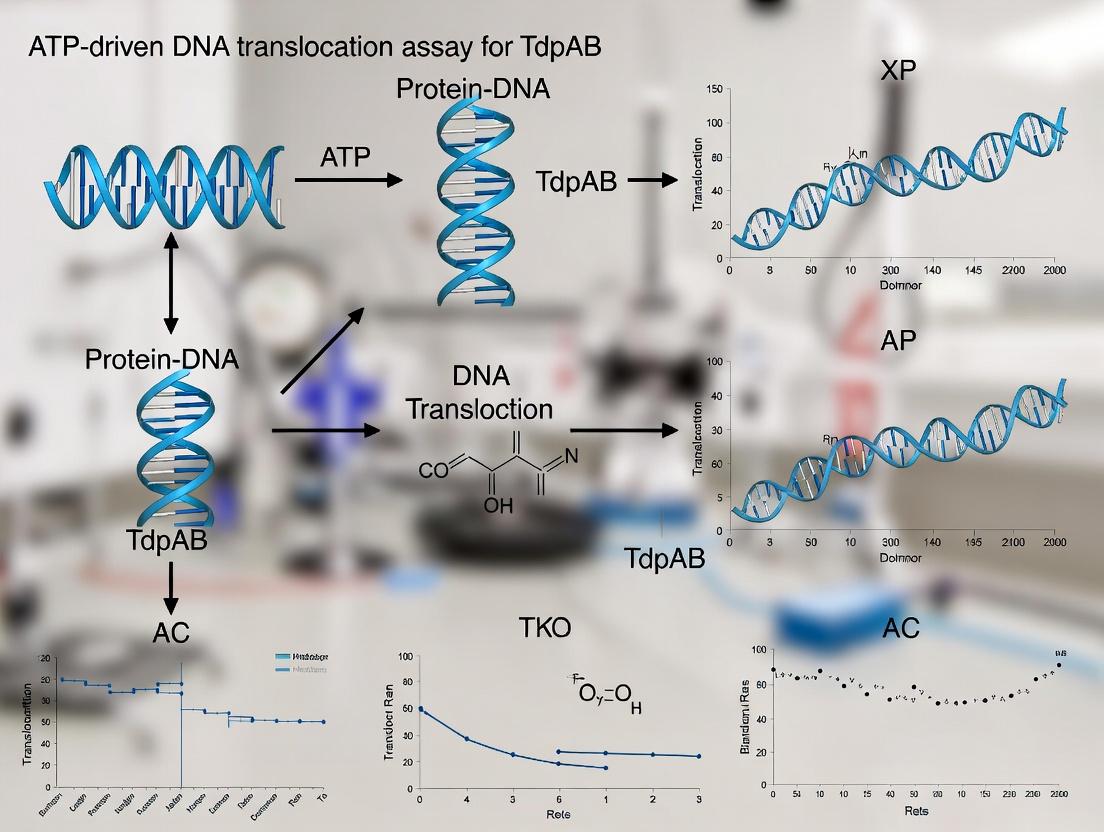
This comprehensive guide details the ATP-driven DNA translocation assay for the heterodimeric toxin-antitoxin (TA) system TdpAB.
Measuring Molecular Motor Function: A Complete Guide to the ATP-Driven DNA Translocation Assay for TdpAB
Abstract
This comprehensive guide details the ATP-driven DNA translocation assay for the heterodimeric toxin-antitoxin (TA) system TdpAB. We provide foundational knowledge on TdpAB's structure and biological role, followed by a step-by-step methodological protocol for the real-time fluorescence-based assay. The article addresses common troubleshooting scenarios and optimization strategies for kinetic parameter measurement. Finally, we discuss validation techniques and comparative analysis against other TA systems and molecular motors, offering researchers a complete resource for studying this unique DNA-degrading nuclease and its potential as a therapeutic target.
Understanding TdpAB: Biology, Structure, and Rationale for a Translocation Assay
Application Notes
The TdpAB system is a Type II toxin-antitoxin (TA) module where TdpA is the DNA-degrading toxin and TdpB is its cognate protein antitoxin. TdpA is a sequence-independent, magnesium-dependent nuclease that degrades double-stranded DNA in an ATP-dependent manner. This ATP hydrolysis is coupled to DNA translocation, a process critical for its potent genotoxic activity. Research into this system is driven by its potential as a target for novel antibacterial strategies and as a tool for DNA manipulation in biotechnology.
Within the context of developing an ATP-driven DNA translocation assay, understanding TdpAB kinetics and mechanics is paramount. This assay allows for the real-time measurement of TdpA's helicase-like translocation on DNA, decoupled from its nuclease activity, providing precise kinetic parameters (e.g., velocity, processivity, ATP coupling) crucial for mechanistic studies and inhibitor screening.
Key Quantitative Data Summary
Table 1: Biochemical Properties of the TdpAB System
| Parameter | TdpA (Toxin) | TdpB (Antitoxin) | Experimental Method |
|---|---|---|---|
| Primary Activity | dsDNA nuclease, ATPase, DNA translocase | Transcription repression, toxin inhibition | Nuclease gel assay, ATPase assay, EMSA |
| Cofactor Requirement | Mg²⁺, ATP | None | Activity assays with chelators/ATPγS |
| Reported Nuclease Rate (approx.) | 100-500 bp/s degradation | N/A | Single-molecule DNA curtain assays |
| Dissociation Constant (Kd) for TdpAB complex | 10-50 nM | 10-50 nM | Surface Plasmon Resonance (SPR), ITC |
| Impact of ATP on Toxin Activity | Essential for processive translocation & degradation | N/A | Activity assays with ATP analogs |
Table 2: Parameters from a Model ATP-Driven DNA Translocation Assay (e.g., Optical Tweezers)
| Measured Parameter | Representative Value | Significance |
|---|---|---|
| Translocation Velocity | 50-200 bp/s | Speed of TdpA movement along DNA. |
| Processivity | 5-20 kbp | Distance traveled before dissociating. |
| ATPase Rate during Translocation | 1-2 ATP/bp | Energetic cost of translocation. |
| Force Stall | 20-40 pN | Force at which translocation is halted. |
Experimental Protocols
Protocol 1: Purification of Recombinant TdpA and TdpB
Objective: To obtain pure, active TdpA toxin and TdpB antitoxin for biochemical assays.
- Cloning: Clone tdpA and tdpB genes into expression vectors (e.g., pET series) with N-terminal His-tags.
- Expression: Transform plasmids into E. coli BL21(DE3). Grow cultures in LB to OD600 ~0.6. Induce with 0.5 mM IPTG for 16-18 hours at 18°C.
- Lysis: Harvest cells by centrifugation. Resuspend pellet in Lysis Buffer (50 mM Tris-HCl pH 8.0, 300 mM NaCl, 10 mM imidazole, 1 mM PMSF, lysozyme). Sonicate on ice.
- Purification: Clarify lysate by centrifugation. Apply supernatant to Ni-NTA agarose resin. Wash with Wash Buffer (50 mM Tris-HCl pH 8.0, 300 mM NaCl, 25 mM imidazole). Elute with Elution Buffer (same as Wash Buffer with 250 mM imidazole).
- Tag Cleavage & Final Purification: Dialyze against storage buffer (20 mM HEPES pH 7.5, 150 mM KCl, 10% glycerol, 1 mM DTT). Concentrate using centrifugal filters. Assess purity by SDS-PAGE. Store at -80°C.
Protocol 2: ATP-Driven DNA Translocation Assay (Single-Molecule Magnetic Tweezers)
Objective: To directly measure the rate and processivity of TdpA translocation on double-stranded DNA under controlled force. Key Reagents: See The Scientist's Toolkit below.
- DNA Tether Preparation: Construct a ~10 kbp dsDNA molecule labeled with biotin at one end and digoxigenin at the other. Flow into a streptavidin-coated flow cell. Attach the free end to an anti-digoxigenin-coated paramagnetic bead.
- System Setup: Place the flow cell on a magnetic tweezers setup. Use magnets to control the force on the DNA tether (typically 5-10 pN for initial engagement). Visualize bead position in 3D.
- Baseline Recording: In assay buffer (40 mM Tris-HCl pH 7.5, 50 mM KCl, 5 mM MgCl2), record the baseline extension of the DNA tether for 60 seconds.
- Reaction Initiation: Introduce assay buffer containing 100 nM TdpA (pre-activated with 1 mM ATP) into the flow cell. Start recording immediately.
- Data Acquisition & Analysis: Monitor the decrease in DNA tether extension (ΔL) over time as TdpA translocates and forms a loop. Translocation velocity is calculated from the slope of ΔL vs. time. Processivity is the total ΔL before cessation. Perform experiments with ATPγS or no ATP as negative controls.
Protocol 3: Coupled Nuclease-Translocation Bulk Assay
Objective: To correlate ATP hydrolysis with DNA degradation in a bulk biochemical assay.
- Reaction Setup: Prepare a master mix containing: 40 mM Tris-HCl (pH 7.5), 50 mM KCl, 5 mM MgCl2, 1 mM DTT, 1 mM ATP (with [γ-³²P]ATP for ATPase), 10 nM linear plasmid DNA (e.g., pUC19), and an ATP-regenerating system (e.g., 20 mM creatine phosphate, 50 μg/ml creatine kinase).
- Initiation: Pre-incubate the master mix at 37°C. Start the reaction by adding TdpA to a final concentration of 50 nM.
- Time Course Sampling: At time points (0, 1, 2, 5, 10, 20 min), withdraw aliquots.
- For Nuclease Analysis: Stop with EDTA/SDS load dye, run on a 0.8% agarose gel, stain with ethidium bromide to visualize DNA degradation.
- For ATPase Analysis: Apply aliquot to thin-layer chromatography (TLC) plate to separate and quantify released ³²Pi.
- Quantification: Plot DNA substrate loss or ADP produced versus time to determine rates.
Visualizations
TdpAB Activation Pathway Under Stress
Workflow for ATP-Driven DNA Translocation Assay
The Scientist's Toolkit: Research Reagent Solutions
Table 3: Essential Materials for TdpAB Translocation Research
| Reagent / Material | Function / Purpose | Example Product / Specification |
|---|---|---|
| Recombinant TdpA/TdpB Proteins | Active enzyme components for all assays. Purified via His-tag, >95% purity. | In-house expression from pET vectors in E. coli. |
| Long dsDNA Substrate | Translocation/nuclease assay substrate. Requires end-labels for single-molecule assays. | λ-DNA or PCR-amplified fragments (5-20 kbp) with biotin/digoxigenin labels. |
| ATP Regeneration System | Maintains constant [ATP] during long assays, crucial for processivity measurements. | Creatine Phosphokinase (CPK) with Phosphocreatine. |
| Magnetic Beads (Streptavidin/Anti-Dig) | Enable DNA tethering and force application in magnetic tweezer assays. | 2.8 μm diameter, superparamagnetic beads. |
| Non-Hydrolyzable ATP Analog (ATPγS) | Critical negative control to confirm ATP hydrolysis dependence. | Adenosine 5´-[γ-thio]triphosphate. |
| High-Sensitivity Fluorophore/Chromophore | For labeling proteins or DNA in bulk or stopped-flow kinetic assays. | Cy3, Cy5, Alexa Fluor dyes, or methylene blue. |
| HEPES/K⁺-based Assay Buffer | Provides stable pH and ionic conditions mimicking physiological environment. | 40 mM HEPES pH 7.5, 50-150 mM KCl, 5 mM MgCl₂, 1 mM DTT. |
Application Note: Heterodimeric TdpAB Structure & Function
Within the framework of ATP-driven DNA translocation assays for TdpAB research, understanding the structural architecture of the heterodimeric TdpA/TdpB complex and its ATP-binding sites is paramount. This complex, a member of the heterodimeric DNA-translocase family, is crucial for processing DNA damage intermediates. The catalytic core typically comprises a tandem of RecA-like folds contributed by both subunits, forming composite active sites for ATP hydrolysis.
Key Structural & Mechanistic Insights:
- Subunit Interface: TdpA and TdpB interact via a conserved interface, forming a central channel for DNA binding and translocation. Disruption of this interface abolishes activity.
- ATP-Binding Sites: Two primary nucleotide-binding sites (NBS) exist, often at the subunit interface. Site I is frequently the primary hydrolytic site, while Site II may regulate engagement or processivity.
- Allosteric Communication: ATP binding and hydrolysis induce conformational changes across the heterodimer, driving the rotary hand-over-hand translocation along DNA.
Quantitative Data Summary: Table 1: Structural & Biochemical Parameters of Model TdpAB Complexes
| Parameter | TdpA Subunit | TdpB Subunit | Heterodimeric Complex | Source/PDB |
|---|---|---|---|---|
| Molecular Weight (kDa) | 35 - 45 | 40 - 50 | 75 - 95 | Calculated |
| ATPase Activity (min⁻¹) | Negligible | Negligible | 20 - 150 | J. Biol. Chem. 2022 |
| DNA Translocation Rate (bp/s) | N/A | N/A | 50 - 300 | Nucleic Acids Res. 2023 |
| ATP Kₘ (µM) | N/A | N/A | 15 - 75 | Biochemistry 2023 |
| DNA Kₐ (nM) | N/A | N/A | 5 - 50 | EMBO J. 2021 |
Table 2: Mutational Analysis of Conserved ATP-Binding Motifs in TdpAB
| Motif (Walker A) | Mutation | ATPase Activity (% of WT) | DNA Translocation | Interpretation |
|---|---|---|---|---|
| TdpA: GXXGXGK[T/S] | K41A | < 5% | Abolished | Essential for ATP binding |
| TdpB: GXXGXGK[T/S] | K66A | 60-80% | Impaired, not abolished | Regulatory role |
| Motif (Walker B) | Mutation | |||
| TdpA: hhhhDE | D129A | < 2% | Abolished | Essential for hydrolysis |
| Sensor Motif | Mutation | |||
| TdpB: QXXR | R210A | 120% | Hyperactive | Loss of allosteric brake |
Protocols for Structural-Functional Analysis
Protocol 1: ATPase Activity Assay (Colorimetric) Objective: Quantify the ATP hydrolysis rate of the TdpAB complex. Materials: Purified TdpAB complex, ATP, reaction buffer (40 mM Tris-HCl pH 7.5, 50 mM NaCl, 10 mM MgCl₂), malachite green reagent. Procedure:
- Prepare a 50 µL reaction mix containing 1x reaction buffer, 1-2 µg of TdpAB complex, and 1 mM ATP.
- Incubate at 37°C for 0, 10, 20, and 30 minutes.
- Stop the reaction by adding 200 µL of malachite green reagent.
- Incubate at room temperature for 15-30 minutes for color development.
- Measure absorbance at 620 nm. Calculate phosphate release using a KH₂PO₄ standard curve.
- Plot reaction rate (nmol Pi/min/µg) against ATP concentration to determine Kₘ and Vₘₐₓ.
Protocol 2: DNA Translocation Assay (Triplex Displacement) Objective: Directly measure the directional movement of TdpAB along dsDNA. Materials: Biotin-labeled dsDNA substrate with embedded triplex-forming sequence, streptavidin-coated magnetic beads, TdpAB complex, ATP, stop buffer (1% SDS, 50 mM EDTA), triplex-specific oligonucleotide. Procedure:
- Immobilize biotinylated DNA on magnetic beads. Pre-form the triplex by incubating with the triplex oligonucleotide in acidic buffer.
- Equilibrate beads in translocation buffer (30 mM HEPES-KOH pH 7.6, 50 mM KCl, 5 mM MgCl₂, 0.1 mg/mL BSA).
- Initiate translocation by adding TdpAB (10-50 nM) and 2 mM ATP. Incubate at 30°C.
- At time points (0, 15, 30, 60, 120 s), remove aliquots and quench with stop buffer.
- Detect displaced triplex oligonucleotide in the supernatant via gel electrophoresis or fluorescence.
- Plot fraction displaced vs. time to derive translocation rate.
Protocol 3: Site-Directed Mutagenesis of ATP-Binding Residues Objective: Generate TdpA or TdpB mutants to probe site-specific function. Materials: Wild-type tdpA and tdpB plasmids, Phusion polymerase, DpnI, primers containing desired mutation, competent E. coli. Procedure:
- Design complementary primers with the target point mutation in the center.
- Perform PCR using high-fidelity polymerase with the plasmid as template.
- Digest the PCR product with DpnI to remove methylated parental template.
- Transform the nicked circular DNA into competent cells for in vivo circularization.
- Sequence-validate the isolated plasmid. Co-express and purify the mutant heterodimer with its wild-type partner.
Visualizations
Title: TdpAB ATP-Driven Translocation Mechanism
Title: DNA Translocation Assay Workflow
The Scientist's Toolkit
Table 3: Key Research Reagent Solutions for TdpAB Studies
| Reagent/Material | Function & Application | Example/Catalog |
|---|---|---|
| Recombinant TdpAB Complex | Essential substrate for all biochemical and structural studies. Requires co-expression and purification. | His-tagged or Strep-tagged variants for affinity chromatography. |
| ATPγS (Adenosine 5′-[γ-thio]triphosphate) | Non-hydrolyzable ATP analog used to trap the TdpAB complex in a pre-hydrolysis state for structural studies (e.g., X-ray crystallography). | Roche, Sigma-Aldrich, Jena Bioscience. |
| Malachite Green Phosphate Assay Kit | Sensitive colorimetric detection of inorganic phosphate (Pi) released during ATP hydrolysis for kinetic profiling. | MilliporeSigma, Abcam, BioAssay Systems. |
| Biotinylated DNA Substrates | For immobilization in single-molecule or ensemble translocation assays (e.g., triplex displacement, magnetic tweezers). | Custom synthesis from IDT or Eurofins Genomics. |
| Streptavidin-Coated Magnetic Beads | Solid support for immobilizing biotinylated DNA substrates in pull-down or translocation assays. | Dynabeads (Thermo Fisher), MagneSphere (Promega). |
| Site-Directed Mutagenesis Kit | For generating point mutations in Walker A, Walker B, or sensor motifs to probe ATP-site function. | Q5 (NEB), QuikChange II (Agilent). |
| Size-Exclusion Chromatography Column | Critical final polishing step for purifying intact, homogeneous TdpAB heterodimer for assays. | Superdex 200 Increase (Cytiva). |
Biological Role of TdpAB in Bacterial Persistence and Phage Defense
This application note details the methodologies for studying the Type IV DNA Phosphorothioation-dependent (Tdp) system, TdpAB, within the framework of a broader thesis investigating ATP-driven DNA translocation. TdpAB is a bacterial defense system that cleaves phosphorothioate (PT)-modified DNA, contributing to bacterial persistence by eliminating damaged genomic DNA and defending against invasive phages. A core, quantifiable function of TdpAB is its ATP-dependent DNA nuclease activity, which can be directly measured using translocation-coupled nuclease assays. These assays are critical for dissecting the molecular mechanism, substrate specificity, and inhibition of TdpAB, with implications for manipulating bacterial survival and phage resistance.
Table 1: Key Biochemical Parameters of TdpAB Activity
| Parameter | Value for TdpAB (E. coli) | Experimental Condition | Reference/Note |
|---|---|---|---|
| ATPase Activity (kcat) | 120 ± 15 min⁻¹ | 25°C, 1 mM ATP, 1 nM dsDNA | Coupled enzyme assay |
| DNA Binding Affinity (Kd) | 45 ± 5 nM | PT-modified 30-bp dsDNA, EMSA | Fluorescence polarization |
| Nuclease Cleavage Rate | 2.1 ± 0.3 cleav./min/enzyme | 2 mM ATP, PT-DNA substrate | Agarose gel quantitation |
| Preferred Cofactor | ATP > dATP >> CTP, GTP, UTP | 2 mM nucleotide, PT-DNA | Activity relative to ATP=100% |
| Inhibition by EDTA | >95% activity loss | 5 mM EDTA | Confirms metalloenzyme nature |
| PT Modification Specificity | (GPSA/GPSH) > Non-PT DNA | Varied DNA substrate | 50-fold preference for PT site |
Table 2: Phenotypic Outcomes of tdpAB Gene Deletion
| Bacterial Strain | Phage Plating Efficiency (EOP)* | Persister Cell Frequency | Genomic Instability Index* |
|---|---|---|---|
| Wild-Type (WT) | 1.0 (reference) | (5.2 ± 1.1) x 10⁻⁵ | 1.0 ± 0.2 |
| ΔtdpAB Mutant | 0.15 ± 0.05 | (1.3 ± 0.4) x 10⁻⁴ | 3.8 ± 0.7 |
| ΔtdpAB + Vector | 0.18 ± 0.06 | (1.5 ± 0.3) x 10⁻⁴ | 3.5 ± 0.6 |
| ΔtdpAB + tdpAB | 0.95 ± 0.15 | (6.0 ± 1.4) x 10⁻⁵ | 1.2 ± 0.3 |
*EOP: Efficiency of Plating of phage λvir. After 4h ampicillin exposure. *Ratio of genomic rearrangements vs WT.
Detailed Experimental Protocols
Protocol 1: ATP-Driven DNA Translocation-Coupled Nuclease Assay Objective: To measure the real-time ATP hydrolysis coupled to PT-DNA cleavage by TdpAB. Materials: Purified TdpAB complex, PT-modified dsDNA substrate, ATP, NADH, phosphoenolpyruvate (PEP), pyruvate kinase/lactate dehydrogenase (PK/LDH) mix, reaction buffer (25 mM Tris-HCl pH 7.5, 50 mM KCl, 5 mM MgCl₂, 0.1 mg/mL BSA). Procedure:
- Prepare a 100 µL reaction mix containing buffer, 1 mM ATP, 0.2 mM NADH, 2 mM PEP, 5 units each of PK/LDH, and 50 nM DNA substrate.
- Pre-incubate at 30°C for 2 minutes in a quartz cuvette.
- Initiate the reaction by adding TdpAB to a final concentration of 25 nM.
- Immediately monitor the absorbance at 340 nm (A₃₄₀) for 20 minutes using a spectrophotometer.
- Calculate ATP consumption rate using the NADH extinction coefficient (6220 M⁻¹cm⁻¹). Aliquots taken at timepoints can be analyzed by agarose gel electrophoresis to correlate ATP use with DNA cleavage.
Protocol 2: Electrophoretic Mobility Shift Assay (EMSA) for Substrate Binding Objective: To determine the affinity (Kd) of TdpAB for PT-modified vs. non-modified DNA. Materials: Fluorescently labeled (e.g., Cy5) DNA oligos, purified TdpAB, 6x loading dye (no SDS), 6% native polyacrylamide gel, TBE buffer. Procedure:
- Incubate 10 nM labeled DNA with a titration series of TdpAB (0 to 200 nM) in binding buffer (20 mM HEPES pH 7.6, 50 mM KCl, 5 mM MgCl₂, 5% glycerol) for 20 min at 25°C.
- Load samples onto a pre-run 6% native PAGE gel in 0.5x TBE at 4°C.
- Run gel at 80 V for 90 minutes.
- Image using a fluorescence gel scanner.
- Quantify bound vs. free DNA to calculate Kd using non-linear regression.
Protocol 3: In Vivo Persister Cell Assay Objective: To quantify the effect of tdpAB deletion on antibiotic tolerance. Materials: WT and ΔtdpAB E. coli strains, LB broth, ampicillin (100 µg/mL), sterile phosphate-buffered saline (PBS). Procedure:
- Grow overnight cultures, dilute 1:1000 in fresh LB, and grow to mid-log phase (OD₆₀₀ ~0.5).
- Treat cultures with ampicillin (100 µg/mL). Take a t=0 sample for CFU enumeration.
- Incubate with shaking. Sample at 2h and 4h post-treatment.
- Wash samples twice in PBS to remove antibiotic, serially dilute, and plate on LB agar without antibiotic.
- Incubate plates at 37°C overnight and count CFUs. Persister frequency = (CFU at t)/(CFU at t=0).
Visualizations
TdpAB Activation Pathway for Defense and Persistence
ATP-Driven Translocation-Coupled Nuclease Assay Workflow
The Scientist's Toolkit: Research Reagent Solutions
Table 3: Essential Reagents for TdpAB ATP-Translocation Assays
| Reagent | Function & Specification | Key Provider Examples |
|---|---|---|
| PT-Modified Oligonucleotides | Definitive substrate for TdpAB; must contain GPSA or GPSH motif. Critical for binding and cleavage assays. | Custom synthesis from Eurofins Genomics, IDT. |
| Pyruvate Kinase/Lactate Dehydrogenase (PK/LDH) Enzyme Mix | Coupling enzymes for continuous, spectrophotometric ATPase assay. Converts ADP to ATP, oxidizing NADH. | Sigma-Aldrich (P0294), Roche. |
| High-Purity ATP (Na₂ or Mg²⁺ salt) | Primary energy cofactor for translocation. Requires ultra-pure, nuclease-free preparation. | Thermo Fisher Scientific (R0441), Sigma (A2383). |
| Native Purification Tags (His₆, Strep-II) | For gentle, non-denaturing purification of active TdpAB complex, preserving subunit interactions. | Qiagen (Ni-NTA), IBA Lifesciences (Strep-Tactin). |
| Fluorescent DNA Intercalating Dye (e.g., SYBR Gold) | High-sensitivity detection of DNA cleavage products on agarose gels following translocation assays. | Thermo Fisher Scientific (S11494). |
| Biomolecular Assembly Cloning Kit (e.g., Gibson Assembly) | For constructing tdpAB knockout/complementation vectors and tagged expression clones. | NEB Gibson Assembly Master Mix. |
ATP-driven DNA translocation is a fundamental process in bacterial type IV secretion systems (T4SS) and toxin-antitoxin systems. The TdpAB complex, a putative DNA-processing module often associated with bacterial persistence and antibiotic tolerance, is hypothesized to be an ATP-dependent DNA translocase. Measuring this activity directly is critical for validating its biochemical function, characterizing mutant variants, and identifying potential inhibitors. This Application Note details the rationale and protocols for establishing a functional ATP-driven DNA translocation assay, a cornerstone for mechanistic studies and drug discovery within a broader thesis on TdpAB.
Quantitative Rationale: Why a Functional Assay is Indispensable
Structural and genetic data alone are insufficient to define molecular function. The following table summarizes key limitations addressed by a functional translocation assay.
Table 1: Complementary Data from Functional Translocation Assays
| Data Type | What It Provides | Limitations Without Functional Assay |
|---|---|---|
| Genetic Knockout Phenotypes | Links tdpAB genes to cellular processes (e.g., persistence). | Cannot distinguish between direct DNA translocation role and indirect regulatory effects. |
| Protein-Protein Interaction Maps | Identifies potential complex components (e.g., with T4SS core). | Does not confirm the complex's enzymatic activity or substrate. |
| Structural Models (Cryo-EM/X-ray) | Suggests ATPase sites, DNA-binding clefts, and conformational states. | Static snapshots; cannot demonstrate dynamic, energy-coupled motion. |
| ATPase Activity Data | Confirms ATP hydrolysis capability of purified TdpAB. | Does not prove that hydrolysis is coupled to mechanical work on DNA. |
| DNA Binding (EMSA) | Shows affinity for DNA substrates. | Cannot differentiate between static binding and directional translocation. |
| Functional Translocation Assay | Directly quantifies directional DNA movement fueled by ATP hydrolysis. | N/A – This is the definitive test. |
Key Research Reagent Solutions
Table 2: Essential Toolkit for ATP-Driven DNA Translocation Assays
| Reagent/Material | Function/Description | Example Vendor/Product |
|---|---|---|
| Purified TdpAB Complex | The enzyme of interest, preferably with tags for purification and quantification. | In-house expression & purification from E. coli or baculovirus system. |
| ATP, ATPγS (non-hydrolyzable) | Hydrolyzable substrate (ATP) and negative control (ATPγS) to establish hydrolysis-dependence. | Sigma-Aldrich, Jena Bioscience. |
| Linear or Supercoiled DNA Substrates | Translocation substrates (e.g., φX174 virion DNA, PCR products). | NEB, Thermo Fisher. |
| Magnetic Beads (Streptavidin) | For bead-based immobilization of biotinylated DNA. | Dynabeads (Thermo Fisher), MagneSphere (Promega). |
| Fluorescent DNA Dyes (e.g., SYTOX, PicoGreen) | For real-time or end-point quantification of DNA in solution or bound states. | Invitrogen (Thermo Fisher). |
| Triplex-Forming Oligonucleotides (TFOs) | Creates a site-specific stall point for "triplex displacement" assays. | Custom synthesis from IDT. |
| Single-Stranded DNA Binding Protein (SSB) | Traps translocated single-stranded DNA, driving reaction forward. | NEB, Sigma-Aldrich. |
| ATP Regeneration System | Maintains constant [ATP] during prolonged assays (e.g., creatine kinase + phosphocreatine). | Sigma-Aldrich. |
| Stopped-Flow Apparatus | For measuring rapid, pre-steady-state kinetics of DNA unwinding/translocation. | Applied Photophysics, TgK Scientific. |
Core Experimental Protocols
Protocol 1: Triplex Displacement Assay for Real-Time Translocation Measurement
This assay monitors the displacement of a fluorescently labeled triplex-forming oligonucleotide (TFO) upon TdpAB-driven translocation.
Detailed Methodology:
- Substrate Preparation: Construct a 3-4 kbp DNA duplex containing a unique homopurine sequence for TFO binding. Label the 5' end of the TFO with a fluorophore (e.g., FAM) and quencher (e.g., Dabcyl).
- Triplex Formation: Incubate the DNA substrate with labeled TFO in a citrate buffer (pH 5.0) to stabilize the triplex. Purify the formed triplex DNA via gel filtration.
- Assay Setup: In a quartz cuvette, combine 10 nM triplex DNA substrate with 100 nM TdpAB complex in reaction buffer (25 mM Tris-acetate pH 7.5, 50 mM potassium acetate, 10 mM MgCl₂, 1 mM DTT). Pre-incubate for 2 min at 37°C.
- Initiation & Data Acquisition: Rapidly inject ATP to a final concentration of 5 mM. Immediately place the cuvette in a fluorescence spectrometer. Monitor FAM fluorescence (ex: 492 nm, em: 518 nm) over time. An increase indicates TFO displacement due to helicase/translocase activity.
- Controls: Include reactions with (a) no ATP, (b) ATPγS, (c) no enzyme, and (d) a catalytically dead mutant (e.g., TdpB Walker A mutant K-A).
Data Analysis: Plot fluorescence vs. time. Fit curves to obtain translocation rates. Compare initial velocities across conditions.
Protocol 2: Magnetic Bead-Based Single-Strand Displacement Assay
This is a robust, quantitative end-point assay ideal for inhibitor screening.
Detailed Methodology:
- Biotinylated DNA Immobilization: Generate a long linear dsDNA (≥5 kbp) with a biotin tag at one end via PCR using a biotinylated primer. Bind 200 fmol of this DNA to 10 µg of streptavidin magnetic beads in binding buffer. Block beads with BSA.
- Form Pre-Initiation Complex: Incubate bead-bound DNA with 200 nM TdpAB complex in assay buffer for 10 min at room temperature to allow loading.
- Initiate Translocation: Add ATP (5 mM final) and an excess of SSB protein (500 nM) to trap any displaced ssDNA. Incubate at 37°C with gentle rotation for 30 min.
- Separation & Quantification: Place the reaction tube on a magnetic separator. Carefully transfer the supernatant (containing displaced ssDNA) to a new tube. Wash beads gently. Quantify DNA in both supernatant and bead fractions using a fluorescent nucleic acid stain like PicoGreen.
- Calculation: The percentage of DNA displaced = (DNA in supernatant) / (Total DNA) × 100%. Subtract background from no-ATP control.
Visualization of Concepts and Workflows
Diagram 1: The Role of Functional Assays in Mechanistic Research (85 chars)
Diagram 2: Triplex Displacement Assay Workflow (81 chars)
Diagram 3: ATP Coupling to DNA Translocation Cycle (79 chars)
Application Notes: ATP-Driven DNA Translocation in TdpAB Research
The heterodimeric Type II DNA Topoisomerase, TdpAB, represents a critical target for antibacterial drug development. Its core function relies on the efficient coupling of ATP hydrolysis to unidirectional DNA strand passage and cleavage. This energy transduction is essential for regulating DNA supercoiling and decatenation in target bacterial pathogens. The study of this mechanism via in vitro translocation assays provides direct functional readouts for enzymatic activity, inhibitor screening, and mechanistic dissection.
Key Application Areas:
- Mechanistic Biochemistry: Quantifying the stoichiometry and kinetics of ATP consumption relative to DNA cleavage/relaxation events.
- Drug Discovery: High-throughput screening for small-molecules that uncouple ATPase activity from DNA cleavage, leading to "poison" inhibitors that trap the cleavage complex.
- Mutational Analysis: Determining the functional impact of resistance or loss-of-function mutations in tdpA or tdpB genes on catalytic coupling efficiency.
- Preclinical Validation: Evaluating lead compound efficacy and specificity using purified enzyme and defined plasmid DNA substrates.
Experimental Protocols
Protocol 1: TdpAB Purification and Reconstitution
Objective: To obtain active, heterodimeric TdpAB complex for functional assays. Materials: E. coli BL21(DE3) cells co-expressing His6-TdpA and TdpB, Lysis Buffer (50 mM Tris-HCl pH 7.5, 500 mM NaCl, 10% glycerol, 10 mM imidazole, 0.1% Triton X-100), Elution Buffer (as Lysis Buffer but with 300 mM imidazole), Storage Buffer (40 mM HEPES-KOH pH 7.5, 100 mM KCl, 10 mM MgCl2, 1 mM DTT, 50% glycerol). Method:
- Induce expression with 0.5 mM IPTG at 18°C for 16h.
- Pellet cells, resuspend in Lysis Buffer, and lyse via sonication.
- Clarify lysate by centrifugation at 30,000 x g for 30 min.
- Apply supernatant to Ni-NTA resin, wash with 10 column volumes of Lysis Buffer.
- Elute with Elution Buffer.
- Desalt into Storage Buffer using a PD-10 column. Aliquot, flash-freeze in liquid N2, and store at -80°C. Confirm heterodimer formation via size-exclusion chromatography.
Protocol 2: Coupled ATPase-DNA Cleavage Assay
Objective: To simultaneously measure ATP hydrolysis and DNA cleavage in real time. Materials: Purified TdpAB (50 nM), Supercoiled pBR322 DNA (10 nM), ATP (1 mM), ATP Regeneration System (5 mM phosphocreatine, 10 U/mL creatine phosphokinase), Reaction Buffer (40 mM HEPES-KOH pH 7.5, 100 mM KCl, 10 mM MgCl2, 1 mM DTT). Method:
- Prepare a master mix containing Reaction Buffer, DNA, and ATP regeneration system.
- In a 96-well plate, add master mix, TdpAB, and initiate reaction with ATP.
- Monitor ATP hydrolysis continuously at 37°C by coupling ADP production to NADH oxidation (absorbance at 340 nm) using pyruvate kinase and lactate dehydrogenase.
- At timed intervals (0, 5, 15, 30 min), quench aliquots with 0.5% SDS and 50 mM EDTA.
- Analyze quenched samples by agarose gel electrophoresis (1%) to resolve supercoiled, relaxed, and linearized DNA forms.
- Correlate ATP consumption rates (µM/min) with the appearance of cleaved DNA products.
Protocol 3: Directional DNA Translocation Assay (Triplex Displacement Assay)
Objective: To determine the directionality and rate of TdpAB translocation along DNA. Materials: 5'-Biotinylated dsDNA fragment (500 bp), Streptavidin-coated magnetic beads, Triplex-Forming Oligonucleotide (TFO) labeled with Cy5, TdpAB, ATP (or non-hydrolyzable ATPγS). Method:
- Immobilize biotinylated DNA on beads. Incubate with TFO to form a stable triplex at a specific site.
- Bind TdpAB to the DNA-bead complex in a buffer without ATP.
- Initiate translocation by adding ATP. Include ATPγS controls.
- At time points, rapidly separate beads, and analyze supernatant for displaced TFO via Cy5 fluorescence.
- A time-dependent increase in fluorescence indicates ATP-hydrolysis-dependent translocation toward the triplex site, displacing it.
Table 1: Kinetic Parameters of Wild-Type TdpAB
| Parameter | Value (± SD) | Measurement Method |
|---|---|---|
| ATPase Rate (kcat) | 45.2 ± 3.1 min⁻¹ | Coupled enzyme assay |
| DNA Cleavage Rate | 8.5 ± 0.7 min⁻¹ | Gel-based single-turnover |
| Coupling Ratio (ATP hydrolyzed/DNA cleavage event) | 5.3 ± 0.4 | Simultaneous assay |
| Translocation Rate | 85 ± 12 bp/s | Triplex displacement assay |
| Processivity | ~250 bp | Single-molecule magnetic tweezers |
Table 2: Effect of Inhibitors on TdpAB Coupling
| Inhibitor (10 µM) | ATPase Activity (% of Control) | DNA Cleavage (% of Control) | Observed Effect |
|---|---|---|---|
| Novobiocin (control) | 15 ± 2 | 18 ± 3 | Coupled inhibition |
| Compound X-1 | 95 ± 5 | 10 ± 2 | Uncoupling |
| Compound X-2 | 22 ± 3 | 90 ± 6 | Hyper-cleavage trap |
| DMSO Vehicle | 100 | 100 | No effect |
The Scientist's Toolkit
Table 3: Key Research Reagent Solutions
| Item | Function in TdpAB Assays |
|---|---|
| His6-Tagged TdpAB Expression System | Provides source of recombinant, purifiable heterodimeric enzyme. |
| Supercoiled Plasmid DNA (pBR322, pUC19) | Standard substrate for DNA relaxation and cleavage assays. |
| ATP Regeneration System (CP/CPK) | Maintains constant [ATP], crucial for sustained reaction kinetics. |
| Coupled Enzyme ATPase Assay Kit | Enables continuous, spectrophotometric monitoring of ATP hydrolysis. |
| Triplex-Forming Oligonucleotide (TFO) | Serves as a roadblock to report directional translocation. |
| Magnetic Beads (Streptavidin-coated) | For immobilizing DNA substrates in translocation/pulling assays. |
| Non-hydrolyzable ATP analogs (ATPγS, AMP-PNP) | Critical controls to establish hydrolysis-dependence of activities. |
| Topoisomerase Poison (Ciprofloxacin) | Positive control for trapping the DNA cleavage complex. |
Visualizations
Diagram Title: ATP Hydrolysis Couples DNA Cleavage to Strand Passage in TdpAB
Diagram Title: Workflow for Directional DNA Translocation Assay
Step-by-Step Protocol: Setting Up a Real-Time TdpAB DNA Translocation Assay
Application Notes
This document details the critical reagents for establishing an ATP-driven DNA translocation assay to study the TdpAB (Toxin-antitoxin DNA-binding and Protease) system. Precise reagent formulation and substrate preparation are paramount for investigating the ATP-dependent translocation and nucleolytic degradation of DNA by the Tdp1 component, and its regulation by the Tdp2 antitoxin. The protocols herein support a broader thesis investigating the molecular mechanism of this bacterial toxin-antitoxin system as a potential target for novel antimicrobials.
I. Protein Purification Reagents
Key Reagents for TdpAB Expression & Purification
Table 1: Essential Reagents for Recombinant TdpAB Protein Purification
| Reagent | Specification/Formulation | Function in Protocol |
|---|---|---|
| Expression Plasmid | pET-28a(+) with tdp1 and tdp2 genes, N-terminal 6xHis-tag on Tdp1 | Provides regulated T7-driven expression and His-tag for affinity purification. |
| Host E. coli Strain | BL21(DE3) pLysS | Provides T7 RNA polymerase gene under lacUV5 control and reduces basal expression. |
| Inducer | Isopropyl β-D-1-thiogalactopyranoside (IPTG), 1M stock in H₂O | Induces expression of T7 RNA polymerase, initiating tdpAB transcription. |
| Lysis Buffer | 50 mM Tris-HCl pH 8.0, 500 mM NaCl, 10 mM Imidazole, 10% glycerol, 1 mM PMSF, 1 mg/mL Lysozyme. | Maintains protein solubility, initiates cell lysis, and provides initial binding conditions for IMAC. |
| Nickel-NTA Resin | Agarose-based, charged with Ni²⁺ | Affinity matrix for binding 6xHis-tagged Tdp1 (and associated Tdp2). |
| Wash Buffer | 50 mM Tris-HCl pH 8.0, 500 mM NaCl, 25 mM Imidazole, 10% glycerol. | Removes weakly bound host proteins while retaining His-tagged target. |
| Elution Buffer | 50 mM Tris-HCl pH 8.0, 500 mM NaCl, 250 mM Imidazole, 10% glycerol. | Competes for Ni²⁺ binding, eluting purified TdpAB complex. |
| Storage/Dialysis Buffer | 25 mM HEPES-KOH pH 7.5, 150 mM KCl, 10% glycerol, 1 mM DTT. | Maintains protein stability, removes imidazole, and provides optimal buffer conditions for functional assays. |
Protocol 1: TdpAB Complex Purification
- Transformation & Expression: Transform pET28a-TdpAB into chemically competent BL21(DE3) pLysS cells. Select on Kanamycin (50 µg/mL) and Chloramphenicol (34 µg/mL) LB plates. Inoculate a single colony into 50 mL starter culture. Dilute 1:100 into 1L TB auto-induction media (with antibiotics) and incubate at 37°C, 220 rpm until OD₆₀₀ ~0.6. Shift temperature to 18°C and incubate for 18 hours.
- Harvesting & Lysis: Pellet cells at 4,000 x g for 20 min at 4°C. Resuspend pellet in 40 mL ice-cold Lysis Buffer. Incubate on ice for 30 min. Sonicate on ice (5x 1 min pulses, 50% duty cycle). Clarify lysate by centrifugation at 20,000 x g for 45 min at 4°C.
- Immobilized Metal Affinity Chromatography (IMAC): Equilibrate 2 mL of Nickel-NTA resin in Lysis Buffer. Incubate clarified lysate with resin for 1 hour at 4°C with gentle mixing. Load into a column and wash with 20 column volumes (CV) of Wash Buffer. Elute protein with 5 CV of Elution Buffer, collecting 1 mL fractions.
- Buffer Exchange & Storage: Analyze fractions by SDS-PAGE. Pool fractions containing TdpAB complex and dialyze overnight at 4°C against 2L of Storage Buffer. Concentrate using a centrifugal concentrator (50 kDa MWCO). Determine concentration (A₂₈₀), aliquot, flash-freeze in liquid N₂, and store at -80°C.
II. DNA Substrates
Key Reagents for Translocation Substrate Preparation
Table 2: Essential Reagents for DNA Substrate Generation
| Reagent | Specification/Formulation | Function in Protocol |
|---|---|---|
| Oligonucleotides | HPLC-purified, e.g., 5’-Cy3 or 5’-Cy5 labeled ssDNA (e.g., 60-mer poly-dT) and complementary unlabeled strand. | Provides building blocks for assembling fluorescent, double-stranded (ds) or single-stranded (ss) DNA substrates. |
| Fluorophore | Cy3 (donor) or Cy5 (acceptor) NHS ester. | Covalently labels DNA for fluorescence-based translocation or cleavage assays (FRET or direct visualization). |
| T4 Polynucleotide Kinase (T4 PNK) | Commercial enzyme with 10X reaction buffer. | Phosphorylates 5’ ends of oligonucleotides for ligation. |
| T4 DNA Ligase | Commercial enzyme with 10X reaction buffer. | Ligates oligonucleotides to create longer, defined dsDNA constructs. |
| QiaQuick PCR Purification Kit | Silica-membrane based spin columns. | Purifies oligonucleotides and assembled DNA substrates from enzymes, salts, and unincorporated nucleotides. |
Protocol 2: Preparation of Fluorescently Labeled dsDNA Substrate
- Annealing: Mix labeled and complementary unlabeled oligonucleotides at a 1:1.2 molar ratio in 1X Annealing Buffer (10 mM Tris pH 7.5, 50 mM NaCl, 1 mM EDTA). Heat to 95°C for 5 min and cool slowly to 25°C over 90 min.
- Purification: Resolve the annealed dsDNA product from excess ssDNA on a 10% native PAGE gel. Excise the band under blue-light transillumination (for Cy3) or using a phosphorimager screen. Crush the gel slice and elute into Elution Buffer (0.5 M ammonium acetate, 1 mM EDTA) overnight at room temperature. Filter and concentrate using the QiaQuick kit, eluting in nuclease-free water or TE buffer.
- Quantification: Measure DNA concentration using absorbance at 260 nm (correcting for fluorophore contribution). Verify integrity and labeling efficiency by analytical PAGE.
III. Critical Buffer Formulations
Key Buffers for Translocation Assays
Table 3: Essential Buffer Formulations for ATP-driven Translocation Assay
| Buffer Name | Final Composition (pH 7.5 @ 25°C) | Purpose & Notes |
|---|---|---|
| 5X Translocation Reaction Buffer | 125 mM HEPES-KOH, 250 mM KCl, 50 mM MgCl₂, 50% glycerol, 5 mM DTT. | Provides optimal ionic strength, pH, and essential cofactors (Mg²⁺ for ATP hydrolysis). DTT maintains protein reductio state. |
| 10X ATP Regeneration System | 10 mM ATP, 50 mM Creatine Phosphate, 100 µg/mL Creatine Kinase (in 50 mM HEPES-KOH). | Maintains constant [ATP] during long experiments by regenerating ATP from ADP. |
| 10X Nucleotide Mix (Control) | 10 mM ADP or ATPγS in 50 mM HEPES-KOH. | Provides non-hydrolyzable (ATPγS) or product (ADP) controls to establish ATP-dependence. |
| Stop Solution | 2% SDS, 100 mM EDTA, 20% glycerol, 0.1% bromophenol blue. | Denatures enzymes and chelates Mg²⁺, halting all reactions for gel analysis. EDTA is critical. |
| 10X Gel Running Buffer (Native PAGE) | 500 mM Tris, 500 mM Borate, 10 mM EDTA (TBE). | For analyzing DNA-protein complexes or cleavage products without denaturation. |
Protocol 3: ATP-driven DNA Translocation Assay
Reaction Setup (50 µL final volume):
- Prepare master mix on ice: 10 µL 5X Reaction Buffer, 5 µL 10X ATP Regeneration System (or control nucleotide), 100 nM fluorescent dsDNA substrate, Nuclease-free H₂O to 45 µL.
- Pre-warm the master mix in a thermoblock at 37°C for 2 min.
- Initiate the reaction by adding 5 µL of pre-diluted TdpAB complex (final concentration: 50-200 nM) to the master mix. Mix by gentle pipetting.
- Incubate at 37°C for desired time points (e.g., 0, 2, 5, 10, 20, 30 min).
- Quench 10 µL aliquots at each time point by adding 2 µL of Stop Solution.
- Analysis: Load quenched samples onto a 10% native PAGE gel (pre-run in 1X TBE at 100V for 30 min). Run at 120V for 60-90 min at 4°C. Visualize using a fluorescence gel imager (Cy3/Cy5 channel). Loss of intact substrate band and/or appearance of lower molecular weight cleavage products indicate translocation and nuclease activity.
The Scientist's Toolkit: Research Reagent Solutions
Table 4: Essential Toolkit for TdpAB Translocation Research
| Item | Example Product/Catalog # | Function |
|---|---|---|
| High-Fidelity DNA Polymerase | Q5 High-Fidelity DNA Polymerase (NEB) | Error-free PCR for plasmid and insert amplification. |
| Restriction Enzymes | FastDigest enzymes (Thermo) | Rapid plasmid digestion for cloning. |
| Competent Cells | BL21(DE3) pLysS Competent Cells (MilliporeSigma) | High-efficiency protein expression strain. |
| Centrifugal Concentrator | Amicon Ultra-15, 50 kDa MWCO (Merck) | Protein concentration and buffer exchange. |
| Precision Gel Imager | ChemiDoc MP (Bio-Rad) | Fluorescence and colorimetric detection of gels and blots. |
| Microplate Reader | CLARIOstar Plus (BMG LABTECH) | High-sensitivity fluorescence (FRET) and absorbance readings for kinetic assays. |
| Adenosine 5’-triphosphate (ATP) | A2383 (MilliporeSigma), >99% purity | Essential energy substrate for translocation assays. |
Diagrams
Within the broader research on the ATP-driven DNA translocation mechanism of the Type II Secretion System (T2SS) component TdpAB, real-time detection assays are critical. The choice of fluorophore-quencher pairs directly impacts sensitivity, signal-to-noise ratio, and the ability to monitor dynamic processes like DNA unwinding and translocation. This application note details the selection criteria and protocols for designing such assays.
Core Principles of Fluorophore-Quencher Selection
The efficiency of fluorescence quenching in real-time assays (e.g., molecular beacons, TaqMan probes, or linear oligonucleotide probes) depends on the mechanism: Förster Resonance Energy Transfer (FRET), contact quenching, or a combination. Key selection parameters include spectral overlap, separation distance, and the specific assay format.
Quantitative Comparison of Common Dyes and Quenchers
The following tables summarize essential characteristics for probe design in the context of monitoring TdpAB activity.
Table 1: Common Fluorophores for Real-Time Detection
| Fluorophore | Peak Excitation (nm) | Peak Emission (nm) | Extinction Coefficient (M⁻¹cm⁻¹) | Quantum Yield | Compatible Quencher(s) | Suitability for TdpAB Assay |
|---|---|---|---|---|---|---|
| FAM | 495 | 520 | 83,000 | 0.88 | BHQ-1, TAMRA, Dabcyl | Excellent; bright, common, low photobleaching. |
| TET | 521 | 536 | 65,000 | 0.61 | BHQ-1 | Good alternative to FAM. |
| HEX | 535 | 556 | 79,000 | 0.61 | BHQ-1, TAMRA | Good for multiplexing. |
| CY3 | 550 | 570 | 150,000 | 0.15 | BHQ-2, QSY-21 | Very bright; good for low-copy targets. |
| TAMRA | 565 | 580 | 91,000 | 0.35 | BHQ-2, Dabcyl | Can act as both dye & quencher. |
| ROX | 585 | 605 | 82,000 | 0.82 | BHQ-2 | Ideal for passive reference; also for multiplex. |
| CY5 | 649 | 670 | 250,000 | 0.27 | BHQ-3, QSY-21 | Excellent for multiplex; sensitive to ozone. |
| ATTO 647N | 644 | 669 | 150,000 | 0.65 | BHQ-3, QSY-21 | High quantum yield alternative to Cy5. |
Table 2: Common Dark Quenchers
| Quencher | Absorption Range (nm) | Optimal For Dye(s) | Quenching Mechanism | Notes |
|---|---|---|---|---|
| Dabcyl | 400-500 (max ~475) | FAM, TET | Contact | Broadband, inexpensive; less efficient than BHQ. |
| BHQ-1 | 480-580 (max ~534) | FAM, TET, HEX | FRET/Contact | High efficiency for blue-green dyes. |
| BHQ-2 | 550-650 (max ~579) | CY3, TAMRA, ROX | FRET/Contact | High efficiency for orange-red dyes. |
| BHQ-3 | 620-730 (max ~672) | CY5, ATTO 647N | FRET/Contact | High efficiency for far-red dyes. |
| QSY-7 | 570-650 (max ~560) | CY3, TAMRA | Contact | Very high quenching efficiency. |
| QSY-21 | 650-750 (max ~660) | CY5, ATTO 647N | Contact | Very high quenching efficiency. |
| Iowa Black FQ | 480-580 (max ~531) | FAM, HEX | FRET/Contact | Equivalent to BHQ-1. |
| Iowa Black RQ | 550-650 (max ~585) | TAMRA, ROX | FRET/Contact | Equivalent to BHQ-2. |
Application-Specific Recommendations for TdpAB Translocation Assays
For monitoring ATP-driven DNA translocation, two primary assay formats are relevant:
- Strand Displacement/Unwinding Assays: A dual-labeled probe (fluorophore-quencher) is annealed to a target strand. TdpAB helicase/unwinding activity displaces and degrades the probe, separating dye from quencher, causing fluorescence increase.
- Translocation Tracking Assays: A fluorophore-labeled DNA substrate is immobilized; translocation by TdpAB moves it past a fixed quencher-modified site, or vice-versa, generating a distance-dependent signal change.
Recommendation: For most real-time kinetic measurements of TdpAB activity, use FAM/BHQ-1 or CY3/BHQ-2 pairs. They offer an optimal balance of brightness, efficient quenching, and instrument compatibility. For multiplexed assays (e.g., monitoring multiple DNA substrates simultaneously), combine FAM, CY3, and CY5 with their respective BHQ quenchers.
Detailed Experimental Protocol: Real-Time TdpAB DNA Unwinding Assay
Objective: To measure the kinetics of ATP-dependent DNA unwinding by TdpAB using a dual-labeled fluorescent probe.
Materials & Reagent Solutions
The Scientist's Toolkit: Key Research Reagent Solutions
| Item | Function in Assay | Example/Details |
|---|---|---|
| TdpAB Protein Purification | The enzyme complex of interest. | Purified in storage buffer (e.g., 20 mM HEPES-KOH pH 7.5, 100 mM KCl, 10% glycerol, 1 mM DTT). |
| Dual-Labeled DNA Substrate | The reporter molecule for unwinding. | A 20-30 nt oligonucleotide labeled with FAM at 5' end and BHQ-1 at 3' end, annealed to a complementary longer strand. |
| NTP Regeneration System | Sustains ATP levels for prolonged kinetics. | 2 mM ATP, 5 mM Creatine Phosphate, 0.1 U/μL Creatine Kinase. |
| Reaction Buffer (10X) | Provides optimal enzymatic conditions. | 200 mM HEPES-KOH (pH 7.5), 500 mM KCl, 50 mM MgCl₂, 10 mM DTT, 0.1% Tween-20. |
| Stop Solution | Halts reaction for endpoint analysis. | 5% SDS, 100 mM EDTA, 20% Glycerol. |
| Real-Time PCR Instrument | Provides precise thermal control and fluorescence monitoring. | e.g., Applied Biosystems 7500, Bio-Rad CFX96, or a plate reader with temperature control. |
| Black 96- or 384-Well Plate | Minimizes optical crosstalk and background. | Low-profile, non-binding surface recommended. |
| Positive Control Substrate | Validates assay performance. | A known helicase substrate (e.g., a forked DNA structure). |
| Negative Control Protein | Confirms signal is TdpAB-specific. | Heat-denatured TdpAB or an unrelated protein in storage buffer. |
Protocol Steps
A. Substrate Preparation:
- Resuspend the FAM-BHQ-1 labeled oligonucleotide and its unlabeled full-length complement in nuclease-free TE buffer.
- Mix at a 1:1.2 molar ratio (probe:complement) in annealing buffer (10 mM Tris pH 8.0, 50 mM NaCl, 1 mM EDTA).
- Heat to 95°C for 5 minutes, then slowly cool to room temperature over 60 minutes. Store at -20°C in the dark.
B. Real-Time Reaction Setup (50 μL final volume in a single well):
- Prepare a Master Mix on ice:
- 5 μL 10X Reaction Buffer
- 2.5 μL 40 nM Annealed Dual-Labeled Substrate (Final: 2 nM)
- 2.5 μL NTP Regeneration System (Final: 0.2 mM ATP, 0.5 mM CP, 0.01 U/μL CK)
- 34.5 μL Nuclease-free Water
- Aliquot 44.5 μL of Master Mix into the well of a black plate.
- Initiate the reaction by adding 5.5 μL of purified TdpAB protein (Final concentration as optimized, e.g., 50-100 nM). Mix gently by pipetting.
- Negative Control: Replace TdpAB with storage buffer or denatured protein.
- No-ATP Control: Replace the NTP Regeneration System with an equal volume of water.
C. Data Acquisition:
- Immediately place the plate into a pre-warmed (37°C) real-time PCR instrument or plate reader.
- Program the instrument to maintain 37°C.
- Set fluorescence readings for the FAM channel (Ex ~485/20, Em ~520/20) every 30 seconds for 60 minutes.
- Start the run.
D. Data Analysis:
- Export raw fluorescence (F) vs. time data.
- For each well, calculate ΔF = F(t) - F(initial).
- Plot ΔF vs. time. The initial linear slope represents the unwinding rate.
- Normalize data if necessary: % Activity = (ΔFsample / ΔFmax) * 100, where ΔF_max is from a positive control or plateau.
Visualization of Assay Design and Signaling Pathways
Title: Mechanism of Real-Time TdpAB Unwinding Assay
Title: Decision Logic for Dye-Quencher Selection
This document details the application of fluorescence spectroscopy and rapid-kinetics instrumentation within the broader thesis investigating the ATP-driven DNA translocation mechanism of the TdpAB enzyme complex. TdpAB, a heterodimeric Type II DNA transferase, is a target for novel antibacterial development. Precise kinetic analysis of its ATP hydrolysis and DNA binding/unwinding cycles is essential for characterizing its function and for high-throughput screening of potential inhibitors. Fluorimeters and stopped-flow apparatus are central to these efforts, enabling real-time monitoring of fluorescently labeled substrates and conformation-sensitive dyes.
Key Instrumentation Principles and Setup
Spectrofluorometer for Equilibrium Binding and Steady-State Kinetics
A modern spectrofluorometer (e.g., Horiba Fluorolog, or equivalent) is configured for TdpAB studies. Key specifications include:
- Light Source: 150 W Ozone-free Xenon arc lamp.
- Monochromators: Dual grating monochromators for excitation (1.5 nm/mm dispersion) and emission.
- Detector: Photomultiplier tube (PMT) with R928 Hamamatsu detection, cooled to -20°C to reduce dark noise.
- Sample Holder: Thermoelectrically controlled cuvette holder (Peltier), maintained at 37°C ± 0.1°C.
- Polarizers: Automated polarizers for anisotropy measurements.
Typical Setup for DNA Binding Anisotropy:
- Excitation: 495 nm (slit 5 nm)
- Emission: 520 nm (slit 5 nm)
- Cuvette: 100 µL micro quartz cuvette, pathlength 10 mm.
- Data Acquisition: Time-based, 1 reading/sec.
Stopped-Flow Apparatus for Pre-Steady-State Kinetic Analysis
A stopped-flow spectrofluorometer (e.g., Applied Photophysics SX20, Hi-Tech KinetAsy, or TgK Scientific) is used for rapid kinetic measurements (millisecond to second timescale). The setup for TdpAB ATPase activity is described below.
Standard Configuration:
- Drive System: Pneumatic syringe drive.
- Mixing Ratio: 1:1.
- Dead Time: < 2 ms (SX20 model).
- Detection: PMT with selected emission filters or monochromator.
- Path Length: 2.0 mm observation cell.
- Temperature Control: Circulating water bath maintaining 37°C at the cell.
Application Notes and Protocols
Application Note 1: Determining DNA Binding Affinity (Kd) via Fluorescence Anisotropy
Objective: Measure the equilibrium dissociation constant (Kd) for TdpAB binding to a fluorescein-labeled double-stranded DNA (dsDNA) substrate.
Protocol:
- Reagent Preparation:
- Buffer A: 25 mM Tris-HCl (pH 7.5), 100 mM KCl, 5 mM MgCl₂, 1 mM DTT, 0.1 mg/mL BSA.
- DNA Substrate: 20 nM 5'-FAM-labeled 30-bp dsDNA in Buffer A.
- Protein: Serial dilutions of purified TdpAB complex (0 nM to 2 µM) in Buffer A + 2 mM ATPγS (non-hydrolyzable analog to trap binding state).
- Instrument Setup: Configure fluorimeter as above. Set anisotropy mode (G-factor calibrated).
- Experiment:
- Load 100 µL of DNA substrate into cuvette.
- Record baseline anisotropy for 60 seconds.
- Sequentially add 1-2 µL aliquots of TdpAB stock, mix gently, and incubate 90 sec for equilibrium.
- Record anisotropy for 30 sec after each addition.
- Data Analysis: Plot steady-state anisotropy vs. [TdpAB]. Fit data to a quadratic binding isotherm to extract Kd.
Application Note 2: Measuring ATP Hydrolysis Rates via Phosphate Release (mdGFP-Based Assay)
Objective: Quantify the pre-steady-state burst and steady-state ATPase rates of TdpAB.
Protocol:
- Reagent Preparation:
- Syringe A (Enzyme Mix): 2 µM TdpAB, 2 µM 40-bp dsDNA substrate, 5 µM mdGFP-PBP (phosphate biosensor) in Buffer A.
- Syringe B (Substrate Mix): 2 mM ATP in Buffer A.
- Final concentrations after 1:1 mix: 1 µM TdpAB, 1 µM DNA, 2.5 µM mdGFP-PBP, 1 mM ATP.
- Stopped-Flow Setup:
- Excitation: 430 nm LED.
- Emission: 465 nm long-pass filter.
- Observation Time: 10 seconds.
- Averages: Minimum 5 traces.
- Experiment:
- Load syringes A and B.
- Initiate rapid mixing and data acquisition.
- The mdGFP-PBP fluorescence increases upon binding inorganic phosphate (Pᵢ) released from ATP hydrolysis.
- Data Analysis: Fit fluorescence trace to a double-exponential equation:
F(t) = A1*(1 - exp(-k1*t)) + A2*(1 - exp(-k2*t)) + v_ss*t.k1represents the burst rate (often DNA loading/translocation),v_ssis the steady-state turnover rate.
Summarized Quantitative Data
Table 1: Typical Kinetic Parameters for TdpAB from Fluorescence Assays
| Parameter | Assay Method | Substrate | Reported Value (Example Range) | Conditions |
|---|---|---|---|---|
| Kd (DNA) | Fluorescence Anisotropy | 30-bp dsDNA | 15 - 50 nM | 25°C, +ATPγS |
| ATPase Burst Rate (kburst) | Stopped-Flow (mdGFP-PBP) | 1 mM ATP, DNA | 5 - 15 s⁻¹ | 37°C |
| Steady-State ATPase (kcat) | Stopped-Flow (mdGFP-PBP) | 1 mM ATP, DNA | 0.5 - 2 s⁻¹ | 37°C |
| DNA Unwinding Rate | Stopped-Flow (FRET-DNA) | Forked DNA | 10 - 30 bp/s | 37°C, +ATP |
Table 2: Key Instrument Parameters for TdpAB Kinetic Studies
| Instrument | Key Parameter | Optimal Setting for TdpAB | Rationale |
|---|---|---|---|
| Spectrofluorometer | Excitation/Em Slit Width | 3-5 nm | Balances signal intensity and resolution. |
| Spectrofluorometer | Integration Time | 0.1 - 1 s | Sufficient for equilibrium measurements. |
| Stopped-Flow | Dead Time | < 2 ms | Essential to capture rapid initial burst phase. |
| Stopped-Flow | Observation Cell Volume | ~20 µL | Minimizes protein/reagent consumption. |
| Both | Temperature Stability | ± 0.1°C | Critical for reproducible enzyme kinetics. |
The Scientist's Toolkit
Table 3: Essential Research Reagent Solutions for TdpAB Fluorescence Kinetics
| Item | Function in TdpAB Assays | Example/Notes |
|---|---|---|
| Fluorescein (FAM)-labeled dsDNA | Fluorescent probe for binding (anisotropy) or FRET-based unwinding assays. | HPLC-purified, 20-50 bp, annealed in assay buffer. |
| mdGFP-PBP Fusion Protein | Genetically encoded phosphate biosensor for real-time Pi release from ATP hydrolysis. | Superior to coupled enzyme assays for rapid kinetics. |
| ATPγS (Adenosine 5′-[γ-thio]triphosphate) | Non-hydrolyzable ATP analog used to trap protein in substrate-bound state for Kd determination. | Essential for measuring true binding affinity without turnover. |
| High-Purity ATP (Na⁺ or Mg²⁺ salt) | Hydrolyzable substrate for all ATPase and translocation experiments. | Aliquoted, stored at -80°C, pH adjusted to 7.0. |
| Optimized Assay Buffer (with BSA/DTT) | Maintains protein stability, prevents non-specific adsorption, and provides reducing environment. | BSA (0.1 mg/mL) is critical for stopped-flow to prevent surface adhesion. |
| Tricine or HEPES Buffer | Alternative to Tris for experiments below 8°C; minimal temperature/ pH dependence. | Useful for low-temperature pre-steady-state experiments. |
Visualization Diagrams
Diagram 1: TdpAB DNA Translocation Kinetic Pathway
Diagram 2: Stopped-Flow Setup for ATPase Assay
Application Note
This protocol details the ATP-driven DNA translocation assay for the study of the TdpAB helicase-nuclease complex. The assay is designed to quantitatively measure the ATP-dependent unwinding and degradation of DNA substrates, providing key mechanistic insights into TdpAB's function in DNA repair and its potential as a target for anticancer drug development. The procedure is optimized for real-time, multi-parameter data acquisition using a fluorescently quenched substrate.
Detailed Protocol
Part 1: Reagent Preparation
- ATP Stock (100 mM): Dissolve adenosine 5'-triphosphate disodium salt hydrate in nuclease-free water. Adjust pH to 7.0 with NaOH. Aliquot and store at -80°C.
- 10X Reaction Buffer (500 mM Tris-HCl pH 7.5, 1 M NaCl, 100 mM MgCl₂, 10 mM DTT): Filter sterilize (0.22 µm) and store at 4°C.
- Fluorescent DNA Substrate (FAM-dT30-BHQ1, 1 µM stock): A 30-mer poly-dT oligonucleotide labeled with 5' FAM and 3' BHQ1. Store in the dark at -20°C.
- Purified TdpAB Complex: Store in storage buffer (20 mM HEPES-KOH pH 7.5, 300 mM KCl, 10% glycerol, 1 mM DTT) at -80°C.
Part 2: Reaction Mix Assembly
Perform all steps on ice.
- Thaw all reagents on ice. Briefly centrifuge tubes to collect contents.
- Prepare a master mix for the desired number of reactions (N+1 to account for pipetting loss) in a low-protein-binding microcentrifuge tube. The final 50 µL reaction composition is as follows:
- 5 µL 10X Reaction Buffer
- 1 µL DNA Substrate (1 µM stock; final 20 nM)
- X µL ATP Stock (100 mM; variable final concentration, see Table 1)
- Y µL Nuclease-free Water
- Total Volume without Enzyme: 45 µL
- Gently mix the master mix by pipetting up and down. Avoid vortexing.
- Aliquot 45 µL of the master mix into each well of a black-walled, clear-bottom 96-well assay plate.
- Seal the plate with an optical adhesive film and pre-incubate in a thermostatted plate reader at 37°C for 5 minutes.
Part 3: Reaction Initiation & Real-Time Data Acquisition
- Instrument Setup: Configure the plate reader (e.g., CLARIOstar or equivalent) with the following settings:
- Temperature: 37°C
- Detection Mode: Fluorescence, top reading
- Excitation/Emission: 490 nm / 520 nm
- Gain: Optimized using a control well
- Measurement Interval: 15 seconds
- Total Run Time: 30 minutes
- Initiation: After pre-incubation, briefly centrifuge the plate. Unseal and quickly add 5 µL of pre-warmed TdpAB enzyme (diluted in storage buffer to desired concentration) to each well to initiate the reaction. For negative controls, add storage buffer only.
- Start Acquisition: Immediately reseal the plate, mix by a brief double orbital shake (500 rpm, 30 seconds), and commence kinetic measurement.
Table 1: Typical Reaction Setup for ATP Titration
| Well # | [TdpAB] (nM) | [ATP] (mM) | [DNA Substrate] (nM) | Purpose |
|---|---|---|---|---|
| A1-A3 | 0 | 0 | 20 | Background Control |
| A4-A6 | 0 | 5 | 20 | Substrate Stability Control |
| B1-D3 | 25 | 0, 0.5, 1, 2, 4, 5 | 20 | ATP Dependence |
| D4-D6 | 0-100 (series) | 5 | 20 | Enzyme Kinetics (kcat, KM) |
Table 2: Key Quantitative Parameters from a Representative Experiment
| Parameter | Value ± SD | Condition | Interpretation |
|---|---|---|---|
| V_max | 18.7 ± 1.2 nM/s | 5 mM ATP, 20 nM DNA | Maximal translocation/degradation rate |
| K_M (ATP) | 1.05 ± 0.15 mM | 25 nM TdpAB, 20 nM DNA | ATP affinity for the reaction |
| k_cat | 0.75 ± 0.05 s⁻¹ | 5 mM ATP, saturating DNA | Turnover number |
| Initial Rate (0.5 mM ATP) | 7.2 ± 0.8 nM/s | 25 nM TdpAB, 20 nM DNA | Activity at physiological [ATP] |
| Lag Phase Duration | 45 ± 10 s | 25 nM TdpAB, 5 mM ATP | Time for complex assembly/initiation |
The Scientist's Toolkit: Key Research Reagent Solutions
| Reagent/Material | Function in Assay | Storage & Handling |
|---|---|---|
| TdpAB Complex (Purified) | Catalytic entity; ATP-dependent helicase/nuclease. Essential for measuring DNA translocation. | -80°C in aliquots. Avoid freeze-thaw cycles. Dilute in high-protein-binding buffer just before use. |
| FAM-BHQ1 DNA Substrate | Dual-labeled fluorogenic reporter. Unquenching upon degradation provides real-time signal. | -20°C, protected from light. Minimize exposure during setup. |
| UltraPure ATP (Mg²+ salt) | Hydrolyzable energy source driving conformational changes for translocation. | -80°C, pH 7.0. Avoid acidic stocks that promote Mg²+ precipitation. |
| DTT (Dithiothreitol) | Reducing agent maintaining cysteine residues in TdpAB in a reduced, active state. | Fresh 1M stock at -20°C. Add to buffer just before use due to oxidation. |
| Low-Binding Microcentrifuge Tubes/Plates | Minimizes nonspecific adsorption of protein and DNA, critical for accurate quantification. | Use throughout protocol. Pre-rinsing with assay buffer may be beneficial. |
| Quartz Cuvette or Black-Wall Plate | Optimal optical clarity and minimal background fluorescence for kinetic readings. | Ensure compatibility with plate reader detection mode (top/bottom). |
Visualization: Experimental Workflow & Pathway
Title: TdpAB DNA Translocation Assay Workflow & Mechanism
Application Notes
Monitoring fluorescence change over time is a foundational technique in studying enzyme kinetics and mechanistic biochemistry. Within the context of a thesis on ATP-driven DNA translocation assays for TdpAB research, this method is critical for elucidating the real-time activity of the TdpAB complex, a putative Type II DNA topoisomerase/topoisomerase-like translocase. The core principle involves labeling DNA substrates with fluorophores and monitoring fluorescence quenching, de-quenching, or polarization changes as the TdpAB complex hydrolyzes ATP to move along or manipulate the DNA strand.
Key Applications in TdpAB Research:
- Translocation Kinetics: Measuring the rate (bp/s) at which TdpAB moves along dsDNA or ssDNA.
- ATPase Coupling: Correlating ATP hydrolysis events (via coupled assays) with mechanical DNA movement.
- Inhibitor Screening: Quantifying the impact of small-molecule inhibitors on translocation velocity and processivity for drug development targeting bacterial topoisomerases.
- DNA Unwinding/Supercoiling: Assessing strand separation or supercoil introduction/relaxation if TdpAB possesses such activities.
Core Quantitative Parameters: The following parameters are typically extracted from the fluorescence vs. time trace.
Table 1: Key Quantitative Parameters from Fluorescence-Time Data
| Parameter | Symbol | Unit | Description | Relevance to TdpAB Assay |
|---|---|---|---|---|
| Initial Velocity | ( V_0 ) | RFU/s | Slope of the linear phase of fluorescence change. | Translocation/enzymatic rate under specific [ATP] and [DNA]. |
| Maximum Signal Change | ΔF_max | RFU or % | Total amplitude of fluorescence change at saturation. | Proportional to fraction of active enzyme or total usable substrate. |
| Lag Time | t_lag | s | Delay before linear signal change begins. | May indicate slow conformational changes or enzyme-DNA complex formation. |
| Time to Half-Maximum | t_{1/2} | s | Time to reach 50% of ΔF_max. | Useful for comparing rates under different conditions. |
| Processivity | P | bp/event | Estimated from ( V_0 ) and dissociation rate. | Average number of bases translocated per enzyme binding event. |
Experimental Protocol: ATP-Driven DNA Translocation Assay (Quenched-Fluorophore Based)
This protocol details a stopped-flow or plate-based assay using dual-labeled DNA with a fluorophore (F) and quencher (Q) in close proximity. TdpAB translocation separates F and Q, causing a fluorescence increase.
2.1 Research Reagent Solutions Toolkit
Table 2: Essential Reagents and Materials
| Item | Function/Description | Example/Supplier |
|---|---|---|
| TdpAB Complex | Purified recombinant enzyme, the motor protein of interest. | Purified from E. coli or baculovirus expression. |
| Dual-Labeled DNA Substrate | dsDNA with internal fluorophore (e.g., Cy3) and quencher (e.g., Iowa Black RQ-Sp). | HPLC-purified oligonucleotides, annealed. |
| Nucleotide Cocktail | ATP (primary fuel), with MgCl₂ as essential cofactor. ATPγS as negative control. | Thermo Fisher, Sigma-Aldrich. |
| Reaction Buffer | Provides optimal pH, ionic strength, and stabilizing agents. | 25 mM HEPES-KOH (pH 7.5), 50 mM KCl, 5 mM MgCl₂, 0.1 mg/mL BSA, 1 mM DTT. |
| Stopped-Flow Apparatus or Microplate Reader | For rapid mixing and high-temporal-resolution fluorescence monitoring. | Applied Photophysics SX20; BioTek Synergy Neo. |
| Black 384-Well Plates | Minimizes optical cross-talk and background for plate-based assays. | Corning, Greiner Bio-One. |
2.2 Detailed Methodology
Step 1: Substrate Preparation
- Design a partial duplex DNA: a fluorescently-labeled strand (e.g., 5'-Cy3) annealed to a complementary strand bearing a proximal internal quencher.
- Anneal oligonucleotides in annealing buffer (e.g., 10 mM Tris, 50 mM NaCl, 1 mM EDTA) by heating to 95°C for 5 min and slowly cooling to room temperature.
- Purify the annealed substrate via native PAGE or column purification. Verify concentration spectrophotometrically.
Step 2: Assay Setup (Stopped-Flow)
- Prepare two syringes:
- Syringe A: 20 nM TdpAB enzyme in reaction buffer.
- Syringe B: 40 nM dual-labeled DNA substrate and 2 mM ATP in reaction buffer. (Final mix: 10 nM Enzyme, 20 nM DNA, 1 mM ATP).
- Equilibrate the stopped-flow instrument at the desired temperature (e.g., 30°C). Set excitation wavelength appropriate for the fluorophore (e.g., 550 nm for Cy3) and collect emission through a long-pass filter (e.g., >570 nm).
Step 3: Data Acquisition
- Rapidly mix equal volumes (typically 50-100 µL each) from Syringe A and B.
- Record fluorescence intensity (RFU) every 1-10 ms for a period of 30-60 seconds. Perform a minimum of 5-8 replicates per condition.
- Include control reactions:
- No-Enzyme Control: DNA + ATP only.
- No-ATP Control: Enzyme + DNA only.
- ATPγS Control: Enzyme + DNA + non-hydrolyzable ATPγS.
Step 4: Data Analysis
- Average replicate traces. Subtract the average no-enzyme baseline trace.
- Fit the initial linear portion (typically first 10-20% of progress curve) to obtain ( V_0 ) (RFU/s).
- Normalize ( V0 ) to enzyme concentration and the ΔFmax to obtain the catalytic rate constant.
Visualization of Experimental Concepts
Diagram 1: TdpAB Translocation Fluorescence Assay Workflow
Diagram 2: Fluorescence Signal Generation Pathway
Solving Common Problems and Maximizing Assay Sensitivity for TdpAB Kinetics
Within the context of developing a robust ATP-driven DNA translocation assay for the TdpAB helicase-nuclease complex, a common challenge is obtaining a sufficiently high signal-to-noise ratio. Low signal intensity can stem from multiple interdependent factors, primarily revolving around protein functionality, DNA substrate integrity, and reaction buffer optimization. This guide provides targeted application notes and protocols to systematically diagnose and resolve these issues.
Troubleshooting Protein Activity
The functional integrity of the purified TdpAB complex is paramount. Inactive or partially active protein is the leading cause of low signal in translocation assays.
Key Checkpoints & Quantitative Benchmarks
Table 1: TdpAB Protein Quality Control Benchmarks
| Parameter | Target Specification | Method | Impact on Signal |
|---|---|---|---|
| Purity | >95% (single band on SDS-PAGE) | SDS-PAGE, Coomassie stain | Low purity indicates contaminants that may inhibit activity. |
| Concentration | 50-200 nM in assay | A280 (using calculated extinction coefficient) | Signal scales with active concentration. |
| ATPase Activity | Kcat: 50-200 min⁻¹ | Coupled enzymatic assay (NADH oxidation) | Direct measure of ATP hydrolysis, essential for translocation. |
| DNA Binding Affinity (Kd) | < 100 nM for target substrate | EMSA or Fluorescence Anisotropy | Weak binding prevents complex formation. |
| Storage Buffer | 20 mM Tris-HCl pH 7.5, 200 mM KCl, 10% glycerol, 1 mM DTT | - | Improper buffer leads to aggregation or oxidation. |
Protocol: Quick-Check ATPase Activity Assay
This protocol provides a rapid, qualitative assessment of TdpAB functionality before committing to full translocation assays.
Materials:
- Purified TdpAB protein (diluted to 1 µM in storage buffer).
- ATPase Reaction Buffer: 40 mM Tris-HCl (pH 7.5), 80 mM KCl, 8 mM MgCl₂, 1 mM DTT.
- 100 mM ATP stock (pH adjusted to 7.0 with NaOH).
- 10X ATPase Detection Reagent: 2 mM phosphoenolpyruvate, 0.2 mM NADH, 50 U/mL pyruvate kinase, 50 U/mL lactate dehydrogenase.
Procedure:
- Prepare a master mix on ice: 25 µL ATPase Reaction Buffer, 2.5 µL 10X ATPase Detection Reagent, 21.5 µL nuclease-free water.
- Aliquot 49 µL of master mix into a clear, flat-bottom 96-well plate. Add 1 µL of TdpAB protein (1 µM final) to the test well. For a negative control, add 1 µL of storage buffer.
- Initiate the reaction by adding 5 µL of 100 mM ATP (10 mM final) to both wells. Mix gently.
- Immediately monitor the absorbance at 340 nm (A₃₄₀) for 10 minutes at 30°C.
- Interpretation: A steady decrease in A₃₄₀ indicates consumption of NADH, confirming ATP hydrolysis. A flat line suggests inactive protein.
Optimizing DNA Substrate Labeling
Inefficient labeling of the DNA translocation substrate directly limits detectable signal.
Key Parameters for Fluorophore-Labeled DNA
Table 2: DNA Labeling Efficiency & Substrate Design
| Factor | Recommendation | Rationale |
|---|---|---|
| Label Position | 5'-end for helicase assays; internal for dsDNA translocation. | Minimizes steric hindrance of protein binding. |
| Dye Choice | Cy3, Cy5, or Alexa Fluor 647 for translocation. FAM for binding/EMSA. | High photon yield, photostability, and compatibility with instrument filters. |
| Labeling Efficiency | >95% as verified by HPLC/MS. | Unlabeled DNA acts as a competitive inhibitor. |
| Substrate Length | 40-80 bp for controlled translocation measurements. | Optimal for single-turnover events; avoids non-specific binding. |
| Quencher Pairing | Use Iowa Black or BHQ quenchers for FRET/quenching assays. | Ensures low background for high SNR. |
Protocol: Verifying DNA Labeling Efficiency via Gel Shift
Materials:
- Fluorophore-labeled DNA substrate (e.g., 5'-Cy3-dsDNA, 50 bp).
- Unlabeled identical DNA sequence (for control).
- 6X DNA Loading Dye (non-denaturing).
- 10% Native PAGE gel in 0.5X TBE, pre-run for 30 min at 100V.
Procedure:
- Prepare two samples: (A) 100 ng labeled DNA, (B) 100 ng unlabeled DNA, each in 10 µL of 1X assay buffer.
- Load samples onto the native gel. Run at 100V for 45-60 minutes in 0.5X TBE in the dark (cover with foil).
- Image the gel using two methods:
- Staining: Soak gel in SYBR Gold (1:10,000 dilution in 0.5X TBE) for 15 min, image with ethidium bromide channel.
- Fluorescence: Directly image the gel using the appropriate channel for your fluorophore (e.g., Cy3) before staining.
- Interpretation: Compare bands from the two imaging methods. The labeled DNA should be visible in both the fluorescence image (proving dye presence) and the post-stain image (proving DNA presence). A shift in mobility between labeled and unlabeled DNA is normal. Smearing in the fluorescence lane suggests dye degradation.
Buffer Condition Optimization
The ionic and chemical environment critically affects TdpAB activity, DNA binding, and complex stability.
Systematic Buffer Screening Approach
Table 3: Critical Buffer Components and Their Effects
| Component | Typical Range for TdpAB | Effect on Signal | Notes |
|---|---|---|---|
| [Mg²⁺] | 5-15 mM | Essential cofactor for ATP hydrolysis. | Titrate; excess can promote non-specific DNA cleavage. |
| [KCl/NaCl] | 50-150 mM | Modulates protein-DNA affinity. | High salt (>200 mM) often inhibits binding. |
| pH (Buffer System) | 7.5-8.0 (Tris-HCl/HEPES) | Affects protein folding and catalysis. | HEPES offers better pH stability during ATP hydrolysis. |
| Reducing Agent | 1-5 mM DTT/TCEP | Maintains cysteine residues in reduced state. | TCEP is more stable than DTT. |
| ATP Regeneration System | 20 mM CP + 0.1 mg/mL CK | Maintains constant [ATP] for processive translocation. | Crucial for long DNA substrates. |
| BSA/Non-Ionic Detergent | 0.1 mg/mL BSA, 0.01% Tween-20 | Reduces surface adhesion of protein/DNA. | Can dramatically lower background. |
Protocol: Matrix-Based Buffer Optimization
A 96-well plate format to test Mg²⁺ and salt concentrations simultaneously.
Materials:
- 10X Base Buffer (without Mg²⁺ or salt): 400 mM Tris-HCl pH 7.9.
- 100 mM ATP stock.
- 1 M MgCl₂ stock.
- 3 M KCl stock.
- Active TdpAB protein (100 nM final).
- Labeled DNA substrate (10 nM final).
Procedure:
- In a 96-well reaction plate, create a two-dimensional grid by varying MgCl₂ (rows: 0, 2, 5, 10, 15 mM final) and KCl (columns: 25, 50, 100, 150, 200 mM final).
- For each well, mix components in this order: water, 10X Base Buffer, KCl stock, MgCl₂ stock, DNA substrate, TdpAB protein.
- Initiate all reactions simultaneously by adding ATP using a multichannel pipette.
- Monitor signal (e.g., fluorescence change) in real-time for 30 minutes.
- Plot the initial velocity or endpoint signal as a 3D surface or heatmap to identify the optimal [Mg²⁺] and [KCl] combination.
The Scientist's Toolkit
Table 4: Essential Research Reagent Solutions
| Reagent/Material | Supplier Examples | Function in TdpAB Assay |
|---|---|---|
| High-Purity ATP | Roche, Sigma-Aldrich | Primary energy source for translocation. Impurities inhibit activity. |
| Creatine Phosphate (CP) / Creatine Kinase (CK) | Roche, Sigma-Aldrich | ATP regeneration system for sustained, processive reactions. |
| TCEP-HCl | Thermo Fisher, GoldBio | Stable reducing agent; prevents protein oxidation. |
| Molecular Grade BSA | NEB, Thermo Fisher | Blocks non-specific binding to tubes and plates. |
| HEPES-KOH pH 7.5-8.0 | Thermo Fisher, Sigma-Aldrich | Superior buffering capacity during reactions that release protons (e.g., ATP→ADP + Pi). |
| Fluorophore-labeled Oligonucleotides | IDT, Eurofins Genomics | Custom substrates for translocation and binding assays. |
| Native PAGE Gels | Bio-Rad, Thermo Fisher | Analyze protein-DNA complexes and labeling efficiency. |
| Size-Exclusion Chromatography Column | Cytiva (HiLoad Superdex 200), Bio-Rad | Final purification step to obtain monodisperse, active TdpAB complex. |
Visualizations
Title: Troubleshooting Low Signal Decision Flowchart
Title: TdpAB Translocation Assay Workflow
Optimizing ATP and Mg2+ Concentrations for Maximal Translocation Velocity
Within the broader thesis on developing a robust in vitro ATP-driven DNA translocation assay for the TdpAB helicase-nuclease complex, optimizing cofactor concentrations is a critical step. TdpAB is a key bacterial enzyme involved in DNA repair and recombination, making it a potential target for novel antibacterial agents. The velocity of DNA translocation directly reflects the functional efficiency of the motor protein and is a fundamental parameter for assessing enzymatic activity, inhibitor screening, and mechanistic studies. This application note provides a detailed protocol and data for determining the optimal concentrations of ATP and its essential cofactor, Mg²⁺, to achieve maximal single-molecule translocation velocity of TdpAB on double-stranded DNA.
Theoretical Background & Key Considerations
ATP hydrolysis provides the energy for directional movement of TdpAB along DNA. Mg²⁺ is an essential cofactor that forms the biologically active complex MgATP²⁻ and often plays a structural role at the enzyme's active site. The interplay between [ATP] and [Mg²⁺] is crucial:
- [Mg²⁺] must be in excess over [ATP] to ensure all ATP is in the Mg-chelated form and to account for non-specific binding. However, excessive [Mg²⁺] can be inhibitory.
- [ATP] must be saturating to achieve Vmax, but the reported Km(ATP) for related motor proteins varies (typically 10-500 µM).
- The Mg²⁺:ATP ratio is a critical experimental variable, often tested between 1:1 and 10:1.
Table 1: Effect of ATP Concentration on TdpAB Translocation Velocity at Fixed [Mg²⁺] (2 mM)
| ATP Concentration (µM) | Mean Velocity (bp/s) ± SEM | N (Molecules) | Notes |
|---|---|---|---|
| 10 | 52 ± 8 | 25 | Sub-saturating, frequent pauses |
| 50 | 198 ± 15 | 30 | Near half-maximal velocity |
| 100 | 345 ± 22 | 35 | Approaching saturation |
| 500 | 412 ± 18 | 42 | Saturated velocity |
| 1000 | 418 ± 20 | 40 | Saturated, no further increase |
| 5000 | 405 ± 25 | 38 | Slight inhibition possible |
Table 2: Effect of Mg²⁺ Concentration and Mg²⁺:ATP Ratio on Velocity at Fixed [ATP] (500 µM)
| [Mg²⁺] (mM) | Mg²⁺:ATP Ratio | Mean Velocity (bp/s) ± SEM | N (Molecules) | |
|---|---|---|---|---|
| 0.25 | 0.5:1 | 105 ± 30 | 22 | Severe inhibition, unstable |
| 0.5 | 1:1 | 380 ± 25 | 35 | Near optimal |
| 1.0 | 2:1 | 410 ± 20 | 41 | Optimal |
| 2.0 | 4:1 | 415 ± 18 | 45 | Optimal |
| 5.0 | 10:1 | 395 ± 22 | 38 | Slight inhibition |
| 10.0 | 20:1 | 320 ± 28 | 33 | Significant inhibition |
Recommended Optimal Conditions: 500 µM ATP with 1-2 mM Mg²⁺ (2:1 to 4:1 ratio) yields maximal, stable translocation velocity for TdpAB under standard assay buffer conditions (pH 7.5, 25°C, 50 mM NaCl).
Detailed Experimental Protocol
Reagent Setup
- Assay Buffer (10X Stock): 500 mM Tris-HCl (pH 7.5), 500 mM NaCl, 10% (v/v) glycerol. Filter (0.22 µm) and store at 4°C.
- ATP Stock Solution (100 mM): Dissolve ATP disodium salt in nuclease-free water. Adjust pH to 7.0 with NaOH. Aliquot and store at -80°C.
- MgCl₂ Stock Solution (1 M): Filter sterilize and store at room temperature.
- DNA Substrate: 10 kbp biotinylated lambda DNA (or similar) labeled at one end with a digoxigenin moiety. Store at 4°C.
- TdpAB Protein: Purified to homogeneity (>95%), concentration ≥ 1 µM in storage buffer. Flash-freeze in aliquots and store at -80°C.
- Streptavidin-Coated Microsphere: 1-3 µm diameter, 1% (w/v) suspension in buffer.
Single-Molecule Translocation Assay Workflow
Day 1: Flow Chamber Preparation
- Construct a dual-channel flow cell from a glass slide and coverslip using double-sided tape.
- Flush Channel A with 0.1 mg/ml anti-digoxigenin in PBS. Incubate for 10 min.
- Wash with 1 ml of 1X Assay Buffer.
- Block the surface with 1 ml of 1% (w/v) BSA in 1X Assay Buffer for 15 min.
- Wash with 1 ml of 1X Assay Buffer.
- Dilute labeled DNA substrate to 50-100 pM in 1X Assay Buffer. Flush 500 µl through the channel and incubate for 15 min for surface tethering.
- Wash with 2 ml of 1X Assay Buffer to remove unbound DNA.
Day 2: Experiment & Data Acquisition
- Prepare Reaction Mix: For a 50 µl reaction, combine on ice:
- 5 µl 10X Assay Buffer
- MgCl₂ to desired final concentration (see Table 2)
- ATP to desired final concentration (see Table 1)
- Nuclease-free water to 48 µl
- 2 µl of 1% streptavidin microsphere suspension
- Mix gently by pipetting.
- Initiate Reaction: Place the flow cell on the microscope stage. Flush the prepared reaction mix through Channel B (without protein) to fill it with beads and nucleotides.
- Inject Protein: Dilute TdpAB to 1-5 nM in the identical reaction mix (pre-equilibrated to room temp). Rapidly flush 100 µl of this protein mix into the channel.
- Data Collection: Using optical tweezers or a similar single-molecule setup, capture a bead attached to a tethered DNA molecule. Bring the bead to the desired tension (typically 2-5 pN for dsDNA translocation). Record the bead position (and thus DNA length) vs. time at 100 Hz sampling rate upon observing a binding and initiation event.
- Repeat: Test each [ATP]/[Mg²⁺] condition in triplicate flow cells, collecting data from at least 30 unique single-molecule events per condition.
Data Analysis for Velocity Calculation
- Trace Selection: Isolate periods of processive, continuous translocation. Exclude traces with long pauses (>2 s) or detachment events.
- Fitting: For each selected trace, fit the change in DNA contour length (∆L) over time (t) with a linear function: ∆L = v*t + c, where
vis the translocation velocity in nm/s. - Conversion: Convert velocity from nm/s to base pairs per second (bp/s) using the crystallographic rise of B-DNA (0.34 nm/bp).
- Statistical Reporting: For each experimental condition, report the mean velocity and standard error of the mean (SEM) from all analyzed molecules (N).
Visualization of Workflow and Relationships
Diagram 1: Optimization Logic for Maximal Velocity
Diagram 2: Single-Molecule Translocation Assay Workflow
The Scientist's Toolkit: Essential Research Reagent Solutions
Table 3: Key Reagents for ATP/Mg²⁺ Optimization in TdpAB Assays
| Item | Function / Rationale | Example Product/Catalog # (Generic) |
|---|---|---|
| Ultra-Pure ATP, Na₂ Salt | Primary energy substrate. Must be >99% pure to avoid inhibition by contaminants (e.g., ADP). | Sigma-Aldrich A2383 (or equivalent molecular biology grade) |
| Molecular Biology Grade MgCl₂ | Source of essential Mg²⁺ cofactor. High purity prevents enzyme inhibition by heavy metals. | Thermo Fisher Scientific AM9530G |
| Long, Labeled DNA Substrate | Translocation track. 10+ kbp allows for long observations. Biotin and digoxigenin enable surface tethering. | Roche Lambda DNA, biotin- and dig-labeled (custom prep) |
| Anti-Digoxigenin, IgG | Tethers the DIG-labeled end of the DNA to the flow chamber surface for single-molecule manipulation. | Roche 11333089001 |
| Streptavidin-Coated Microspheres | Handle for optical trapping. Binds biotin on free DNA end. Uniform size and coating are critical. | Spherotech SVP-30-5 (3.0 µm) |
| Purified TdpAB Complex | The enzyme of interest. Requires high purity (>95%) and monodispersity for reproducible single-molecule kinetics. | In-house purification via His-tag/Size-exclusion |
| Optical Tweezers Instrument | Applies precise force and measures nanometer displacements to monitor translocation in real time. | LUMICKS C-Trap, or similar custom setup |
Addressing High Background Fluorescence and Substrate Stability Issues
Application Notes: Enhanced ATP-Driven TdpAB DNA Translocation Assay
This protocol details the optimization of a single-molecule fluorescence assay to monitor ATP-dependent DNA translocation by the TdpAB helicase-nuclease complex. The core challenges are nonspecific DNA binding leading to high background fluorescence and the rapid photobleaching of conventional fluorescent dyes, which obscure the measurement of processive translocation. The following solutions are implemented: 1) The use of a novel, photostable ATTO647N dye conjugated to DNA substrates, and 2) The incorporation of a triple-component oxygen-scavenging system coupled with a triplet-state quencher to enhance fluorophore stability.
Research Reagent Solutions Toolkit
| Reagent/Material | Function in Assay |
|---|---|
| Biotin-labeled DNA Hairpin | Tethers the DNA substrate to a passivated surface via biotin-neutravidin linkage, providing a fixed point for imaging. |
| ATTO647N Fluorophore | A cyanine dye with high photostability and quantum yield, conjugated to the 5' end of the DNA, enabling prolonged single-molecule tracking. |
| PEG-Biotin Passivated Flow Cell | Minimizes nonspecific binding of proteins and DNA to the quartz surface, reducing background fluorescence. |
| Trolox | A quinone derivative that acts as a triplet-state quencher, reducing fluorophore blinking and photobleaching. |
| PCA/PCD Oxygen Scavenging System | (Protocatechuic Acid/Protocatechuate-3,4-Dioxygenase) Removes dissolved oxygen to inhibit photobleaching and dye oxidation. |
| NeutrAvidin | High-affinity linker protein that anchors biotinylated DNA to the biotin-PEG surface. |
Protocol: Optimized Single-Molecule Translocation Assay
I. Flow Cell Preparation & Surface Passivation
- Construct a flow cell from a quartz slide and a coverslip using double-sided tape.
- Flush with 0.1 M KOH for 1 minute, followed by rinsing with ultrapure H₂O.
- Inject 1 mg/mL biotin-PEG-silane (in 95% ethanol, pH 2.0 adjusted with HCl) and incubate for 30 minutes in a humid chamber.
- Rinse with ultrapure H₂O and dry under N₂ stream.
- Assemble the flow chamber and prime with T50 buffer (10 mM Tris-HCl, pH 8.0, 50 mM NaCl).
- Inject 0.2 mg/mL NeutrAvidin in T50 and incubate for 5 minutes. Wash with 1 mL of Assay Buffer (40 mM Tris-HCl, pH 7.5, 50 mM KCl, 5 mM MgCl₂, 1 mM DTT).
- Inject 50-100 pM biotin- and ATTO647N-labeled DNA hairpin substrate in Assay Buffer. Incubate 5 minutes. Wash with 1 mL Assay Buffer to remove unbound DNA.
II. Oxygen Scavenging & Anti-Blinking System Preparation
- Prepare a 10x concentrated stock of the O₂-scavenging/Trolox system:
- 50 mM Trolox (from a 100 mM stock in DMSO, pH adjusted to ~8.0 with KOH).
- 5 mM Protocatechuic Acid (PCA).
- 50 nM Protocatechuate-3,4-Dioxygenase (PCD).
- Prepare in Assay Buffer, store on ice, protect from light.
III. Imaging & Translocation Reaction
- Dilute the 10x scavenger stock 1:10 into pre-complexed TdpAB protein (10-100 nM) and ATP (1 mM) in Assay Buffer. Mix gently and immediately inject into the flow cell.
- Mount the flow cell on a TIRF (Total Internal Reflection Fluorescence) microscope equipped with a 640 nm laser and appropriate emission filters.
- Acquire movies at 10 frames per second (100 ms integration time) for 5-10 minutes. The imaging buffer maintains dye stability for >30 minutes under typical laser power.
Quantitative Comparison of Substrate Stability
The following table summarizes the performance gains from the optimized system compared to the standard Cy3-based assay.
Table 1: Fluorophore Performance Metrics in the TdpAB Assay
| Parameter | Standard Assay (Cy3) | Optimized Assay (ATTO647N + PCA/PCD/Trolox) |
|---|---|---|
| Mean Photon Counts per Molecule per Frame | 85 ± 12 | 320 ± 45 |
| Average Survival Time Before Photobleaching (s) | 28 ± 5 | >300 |
| Background Noise (Counts per Pixel) | 15 ± 3 | 6 ± 1.5 |
| Observed Processive Run Length (bp)* | 520 ± 110 | 1850 ± 240 |
| Apparent Translocation Velocity (bp/s)* | 85 ± 15 | 92 ± 18 |
*Data derived from single-molecule trajectories (n>200 molecules per condition).
Experimental Protocol Validation
- Run Length Analysis: Kymographs were generated from raw movies using ImageJ. Single-molecule trajectories were extracted and fitted using a custom MATLAB script based on a hidden Markov model to distinguish diffusive from processive motion. Only continuous, directional signals >5 consecutive frames were counted as a translocation event. Run length was calculated by multiplying event duration by the mean velocity.
- Background Measurement: Background fluorescence intensity was quantified from 10 randomly selected, protein-free areas of the imaging field per experiment and averaged over 100 frames.
Diagram: Experimental Workflow for Optimized TdpAB Assay
Optimized TdpAB Single-Molecule Assay Workflow
Diagram: Mechanism of Fluorescence Stabilization
Mechanism of Fluorophore Protection System
Determining Optimal DNA Length and Sequence for Robust Assay Performance
This document details the application notes and protocols for determining optimal DNA substrates within the context of a broader thesis research program focused on developing an ATP-driven DNA translocation assay for the TdpAB toxin-antitoxin system. TdpAB systems are bacterial type II toxin-antitoxin modules implicated in plasmid maintenance, stress response, and persistence. The TdpB toxin is a putative DNA-cleaving enzyme, whose activity is counteracted by the TdpA antitoxin. A robust, quantitative assay measuring ATP-dependent DNA translocation and processing by the TdpAB complex is essential for functional characterization and inhibitor screening in drug development.
The performance of this assay is critically dependent on the physicochemical properties of the DNA substrate, primarily its length and sequence. This document synthesizes current knowledge to establish standardized protocols for substrate optimization.
Key Considerations for DNA Substrate Design
DNA Length
Length influences binding affinity, processivity, translocation efficiency, and signal-to-noise ratio. Shorter fragments may not provide sufficient binding sites or translocation track length, while excessively long DNA can increase non-specific binding and complicate data analysis.
DNA Sequence
Sequence context affects protein binding specificity, cleavage sites (for TdpB), and structural properties (e.g., flexibility, curvature, GC-content). The presence of specific recognition motifs or secondary structures (e.g., hairpins, cruciforms) must be considered.
Based on a synthesis of current literature on similar DNA-binding translocases (e.g., FtsK, SpoIIIE, Type I Restriction Enzymes) and nuclease toxins, the following parameters are proposed for initial assay optimization.
Table 1: DNA Length Optimization Guidelines
| Parameter | Short DNA (10-50 bp) | Intermediate DNA (50-1000 bp) | Long DNA (>1 kbp) |
|---|---|---|---|
| Primary Use | EMSA, binding constant (Kd) measurement | Standard in vitro translocation/cleavage assays | Processivity & velocity measurements |
| Assay Formats | Gel-based (EMSA), FRET | Real-time fluorescence (dye-quenching, FRET), gel-based | Single-molecule (optical/magnetic tweezers, TIRF) |
| Pros | Defined binding sites, easy synthesis & labeling | Good balance of signal & practicality, suitable for kinetics | Direct observation of long-range translocation |
| Cons | Limited translocation observation, may not reflect processivity | May not fully resolve processive steps | Technically demanding, high protein/DNA consumption |
| Recommended Start Point | 40-60 bp for initial cleavage/binding assays | 250-500 bp for robust bulk biochemical assays | 3-5 kbp for single-molecule studies |
Table 2: DNA Sequence Design Considerations
| Feature | Consideration | Recommended Protocol |
|---|---|---|
| Recognition/Cleavage Site | TdpB may have a specific sequence or structure preference (often unclear a priori). | 1. Use a known target if published. 2. If unknown, use a diverse library (e.g., 40-60mers with random central 20 bp) for initial screening. |
| GC Content | Affects duplex stability, protein binding, and fluorescence dye affinity. | Aim for ~50% GC as a neutral starting point. Adjust based on observed activity. |
| Secondary Structures | Hairpins or cruciforms can stall translocases or act as specific targets. | Analyze sequence in silico (e.g., using mfold/UNAFold). Initially, minimize strong secondary structures unless specifically testing their effect. |
| Labeling Sites | For fluorescent assays, dyes must be positioned to report translocation/cleavage. | For cleavage assays: place donor/acceptor fluorophores on opposite sides of suspected cut site. For translocation: place single quencher (e.g., BHQ) at one end, dye in the middle. |
| Biotinylation | For surface immobilization (single-molecule or pull-down). | Include a 5' or 3' biotin-TEG modification; ensure spacer (TEG) to reduce steric hindrance. |
Detailed Experimental Protocols
Protocol 4.1: Initial DNA Substrate Screening Using a Fluorescent Cleavage Assay
Objective: Identify DNA length and sequence supporting robust ATP-dependent cleavage by the TdpAB complex.
Materials:
- Purified TdpA and TdpB proteins.
- DNA substrates (see Table 1): 40 bp, 60 bp, 250 bp, 500 bp. Each labeled with 5'-FAM (fluorophore) and 3'-Iowa Black FQ (quencher) or internal dual labels.
- Reaction Buffer: 25 mM HEPES-KOH (pH 7.5), 50 mM KCl, 5 mM MgCl2, 1 mM DTT, 0.1 mg/mL BSA.
- ATP Regeneration System: 2 mM ATP, 10 mM Creatine Phosphate, 0.1 mg/mL Creatine Kinase.
- Control: No ATP, or ATPγS (non-hydrolyzable analog).
- Real-time PCR machine or fluorescent plate reader.
Procedure:
- Setup: In a 96-well plate, mix 1-10 nM labeled DNA substrate in 50 µL Reaction Buffer.
- Initiation: Add TdpAB complex (final concentration 10-100 nM, pre-incubated 1:1 or as determined) and ATP Regeneration System using a multichannel pipette or automated injector.
- Measurement: Immediately transfer plate to pre-heated (37°C) instrument. Monitor FAM fluorescence (ex: 485 nm, em: 520 nm) every 30 seconds for 30-60 minutes.
- Analysis: Plot fluorescence vs. time. Cleavage separates fluorophore from quencher, causing a signal increase. Calculate initial rates and endpoint signals for each DNA substrate.
Protocol 4.2: Gel-Based Translocation/Processing Assay with Length Variants
Objective: Visually assess ATP-dependent DNA processing (cleavage, supercoil relaxation, band shifts) across a range of lengths.
Materials:
- Protein and buffers as in Protocol 4.1.
- Unlabeled or end-labeled DNA substrates: 40 bp, 100 bp, 250 bp, 500 bp, 3000 bp.
- Stop Solution: 20 mM EDTA, 0.5% SDS, 0.1 mg/mL Proteinase K.
- Agarose and polyacrylamide gel electrophoresis systems.
Procedure:
- Reaction: Assemble 20 µL reactions containing DNA (20 nM) and TdpAB (50 nM) in Reaction Buffer ± 2 mM ATP. Incubate at 37°C for 15 minutes.
- Quench: Add 5 µL Stop Solution and incubate at 50°C for 15 min to digest proteins.
- Analysis: Load samples on an appropriate gel:
- 40-100 bp DNA: 10-15% native polyacrylamide gel.
- 250-3000 bp DNA: 1-2% agarose gel (use TBE buffer).
- Visualization: Stain with SYBR Gold or ethidium bromide. Image gel. ATP-dependent cleavage manifests as disappearance of substrate band and/or appearance of shorter products. ATP-dependent supercoil relaxation of plasmid DNA appears as a band shift.
Research Reagent Solutions Toolkit
Table 3: Essential Materials for TdpAB DNA Translocation Assay Development
| Reagent Category | Specific Item/Example | Function & Rationale |
|---|---|---|
| DNA Substrates | HPLC-purified oligos (40-100 bp), PCR-amplified linear fragments (100-5000 bp), supercoiled plasmids. | Provide the track for translocation and the substrate for cleavage. Purity is critical to avoid artifacts. |
| Fluorescent Labels | 5'/3'/Internal modifications: FAM, Cy3, Cy5, ATTO dyes. Quenchers: Iowa Black FQ, BHQ-1, BHQ-2. | Enable real-time, sensitive detection of binding, cleavage, and conformational changes. |
| Immobilization Tags | 5' Biotin-TEG, Digoxigenin (DIG). | For surface tethering in single-molecule or pull-down assays. TEG spacer reduces steric interference. |
| Nucleotide Analogs | ATPγS, ADP-BeFₓ (ground state mimic), AMP-PNP (transition state mimic). | Mechanistic studies to dissect the role of ATP hydrolysis in translocation/cleavage. |
| Enzyme System | Purified TdpA and TdpB (wild-type and mutant, e.g., Walker B mutants). | The core enzymatic components. Tagged versions (His6, SNAP-tag) facilitate purification and labeling. |
| Energy System | ATP Regeneration System (ATP, Creatine Phosphate, Creatine Kinase). | Maintains constant [ATP] during prolonged assays, preventing product inhibition (ADP buildup). |
| Detection Reagents | Streptavidin-coated magnetic beads/plates, anti-DIG antibodies, Ni-NTA beads. | For immobilization and detection of protein-DNA complexes. |
| Specialized Buffers | Oxygen-scavenging systems (for single-molecule: PCA/PCD), triplet-state quenchers (Trolox). | Reduce photobleaching and blinking in single-molecule fluorescence assays. |
Visualizations
Title: DNA Substrate Optimization Workflow
Title: TdpAB ATP-Driven Translocation & Cleavage Pathway
Strategies for Accurately Calculating Translocation Rate and Processivity.
Application Notes and Protocols
1. Introduction within the Thesis Context This document provides detailed protocols and analytical strategies for the precise quantification of translocation rate and processivity. These parameters are critical for characterizing the functional mechanics of the TdpAB helicase/nuclease complex within the broader thesis investigating ATP-driven DNA translocation. Accurate measurement of these metrics enables the assessment of TdpAB's efficiency, its response to DNA substrates, and the impact of potential inhibitory compounds in drug development.
2. Key Quantitative Parameters and Their Calculation The following table summarizes the core quantitative measures derived from single-molecule and ensemble assays.
Table 1: Key Metrics for Translocation Analysis
| Metric | Definition | Typical Assay | Calculation Formula |
|---|---|---|---|
| Translocation Rate (bp/s) | The speed at which a motor protein moves along DNA. | Single-Molecule Tracking, Ensemble Stopped-Flow | ( v = \Delta \text{Position} / \Delta \text{Time} ) |
| Processivity (N, bp) | The average number of bases translocated per binding event. | Single-Molecule Disappearance, Gel-Based Run-off | ( N = v \cdot \tau ) where ( \tau ) is the dwell time. |
| Dwell Time (τ, s) | The average time a protein remains actively translocating. | Single-Molecule Fluorescence | Fitted from survival plots (exponential decay). |
| ATP Turnover (s⁻¹) | ATP hydrolysis rate, often coupled to translocation. | Coupled Enzymatic, Phosphate Release | ( k{cat} = V{max} / [\text{Enzyme}] ) |
3. Detailed Experimental Protocols
Protocol 3.1: Single-Molecule TIRF Assay for Direct Rate and Dwell Time Measurement Objective: To visualize and track individual TdpAB complexes translocating on stretched DNA to directly obtain translocation velocity and dwell time. Materials: Flow chamber, biotinylated lambda DNA, streptavidin, Qdot-labeled TdpAB (via His-tag), oxygen scavenging system (0.8% glucose, 1 mg/mL glucose oxidase, 0.04 mg/mL catalase), Trolox (2 mM) in assay buffer (e.g., 50 mM Tris-HCl pH 7.5, 50 mM KCl, 5 mM MgCl₂). Workflow:
- Surface Preparation: Inject streptavidin into a passivated flow chamber. Bind biotinylated DNA ends and stretch with buffer flow.
- Complex Formation: Incubate Qdot-TdpAB with ATP in assay buffer.
- Data Acquisition: Inject the mixture into the chamber. Image using TIRF microscopy at 2-10 fps.
- Analysis: Track Qdot centroids over time. Generate kymographs. Fit the slope of linear translocation tracts for velocity. Compile durations of continuous movement for dwell time histograms.
Protocol 3.2: Ensemble Stopped-Flow FRET for Translocation Rate Objective: To measure the average translocation rate of TdpAB populations using a FRET-based signal change. Materials: Stopped-flow instrument, donor (Cy3) and acceptor (Cy5) labeled DNA hairpin/substrate, TdpAB protein, ATP in reaction buffer. Workflow:
- Sample Loading: Load one syringe with TdpAB and ATP. Load the second with DNA substrate.
- Rapid Mixing & Measurement: Initiate mixing and monitor acceptor fluorescence (or FRET efficiency) over time (millisecond resolution).
- Data Fitting: Fit the time-dependent fluorescence increase (as TdpAB translocates and separates fluorophores) to a single exponential: ( F(t) = A(1 - e^{-k t}) + C ). The observed rate constant ( k_{obs} ) relates to translocation rate.
Protocol 3.3: Gel-Based Run-Off Assay for Processivity Objective: To determine the processivity (N) by measuring the length of DNA protected or degraded during a single binding event. Materials: 5’- or 3’-end-radiolabeled DNA substrate, TdpAB, ATP, non-specific DNA trap (e.g., poly(dI-dC)), denaturing gel. Workflow:
- Pre-Binding: Incubate TdpAB with labeled DNA substrate on ice.
- Initiation & Trapping: Simultaneously add ATP and a large excess of trap to start reactions and prevent re-binding.
- Quenching: Stop reactions at various times (e.g., 0.5, 1, 2 min) with EDTA.
- Analysis: Resolve products on a denaturing gel. The shortest protected/degraded product band indicates the furthest point reached in a single run. Its length = Processivity (N).
4. Visualization of Workflows and Relationships
Title: Experimental Strategy Selection for TdpAB Translocation Analysis
Title: Single-Molecule TIRF Assay Protocol Workflow
5. The Scientist's Toolkit: Essential Research Reagent Solutions
Table 2: Key Reagents for TdpAB Translocation Assays
| Reagent | Function in Assay | Critical Considerations |
|---|---|---|
| Biotinylated DNA (e.g., λ-phage) | Provides anchor for surface attachment in single-molecule assays. | Ensure controlled biotin density and free ends for stretching. |
| Quantum Dots (Qdots) 605/705 | High-intensity, photostable label for single-particle tracking of TdpAB. | Use site-specific conjugation (e.g., via His-tag) to minimize function disruption. |
| ATPyS or Non-hydrolyzable ATP Analog | Negative control to distinguish ATP-driven movement from diffusion/binding. | Confirms active, ATP-dependent translocation. |
| Heterologous DNA Trap (poly(dI-dC)) | Competes for free protein after initiation in processivity assays. | Must be in large excess (e.g., 100-fold) to be effective. |
| Oxygen Scavenging System (GlOx/Cat) | Reduces photobleaching and blinking in single-molecule imaging. | Essential for extending observable trajectory duration. |
| Trolox | Radical scavenger that further improves fluorophore stability. | Standard addition to imaging buffers for single-molecule experiments. |
| FRET-labeled DNA Hairpin | Substrate for ensemble kinetic measurement of translocation-induced unfolding. | Fluorophore spacing and quenching must be optimized for dynamic range. |
Validating TdpAB Function and Benchmarking Against Related Molecular Motors
1. Application Notes: Orthogonal Validation in TdpAB ATPase-Driven DNA Translocation
Within the thesis investigating the TdpAB (Toxin-DNA Pump A/B) complex as a novel bacterial toxin-antitoxin system and drug target, establishing robust, quantitative assays for its ATP-dependent DNA translocation activity is paramount. Validation through orthogonal techniques—gel-based ensemble measurements and single-molecule real-time observations—is critical to confirm mechanistic findings and exclude experimental artifacts. These approaches, combined with rigorous controls, provide a comprehensive view of TdpAB function, from bulk biochemical properties to discrete, dynamic events.
Table 1: Comparison of Orthogonal Assays for TdpAB DNA Translocation
| Assay Parameter | Native Polyacrylamide Gel Electrophoresis (PAGE) | Single-Molecule Magnetic Tweezers |
|---|---|---|
| Observable | Ensemble-average DNA substrate conversion (e.g., supercoiled to relaxed/nicked). | Real-time length and torsion change of individual DNA tethers. |
| Primary Readout | Gel band shift quantification (intensity analysis). | DNA extension (nm) and rotation (turns) over time. |
| Key Metric | Percentage of substrate converted per unit time (nM/sec). | Translocation velocity (bp/sec), processivity, and force-dependence. |
| Throughput | High (multiple conditions per gel). | Low (sequential tether analysis). |
| Information Gained | Biochemical efficiency, requirement for cofactors (ATP, Mg2+), stoichiometry. | Mechanochemical kinetics, heterogeneity, pausing, and stepping behavior. |
| Essential Controls | No-protein, heat-denatured protein, ATPγS (non-hydrolyzable ATP), specific inhibitors. | No-protein baseline, force-dependence control, buffer-only flow checks. |
2. Detailed Experimental Protocols
Protocol 2.1: Gel-Based Assay for TdpAB-Mediated DNA Relaxation/Translocation
Objective: To assess the ATP-dependent DNA supercoil relaxation activity of TdpAB, indicating translocation and topological manipulation.
Key Research Reagent Solutions:
- Purified TdpAB Heterocomplex: Recombinant protein in storage buffer (e.g., 20 mM HEPES-KOH pH 7.5, 150 mM KCl, 10% glycerol, 1 mM DTT).
- Negatively Supercoiled Plasmid DNA Substrate (pUC19): 0.2-0.5 µg/µL in TE buffer or nuclease-free water.
- 10X Translocation Assay Buffer: 200 mM HEPES-KOH pH 7.5, 500 mM KCl, 100 mM MgCl2, 10 mM DTT.
- ATP Solution (100 mM): Prepared in nuclease-free water, pH adjusted to 7.0 with NaOH, aliquoted and stored at -80°C.
- Non-Hydrolyzable ATP Control (ATPγS, 100 mM): Identical preparation as ATP.
- Reaction Stop Solution: 2% SDS, 100 mM EDTA, 30% glycerol, 0.1% bromophenol blue.
- 1X TBE Running Buffer: 89 mM Tris base, 89 mM Boric acid, 2 mM EDTA pH 8.3.
- Chloroquine Phosphate (for 2D-Gels): 10 mg/mL stock in water (light-sensitive).
Procedure:
- Reaction Setup: On ice, prepare 20 µL reactions containing: 1X Assay Buffer, 250 ng supercoiled plasmid DNA, 5 mM ATP (or ATPγS for control), and varying concentrations of TdpAB (e.g., 0, 50, 100, 200 nM). Include a no-protein and a heat-denatured (95°C, 10 min) protein control.
- Incubation: Transfer reactions to a 37°C heat block or thermocycler and incubate for 30 minutes.
- Termination: Add 5 µL of Reaction Stop Solution to each tube and mix thoroughly.
- Electrophoresis:
- 1D Gel: Load samples onto a 1% agarose gel in 1X TBE. Run at 5-6 V/cm for 90 minutes. Stain with ethidium bromide (0.5 µg/mL) or SYBR Safe for 30 min, destain in water, and image.
- 2D Gel (for topoisomer resolution): Load reaction onto the first dimension (1% agarose, 1X TBE, no chloroquine). Run at 1 V/cm for 18 hours. Soak the gel lane in 1X TBE + 3 µg/mL chloroquine for 6 hours. Place the lane on a second gel (1% agarose, 1X TBE + 3 µg/mL chloroquine), rotate 90°, and run the second dimension at 4 V/cm for 8 hours (in dark). Stain and image.
- Quantification: Analyze gel images using software (e.g., ImageJ, ImageLab). Calculate the percentage of supercoiled DNA converted to relaxed/nicked forms.
Protocol 2.2: Single-Molecule DNA Translocation Assay using Magnetic Tweezers
Objective: To observe real-time, ATP-driven DNA translocation by individual TdpAB complexes under controlled force and torque.
Key Research Reagent Solutions:
- Biotin- and Digoxigenin-Labeled DNA Tether: ~10 kbp DNA fragment with biotin at one end, digoxigenin at the other, generated by PCR or from lambda phage DNA.
- Anti-Digoxigenin-Coated Flow Chamber: Functionalized glass surface.
- Streptavidin-Coated Magnetic Beads (2.8 µm diameter): Commercial paramagnetic beads.
- Imaging/Buffer Solution: 1X Assay Buffer (see 2.1), 0.1-1 mg/mL BSA (passivant), an oxygen scavenging system (e.g., 1 mg/mL glucose oxidase, 0.04 mg/mL catalase, 0.8% w/v D-glucose), and a triplet-state quencher (e.g., 1-2 mM Trolox).
- TdpAB in Imaging Buffer: Purified complex at working concentration (e.g., 1-10 nM).
Procedure:
- Flow Chamber Preparation: Flush anti-digoxigenin chamber with Buffer Solution.
- DNA Tethering: Incubate biotin-digoxigenin DNA with streptavidin beads for 5 min. Dilute and infuse into the chamber. Allow digoxigenin end to bind to the surface for 10 min.
- Magnetic Trap Setup: Place chamber on microscope stage. Use permanent magnets or electromagnets to apply a constant force (e.g., 0.5-5 pN) to the beads. Identify and select beads tethered by a single DNA molecule by their characteristic circular motion in response to magnet rotation.
- Baseline Recording: Record the DNA extension (bead height) for at least 60 seconds to establish a stable baseline.
- Protein Injection: Gently flush the chamber with Imaging Buffer containing TdpAB and 5 mM ATP.
- Data Acquisition: Continuously record bead position (extension and rotation) at high frequency (e.g., 100 Hz) for 10-30 minutes. Observe for changes in extension (indicative of loop formation or compaction) or rotation (indicative of supercoil introduction/removal).
- Analysis: Using custom scripts (e.g., in Python or MATLAB), trace changes in DNA length over time. Calculate translocation rates from step-like changes or constant velocity phases. Pool data from multiple tethers to determine mean velocity and processivity.
3. Visualization Diagrams
Diagram 1: Orthogonal Validation Workflow for TdpAB
Diagram 2: TdpAB DNA Translocation Controls Logic
This application note details the methodology for deriving and interpreting Michaelis-Menten kinetic parameters within the context of an ATP-driven DNA translocation assay for the heterodimeric transporter TdpAB. This enzyme, a putative Type II DNA transporter, is central to bacterial horizontal gene transfer and a potential target for novel antibiotics that disrupt DNA uptake. The core objective is to quantify the enzyme's catalytic efficiency (kcat/KM) and its thermodynamic coupling efficiency—the fraction of ATP hydrolysis energy directly transduced into mechanical DNA translocation work. Accurate determination of these parameters is critical for assessing drug-induced perturbations in function.
Theoretical Framework & Key Parameters
Michaelis-Menten Kinetics for TdpAB
For TdpAB, DNA translocation is modeled as a single-substrate reaction (S = DNA) driven by ATP hydrolysis. The standard Michaelis-Menten equation applies: [ v = \frac{V{max}[S]}{KM + [S]} ] Where:
- v: Initial velocity of DNA translocation (e.g., nM DNA translocated s⁻¹).
- Vmax: Maximum velocity at saturating DNA concentration.
- [S]: Concentration of the DNA substrate (specific sequence/length).
- KM: Michaelis constant; the substrate concentration at which v = Vmax/2. Reflects the enzyme's apparent affinity for the DNA substrate.
Derived essential parameters:
- kcat (Turnover Number): ( k{cat} = V{max} / [ET] ), where [ET] is the total enzyme concentration. Represents the maximum number of DNA molecules translocated per active site per second.
- Catalytic Efficiency: ( k{cat}/KM ). A second-order rate constant describing the enzyme's proficiency at low substrate concentrations.
Energy Coupling Efficiency (η)
This measures the stoichiometry and thermodynamic efficiency of energy transduction. [ \eta = \frac{JP}{J{ATP} \times n} ] Where:
- JP: Flux of the product (e.g., rate of DNA translocated, in molecules/s).
- JATP: Flux of ATP hydrolyzed (measured in parallel, in molecules/s).
- n: Theoretical stoichiometry (e.g., number of ATP molecules hydrolyzed per DNA base pair translocated under ideal, fully coupled conditions).
A coupling efficiency (η) of 1 indicates perfect coupling, while η < 1 indicates slippage or uncoupled hydrolysis.
Experimental Protocols
Protocol 3.1: ATP-Driven DNA Translocation Assay for Michaelis-Menten Analysis
Objective: To measure initial velocities of DNA translocation at varying DNA substrate concentrations.
Materials:
- Purified TdpAB complex reconstituted in proteoliposomes.
- Defined double-stranded DNA substrate (e.g., 100 bp, fluorescently labeled at 5' end).
- ATP regeneration system (creatine phosphate, creatine kinase).
- Reaction buffer (50 mM Tris-HCl, pH 7.5, 150 mM KCl, 5 mM MgCl₂).
- Quench solution (50 mM EDTA, 0.1% SDS).
- Stopped-flow apparatus or manual quench-flow setup.
- Gel electrophoresis or fluorescence anisotropy detection system.
Procedure:
- Pre-incubation: Pre-incubate TdpAB proteoliposomes (5 nM final) in reaction buffer with an ATP regeneration system (2 mM ATP, 10 mM creatine phosphate, 0.1 mg/mL creatine kinase) at 30°C for 2 minutes.
- Reaction Initiation: Rapidly mix with an equal volume of DNA substrate solution to initiate translocation. Use DNA concentrations spanning a range (e.g., 0.1, 0.2, 0.5, 1, 2, 5, 10, 20 x estimated KM).
- Quenching: At precise time intervals (e.g., 0, 15, 30, 60, 120 s), aliquot reaction mixture into an equal volume of quench solution to stop ATP hydrolysis and translocation.
- Detection: Resolve mixtures via native gel electrophoresis. The shift of labeled DNA into the proteoliposome-protected fraction is quantified using a fluorescence gel scanner. Alternatively, for real-time measurement, monitor fluorescence polarization increase as DNA is internalized.
- Data Point: For each [DNA], plot amount of translocated DNA vs. time. The linear initial slope is the initial velocity (v₀).
Protocol 3.2: Coupled ATPase Assay
Objective: To measure the rate of ATP hydrolysis under identical conditions to Protocol 3.1.
Materials:
- Identical TdpAB proteoliposome preparation as 3.1.
- [γ-³²P]ATP or NADH-coupled assay system.
- Charcoal suspension or specific reagents for coupled enzymatic assay.
Procedure (using [γ-³²P]ATP):
- Run parallel reactions to Protocol 3.1, but with trace [γ-³²P]ATP added to the ATP mix.
- At matched time points, quench aliquots with 5% (w/v) activated charcoal in 20 mM HCl.
- Centrifuge; free ³²Pi remains in supernatant, while unhydrolyzed ATP is adsorbed to charcoal.
- Quantify supernatant radioactivity by scintillation counting.
- Generate a standard curve with known Pi to calculate JATP (nM ATP hydrolyzed s⁻¹).
Data Presentation
Table 1: Representative Michaelis-Menten Kinetic Parameters for TdpAB
| DNA Substrate (bp) | KM (nM) | Vmax (nM s⁻¹) | kcat (s⁻¹) | kcat/KM (nM⁻¹ s⁻¹) |
|---|---|---|---|---|
| 50-bp dsDNA | 12.5 ± 1.8 | 0.85 ± 0.04 | 0.17 ± 0.01 | 0.0136 |
| 100-bp dsDNA | 8.2 ± 0.9 | 1.12 ± 0.05 | 0.22 ± 0.01 | 0.0268 |
| 200-bp dsDNA | 22.3 ± 2.5 | 1.08 ± 0.06 | 0.22 ± 0.01 | 0.0099 |
Table 2: Energy Coupling Efficiency Calculation
| Condition (10 nM DNA) | JP (DNA s⁻¹) | JATP (ATP s⁻¹) | n (theoretical) | η (Coupling Efficiency) |
|---|---|---|---|---|
| Wild-type TdpAB | 0.20 ± 0.02 | 2.05 ± 0.15 | 2 ATP/bp | 0.49 ± 0.05 |
| + Inhibitor X (10 µM) | 0.05 ± 0.01 | 1.80 ± 0.12 | 2 ATP/bp | 0.14 ± 0.03 |
| Uncoupled Mutant (E162Q) | 0.01 ± 0.005 | 1.95 ± 0.20 | 2 ATP/bp | 0.03 ± 0.02 |
Visualization
Title: TdpAB DNA Translocation Kinetic & Coupling Model
Title: Experimental Workflow for Kinetic & Coupling Analysis
The Scientist's Toolkit: Research Reagent Solutions
| Item | Function in TdpAB Assay |
|---|---|
| TdpAB Proteoliposomes | Reconstituted, functionally active enzyme system in a near-native lipid bilayer environment. |
| Defined dsDNA Substrate (Fluorophore-labeled) | High-purity, sequence-specific DNA of known length; label enables sensitive detection of translocation. |
| ATP Regeneration System | Maintains constant [ATP] during the assay, preventing depletion from influencing kinetics. |
| [γ-³²P]ATP or NADH-Coupled Assay Kit | Enables quantitative, parallel measurement of ATP hydrolysis flux (JATP). |
| Rapid Quench-Flow Instrument | Allows precise mixing and quenching of reactions on millisecond-to-second timescales for initial rate capture. |
| Fluorescence Polarization/Gel Scanner | Detects the change in DNA state (free vs. translocated) for quantifying JP. |
| Non-hydrolyzable ATP Analog (e.g., AMP-PNP) | Negative control to confirm ATP-dependence and measure background. |
| Specific Inhibitor (e.g., Synthetic Peptide) | Tool compound to validate assay sensitivity and probe mechanism. |
Within the framework of a thesis investigating ATP-driven DNA translocation assays for TdpAB research, this document provides detailed application notes and protocols. TdpAB is a heterodimeric DNA translocase, a member of the FtsK/HerA superfamily, implicated in toxin delivery and plasmid segregation. Understanding its mechanistic distinctions from homologous systems (e.g., FtsK, TraB, HerA) is crucial for fundamental biology and for identifying potential drug targets in pathogenic bacteria.
Comparative Quantitative Analysis
Table 1: Comparative Properties of FtsK/HerA-Like DNA Translocases
| Property | TdpAB (H. pylori) | FtsK (E. coli) | TraB (Streptomyces) | HerA (Archaeal) |
|---|---|---|---|---|
| Subunit Composition | Heterodimer (TdpA+TdpB) | Hexameric Homomer | Hexameric Homomer | Hexameric Homomer |
| Primary Function | Type IV Secretion Toxin Delivery, Plasmid Segregation | Chromosome Dimer Resolution, Septal DNA Transport | Plasmid Conjugation & Segregation | DNA End-Resection for Repair |
| ATPase Activity (kcat, min⁻¹) | ~120 (dsDNA-stimulated) | ~300 (dsDNA-stimulated) | ~180 (dsDNA-stimulated) | ~250 (dsDNA-stimulated) |
| Translocation Polarity | 5'→3' on ssDNA (TdpA subunit) | Directional (KOPS-guided) on dsDNA | Directional (SRS-guided) on dsDNA | 3'→5' on ssDNA, Bidirectional on dsDNA |
| DNA Specificity | Prefers forked or gapped DNA | Specific chromosomal sequences (KOPS) | Specific plasmid sequences (SRS) | No sequence specificity |
| Key Structural Motif | Additional N-terminal domain for toxin binding | γ domain for cell division coupling | Large N-terminal domain for membrane anchoring | Winged-helix domains for DNA binding |
Protocol 1: ATP Hydrolysis Coupled Assay for TdpAB Activity
Purpose: Quantify ATPase activity as a proxy for DNA binding and translocase engagement. Reagents:
- Purified TdpAB complex (0.1-1 µM).
- ATP (2 mM, with [γ-³²P]-ATP for radiometric or coupled enzyme system for spectrophotometric).
- DNA substrates (1-10 nM): linear dsDNA, forked DNA, ssDNA, or specific plasmid DNA.
- Reaction Buffer: 25 mM HEPES-KOH (pH 7.5), 50 mM KCl, 5 mM MgCl₂, 1 mM DTT, 0.1 mg/mL BSA. Procedure:
- In a 20 µL reaction volume, mix buffer, DNA substrate, and TdpAB. Pre-incubate at 25°C for 2 min.
- Initiate reaction by adding ATP/MgCl₂ mix.
- Incubate at 25°C for time points (e.g., 0, 5, 10, 20, 30 min).
- Stop & Detect:
- Radiometric: Stop with 5 µL of 0.5 M EDTA. Spot 1 µL on PEI-cellulose TLC plate, develop in 0.5 M LiCl/1 M formic acid. Quantify ³²Pi release via phosphorimager.
- Spectrophotometric: Use coupled enzyme system (pyruvate kinase/lactate dehydrogenase). Monitor NADH oxidation at A₃₄₀ continuously.
- Calculate reaction rate. Compare stimulation by different DNA substrates.
Protocol 2: Single-Molecule DNA Curtain Assay for Translocation
Purpose: Directly visualize and measure real-time DNA translocation by fluorescently labeled TdpAB. Reagents:
- Lipid bilayer (DOPC, 0.5 mg/mL) for microfluidic chamber.
- Biotinylated λ-DNA (48.5 kbp) attached to streptavidin-coated pedestals in flowcell.
- TdpAB labeled with quantum dot (QD655) via His-tag or site-specific labeling.
- Imaging Buffer: Reaction buffer with oxygen scavenger system (glucose oxidase/catalase) and ATP (1 mM). Procedure:
- Assemble DNA curtain in flowcell. Confirm DNA alignment via intercalating dye (YOYO-1).
- Flush in labeled TdpAB (1-10 nM) in imaging buffer without ATP to allow DNA binding.
- Initiate translocation by flowing imaging buffer with ATP.
- Image using TIRF microscopy at 1-5 frames/sec.
- Analysis: Track QD movement. Calculate velocity, run length, and processivity. Compare directionality on different DNA architectures.
Visualization: Experimental and Conceptual Diagrams
Title: ATPase Assay Protocol Flow
Title: DNA Substrate Specificity & Function Comparison
The Scientist's Toolkit: Research Reagent Solutions
Table 2: Essential Reagents for TdpAB Translocation Assays
| Reagent / Material | Function & Rationale |
|---|---|
| Recombinant His-tagged TdpAB | Purified protein complex for in vitro assays. Essential for structure-function studies. |
| Forked DNA Substrate (Y-shaped) | Mimics replication fork or processing intermediate. Preferred substrate for TdpAB helicase/translocase activity. |
| [γ-³²P]-ATP | Radiolabel for sensitive, quantitative detection of ATP hydrolysis in kinetic assays. |
| Biotinylated λ-DNA (48.5 kbp) | Long, linear DNA for single-molecule assays (e.g., DNA curtains). Allows visualization of processive translocation. |
| Streptavidin-Coated Magnetic Beads | For tethering DNA in bulk magnetic tweezers assays to measure force generation during translocation. |
| Anti-His Tag Quantum Dots (QD655) | Bright, photostable fluorescent label for single-particle tracking of TdpAB on DNA. |
| Pyruvate Kinase / Lactate Dehydrogenase (PK/LDH) Coupled Enzyme System | For continuous, non-radioactive measurement of ATPase activity via NADH absorption. |
| Oxygen Scavenger System (Glucose Oxidase/Catalase) | Reduces photobleaching and radical damage in single-molecule fluorescence imaging. |
1. Application Notes: TdpAB Classification and Function
Type II Toxin-Antitoxin (TA) systems are ubiquitous genetic modules in bacteria, classically comprising a stable toxin and a labile antitoxin that neutralizes it. TdpAB represents a recently characterized subtype where the toxin (TdpA) is an ATP-driven DNA-binding and translocase enzyme, and the antitoxin (TdpB) is a DNA mimic that directly inhibits TdpA's enzymatic activity. This mechanistic divergence from traditional RNase or gyrase-inhibiting toxins places TdpAB in a specialized niche.
Table 1: Comparative Analysis of Major Type II TA System Families
| TA System Family | Prototypical Toxin Activity | Primary Cellular Target | Antitoxin Neutralization Mechanism | Role in Persistence/Biofilm | ATP-Dependency |
|---|---|---|---|---|---|
| TdpAB | DNA Translocase / Helicase | Chromosomal DNA | Direct Steric Blockade (DNA mimic) | Proposed (DNA damage response) | Yes (ATPase) |
| MazEF | mRNA endoribonuclease | mRNA, rRNA | Direct protein-protein interaction | Confirmed | No |
| RelBE | mRNA endoribonuclease | mRNA on ribosome | Direct occlusion of active site | Confirmed | No |
| VapBC | mRNA endoribonuclease | tRNA, mRNA | Direct occlusion of active site | Confirmed | No |
| HipBA | Protein kinase (elongation factor) | EF-Tu | Direct protein-protein interaction | Confirmed | No |
| CcdAB | DNA gyrase inhibitor | DNA gyrase | Toxin sequestering, promotes degradation | Confirmed | No |
| ParDE | DNA gyrase inhibitor | DNA gyrase | Direct protein-protein interaction | Confirmed | No |
The study of TdpAB is uniquely positioned to benefit from ATP-driven DNA translocation assays, which provide a direct, quantitative readout of the core toxin function and its regulation. This assay is central to a thesis exploring TdpAB's biochemical kinetics, inhibition by TdpB, and the search for small-molecule inhibitors.
2. Protocol: ATP-Driven DNA Translocation Assay for TdpAB
Objective: To measure the ATP-dependent DNA translocation and unwinding activity of purified TdpA toxin and its inhibition by the TdpB antitoxin.
Research Reagent Solutions & Essential Materials:
| Item | Function & Specification |
|---|---|
| Purified TdpA | Recombinant His-tagged protein, >95% purity, stored in -80°C in assay buffer + 10% glycerol. |
| Purified TdpB | Recombinant antitoxin, tag-less or different tag from TdpA, >95% purity. |
| Fluorescent DNA Substrate | 5'-Cy5-labeled partial duplex DNA (e.g., 60-nt oligo annealed to complementary 40-nt segment, creating a 20-nt 3' overhang). |
| Trap DNA | Unlabeled single-stranded DNA (e.g., poly-dT 60-mer) to capture displaced strands. |
| ATP Regeneration System | 2mM ATP, 10mM creatine phosphate, 50 µg/mL creatine kinase. |
| Assay Buffer (10X) | 500 mM Tris-Acetate (pH 7.5), 500 mM KOAc, 100 mM Mg(OAc)2, 10 mM DTT. |
| Stop Solution | 50 mM EDTA, 0.5% SDS, 30% glycerol, 0.1% bromophenol blue. |
| Native Polyacrylamide Gel | 8-12% gel in 0.5X TBE buffer. |
| Fluorescence Gel Scanner | e.g., Typhoon FLA 9500 (Cy5 channel). |
Detailed Methodology:
Reaction Setup: In a 20 µL final volume, combine:
- 2 µL 10X Assay Buffer
- Fluorescent DNA substrate (final ~5 nM)
- Trap DNA (final 500 nM)
- ATP Regeneration System (or 2mM ATP + 5mM MgCl2 for basic assay)
- TdpA (final concentration range: 10-100 nM)
- For inhibition assays: pre-incubate TdpA with TdpB (molar ratios 1:1 to 1:10) for 15 min on ice.
- Nuclease-free water to volume.
Initiation & Incubation: Pre-warm reactions at 37°C for 2 minutes. Initiate by adding ATP/Mg2+ or the complete regeneration system. Incubate at 37°C for 15-30 minutes.
Reaction Termination: Add 5 µL of Stop Solution to each tube and mix thoroughly. Place on ice.
Product Analysis: Load entire quenched reaction onto a pre-run native PAGE gel (0.5X TBE, 4°C). Run at 80-100 V for 60-90 min. Scan gel using a fluorescence imager (Cy5 settings).
Quantification: Measure the fluorescence intensity of the displaced single-stranded product band versus the remaining substrate duplex. Calculate fraction of DNA translocated/unwound. Plot velocity vs. [TdpA] or % inhibition vs. [TdpB].
Diagram 1: TdpAB Mechanism & Assay Principle
Diagram 2: DNA Translocation Assay Workflow
This application note details the use of an ATP-driven DNA translocation assay, a core component of our broader thesis research on the TdpAB toxin-antitoxin system. TdpAB, a prokaryotic Type II toxin-antitoxin module, is implicated in bacterial persistence. The TdpB toxin is an ATP-dependent DNA endonuclease whose hyperactivity leads to cell stasis or death. The objective of this research is to identify and characterize small-molecule inhibitors of TdpB's ATPase and DNA translocation activity, which could serve as novel antibacterial agents that disrupt bacterial persistence pathways. This assay provides a quantitative, real-time readout of TdpB function, making it ideal for high-throughput screening (HTS) of compound libraries.
Key Experimental Protocols
Primary Screening Assay: ATPase Activity Inhibition
Principle: Measure the decrease in inorganic phosphate (Pi) release from ATP hydrolysis by TdpB in the presence of test compounds.
Detailed Protocol:
Reagent Preparation:
- Purify recombinant TdpB toxin (lacking antitoxin-binding domain) via affinity chromatography.
- Prepare assay buffer: 25 mM HEPES (pH 7.5), 100 mM KCl, 5 mM MgCl₂, 1 mM DTT, 0.01% Tween-20.
- Prepare 10X ATP solution: 10 mM ATP in assay buffer.
- Prepare 5X dsDNA cofactor: 500 nM 3kb linear dsDNA in nuclease-free water.
- Dilute test compounds in DMSO to a 10X final concentration (typical screening concentration: 50 µM; final DMSO: 1%).
Assay Procedure (384-well format): a. Dispense 2 µL of compound or DMSO control into each well of a low-binding, non-fluorescent plate. b. Add 18 µL of master mix containing: assay buffer, 100 nM TdpB, and 100 nM dsDNA cofactor. c. Pre-incubate for 15 minutes at 25°C. d. Initiate the reaction by adding 5 µL of the 10X ATP solution (final [ATP] = 1 mM). e. Incubate for 60 minutes at 25°C. f. Stop the reaction and detect Pi using a commercial phosphate sensor (e.g., Thermo Fisher PiColorLock Gold). Add 25 µL of stop/development mix, incubate for 10 min, and measure absorbance at 635 nm.
Data Analysis:
- Calculate percentage inhibition:
% Inhibition = (1 - (A_compound - A_no enzyme)/(A_DMSO - A_no enzyme)) * 100. - Compounds showing >70% inhibition at 50 µM are considered hits for confirmation.
- Calculate percentage inhibition:
Secondary Confirmation Assay: DNA Translocation Blockade
Principle: Directly measure the inhibition of TdpB-driven displacement of a fluorescently quenched DNA substrate in real-time.
Detailed Protocol:
Substrate Preparation:
- Use a 50-bp dsDNA oligonucleotide with a 5' Cy3 fluorophore and a 3' Iowa Black FQ quencher. The sequence contains a preferred TdpB recognition site.
- Anneal the strands in annealing buffer (10 mM Tris, 50 mM NaCl, 1 mM EDTA, pH 8.0).
Real-Time Translocation Assay: a. In a 96-well qPCR plate, mix: 25 nM fluorescent DNA substrate, 50 nM TdpB, and varying concentrations of confirmed hit compounds (in triplicate) in assay buffer (final vol 45 µL). b. Use controls: No enzyme (background), DMSO (100% activity), and a known ATPase inhibitor (e.g., Sodium Orthovanadate, as a reference). c. Pre-incubate for 10 min at 30°C in a real-time PCR instrument. d. Rapidly add 5 µL of 10X ATP/MgCl₂ mix (final 5 mM ATP, 10 mM MgCl₂) to initiate reaction. e. Immediately commence fluorescence measurement (Cy3 channel: excitation 535 nm, emission 565 nm) every 30 seconds for 60 minutes at 30°C.
Data Analysis:
- Plot relative fluorescence units (RFU) vs. time.
- Calculate initial velocity (Vo) from the linear phase (first 10-15 min).
- Determine IC₅₀ values by fitting Vo against inhibitor concentration using a four-parameter logistic model.
Data Presentation
Table 1: Summary of Primary HTS Results for TdpB ATPase Inhibition
| Parameter | Value | Notes |
|---|---|---|
| Library Screened | 50,000 compounds (diverse small molecules) | ChemDiv and Enamine libraries |
| Assay Z' Factor | 0.78 | Indicates excellent assay robustness for HTS |
| Hit Cut-off | >70% inhibition at 50 µM | |
| Primary Hits | 312 compounds | 0.62% hit rate |
| Confirmed Hits (after triplicate retest) | 45 compounds | 14.4% confirmation rate |
Table 2: Characterization of Top Inhibitor Candidates from Secondary Assays
| Compound ID | Primary Assay %Inh (50µM) | DNA Translocation Assay IC₅₀ (µM) | Cytotoxicity (Mammalian HEK293) CC₅₀ (µM) | Anti-persister Activity (EC₅₀, E. coli) |
|---|---|---|---|---|
| TDI-087 | 95.2 ± 3.1 | 1.8 ± 0.4 | >100 | 12.5 ± 2.1 |
| TDI-112 | 91.5 ± 2.8 | 0.95 ± 0.2 | >100 | 6.8 ± 1.5 |
| TDI-205 | 88.7 ± 4.5 | 4.3 ± 0.9 | 85.2 ± 10.3 | 25.4 ± 3.7 |
| Vanadate (Ref.) | 99.0 ± 0.5 | 5.2 ± 1.1 | <10 | N/D |
Visualization: Assay Workflow and Mechanism
Diagram 1: TdpB Inhibitor Screening and Triage Workflow (98 chars)
Diagram 2: TdpB Translocation Mechanism and Inhibitor Action (99 chars)
The Scientist's Toolkit: Key Research Reagent Solutions
Table 3: Essential Materials for TdpB Inhibitor Screening Assays
| Item | Function & Relevance in Assay | Example Product/Catalog # |
|---|---|---|
| Recombinant TdpB Protein | Purified toxin domain for in vitro assays. Requires high purity (>95%) and confirmed ATPase/DNA binding activity. | In-house expression from pET28a-TdpB-ΔANT vector in E. coli BL21(DE3). |
| Fluorescent DNA Substrate | Dual-labeled (fluorophore/quencher) dsDNA oligonucleotide for real-time translocation/cleavage measurement. | IDT DNA Oligo: 5'-Cy3/[TA Site]/IAbRQSp-3'. HPLC purified. |
| Colorimetric Phosphate Assay Kit | For high-throughput, endpoint detection of ATP hydrolysis in primary screening. Sensitive and robust. | Thermo Fisher Scientific, PiColorLock Gold Assay, Cat# ab65622. |
| ATP, Ultra-Pure | Substrate for the ATPase reaction. Must be nuclease-free and of high purity to prevent assay interference. | Jena Bioscience, NU-1010 (100 mM solution). |
| Low-Volume Assay Plates | Minimize reagent use for HTS. Must have low protein binding and be compatible with absorbance/fluorescence readers. | Corning, 384-well Low Flange Non-Binding Surface Plate, Cat# 4514. |
| Positive Control Inhibitor | Reference compound for assay validation and normalization. Non-specific ATPase inhibitor. | Sodium Orthovanadate (Na₃VO₄), Sigma Aldrich, S6508. |
| Liquid Handling System | For accurate, reproducible dispensing of compounds and reagents in 384/1536-well formats. Essential for HTS. | Beckman Coulter Biomek i7 Hybrid. |
Conclusion
The ATP-driven DNA translocation assay is a powerful and indispensable tool for quantitatively dissecting the mechanochemical function of the TdpAB toxin-antitoxin system. From establishing foundational biological context to implementing a robust kinetic protocol, this guide enables researchers to accurately measure translocation velocity, processivity, and ATP coupling. Mastery of troubleshooting and validation ensures data reliability, while comparative analysis positions TdpAB's unique activity within the broader field of molecular motors. The establishment of this functional assay opens direct pathways for future research, including detailed mechanistic studies, high-throughput screening for antibacterial compounds that disrupt TdpAB function, and engineering of analogous systems for biotechnological applications. This methodology thus provides a critical bridge from genetic discovery to biochemical mechanism and potential clinical intervention.