Mastering Isomeric N-Glycan Analysis: A Comprehensive Guide to HILIC-UPLC Separation and Characterization
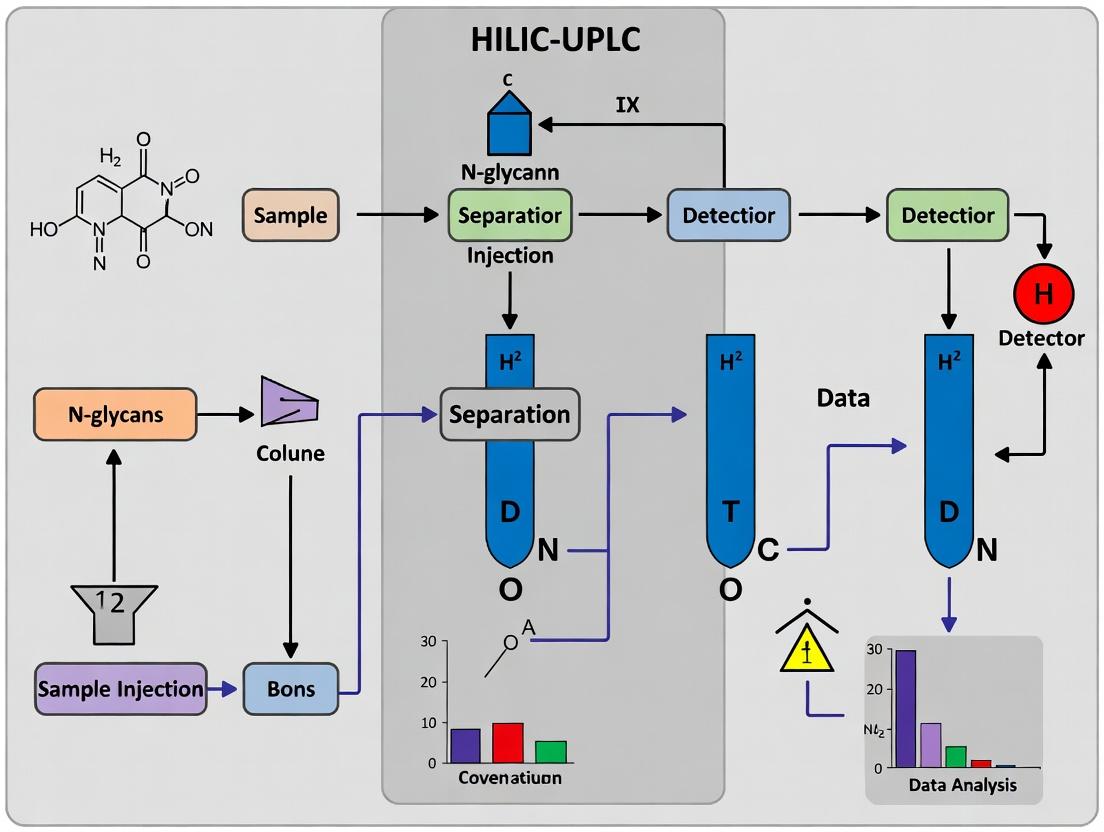
This article provides a complete guide to Hydrophilic Interaction Liquid Chromatography coupled with Ultra-Performance Liquid Chromatography (HILIC-UPLC) for the detailed separation and characterization of isomeric N-glycans.
Mastering Isomeric N-Glycan Analysis: A Comprehensive Guide to HILIC-UPLC Separation and Characterization
Abstract
This article provides a complete guide to Hydrophilic Interaction Liquid Chromatography coupled with Ultra-Performance Liquid Chromatography (HILIC-UPLC) for the detailed separation and characterization of isomeric N-glycans. Targeted at researchers, scientists, and drug development professionals, it covers foundational principles, detailed methodology, practical troubleshooting, and comparative validation. The content addresses the critical challenge of resolving structurally similar glycan isomers, which is essential for advancing biotherapeutic development, biomarker discovery, and understanding glycobiology in disease. Practical insights on column chemistry, mobile phase optimization, and data interpretation are included to empower robust implementation in the lab.
Why Isomeric Separation Matters: The Critical Role of HILIC-UPLC in Glycobiology
Application Notes
N-glycans, complex oligosaccharides covalently linked to asparagine residues of proteins, exhibit profound structural isomerism. This complexity arises from variations in monosaccharide linkage (α/β, 1-2, 1-3, 1-4, 1-6), branching patterns (antennary), and the presence of modifications like fucosylation and sialylation. Isomeric N-glycans, sharing identical monosaccharide composition but differing in structure, play distinct and critical roles in biological recognition, signal transduction, and immune response modulation.
Within biotherapeutic development, particularly for monoclonal antibodies (mAbs), N-glycan isomerism directly impacts drug safety, efficacy, and pharmacokinetics. For instance, the presence of α-1,3-linked core fucose (vs. α-1,6) drastically reduces Antibody-Dependent Cellular Cytotoxicity (ADCC) by affecting FcγRIIIa binding. Similarly, sialic acid linkage isomers (α-2,3 vs. α-2,6) influence anti-inflammatory activity and serum half-life.
Hydrophilic Interaction Liquid Chromatography coupled with Ultra-Performance Liquid Chromatography (HILIC-UPLC) has emerged as the premier analytical technique for resolving these challenging isomers. Its high resolution, reproducibility, and compatibility with fluorescence detection and mass spectrometry make it indispensable for glycosylation analysis in quality-by-design (QbD) frameworks for biopharmaceuticals.
Quantitative Impact of Key N-Glycan Isomers on mAb Function Table 1: Functional consequences of specific N-glycan isomers on monoclonal antibody properties.
| Glycan Isomer | Biological Property Affected | Quantitative Impact (Approx. Range) | Biological Consequence |
|---|---|---|---|
| Core Fucose (α-1,6 vs. α-1,3) | ADCC Potency (EC50) | 10-100x increase in potency for afucosylated vs. fucosylated | Enhanced effector function; critical for oncology mAbs. |
| Sialic Acid (α-2,3 vs. α-2,6) | Anti-inflammatory activity (in vitro assay) | Up to 50% variation in cytokine suppression | Influences immunomodulatory effects. |
| Sialic Acid (α-2,3 vs. α-2,6) | Serum Half-life (in vivo) | 20-40% increase for highly sialylated forms | Impacts dosing frequency and efficacy. |
| Galactose (β-1,4 vs. β-1,3) | Complement-Dependent Cytotoxicity (CDC) | Up to 2-fold variation in C1q binding | Modulates cell-killing mechanisms. |
| Bisecting GlcNAc (β-1,4) | ADCC Potency | Synergistic 5-10x increase when combined with afucosylation | Further enhancement of effector function. |
Experimental Protocols
Protocol 1: HILIC-UPLC Analysis of Released and Labeled N-Glycans from a Therapeutic mAb
Objective: To separate, profile, and quantify isomeric N-glycans from a purified monoclonal antibody using HILIC-UPLC with fluorescence detection.
Materials:
- mAb Sample: Purified monoclonal antibody (≥ 1 mg/mL).
- Denaturation Buffer: 1% (w/v) SDS, 50 mM Tris-HCl, pH 8.0.
- Enzyme: PNGase F (recombinant, glycerol-free).
- Labeling Reagent: 2-AB (2-aminobenzamide) or Procainamide.
- Labeling Kit: 2-AB Glycan Labeling Kit.
- Solid-Phase Extraction: HILIC µElution plates (e.g., Waters ACQUITY UPLC Glycan BEH Amide).
- HILIC-UPLC System: Equipped with FLD and QDa/ESI-MS detectors.
- Column: ACQUITY UPLC Glycan BEH Amide Column, 1.7 µm, 2.1 x 150 mm.
- Mobile Phase A: 50 mM ammonium formate, pH 4.5.
- Mobile Phase B: Acetonitrile (HPLC grade).
Procedure:
- N-Glycan Release: a. Denature 50 µg of mAb in 20 µL denaturation buffer at 65°C for 10 min. b. Add 5 µL of 4% (v/v) Igepal CA-630 and 2 µL PNGase F (50 U/µL). c. Incubate at 37°C for 18 hours.
Glycan Labeling: a. Follow manufacturer's instructions for the 2-AB labeling kit. b. Briefly, transfer released glycans to a 96-well PCR plate. Add labeling dye/directly and incubate at 65°C for 2-3 hours.
Glycan Clean-up: a. Condition a HILIC µElution plate with 200 µL water, then 200 µL 96% acetonitrile. b. Apply the labeled glycan mixture to the plate. c. Wash 3x with 200 µL 96% acetonitrile. d. Elute glycans with 2x 50 µL of HPLC-grade water into a clean collection plate. Dry in a vacuum concentrator.
HILIC-UPLC Analysis: a. Reconstitute dried glycans in 50 µL of 70% acetonitrile. b. Inject 5-10 µL onto the column maintained at 60°C. c. Use a linear gradient: 75% B to 50% B over 45 minutes at a flow rate of 0.4 mL/min. d. Detect with FLD (Ex: 330 nm, Em: 420 nm) and inline MS for isomer identification.
Protocol 2: Exoglycosidase Sequencing for Isomer Characterization
Objective: To confirm the linkage and sequence of isomeric peaks observed in HILIC-UPLC profiles.
Materials:
- Isolated Glycan Pools: Collected from HILIC-UPLC fraction collector or prepared in bulk.
- Exoglycosidase Array: Sialidase (α-2-3,6,8,9 specific), β1-4 Galactosidase, β1-3 Galactosidase, α1-2,3,6 Fucosidase, β-N-Acetylglucosaminidase.
- Incubation Buffers: As specified by enzyme manufacturer (typically sodium acetate or phosphate buffers, pH 5.5-6.0).
Procedure:
- Sample Preparation: Dry down isolated glycan fraction. Reconstitute in 10 µL of appropriate incubation buffer.
- Enzyme Digestion: Add 1-2 µL (0.5-5 mU) of the specific exoglycosidase. Include a no-enzyme control.
- Incubation: Incubate at 37°C for 4-18 hours.
- Re-analysis: Stop reaction by heating at 80°C for 10 min. Dry sample and reconstitute in 70% acetonitrile. Re-analyze using the same HILIC-UPLC method (Protocol 1).
- Interpretation: Compare chromatograms of digested vs. control samples. A peak shift or disappearance indicates the presence of the specific monosaccharide linkage targeted by the enzyme, allowing isomer assignment.
Diagrams
Title: N-Glycan Biosynthesis and Isomer Generation Pathway
Title: HILIC-UPLC N-Glycan Isomer Analysis Workflow
The Scientist's Toolkit: Research Reagent Solutions
Table 2: Essential materials for N-glycan isomer analysis via HILIC-UPLC.
| Item | Function/Description | Key Consideration for Isomerism |
|---|---|---|
| PNGase F (Glycerol-free) | Enzyme for releasing N-glycans from glycoproteins. | Glycerol-free form is essential for downstream labeling and HILIC analysis to avoid interference. |
| 2-Aminobenzamide (2-AB) | Fluorescent tag for glycan labeling. Enables highly sensitive detection. | Preserves charge of sialic acids, critical for separating sialylated linkage isomers. |
| Procainamide | Alternative fluorescent label offering higher sensitivity than 2-AB. | Provides superior MS sensitivity for structural identification of isomers. |
| BEH Amide HILIC Column | Stationary phase for UPLC separation based on glycan hydrophilicity. | High efficiency (1.7 µm particles) is crucial for resolving subtle isomer differences (e.g., Gal linkage). |
| Ammonium Formate Buffer | Mobile phase additive for HILIC separation. | Volatile salt compatible with MS detection; pH (~4.5) optimizes separation of sialylated isomers. |
| Exoglycosidase Array | Enzymes that cleave specific monosaccharide linkages. | Gold standard for confirming the structure of isomeric peaks observed in HILIC. |
| Glycobuffer Set | Optimized pH buffers for exoglycosidase digestions. | Ensures maximum enzyme activity and specificity for accurate isomer sequencing. |
| HILIC µElution Plates | 96-well solid-phase extraction plates for glycan purification. | Ensures clean samples, removing salts and excess dye that degrade UPLC resolution. |
The detailed structural characterization of N-glycans, including the resolution of their numerous isomeric forms (e.g., linkage, anomeric, and positional isomers), is critical for understanding their role in biological function, biomolecular interaction, and therapeutic efficacy. Traditional separation techniques, such as reversed-phase liquid chromatography (RPLC) and capillary electrophoresis (CE), often fail to resolve these subtle structural differences, presenting a significant bottleneck in glycomics research. This application note, framed within a broader thesis on advancing HILIC-UPLC methodologies, details the limitations of traditional methods and provides optimized protocols for high-resolution isomeric N-glycan analysis.
The following table summarizes key performance metrics of traditional separation techniques compared to HILIC-UPLC for isomeric N-glycan standards.
Table 1: Performance Comparison of Separation Techniques for Isomeric N-Glycans
| Technique | Separation Mechanism | Typical Resolution (Rs) for Isomers (e.g., Sialylated Isomers) | Analysis Time (min) | Suitability for Linkage Isomers | Compatibility with MS |
|---|---|---|---|---|---|
| RPLC (C18) | Hydrophobicity | Low (Rs < 1.0) | 30-60 | Poor | Excellent |
| CE | Charge/Size | Moderate (Rs ~1.0-1.5) | 10-20 | Fair | Good (requires volatile buffers) |
| Traditional HILIC | Hydrophilicity/Polarity | Moderate to High (Rs ~1.2-1.8) | 40-80 | Good | Good |
| HILIC-UPLC (Advanced) | Hydrophilicity on sub-2µm particles | High (Rs > 2.0) | 10-25 | Excellent | Excellent |
Data compiled from recent literature and internal validation studies. Resolution (Rs) values are representative for α2,3- vs. α2,6-sialyllactose or isomeric bi-antennary glycans.
Experimental Protocols
Protocol 1: Release and Purification of N-Glycans from a Monoclonal Antibody Objective: To efficiently release and clean up N-glycans for downstream HILIC-UPLC analysis.
- Denaturation: Take 100 µg of monoclonal antibody. Add 20 µL of 1% SDS and 10 µL of β-mercaptoethanol. Heat at 65°C for 10 min.
- Enzymatic Release: Add 10 µL of 10% Igepal CA-630, 10 µL of 10x PBS, and 2 µL (1000 U) of PNGase F. Incubate at 37°C for 18 hours.
- Purification via Solid-Phase Extraction (SPE):
- Condition a graphite carbon SPE cartridge with 1 mL of 0.1% TFA in 80% ACN.
- Equilibrate with 1 mL of 0.1% TFA in water.
- Load the glycan digest onto the cartridge.
- Wash with 2 mL of 0.1% TFA in water.
- Elute glycans with 1 mL of 0.1% TFA in 40% ACN.
- Dry the eluate in a vacuum concentrator.
Protocol 2: HILIC-UPLC Analysis with Fluorescent Detection for Isomeric Separation Objective: To achieve high-resolution separation of isomeric N-glycans using a UPLC system.
- Sample Preparation: Reconstitute dried glycans in 50 µL of ultrapure water. Label with 50 µL of 2-AB labeling reagent (prepared as 12 mg/mL in 30% acetic acid/70% DMSO with 24 mg/mL sodium cyanoborohydride). Incubate at 65°C for 2 hours.
- Clean-up: Purify 2-AB labeled glycans using a hydrophilic Sephadex or cellulose SPE cartridge. Elute with water and dry.
- UPLC Conditions:
- Column: Advanced Glycan BEH Amide Column, 1.7 µm, 2.1 x 150 mm.
- Mobile Phase A: 50 mM ammonium formate, pH 4.5, in water.
- Mobile Phase B: Acetonitrile.
- Gradient: 75-55% B over 30 min at 0.4 mL/min.
- Temperature: 40°C.
- Detection: Fluorescence (Ex: 330 nm, Em: 420 nm).
- Data Analysis: Process chromatograms using dedicated software (e.g., UNIFI, Chromeleon) to identify peaks based on glucose unit (GU) values compared to an external standard ladder.
Visualizations
Title: Analytical Bottleneck and Proposed Solution Flow
Title: HILIC-UPLC N-Glycan Analysis Workflow
The Scientist's Toolkit: Research Reagent Solutions
Table 2: Essential Materials for HILIC-based N-Glycan Isomer Analysis
| Item | Function in Protocol | Critical Specification/Note |
|---|---|---|
| PNGase F (R) | Enzyme for releasing N-glycans from glycoproteins. | Recombinant, glycerol-free for optimal performance in diverse buffers. |
| BEH Amide UPLC Column | Stationary phase for HILIC separation. | 1.7 µm particle size, 130Å pore, 2.1 x 150 mm for optimal UPLC resolution. |
| 2-Aminobenzamide (2-AB) | Fluorescent label for sensitive detection of glycans. | Requires preparation in acetic acid/DMSO with sodium cyanoborohydride. |
| Ammonium Formate | Salt for Mobile Phase A. | Use LC-MS grade, prepare at 50 mM and pH 4.5 for optimal separation and MS compatibility. |
| Graphitic Carbon SPE Cartridge | Purification of released native or labeled glycans. | Effective for desalting and removing hydrophobic contaminants. |
| Acetonitrile (LC-MS Grade) | Primary organic mobile phase (B). | Low UV absorbance and particulate crucial for baseline stability. |
1. Introduction & Thesis Context Within a broader thesis on HILIC-UPLC for isomeric N-glycan separation and characterization, understanding the fundamental retention mechanism is paramount. Unlike reversed-phase chromatography, which separates based on hydrophobicity, Hydrophilic Interaction Liquid Chromatography (HILIC) coupled with Ultra-Performance Liquid Chromatography (UPLC) is uniquely suited for polar analytes. This technique exploits the inherent hydrophilicity of glycans, which stems from their extensive hydroxyl groups, enabling the high-resolution separation of structurally similar and isomeric glycan species critical for biopharmaceutical development and biomarker discovery.
2. Fundamental Retention Mechanism HILIC retention occurs on a polar stationary phase (e.g., bare silica, amide, diol) in the presence of a hydrophobic organic-rich mobile phase (typically acetonitrile-rich). A water-enriched layer is formed on the polar surface. Polar glycans partition into this aqueous layer based on their hydrophilicity. Retention is governed by:
- Hydrophilic Partitioning: The primary mechanism. More hydrophilic glycans (e.g., with more sialic acids) partition more strongly, increasing retention time.
- Hydrogen Bonding & Electrostatic Interactions: Secondary interactions between glycan hydroxyl/amine groups and the stationary phase.
- Solvent Gradient: Elution is achieved by increasing the aqueous fraction of the mobile phase, decreasing the partitioning drive and eluting glycans in order of increasing hydrophilicity.
3. Application Notes & Quantitative Data Key application parameters for optimal N-glycan separation by HILIC-UPLC are summarized below.
Table 1: Typical HILIC-UPLC Operational Parameters for N-Glycan Analysis
| Parameter | Typical Setting/Range | Notes & Impact on Separation |
|---|---|---|
| Stationary Phase | Bridged Ethylene Hybrid (BEH) Amide (1.7 µm) | Standard phase; provides excellent glycan resolution and robustness. |
| Column Dimensions | 2.1 x 100 mm or 150 mm | Longer columns enhance resolution for complex mixtures. |
| Column Temperature | 40 - 60°C | Higher temperature reduces backpressure and viscosity, improving peak shape. |
| Mobile Phase A | 50 - 100 mM Ammonium Formate, pH 4.5 | Aqueous buffer. Salt concentration and pH influence ionization and H-bonding. |
| Mobile Phase B | Acetonitrile (ACN) | Primary organic solvent. |
| Gradient | 70-75% B to 50-55% B over 20-50 min | Shallower gradients improve resolution of isomers. |
| Flow Rate | 0.2 - 0.4 mL/min | UPLC-optimized for efficiency. |
| Detection | Fluorescence (λex/λem: 330/420 nm) | After labeling with 2-AB or similar. MS-compatible. |
| Injection Volume | 1 - 10 µL (partial loop) | Dependent on sample concentration and detection sensitivity. |
Table 2: Impact of Glycan Structural Features on HILIC-UPLC Retention
| Structural Feature | Effect on Hydrophilicity | Typical Impact on Retention Time (Relative) |
|---|---|---|
| Increased Sialylation (Neu5Ac) | Significantly Increases | Retention Increase (+++) |
| Increased Galactosylation | Increases | Retention Increase (++) |
| Increased Bisecting GlcNAc | Slight Increase/Complex | Slight Increase/Neutral (+) |
| Increased Core Fucosylation | Slight Decrease | Slight Decrease (-) |
| Increased Branching (Tri-/Tetra-antennary) | Complex (Size vs. Polarity) | Varies; often earlier elution than bi-antennary |
| High-Mannose Structures | High due to many hydroxyls | Retention Increase (+++) |
4. Detailed Experimental Protocol: HILIC-UPLC Analysis of Released and Labeled N-Glycans
Protocol 1: HILIC-UPLC Separation of 2-AB Labeled N-Glycans
I. Materials & Equipment
- HILIC-UPLC system with FLD and/or MS detection.
- BEH Glycan or BEH Amide Column (e.g., 1.7 µm, 2.1 x 150 mm).
- Mobile Phase A: 50 mM Ammonium Formate, pH 4.5 (filtered, 0.22 µm).
- Mobile Phase B: Acetonitrile (HPLC grade).
- 2-AB Labeled N-Glycan samples (dried).
- Sample Solvent: 75-80% Acetonitrile in water.
- Microcentrifuge tubes, vortex mixer, centrifuge, 0.22 µm centrifugal filters.
II. Procedure
- System Setup & Equilibration:
- Install and condition the HILIC column according to manufacturer instructions.
- Set column oven temperature to 45°C.
- Set fluorescence detector: Excitation 330 nm, Emission 420 nm.
- Prime lines with mobile phases.
- Equilibrate the column at starting gradient conditions (e.g., 75% B) for at least 10 column volumes or until a stable baseline is achieved.
Sample Preparation:
- Reconstitute dried 2-AB labeled N-glycan samples in 50-100 µL of 80% Acetonitrile.
- Vortex vigorously for 1 minute.
- Centrifuge at 14,000 x g for 5 minutes to pellet any particulate matter.
- Transfer supernatant to a UPLC vial with insert.
Instrument Method & Injection:
- Set flow rate to 0.3 mL/min.
- Program a linear gradient: 75% B to 55% B over 40 minutes.
- Follow with a 5-minute wash at 20% B and a 10-minute re-equilibration at 75% B.
- Set injection volume to 5 µL (partial loop with needle wash).
- Start the run sequence.
Data Analysis:
- Process chromatograms using appropriate software (e.g., Waters Empower, Skyline).
- Identify peaks by retention time comparison to an external hydrolyzed glucose unit (GU) ladder or by online MS.
- Integrate peaks and report relative percentages for glycan profiling.
5. The Scientist's Toolkit: Essential Research Reagent Solutions
Table 3: Key Research Reagents & Materials for HILIC-UPLC Glycan Analysis
| Item | Function & Explanation |
|---|---|
| BEH Amide UPLC Column | The core separation medium. Provides a robust, hydrophilic surface for partitioning and high-efficiency separation under UPLC pressures. |
| Ammonium Formate Buffer | Volatile salt buffer for Mobile Phase A. Provides controlled pH and ionic strength for reproducible retention, and is MS-compatible. |
| Acetonitrile (HPLC Grade) | Primary organic solvent for Mobile Phase B. Creates the water-depleted environment necessary for HILIC partitioning. |
| 2-Aminobenzamide (2-AB) | Fluorescent label. Imparts a hydrophobic tag for sensitive fluorescence detection while minimally altering the native glycan's hydrophilic partitioning behavior. |
| Glycan Hydrolysis GU Ladder | A standard mixture of 2-AB labeled glucose oligomers. Used to create a retention time index (Glucose Units) for platform-independent glycan identification. |
| PNGase F Enzyme | Standard enzyme for releasing N-glycans from glycoproteins. Essential sample preparation step prior to labeling and HILIC-UPLC. |
| SPE Plates (e.g., HILIC-mode) | For post-labeling clean-up to remove excess fluorescent dye and salts, minimizing background interference. |
6. Visualization of Key Concepts
Diagram Title: Mechanism of Glycan Retention in HILIC
Diagram Title: N-Glycan HILIC-UPLC Analysis Workflow
This application note, framed within a thesis on HILIC-UPLC for isomeric N-glycan separation and characterization, details the critical column chemistries and protocols essential for researchers in glycobiology and biopharmaceutical development.
Stationary Phase Chemistries for N-Glycan Separation
The selection of stationary phase is paramount for resolving complex, isomeric N-glycan structures. The primary chemistries are summarized below.
Table 1: Common HILIC Stationary Phases for N-Glycan Analysis
| Stationary Phase Chemistry | Functional Group | Mechanism of Retention | Key Application for N-Glycans | Typical Particle Size (µm) | Pore Size (Å) |
|---|---|---|---|---|---|
| Underivatized Silica | Silanol (Si-OH) | Hydrogen bonding, dipole-dipole | Separation of neutral and sialylated glycans | 1.7 - 3.0 | 100 - 300 |
| Amide (Neutral) | Carbamoyl (CONH₂) | Strong hydrogen bonding | High-resolution profiling of neutral, labeled glycans (2-AB, ProcA) | 1.7 - 1.8 | 100 - 130 |
| Diol (Neutral) | Diol (CHOH-CH₂OH) | Hydrogen bonding, weak partitioning | Alternative for sensitive glycans, less irreversible adsorption | 1.7 - 3.0 | 120 - 200 |
| Amino (Cation Exchange) | Amino (NH₂) | HILIC + Weak Anion Exchange (WAX) | Separation of sialylated glycans by charge and structure | 3.0 - 5.0 | 100 - 200 |
| Zwitterionic (ZIC-cHILIC) | Sulfobetaine | Dipole-dipole, charged interactions | Separation of highly polar and charged isomers, including sialylated forms | 3.5 - 5.0 | 100 - 200 |
Experimental Protocol: HILIC-UPLC Analysis of 2-AB Labeled N-Glycans
This protocol describes the detailed methodology for separating isomeric N-glycans released from a monoclonal antibody using a HILIC amide column.
Materials:
- UPLC System: ACQUITY UPLC H-Class or equivalent, with a quaternary solvent manager, sample manager, and FLR/UV/PDA detector.
- Column: ACQUITY UPLC BEH Glycan, 1.7 µm, 2.1 x 150 mm (Waters) or equivalent (e.g., Ascentis Express OH5).
- Mobile Phase A: 50 mM Ammonium formate, pH 4.4 (prepare with HPLC-grade water).
- Mobile Phase B: Acetonitrile (HPLC-grade, ≥99.9%).
- Sample: N-Glycans released via PNGase F and labeled with 2-Aminobenzamide (2-AB).
- Injection Vial: Polypropylene vials with pre-slit caps.
Procedure:
- Column Equilibration: Connect the column to the system. Equilibrate at initial conditions of 75% B and 25% A at a flow rate of 0.40 mL/min and a column temperature of 60°C for at least 10 column volumes.
- Sample Preparation: Reconstitute dried 2-AB labeled N-glycans in 100 µL of 75% acetonitrile / 25% water (v/v). Vortex thoroughly and centrifuge.
- Injection: Set the sample manager temperature to 10°C. Inject 5-10 µL of sample.
- Gradient Elution: Initiate the following linear gradient program:
- 0.0 min: 75% B
- 30.0 min: 55% B
- 30.1 min: 75% B
- 40.0 min: 75% B (Re-equilibration)
- Detection: Use a Fluorescence (FLR) detector with λex = 330 nm and λem = 420 nm.
- Data Analysis: Process chromatograms using appropriate software (e.g., Waters Empower, Chromeleon). Identify peaks by comparison with known glucose unit (GU) values from external dextran ladder calibrants or internal standards.
The Scientist's Toolkit: Key Reagent Solutions
Table 2: Essential Research Reagents for HILIC-N-Glycan Analysis
| Reagent/Solution | Composition/Description | Function in Workflow |
|---|---|---|
| PNGase F (Recombinant) | Glycosidase enzyme in glycerol buffer. | Enzymatically releases N-linked glycans from glycoproteins under non-denaturing or denaturing conditions. |
| 2-AB Labeling Kit | Contains 2-Aminobenzamide dye, sodium cyanoborohydride, and dimethyl sulfoxide (DMSO). | Tags released glycans with a fluorescent label for highly sensitive FLR detection. |
| Acetonitrile (HPLC-MS Grade) | CH₃CN, purity ≥99.9%, low UV absorbance. | Primary organic mobile phase component in HILIC; creates the water-rich layer on the stationary phase. |
| Ammonium Formate Buffer | 50-200 mM solution in water, pH adjusted to 4.4 with formic acid. | Aqueous mobile phase component; volatile salt provides ionic strength and pH control, compatible with MS detection. |
| Dextran Hydrolysate Ladder | Partial hydrolysate of dextran, labeled with 2-AB. | Provides a series of oligoglucoside peaks for assigning Glucose Unit (GU) values to unknown glycan peaks, enabling structural database comparison. |
Visualizing the HILIC Separation Mechanism and Workflow
Diagram 1: HILIC-N-Glycan Analysis Workflow (100 chars)
Diagram 2: HILIC Partitioning Mechanism for Isomers (99 chars)
Application Notes: The Role of HILIC-UPLC in Isomeric N-Glycan Analysis
The detailed characterization of protein N-glycosylation is critical across biopharmaceutical development, biomarker discovery, and fundamental disease research. The separation of glycan isomers—structurally distinct glycans with identical monosaccharide composition—is a significant analytical challenge. Hydrophilic Interaction Liquid Chromatography coupled with Ultra-Performance Liquid Chromatography (HILIC-UPLC) has emerged as a cornerstone technique for high-resolution, reproducible separation of these isomers. This capability directly informs critical quality attributes (CQAs) of biologics, reveals disease-specific glycosylation signatures, and elucidates pathological mechanisms.
Table 1: Quantitative Impact of N-Glycan Isomer Distribution in Key Application Areas
| Application Area | Key Measurable Parameter | Typical HILIC-UPLC Performance Metrics | Impact / Consequence |
|---|---|---|---|
| Biopharmaceuticals (mAb Analysis) | Ratio of G0F, G1F, G2F isomers; Level of afucosylation (G0) | Resolution (Rs) between G1F isomers ≥ 1.5; RSD of retention time < 0.5% | Affects FcγRIIIa binding & ADCC potency; dictates batch consistency and biosimilarity. |
| Biomarker Discovery (Serum IgG) | Relative abundance of galactosylated (G1/G2) vs. agalactosylated (G0) isomers | Peak capacity > 200 for complex serum glycome; high reproducibility across >1000 samples | Identifies inflammatory state (e.g., decreased galactosylation in rheumatoid arthritis). |
| Disease Research (Cancer) | Increased α2,6 vs. α2,3 sialylation linkage isomers on tri-antennary glycans | Baseline separation of sialic acid linkage isomers within 30 min run time. | Correlates with metastatic potential and tumor progression; potential therapeutic target. |
Detailed Protocols
Protocol 1: HILIC-UPLC Analysis of Released and Labeled N-Glycans from a Therapeutic Monoclonal Antibody
Objective: To separate and quantify isomeric N-glycans from a monoclonal antibody (e.g., IgG1) for lot-release analysis and CQA assessment.
- N-Glycan Release: Denature 100 µg of mAb in 50 µL of 1% (w/v) SDS and 50 mM DTT at 60°C for 10 min. Add 10 µL of 10% (v/v) NP-40 and 2.5 µL (500 U) of PNGase F. Incubate at 37°C for 3 hours.
- Glycan Labeling: Purify released glycans using solid-phase extraction (e.g., hydrophilic PVDF membrane). Resuspend dried glycans in 10 µL of 2-AB labeling solution (prepared from 2-AB labeling kit). Add 10 µL of sodium cyanoborohydride solution. Incubate at 65°C for 2 hours.
- Sample Clean-up: Purify labeled glycans using normal-phase microplates or paper chromatography to remove excess dye. Elute glycans in 100 µL of 70% (v/v) acetonitrile. Dry and reconstitute in 50 µL of 85% acetonitrile.
- HILIC-UPLC Analysis:
- Column: Acquity UPLC Glycan BEH Amide Column (130Å, 1.7 µm, 2.1 mm x 150 mm).
- Mobile Phase: A = 50 mM ammonium formate, pH 4.5; B = Acetonitrile.
- Gradient: 75% B to 55% B over 40 minutes at 0.5 mL/min, 60°C.
- Detection: Fluorescence (λex = 330 nm, λem = 420 nm).
- Data Analysis: Identify peaks using an external hydrolyzed 2-AB glucose ladder. Quantify by relative peak area percentage (%).
Protocol 2: Profiling Serum-Derived N-Glycans for Biomarker Screening
Objective: To perform high-throughput, reproducible profiling of total serum N-glycome for disease cohort studies.
- Serum Protein Preparation: Dilute 10 µL of human serum with 90 µL of 50 mM ammonium bicarbonate. Denature by heating at 100°C for 10 min. Cool to room temperature.
- N-Glycan Release & Labeling: Add 2.5 µL of PNGase F (500 U) directly to the denatured serum. Incubate at 37°C overnight. Label the released glycans in the same mixture using a rapid 2-AB labeling kit (incubate at 65°C for 1 hr) without prior purification.
- High-Throughput Clean-up: Use a 96-well hydrophilic filter plate for simultaneous clean-up of multiple samples. Wash with 85% acetonitrile, elute glycans with water.
- HILIC-UPLC Analysis:
- Column: As in Protocol 1.
- Gradient: Use a faster, shallower gradient optimized for serum glycome: 78% B to 62% B over 25 minutes.
- Injection: Use an autosampler cooled to 10°C.
- Data Processing: Align chromatograms using a ladder standard. Perform semi-automated peak picking and integration. Normalize data to total area. Use multivariate statistics (PCA, PLS-DA) for cohort comparison.
Diagrams
Title: HILIC-UPLC N-Glycan Analysis Core Workflow
Title: Key Applications of Isomeric N-Glycan Data
The Scientist's Toolkit: Research Reagent Solutions
Table 2: Essential Materials for HILIC-UPLC N-Glycan Analysis
| Item | Function & Importance | Typical Example / Specification |
|---|---|---|
| PNGase F (Recombinant) | Cleaves N-linked glycans from proteins for analysis. Essential for sample prep. | Glycerol-free, >95% purity, activity >20 U/µL. |
| 2-Aminobenzamide (2-AB) | Fluorescent label; introduces chromophore for sensitive FLR detection post-HILIC. | Provided in optimized labeling kits with reductant. |
| HILIC Amide UPLC Column | Stationary phase for high-resolution isomer separation via hydrophilic interactions. | BEH Amide, 1.7 µm particle size, 130Å pore, 2.1 x 150 mm. |
| Ammonium Formate (LC-MS Grade) | Provides volatile buffer for mobile phase (pH control); compatible with MS detection. | 50 mM stock solution, pH adjusted to 4.5 with formic acid. |
| Acetonitrile (Optima LC/MS Grade) | Primary organic mobile phase in HILIC; purity critical for baseline stability. | Low UV absorbance, low ionic and non-volatile impurities. |
| Hydrolyzed Glucose 2-AB Ladder | External standard for assigning glucose unit (GU) values to unknown glycan peaks. | Mixture of 2-AB labeled linear glucose polymers. |
| Hydrophilic Filter Plates | Enable high-throughput clean-up of labeled glycans for 96-well format workflows. | 0.2 µm PVDF or similar hydrophilic membrane. |
Step-by-Step Protocol: Optimized HILIC-UPLC Workflow for Isomeric N-Glycan Profiling
Within the framework of advancing HILIC-UPLC for isomeric N-glycan separation and characterization, meticulous sample preparation is paramount. The accuracy and resolution of structural elucidation, especially for isomers, are directly contingent on the efficiency and compatibility of the preparatory steps: enzymatic release of glycans from glycoproteins, selective fluorescent labeling, and rigorous cleanup to remove contaminants that interfere with HILIC analysis. This protocol details an optimized workflow designed to produce clean, labeled N-glycan samples ready for high-resolution HILIC-UPLC profiling.
Key Reagent Solutions Table
| Reagent/Material | Function in HILIC-Compatible N-Glycan Prep |
|---|---|
| PNGase F (Glycerol-free) | Enzyme that cleaves N-linked glycans from the asparagine residue of the protein backbone. Glycerol-free formulations prevent interference in downstream labeling and cleanup. |
| RapiFluor-MS (RFMS) Label | A fast, hydroxylamine-mediated fluorescent tag. Enhances MS sensitivity and provides a charged moiety that improves HILIC retention and separation. |
| Acetonitrile (Optima LC/MS Grade) | Primary organic solvent for HILIC. Used in labeling reactions and cleanup steps to ensure compatibility with the final HILIC-UPLC mobile phase. |
| HILIC µElution Plate (e.g., 2 mg Sorbent/Well) | Solid-phase extraction (SPE) platform for efficient cleanup. Removes salts, detergents, and excess label via selective binding of labeled glycans in high organic solvent. |
| Dimethyl Sulfoxide (DMSO, Anhydrous) | Polar aprotic solvent used to dissolve and stabilize the RFMS label, ensuring efficient labeling kinetics. |
| 1.7% (w/v) Sodium Dodecyl Sulfate (SDS) | Denaturing agent that unfolds the glycoprotein, making glycan sites accessible to PNGase F. |
| 4% (v/v) IGEPAL CA-630 in water | Non-ionic detergent used to quench SDS, preventing it from inhibiting PNGase F activity. |
| 200 mM Ammonium Bicarbonate Buffer | Provides optimal pH (≈8.0) for PNGase F enzymatic activity during the release step. |
Detailed Experimental Protocols
Protocol 3.1: Denaturation and Enzymatic Release of N-Glycans
This protocol describes the efficient release of N-glycans from purified glycoprotein samples (e.g., monoclonal antibodies).
- Denaturation: Transfer up to 100 µg of glycoprotein into a low-binding microcentrifuge tube. Add 10 µL of 1.7% SDS and 1 µL of 0.5M dithiothreitol (DTT). Mix and incubate at 60°C for 10 minutes.
- Detergent Quenching: Allow the sample to cool to room temperature. Add 10 µL of 4% IGEPAL CA-630 solution. Vortex thoroughly to mix.
- Enzymatic Digestion: Add 10 µL of 200 mM ammonium bicarbonate buffer. Add 2 µL (≈1000 units) of glycerol-free PNGase F.
- Incubation: Mix gently and incubate at 50°C for 10 minutes. Note: For complex samples, incubation can be extended to 1 hour.
- Reaction Termination: Place the sample on ice or proceed immediately to the labeling step.
Protocol 3.2: Rapid Fluorescent Labeling with RapiFluor-MS
This protocol covalently tags the released glycans at the reducing terminus for sensitive detection.
- Label Preparation: Centrifuge the vial of lyophilized RapiFluor-MS reagent briefly. Reconstitute the entire vial in 100 µL of anhydrous DMSO to create the stock solution. Aliquot and store at -20°C.
- Labeling Reaction: To the entire unpurified release mixture (≈33 µL) from Protocol 3.1, add 30 µL of RFMS stock solution. Vortex immediately for 10 seconds.
- Incubation: Incubate the mixture at room temperature for 5 minutes. The reaction is complete rapidly due to the hydroxylamine catalysis.
Protocol 3.3: HILIC-SPE Cleanup using a µElution Plate
This critical step removes proteins, salts, and excess dye, ensuring sample compatibility with HILIC-UPLC.
- Plate Conditioning: To a HILIC µElution plate (2 mg/well), add 200 µL of water. Apply gentle vacuum until solvent passes through. Do not let the sorbent dry completely.
- Equilibration: Add 200 µL of 90% acetonitrile (ACN) in water. Apply gentle vacuum until solvent passes through.
- Sample Loading: Dilute the labeling reaction mixture (≈63 µL) with 447 µL of 90% ACN (containing 0.1% formic acid), resulting in a final ACN concentration >85%. Load the entire 500 µL onto the equilibrated plate. Apply gentle vacuum.
- Washing: Wash the sorbent with 2 x 200 µL of 90% ACN (with 0.1% formic acid). Apply full vacuum for 2 minutes to dry the sorbent completely.
- Elution: Place the plate over a clean collection plate. Elute the labeled glycans by adding 2 x 50 µL of 20% ACN in water. Apply gentle vacuum to collect the eluate (~100 µL total).
- Storage: The eluted glycans can be stored at -20°C or analyzed directly by HILIC-UPLC-MS.
Data Presentation: Typical Recovery and Labeling Efficiency
The following data, synthesized from recent literature, quantifies the performance of the RFMS-based workflow.
Table 1: Quantitative Metrics for HILIC-Compatible N-Glycan Sample Prep (Using mAb Standard)
| Parameter | Value/Range | Measurement Technique | Notes |
|---|---|---|---|
| Release Efficiency | >98% | HILIC-FLR comparison of pre/post PNGase F | Assumes complete denaturation. |
| Labeling Yield | >95% in 5 min | MS signal intensity vs. theoretical max | Highly dependent on anhydrous conditions. |
| Cleanup Recovery | 85-95% | Fluorescence (FLR) pre/post SPE | µElution plate format minimizes losses. |
| MS Signal Enhancement (vs. 2-AB) | 10-30 fold | S/N ratio for low-abundance glycans | Due to superior ionization efficiency of RFMS. |
| HILIC Retention Shift (RFMS vs. Unlabeled) | +8 to +12 minutes | UPLC retention time | Improves separation from contaminants. |
| Intra-Assay Precision (Peak Area %RSD) | <5% | HILIC-FLR of major glycan peaks | For sample prep from release to cleanup. |
Visualized Workflows
HILIC N-Glycan Prep Core Workflow
HILIC-SPE Cleanup Decision Logic
Within the broader thesis on HILIC-UPLC for isomeric N-glycan separation and characterization, the selection of an appropriate stationary phase is paramount. This Application Note compares the performance of Amide, Zwitterionic (ZIC-HILIC), and other commercially available HILIC phases for the separation of complex, isomeric N-glycan libraries derived from therapeutic glycoproteins. The focus is on resolving power, retention behavior, and selectivity for structural isomers, which are critical for biopharmaceutical development.
Comparative Data of Stationary Phases
The following table summarizes key quantitative performance metrics for various stationary phases, evaluated under standardized HILIC-UPLC conditions using a fluorescently labeled (2-AB) N-glycan library from monoclonal antibodies (e.g., Rituximab).
Table 1: Performance Comparison of HILIC Stationary Phases for 2-AB Labeled N-Glycan Separation
| Stationary Phase Type | Column Dimension | Particle Size | Peak Capacity (for glycan library) | Resolution (Rt) of Key Isomer Pair* | Relative Retention (k') of FA2G2S1 | Recommended Buffer System (pH) |
|---|---|---|---|---|---|---|
| Amide (e.g., BEH Amide) | 2.1 x 150 mm | 1.7 µm | 280 | 1.8 | 12.5 | 50 mM AmF, pH 4.4 |
| Zwitterionic (ZIC-HILIC) | 2.1 x 150 mm | 3.5 µm | 240 | 2.1 | 10.2 | 20 mM AmAc, pH 5.5 |
| Hybrid Silica (Diol) | 2.1 x 100 mm | 1.7 µm | 210 | 1.4 | 8.7 | 50 mM FAF, pH 3.0 |
| Bridged Ethylene Hybrid (BEH) | 2.1 x 150 mm | 1.7 µm | 195 | 1.2 | 7.3 | 50 mM AmF, pH 4.4 |
*Key Isomer Pair: FA2G2S1 (α2-6) vs. FA2G2S1 (α2-3). Rt calculated as 2Δt/(w1+w2).*
Experimental Protocols
Protocol 1: N-Glycan Release, Labeling, and Purification
Objective: Prepare 2-AB labeled N-glycans from a therapeutic monoclonal antibody for HILIC-UPLC analysis.
- Denaturation & Release: Take 100 µg of mAb. Add 20 µL of 2% SDS and 10 µL of 1M DTT. Incubate at 65°C for 10 min. Add 20 µL of 4% Igepal-CA630 and 5 µL of PNGase F (500 U). Incubate at 37°C for 18 hours.
- Labeling with 2-AB: Purify released glycans using C18 and Porous Graphitic Carbon (PGC) microplates. Elute glycans in water and dry. Reconstitute in 10 µL of labeling mixture (2-AB: 25 mg/mL in DMSO:AcOH 70:30 v/v; NaBH3CN: 50 mg/mL in DMSO). Incubate at 65°C for 2 hours.
- Clean-up: Purify labeled glycans using Whatman No. 1 paper chromatography or commercial hydrophilic-binding SPE cartridges. Elute with water, dry, and reconstitute in 80% acetonitrile for UPLC injection.
Protocol 2: HILIC-UPLC Method for Isomeric Separation on Amide Phase
Objective: Achieve high-resolution separation of isomeric N-glycans on a BEH Amide column.
- Column: Acquity UPLC BEH Amide, 1.7 µm, 2.1 x 150 mm.
- Mobile Phase A: 50 mM ammonium formate, pH 4.4.
- Mobile Phase B: Acetonitrile.
- Gradient: 75% B to 50% B over 60 minutes (at 0.4 mL/min).
- Temperature: 40°C.
- Detection: Fluorescence (λex=330 nm, λem=420 nm).
- Injection: 5 µL of 2-AB glycan sample.
Protocol 3: Method Transfer to Zwitterionic (ZIC-HILIC) Phase
Objective: Adapt the separation to a ZIC-HILIC column to exploit different selectivity for isomer discrimination.
- Column: ZIC-HILIC, 3.5 µm, 2.1 x 150 mm.
- Mobile Phase A: 20 mM ammonium acetate, pH 5.5.
- Mobile Phase B: Acetonitrile.
- Gradient: 85% B to 50% B over 70 minutes (0.3 mL/min).
- Temperature: 30°C.
- Detection: As in Protocol 2.
- Note: The zwitterionic phase is more sensitive to buffer ionic strength and pH; optimization is required for each glycan library.
Visualizations
Title: Workflow for N-Glycan HILIC Analysis
Title: Decision Path for HILIC Phase Selection
The Scientist's Toolkit: Research Reagent Solutions
Table 2: Essential Materials for HILIC-based N-Glycan Analysis
| Item | Function in Protocol | Example Product/Catalog |
|---|---|---|
| PNGase F (recombinant) | Enzymatically releases N-glycans from glycoproteins. | ProZyme Glyko PNGase F |
| 2-Aminobenzamide (2-AB) | Fluorescent tag for sensitive detection and quantitation of glycans. | Sigma-Aldrich 387649 |
| Sodium cyanoborohydride | Reducing agent for reductive amination during 2-AB labeling. | Sigma-Aldrich 156159 |
| Ammonium formate, LC-MS grade | Volatile salt for mobile phase in Amide HILIC; provides pH control. | Fluka 17843 |
| Acetonitrile, ULPC/MS grade | Primary organic mobile phase in HILIC; critical for low-background. | Fisher A955-4 |
| Porous Graphitic Carbon (PGC) µElution Plate | For post-release and post-labeling clean-up of glycans. | Waters 186004830 |
| BEH Amide UPLC Column | Standard amide-bonded phase for high-resolution glycan separations. | Waters 186004801 |
| ZIC-HILIC HPLC Column | Zwitterionic sulfobetaine phase for alternative selectivity. | Merck SeQuant 1507220001 |
| Fluorescence Detector | Enables highly sensitive, selective detection of labeled glycans. | e.g., Waters FLR Detector |
Within a comprehensive thesis on the use of Hydrophilic Interaction Liquid Chromatography coupled with Ultra-Performance Liquid Chromatography (HILIC-UPLC) for the separation and characterization of isomeric N-glycans, mobile phase optimization is the cornerstone of success. This document provides detailed application notes and protocols for systematically optimizing acetonitrile gradients, buffer salts, and pH to achieve high-resolution separations critical for glycomics research in biopharmaceutical development.
The Role of Mobile Phase Components in HILIC for N-glycans
HILIC separation relies on a partitioning mechanism between a water-rich layer on a hydrophilic stationary phase and a hydrophobic organic mobile phase. For complex, isomeric N-glycans, subtle differences in branching, linkage, and monosaccharide composition demand precise mobile phase tuning.
- Acetonitrile (ACN) Concentration: Governs overall retention and selectivity. Higher ACN increases retention; gradients typically start at high ACN (e.g., 75-85%) and decrease to promote elution.
- Buffer Salt & Ionic Strength: Ammonium salts (formate, acetate) are standard. They suppress unwanted ionic interactions, improve peak shape, and can influence selectivity by interacting with sialic acid residues.
- pH: Critically affects the charge state of ionizable glycan groups (e.g., sialic acids, carboxyl groups). Even minor pH changes can dramatically alter the elution order of isomers.
Table 1: Effect of Buffer Salt Type (50mM) on Retention Time (Rt) and Resolution (Rs) of Sialylated Isomers
| Glycan Isomer Pair | Ammonium Acetate Rt (min) | Rs | Ammonium Formate Rt (min) | Rs | Notes |
|---|---|---|---|---|---|
| A2G2S1 (α2,3 vs α2,6) | 12.5, 13.1 | 1.2 | 11.8, 12.5 | 1.5 | Formate often provides sharper peaks |
| FA2G2S1 (isomer 1 vs 2) | 15.7, 16.4 | 1.0 | 15.0, 15.9 | 1.3 |
Table 2: Impact of Mobile Phase pH on Critical Isomer Pair Resolution
| pH | Buffer (50mM Amm. Formate) | Retention Factor (k) FA2G2 | Resolution (Rs) Key Isomer Pair | Observation |
|---|---|---|---|---|
| 4.0 | ACN/Water 80:20 | 3.2 | 1.8 | Good for sialic acid separation |
| 4.5 | ACN/Water 80:20 | 2.9 | 2.1 | Optimal for core-fucosylated isomers |
| 5.0 | ACN/Water 80:20 | 2.5 | 1.5 | Reduced resolution for neutral glycans |
Table 3: Gradient Slope Comparison for Complex N-glycan Profiling
| Initial ACN (%) | Final ACN (%) | Gradient Time (min) | Number of Peaks Detected | Median Peak Width (s) |
|---|---|---|---|---|
| 85 | 50 | 25 | 42 | 3.5 |
| 82 | 45 | 30 | 47 | 3.1 |
| 80 | 40 | 30 | 48 | 3.0 |
Experimental Protocols
Protocol 4.1: Systematic Scouting of pH and Salt Conditions
Objective: To identify the optimal buffer salt and pH for resolving sialylated and neutral isomeric N-glycans released from a monoclonal antibody. Materials: See "The Scientist's Toolkit" (Section 6). Method:
- Prepare stock solutions of 100 mM ammonium formate and ammonium acetate. Adjust each to pH 3.5, 4.0, 4.5, and 5.0 using mass spectrometry-grade formic acid or acetic acid, respectively.
- Prepare mobile phase A: 200 mM buffer stock in HPLC-grade water. Mobile phase B: 100% HPLC-grade acetonitrile.
- For the UPLC system, prepare four separate mobile phase A solutions: Ammonium Formate (pH 4.0, 4.5) and Ammonium Acetate (pH 4.0, 4.5).
- Dilute the N-glycan sample (2-AB labeled) to a concentration of 50 pmol/µL in 80% acetonitrile.
- Set the column temperature to 40°C and the sample tray to 10°C.
- Use a linear gradient from 80% B to 50% B over 25 minutes at a flow rate of 0.4 mL/min.
- Inject 5 µL of sample for each condition. Monitor fluorescence (Ex: 330 nm, Em: 420 nm) or MS detection.
- Analyze chromatograms for peak capacity, resolution of known isomer pairs (e.g., A2G2S1 isomers), and peak symmetry.
Protocol 4.2: Fine-Tuning Acetonitrile Gradients for Maximum Peak Capacity
Objective: To optimize the gradient slope and starting ACN percentage for separating a complex mixture of neutral N-glycans. Method:
- Using the optimal buffer/pH condition identified in Protocol 4.1, prepare mobile phases.
- Design three gradient profiles (see Table 3). Keep the total method time constant (e.g., 35 min including equilibration).
- Maintain a constant column temperature (40°C) and flow rate (0.4 mL/min).
- Inject the complex N-glycan standard (e.g., from human IgG or serum) in triplicate for each gradient.
- Calculate the peak capacity (Pc) for each run using the formula: Pc = 1 + (tG / 1.7 * wavg), where tG is the gradient time and wavg is the average peak width at base.
- Select the gradient yielding the highest peak capacity and the best visual resolution of early-, mid-, and late-eluting peaks.
Visualization of Workflow and Relationships
Title: HILIC Mobile Phase Optimization Workflow
Title: How Mobile Phase Parameters Affect Separation
The Scientist's Toolkit: Essential Research Reagents & Materials
Table 4: Key Reagents and Materials for HILIC-UPLC N-glycan Analysis
| Item Name & Example Vendor | Function in HILIC-UPLC N-glycan Analysis |
|---|---|
| ACN, LC-MS Grade (e.g., Fisher Optima) | Primary organic solvent. High purity is critical for low baseline noise and consistent retention times. |
| Ammonium Formate, >99% (e.g., Sigma Aldrich) | Volatile buffer salt for mass spectrometry compatibility. Often provides better peak shapes than acetate for acidic glycans. |
| Formic Acid, LC-MS Grade (e.g., Honeywell Fluka) | Used for pH adjustment of mobile phase. Its volatility makes it ideal for MS detection. |
| 2-Aminobenzamide (2-AB) (e.g., Sigma Aldrich) | Fluorescent label for sensitive detection of reducing-end labeled N-glycans. |
| HILIC Column (e.g., Waters BEH Amide, 1.7 µm, 2.1 x 150 mm) | Stationary phase. The BEH Amide column is a benchmark for high-resolution glycan separations. |
| N-glycan Standards (e.g., PROCEN N-glycan library) | Essential for method development, system suitability testing, and assigning peaks in complex samples. |
| Deionized Water, 18.2 MΩ·cm | Used for aqueous component of mobile phase. High purity prevents column contamination and ion suppression in MS. |
| Ammonium Hydroxide, LC-MS Grade | Alternative for pH adjustment for basic pH HILIC methods (less common for glycans). |
Temperature and Flow Rate Optimization for Peak Resolution and Run Time
Application Note AN-2024-07: Framed within a Thesis on HILIC-UPLC for Isomeric N-Glycan Separation and Characterization
The separation of isomeric N-glycans presents a significant analytical challenge in biopharmaceutical development, where fine structural differences impact drug safety and efficacy. Hydrophilic Interaction Liquid Chromatography coupled with Ultra-Performance Liquid Chromatography (HILIC-UPLC) has emerged as the premier technique for resolving these complex isomers. This application note, contextualized within a broader thesis on advanced glycan analysis, details the systematic optimization of two critical chromatographic parameters—temperature and flow rate—to achieve the optimal balance between peak resolution and analytical run time. Efficient optimization is paramount for high-throughput characterization during monoclonal antibody (mAb) development and biosimilar comparability studies.
Quantitative Optimization Data
The following data, compiled from recent literature and internal validation studies, summarizes the effects of temperature and flow rate on key chromatographic metrics for a model mixture of sialylated and fucosylated N-glycan isomers (e.g., A2G2S2 isomers) separated on a charged surface hybrid (CSH) amide column (2.1 x 150 mm, 1.7 µm).
Table 1: Effect of Column Temperature on Separation Metrics (Constant Flow Rate: 0.4 mL/min)
| Temperature (°C) | Critical Pair Resolution (Rs) | Total Run Time (min) | Back Pressure (psi) | Peak Capacity |
|---|---|---|---|---|
| 30 | 1.15 | 25.0 | 8,500 | 180 |
| 40 | 1.05 | 22.5 | 7,200 | 175 |
| 50 | 0.95 | 20.0 | 6,000 | 165 |
| 60 | 0.82 | 18.0 | 5,100 | 155 |
Table 2: Effect of Flow Rate on Separation Metrics (Constant Temperature: 40°C)
| Flow Rate (mL/min) | Critical Pair Resolution (Rs) | Total Run Time (min) | Back Pressure (psi) | Van Deemter HETU (µm) |
|---|---|---|---|---|
| 0.30 | 1.20 | 30.0 | 6,000 | 3.8 |
| 0.40 | 1.05 | 22.5 | 8,500 | 4.2 |
| 0.50 | 0.90 | 18.0 | 11,200 | 5.1 |
| 0.60 | 0.75 | 15.0 | 14,500 | 6.5 |
Experimental Protocols
Protocol 1: Systematic Scouting of Temperature and Flow Rate
Objective: To determine the optimal temperature and flow rate conditions for maximizing the resolution of isomeric N-glycans while minimizing run time.
Materials: See "The Scientist's Toolkit" below.
Procedure:
- Sample Preparation: Reconstitute 10 µg of 2-AB labeled N-glycan library (containing known isomers) in 100 µL of 75:25 v/v Acetonitrile:Water.
- System Setup: Equilibrate a CSH Amide HILIC-UPLC column (2.1 x 150 mm, 1.7 µm) with 75% Solvent B (50 mM ammonium formate, pH 4.4) and 25% Solvent A (Acetonitrile) for 30 minutes at the starting flow rate (0.30 mL/min) and temperature (30°C).
- Scouting Runs: Perform consecutive injections using a gradient from 75% to 50% Solvent B over 25 minutes.
- Phase 1 (Temperature): Maintain flow at 0.40 mL/min. Execute four runs at 30°C, 40°C, 50°C, and 60°C.
- Phase 2 (Flow Rate): Maintain temperature at 40°C. Execute four runs at 0.30, 0.40, 0.50, and 0.60 mL/min (adjust gradient time proportionally to maintain identical gradient volume).
- Data Analysis: Calculate resolution (Rs) for the critical isomeric pair (e.g., α2,3- vs. α2,6-sialylated isomers) using chromatography software. Record retention times, peak widths, and system pressure.
- Modeling: Plot Rs vs. Run Time for all conditions. The Pareto front (optimal trade-off curve) identifies the best compromise conditions.
Protocol 2: Verification Under Optimal Conditions
Objective: To validate the selected optimal conditions using a complex, real-world sample (e.g., released N-glycans from a therapeutic mAb).
Procedure:
- Based on Protocol 1 results, select the optimal condition (e.g., 35°C, 0.35 mL/min) that provides Rs > 1.0 for the critical pair with a run time under 23 minutes.
- Prepare N-glycans from 50 µg of mAb using a commercial protein deglycosylation kit, followed by 2-AB labeling and cleanup.
- Inject the sample in triplicate under the optimized conditions using the determined gradient.
- Assess method robustness by measuring the %RSD of retention times (< 0.5%) and peak areas (< 5%) for key glycan peaks.
Visualization of Optimization Strategy
Diagram Title: Two-Phase HILIC-UPLC Parameter Optimization Workflow
The Scientist's Toolkit: Essential Research Reagent Solutions
| Item | Function in HILIC-UPLC N-Glycan Analysis |
|---|---|
| CSH Amide UPLC Column (e.g., 1.7 µm, 2.1 x 150 mm) | Stationary phase providing excellent resolution of polar glycan isomers via hydrophilic interactions and charged surface functionality. |
| Ammonium Formate (e.g., 50 mM, pH 4.4) | Volatile salt buffer for mobile phase (Solvent B). Provides consistent ionic strength and pH, crucial for reproducible retention and ESI-MS compatibility. |
| HPLC-Grade Acetonitrile | Primary organic solvent (Solvent A). Maintains a strong hydrophilic interaction layer on the stationary phase. |
| 2-Aminobenzamide (2-AB) Labeling Kit | Fluorophore tag for glycan labeling. Enables sensitive fluorescence (FLR) detection and does not interfere with HILIC mechanism. |
| N-Glycan Reference Library (Isomeric) | Calibration standard containing characterized isomeric pairs (e.g., sialylation linkages). Essential for peak identification and resolution optimization. |
| PNGase F, Rapid | Enzyme for efficient release of N-glycans from glycoproteins under native or denaturing conditions. |
| Solid-Phase Extraction (SPE) Plates (Hydrophilic) | For post-labeling cleanup of glycan samples to remove excess dye and salts, preventing column contamination. |
Application Notes
Within the broader thesis on advancing HILIC-UPLC for isomeric N-glycan analysis, the direct coupling to mass spectrometry (MS) is the critical step enabling simultaneous separation and detailed characterization. This setup transforms a high-resolution separation technique into a powerful structural elucidation platform. The orthogonal selectivity of HILIC, which separates glycans by hydrophilicity and charge, combined with the mass accuracy and sensitivity of modern MS detectors, allows for the profiling of complex glycan mixtures from biotherapeutics like monoclonal antibodies. The key application is the correlation of specific retention times (governed by isomerism) with precise mass-to-charge (m/z) ratios and fragmentation spectra (MS/MS). This enables researchers to not only quantify glycan species but also propose structural identities for isobaric and isomeric compounds, such as distinguishing between galactose and sialic acid linkage isomers, which is pivotal for understanding biological function and ensuring drug efficacy and consistency.
Quantitative Performance Data Summary
Table 1: Typical HILIC-UPLC-MS Performance Metrics for N-Glycan Analysis
| Parameter | Typical Value/Range | Instrument/Column Basis |
|---|---|---|
| Chromatographic Resolution (Rs) | ≥1.5 for key isomeric pairs (e.g., FA2G1 vs FA2G1') | Acquired UPLC BEH Amide Column (1.7 µm, 2.1 x 150 mm) |
| MS Mass Accuracy | < 5 ppm | Q-TOF or Orbitrap Mass Spectrometer |
| Dynamic Range | > 3 orders of magnitude | Using labeled (2-AB) vs. native glycans |
| Retention Time Precision (%RSD) | < 0.5% | Intra-day, n=6 injections |
| Peak Area Precision (%RSD) | < 5% | Intra-day, n=6 injections |
| Typical Run Time | 20-40 minutes | Including equilibration |
Table 2: Key MS Parameters for N-Glycan Characterization
| MS Mode | Function | Key Settings |
|---|---|---|
| Full Scan (MS1) | Accurate mass determination, profiling | Resolution: 60,000+ (Orbitrap); Scan Range: 500-2000 m/z; Polarity: Positive (usually) |
| Data-Dependent Acquisition (DDA-MS/MS) | Structural fragmentation for identification | Top N (e.g., 5); Isolation Window: 2-3 m/z; Collision Energy: Ramped (e.g., 20-50 eV) |
| Targeted MS/MS | Specific isomer interrogation | Inclusion list of precursor m/z; Higher collision energy for cross-ring fragments |
Experimental Protocols
Protocol 1: HILIC-UPLC-MS System Setup and Calibration
- System Configuration: Couple a UPLC system (e.g., Waters ACQUITY, Thermo Vanquish) directly to a high-resolution mass spectrometer (e.g., Thermo Orbitrap Exploris, Waters Xevo G2-XS Q-TOF) via a standard heated electrospray ionization (HESI-II) source.
- Mobile Phase Preparation:
- Solvent A: 50 mM ammonium formate in water, pH 4.5 (adjusted with formic acid). Filter through a 0.22 µm nylon membrane.
- Solvent B: Acetonitrile (LC-MS grade).
- Column: Install and condition a bridged ethyl hybrid (BEH) amide column (e.g., 1.7 µm, 2.1 x 150 mm) at 60°C.
- MS Source Tuning: Optimize source parameters using a standard 2-AB labeled N-glycan mixture (e.g., from human IgG) infused via a syringe pump. Key parameters to optimize: capillary voltage (2.8-3.2 kV), source temperature (120-150°C), desolvation temperature (300-400°C), cone gas, and desolvation gas flow.
- Mass Calibration: Perform mass calibration according to the manufacturer's protocol using the appropriate calibration solution (e.g., sodium formate cluster ions).
- System Suitability Test: Inject a known glycan standard (e.g., 2-AB labeled dextran ladder or a characterized antibody N-glycan pool). Verify retention time stability, peak shape, and mass accuracy against expected values.
Protocol 2: Simultaneous Separation and Characterization of Released N-Glycans
- Sample Preparation: Release N-glycans from the target glycoprotein (e.g., 100 µg of mAb) using PNGase F. Clean and label the glycans with a charged tag (e.g., Rapid PNGase F kit, followed by 2-aminobenzoic acid (2-AA) or RapiFluor-MS labeling). Desalt using HILIC micro-elution plates.
- UPLC Method:
- Gradient: 75% B to 50% B over 30 min (linear).
- Flow Rate: 0.4 mL/min.
- Column Temp: 60°C.
- Injection Volume: 5-10 µL (partial loop with needle overfill).
- Autosampler Temp: 10°C.
- MS Data Acquisition:
- Operate the MS in positive ionization mode.
- Acquire full scan MS1 data at high resolution (≥60,000).
- Trigger data-dependent MS/MS (dd-MS2) on the top 3-5 most intense ions per scan, excluding singly charged ions if expected glycans are multiply charged.
- Use stepped normalized collision energy (e.g., 15, 30, 45 eV) to generate a range of fragment ions (B/Y ions and cross-ring fragments).
- Data Analysis: Process data using dedicated software (e.g., Byos, GlycoWorkbench, UniCarb-DR). Align chromatographic peaks with their corresponding accurate mass. Annotate structures by matching observed m/z against a theoretical glycan library (with consideration for labeling agent mass). Confirm identities by interpreting MS/MS fragment patterns, paying special attention to diagnostic ions for linkage differentiation (e.g., ions at m/z 366 for mannose branching, or specific oxonium ions for sialic acid).
Visualization
HILIC-UPLC-MS Workflow for N-Glycan Analysis
Data-Dependent MS/MS Acquisition Logic
The Scientist's Toolkit
Table 3: Key Research Reagent Solutions for HILIC-UPLC-MS of N-Glycans
| Item | Function / Purpose |
|---|---|
| PNGase F (Rapid) | Enzyme for efficient release of N-linked glycans from glycoproteins under non-denaturing or denaturing conditions. |
| Charged Fluorescent Tags (2-AA, RapiFluor-MS) | Labels that introduce a fluorophore for detection and a charged moiety (amine/Quaternary ammonium) to enhance MS ionization efficiency in positive mode. |
| BEH Amide UPLC Column (1.7 µm) | Stationary phase providing robust, high-resolution HILIC separation of polar glycans based on their hydrophilicity and charge. |
| Ammonium Formate (LC-MS Grade) | Volatile buffer salt for mobile phase; maintains a stable pH for separation and is compatible with MS detection (does not cause ion suppression). |
| 2-AB Labeled Dextran Ladder | Calibration standard for assigning Glucose Units (GU) to retention times, enabling inter-laboratory comparison and preliminary structural assignment. |
| HILIC µElution Plate | 96-well plate format containing a hydrophilic sorbent for efficient clean-up and desalting of labeled glycan samples prior to UPLC-MS injection. |
| Glycan Libraries & Software (GlycoWorkbench, Unicarb-DR) | Databases and analytical tools for theoretical mass calculation, fragmentation simulation, and annotation of experimental MS/MS spectra. |
Solving Common HILIC-UPLC Problems: A Troubleshooting Guide for Peak Shape and Resolution
This application note is situated within a comprehensive thesis focused on advancing HILIC-UPLC methodologies for the high-resolution separation and characterization of isomeric N-glycans in biotherapeutic development. Peak shape integrity is paramount for accurate identification and quantification. Poor peak shape—manifesting as tailing, fronting, or broadening—compromises resolution, impacts reproducibility, and hinders detailed structural analysis. This document provides a diagnostic framework and targeted protocols for mitigating these issues.
Diagnosis and Root Causes in HILIC-UPLC N-Glycan Analysis
The table below summarizes the primary causes of poor peak shape specific to HILIC separations of complex N-glycan isomers.
Table 1: Diagnosis and Common Causes of Poor Peak Shapes in HILIC-UPLC N-Glycan Analysis
| Peak Anomaly | Primary Diagnostic Metrics (Asymmetry Factor, As / Tailing Factor, Tf) | Common Causes in HILIC-UPLC of N-Glycans |
|---|---|---|
| Tailing (As > 1.5; Tf > 1.2) | - Secondary interactions with acidic silanols on stationary phase.- Overloaded column due to high sample load or incompatible injection solvent.- Mobile phase pH too high, promoting deprotonation of silanols and analytes.- Insufficient buffering capacity. | |
| Fronting (A*s < 0.8) | - Column inlet contamination or void formation.- Sample solvent stronger than mobile phase (e.g., high organic content injected).- Overloaded column (less common with glycans). | |
| Broad Peaks | - Excessive extra-column volume (tubing, detector cell).- Sub-optimal column temperature (too low).- Mobile phase pH or ionic strength leading to multiple interaction mechanisms.- Degraded or contaminated column. |
Experimental Protocols for Troubleshooting
Protocol 1: Systematic Assessment of Column and System Performance
Objective: To isolate the source of peak distortion (system vs. column vs. sample). Materials: UPLC system, HILIC column (e.g., BEH Amide, 1.7 µm, 2.1 x 150 mm), acetonitrile (ACN, LC-MS grade), ammonium formate (MS grade), water (LC-MS grade), formic acid, test mixture of neutral and sialylated N-glycan standards.
- Prepare Mobile Phases: A) 90% ACN / 10% 50mM ammonium formate, pH 4.5. B) 90% ACN / 10% 50mM ammonium formate, pH 4.5. Use A as weak wash and B as strong wash solvent.
- System Blank Run: Inject 1 µL of 50:50 ACN:Water. No peaks should be observed in the glycan retention window.
- Column Performance Test: Inject 1 µL of a well-characterized N-glycan standard test mix. Calculate asymmetry/tailing factors for key isomers.
- Extra-Column Volume Check: Replace the column with a zero-dead-volume union. Inject a low-volume (0.5 µL) pulse of a UV-absorbing standard (e.g., acetone). Measure the peak width at 50% height; it should be < 10 µL for a well-configured UPLC system.
- Data Analysis: Compare asymmetry factors with manufacturer's specifications. Peak broadening in the union test indicates system issues (e.g., bad tubing, detector cell). Poor shape only with the column indicates column or method issues.
Protocol 2: Optimization of Mobile Phase Buffering for Peak Symmetry
Objective: To suppress silanol interactions and improve peak shape for basic and sialylated N-glycans. Materials: As in Protocol 1, with additional ammonium acetate and acetic acid.
- Prepare Buffered Mobile Phases: Prepare three separate stock buffers at 100 mM: Ammonium formate (pH 4.5), ammonium acetate (pH 5.5), and ammonium bicarbonate (pH 7.8). Adjust pH with formic acid, acetic acid, or ammonium hydroxide, respectively.
- Method Setup: For each buffer, create an isocratic method: 78% ACN, 22% aqueous buffer (final conc. 22 mM). Equilibrate the column for 10 column volumes.
- Analysis: Inject the N-glycan test mix (1 µL) under each pH condition. Use a standard gradient (e.g., 75-50% ACN over 20 min) for a more comprehensive assessment.
- Evaluation: Plot peak asymmetry (A*s) vs. pH for key glycan peaks (e.g., sialylated isomers). The optimal pH minimizes tailing while maintaining selectivity.
Visualization of Diagnostic and Optimization Workflows
Diagram 1: Peak Shape Diagnosis & Primary Correction Guide
Diagram 2: Multi-Step HILIC Peak Shape Optimization
The Scientist's Toolkit: Essential Research Reagents & Materials
Table 2: Key Reagent Solutions for HILIC-UPLC N-Glycan Analysis
| Item | Function in Context of Peak Shape | Recommended Specification |
|---|---|---|
| BEH Amide UPLC Column | The stationary phase; its quality and chemistry are primary determinants of peak shape and isomer selectivity. | 1.7 µm, 2.1 x 150 mm (or 100 mm), 130Å. Ensure vendor's lot-to-lot reproducibility. |
| Ammonium Formate | Volatile buffer salt for mobile phase. Suppresses silanol interactions, controls pH, and minimizes tailing of sialylated glycans. | LC-MS Grade, 10M stock solution or prepared from formic acid and ammonium hydroxide. |
| Acetonitrile (ACN) | Primary organic modifier in HILIC. %ACN critically impacts retention and peak shape. Must be low in UV-absorbing impurities. | LC-MS Grade, gradient grade, low UV absorbance. |
| Formic Acid & Ammonium Hydroxide | For precise, reproducible adjustment of mobile phase pH. Critical for reproducible retention times and peak symmetry. | LC-MS Grade, >98% purity. |
| N-Glycan Standard Test Mix | A calibrated mixture of known, isomeric glycans (e.g., A2G2 isomers, sialylated standards). Essential for diagnosing system/column performance. | Commercially available or lab-purified. Should span a range of masses and charges. |
| In-line Degasser & Seal Wash | Prevents bubble formation (causes baseline noise, distorted peaks) and buffer crystallization at pump seals. | Integral part of modern UPLC systems. Use 5-10% ACN/water as seal wash. |
Within the broader thesis on HILIC-UPLC for isomeric N-glycan separation and characterization, a paramount challenge is the co-elution of critical isomer pairs. These isomers, often differing only in linkage (α2-3 vs. α2-6 sialylation) or branching (bisecting GlcNAc, antennary position), possess identical masses, rendering MS-only approaches insufficient. Their resolution is critical for biotherapeutic development, as glycoform profiles directly impact drug efficacy, stability, and immunogenicity. This document presents application notes and protocols to systematically address co-elution through orthogonal and advanced HILIC strategies.
Table 1: Effect of Column Temperature on Resolution (Rs) of Sialylated Isomer Pairs
| Isomer Pair (Example) | Temperature (°C) | Retention Time (min) Isomer A | Retention Time (min) Isomer B | Resolution (Rs) |
|---|---|---|---|---|
| A2G2S(2-6) / A2G2S(2-3) | 30 | 15.2 | 15.4 | 0.5 |
| A2G2S(2-6) / A2G2S(2-3) | 45 | 14.8 | 15.3 | 1.2 |
| A2G2S(2-6) / A2G2S(2-3) | 60 | 14.5 | 15.1 | 1.8 |
| FA2(6) / FA2(3) | 45 | 22.1 | 22.1 | 0.0 |
| FA2(6) / FA2(3) | 60 | 21.7 | 22.0 | 1.0 |
Table 2: Modifier Additives for Improving Selectivity of Co-eluting Isomers
| Additive (in Mobile Phase B) | Concentration | Target Isomer Pair | Mechanism | Impact on Rs | Impact on MS Signal |
|---|---|---|---|---|---|
| Trifluoroacetic Acid (TFA) | 0.1% v/v | Sialylated isomers | Ion-pairing, modifies silanol interaction | Increase (~1.5 to 2.0) | Signal suppression (ESI-) |
| Ammonium Formate | 20 mM | Sialylated & neutral isomers | Electrostatic/charge state modulation | Moderate increase (~0.8 to 1.2) | Signal enhancement |
| Triethylammonium Acetate (TEAA) | 25 mM | Isomeric N-glycans with subtle structural differences | Ion-pairing, hydrophilic interaction tuning | Significant increase (~1.8 to 2.5) | Moderate suppression |
Experimental Protocols
Protocol 1: Systematic HILIC-UPLC Method Optimization for Isomer Separation
Objective: To resolve co-eluting isomer pairs by modulating temperature, gradient slope, and additive use.
Materials:
- HILIC-UPLC system (e.g., ACQUITY UPLC I-Class).
- Advanced HILIC column (e.g., Waters ACQUITY UPLC Glycan BEH Amide, 1.7 µm, 2.1 x 150 mm).
- Mobile Phase A: 50 mM Ammonium Formate, pH 4.5, in HPLC-grade water.
- Mobile Phase B: 100% Acetonitrile (ACN), HPLC-grade.
- Additive Stock: 1.0% Trifluoroacetic Acid (TFA) in water.
- Purified N-glycan sample (2-AB labeled).
Procedure:
- Initial Conditions: Equilibrate column at 40°C. Set flow rate to 0.4 mL/min. Use a linear gradient from 75% B to 50% B over 60 min. Inject sample.
- Temperature Gradient: Identify co-eluting peaks. Repeat separation at 30°C, 45°C, and 60°C, holding all other parameters constant. Record Rs for target pairs.
- Gradient Slope Adjustment: At the optimal temperature from Step 2, implement a shallower gradient (e.g., 75% B to 55% B over 90 min) across the region of co-elution.
- Additive Screening: Prepare Mobile Phase A with 0.1% TFA (from stock). Repeat the optimized gradient/temperature. Caution: Flush system thoroughly after TFA use.
- Data Analysis: Calculate Resolution (Rs) = 2*(tR2 - tR1) / (w1 + w2), where tR is retention time and w is peak width at base.
Protocol 2: Orthogonal HILIC Separation Using Porous Graphitic Carbon (PGC) LC-MS
Objective: To confirm isomer identity suspected from HILIC co-elution using an orthogonal retention mechanism.
Materials:
- LC-MS system with PGC column (e.g., Hypercarb, 3 µm, 1.0 x 150 mm).
- Mobile Phase A: 0.1% Formic Acid in water.
- Mobile Phase B: 0.1% Formic Acid in ACN.
- The same 2-AB labeled N-glycan sample.
Procedure:
- PGC Method: Equilibrate PGC column at 0.2 mL/min, 45°C. Use gradient: 0-5 min at 98% A, to 40% A at 60 min.
- Sample Injection: Inject the HILIC-fractionated sample containing the co-eluting pair or the whole digest.
- MS Analysis: Operate MS in negative ion mode. PGC separation is based on planar adsorption and charge induction, providing elution order reversal for many HILIC co-elutions.
- Correlation: Map PGC-MS retention and MS/MS fragmentation patterns (cross-ring cleavages) back to HILIC peaks to assign structures.
Diagrams
Title: Strategy for Resolving HILIC Co-elution
The Scientist's Toolkit: Key Research Reagent Solutions
Table 3: Essential Materials for Advanced Isomeric N-glycan Separation
| Item | Function & Rationale |
|---|---|
| BEH Amide HILIC Column (1.7 µm, 2.1x150mm) | Core stationary phase for high-resolution separation based on glycan hydrophilicity. Small particle size enhances efficiency. |
| Triethylammonium Acetate (TEAA) Buffer | Ion-pairing additive that dramatically improves selectivity for challenging isomers by modulating ionic and hydrophilic interactions. |
| 2-Aminobenzamide (2-AB) Labeling Kit | Fluorophilic tag enabling sensitive FLD detection and introducing a hydrophobic moiety for improved HILIC retention. |
| Porous Graphitic Carbon (PGC) Capillary Column | Orthogonal separation medium providing retention based on planar adsorption, critical for confirming HILIC assignments. |
| Controlled Temperature Oven/Column Heater | Essential for precise temperature manipulation, a key variable in improving resolution of linkage isomers. |
| Ammonium Formate (LC-MS Grade) | Volatile salt for mobile phase preparation; compatible with MS detection and provides pH/ionic strength control. |
Within the context of advanced HILIC-UPLC methodology for the separation and characterization of isomeric N-glycans, retention time (RT) stability is paramount. Subtle RT shifts can obscure critical differences between structurally similar isomers, compromise quantification, and invalidate method transfer. This application note details the primary causes of RT instability linked to solvents, columns, and temperature, providing diagnostic protocols and mitigation strategies specifically tailored for high-resolution N-glycan analysis in drug development research.
Primary Causes and Diagnostic Data
The following table summarizes the primary causes, observable effects, and diagnostic metrics for RT instability in HILIC-UPLC N-glycan analysis.
Table 1: Causes and Diagnostic Signatures of Retention Time Instability
| Root Cause Category | Specific Factor | Primary Effect on RT | Diagnostic Metric (Change Observed) |
|---|---|---|---|
| Solvents & Mobile Phase | Acetonitrile (%B) Water Content | Drift (gradual increase/decrease) | System Suitability Test (SST) RT > ±2% RSD |
| Buffer Concentration/pH | Systematic shift | Change in elution order of isomer pairs | |
| Ammonium Salt Lot/Quality | Unpredictable drift/jumps | Baseline noise increase; loss of resolution | |
| Chromatographic Column | Column Batch Variation | Systematic bias between methods | >5% difference in RT for key isomers |
| Stationary Phase Degradation | Progressive shortening of RT | Loss of peak capacity (>15% drop in plate count) | |
| Insufficient Equilibration | Inconsistent RT at run start | High RT variability in first 3-5 injections | |
| Temperature | Oven Temperature Fluctuation | Random RT variation | Correlation (R² >0.9) between RT and log temp. |
| Inaccurate Column Temp. | Systematic RT shift | RT shift vs. calibration standard (>1%) |
Detailed Experimental Protocols
Protocol 1: Diagnosing Mobile Phase Water Content and Solvent Delivery Issues
- Objective: To isolate RT drift caused by hygroscopic absorption of water into acetonitrile or pump composition inaccuracy.
- Materials: HILIC column (e.g., BEH Amide, 1.7µm, 2.1x150mm), 50mM ammonium formate pH 4.4, HPLC-grade ACN (sealed), 2-AB labeled N-glycan standard ladder.
- Procedure:
- Prepare mobile phase A: 50mM ammonium formate, pH 4.4. Prepare mobile phase B: 100% ACN from a freshly opened bottle.
- Equilibrate the HILIC-UPLC system and column at 90% B for 60 minutes at 40°C.
- Perform 10 consecutive injections of the glycan ladder using a standard gradient (e.g., 78% to 65% B over 30 min).
- Plot the RT of 3 key isomeric peaks (e.g., FA2, FA2G1, FA2G2) against injection number.
- Diagnosis: A consistent directional drift (>0.1 min over 10 runs) indicates water ingress or pump drift. Repeat using a dedicated, humidity-controlled mobile phase cabinet.
Protocol 2: Assessing Column Batch-to-Batch Reproducibility
- Objective: To quantify RT variability introduced by different column lots for method transfer.
- Materials: Three columns of identical specifications from different manufacturing lots, standardized glycan isomer mixture (e.g., A2/A2' isomers), optimized HILIC method.
- Procedure:
- Condition each new column according to the manufacturer's protocol using the standardized method.
- Perform five replicate injections of the isomer mixture on each column.
- Calculate the mean RT and resolution (Rs) between the critical isomer pair for each column.
- Diagnosis: Acceptable performance is defined as <3% RT difference and maintained Rs >1.5 between all column lots. Data should be incorporated into method validation.
Protocol 3: Verifying Temperature Stability Impact
- Objective: To correlate column oven temperature fluctuations with RT variability.
- Materials: Calibrated external thermometer probe, isocratic method (e.g., 75% B), neutral glycan standard.
- Procedure:
- Set the column oven to a critical temperature (e.g., 40°C). Allow 1 hour for stabilization.
- Place the external probe in direct contact with the column head.
- Record the oven setpoint and actual probe temperature every 5 minutes for 2 hours while performing repeated injections.
- Plot the RT of the standard against the recorded actual temperature.
- Diagnosis: A strong correlation indicates the system is highly temperature-sensitive, requiring oven calibration or use of a pre-heater.
Visualization of Diagnostic Workflow
Title: RT Instability Diagnostic Decision Tree
The Scientist's Toolkit: Key Research Reagent Solutions
Table 2: Essential Materials for Stable HILIC-UPLC N-Glycan Analysis
| Item | Specification/Example | Critical Function |
|---|---|---|
| HILIC Column | Ethylene Bridged Hybrid (BEH) Amide, 1.7µm, 2.1x150mm | Provides the hydrophilic interaction surface for separating glycan isomers based on polarity. |
| Acetonitrile (ACN) | LC-MS Grade, in sealed ampules or with dedicated solvent cabinet | Primary organic modifier; low UV absorbance and consistent water content are vital for RT stability. |
| Ammonium Salt | Mass Spec Grade Ammonium Formate or Acetate | Volatile buffer salt for mobile phase; high purity prevents ion suppression and column contamination. |
| Fluorescent Label | 2-Aminobenzamide (2-AB) or Procainamide | Tags released glycans for sensitive fluorescence detection (FLR) essential for isomer profiling. |
| N-Glycan Standard Ladder | 2-AB labeled hydrolyzed glucose homopolymer or commercial glycan mix | System suitability test for RT reproducibility and column performance benchmarking. |
| In-Line Degasser & Column Heater | Active 4-channel degasser, pre-column heater | Removes dissolved gas to prevent pump cavitation; ensures precise, stable column temperature. |
| Deionized Water | ≥18.2 MΩ-cm resistivity, from polished source | Used for aqueous mobile phase; prevents microbial growth and ionic contamination. |
Managing System Pressure Issues and Column Degradation
Application Note & Protocol: HILIC-UPLC for Isomeric N-Glycan Separation
Framed within a broader thesis on HILIC-UPLC for isomeric N-glycan separation and characterization in biotherapeutic development.
In HILIC-UPLC analysis of complex, isomeric N-glycans, maintaining system integrity is paramount. Elevated backpressure and column degradation are primary failure modes, leading to poor resolution, shifted retention times, and loss of critical isomeric detail. This document outlines troubleshooting protocols and preventive maintenance strategies specific to high-resolution glycan profiling.
Common Pressure Triggers & Mitigation Strategies
Quantitative data on common issues are summarized below.
Table 1: Common Causes and Impacts of Elevated System Pressure
| Cause Category | Specific Issue | Typical Pressure Increase (%) | Impact on Glycan Separation |
|---|---|---|---|
| Column-Related | Frit Blockage (particulate) | 30-80% | Broadened peaks, loss of early eluting isomers. |
| Stationary Phase Collapse | 50-150% | Irreversible loss of resolution, shifted retention. | |
| Sample-Related | Incomplete Buffer Exchange | 20-60% | Peak tailing, inconsistent retention times. |
| Injection of Particulates | 40-100% (sudden) | Random pressure spikes, artefact peaks. | |
| System-Related | Restrictor Line Blockage | 40-70% | General pressure rise, not column-specific. |
| Degraded Seals/Valves | 10-40% | Slow pressure creep, retention time drift. |
Experimental Protocols
Protocol 1: Diagnostic Pressure Test for System & Column Isolation
Objective: Isolate the source of elevated pressure to the column or the UPLC system.
- System Preparation: Power on the UPLC system and solvent degasser. Allow the system to thermally equilibrate for 30 minutes.
- Baseline Pressure (System Only):
- Disconnect the column.
- Connect a union or zero-dead-volume fitting in place of the column.
- Prime all lines with pure LC-MS grade water.
- Set flow rate to the method's operational rate (typically 0.3-0.4 mL/min for 2.1mm ID columns).
- Record the stable pressure as P_system.
- Total Operational Pressure:
- Reconnect the column.
- Install the column in the oven set to the method temperature (typically 40-60°C).
- Equilibrate the column with starting mobile phase (e.g., 75-80% Acetonitrile, 20-25% aqueous buffer).
- At the method flow rate, record the stable pressure as P_total.
- Calculation & Diagnosis:
- Column Pressure (Pcolumn) = Ptotal - Psystem.
- Interpretation: Compare Pcolumn to the pressure of a new column (historical data). An increase >50% indicates significant column degradation or blockage.
Protocol 2: In-Line Filter and Guard Column Implementation
Objective: Prevent particulate-induced frit blockage and extend analytical column lifetime.
- Material Assembly:
- Install a 0.5 µm or 2 µm stainless steel in-line filter between the autosampler outlet and the column inlet.
- Install a guard column holder containing a cartridge packed with the same stationary phase as the analytical column (e.g., BEH Amide, 1.7 µm).
- System Configuration: In the instrument method, the guard column is considered part of the column. No method adjustments are typically needed.
- Maintenance Schedule: Replace the in-line filter frit after every 100-200 injections. Replace the guard cartridge when the system pressure (with guard) increases by 15-20% from its baseline. The analytical column should see negligible pressure increase if the guard is maintained proactively.
Protocol 3: Regeneration of a Partially Degraded HILIC Column
Objective: Attempt to restore performance of a column showing moderate pressure increase and reduced resolution.
- Backflush Procedure (Primary Step):
- WARNING: Reverse the column direction only if the column manufacturer allows it. Check documentation.
- Disconnect the column and reverse its connections (outlet to injector, inlet to detector).
- Flush with 20 column volumes (CV) of LC-MS grade water at 50% of the maximum pressure rating or 50% of normal flow rate.
- Flush with 20 CV of isopropanol.
- Flush with 20 CV of acetonitrile.
- Return the column to its original orientation.
- High-Salt Wash (For Ionic Buildup):
- Flush in the forward direction with 20 CV of 50 mM ammonium formate (or acetate) in water.
- Flush with 40 CV of water to remove salts.
- Re-equilibration:
- Flush with 30 CV of starting mobile phase (e.g., 80% ACN / 20% aqueous buffer).
- Re-calibrate the system with a standard glycan mixture (e.g., dextran ladder or released N-glycan standard) and compare chromatographic metrics (plate count, resolution of critical isomer pairs) to the column's performance log.
Visualization: Troubleshooting Workflow
Title: HILIC-UPLC Pressure Troubleshooting Decision Tree
The Scientist's Toolkit: Key Research Reagent Solutions
Table 2: Essential Materials for Robust HILIC-UPLC N-Glycan Analysis
| Item | Function & Rationale |
|---|---|
| 2.1 mm ID, 1.7 µm BEH Amide Column | The core separation medium. Sub-2 µm particles provide high efficiency for isomeric separation; BEH Amide chemistry offers robust HILIC retention for glycans. |
| Corresponding Guard Cartridge | Protects the expensive analytical column from particulate and strongly retained contaminants, extending its lifespan. |
| 0.5 µm Stainless Steel In-Line Filter | Placed before the guard column, it traps particulates from samples or mobile phases, preventing frit blockage. |
| LC-MS Grade Acetonitrile (≥99.9%) | Primary organic mobile phase. High purity minimizes UV background noise and prevents contamination-related drift. |
| Ammonium Formate, LC-MS Grade | Volatile buffer salt for aqueous mobile phase. Essential for reproducible retention and ESI-MS compatibility. |
| PNGase F (Recombinant, Glycerol-Free) | High-purity enzyme for releasing N-glycans from glycoproteins. Glycerol-free formulation allows direct injection of digest. |
| RapiFluor-MS Labeling Reagent | Fluorescent tag dramatically increases detection sensitivity and provides a charged group for consistent MS ionization. |
| Dextran Ladder Standard | Calibration standard for glucose unit (GU) assignment, enabling longitudinal column performance monitoring. |
| Processed Sample Vials (Low Adsorption) | Minimizes loss of low-abundance glycan isomers via surface adsorption prior to injection. |
Application Notes and Protocols
Within the context of a broader thesis on the use of Hydrophilic Interaction Liquid Chromatography coupled with Ultra-Performance Liquid Chromatography (HILIC-UPLC) for isomeric N-glycan separation, a primary challenge is the baseline resolution of structurally similar isomers, such as α2,3- and α2,6-sialylated glycans or isomeric fucosylated species. This protocol details a systematic approach to optimizing separation through the manipulation of gradient profiles and mobile phase additives.
Core Experimental Protocol: Isomeric N-Glycan Separation via HILIC-UPLC
I. Sample Preparation (N-Glycan Release and Labeling)
- Release N-glycans from 50 µg of monoclonal antibody (e.g., trastuzumab) using PNGase F in a non-reductive denaturing buffer at 37°C for 18 hours.
- Isolate released glycans via solid-phase extraction (SPE) on a hydrophilic-lipophilic balanced (HLB) cartridge.
- Label purified glycans with 2-aminobenzamide (2-AB) by incubating with a labeling solution (2-AB, sodium cyanoborohydride in DMSO:acetic acid) at 65°C for 2 hours.
- Remove excess label using SPE (Sephadex G-10 or similar).
II. Instrumental Setup and Basic Conditions
- System: UPLC equipped with a fluorescence detector (λex=330 nm, λem=420 nm).
- Column: BEH Amide, 1.7 µm, 2.1 x 150 mm (or equivalent charged surface hybrid HILIC column).
- Mobile Phase A: 50 mM ammonium formate, pH 4.4, in water.
- Mobile Phase B: Acetonitrile (ACN).
- Column Temperature: 40°C.
- Injection Volume: 5 µL (of labeled glycan sample).
- Flow Rate: 0.4 mL/min.
III. Optimization Protocol A: Gradient Profile Fine-Tuning
- Objective: To maximize resolution (Rs) between co-eluting isomeric pairs.
- Method: Perform a series of runs varying the slope and shape of the gradient. Start with a generic shallow gradient (e.g., 75-65% B over 60 min). For suspected critical pairs, introduce a multi-step gradient with shallow segments at the predicted elution window.
- Data Analysis: Calculate resolution (Rs) for target isomer pairs. Use peak capacity (Pc) to assess overall gradient performance.
IV. Optimization Protocol B: Additive Screening and Titration
- Objective: To modulate selectivity via additive-induced changes in stationary phase properties and glycan interaction.
- Method: Prepare Mobile Phase A with different additives at varying concentrations, holding pH constant at 4.4.
- Additive 1: Ammonium formate (50 mM) – baseline condition.
- Additive 2: Ammonium acetate (50 mM) – compare formate vs. acetate.
- Additive 3: Ammonium formate (50 mM) with 0.1% (v/v) Trifluoroacetic Acid (TFA) – enhances ionization of sialylated species.
- Additive 4: Ammonium bicarbonate (10 mM), pH 6.8 – explores pH influence on sialic acid separation.
- Data Analysis: Compare selectivity factor (α) and Rs for isomer pairs across additive conditions.
V. Data Presentation
Table 1: Impact of Gradient Slope on Separation Metrics for Key Isomeric Pairs (FA2G2S1 Isomers)
| Gradient Profile (%B to %B / Time) | Peak Capacity (Pc) | Resolution (Rs) FA2G2S1 (α2,3 vs. α2,6) | Total Run Time (min) |
|---|---|---|---|
| 75 → 65 / 60 min | 142 | 0.8 | 70 |
| 78 → 70 / 40 min | 125 | 0.5 | 50 |
| 75 → 68 / 30 min, 68 → 65 / 20 min | 155 | 1.25 | 65 |
Table 2: Effect of Mobile Phase Additive on Selectivity (α) for Sialylated Isomers
| Additive in Mobile Phase A (50 mM) | pH | Selectivity (α) FA2G2S1 isomers | Selectivity (α) A2F/G1 isomers | Relative MS Response (Sialylated Glycans) |
|---|---|---|---|---|
| Ammonium Formate | 4.4 | 1.05 | 1.02 | 1.0 (baseline) |
| Ammonium Acetate | 4.4 | 1.03 | 1.01 | 0.9 |
| Ammonium Formate + 0.1% TFA | 4.4 | 1.12 | 1.04 | 1.5 |
| Ammonium Bicarbonate | 6.8 | 1.08 | 1.10 | 0.7 |
The Scientist's Toolkit: Research Reagent Solutions
Table 3: Essential Materials for HILIC-UPLC N-Glycan Analysis
| Item / Reagent | Function / Rationale |
|---|---|
| BEH Amide or Similar HILIC UPLC Column (1.7 µm) | Core stationary phase providing hydrophilic partitioning and dipole-dipole interactions. |
| 2-Aminobenzamide (2-AB) Fluorophore | Glycan label for sensitive fluorescence detection, minimal hydrophobicity. |
| PNGase F (Recombinant) | High-efficiency enzyme for cleaving N-glycans from glycoproteins. |
| Ammonium Formate, LC-MS Grade | Volatile salt additive for mobile phase; provides buffer capacity and influences selectivity. |
| Trifluoroacetic Acid (TFA), LC-MS Grade | Ion-pairing agent and strong acid additive; can dramatically improve resolution of acidic glycans. |
| Acetonitrile, LC-MS Grade | Primary organic mobile phase (strong solvent) in HILIC. |
| Hydrophilic-Lipophilic Balanced (HLB) SPE Cartridge | For desalting and cleaning up released glycan samples prior to labeling. |
Visualization
Title: Optimization Workflow for N-Glycan Isomer Separation
Title: HILIC Separation Mechanism with Additive Effect
Benchmarking Performance: How HILIC-UPLC Compares to Other Glycan Analysis Techniques
Within the advancing thesis on HILIC-UPLC for isomeric N-glycan characterization, selecting the optimal chromatographic mode is critical. N-glycan isomers, differing only in linkage or branch position, present a formidable analytical challenge crucial for understanding biologics' structure-function relationships. This application note provides a direct comparison of Hydrophilic Interaction Liquid Chromatography (HILIC) and Reversed-Phase (RP) UPLC, detailing protocols and data to guide method selection for isomer resolution.
Table 1: Quantitative Comparison of HILIC-UPLC vs. RP-UPLC for Isomeric N-Glycan Separation
| Parameter | HILIC-UPLC | RP-UPLC (e.g., Porous Graphitic Carbon, C18) |
|---|---|---|
| Primary Mechanism | Partitioning onto a water-rich layer on a polar stationary phase (e.g., amide, BEH). | Hydrophobic interaction with a non-polar stationary phase. |
| Mobile Phase | Acetonitrile (high %) with aqueous buffer (e.g., ammonium formate). | Water with organic modifier (e.g., acetonitrile, methanol), often with TFA as ion-pairing agent. |
| Elution Order | Smaller/less polar glycans elute first; larger/more polar (sialylated) glycels elute last. | Smaller/more polar glycans elute last; larger/hydrophobic (aglycone) moieties promote retention. |
| Isomer Resolution | Excellent for positional and linkage isomers of neutral and sialylated glycans via subtle differences in hydrophilicity and H-bonding. | Moderate to good, highly dependent on stationary phase. Porous Graphitic Carbon (PGC) excels for linkage isomers. |
| MS Compatibility | High. Uses volatile buffers (ammonium formate/acetate) ideal for ESI-MS. | Can be high, but TFA may cause ion suppression. Alternatives like FA are less effective for separation. |
| Typical Column | BEH Amide, GlycanBEH Amide (e.g., 2.1 x 150 mm, 1.7 µm). | RP: C18 (for labeled glycans); PGC (for native/labeled). |
| Peak Capacity | Very High. | High. |
| Robustness | High, but requires column equilibration. | Very High. |
Table 2: Experimental Results from a Model Isomeric N-Glycan Mixture (2-AB labeled)
| Glycan Isomer Pair | HILIC-UPLC (Amide) Resolution (Rs) | RP-UPLC (C18) Resolution (Rs) | PGC-UPLC Resolution (Rs) | Recommended Mode |
|---|---|---|---|---|
| α2,3- vs. α2,6-sialylated biantennary | 1.8 | 0.5 | 2.1 | PGC / HILIC |
| Isomeric triantennary (linkage) | 1.5 | 0.8 | 1.9 | PGC |
| Core vs. Arm fucosylated isomers | 1.7 | N/D | 1.5 | HILIC |
| High-Mannose Isomers (Man5/6) | 1.2 | 0.3 | 1.0 | HILIC |
Detailed Experimental Protocols
Protocol 1: HILIC-UPLC for 2-AB Labeled N-Glycan Isomer Separation
Objective: Resolve isomeric N-glycans released from a monoclonal antibody. Materials: See "Scientist's Toolkit" below. Procedure:
- Glycan Release & Labeling: Release N-glycans from 100 µg of mAb using PNGase F. Label with 2-AB via reductive amination. Purify using solid-phase extraction (SPE).
- Sample Reconstitution: Reconstitute dried, labeled glycans in 100 µL of 75:25 Acetonitrile:Water (v/v).
- UPLC Conditions:
- Column: Acquity UPLC BEH Amide, 1.7 µm, 2.1 x 150 mm.
- Mobile Phase: A: 50 mM Ammonium Formate, pH 4.5. B: Acetonitrile.
- Gradient: 75% B to 50% B over 60 min at 0.4 mL/min.
- Temperature: 60°C.
- Detection: Fluorescence (Ex: 330 nm, Em: 420 nm) coupled online to ESI-MS.
- Data Analysis: Integrate peaks and calculate resolution (Rs) between isomer pairs.
Protocol 2: RP-UPLC (PGC) for Native N-Glycan Isomer Separation
Objective: Separate native sialylated N-glycan linkage isomers from plasma proteins. Procedure:
- Glycan Release: Release native glycans from 50 µg of protein using in-gel or in-solution PNGase F.
- Sample Cleanup: Desalt using micro-SPE (Porous Graphitic Carbon tips).
- UPLC Conditions:
- Column: Hypercarb PGC, 1.7 µm, 1.0 x 150 mm.
- Mobile Phase: A: 10 mM Ammonium Bicarbonate, pH 9.0. B: Acetonitrile.
- Gradient: 2% B to 16% B over 80 min at 0.1 mL/min.
- Temperature: 45°C.
- Detection: Online ESI-MS in negative ion mode.
- Data Analysis: Use extracted ion chromatograms (EICs) for specific m/z values to assess isomer separation.
Visualizations
The Scientist's Toolkit
Table 3: Key Research Reagent Solutions for N-Glycan Isomer Analysis
| Item / Reagent | Function / Explanation |
|---|---|
| PNGase F (Rapid) | Enzyme for efficient release of N-glycans from glycoproteins. Essential for sample preparation. |
| 2-Aminobenzamide (2-AB) | Fluorescent label for glycan derivatization. Enables sensitive FLD detection and introduces hydrophobicity for RP separation. |
| Ammonium Formate (LC-MS Grade) | Volatile salt for HILIC mobile phase. Provides buffering capacity and excellent compatibility with ESI-MS. |
| BEH Amide UPLC Column | Standard HILIC stationary phase. Provides robust, high-resolution separation of polar glycans based on hydrophilicity. |
| Porous Graphitic Carbon (PGC) Column | Unique RP-like stationary phase with planar surface. Exceptional for separating linkage and positional isomers of native glycans via multiple interactions. |
| Acetonitrile (Optima LC/MS Grade) | Primary organic solvent for both HILIC (high %) and RP (gradient) mobile phases. Purity is critical for baseline stability and MS performance. |
| Solid-Phase Extraction (SPE) Plates (GLY) | For post-labeling cleanup of glycans, removing excess dye and salts, improving chromatographic performance. |
| Trifluoroacetic Acid (TFA) | Ion-pairing reagent for RP-UPLC (C18) of labeled glycans. Enhances retention and resolution but can suppress ESI-MS signal. |
Application Notes
This application note, framed within a thesis focused on HILIC-UPLC for isomeric N-glycan separation and characterization, provides a comparative analysis of Hydrophilic Interaction Liquid Chromatography coupled with Ultra-Performance Liquid Chromatography (HILIC-UPLC) and Capillary Electrophoresis (CE). The choice of analytical platform significantly impacts the sensitivity and resolution achievable in glycomic profiling, critical for biopharmaceutical development.
Core Performance Metrics Summary: The following table summarizes quantitative performance data from recent literature and methodological standards for N-glycan analysis.
Table 1: Comparative Performance Metrics for HILIC-UPLC vs. CE in N-Glycan Analysis
| Metric | HILIC-UPLC | Capillary Electrophoresis (CE) |
|---|---|---|
| Typical Resolution (Rs) | High (1.5 - 4.0 for structural isomers) | Very High to Exceptional (2.0 - 10.0, especially for charged isomers) |
| Mass Sensitivity (Limit of Detection) | Low to Mid Femtomole (10-100 fmol) | High Attomole to Low Femtomole (1-50 fmol) |
| Injection Volume | 1-10 µL | 1-50 nL (hydrodynamic) |
| Analysis Time per Sample | 20-60 minutes | 5-30 minutes |
| Compatibility with MS Coupling | Excellent, direct coupling (UPLC-MS/MS) | Excellent, but often requires specialized interfaces (sheathless) for optimal sensitivity |
| Primary Separation Mechanism | Partitioning based on hydrophilicity | Electrophoretic mobility (charge-to-size ratio) |
| Key Strength | Robust, high-resolution profiling of neutral and charged glycans; superior for preparative scale. | Exceptional resolution of charged isomers (e.g., sialylated glycans); minimal sample consumption. |
| Limitation | Less effective for highly charged, similar-mobility isomers. | Requires derivatization for UV/FLD detection of neutral glycans; lower peak capacity for complex neutral mixtures. |
Key Insight for Thesis Context: For isomeric N-glycan characterization, HILIC-UPLC provides robust, MS-friendly separation ideal for core-fucosylated and high-mannose isomers. CE, particularly with laser-induced fluorescence (CE-LIF), offers complementary, unparalleled resolution of sialic acid linkage isomers (α2-3 vs. α2-6). An orthogonal approach using both techniques is often considered the gold standard.
Experimental Protocols
Protocol 1: HILIC-UPLC-FLD/MS Analysis of 2-AB Labeled N-Glycans
Objective: To profile and characterize isomeric N-glycans released from a monoclonal antibody using HILIC-UPLC with fluorescence and mass spectrometric detection.
I. Materials & Sample Preparation
- Release N-glycans using PNGase F.
- Label clean glycans with 2-aminobenzamide (2-AB) via reductive amination.
- Purify labeled glycans using hydrophilic solid-phase extraction (SPE) cartridges (e.g., PhyNexus GlycanClean S).
- Reconstitute in 75-85% acetonitrile for HILIC injection.
II. Instrumental Parameters (Representative)
- Column: Acquity UPLC Glycan BEH Amide, 1.7 µm, 2.1 x 150 mm
- Mobile Phase A: 50 mM ammonium formate, pH 4.5
- Mobile Phase B: Acetonitrile
- Gradient: 75% B to 50% B over 40 min at 0.4 mL/min, 40°C.
- Detection: FLD (λex = 330 nm, λem = 420 nm) in series with a Q-ToF mass spectrometer.
- MS Settings: ESI positive mode; capillary voltage 3.0 kV; source temp 120°C; desolvation temp 350°C; collision energy ramp 20-60 eV for MS/MS.
III. Data Analysis
- Identify peaks by GU values (Glucose Unit) calibrated with a 2-AB dextran ladder.
- Confirm structures by correlating GU with MS/MS fragmentation libraries (e.g., GlycoStore).
Protocol 2: CE-LIF Analysis of APTS-Labeled N-Glycans
Objective: To achieve high-resolution separation of charged N-glycan isomers, particularly sialylated species, using capillary electrophoresis.
I. Materials & Sample Preparation
- Release N-glycans using PNGase F.
- Label clean glycans with 8-aminopyrene-1,3,6-trisulfonic acid (APTS) via reductive amination.
- Dilute labeled glycans with ultrapure water or formamide.
II. Instrumental Parameters (Representative for PA 800 Plus)
- Capillary: Bare fused silica, 50 µm i.d., 20-50 cm effective length.
- Background Electrolyte (BGE): 50 mM sodium acetate, pH 4.5, with 0.4% polyethylene oxide (PEO) for enhanced resolution.
- Injection: Pressure (0.5 psi for 5-10 s) or electrokinetic injection.
- Separation Voltage: +30 kV.
- Temperature: 20°C.
- Detection: LIF with argon ion laser (λex = 488 nm, λem = 520 nm).
III. Data Analysis
- Identify peaks by migration time relative to an internal standard (e.g., APTS-labeled glucose oligomers).
- Use co-injection with standards or exoglycosidase digestions to confirm isomer identities.
Visualizations
Diagram Title: HILIC-UPLC-FLD/MS N-Glycan Analysis Workflow
Diagram Title: CE-LIF N-Glycan Analysis Workflow
The Scientist's Toolkit: Research Reagent Solutions
Table 2: Essential Reagents and Materials for N-Glycan Analysis
| Item | Function / Purpose |
|---|---|
| PNGase F (Peptide-N-Glycosidase F) | Enzyme for releasing intact N-linked glycans from glycoproteins. |
| Rapid PNGase F | Accelerated enzyme for high-throughput or rapid release from antibodies. |
| 2-Aminobenzamide (2-AB) | Fluorescent label for HILIC-UPLC analysis; enables FLD detection and MS-compatible profiling. |
| 8-Aminopyrene-1,3,6-Trisulfonic Acid (APTS) | Charged, fluorescent label for CE-LIF; imparts charge for electrophoretic separation and enables high-sensitivity LIF detection. |
| BEH Amide UPLC Column (e.g., Waters) | Stationary phase for HILIC separation of labeled glycans based on hydrophilicity. |
| Bare Fused Silica Capillaries | Standard separation capillaries for CE. |
| Glycan Standard (Dextran Ladder, 2-AB/APTS labeled) | Critical for creating a retention/migration time index (GU/Glucose Units) for structural assignment. |
| Exoglycosidase Kit (e.g., ABS, Sialidase, Fucosidase) | Enzymes used in sequential digests to confirm glycan structure and isomer linkages by shift in UPLC/CE profile. |
| Hydrophilic SPE Cartridges (e.g., GlycanClean S) | For post-labeling cleanup to remove excess dye and salts. |
| Non-volatile BGE for CE (e.g., with PEO additive) | Provides the medium for electrophoretic separation; PEO enhances resolution of isomers. |
1. Introduction Within the research thesis focused on leveraging HILIC-UPLC for the separation and characterization of isomeric N-glycans from biotherapeutics, stringent method validation is paramount. The complexity of glycan structures, particularly isomers differing only in linkage or branching, demands analytical methods of the highest reliability. This document provides application notes and detailed protocols for establishing three core validation parameters—Robustness, Reproducibility, and Linearity—to ensure data integrity for research and development decisions.
2. Validation Parameters: Protocols and Application Notes
2.1. Robustness
- Objective: To evaluate the method's capacity to remain unaffected by small, deliberate variations in operational parameters.
- Protocol (Plackett-Burman Experimental Design for HILIC-UPLC):
- Select Critical Parameters: Column temperature (±2°C), Flow rate (±0.02 mL/min), Gradient slope (±2% B change over total time), Injection volume (±0.5 µL), and mobile phase pH (±0.1 units) of ammonium formate buffer.
- Prepare Test Sample: A standardized mixture of 2-AB labeled N-glycans released from a monoclonal antibody (e.g., RNase B glycan standard + complex bisecting/isomeric structures).
- Experimental Run: Execute the 12-run Plackett-Burman design, varying the selected parameters between high (+) and low (-) levels around the nominal optimized conditions.
- Response Monitoring: For each run, record the retention time (RT), peak area, and resolution (Rs) of two critical isomeric pairs (e.g., FA2G2 vs. FA2[6]G2 vs. FA2[3]G2).
- Data Analysis: Calculate the main effect of each parameter on each response. A parameter is considered influential if the effect exceeds the estimated experimental error.
- Application Notes: Robustness testing should be performed after method optimization and before reproducibility studies. It identifies parameters requiring tight control in the SOP.
2.2. Reproducibility
- Objective: To assess the precision of the method under normal operating conditions across different instruments, analysts, days, and columns (intermediate precision).
- Protocol (Intermediate Precision & Ruggedness):
- Study Design: Six replicate injections of the same labeled N-glycan sample (at High, Mid, and Low concentrations spanning the calibration range) are analyzed.
- Variables: The study is conducted by two different analysts, on two different HILIC-UPLC instruments (same model), using two different lots of the same stationary phase (e.g., BEH Glycan), over three non-consecutive days.
- Chromatographic Analysis: The peak area and retention time for key isomeric peaks (e.g., A2, A2B, FA2, FA2G2 isomers) are recorded.
- Statistical Analysis: Calculate the relative standard deviation (%RSD) for peak area (precision) and retention time (system suitability) for each glycan species across all variables.
- Application Notes: Acceptance criteria for %RSD for peak area of major glycan species should be ≤5% for intra-day and ≤10% for inter-day/inter-operator precision, ensuring reliable identification and quantitation across a research collaboration.
2.3. Linearity and Range
- Objective: To demonstrate that the analytical procedure produces results directly proportional to the concentration of glycan analytes over a specified range.
- Protocol (Calibration Curve Establishment):
- Stock Solution: Prepare a concentrated stock of 2-AB labeled N-glycans from a well-characterized mAb.
- Dilution Series: Serially dilute the stock to create a minimum of six concentration levels (e.g., from 0.05 to 2.0 pmol/µL on-column).
- Analysis: Inject each concentration level in triplicate using the optimized HILIC-UPLC-FLR (fluorescence) method.
- Data Processing: For each target glycan peak, plot the mean peak area (y-axis) against the theoretical concentration (x-axis). Apply a weighted (1/x or 1/x²) least-squares linear regression analysis.
- Assessment: Calculate the correlation coefficient (r), y-intercept, slope, and residual plots for each glycan. The range is validated by demonstrating acceptable linearity, accuracy, and precision at the lower and upper limits.
- Application Notes: Linearity is established per individual glycan peak, not just total area. Isomeric peaks must be baseline-resolved for accurate linearity assessment.
3. Summarized Quantitative Data
Table 1: Robustness Study Results (Main Effects on Retention Time of FA2G2)
| Parameter (Variation) | Effect (min) | Significance |
|---|---|---|
| Column Temp. (+2°C) | -0.12 | Not Significant |
| Flow Rate (-0.02 mL/min) | +0.38 | Significant |
| Gradient Slope (+2% B) | -0.21 | Borderline |
| pH (+0.1 unit) | -0.09 | Not Significant |
Table 2: Reproducibility Data for Key Isomeric Glycans (%RSD, n=18)
| Glycan Structure | Analyst 1 (Day 1-3) | Analyst 2 (Day 1-3) | Combined (Intermediate Precision) |
|---|---|---|---|
| FA2[6]G2 (Peak Area) | 3.1% | 3.8% | 4.5% |
| FA2[3]G2 (Peak Area) | 2.9% | 3.5% | 4.2% |
| Resolution (Rs) | 1.4% | 1.7% | 2.1% |
Table 3: Linearity Data for Major Glycan Species
| Glycan | Concentration Range (pmol/µL) | Correlation Coefficient (r) | Slope RSD% |
|---|---|---|---|
| A2 | 0.05 - 2.0 | 0.9995 | 1.2 |
| FA2 | 0.05 - 2.0 | 0.9991 | 1.8 |
| FA2G2 (Total) | 0.05 - 2.0 | 0.9989 | 2.1 |
4. Visualization of Experimental Workflows
Title: Robustness Testing Workflow for HILIC Method
Title: Linearity and Range Determination Protocol
5. The Scientist's Toolkit: Key Research Reagent Solutions
| Item | Function in HILIC-UPLC N-Glycan Analysis |
|---|---|
| 2-Aminobenzamide (2-AB) | Fluorescent label for glycans; enables sensitive FLR detection and introduces hydrophobic moiety for HILIC separation. |
| BEH Glycan Column | Charged surface hybrid (BEH) particles with amide bonding; provides robust, reproducible HILIC separation of labeled glycans. |
| Ammonium Formate (aq.) | Volatile salt for mobile phase; provides ionic strength to modulate selectivity, especially for sialylated and isomeric separations. |
| Acetonitrile (HPLC Grade) | Primary organic component (>70%) of HILIC mobile phase; creates a water-rich layer on the stationary phase for partitioning. |
| PNGase F Enzyme | Recombinant enzyme for efficient, gentle release of N-glycans from glycoproteins prior to labeling and analysis. |
| Glycan Standards (e.g., RNase B) | Well-characterized standard mixture of high-mannose glycans used for system suitability, column performance, and RT calibration. |
| Hydrophilic-Lipophilic Balanced (HLB) µElution Plates | For solid-phase extraction cleanup of labeled glycans to remove excess dye and salts, reducing background noise. |
Abstract This application note details a robust workflow for the comprehensive characterization of protein-derived N-glycans, a critical quality attribute for biotherapeutics. The protocol leverages Hydrophilic Interaction Liquid Chromatography (HILIC)-Ultra Performance Liquid Chromatography (UPLC) for high-resolution isomeric separation, followed by orthogonal confirmation via exoglycosidase digestion and tandem mass spectrometry (MS/MS). This integrated approach is central to a broader thesis on advancing N-glycan analytics, providing unambiguous structural elucidation of complex glycosylation patterns.
While HILIC-UPLC excels at separating isomeric N-glycans based on hydrophilicity, peak identification relies on comparison to known standards or glucose unit (GU) values. True structural confirmation, especially for isomers differing in linkage or antennary position, requires orthogonal techniques. Sequential exoglycosidase digestion, monitored by HILIC-UPLC, provides glycan sequence and linkage information. MS/MS fragmentation confirms monosaccharide composition and branching pattern, delivering a complete structural assignment.
Experimental Protocols
HILIC-UPLC Profiling of Released N-Glycans
Objective: To obtain a high-resolution profile of fluorescently labeled N-glycans. Materials:
- Glycan Release Kit (e.g., PNGase F)
- 2-AB (2-aminobenzamide) or Procainamide labeling kit
- ACQUITY UPLC Glycan BEH Amide Column, 130Å, 1.7 µm, 2.1 mm X 100 mm
- UPLC system with FLR detector
Protocol:
- Release: Denature 100 µg of glycoprotein. Incubate with PNGase F (5 mU) in phosphate buffer (pH 7.5) for 18 hours at 37°C.
- Labeling: Purify released glycans using solid-phase extraction (SPE) cartridges. Label with 2-AB dye via reductive amination at 65°C for 2 hours.
- Purification: Remove excess label using HILIC SPE cartridges.
- UPLC Analysis:
- Column Temp: 60°C
- Mobile Phase A: 50 mM ammonium formate, pH 4.4
- Mobile Phase B: Acetonitrile
- Gradient: 75-62% B over 25 minutes (linear)
- Flow Rate: 0.4 mL/min
- Detection: FLR (λex = 330 nm, λem = 420 nm)
- Data Analysis: Assign tentative structures by comparing retention times (converted to GU values) to a reference GU database.
Exoglycosidase Sequencing
Objective: To elucidate glycan sequence and linkage by sequential enzymatic digestion. Materials: Array of exoglycosidases (see Toolkit Table 1). Protocol:
- Pool Collection: From the initial HILIC-UPLC run, collect FLR peak fractions corresponding to glycan(s) of interest. Dry under vacuum.
- Enzyme Selection: Reconstitute each glycan pool in appropriate digestion buffer. Select enzyme array based on tentative GU assignment.
Example for a complex biantennary glycan:
- Step 1 (Sialylation): Arthrobacter ureafaciens sialidase (ABS) to remove α2-3,6,8 sialic acids.
- Step 2 (Galactosylation): Bovine testes β1-4 galactosidase (BTG) to remove β1-4 linked galactose.
- Step 3 (Bisecting GlcNAc): Streptococcus pneumoniae β-N-acetylglucosaminidase (GUH) to remove β1-4 GlcNAc (non-bisecting).
- Step 4 (Core Fucose): Bovine kidney α1-6 fucosidase (BKF) to remove core α1-6 fucose.
- Digestion & Monitoring: Incubate each step with 1-10 mU of enzyme at 37°C for 4-18 hours. Stop reaction by heating (80°C, 20 min). Analyze the product by HILIC-UPLC (same method as 2.1).
- Interpretation: A shift in GU value indicates cleavage. The specificity of the enzyme defines the removed monosaccharide and its linkage.
LC-MS/MS Confirmation
Objective: To confirm monosaccharide composition and obtain fragmentation data. Materials:
- Acquity UPLC system coupled to Q-TOF or Orbitrap mass spectrometer
- BEH Glycan or C18 column (for LC-MS) Protocol:
- Sample Prep: Use the same 2-AB labeled glycan pools from 2.1 or 2.2.
- LC-MS Conditions:
- Column: BEH C18, 1.7 µm, 2.1 x 150 mm (for desalting and separation of labeled glycans)
- Mobile Phase A: 0.1% Formic acid in water
- Mobile Phase B: 0.1% Formic acid in acetonitrile
- Gradient: 3-50% B over 30 min.
- Ionization: ESI positive mode.
- MS/MS Acquisition:
- Select precursor ions ([M+H]⁺ or [M+Na]⁺) for each glycan of interest.
- Apply collision-induced dissociation (CID) with normalized collision energy ramp (15-35 eV).
- Acquire MS/MS spectra (m/z 100-2000).
- Data Analysis: Identify diagnostic fragments: B- and Y-ions for sequence, D-ions for branching, and cross-ring A-ions for linkage information. Correlate with exoglycosidase data.
Data Presentation
Table 1: Orthogonal Analysis of a Representative Biantennary N-Glycan (FA2G2S2)
| Analytical Step | Key Parameter/Observation | Result/Value | Structural Inference |
|---|---|---|---|
| HILIC-UPLC (FLR) | Retention Time (min) | 14.7 | Tentative assignment via GU (GU = 8.45) |
| Glucose Unit (GU) Value | 8.45 | Matches database entry for disialylated, galactosylated biantennary glycan. | |
| Exoglycosidase Digestion | ABS Digestion: GU Shift (ΔGU) | -1.5 | Loss of two sialic acids (α2-3/6 linked). |
| BTG Digestion (post-ABS): GU Shift (ΔGU) | -1.0 | Loss of two β1-4 linked galactose residues. | |
| MS/MS (CID) | Precursor Ion ([M+2H]²⁺) | m/z 1123.4 | Confirms composition: Hex₆HexNAc₄NeuAc₂. |
| Diagnostic Fragments | Y₁α/β (m/z 512.2), B₂α (m/z 366.1) | Confirms core structure and terminal NeuAc-Gal sequence. | |
| Final Orthogonal Assignment | Galβ1-4GlcNAcβ1-2Manα1-6(NeuAcα2-6Galβ1-4GlcNAcβ1-2Manα1-3)Manβ1-4GlcNAcβ1-4GlcNAc |
Table 2: Research Reagent Solutions Toolkit
| Item | Function / Specificity | Example Source / Notes |
|---|---|---|
| PNGase F | Releases N-linked glycans from protein backbone (Asn-linked). | Recombinant, glycerol-free preferred. |
| 2-AB Labeling Kit | Fluorescent tag for sensitive FLR detection and MS ionization. | Includes labeling reagent, reducing agent, and cleanup solvents. |
| ABS (Sialidase) | Broad specificity: removes α2-3,6,8 linked sialic acids. | Arthrobacter ureafaciens. |
| Sialidase S (NAN1) | Specific: removes α2-3 linked sialic acids only. | Streptococcus pneumoniae. |
| BTG (β1-4 Galactosidase) | Specific: removes β1-4 linked galactose. | Bovine testes. |
| BKF (α1-6 Fucosidase) | Specific: removes core α1-6 linked fucose. | Bovine kidney. |
| GUH (β-N-acetylglucosaminidase) | Removes non-bisecting β1-2,4,6 linked GlcNAc. | Streptococcus pneumoniae. |
| AMF (α1-3,4 Fucosidase) | Removes antennary α1-3/4 linked fucose. | Almond meal. |
| Jack Bean β-Mannosidase (JBMan) | Removes terminal β1-2,4 linked mannose (rare). | Used for hybrid/oligomannose analysis. |
Visualization of Workflows
Title: Orthogonal Glycan Characterization Workflow
Title: Exoglycosidase Sequential Digestion Logic
Within the broader thesis research on hydrophilic interaction liquid chromatography with ultra-performance liquid chromatography (HILIC-UPLC) for the separation and characterization of isomeric N-glycans, a critical application lies in biopharmaceutical quality control. The consistency of glycosylation across manufacturing lots is a key quality attribute for therapeutic antibodies, as N-glycan profiles influence safety, efficacy, and stability. This application note details the experimental protocol and results from a case study employing HILIC-UPLC to perform a high-resolution, quantitative comparison of the released N-glycan profiles from five consecutive production lots of a commercial IgG1 monoclonal antibody (mAb).
HILIC-UPLC Experimental Protocol
N-Glycan Release, Labeling, and Purification
Materials: IgG1 mAb samples (Lot A-E), 2-Aminobenzoic acid (2-AA, fluorophore), Sodium cyanoborohydride (NaBH3CN), Dimethyl sulfoxide (DMSO), PNGase F enzyme, Hydrophilic SPE microplate (e.g., AcroPrep Advance 96-well filter plate with Omega 1.7 µm HILIC media).
Procedure:
- Denaturation & Release: Dilute 100 µg of each mAb sample to 1 mg/mL in 50 mM ammonium bicarbonate, pH 8.0. Denature at 95°C for 3 minutes. Cool and add 1 µL (250 units) of PNGase F. Incubate at 37°C for 18 hours.
- Fluorophore Labeling: Dry the released glycans using a vacuum concentrator. Reconstitute in 10 µL of labeling solution (0.35 M 2-AA in DMSO:acetic acid, 7:3 v/v). Add 10 µL of reducing agent (1.0 M NaBH3CN in DMSO). Incubate at 65°C for 2 hours.
- Purification: Quench the reaction with 200 µL of 100% acetonitrile (ACN). Load onto a pre-wetted (with 80% ACN) HILIC SPE microplate. Wash with 200 µL of 96% ACN three times to remove excess label. Elute labeled glycans with 100 µL of HPLC-grade water into a clean collection plate. Dry and reconstitute in 100 µL of 75% ACN for UPLC analysis.
HILIC-UPLC Analysis
Instrumentation: Waters ACQUITY UPLC H-Class System equipped with a quaternary solvent manager, sample manager, and fluorescence (FLR) detector. Column: ACQUITY UPLC Glycan BEH Amide Column, 130Å, 1.7 µm, 2.1 mm X 150 mm. Mobile Phase: A) 50 mM ammonium formate, pH 4.5; B) 100% Acetonitrile. Gradient:
| Time (min) | Flow Rate (mL/min) | %A | %B |
|---|---|---|---|
| 0 | 0.4 | 25 | 75 |
| 25 | 0.4 | 46 | 54 |
| 25.1 | 0.4 | 70 | 30 |
| 27 | 0.4 | 70 | 30 |
| 27.1 | 0.4 | 25 | 75 |
| 35 | 0.4 | 25 | 75 |
Detection: FLR with λex = 250 nm, λem = 428 nm. Injection: 10 µL of reconstituted sample. Data Processing: Use Empower or equivalent software for peak integration and normalization to total area (excluding the solvent peak). Identification is performed by comparison with a 2-AA labeled dextran ladder (GU calibration) and an in-house characterized mAb glycan standard.
Results: Lot-to-Lot Comparison Data
HILIC-UPLC provided high-resolution separation of over 20 major and minor glycan species. The relative percentage (%) of each identified glycan peak was calculated for all five lots. Key glycan groups are summarized in Table 1.
Table 1: Relative Percentage of Major N-Glycan Groups Across Five Production Lots
| Glycan Structure (Abbreviation) | Lot A (%) | Lot B (%) | Lot C (%) | Lot D (%) | Lot E (%) | Mean (%) | RSD (%) |
|---|---|---|---|---|---|---|---|
| G0F / G0F* (Monoantennary) | 1.2 | 1.3 | 1.1 | 1.4 | 1.2 | 1.24 | 8.1 |
| G0F (Agalactosylated) | 7.5 | 7.8 | 8.1 | 7.6 | 7.9 | 7.78 | 3.0 |
| G1F (Monogalactosylated) | 25.4 | 24.9 | 25.1 | 24.7 | 25.3 | 25.08 | 1.1 |
| G2F (Digalactosylated) | 61.8 | 62.1 | 61.5 | 62.4 | 61.5 | 61.86 | 0.6 |
| G0F-NANA (Sialylated, α2,3) | 0.8 | 0.7 | 0.9 | 0.8 | 0.7 | 0.78 | 10.3 |
| G1F-NANA (Sialylated, α2,6) | 1.5 | 1.4 | 1.6 | 1.3 | 1.5 | 1.46 | 7.5 |
| High-Mannose (M5) | 1.8 | 1.8 | 1.7 | 1.8 | 2.0 | 1.82 | 5.5 |
Table 2: Critical Quality Attribute (CQA) Summary
| CQA (Glycan Attribute) | Specification Range | Lot A Result | Lot B Result | Lot C Result | Lot D Result | Lot E Result | In Spec? |
|---|---|---|---|---|---|---|---|
| Total Afucosylation (%) | ≤ 3.0 | 0.9 | 1.0 | 1.0 | 0.8 | 0.9 | Yes |
| Total High-Mannose (%) | ≤ 5.0 | 1.8 | 1.8 | 1.7 | 1.8 | 2.0 | Yes |
| Total Sialylation (%) | 1.5 - 4.0 | 2.3 | 2.1 | 2.5 | 2.1 | 2.2 | Yes |
| Main Peak (G2F) Relative % | 55.0 - 68.0 | 61.8 | 62.1 | 61.5 | 62.4 | 61.5 | Yes |
Visualization
Diagram 1: HILIC-UPLC glycan lot comparison workflow
Diagram 2: HILIC principle solves glycan analysis challenge
The Scientist's Toolkit: Key Research Reagent Solutions
Table 3: Essential Materials for HILIC-UPLC N-Glycan Profiling
| Item / Reagent | Function & Role in Protocol | Example Product / Specification |
|---|---|---|
| PNGase F (Recombinant) | Enzyme specifically cleaves N-linked glycans from the protein backbone at the asparagine site. Critical for efficient, non-reductive release. | Promega, Glyko, or equivalent; >95% purity, glycerol-free. |
| 2-Aminobenzoic Acid (2-AA) | Fluorescent label. Imparts a charge and UV/fluorescence detectability to released glycans. Enables highly sensitive UPLC-FLR detection. | Sigma-Aldrich, ≥99% purity (HPLC grade). |
| Sodium Cyanoborohydride | Reducing agent used in the reductive amination labeling reaction. Selectively reduces the Schiff base formed between the glycan and 2-AA. | Sigma-Aldrich, 95% powder, store dry. |
| HILIC SPE Microplate | Purification platform. Removes salts, detergents, and excess fluorescent label from the glycan labeling mixture via hydrophilic interaction. | AcroPrep Advance 96-well with Omega 1.7 µm HILIC media. |
| BEH Amide UPLC Column | Stationary phase for separation. Provides excellent resolution of polar glycans based on hydrophilicity and subtle structural differences (isomers). | Waters ACQUITY UPLC Glycan BEH Amide, 1.7 µm, 2.1x150 mm. |
| 2-AA Labeled Dextran Ladder | Calibration standard. Provides defined glucose unit (GU) values for each peak, enabling glycan identification via database matching. | Waters, MassPREP Glycan Performance Standard. |
| Ammonium Formate, pH 4.5 | Mobile phase buffer. Volatile salt compatible with MS detection; low pH optimizes separation and FLR sensitivity for 2-AA labeled glycans. | Prepare fresh from LC-MS grade formic acid and ammonium hydroxide. |
Conclusion
HILIC-UPLC has emerged as a powerful, indispensable platform for the high-resolution separation and characterization of isomeric N-glycans, addressing a critical gap in analytical glycobiology. By mastering the foundational principles, meticulous methodology, and troubleshooting strategies outlined, researchers can unlock detailed glycan profiles that inform biotherapeutic quality, identify disease-specific biomarkers, and advance fundamental science. The future of the field lies in the deeper integration of HILIC-UPLC with advanced mass spectrometry, automation, and data informatics, paving the way for high-throughput, precise glycan analysis to become a standard in clinical and translational research, ultimately enabling more targeted diagnostics and biomanufacturing.