Mastering Glycan Analysis: A Comprehensive HILIC-UPLC-FLR-ESI-MS/MS Protocol for Biopharmaceutical Characterization
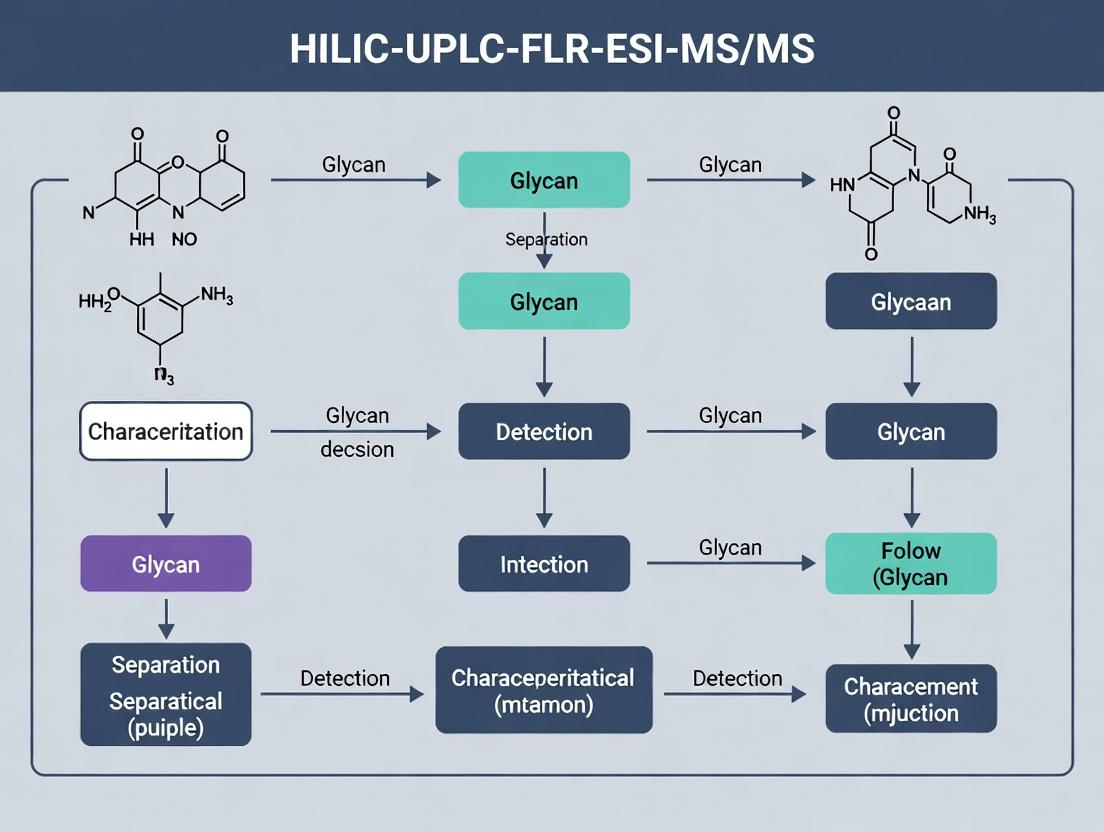
This article presents a detailed, optimized protocol for the comprehensive characterization of glycans using Hydrophilic Interaction Liquid Chromatography (HILIC) coupled with Ultra-Performance Liquid Chromatography (UPLC), Fluorescence (FLR) detection, and tandem...
Mastering Glycan Analysis: A Comprehensive HILIC-UPLC-FLR-ESI-MS/MS Protocol for Biopharmaceutical Characterization
Abstract
This article presents a detailed, optimized protocol for the comprehensive characterization of glycans using Hydrophilic Interaction Liquid Chromatography (HILIC) coupled with Ultra-Performance Liquid Chromatography (UPLC), Fluorescence (FLR) detection, and tandem mass spectrometry (ESI-MS/MS). Tailored for researchers and biopharmaceutical developers, it covers foundational principles, step-by-step methodology, critical troubleshooting for peak resolution and MS sensitivity, and validation strategies against established standards. The guide integrates the latest advancements to enable high-resolution separation, accurate identification, and robust quantification of N-linked and O-linked glycans for critical quality attribute assessment in therapeutic proteins, including monoclonal antibodies and biosimilars.
Why Glycan Characterization Matters: Core Principles of HILIC, FLR, and MS/MS for Biotherapeutics
The Critical Role of Glycosylation in Biopharmaceutical Efficacy and Safety
Glycosylation, the enzymatic attachment of glycans to protein backbones, is a critical quality attribute (CQA) for biopharmaceuticals. It profoundly influences drug efficacy, safety, pharmacokinetics, and immunogenicity. Variations in glycosylation patterns can alter receptor binding, serum half-life, and therapeutic potency, while non-human glycan structures can elicit immune responses. Therefore, comprehensive characterization of glycosylation is mandatory throughout biopharmaceutical development and manufacturing. This Application Note details a robust, high-throughput HILIC-UPLC-FLR-ESI-MS/MS protocol for glycan profiling, framed within the thesis of developing a standardized analytical framework for biotherapeutic characterization.
Quantitative Impact of Glycosylation on Drug Properties
Table 1: Key Biopharmaceuticals and Their Glycosylation-Dependent Attributes
| Biopharmaceutical (Class) | Critical Glycan Attribute | Impact on Efficacy (Quantitative Measure) | Impact on Safety |
|---|---|---|---|
| Rituximab (mAb) | Core fucosylation | ↓Fucose increases ADCC by 50-100% | Increased potency requires dose optimization. |
| Epoetin alfa (Glycoprotein) | Sialic acid content | ↑Sialylation increases serum half-life from ~4h to >24h | Asialo forms rapidly cleared, reducing efficacy. |
| Cetuximab (mAb) | Presence of Gal-α-1,3-Gal | N/A | Associated with severe anaphylaxis in some patients (IgE mediated). |
| Enbrel (Fc-fusion) | Mannose content | High mannose (e.g., >15%) can increase clearance rate by up to 2-fold | Potential for increased immunogenicity. |
| IVIG (Polyclonal IgG) | Sialylation of Fc glycans | Sialylated forms (<5% of total) mediate anti-inflammatory activity | Hypersialylation may reduce effector function. |
Table 2: Common Glycoform Distributions in Therapeutic mAbs (Representative Data)
| Glycan Structure | Typical Relative Abundance (%) | Notes |
|---|---|---|
| G0F | 20-40 | Most abundant afucosylated form. |
| G1F | 30-50 | Major monosialylated form. |
| G2F | 10-25 | Major disialylated form. |
| Man5 | 1-10 | High mannose, impacts clearance. |
| G0 | 1-5 | Afucosylated, enhances ADCC. |
HILIC-UPLC-FLR-ESI-MS/MS Protocol for Released N-Glycan Analysis
Research Reagent Solutions & Essential Materials
Table 3: Scientist's Toolkit for Glycan Release, Labeling, and Analysis
| Item | Function |
|---|---|
| Rapid PNGase F (Glycobuffer 2) | Enzymatically cleaves N-glycans from denatured glycoproteins. |
| 2-AB (2-aminobenzamide) Fluorescent Label | Tags reducing end of glycans for sensitive FLR detection. |
| GlycoClean S Cartridges | Solid-phase extraction for purification of 2-AB labeled glycans. |
| Acquity UPLC BEH Glycan Column (1.7 µm, 2.1 x 150 mm) | HILIC stationary phase for high-resolution glycan separation. |
| Ammonium Formate (pH 4.4) | Mobile phase additive for LC-MS, volatile for ESI compatibility. |
| Dextran Hydrolysate Ladder (Glucose Homopolymer) | Provides external calibration for glucose unit (GU) value assignment. |
| Lock Mass Solution (Leucine Enkephalin) | Provides accurate mass correction in MS mode. |
Detailed Experimental Protocol
Part 1: N-Glycan Release and Fluorescent Labeling
- Denaturation: Dilute 50 µg of purified glycoprotein to 20 µL with Milli-Q water. Add 2 µL of 5% SDS and 1 µL of 1M DTT. Incubate at 60°C for 10 min.
- Enzymatic Release: Add 10 µL of 4% Igepal CA-630, 8 µL of 5x Glycobuffer 2, and 2 µL of Rapid PNGase F. Mix and incubate at 50°C for 10 minutes.
- Labeling: Transfer released glycans to a tube containing 20 µL of 2-AB labeling mix (prepared per manufacturer's instructions). Incubate at 65°C for 2 hours.
- Purification: Purify labeled glycans using GlycoClean S cartridges. Condition cartridge with 1 mL water, then 1 mL 30% acetic acid, then 1 mL acetonitrile (ACN). Load sample in >75% ACN. Wash with 1 mL 96% ACN. Elute glycans with 500 µL water. Dry in a vacuum centrifuge.
Part 2: HILIC-UPLC-FLR Analysis for Profiling
- Reconstitution: Reconstitute dried glycans in 50 µL of 70% ACN.
- Chromatography: Inject 5-10 µL onto Acquity UPLC BEH Glycan column.
- Mobile Phase A: 50 mM Ammonium formate, pH 4.4.
- Mobile Phase B: 100% ACN.
- Gradient: 70-53% B over 28 min at 0.4 mL/min, 45°C.
- Detection: FLR (Ex: 330 nm, Em: 420 nm).
- Data Analysis: Identify peaks by comparison to a 2-AB labeled dextran ladder to assign Glucose Unit (GU) values. Compare to reference GU databases.
Part 3: ESI-MS/MS Analysis for Structural Confirmation
- LC-MS Coupling: Connect UPLC outlet directly to ESI-MS source.
- MS Parameters: Use positive ion mode. Capillary voltage: 3.0 kV; Source temp: 120°C; Desolvation temp: 350°C; Cone gas: 50 L/hr; Desolvation gas: 650 L/hr.
- MS Scan: Acquire full scan spectra (m/z 500-2000) in MS^E or data-independent acquisition (DIA) mode.
- MS/MS: Select precursor ions for CID fragmentation. Collision energy ramp: 25-60 eV.
- Data Interpretation: Use software (e.g., GlycoWorkbench) to interpret MS/MS spectra, confirming composition and linkage via diagnostic fragment ions (e.g., B-ions, Y-ions, cross-ring fragments).
Visualized Workflows and Pathways
HILIC-UPLC-FLR-ESI-MS/MS Glycan Analysis Workflow
Key Glycan Attributes Impacting Drug Properties
Application Notes
This integrated protocol enables simultaneous quantitative profiling (via FLR) and structural elucidation (via MS/MS). The HILIC separation resolves isomeric glycan structures, while GU values provide a reproducible identification metric independent of instrument platform. The direct coupling to MS/MS is essential for confirming the presence of high-risk structures like α-Gal or Neu5Gc, which are critical for safety assessment. The method is applicable for clone selection, process optimization, lot-to-lot comparison, and stability studies, ensuring consistent glycosylation for optimal biopharmaceutical efficacy and safety.
Within the comprehensive framework of a thesis on HILIC-UPLC-FLR-ESI-MS/MS for glycan characterization, this document details the critical application notes and protocols for the HILIC separation step. HILIC is the premier chromatographic mode for separating released, fluorescently labeled glycans due to its superior resolution of structurally similar isomers, which is essential for detailed glycomic profiling in biopharmaceutical development (e.g., monoclonal antibodies) and biomarker discovery.
Core Principles and Application Notes
HILIC operates on a partitioning mechanism where a water-rich layer is formed on the surface of a hydrophilic stationary phase. Separation is achieved based on glycan polarity, hydrophilicity, and size, with retention increasing with the number of sugar residues and polarity. Key application parameters are summarized below.
Table 1: Critical HILIC Method Parameters for 2-AB Labeled N-Glycans
| Parameter | Optimal Setting / Note | Impact on Separation |
|---|---|---|
| Stationary Phase | Amide (e.g., BEH Amide, 1.7 µm) | High efficiency, robust partitioning. |
| Mobile Phase A | 50-100 mM Ammonium Formate, pH 4.5 | Provides ionic strength; suppresses sialic acid charge heterogeneity. |
| Mobile Phase B | Acetonitrile (>85% initial) | Primary weak eluent; drives partitioning. |
| Gradient | Shallow decrease of B (e.g., 75% → 50% over 30-60 min) | Governs resolution; shallow for complex mixtures. |
| Column Temp. | 40-60°C | Improves kinetics, reduces backpressure. |
| Injection Solvent | High % Acetonitrile (>70%) | Ensures sharp focusing at column head. |
Table 2: Representative GU Values for Common 2-AB Labeled N-Glycans (BEH Amide Column)
| Glycan Structure | Glucose Unit (GU) Value | Relative Elution Order |
|---|---|---|
| Man-5 (A2G0) | ~5.0 | Early |
| G0F | ~6.5 | Mid |
| G1F (α1-6) | ~7.2 | Mid-Late |
| G2F | ~7.9 | Late |
| A2G2S1 | ~8.5 | Very Late (Sialylated) |
Detailed Protocol: HILIC-UPLC Separation of 2-AB Labeled N-Glycans
I. Sample Preparation Prior to Injection
- Dry Down: Completely dry the fluorescently labeled (e.g., 2-AB) glycan sample in a vacuum concentrator.
- Reconstitution: Resuspend the dried glycans in 100% Acetonitrile to a final concentration of 70-90% ACN. Vortex thoroughly and centrifuge briefly.
- Vial Preparation: Transfer the reconstituted sample to a low-volume UPLC vial with insert.
II. Instrumental Setup (UPLC System)
- Column: Install a BEH Glycan or equivalent HILIC amide column (e.g., 2.1 x 150 mm, 1.7 µm particle size).
- Mobile Phase:
- Buffer A: 50 mM Ammonium Formate, pH 4.5. Filter through a 0.22 µm membrane.
- Solvent B: HPLC-grade Acetonitrile.
- System Equilibration: Flush the system and equilibrate the column at initial conditions (typically 75-80% B) for at least 10 column volumes until a stable baseline is achieved.
III. Chromatographic Method
- Flow Rate: 0.4 mL/min
- Column Temperature: 60°C
- Sample Temp: 10°C
- Injection Volume: 1-10 µL (depending on labeling efficiency).
- Gradient Program:
Time (min) %A (Ammonium Formate) %B (ACN) Curve 0.0 25 75 Initial 30.0 50 50 Linear (6) 30.1 25 75 Step 35.0 25 75 Hold (Re-equilibration)
IV. Fluorescence Detection (FLR)
- Excitation Wavelength: 250 nm
- Emission Wavelength: 428 nm (for 2-AB label)
- Data Rate: 10 Hz
The Scientist's Toolkit: Essential Research Reagents & Materials
Table 3: Key Reagents for HILIC-based Glycan Analysis
| Item | Function / Role |
|---|---|
| BEH Amide UPLC Column | High-efficiency stationary phase for glycan isomer separation. |
| 2-Aminobenzamide (2-AB) | Fluorescent tag enabling sensitive FLR detection and providing a hydrophobic handle for HILIC. |
| Ammonium Formate (LC-MS Grade) | Provides ionic strength in Mobile Phase A; volatile for MS compatibility. |
| Acetonitrile (HPLC Grade) | Primary weak eluent (Mobile Phase B) for HILIC partitioning. |
| PNGase F (Recombinant) | Enzyme for releasing N-glycans from glycoproteins. |
| GLYCOBANK GU Reference Ladder | 2-AB labeled dextran hydrolysate used to calculate Glucose Unit values for glycan identification. |
| Weak Anion Exchange (WAX) Tips | For optional pre-fractionation of sialylated glycan isoforms prior to HILIC. |
Visualization: HILIC-UPLC-FLR-ESI-MS/MS Workflow for Glycan Characterization
HILIC Glycan Retention Mechanism Diagram
Application Notes
The synergistic coupling of Hydrophilic Interaction Liquid Chromatography (HILIC)-Ultra Performance Liquid Chromatography (UPLC), Fluorescence Detection (FLR), and Electrospray Ionization Tandem Mass Spectrometry (ESI-MS/MS) provides an unparalleled platform for comprehensive glycan characterization. This integrated workflow addresses the critical analytical challenges in glycobiology: separation of highly polar and isomeric structures, sensitive detection for quantification, and definitive structural elucidation with sequence and linkage information.
Key Synergies:
- HILIC-UPLC: Provides high-resolution, high-speed separation of native or fluorescently labeled glycans based on their hydrophilicity and size. It is orthogonal to reversed-phase chromatography and ideal for polar compounds.
- Fluorescence Detection (FLR): Enables highly sensitive, quantitative profiling of glycans labeled with tags like 2-AB (2-aminobenzamide). It offers a robust and reproducible quantitative dataset that is largely independent of glycan structure, crucial for comparative glycomics.
- ESI-MS/MS: Delivers accurate mass measurement for composition assignment and, via collision-induced dissociation (CID), provides detailed structural information through diagnostic fragment ions (e.g., cross-ring fragments for linkage analysis).
The FLR signal guides the MS/MS analysis, allowing for targeted fragmentation of chromatographically resolved peaks. This ensures that MS data is directly correlated with quantitative FLR data, distinguishing between isobaric species that co-elute in less resolving systems. This protocol is indispensable in biopharmaceutical development for monitoring critical quality attributes (CQAs) like glycosylation of monoclonal antibodies, where glycan profiles impact drug efficacy, stability, and immunogenicity.
Protocols
Protocol 1: Sample Preparation and 2-AB Labeling of Released N-Glycans
Materials: RapiGest SF, PNGase F, 2-AB labeling kit, Non-porous graphitized carbon solid-phase extraction (SPE) cartridges. Procedure:
- Denaturation & Deglycosylation: Dilute 50 µg of glycoprotein in 50 µL of water. Add 10 µL of 1% RapiGest SF. Heat at 90°C for 3 min. Cool, add 2.5 µL of PNGase F (100 U/µL). Incubate at 37°C for 3 hours.
- Labeling: Follow manufacturer's instructions for the 2-AB labeling kit. Briefly, dry released glycans using a vacuum concentrator. Reconstitute in 10 µL of labeling dye (2-AB in 70:30 DMSO:Acetic Acid with NaBH3CN). Incubate at 65°C for 2 hours.
- Clean-up: Purify labeled glycans using a non-porous graphitized carbon SPE cartridge. Condition with 1 mL acetonitrile (ACN) and 1 mL water. Load sample in ≥75% ACN. Wash with 1 mL water. Elute glycans with 1 mL 25% ACN/0.1% TFA. Dry eluent for analysis.
Protocol 2: HILIC-UPLC-FLR Analysis
Instrument: Acquity UPLC H-Class PLUS with FLR detector. Column: Acquity UPLC Glycan BEH Amide, 1.7 µm, 2.1 x 150 mm. Conditions:
- Mobile Phase A: 50 mM ammonium formate, pH 4.5.
- Mobile Phase B: 100% Acetonitrile.
- Gradient: 75% B to 62% B over 25 min at 0.56 mL/min.
- Temperature: 60°C.
- Injection: 5 µL of sample in 75% ACN.
- FLR Detection: λex = 330 nm, λem = 420 nm.
Protocol 3: HILIC-UPLC-ESI-MS/MS Analysis
Instrument: UPLC coupled to Q-TOF or Triple Quadrupole mass spectrometer with ESI source. Column & Chromatography: As per Protocol 2, with a flow splitter (~1:10) prior to MS inlet. MS Conditions:
- Ionization Mode: ESI-negative for native glycans; ESI-positive for 2-AB labeled glycans.
- Capillary Voltage: 2.8 kV.
- Source Temperature: 120°C.
- Desolvation Temperature: 350°C.
- Cone Voltage: 40 V.
- Data Acquisition: Full scan (m/z 500-2000) for MS¹. Data-dependent acquisition (DDA) for MS/MS on top 3-5 ions per scan, with collision energies ramped from 20-60 eV.
Data Presentation
Table 1: Representative HILIC-UPLC Retention Times and Relative Quantification (FLR) of Common mAb N-Glycans
| Glycan Structure (GU Value) | Abbreviation | Average Retention Time (min) | Relative % Area (Typical mAb) |
|---|---|---|---|
| G0F | FA2 | 10.2 | 15-25% |
| G1F (α1-6) | FA2G1 | 9.5 | 30-40% |
| G1F (α1-3) | FA2G1 | 9.8 | 5-10% |
| G2F | FA2G2 | 8.9 | 10-20% |
| Man5 | A2Man5 | 13.5 | 1-5% |
Table 2: Diagnostic MS/MS Fragment Ions for Glycan Linkage Determination
| Fragment Ion (m/z) | Ion Type | Structural Indication |
|---|---|---|
| 366 | Hex-HexNAc⁺ | Presence of LacNAc (Gal-GlcNAc) |
| 204 | HexNAc⁺ | N-acetylhexosamine (GlcNAc or GalNAc) |
| 292 | NeuAc⁺ | N-acetylneuraminic acid |
| 274 | (292-H₂O)⁺ | Confirms sialylation |
| 512 | (Hex-HexNAc-NeuAc)⁺ | Indicates sialylated LacNAc branch |
The Scientist's Toolkit
| Item Name | Function & Purpose |
|---|---|
| PNGase F | Enzyme that cleaves N-linked glycans from the asparagine residue of proteins for analysis. |
| 2-Aminobenzamide (2-AB) | Fluorescent label that attaches to the reducing end of glycans via reductive amination, enabling sensitive FLR detection and stabilization of sialic acids. |
| RapiGest SF | Acid-labile surfactant that denatures proteins without interfering with MS analysis. |
| Non-Porous Graphitized Carbon (NPC) SPE | Solid-phase extraction medium for purifying labeled glycans, removing excess dye and salts. |
| BEH Amide HILIC Column | Stationary phase providing robust, reproducible separation of glycans based on hydrophilicity. |
| Ammonium Formate (Volatile Buffer) | Provides pH control for HILIC separation and is MS-compatible, unlike phosphate buffers. |
Visualization
Diagram 1: HILIC-UPLC-FLR-MS/MS Integrated Workflow
Diagram 2: Synergistic Data Correlation Logic
Application Notes
The integration of Hydrophilic Interaction Liquid Chromatography with Ultra-Performance Liquid Chromatography, Fluorescence Detection, and Electrospray Ionization Tandem Mass Spectrometry (HILIC-UPLC-FLR-ESI-MS/MS) represents a powerful, orthogonal platform for comprehensive glycan analysis. This protocol is central to three critical biopharmaceutical applications: ensuring monoclonal antibody (mAb) quality, establishing biosimilarity, and discovering clinically relevant biomarkers. The quantitative and structural data generated are indispensable for lot-release testing, regulatory filings, and diagnostic development.
Monoclonal Antibody Quality Control: Glycosylation directly impacts mAb safety and efficacy, influencing effector functions like Antibody-Dependent Cellular Cytotoxicity (ADCC) and pharmacokinetics. This protocol enables high-throughput, sensitive profiling of released N-glycans (e.g., G0F, G1F, G2F, Man5, sialylated species) for batch-to-batch consistency. Changes in galactosylation or fucosylation can be rapidly detected.
Biosimilar Development: Demonstrating structural similarity to a reference innovator product is a regulatory requirement. This technique provides a detailed "glycan fingerprint" comparison, quantifying critical quality attributes (CQAs) related to glycosylation. Statistical comparison of glycan peak areas is used to establish biosimilarity.
Biomarker Discovery: Aberrant glycosylation is a hallmark of many diseases (e.g., cancer, autoimmune disorders). This platform facilitates the comparative glycomic profiling of biofluids (serum, plasma) or tissues from healthy and diseased cohorts to identify specific glycan structures or profiles associated with disease state, progression, or therapeutic response.
Quantitative Data Summary (Representative Values)
Table 1: Typical Glycan Distribution in a Therapeutic IgG1 mAb (Percentage of Total Peak Area)
| Glycan Structure | Common Abbreviation | Typical Range (%) | Critical Quality Attribute |
|---|---|---|---|
| Afucosylated complex | G0 | 0.5 - 5% | Impacts ADCC potency |
| Complex, fucosylated, agalactosylated | G0F | 10 - 30% | Core structure |
| Complex, fucosylated, monogalactosylated | G1F | 20 - 50% | Major variant |
| Complex, fucosylated, digalactosylated | G2F | 10 - 40% | Galactosylation index |
| High mannose | Man5 | 0.1 - 5% | Clearance rate |
| Sialylated complex | G2FS1 | 0 - 5% | Charge & half-life |
Table 2: Key Method Performance Parameters for HILIC-UPLC-FLR-ESI-MS/MS
| Parameter | Value/Result |
|---|---|
| Chromatographic Resolution (G1F vs G1) | R_s > 1.5 |
| Linear Dynamic Range (FLR) | 0.1 - 100 pmol (R² > 0.99) |
| Intra-day Precision (Retention Time) | RSD < 0.5% |
| Intra-day Precision (Peak Area, G0F) | RSD < 3% |
| Limit of Detection (FLR, 2-AB labeled) | ~0.05 pmol |
Experimental Protocols
Protocol 1: N-Glycan Release, Labeling, and Purification for mAb QC
Objective: To prepare fluorescently labeled, released N-glycans from a monoclonal antibody for HILIC-UPLC-FLR-ESI-MS/MS analysis.
Materials:
- Monoclonal antibody sample (100 µg)
- PNGase F (recombinant, glycerol-free)
- 2-Aminobenzamide (2-AB) labeling kit
- DMSO, Acetic Acid, Ethanol
- Non-porous graphitized carbon (NPC) solid-phase extraction (SPE) cartridges
- Acetonitrile (HILIC-grade), Water (MS-grade), Ammonium formate
Procedure:
- Denaturation & Digestion: Dilute 100 µg of mAb in 50 µL of water. Add 1 µL of 5% SDS and heat at 65°C for 10 min. Cool, add 6 µL of 4% Igepal CA-630. Add 2 µL (1000 U) of PNGase F in 10 µL of reaction buffer. Incubate at 37°C for 18 hours.
- Labeling: Pre-mix the 2-AB labeling solution per kit instructions. Add the entire digestion mixture to the labeling dye. Incubate at 65°C for 2 hours.
- Purification: Equilibrate an NPC SPE cartridge with 1 mL of water followed by 1 mL of 85% acetonitrile/1% TFA. Apply the labeled sample. Wash with 1 mL of 85% acetonitrile/1% TFA. Elute glycans with 1 mL of 40% acetonitrile/0.1% TFA, followed by 1 mL of 20% acetonitrile/0.1% TFA. Combine eluents and dry in a vacuum concentrator.
- Reconstitution: Reconstitute dried glycans in 100 µL of 75% acetonitrile for UPLC injection.
Protocol 2: HILIC-UPLC-FLR-ESI-MS/MS Analysis
Objective: To separate, detect, and structurally characterize fluorescently labeled N-glycans.
Instrument Setup:
- Column: BEH Glycan, 1.7 µm, 2.1 x 150 mm
- Mobile Phase A: 50 mM Ammonium formate, pH 4.5
- Mobile Phase B: Acetonitrile
- Gradient: 75% B to 50% B over 25 min, at 0.4 mL/min, 40°C.
- FLR Detection: λex = 330 nm, λem = 420 nm.
- MS Conditions: ESI positive mode, capillary voltage 3.0 kV, source temp 120°C, desolvation temp 350°C. Data-dependent acquisition (DDA) for MS/MS.
Procedure:
- Inject 5 µL of reconstituted sample.
- The FLR chromatogram provides quantitative profiling. Simultaneously, MS data (m/z 500-2000) is acquired.
- For major peaks, MS/MS is triggered to fragment parent ions (collision energy 20-40 eV) to obtain structural information on branching, composition, and sequence.
Protocol 3: Data Analysis for Biosimilarity Assessment
Objective: To statistically compare the glycan profile of a biosimilar candidate to its reference product.
- Normalization: Normalize all FLR peak areas to total area (100%).
- Alignment: Align peaks across multiple runs using a dextran ladder or standard glycan pool.
- Comparison: For each glycan structure (G0F, G1F, G2F, Man5, etc.), calculate the mean and standard deviation across multiple lots (n≥5) of both biosimilar and reference.
- Statistical Testing: Perform multivariate analysis (e.g., Principal Component Analysis - PCA) and equivalence testing (e.g., f2 similarity factor or 95% confidence interval comparison) to demonstrate analytical similarity.
Visualization
Title: Integrated HILIC-UPLC-FLR-ESI-MS/MS Glycan Analysis Workflow
Title: Glycan-Based Analytical Biosimilarity Assessment Pathway
The Scientist's Toolkit: Key Research Reagent Solutions
Table 3: Essential Materials for Glycan Characterization via HILIC-UPLC-FLR-ESI-MS/MS
| Item | Function/Benefit |
|---|---|
| PNGase F (Glycerol-free) | Enzyme for efficient release of N-glycans from glycoproteins. Glycerol-free versions are compatible with MS. |
| 2-Aminobenzamide (2-AB) | Fluorescent tag for highly sensitive detection of glycans by FLR. Imparts hydrophilicity for HILIC separation. |
| BEH Glycan UPLC Column | Stationary phase designed for high-resolution separation of labeled glycans based on hydrophilicity. |
| Non-Porous Graphitized Carbon (NPC) SPE Cartridges | For robust cleanup of labeled glycans, removing excess dye, salts, and detergents. |
| Ammonium Formate, pH 4.5 | Volatile buffer for HILIC mobile phase, compatible with ESI-MS and providing excellent peak shape. |
| Dextran Hydrolysate Ladder | Provides a set of labeled glucose oligomers for creating a standardized retention time index (GU values) for glycan identification. |
| Reference Glycan Pool | A characterized mixture of common N-glycans for system suitability testing and peak assignment. |
| MS-Grade Acetonitrile & Water | Essential for low-background UPLC separation and high-sensitivity MS detection. |
Step-by-Step Protocol: From Sample Prep to Data Acquisition for Robust Glycan Profiling
Within the comprehensive analytical framework of a HILIC-UPLC-FLR-ESI-MS/MS protocol for glycan characterization, robust sample preparation is the critical foundation. The steps of glycan release, purification, and fluorescent labeling directly determine the sensitivity, accuracy, and reproducibility of downstream chromatographic separation, fluorescence detection, and structural elucidation by tandem mass spectrometry. This application note details optimized protocols for these essential preparatory stages, contextualized for high-throughput glycosylation analysis in biotherapeutic development.
Glycan Release: Enzymatic vs. Chemical
The first step involves liberating N-linked glycans from the glycoprotein backbone. The choice of reagent depends on the required specificity and sample compatibility.
Protocol 2.1: Enzymatic Release Using Peptide-N-Glycosidase F (PNGase F)
- Principle: PNGase F cleaves the asparagine-linked glycan between the innermost GlcNAc and the asparagine residue, preserving the glycan's reducing end and core structure.
- Reagents: Glycoprotein sample, PNGase F (recombinant, glycerol-free), Ammonium bicarbonate buffer (50 mM, pH 7.5-8.0), NP-40 alternative (0.2% v/v, for denatured proteins).
- Method:
- Denature glycoprotein (10-100 µg) in 50 µL of 1x PBS at 95°C for 3 minutes. Cool.
- Add ammonium bicarbonate buffer to a final concentration of 50 mM.
- Add NP-40 to 0.2% final concentration (if required by enzyme formulation).
- Add 2 µL (1000 units) of PNGase F.
- Incubate at 37°C for 16-18 hours (overnight).
- Terminate reaction by heating at 65°C for 10 minutes.
Protocol 2.2: Chemical Release Using Hydrazinolysis
- Principle: Anhydrous hydrazine cleaves both N- and O-glycosidic bonds. It is non-selective but effective for O-glycans and heavily sterically hindered N-glycans.
- Caution: Hydrazine is highly toxic and corrosive. Perform in dedicated, sealed reaction vials with appropriate safety measures.
- Method (Generalized):
- Completely dry glycoprotein (100 µg - 1 mg) in a sealed tube.
- Under anhydrous conditions, add 50 µL of anhydrous hydrazine.
- Seal the tube and incubate at 60°C for O-glycan release (6-8 hours) or 95°C for N-glycan release (4-6 hours).
- Cool, then carefully evaporate hydrazine to dryness under a stream of dry nitrogen in a fume hood.
- Re-N-acetylate by adding 100 µL of saturated sodium bicarbonate and 20 µL of acetic anhydride in five 4 µL aliquts over 15 minutes on ice.
Table 1: Comparison of Glycan Release Methods
| Parameter | Enzymatic (PNGase F) | Chemical (Hydrazinolysis) |
|---|---|---|
| Specificity | N-linked only | N & O-linked |
| Glycan Integrity | Preserved core | May cause peeling (O) |
| Throughput | High | Low |
| Safety Complexity | Low | Very High |
| Typical Yield | >95% | 70-90% |
| Best For | Routine N-glycan analysis from biotherapeutics | O-glycan analysis or recalcitrant N-glycans |
Glycan Purification: Solid-Phase Extraction (SPE)
Released glycans must be purified from salts, detergents, and protein debris.
Protocol 3.1: Purification via Porous Graphitized Carbon (PGC) SPE
- Principle: PGC binds glycans via hydrophobic and polar interactions. It effectively retains oligosaccharides while allowing salts and small polar contaminants to pass.
- Reagents: PGC SPE cartridges (e.g., 10 mg), 80% Acetonitrile (ACN)/0.1% TFA (v/v, Conditioning/Wash), 0.1% TFA in H₂O (v/v, Equilibration), 40% ACN/0.1% TFA (v/v, Wash 2), 25% ACN/0.1% TFA (v/v, Elution).
- Method:
- Condition cartridge with 3 mL of 80% ACN/0.1% TFA.
- Equilibrate with 3 mL of 0.1% TFA in H₂O.
- Dilute the glycan release reaction mixture 1:10 with 0.1% TFA and load onto cartridge.
- Wash with 3 mL of 0.1% TFA (H₂O), then 3 mL of 40% ACN/0.1% TFA.
- Elute glycans with 1 mL of 25% ACN/0.1% TFA into a low-binding microcentrifuge tube.
- Dry eluate completely in a vacuum concentrator.
Fluorescent Labeling
Labeling the reducing end of purified glycans with a fluorophore enables highly sensitive FLR detection after HILIC separation and provides a hydrophobic tag for improved MS ionization.
Protocol 4.1: Labeling with 2-Aminobenzamide (2-AB)
- Principle: Reductive amination. The aromatic amine of 2-AB reacts with the reducing-end aldehyde of the glycan to form a Schiff base, which is reduced to a stable secondary amine.
- Reagents: 2-AB labeling solution (14 mg/mL 2-AB in DMSO/Acetic Acid/NaBH₃CN; 70:30:1 v/v/v), DMSO, Acetic Acid, Sodium cyanoborohydride (NaBH₃CN).
- Method:
- Dissolve dried glycans in 5 µL of HPLC-grade H₂O.
- Add 10 µL of 2-AB labeling solution.
- Vortex and centrifuge briefly.
- Incubate at 65°C for 3 hours.
- Allow to cool to room temperature.
Protocol 4.2: Labeling with Procainamide
- Principle: Similar reductive amination, but procainamide offers ~3x higher fluorescence yield than 2-AB and improved MS sensitivity due to its tertiary amine.
- Reagents: Procainamide labeling solution (20 mg/mL Procainamide in DMSO/Acetic Acid/NaBH₃CN; 70:30:1 v/v/v).
- Method:
- Dissolve dried glycans in 5 µL of H₂O.
- Add 10 µL of procainamide labeling solution.
- Vortex and centrifuge briefly.
- Incubate at 65°C for 3 hours.
- Cool to room temperature.
Purification of Labeled Glycans (Post-Labeling Cleanup):
- Apply the labeling reaction mixture to a fresh PGC SPE cartridge (pre-conditioned as in Protocol 3.1).
- Wash with 3 mL of 0.1% TFA (H₂O) to remove unreacted label and reducing agent.
- Elute labeled glycans with 1 mL of 25% ACN/0.1% TFA.
- Dry, reconstitute in 80% ACN for HILIC-UPLC-FLR-MS/MS analysis.
Table 2: Comparison of Fluorescent Labels for HILIC-UPLC-FLR-MS/MS
| Parameter | 2-Aminobenzamide (2-AB) | Procainamide |
|---|---|---|
| Excitation/Emission | ~330 nm / ~420 nm | ~310 nm / ~370 nm |
| Relative FLR Sensitivity | 1.0 (Reference) | ~3.0 |
| MS Ionization Enhancement | Moderate | High (charged tag) |
| HILIC Retention | Strong | Very Strong |
| Common Application | Standard profiling | High-sensitivity, quantitative assays |
The Scientist's Toolkit: Research Reagent Solutions
| Item & Purpose | Key Function in Sample Prep |
|---|---|
| PNGase F (Glycerol-free) | High-purity enzyme for specific, efficient release of N-linked glycans. Glycerol-free is essential for MS. |
| Anhydrous Hydrazine | Powerful chemical for release of O-glycans and recalcitrant N-glycans. Requires extreme hazard controls. |
| Porous Graphitized Carbon (PGC) SPE Cartridges | Gold-standard solid-phase media for purification of both native and labeled glycans from complex mixtures. |
| 2-AB Labeling Kit | Optimized, stable reagent mix for reliable, high-yield fluorescent tagging of glycans. |
| Procainamide Hydrochloride | High-sensitivity fluorophore for applications requiring maximal detection limits in FLR and MS. |
| Sodium Cyanoborohydride (NaBH₃CN) | Selective reducing agent for reductive amination, stable at low pH. |
| Acetonitrile (Optima LC/MS Grade) | Critical solvent for SPE, labeling, and HILIC mobile phases; high purity minimizes background ions in MS. |
| Trifluoroacetic Acid (TFA), LC/MS Grade | Ion-pairing agent for PGC SPE and mobile phase additive; essential for glycan retention and elution. |
| Low-Protein-Binding Microcentrifuge Tubes | Minimizes adsorptive loss of low-abundance glycans during processing and storage. |
Visualized Workflows
Glycan Sample Preparation Workflow
Reductive Amination Labeling Chemistry
1. Introduction Within the context of a broader thesis developing a comprehensive HILIC-UPLC-FLR-ESI-MS/MS protocol for glycan characterization, the optimization of the ultra-high performance liquid chromatography (UPLC) step is critical. Effective separation of structurally similar, hydrophilic glycans via Hydrophilic Interaction Liquid Chromatography (HILIC) directly impacts the quality of downstream fluorescence (FLR) detection and mass spectrometric (MS/MS) analysis. This application note details a systematic approach to optimize four pivotal parameters: column selection, mobile phase composition, gradient profile, and column temperature to maximize peak resolution for complex glycan samples, such as those released from therapeutic monoclonal antibodies.
2. Core Optimization Parameters & Experimental Data A design of experiments (DoE) approach was employed to evaluate the effects of key parameters on the resolution (Rs) between two critical N-glycan peaks: G0F/G1F isomers and G1F/G2F. The following tables summarize the quantitative findings.
Table 1: Evaluation of Commercial HILIC Columns for Glycan Separation
| Column Name (Stationary Phase) | Pore Size (Å) | Particle Size (µm) | Relative Resolution (G1F/G2F) | Notes for Glycan Analysis |
|---|---|---|---|---|
| BEH Amide | 130 | 1.7 | 1.00 (Reference) | High efficiency, standard for glycan profiling. Robust. |
| BEH Glycan | 130 | 1.7 | 1.15 | Charged surface hybrid particle. Enhances separation of sialylated glycans. |
| Ethylene Bridged Hybrid (BEH) HILIC | 130 | 1.7 | 0.95 | Bare silica. Useful for very polar analytes, may show different selectivity. |
| Acquity UPLC Glycan BEH Amide | 130 | 1.7 | 1.10 | Optimized bonding chemistry for glycan analysis. Improved batch-to-batch reproducibility. |
Table 2: Effect of Mobile Phase Buffer Concentration and pH on Peak Shape and Resolution
| Ammonium Formate Conc. (mM) | pH (Formic Acid adjust) | Peak Asymmetry (As) | Resolution (G0F/G1F) | Impact Summary |
|---|---|---|---|---|
| 10 | 4.5 | 1.8 | 1.5 | Poor peak shape, low ionic strength. |
| 50 | 4.5 | 1.3 | 2.1 | Optimal peak shape and resolution for most neutral glycans. |
| 100 | 4.5 | 1.2 | 2.0 | Slightly increased retention, minimal resolution gain. |
| 50 | 3.0 | 1.1 | 2.3 | Improved peak shape for sialylated glycans; protonates acids. |
Table 3: Gradient Slope and Temperature Interdependence Study
| Initial %B (Acetonitrile) | Gradient Slope (%B/min) | Column Temp. (°C) | Analysis Time (min) | Critical Resolution (Rs G1F/G2F) |
|---|---|---|---|---|
| 72 | 0.25 | 40 | 55 | 2.5 |
| 72 | 0.40 | 40 | 40 | 2.0 |
| 75 | 0.40 | 40 | 35 | 1.7 |
| 72 | 0.40 | 60 | 32 | 1.8 |
3. Detailed Experimental Protocols
Protocol 1: HILIC-UPLC Method Optimization Screen Objective: To determine the initial optimal combination of column, buffer concentration, and starting organic percentage. Materials: 2-AB labeled N-glycan library (G0F, G1F, G2F, Man5), various HILIC columns (Table 1), 50 mM ammonium formate pH 4.5 (Mobile Phase A), 100% acetonitrile (Mobile Phase B). Procedure:
- Equilibrate the selected column (e.g., BEH Amide, 2.1 x 150 mm, 1.7 µm) at 0.4 mL/min with 80% B for 10 column volumes.
- Inject 5 µL of labeled glycan standard (∼1 pmol/component).
- Apply a linear gradient from 72% to 62% B over 40 minutes at 40°C.
- Monitor separation via FLR (Ex: 250 nm, Em: 428 nm).
- Calculate resolution (Rs = 2*(tR2 - tR1)/(w1+w2)) and peak asymmetry.
- Repeat steps 1-5, varying the column (Table 1), the ammonium formate concentration in Mobile Phase A (10, 50, 100 mM), and the initial %B (70%, 72%, 75%).
Protocol 2: Fine-Tuning Gradient and Temperature Objective: To refine the gradient slope and temperature for optimal resolution within a target analysis time. Materials: Optimized column and mobile phase from Protocol 1, complex 2-AB labeled N-glycan sample from mAb. Procedure:
- Using the optimized conditions (e.g., BEH Glycan column, 50 mM ammonium formate pH 4.5), set the column temperature to 40°C.
- Inject the complex sample and run a shallow gradient (e.g., 72% to 57% B over 60 min, slope = 0.25 %B/min) to establish maximum possible resolution.
- Sequentially increase the gradient slope (0.4, 0.5, 0.6 %B/min) while adjusting the gradient range to maintain elution of the last peak, monitoring the change in critical pair resolution.
- Set gradient to the slope that meets minimum resolution (Rs > 1.5) and time constraints.
- Repeat the chosen method at column temperatures of 30°C, 50°C, and 60°C. Record retention time stability and resolution.
4. Visualization of the Optimization Workflow
Diagram Title: HILIC-UPLC Method Optimization Decision Pathway
5. The Scientist's Toolkit: Key Research Reagent Solutions
| Item | Function in HILIC-UPLC Glycan Analysis |
|---|---|
| 2-Aminobenzamide (2-AB) | Fluorescent label for glycans; enables sensitive FLR detection and provides chromophore for ESI+. |
| BEH Glycan Column | Charged surface hybrid HILIC column; provides superior resolution for isomeric and sialylated glycans. |
| Ammonium Formate (LC-MS Grade) | Volatile salt buffer for Mobile Phase A; maintains pH and ionic strength, compatible with ESI-MS. |
| Acetonitrile (LC-MS Grade) | Primary organic solvent (Mobile Phase B) for HILIC; maintains low background and high volatility for MS. |
| Formic Acid (LC-MS Grade) | Used to adjust pH of Mobile Phase A; enhances ionization efficiency in positive ESI mode. |
| Glycan Library Standard | Labeled N-glycan standards (e.g., G0F, G1F, Man5); essential for system suitability and peak assignment. |
| PNGase F Enzyme | Recombinant enzyme for releasing N-glycans from glycoproteins (sample preparation step prior to UPLC). |
Within the multi-dimensional HILIC-UPLC-FLR-ESI-MS/MS workflow for glycan characterization, the Fluorescence (FLR) detector serves as a critical, high-sensitivity quantification module. It precedes ESI-MS/MS analysis, providing robust, label-free quantitation of glycans following reductive amination with a fluorescent tag (e.g., 2-AB). The configuration of excitation (Ex) and emission (Em) wavelengths directly governs the signal-to-noise ratio, impacting both the sensitivity (limit of detection) and specificity (selectivity against matrix interferences) of the entire analytical chain. Optimal FLR settings are therefore paramount for generating reliable quantitative data that accurately informs subsequent structural elucidation via MS/MS.
Fundamental Principles & Quantitative Data
Fluorescent tags absorb light at a characteristic Ex wavelength and emit at a higher, characteristic Em wavelength. Maximum sensitivity is achieved when detector wavelengths are aligned with the peak absorbance and emission spectra of the tag. Specificity is enhanced by selecting a wavelength pair that minimizes background fluorescence from solvents, column bleed, and sample matrix components.
Table 1: Common Fluorescent Tags for Glycan Analysis & Their Optimal Wavelengths
| Fluorescent Tag | Primary Application | Recommended Ex λ (nm) | Recommended Em λ (nm) | Key Advantage |
|---|---|---|---|---|
| 2-Aminobenzoic Acid (2-AB) | General N-/O-glycan profiling | 250 | 425 | Excellent MS compatibility, common standard |
| 2-Aminobenzamide (2-AB) | General N-/O-glycan profiling | 250 | 425 | High fluorescence yield |
| Anthranilic Acid (AA) | Sialylated glycan analysis | 230 | 425 | Good sensitivity, stable |
| Procainamide (ProA) | High-sensitivity detection | 310 | 370 | Enhanced sensitivity vs. 2-AB |
| 8-Aminopyrene-1,3,6-Trisulfonate (APTS) | Capillary electrophoresis, UPLC | 455 | 520 | Very high sensitivity, charge for CE |
Table 2: Impact of Wavelength Bandwidth on Performance
| Parameter | Narrow Bandwidth (e.g., 5 nm) | Wide Bandwidth (e.g., 18 nm) |
|---|---|---|
| Sensitivity | Slightly Lower (less light captured) | Higher (more light captured) |
| Specificity | Higher (narrower spectral window) | Lower (broader spectral window) |
| Signal-to-Noise | Potentially Higher for clean samples | Potentially Higher for complex matrices |
| Recommended Use | High-purity samples, complex mixtures | Standard profiling, maximizing signal |
Experimental Protocol: FLR Wavelength Optimization for 2-AB Labeled Glycans
Objective: To empirically determine the Ex/Em wavelength settings that yield the highest signal-to-noise ratio for 2-AB labeled N-glycans from a monoclonal antibody in your specific HILIC-UPLC-FLR-ESI-MS/MS system.
Materials & Reagents:
- Standard: 2-AB labeled dextran ladder or a known 2-AB labeled N-glycan standard (e.g., G1F).
- Sample: 2-AB labeled, purified N-glycans from your target mAb.
- Mobile Phase: HILIC-compatible buffers (e.g., 50 mM ammonium formate, pH 4.4, and acetonitrile).
- Column: BEH Glycan or similar HILIC column (1.7 µm, 2.1 x 150 mm).
- UPLC System with FLR detector capable of wavelength adjustment.
- Data analysis software.
Procedure:
- System Equilibration: Equilibrate the HILIC-UPLC system with starting mobile phase conditions (e.g., 75-80% acetonitrile) at the standard flow rate (e.g., 0.4 mL/min) until a stable baseline is achieved on the FLR.
- Baseline Noise Measurement: With the flow on, record the baseline signal for at least 10 minutes at the manufacturer's default wavelengths for 2-AB (typically Ex 250 nm, Em 425 nm). Calculate the peak-to-peak noise (N).
- Wavelength Scanning (Ex): Inject the 2-AB standard. Set the Em wavelength to 425 nm. Run sequential injections while incrementing the Ex wavelength from 240 nm to 260 nm in 2 nm steps, keeping all other chromatographic conditions identical. Record the peak height (H) for the major analyte.
- Wavelength Scanning (Em): Set the Ex wavelength to the value that gave the highest peak height in Step 3. Run sequential injections while incrementing the Em wavelength from 410 nm to 440 nm in 2-5 nm steps.
- Signal-to-Noise Calculation: For each wavelength pair tested, calculate the Signal-to-Noise ratio (S/N) for the analyte peak: S/N = H / N.
- Validation with Real Sample: Apply the optimal wavelength pair (highest S/N) to analyze the full mAb N-glycan sample. Confirm that the chromatographic profile shows well-resolved peaks with minimal baseline drift and no new interfering peaks compared to the standard settings.
- Bandwidth Adjustment (Optional): If the detector allows, repeat step 5 with the optimal center wavelengths using a narrower and wider emission bandwidth to fine-tune specificity vs. sensitivity.
The Scientist's Toolkit: Key Research Reagent Solutions
Table 3: Essential Materials for HILIC-UPLC-FLR Glycan Analysis
| Item | Function in the Workflow |
|---|---|
| 2-Aminobenzoic Acid (2-AB) / 2-AB Kit | Fluorescent label for glycans enabling sensitive FLR detection. |
| Sodium Cyanoborohydride | Reducing agent used in the reductive amination labeling reaction. |
| PNGase F (Glycoamidase) | Enzyme for releasing N-linked glycans from glycoproteins. |
| BEH Glycan UPLC Column (1.7 µm) | Stationary phase for high-resolution HILIC separation by glycan polarity. |
| Ammonium Formate (LC-MS Grade) | Salt for preparing volatile mobile phase buffers compatible with MS. |
| Acetonitrile (LC-MS Grade) | Organic solvent for HILIC mobile phase, critical for separation. |
| Dextran Ladder (2-AB labeled) | Calibration standard for glucose unit (GU) value assignment. |
| Glycan Release & Labeling Clean-up Plates (e.g., HILIC µElution) | For rapid purification of labeled glycans from excess dye and salts. |
Visualization of Workflows & Relationships
Title: HILIC-UPLC-FLR-MS/MS Glycan Analysis Workflow
Title: Factors Affecting FLR Sensitivity & Specificity
This application note details the critical Electrospray Ionization Tandem Mass Spectrometry (ESI-MS/MS) parameters within a comprehensive HILIC-UPLC-FLR-ESI-MS/MS workflow for the characterization of released glycans. The accurate structural elucidation of glycans, essential in biopharmaceutical development (e.g., for monoclonal antibodies and biosimilars), hinges on the precise optimization of ionization and fragmentation conditions. This protocol focuses on the key instrumental parameters—capillary voltage, cone voltage, and collision energies—and the implementation of data-dependent acquisition (DDA) strategies to maximize information yield from complex glycan samples separated by Hydrophilic Interaction Liquid Chromatography (HILIC) with fluorescent (FLR) detection.
Core ESI-MS/MS Parameters: Function and Optimization
Capillary Voltage (kV)
- Function: Also known as the spray voltage, this high potential is applied between the ESI needle and the instrument orifice. It is responsible for generating the charged droplets from the LC eluent and initiating the electrospray process. For negative-ion mode, which is standard for native (underivatized) and 2-AB-labeled glycans, the voltage is negative.
- Optimization Rationale: Optimal voltage ensures stable spray and efficient ionization. Too low a voltage results in poor ionization and signal; too high a voltage can cause excessive electrochemical reactions, increased background noise, and corona discharge.
Cone Voltage (V)
- Function: This voltage, applied to the sampling cone or orifice, controls the initial acceleration of ions from the atmospheric pressure source into the first vacuum region of the mass spectrometer. It influences the degree of in-source fragmentation or "declustering."
- Optimization Rationale: For labile glycans, a lower cone voltage preserves the intact molecular ion species ([M-H]⁻ or [M+nH]ⁿ⁻). A moderately increased voltage can help strip off solvent adducts (e.g., [M+Cl]⁻) and improve signal-to-noise for the precursor ion of interest.
Collision Energies (eV)
- Function: In MS/MS, precursor ions are selectively fragmented in a collision cell (e.g., a quadrupole or ion trap) filled with an inert gas (argon or nitrogen). The collision energy (CE) is the voltage difference that accelerates the precursor ions, determining the kinetic energy with which they collide with gas molecules, thereby controlling the degree of fragmentation.
- Optimization Rationale: Glycans fragment via glycosidic bond cleavages (producing B, Y, C, Z ions) and cross-ring cleavages (A, X ions), which are crucial for linkage determination. Lower CE yields simpler spectra dominated by glycosidic cleavages; higher CE promotes informative cross-ring fragments. Optimal CE is often mass/charge-dependent.
Data-Dependent Acquisition (DDA)
- Function: An intelligent scanning protocol where the instrument first performs a survey MS scan to identify ions above a predefined intensity threshold. It then automatically selects the most intense (or other criteria-based) precursors from that scan for subsequent MS/MS analysis in real-time.
- Optimization Rationale: Maximizes the structural information obtained from a single chromatographic run by automatically triggering MS/MS on eluting peaks. Critical parameters include precursor selection thresholds, exclusion durations to prevent re-sampling of the same peak, and the number of concurrent MS/MS experiments per cycle.
Table 1: Typical ESI-MS/MS Parameter Ranges for Negative-Ion Mode Glycan Analysis (e.g., on Q-TOF or Ion Trap Platforms)
| Parameter | Typical Range | Common Setting for 2-AB Labeled N-Glycans | Function & Note |
|---|---|---|---|
| Capillary Voltage | -1.5 to -3.0 kV | -2.5 kV | Generates stable electrospray. Adjusted for flow rate and solvent. |
| Cone Voltage | 20 - 100 V | 40 - 60 V | Balances intact ion transmission with adduct removal. |
| Source Temp. | 100 - 150 °C | 120 °C | Desolvation temperature. Lower for labile structures. |
| Desolvation Gas | 400 - 800 L/hr | 600 L/hr | N₂ flow for droplet desolvation. |
| Collision Energy (Low) | 15 - 25 eV | 18 - 20 eV | For MS/MS of precursor ions ~m/z 1000. Glycosidic cleavages. |
| Collision Energy (High) | 35 - 70 eV | 40 - 50 eV | For MS/MS to induce cross-ring fragments. Often ramped. |
| DDA: Top N | 3 - 8 precursors | 5 | Number of MS/MS experiments per MS survey scan. |
| DDA: Intensity Threshold | 500 - 5000 counts | 1500 counts | Minimum signal to trigger MS/MS. |
| DDA: Dynamic Exclusion | 15 - 45 sec | 30 sec | Prevents repeated analysis of the same isotopic cluster. |
Table 2: Example Collision Energy Ramping Scheme for Complex N-Glycan MS/MS (e.g., on a Quadrupole-Time-of-Flight Instrument)
| Precursor m/z Range | Low CE (eV) | High CE (eV) | Ramp Type | Primary Information Gained |
|---|---|---|---|---|
| m/z 500 - 800 | 18 | 25 | Linear | Composition & some sequence (B/Y ions). |
| m/z 800 - 1200 | 20 | 35 | Linear | Sequence & branching (B/Y ions). |
| m/z 1200 - 2000 | 25 | 45 | Linear | Sequence, branching, and some linkage (A/X ions). |
| m/z > 2000 | 30 | 50-70 | Linear | Promotes cross-ring cleavages for linkage data. |
Detailed Experimental Protocol: HILIC-UPLC-FLR-ESI-MS/MS with DDA
Protocol Title: Optimization of ESI-MS/MS Parameters for Data-Dependent Acquisition of Released and 2-AB Labeled N-Glycans.
I. Sample Preparation (Preceding MS Analysis)
- Release: Release N-glycans from target glycoprotein (e.g., mAb) using PNGase F enzyme under non-reducing conditions.
- Labeling: Purify released glycans and label with 2-Aminobenzamide (2-AB) via reductive amination.
- Purification: Remove excess labeling reagent using HILIC solid-phase extraction (SPE) cartridges (e.g., PhyNexus µSPE tips or cotton wool).
- Reconstitution: Reconstitute dried, labeled glycan sample in 100 µL of HILIC-MS compatible solvent (typically 75:25 v/v Acetonitrile:Water).
II. HILIC-UPLC-FLR Separation
- Column: Acquire UPLC BEH Glycan or similar amide-bonded HILIC column (1.7 µm, 2.1 x 150 mm).
- Mobile Phases: A) 50 mM Ammonium Formate, pH 4.5 (or 4.4); B) 100% Acetonitrile.
- Gradient: Use a linear gradient from 70% B to 53% B over 25-30 minutes at 0.4 mL/min, 40°C.
- Detection: Use FLR detection (Ex: 330 nm, Em: 420 nm) for quantitative profiling.
III. ESI-MS/MS Parameter Setup & DDA Method
- Instrument Setup:
- Set MS to operate in negative ionization, sensitivity mode.
- Set Capillary Voltage to -2.5 kV.
- Set Cone Voltage to 50 V.
- Set Source Temperature to 120°C, Desolvation Gas to 600 L/hr.
- Set Mass Range for MS survey scan to m/z 400-2000.
- DDA Method Creation:
- Set scan cycle: 0.2 sec MS survey scan + up to 0.2 sec per MS/MS scan.
- Set DDA Criteria: Select the top 5 most intense ions above 1500 counts from the survey scan.
- Apply a Dynamic Exclusion of 30 seconds to prevent re-selection.
- Set a precursor charge state filter to select 1-, 2-, and 3- ions only.
- Collision Energy Programming:
- For the selected precursor, apply a collision energy ramp optimized by m/z.
- Example: Use the formula CE (eV) = (m/z * 0.03) + 5 for the low ramp end, and (m/z * 0.06) + 10 for the high ramp end.
- Alternatively, implement the stepped/high-low CE table (Table 2).
- Data Acquisition:
- Connect the UPLC outlet directly to the ESI source.
- Start the MS method simultaneously with the UPLC injection.
- Acquire data in continuum format.
IV. Data Analysis Workflow
- Process FLR chromatogram for glycan relative quantification.
- Use MS survey scan to assign compositions ([M-H]⁻ or [M+Cl]⁻ adducts) to each FLR peak.
- Interrogate the corresponding DDA MS/MS spectra for each assigned precursor.
- Interpret fragments using symbolic nomenclature (B/Y, A/X ions) with the aid of software tools (e.g., Glycoworkbench, MassLynx, Byos).
Diagram 1: HILIC-FLR-ESI-MS/MS DDA Workflow (76 chars)
The Scientist's Toolkit: Essential Research Reagents & Materials
Table 3: Key Reagents and Materials for Glycan Characterization via ESI-MS/MS
| Item | Function in Protocol | Example/Note |
|---|---|---|
| PNGase F | Enzyme for releasing N-linked glycans from glycoproteins. | Recombinant, glycerol-free for MS compatibility. |
| 2-Aminobenzamide (2-AB) | Fluorescent tag for glycan labeling. Enables FLR detection and improves ionization. | Requires sodium cyanoborohydride for reductive amination. |
| HILIC SPE Microtips | For post-labeling cleanup to remove excess dye and salts. Critical for MS sensitivity. | PhyNexus µTip, GlykoPrep S-Carbon tips. |
| Acetonitrile (MS Grade) | Primary organic mobile phase for HILIC separation and ESI. | Low conductivity, high purity to reduce background noise. |
| Ammonium Formate | Volatile buffer salt for HILIC mobile phase. Provides required pH and ion-pairing. | MS-grade, prepare fresh 50-100 mM solution, pH 4.4-4.5. |
| UPLC BEH Glycan Column | Stationary phase for high-resolution separation of glycans by hydrophilicity. | 1.7 µm, 2.1 x 150 mm; provides excellent peak shape. |
| Mass Spectrometer Tuning Mix | Calibrant for accurate mass measurement in negative ion mode. | Commonly used: sodium formate clusters or proprietary mixes. |
| Argon Gas (99.999%) | Inert collision gas for CID in the MS/MS collision cell. | Higher purity reduces unintended reactions. |
| Glycoinformatics Software | For processing and interpreting complex MS/MS glycan fragmentation data. | GlycoWorkbench, Byonic, UniCarb-DR, MassLynx. |
Within the broader thesis on developing a robust HILIC-UPLC-FLR-ESI-MS/MS protocol for glycan characterization, the integration of software for synchronized fluorescence (FLR) quantification and tandem mass spectrometry (MS/MS) identification is critical. This Application Note details the setup and configuration of software solutions to achieve seamless data correlation, enabling high-throughput, quantitative glycomics for biopharmaceutical development.
Software Ecosystem & Synchronization Protocol
Core Software Platforms
A successful integrated workflow requires the orchestration of instrument control, data acquisition, and specialized analysis software. The following setup is recommended for UPLC-FLR-MS/MS systems (e.g., Waters ACQUITY UPLC coupled to Thermo Scientific or Bruker MS systems).
1. Instrument Control & Acquisition:
- Chromatography Data System (CDS): Waters Empower or Thermo Scientific Chromeleon for UPLC and FLR control.
- Mass Spectrometry Software: Thermo Scientific Xcalibur or Bruker Compass HyStar for MS/MS data acquisition.
- Synchronization Trigger: Use the contact closure or TTL trigger from the CDS to start the MS acquisition simultaneously with the UPLC run, ensuring perfect temporal alignment.
2. Data Processing & Integration Software:
- Glycan Assignment Tools: Use proprietary software (e.g., Waters UNIFI, Thermo Scientific GlycoWorks) or open-source platforms (e.g., GlycoDigest, GlyComics@Expasy).
- Quantification Software: FLR chromatograms are processed within the CDS (Empower) for peak integration and quantification relative to external dextran ladder standards.
- Correlation Engine: A central spreadsheet (Microsoft Excel, Google Sheets) or custom Python/R script is used to align FLR quantification data with MS/MS identification results using the shared parameter of Glucose Unit (GU) values derived from the HILIC separation.
Detailed Software Synchronization Protocol
Protocol 1: Establishing Temporal Alignment between FLR and MS/MS Data Streams
- Objective: To ensure FLR and MS/MS data points are aligned to the same chromatographic time point.
- Materials: UPLC-FLR system, ESI-MS/MS system, contact closure cable.
- Method:
- Physically connect the contact closure port of the CDS workstation to the external trigger input of the mass spectrometer.
- In the CDS method editor, configure a "start event" to send a 5V TTL signal at the absolute beginning of the chromatographic injection cycle (time = 0.00 min).
- In the MS method editor, set the acquisition mode to "Triggered by External Event."
- Run a test sample (e.g., 2-AB labeled N-glycan library). Confirm the MS acquisition start time stamp matches the UPLC-FLR run start time within a tolerance of ±0.05 min.
Protocol 2: Data Processing for Synchronized GU-Based Correlation
- Objective: To correlate quantified FLR peaks with MS/MS identifications.
- Materials: Processed FLR data (.arw, .ch), raw MS/MS data (.raw, .d), glycan database (GlycoStore).
- Method:
- FLR Data: Process the FLR chromatogram in Empower. Integrate peaks and calibrate retention times to Glucose Units (GU) using the dextran ladder standard. Export a table containing: Peak ID, GU Value, Peak Area, and % Area.
- MS/MS Data: Process the raw MS data using identification software (e.g., Byonic, Protein Metrics). Search parameters: Precursor mass tolerance ±10 ppm, Fragment tolerance ±0.05 Da, with a curated glycan composition database.
- Correlation: Import the FLR quantification table and the MS identification list (containing proposed composition and calculated GU) into a correlation spreadsheet. Use the
XLOOKUPorVLOOKUPfunction in Excel to match entries based on GU value within a ±0.2 GU window. Manually validate matches based on MS/MS fragmentation patterns.
Data Presentation: Quantitative Correlation Metrics
Table 1: Synchronized FLR Quantification and MS/MS Identification of a Standard N-Glycan Library This table demonstrates the output of the integrated workflow for representative glycans.
| FLR Peak ID | FLR GU Value | FLR % Composition | MS/MS Matched Composition | Theoretical GU | MS/MS Score | Final Assignment |
|---|---|---|---|---|---|---|
| P1 | 4.32 | 15.2 ± 0.3 | FA2 | 4.33 | 245 | FA2 |
| P2 | 5.11 | 8.7 ± 0.2 | FA2G1 | 5.09 | 187 | FA2G1 |
| P3 | 5.98 | 45.1 ± 0.5 | FA2G2 | 5.99 | 300 | FA2G2 |
| P4 | 6.87 | 22.5 ± 0.4 | FA2G2S1 | 6.85 | 267 | FA2G2S1 |
| P5 | 7.65 | 5.3 ± 0.1 | FA2G2S2 | 7.66 | 201 | FA2G2S2 |
Data presented as mean ± SD (n=3 injections). MS/MS Score threshold >150 for positive identification.
Visualization of the Integrated Workflow
Software Workflow for Synchronized FLR-MS Data
The Scientist's Toolkit: Essential Research Reagent Solutions
Table 2: Key Reagents and Materials for Integrated Glycan Characterization Workflow
| Item | Function in Workflow | Example Product/Catalog # |
|---|---|---|
| 2-Aminobenzamide (2-AB) | Fluorescent label for glycans enabling FLR detection and quantification. | Sigma-Aldrich, A89804 |
| Dextran Hydrolysate Ladder | Calibration standard for assigning Glucose Unit (GU) values to glycan retention times in HILIC. | Waters, 186009153 |
| Glycan Release Kit (PNGase F) | Enzymatically releases N-glycans from the protein backbone for analysis. | ProZyme, GKE-5006 |
| HILIC UPLC Column | Stationary phase for separating glycans by hydrophilicity. | Waters, ACQUITY UPLC BEH Amide, 186004742 |
| Glycan Database | Curated library of glycan compositions and structures for MS/MS search. | GlycoStore (open-source) |
| Internal Standard | Labeled glycan standard for data normalization and QC. | Ludger, LG-NAI-250 (procainamide-labeled) |
| Mobile Phase Buffers | Volatile buffers (e.g., ammonium formate) for HILIC separation compatible with ESI-MS. | Thermo Scientific, A11550 (Ammonium Formate) |
Solving Common Challenges: A Troubleshooting Guide for Peak Shape, Sensitivity, and Reproducibility
This application note details critical conditioning and maintenance strategies to optimize HILIC-UPLC performance within a comprehensive HILIC-UPLC-FLR-ESI-MS/MS workflow for glycan characterization. Poor peak shape (tailing, fronting) and inadequate resolution directly compromise quantitative accuracy and hinder structural elucidation downstream in MS/MS.
Mechanistic Causes and Strategic Solutions
The primary causes of poor performance in HILIC separations of glycans are inconsistent water layer formation on the stationary phase and mobile phase/buffer incompatibilities. The following table summarizes root causes and targeted solutions.
Table 1: Troubleshooting Poor Resolution and Tailing in HILIC for Glycan Analysis
| Observation | Primary Root Cause | Immediate Action | Preventative/Long-term Strategy |
|---|---|---|---|
| Severe Tailing | Incomplete column equilibration; ionic interactions with residual silanols. | Extend initial equilibration with high-organic mobile phase. | Use ammonium-based buffers (e.g., Ammonium Acetate, Formate) at pH 4.5-5.5; implement a strict conditioning protocol. |
| Peak Fronting | Over-saturation of the aqueous layer; column overload. | Dilute sample or reduce injection volume. | Ensure sample solvent is ≥ 80% organic (ACN) to match starting eluent strength. |
| Loss of Resolution | Inconsistent ionic strength or pH; column contamination. | Flush column with strong solvents; re-equilibrate thoroughly. | Use LC-MS grade buffers, prepare fresh daily; implement a regular column cleaning schedule. |
| Retention Time Drift | Inadequate column temperature control; buffer evaporation. | Verify column oven temperature stability. | Use a sealed mobile phase system; include a post-column make-up flow for MS compatibility. |
| High Backpressure | Buffer precipitation (esp. Ammonium Acetate in high-ACN). | Gradually increase % aqueous to dissolve precipitates. | Use Ammonium Formate for better solubility; always filter buffers (0.22 µm); mix buffers and organic solvents online or pre-mix carefully. |
Detailed Experimental Protocols
Protocol 1: Initial Column Conditioning and Equilibration for Glycan HILIC
This protocol is critical for new columns or columns switched from reversed-phase methods.
- Setup: Install the HILIC column (e.g., BEH Amide, 130Å, 1.7 µm, 2.1 x 150 mm) in the UPLC system. Set column temperature to 40°C ± 2°C.
- Low-Rate Hydration: At 0.2 mL/min, flush with 20 column volumes (CV) of 50:50 Acetonitrile (ACN):Water (v/v).
- Buffer Introduction: At 0.2 mL/min, flush with 20 CV of 50:48:2 ACN:Water:Ammonium Formate (e.g., 200 mM, pH 4.5).
- High-Organic Transition: At 0.2 mL/min, flush with 30 CV of 90:10 ACN:Ammonium Formate buffer (e.g., 50 mM, pH 4.5).
- Final Equilibration: Set flow to operational rate (e.g., 0.4 mL/min). Flush with at least 30 CV of the starting mobile phase (e.g., 80:20 ACN: 50 mM Ammonium Formate, pH 4.5) until pressure and baseline are stable.
- System Suitability Test: Inject a standardized mixture of released and labeled glycans (e.g., 2-AB labeled glucose homopolymer ladder) to verify retention, resolution, and peak shape.
Protocol 2: Routine Column Cleaning and Storage
Perform this protocol every 100-150 injections or upon observation of increased backpressure or peak deterioration.
- Post-Run Flush: After the final analytical run, flush with 30 CV of 90:10 ACN:Water (v/v) at 0.3 mL/min.
- Cleaning Step: Flush with 20 CV of a 75:25 Water:ACN (v/v) mixture. This high-aqueous phase removes polar contaminants.
- Solvent Transition: Flush with 20 CV of 50:50 ACN:Water.
- Strong Solvent Wash: For persistent contamination, flush with 15 CV of 90:10 ACN:Isopropanol. Caution: Ensure system pressure remains within limits.
- Re-equilibration: Return to starting conditions using Protocol 1, Step 5.
- Storage: For long-term storage, flush with ≥ 30 CV of 90:10 ACN:Water. Seal the column according to the manufacturer's instructions.
Visualization of Workflow and Decision Logic
Title: Troubleshooting Logic for HILIC Glycan Peak Shape
Title: Integrated HILIC-FLR-ESI-MS/MS Workflow for Glycans
The Scientist's Toolkit: Essential Research Reagent Solutions
Table 2: Key Reagents and Materials for Robust HILIC Glycan Analysis
| Item | Specification/Example | Critical Function in the Protocol |
|---|---|---|
| HILIC Column | e.g., BEH Amide, 1.7 µm, 130Å, 2.1 x 150 mm | Stationary phase providing the hydrophilic interaction for glycan separation based on polarity. |
| Ammonium Salt Buffer | Ammonium Formate or Acetate, LC-MS Grade, 50-200 mM, pH 4.5 (adjusted with Formic Acid) | Provides consistent ionic strength to control ionization and suppress silanol interactions, minimizing tailing. |
| Acetonitrile (ACN) | Optima or HiPerSolv LC-MS Grade, ≥99.9% | Primary organic modifier. High purity is essential for low background noise in FLR and MS. |
| Water | Optima LC-MS Grade, 18.2 MΩ·cm | Used in mobile phase and buffer preparation. Must be ultrapure to prevent contamination. |
| Sample Solvent | ≥80% ACN in water (v/v) | Critical for maintaining sharp injection zones. Must match or exceed the starting eluent's organic strength. |
| Column Regenerator | Isopropanol, LC-MS Grade | Strong solvent for cleaning hydrophobic contaminants from the column during maintenance. |
| Fluorescent Label | e.g., 2-AB (2-Aminobenzamide) | Derivatizes glycans for highly sensitive Fluorescence (FLR) detection and enhances ESI ionization. |
| Glycan Standard | e.g., 2-AB labeled glucose homopolymer ladder (G1-G20) | System suitability test for monitoring column performance, resolution, and retention time stability. |
| Syringe Filters | PVDF or Nylon, 0.22 µm pore size | For filtration of all aqueous buffers and samples to prevent column blockage and system contamination. |
Within the framework of a broader thesis on developing a robust HILIC-UPLC-FLR-ESI-MS/MS protocol for the characterization of released N-linked glycans, optimizing electrospray ionization (ESI) efficiency and minimizing source contamination are critical. This application note details practical, evidence-based strategies to enhance MS signal intensity and stability, directly impacting sensitivity, reproducibility, and data quality in glycomics research.
Key Challenges in Glycan Analysis by ESI-MS
Released glycans are inherently challenging analytes for ESI-MS due to their low proton affinity, which leads to poor ionization efficiency compared to peptides. They are also prone to in-source fragmentation and adduct formation (e.g., Na⁺, K⁺), broadening peaks and suppressing signal. Furthermore, the hydrophilic interaction liquid chromatography (HILIC) mobile phases often used (high acetonitrile with ammonium buffers) can affect spray stability and contaminant accumulation.
Strategies for Enhancing Ionization Efficiency
Mobile Phase Optimization
The composition of the liquid phase entering the ESI source is the primary determinant of ionization efficiency.
- Volatile Buffers: Use only MS-compatible volatile buffers. For glycan analysis, ammonium formate (5-20 mM) or ammonium acetate are standards. Formate often provides slightly better sensitivity than acetate in negative ion mode.
- pH Adjustment: Slight acidification (pH ~3.5-4.5 with formic acid) can promote [M+H]+ formation in positive mode. For negative mode (common for underivatized glycans), near-neutral pH (6.5-7.5) is typical.
- Organic Modifier: High organic content (≥70% ACN) improves desolvation and spray stability. Ensure the modifier is HPLC-MS grade to reduce chemical noise.
Source Parameter Tuning
Optimal parameters are instrument-specific but follow general principles.
- Source Temperature: A balance is required. Higher temperatures (300-400°C) improve desolvation but may promote thermal degradation of labile glycans. Start at 300°C and adjust.
- Nebulizing and Drying Gas Flow: Sufficient gas flow is crucial for stable spray and rapid desolvation. Optimize to achieve a stable baseline and maximum signal.
- Capillary Voltage/Spray Voltage: This is critical. For glycans in positive mode, voltages between 2.5-3.5 kV are common. In negative mode, use a slightly lower absolute voltage (e.g., -2.0 to -2.8 kV). Overly high voltages cause arcing and increased in-source fragmentation.
- Derivatization: Chemical derivatization (e.g., procainamide, Girard's P) dramatically increases glycan proton affinity and ionization efficiency, often by 10-100 fold.
- Desalting: Rigorous desalting (e.g., using porous graphitized carbon or hydrophilic-lipophilic balanced cartridges) is non-negotiable to remove non-volatile salts that suppress ionization and contaminate the source.
- Injection Solvent: Reconstitute samples in a solvent matching the starting mobile phase composition (high organic) to avoid peak broadening and ensure efficient spraying.
Protocols for Reducing Source Contamination
Protocol 4.1: Routine Source Cleaning
Frequency: Weekly or when a 20-30% signal loss is observed. Materials: HPLC-MS grade water, methanol, isopropanol, lint-free wipes, sonicator.
- Vent the MS system following manufacturer procedures.
- Remove the ESI probe assembly.
- Gently wipe the exterior of the capillary and the spray shield with a wipe moistened with 50:50 MeOH:H₂O.
- For stubborn contamination, sonicate components in isopropanol for 10 minutes.
- Reassemble and pump a 50:50 MeOH:H₂O mixture at a low flow rate (e.g., 50 µL/min) for 15-30 minutes before reintroducing buffers.
Protocol 4.2: In-Line Desalting Setup for HILIC-UPLC-MS
This protocol minimizes salt entry into the source during HILIC runs. Materials: Binary UPLC system, HILIC column (e.g., BEH Amide, 1.7 µm, 2.1 x 150 mm), guard column, trapping column (C18 or similar), switching valve. Procedure:
- Configure a 2D-LC setup with a switching valve. Position 1: Load sample onto the trapping column with ≥98% ACN (with 0.1% FA). Salts and highly polar contaminants are washed to waste.
- After 1-3 minutes, switch the valve. Position 2: Back-flush the trapped glycans from the trapping column onto the HILIC analytical column using the starting HILIC mobile phase (e.g., 75% ACN, 25% H₂O, 10 mM Ammonium Formate).
- Proceed with the standard HILIC gradient. This setup dramatically reduces source contamination from buffer salts.
Data Presentation
Table 1: Impact of Key ESI Parameters on Glycan Signal Intensity
| Parameter | Typical Range for Glycans | Effect of Increasing Parameter | Risk of Excessive Increase |
|---|---|---|---|
| Capillary Voltage (kV) | +2.5 to +3.5 (Pos) | Increased ionization efficiency | In-source fragmentation, arcing, contamination |
| -2.0 to -2.8 (Neg) | |||
| Source Temp (°C) | 300 - 400 | Improved desolvation, higher signal | Thermal degradation of labile species |
| Nebulizer Gas (psi) | 20 - 50 | Finer droplet formation, stable spray | Cooling of droplets, reduced efficiency |
| Drying Gas (L/min) | 8 - 12 (N₂) | Faster desolvation, higher signal | None significant within operating limits |
| Fragmentor Voltage (V)* | 80 - 150 | Increased ion transfer | Severe in-source fragmentation |
Note: This parameter (or analogous "cone voltage") is highly instrument-specific and analyte-dependent.
Table 2: Comparison of Common Glycan Derivatization Agents
| Reagent | Target | Typical Signal Gain | Key Advantage | Key Disadvantage |
|---|---|---|---|---|
| Procainamide | Reductive amination | 10-50x | Strong fluorescence (FLR) and MS signal; stability | Time-consuming reaction |
| Girard's P | Hydrazide labeling | 5-20x | Rapid reaction; charges permanently | Specific to sialylated glycans |
| Methylation | Esterification ofCOOH | 2-10x | Stabilizes sialic acids; removes negative charge | Complex, multi-step procedure |
| 2-AA / 2-AB | Reductive amination | 5-30x | Classic, well-characterized; good FLR | Moderate MS response vs. procainamide |
Experimental Protocol: Evaluating Ionization Adducts
Protocol 6.1: Optimizing Ammonium Adduct Formation for [M+NH₄]⁺ Analysis Objective: To maximize the formation of clean ammonium adducts for simplified spectra and improved sensitivity. Materials: 10 mM Ammonium Formate (AF) in water (Solvent A), Acetonitrile (Solvent B), Glycan standard (e.g., dextran ladder), UPLC-ESI-MS system. Procedure:
- Prepare three different mobile phase buffers: 5 mM AF, 10 mM AF, and 20 mM AF in water (pH not adjusted, ~6.8).
- Using a HILIC column and a standard glycan, run three separate isocratic scouting analyses (85% B) with each buffer concentration.
- Monitor the total ion chromatogram (TIC) and the extracted ion chromatograms (EICs) for major glycan ions as [M+NH₄]⁺, [M+Na]⁺, and [M+H]⁺.
- Data Analysis: Calculate the ratio of [M+NH₄]⁺ peak area to the sum of all other adduct peaks ([M+Na]⁺+[M+K]⁺+[M+H]⁺) for the most abundant glycan in the standard. The buffer concentration yielding the highest ratio is optimal for your system.
Visualization: Workflow and Source Contamination Pathways
Diagram 1: HILIC-MS Workflow & Contamination Pathways
Diagram 2: Strategies to Boost Glycan MS Signal
The Scientist's Toolkit: Key Research Reagent Solutions
Table 3: Essential Materials for Glycan HILIC-UPLC-FLR-ESI-MS/MS
| Item | Function in Protocol | Example Product/Note |
|---|---|---|
| PNGase F | Enzymatically releases N-glycans from glycoproteins. | Recombinant, glycerol-free for MS compatibility. |
| Procainamide | Derivatization agent for reductive amination. Enhances FLR detection and MS ionization. | Must be fresh or freshly purified to avoid side reactions. |
| 2-Aminobenzoic Acid (2-AA) | Alternative derivatization agent with good FLR/MS properties. | Common for HILIC-ESI-MS profiling. |
| Porous Graphitized Carbon (PGC) Tips/Cartridges | For post-release desalting and purification of glycans. Removes salts, detergents, peptides. | Superior for glycan clean-up vs. C18. |
| Ammonium Formate (MS Grade) | Volatile buffer for HILIC mobile phase. Promotes [M+NH₄]⁺ adduct formation. | Prepare fresh daily or weekly from stock. |
| Acetonitrile (ULC/MS Grade) | Primary organic modifier for HILIC. High purity reduces chemical noise. | Use dedicated bottle for MS buffers only. |
| HILIC Column (e.g., BEH Amide) | Stationary phase for separating glycans by hydrophilicity. | 1.7 µm, 2.1 x 150 mm is standard for UPLC. |
| Formic Acid (MS Grade) | For acidifying mobile phases in positive ion mode analysis. | Use at low concentration (0.1%). |
Managing Fluorescence Baseline Noise and Low Labeling Efficiency
Within a comprehensive thesis on the development of a robust HILIC-UPLC-FLR-ESI-MS/MS protocol for glycan characterization, two critical technical hurdles frequently arise: high fluorescence (FLR) baseline noise and low derivatization (labeling) efficiency. These issues directly compromise data quality, reducing the sensitivity, accuracy, and reproducibility of glycan quantification and identification. This document provides targeted application notes and protocols to mitigate these challenges, ensuring reliable profiling for biopharmaceutical development and biomarker discovery.
Understanding and Mitigating Fluorescence Baseline Noise
Fluorescence baseline noise in HILIC-UPLC can obscure low-abundance glycan peaks and complicate integration. Primary sources include:
- Impure Solvents/Reagents: Fluorescent contaminants in water, acetonitrile, or buffer salts.
- Leaching/Degradation: Fluorophore leaching from the injection seal or column degradation products.
- Instrumental Factors: Dirty flow cell, lamp instability, or excessive detector gain.
Table 1: Effect of Various Interventions on FLR Baseline Noise (Relative Fluorescence Units, RFU)
| Mitigation Strategy | Average Baseline Height (RFU) | Peak-to-Peak Noise (RFU) | Signal-to-Noise Ratio for a Standard Peaks (2pmol) |
|---|---|---|---|
| Standard Conditions (Control) | 120 ± 15 | 8.5 ± 1.2 | 25:1 |
| HPLC-Grade Solvents | 95 ± 10 | 5.1 ± 0.8 | 40:1 |
| In-line Fluorescence Scavenger | 45 ± 5 | 1.8 ± 0.3 | 105:1 |
| Post-column Mobile Phase Filter (0.2 µm) | 70 ± 8 | 3.0 ± 0.5 | 65:1 |
| Combined Strategies (Solvents + Scavenger) | 30 ± 4 | 1.2 ± 0.2 | 155:1 |
Protocol: Implementation of an In-line Fluorescence Scavenger
This protocol reduces noise from solvent-borne contaminants.
Materials:
- UPLC system with FLR detector.
- Empty guard column holder or in-line filter housing.
- In-line filter frits (0.2 µm, stainless steel).
- Fluorescence scavenger sorbent (e.g., specialized activated carbon or polymeric adsorbent).
Method:
- Turn off the UPLC pump and depressurize the system.
- Install an empty guard column holder in the solvent line immediately before the degasser or directly after the mixer leading to the autosampler.
- Carefully pack the holder with ~100 mg of the fluorescence scavenger sorbent. Place a 0.2 µm frit on both ends to contain the sorbent.
- Reconnect the line and tighten fittings.
- Prime the entire solvent delivery system with the prepared mobile phase at a low flow rate (0.1 mL/min) for 30 minutes.
- Gradually increase flow to the operational rate over 15 minutes.
- Condition the system by running the intended gradient for 5-10 cycles until the baseline stabilizes (typically < 50 RFU).
- Maintenance: Replace the scavenger cartridge every 4-6 weeks or if baseline noise increases by >30%.
Addressing Low Glycan Labeling Efficiency
Low efficiency in fluorophore tagging (e.g., with 2-AB, Procainamide, RapiFluor-MS) results in weak FLR signals and incomplete labeling, biasing results towards easily labeled glycans.
Key Factors and Optimization Data
Table 2: Optimization Parameters for 2-AB Labeling Reaction
| Parameter | Standard Condition | Optimized Condition | Relative Yield Improvement |
|---|---|---|---|
| Reducing Agent (NaCNBH₃) Concentration | 1.0 M | 1.4 M | +35% |
| Reaction Temperature | 65°C | 70°C | +25% |
| Reaction Time | 2 hours | 4 hours | +40% |
| Acid Concentration (DMSO:Acetic Acid) | 70:30 (v/v) | 65:35 (v/v) | +20% |
| Drying Method (Post-labeling clean-up) | SpeedVac | Acetonitrile Precipitation | +15% (reduced loss) |
Detailed Protocol: Optimized 2-Aminobenzamide (2-AB) Labeling
Research Reagent Toolkit:
Table 3: Essential Reagents for Optimized Glycan Labeling
| Item | Function | Example Product/Catalog # |
|---|---|---|
| 2-Aminobenzamide (2-AB) | Fluorescent tag for glycan derivatization for FLR detection. | Sigma-Aldrich, A89804 |
| Sodium Cyanoborohydride (NaCNBH₃) | Reducing agent for reductive amination, drives labeling reaction. | Sigma-Aldrich, 156159 |
| Dimethyl Sulfoxide (DMSO), Anhydrous | Solvent for the labeling reaction, must be high-purity, non-nucleophilic. | Sigma-Aldrich, 276855 |
| Glacial Acetic Acid | Provides acidic catalysis for the reductive amination reaction. | Millipore, 100063 |
| Non-porous Graphitized Carbon (NPC) Solid Phase Extraction (SPE) Plates | Primary clean-up method to remove excess label and salts. | Thermo Scientific, 60108-302 |
| Acetonitrile (HPLC-MS Grade) | Critical solvent for HILIC analysis and sample preparation. | Honeywell, 34967 |
| Ammonium Hydroxide, 25% (v/v) | Used in SPE elution to release labeled glycans from carbon. | Fluka, 30501 |
| Formic Acid, 99% (LC-MS Grade) | Used in SPE wash and MS mobile phase for ionization. | Fisher Scientific, A117-50 |
Optimized Procedure:
- Dry Glycan Sample: Thoroughly dry purified, released glycans in a vacuum concentrator.
- Prepare Labeling Mix: In a low-protein-binding microtube, combine:
- Glycan sample (dry).
- 5 µL of labeling solution (prepared by dissolving 2-AB at 48 mg/mL in DMSO:Acetic Acid, 65:35 v/v).
- 5 µL of reducing agent solution (1.4 M NaCNBH₃ in the same DMSO:Acetic acid mixture).
- Incubate: Vortex thoroughly. Centrifuge briefly. Incubate at 70°C for 4 hours.
- Clean-up via NPC-SPE: a. Condition a 96-well NPC plate with 1 mL of 80% acetonitrile/0.1% TFA (v/v). b. Equilibrate with 1 mL of 0.1% TFA in water. c. Dilute the labeling reaction with 100 µL of 0.1% TFA and load onto the well. d. Wash 3x with 1 mL of 0.1% TFA. e. Wash 2x with 1 mL of 80% acetonitrile/0.1% TFA. f. Elute labeled glycans with 500 µL of 40% acetonitrile/0.1% TFA, followed by 500 µL of 40% acetonitrile/0.1% TFA containing 0.5% ammonium hydroxide.
- Dry and Reconstitute: Pool and dry the eluents. Reconstitute in 80% acetonitrile for HILIC-UPLC-FLR-MS analysis.
Integrated Workflow for Glycan Characterization
The following diagram illustrates the complete optimized workflow within the HILIC-UPLC-FLR-ESI-MS/MS protocol, highlighting the points of intervention for noise and labeling management.
Diagram Title: Optimized HILIC-UPLC-FLR-ESI-MS/MS Workflow with Key Interventions
By systematically implementing the protocols for fluorescence baseline suppression and labeling optimization detailed herein, researchers can significantly enhance the performance of their glycan characterization pipeline. This leads to more reliable quantification (FLR) and structural confirmation (MS/MS), which are indispensable for critical applications in biotherapeutic development and glycomics research.
1. Introduction Within a research thesis focused on the HILIC-UPLC-FLR-ESI-MS/MS protocol for glycan characterization, ensuring reproducibility is paramount. Minor variations in instrument performance, mobile phase composition, column aging, and sample preparation can significantly impact glycan retention times, ionization efficiency, and fluorescence response, jeopardizing data comparability across runs and studies. This document outlines the application of System Suitability Tests (SSTs) and Quality Control (QC) samples as foundational tools for establishing and monitoring run-to-run reproducibility in glycomics workflows.
2. System Suitability Tests (SSTs): Protocol & Acceptance Criteria SSTs are performed prior to each analytical batch to verify that the total system—chromatography, detection, and data processing—is performing adequately for its intended purpose.
2.1. SST Sample Preparation: A well-characterized glycan standard mixture (e.g., dextran ladder hydrolysate or a proprietary labeled N-glycan standard) is prepared in the same matrix as the experimental samples (typically water or a weak organic solvent). The concentration should yield strong fluorescence (FLR) and MS signals.
2.2. SST Injection and Analysis: The SST sample is injected in triplicate at the beginning of the batch sequence. The HILIC-UPLC-FLR-ESI-MS/MS method identical to the one used for experimental samples is employed.
2.3. Key SST Metrics and Acceptance Criteria: The following parameters are calculated from the SST chromatogram (primarily from the FLR trace, which offers robust reproducibility for retention time and peak shape).
Table 1: System Suitability Test (SST) Metrics and Acceptance Criteria for HILIC-UPLC Glycan Profiling
| Metric | Calculation | Acceptance Criterion | Rationale |
|---|---|---|---|
| Retention Time (RT) %RSD | (Standard Deviation of RT / Mean RT) x 100 | ≤ 1.0% for major peaks | Ensures chromatographic stability of the HILIC column and mobile phase delivery. |
| Peak Area %RSD | (Standard Deviation of Area / Mean Area) x 100 | ≤ 5.0% for major peaks | Monitors detector (FLR/MS) stability and injection precision. |
| Theoretical Plates (N) | 16 * (tᵣ / w)² | ≥ 10,000 per column specification | Measures column efficiency and performance. |
| Peak Asymmetry (As) | Tail distance / front distance (at 10% peak height) | 0.8 – 1.5 | Indicates proper column packing and lack of active sites or voids. |
| Signal-to-Noise (S/N) | 2 * (Peak Height / Peak-to-Peak Noise) | ≥ 10 for key low-abundance standard peaks | Confirms MS/MS detection sensitivity is maintained. |
3. Quality Control (QC) Samples: Protocol & Data Assessment QC samples are interspersed within the sample sequence to monitor analytical performance over time and correct for instrumental drift.
3.1. QC Sample Types & Preparation:
- Pooled QC: A homogeneous aliquot prepared by pooling small volumes from all or a representative subset of experimental samples.
- Processed Blank: A sample taken through the entire sample preparation workflow (including release, labeling, cleanup) but starting with no biological material.
- Reference QC: A commercially available or internally characterized standard glycan sample, independent of the study set.
3.2. QC Placement in Sequence: QC samples are analyzed at the beginning of the batch (after SST), at regular intervals (e.g., every 5-10 samples), and at the end of the sequence.
3.3. QC Data Monitoring: Data from the pooled QC is most critical for longitudinal monitoring. Statistical process control tools are applied.
Table 2: Quality Control (QC) Sample Monitoring Parameters for Longitudinal Reproducibility
| Parameter | Monitoring Method | Target / Action Limit |
|---|---|---|
| Retention Time Shift | Mean RT of 3 key glycan peaks in pooled QC tracked across all runs in study. | Trend > 0.2 min triggers column maintenance or mobile phase re-preparation. |
| Total FLR Response | Summed area of all glycan peaks in the pooled QC chromatogram. | %RSD > 15% across a batch indicates FLR lamp decay or labeling inconsistency. |
| MS Base Peak Intensity | Intensity of the base peak in the TIC of the pooled QC. | Drop > 50% from batch start triggers MS source cleaning and calibration. |
| Glycan Relative Abundance | % abundance of 5-10 major glycans in the pooled QC profile. | %RSD for each > 20% indicates instability in sample prep or ionization. |
4. The Scientist's Toolkit: Key Research Reagent Solutions Table 3: Essential Materials for HILIC-UPLC-FLR-ESI-MS/MS Glycan Reproducibility
| Item | Function in Ensuring Reproducibility |
|---|---|
| Labeled Glycan Standard (e.g., 2-AA Dextran Ladder) | Provides a known set of hydrophilic oligomers for SST; calibrates retention time scale and monitors FLR/MS response. |
| Ammonium Formate (e.g., 1M stock, LC-MS grade) | Critical for preparing mobile phases. Consistent pH and ionic strength are vital for HILIC retention time stability. |
| Acetonitrile (LC-MS Grade, Low Water Content) | Primary organic mobile phase. Lot-to-lot variability in water content can shift retention; use a single lot per study. |
| Solid Phase Extraction Plates (e.g., HILIC µElution Plates) | For reproducible glycan clean-up and labeling removal. Consistent packing and washing are key for high recovery. |
| Fluorescent Label (e.g., 2-AB, Procalimide) | Must be of high purity and prepared fresh or aliquoted to prevent degradation, ensuring consistent labeling efficiency. |
| Pooled Biofluid or Glycoprotein Standard (e.g., IgG, Fetuin) | Serves as the biological matrix for preparing the longitudinal pooled QC sample, monitoring the entire workflow. |
5. Experimental Workflow for Reproducible Glycan Analysis
Workflow for SST and QC in Glycan Analysis Batch
6. Relationship Between SST, QC, and Data Integrity
SST Validates System, QC Monitors Performance
Application Notes: DoE for HILIC-UPLC-FLR-ESI-MS/MS Glycan Characterization
Within the development of a comprehensive HILIC-UPLC-FLR-ESI-MS/MS protocol for glycan characterization, method robustness is paramount for reproducible research and drug development. Design of Experiments (DoE) provides a systematic, statistically-driven framework to optimize multiple interacting parameters simultaneously, moving beyond inefficient one-factor-at-a-time (OFAT) approaches. This is critical for balancing sensitivity, resolution, and analysis time in complex glycan separations and detection.
Key Parameters for DoE Optimization
For a HILIC-UPLC-FLR-ESI-MS/MS method, critical parameters typically exist across the chromatographic and MS/MS systems. Their interactions are non-linear and must be optimized jointly.
Table 1: Critical Method Parameters and Their Experimental Ranges for DoE
| Parameter Category | Specific Parameter | Low Level | High Level | Justification |
|---|---|---|---|---|
| Chromatography (HILIC-UPLC) | Column Temperature (°C) | 35 | 55 | Affects retention, selectivity, and peak shape of hydrophilic glycans. |
| Gradient Time (min) | 20 | 40 | Balances resolution and total analysis time. | |
| Buffer pH (Ammonium Formate) | 4.0 | 4.5 | Impacts ionization state of sialylated glycans and HILIC retention. | |
| ESI-MS/MS Source | Capillary Voltage (kV) | 2.5 | 3.5 | Influences electrospray stability and ionization efficiency. |
| Cone Voltage (V) | 20 | 40 | Controls in-source fragmentation; critical for labile glycans. | |
| Desolvation Temperature (°C) | 300 | 400 | Affects solvent removal and ion yield. |
Experimental Protocol: A Two-Stage DoE Approach
Stage 1: Screening Design (Defining Significant Factors)
- Objective: Identify which parameters from Table 1 have a statistically significant effect on key responses.
- Design: A Fractional Factorial or Plackett-Burman design is employed.
- Responses Measured:
- MS Response: Total ion chromatogram (TIC) peak area for a standard glycan (e.g., [M+3H]³⁺ of a complex N-glycan).
- FLR Response: Signal-to-noise ratio (S/N) for 2-AB labelled glycan standard.
- Chromatographic Performance: USP resolution between two critical isobaric glycan peaks.
- Protocol:
- Prepare a standardized mixture of released and 2-AB labelled N-glycans (e.g., from IgG or a therapeutic mAb).
- Program the UPLC and MS systems according to the randomized run order specified by the DoE software.
- Inject the sample for each experimental run.
- Process data: Integrate target peaks in FLR and MS TIC channels. Calculate resolution.
- Input responses into DoE software (e.g., JMP, Design-Expert, Minitab).
- Perform ANOVA to identify significant factors (p-value < 0.05) for each response.
Stage 2: Response Surface Methodology (RSM) for Optimization
- Objective: Model the relationship between significant factors and responses to find the optimum operating conditions.
- Design: A Central Composite Design (CCD) is constructed around the significant factors identified in Stage 1.
- Protocol:
- Using the results from Stage 1, select the top 3-4 most critical parameters.
- Define new high/low levels centered on the best-performing region from Stage 1.
- Execute the CCD experiment runs in randomized order.
- Measure the same responses as in Stage 1.
- Fit a quadratic model to the data for each response.
- Use Desirability Function analysis to find the parameter settings that simultaneously maximize MS signal, FLR S/N, and chromatographic resolution.
Table 2: Example DoE Optimization Results (Simulated Data)
| Optimized Parameter | Optimal Value Predicted by Model | Desirability |
|---|---|---|
| Column Temperature | 45.2 °C | 0.92 |
| Gradient Time | 28.5 min | 0.88 |
| Buffer pH | 4.3 | 0.95 |
| Desolvation Temperature | 365 °C | 0.90 |
| Overall Desirability | 0.91 |
The Scientist's Toolkit: Key Research Reagent Solutions
Table 3: Essential Materials for HILIC-UPLC-FLR-ESI-MS/MS Glycan Characterization
| Item | Function & Specification |
|---|---|
| PNGase F | Enzyme for releasing N-linked glycans from glycoproteins under non-denaturing or denaturing conditions. |
| 2-Aminobenzamide (2-AB) | Fluorescent label for glycans enabling highly sensitive FLR detection and providing a handle for purification. |
| Ammonium Formate, LC-MS Grade | Volatile salt for mobile phase buffer; essential for compatible, high-sensitivity ESI-MS detection. |
| Acetonitrile, LC-MS Grade | Primary organic solvent for HILIC separation; purity is critical for low background noise in MS and FLR. |
| BEH Glycan or similar HILIC Column (e.g., 2.1 x 150 mm, 1.7 µm) | UPLC column with bridged ethylene hybrid (BEH) particles with amide surface chemistry for high-resolution glycan separations. |
| Glycan Library Standard (e.g., IgG N-Glycan) | A well-characterized mixture of glycans for system suitability testing, peak assignment, and method optimization. |
Visualization of Experimental Workflows
Title: Two-Stage DoE Optimization Workflow
Title: HILIC-UPLC-FLR-ESI-MS/MS Glycan Analysis Workflow
Benchmarking Performance: Method Validation, Comparison to Standards, and Real-World Data
1. Context and Scope This document details the experimental protocols and acceptance criteria for validating the integrated Hydrophilic Interaction Liquid Chromatography-Ultra Performance Liquid Chromatography with Fluorescence and Electrospray Ionization Tandem Mass Spectrometry detection (HILIC-UPLC-FLR-ESI-MS/MS) protocol for the characterization of released N-linked glycans from therapeutic glycoproteins. Validation within the broader thesis context establishes the method's fitness for purpose in biopharmaceutical development, ensuring robust quantification of glycan species for critical quality attribute (CQA) assessment.
2. The Scientist's Toolkit: Key Research Reagent Solutions
| Item | Function |
|---|---|
| RapiFluor-MS Labeling Reagent | Enables rapid, high-sensitivity fluorescence (FLR) and MS-compatible labeling of released glycans, enhancing detection. |
| GlycanPrep InstantPC Enzyme | Immobilized PNGase F cartridge for efficient, high-throughput release of N-glycans from glycoproteins. |
| ACQUITY UPLC BEH Amide Column | HILIC stationary phase providing high-resolution separation of glycan isomers based on hydrophilicity. |
| Glycan Database Software (e.g., UniCarb-DR, GlycoStore) | Reference libraries for matching experimental MS/MS spectra to known glycan structures. |
| Deuterated/¹³C-labeled Glycan Internal Standards | Isotopically labeled standards for accurate quantification and compensation for ionization variability in MS. |
| Ammonium Formate Buffer | Volatile MS-compatible buffer for HILIC mobile phase, facilitating ESI and sharp peak shapes. |
3. Detailed Experimental Protocols
3.1. Protocol for Specificity Assessment Objective: To demonstrate the method's ability to distinguish and identify individual glycan species from process-related impurities and matrix components. Procedure:
- Prepare individual injections of:
- Sample: Denatured and reduced therapeutic glycoprotein (e.g., monoclonal antibody).
- Blank: All sample processing reagents without the glycoprotein.
- Standard Mixture: Commercially available labeled glycan standard (e.g., NISTmAb glycan library).
- Process all samples identically through the integrated protocol: PNGase F release, RapiFluor-MS labeling, clean-up, and HILIC-UPLC-FLR-ESI-MS/MS analysis.
- For MS/MS detection: Use data-dependent acquisition (DDA). Set MS1 survey scan (m/z 500-2000), select top 5 precursors for collision-induced dissociation (CID) at normalized collision energy (25-35 eV).
- Analyze data. Specificity is confirmed by: a) No significant interfering peaks at glycan retention times in the blank FLR chromatogram; b) Co-elution of FLR and extracted ion chromatograms (XICs) for target glycans; c) MS/MS spectral matching (≥85% library score) for each peak.
3.2. Protocol for Linearity and Range Assessment Objective: To evaluate the method's ability to produce test results proportional to analyte concentration. Procedure:
- Prepare a stock solution of a labeled glycan primary standard (e.g., G0F).
- Serially dilute to create a minimum of 5 concentration levels across the expected range (e.g., 0.1-100 pmol/µL).
- Inject each level in triplicate. Record FLR peak area and MS1 XIC area.
- Plot mean response (y-axis) vs. concentration (x-axis). Perform least-squares linear regression. Report slope, y-intercept, correlation coefficient (r), and coefficient of determination (R²).
3.3. Protocol for Precision (Repeatability and Intermediate Precision) Objective: To measure the degree of scatter in results under prescribed conditions. Procedure:
- Prepare six independent samples of the same glycoprotein batch from the same homogeneous sample solution.
- Process and analyze all six samples on the same day, by the same analyst, using the same instrument (Repeatability).
- Repeat the procedure on three different days, with two different analysts (Intermediate Precision).
- Express precision as the relative standard deviation (%RSD) of the relative abundance (%) of each major glycan peak (e.g., G0F, G1F, G2F).
3.4. Protocol for Limit of Detection (LOD) and Quantification (LOQ) Objective: To determine the lowest detectable and quantifiable amount of a glycan. Procedure (Signal-to-Noise Method):
- Analyze a series of low-concentration standards (near expected LOD/LOQ).
- For FLR detection: Measure the peak-to-peak noise (N) in a blank chromatogram segment. LOD = 3.3(S/N), LOQ = 10(S/N), where S is the analyte response.
- For MS detection (XIC): Use serial dilutions until the signal meets criteria. LOD: S/N ≥ 3, LOQ: S/N ≥ 10, RSD of area ≤ 20%, and accuracy of 80-120%.
4. Data Presentation: Summary of Typical Validation Results
Table 1: Specificity and Identification Data for Key Glycans
| Glycan Structure | HILIC Retention Time (min) | [M+Na]+ Adduct (m/z) | Primary MS/MS Fragment Ions (m/z) | Library Match Score (%) |
|---|---|---|---|---|
| G0F | 12.5 | 1485.52 | 512.2 (Hex-HexNAc+), 712.3 (Hex-HexNAc-Hex+) | 98.5 |
| G1F (α1-6) | 10.8 | 1647.57 | 674.3 (Hex-HexNAc-Hex+), 876.3 | 96.2 |
| G2F | 9.2 | 1809.62 | 512.2, 836.3 (Hex-HexNAc-Hex-HexNAc+) | 99.1 |
| Man5 | 15.1 | 1255.43 | 528.2, 690.2, 852.3 | 97.8 |
Table 2: Linearity and Precision Data (FLR Detection, G0F Standard)
| Parameter | Result | Acceptance Criterion |
|---|---|---|
| Calibration Range | 0.5 - 100 pmol/µL | - |
| Correlation Coefficient (r) | 0.9995 | ≥ 0.995 |
| Slope (Area/pmol) | 12540 ± 85 | - |
| Y-intercept | 152 ± 180 | Not statistically different from zero (p>0.05) |
| Repeatability (%RSD, n=6) | 2.1% | ≤ 5.0% |
| Intermediate Precision (%RSD, n=18) | 4.3% | ≤ 10.0% |
Table 3: Limits of Detection and Quantification
| Detection Mode | Analyte | LOD (fmol on-column) | LOQ (fmol on-column) |
|---|---|---|---|
| FLR (λex/λem: 265/425nm) | G0F | 10 | 30 |
| MS (XIC, S/N) | G0F | 5 | 15 |
| MS (XIC, S/N) | G2F | 8 | 25 |
5. Visualization of Experimental Workflows
Diagram Title: Integrated HILIC-UPLC-FLR-MS/MS Glycan Analysis Workflow
Diagram Title: Core Validation Parameters and Their Key Purposes
This document, as part of a broader thesis on advanced glycan characterization, details the application and comparative advantage of a robust HILIC-UPLC-FLR-ESI-MS/MS protocol. The integration of Fluorescence (FLR) detection for quantitative profiling with MS/MS for structural elucidation provides a powerful, information-rich platform. This analysis directly compares it to two established workhorses: Capillary Electrophoresis with Laser-Induced Fluorescence (CE-LIF) and Matrix-Assisted Laser Desorption/Ionization Time-of-Flight (MALDI-TOF) mass spectrometry.
Quantitative Technique Comparison
Table 1: Comparative Analysis of Key Glycan Analysis Techniques
| Feature/Aspect | HILIC-UPLC-FLR-ESI-MS/MS | CE-LIF | MALDI-TOF MS |
|---|---|---|---|
| Separation Mechanism | Hydrophilic Interaction Liquid Chromatography | Capillary Electrophoresis (Charge/Size) | None (direct spot analysis) or prior LC |
| Detection Mode | Fluorescence (Quantitation) + ESI-MS/MS (Structure) | Laser-Induced Fluorescence | Mass Spectrometry (Intensity-based) |
| Quantitative Robustness | High (Internal standards, linear FLR response) | Very High (Excellent linearity, high sensitivity) | Moderate (Ion suppression, matrix effects) |
| Structural Information | High (MS/MS sequencing, linkage possible with advanced fragmentation) | Low (Co-migration, GU value only) | Low (Mass only, isobaric ambiguity) |
| Throughput & Automation | High (Fully automatable from release to analysis) | Very High (Rapid runs, high multiplexing) | High (Rapid spot analysis) |
| Sample Consumption | Low (pmol) | Very Low (fmol) | Very Low (fmol) |
| Key Strength | Orthogonal data (quantitation + structure in one run) | Superior resolution and quantitation speed | Rapid mass profiling, high throughput screening |
| Key Limitation | Method development complexity, longer run times | No direct structural ID, requires exoglycosidase kits | Poor quantitation, sensitive to sample preparation |
Detailed Experimental Protocols
Protocol 1: HILIC-UPLC-FLR-ESI-MS/MS for Released N-Glycans This is the core protocol from the overarching thesis.
- Glycan Release: Denature 50 µg of glycoprotein with 1% SDS/50 mM DTT, then neutralize with 4% NP-40. Incubate with 2 µL (500 U) of PNGase F in 50 mM ammonium bicarbonate, pH 7.6, at 37°C for 18 hours.
- Cleanup & Labeling: Desalt released glycans using porous graphitized carbon (PGC) tips. Elute and dry glycans. Reconstitute in 10 µL of 2% acetic acid in DMSO. Add 10 µL of 2-AB labeling reagent (25 mg/mL in DMSO/acetic acid 70:30 v/v). Incubate at 65°C for 2 hours.
- Excess Dye Removal: Use paper chromatography or non-porous graphitized carbon solid-phase extraction (SPE) plates to remove unreacted 2-AB dye. Elute labeled glycans with 20% acetonitrile (ACN)/0.1% TFA.
- HILIC-UPLC-FLR Analysis: Inject on a BEH Amide column (2.1 x 150 mm, 1.7 µm). Use mobile phase A: 50 mM ammonium formate, pH 4.5; B: ACN. Gradient: 75% B to 50% B over 60 min at 0.4 mL/min, 40°C. Detect via FLR (λex=330 nm, λem=420 nm).
- ESI-MS/MS Coupling: Split flow (~0.1 mL/min) to an ESI-Q-TOF or Orbitrap MS. Use negative ion mode. Capillary voltage: 2.8 kV; Source temp: 120°C; Desolvation temp: 350°C. Acquire MS¹ (m/z 300-2000) and data-dependent MS² on top 5 precursors.
Protocol 2: CE-LIF for N-Glycan Profiling (Based on EUROPattern Method)
- Release & Labeling: Release glycans with PNGase F. Label with APTS (8-aminopyrene-1,3,6-trisulfonic acid) by incubating in 1 M citric acid/1 M NaCNBH₃ at 37°C for 16 hours.
- Cleanup: Purify APTS-labeled glycans using size-exclusion chromatography cartridges or ethanol precipitation to remove excess dye.
- CE Analysis: Dissolve in water or formamide. Inject electrokinetically (5-10 kV, 10-30 s). Separate in a bare fused-silica capillary (50 µm i.d., 20-50 cm length) with a background electrolyte (e.g., 25 mM lithium acetate, pH 4.5). Apply a constant voltage (20-30 kV). Detect via LIF (λex=488 nm, λem=520 nm).
Protocol 3: MALDI-TOF MS for Glycan Profiling
- Sample Preparation: Desalt released (unlabeled or permethylated) glycans using cation-exchange beads or PGC tips.
- Matrix Mixing: Spot 0.5 µL of sample on target, then mix with 0.5 µL of matrix (e.g., 10 mg/mL 2,5-dihydroxybenzoic acid (DHB) in 50% ACN/0.1% TFA). Allow to dry.
- MS Acquisition: Analyze in positive or negative reflection mode. Calibrate with an appropriate oligosaccharide standard mix. Acquire spectra from m/z 500-5000, summing 1000-2000 laser shots per spot.
Visualization of Workflows
Title: HILIC-UPLC-FLR-MS/MS Integrated Workflow
Title: Technique Selection Logic for Glycan Analysis
The Scientist's Toolkit: Research Reagent Solutions
Table 2: Essential Reagents and Materials for Glycan Analysis
| Item | Function in Analysis |
|---|---|
| PNGase F (R) | Enzyme for releasing N-linked glycans from the protein backbone. Critical for all protocols. |
| 2-Aminobenzamide (2-AB) | Fluorescent label for HILIC-UPLC-FLR-MS/MS. Enables sensitive FLR detection and provides chromophores for ESI. |
| APTS (8-aminopyrene-1,3,6-trisulfonic acid) | Charged, fluorescent label for CE-LIF. Imparts charge for electrophoretic mobility and enables LIF detection. |
| DHB Matrix | Matrix for MALDI-TOF MS. Facilitates co-crystallization and soft ionization of glycans. |
| BEH Amide UPLC Column | Stationary phase for HILIC separation. Separates glycans based on hydrophilicity. |
| Porous Graphitized Carbon (PGC) Tips/SPE | For clean-up of released glycans. Efficiently removes salts, detergents, and excess dye. |
| Ammonium Formate, pH 4.5 | Volatile buffer for HILIC mobile phase. Compatible with both FLR and ESI-MS. |
| Lithium Acetate Buffer | Common background electrolyte for CE-LIF, providing stable pH and ionic strength for separation. |
| Deuterated or ¹³C-labeled Glycan Internal Standards | For absolute quantitation in MS-based methods, correcting for ionization variability. |
| Exoglycosidase Enzyme Kits | Arrays of enzymes (e.g., Sialidase, β1-4 Galactosidase) used to probe glycan linkages and sequence, often used with all platforms. |
In the context of a thesis on HILIC-UPLC-FLR-ESI-MS/MS protocol for glycan characterization, the final and critical step is the confident structural assignment of detected glycans. This process is heavily reliant on comparison to reference standards and curated literature data. Public glycan libraries and databases serve as indispensable repositories for this purpose. They enable researchers to move from a list of experimental masses and retention times (RT) to a biologically relevant, isomeric glycan structure.
Key Applications:
- RT Calibration & Prediction: Using databases of known glycan structures with associated HILIC RT data (often expressed as Glucose Units (GU) or Hydrophobicity Index (HI)) to create calibration curves. This allows for the prediction of structures for unknown peaks based on their elution position.
- MS/MS Spectral Matching: Comparing acquired tandem MS fragmentation patterns against curated spectral libraries to confirm or differentiate isomeric structures that share the same composition and similar RT.
- Structural Annotation & Context: Moving beyond a simple composition (HexNAcX HexY FucZ NeuAcN) to a specific, biologically known isomeric structure with proposed biosynthesis pathways and known occurrences in specific proteins or cell types.
- Data Sharing & Reproducibility: Providing a standardized framework for reporting glycan data, using unique database identifiers (e.g., GlycoStore ID) that ensure clarity and reproducibility across publications and labs.
Quantitative Data Summary of Key Glycan Databases:
| Database Name | Primary Focus | Key Metrics (as of 2024) | Direct Utility for HILIC-UPLC-FLR-MS/MS |
|---|---|---|---|
| GlycoStore | Therapeutic glycoprotein N-/O-glycans | >1,000 curated entries with HILIC UPLC GU values from 2-AB labeled glycans. | High. Provides experimental GU values from standardized methods, enabling direct RT matching and prediction. |
| UniCarb-DB | Glycomics MS/MS spectral library | >1,000 reference MS/MS spectra for N- and O-glycans. | High. Provides reference CID/HCD fragmentation patterns for confident isomeric identification via spectral matching. |
| GlyTouCan | Glycan structure repository | >100,000 registered glycan structures with unique accession codes. | Medium. Serves as a universal registry for structures. Enables annotation and sharing but lacks extensive experimental chromatographic/spectral data. |
| CFG Glycan Database (formerly CCSD) | Mammalian glycan binding data | >1,000 structures with binding data to glycan-binding proteins. | Low/Contextual. Useful for interpreting the potential biological implications of identified glycans in drug development. |
Detailed Protocol: Integrated Database Workflow for Glycan ID
This protocol follows the release, labeling, and HILIC-UPLC-FLR-ESI-MS/MS analysis of N-glycans from a therapeutic monoclonal antibody.
Materials & Reagent Solutions (The Scientist's Toolkit):
| Reagent/Material | Function in Protocol |
|---|---|
| PNGase F | Enzyme for release of N-linked glycans from the protein backbone. |
| 2-Aminobenzamide (2-AB) | Fluorescent label for glycan detection (FLR) and enhancement of ionization for MS. |
| Waters ACQUITY UPLC BEH Amide Column | Standard HILIC column for glycan separation based on hydrophilicity. |
| LudgerSep N-Guide | Commercial GU calibrant kit of 2-AB labeled dextran ladder for RT standardization. |
| GlycoStore Database | Primary resource for GU value lookup and structural prediction. |
| UniCarb-DB Portal | Primary resource for MS/MS spectral library searching. |
| Skyline or MassHunter Software | LC-MS data analysis platform for peak integration, MS/MS extraction, and spectral export. |
| GlycoWorkbench Software | Tool for drawing structures, calculating theoretical masses, and annotating MS/MS spectra. |
Procedure:
Part A: HILIC-UPLC-FLR-MS/MS Analysis & Data Extraction
- Perform glycan release, 2-AB labeling, and clean-up per established protocols.
- Run GU Calibrant: Inject the LudgerSep N-Guide ladder. Establish a calibration curve by plotting log(GU) against RT for each dextran oligomer.
- Run Experimental Sample: Analyze the labeled glycans via HILIC-UPLC-FLR-ESI-MS/MS. Use a method with a 50-100mM ammonium formate gradient. Collect FLR data and full-scan MS (e.g., m/z 500-2000) with data-dependent acquisition (DDA) of top N precursors for MS/MS.
- Data Processing: Integrate FLR peaks. For each major FLR peak, extract the corresponding MS1 averaged spectrum to obtain the precursor m/z and charge state. Calculate the neutral mass. Extract the associated MS/MS spectra for all fragments.
Part B: Glycan Identification Using Databases
- Calculate Experimental GU: Using the calibration curve from Step A.2, convert the RT of each experimental FLR peak to its experimental GU value.
- Compositional Assignment: Using the neutral mass from Step A.4, calculate possible glycan compositions (HexNAc, Hex, Fuc, NeuAc) within a 20 ppm mass tolerance.
- Primary Structural Query (GlycoStore):
- Input the calculated composition(s) and experimental GU into the GlycoStore search interface.
- Filter results by "Source: Recombinant Glycoprotein" and "Tag: 2-AB".
- Retrieve a list of candidate structures where the database GU value matches your experimental GU within ±0.2 GU.
- Note the unique GlycoStore ID (e.g., GSxxxx) for each candidate.
- Isomeric Validation via MS/MS (UniCarb-DB):
- For each candidate from Step 3, search its proposed structure or GlycoStore ID in UniCarb-DB.
- Download the reference MS/MS spectrum (typically CID or HCD).
- In your MS analysis software (e.g., Skyline), visually compare your experimental MS/MS spectrum to the UniCarb-DB reference.
- Confirm the match by aligning key fragment ions (Y/B ions, cross-ring fragments) that are diagnostic for linkage and branching (e.g., presence/absence of m/z 366 for branch-specific fragment).
- Final Annotation & Reporting:
- Assign the structure that satisfies both the GU (GlycoStore) and MS/MS (UniCarb-DB) criteria.
- Report the final identified glycan using its GlycoStore ID and drawn structure.
Visualization of Workflows
Title: Glycan ID Database Integration Workflow
Title: Data Streams to Database Resources
Within the broader thesis investigating the HILIC-UPLC-FLR-ESI-MS/MS protocol for comprehensive glycan characterization, this case study applies the established workflow to a commercial therapeutic monoclonal antibody (mAb). The precise glycosylation profile of the Fc region is a critical quality attribute (CQA) impacting biological efficacy, pharmacokinetics, and immunogenicity. This application note details the end-to-end protocol, from release to characterization, providing researchers with a validated method for robust glycan analysis.
Experimental Protocol: HILIC-UPLC-FLR-ESI-MS/MS for mAb N-Glycan Characterization
Part 1: Glycan Release and Labeling
Objective: Cleave N-glycans from the mAb backbone and fluorescently label them for sensitive detection.
- Denaturation: Dilute the mAb to 1-2 mg/mL in PBS. Add 5 µL of 5% (w/v) SDS per 100 µL of sample and incubate at 65°C for 10 minutes.
- Release: Add 10 µL of 10% (v/v) Igepal CA-630 per 100 µL of sample to neutralize SDS. Add 2 µL (500 U) of PNGase F per mg of protein. Incubate at 37°C for 18 hours.
- Clean-up: Purify released glycans using solid-phase extraction (SPE) with porous graphitized carbon (PGC) or hydrophilic filters. Dry under vacuum.
- Labeling: Reconstitute dried glycans in 50 µL of labeling solution (10 mg/mL 2-AA in 4% sodium acetate borohydride in DMSO:Acetic Acid [7:3 v/v]). Incubate at 65°C for 2 hours.
- Purification: Remove excess dye using SPE (e.g., HILIC microplate). Elute labeled glycans in 80% acetonitrile and dry for analysis.
Part 2: HILIC-UPLC-FLR Analysis
Objective: Separate and relatively quantify fluorescently labeled glycans.
- Column: BEH Glycan, 1.7 µm, 2.1 x 150 mm.
- Mobile Phase A: 50 mM ammonium formate, pH 4.4.
- Mobile Phase B: Acetonitrile.
- Gradient: 75% B to 50% B over 25 min at 0.4 mL/min, 45°C.
- Detection: FLR with λex= 330 nm, λem= 420 nm.
- Data Analysis: Integrate peaks and assign based on glucose unit (GU) values against a 2-AA-labeled dextran ladder. Report percentage area for each glycan structure.
Part 3: ESI-MS/MS Analysis
Objective: Confirm glycan composition and elucidate structure via fragmentation.
- Ionization: ESI, positive ion mode.
- Mass Analyzer: Q-TOF or Orbitrap.
- MS Settings: Scan range m/z 500-2000. Capillary voltage 3.0 kV, source temperature 120°C, desolvation temperature 350°C.
- MS/MS: Data-dependent acquisition (DDA) on [M+2H]2+ or [M+Na]+ ions. Collision energy ramp 20-40 eV.
- Data Analysis: Deconvolute MS spectra to neutral masses. Compare to theoretical glycan masses. Interpret MS/MS spectra for branching and linkage confirmation (e.g., diagnostic ions for sialylation, fucosylation, galactosylation).
Results and Data Presentation
Table 1: Relative Quantification of Major Fc Glycans by HILIC-UPLC-FLR
| Glycan Structure | Abbreviation | GU Value | Relative Abundance (%) | ± RSD (n=3) |
|---|---|---|---|---|
| A2G0 (G0F) | FA2 | 6.72 | 5.1 | 1.2 |
| A2G1 (G1F) | FA2G1 | 6.02 | 18.4 | 0.9 |
| A2G2 (G2F) | FA2G2 | 5.38 | 65.3 | 1.5 |
| A2G2S1 | FA2G2S1 | 4.91 | 8.7 | 2.1 |
| A2G2S2 | FA2G2S2 | 4.52 | 1.2 | 3.0 |
| Man5 | M5 | 7.93 | 1.3 | 2.4 |
Table 2: Key MS/MS Diagnostic Ions for Structural Elucidation
| Observed Ion (m/z) | Fragment Type | Structural Indication |
|---|---|---|
| 366.1 | [Hex-HexNAc+H]+ | Presence of LacNAc (Gal-GlcNAc) unit |
| 512.2 | [Neu5Ac+H]+ | α2,3- or α2,6-linked sialic acid |
| 657.2 | [Hex-HexNAc-Neu5Ac+H]+ | Sialylated LacNAc moiety |
| 895.3 | [FA2 core+Y3H]+ | Core fucosylated bianternary structure |
The Scientist's Toolkit: Key Research Reagent Solutions
| Item / Reagent | Function / Purpose |
|---|---|
| Recombinant PNGase F | High-activity enzyme for efficient, non-reductive release of N-glycans from glycoproteins. |
| 2-Aminobenzoic Acid (2-AA) | Fluorescent label for sensitive FLR detection and enhanced MS ionization in positive mode. |
| BEH Glycan UPLC Column | Proprietary bridged ethyl hybrid particle chemistry for high-resolution HILIC separation of glycans. |
| Porous Graphitized Carbon (PGC) SPE Cartridge | For efficient post-release and post-labeling clean-up of glycans, removing salts and detergents. |
| Dextran Hydrolysis Ladder (2-AA Labeled) | External standard for assigning Glucose Unit (GU) values to unknown glycan peaks. |
| Ammonium Formate, pH 4.4 | Volatile buffer for HILIC-UPLC mobile phase, compatible with downstream ESI-MS. |
Visualized Workflows
Title: Glycan Characterization Workflow for mAb
Title: MS/MS Pathway for Structural Elucidation
Application Note AN-GLY-2024-01: A Compliant Workflow for Glycan Profiling of Monoclonal Antibodies Using HILIC-UPLC-FLR-ESI-MS/MS
Within the development of biotherapeutics, the comprehensive and compliant characterization of glycosylation is a critical quality attribute (CQA) mandated by regulatory bodies. This application note details a validated protocol for glycan characterization, aligning with ICH Q2(R1), Q6B, and relevant FDA/EMA guidelines. The integrated use of Hydrophilic Interaction Liquid Chromatography with Ultra-Performance Liquid Chromatography (HILIC-UPLC), Fluorescence Detection (FLR), and Electrospray Ionization Tandem Mass Spectrometry (ESI-MS/MS) provides orthogonal data sets necessary for definitive identification and quantitative reporting.
The Scientist's Toolkit: Essential Research Reagent Solutions
| Reagent/Material | Function in Glycan Characterization |
|---|---|
| Recombinant PNGase F | Enzymatically releases N-linked glycans from the Fc region of monoclonal antibodies under non-denaturing or denaturing conditions. |
| 2-AA Labeling Kit | Derivatizes released glycans with 2-Aminobenzoic acid, enabling sensitive fluorescent (FLR) detection and enhancing MS ionization. |
| GlycanBEH Amide Column | A HILIC stationary phase providing high-resolution separation of labeled glycans based on polarity and size. |
| Internal Standard (IS), e.g., Hydrolyzed 2-AA Glucose Oligomers | A set of labeled oligomers used to normalize retention times (Glycan Units) and correct for injection volume variability. |
| Glycan Library Database | A curated, in-house library of 2-AA labeled glycan masses (m/z values) and MS/MS fragmentation patterns for identification. |
| GMP-Grade Calibration Standards | Traceably characterized glycan standards for system suitability testing and method qualification. |
Detailed Experimental Protocols
Protocol: Release and Labeling of N-Glycans from a Therapeutic mAb
- Denaturation: Dilute 100 µg of mAb in 50 µL of ultra-pure water. Add 25 µL of 5% (w/v) SDS and heat at 65°C for 10 min.
- Enzymatic Release: Add 10 µL of 10% (v/v) NP-40 and 5 µL (2500 units) of PNGase F. Incubate at 37°C for 18 hours.
- Glycan Clean-up: Purify released glycans using a hydrophilic solid-phase extraction (SPE) cartridge. Elute glycans with 20% acetonitrile in water and dry under vacuum.
- Fluorescent Labeling: Reconstitute dried glycans in 10 µL of a 2-AA labeling solution (2-AA in DMSO/ acetic acid/ NaBH3CN). Incubate at 65°C for 2 hours.
- Clean-up of Labeled Glycans: Purify 2-AA labeled glycans via a second SPE step to remove excess dye. Elute with water, dry, and reconstitute in 100 µL of 75% acetonitrile for UPLC injection.
Protocol: HILIC-UPLC-FLR Analysis for Quantitative Profiling
- System: UPLC system with a FLR detector (Ex: 360 nm, Em: 425 nm).
- Column: GlycanBEH Amide, 2.1 x 150 mm, 1.7 µm.
- Gradient: Mobile Phase A: 50 mM ammonium formate, pH 4.4. Mobile Phase B: Acetonitrile.
- Run: 75-53% B over 25 min at 0.4 mL/min, 60°C. Injection: 5 µL.
- Quantitation: Integrate FLR peaks. Report percentage area of each glycan relative to the total integrated area. System suitability: Retention time of internal standard must be within ±0.2 min.
Protocol: ESI-MS/MS Analysis for Structural Confirmation
- Coupling: Use a fraction collector or direct inline split (typically 4:1 FLR:MS) to introduce a portion of the UPLC eluent into the MS.
- MS System: Q-TOF or triple quadrupole mass spectrometer with an ESI source in negative ion mode.
- Parameters: Capillary voltage: 2.5 kV; Source temp: 120°C; Desolvation temp: 350°C; Cone voltage: 40 V.
- Data Acquisition: Full scan (m/z 500-2000) for accurate mass, followed by data-dependent acquisition (DDA) of top 3 precursors for MS/MS fragmentation (collision energy: 25-45 eV).
- Identification: Match observed accurate mass ([M-H]⁻) and diagnostic fragment ions (e.g., loss of NeuAc, HexNAc) against the in-house glycan library.
Table 1: HILIC-UPLC-FLR Quantitative Profile of Released N-Glycans from mAb XYZ-001
| Glycan Structure (Abbreviation) | Glycan Unit (GU) | % Relative Area (Batch 1) | % Relative Area (Batch 2) | Acceptance Criteria (Specification) |
|---|---|---|---|---|
| G0F / G0F (A2G0) | 7.50 | 5.2 | 5.5 | 3.0 - 8.0% |
| G0F / G1F (A2G1) | 7.95 | 26.8 | 25.9 | 20.0 - 30.0% |
| G1F / G1F (A2G2) | 8.35 | 45.5 | 46.1 | 40.0 - 50.0% |
| G2F / G2F (A2G2S1) | 8.75 | 18.1 | 18.8 | 15.0 - 22.0% |
| High Mannose (M5) | 6.20 | 2.1 | 2.0 | ≤ 3.0% |
| Total Sialylated Species | - | 4.3 | 3.7 | ≤ 5.0% |
Table 2: Key ESI-MS/MS Confirmatory Data for Major Glycoforms
| Identified Glycan | Theoretical [M-H]⁻ | Observed [M-H]⁻ (ppm error) | Key Diagnostic Fragment Ions (m/z) |
|---|---|---|---|
| G1F / G1F (A2G2) | 1112.38 | 1112.39 (+0.9) | 950.33 [M-H-Hex]⁻, 788.28 [M-H-2xHex]⁻ |
| G2F / G2F (A2G2S1) | 1403.48 | 1403.46 (-1.4) | 1112.39 [M-H-NeuAc]⁻, 950.33 [M-H-NeuAc-Hex]⁻ |
Mandatory Visualizations
Compliant Glycan Data Reporting Workflow
Glycan Release, Separation, and Detection Protocol
Conclusion
This comprehensive protocol for HILIC-UPLC-FLR-ESI-MS/MS establishes a powerful, orthogonal framework for definitive glycan characterization, essential in modern biopharmaceutical development. By mastering the foundational principles, meticulous methodology, proactive troubleshooting, and rigorous validation outlined, researchers can achieve unparalleled depth and reliability in glycosylation analysis. This capability is paramount for ensuring product quality, consistency, and biological activity of protein therapeutics. Future directions will involve greater automation, integration with AI-driven data analysis for high-throughput profiling, and the application of these precise methods to correlate specific glycoforms with clinical outcomes, paving the way for glyco-engineered next-generation biologics and personalized medicine.