HILIC-UPLC for mAb Batch Consistency: A Complete Guide to Method Development and Quality Control
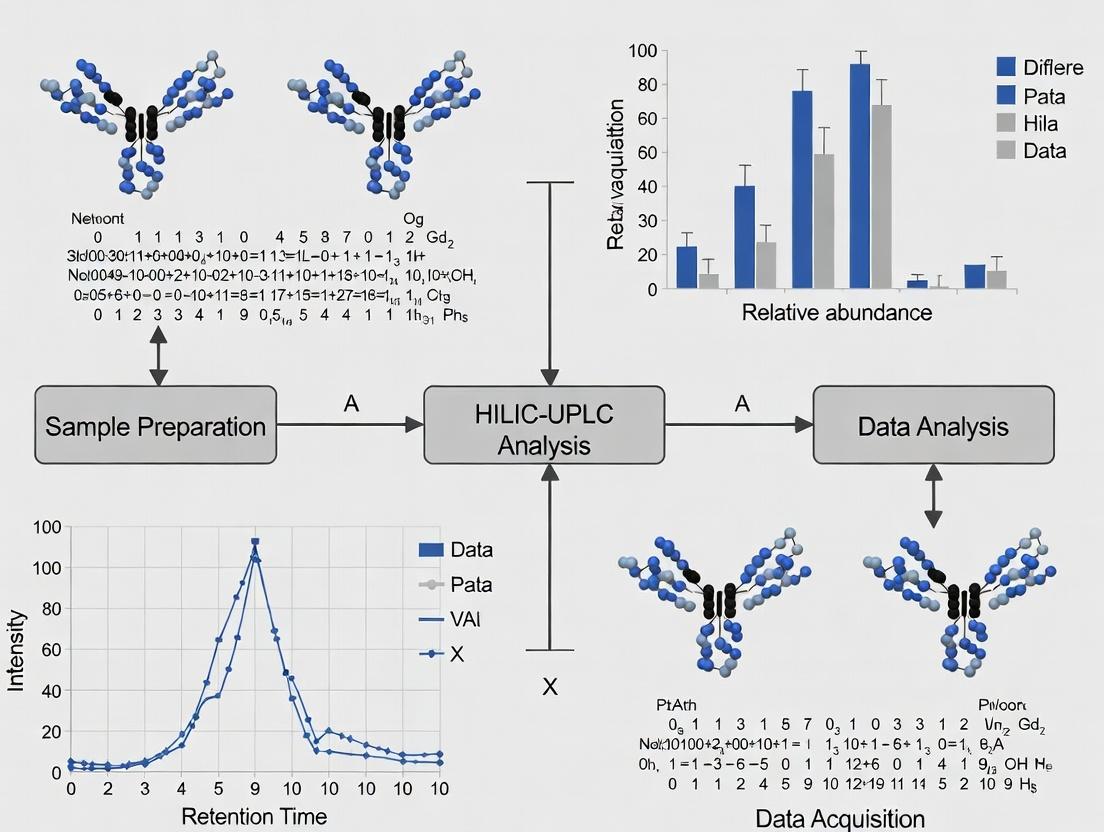
This article provides a comprehensive guide for researchers and drug development professionals on implementing Hydrophilic Interaction Liquid Chromatography coupled with Ultra-Performance Liquid Chromatography (HILIC-UPLC) for monitoring batch-to-batch consistency of monoclonal...
HILIC-UPLC for mAb Batch Consistency: A Complete Guide to Method Development and Quality Control
Abstract
This article provides a comprehensive guide for researchers and drug development professionals on implementing Hydrophilic Interaction Liquid Chromatography coupled with Ultra-Performance Liquid Chromatography (HILIC-UPLC) for monitoring batch-to-batch consistency of monoclonal antibodies (mAbs). It explores the foundational principles of HILIC for separating polar mAb attributes like glycans and charge variants. The core of the guide details a step-by-step method development and application protocol for robust, high-throughput analysis. It further addresses common troubleshooting and optimization challenges to ensure method robustness. Finally, the article covers validation strategies according to ICH guidelines and compares HILIC-UPLC to alternative techniques like reversed-phase and CE, establishing it as a critical tool for ensuring mAb quality, safety, and efficacy throughout the biomanufacturing lifecycle.
Why HILIC-UPLC is Essential for mAb Analysis: Understanding the Core Principles
The Critical Need for Batch Consistency in mAb Therapeutics
Application Notes: HILIC-UPLC for mAb Glycan Profiling in Batch Consistency Monitoring
Monoclonal antibody (mAb) efficacy, safety, and pharmacokinetics are profoundly influenced by post-translational modifications, particularly glycosylation. Batch-to-batch consistency in glycan profiles is therefore a critical quality attribute (CQA). Hydrophilic Interaction Liquid Chromatography coupled with Ultra-Performance Liquid Chromatography (HILIC-UPLC) has emerged as a gold-standard technique for high-resolution, rapid, and reproducible glycan analysis.
Key Advantages for Batch Consistency:
- High Resolution: Separates isobaric and structurally similar glycans (e.g., galactose variants).
- Speed: Typical run times of <30 minutes per sample.
- Reproducibility: Enables precise comparison of glycan distributions across multiple production batches.
- Sensitivity: Suitable for analysis of limited sample material from process development.
Critical Data from Recent Studies (2023-2024):
Table 1: Representative HILIC-UPLC Glycan Distribution Data for a Model IgG1 mAb Across Consecutive Production Batches
| Glycan Structure (Gu/HILIC) | Batch A (%) | Batch B (%) | Batch C (%) | Acceptance Criteria (±%) |
|---|---|---|---|---|
| G0F | 32.1 | 31.8 | 32.4 | ≤ 2.0 |
| G1F (α1,3) | 14.5 | 14.2 | 15.1 | ≤ 1.5 |
| G1F (α1,6) | 18.7 | 19.0 | 18.5 | ≤ 1.5 |
| G2F | 22.3 | 22.5 | 21.9 | ≤ 2.0 |
| Man5 | 5.1 | 5.3 | 5.0 | ≤ 1.0 |
| G0F-GlcNAc | 4.2 | 4.1 | 4.5 | ≤ 0.8 |
| Total Sialylation | 1.1 | 1.1 | 0.6 | ≤ 0.5* |
Note: Data is illustrative of industry trends. *Flagged for investigation due to deviation.
Table 2: Method Performance Metrics for HILIC-UPLC Glycan Profiling
| Performance Parameter | Result/Value |
|---|---|
| Linear Range (PM) | 5 – 5000 |
| Intra-day Precision (%RSD) | < 1.5% for major glycans |
| Inter-day Precision (%RSD) | < 2.5% for major glycans |
| Limit of Detection (LOD) | < 1.0 pmol |
| System Suitability | Resolution G1F(α1,6)/G1F(α1,3) ≥ 1.2 |
Detailed Experimental Protocol: HILIC-UPLC-Based Glycan Release, Labeling, and Analysis
Protocol Title: Comprehensive N-Glycan Profiling of Monoclonal Antibodies for Batch Consistency Assessment.
Principle: N-Glycans are enzymatically released from the mAb, fluorescently labeled with 2-AB, purified, and separated by HILIC-UPLC with fluorescence detection.
I. Materials & Reagents
The Scientist's Toolkit: Key Research Reagent Solutions
| Item/Reagent | Function & Rationale |
|---|---|
| Recombinant PNGase F | High-activity enzyme for complete release of N-glycans under non-denaturing conditions. |
| 2-Aminobenzamide (2-AB) | Fluorescent label; enables highly sensitive detection via FLR. |
| LudgerClean S Cartridges | Solid-phase extraction cartridges for purification of 2-AB labeled glycans. |
| Acquity UPLC Glycan BEH Amide Column (1.7 µm, 2.1 x 150 mm) | Standard HILIC stationary phase for high-resolution glycan separation. |
| Ammonium Formate, HPLC Grade | Used to prepare volatile buffers for HILIC-UPLC mobile phases. |
| Glycan Performance Standard (GSK) | Mixture of known 2-AB labeled glycans for system suitability and retention time calibration. |
II. Step-by-Step Procedure
Part A: Glycan Release and Labeling
- Denaturation: Transfer 100 µg of purified mAb into a low-protein-binding microcentrifuge tube. Add 20 µL of 1% (w/v) SDS and 10 µL of 1M β-mercaptoethanol. Heat at 60°C for 10 minutes.
- Enzymatic Release: Add 25 µL of 4% (v/v) Igepal CA-630 and 50 µL of PBS, pH 7.4. Add 2 µL (≈1000 units) of PNGase F. Vortex and incubate at 37°C for 18 hours.
- Labeling: Prepare 2-AB labeling solution (20 µL of labeling dye + 20 µL of reducing agent in DMSO:Acetic Acid). Add directly to the release mixture. Incubate at 65°C for 2 hours.
Part B: Glycan Clean-Up
- Sample Loading: Dilute the labeling reaction with 400 µL of acetonitrile (ACN). Load onto a pre-conditioned (with water, then 85% ACN) LudgerClean S cartridge.
- Washing: Wash cartridge with 1 mL of 85% ACN to remove excess dye and salts.
- Elution: Elute purified glycans with 500 µL of ultra-pure water into a clean tube. Dry in a vacuum concentrator.
Part C: HILIC-UPLC Analysis
- Reconstitution: Reconstitute dried glycans in 100 µL of 70% ACN.
- Instrument Setup:
- System: Acquity UPLC H-Class PLUS with FLR detector (Ex: 330 nm, Em: 420 nm).
- Column: Glycan BEH Amide Column, maintained at 60°C.
- Mobile Phase: A = 50 mM Ammonium Formate, pH 4.5; B = 100% ACN.
- Gradient: 75% B to 62% B over 30 minutes (non-linear curve 8). Flow rate: 0.4 mL/min.
- Injection Volume: 10 µL (partial loop with needle overfill).
- Run & Calibration: Inject GSK standard followed by samples. Process data using UNIFI or Empower software with a glycan library for peak assignment.
III. Data Analysis for Batch Consistency
- Integrate all peaks. Express each glycan peak area as a percentage of the total integrated area (% area).
- Compare the % area for each glycan structure across all production batches.
- Employ statistical process control (SPC) charts to monitor trends and identify deviations from established control limits for each critical glycan (e.g., G0F, G1F, G2F, Man5).
HILIC-UPLC Glycan Analysis Workflow
Batch Consistency Impact & Control Logic
Hydrophilic Interaction Liquid Chromatography (HILIC) is a powerful mode of liquid chromatography designed for the retention and separation of polar, hydrophilic, and ionizable compounds that are poorly retained in reversed-phase (RP) LC. This technique is characterized by the use of a polar stationary phase (e.g., bare silica, amino, amide, zwitterionic) in conjunction with a mobile phase typically composed of 5-40% aqueous buffer in a miscible organic solvent, primarily acetonitrile. Separation occurs through a complex, multimodal mechanism involving partitioning, electrostatic interactions, hydrogen bonding, and dipole-dipole interactions. Within the context of a broader thesis on employing a HILIC-UPLC (Ultra-Performance Liquid Chromatography) method for monitoring batch-to-batch consistency in monoclonal antibody (mAb) research, understanding the HILIC mechanism is paramount. It enables the precise analysis of critical quality attributes (CQAs) such as glycan profiles, charge variants, and other polar post-translational modifications, which are essential for ensuring the efficacy, safety, and consistency of biotherapeutic products.
Mechanism of Separation in HILIC
The retention mechanism in HILIC is best described as a complex, multimodal process. The primary mechanism is a partitioning process of analytes between the bulk organic-rich mobile phase and a water-enriched layer partially immobilized on the surface of the polar stationary phase. Polar analytes preferentially partition into this aqueous layer, leading to retention. Secondary interactions significantly modulate this retention:
- Hydrogen Bonding: Between polar functional groups on the analyte and the stationary phase.
- Electrostatic Interactions: For charged stationary phases (e.g., amino, zwitterionic) and ionizable analytes. This can involve ion-exchange (attraction) or ion-exclusion (repulsion).
- Dipole-Dipole Interactions.
The general elution order is from least polar to most polar. Increasing the water/buffer content in the mobile phase reduces the hydrophobic driving force for partitioning and increases the elution strength for polar compounds, thereby reducing retention time.
Key Application Notes for mAb Analysis
3.1. Application: N-Glycan Profiling for Batch Consistency Released N-glycans from mAbs are highly polar and ideal for HILIC analysis. Batch-to-batch consistency in glycan structures (e.g., galactosylation, sialylation, fucosylation) is a critical quality attribute influencing antibody-dependent cellular cytotoxicity (ADCC) and pharmacokinetics. HILIC-UPLC provides high-resolution separation of isomeric glycans.
3.2. Application: Analysis of Charged Variants While often separated by ion-exchange chromatography, certain polar charged variants can also be monitored using HILIC with ionic mobile phase additives, offering complementary selectivity.
Table 1: Quantitative Performance Metrics for a Typical HILIC-UPLC Glycan Profiling Method
| Performance Parameter | Typical Value/Range | Importance for Batch Consistency |
|---|---|---|
| Retention Time Precision (%RSD) | < 0.5% | Essential for accurate peak identification and alignment across batches. |
| Peak Area Precision (%RSD) | < 2.0% | Critical for reliable quantification of individual glycan species. |
| Theoretical Plates (N) | > 15,000 per column | Indicates column efficiency and method robustness for complex separations. |
| Resolution (Rs) between Key Isomers | > 1.5 | Ensures baseline separation of critical glycan structures (e.g., G0F, G1F, G2F). |
| Linear Dynamic Range | Over 2-3 orders of magnitude | Allows accurate quantification of both major and minor glycan peaks. |
| System Suitability Test (SST) Limits | Defined for RT, area, resolution | Provides a pass/fail criterion for instrument readiness before batch analysis. |
Experimental Protocols
Protocol 1: HILIC-UPLC Method for 2-AB Labeled N-Glycan Profiling of mAbs
Objective: To separate, identify, and quantify released and fluorescently labeled N-glycans from a monoclonal antibody for batch consistency assessment.
I. Materials and Reagents (The Scientist's Toolkit) Table 2: Key Research Reagent Solutions for HILIC-based N-Glycan Analysis
| Item | Function & Explanation |
|---|---|
| Glycan Release Kit (PNGase F) | Enzymatically cleaves N-glycans from the mAb backbone under native or denaturing conditions. |
| 2-Aminobenzamide (2-AB) Labeling Kit | Fluorescent label that attaches via reductive amination to the reducing end of glycans, enabling sensitive detection. |
| Amide, BEH or equivalent HILIC Column | Polar stationary phase (e.g., 1.7 µm, 2.1 x 150 mm) providing high-resolution separation of polar glycan isomers. |
| 100 mM Ammonium Formate, pH 4.5 | Volatile buffer for mobile phase. Provides consistent ionic strength and pH control for reproducible retention. |
| LC-MS Grade Acetonitrile | Primary organic component of HILIC mobile phase. Low UV absorbance and impurity critical for sensitivity. |
| 2-AB Labeled Dextran Hydrolysate Ladder | External standard for assigning Glucose Unit (GU) values to unknown glycan peaks for identification. |
| Glycan Reference Standards | Known structures (e.g., G0F, G1F, Man5) for peak confirmation and system suitability testing. |
II. Detailed Protocol
Step 1: N-Glycan Release
- Denature 100 µg of mAb sample in a buffer containing 1% SDS and 50 mM DTT at 65°C for 10 min.
- Cool, add Nonidet P-40 (to sequester SDS), and add PNGase F enzyme (2 mU).
- Incubate at 37°C for 18 hours.
- Release glycans using a protein precipitation step (cold ethanol) or solid-phase extraction (SPE) cartridge.
Step 2: Fluorescent Labeling with 2-AB
- Dry the released glycans completely in a vacuum centrifuge.
- Reconstitute in 10 µL of 2-AB labeling solution (prepared per kit instructions: 2-AB dye in DMSO/Acetic acid).
- Add 10 µL of sodium cyanoborohydride solution.
- Incubate at 65°C for 2 hours.
Step 3: Clean-up of Labeled Glycans
- Purify the labeled glycans using a HILIC-based µElution SPE plate or non-porous graphitized carbon cartridges to remove excess dye and salts.
- Elute glycans in 80% acetonitrile/water and dry.
- Reconstitute in 100 µL of 80% acetonitrile for UPLC analysis.
Step 4: HILIC-UPLC Analysis
- Column: BEH Amide, 1.7 µm, 2.1 x 150 mm.
- Mobile Phase A: 50 mM Ammonium formate, pH 4.5.
- Mobile Phase B: 100% Acetonitrile.
- Gradient: 75% B to 50% B over 25 min at 0.4 mL/min, 40°C.
- Detection: Fluorescence (Ex: 330 nm, Em: 420 nm).
- Injection Volume: 5-10 µL of reconstituted sample.
- Data Analysis: Integrate peaks, calculate relative percent area of each glycan, and compare profiles across batches using principal component analysis (PCA) or predefined acceptance criteria.
Protocol 2: System Suitability Test (SST) for Batch Analysis
Objective: To ensure the HILIC-UPLC system and method performance is acceptable prior to analyzing production batches.
- Prepare a mixture of known glycan standards (e.g., Man5, G0F, G1F).
- Inject this SST sample in triplicate.
- Evaluate: Retention time %RSD (<0.5%), peak area %RSD (<2.0%), resolution between two critical isomers (Rs > 1.5), and theoretical plates for a mid-eluting peak (>15,000).
- Only proceed with batch analysis if all SST criteria are met.
Visualization: Workflows and Relationships
HILIC Retention Mechanism Overview
HILIC-UPLC mAb Glycan Batch Consistency Workflow
Within the broader thesis on employing Hydrophilic Interaction Liquid Chromatography-Ultra Performance Liquid Chromatography (HILIC-UPLC) for monitoring batch-to-batch consistency in monoclonal antibody (mAb) research, this application note details the specific critical quality attributes (CQAs) that can be effectively analyzed. HILIC is uniquely suited for the separation of polar and hydrophilic analytes, making it an indispensable tool for characterizing mAb glycosylation, charge variants, and other polar post-translational modifications (PTMs). Consistent monitoring of these attributes is paramount in biopharmaceutical development to ensure drug efficacy, stability, and safety.
Key Attributes and Quantitative Benchmarks
The following table summarizes typical quantitative ranges and criticality for key mAb attributes monitored via HILIC-based methods.
Table 1: Key mAb Attributes and HILIC-UPLC Monitoring Parameters
| Attribute | Specific Analytes | Typical HILIC Mode/Column | Key Measurable Parameters (Batch Consistency Targets) | Impact on Drug Product |
|---|---|---|---|---|
| Glycosylation | Released N-glycans (neutral, sialylated) | Amide-based HILIC | • % Main Glycoforms (G0F, G1F, G2F) • % High Mannose (M5-M9) <1-5% • % Afucosylation (for ADCC potency) • Sialylation Degree (A1, A2) | Efficacy, PK/PD, immunogenicity, stability |
| Charge Variants | Intact mAbs, Subunits (Light/Heavy chains) | Charged Surface Hybrid (CSH) or Ion-Exchange HILIC | • % Acidic Variants (15-30%) • % Main Isoform (40-60%) • % Basic Variants (20-35%) | Stability, solubility, binding affinity, aggregation propensity |
| Polar Modifications | Glycated species, Cysteinylation, Truncations | Amide or Zwitterionic HILIC | • % Glycation (Lysine residues) <1-3% • % Cysteinylation (Heavy Chain) • % Clipped Species (e.g., C-terminal Lys) | Potency, immunogenicity, structural integrity |
Detailed Experimental Protocols
Protocol 1: HILIC-UPLC for Released N-Glycan Profiling
Objective: To characterize and quantify N-linked glycosylation patterns from mAbs for batch consistency.
Materials & Reagents:
- mAb sample (1 mg)
- PNGase F enzyme
- Rapid PNGase F Buffer (10x)
- 2-AB (2-aminobenzamide) labeling reagent
- Dimethyl sulfoxide (DMSO)
- Sodium cyanoborohydride solution
- Acetonitrile (ACN), LC-MS grade
- Ammonium formate, 50 mM pH 4.4
- UPLC HILIC Column (e.g., ACQUITY UPLC Glycan BEH Amide, 1.7 µm, 2.1 x 150 mm)
Procedure:
- Denaturation & Deglycosylation: Dilute mAb to 1-2 mg/mL in water. Add 1/10 volume of 10x Rapid PNGase F Buffer. Add 1 µL of PNGase F per 100 µg of mAb. Incubate at 50°C for 10 minutes.
- Glycan Labeling: Dry the released glycans using a centrifugal vacuum concentrator. Reconstitute in 10 µL of 2-AB/DMSO:acetic acid mixture (70:30, v/v). Add 10 µL of sodium cyanoborohydride solution. Incubate at 65°C for 2 hours.
- Sample Clean-up: Purify labeled glycans using solid-phase extraction (SPE) hydrophilic cartridges. Elute glycans with water and dry.
- HILIC-UPLC Analysis: Reconstitute glycans in 75% ACN. Inject 5-10 µL onto the HILIC column maintained at 60°C.
- Chromatography: Use a gradient from 70% to 53% ACN in 50 mM ammonium formate pH 4.4 over 30 minutes at a flow rate of 0.4 mL/min. Fluorescence detection (Ex: 330 nm, Em: 420 nm).
- Data Analysis: Identify peaks using external glucose unit (GU) ladder. Integrate peaks and report as relative percent area.
Protocol 2: HILIC-UPLC for mAb Charge Variant Analysis
Objective: To separate and quantify acidic, main, and basic charge variants of intact mAbs.
Materials & Reagents:
- mAb sample (0.5-1 mg/mL in formulation buffer)
- Mobile Phase A: 20 mM Sodium Phosphate, pH 7.0
- Mobile Phase B: 20 mM Sodium Phosphate, 500 mM NaClO4, pH 7.0
- UPLC Charged Surface Hybrid (CSH) C18 or specific Ion-HILIC column (e.g., ProPac WCX-10)
- 0.22 µm centrifugal filter
Procedure:
- Sample Preparation: Buffer-exchange mAb sample into Mobile Phase A using spin desalting columns. Filter using a 0.22 µm centrifugal filter.
- HILIC/UPLC-IEX Conditions: Equilibrate column with 10% Mobile Phase B (90% A) for at least 10 column volumes.
- Gradient Elution: Inject 10 µg of sample. Apply a linear gradient from 10% B to 45% B over 25 minutes at a flow rate of 0.8 mL/min. Column temperature: 25°C. UV detection at 280 nm.
- Regeneration: Wash column with 100% B for 5 minutes, then re-equilibrate with 10% B.
- Data Analysis: Deconvolute chromatogram to identify acidic (early eluting), main, and basic (late eluting) peaks. Quantify by relative peak area percentage.
Protocol 3: HILIC-UPLC for Polar Modifications (Glycation Analysis)
Objective: To quantify glycation levels on mAb lysine residues.
Materials & Reagents:
- mAb sample
- Mobile Phase A: 100 mM Ammonium Acetate, pH 5.0
- Mobile Phase B: Acetonitrile
- Trypsin/Lys-C protease mix
- HILIC Column (e.g., BEH Amide, 1.7 µm, 2.1 x 100 mm)
Procedure:
- Digestion: Denature and reduce/alkylate mAb following standard protocols. Digest with Trypsin/Lys-C at 37°C overnight.
- Sample Preparation: Acidify digest with 1% formic acid. Desalt using C18 tips and reconstitute in 80% ACN.
- HILIC-UPLC/MS Analysis: Inject onto HILIC column at 40°C.
- Chromatography: Use a gradient from 80% B to 50% B over 15 minutes. Couple to mass spectrometer for detection.
- Data Analysis: Identify glycated peptides (mass shift +162 Da on Lys). Quantify by extracting the ion chromatogram (XIC) for glycated and non-glycated peptide pairs and calculating the relative ratio.
Visualization of Workflows and Relationships
HILIC N-Glycan Analysis Workflow
Charge Variants Linked to HILIC Monitoring
The Scientist's Toolkit: Essential Research Reagent Solutions
Table 2: Key Reagents and Materials for HILIC-based mAb Characterization
| Item | Function & Role in Protocol |
|---|---|
| PNGase F (Rapid) | Enzyme for efficient release of N-linked glycans from mAbs for glycosylation analysis (Protocol 1). |
| 2-Aminobenzamide (2-AB) | Fluorescent tag for labeling released glycans, enabling sensitive detection in HILIC-UPLC/FLR. |
| Charged Surface Hybrid (CSH) Column | UPLC column technology providing superior separation of mAb charge variants under HILIC/IEX conditions (Protocol 2). |
| BEH Amide HILIC Column | Standard stationary phase for high-resolution separation of polar analytes like glycans and glycated peptides. |
| Ammonium Formate Buffer (pH 4.4) | Volatile buffer ideal for HILIC glycan separation, compatible with downstream MS detection. |
| Sodium Cyanoborohydride | Reducing agent used in the reductive amination process for stable glycan labeling. |
| Solid-Phase Extraction (SPE) Hydrophilic Cartridges | For desalting and purification of labeled glycans prior to HILIC analysis to reduce interference. |
| Trypsin/Lys-C Protease Mix | For digesting mAbs into peptides to enable site-specific analysis of polar modifications like glycation (Protocol 3). |
Within the context of developing a Hydrophilic Interaction Liquid Chromatography-Ultra Performance Liquid Chromatography (HILIC-UPLC) method for monitoring batch-to-batch consistency in monoclonal antibody (mAb) production, the advantages of UPLC coupling become critically apparent. The combination of UPLC with advanced detection systems offers transformative benefits in Quality Assurance/Quality Control (QA/QC) laboratories, where throughput, data quality, and reliability are paramount. This application note details the specific advantages of speed, resolution, and sensitivity enabled by UPLC, providing protocols for their application in mAb characterization.
Core Advantages: Quantitative Comparison
UPLC technology utilizes sub-2µm particle columns and high-pressure fluidics (up to 18,000 psi), fundamentally enhancing chromatographic performance compared to traditional High-Performance Liquid Chromatography (HPLC).
Table 1: Performance Comparison of HPLC vs. UPLC for mAb QA/QC Analyses
| Performance Parameter | Traditional HPLC (5µm particles) | UPLC (1.7µm particles) | Impact on mAb QA/QC |
|---|---|---|---|
| Analysis Speed | ~15-30 min per run | ~3-10 min per run | 3-5x faster batch release testing. |
| Chromatographic Resolution | Baseline resolution critical pairs: Moderate | Significantly increased theoretical plates (>200,000/m) | Superior separation of glycoforms, charge variants, and degradation products. |
| Peak Capacity | 50-100 peaks in a gradient | 100-300 peaks in a similar gradient | Enhanced detection of low-abundance impurities. |
| Detection Sensitivity | Good (Signal-to-Noise, S/N) | Excellent (Up to 3-5x increase in S/N) | Lower limits of detection for host cell proteins or aggregates. |
| Solvent Consumption | ~2 mL/min flow rate | ~0.6 mL/min flow rate | ~70% reduction, lowering costs and waste. |
Detailed Protocols
Protocol 1: HILIC-UPLC Method for N-linked Glycan Profiling (Batch Consistency)
- Objective: To rapidly profile released N-glycans from mAbs for batch-to-batch comparison.
- Materials:
- UPLC system equipped with BEH Amide HILIC column (1.7 µm, 2.1 x 150 mm).
- Mobile Phase A: 50 mM ammonium formate, pH 4.5, in water.
- Mobile Phase B: Acetonitrile.
- Fluorescent detector (e.g., FLD) for 2-AB labeled glycans.
- Procedure:
- Release N-glycans from mAb samples using PNGase F.
- Label purified glycans with 2-aminobenzamide (2-AB).
- Inject 5 µL of labeled glycan sample.
- Employ a gradient: 75% B to 50% B over 15 min at 0.5 mL/min, 45°C.
- Detect using FLD (ex λ 330 nm, em λ 420 nm).
- Compare glycan peak patterns (relative % areas) of different batches against a reference standard.
Protocol 2: RP-UPLC Peptide Mapping for Sequence Verification
- Objective: High-resolution peptide mapping for identity testing and post-translational modification monitoring.
- Materials:
- UPLC system with ACQUITY UPLC BEH C18 column (1.7 µm, 2.1 x 100 mm).
- Mobile Phase A: 0.1% Trifluoroacetic acid (TFA) in water.
- Mobile Phase B: 0.1% TFA in acetonitrile.
- Mass Spectrometer (MS) detector (e.g., Q-TOF).
- Procedure:
- Digest denatured and reduced mAb with trypsin (1:20 enzyme:protein, 37°C, 4h).
- Inject 2 µL of digest.
- Run a gradient: 5% B to 40% B over 45 min at 0.3 mL/min, 55°C.
- Acquire data with MS in positive ion mode.
- Use software to map peptides and identify modifications (e.g., deamidation, oxidation) by mass shift.
Visualizations
Title: HILIC-UPLC Workflow for mAb Batch Consistency
Title: UPLC Advantages Drive QA/QC Efficiency
The Scientist's Toolkit: Key Research Reagent Solutions
Table 2: Essential Materials for HILIC-UPLC mAb Analysis
| Item | Function in QA/QC Context |
|---|---|
| BEH Amide HILIC UPLC Column (1.7µm) | Provides robust, high-resolution separation of hydrophilic analytes like glycans and charged species. |
| PNGase F (Recombinant) | Enzyme for efficient, consistent release of N-linked glycans from mAb Fc region for profiling. |
| Rapid Peptide Mapping Kit | Optimized, standardized kit for fast and reproducible mAb digestion, reducing method variability. |
| MS-Grade Water & Acetonitrile | Ultra-pure solvents essential for maintaining column integrity and achieving high-sensitivity MS detection. |
| Fluorescent Label (2-AB) | Tags released glycans for highly sensitive and selective fluorescent detection in HILIC workflows. |
| Stable Isotope-Labeled Peptide Standards | Internal standards for absolute quantitation of critical quality attributes (e.g., oxidation) via LC-MS. |
| System Suitability Test Mix | Standard mixture of mAb fragments/analytes to verify instrument and method performance daily. |
Hydrophilic Interaction Liquid Chromatography coupled with Ultra-Performance Liquid Chromatography (HILIC-UPLC) has emerged as a pivotal analytical technique for monitoring critical quality attributes (CQAs) of monoclonal antibodies (mAbs). Within the context of a broader thesis on ensuring batch-to-batch consistency, this workflow provides unparalleled resolution for the analysis of polar, hydrophilic analytes that are challenging to retain in reversed-phase LC. Specifically, it is indispensable for characterizing post-translational modifications like glycosylation, which directly impact mAb safety, efficacy, and stability. Consistent glycosylation profiles are a mandatory CQA, making HILIC-UPLC a cornerstone of biopharmaceutical quality control and process development.
Key Applications in mAb Analysis
- Released N-Glycan Profiling: Following enzymatic release (e.g., PNGase F), fluorescently labeled glycans are separated based on their hydrophilicity, providing a detailed map of complex, hybrid, and high-mannose structures.
- Charge Variant Analysis: For certain applications, HILIC modes can separate charged glycoforms or other polar variants.
- Oligosaccharide and Excipient Analysis: Monitoring polar excipients (e.g., sugars, sugar alcohols) in formulated drug substances.
Experimental Protocol: HILIC-UPLC for Released N-Glycan Profiling
This protocol details the standard workflow for analyzing fluorescently labeled N-glycans from a mAb to assess batch consistency.
3.1 Materials and Reagents
- Monoclonal Antibody Sample: Purified mAb from different production batches.
- Denaturing Buffer: 1.33% w/v SDS, 50 mM DTT in water.
- PNGase F: Recombinant glycosidase for N-glycan release.
- Non-ionic Detergent: 10% v/v NP-40 or Triton X-100.
- Labeling Reagent: 2-aminobenzamide (2-AB) or Rapid Fluoroboride (RapiFluor-MS).
- Labeling Buffer: Sodium cyanoborohydride in DMSO/glacial acetic acid.
- Solid-Phase Extraction (SPE) Cartridges: Hydrophilic-modified, such as GlycanClean S or HILIC µElution plates.
- HILIC-UPLC Column: e.g., Acquity UPLC BEH Amide, 1.7 µm, 2.1 x 150 mm.
- Mobile Phase A: 50 mM ammonium formate, pH 4.5, in water.
- Mobile Phase B: Acetonitrile.
- UPLC System: Equipped with fluorescence (λex/λem = 265/425 nm for 2-AB) and/or mass spectrometry detectors.
3.2 Step-by-Step Procedure
| Step | Process | Details | Critical Parameters |
|---|---|---|---|
| 1 | Denaturation & Reduction | Incubate 50 µg mAb in 50 µL denaturing buffer at 65°C for 10 min. | Ensures enzyme accessibility to glycosylation sites. |
| 2 | Enzymatic Release | Add 5 µL PNGase F and 10 µL 10% NP-40. Incubate at 37°C for 3 hours. | NP-40 neutralizes SDS. Time and temperature are key for complete release. |
| 3 | Fluorescent Labeling | Add 100 µL labeling reagent/buffer mix to released glycans. Incubate at 65°C for 1-3 hours (time depends on reagent). | Drives reductive amination. Must be anhydrous. |
| 4 | Purification | Dilute reaction with acetonitrile (≥85% final). Load onto conditioned HILIC-SPE cartridge. Wash with acetonitrile. Elute glycans with water. | Removes excess dye, salts, and detergents. Purity is critical for column lifetime and signal. |
| 5 | UPLC Analysis | Reconstitute in 80% acetonitrile. Inject onto HILIC column. Use gradient: 75-50% B over 30-40 min at 0.4 mL/min, 40°C. | Stable temperature and precise gradient are essential for retention time reproducibility. |
| 6 | Detection & Data Analysis | Use fluorescence detection. Identify peaks via MS or external standards. Integrate and calculate relative % area for each glycan. | Normalization of peak areas enables direct batch-to-batch comparison. |
3.3 Data Interpretation for Batch Consistency Process the chromatograms to generate a table of relative abundances for each identified glycan structure.
Table 1: Example Batch Consistency Data for a mAb N-Glycan Profile
| Glycan Structure (GU Value) | Batch A (% Relative Abundance) | Batch B (% Relative Abundance) | Batch C (% Relative Abundance) | Acceptance Criteria (≤ ±2%) |
|---|---|---|---|---|
| G0F (7.5) | 32.1 | 31.8 | 32.4 | Pass |
| G1F (α1,6) (8.2) | 24.5 | 25.1 | 24.7 | Pass |
| G1F (α1,3) (8.4) | 15.2 | 15.0 | 15.8 | Pass |
| G2F (9.1) | 20.3 | 20.5 | 19.8 | Pass |
| Man5 (6.3) | 5.1 | 5.3 | 4.9 | Pass |
| Other Minor Species | 2.8 | 2.3 | 2.4 | Pass |
The Scientist's Toolkit: Key Research Reagent Solutions
Table 2: Essential Materials for HILIC-UPLC Glycan Analysis
| Item | Function & Rationale |
|---|---|
| PNGase F (Recombinant) | High-purity enzyme for efficient, specific release of N-linked glycans without peeling or side reactions. |
| RapiFluor-MS Labeling Reagent | Enables fast, highly sensitive labeling of glycans with a fluorophore ideal for both UPLC-FL and MS detection. |
| BEH Amide UPLC Column | Standard stationary phase offering robust, reproducible HILIC separation with high resolution for isomeric glycan structures. |
| GlycanClean S Cartridges | Optimized for post-labeling cleanup, removing excess reagent to prevent column contamination and high background. |
| Acetonitrile (LC-MS Grade) | Primary organic mobile phase in HILIC; purity is critical for baseline stability and MS signal. |
| Ammonium Formate, pH 4.5 | Volatile salt buffer for Mobile Phase A, providing consistent ionic strength and pH for reproducible retention, compatible with MS. |
Visualized Workflows and Relationships
Title: HILIC-UPLC Batch Consistency Workflow
Title: Logical Rationale for HILIC-UPLC Method
Step-by-Step HILIC-UPLC Method Development for mAb Batch Monitoring
Within a broader thesis focused on developing a HILIC-UPLC method for monitoring batch-to-batch consistency in monoclonal antibody (mAb) therapeutics, the sample preparation stage is a critical determinant of analytical success. Robust and reproducible sample preparation ensures that observed glycan profile variations are attributable to the manufacturing process and not to preparation artifacts. This protocol details a standardized workflow for the release, fluorescent labeling, and cleanup of N-linked glycans from mAbs for subsequent HILIC-UPLC analysis.
Experimental Protocols
Protocol 1: Enzymatic Release of N-Glycans
This protocol describes the denaturation and enzymatic deglycosylation of a mAb using Peptide-N-Glycosidase F (PNGase F).
Materials:
- mAb sample (100 µg)
- Recombinant PNGase F (e.g., 500 U/µL)
- 1x Phosphate Buffered Saline (PBS), pH 7.2
- Denaturation Solution: 1% (w/v) SDS, 50 mM DTT (in PBS)
- Neutralization Solution: 15% (v/v) Igepal CA-630 (Nonidet P-40) in PBS
- Ammonium bicarbonate (NH₄HCO₃), 50 mM, pH 7.8
- Thermo-mixer or water bath
Procedure:
- Transfer mAb sample (100 µg) to a low-protein-binding microcentrifuge tube.
- Dry the sample using a vacuum concentrator.
- Reconstitute the dried sample in 20 µL of Denaturation Solution.
- Incubate at 65°C for 10 minutes to denature the protein.
- Cool the sample to room temperature. Add 6.7 µL of Neutralization Solution to sequester SDS.
- Add 3.3 µL of PNGase F (20 U total) and 70 µL of 50 mM NH₄HCO₃ buffer (pH 7.8).
- Mix gently and incubate at 37°C for 18 hours (overnight) to ensure complete glycan release.
- Proceed immediately to labeling or store released glycans at -20°C.
Protocol 2: Fluorescent Labeling with 2-AB
Released glycans are labeled with 2-Aminobenzoic acid (2-AB) to enable sensitive fluorescence detection in HILIC-UPLC.
Materials:
- 2-AB Labeling Kit (e.g., LudgerTag 2-AB) containing:
- 2-AB labeling reagent
- Sodium cyanoborohydride (NaBH₃CN) reductant
- Dimethyl sulfoxide (DMSO), anhydrous
- Acetic acid, glacial
- Released glycan sample from Protocol 1.
Procedure:
- Prepare the labeling solution by dissolving the entire contents of one vial of 2-AB reagent (e.g., 25 mg) in 450 µL of DMSO:Acetic Acid (70:30 v/v) mixture.
- Transfer the entire released glycan sample (~100 µL) to a fresh tube. Dry completely using a vacuum concentrator.
- Add 10 µL of the prepared 2-AB labeling solution to the dried glycans.
- Add 10 µL of the NaBH₃CN reductant solution (provided in kit).
- Vortex thoroughly and centrifuge briefly.
- Incubate at 65°C for 3 hours in a thermomixer with agitation (300 rpm).
- Allow the reaction to cool to room temperature before cleanup.
Protocol 3: Cleanup via Solid-Phase Extraction (SPE)
Excess label and salts are removed using hydrophilic interaction-based solid-phase extraction (HILIC-SPE).
Materials:
- HILIC-SPE microplates or cartridges (e.g., LudgerClean S or cotton wool-packed tips)
- Acetonitrile (ACN), HPLC grade
- Ultra-pure water
- Collection plates or tubes
- Vacuum manifold or centrifuge (for plate format)
Procedure:
- Conditioning: Load each SPE well with 200 µL of ultra-pure water. Apply vacuum or centrifuge until dry. Follow with 200 µL of 96% ACN / 4% water. Do not let the sorbent dry completely after this step.
- Loading: Dilute the 2-AB labeling reaction mixture with 380 µL of 96% ACN (final ACN concentration >85%). Load the entire volume onto the conditioned SPE well.
- Washing: Wash the sorbent three times with 200 µL of 96% ACN / 4% water to remove unreacted dye and hydrophobic contaminants. Dry the sorbent completely under vacuum or centrifugation (≥10 minutes).
- Elution: Elute the purified 2-AB labeled glycans by adding 100 µL of ultra-pure water. Apply vacuum or centrifuge into a clean collection plate/tube.
- Store the eluted glycans at -20°C protected from light until HILIC-UPLC analysis.
Table 1: Impact of Digestion Parameters on Glycan Release Yield
| Parameter | Condition Tested | Relative Yield (%) | Recommendation |
|---|---|---|---|
| Denaturation | No Denaturation | 65% | Mandatory |
| 65°C, 10 min (SDS/DTT) | 100% | ||
| PNGase F Incubation Time | 4 hours | 85% | Overnight (18h) |
| 18 hours (Overnight) | 100% | ||
| Enzyme-to-Substrate Ratio | 5 U/100 µg mAb | 78% | ≥20 U/100 µg mAb |
| 20 U/100 µg mAb | 100% |
Table 2: Cleanup Efficiency Comparison (SPE vs. Precipitation)
| Cleanup Method | % Dye Removal | % Glycan Recovery | Throughput |
|---|---|---|---|
| HILIC-SPE (Microplate) | >99% | 85-95% | High (96 samples) |
| Ethanol Precipitation | ~85% | 70-80% | Low |
| Paper Chromatography | >99% | 60-75% | Very Low |
Workflow Diagram
Workflow for HILIC-Ready mAb N-Glycan Prep
The Scientist's Toolkit: Essential Research Reagents & Materials
| Item | Function in Workflow | Key Consideration |
|---|---|---|
| Recombinant PNGase F | Enzymatically cleaves N-glycans from the protein backbone between GlcNAc and Asn. | Use recombinant, glycerol-free formulations for optimal HILIC compatibility and high specific activity. |
| 2-AB Labeling Kit | Provides optimized, pre-quantified reagents for consistent fluorescent tagging of glycan reducing termini. | Kits ensure reproducibility. Critical for quantitative comparison across batches. |
| HILIC-SPE Microplates | Hydrophilic interaction medium for purifying labeled glycans from salts, proteins, and excess dye. | High-throughput format essential for analyzing multiple mAb batches in parallel. |
| Anhydrous DMSO | Solvent for the 2-AB labeling reaction, must be dry to prevent quenching of the reductive amination. | Maintain in sealed, desiccated aliquots to avoid water absorption. |
| Acetonitrile (HPLC Grade) | Primary organic solvent for HILIC-SPE conditioning/washing and HILIC-UPLC mobile phase. | High purity is critical to avoid background interference in fluorescence detection. |
| Ammonium Bicarbonate Buffer | Volatile buffer for PNGase F digestion. Easily removed during drying/cleanup steps. | Preferable to non-volatile salts (e.g., phosphate) to prevent MS source contamination if later analyzed. |
In the development and quality control of monoclonal antibodies (mAbs), monitoring critical quality attributes (CQAs) like glycosylation is essential for ensuring batch-to-batch consistency and biological efficacy. Hydrophilic Interaction Liquid Chromatography coupled with Ultra-Performance Liquid Chromatography (HILIC-UPLC) has become a pivotal technique for the separation and analysis of released, fluorescently labeled glycans. The selection of the stationary phase—Bare Silica, Amide, or Zwitterionic—is a fundamental method parameter that dictates selectivity, resolution, and robustness. This application note provides a comparative analysis within the context of a HILIC-UPLC method development thesis for mAb glycosylation monitoring, offering detailed protocols and data-driven guidance for scientists in drug development.
Comparative Analysis of Stationary Phases
The performance of each phase is governed by its unique surface chemistry, which interacts with analytes via hydrophilic partitioning, hydrogen bonding, dipole-dipole interactions, and electrostatic forces. The optimal choice depends on the specific glycan profile and the desired separation mechanism.
Table 1: Core Characteristics of HILIC Stationary Phases for Glycan Analysis
| Feature | Bare Silica | Amide | Zwitterionic |
|---|---|---|---|
| Chemical Structure | Underivatized silanol (Si-OH) groups. | Silica propyl with carbamoyl (amide) termini. | Sulfobetaine group with quaternary ammonium and sulfonate. |
| Primary Mechanism | Hydrophilic partitioning & silanol hydrogen bonding/acidity. | Strong hydrogen bond acceptor (amide carbonyl). | Dual ionic/hydrophilic; strong water layer formation. |
| pH Sensitivity | High. Retention sensitive to pH changes affecting silanol ionization. | Low. Stable performance across pH 3-7. | Moderate. Stable, but ionic interactions can be pH-modulated. |
| Interaction with Labeled Glycans | Mixed-mode: Partitioning + weak anion exchange (WAWAX) due to negative charge. | Primarily partitioning & hydrogen bonding. Minimal ionic interaction. | Partitioning + weak electrostatic interactions with both positive/negative charges. |
| Typical Elution Order | More complex; influenced by charge and hydrophilicity. | Primarily by hydrophilicity (size & composition). | Hydrophilicity with subtle charge-based tuning. |
| Key Advantage | High peak capacity for complex mixtures; tunable selectivity. | Excellent reproducibility, robust, predictable elution. | High retention for very polar glycans; orthogonal selectivity. |
| Potential Drawback | Can tail for acidic glycans; requires buffer control. | May lack selectivity for structurally similar glycans. | Method development can be more complex. |
Table 2: Quantitative Performance Metrics in mAb Glycan Profiling
| Metric | Bare Silica Column | Amide Column | Zwitterionic Column |
|---|---|---|---|
| Typical Column Dimension | 2.1 x 150 mm, 1.7-1.8 µm | 2.1 x 150 mm, 1.7-1.8 µm | 2.1 x 150 mm, 1.7-1.8 µm |
| Recommended Buffer | 50-100 mM Ammonium formate, pH 4.4 | 50-100 mM Ammonium formate, pH 4.4 | 50-100 mM Ammonium formate, pH 4.4 |
| Gradient (%B) | 75-62% ACN over 25-30 min | 75-60% ACN over 25-30 min | 80-65% ACN over 25-30 min |
| Peak Capacity (Typical) | 220-260 | 200-240 | 230-270 |
| Theoretical Plates (N/m) | ~180,000 | ~200,000 | ~170,000 |
| Retention Time RSD | < 0.5% (with good buffer control) | < 0.3% (excellent) | < 0.4% |
| Best For | In-depth characterization, complex biosimilars. | High-throughput, robust QC for lot release. | Challenging polar glycan separations, orthogonal methods. |
Detailed Experimental Protocols
Protocol 1: Standardized HILIC-UPLC Glycan Profiling Workflow
Objective: To separate and profile 2-AB labeled N-glycans released from a therapeutic mAb for batch consistency assessment.
Materials & Reagents:
- mAb Sample: Purified monoclonal antibody.
- Labeling Dye: 2-Aminobenzamide (2-AB).
- Buffers: 50 mM Ammonium formate, pH 4.4 (Mobile Phase A); 100% Acetonitrile (Mobile Phase B).
- Columns: Acquire UPLC BEH Glycan (Amide), Waters UPLC BEH HILIC (Bare Silica), or SeQuant ZIC-HILIC (Zwitterionic), all 2.1 x 150 mm, 1.7 µm.
- UPLC System: Equipped with FLR detector (Ex: 330 nm, Em: 420 nm for 2-AB).
Procedure:
- Glycan Release: Denature 50 µg mAb with SDS, then release N-glycans using PNGase F at 37°C for 3 hours.
- Clean-up & Labeling: Purify released glycans using solid-phase extraction (e.g., hydrophilic PVDF plates). Label with 2-AB via reductive amination at 65°C for 2 hours.
- Excess Dye Removal: Purify labeled glycans using size-exclusion or hydrophilic cleanup plates.
- UPLC Analysis:
- Column Temp: 40°C
- Sample Temp: 10°C
- Injection Volume: 5-10 µL
- Flow Rate: 0.4 mL/min
- Gradient: Optimize per Table 2. Example for Amide: 75% B at 0 min, to 60% B at 25 min, return to 75% B by 25.1 min, hold until 30 min.
- Data Analysis: Integrate peaks. Use a hydrolyzed glucose homopolymer ladder as an external standard to create a dextran calibration curve for Glucose Unit (GU) assignment. Compare GU values and relative % areas of glycan peaks across mAb batches.
Protocol 2: Stationary Phase Selectivity Comparison Experiment
Objective: To empirically determine the optimal stationary phase for a specific mAb's glycan profile.
Procedure:
- Prepare a single, pooled sample of 2-AB labeled glycans from a representative mAb batch.
- Analyze the same sample on three separate UPLC systems, each equipped with one of the three column types (Bare Silica, Amide, Zwitterionic), using the instrument conditions from Protocol 1 and the phase-specific gradients suggested in Table 2.
- Keep all other parameters (buffer, temp, detection) identical.
- Key Comparisons:
- Resolution (Rs): Calculate Rs between critical glycan pairs (e.g., G0F/G1F isomers).
- Peak Shape: Assess asymmetry factor for major peaks.
- Retention Spread: Note the elution window (first to last major peak).
- Orthogonality: Generate a scatter plot of retention times from Column A vs. Column B to visualize complementary selectivity.
The Scientist's Toolkit: Research Reagent Solutions
Table 3: Essential Materials for HILIC-UPLC Glycan Profiling
| Item | Function & Rationale |
|---|---|
| PNGase F (Rapid) | Enzyme for efficient release of N-glycans from mAb backbone for analysis. |
| 2-AB Labeling Kit | Provides optimized reagents for fluorescent glycan tagging, enabling sensitive FLR detection. |
| Ammonium Formate (LC-MS Grade) | High-purity volatile salt for mobile phase preparation; ensures consistent pH and ionic strength without MS source contamination. |
| Acetonitrile (HPLC Gradient Grade) | Primary organic modifier in HILIC; high purity is critical for low baseline noise and consistent retention. |
| Hydrophilic PVDF 96-well Plates | For efficient post-labeling cleanup to remove excess dye and salts, minimizing artifacts. |
| Dextran Hydrolyzate Ladder (2-AB labeled) | External standard for creating a Glucose Unit (GU) calibration curve, enabling glycan identification via library matching. |
| BEH Glycan, BEH HILIC, or ZIC-HILIC UPLC Columns | Stationary phases providing the tailored selectivity as described in this note. |
| Glycan Separation Buffer (pH 4.4) | Pre-mixed, standardized buffer solution to enhance method transfer robustness across labs. |
Workflow and Decision Pathways
HILIC Phase Selection Decision Tree
HILIC Phase Interaction Mechanisms
For monitoring batch-to-batch consistency in mAbs, the Amide stationary phase is recommended as the first choice due to its superior robustness, reproducibility, and predictable elution, which are paramount for a quality control environment. The Bare Silica phase offers higher peak capacity and tunable selectivity via ion-exchange mechanisms, making it ideal for in-depth characterization of complex glycan pools or biosimilar comparability studies. The Zwitterionic phase provides orthogonal selectivity and strong retention for highly polar glycans, serving as a powerful complementary tool for resolving specific challenging pairs. The final selection should be validated against the specific glycan profile of the mAb product to ensure all critical separations are achieved.
Within the development of a HILIC-UPLC (Hydrophilic Interaction Liquid Chromatography-Ultra Performance Liquid Chromatography) method for monitoring batch-to-batch consistency of monoclonal antibodies (mAbs), mobile phase optimization is the most critical parameter for achieving robust, reproducible, and informative separations. This application note details the systematic optimization of acetonitrile gradients, buffer selection, and pH control to resolve and quantify critical quality attributes (CQAs) like glycosylation patterns, charge variants, and process-related impurities. A well-optimized mobile phase ensures the method is sensitive to subtle molecular differences, enabling precise consistency monitoring throughout drug development and manufacturing.
Core Principles of HILIC Mobile Phase Optimization
HILIC separation relies on partitioning analytes between a water-rich layer immobilized on a hydrophilic stationary phase and a hydrophobic, organic-rich mobile phase (typically >70% acetonitrile). For mAbs and their subunits/domains, optimization focuses on:
- Organic Modifier (%ACN): Governs overall retention and selectivity. Higher ACN increases retention for polar analytes.
- Buffer Type & Concentration: Controls ionic interactions, especially critical for charged mAbs variants (e.g., deamidation, C-terminal lysine). Suppresses analyte and silanol ionization.
- pH: Profoundly affects the charge state of both the analyte (mAb fragments, glycans) and the stationary phase, directly impacting selectivity and peak shape.
Quantitative Optimization Data & Protocols
Table 1: Effect of Buffer Concentration on Peak Shape and Retention Time Reproducibility for mAb Glycopeptides
| Buffer (Ammonium Formate) | Concentration (mM) | Peak Asymmetry (As) | Retention Time RSD (%) (n=6) | Impact on MS Signal |
|---|---|---|---|---|
| Low Ionic Strength | 5 | 1.8 - 2.1 | 1.5 | High (Low Suppression) |
| Medium Ionic Strength | 10 | 1.0 - 1.2 | 0.8 | Optimal |
| Medium Ionic Strength | 20 | 1.0 - 1.1 | 0.5 | Slight Suppression |
| High Ionic Strength | 50 | 0.9 - 1.0 | 0.3 | Significant Suppression |
Table 2: Impact of Mobile Phase pH on Selectivity for mAb Acidic/Basic Variants
| pH Range (Ammonium Formate Buffer) | Selectivity Factor (α) Acidic vs. Main | Selectivity Factor (α) Basic vs. Main | Station Phase Charge (Silica) | Recommended Application |
|---|---|---|---|---|
| Low (pH 3.0) | 1.05 | 1.15 | Positive (Protonated) | Separation of basic variants |
| Near-Neutral (pH 5.5) | 1.20 | 1.10 | Neutral to Negative | General glycan analysis |
| Mid-Range (pH 6.8) | 1.30 | 1.05 | Negative | Optimal for acidic variant resolution (e.g., deamidation) |
| High (pH 8.0) | 1.35 | 1.00 | Strongly Negative | Requires stable stationary phase |
Protocol 1: Systematic Scouting of Initial HILIC Conditions for mAb Glycan Analysis
Objective: Establish a starting gradient for released N-glycan profiling. Materials: See "The Scientist's Toolkit" (Section 6). Procedure:
- Prepare mobile phase A: 50 mM ammonium formate, pH 4.5. Filter (0.22 µm).
- Prepare mobile phase B: 100% acetonitrile (LC-MS grade).
- Reconstitute dried, labeled mAb N-glycans in 80% acetonitrile.
- Set column temperature to 40°C.
- Use a BEH Amide column (2.1 x 100 mm, 1.7 µm).
- Implement a scouting gradient: Start at 85% B, decrease to 70% B over 10 minutes, hold for 2 min, then re-equilibrate at 85% B for 5 min. Flow rate: 0.4 mL/min.
- Analyze data to identify elution window (%B). Refine gradient slope to achieve optimal spacing (resolution > 1.5 between key glycan peaks, e.g., G0F/G1F).
Protocol 2: Optimizing pH for Charge Variant Analysis of mAb Subunits
Objective: Maximize resolution of deamidated and other acidic species. Materials: See "The Scientist's Toolkit". Procedure:
- Prepare 20 mM ammonium formate buffers at three pH values: 5.0, 6.0, and 7.0. Adjust pH with formic acid or ammonium hydroxide. Filter.
- Prepare IdeS-digested mAb samples (generating Fc/2 and Fab subunits).
- Use a charged surface hybrid (CSH) HILIC column.
- Use an isocratic hold at 78% acetonitrile for 5 min, followed by a gradient to 68% B over 15 min. Buffer concentration constant at 20 mM.
- Run the same sample set with all three pH buffers.
- Calculate resolution (Rs) between the main peak and the first preceding acidic peak. Select pH yielding the highest Rs without excessive peak tailing.
Workflow and Logical Pathways
Diagram Title: HILIC Method Development Workflow for mAbs
Diagram Title: Mobile Phase Parameter Effects in HILIC
The Scientist's Toolkit: Essential Research Reagent Solutions
| Item | Function in HILIC-UPLC for mAbs |
|---|---|
| LC-MS Grade Acetonitrile | High-purity organic modifier; forms the primary eluent. Low UV absorbance and minimal impurities prevent baseline noise and ion suppression. |
| Ammonium Formate | Volatile buffer salt for MS-compatible mobile phases. Provides buffering capacity ~pH 3-5 and 8-10; formic acid adjusts pH. |
| Ammonium Acetate | Alternative volatile buffer, useful for slightly different selectivity. Provides buffering ~pH 3.5-5.5 and 8-9. |
| Formic Acid (LC-MS Grade) | Used for mobile phase pH adjustment and as a volatile ion-pairing agent to improve peak shape for acidic analytes. |
| Ammonium Hydroxide (LC-MS Grade) | Used for precise adjustment of mobile phase pH to basic ranges (e.g., pH 8.0), critical for separating acidic variants. |
| IdeS (FabRICATOR) Enzyme | Cuts mAbs below the hinge to generate consistent Fc/2 and Fab fragments for subunit-level charge variant and glycan analysis. |
| PNGase F | Enzyme for releasing intact N-linked glycans from mAbs for detailed glycosylation profiling. |
| RapiGest SF Surfactant | Acid-labile surfactant for denaturing mAbs during sample prep without interfering with LC-MS analysis. |
| 2-Aminobenzamide (2-AB) | Common fluorescent label for released glycans, allowing sensitive UV/FLD detection if MS is not used. |
| BEH Amide HILIC Column | Standard, robust stationary phase with high efficiency for polar analytes like glycans and peptides. |
| CSH HILIC Column | Charged surface hybrid technology improves peak shape for basic analytes and offers different selectivity. |
Application Notes: Optimizing HILIC-UPLC Parameters for mAb Glycan Profiling
In the context of a broader thesis on employing Hydrophilic Interaction Liquid Chromatography coupled with Ultra-Performance Liquid Chromatography (HILIC-UPLC) for monitoring batch-to-batch consistency in monoclonal antibody (mAb) research, the precise control of instrument parameters is non-negotiable. This analytical platform is pivotal for characterizing the N-glycan profile—a critical quality attribute (CQA) influencing mAb safety, efficacy, and stability. The optimization of column temperature, flow rate, and injection volume directly dictates the resolution, sensitivity, speed, and reproducibility of glycan separations, thereby enabling the detection of subtle batch-to-batch variations.
Column Temperature: Temperature influences mobile phase viscosity, analyte mass transfer, and the equilibrium of glycan interaction with the stationary phase. Precise, stable temperature control (typically 40-60°C) enhances resolution and reproducibility, reduces backpressure, and shortens analysis time. Fluctuations can lead to retention time shifts, compromising method robustness for consistency monitoring.
Flow Rate: In UPLC systems utilizing sub-2µm particles, optimal flow rate is critical for achieving maximum efficiency as per Van Deemter curves. An optimized flow rate (e.g., 0.2-0.6 mL/min for 2.1 mm ID columns) ensures minimal band broadening, high peak capacity, and fast separations without generating excessively high system pressure.
Injection Volume: Must be optimized to balance detector sensitivity and column overload. For released glycans labeled with fluorescent tags (e.g., 2-AB), a sufficiently high injection volume is needed for trace variant detection, but excessive volumes can cause peak broadening and distorted morphology, hindering accurate integration and comparability between batches.
Summarized Quantitative Data from Literature & Method Optimization
Table 1: Typical Operating Ranges for HILIC-UPLC Glycan Profiling of mAbs (2.1 x 100 mm, 1.7 µm BEH Amide Column)
| Parameter | Typical Range | Optimized Value (Example) | Primary Impact |
|---|---|---|---|
| Column Temperature | 40°C - 60°C | 45°C | Retention time stability, resolution, backpressure. |
| Flow Rate | 0.2 - 0.6 mL/min | 0.4 mL/min | Analysis time, column efficiency (plate height), system pressure. |
| Injection Volume | 1 - 10 µL | 5 µL (partial loop) | Peak shape, sensitivity, risk of column overload. |
| Acetonitrile (%) | 70 - 80% (Mobile Phase B) | 75% at t=0 | Primary driver of HILIC retention and selectivity. |
| Ammonium Formate | 50 - 100 mM | 50 mM | Modifies selectivity and provides ionic strength. |
Table 2: Impact of Parameter Deviation on Method Suitability for Batch Consistency Monitoring
| Parameter | Deviation | Observed Effect | Risk to Consistency Data |
|---|---|---|---|
| Temperature | ± 5°C | Significant retention time shift (± 0.5 min). | Misalignment of peaks, false positive/negative for variant presence. |
| Flow Rate | +0.1 mL/min | Reduced analysis time, slight loss of resolution for critical pair (e.g., G1F isomers). | Potential failure to resolve critical quality-related isomers. |
| Injection Volume | 2x Optimal | Peak fronting, reduced plate count. | Inaccurate % area quantification, leading to erroneous batch comparison. |
Experimental Protocols
Protocol 1: Systematic Optimization of Parameters Using Design of Experiments (DoE)
Objective: To determine the optimal combination of column temperature, flow rate, and gradient time for maximum resolution of critical mAb glycan pairs (e.g., G0F/G0, G1F isomers, and Man5) within a defined analysis time.
Materials: See "The Scientist's Toolkit" below.
Methodology:
- Sample Preparation: Prepare a representative pool of 2-AB labeled N-glycans released from your mAb of interest. Filter through a 0.22 µm PVDF membrane.
- DoE Setup: Utilize a fractional factorial or central composite design. Define ranges: Temperature (40-60°C), Flow Rate (0.3-0.5 mL/min), Gradient Time (20-40 min).
- Instrument Setup: Use a qualified HILIC-UPLC system with FLR detection. Set excitation/emission wavelengths for 2-AB (λex ~330 nm, λem ~420 nm).
- Experimental Runs: Perform randomized injections of the glycan pool according to the DoE matrix. Maintain a constant injection volume (e.g., 2 µL) for this optimization phase.
- Data Analysis: For each run, measure (a) total analysis time, (b) resolution (Rs) between at least 3 critical glycan pairs, and (c) system backpressure.
- Modeling & Optimization: Use statistical software to generate a response surface model. Identify the parameter set that maximizes the desirability function targeting highest Rs and shortest time.
Protocol 2: Validation of Robustness for Batch Analysis
Objective: To verify that the optimized method yields consistent results with intentional, small variations in critical parameters, ensuring reliability for long-term batch monitoring.
Methodology:
- Define Robustness Windows: Test the method at the edges of the operating design: Temperature (Optimal ± 2°C), Flow Rate (Optimal ± 0.05 mL/min), Injection Volume (Optimal ± 1 µL).
- Sample Set: Inject a reference glycan standard mixture and a control mAb sample in triplicate at each condition.
- Key Metrics: Record retention times, peak areas for major glycans (G0F, G1F, G2F), and resolution between G1F isomers.
- Acceptance Criteria: Establish limits (e.g., RSD of retention time < 1.0% across conditions; resolution of critical pair > 1.5 under all conditions). The method is deemed robust if all criteria are met.
Diagrams
Title: HILIC-UPLC Workflow for mAb Batch Consistency
Title: How Parameters Affect Chromatographic Performance
The Scientist's Toolkit
Table 3: Essential Research Reagent Solutions for HILIC-UPLC Glycan Analysis
| Item | Function & Importance |
|---|---|
| BEH Glycan or Amide UPLC Column (e.g., 2.1 x 100 mm, 1.7 µm) | The stationary phase for HILIC separation. BEH technology provides high pH stability and excellent glycan isomer resolution. |
| LC-MS Grade Acetonitrile | Primary organic component of HILIC mobile phase. High purity is essential for low baseline noise and reproducible retention. |
| Ammonium Formate (e.g., 50-100 mM, pH 4.5) | Aqueous buffer component. Volatile salt compatible with FLR and MS detection; concentration and pH modulate selectivity. |
| 2-Aminobenzamide (2-AB) Labeling Kit | Fluorescent tag for released glycans. Enables highly sensitive FLR detection, critical for quantifying low-abundance glycan variants. |
| PNGase F Enzyme | Standard enzyme for efficient and complete release of N-glycans from the mAb backbone under non-denaturing or denaturing conditions. |
| Glycan Hydrophilic Standard Mixture | A characterized mix of labeled glycans used for system suitability testing, column performance checks, and retention time alignment. |
| 0.22 µm PVDF Syringe Filters | For final filtration of glycan samples to remove particulates that could clog UPLC frits or capillaries. |
Developing a Standardized Analytical Run for High-Throughput QC Labs
Within the broader thesis on employing Hydrophilic Interaction Liquid Chromatography coupled with Ultra-Performance Liquid Chromatography (HILIC-UPLC) for monitoring batch-to-batch consistency in monoclonal antibody (mAb) research, the development of a standardized analytical run is paramount. This Application Note details a protocol designed for high-throughput Quality Control (QC) laboratories. The goal is to ensure robust, reproducible, and rapid characterization of critical quality attributes (CQAs) like glycosylation profiles, which are efficiently separated by HILIC-UPLC. Standardization mitigates analytical variability, enabling precise comparison across manufacturing batches and accelerating drug development timelines.
The Scientist's Toolkit: Research Reagent Solutions
| Item | Function in Standardized HILIC-UPLC for mAb QC |
|---|---|
| Glycan Labeling Reagent (e.g., 2-AB) | Fluorescently labels released N-glycans for highly sensitive detection. |
| PNGase F Enzyme | Efficiently releases N-linked glycans from the mAb backbone for analysis. |
| HILIC-UPLC Column (e.g., BEH Amide) | Stationary phase that provides high-resolution separation of labeled glycans based on hydrophilicity. |
| Mobile Phase A (Acetonitrile) | Organic phase for HILIC; high percentage promotes glycan retention. |
| Mobile Phase B (Ammonium Formate Buffer) | Aqueous buffer for HILIC; increasing percentage elutes glycans. |
| Glycan Hydrolysis Internal Standard | Added to samples to monitor and correct for variability in the sample preparation process. |
| Commercially Available Glycan Library | A set of pre-identified glycan standards for peak assignment and method qualification. |
| 96-Well Protein A Plates | Enables high-throughput mAb purification from cell culture supernatants in an automated workflow. |
Detailed Standardized Analytical Run Protocol
Sample Preparation Protocol (High-Throughput)
Objective: To uniformly prepare 96 mAb samples for N-glycan profiling.
- mAb Capture: Using an automated liquid handler, transfer 50 µL of clarified harvest cell culture fluid per well to a 96-well Protein A plate. Wash with 200 µL PBS, pH 7.4. Elute mAbs with 100 µL of 100 mM formic acid, immediately neutralize with 50 µL of 1 M ammonium bicarbonate.
- Buffer Exchange: Transfer eluates to a 96-well filter plate (10 kDa MWCO). Centrifuge and exchange buffer to 100 mM ammonium bicarbonate, pH 8.0.
- Denaturation & Reduction: Add 10 µL of 5% (w/v) SDS and 10 µL of 100 mM DTT per well. Incubate at 60°C for 30 minutes.
- Enzymatic Release: Add 5 µL of PNGase F (5000 units/mL) per well. Seal plate and incubate at 50°C for 3 hours.
- Glycan Labeling: Add 100 µL of labeling mix (2-AB in DMSO:acetic acid, 70:30:1 v/v) to each well. Incubate at 65°C for 2 hours, protected from light.
- Clean-up: Purify labeled glycans using solid-phase extraction (SPE) hydrophilic cartridges in a 96-well format. Elute glycans in 100 µL of HPLC-grade water. Store at -20°C until analysis.
HILIC-UPLC Analytical Method
Instrument: UPLC system with FLR detector (Ex: 330 nm, Em: 420 nm). Column: BEH Glycan, 1.7 µm, 2.1 x 150 mm. Temperature: 40°C. Mobile Phase: A) 50 mM ammonium formate, pH 4.5; B) Acetonitrile. Gradient: 0-30 min: 75-54% B (linear). 30-31 min: 54-0% B. 31-35 min: 0% B. 35-36 min: 0-75% B. 36-45 min: 75% B (equilibration). Flow Rate: 0.4 mL/min. Injection Volume: 10 µL partial loop (needle overfill mode).
System Suitability Test (SST) & QC Sample
A system suitability test (SST) is run at the beginning of each analytical sequence.
- QC Reference mAb: A centrally characterized mAb batch is processed alongside test samples.
- SST Criteria: Resolution between key glycan peaks (e.g., G0F/G1F) must be ≥1.5. Retention time RSD for the internal standard peak across replicate injections must be <1%.
Data Presentation: Typical Glycan Profile Results
Table 1: Representative Batch-to-Batch Consistency Data for a mAb (N=5 batches)
| Glycan Structure | Batch 1 (%) | Batch 2 (%) | Batch 3 (%) | Batch 4 (%) | Batch 5 (%) | Mean (%) | RSD (%) |
|---|---|---|---|---|---|---|---|
| G0F | 32.5 | 33.1 | 32.8 | 32.0 | 33.4 | 32.8 | 1.6 |
| G1F (α1,3) | 16.2 | 15.8 | 16.5 | 15.9 | 16.1 | 16.1 | 1.7 |
| G1F (α1,6) | 24.1 | 23.7 | 24.3 | 23.5 | 24.0 | 23.9 | 1.3 |
| G2F | 12.5 | 12.9 | 12.3 | 13.0 | 12.6 | 12.7 | 2.2 |
| Man5 | 5.1 | 4.9 | 5.2 | 5.3 | 4.8 | 5.1 | 3.9 |
| Total Afucosylated | 1.8 | 1.9 | 1.7 | 1.8 | 2.0 | 1.8 | 6.1 |
Workflow & Data Analysis Visualization
Diagram Title: HTP Glycan Analysis Workflow
Diagram Title: Standardized Run Data Integrity Check
Solving Common HILIC-UPLC Challenges: Ensuring Robustness for Routine Use
Application Notes: Peak Performance in HILIC-UPLC for mAb Consistency Monitoring
Within the broader thesis of developing a robust Hydrophilic Interaction Liquid Chromatography-Ultra Performance Liquid Chromatography (HILIC-UPLC) method for monitoring batch-to-batch consistency of monoclonal antibodies (mAbs), achieving stable retention times and symmetric peak shapes is paramount. This protocol addresses common challenges of peak tailing/broadening and retention time drift, which can obscure critical variations in glycan profiles or charge variants, compromising method reliability for biopharmaceutical development.
Core Challenges & Quantitative Data Summary
The following table summarizes common failure modes, their root causes, and quantitative impacts on method performance.
Table 1: Root Causes and Impacts of Poor Peak Performance in HILIC-UPLC for mAbs
| Symptom | Primary Root Cause | Typical Quantitative Impact | Key Affected mAb Attribute |
|---|---|---|---|
| Peak Tailing/Fronting | Inactive/Overloaded Column Sites | Asymmetry Factor (As) >1.5 or <0.8 | Glycan speciation, Acidic/Basic variants |
| Peak Broadening | Excessive Extra-Column Volume, Slow Mass Transfer | Plate Number (N) drop >20% from baseline | Resolution of critical pairs (e.g., G0F/G1F) |
| Retention Time Drift | Mobile Phase Evaporation/Instability, Column Temp Fluctuation | RT shift >0.1 min over 10 runs | All comparative quantitative analyses |
| Irreproducible Retention | Inadequate Column Equilibration | %RSD of RT >2.0% for main peak | Batch-to-batch comparison metrics |
Experimental Protocols
Protocol 1: Diagnostic and Corrective Protocol for Peak Shape Issues
Objective: To diagnose and correct poor peak shape (tailing, broadening) in a HILIC-UPLC method for mAb glycans or charge variants.
Materials & Reagents:
- UPLC system with low-dispersion kit.
- HILIC column (e.g., BEH Amide, 1.7 µm, 2.1 x 100 mm).
- Mobile Phase A: 50mM Ammonium Formate, pH 4.5 (in water).
- Mobile Phase B: Acetonitrile (ACN), LC-MS grade.
- Test sample: NISTmAb reference material or in-house mAb, enzymatically released glycans or intact/subunit sample.
- Needle wash solution: 80:20 Water:ACN.
- Seal wash solution: 90:10 Water:ACN.
Procedure:
- System Performance Check: Inject a low-dispersion test mix. Calculate plate count (N) and asymmetry (As) for a known early-eluting peak. If values are outside instrument spec (<80% of expected N, As outside 0.8-1.5), troubleshoot hardware (e.g., replace inlet frit, check tubing connections).
- Column Conditioning: Flush the new or stored column with 20 column volumes (CV) of 90% B, followed by 20 CV of 50% B, and finally re-equilibrate with 30 CV of starting conditions (e.g., 75% B).
- Sample Solvent Matching: Ensure the sample dissolution solvent strength is equal to or weaker than the starting mobile phase. For released glycans, dissolve in 75-80% ACN (v/v) to match ~75% B starting conditions.
- Injection Volume Optimization: Perform sequential injections of the analyte, reducing volume from 5 µL to 1 µL. Plot As and N vs. volume. Select the largest volume that does not degrade As by >10%.
- Temperature Evaluation: Run the method at 40°C, 50°C, and 60°C. Calculate As and N. Select the temperature yielding optimal peak shape without inducing on-column degradation.
Protocol 2: Protocol for Stabilizing Retention Times
Objective: To achieve a fully equilibrated HILIC system with retention time stability (%RSD < 1.0%).
Procedure:
- Mobile Phase Preparation: Precisely measure solvents by weight. Use fresh, high-purity volatile buffers (e.g., ammonium formate/acetate ≤ 50mM). Prepare ≥1L batches, store in sealed containers, and use within 48 hours.
- Active Column Equilibration: After column installation or solvent change, perform 10-15 initial blank injections under starting conditions. Monitor baseline and pressure stability.
- System Suitability Test (SST): Create an SST mix containing 2-3 key analyte peaks (e.g., G0F, G1F, G2F glycans). Inject this SST at the beginning, middle, and end of every sequence.
- Sequencing Strategy: Never sequence from high aqueous (>50% A) to high organic (>90% B) methods without a lengthy intermediate wash. Implement a column wash and re-equilibration step after every 5-6 samples if needed.
- Data Analysis: For a sequence of 10 SST injections, calculate the %RSD of the retention time for each primary peak. The method is considered equilibrated and stable when the %RSD is <1.0%.
Mandatory Visualizations
Title: Troubleshooting Workflow for HILIC Peak Issues
Title: Active HILIC Column Equilibration Protocol
The Scientist's Toolkit: Key Research Reagent Solutions
Table 2: Essential Materials for Robust HILIC-UPLC of mAbs
| Item | Function & Rationale |
|---|---|
| BEH Amide or Silica HILIC Column | Standard, reproducible stationary phase for separating polar mAb attributes (glycans, charge variants) via hydrophilic partitioning and ionic interactions. |
| LC-MS Grade Acetonitrile (ACN) | High-purity, low-UV-absorbance organic solvent. Consistency is critical as the strong solvent in HILIC, directly controlling retention and selectivity. |
| Volatile Salts (Ammonium Formate/Acetate) | Provides ionic strength and pH control for reproducible retention. Volatile for MS-compatibility. Must be fresh and accurately prepared. |
| NISTmAb Reference Material | Provides a well-characterized, industry-standard sample for method development, troubleshooting, and system suitability testing. |
| Seal/Needle Wash Solvents | High-water-content wash prevents precipitation of buffer salts; high-ACN wash prevents sample carryover in the injector. |
| In-Line 0.1 µm Filter | Protects the UPLC column and system from particulates that can cause backpressure spikes and peak broadening. |
Managing Sensitivity to Mobile Phase Composition and Ambient Conditions
Within the development of a robust HILIC-UPLC method for monitoring N-linked glycosylation profiles of monoclonal antibodies (mAbs), managing sensitivity to mobile phase composition and ambient conditions is a critical challenge. Batch-to-batch consistency in mAbs is heavily influenced by glycosylation, which can be impacted by subtle variations in chromatographic conditions. This application note details protocols and considerations to control these variables, ensuring reproducible and reliable analytical data.
Variations in mobile phase composition (organic solvent ratio, buffer concentration, pH) and ambient conditions (temperature, humidity) directly impact retention time, peak shape, and resolution in HILIC.
Table 1: Impact of Mobile Phase Variations on Key Glycan Peaks (Representative Data)
| Glycan Species | RT Shift (Δ%ACN ±0.5%) | RT Shift (ΔAmmonium Acetate ±2mM) | RT Shift (ΔpH ±0.1) | Resolution Impact (vs. G0F) |
|---|---|---|---|---|
| G0F | ±0.35 min | ±0.15 min | ±0.12 min | Baseline |
| G1F | ±0.41 min | ±0.18 min | ±0.15 min | -0.2 to +0.3 |
| G2F | ±0.48 min | ±0.21 min | ±0.18 min | -0.3 to +0.4 |
| Man5 | ±0.52 min | ±0.25 min | ±0.22 min | -0.4 to +0.5 |
Table 2: Impact of Ambient Condition Fluctuations
| Condition Variable | Typical Lab Fluctuation | Observed RT %RSD Increase (n=10) | Peak Area %RSD Impact |
|---|---|---|---|
| Column Temp. (±2°C) | ±1.5°C | 1.8% | ≤0.5% |
| Lab Humidity (±15%) | ±10% R.H. | 2.5%* | Up to 1.2%* |
| Mobile Phase Temp. | ±2°C (pre-column) | 1.2% | ≤0.3% |
*Humidity effects are mediated through mobile phase water uptake in open solvent reservoirs.
Experimental Protocols
Protocol 3.1: Mobile Phase Preparation and Qualification for Robust HILIC
Objective: To prepare and qualify mobile phases that minimize run-to-run and batch-to-batch variability. Materials: See "Scientist's Toolkit." Procedure:
- Buffer Preparation (100mM Ammonium Acetate, pH 4.5):
- Weigh 7.708 g of ammonium acetate (HPLC grade) and transfer to a 1L volumetric flask.
- Dissolve in ~950 mL of Type I water.
- Adjust pH to 4.50 ± 0.01 using glacial acetic acid (HPLC grade) with a calibrated pH meter.
- Bring to final volume with Type I water. Filter through a 0.22 µm nylon membrane.
- Organic Phase Preparation (Acetonitrile, HPLC Grade):
- Use acetonitrile from a dedicated, unopened bottle for each batch of mobile phase.
- No adjustment needed. Ensure solvent reservoirs are sealed.
- Mobile Phase Mixing:
- For a typical gradient (e.g., 75-65% ACN over 15 min), prepare Mobile Phase A: 75:25 v/v Acetonitrile/100mM Ammonium Acetate, pH 4.5. Prepare Mobile Phase B: 65:35 v/v Acetonitrile/100mM Ammonium Acetate, pH 4.5.
- Critical: Mix volumes in dedicated, clean, dry glassware. Mix thoroughly via stirring, not shaking, to minimize gas inclusion.
- Qualification Run:
- Condition a validated HILIC column (e.g., BEH Amide, 1.7 µm, 2.1 x 100 mm) with the new mobile phases.
- Inject a standardized mAb glycan procainamide-labeled reference standard (5 µL).
- Compare retention times and resolution of key glycan pairs (e.g., G1F/G0F) against established system suitability criteria (RT %RSD < 1.0%, Resolution > 1.5). Only qualify batches passing these criteria.
Protocol 3.2: Systematic Evaluation of Ambient Humidity Impact
Objective: To quantify and mitigate the effect of laboratory humidity on HILIC retention time stability. Materials: UPLC system, sealed and unsealed mobile phase reservoirs, humidity monitor, glycan standard. Procedure:
- Set-up: Prepare mobile phases as per Protocol 3.1. Split into two sets.
- Control Arm: Use sealed solvent reservoirs with activated desiccant caps. Record ambient humidity (target ~40% R.H.).
- Test Arm: Use open solvent reservoirs in a controlled environment where humidity is incrementally increased from 40% to 60% R.H. over 8 hours using a humidifier.
- Analysis: Inject the glycan standard every 30 minutes from both set-ups over an 8-hour period using the same chromatographic method.
- Data Analysis: Plot retention time of the G0F peak vs. time/humidity for both arms. Calculate %RSD for each series. Implement sealed reservoirs if RT %RSD exceeds 1.5% in the open system.
The Scientist's Toolkit: Essential Research Reagent Solutions
Table 3: Key Materials for Robust HILIC mAb Glycan Analysis
| Item | Function & Rationale |
|---|---|
| Ammonium Acetate (HPLC/MS Grade) | Provides volatile buffer for HILIC separation and MS compatibility. High purity minimizes background ions. |
| Acetonitrile (HPLC Gradient Grade, Low Water Content) | Primary organic solvent in HILIC. Consistent low water content (<0.005%) is critical for reproducible retention. |
| Glacial Acetic Acid (HPLC Grade) | For precise pH adjustment of the aqueous buffer. High purity prevents contamination. |
| Type I (18.2 MΩ·cm) Water | Minimizes ionic and organic contaminants that can affect baseline and glycan ionization. |
| Procainamide Labeling Kit | Fluorophore for sensitive glycan detection. Kit format ensures labeling reagent consistency. |
| BEH Amide or Similar HILIC Column | Stationary phase for glycan separation. Use a dedicated column from a single lot for consistency studies. |
| Sealed/Desiccated Solvent Reservoirs | Prevents atmospheric moisture uptake into organic-rich mobile phases, stabilizing % water content. |
| Glycan Reference Standard (Released mAb Glycans) | System suitability test standard for qualifying mobile phase batches and instrument performance. |
Visualization: Workflow and Relationships
Diagram Title: Factors Influencing HILIC Consistency in mAb Analysis
Diagram Title: Workflow for Managing HILIC Sensitivity
Strategies to Minimize Column Degradation and Extend Lifespan
In the development and application of a Hydrophilic Interaction Liquid Chromatography-Ultra Performance Liquid Chromatography (HILIC-UPLC) method for monitoring batch-to-batch consistency of monoclonal antibodies (mAbs), column integrity is paramount. The HILIC mechanism, which separates analytes based on polarity using a hydrophilic stationary phase and a hydrophobic organic-rich mobile phase, is highly effective for analyzing glycans, charge variants, and other critical quality attributes of mAbs. However, the typical mobile phases (e.g., high acetonitrile content with aqueous buffers) and sample matrices present unique challenges that can accelerate column degradation. This degradation manifests as changes in retention time, peak broadening, loss of resolution, and increased backpressure, directly compromising the reliability of consistency data. These application notes provide detailed, actionable protocols to preserve column performance, ensuring the robustness and reproducibility of the analytical method central to the thesis research.
Mechanisms of HILIC Column Degradation and Mitigation Strategies
Primary Degradation Pathways:
- Chemical Degradation: Hydrolysis of silica-based stationary phases at pH >~8. Stationary phase ligand loss or modification due to mobile phase incompatibility.
- Physical Degradation: Column frit clogging from particulate matter or precipitated samples. Void formation at the column head due to high pressure shocks or settling of poorly packed media.
- Biofouling: Accumulation of mAb aggregates, host cell proteins, or other large biomolecules on the column frit and inlet.
- Strongly Retained Species: Build-up of sample components that are not eluted under standard method conditions, causing changes in stationary phase chemistry.
Summarized Mitigation Strategies Table:
| Degradation Mechanism | Preventive Strategy | Corrective Action | Expected Outcome |
|---|---|---|---|
| Chemical Hydrolysis | Strictly control mobile phase pH (typically 3-7.5 for silica). Use pre-saturated organic phase with aqueous buffer. | None; damage is permanent. | Extended column lifetime; stable retention times. |
| Frit Clogging | Centrifuge all samples (e.g., 15,000g, 10 min). Use 0.22 µm filters on mobile phases. Install 0.5 µm or 2 µm guard column. | Backflush column as per manufacturer instructions. Replace guard column frit. | Maintained system pressure; consistent flow. |
| Biofouling | Incorporate a 2-5 minute wash step with high aqueous content (e.g., 20-80 Water/ACN) post-analysis. Limit injection of crude samples. | Perform wash with a stronger solvent (e.g., isopropanol) or mild acid (0.1% TFA). | Removal of proteinaceous material; restored peak shape. |
| Strongly Retained Species | Implement a dedicated column cleaning and re-equilibration protocol at the end of each sequence. | Wash with 50-100 column volumes of a solvent stronger than the mobile phase (e.g., 90:10 Water/ACN with 0.1% FA). | Recovery of original retention and selectivity. |
| Pressure Shocks | Use pre-column (delay) volume to mix solvents gradually. Avoid abrupt changes in flow rate. | None; bed compression is irreversible. | Prevention of head voids and bed distortion. |
Detailed Experimental Protocols
Protocol 1: Routine HILIC-UPLC Column Cleaning and Storage for mAb Analysis
- Objective: To remove strongly retained contaminants after a sequence of mAb glycan or charge variant analyses and prepare the column for storage.
- Materials: UPLC system, HILIC column (e.g., BEH Amide, 2.1 x 100 mm, 1.7 µm), mobile phase A (100 mM ammonium formate, pH 4.5 in water), mobile phase B (acetonitrile), water, isopropanol.
- Procedure:
- After the final analytical run, switch to 100% Mobile Phase A (high aqueous) at 0.2 mL/min for 10 minutes to elute polar salts and contaminants.
- Ramp to 50:50 Water/Isopropanol at 0.2 mL/min for 15 minutes.
- Flush with 100% Isopropanol at 0.2 mL/min for 10 minutes.
- Condition back to 100% Acetonitrile (or Mobile Phase B) at 0.2 mL/min for 15 minutes.
- For Storage: Keep the column in 90-100% Acetonitrile. Seal column ends tightly.
- Validation: Monitor backpressure during cleaning. A sustained drop in pressure indicates contaminant removal. Before next use, re-equilibrate with starting conditions for ≥20 column volumes.
Protocol 2: Assessment of Column Performance Degradation
- Objective: Quantitatively track column health over time to determine when replacement is necessary.
- Materials: Reference standard (e.g., released N-Glycans from mAb, or a standard mixture of neutral and charged glycans), HILIC-UPLC system, data processing software.
- Procedure:
- At the start of column lifetime, under final method conditions, inject the reference standard 5 times.
- Calculate the mean values for: a) Retention time of key peaks (RT), b) Peak width at half height (W0.5), c) Theoretical plate count (N), d) Asymmetry factor (As), e) Resolution (Rs) between critical pair.
- Establish acceptance criteria (e.g., ±2% for RT, <20% increase in W0.5, Rs > 1.5).
- Periodically (e.g., every 50 injections) repeat the reference standard injection and compare data to baseline.
- Data Presentation: Maintain a log table.
Injection # Backpressure RT Key Peak 1 W0.5 Key Peak 1 Resolution (Rs) Asymmetry (As) Pass/Fail 0 (Baseline) 5800 psi 5.65 min 0.08 min 2.1 1.0 Pass 50 6200 psi 5.63 min 0.082 min 2.0 1.05 Pass 150 7100 psi 5.58 min 0.095 min 1.7 1.2 Fail
Diagrams
Diagram 1: HILIC Column Care Workflow
Diagram 2: Key Degradation Pathways in HILIC
The Scientist's Toolkit: Essential Research Reagent Solutions
| Item | Function in HILIC-UPLC for mAbs | Key Consideration |
|---|---|---|
| BEH Amide or Similar HILIC Column | The core stationary phase for separating polar mAb attributes (glycans, variants). | 1.7 µm particles for UPLC; ensure pH and solvent compatibility. |
| In-Line 0.5 µm Filter | Placed between injector and guard column to trap any system-derived particulates. | Use stainless steel frits compatible with UPLC pressures. |
| UPLC-Compatible Guard Column | Contains the same stationary phase as analytical column; sacrificial bed to protect column head. | Change after ~100-200 injections or when pressure increases by 10%. |
| HPLC-Grade Acetonitrile (with low water content) | Primary organic mobile phase component in HILIC. Critical for reproducibility. | Use low-UV absorbing grade; keep anhydrous to prevent retention time drift. |
| Volatile Buffers (Ammonium Formate/Acetate) | Provide consistent pH and ionic strength in aqueous phase for reproducible separations. | Prepare fresh daily or weekly; filter (0.22 µm) and degas. |
| Sample Filtration Units (0.22 µm, PVDF) | To remove insoluble aggregates and particulates from mAb samples prior to injection. | Use low protein-binding membranes to avoid sample loss. |
| Column Cleaning Solvents (IPA, Water) | High-purity isopropanol and water for removing contaminants during cleaning protocols. | Use HPLC-grade to avoid introducing new contaminants. |
| Sealing Caps/Plugs | For securely sealing both ends of the column during storage to prevent solvent evaporation and bed drying. | Ensure compatibility with column end fittings. |
Troubleshooting Baseline Noise and System Suitability Failures
Application Notes and Protocols
Within a HILIC-UPLC method for monitoring N-glycan profiles to assess batch-to-batch consistency of monoclonal antibodies (mAbs), baseline noise and system suitability failures are critical obstacles. These issues directly compromise data integrity, impacting the reliable detection of low-abundance glycan species and precise quantitation of critical quality attributes (CQAs).
1. Quantitative Data Summary of Common Issues & Solutions
Table 1: Common Sources of Baseline Noise in HILIC-UPLC for N-Glycan Analysis
| Source Category | Specific Cause | Typical Manifestation | Quantitative Impact (Example) |
|---|---|---|---|
| Mobile Phase | Contaminated water/organics | High-frequency noise, drifting baseline. | Noise increase >50 µAU. |
| Improper pH or buffer concentration | Peak tailing, retention time shifts. | Capacity factor (k) variation >15%. | |
| Inadequate degassing | Irregular spikes, sinusoidal baseline. | N/A | |
| Column & System | Column contamination (sample matrix) | Rising baseline, ghost peaks. | Peak area %RSD >5.0% for standards. |
| Weak seal integrity (injector, pump) | Regular, spiking noise. | Retention time %RSD >2.0%. | |
| Detector cell contamination/air bubbles | High-frequency noise, sudden spikes. | Noise level exceeding 10% of peak height. | |
| Sample | Incomplete cleanup (salts, proteins) | Broad humps in baseline. | Signal-to-Noise (S/N) for key glycan <10. |
| Injection solvent stronger than MP | Peak splitting, fronting. | Resolution (Rs) of critical pair <1.5. |
Table 2: System Suitability Test (SST) Parameters and Failure Thresholds
| SST Parameter | Target for mAb N-Glycan Profile | Acceptable Criteria | Typical Cause of Failure |
|---|---|---|---|
| Retention Time (RT) Reproducibility | Stable hydrophobic & ionic interactions. | %RSD ≤ 2.0% for main glycan peaks. | Mobile phase inconsistency, temperature fluctuation. |
| Peak Area Reproducibility | Precise quantitation of species. | %RSD ≤ 5.0% for major peaks. | Injection precision, detector instability, sample prep variability. |
| Theoretical Plates (N) | Column performance. | N > 15,000 for a central peak (e.g., G0F). | Column degradation, extra-column volume, poor peak shape. |
| Tailing Factor (Tf) | Symmetric peaks. | Tf ≤ 2.0 for all major peaks. | Secondary interactions, column overloading, incorrect pH. |
| Signal-to-Noise (S/N) | Detection limit for minor glycans. | S/N ≥ 10 for a low-abundance species (e.g., Man5). | High baseline noise, low detector response, low injection amount. |
| Resolution (Rs) | Separation of critical pairs (e.g., G0F/G1F). | Rs ≥ 1.5 between adjacent peaks. | Gradient profile, temperature, column selectivity loss. |
2. Experimental Protocols for Diagnosis and Resolution
Protocol A: Systematic Diagnosis of High Baseline Noise
- Isolate the Detector: Disconnect the column and connect a union or zero-dead-volume fitting in its place. Flush with water at 0.2 mL/min.
- Observe Baseline: If noise persists, the issue is in the detector (cell contamination, lamp aging, electronics) or post-column tubing. Clean detector cell according to manufacturer SOP.
- Introduce Mobile Phase: If baseline is clean at Step 2, reconnect column. Run a blank gradient (A: 50mM Ammonium Formate, pH 4.4; B: Acetonitrile). High noise implicates mobile phase contamination or column bleed.
- Prepare Fresh Mobile Phase: Use LC-MS grade water and acetonitrile. Weigh ammonium formate accurately; pH adjust with formic acid. Filter through 0.22 µm nylon membrane and degas for 10 min via sonication.
- Column Cleaning: Flush column sequentially with 20 column volumes (CV) of: 50:50 Water:ACN, 90:10 Water:ACN, 100% Water, 100% 50mM Ammonium Formate (pH 4.4), and re-equilibrate. If noise remains, column may be irreversibly contaminated.
- Check System Seals: Monitor pressure traces for regular fluctuations. Replace pump seals and injector rotor seal as per maintenance schedule.
Protocol B: Protocol for Restoring System Suitability after Gradient-Related Failures
- Symptom: Poor retention time reproducibility and resolution.
- Action - Equilibration Verification: Ensure adequate column re-equilibration between runs. For a HILIC method (e.g., 75-50% B over 25 min), implement a 10-15 column volume equilibration at starting conditions (75% B).
- Action - Mobile Phase QC: Prepare fresh buffers daily. Verify pH (±0.05 units) and filter. Use dedicated reservoirs for aqueous buffer and organic solvent.
- Action - Column Temperature Control: Place column in a forced-air oven compartment set to 40°C ± 0.5°C. Ensure all fittings are tight to prevent air ingress.
- Action - Performance Check: Inject a system suitability sample (released N-glycans from a reference mAb). Evaluate against Table 2 criteria. If failures persist, proceed with column cleaning (Protocol A, Step 5) or replacement.
3. Visualized Workflows
Diagram Title: Systematic Baseline Noise Troubleshooting Workflow
Diagram Title: System Suitability Failure Root Cause Mapping
4. The Scientist's Toolkit: Essential Research Reagent Solutions
Table 3: Key Materials for Robust HILIC-UPLC N-Glycan Analysis
| Item | Function & Specification | Rationale for Use |
|---|---|---|
| LC-MS Grade Water | Ultrapure, 18.2 MΩ·cm, ≤ 5 ppb TOC. | Minimizes background ions and UV-absorbing contaminants causing baseline noise. |
| LC-MS Grade Acetonitrile | Low UV absorbance, low particulate content. | Primary organic modifier in HILIC; purity is critical for low-noise baselines. |
| Ammonium Formate | High purity (>99.0%), for molecular biology. | Volatile buffer salt for MS compatibility; precise concentration controls retention. |
| Formic Acid (Optima Grade) | High purity for LC-MS. | Used for precise pH adjustment of ammonium formate buffer (typically to pH 4.4). |
| PNGase F (Glycanase) | Recombinant, glycerol-free. | Enzymatic release of N-glycans from mAb for accurate profiling. |
| 2-AB Labeling Kit | Fluorescent dye (2-Aminobenzamide) with sodium cyanoborohydride. | Allows sensitive UV/FLR detection of glycans; standardized kits improve reproducibility. |
| HILIC Column e.g., BEH Amide, 1.7 µm, 2.1 x 150 mm. | Stationary phase for glycan separation. | Core selectivity; sub-2 µm particles provide high efficiency for complex profiles. |
| 0.22 µm Nylon Syringe Filters | Hydrophilic, low extractables. | For filtering all aqueous buffers to remove particulates that can clog system. |
| PVDF Spin Filters (30kDa MWCO) | Low binding. | For rapid desalting and buffer exchange of glycan samples post-labeling. |
| Reference mAb & Glycan Standard | Well-characterized biotherapeutic (e.g., NISTmAb) and commercial glycan ladder. | Essential for system suitability testing, confirming method performance, and troubleshooting. |
Within the broader thesis on developing a Hydrophilic Interaction Liquid Chromatography-Ultra Performance Liquid Chromatography (HILIC-UPLC) method for monitoring batch-to-batch consistency of monoclonal antibodies (mAbs), robust data analysis is paramount. This application note details the critical integration parameters and acceptance criteria required to transform raw chromatographic data into reliable, comparable metrics for critical quality attribute (CQA) assessment, specifically for glycosylation profiles.
Key Quantitative Data Tables
Table 1: Standard HILIC-UPLC Integration Parameters for N-Glycan Profiling
| Parameter | Recommended Setting | Purpose & Rationale |
|---|---|---|
| Peak Width | 2-4 seconds | Reflects typical peak width at base; prevents merging of closely eluting glycans. |
| Threshold | 5-10 times baseline noise | Distinguishes true analyte peaks from baseline drift and electronic noise. |
| Shoulder Detection | Enabled (Height % = 1-2%) | Critical for resolving co-eluting or poorly resolved glycan species (e.g., G0F/G0F-N). |
| Baseline Mode | Dynamic (Adaptive or Weighted) | Accounts for baseline rise over gradient elution, ensuring accurate area measurement. |
| Integration On/Off Time | Set to exclude system peaks (e.g., 2-35 min) | Eliminates integration of non-analyte peaks (solvent front, column bleed). |
Table 2: Analytical Procedure Acceptance Criteria for Batch Consistency
| Criterion | Target | Action Limit (Alert) | Purpose in Consistency Monitoring |
|---|---|---|---|
| Relative Peak Area (%) of Major Glycans (e.g., G0F, G1F, G2F) | Based on Process Historical Mean | ± 15% Relative to Historical Mean | Detects shifts in glycosylation machinery or cell culture conditions. |
| Retention Time (RT) Reproducibility | RSD ≤ 1.0% for internal standard | RSD > 2.0% | Indicates system stability; crucial for peak identification across batches. |
| Theoretical Plates (for key peak) | ≥ 10,000 | < 8,000 | Monitors column performance and method robustness. |
| Tailing Factor (for key peak) | ≤ 1.5 | > 2.0 | Indicates potential secondary interactions or column degradation. |
| System Suitability: Resolution | Rs ≥ 1.5 between critical pair (e.g., G1F[α-1,3]/G1F[α-1,6]) | Rs < 1.2 | Ensures method can discriminate structurally similar glycan isomers. |
Experimental Protocols
Protocol 1: Establishing Baseline Integration Parameters
- Sample Preparation: Inject a representative mAb sample (N-glycan released, labeled with 2-AB) in triplicate.
- Chromatography: Perform HILIC-UPLC separation using established conditions (e.g., BEH Glycan column, 40°C, NH4HCO2 pH 4.5/ACN gradient).
- Initial Integration: Apply default integrator settings (Width=5s, Threshold=10).
- Manual Review & Optimization:
- Visually inspect chromatogram for incorrect baselines (dropped peaks, merged peaks).
- Adjust Peak Width to match the average width at base of major peaks.
- Adjust Threshold to a value 5x the observed baseline noise in a blank region.
- Enable Shoulder Detection and set sensitivity to resolve visible shoulders.
- Set a dynamic Baseline Mode (e.g., "Adaptive" or "Weighted").
- Validation: Apply the optimized parameters to 5 independent sample runs. Verify that >99% of peaks are correctly integrated without manual intervention.
Protocol 2: System Suitability Test (SST) and Acceptance Criteria Verification
- SST Solution: Prepare a mixture containing the mAb digest of interest and an internal glycan standard (e.g., hydrolyzed glucose oligomers).
- Injection Sequence: Perform six consecutive injections of the SST solution at the beginning of the analytical batch.
- Data Analysis: For the six replicates, calculate:
- Retention Time %RSD for the internal standard peak.
- Theoretical plates and tailing factor for a major, well-resolved glycan peak (e.g., G0F).
- Resolution between the designated critical glycan pair.
- Acceptance: The batch analysis may proceed only if all calculated SST parameters meet the Target criteria in Table 2. If an Alert limit is triggered, investigate column, instrument, or mobile phase before proceeding.
Protocol 3: Batch-to-Batch Comparison Analysis Workflow
- Normalization: For each batch sample chromatogram, normalize the area of each identified glycan peak to the total integrated area of all glycan peaks (relative % area).
- Data Compilation: Compile the relative % areas for 5-10 key glycoforms (e.g., G0F, G1F, G2F, Man5, Afuc) from multiple production batches (N ≥ 10) to establish a Process Historical Mean and Range.
- Statistical Comparison: For a new test batch, compare its glycan profile to the historical data using multivariate analysis (e.g., Principal Component Analysis - PCA) or simpler univariate tests (e.g., control charts).
- Consistency Judgment: A new batch is deemed consistent if its glycan profile falls within the pre-defined multivariate control limits or if all major glycan abundances are within ±15% of the historical mean.
Visualizations
Diagram Title: HILIC-UPLC Data Analysis Workflow for mAb Batch Consistency
Diagram Title: Key Elements of Batch Consistency Acceptance Criteria
The Scientist's Toolkit: Essential Research Reagents & Materials
| Item | Function in HILIC-UPLC mAb Glycan Analysis |
|---|---|
| BEH Glycan/UPLC Glycan BEH Amide Column | The stationary phase for HILIC separation of labeled glycans based on hydrophilicity. |
| 2-Aminobenzamide (2-AB) / 2-AA Fluorophore | Fluorescent label for glycan derivatization, enabling sensitive detection. |
| PNGase F Enzyme | Recombinant enzyme for efficient release of N-linked glycans from the mAb backbone. |
| Hydrolyzed Glucose Oligomer (G1-G20) Standard | Provides a dextran ladder for internal calibration and retention time normalization. |
| Ammonium Formate (LC-MS Grade) | Salt for preparing volatile mobile phase buffers compatible with UPLC and potential MS detection. |
| Acetonitrile (Optima LC-MS Grade) | Primary organic solvent for HILIC mobile phase, critical for reproducible retention. |
| Exoglycosidase Enzyme Kit (ABS, BKF, SPG, etc.) | Enzymes for sequential digestion to confirm glycan structure and isomer identity. |
| Process-Historical mAb Batch Samples (N ≥ 10) | Essential reference materials for establishing baseline glycosylation profiles and control limits. |
Validating Your HILIC-UPLC Method: ICH Compliance and Technique Comparison
Within the broader thesis "Development and Validation of a HILIC-UPLC Method for Monitoring Batch-to-Batch Consistency in Monoclonal Antibodies (mAbs)," the establishment of a robust Quality Assurance/Quality Control (QA/QC) protocol is paramount. mAb therapeutics require stringent characterization of critical quality attributes (CQAs) like glycosylation. This application note details the validation of a HILIC-UPLC method for quantifying N-glycan profiles, focusing on the core validation parameters of Specificity, Linearity, Precision, and Accuracy to ensure the method is fit for its intended purpose in batch consistency monitoring.
The Scientist's Toolkit: Research Reagent Solutions
| Item | Function in HILIC-UPLC Glycan Analysis |
|---|---|
| RapiFluor-MS Labeling Kit | Enables highly sensitive fluorescence (FLR) detection of released N-glycans via a fast, efficient labeling reaction. |
| PNGase F Enzyme | Glycosidase used to enzymatically release N-glycans from the mAb backbone for analysis. |
| 2-AA or 2-AB Labeling Reagents | Alternative fluorophores for glycan labeling, offering different selectivity and compatibility. |
| Glycan Library Standards | A set of characterized glycan standards (e.g., A1, A2, G0, G1, G2, Man5) for peak assignment and method calibration. |
| HILIC-UPLC Column (e.g., BEH Amide) | Stationary phase providing superior separation of hydrophilic glycan species based on polarity and size. |
| Acetonitrile (Optima LC/MS Grade) | Primary organic mobile phase component for HILIC mode separation. |
| Ammonium Formate Buffer (e.g., 50mM, pH 4.5) | Aqueous mobile phase additive that provides volatile buffering for optimal separation and MS compatibility. |
| Reference mAb (NISTmAb) | Well-characterized monoclonal antibody used as a system suitability and reference standard. |
Specificity Protocol
Objective: To demonstrate that the method can unequivocally assess the analyte (specific glycan peaks) in the presence of other components (degradants, impurities, matrix).
Experimental Protocol:
- Sample Preparation:
- Test Sample: Prepare the mAb sample per the developed method: denature, reduce, enzymatically release N-glycans with PNGase F, label with RapiFluor-MS reagent, and purify.
- Placebo/Blank: Prepare a sample containing all reagents (buffer, enzymes, labeling kit components) without the mAb.
- Stressed Sample: Subject the mAb to mild acid/heat stress to induce partial degradation prior to glycan release.
- Standard Solution: Prepare a solution of key glycan standards (e.g., G0F, G1F, G2F, Man5).
Chromatography: Inject all samples onto the HILIC-UPLC-FLR system using the optimized gradient.
Acceptance Criteria: The glycan peaks in the test sample should be resolved from any reagent or degradant peaks present in the blank/stressed samples. Peak identity is confirmed by matching retention times (RT) with the glycan standard solution (± 2%).
Data Presentation: Specificity Assessment
| Sample Type | Key Observation | Acceptance Criteria Met (Yes/No) |
|---|---|---|
| Placebo/Blank | No significant peaks co-eluting with primary glycan peaks (G0F, G1F, G2F). | Yes |
| Stressed mAb | No additional peaks > 0.5% area observed in the RT window of primary glycan peaks. | Yes |
| Glycan Standards | All target glycan standards resolved (Resolution, Rs > 1.5 between adjacent peaks). | Yes |
Diagram: Specificity Assessment Workflow
Title: Specificity Test Sample Preparation and Analysis Flow
Linearity & Range Protocol
Objective: To evaluate the proportional relationship between detector response (peak area) and the amount of glycan analyte over a specified range.
Experimental Protocol:
- Stock Solution: Prepare a concentrated, purified glycan sample from the reference mAb.
- Calibration Standards: Create a series of 5-7 calibration standards by serial dilution to span the expected working range (e.g., 1-200 pmol on-column).
- Analysis: Inject each standard in triplicate in randomized order.
- Data Analysis: Plot mean peak area for each major glycan (e.g., G0F) against concentration. Perform linear regression analysis. Report slope, y-intercept, correlation coefficient (r), and coefficient of determination (R²).
Data Presentation: Linearity of G0F Glycan
| Concentration (pmol) | Mean Peak Area (n=3) | % RSD |
|---|---|---|
| 2.5 | 12540 | 1.8 |
| 10 | 49850 | 1.2 |
| 25 | 124900 | 0.9 |
| 50 | 249800 | 0.7 |
| 100 | 500150 | 0.5 |
| 150 | 751000 | 0.6 |
| 200 | 998500 | 0.8 |
| Regression Results | Values | Criteria |
| Slope | 4992.5 | - |
| Y-Intercept | 520 | < 2% of response at 100% level |
| R² | 0.9998 | ≥ 0.998 |
| Range | 2.5 - 200 pmol | Meets intended use |
Precision Protocol
Objective: To measure the closeness of agreement among multiple measurements under prescribed conditions.
Experimental Protocol:
- Repeatability (Intra-assay): A single analyst prepares and injects six independent samples from the same mAb batch in one day. Calculate %RSD for the relative percentage area of each major glycan.
- Intermediate Precision (Inter-assay): Two analysts repeat the repeatability study on three different days, using different columns and instruments. Calculate the overall %RSD combining within-day and between-day variances.
Data Presentation: Precision of Major Glycan Species (% Area)
| Glycan | Repeatability (%RSD, n=6) | Intermediate Precision (%RSD, n=18) | Acceptance Criteria (%RSD) |
|---|---|---|---|
| G0F | 0.9 | 2.1 | ≤ 3.0 |
| G1F | 1.5 | 2.8 | ≤ 3.0 |
| G2F | 2.1 | 3.5 | ≤ 5.0* |
| Man5 | 1.8 | 3.2 | ≤ 5.0* |
Note: Less abundant species may have wider acceptance limits.
Diagram: Precision Study Design
Title: Precision Study Components and Factors
Accuracy (Recovery) Protocol
Objective: To determine the closeness of the measured value to the true value, often assessed via spike/recovery.
Experimental Protocol:
- Sample Matrix: Prepare a mAb sample with a known glycan profile (pre-characterized reference).
- Spiking: Spike this matrix with known amounts (e.g., low, mid, high within the range) of a purified glycan standard (e.g., G1F).
- Analysis: Process and analyze the unspiked and spiked samples (n=3 per level).
- Calculation: Calculate the percentage recovery:
(Found Amount - Native Amount) / Spiked Amount * 100%.
Data Presentation: Accuracy/Recovery for G1F Glycan
| Sample | Native G1F (pmol) | Spiked Amount (pmol) | Mean Found (pmol) | % Recovery | Mean Recovery |
|---|---|---|---|---|---|
| Unspiked | 50.0 | 0.0 | 49.8 | - | - |
| Level 1 (Low) | 50.0 | 15.0 | 64.7 | 98.7 | 99.2% |
| Level 2 (Mid) | 50.0 | 50.0 | 99.5 | 99.0 | |
| Level 3 (High) | 50.0 | 100.0 | 149.0 | 99.8 |
This detailed validation protocol for Specificity, Linearity, Precision, and Accuracy provides a rigorous framework for qualifying a HILIC-UPLC method. When executed within the context of mAb N-glycan profiling, it generates scientifically sound data that ensures the method is reliable, reproducible, and accurate for its critical role in monitoring batch-to-batch consistency during biopharmaceutical development and manufacturing.
Establishing System Suitability Tests (SST) and Control Charts
1.0 Introduction: Role in HILIC-UPLC for mAb Batch Consistency
Within a High-Performance Liquid Chromatography under Hydrophilic Interaction Liquid Chromatography (HILIC-UPLC) method for monitoring N-linked glycosylation profiles of monoclonal antibodies (mAbs), establishing robust System Suitability Tests (SST) and Control Charts is critical. This protocol details the application of these quality tools to ensure the analytical system's performance is adequate for detecting meaningful, batch-to-batch variations in critical quality attributes (CQAs) like glycan distribution, rather than instrument drift.
2.0 System Suitability Test (SST) Protocol for HILIC-UPLC Glycan Analysis
2.1 Objective: To verify the resolution, repeatability, and sensitivity of the HILIC-UPLC system prior to each batch-consistency study sequence.
2.2 Experimental Protocol:
- SST Sample Preparation: A well-characterized mAb reference standard (e.g., NISTmAb) is processed identically to test samples. Glycans are released using PNGase F, fluorescently labeled with 2-AB, purified, and diluted in the initial mobile phase.
- Chromatographic Conditions (Example):
- Column: BEH Glycan, 1.7 µm, 2.1 x 150 mm.
- Mobile Phase A: 50 mM Ammonium Formate, pH 4.4.
- Mobile Phase B: Acetonitrile.
- Gradient: 75-50% B over 25 min.
- Temperature: 60°C.
- Detection: Fluorescence (Ex: 330 nm, Em: 420 nm).
- Injection: The SST sample is injected in six replicates.
- Data Acquisition: The relative retention times (RRT) and peak areas of key glycan peaks (e.g., G0F, G1F, G2F, Man5) are recorded.
2.3 SST Acceptance Criteria (Quantitative Data Summary): The following criteria, derived from ICH Q2(R1) and internal method validation, must be met.
Table 1: SST Acceptance Criteria for HILIC-UPLC mAb Glycan Profiling
| SST Parameter | Calculation | Acceptance Criterion | Purpose |
|---|---|---|---|
| Retention Time (RT) Repeatability | %RSD of RT for G0F peak (n=6) | ≤ 1.0% | System stability |
| Peak Area Repeatability | %RSD of Area for G0F peak (n=6) | ≤ 5.0% | Injection precision |
| Theoretical Plates (G0F) | USP formula | ≥ 10,000 | Column efficiency |
| Tailing Factor (G0F) | USP formula | ≤ 2.0 | Peak shape |
| Resolution (Rs) | Between G1F[α1-6] and G1F[α1-3] | ≥ 1.5 | Critical pair separation |
3.0 Control Chart Establishment and Maintenance Protocol
3.1 Objective: To monitor the long-term performance of the HILIC-UPLC method and establish statistical control limits for key glycol-analytical attributes.
3.2 Experimental Protocol for Initial Chart Setup:
- Phase 1: Data Collection: Over 20-30 independent analytical runs, analyze the same reference standard (as in 2.2) under established SST conditions. For each run, record the SST parameters (Table 1) and the % relative abundance of 3-5 major glycans (e.g., G0F, G1F, G2F, Man5).
- Phase 2: Statistical Calculation: For each monitored attribute (e.g., G0F % abundance, G0F peak area), calculate:
- Mean (x̄)
- Standard deviation (s)
- Upper Control Limit (UCL) = x̄ + 3s
- Lower Control Limit (LCL) = x̄ - 3s
- Upper Warning Limit (UWL) = x̄ + 2s
- Lower Warning Limit (LWL) = x̄ - 2s
- Phase 3: Chart Creation: Establish individual control charts (e.g., Shewhart charts) for each critical variable.
3.3 Application in Batch Consistency Monitoring: For each new mAb production batch, the glycan profile is analyzed. The % abundance of key glycans from the batch are plotted on the established control charts. Results within warning limits indicate normal process variation. Points outside control limits or showing non-random patterns (e.g., 7-point trend) signal a statistically significant shift in the glycosylation profile, warranting investigation.
Table 2: Example Control Chart Statistics for a mAb Glycan Attribute (Hypothetical Data)
| Monitored Attribute | Mean (x̄) | Std Dev (s) | LCL (x̄-3s) | UCL (x̄+3s) | LWL (x̄-2s) | UWL (x̄+2s) |
|---|---|---|---|---|---|---|
| G0F % Abundance | 32.5% | 0.8% | 30.1% | 34.9% | 30.9% | 34.1% |
| G1F % Abundance | 24.2% | 0.6% | 22.4% | 26.0% | 23.0% | 25.4% |
| SST: G0F Peak Area RSD | 2.1% | 0.4% | 0.9% | 3.3% | 1.3% | 2.9% |
4.0 The Scientist's Toolkit: Research Reagent Solutions
Table 3: Essential Materials for HILIC-UPLC Glycan Profiling of mAbs
| Item | Function |
|---|---|
| PNGase F (Glycoamidase) | Enzyme for efficient, non-reductive release of N-linked glycans from the mAb backbone. |
| 2-Aminobenzamide (2-AB) Labeling Kit | Fluorescent tag for sensitive detection of released glycans in UPLC. Includes dye, reductant, and catalyst. |
| BEH Glycan UPLC Column | Stationary phase designed for high-resolution separation of labeled glycans via HILIC mechanism. |
| mAb Glycan Reference Standard | A characterized mixture of known glycans for system calibration, peak identification, and SST. |
| NISTmAb RM 8671 | Industry-standard reference material for method development, qualification, and system monitoring. |
| SPE Plates (Hydrophilic & Graphitized Carbon) | For efficient post-labeling cleanup and desalting of glycan samples prior to UPLC injection. |
| Ammonium Formate, pH 4.4 | Provides volatile salt buffer for Mobile Phase A, compatible with HILIC and MS detection. |
5.0 Visualization of Protocols and Relationships
Flow: SST & Control Chart in Batch Analysis
Control Chart Zones and Interpretation
Defining Acceptance Criteria for Batch-to-Batch Comparison
Application Note & Protocol Series: HILIC-UPLC for mAb Batch Consistency
1. Introduction & Context Within the broader thesis on developing a HILIC-UPLC (Hydrophilic Interaction Liquid Chromatography-Ultra Performance Liquid Chromatography) method for monitoring monoclonal antibody (mAb) batch consistency, defining robust, quantitative acceptance criteria is paramount. This application note details the protocols and data analysis frameworks necessary to establish statistically sound benchmarks for declaring batch-to-batch equivalence in critical quality attributes (CQAs) related to glycosylation and charge variants.
2. Key Experimental Protocol: HILIC-ULC/MS Workflow for N-Glycan Profiling
2.1 Materials & Reagents
- mAb Samples: Purified mAb batches (≥ 1 mg/mL) from at least 5 consecutive manufacturing runs.
- Denaturant: Guanidine Hydrochloride (GuHCl), 8M solution.
- Reducing Agent: Dithiothreitol (DTT), 500 mM stock.
- Enzyme: Peptide-N-Glycosidase F (PNGase F), recombinant, glycerol-free.
- Labeling Reagent: Rapifluor-MS (Waters) or 2-AB (2-aminobenzamide).
- Solvents: LC-MS grade Water, Acetonitrile (ACN), Formic Acid, Ammonium Formate.
- HILIC Column: e.g., Waters ACQUITY UPLC BEH Amide, 1.7 µm, 2.1 x 150 mm.
2.2 Detailed Protocol
- Denaturation & Deglycosylation: Dilute 50 µg of mAb in 50 µL of 8M GuHCl. Reduce with 5 µL of 500 mM DTT at 60°C for 30 min. Dilute with 150 µL of 50 mM ammonium bicarbonate (pH 7.5). Add 2 µL PNGase F and incubate at 37°C for 3 hours.
- N-Glycan Release & Labeling: Follow manufacturer's protocol for chosen labeling reagent (e.g., Rapifluor-MS). Briefly, glycans are labeled via reductive amination, purified using solid-phase extraction (GlycoWorks HILIC µElution plate), and dried.
- HILIC-UPLC/MS Analysis: Reconstitute in 80% ACN. Inject 5 µL onto HILIC column. Use mobile phase A: 50 mM ammonium formate (pH 4.4), B: ACN. Gradient: 75% B to 50% B over 25 min at 0.4 mL/min, 40°C. Couple to MS (e.g., Q-TOF) for glycan identification via mass and retention time.
- Data Processing: Integrate chromatographic peaks. Identify glycans using standard libraries. Express results as relative percent abundance of each major glycoform (e.g., G0F, G1F, G2F, Man5, afucosylated species).
3. Defining Quantitative Acceptance Criteria Acceptance criteria are derived from the analysis of a "Reference Standard Batch" and multiple historical "Control Batches" (n≥5) representing normal process variation. Criteria are set using statistical tolerance intervals.
3.1 Data Summary Table: Establishing Baseline from Control Batches
Table 1: Example Baseline Data for Major N-Glycans (Relative % Abundance)
| Glycoform | Mean (%) | Standard Deviation (SD) | 95% Prediction Interval (Mean ± k*SD) | Proposed Acceptance Criterion |
|---|---|---|---|---|
| G0F | 32.5 | 1.2 | 29.5 - 35.5 | 28.0 - 37.0 |
| G1F (1) | 24.8 | 0.9 | 22.6 - 27.0 | 21.5 - 28.1 |
| G2F | 12.1 | 0.7 | 10.4 - 13.8 | 9.5 - 14.7 |
| Man5 | 3.2 | 0.3 | 2.5 - 3.9 | ≤ 4.5 |
| G0F-GlcNAc | 5.5 | 0.4 | 4.5 - 6.5 | 4.0 - 7.0 |
Note: k-factor is chosen based on desired confidence (e.g., 95%) and coverage (e.g., 99% of future batch results). Criteria are often widened from the statistical interval to incorporate practical process knowledge.
3.2 Protocol for Batch-to-Batch Comparison
- Analysis: Run the test batch and the reference standard batch in the same analytical sequence (minimum n=3 injections each).
- Comparison: Calculate the mean relative percentage for each critical glycoform from the test batch.
- Assessment: For each CQA (glycoform), the test batch mean must fall within the pre-defined acceptance criterion (e.g., column 5, Table 1).
- Overall Equivalence: A batch passes if all specified CQAs meet their respective criteria. A single out-of-specification (OOS) result triggers an investigation per ICH Q7 guidelines.
4. The Scientist's Toolkit: Essential Research Reagent Solutions
Table 2: Key Research Reagents for HILIC-Based Batch Comparison
| Reagent / Material | Function / Purpose |
|---|---|
| Rapifluor-MS Labeling Kit | Rapid, MS-sensitive fluorescent tagging of released N-glycans for high-sensitivity detection. |
| PNGase F (Glycerol-Free) | High-activity enzyme for complete release of N-glycans from mAb backbone; glycerol-free for optimal MS compatibility. |
| BEH Amide HILIC UPLC Column | Provides robust, high-resolution separation of glycan isomers based on hydrophilicity. |
| GlycoWorks HILIC µElution Plate | 96-well SPE plate for efficient cleanup and desalting of labeled glycans prior to UPLC analysis. |
| LC-MS Grade Acetonitrile | Essential for mobile phase preparation and sample reconstitution to ensure low background noise in HILIC-MS. |
| mAb Primary Reference Standard | Well-characterized material serving as the primary comparator for all batch-to-batch assessments. |
5. Visualized Workflows & Relationships
Diagram Title: HILIC-UPLC Batch Consistency Assessment Workflow
Diagram Title: Acceptance Criteria Derivation Process
HILIC-UPLC vs. Reversed-Phase LC and Capillary Electrophoresis for mAb Analysis
Within the broader thesis on implementing Hydrophilic Interaction Liquid Chromatography coupled with Ultra-Performance Liquid Chromatography (HILIC-UPLC) as a principal method for monitoring batch-to-batch consistency in monoclonal antibody (mAb) therapeutics, a comparative analysis of orthogonal techniques is essential. Reversed-Phase Liquid Chromatography (RP-LC) and Capillary Electrophoresis (CE) are core analytical pillars in biopharmaceutical characterization. This application note provides a detailed technical comparison, protocols, and data to guide scientists in selecting and deploying the optimal methodology for specific mAb critical quality attributes (CQAs).
The selection of an analytical technique depends on the target attribute, required resolution, sensitivity, and compatibility with the sample matrix.
Table 1: Core Comparison of Techniques for mAb Analysis
| Parameter | HILIC-UPLC | Reversed-Phase LC (e.g., RP-UPLC) | Capillary Electrophoresis (CE-SDS, CE-IEF, CZE) |
|---|---|---|---|
| Primary Separation Mechanism | Polar interactions (hydrophilicity), partitioning | Hydrophobic interactions | Charge-to-size ratio (CE-SDS), isoelectric point (IEF), charge (CZE) |
| Key mAb Applications | Glycan profiling, charged variants, polar metabolites | Intact mass, subunit analysis (LC/MS), hydrophobic variants, peptides from digests | Purity (CE-SDS), charge variant analysis (CE-IEF, CZE), glycan profiling (CZE-LIF) |
| Throughput | High (fast UPLC gradients) | High | Very High (multiple parallel capillaries) |
| MS Compatibility | Excellent (uses MS-friendly buffers) | Excellent (requires ion-pairing agents like TFA which can suppress MS) | Challenging; requires specialized interfaces (e.g., sheathless) |
| Sample Recovery | Generally high | Can be lower due to hydrophobic adsorption | Very high for CE-SDS; sample consumed in CZE |
| Primary Resolution Target | Isomeric separations (e.g., glycan isomers) | Mass-based separations | Size (CE-SDS) or charge-based separations |
| Typical Run Time | 10-25 min for glycan analysis | 5-20 min for intact/subunit | 15-45 min |
Detailed Experimental Protocols
Protocol 3.1: HILIC-UPLC for Released N-Glycan Profiling (2-AB Labeled)
Objective: To characterize and quantify released N-glycans from a mAb for batch consistency monitoring.
Materials & Reagents:
- mAb sample (1-2 mg)
- PNGase F enzyme
- 2-Aminobenzamide (2-AB) labeling kit
- HILIC column (e.g., ACQUITY UPLC Glycan BEH Amide, 1.7 µm, 2.1 x 150 mm)
- UPLC system with FLR detector (Ex: 330 nm, Em: 420 nm)
- Solvents: 50 mM ammonium formate, pH 4.5 (Mobile Phase A); Acetonitrile (Mobile Phase B)
Procedure:
- Denature & Digest: Denature 100 µg mAb in 50 µL water with 0.1% SDS at 65°C for 10 min. Cool, add 10 µL 4% Igepal CA-630 and 5 µL PNGase F (≥500 units). Incubate at 37°C for 18 hours.
- Glycan Clean-up & Labeling: Purify released glycans using solid-phase extraction (e.g., hydrophilic PVDF membrane). Dry under vacuum. Label with 2-AB following kit instructions (incubate at 65°C for 2 hours). Remove excess dye via clean-up.
- HILIC-UPLC Analysis: Reconstitute in 80% acetonitrile.
- Column Temp: 60°C
- Flow Rate: 0.4 mL/min
- Gradient: Initial 70% B, to 53% B over 23 min (linear), return to 70% B.
- Injection: 5-10 µL.
- Data Analysis: Identify peaks via external glucose unit ladder. Quantify by relative percent area (% area). Compare chromatographic profiles between batches using similarity metrics (e.g., Pearson correlation coefficient).
Protocol 3.2: Reversed-Phase UPLC for mAb Subunit Analysis under Reducing Conditions
Objective: To assess heavy chain (HC) and light chain (LC) consistency and detect truncations.
Materials & Reagents:
- mAb sample (1 mg/mL)
- Dithiothreitol (DTT) or Tris(2-carboxyethyl)phosphine (TCEP)
- RP column (e.g., ACQUITY UPLC Protein BEH C4, 300Å, 1.7 µm, 2.1 x 100 mm)
- UPLC system with PDA (220 nm) and MS detection
- Solvents: Water with 0.1% Formic Acid (FA) (A); Acetonitrile with 0.1% FA (B)
Procedure:
- Reduction: Mix 50 µL mAb (1 mg/mL) with 5 µL 500 mM DTT (final ~50 mM). Incubate at 37°C for 30 min.
- UPLC-MS Conditions:
- Column Temp: 80°C
- Flow Rate: 0.2 mL/min
- Gradient: 25% B to 40% B over 10 min, then to 80% B in 2 min.
- Injection: 2 µL.
- MS Settings: ESI-positive mode; mass range 800-4000 m/z; deconvolution to zero-charge mass spectrum.
- Data Analysis: Integrate HC and LC peaks. Confirm masses via deconvolution. Monitor relative abundances and any variant peaks (e.g., +80 Da for glycation, -18 Da for dehydration).
Protocol 3.3: Capillary Electrophoresis-SDS (CE-SDS) for Purity Analysis
Objective: To determine non-reduced (NR) and reduced (R) purity, quantifying high molecular weight (HMW) and low molecular weight (LMW) species.
Materials & Reagents:
- mAb sample (2 mg/mL)
- CE-SDS run buffer (e.g., SDS-MW run buffer)
- SDS sample buffer (with iodoacetamide for NR, with DTT for R)
- Internal standard (e.g., 10 kDa)
- Capillary cartridge (bare-fused silica, 50 µm ID)
- CE instrument with UV detection at 220 nm
Procedure:
- Sample Preparation:
- Non-Reduced: Mix 50 µL mAb with 100 µL NR sample buffer (contains alkylating agent). Heat at 70°C for 10 min.
- Reduced: Mix 50 µL mAb with 100 µL R sample buffer (contains DTT). Heat at 70°C for 10 min.
- Instrument Method:
- Pre-run rinse: 1.0 M HCl, water, 0.1 M NaOH, water, run buffer (each for ~1-2 min).
- Injection: Electrokinetic (5-10 kV, 20-40 sec).
- Separation: +15 kV, 30°C, 35 min.
- Detection: UV 220 nm.
- Data Analysis: Integrate peaks. Identify HMW (pre-main peak), main peak, and LMW (post-main peak) species. Report % area of each. Batch consistency requires %HMW and %LMW to be within pre-set limits (e.g., ≤2.0%).
Visualized Workflows & Relationships
Title: mAb Analytical Technique Decision Pathway
The Scientist's Toolkit: Essential Research Reagents & Materials
Table 2: Key Research Reagent Solutions for mAb Analysis
| Item | Function / Application |
|---|---|
| PNGase F (Glycoamidase) | Enzymatically releases N-linked glycans from the mAb backbone for detailed glycan analysis. |
| Rapid Peptide Mapping Kit | Contains enzymes (e.g., trypsin/Lys-C), buffers, and columns for fast, reproducible peptide map generation for identity and PTM analysis (RP-LC/MS). |
| CE-SDS Sample Buffer Kits | Optimized, ready-to-use buffers for non-reduced and reduced CE-SDS analysis, ensuring reproducibility and sensitivity. |
| Fluorescent Glycan Labeling Kit (2-AB/2-AA) | Provides all reagents for efficient, high-sensitivity fluorescent labeling of released glycans for HILIC-UPLC-FLR. |
| Stable Isotope-Labeled mAb Internal Standard | For quantitative LC-MS assays, enables precise quantification of protein concentration or specific variants. |
| Ion-Pairing Reagents (TFA, FA, HFIP) | Modifiers for mobile phases in RP-LC; choice impacts MS sensitivity and chromatographic peak shape. |
| Capillary Cassettes (Bare-Fused Silica) | The consumable separation channel for CE, available in various lengths and configurations. |
Within a broader thesis investigating the application of HILIC-UPLC (Hydrophilic Interaction Liquid Chromatography-Ultra Performance Liquid Chromatography) for monitoring batch-to-batch consistency in monoclonal antibody (mAb) research, this case study details the practical implementation of a specific HILIC method for critical quality attribute (CQA) analysis. The method is validated for lot release and stability-indicating testing, focusing on the quantitation of charged variants and small polar molecules, such as glycans or process-related impurities, that directly impact drug efficacy and safety.
Methodology & Application Notes
1. Method Principle and Optimization The HILIC mechanism employs a polar stationary phase (e.g., bridged ethylene hybrid [BEH] amide or silica) with a mobile phase of high organic content (typically acetonitrile >70%) and a small percentage of aqueous buffer. Analyte retention is based on hydrophilicity and partitioning. For mAb released N-linked glycans, fluorescent labeling (e.g., 2-AB) is standard. The method was optimized for robustness per ICH Q2(R1) guidelines.
2. Key Validated Parameters for Lot Release The method was validated for specificity, linearity, accuracy, precision (repeatability and intermediate precision), range, and robustness. System suitability criteria were established to ensure performance before each analytical run.
Table 1: Summary of Method Validation Data for a Representative Glycan (G0F)
| Validation Parameter | Result | Acceptance Criteria |
|---|---|---|
| Specificity | Baseline resolution (Rs > 1.5) from adjacent peaks (e.g., G1F) | No interference from blank or adjacent peaks. |
| Linearity (Range: 2-150 pmol) | R² = 0.9998 | R² ≥ 0.998 |
| Accuracy (Spike Recovery) | 98.5 - 101.2% | 95 - 105% |
| Repeatability (RSD, n=6) | 0.8% | ≤ 2.0% |
| Intermediate Precision (RSD, n=12, 2 analysts, 2 days) | 1.5% | ≤ 3.0% |
| Robustness (Δ Organic ±2%, Temp ±2°C) | Relative retention time change < 1% | System suitability criteria met. |
3. Stability-Indicating Capability Forced degradation studies (thermal stress, acidic/basic pH, oxidative stress) were performed on the mAb drug substance. The HILIC-UPLC method successfully resolved degradation products (e.g., increased sialic acid content, deamidation products visible as peak shifts) from the main glycan or charged variant profiles, confirming its stability-indicating nature.
Table 2: Forced Degradation Study Results (Glycan Profile Changes)
| Stress Condition | Duration | Key Observation (vs Control) | Implication |
|---|---|---|---|
| Heat (40°C) | 4 weeks | Increase in G0F (-1% from baseline), decrease in G1F. | Potential desialylation or hydrolysis. |
| Low pH (pH 3.5) | 1 hour | Appearance of new peak cluster at lower retention time. | Acidic hydrolysis of glycosidic bonds. |
| Oxidation (0.1% H₂O₂) | 2 hours | Minor shift in charged variant profile; no major glycan change. | Oxidation primarily affects protein backbone/amino acids. |
Experimental Protocols
Protocol 1: HILIC-UPLC Analysis of Released and Labeled N-Glycans
I. Materials and Equipment
- HILIC-UPLC system with FLR detector (Ex: 330 nm, Em: 420 nm for 2-AB).
- BEH Amide, 1.7 µm, 2.1 x 150 mm column.
- Mobile Phase A: 50 mM ammonium formate, pH 4.5 (aqueous).
- Mobile Phase B: 100% acetonitrile (HPLC grade).
- Fluent C: 100% deionized water (for needle wash).
- Glycan standards (e.g., 2-AB labeled dextran ladder or processed antibody standard).
II. Procedure
- Glycan Release & Labeling: Denature 100 µg mAb with SDS, release glycans using PNGase F, and label with 2-AB via reductive amination. Purify using hydrophilic solid-phase extraction (SPE) plates.
- Sample Preparation: Reconstitute dried, labeled glycans in 100 µL of 70% acetonitrile. Centrifuge at 13,000 x g for 5 minutes before transfer to UPLC vial.
- System Suitability: Inject glycan standard. Confirm resolution (Rs > 1.5 between G1F and G0F) and retention time reproducibility (RSD < 2%).
- Chromatographic Conditions:
- Column Temperature: 40°C
- Flow Rate: 0.4 mL/min
- Injection Volume: 5 µL (partial loop with needle overfill)
- Gradient:
- Time 0 min: 75% B
- Time 45 min: 54% B (linear gradient)
- Time 46 min: 75% B
- Time 55 min: 75% B (equilibration)
- Data Analysis: Integrate peaks. Report relative percentage of each glycan species (normalized peak area %).
Protocol 2: Forced Degradation for Stability Study
- Thermal Stress: Incubate mAb solution (in formulation buffer) at 40°C and 25°C. Withdraw aliquots at 0, 2, 4, and 8 weeks.
- Acidic/Basic Stress: Adjust aliquots of mAb to pH 3.5 (with HCl) and pH 10.5 (with NaOH). Incubate at 25°C for 1 and 24 hours. Neutralize immediately.
- Oxidative Stress: Add H₂O₂ to mAb solution for a final concentration of 0.1%. Incubate at 25°C for 2 hours. Quench with excess methionine.
- Analysis: Immediately process all stressed samples and controls per Protocol 1 for glycan analysis or via intact/subunit HILIC for charged variants.
Visualizations
HILIC-UPLC Workflow for mAb Glycan Analysis
Stability-Indicating Method Evaluation Logic
The Scientist's Toolkit: Essential Research Reagent Solutions
| Item / Reagent | Function in HILIC-UPLC for mAbs |
|---|---|
| PNGase F (Recombinant) | Enzyme that cleaves N-linked glycans from the mAb backbone for detailed glycan profiling. |
| 2-Aminobenzamide (2-AB) Labeling Kit | Fluorescent tag for sensitive detection of released glycans; kits provide optimized reagents for efficient labeling. |
| BEH Amide HILIC UPLC Column | Robust, stationary phase providing excellent separation of polar analytes like glycans and charged variants. |
| Ammonium Formate (LC-MS Grade) | High-purity salt for preparing aqueous mobile phase buffer; volatile and compatible with MS detection. |
| Hydrophilic SPE Plate (e.g., μElution) | For rapid cleanup and desalting of labeled glycans post-derivatization, improving chromatography. |
| Glycan Primary Standards (e.g., Dextran Ladder) | For creating a hydrodynamic volume (GU) calibration curve to identify unknown glycan peaks. |
| Processed Antibody System Suitability Standard | A well-characterized mAb sample to verify method performance (resolution, retention time) before sample runs. |
Conclusion
HILIC-UPLC has emerged as an indispensable, high-resolution analytical platform for ensuring batch-to-batch consistency of monoclonal antibodies. By providing superior separation of critical quality attributes like glycosylation patterns—which directly impact drug safety and efficacy—this method offers a robust, high-throughput solution for quality control labs. Success hinges on a deep understanding of HILIC fundamentals, meticulous method development and troubleshooting, and rigorous validation aligned with regulatory standards. When compared to complementary techniques, HILIC-UPLC stands out for its speed, sensitivity, and specificity for polar analytes. Its implementation strengthens the overall control strategy in biomanufacturing, ultimately ensuring the delivery of safe and effective therapeutics to patients. Future directions include greater automation, integration with multi-attribute monitoring (MAM) workflows, and application to next-generation modalities like bispecific antibodies and antibody-drug conjugates.