HILIC vs Reversed-Phase HPLC: A Complete Guide to Polar Compound Separation for Pharmaceutical Analysis
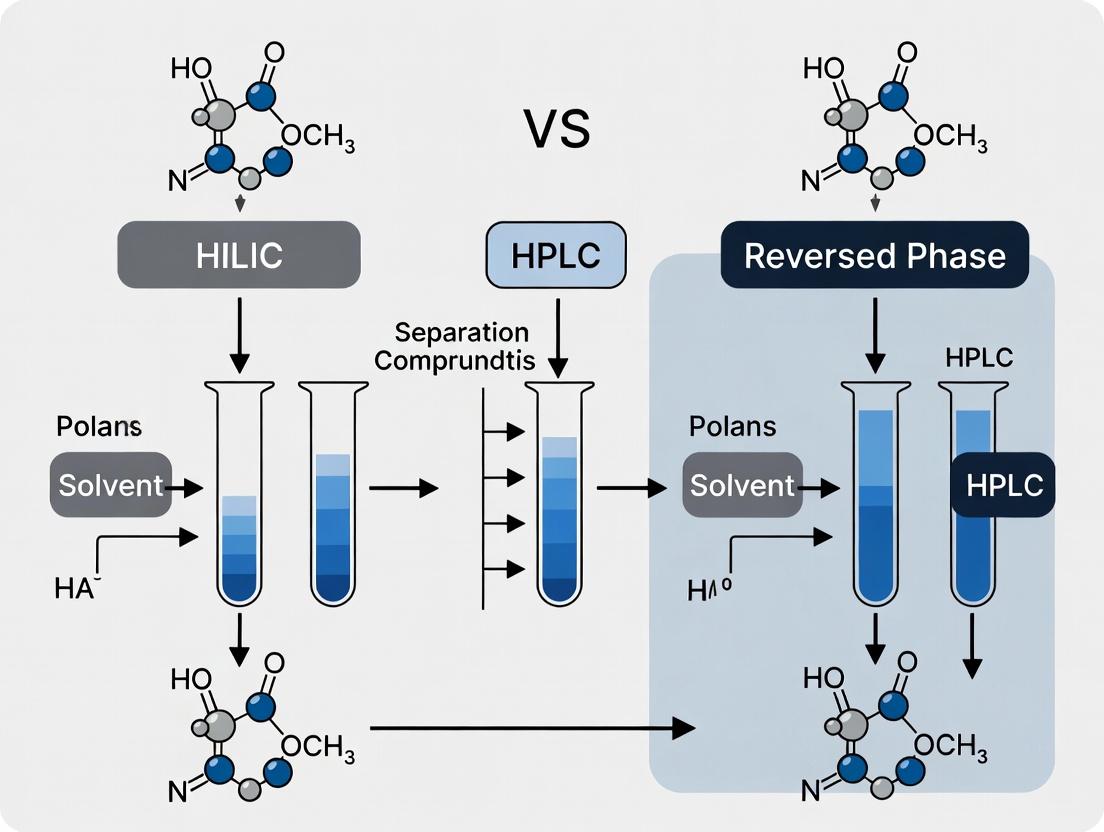
This comprehensive article explores the critical choice between Hydrophilic Interaction Liquid Chromatography (HILIC) and Reversed-Phase (RP) HPLC for separating polar compounds, a persistent challenge in pharmaceutical and biomedical research.
HILIC vs Reversed-Phase HPLC: A Complete Guide to Polar Compound Separation for Pharmaceutical Analysis
Abstract
This comprehensive article explores the critical choice between Hydrophilic Interaction Liquid Chromatography (HILIC) and Reversed-Phase (RP) HPLC for separating polar compounds, a persistent challenge in pharmaceutical and biomedical research. Beginning with foundational principles, we dissect the distinct retention mechanisms and mobile phase chemistry of each technique. The guide then provides practical methodological frameworks for method development and application-specific selection, followed by troubleshooting strategies for common pitfalls like poor retention and reproducibility. A direct, evidence-based comparison examines selectivity, sensitivity, and MS-compatibility, supported by contemporary case studies. Designed for researchers and drug development professionals, this article synthesizes current best practices to empower informed method selection and robust analytical outcomes for polar analytes.
Understanding the Core Science: How HILIC and RP-HPLC Tackle Polar Compound Retention
Defining the Polar Compound Challenge in Modern Pharma and Metabolomics
The analysis of highly polar and ionizable compounds remains a critical challenge in pharmaceutical development and metabolomic profiling. These molecules, which include metabolites, nucleosides, amino acids, peptides, and many modern hydrophilic pharmaceuticals, are poorly retained and separated by traditional reversed-phase high-performance liquid chromatography (RP-HPLC). This whitepaper frames the challenge within the ongoing methodological debate: HILIC (Hydrophilic Interaction Liquid Chromatography) versus reversed-phase HPLC for polar compound separation. While RP-HPLC dominates for medium- to non-polar analytes, HILIC has emerged as the complementary technique of choice for addressing the polar compound challenge, leveraging a hydrophilic stationary phase and a water-miscible organic-rich mobile phase.
The Core Challenge: Physicochemical Properties and Analytical Implications
Polar compounds exhibit high solubility in water, often possess ionic or ionizable groups, and have low logP/logD values. This leads to specific analytical hurdles:
- Poor Retention on RP Columns: Minimal interaction with hydrophobic C18/C8 ligands.
- Inadequate Separation: Co-elution near the void volume in RP systems.
- Detection Issues: Requires derivatization or less-common detection methods when paired with poor chromatography.
- Sample Compatibility: Many extraction protocols yield aqueous samples incompatible with organic-heavy RP mobile phases.
Technical Comparison: HILIC vs. Reversed-Phase HPLC
Table 1: Core Mechanistic and Operational Comparison
| Feature | HILIC (Hydrophilic Interaction LC) | Reversed-Phase HPLC (RP-HPLC) |
|---|---|---|
| Retention Mechanism | Partitioning into a water-rich layer on a polar stationary phase; secondary interactions (hydrogen bonding, ion-exchange). | Hydrophobic partitioning into the non-polar stationary phase. |
| Stationary Phase | Bare silica, or silica modified with cyano, amino, amide, zwitterionic groups. | Alkyl-silica (C18, C8, C4, phenyl). |
| Typical Mobile Phase | Water-miscible organic (ACN) rich (60-95%); aqueous buffer (5-40%). | Water-rich (aqueous buffer) with organic modifier (ACN, MeOH). |
| Elution Strength | Increased by adding more water (more polar). | Increased by adding more organic (less polar). |
| Retention Order | Polar compounds retained more; elution order often opposite to RP. | Non-polar compounds retained more. |
| Ideal for | Polar, hydrophilic, ionic compounds. | Moderately polar to non-polar compounds. |
| MS Compatibility | High organic content promotes efficient desolvation and ionization for ESI-MS. | May require post-column addition of organic solvent for optimal ESI. |
Table 2: Quantitative Performance Metrics for Polar Analytes (Theoretical Plate Count, Retention Factor)
| Analytic Class (Example) | HILIC Column (e.g., Amide) | RP Column (e.g., C18) | ||
|---|---|---|---|---|
| Theoretical Plates (N/m) | Retention Factor (k) | Theoretical Plates (N/m) | Retention Factor (k) | |
| Nucleosides (e.g., Uridine) | 120,000 | 3.2 | 90,000 | 0.2 (unretained) |
| Amino Acids (underivatized) | 95,000 | 2.8 | < 50,000 | ~0.1 (unretained) |
| Small Polar Metabolite (e.g., Creatinine) | 110,000 | 2.5 | 80,000 | 0.3 |
| Polar Drug (e.g., Metformin) | 105,000 | 3.5 | 70,000 | 0.4 |
Experimental Protocols for Addressing the Challenge
Protocol 1: Method Development for Polar Metabolomics via HILIC-MS
Objective: Develop a robust HILIC-MS method for untargeted profiling of polar central carbon metabolites.
- Sample Prep: Lyse cells/tissue in 80:20 methanol:water at -20°C. Centrifuge (15,000 x g, 15 min, 4°C). Dry supernatant under nitrogen. Reconstitute in 50:50 ACN:water containing internal standards.
- Column Selection: Use a zwitterionic sulfobetaine (e.g., ZIC-pHILIC) or amide-bonded HILIC column (150 x 2.1 mm, 1.7-3 μm).
- Mobile Phase: (A) 95% ACN / 5% 20mM ammonium acetate, pH 6.8. (B) 50% ACN / 50% 20mM ammonium acetate, pH 6.8.
- Gradient: 0-2 min, 95% A; 2-17 min, 95% → 40% A; 17-20 min, 40% A; 20-21 min, 40% → 95% A; 21-28 min, 95% A (equilibration).
- Flow Rate/Temp: 0.4 mL/min, 40°C.
- Detection: High-resolution mass spectrometer (ESI+/-), data-dependent acquisition.
Protocol 2: Assessing Retention of Polar APIs via Scouting with Mixed-Mode Phases
Objective: Evaluate retention and peak shape for a polar ionizable drug candidate.
- Column Scouting: Test three columns in parallel: (a) C18 (standard RP), (b) Phenyl-Hexyl (with π-π interactions), (c) HILIC (amide).
- Mobile Phase Screening: For RP: Vary pH (2.0, 4.5, 7.0, 10.0) with formate/ammonium buffers. For HILIC: Test ammonium formate vs. ammonium acetate buffers at pH 3.5 and 6.8.
- Isocratic Scouting Runs: Use 5% organic for RP, 85% organic for HILIC. Measure retention factor (k).
- Analysis: Plot k vs. pH (RP) and k vs. buffer type/pH (HILIC). Select conditions providing k between 2-10 and symmetric peak shape (As ~1.0).
Visualizing the Workflow and Mechanisms
Diagram 1: Analytical Pathway for Polar Compounds
Diagram 2: HILIC Mechanism Step-by-Step
The Scientist's Toolkit: Key Research Reagent Solutions
Table 3: Essential Materials for Polar Compound Analysis via HILIC
| Item | Function & Rationale |
|---|---|
| Zwitterionic HILIC Column (e.g., ZIC-pHILIC) | Provides mixed-mode retention (hydrophilic + weak ion-exchange) for a broad range of polar ions. Stable over wide pH range. |
| Amide HILIC Column | Offers hydrophilic partitioning with strong hydrogen bonding. Excellent for sugars, glycosylated compounds. |
| MS-Grade Ammonium Acetate/Formate | Provides volatile buffer capacity for mobile phase pH control without MS source contamination. |
| LC-MS Grade Acetonitrile (ACN) | Primary organic modifier in HILIC. Low UV cutoff and high volatility are ideal for MS detection. |
| Deuterated Polar Internal Standards (e.g., D3-Creatinine, 13C6-Glucose) | Critical for normalization and quantification in metabolomics to correct for matrix effects & injection variability. |
| HybridSPE-Precipitation Plates | Phospholipid removal and protein precipitation in one step. Provides clean aqueous extracts compatible with HILIC injection. |
| Post-column Make-up Valve & Tee | For RP separations of polar ions, allows addition of organic solvent post-column to boost ESI-MS sensitivity. |
Reversed-phase high-performance liquid chromatography (RP-HPLC) is the predominant mode of liquid chromatography, accounting for over 70% of all HPLC analyses. Its operation is fundamentally rooted in the hydrophobic effect, where nonpolar analytes partition into a hydrophobic stationary phase (typically C18-modified silica) from a polar mobile phase (often water/organic mixtures like water/acetonitrile). Retention increases with analyte hydrophobicity. However, this very mechanism presents a significant challenge: highly polar or hydrophilic analytes exhibit little to no retention under standard RP conditions, eluting near or with the void volume. This fundamental limitation drives the comparative research into hydrophilic interaction liquid chromatography (HILIC) as a complementary technique for polar compound analysis.
The Hydrophobic Effect: Core Principle and Quantitative Descriptors
The hydrophobic effect is a complex, entropy-driven process where nonpolar molecules or moieties aggregate in an aqueous environment to minimize the disruption of hydrogen-bonding networks. In RP-HPLC, this is harnessed as the primary retention mechanism.
Table 1: Key Molecular Descriptors for Predicting RP-HPLC Retention
| Descriptor | Definition | Correlation with Retention (k') | Typical Calculation Method |
|---|---|---|---|
| Log P (Octanol-Water) | Logarithm of the partition coefficient between n-octanol and water. | Strong positive correlation for neutrals. | Experimentally measured or calculated via fragment-based methods (e.g., ClogP). |
| Log D | Logarithm of the distribution coefficient at a specific pH. | Accounts for ionization; more accurate for ionizable analytes. | Log D = Log P - log(1 + 10^(pH-pKa) for acids [or pKa-pH for bases]). |
| Hydrophobic Surface Area | Solvent-accessible surface area of nonpolar atomic groups. | Positive correlation. | Computational chemistry software (e.g., molecular dynamics). |
| Hydrophobicity Index (ϕ₀) | Organic modifier concentration for elution in gradient mode. | Direct experimental measure of compound hydrophobicity. | Determined from a linear solvent strength gradient. |
Retention in isocratic mode is described by the log k' vs. % organic modifier relationship, which is often linear for a homologous series:
log k' = log k_w - Sφ
where k' is the retention factor, k_w is the extrapolated retention in pure water, S is a solute-specific constant, and φ is the volume fraction of organic modifier.
Fundamental Limitations for Polar Analytics
The failure of RP-HPLC for polar analytes is systematic and predictable.
Table 2: Limitations of RP-HPLC for Polar Analyte Classes
| Analyte Class | Core Issue | Typical Result in Standard RP-HPLC |
|---|---|---|
| Small Polar Molecules (e.g., sugars, amino acids, organic acids) | Insufficient hydrophobic interaction with C18 chain. | No retention (k' ≈ 0), elution at void time. |
| Ionizable Compounds (at mobile phase pH) | Charged species have high affinity for aqueous phase. | Poor retention, severe peak tailing. |
| Very Hydrophilic Metabolites (e.g., glycolysis intermediates) | High solubility in aqueous mobile phase. | Co-elution with matrix components, inability to separate. |
| Polar Pharmaceuticals (e.g., nucleosides, glycosides) | Mixed hydrophilicity/hydrophobicity can lead to poor peak shape. | Weak retention, broad or asymmetrical peaks. |
Experimental Protocol: Evaluating Polar Analyte Retention in RP-HPLC
This protocol is designed to systematically diagnose RP-HPLC limitations for a set of polar analytes.
Materials & Equipment:
- HPLC System: with binary pump, autosampler, and UV/VIS or MS detector.
- Columns: C18 column (e.g., 150 x 4.6 mm, 5 µm), HILIC column (e.g., bare silica or amide).
- Mobile Phase A: 20 mM ammonium formate in water, pH 3.0 (adjust with formic acid).
- Mobile Phase B: Acetonitrile.
- Analytes: Test mix containing uracil (void marker), cytosine, adenosine, and a small polar drug (e.g., metformin).
Procedure:
- RP-HPLC Gradient Run:
- Equilibrate C18 column with 5% B (95% A) for 20 min.
- Inject 5 µL of test mix.
- Run a linear gradient: 5% B to 95% B over 20 min. Hold at 95% B for 5 min. Flow rate: 1.0 mL/min.
- Detect at 254 nm (or use MS).
- Data Analysis:
- Calculate retention factor (k') for each peak:
k' = (t_R - t_0) / t_0, where tR is analyte retention time and t0 is uracil retention time. - Plot k' vs. analyte log P/D (from literature).
- Note peak shape and resolution.
- Calculate retention factor (k') for each peak:
Expected Outcome: Polar analytes (cytosine, adenosine, metformin) will exhibit very low k' values (< 1-2), likely eluting early in the gradient with poor resolution from each other and from matrix interferences, demonstrating the core limitation.
Diagram 1: RP-HPLC Failure Pathway for Polar Analytics
Mitigation Strategies and Their Trade-offs
Several strategies exist to improve polar analyte retention in RP-HPLC, each with compromises.
Table 3: RP-HPLC Modifications for Polar Analytics & Associated Trade-offs
| Strategy | Method | Principle | Key Limitations |
|---|---|---|---|
| Ion-Pairing Chromatography | Add ion-pair reagents (e.g., TFA, alkyl sulfonates) to mobile phase. | Reagent masks analyte charge, increasing hydrophobic retention. | MS incompatibility, long equilibration, column degradation. |
| Hydrophilic Interaction LC | Switch to HILIC mode (polar stationary phase, high organic mobile phase). | Analyte partitions into aqueous layer on stationary phase. | Different method development, potential reproducibility issues. |
| Aqueous Normal Phase | Use polar columns (e.g., silica) with aqueous-organic mobile phases. | Mixed-mode retention (adsorption + partitioning). | Complex retention mechanisms. |
| Derivatization | Chemically attach hydrophobic tag to analyte pre-injection. | Increases analyte hydrophobicity artificially. | Extra sample prep step, incomplete reactions. |
The HILIC Alternative: A Logical Progression
When RP-HPLC modifications are insufficient, HILIC becomes the logical orthogonal approach. HILIC employs a polar stationary phase (e.g., bare silica, cyano, amide) and a mobile phase rich in organic solvent (typically >70% acetonitrile). Retention is driven by analyte partitioning into a water-enriched layer on the stationary phase, along with hydrogen bonding and electrostatic interactions.
Table 4: Direct Comparison of RP-HPLC vs. HILIC for Polar Analytics
| Parameter | Reversed-Phase HPLC | HILIC |
|---|---|---|
| Primary Mechanism | Hydrophobic partitioning. | Partitioning into aqueous layer + polar interactions. |
| Typical Mobile Phase | Water-rich start (e.g., 95% H₂O/5% ACN). | Organic-rich start (e.g., 90% ACN/10% aqueous buffer). |
| Elution Order | More hydrophobic analytes retained longer. | More hydrophilic/polar analytes retained longer. |
| Retention for Polar Analytics | Very poor to none. | Strong. |
| MS Compatibility | Excellent with volatile buffers. | Excellent, often enhanced sensitivity due to organic solvent. |
| Method Development | Well-understood, predictable. | More complex, sensitive to buffer pH/ionic strength. |
Diagram 2: Decision Logic for HPLC Mode Selection
The Scientist's Toolkit: Key Research Reagent Solutions
Table 5: Essential Materials for Polar Analyte Separation Research
| Item | Function in Research | Key Consideration |
|---|---|---|
| C18 Column (e.g., 150mm, 3µm) | Benchmark RP stationary phase for baseline retention studies. | Select with high purity silica for minimal secondary interactions. |
| HILIC Column (e.g., Amide, 100mm, 2.7µm) | Orthogonal phase for evaluating polar compound retention. | Chemistry (silica, amino, amide) dictates selectivity. |
| MS-Compatible Buffers (Ammonium formate/acetate) | Provide controlled pH and ionic strength in mobile phase for both RP and HILIC. | Volatile for MS detection; typically used at 5-20 mM. |
| Ion-Pair Reagents (e.g., TFA, HFBA) | For RP retention enhancement of ionized bases/acids. | Use only if MS detection is not required; can suppress ionization. |
| Polar Analyte Standard Mix | Contains molecules of known hydrophilicity (log D) to calibrate system performance. | Should include sugars, amino acids, nucleosides, and ionizable drugs. |
| LC-MS System | Enables detection of non-UV absorbing polar analytes and method transfer. | Essential for modern method development in metabolomics/polar Pharm. |
This technical guide explores the foundational principles of Hydrophilic Interaction Liquid Chromatography (HILIC), with a focus on the partitioning mechanism and the aqueous layer model. Within the broader research thesis comparing HILIC and Reversed-Phase (RP) HPLC for polar compound separation, understanding these core mechanisms is paramount. While RP-HPLC often struggles with excessive retention or poor retention of highly polar analytes, HILIC provides a complementary mode of separation by leveraging a hydrophilic stationary phase and a water-miscible organic-rich mobile phase. This guide provides an in-depth analysis for researchers and drug development professionals engaged in polar analyte characterization, metabolomics, or hydrophilic drug analysis.
The Partitioning Mechanism: Core Principle
The predominant retention mechanism in HILIC is partitioning of analytes between a mobile phase (high organic content, e.g., 70-95% acetonitrile) and a water-rich layer immobilized on the surface of a hydrophilic stationary phase. Retention increases with analyte hydrophilicity, following the order of increasing partition coefficient into the aqueous layer.
Supporting Data & Models: Recent studies and reviews quantify and model this partitioning behavior. The following table summarizes key quantitative relationships and findings.
Table 1: Quantitative Relationships in HILIC Partitioning
| Parameter / Relationship | Typical Range or Equation | Experimental Basis & Notes |
|---|---|---|
| Mobile Phase Water Content | 2% - 40% (v/v) | Critical for forming the aqueous layer; >40% often leads to near-elution of all analytes. |
| Organic Modifier | Acetonitrile (ACN) typically 60-98% | ACN most common; others like acetone or methanol alter partitioning and selectivity. |
| log k vs. % Water (ACN) | log k = log kw - m * φ (water) | Linear relationship in a limited range; slope m indicates sensitivity to water change. |
| Aqueous Layer Thickness | Estimated 0.5 - 10 nm | Depends on stationary phase chemistry, water content, temperature, and salt. |
| Salt Effect (Ammonium Acetate) | 5 - 50 mM | Promotes partitioning for ionized analytes via electrostatic interactions; can suppress silanol effects. |
| Typical Column Temperature | 30°C - 60°C | Increased temperature reduces mobile phase viscosity and can slightly decrease retention. |
| Primary Retention Factor (k) Range | 1 - 10 | Optimized for good resolution; often higher for very polar compounds vs. RP-HPLC. |
The Aqueous Layer Model: A Multilayer Perspective
The aqueous layer is not a monolithic film but is often described as a structured, multi-partition system:
- A bulk organic-rich mobile phase.
- A diffuse water-enriched layer where primary partitioning occurs.
- A chemically bound water layer on the stationary phase surface.
- The hydrophilic stationary phase itself (e.g., bare silica, amide, zwitterionic).
Diagram 1: The HILIC Aqueous Layer Partitioning Model
Key Experimental Protocols for Investigating HILIC Mechanisms
Protocol 1: Establishing the Partitioning Dominance via Mobile Phase Composition Study
Objective: To verify that retention is primarily governed by partitioning into an aqueous layer by analyzing the relationship between the retention factor (log k) and mobile phase water concentration.
Materials: HILIC column (e.g., bare silica, 150 x 4.6 mm, 3 µm); UHPLC/HPLC system with UV/vis or MS detector; test analytes (neutral polar compounds like sugars, nucleosides); Acetonitrile (HPLC grade); Ammonium acetate (MS grade); Water (LC-MS grade).
Method:
- Prepare a stock solution of test analytes in a solvent compatible with high-ACN mobile phases (e.g., 80% ACN).
- Prepare mobile phase A: 100mM Ammonium Acetate in Water. Mobile phase B: Acetonitrile.
- Generate a gradient or isocratic method series where the % of A (aqueous buffer) increases incrementally from 5% to 40% (e.g., 5%, 10%, 15%, 20%, 30%, 40%). Maintain a constant buffer concentration in the final mobile phase by appropriate mixing of A and B.
- Inject analyte mixture under each condition. Measure retention time (tR) and calculate retention factor k = (tR - t0)/t0, where t0 is the column dead time (determined with an unretained tracer like thiourea or uracil in HILIC mode).
- Plot log k vs. volume fraction of water (φwater) in the mobile phase. A linear relationship over a significant range strongly supports a partitioning-dominated mechanism.
Protocol 2: Probing the Aqueous Layer with Deuterium Oxide (D2O) Exchange
Objective: To provide evidence for the existence and participation of the immobilized aqueous layer in the retention process.
Method:
- Prepare two identical mobile phase systems: System 1: 90% ACN / 10% H2O (with 10mM ammonium acetate). System 2: 90% ACN / 10% D2O (with 10mM ammonium acetate-d7?).
- Using the same HILIC column and a set of polar analytes, perform isocratic separations with both systems.
- Pre-equilibrate the column extensively (>30 column volumes) with each mobile phase before analysis.
- Precisely measure retention times and peak shapes. The replacement of H2O with D2O alters the physicochemical properties (e.g., hydrogen bonding strength, viscosity) of the aqueous layer. Observed shifts in retention (typically a slight increase due to stronger hydrogen bonding with D2O) directly implicate the aqueous layer in the retention process.
The Scientist's Toolkit: Essential Research Reagents & Materials
Table 2: Key Research Reagent Solutions for HILIC Mechanism Studies
| Item | Function & Rationale |
|---|---|
| Bare Silica HILIC Column | The model stationary phase for fundamental studies; possesses silanol groups that form a well-defined aqueous layer. |
| Zwitterionic Sulfobetaine Column | Minimizes ionic interactions, allowing study of "pure" hydrophilic partitioning. |
| LC-MS Grade Acetonitrile | Primary organic modifier; low UV cutoff and MS compatibility are critical. |
| Ammonium Acetate (MS Grade) | Volatile buffer salt; controls pH and ionic strength, modulating secondary electrostatic interactions. |
| Formic Acid / Ammonium Hydroxide | For mobile phase pH adjustment (typically pH 3-6 in aqueous buffer before mixing with ACN). |
| Deuterium Oxide (D2O) | Isotopic tracer for probing the role and properties of the aqueous layer. |
| Polar Analytic Test Mix | Should include neutral polar (sucrose, ribose), acidic (aminobenzoic acids), and basic (nucleosides) compounds. |
| T0 Marker (Thiourea/Uracil) | Unretained marker for accurate calculation of retention factors in high-organic mobile phases. |
Comparison Framework: HILIC Partitioning vs. RP-HPLC Hydrophobic Binding
Diagram 2: HILIC vs RP-HPLC: A Mechanistic Comparison
Table 3: Comparative Mechanism: HILIC vs. Reversed-Phase HPLC
| Aspect | HILIC (Partitioning/Aqueous Layer) | Reversed-Phase (Hydrophobic Binding) |
|---|---|---|
| Primary Mechanism | Partitioning into immobilized aqueous layer. | Hydrophobic adsorption onto liganded surface. |
| Mobile Phase | Organic-rich (ACN >60%). | Aqueous-rich (Water >60%). |
| Stationary Phase | Hydrophilic (Silica, Amino, Amide, Zwitterionic). | Hydrophobic (Alkyl chains: C8, C18, Phenyl). |
| Retention Order | Most hydrophilic retained longest. | Most hydrophobic retained longest. |
| Elution Strength | Increases with WATER content. | Increases with ORGANIC content. |
| Ideal for Analytics | Polar, hydrophilic compounds. | Non-polar to moderately polar compounds. |
| Aqueous Layer Role | Central to retention; critical for mechanism. | Minimal; primarily a wetting layer. |
The partitioning mechanism and the aqueous layer model form the bedrock of HILIC separation science. This guide has detailed the quantitative relationships, experimental protocols for validation, and essential tools for research. When framed within the thesis of comparing separation modes, HILIC emerges not as a simple opposite of RP-HPLC, but as a sophisticated technique governed by a distinct, water-centric partitioning equilibrium. This makes it an indispensable tool for the analysis of polar compounds, filling the critical retention gap left by reversed-phase methods and enabling comprehensive profiling in complex fields like metabolomics and polar drug analysis.
Within the ongoing research thesis comparing Hydrophilic Interaction Liquid Chromatography (HILIC) and Reversed-Phase (RP) HPLC for polar analytes, the selection of the stationary phase is the pivotal, defining parameter. HILIC's efficacy stems from a complex partitioning mechanism and surface interactions with a water-enriched layer, making phase chemistry paramount. This guide provides a technical dissection of four fundamental HILIC phases: bare silica, amino, diol, and zwitterionic.
Core Phase Chemistries and Interaction Mechanisms
1. Bare Silica The foundational HILIC phase, consisting of underivatized silica gel (Si-OH). Retention is governed by hydrogen bonding and dipole-dipole interactions with polar analytes, with electrostatic interactions (cation-exchange) with protonated bases at low pH (~3-5). Its simplicity is a virtue, but sensitivity to buffer pH and concentration is high.
2. Amino (-NH₂) Propylamine ligands bonded to silica. The primary amine group introduces strong hydrogen bond acceptance and weak anion-exchange capabilities at typical HILIC pH (~4-7). Notably, it can engage in nucleophilic reactions with reducing sugars (Maillard reaction) and carbonyl-containing compounds, potentially causing column degradation or on-column derivatization.
3. Diol (-(CH₂)₃OCH₂CHOHCH₂OH) A neutral phase featuring a hydrophilic diol terminus. Retention is primarily via hydrogen bonding. Its key advantage is high chemical stability across a wide pH range (2-8) and lack of reactive functional groups, making it robust for sensitive analytes like glycans and metabolites.
4. Zwitterionic Sulfoalkylbetaine (ZIC-HILIC) A charge-balanced phase with both quaternary ammonium (positive) and sulfonate (negative) groups on the same ligand. This creates a strong, localized electrostatic field that orders water molecules, enhancing the partitioning mechanism. It exhibits weak electrostatic interactions towards both acids and bases, often yielding unique selectivity.
Comparative Phase Properties and Performance Data
Table 1: Fundamental Properties and Application Scope
| Phase Type | Key Functional Group | Primary Interactions | pH Stability Range | Notable Advantages | Common Analyte Applications |
|---|---|---|---|---|---|
| Silica | Silanol (Si-OH) | H-bonding, Dipole-Dipole, Cation-Exchange | 2-7.5 | Simple, cost-effective, strong for basic compounds | Organic acids, nucleotides, basic drugs |
| Amino | Primary Amine (-NH₂) | H-bonding, Anion-Exchange, Dipole | 2-9 | Strong for sugars, acidic compounds | Carbohydrates, glycosylated compounds, anions |
| Diol | Cis-Diol (CHOH-CH₂OH) | H-bonding, Dipole-Dipole | 2-8 | Very stable, inert, reproducible | Glycans, peptides, polar metabolites, APIs |
| Zwitterionic | -N⁺(CH₃)₂-(CH₂)₃-SO₃⁻ | Strong H₂O ordering, Partitioning, Weak IE | 3-10 | Unique selectivity, handles amphoteric compounds | Aminoglycosides, polar toxins, metabolites, peptides |
Table 2: Quantitative Elution Characteristics Under Standard HILIC Conditions*
| Phase Type | Retention Strength for Acids (e.g., Nucleotides) | Retention Strength for Bases (e.g., β-blockers) | Peak Shape for Bases (Tailing Factor) | Hydrophilicity (k' for Uracil) |
|---|---|---|---|---|
| Silica | Medium | Very Strong | Often Broadened (>1.5) | Low |
| Amino | Very Strong | Weak | Good (~1.1) | High |
| Diol | Medium | Medium | Excellent (~1.0) | Medium |
| Zwitterionic | Strong | Strong | Excellent (~1.0) | Very High |
*Data summarized from literature comparisons using 90-95% ACN, ammonium formate/aceteate buffers. Actual values are system-specific.
Experimental Protocols for Phase Characterization
Protocol 1: Determining Phase Hydrophilicity and Retention Mapping
- Objective: Quantify the hydrophilic retention factor (kₕ) and map selectivity differences.
- Materials: As per "The Scientist's Toolkit" below.
- Method:
- Condition column with 5 column volumes (CV) of 90% Acetonitrile (ACN) / 10% 50mM ammonium acetate (pH 5.0).
- Prepare test mix (1 µg/mL each) in the starting mobile phase: uracil (t₀ marker), cytosine, hypoxanthine, uridine.
- Perform isocratic elution at 90% ACN, 0.5 mL/min, 30°C, UV detection @ 260 nm.
- Calculate k' = (tᵣ - t₀)/t₀ for each analyte. Plot k' values to create a phase selectivity map.
- Systematically decrease ACN to 80% and 70%, repeating injections to observe the characteristic HILIC retention trend (increasing k' with increasing organic %).
Protocol 2: Assessing Cation-Exchange Activity of Silica Phases
- Objective: Evaluate the contribution of residual acidic silanols to secondary interactions.
- Method:
- Use a test mix of basic compounds (e.g., propranolol, atenolol) and neutral markers.
- Run duplicate separations: A) with 10mM ammonium formate buffer, B) with 50mM ammonium formate buffer, both at pH 3.0 in 85% ACN.
- Compare retention times and peak shapes. A significant decrease in retention and improved symmetry with higher buffer concentration indicates strong cation-exchange contribution.
Visualization of HILIC Phase Selection Logic
HILIC Phase Selection Decision Tree
The Scientist's Toolkit: Essential Research Reagent Solutions
| Item | Function in HILIC Method Development |
|---|---|
| Acetonitrile (HPLC-MS Grade) | Primary organic modifier. Low viscosity and UV cut-off, high volatility for MS. Forms the water-immiscible layer. |
| Ammonium Acetate/Formate (≥99%) | Volatile buffers. Provide consistent ionic strength to control electrostatic interactions. Critical for MS compatibility. |
| Formic Acid / Ammonium Hydroxide (LC-MS Grade) | For fine pH adjustment of aqueous buffer stock (typically 50-100mM) before mixing with organic phase. |
| Deionized Water (≥18 MΩ·cm) | Ultrapure water is critical to prevent contamination of the water-enriched layer and baseline noise. |
| Test Probe Mixture | A set of neutral, acidic, and basic polar compounds (e.g., uracil, cytosine, uridine, metformin) to characterize phase properties. |
| Regeneration Solvents | Water, then 90:10 ACN:Water for storage. For cleaning, sequences may include water, 0.1% TFA, and high-water content steps. |
| Silica Guard Column | Protects the analytical column from irreversibly retained contaminants, especially critical for complex biological matrices. |
The separation of polar and hydrophilic analytes remains a central challenge in modern analytical chemistry, particularly in pharmaceutical research and metabolomics. The core thesis of contemporary methodology pits Hydrophilic Interaction Liquid Chromatography (HILIC) against Reversed-Phase High-Performance Liquid Chromatography (RP-HPLC). While the stationary phase is often the focal point, this guide argues that the mobile phase composition—water, organic modifiers, and buffer salts—is the primary lever for controlling selectivity, efficiency, and robustness in both techniques. Understanding their distinct dynamics is critical for method development.
The Ternary System: Core Components and Functions
The mobile phase is a finely tuned ternary system. Each component plays a non-interchangeable role.
- Water: The strong eluent in HILIC; the weak eluent in RP-HPLC. It serves as the solvent for buffer salts and the vehicle for analyte desorption/adsorption.
- Organic Modifier (ACN, MeOH): The weak eluent in HILIC; the strong eluent in RP-HPLC. Acetonitrile (ACN) is preferred in HILIC for its high elutropic strength and ability to form a robust water-enriched layer on the stationary phase. Methanol (MeOH) is a stronger protic solvent in RP-HPLC, often used for different selectivity.
- Buffer Salts (Ammonium Acetate/Formate, TFA): Critical for controlling pH and ionic strength. They suppress analyte ionization for reproducible retention and facilitate electrostatically modulated interactions, especially in HILIC.
Comparative Dynamics: HILIC vs. RP-HPLC
The identical components function in diametrically opposed manners, defining each technique's application scope.
Table 1: Role of Mobile Phase Components in HILIC vs. RP-HPLC
| Component | HILIC Mechanism & Role | RP-HPLC Mechanism & Role | Typical Starting Condition (v/v) |
|---|---|---|---|
| Water | Strong Eluent. Disrupts the stagnant water layer on the polar stationary phase. Increases elution strength. | Weak Eluent. Promotes hydrophobic interactions with the C18/C8 chain. Decreases elution strength. | 5% (Gradient: 5% → 50%) |
| Organic Modifier (ACN) | Weak Eluent. Maintains the hydrophilic partition layer. High % (>70%) is required for analyte retention. | Strong Eluent. Disrupts hydrophobic interactions with the alkyl chain. High % elutes compounds. | 95% (Gradient: 95% → 50%) |
| Buffer Salts (e.g., 10-20 mM Ammonium Acetate) | Essential. Analyte must be neutrally charged for primary HILIC mechanism. Buffers control ionization. Lowers pH often increases retention of acids. | Often Used. Suppresses ionization of acidic/basic analytes to improve peak shape and control retention. | pH 3.0-5.0 (with formate/acetate) |
Experimental Protocols for Optimization
Protocol 1: Scouting the Organic Modifier Percentage (Isocratic Scouting) Objective: Determine the optimal organic percentage for adequate retention (k' between 2-10).
- Prepare mobile phase A: 95:5 ACN:Water with 10 mM ammonium formate.
- Prepare mobile phase B: 50:50 ACN:Water with 10 mM ammonium formate.
- For HILIC: Run a series of isocratic methods at 95%, 90%, 85%, and 80% A (v/v). Inject your polar analyte mix.
- For RP-HPLC: Run a series of isocratic methods at 5%, 10%, 20%, and 30% B (v/v). Inject your polar analyte mix.
- Plot log(k') vs. % organic. The steep slope in HILIC highlights its high sensitivity to water content.
Protocol 2: Optimizing Buffer pH and Concentration Objective: Fine-tune selectivity and peak shape for ionizable polar compounds.
- Prepare a set of buffers (e.g., 10 mM ammonium formate) at pH 3.0, 4.0, 5.0, and 6.0. Use formic acid/ammonium hydroxide for adjustment.
- For HILIC: Use a fixed high organic composition (e.g., 90% ACN) with each buffer as the aqueous portion.
- For RP-HPLC: Use a fixed starting condition (e.g., 5% ACN) with each buffer as the aqueous portion.
- Run a gradient elution for each pH. Observe shifts in retention order and peak symmetry.
- Repeat with a higher buffer concentration (e.g., 20 mM) to assess ionic strength impact on peak shape.
Visualization of Mobile Phase Influence on Retention Mechanisms
Diagram Title: Mechanism of Mobile Phase Control in HILIC vs RP-HPLC
The Scientist's Toolkit: Essential Research Reagent Solutions
Table 2: Critical Reagents for Mobile Phase Optimization
| Reagent/Solution | Primary Function & Rationale |
|---|---|
| LC-MS Grade Acetonitrile (≥99.9%) | Low UV absorbance and minimal ionic impurities are critical for baseline stability in UV and MS detection, especially in high-% HILIC mobile phases. |
| LC-MS Grade Water (18.2 MΩ·cm) | Ultrapure water prevents contamination and background noise. Essential for preparing buffers and as a elution component. |
| Ammonium Formate (≥99.0%) | A volatile buffer salt for MS-compatible methods. Effective pH range ~3.0-4.5. Formate often provides better peak shapes than acetate for acids. |
| Ammonium Acetate (≥99.0%) | A volatile buffer salt for MS. Effective pH range ~4.5-5.5. Useful for methods requiring a slightly higher pH. |
| Trifluoroacetic Acid (TFA, ≥99.5%) | Ion-pairing reagent and strong acid modifier for RP-HPLC. Dramatically improves peak shape of peptides and basic compounds but is MS-suppressive. |
| Formic Acid (≥98%) | Common acidic pH modifier for MS-friendly mobile phases (pH ~2.5-3.5). Can be used alone or to adjust ammonium formate buffer. |
| Ammonium Hydroxide (28-30% NH₃ basis) | Used to adjust the pH of volatile ammonium buffers into the neutral/basic range (pH 6.0-8.0), crucial for separating acidic compounds or optimizing HILIC selectivity. |
| pH Calibration Standards (pH 4.01, 7.00, 10.01) | Accurate mobile phase pH measurement is non-negotiable for reproducible retention times. Calibrate meter before each use. |
The choice between HILIC and RP-HPLC for polar compounds is ultimately governed by the analyte's hydrophilicity. This guide demonstrates that once a technique is chosen, strategic manipulation of the water-organic-buffer triumvirate is the definitive pathway to a successful separation. For highly polar, non-retained compounds in RP-HPLC, HILIC—with its inverted mobile phase dynamics—is not merely an alternative but a necessary orthogonal strategy, enabling researchers to master the full spectrum of polar compound analysis.
Strategic Method Development: Choosing and Applying HILIC or RP-HPLC for Your Polar Analytics
Within the broader research on chromatographic separation of polar compounds, the choice between Hydrophilic Interaction Liquid Chromatography (HILIC) and Reversed-Phase High-Performance Liquid Chromatography (RP-HPLC) is critical. This guide provides a structured decision framework based on analyte physicochemical properties (LogP, pKa) and sample matrix.
Core Decision Parameters: Analyte Properties
The selection is primarily driven by analyte hydrophilicity and ionization state.
Table 1: Primary Decision Framework Based on Analyte Properties
| Parameter | Favors HILIC | Favors RP-HPLC | Notes |
|---|---|---|---|
| Analyte LogP | Low (LogP < 0), Highly polar | High (LogP > 2), Hydrophobic | For -2 < LogP < 2, other factors (pKa, matrix) dominate. |
| Analyte pKa & Mobile Phase pH | Compounds ionized at mobile phase pH. | Compounds neutral at mobile phase pH. | HILIC retains ions via electrostatic interaction. RP retention decreases for ionized analytes. |
| Polar Functional Groups | Multiple -OH, -COOH, -NH₂, sugars. | Long alkyl chains, aromatic rings. | HILIC leverages hydrogen bonding and dipole-dipole interactions. |
| Molecular Weight | Suitable for small polar molecules and polar metabolites. | Broad applicability, including larger non-polar molecules. | HILIC is ideal for very small, water-soluble compounds that elute near t₀ in RP-HPLC. |
Table 2: Impact of Sample Matrix
| Matrix Type | Recommended Mode | Rationale & Considerations |
|---|---|---|
| Aqueous / Biological Fluids | HILIC (with care) | Direct injection of organic supernatant after protein precipitation is often feasible due to high organic mobile phase. Desalting may be needed. |
| Organic Solvent Extracts | RP-HPLC | Compatible with common extraction solvents (e.g., ethyl acetate, chloroform). HILIC requires minimal aqueous content in sample. |
| Complex Biological (Plasma, Urine) | Mode-Specific | RP for mid-low polarity metabolites. HILIC for polar metabolites (amino acids, sugars, acids). Requires careful sample prep for both. |
Experimental Protocols for Mode Selection
A standardized screening protocol is recommended for novel compounds.
Protocol 1: Preliminary Mode Screening
- Analyte Characterization: Calculate or obtain LogP and pKa values using software (e.g., ChemAxon, ACD/Labs).
- Column Screening: Perform initial isocratic scouting.
- RP-HPLC: Use a C18 column (e.g., 150 x 4.6 mm, 5 µm). Mobile Phase: 80% MeCN/20% water (or buffer, pH adjusted per pKa). Flow: 1 mL/min.
- HILIC: Use a bare silica or amide column (same dimensions). Mobile Phase: 90% MeCN/10% ammonium acetate buffer (e.g., 10 mM, pH 5). Flow: 1 mL/min.
- Evaluation: If retention factor (k) > 2 on RP, proceed with RP optimization. If k < 1 on RP but > 2 on HILIC, proceed with HILIC.
Protocol 2: Assessing Matrix Compatibility in HILIC
- Sample Preparation: Precipitate proteins from plasma/urine with 3:1 (v/v) MeCN:Sample. Centrifuge at 13,000 rpm for 10 min.
- Solvent Compatibility Check: Evaporate a supernatant aliquot and reconstitute in HILIC starting mobile phase (high organic). Filter (0.2 µm).
- Injection Test: Inject onto HILIC column. Monitor peak shape and retention time consistency vs. neat standard. Significant fronting or shifting indicates matrix interference, requiring solid-phase extraction (SPE) cleanup.
Visualized Decision Pathway
Diagram Title: Decision Logic for HILIC vs RP-HPLC Selection
The Scientist's Toolkit: Key Research Reagents & Materials
Table 3: Essential Chromatography Reagents and Columns
| Item | Function & Specification | Typical Use Case |
|---|---|---|
| Bare Silica HILIC Column (e.g., 2.7 µm, 150 x 2.1 mm) | Primary stationary phase for HILIC; retains analytes via hydrogen bonding and dipole interactions. | Separation of very polar neutral compounds (e.g., sugars, glycosides). |
| Amide or Amino HILIC Column | Provides mixed-mode HILIC/weak anion exchange (amide) or strong anion exchange (amino) for acidic/charged compounds. | Polar metabolites, oligonucleotides, charged antibiotics. |
| C18 RP Column (e.g., 2.7 µm, 150 x 2.1 mm) | Standard reversed-phase column for hydrophobic interaction. | Benchmark for initial compound screening; separation of moderate to non-polar analytes. |
| Ammonium Acetate Buffer (e.g., 10-50 mM, pH 3.5-5.5) | Volatile buffer for HILIC and RP-HPLC; compatible with MS detection. | Controlling ionization and electrostatic interactions in HILIC; RP for ionizable analytes. |
| Ammonium Formate Buffer (e.g., 10 mM, pH 3.0) | Alternative volatile buffer, often used for lower pH applications in LC-MS. | HILIC separation of basic compounds; RP separation of acids. |
| Trifluoroacetic Acid (TFA) / Formic Acid (0.05-0.1%) | Ion-pairing/acidifying agents for RP-HPLC to control ionization and improve peak shape. | RP separation of peptides and basic compounds. Not MS-friendly for TFA. |
| Acetonitrile (HPLC-MS Grade) | Primary organic modifier for both HILIC (high % needed) and RP-HPLC. | Mobile phase component. HILIC typically uses >70% ACN. |
| Mixed-mode SPE Cartridges (e.g., Oasis MCX, MAX) | Sample preparation to remove matrix interferents and concentrate analytes for both modes. | Cleanup of complex biological matrices prior to HILIC or RP analysis. |
Within the broader thesis research comparing Hydrophilic Interaction Liquid Chromatography (HILIC) and Reversed-Phase (RP) HPLC for polar compound separation, this guide details a systematic approach to HILIC method development. HILIC is often the superior choice for retaining and separating highly polar, hydrophilic, and ionizable compounds that show little to no retention under standard RP conditions. This technical whitepaper provides a foundational protocol for establishing and optimizing a robust HILIC method.
Phase 1: Defining Starting Conditions
Initial conditions are chosen based on the polar nature of the analytes and common successful HILIC practices.
Table 1: Recommended HILIC Starting Conditions
| Parameter | Recommended Starting Condition | Rationale |
|---|---|---|
| Column | Bare silica (unbonded) | Broadest applicability, strong hydrophilic interaction. |
| Mobile Phase B | Acetonitrile (ACN) | Primary organic modifier; promotes aqueous layer formation. |
| Mobile Phase A | Aqueous buffer (e.g., 10-50 mM ammonium acetate) | Provides ionic strength and controls pH. |
| Gradient | 95% B to 50% B over 10-20 min | High initial organic for retention; gradient to elute analytes. |
| Column Temperature | 30-40°C | Improves efficiency and reproducibility. |
| Flow Rate | 0.3-0.5 mL/min (for 2.1 mm ID) | Standard for U/HPLC; balances pressure and efficiency. |
| Injection Solvent | High organic (≥80% ACN) | Matches initial mobile phase to prevent peak distortion. |
Experimental Protocol 1: Column and Buffer Scouting
- Setup: Equip HPLC/UHPLC system with a low-dispersion kit suitable for high-organic mobile phases.
- Column Selection: Install a bare silica column (e.g., 150 x 2.1 mm, 1.7-3 μm).
- Buffer Preparation: Prepare 20 mM ammonium acetate in water. Adjust pH to 4.0 with acetic acid and to 6.8 with ammonium hydroxide. Filter through 0.2 μm membrane.
- Mobile Phase: Prepare Mobile Phase A as the aqueous buffer. Prepare Mobile Phase B as acetonitrile.
- Sample Prep: Dissolve analytes in 90% ACN / 10% water.
- Initial Run: Execute a linear gradient from 95% B to 50% B over 15 minutes. Hold at 50% B for 2 min, then re-equilibrate at 95% B for 8 min. Monitor separation.
Title: HILIC Scouting Run Flowchart
Phase 2: Systematic Optimization Parameters
If initial conditions show promise (retention, some selectivity), a structured optimization of key parameters follows.
Table 2: Key Optimization Parameters and Their Effects
| Parameter | Typical Optimization Range | Primary Effect | Secondary Effect |
|---|---|---|---|
| Buffer pH | 3.0 - 7.5 (within column/pKₐ limits) | Ionization state of analytes/silanol; major selectivity tool. | Retention time. |
| Buffer Concentration | 5 - 100 mM ammonium salts | Thickness of aqueous layer; ionic interactions. | Retention, peak shape (for ionics). |
| Organic Modifier (%B) | Gradient slope and starting %B | Hydrophilic interaction strength; major retention tool. | Selectivity, runtime. |
| Column Temperature | 20 - 60°C | Kinetics, viscosity. | Retention, selectivity (minor), backpressure. |
| Stationary Phase | Silica, Amino, Cyano, Zwitterionic, etc. | Interaction mechanism (H-bonding, ion-exchange). | Major selectivity tool. |
Experimental Protocol 2: pH and Buffer Concentration Study
- Design: Create a 2D matrix. Prepare ammonium acetate buffers at pH 3.0, 4.5, 6.0, and 7.5. For each pH, prepare buffers at 10 mM and 50 mM concentrations.
- Method Variation: For each buffer (Mobile Phase A), run the gradient from Protocol 1. Keep all other conditions constant.
- Analysis: Plot retention factor (k) vs. pH for each analyte at both buffer concentrations. Assess changes in selectivity (peak order) and peak symmetry.
Experimental Protocol 3: Stationary Phase Selectivity Screening
- Column Set: Acquire 3-5 different HILIC columns (e.g., Bare Silica, Amino, Zwitterionic Sulfobetaine, Cyano, Diol).
- Standardized Method: Use the best buffer condition from Protocol 2. Run a standardized gradient (e.g., 90% ACN to 50% ACN in 10 min) on all columns.
- Analysis: Create a selectivity comparison plot. Different retention patterns identify the most promising column for final fine-tuning.
Title: HILIC Optimization Parameter Impacts
The Scientist's Toolkit: Key Research Reagent Solutions
Table 3: Essential Materials for HILIC Method Development
| Item | Function & Rationale |
|---|---|
| Bare Silica HILIC Column (e.g., 2.1 x 150 mm, sub-3µm) | Primary scouting column; offers neutral hydrophilic partitioning and weak ion-exchange. |
| Zwitterionic (ZIC-HILIC) Column | Provides simultaneous electrostatic and hydrophilic interactions; excellent for acids, bases, and zwitterions. |
| Ammonium Acetate (MS-Grade) | Volatile salt for mobile phase; compatible with UV and MS detection. Essential for pH/buffer studies. |
| LC-MS Grade Acetonitrile | Primary organic solvent; low UV cut-off and MS chemical noise. |
| Acetic Acid & Ammonium Hydroxide (MS-Grade) | Volatile acids/bases for precise pH adjustment of ammonium acetate buffers. |
| Polar Analytic Standards | Model compounds for method development (e.g., nucleotides, amino acids, sugars, polar pharmaceuticals). |
| 0.2 µm Nylon or PTFE Syringe Filters | For filtering all aqueous buffers and samples to protect column and system. |
| Low-Adsorption Vials & Inserts | Minimizes loss of polar analytes via surface adsorption in autosampler vials. |
A successful HILIC method development strategy begins with prudent starting conditions on a versatile bare silica phase, followed by a sequential, data-driven optimization of buffer pH, concentration, organic modifier strength, and column chemistry. This systematic approach, framed within the comparative research against RP-HPLC, reliably unlocks the selective retention and resolution of challenging polar molecules, which are often unretained in reversed-phase modes. The generated data should be evaluated for robustness, reproducibility, and suitability for the intended analytical application.
Within the enduring scientific discourse on optimal chromatographic modes for polar analytes—HILIC (Hydrophilic Interaction Liquid Chromatography) versus Reversed-Phase (RP) HPLC—RP-HPLC remains the dominant platform in most laboratories due to its robustness, reproducibility, and extensive method libraries. The central challenge, however, is its inherent weakness in retaining highly polar, hydrophilic compounds, which often elute at or near the void volume. This whitepaper explores three sophisticated strategies to circumvent this limitation without fully transitioning to a native HILIC method: Ion-Pairing Chromatography (IPC), HILIC/RP Mixed-Mode Chromatography, and the Low-Aqueous (Low-AQ) method. Each technique effectively modifies the RP environment to enhance polar retention, offering a compelling alternative within the broader HILIC vs. RP research paradigm.
Core Technical Strategies: Mechanisms and Applications
Ion-Pairing Chromatography (IPC)
IPC introduces an ion-pairing reagent (IPR) to the mobile phase. This reagent contains an ionic group opposite in charge to the target analyte and a hydrophobic tail. The IPR forms a transient, neutral "ion-pair" with the ionic analyte, dramatically increasing its hydrophobic character and, consequently, its retention on a standard RP (e.g., C18) column.
- For Cations: Alkane sulfonates (e.g., hexane- or heptanesulfonate) or perfluorinated carboxylic acids (e.g., trifluoroacetic acid - TFA).
- For Anions: Alkyl ammonium salts (e.g., tetrabutylammonium phosphate).
HILIC/RP Mixed-Mode Chromatography
This approach employs stationary phases engineered with both hydrophobic (e.g., C18, phenyl) and hydrophilic (e.g., silanol, amide, cyano, zwitterionic) functional groups. Analytes interact via a combination of partitioning, adsorption, and electrostatic interactions. Polar compounds can be retained via HILIC-like mechanisms (partitioning into a water-rich layer on the stationary phase) while non-polar compounds interact via RP mechanisms, all in a single column.
Low-Aqueous (Low-AQ) or "Per aqueous" Chromatography
In this less-conventional RP approach, the mobile phase uses a very high percentage of organic solvent (typically >95% acetonitrile) with a small amount of water (1-5%) containing a high concentration of volatile buffer or acid. The mechanism is complex, involving adsorption on the water-saturated stationary phase layer and potential normal-phase interactions. It is particularly effective for very polar compounds that are soluble in organic-rich solvents.
Table 1: Quantitative Comparison of Polar Retention Enhancement Strategies
| Parameter | Ion-Pairing (IPC) | HILIC/RP Mixed-Mode | Low-AQ Method |
|---|---|---|---|
| Retention Mechanism | Ion-pair formation + hydrophobicity | Combined RP & HILIC partitioning/adsorption | Adsorption & normal-phase on water layer |
| Typical Column | Standard C18 or C8 | Specialized (e.g., C18/amide, phenyl/cyano) | Standard C18 (highly deactivated) |
| Mobile Phase Organic | Low to Moderate (e.g., 5-40% ACN) | Broad Range (5-95% ACN) | Very High (e.g., 95-99% ACN) |
| Key Additive | Ion-Pair Reagent (5-50 mM) | Standard buffers (e.g., ammonium formate) | High-conc. volatile buffer in 1-5% water |
| Gradient Compatibility | Challenging (requires long equilibration) | Excellent | Good |
| MS Compatibility | Poor (suppresses ionization, contaminates source) | Excellent (volatile buffers) | Excellent (volatile buffers, low flow) |
| Primary Application | Ionic drugs, nucleotides, peptides | Polar metabolites, peptides, complex mixtures | Very polar analytes (e.g., sugars, aminoglycosides) |
Detailed Experimental Protocols
Protocol 4.1: IPC for Polar Cationic Analytes (e.g., Metformin)
Objective: Retain and separate a polar basic drug on a C18 column. Materials: See Scientist's Toolkit. Method:
- Column: Waters XBridge C18, 150 x 4.6 mm, 3.5 µm.
- Mobile Phase A: 10 mM Hexanesulfonic acid sodium salt + 10 mM Ammonium formate in water, pH 3.0 (with formic acid).
- Mobile Phase B: Acetonitrile.
- Gradient: 5% B to 30% B over 15 min, hold 2 min, re-equilibrate for 10 min.
- Flow Rate: 1.0 mL/min.
- Detection: UV at 235 nm.
- Sample Prep: Dissolve in initial mobile phase. Inject 10 µL. Key Note: Equilibration time is critical (>20 column volumes) due to coating of the stationary phase by the IPR.
Protocol 4.2: Method Development on a HILIC/RP Mixed-Mode Column
Objective: Separate a mixture of polar and non-polar standards. Materials: See Scientist's Toolkit. Method:
- Column: Acclaim Mixed-Mode WCX-1 (carboxylic acid and C18 groups), 150 x 4.6 mm, 3 µm.
- Mobile Phase A: 20 mM Ammonium formate in water, pH 3.0.
- Mobile Phase B: Acetonitrile.
- Scouting Gradient: Start at 90% B, decrease to 50% B over 20 min.
- Flow Rate: 1.0 mL/min.
- Detection: UV/VIS or MS.
- Optimization: Adjust starting %B and gradient slope based on initial run. Adjust buffer pH to manipulate selectivity for ionizable compounds.
Protocol 4.3: Low-AQ Method for Sugars
Objective: Retain underivatized sugars on a C18 column. Materials: See Scientist's Toolkit. Method:
- Column: YMC-Triart C18 (highly end-capped), 150 x 4.6 mm, 3 µm.
- Mobile Phase: 97% Acetonitrile / 3% Water containing 5 mM Ammonium acetate.
- Isocratic Elution: Hold at above composition for 15 min.
- Flow Rate: 1.5 mL/min.
- Detection: Evaporative Light Scattering (ELSD) or Charged Aerosol Detection (CAD), as UV response is poor.
- Column Temp: 40°C.
- Sample Solvent: Dissolve in the mobile phase or a high-ACN solvent to avoid peak distortion.
Strategic Workflow and Decision Pathway
Flowchart Title: Strategy Selection for Polar Retention in RP-HPLC
The Scientist's Toolkit: Essential Research Reagents & Materials
Table 2: Key Reagents and Materials for Featured Methods
| Item Name | Function/Application | Example Brand/Type |
|---|---|---|
| Ion-Pairing Reagents | Imparts hydrophobicity to ionic analytes for RP retention. | Hexanesulfonic acid sodium salt, TFA, TEA |
| Volatile Buffers | Provides pH control without MS interference. Essential for Mixed-Mode & Low-AQ. | Ammonium formate, Ammonium acetate |
| Mixed-Mode HPLC Column | Stationary phase with combined RP and HILIC functionalities for broad selectivity. | Acclaim Mixed-Mode, Obelisc R, Scherzo SM-C18 |
| MS-Compatible C18 Column | Low-bleed, end-capped column for IPC or Low-AQ with MS detection. | Kinetex C18, Accucore C18, Zorbax Eclipse Plus |
| Per aqueous Guard Column | Protects analytical column from contaminants in Low-AQ high-organic mobile phases. | Compatible C18 guard cartridge |
| ELSD or CAD Detector | Detects non-chromophoric analytes (e.g., sugars) in Low-AQ methods. | Sedex LT-ELSD, Thermo Corona Veo CAD |
| pH-Adjusting Acids/Bases | Fine-tunes mobile phase pH for ionization control. | Formic Acid, Ammonium Hydroxide (MS grade) |
The analysis of polar and hydrophilic compounds remains a central challenge in modern bioanalytical chemistry. Traditional reversed-phase high-performance liquid chromatography (RP-HPLC), which relies on hydrophobic interactions with C18 or C8 stationary phases, often fails to retain these analytes, leading to poor resolution and inaccurate quantification. This limitation is acutely felt in metabolomics, nucleoside, and peptide research, where analyte polarity is inherent.
Hydrophilic Interaction Liquid Chromatography (HILIC) has emerged as the orthogonal technique of choice to address this gap. The core thesis positioning HILIC against RP-HPLC is not one of replacement but of strategic complementarity. While RP-HPLC excels for mid- to non-polar molecules, HILIC specifically targets polar compounds by utilizing a hydrophilic stationary phase (e.g., bare silica, amide, zwitterionic) and a mobile phase typically composed of a high-organic (e.g., acetonitrile >70%) buffer. Retention is governed by partitioning into a water-enriched layer on the stationary phase, hydrogen bonding, and electrostatic interactions. This whitepaper provides an in-depth technical guide to HILIC applications in these three critical fields.
Core Applications and Methodologies
Metabolomics
HILIC-MS is indispensable for covering the polar metabolome, including central carbon metabolism intermediates (sugars, organic acids, amino acids, nucleotides).
Protocol: Global Polar Metabolite Profiling from Cell Lysates
- Quenching & Extraction: Rapidly quench 1x10⁷ cells in 60% cold aqueous methanol. Sonicate on ice. Centrifuge at 16,000×g for 15 min at 4°C.
- Sample Prep: Dry supernatant under nitrogen. Reconstitute in 70% acetonitrile/30% 10mM ammonium acetate (pH 6.8). Centrifuge before injection.
- HILIC Conditions:
- Column: Zwitterionic sulfobetaine (e.g., ZIC-HILIC, 2.1 x 150 mm, 3.5 μm).
- Mobile Phase: A = 10mM Ammonium Acetate in Water (pH 6.8); B = 10mM Ammonium Acetate in 90% Acetonitrile.
- Gradient: 90% B to 40% B over 20 min, hold 5 min, re-equilibrate.
- Flow Rate: 0.25 mL/min. Column Temp: 30°C.
- Detection: High-resolution tandem mass spectrometer (HRMS/MS) in alternating polarity ESI mode.
Nucleosides and Modified Nucleosides
HILIC effectively separates highly polar ribonucleosides, deoxyribonucleosides, and their modified forms (e.g., m⁶A, Ψ), which are biomarkers for cancer and epigenetic studies.
Protocol: Separation of Canonical and Modified Nucleosides
- Hydrolysis: Digest 1 µg of RNA or DNA to nucleosides using 5 U nuclease P1 (37°C, 2h) followed by 0.5 U alkaline phosphatase (37°C, 1h) in ammonium acetate buffer.
- Sample Prep: Dilute digest 1:5 with 85% acetonitrile. Filter.
- HILIC Conditions:
- Column: Bare silica (e.g., Luna HILIC, 2.0 x 150 mm, 3 μm).
- Mobile Phase: A = 20mM Ammonium Acetate (pH 5.3); B = Acetonitrile.
- Isocratic: 88% B for 15 min.
- Flow Rate: 0.3 mL/min. Column Temp: 25°C.
- Detection: UV at 254 nm and/or positive-ion ESI-MS.
Peptides
HILIC is particularly valuable for separating hydrophilic peptides, post-translationally modified peptides (e.g., phosphopeptides, glycopeptides), and in peptide mapping where it offers an orthogonal selectivity to RP.
Protocol: Hydrophilic Peptide and Phosphopeptide Enrichment
- Digestion & Clean-up: Digest protein with trypsin. Desalt peptides using a C18 tip.
- HILIC Loading: Reconstitute peptides in 80% acetonitrile/1% TFA. Load onto a HILIC microcolumn (e.g., TSKgel Amide-80).
- Fractionation: Elute with step gradient of decreasing acetonitrile (80% to 50%) in 0.1% TFA. Collect fractions.
- Analysis: Dry fractions, reconstitute in LC-MS grade water, and analyze by RP-LC-MS/MS for comprehensive coverage.
Table 1: Comparison of HILIC and RP-HPLC for Polar Analytics
| Parameter | HILIC | Reversed-Phase HPLC |
|---|---|---|
| Retention Mechanism | Partitioning into aqueous layer, H-bonding, electrostatic | Hydrophobic interaction |
| Typical Mobile Phase | High organic (ACN >70%) with aqueous buffer (e.g., ammonium acetate/formate) | Low organic start (Water/ACN + 0.1% FA) increasing to high organic |
| Retention Order | Polar compounds retained longest | Non-polar compounds retained longest |
| Ideal Analyte Log P | Low (Hydrophilic) | Moderate to High (Hydrophobic) |
| MS Compatibility | High (volatile buffers, high organic enhances ESI response) | High, but may require post-column addition for certain buffers |
| Key Challenge | Method development sensitive to buffer pH/conc., long equilibration | Poor retention of very polar compounds |
Table 2: Typical HILIC Stationary Phases and Applications
| Phase Chemistry | Characteristics | Best For |
|---|---|---|
| Underivatized Silica | Acidic silanols, strong hydrogen bonding, cation exchange possible | Neutral polar compounds, sugars, nucleosides |
| Amino (-NH₂) | Basic, strong anion exchange, can react with carbonyls | Carbohydrates, glycans (caution with reducing sugars) |
| Amide (-CONH₂) | Neutral, strong hydrogen bonding, excellent reproducibility | Polar metabolites, peptides, glycopeptides |
| Zwitterionic (e.g., ZIC) | Sulfoalkylbetaine, weak electrostatic interactions, broad application | Acidic, basic, and neutral polar analytes; wide pH stability |
| Diol | Neutral, hydrogen bonding, mild hydrophilicity | Proteins, peptides, and some polar metabolites |
Visualized Workflows and Pathways
Title: HILIC-MS Workflow for Polar Metabolomics
Title: HILIC as Primary Choice for Polar Analytics
The Scientist's Toolkit: Key Research Reagent Solutions
Table 3: Essential Materials for HILIC Applications
| Item | Function & Rationale |
|---|---|
| Zwitterionic HILIC Column | Broad-spectrum retention of acids, bases, zwitterions; stable over wide pH range. |
| Amide HILIC Column | Robust, reproducible for metabolites and peptides; minimal secondary interactions. |
| HPLC-MS Grade Acetonitrile | Low UV cutoff and minimal impurities critical for baseline stability and high MS sensitivity. |
| Ammonium Acetate/Formate | Volatile buffers (10-50 mM) for MS compatibility; pH adjustment fine-tunes selectivity for ionizable analytes. |
| LC-MS Grade Water | Ultrapure water essential for preventing background noise and column contamination. |
| Formic Acid (FA) & Ammonium Hydroxide | Mobile phase pH modifiers for positive-ion (FA) or negative-ion (NH₄OH) optimized MS modes. |
| Solid Phase Extraction (SPE) Plates (HILIC) | For clean-up and enrichment of polar analytes from complex biological matrices prior to analysis. |
| Deuterated Polar Internal Standards | Essential for accurate quantification in metabolomics via isotope dilution (e.g., d³-alanine, ¹³C-glucose). |
Within the ongoing research dialogue comparing Hydrophilic Interaction Liquid Chromatography (HILIC) and Reversed-Phase (RP) HPLC for polar analytes, RP-HPLC remains a dominant and versatile platform. Its robustness, reproducibility, and extensive established methods make it a primary choice, even for challenging polar compounds, when coupled with strategic modifications. This guide details the application of RP-HPLC for three critical classes—polar drugs, glycans (via derivatization), and organic acids—highlighting how method optimization bridges the polarity gap inherent to traditional C18 chemistry.
RP-HPLC for Polar Drugs
Polar drugs, often exhibiting low log P values and high aqueous solubility, typically show poor retention on standard alkyl-bonded silica columns. The strategy in RP-HPLC involves employing stationary and mobile phase conditions that enhance hydrophobic interactions or secondary mechanisms.
Key Methodological Approaches:
- Stationary Phase Selection: Use of polar-embedded or polar-endcapped phases (e.g., amide, cyano, or phenyl groups embedded in a C18 chain) improves retention for polar compounds via dipole-dipole or π-π interactions.
- Mobile Phase Engineering: Utilization of low-pH buffers (e.g., phosphate or formate at pH ~2.5-3.0) to protonate acidic analytes and suppress ionization of silanols, or high-pH stable columns with buffers (e.g., ammonium bicarbonate) to deprotonate basic analytes, thereby increasing hydrophobicity.
- Ion-Pairing Reagents: For ionizable, highly hydrophilic drugs, adding ion-pairing agents (e.g., alkyl sulfonates for bases, tetraalkylammonium salts for acids) can dramatically increase retention.
Table 1: RP-HPLC Conditions for Model Polar Drugs
| Analytic Class | Example Compound | Column Chemistry | Mobile Phase (Gradient) | Key Modifier | Detection |
|---|---|---|---|---|---|
| Basic, Hydrophilic | Metformin | Polar-endcapped C18 (e.g., Zorbax Bonus-RP) | 10 mM Ammonium Formate (pH 3.0) / ACN | 0.1% Heptafluorobutyric Acid (ion-pairing) | MS/MS |
| Amino-glycoside | Gentamicin | Phenyl-Hexyl | 20 mM Pentafluoropropionic Acid in Water / Methanol | Pentafluoropropionic Acid (ion-pairing) | Charged Aerosol |
| Nucleoside | Acyclovir | Polar-embedded C18 (e.g., XBridge Shield RP18) | 10 mM Ammonium Acetate (pH 5.0) / Methanol | None (pH control) | UV 254 nm |
Protocol: RP-HPLC-UV/MS Analysis of Polar Basic Drugs (e.g., Metformin)
- Sample Prep: Dilute plasma samples 1:1 with ice-cold acetonitrile for protein precipitation. Centrifuge at 13,000 x g for 10 min. Evaporate supernatant under nitrogen and reconstitute in initial mobile phase.
- Chromatography:
- Column: Polar-endcapped C18 (150 x 2.1 mm, 3.5 µm).
- Mobile Phase A: 10 mM Ammonium Formate in Water, pH adjusted to 3.0 with formic acid.
- Mobile Phase B: Acetonitrile with 0.1% Heptafluorobutyric Acid (HFBA).
- Gradient: 2% B to 95% B over 12 min, hold 2 min, re-equilibrate for 5 min.
- Flow Rate: 0.3 mL/min. Temperature: 40°C.
- Detection: ESI+ MS/MS using MRM transitions.
RP-HPLC for Glycans (with Derivatization)
Native glycans are exceedingly polar and lack chromophores. Successful RP-HPLC analysis necessitates derivatization to introduce a hydrophobic tag (for retention) and often a fluorophore (for sensitive detection).
Derivatization Strategy: Reductive amination is the most common approach, using tags like 2-aminobenzamide (2-AB), 2-aminobenzoic acid (2-AA), or RapiFluor-MS.
Table 2: Common Derivatization Agents for N-Glycan RP-HPLC Analysis
| Derivatization Agent | Tag Type | Primary Function | Compatible Detection |
|---|---|---|---|
| 2-AB (2-Aminobenzamide) | Hydrophobic/Fluorophore | Enhances RP retention & enables FLD | FLD (Ex: 330 nm, Em: 420 nm) |
| RapiFluor-MS | Hydrophobic/Charging/Fluorophore | Enhances RP retention, improves MS ionization, enables FLD | FLD & Positive-mode ESI-MS |
| PNGase F | Enzyme (not a tag) | Cleaves N-glycans from glycoproteins | N/A (Sample Prep Step) |
Protocol: 2-AB Derivatization and RP-HPLC-FLD of Released N-Glycans
- Release: Denature glycoprotein (100 µg) with SDS/2-mercaptoethanol, neutralize with NP-40, incubate with PNGase F (5 U) for 18h at 37°C.
- Cleanup: Pass reaction mix through a solid-phase extraction (SPE) cartridge (e.g., HyperSep C18 or porous graphitized carbon) to isolate glycans.
- Derivatization: Incubate dried glycans with 2-AB labeling solution (5 µL acetic acid in 100 µL DMSO with 50 mg sodium cyanoborohydride) for 2h at 65°C.
- Cleanup: Remove excess label via SPE or filtration plates.
- Chromatography (RP-HPLC-FLD):
- Column: C18 or C8 (150 x 2.1 mm, 1.7 µm).
- Mobile Phase A: 50 mM Ammonium Formate, pH 4.4.
- Mobile Phase B: Acetonitrile.
- Gradient: 20% B to 70% B over 40 min (shallow for isomer separation).
- Flow Rate: 0.4 mL/min. Temperature: 50°C.
- Detection: FLD, λex=330 nm, λem=420 nm.
RP-HPLC for Organic Acids
Organic acids (e.g., citric, succinic, urinary acids) are small, polar, and often lack strong UV chromophores. RP-HPLC methods rely on acidic mobile phases to suppress ionization and pairing with universal detection.
Key Methodological Approaches:
- Ion Suppression: Low pH (pH 2.0-3.0) with phosphate or sulfuric acid buffers ensures acids are in their protonated, more hydrophobic form.
- Detection: Refractive Index (RI), charged aerosol detection (CAD), or mass spectrometry (MS) are standard, as UV detection is poor for aliphatic acids.
Table 3: RP-HPLC Methods for Organic Acid Analysis
| Analytic Group | Sample Matrix | Column | Mobile Phase (Isocratic) | Detection | Notes |
|---|---|---|---|---|---|
| Krebs Cycle Intermediates | Cell Lysate | C18 (250 x 4.6 mm, 5 µm) | 25 mM KH₂PO₄, pH 2.5 (with H₃PO₄) | UV 210 nm | Low pH critical |
| Short-Chain Fatty Acids | Feces / Fermentation Broth | C18 or HIC | 10 mM H₂SO₄, pH ~2.5 | RI or CAD | Isocratic elution |
| Urinary Aromatic Acids | Urine | Phenyl | Gradient: 10 mM Acetate (pH 3.0) / Methanol | PDA/UV | Aromatics allow UV |
Protocol: RP-HPLC-CAD Analysis of Microbial Organic Acids
- Sample Prep: Filter fermentation broth through a 0.2 µm nylon filter. Dilute 1:10 in mobile phase A.
- Chromatography:
- Column: Rezex ROA-Organic Acid H+ (or standard C18) (300 x 7.8 mm).
- Mobile Phase: 10 mM Sulfuric Acid, isocratic.
- Flow Rate: 0.6 mL/min. Temperature: 60°C (to reduce backpressure).
- Injection Volume: 10 µL.
- Detection: Charged Aerosol Detection (CAD). Nebulizer temp: 30-40°C. Data acquisition rate: 10 Hz.
The Scientist's Toolkit: Key Research Reagent Solutions
| Item/Reagent | Function & Rationale |
|---|---|
| Polar-Embedded C18 Phase (e.g., XBridge Shield RP18) | Provides dual retention mechanism (hydrophobic + H-bonding) for polar bases, reducing silica silanol effects. |
| Ion-Pairing Reagent (HFBA or TFA) | Forms ion pairs with charged analytes, masking their polarity and increasing retention on standard RP columns. |
| PNGase F (Recombinant) | Highly specific enzyme for cleaving intact N-linked glycans from glycoproteins for downstream analysis. |
| 2-Aminobenzamide (2-AB) | Hydrophobic/fluorescent tag for glycans via reductive amination, enabling RP-HPLC-FLD analysis. |
| Porous Graphitized Carbon (PGC) SPE Cartridge | Effective cleanup tool for isolating underivatized or derivatized glycans from reaction mixtures. |
| Charged Aerosol Detector (CAD) | Universal, mass-sensitive detector compatible with gradient elution for non-chromophoric acids. |
| High-pH Stable C18 Column (e.g., XBridge) | Enables RP separation of acidic analytes in their ionized form using ammonium bicarbonate buffers (pH 8-10). |
| Heptafluorobutyric Acid (HFBA) | Strong ion-pairing agent for bases; often provides better MS compatibility than TFA. |
Workflow & Decision Pathways
Diagram Title: Decision workflow for applying RP-HPLC to polar analytes.
Solving Real-World Problems: Troubleshooting Poor Retention, Peak Shape, and Reproducibility
Hydrophilic Interaction Liquid Chromatography (HILIC) has become a cornerstone technique for the separation of polar and hydrophilic compounds, filling a critical gap where traditional reversed-phase (RP) HPLC often fails due to insufficient retention. Within the broader research thesis comparing HILIC and RP-HPLC for polar analytes, it is imperative to understand not only the advantages of HILIC but also its unique operational challenges. This guide provides an in-depth technical examination of three core pitfalls: solvent demixing, long equilibration times, and acute sensitivity to mobile phase water content, offering robust protocols and data to facilitate reliable method development.
Solvent Demixing: Mechanism and Mitigation
Solvent demixing, or phase splitting, occurs when a high organic (typically acetonitrile >90%) sample solvent is injected onto a HILIC column equilibrated with a mobile phase containing a higher proportion of aqueous buffer (e.g., 5-10% water). The mismatch causes the organic-rich plug to separate from the aqueous component, disrupting the stable water-enriched layer on the stationary phase and leading to distorted peaks, retention time shifts, and loss of resolution.
Experimental Protocol for Assessing Demixing Impact:
- Column: A representative bare silica HILIC column (e.g., 150 x 4.6 mm, 3 µm).
- Mobile Phase: Isocratic elution with Acetonitrile/20 mM ammonium acetate buffer (pH 5.0) at 90:10 (v/v).
- Sample: A test mix of polar compounds (e.g., uridine, hypoxanthine, cytosine).
- Procedure: Prepare the sample in four different solvents:
- Solvent A: Identical to the mobile phase (90:10 ACN/buffer).
- Solvent B: 95% acetonitrile, 5% buffer.
- Solvent C: 100% acetonitrile.
- Solvent D: 80% acetonitrile, 20% buffer.
- Injection: Inject 5 µL of each sample solution in triplicate. Monitor peak shape (asymmetry factor, As), retention time (RT), and peak area.
Table 1: Impact of Sample Solvent Composition on HILIC Performance
| Sample Solvent (ACN/Buffer) | Avg. Retention Time Shift (%) | Peak Asymmetry (As) | Peak Area Reproducibility (%RSD) | Observed Effect |
|---|---|---|---|---|
| 90:10 (Matched) | 0.0 | 1.05 ± 0.05 | 0.8 | Ideal peak shape |
| 95:5 | +4.2 | 1.35 ± 0.15 | 2.5 | Minor fronting |
| 100:0 | +12.7 | 2.10 ± 0.30 | 8.9 | Severe fronting, RT instability |
| 80:20 | -3.1 | 0.90 ± 0.10 | 1.5 | Minor tailing |
Mitigation Strategy: Always match or closely approximate the sample solvent to the mobile phase composition. For poorly soluble compounds, use a solvent with a slightly lower organic strength than the mobile phase and consider smaller injection volumes (<2 µL).
Long Equilibration Times: Quantification and Solutions
HILIC columns require extensive equilibration to establish a stable, reproducible water layer on the stationary surface. This process is inherently slower than in RP-HPLC, leading to significant time and solvent waste during startup and gradient re-equilibration.
Experimental Protocol for Measuring Equilibration Time:
- System & Column: Standard HPLC system, column as in Section 1.
- Conditioning: Flush column with 20 column volumes (CV) of high-water content solvent (e.g., 50:50 ACN/water).
- Equilibration Start: Switch mobile phase to the starting gradient condition (e.g., 95:5 ACN/20mM ammonium formate). Begin monitoring system pressure and baseline UV (210 nm).
- Stability Test: Inject a standard test mixture every 10 CVs. Equilibration is deemed complete when the retention times of key analytes vary by less than 0.5% between three consecutive injections.
- Variable Test: Repeat at different flow rates (0.5, 1.0, 1.5 mL/min) and temperatures (25°C, 40°C).
Table 2: HILIC Column Equilibration Requirements Under Different Conditions
| Starting Condition | Flow Rate (mL/min) | Temperature (°C) | CVs to Equilibrium | Time to Equilibrium (min) | Solvent Consumption (mL) |
|---|---|---|---|---|---|
| After Flush | 1.0 | 30 | 35-45 | 35-45 | 35-45 |
| After Flush | 1.5 | 30 | 30-40 | 20-27 | 30-40 |
| After Flush | 1.0 | 40 | 25-35 | 25-35 | 25-35 |
| Gradient Return* | 1.0 | 30 | 15-25 | 15-25 | 15-25 |
*From gradient end point (e.g., 60% ACN) back to starting point (95% ACN).
Mitigation Strategy:
- Use a higher flow rate during initial equilibration (if pressure allows).
- Employ a slightly elevated temperature (40-50°C) to accelerate mass transfer.
- Implement a "static equilibration" step: stop flow for 5-10 minutes after initial wetting, then resume.
- Dedicate a column to HILIC use to avoid the lengthy solvent switch from RP conditions.
Sensitivity to Water Content: Precision Control
The retention mechanism in HILIC is exquisitely sensitive to the absolute water concentration in the mobile phase. Minute variations (<0.5% absolute) in water content, often due to solvent evaporation, hygroscopic absorption, or poor batch-to-batch consistency of "100%" organic solvents, can cause significant retention time drift.
Experimental Protocol for Water Content Tolerance Testing:
- Mobile Phase Preparation: Prepare a master batch of 20 mM ammonium bicarbonate (pH 8.0) in water. Prepare four mobile phase variants by mixing with acetonitrile to a nominal 95:5 (ACN/buffer) ratio. Precisely adjust the water content in each by adding microliter quantities of water to achieve: A) 4.8%, B) 5.0% (target), C) 5.2%, D) 5.4% water.
- Chromatography: Using the test mixture, run isocratic separations with each mobile phase in a randomized order. Measure RT for each analyte.
- Humidity Test: Place an open vessel of the 5.0% mobile phase in a controlled environment (60% relative humidity) for 4 hours. Periodically sample and run to measure RT drift.
Table 3: Effect of Absolute Water Content Variation on HILIC Retention (k)
| Analyte | k at 4.8% H₂O | k at 5.0% H₂O | k at 5.2% H₂O | k at 5.4% H₂O | %Δk per 0.1% H₂O |
|---|---|---|---|---|---|
| Uracil | 0.95 | 0.85 | 0.76 | 0.68 | -6.5% |
| Adenosine | 3.20 | 2.75 | 2.35 | 2.00 | -10.0% |
| Glutathione | 5.80 | 4.90 | 4.15 | 3.55 | -12.0% |
Mitigation Strategy:
- Use high-quality, LC-MS grade solvents in sealed containers.
- Prepare mobile phases daily or use an airtight solvent delivery system.
- Consider premixing the aqueous buffer into the organic solvent in large, single batches for reproducibility.
- Utilize a mobile phase additive like 0.1% formic acid, which can slightly reduce sensitivity to ambient humidity.
The Scientist's Toolkit: Key Research Reagent Solutions
Table 4: Essential Materials for Robust HILIC Method Development
| Item | Function & Rationale |
|---|---|
| LC-MS Grade Acetonitrile (Low Water Content) | Primary organic modifier. Consistency in water content (<0.005%) is critical for reproducibility. |
| Volatile Buffers (Ammonium formate/acetate, FA) | Provides required ionic strength without causing precipitation or ion suppression in MS detection. |
| Sealed/Vialed Mobile Phase Containers | Prevents evaporation and hygroscopic absorption of water, controlling the critical %H₂O. |
| Pre-hydrated Organic Solvent | ACN pre-mixed with 0.1-0.5% water for sample dissolution to minimize demixing risk. |
| In-line Degasser & Mobile Phase Heater | Removes bubbles promoted by viscous organic-rich phases and stabilizes temperature for RT consistency. |
| HILIC-specific Test Mixture | Contains a range of polar, hydrophilic analytes to characterize column performance and equilibration. |
HILIC Column Equilibration Verification Workflow
HILIC Retention Mechanism and Pitfall Origins
In conclusion, successful deployment of HILIC within a polar compound research paradigm demands respectful acknowledgment and proactive management of these inherent pitfalls. By implementing the precise experimental protocols and mitigation strategies outlined here, researchers can achieve the robust, reproducible, and highly effective separations that make HILIC an indispensable complement to RP-HPLC.
The separation of polar compounds using Reversed-Phase High-Performance Liquid Chromatography (RP-HPLC) remains a significant analytical challenge in pharmaceutical and biochemical research. Common issues include peak fronting and tailing, inadequate retention (k < 2), and poor resolution, often necessitating high aqueous mobile phases that compromise column stability and detection sensitivity. This guide details these core challenges within the broader methodological debate of RP-HPLC versus Hydrophilic Interaction Liquid Chromatography (HILIC) for polar analyte analysis.
Core Challenges in RP-HPLC for Polar Analytes
Insufficient Retention
Polar compounds often elute at or near the void volume (t₀) on traditional C18 or C8 columns due to weak hydrophobic interactions. This leads to co-elution with matrix interferences and poor quantification.
Peak Shape Anomalies: Fronting and Tailing
- Fronting (Leading Peaks): Often caused by column overload, secondary interactions with silanol groups, or an unsuitable mobile phase pH.
- Tailing (Tailing Peaks): Commonly results from strong residual silanol activity, metal impurities in the stationary phase, or ionic interactions not fully suppressed.
Solutions involve modifications to the stationary phase, mobile phase chemistry, temperature, and column dimensions.
Experimental Protocols for Mitigating RP-HPLC Challenges
Protocol A: Stationary Phase Screening and Optimization
Objective: To evaluate different column chemistries for improving retention and peak shape of a model polar compound (e.g., Metformin).
- Columns: Select 5 columns: (1) Standard C18 (end-capped), (2) Polar-embedded C18 (e.g., amide), (3) Polar-endcapped C18 (e.g., Synergi Polar-RP), (4) Phenyl-hexyl, (5) Pure silica HILIC (for comparison).
- Mobile Phase: For RP, use a gradient from 100% 20 mM ammonium formate (pH 3.0) to 100% methanol. For HILIC, use a gradient from 95% to 60% acetonitrile in 20 mM ammonium formate (pH 3.0).
- Conditions: Flow rate: 1.0 mL/min; Temperature: 30°C; Detection: UV at 230 nm.
- Analysis: Measure retention factor (k), asymmetry factor (As), and plate number (N) for each column.
Protocol B: Mobile Phase Ionic Modifier and pH Optimization
Objective: To suppress silanol interactions and modulate ionization for ionizable polar compounds.
- Compound: Use a polar, basic compound like propranolol.
- Mobile Phase: Prepare buffers (20 mM) at three pH levels: 2.5 (formic acid), 4.5 (ammonium acetate), 7.0 (ammonium bicarbonate). Test each with three ionic modifiers: Formic acid, Ammonium formate, and Ammonium hydroxide.
- Column: Use a standard C18 column known for higher silanol activity.
- Isocratic Elution: Use 70:30 Aqueous buffer : Acetonitrile.
- Analysis: Compare peak asymmetry (As) and retention time (tᵣ) across conditions.
Protocol C: Elevated Temperature Study
Objective: To assess the impact of temperature on retention and kinetics for polar analytes.
- Compound: A mix of polar nucleosides (e.g., adenosine, cytidine).
- Column: Polar-embedded C18.
- Mobile Phase: 98:2 20 mM ammonium acetate (pH 5.0) : Methanol.
- Temperature Gradient: Perform consecutive runs at 25°C, 40°C, 55°C, and 70°C.
- Analysis: Plot log(k) vs. 1/T (van't Hoff plot) and monitor changes in peak width and asymmetry.
Table 1: Efficacy of Different Column Chemistries for Polar Compound (Metformin) Analysis
| Column Type | Retention Factor (k) | Asymmetry Factor (As) | Theoretical Plates (N/m) | Suitability |
|---|---|---|---|---|
| Standard C18 | 0.2 | 1.8 | 25,000 | Poor |
| Polar-Embedded C18 | 1.5 | 1.2 | 48,000 | Good |
| Polar-Endcapped C18 | 2.1 | 1.1 | 52,000 | Excellent |
| Phenyl-Hexyl | 0.8 | 1.5 | 40,000 | Moderate |
| HILIC (Silica) | 5.5 | 1.0 | 60,000 | Excellent |
Table 2: Impact of Mobile Phase pH and Modifier on Peak Tailing (As) for Propranolol
| Buffer pH | Formic Acid | Ammonium Formate | Ammonium Hydroxide |
|---|---|---|---|
| 2.5 | 1.9 | 1.5 | N/A |
| 4.5 | 2.2 | 1.2 | 1.8 |
| 7.0 | 3.0 | 1.4 | 1.1 |
Table 3: Effect of Temperature on Polar Nucleoside Separation Kinetics
| Compound | ΔH (kJ/mol) | ΔS (J/mol·K) | % Reduction in Peak Width (25°C to 70°C) |
|---|---|---|---|
| Adenosine | -12.5 | -25.1 | 41% |
| Cytidine | -10.8 | -22.7 | 38% |
Visual Workflows
Title: Method Selection for Polar Compound HPLC
Title: RP-HPLC vs HILIC Retention Mechanisms
The Scientist's Toolkit: Key Research Reagent Solutions
Table 4: Essential Materials for Polar Compound RP-HPLC Optimization
| Item | Function & Rationale |
|---|---|
| Polar-Modified C18 Columns (e.g., Waters Atlantis Premier BEH C18, Phenomenex Synergi Polar-RP) | Incorporates polar groups (amide, carbamate) into ligand to enhance wetting and provide additional H-bonding sites for polar analytes. |
| Perfluoroalkyl Stationary Phases (e.g., Fluofix) | Offers unique selectivity for highly polar and hydrophilic compounds via dipole-dipole and charge-transfer interactions. |
| Ion-Pair Reagents (e.g., Heptafluorobutyric Acid - HFBA, Alkyl Sulfonates) | Mask charge on ionic analytes to increase hydrophobicity and retention on standard RP columns. HFBA is particularly effective for bases. |
| High-Purity Buffering Agents (Ammonium formate, ammonium acetate) | Provide consistent pH control and volatile salts for MS compatibility. Suppress silanol interactions, especially for basic compounds. |
| LC-MS Grade Water & Acetonitrile | Minimize baseline noise and ghost peaks, critical for sensitive detection when using high aqueous mobile phases. |
| Column Heater/Oven | Allows precise temperature control to reduce viscosity, improve mass transfer, and often enhance retention of polar molecules. |
Optimizing Buffer Selection and Concentration for Improved Peak Shape and MS Compatibility
This technical guide exists within the broader research thesis investigating the comparative efficacy of Hydrophilic Interaction Liquid Chromatography (HILIC) versus Reversed-Phase (RP) HPLC for the separation of polar compounds. A critical, often under-optimized variable in both paradigms—but with divergent implications—is the selection and concentration of the mobile phase buffer. Proper optimization is paramount for achieving symmetrical peak shapes, ensuring robust retention and selectivity, and maintaining compatibility with mass spectrometric (MS) detection, which is indispensable in modern drug development. This guide provides an in-depth analysis of buffer properties, systematic optimization strategies, and practical protocols tailored for researchers and scientists.
Fundamental Principles of Buffer Function in HILIC and RP-HPLC
Buffers maintain a stable pH in the mobile phase, controlling the ionization state of analytes and the stationary phase surface. This directly impacts retention, peak shape, and MS signal.
- In RP-HPLC, buffers are primarily used to suppress silanol activity on conventional silica-based C18 columns and control analyte ionization. Excessive buffer concentrations can cause issues with MS interface fouling and reduced sensitivity.
- In HILIC, buffers play a more complex role. They are crucial for maintaining a stable, hydrated layer on the stationary phase and for controlling the charge state of both the analyte and the charged surface of many HILIC phases (e.g., bare silica, amino, zwitterionic). Buffer ions themselves can participate in partitioning and electrostatic interactions.
Key Buffer Properties: MS-Compatibility and Volatility
For LC-MS, buffer volatility is non-negotiable to prevent source contamination and signal suppression.
Table 1: Common MS-Compatible Buffers and Their Properties
| Buffer (pKa) | Usable pH Range | Volatility | Notes and Considerations |
|---|---|---|---|
| Ammonium Acetate (4.75, 9.25) | ~3.8-5.8, ~8.3-10.3 | High | Gold standard for LC-MS. Dual-buffering capacity. Can cause analyte adduct formation ([M+NH4]+). |
| Ammonium Formate (3.75) | ~2.8-4.8 | Very High | Excellent for low-pH applications. Prone to formate adduct formation ([M+HCOO]-). |
| Ammonium Bicarbonate (6.3, 9.3, 10.3) | ~5.3-7.3, ~8.3-11.3 | High | Useful for higher pH applications. Decomposes to CO2 and NH3. |
| Formic Acid | < 4.75 (as acidifier) | Very High | Not a true buffer at typical concentrations (~0.1%). Used for pH adjustment. Can suppress ionization in negative mode. |
| Acetic Acid | < 4.75 (as acidifier) | High | Similar to formic acid. Weaker ion-pairing agent. |
Buffer Concentration Optimization: A Balancing Act
Buffer concentration must be sufficient to provide adequate buffering capacity and mask silanol effects but low enough for MS compatibility and good peak shape.
Table 2: Impact of Buffer Concentration on Chromatographic and MS Performance
| Parameter | Too Low (< 5 mM) | Optimal Range (Common) | Too High (> 50 mM) |
|---|---|---|---|
| Buffering Capacity | Inadequate; pH shifts, poor reproducibility. | Sufficient for most applications (5-30 mM). | Excessive; no added benefit. |
| Peak Shape (RP) | Tailing due to active silanols. | Symmetrical peaks; silanols masked. | Broadening, increased backpressure. |
| Peak Shape (HILIC) | Unstable water layer, poor reproducibility, tailing. | Stable phase layer, good efficiency. | May alter partitioning, increased viscosity. |
| MS Response | Minimal suppression, clean source. | Low suppression, stable spray. | Severe ion suppression, source contamination, signal loss. |
| Recommended Start | Not recommended. | RP-MS: 2-10 mM. HILIC-MS: 5-20 mM. | Avoid for standard ESI interfaces. |
Experimental Protocol: Systematic Optimization of Buffer Conditions
Protocol 1: Scouting Buffer Type and pH at Fixed Concentration
- Column: Choose your primary HILIC (e.g., zwitterionic) and RP (e.g., C18) column.
- Buffers: Prepare 10 mM solutions of ammonium acetate and ammonium formate.
- pH Adjustment: For each buffer, adjust to three pH values spanning the usable range (e.g., pH 3.5, 4.5, 5.5 for formate; pH 4.5, 5.5, 6.5 for acetate). Use ammonia or formic/acetic acid for adjustment.
- Mobile Phase: HILIC: 90% ACN/10% buffer. RP: Gradient from 5% to 95% ACN in buffer.
- Analysis: Inject a test mix of polar analytes with varying pKa values.
- Evaluation: Plot retention factor (k) vs. pH for each analyte/buffer. Identify pH for best selectivity and peak shape.
Protocol 2: Optimizing Buffer Concentration at Selected pH
- Fixed Parameters: Use the optimal buffer and pH from Protocol 1.
- Concentration Series: Prepare mobile phases with buffer concentrations of 2, 5, 10, 20, and 30 mM.
- Analysis: Run the test mix under isocratic or gradient conditions.
- Evaluation: Measure peak asymmetry (As), theoretical plates (N), and MS S/N ratio for each peak at each concentration. The optimal concentration is the lowest that provides acceptable As and N without degrading S/N.
Visualization of Optimization Workflow and Buffer Effects
Title: Buffer Optimization Decision Workflow
Title: Buffer Mechanism in RP vs HILIC
The Scientist's Toolkit: Essential Research Reagent Solutions
Table 3: Key Reagents for Buffer Optimization Experiments
| Reagent / Material | Function & Rationale |
|---|---|
| Ammonium Acetate (≥99.0%, LC-MS Grade) | Primary volatile buffer salt for a wide pH range. High purity minimizes MS background noise. |
| Ammonium Formate (≥99.0%, LC-MS Grade) | Volatile buffer for low pH applications. Essential for negative mode ESI. |
| Formic Acid (≥98%, LC-MS Grade) | Mobile phase pH modifier and ion-pairing agent in RP mode. Enhances protonation for positive ESI. |
| Acetic Acid (≥99.7%, LC-MS Grade) | Weaker alternative to formic acid for pH adjustment; can reduce ion suppression for some analytes. |
| Ammonium Hydroxide (28-30%, LC-MS Grade) | Reagent for adjusting mobile phase to basic pH. Critical for manipulating selectivity of acidic compounds. |
| LC-MS Grade Water & Acetonitrile | Ultrapure, low-UV absorbing, and free of ionizable contaminants. Foundation of reproducible mobile phases. |
| Polar Analyte Test Mix | A custom mixture of standards with known pKa, logP, and mass. Used to probe separation performance under different conditions. |
| pH Meter with Micro Electrode | Accurate calibration and measurement of aqueous buffer pH before organic solvent addition. |
Temperature Control and Column Conditioning Strategies for Enhanced Method Robustness
This technical guide provides an in-depth examination of temperature control and column conditioning, critical parameters for achieving robust analytical methods. The discussion is framed within ongoing research comparing Hydrophilic Interaction Liquid Chromatography (HILIC) and Reversed-Phase (RP) HPLC for the separation of polar compounds. While RP-HPLC dominates for a wide range of analytes, its retention of very polar molecules is often insufficient. HILIC, which employs a hydrophilic stationary phase and a water-miscible organic-rich mobile phase, has emerged as a powerful complementary technique. However, HILIC methods are frequently perceived as less robust than their RP counterparts, largely due to greater sensitivity to temperature fluctuations and the need for precise column conditioning. This guide details strategies to mitigate these challenges, thereby enhancing method robustness for both techniques in polar analyte analysis.
The Role of Temperature in HILIC and RP Separations
Temperature is a key thermodynamic variable influencing retention, selectivity, efficiency, and backpressure. Its effects are profound and often different in HILIC versus RP modes.
Thermodynamic Fundamentals
In RP-HPLC, retention typically decreases with increasing temperature due to the exothermic nature of the partitioning process from the polar mobile phase into the hydrophobic stationary phase. The relationship is described by the van’t Hoff equation. For HILIC, the mechanism is more complex, involving partitioning, adsorption, and ion-exchange. The net effect of temperature is less predictable; retention can increase, decrease, or exhibit a U-shaped curve depending on the analyte and the dominant retention mechanism.
Impact on Method Robustness
Small, uncontrolled temperature variations can lead to significant retention time shifts. This effect is often more pronounced in HILIC due to the strong temperature dependence of water layer formation on the stationary phase and the associated partitioning equilibrium. Precise temperature control (±0.5°C or better) is therefore non-negotiable for robust methods, especially in HILIC.
Table 1: Comparative Effects of Temperature on HILIC vs. RP-HPLC
| Parameter | Reversed-Phase HPLC | HILIC | Implication for Robustness |
|---|---|---|---|
| Typical ΔRetention/ΔT | Retention decreases (~1-3%/°C) | Variable; can increase or decrease | HILIC requires tighter control. |
| Impact on Selectivity | Moderate; can be used for tuning. | Often high; small ΔT can alter elution order. | Critical for HILIC method robustness. |
| Column Efficiency | Increases with temperature (viscosity reduction). | Increases with temperature. | Controlled T improves peak shape. |
| Backpressure | Decreases with temperature. | Decreases significantly with temperature. | Stable T ensures stable flow/pressure. |
| Recommended Control | ±2°C often acceptable. | ±0.5 to ±1°C is essential. | HILIC demands more precision. |
Column Conditioning Strategies for Robust Performance
Column conditioning establishes a reproducible equilibrium between the stationary phase, the mobile phase, and the analyte. Inadequate conditioning is a primary source of retention time drift and non-reproducibility.
Conditioning in Reversed-Phase HPLC
RP conditioning is relatively straightforward. A new column or one switched to a new mobile phase typically requires 10-20 column volumes (CV) to equilibrate. For gradient methods, initial hold time at the starting mobile phase composition is critical.
Conditioning in HILIC: A Critical Step
The hydrophilic stationary phase must be fully wetted and a stable water-enriched layer established. This process is slower and more sensitive than in RP.
- Initial Wetting: A new HILIC column should be primed with a high-water content mobile phase (e.g., 50-70% aqueous) at a slow flow rate (0.2-0.5 mL/min) for 30-60 minutes.
- Equilibration: The system is then switched to the starting mobile phase (often >80% organic). Equilibration can require 50-150 CV, significantly more than RP. Monitoring retention time of a test analyte is the best way to determine equilibrium.
- Between-Injections Re-equilibration: In gradient HILIC, the re-equilibration time back to the initial conditions must be optimized and extended, often 5-10 times the gradient duration.
Experimental Protocol: Determining HILIC Column Equilibration Time
- Materials: HILIC column (e.g., bare silica, amide, cyano), HPLC system with column oven, mobile phases (A: 95-90% ACN with buffer, B: 50% ACN with buffer), test polar analytes (e.g., nucleosides, sugars).
- Procedure: a. Install and wet the column per manufacturer instructions. b. Set temperature to desired method temperature (e.g., 30°C). c. Set flow rate to method flow rate. d. Begin flowing the starting mobile phase (e.g., 95% ACN/5% buffer). e. Inject the test mix every 10-15 column volumes. f. Plot the retention time of a key analyte vs. the volume of mobile phase passed. g. Equilibration is achieved when retention times stabilize (e.g., <0.5% change between consecutive injections).
- Data Analysis: The required CV for stabilization is recorded as the mandatory equilibration volume for the method.
Temperature-Conditioning Synergy
Temperature directly impacts equilibration kinetics. Performing conditioning at the same, tightly controlled temperature as the analytical run is vital. Conditioning at room temperature followed by a switch to a different analytical temperature will restart the equilibration process.
Title: HILIC Column Conditioning & Temperature Control Workflow
Experimental Data and Comparative Analysis
The following table summarizes data from a model study separating polar pharmaceuticals (e.g., metformin, atenolol) under HILIC and RP conditions, highlighting the impact of controlled strategies.
Table 2: Impact of Temperature Control & Conditioning on Method Performance Metrics
| Experiment Variable | RP-HPLC (C18) Retention Time RSD% (n=10) | HILIC (Silica) Retention Time RSD% (n=10) | Observation |
|---|---|---|---|
| Poor Control (T ±3°C, Min. Equilib.) | 2.5% | 8.7% | HILIC fails robustness criteria (>2% RSD). |
| Good Control (T ±0.5°C, Full Equilib.) | 0.8% | 1.2% | Both techniques meet robustness criteria. |
| Peak Area RSD (Good Control) | 1.0% | 1.5% | HILIC shows slightly higher variance. |
| Required Equilibration Vol. (CV) | 15 | 100 | HILIC requires ~6x more solvent/time. |
| Δtᵣ per 1°C shift | -1.8% | +2.4% (analyte-specific) | Demonstrates opposite thermal behavior. |
The Scientist's Toolkit: Essential Research Reagents & Materials
Table 3: Key Reagent Solutions for Robust HILIC/RP Method Development
| Item | Function & Specification | Importance for Robustness |
|---|---|---|
| High-Purity Water (LC-MS Grade) | Mobile phase component; minimizes baseline noise and column contamination. | Essential for reproducible retention, especially in HILIC where water % is critical. |
| HPLC-Grade Acetonitrile (MeCN) | Primary organic solvent for both RP (often) and HILIC (always). Low UV cutoff, low acidity. | In HILIC, MeCN hygroscopicity can affect water content; use fresh, sealed bottles. |
| Volatile Buffers (Ammonium Acetate/Formate) | Provides pH and ionic strength control. MS-compatible. Typical concentration 5-20 mM. | Critical in HILIC to control ion-exchange interactions. Must be prepared accurately and consistently. |
| pH Standard Solutions | For accurate mobile phase pH measurement in the aqueous portion only before organic mixing. | Buffer pH profoundly affects ionization and retention of polar ionizable compounds in both modes. |
| Test Mixture for HILIC | A set of polar, neutral, and charged analytes (e.g., uracil, cytosine, ATP) to probe column behavior. | Verifies column performance and confirms complete equilibration before sample analysis. |
| In-Line Degasser & Sealed Vials | Removes dissolved air from solvents to prevent bubble formation and pump instability. | Fluctuating pressure affects mobile phase delivery and retention time precision. |
| Calibrated Column Oven | Provides precise, stable (±0.5°C) temperature control with low thermal gradient. | Single most important hardware factor for HILIC robustness. Required for both column and mobile phase pre-heating. |
Recommended Best Practices for Enhanced Robustness
- Standardize Temperature: Operate at a fixed, controlled temperature ≥30°C. Pre-heat mobile phases if necessary.
- Validate Equilibration: Empirically determine the necessary conditioning volume/time for your specific HILIC method using a test analyte. Do not rely on generic guidelines.
- Control Mobile Phase Composition: Accurately measure pH in the aqueous buffer before mixing. Use high-purity, fresh solvents. Consider solvent lot consistency.
- Implement System Suitability Tests (SST): Include criteria for retention time stability (±1% RSD) and peak symmetry from a conditioning check injection at the start of every sequence.
- Document Everything: Record column history, conditioning procedures, mobile phase preparation logs, and temperature settings as part of the method metadata.
Within the comparative framework of HILIC versus RP-HPLC for polar analytes, method robustness is highly dependent on diligent attention to temperature control and column conditioning. While RP-HPLC is more forgiving, HILIC offers superior retention for hydrophilic compounds but demands stringent protocol adherence. By implementing the precise temperature control (±0.5°C) and extensive, empirically-validated conditioning protocols outlined in this guide, researchers can transform HILIC from a "finicky" technique into a robust and reliable pillar of their analytical arsenal, enabling reproducible and high-quality separations of polar compounds in drug development and research.
Within the ongoing research thesis comparing Hydrophilic Interaction Liquid Chromatography (HILIC) and Reversed-Phase (RP) HPLC for polar compound separation, sample preparation is a pivotal, yet often overlooked, variable. The composition of the injection solvent can profoundly influence chromatographic performance, including peak shape, retention time reproducibility, and overall method robustness. This technical guide examines the mechanisms of solvent-induced matrix effects and provides evidence-based protocols to mitigate them, ensuring data integrity in polar analyte research and drug development.
Mechanisms of Solvent-Induced Issues in HPLCC
The mismatch between the injection solvent and the mobile phase creates a localized eluent strength zone at the head of the column, disrupting the equilibrium establishment critical for sharp peaks.
- In Reversed-Phase HPLC: A sample solvent stronger than the mobile phase (e.g., high organic content) can cause peak splitting or fronting, as analytes migrate rapidly until they encounter the weaker mobile phase. A weaker solvent (high aqueous content) can cause peak broadening or tailing, as analytes focus poorly at the column inlet.
- In HILIC Mode: The effects are often inverse and more severe. Here, the stationary phase is a water-enriched layer. A sample solvent with high organic content (weak in HILIC) is ideal, promoting strong retention and focusing. Injection in a strong HILIC solvent (high aqueous content) is a primary cause of severe peak distortion, retention time shifts, and loss of sensitivity, as it dissolves the critical water layer and disrupts the partitioning mechanism.
Diagram: Impact of Injection Solvent Strength
Quantitative Comparison of Solvent Effects
The following table summarizes experimental outcomes from recent studies investigating injection solvent effects on polar pharmaceuticals (e.g., metformin, nucleotides) in HILIC vs. RP modes.
Table 1: Impact of Injection Solvent Composition on Key Chromatographic Parameters
| Chromatographic Mode | Sample Solvent (% Organic) | Analyte | Effect on Peak Shape (Asymmetry, As) | Retention Time (tR) Variability (%RSD) | Plates (N) | Recommended Max. Injection Vol. |
|---|---|---|---|---|---|---|
| RP-C18 (AQ-rich MP) | 90% ACN | Polar Base (e.g., Cytosine) | Severe Fronting (As ~ 0.5) | > 5% | < 5000 | ≤ 2 µL |
| RP-C18 (AQ-rich MP) | 10% ACN | Polar Base (e.g., Cytosine) | Broadening/Tailing (As ~ 1.8) | 2-3% | ~ 8000 | ≤ 5 µL |
| HILIC-Silica | 90% ACN | Nucleotide (e.g., AMP) | Sharp, Symmetric (As ~ 1.1) | < 0.5% | > 12000 | ≤ 10 µL |
| HILIC-Silica | 10% ACN | Nucleotide (e.g., AMP) | Severe Distortion/Shouldering (As > 2.5) | > 10% | < 3000 | Avoid |
MP: Mobile Phase, ACN: Acetonitrile, AQ: Aqueous
Experimental Protocols for Mitigation
Protocol 1: Systematic Injection Solvent Strength Test
Objective: To empirically determine the optimal sample solvent composition for a new HILIC or RP method for polar compounds.
Materials: See "The Scientist's Toolkit" below. Procedure:
- Prepare a standard solution of the target polar analyte in a solvent matching the initial mobile phase composition.
- Evaporate aliquots of this solution under a gentle nitrogen stream at 30°C.
- Reconstitute the dried residues in a series of solvents varying in organic/aqueous ratio (e.g., 95%, 80%, 50%, 20%, 5% ACN in water). Keep the final analyte concentration constant.
- Adjust all reconstitution solvents to contain 0.1% Formic Acid (or relevant buffer) to match mobile phase pH/ionic strength.
- Inject equal volumes (e.g., 5 µL) of each reconstituted sample in triplicate.
- Plot peak area, asymmetry factor (As), and retention time reproducibility (%RSD) against % organic in the injection solvent.
Protocol 2: On-Column Focusing for RP-HPLC of Polar Analytes
Objective: To overcome peak broadening when using a weak injection solvent (high water) in RP-HPLC. Procedure:
- Initial Conditions: Use a mobile phase with a lower eluting strength than the target method for the first 1-2 minutes post-injection. For a target method of 5% ACN/95% water, start at 1% ACN.
- Injection: Inject the sample dissolved in a solvent with ≤ 5% organic content.
- Focusing: The analytes will be strongly retained and focused at the very top of the column.
- Gradient Elution: After 1.5 min, initiate a rapid gradient to the target mobile phase composition (e.g., to 5% ACN over 0.5 min), then proceed with the analytical method. This technique effectively focuses the bands, improving sensitivity and peak shape.
Diagram: On-Column Focusing Workflow
The Scientist's Toolkit
Table 2: Essential Research Reagents & Materials for Injection Solvent Studies
| Item | Function & Rationale |
|---|---|
| LC-MS Grade Acetonitrile & Water | Ensures minimal UV absorbance and MS background noise; critical for sensitivity in trace polar analyte analysis. |
| Ammonium Acetate / Formate (≥99.0%) | Volatile buffers for mobile phase preparation; essential for controlling pH and ionic strength in both HILIC and RP modes without fouling MS detectors. |
| Formic Acid / Ammonium Hydroxide (Optima Grade) | For precise pH adjustment. Acidic modifiers aid protonation in (+)ESI and suppress silanol activity; basic modifiers aid deprotonation in (-)ESI. |
| In-Line Degasser / Sonication Bath | Removes dissolved gases from solvents to prevent baseline drift and spurious peaks caused by outgassing in the HPLC system. |
| Polar Analytical Standards (e.g., Metformin, Nucleotides) | Model compounds with known physicochemical properties for systematic method development and troubleshooting. |
| 2 mL Glass Vials with Polymer Screw Caps | Chemically inert containers to prevent leaching or adsorption of polar analytes during storage and autosampler residence. |
| Fixed-Needle Gastight Syringes (e.g., 10 µL, 25 µL) | For accurate, precise manual injection during method scouting and for loading limited-volume samples. |
For researchers engaged in the comparative study of HILIC and RP-HPLC, proactively managing injection solvent composition is not optional—it is fundamental. The optimal solvent is often diametrically opposite between the two modes: a weak solvent (high organic) for HILIC and a solvent strength matched or slightly weaker than the mobile phase for RP. By implementing the systematic testing and focusing protocols outlined, scientists can eliminate a major source of irreproducibility, thereby generating more reliable data to advance the core thesis on separating and quantifying polar molecules.
Head-to-Head Comparison and Validation: Selectivity, Sensitivity, and LC-MS Suitability
Within polar compound separation research, the strategic selection between Hydrophilic Interaction Liquid Chromatography (HILIC) and Reversed-Phase (RP) HPLC is paramount. This guide provides an in-depth technical comparison of their selectivity mechanisms and orthogonality, offering a framework for method development in complex mixture analysis, critical for pharmaceutical and metabolomic applications.
The separation of polar, ionic, and hydrophilic analytes presents a persistent challenge. While RP-HPLC with C18 columns is the workhorse for moderate to non-polar compounds, its utility diminishes for highly polar substances due to poor retention. HILIC, employing a polar stationary phase and a water-miscible organic-rich mobile phase, emerges as a complementary, and often orthogonal, technique. The core thesis is that leveraging the distinct selectivity mechanisms of both modes is essential for comprehensive profiling of complex biological or pharmaceutical mixtures.
Fundamental Selectivity Mechanisms
Reversed-Phase HPLC
Retention is governed primarily by hydrophobic partitioning of the analyte into the non-polar stationary phase (e.g., C18, C8). Secondary interactions include silanol activity (for silica-based phases) and ion-pairing if additives are used.
- Elution Order: Generally by increasing hydrophobicity/log P.
- Mobile Phase: Water/organic (ACN, MeOH) gradient, starting aqueous-rich.
Hydrophilic Interaction Chromatography
Retention is a complex, multimodal process involving:
- Partitioning: Analyte distributes into a water-rich layer adsorbed on the polar stationary phase.
- Adsorption: Direct hydrogen bonding and polar interactions with the stationary phase.
- Ion Exchange: Electrostatic interactions with charged groups on the phase or analyte.
- Elution Order: Generally by increasing hydrophilicity, often correlated with decreasing log D.
- Mobile Phase: Organic (ACN)/aqueous buffer gradient, starting organic-rich.
Quantitative Comparison of Selectivity Parameters
Table 1: Core Operational and Selectivity Differences
| Parameter | Reversed-Phase (C18) | HILIC (Silica) | Orthogonality Implication |
|---|---|---|---|
| Primary Mechanism | Hydrophobic partitioning | Partitioning + Adsorption + Ion exchange | High (Different retention drivers) |
| Mobile Phase Start | High aqueous (~95-100%) | High organic (~80-95% ACN) | Opposite gradient direction |
| Retention vs. Solvent | Retention decreases with %organic | Retention increases with %organic | Directly opposing effects |
| Effect of Salt | Can reduce silanol interactions | Crucial for modulating ion exchange | Critical for method optimization in HILIC |
| Typical pH Range | 2-8 (silica) | 3-8 (silica), wider for polymer | Different ionization control |
| Retention of Polar Compounds | Often weak/early elution | Strong, tunable retention | HILIC essential for polar metabolites |
| Peak Shape for Bases | Often tailing (free silanols) | Often good with charged phase | HILIC can be superior for basic drugs |
Table 2: Orthogonality Assessment via 2D-LC Correlation (Theoretical & Experimental Data)*
| Analyte Class | RP Retention Index (k') | HILIC Retention Index (k') | Correlation (R²) | Orthogonality Verdict |
|---|---|---|---|---|
| Neutral Polar (Sugars) | 0.1 - 0.5 | 3.0 - 8.0 | < 0.1 | High |
| Basic Pharmaceuticals | 1.5 - 4.0 | 2.0 - 6.0 | 0.25 | Moderate-High |
| Acidic Metabolites | Variable (pH dep.) | Variable (pH dep.) | 0.6 | Moderate |
| Zwitterionic Amino Acids | ~0.2 | 2.0 - 5.0 | 0.15 | High |
| Hypothetical composite data based on recent literature trends. |
Experimental Protocol for Orthogonality Measurement
Objective: To empirically quantify the orthogonality between a specific RP-HPLC and a HILIC method for a target analyte library.
Protocol 4.1: System and Sample Preparation
- Instrumentation: HPLC or UHPLC system with DAD and/or MS detection.
- Columns: Select representative columns (e.g., RP: C18; HILIC: bare silica, amide, zwitterionic).
- Analyte Library: Prepare a mixture of 20-30 compounds spanning a range of log P/D values, pKa, and molecular weights relevant to the research (e.g., drug impurities, metabolites).
- Mobile Phases:
- RP: A) 10 mM Ammonium Formate in Water, B) 10 mM Ammonium Formate in ACN.
- HILIC: A) 10 mM Ammonium Formate in 90% ACN/10% Water, B) 10 mM Ammonium Formate in 50% ACN/50% Water.
- Gradients: Develop linear gradients yielding reasonable peak distribution for each single mode (e.g., RP: 5-95%B; HILIC: 0-40%B over 15-20 min).
Protocol 4.2: Orthogonality Calculation Workflow
- Run 1D Separations: Inject the sample on each system (RP and HILIC) independently.
- Measure Retention Times: Record tR for each identifiable peak.
- Normalize Retention: Calculate normalized retention times (tR - t0) / (tGradient - t0).
- Create 2D Plot: Plot HILIC normalized retention (y-axis) vs. RP normalized retention (x-axis) for each compound.
- Calculate Correlation & Orthogonality:
- Perform linear regression.
- Correlation Factor: R² from the fit.
- Practical Orthogonality (PO): PO (%) = (1 - R²) * 100. A PO > 90% indicates high orthogonality.
Title: Experimental Workflow for Measuring LC-MS Orthogonality
The Scientist's Toolkit: Essential Research Reagents & Materials
Table 3: Key Reagent Solutions for HILIC vs. RP Method Development
| Item | Function & Relevance | Typical Example/Concentration |
|---|---|---|
| Ammonium Acetate/Formate | Volatile MS-compatible buffer salt. Controls pH and ionic strength. Critical in HILIC for modulating ion-exchange. | 5-20 mM, pH ~3.5 (formate) or ~6.8 (acetate) |
| Trifluoroacetic Acid (TFA) | Ion-pairing agent and strong acid for RP. Improves peak shape for acids/bases but is MS-suppressive. Use with caution. | 0.05 - 0.1% (v/v) |
| Acetonitrile (HPLC/MS Grade) | Primary organic solvent. Weak eluent in RP, strong eluent in HILIC. Choice impacts selectivity and viscosity. | 99.9% purity, low UV cutoff |
| Water (HPLC/MS Grade) | Primary aqueous solvent. Strong eluent in RP, weak eluent in HILIC. Must be ultrapure. | 18.2 MΩ·cm resistivity |
| Zwitterionic HILIC Column | Stationary phase for HILIC. Provides mixed-mode partitioning and weak ion exchange. Good for acidic/basic/zwitterionic analytes. | e.g., ZIC-pHILIC, ZIC-cHILIC |
| BEH Amide HILIC Column | Stationary phase for HILIC. Primarily partitioning mechanism, stable at high pH. Excellent for sugars, metabolites. | e.g., Acquity UPLC BEH Amide |
| C18 RP Column (AQ Type) | Stationary phase for RP. Designed for high aqueous retention. Useful for polar analytes in RP mode. | e.g., Atlantis T3, Zorbax SB-Aq |
| pH Meter & Standards | Accurate mobile phase pH adjustment is critical for reproducible retention, especially for ionizable compounds. | Calibrate at pH 4, 7, 10 |
| Retention Marker (e.g., Uracil) | Unretained marker for determining column dead time (t0), essential for calculating retention factors (k'). | 10-50 µg/mL in mobile phase |
Strategic Application in Comprehensive 2D-LC
The high orthogonality between RP and HILIC makes them ideal partners for two-dimensional liquid chromatography (2D-LC). RP is often used in the first dimension (¹D) for its high peak capacity under aqueous conditions, while HILIC serves as an orthogonal ²D separation mechanism.
Title: RP x HILIC 2D-LC System Configuration
The direct comparison of HILIC and RP-HPLC reveals fundamentally orthogonal selectivity landscapes. For complex mixtures containing polar and ionic compounds, HILIC is not merely an alternative but a necessary complementary technique. A systematic understanding of their differences, as quantified through orthogonality metrics, enables rational method selection and the design of powerful comprehensive 2D-LC systems, thereby maximizing metabolite coverage, impurity profiling resolution, and analytical confidence in drug development and life science research.
Within the critical research comparing Hydrophilic Interaction Liquid Chromatography (HILIC) and Reversed-Phase (RP) HPLC for polar compound analysis, the choice of detection system is paramount. The core objective is the reliable, sensitive quantification of often challenging analytes. This technical guide provides an in-depth comparison of Ultraviolet (UV) and Mass Spectrometric (MS) detection, focusing on their fundamental impact on the signal-to-noise ratio (S/N)—the ultimate determinant of sensitivity and method robustness. The discussion is framed around their application in polar compound separations, where matrix effects and low analyte concentrations are common challenges.
Fundamental Principles of S/N in Detection
Signal-to-Noise Ratio (S/N) is defined as the height of the analyte signal (peak) divided by the amplitude of the baseline noise. A higher S/N directly translates to lower limits of detection (LOD) and quantification (LOQ).
- UV/Vis Detection (PDA/DAD): S/N is governed by the Beer-Lambert law. Noise sources include photonic (shot) noise, electronic noise from the detector, and mobile phase composition/purity fluctuations. Sensitivity is highly dependent on the analyte's molar absorptivity at the selected wavelength.
- Mass Spectrometric Detection: S/N is governed by ion generation, transmission, and detection efficiency. Noise arises from chemical background (matrix ions), electronic noise, and detector dark current. Sensitivity depends on ionization efficiency (e.g., ESI, APCI), transmission through the mass filters, and the specific scan mode (Full Scan vs. Selected Ion Monitoring vs. Selected Reaction Monitoring).
Quantitative Comparison of UV and MS Detection
The following table summarizes key performance characteristics relevant to polar compound analysis in HILIC vs. RP research.
Table 1: Performance Characteristics of UV/PDA vs. MS Detection
| Parameter | UV/Vis or Photodiode Array (PDA) Detection | Mass Spectrometric (MS) Detection (Single Quadrupole) | Mass Spectrometric Detection (Triple Quadrupole, MRM) |
|---|---|---|---|
| Typical LOD (Molar) | ~10-6 to 10-8 M | ~10-8 to 10-10 M | ~10-10 to 10-12 M |
| Selectivity | Low to Moderate. Co-eluting compounds with similar λ can interfere. | High (mass resolution). | Very High (mass + fragmentation resolution). |
| Dynamic Range | 103 – 105 | 103 – 105 | 104 – 106 |
| Key Noise Sources | Mobile phase impurities, flow cell bubbles, lamp fluctuations. | Chemical noise from matrix, ion source instability. | Primarily chemical noise, reduced in MRM mode. |
| Impact of HILIC Mobile Phase | High. High-ACN buffers have low UV cutoff; salt/volatile buffers are compatible. | Critical. ESI response is highly sensitive to buffer type (volatile required) and organic modifier %. | |
| Structural Information | UV spectrum only (library match possible). | Molecular weight, fragment pattern (with MS/MS). | Definitive structural confirmation via transitions. |
| Cost & Complexity | Low to Moderate. | High. | Very High. |
Table 2: S/N Optimization Strategies for Polar Compound Analysis
| Strategy | UV Detection Application | MS Detection Application |
|---|---|---|
| Mobile Phase Optimization | Use UV-transparent, high-purity solvents/buffers; degas thoroughly. | Use volatile buffers (ammonium formate/acetate); optimize organic % for ionization. |
| Sample Preparation | Critical to remove UV-absorbing interferents. | Critical to reduce ion suppression/enhancement from matrix. |
| Detection Parameters | Optimize wavelength, bandwidth, response time. | Optimize ion source parameters (gas temp/flow, voltages), scan mode (SIM/MRM). |
| Post-column | Not typically applicable. | Post-column infusion for ion suppression mapping. |
| Data Processing | Savitzky-Golay smoothing. | Advanced background subtraction algorithms. |
Experimental Protocols for S/N Assessment
Protocol 1: Determining Limit of Detection (LOD) and S/N in UV
Objective: To empirically determine the LOD and S/N for a target polar analyte under HILIC and RP conditions.
- Instrument: HPLC with PDA detector.
- Column: Select matched HILIC (e.g., bare silica, amide) and RP (e.g., C18, polar-embedded) columns.
- Mobile Phase: For HILIC: Acetonitrile with 5-20mM ammonium acetate (pH 3-5). For RP: Water/ACN or Water/MeOH with similar buffer.
- Sample: Serial dilution of analyte in matrix or starting mobile phase.
- Procedure:
- Inject a series of standards covering a range from expected LOQ to below LOD.
- Record chromatograms at the λmax of the analyte.
- For the lowest discernible peak, measure the peak height (H) and the peak-to-peak noise (N) over a representative baseline region.
- Calculate S/N = H / N.
- The concentration yielding S/N ≈ 3 is the experimental LOD. S/N ≈ 10 is the LOQ.
Protocol 2: Assessing Ion Suppression and S/N in MS Detection
Objective: To evaluate matrix effects and determine S/N in MS for a polar analyte.
- Instrument: LC-MS/MS (Triple Quadrupole).
- Column & Mobile Phase: As in Protocol 1, ensuring MS-compatibility (volatile buffers).
- Sample: Post-column infusion sample (analyte at constant rate) and injected matrix blank.
- Procedure (Infusion Method):
- Continuously infuse analyte solution directly into the MS ion source via a T-union post-column.
- Inject a blank matrix extract onto the LC column and run the gradient.
- Monitor the analyte signal in MRM mode. A dip in the steady signal indicates ion suppression; an increase indicates enhancement.
- The magnitude of signal suppression correlates directly with increased chemical noise and reduced S/N.
- S/N Calculation: Perform as in Protocol 1, using the chromatogram from a matrix-spiked standard. Compare S/N in neat solution vs. matrix to quantify matrix effect.
Visualization of Detection Pathways and Workflows
UV Detection Optical Pathway
ESI-MS Detection Ion Pathway
S/N Optimization Decision Workflow
The Scientist's Toolkit: Key Research Reagent Solutions
Table 3: Essential Materials for S/N Optimization in Polar Compound Analysis
| Item | Function & Importance in S/N Context |
|---|---|
| MS-Grade Water & Solvents | Ultrapure solvents minimize chemical background noise in UV (low UV cutoff) and especially in MS (reduced baseline ions). |
| Volatile Buffers (Ammonium formate/acetate) | Essential for MS compatibility; non-volatile buffers cause ion suppression and source contamination. Choice impacts HILIC retention and selectivity. |
| Solid-Phase Extraction (SPE) Cartridges (e.g., Mixed-mode, HLB) | Critical sample clean-up to remove matrix interferents that contribute to UV absorbance or MS ion suppression, directly improving S/N. |
| Stable Isotope-Labeled Internal Standards (SIL-IS) | For MS quantification, SIL-IS corrects for variability in ionization efficiency and matrix effects, providing more robust and accurate S/N. |
| High-Purity Analytical Standards | Accurate quantification relies on standards of known purity and concentration for correct S/N and calibration curve generation. |
| In-Line Degasser & Pulse Damper | Reduces baseline noise in UV detection caused by dissolved air or pump pulsations. |
| Post-column Infusion Kit (T-union, syringe pump) | For empirical mapping of ion suppression zones in LC-MS method development. |
Within the ongoing research into optimizing chromatographic techniques for polar compounds—a core thesis contrasting Hydrophilic Interaction Liquid Chromatography (HILIC) and Reversed-Phase (RP) HPLC—the compatibility with mass spectrometric detection is paramount. The choice between HILIC and RP fundamentally alters the electrospray ionization (ESI) efficiency and imposes distinct mobile phase constraints. This guide provides a technical comparison of ESI-MS/MS compatibility under both chromatographic modes, focusing on ionization mechanisms, solvent effects, and practical method development.
Electrospray Ionization Efficiency: Core Principles & Comparison
ESI efficiency is governed by the analyte's surface activity in charged droplets, its proton affinity or gas-phase basicity, and the physical properties of the electrosprayed solution (surface tension, conductivity, volatility). The chromatographic mode dictates the initial chemical environment.
Table 1: Impact of Chromatographic Mode on ESI Critical Parameters
| Parameter | Reversed-Phase HPLC (Typical) | HILIC (Typical) | Impact on ESI Efficiency |
|---|---|---|---|
| Starting Eluent | Aqueous-rich (>95% H₂O) | Organic-rich (>60% ACN) | Higher organic content in HILIC promotes droplet desolvation & ion release. |
| Additives | 0.1% Formic Acid (FA) or Acetic Acid (HOAc) | 5-50 mM Ammonium Acetate/Formate, pH ~3-5 | Volatile buffers in HILIC are mandatory; concentration affects gas-phase proton transfer. |
| Analyte State | Solvated in aqueous phase. | Partitioned into aqueous layer on stationary phase. | Surface partitioning in HILIC can enhance surface activity and ion emission. |
| Ionization Mode | Primarily [M+H]⁺ or [M-H]⁻ in solution. | Can involve gas-phase ion-molecule reactions. | HILIC may show different adduct profiles ([M+NH₄]⁺, [M+Na]⁺). |
| Spray Stability | High surface tension can reduce stability. | Low surface tension (high ACN) improves stability & fine droplet formation. | Generally more stable, efficient sprays with HILIC initial conditions. |
For polar, often low molecular weight compounds, HILIC generally provides superior ESI response—often 5- to 20-fold signal enhancement—due to the high organic, low aqueous initial mobile phase. This environment reduces droplet surface tension, enhances nebulization, and accelerates solvent evaporation, leading to more efficient ion release. In RP, the aqueous-rich starting conditions can suppress ionization ("ion suppression") for polar analytes, as water's high surface tension and enthalpy of vaporization hinder droplet formation and desolvation.
Mobile Phase Considerations for LC-MS/MS Compatibility
The choice of buffers, acids, and solvents is constrained by MS compatibility (volatility) and chromatographic needs (pH control, elution strength).
Table 2: Mobile Phase Additives & Solvents for HILIC vs. RP-MS
| Component | Reversed-Phase MS Recommendation | HILIC MS Recommendation | Function & Rationale |
|---|---|---|---|
| Organic Modifier | Acetonitrile (ACN) or Methanol (MeOH) | ACN is strongly preferred. | ACN's low viscosity and high volatility optimize HILIC separation and ESI. MeOH can collapse the aqueous layer. |
| Aqueous Buffer | 0.1% Formic Acid, or 2-10 mM Ammonium Formate/Acetate. | 10-50 mM Ammonium Formate or Acetate. | Provides pH control and counter-ions. Higher molarity often needed in HILIC to control ionization and partitioning. |
| pH Adjustment | Minimal; often just acid. | Critical. Adjusted in aqueous stock (e.g., pH 3.5 with FA). | pH dictates analyte charge state, affecting retention (HILIC) and ionization. |
| Ion-Pairing Agents | Avoid (e.g., TFA causes ion suppression). | Strictly prohibited. | Non-volatile; cause severe MS contamination and signal suppression. |
A critical distinction is buffer preparation: For HILIC, the volatile buffer (e.g., 50mM ammonium formate) is prepared in water, pH-adjusted, and mixed with ACN (e.g., 95:5 ACN:buffer) to form the "aqueous-rich" component. The starting mobile phase is thus ~90-95% of this ACN-rich mix.
Experimental Protocols for Comparative Ionization Studies
Protocol 4.1: Direct Infusion Ionization Efficiency Screen
- Prepare Analyte Stocks: Dissolve polar target analytes and internal standards in a suitable solvent at 1 mg/mL.
- Prepare MS-Compatible Solvents: Create two solvent systems mimicking each mode's starting conditions:
- RP Condition: Water/ACN (95:5, v/v) with 0.1% formic acid.
- HILIC Condition: ACN/Water (95:5, v/v) with 10 mM ammonium formate (pH 3.5). Note: The "aqueous" component here is the 5% water containing the buffer.
- Spike & Dilute: Spike analyte into both solvent systems to a final concentration of 100 ng/mL.
- Direct Infusion: Infuse each solution directly into the ESI source via syringe pump at 5-10 µL/min.
- MS Data Acquisition: Record the average signal intensity (peak area) for the precursor ion over 1 minute in MRM mode. Compare signal-to-noise (S/N) ratios between the two solvent systems.
Protocol 4.2: Chromatographic Method Transfer & Signal Comparison
- Develop RP-LC-MS/MS Method: Use a C18 column (e.g., 2.1 x 50 mm, 1.7-1.8 µm). Mobile Phase A: Water + 0.1% FA. B: ACN + 0.1% FA. Gradient: 5% B to 95% B over 5 min.
- Develop HILIC-MS/MS Method: Use an amide or silica column (same dimensions). Mobile Phase A: 95% ACN / 5% Water with 50 mM Ammonium Formate, pH 3.5. B: 50% ACN / 50% Water with 50 mM Ammonium Formate, pH 3.5. Gradient: 0% B to 40-60% B over 5 min.
- System Equilibration: Equilibrate each system with >10 column volumes of starting conditions.
- Inject & Analyze: Inject identical amounts (e.g., 10 µL of 100 ng/mL mix) on both systems.
- Quantitative Comparison: Measure peak area, height, and S/N for each analyte. Note retention times and peak shapes (asymmetry factor).
Visualization of Workflow & Relationships
Diagram Title: LC-MS/MS Workflow: HILIC vs RP Impact on ESI
The Scientist's Toolkit: Key Research Reagent Solutions
Table 3: Essential Materials for HILIC/RP-MS Method Development
| Item | Function & Application | Key Consideration |
|---|---|---|
| HILIC Column (e.g., Amide) | Stationary phase for polar compound retention via hydrogen bonding and partitioning. | Provides reproducible retention. Requires high organic starting conditions. |
| RP Column (e.g., C18) | Standard stationary phase for hydrophobic interaction. | May require specialized polar-embedded phases for very polar analytes. |
| MS-Grade Ammonium Formate/Acetate | Volatile buffer salt for pH and ionic strength control, especially critical in HILIC. | Use high purity to minimize background noise. Prepare fresh frequently. |
| LC-MS Grade Formic Acid (FA) | Common volatile acid for pH adjustment and promoting [M+H]⁺ formation in RP. | Typically used at 0.1%. Higher % can increase sensitivity but may distort peaks. |
| LC-MS Grade Acetonitrile (ACN) | Primary organic modifier for both RP and HILIC. Low viscosity, high volatility. | Essential for HILIC. Ensure low water content for consistent retention. |
| ESI Tuning & Calibration Solution | Standard mix (e.g., polyalanine, Agilent Tune Mix) for instrument optimization. | Tune source parameters separately for typical RP and HILIC solvent compositions. |
| Stable Isotope-Labeled Internal Standards | Chemically identical analytes with isotopic labels (²H, ¹³C, ¹⁵N). | Critical for compensating for matrix-induced ionization suppression/enhancement in both modes. |
Within pharmaceutical and biomedical research, the separation of highly polar compounds remains a significant analytical challenge. These compounds—including polar pharmaceuticals, their metabolites, and endogenous biomarkers—often exhibit poor retention and resolution on traditional reversed-phase high-performance liquid chromatography (RP-HPLC) columns. This guide frames the separation problem within the critical research thesis of Hydrophilic Interaction Liquid Chromatography (HILIC) versus RP-HPLC, providing an in-depth technical comparison and optimized protocols for polar analyte analysis.
HILIC vs. RP-HPLC: A Core Thesis for Polar Separations
The fundamental thesis driving modern polar compound analysis posits that HILIC operates on a distinct separation mechanism complementary to RP-HPLC, making it the superior choice for many, but not all, highly polar and ionizable analytes. While RP-HPLC relies on hydrophobic partitioning of analytes into a non-polar stationary phase from a polar mobile phase, HILIC employs a water-enriched layer on a polar stationary phase, facilitating partitioning based on analyte hydrophilicity.
Table 1: Core Mechanism Comparison of HILIC vs. RP-HPLC
| Feature | HILIC (Hydrophilic Interaction LC) | Reversed-Phase (RP) HPLC |
|---|---|---|
| Stationary Phase | Polar (e.g., bare silica, amino, cyano, amide) | Non-polar (e.g., C18, C8, phenyl) |
| Mobile Phase | Organic-rich (typically >60% ACN) with aqueous buffer | Aqueous-rich with organic modifier (ACN, MeOH) |
| Retention Mechanism | Partitioning into aqueous layer & surface interactions | Hydrophobic partitioning into ligand |
| Elution Order | Polar compounds retained more strongly | Non-polar compounds retained more strongly |
| Ideal for | Polar, hydrophilic, and ionic compounds | Moderate to non-polar compounds |
| MS-Compatibility | High (uses volatile buffers, high organic) | High |
Experimental Protocols for Polar Compound Analysis
Protocol 3.1: Method Development for HILIC Separation of Polar Metabolites
Objective: To separate a complex mixture of polar central carbon metabolites (e.g., amino acids, nucleotides, organic acids).
- Column: Select a bridged ethylene hybrid (BEH) amide HILIC column (e.g., 2.1 x 100 mm, 1.7 µm).
- Mobile Phase: Prepare volatile buffers.
- Buffer A: 10 mM Ammonium formate in water, pH 3.0 (adjusted with formic acid).
- Buffer B: 10 mM Ammonium formate in 90:10 Acetonitrile:Water, pH 3.0.
- Gradient: Start at 95% B, linear to 60% B over 10 min, hold 2 min, re-equilibrate at 95% B for 5 min.
- Flow Rate & Temperature: 0.4 mL/min, 40°C.
- Detection: Use a high-resolution Q-TOF mass spectrometer with electrospray ionization (ESI) in both positive and negative modes.
Protocol 3.2: RP-HPLC Method for Polar Pharmaceuticals with Ion-Pairing
Objective: To retain and separate very polar, charged pharmaceuticals (e.g., nucleotides, aminoglycosides) on RP columns.
- Column: C18 column (e.g., 2.1 x 150 mm, 3.5 µm).
- Ion-Pair Reagent: Add 10 mM Hexafluoro-2-propanol (HFIP) and 15 mM Triethylamine (TEA) to both mobile phases.
- Mobile Phase:
- A: Water with ion-pair reagents.
- B: Methanol with ion-pair reagents.
- Gradient: 5% B to 30% B over 20 min.
- Flow Rate & Temperature: 0.2 mL/min, 35°C.
- Note: Ion-pairing reduces MS sensitivity and requires extensive column cleaning.
Data Presentation: Quantitative Performance Comparison
Table 2: Analytical Performance for Polar Biomarkers (e.g., Methylmalonic Acid, Homocysteine)
| Parameter | HILIC (Amide Column) | RP-HPLC (C18 with Ion-Pairing) | RP-HPLC (Polar-Embedded C18) |
|---|---|---|---|
| Retention Factor (k) | 4.2 - 6.5 | 2.1 - 3.8 (with IP) | 1.0 - 1.8 |
| Theoretical Plates (N/m) | ~120,000 | ~90,000 | ~85,000 |
| Peak Asymmetry (As) | 1.0 - 1.2 | 1.3 - 1.8 | 1.1 - 1.4 |
| MS Signal-to-Noise (S/N) | 450 | 150 | 220 |
| Method Development Time | Moderate | High (IP optimization) | Low-Moderate |
| Column Re-equilibration Time | Longer (~10 column volumes) | Shorter (~5 column volumes) | Shorter |
Table 3: Recent Research Trends (2023-2024) in Polar Compound Separation
| Trend | Description | Key Benefit |
|---|---|---|
| Mixed-Mode Chromatography | Combines HILIC, RP, and ion-exchange in one column. | Simplifies method development for complex samples. |
| ESI-MS Friendly Ion-Pair Reagents | Use of volatile pairs like difluoroacetic acid/ammonia. | Improves MS compatibility for RP of charged analytes. |
| Superficially Porous Particle (SPP) HILIC | Fused-core particles with polar surfaces. | Higher efficiency at lower backpressures. |
| LC-MS/MS for Biomarker Panels | Simultaneous quantitation of 50+ polar metabolites. | High-throughput for clinical research. |
Visualizing Method Selection and Workflows
Decision Workflow for HILIC vs. RP-HPLC Method Selection
HILIC-MS Workflow for Biomarker Discovery
The Scientist's Toolkit: Essential Research Reagent Solutions
Table 4: Key Research Reagents & Materials for Polar Compound Separation
| Item | Function & Rationale |
|---|---|
| Amide HILIC Column | Most popular and versatile HILIC phase; offers balanced hydrophilicity and hydrogen bonding for a wide range of polar analytes. |
| BEH (Bridged Ethylene Hybrid) Silica | Provides high chemical stability at low pH, essential for robust method development with acidic buffers. |
| Ammonium Formate/Acetate | Volatile buffers for MS-compatible mobile phases in both HILIC and ion-pairing RP methods. |
| Hexafluoro-2-propanol (HFIP) | Volatile, MS-friendly ion-pairing reagent for basic compounds, often paired with triethylamine. |
| Polar-Embedded RP Columns | Columns with amide or ether groups embedded near the silica surface; offer alternative retention for polar compounds without strong ion-pairing. |
| Acetonitrile (HPLC-MS Grade) | Primary organic solvent for HILIC; high purity is critical for low background noise in MS. |
| Zwitterionic HILIC Phases | Useful for separating charged compounds like organic acids and bases, minimizing secondary ionic interactions. |
| Solid-Phase Extraction (SPE) Plates | For clean-up and concentration of polar analytes from biological matrices prior to LC-MS. |
This whitepaper presents an in-depth technical evaluation of the core method validation parameters—precision, linearity, and limit of quantification (LOQ)—within the context of a broader thesis investigating Hydrophilic Interaction Liquid Chromatography (HILIC) versus Reversed-Phase (RP) HPLC for the separation of polar compounds. The selection of an appropriate chromatographic mode is critical for the accurate, precise, and sensitive quantification of polar analytes in pharmaceutical research and development. This guide details the experimental protocols and comparative data essential for making an informed choice between these two complementary techniques.
Core Validation Parameters in HILIC and RP-HPLC
Method validation ensures that an analytical procedure is suitable for its intended purpose. For the quantification of polar compounds, Precision, Linearity, and LOQ are heavily influenced by the chromatographic mode.
Precision
Precision, expressed as %RSD (Relative Standard Deviation), measures the closeness of agreement between a series of measurements. It encompasses repeatability (intra-day) and intermediate precision (inter-day, inter-analyst, inter-instrument).
- HILIC Consideration: The precision of retention times can be more challenging in HILIC due to its sensitivity to mobile phase water content and column temperature. Equilibration times are typically longer.
- RP-HPLC Consideration: Generally offers robust and highly reproducible retention times for compounds that are sufficiently retained. May struggle with highly polar analytes that elute near the void volume.
Linearity
Linearity is the ability of the method to obtain test results directly proportional to analyte concentration within a given range. It is assessed via a calibration curve and the correlation coefficient (R²) or the coefficient of determination.
- HILIC Consideration: Linear dynamic range can be excellent, but requires careful control of the injection solvent composition to avoid peak distortion, as strong solvents can disrupt the aqueous layer on the stationary phase.
- RP-HPLC Consideration: Linearity is generally straightforward but may be limited for very polar compounds that show poor retention and potential interaction with residual silanols.
Limit of Quantification (LOQ)
LOQ is the lowest concentration of an analyte that can be quantified with acceptable precision and accuracy (typically ≤20% RSD and 80-120% accuracy).
- HILIC Advantage: Often provides superior LOQ for polar compounds due to the high organic mobile phase (typically 60-95% ACN), which enhances electrospray ionization (ESI) efficiency in LC-MS, leading to higher signal-to-noise ratios.
- RP-HPLC Limitation: The aqueous-rich mobile phases commonly used can quench ESI signal, potentially resulting in poorer sensitivity for polar analytes.
Comparative Experimental Protocol
The following protocol is designed for the parallel validation of a polar compound (e.g., a polar metabolite or small molecule drug) in both HILIC and RP-HPLC modes.
Analyte: [Polar Compound X] Instrumentation: HPLC or UHPLC system with UV/VIS or MS detector. Columns:
- HILIC: Silica or bonded phase (e.g., amide, zwitterionic) column, 150 x 2.1 mm, sub-2 µm or 2.7 µm superficially porous particles.
- RP: C18 or polar-embedded C18 column, 150 x 2.1 mm, sub-2 µm or 2.7 µm superficially porous particles.
Method Conditions
| Parameter | HILIC Mode | Reversed-Phase Mode |
|---|---|---|
| Mobile Phase A | 10-20 mM Ammonium formate/acetate in water, pH ~3-5 | 0.1% Formic Acid in Water |
| Mobile Phase B | Acetonitrile | Acetonitrile or Methanol |
| Gradient | Isocratic or shallow gradient (e.g., 90% B to 70% B over 10 min) | Steep gradient (e.g., 5% B to 95% B over 10 min) |
| Flow Rate | 0.3 - 0.5 mL/min | 0.3 - 0.5 mL/min |
| Column Temp. | 30-40°C (critical) | 30-40°C |
| Injection Vol. | 1-5 µL (Solvent: High %B) | 1-5 µL (Solvent: Low %B) |
| Detection | UV/VIS at λmax or MS/MS (ESI+) | UV/VIS at λmax or MS/MS (ESI+) |
Validation Procedure
A. Linearity & LOQ:
- Prepare a stock solution of the analyte in a suitable solvent.
- Serially dilute to create a minimum of 6 calibration standards across the expected range (e.g., from LOQ to 150% of target concentration).
- For LOQ determination, prepare samples at progressively lower concentrations. The LOQ is the lowest concentration where the signal-to-noise ratio (S/N) is ≥10, with precision ≤20% RSD and accuracy of 80-120% (n=6).
- Inject each calibration standard in triplicate in both HILIC and RP modes.
- Plot peak area vs. concentration. Perform linear regression analysis.
B. Precision (Repeatability & Intermediate Precision):
- Prepare Quality Control (QC) samples at three levels: Low (near LOQ), Medium (mid-range), and High (upper range).
- Repeatability: Inject six replicates of each QC level within the same day, using the same instrument and analyst.
- Intermediate Precision: Repeat the repeatability study on a different day, with a different analyst and/or a different instrument of the same model.
- Calculate the mean, standard deviation, and %RSD for peak area and retention time at each QC level.
Data Presentation: HILIC vs. RP-HPLC
Table 1: Comparative Validation Data for a Model Polar Compound
| Validation Parameter | Result (HILIC Mode) | Result (RP Mode) | Acceptance Criteria |
|---|---|---|---|
| Linearity Range | 1 - 500 ng/mL | 10 - 500 ng/mL | -- |
| Correlation (R²) | 0.9992 | 0.9985 | R² ≥ 0.995 |
| LOQ (S/N ≥10) | 1 ng/mL | 10 ng/mL | Precision ≤20% RSD; Accuracy 80-120% |
| Precision at LOQ (%RSD, n=6) | 6.2% | 18.5% | |
| Repeatability (%RSD, n=6) | |||
| Low QC | 2.1% | 4.8% | ≤15% |
| Mid QC | 1.5% | 2.3% | ≤15% |
| High QC | 1.2% | 1.8% | ≤15% |
| RT Reproducibility (%RSD) | 0.8% | 0.3% | ≤2% |
Note: Simulated data for illustrative comparison. HILIC shows a clear advantage in LOQ for this polar analyte.
Workflow and Decision Pathway
Diagram 1: HILIC vs RP Method Validation & Selection Workflow
The Scientist's Toolkit: Essential Research Reagents & Materials
Table 2: Key Reagent Solutions for Method Validation in HILIC and RP-HPLC
| Item | Function & Specification | Critical Note |
|---|---|---|
| HILIC Column | Stationary phase for polar compound retention (e.g., bare silica, amide, zwitterionic). | Choice depends on analyte acidity/basicity. Requires thorough equilibration. |
| RP Column | Stationary phase for hydrophobic interactions (e.g., C18, C8, polar-embedded). | Ensure column is compatible with 100% aqueous mobile phases if needed. |
| LC-MS Grade Acetonitrile | Primary organic solvent for mobile phase preparation. | Low UV cutoff and minimal impurities are critical for sensitivity. |
| Ammonium Formate/Acetate | Volatile buffer salts for HILIC and RP-MS methods. Provides pH control and ionic strength. | Typically used at 5-20 mM. Prepare fresh or store frozen. |
| Formic Acid | Common mobile phase additive for pH adjustment and improved ionization in positive ESI mode. | Use high purity (e.g., ≥99%). Concentration usually 0.05-0.1%. |
| Analytical Reference Standard | High-purity compound for preparing stock and calibration solutions. | Must be characterized (e.g., by NMR, HRMS) and stored as per manufacturer guidelines. |
| Vial Inserts | Low-volume inserts (e.g., 100-250 µL) for accurate sample injection with minimal waste. | Ensure compatibility with vial and autosampler. |
Conclusion
The choice between HILIC and reversed-phase HPLC for polar compounds is not a matter of superiority, but of strategic fit. HILIC offers a powerful, often orthogonal mechanism for highly polar, hydrophilic analytes, providing excellent retention and superior MS sensitivity. Reversed-phase, enhanced with modern columns and ion-pairing strategies, remains indispensable for a broad range of moderately polar compounds, offering robustness and familiarity. The optimal path depends on the specific analyte properties, detection needs, and required throughput. Future directions point towards increased use of combined HILIC/RP screening for untargeted omics, smarter computer-assisted method selection tools, and the development of novel stationary phases that further bridge the selectivity gap. For biomedical research, mastering both techniques is key to unlocking comprehensive polar metabolite profiling, robust therapeutic drug monitoring, and the sensitive analysis of next-generation polar pharmaceuticals.