GlycanDIA: A Comprehensive Workflow for High-Sensitivity Glycomic Profiling in Biomedical Research
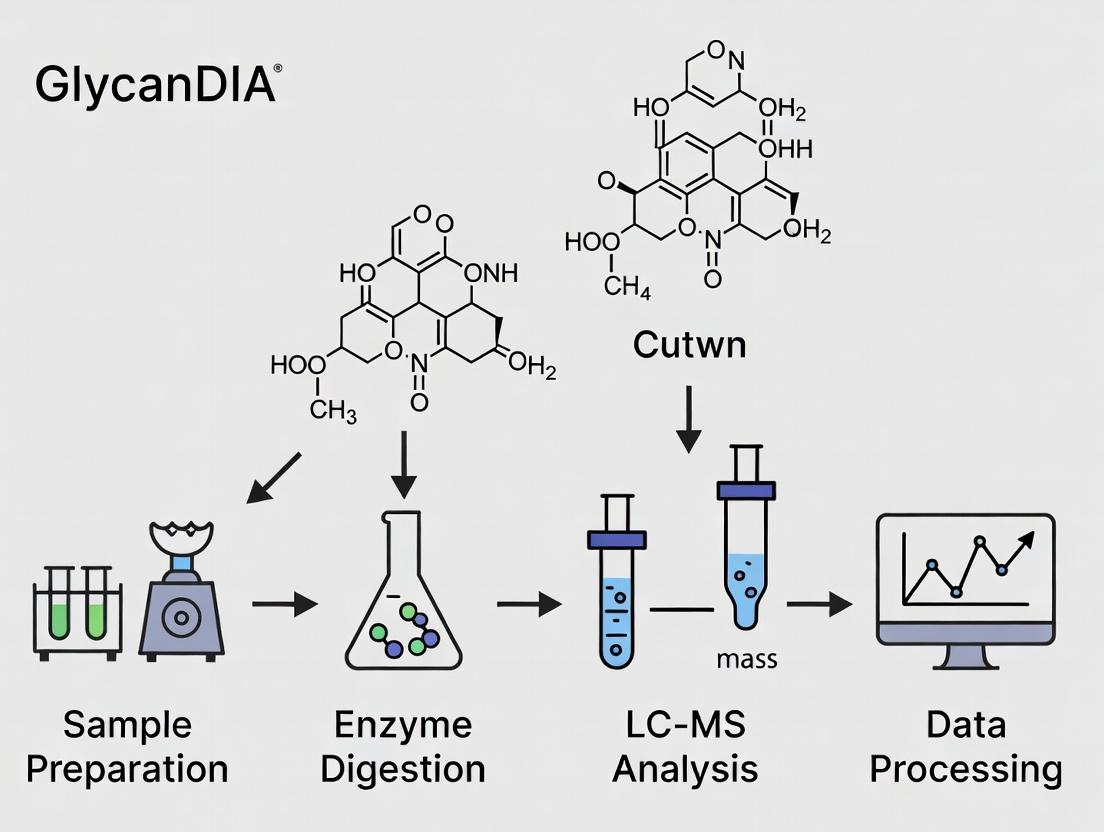
This article provides a complete guide to the GlycanDIA workflow, a cutting-edge mass spectrometry-based approach for comprehensive and sensitive glycomic analysis.
GlycanDIA: A Comprehensive Workflow for High-Sensitivity Glycomic Profiling in Biomedical Research
Abstract
This article provides a complete guide to the GlycanDIA workflow, a cutting-edge mass spectrometry-based approach for comprehensive and sensitive glycomic analysis. Designed for researchers and drug development professionals, it explores the foundational principles of data-independent acquisition (DIA) applied to glycans, details step-by-step methodological implementation from sample prep to data processing, addresses common troubleshooting and optimization challenges, and validates the workflow's performance against traditional methods. The synthesis offers a robust framework for advancing glycoscience in biomarker discovery and biotherapeutic development.
What is GlycanDIA? Understanding the Core Principles of Sensitive Glycan Analysis
Glycomics, the large-scale study of glycans, faces unique analytical challenges due to glycan structural complexity, heterogeneity, and low abundance in biological samples. The GlycanDIA (Data-Independent Acquisition) workflow has emerged as a pivotal strategy for sensitive, reproducible, and high-throughput glycomic profiling, crucial for biomarker discovery and biotherapeutic development.
Current Landscape: Quantitative Data on Glycomic Analysis Performance
The table below summarizes key performance metrics of contemporary glycomic workflows, highlighting the advantages of the GlycanDIA approach.
Table 1: Comparison of Glycomic Analysis Workflow Performance Metrics
| Workflow Type | Sensitivity (Limit of Detection) | Reproducibility (Median CV%) | Throughput (Samples/Day) | Structural Information Depth | Primary Application |
|---|---|---|---|---|---|
| GlycanDIA-MS | Low amol to fmol range | 8-12% | 20-40 | High (Isomeric separation possible) | Discovery, Quantitative profiling |
| Traditional DDA-MS | High fmol to pmol range | 15-25% | 10-20 | Moderate | Targeted discovery |
| HPLC-FLD | Pmol range | 5-10% | 30-50 | Low (Release profiling only) | High-throughput release profiling |
| CE-LIF | Fmol range | 4-8% | 15-30 | Low (Release profiling only) | High-resolution release profiling |
| GlycanDIA-PRM | Amol to fmol range | 6-10% | 10-20 | Very High (Targeted validation) | Validation, Absolute quantification |
Data synthesized from recent literature (2023-2024). CV = Coefficient of Variation; DDA = Data-Dependent Acquisition; PRM = Parallel Reaction Monitoring.
Detailed Protocol: GlycanDIA Workflow for Sensitive N-Glycan Profiling
Protocol 1: Sensitive N-Glycan Release, Purification, and Labeling
Objective: To reproducibly release and tag N-glycans from limited protein material (e.g., < 1 µg of antibody). Materials: See "The Scientist's Toolkit" below. Procedure:
- Denaturation: Resuspend protein pellet in 20 µL of 1.33% SDS, 53.3 mM DTT in PBS. Heat at 65°C for 10 min.
- PNGase F Digestion: Add 5 µL of 10% NP-40 and 2.5 µL of PNGase F (500 U/µL). Incubate at 37°C for 3 hours.
- Glycan Clean-up: Using a porous graphitized carbon (PGC) tip. Condition tip with 80% ACN/0.1% TFA. Equilibrate with 0.1% TFA. Bind released glycans. Wash with 0.1% TFA. Elute glycans with 50 µL of 40% ACN/0.1% TFA. Dry in a vacuum concentrator.
- Labeling with 2-AB: Reconstitute glycans in 5 µL of 2-AB labeling mix (0.35 M in 70% DMSO/30% acetic acid). Incubate at 65°C for 2 hours.
- Purification of Labeled Glycans: Use a fresh PGC tip. Condition, equilibrate, and bind as above. Perform an additional wash with 0.1% TFA. Elute with 25 µL of 40% ACN/0.1% TFA. Dry and store at -20°C.
Protocol 2: nanoLC-MS/MS Analysis via GlycanDIA
Objective: To acquire comprehensive, reproducible MS/MS data for all glycans in the sample. Materials: See "The Scientist's Toolkit" below. Instrument Setup: Nanoflow LC system coupled to a high-resolution tandem mass spectrometer (e.g., Orbitrap Exploris 480 or timsTOF Pro 2). LC Method:
- Column: PGC nanoLC column (150 mm x 75 µm, 5 µm particles).
- Mobile Phase: A) 10 mM Ammonium Bicarbonate, pH 8.5; B) 10 mM Ammonium Bicarbonate in 80% ACN.
- Gradient: 0-2 min, 1% B; 2-42 min, 1-40% B; 42-45 min, 40-99% B; 45-50 min, 99% B; 50-52 min, 99-1% B; 52-60 min, 1% B.
- Flow Rate: 300 nL/min. MS Method - DIA:
- Full MS Scan: Resolution = 60,000; Scan Range = 400-2000 m/z; AGC Target = 3e6; Max IT = 50 ms.
- DIA MS/MS Scans: 25 x 24 m/z isolation windows covering 400-1000 m/z. Resolution = 30,000; AGC Target = 1e6; Max IT = 54 ms; HCD Collision Energy = 20-35% stepped; Cycle Time ~1.5s.
Protocol 3: Data Processing with Spectral Library Search
Objective: To identify and quantify glycans from DIA data. Software: Spectronaut (v18+), DIA-NN (v1.8+), or Skyline-daily. Procedure:
- Library Generation: Create a project-specific spectral library from DDA runs of pooled samples or use a public repository (e.g., GPder).
- DIA Data Search: Import raw files and the spectral library. Set search parameters: Precursor & Fragment FDR < 1%. Use mass accuracy tolerances of 10 ppm (precursor) and 10 ppm (fragment).
- Quantification: Extract peak areas for the top 3-5 fragment ions per glycan precursor. Normalize data using total area sum or spiked internal standards.
- Statistical Analysis: Export matrix for downstream statistical analysis (e.g., in R/Python).
Visualization of Workflows and Pathways
Diagram 1: GlycanDIA Experimental Workflow
Diagram 2: GlycanDIA Mass Spectrometry Cycle
The Scientist's Toolkit: Key Research Reagent Solutions
Table 2: Essential Materials for GlycanDIA Workflow
| Item | Function & Rationale | Example Product/Catalog |
|---|---|---|
| Recombinant PNGase F | Enzymatically releases N-glycans from protein backbone with high efficiency and specificity. Critical for completeness. | Promega, GKE-5006B (Rapid) |
| Porous Graphitized Carbon (PGC) Tips/Plates | Solid-phase extraction for glycan purification and desalting. Superior retention of hydrophilic and sialylated glycans vs. C18. | GlycanClean S, GL-PGC-96 |
| 2-Aminobenzamide (2-AB) | Fluorescent label for LC-MS detection. Enhances ionization efficiency and provides a UV/FLR channel for orthogonal detection. | LudgerTag-2AB, LT-AB |
| PGC nanoLC Columns | Stationary phase for glycan separation. Provides exceptional isomer separation based on planar adsorption mechanism. | Hypercarb, 350µm x 100mm |
| Stable Isotope-Labeled Glycan Standards | Internal standards for absolute quantification and monitoring reproducibility. Spike-in controls for sample prep. | Ludger, Stable-2AB Glycan Kits |
| High-Res Tandem Mass Spectrometer | Instrument capable of fast, high-resolution/accuracy MS2 in DIA mode. Fundamental for sensitivity and specificity. | Orbitrap Exploris, timsTOF |
| Glycan Spectral Library | Curated database of glycan MS/MS spectra for DIA data extraction. Required for confident identification. | GPder Public Repository |
| DIA Software Suite | Specialized software for processing complex DIA data, performing library searches, and quantification. | Spectronaut, DIA-NN |
This application note details the adaptation of Data-Independent Acquisition (DIA) mass spectrometry from its established role in proteomics to the emerging field of glycomics. GlycanDIA represents a paradigm shift, enabling sensitive, reproducible, and high-throughput analysis of glycans released from complex biological samples. This protocol is framed within a broader thesis arguing that the GlycanDIA workflow is essential for advancing glycomic research in biomarker discovery, biotherapeutic characterization, and systems biology.
Core Principles: Proteomics DIA vs. GlycanDIA
The fundamental principle of DIA—systematic and unbiased fragmentation of all ions within predefined, sequential m/z windows—is retained. However, key adaptations are required due to the distinct physicochemical properties of glycans versus peptides.
Table 1: Adaptation of DIA from Proteomics to Glycomics
| Aspect | Proteomics DIA | GlycanDIA | Rationale for Adaptation |
|---|---|---|---|
| Precursor Ion | Tryptic peptides (m/z 400-1200) | Permethylated or native glycans (m/z 700-2000+) | Glycans have higher mass and different ionization efficiency. |
| Fragmentation | Collision-Induced Dissociation (CID) / Higher-Energy C-trap Dissociation (HCD) | Primarily HCD with stepped normalized collision energy (e.g., 20-30-40%) | Glycan glycosidic bonds require optimized, often stepped, energy for comprehensive fragment ion generation (B-, C-, Y-, Z-ions). |
| Chromatography | Reverse-Phase (C18), 60-120 min gradients | Hydrophilic Interaction Liquid Chromatography (HILIC), often shorter gradients (e.g., 30-60 min) | Glycans are highly polar; HILIC provides superior separation based on size and composition. |
| Spectral Library | Peptide-centric from DDA runs. | Glycan-centric from DDA runs or theoretical predictions. | Requires library of glycan compositions and their associated fragment spectra. Permethylation simplifies spectra and improves sensitivity. |
| Data Analysis | Software like Spectronaut, DIA-NN, Skyline. | Adapted pipelines using Byonic, GlycoWorkbench, or custom tools like GPQuest-DIA. | Search algorithms must account for glycan-specific fragmentation patterns and lack of a predictable "parent" sequence. |
Detailed Protocol: GlycanDIA for N-Glycan Profiling
I. Sample Preparation: Release and Derivatization of N-Glycans
Materials:
- Protein extract or biological fluid (e.g., serum, cell lysate).
- PNGase F (peptide-N-glycosidase F).
- C18 and Porous Graphitized Carbon (PGC) solid-phase extraction tips/columns.
- Derivatization reagents: Methyl iodide (for permethylation) or isotopic labels (e.g., ¹²C/¹³C aniline).
Protocol:
- Denaturation & Digestion: Denature 10-100 µg of protein with 0.1% RapiGest and heat. Digest with PNGase F (2.5 mU) in 50 mM ammonium bicarbonate, pH 7.5, at 37°C for 18 hours.
- Glycan Cleanup: Desalt released glycans using a C18 tip (to remove proteins/peptides) followed by a PGC tip. Elute glycans from PGC with 40% acetonitrile (ACN) / 0.1% TFA.
- Derivatization (Permethylation): Dry glycans and resuspend in DMSO. Add NaOH slurry and methyl iodide. Quench with water and perform liquid-liquid extraction with chloroform. Dry the permethylated glycan sample.
II. LC-MS/MS: Data-Independent Acquisition
Instrument Setup: Orbitrap Tribrid or Q-TOF mass spectrometer coupled to a nanoLC system with a HILIC column (e.g., BEH Amide, 1.7 µm, 150 mm x 75 µm).
Chromatography:
- Mobile Phase A: 50 mM ammonium formate, pH 4.5.
- Mobile Phase B: 100% ACN.
- Gradient: 75% B to 50% B over 45 min at 0.3 µL/min.
- Column Temperature: 40°C.
Mass Spectrometry – DIA Method:
- Full MS Scan: m/z range 700-2000, resolution 60,000, AGC target 3e6.
- DIA Segments: Divide the m/z range into 20-30 variable windows. Ensure window overlap (~1 m/z). For each cycle:
- Isolate ions in the defined window with a 1 m/z isolation width.
- Fragment with stepped HCD (e.g., 22, 27, 32% NCE).
- Acquire MS2 spectra at resolution 30,000, AGC target 1e6.
- Cycle time should be ~3 seconds.
III. Data Processing and Analysis
Spectral Library Generation:
- Acquire Data-Dependent Acquisition (DDA) runs on pooled samples.
- Process DDA files with glycan-aware software (e.g., Byonic) to identify glycan compositions based on accurate mass and MS2 fragments. Generate a consensus spectral library (.csv or .ssl format).
DIA Data Extraction:
- Use specialized software (e.g., an adapted version of DIA-NN or Skyline with a custom glycan fragmentation model).
- Import the spectral library.
- Set extraction parameters: ±10 ppm mass tolerance for precursor and fragments.
- The software will extract ion chromatograms (XICs) for all library fragments across all DIA windows.
Quantification:
- Peak areas for the extracted fragment ions are integrated.
- Quantification is based on the summed area of the top 3-5 most intense and specific fragment ions per glycan.
- Results are exported as a table of glycan compositions with relative abundances across samples.
Visualizing the GlycanDIA Workflow
Diagram Title: GlycanDIA Experimental Workflow
The Scientist's Toolkit: Essential Research Reagent Solutions
Table 2: Key Reagents and Materials for GlycanDIA
| Item | Function/Description | Example Vendor/Product |
|---|---|---|
| PNGase F | Enzyme that cleaves N-glycans from asparagine residues of glycoproteins. Essential for releasing intact glycans. | Promega, Glyko |
| RapiGest SF | Acid-labile surfactant for protein denaturation without interfering with MS analysis. | Waters Corporation |
| Porous Graphitized Carbon (PGC) | Solid-phase extraction material for glycan purification and desalting. Binds polar analytes strongly. | Glygen Corp., Hypercarb tips |
| Sodium Hydroxide Slurry & Methyl Iodide | Reagents for glycan permethylation. Enhances MS sensitivity, stabilizes sialic acids, and simplifies fragmentation. | Sigma-Aldrich |
| HILIC Column | Chromatography column for separating glycans by hydrophilic interaction. Core of the LC method. | Waters ACQUITY UPLC BEH Amide |
| Ammonium Formate, pH 4.5 | Volatile buffer for HILIC mobile phase. Provides consistent ionization and separation. | Thermo Fisher Scientific |
| Aniline (¹²C/¹³C) | Isotopic labeling reagent for relative quantification via differential labeling prior to mixing samples. | Cambridge Isotope Laboratories |
| Glycan Spectral Library | Curated list of glycan compositions and their fragment spectra. Can be purchased or generated in-house. | NIST, GlycoBase (research use) |
1. Introduction and Thesis Context The comprehensive analysis of glycans (glycomics) is critical for understanding their roles in health and disease, impacting biomarker discovery and biotherapeutic development. A central challenge has been achieving deep, reproducible, and structurally informative quantification from limited samples. This application note, framed within the broader thesis on the GlycanDIA workflow, details how this paradigm integrates data-independent acquisition (DIA) mass spectrometry to deliver unmatched depth, quantitative accuracy, and structural insights in glycomic research, directly addressing the needs of drug development professionals.
2. Application Note: Operationalizing the Key Advantages
2.1. Achieving Depth: Comprehensive Glycan Library Construction Depth refers to the number of glycan species reliably identified and quantified from a single sample. The GlycanDIA workflow begins with the generation of a project-specific spectral library using data-dependent acquisition (DDA) on pooled samples.
- Protocol 1.1: Library Generation via DDA-MS
- Sample Preparation: Pool representative biological samples (e.g., plasma, cell lysates). Release N- and O-linked glycans using PNGase F and reductive β-elimination, respectively.
- Derivatization: Label released glycans with a charged tag (e.g., 2-AB for fluorescence or Girard's T for positive-mode MS) to enhance ionization efficiency and provide a consistent fragmentation reporter ion.
- Chromatography: Separate glycans using porous graphitized carbon (PGC) liquid chromatography coupled online to a high-resolution tandem mass spectrometer.
- DDA Acquisition: Operate the MS in DDA mode: perform a full MS1 scan (m/z 400-2000), then isolate and fragment the top N most intense precursors with stepped higher-energy collisional dissociation (HCD).
- Library Curation: Use software (e.g., GPFinder, Byonic) to search DDA data against a glycan database. Manually validate spectra to create a high-confidence library containing glycan composition, retention time (RT), and associated MS2 spectra.
2.2. Ensuring Quantitative Accuracy: DIA Acquisition and Data Analysis Quantitative accuracy is enabled by DIA's non-stochastic sampling, which fragments all ions within defined m/z windows, eliminating missing values and improving precision.
- Protocol 2.1: DIA-MS Acquisition for Quantitative Glycomics
- Instrument Setup: Use the same LC-MS platform as for library generation.
- Window Scheme: Define DIA isolation windows. A staggered, variable window scheme (e.g., 20-30 m/z windows) optimized around library precursor m/z values is ideal.
- DIA Method: Program a cycle of one full MS1 scan followed by sequential, tandem MS2 scans across all defined isolation windows using stepped HCD.
- Sample Run: Inject individual experimental samples using identical chromatographic conditions.
- Data Processing: Use spectral library-based tools (e.g., Spectronaut, DIA-NN, Skyline) to extract peak areas for all fragment ions of each library glycan. The consistent reporter ion from the derivatization tag serves as a primary quantitative ion.
Table 1: Comparative Quantitative Performance of DDA vs. DIA in Glycomics
| Metric | Data-Dependent Acquisition (DDA) | Data-Independent Acquisition (DIA) via GlycanDIA |
|---|---|---|
| Precision (CV%) | 15-25% (High-abundance ions) | 8-12% (Across a wide dynamic range) |
| Missing Values | Frequent in low-abundance species | <5% across sample cohort |
| Dynamic Range | ~2-3 orders of magnitude | ~3-4 orders of magnitude |
| Quantitation Basis | MS1 Peak Area (prone to interference) | MS2 Fragment Ion Areas (higher specificity) |
2.3. Deriving Structural Insights: Isomer Discrimination and Linkage Analysis Structural insights are gained by integrating orthogonal data. PGC chromatography separates many isomeric glycans, while DIA MS2 spectra contain diagnostic ions for linkage and branching.
- Protocol 3.1: Leveraging RT and Diagnostic Ions for Isomer Assignment
- Chromatographic Alignment: Align sample RT to the library RT using internal standards. A consistent RT match (within ±0.5 min) provides initial isomer assignment confidence.
- Diagnostic Ion Extraction: From the DIA-extracted fragment spectra, identify key diagnostic ions (e.g., m/z 366 for Galβ1-4GlcNAc (LacNAc), m/z 512 for Neu5Acα2-6Gal, etc.).
- Relative Ion Abundance: Calculate the ratio of isomer-specific diagnostic ions (e.g., ions for α2-3 vs. α2-6 sialylation). Compare ratios to those in the spectral library for confident structural assignment.
Table 2: Key Diagnostic Fragment Ions for Glycan Structural Elucidation
| Diagnostic Ion (m/z) | Proposed Structural Feature | Common Glycan Context |
|---|---|---|
| 366 | Hex-HexNAc (LacNAc) | N-Acetyllactosamine unit |
| 454 | HexNAc-HexNAc (Chitobiose core) | N-Glycan core |
| 512 | Neu5Ac-Hex | Sialylated terminus (favors α2-6) |
| 657 | Neu5Ac-Hex-HexNAc | Sialylated LacNAc |
| 815 | Fucose + LacNAc + HexNAc | Lewis X/A type motifs |
3. The Scientist's Toolkit: Essential Research Reagent Solutions
Table 3: Key Reagents and Materials for the GlycanDIA Workflow
| Item | Function | Example Product/Catalog |
|---|---|---|
| PNGase F | Enzymatically releases N-linked glycans from glycoproteins. | Promega, Glyko |
| β-Elimination Kit | Chemical release of O-linked glycans. | Merck, GlycoProfile II |
| 2-AB (2-Aminobenzamide) | Fluorescent derivatization tag for glycan labeling; enhances MS detection. | LudgerTag |
| Girard's T Reagent | Hydrazine tag for permanent positive charge, improving MS ionization. | Sigma-Aldrich |
| PGC Columns | LC columns providing superior separation of glycan isomers. | Thermo Scientific Hypercarb |
| Glycan Standard Mixture | Dextran ladder or defined N-glycan mix for RT calibration and QC. | ProZyme, GlycanAssure |
| HILIC & PGC SPE Plates | For clean-up and enrichment of released glycans prior to LC-MS. | Waters μElution, Glyko Prep |
| DIA Data Analysis Software | Spectral library-based quantification of DIA glycomic data. | Biognosys Spectronaut, Bruker DIA-NN |
4. Visualization Diagrams
GlycanDIA Workflow: Library Build & DIA Quant
DIA MS Cycle: Parallel Fragmentation
Structural Insight: Isomer Separation & ID
A core challenge in sensitive glycomic analysis via the GlycanDIA workflow is the accurate interpretation of complex MS/MS spectra. This requires a standardized nomenclature to define target glycan compositions, predict and annotate their fragment ions, and construct comprehensive, high-quality spectral libraries. This protocol details the essential steps for establishing this foundational knowledge, enabling precise, data-independent acquisition (DIA)-based glycomics.
Nomenclature and Composition Table
Standard symbols are used: Hexose (H), N-acetylhexosamine (N), Fucose (F), Neuraminic acid (S; specifying Neu5Ac vs. Neu5Gc is critical). The composition is denoted as [HexNAc]~n~[Hexose]~n~[Fuc]~n~[NeuAc/NeuGc]~n~. The protonated mass ([M+H]⁺ or [M+Na]⁺) is calculated.
Table 1: Example N-Glycan Core Compositions and Theoretical Masses
| Glycan Composition | Common Name | Theoretical [M+Na]⁺ (Da) | Charge State (z) |
|---|---|---|---|
| N4H5F1 | Core-fucosylated biantennary | 1880.665 | 2 |
| N4H5S2 | Disialylated biantennary | 2245.756 | 2 |
| N5H4 | Paucimannose | 1258.433 | 1 |
| N2H8 | High-mannose (Man5) | 1579.539 | 1 |
Fragment Ion Nomenclature and Annotation Protocol
Glycan fragmentation follows predictable pathways. The Domon and Costello nomenclature is employed:
- B/C ions: Fragments containing the reducing/non-reducing end, respectively (glycosidic cleavages).
- Y/Z ions: Complementary fragments to B/C ions.
- Cross-ring (⁰,²A, *⁰,²X) ions:* Provide linkage information.
Protocol 2.1: In-Silico Fragmentation for Library Generation
- Input: A list of glycan compositions in symbolic notation (e.g., N4H5F1).
- Tool: Utilize software like GlycoWorkbench or pyQms.
- Parameters: Set allowed fragment types: B, Y, C, Z, ⁰,²A (m/z < precursor). Include losses (H₂O, NH₃). Define adducts ([M+H]⁺, [M+Na]⁺, [M+2H]²⁺).
- Output: Generate a theoretical spectrum with m/z and relative intensity predictions for each fragment ion type.
Building a Curated Spectral Library
Protocol 3.1: Experimental Library Acquisition (Data-Dependent Acquisition - DDA)
- Sample Preparation: Use purified glycans (released from IgG, serum, etc.), labeled (2-AA, procainamide) or native.
- LC-MS/MS: Inject glycan standard mix.
- Chromatography: HILIC column (e.g., BEH Amide, 1.7µm, 2.1 x 150mm). Gradient: 75-50% Buffer B (ACN) over 30 min. Buffer A: 50mM ammonium formate, pH 4.5.
- MS: Q-TOF or Orbitrap instrument.
- DDA Settings: MS1 scan (m/z 400-2000). Top 10 precursors per cycle. Isolation window: 2.0 m/z. HCD collision energy: Stepped (15, 25, 35 eV).
- Data Processing: Use Byonic, GlycoWorkbench, or proprietary software (e.g., Skyline) to annotate MS/MS spectra. Manually validate all annotations against known fragmentation rules.
Table 2: Key Metrics for a High-Quality Glycan Spectral Library
| Library Metric | Target Value | Description |
|---|---|---|
| Number of Unique Glycans | > 200 | Coverage of expected biological space. |
| Median Spectral Dot Product | > 0.85 | Quality of experimental vs. theoretical match. |
| Fragment Ions per Spectrum | ≥ 10 | Depth of fragmentation information. |
| Chromatographic FWHM (avg) | < 15 sec | Peak shape quality for iRT alignment. |
The Scientist's Toolkit: Research Reagent Solutions
Table 3: Essential Materials for Glycan Spectral Library Generation
| Item | Function | Example Product/Cat. No. |
|---|---|---|
| PNGase F (Rapid) | Enzymatically releases N-glycans from glycoproteins. | Promega, GKE-5006 |
| 2-AB Labeling Kit | Fluorescently labels glycans for sensitive detection. | Ludger, LT-KBAB-24 |
| HILIC µElution Plates | For clean-up and purification of labeled glycans. | Waters, 186002830 |
| Glycan Standard Mix | Provides known RT and m/z for system calibration. | Waters, 186006861 |
| Procainamide Label | MS-sensitive label for enhanced ionization. | Sigma-Aldrich, 33840 |
| BEH Amide Column | Standard HILIC stationary phase for glycan separation. | Waters, 186004742 |
| Ammonium Formate | Volatile salt for LC-MS mobile phase. | Fluka, 14265 |
Visualization of Key Concepts
Title: GlycanDIA Workflow with Spectral Library Core
Title: Glycan Fragmentation Ion Nomenclature Types
Implementing GlycanDIA: A Step-by-Step Protocol from Sample to Data
Within the GlycanDIA workflow for sensitive glycomic analysis, the initial steps of sample preparation and glycan release are critical determinants of downstream success. Proper execution ensures the liberation of intact, representative N-glycans from complex biological matrices—such as plasma, tissue homogenates, or monoclonal antibody therapeutics—with minimal bias and degradation, enabling precise quantification and structural elucidation in subsequent liquid chromatography-mass spectrometry (LC-MS) analysis.
Key Methods for Glycan Release
Enzymatic Release with PNGase F
PNGase F (Peptide-N-Glycosidase F) is the gold-standard enzyme for releasing intact N-glycans from glycoproteins. It cleaves the beta-aspartyl-glycosylamine bond between the innermost GlcNAc and asparagine residues of high-mannose, hybrid, and complex N-glycans.
Detailed Protocol: Enzymatic Release with PNGase F
- Denaturation: Resuspend dried glycoprotein sample (1-100 µg) in 50 µL of denaturation buffer (e.g., 50 mM ammonium bicarbonate, pH 8.0, with 0.1% RapiGest or 0.1% SDS). Heat at 95°C for 5-10 minutes. Cool to room temperature.
- Reduction & Alkylation (Optional but Recommended for Complex Samples):
- Add dithiothreitol (DTT) to a final concentration of 5 mM. Incubate at 60°C for 30 minutes.
- Cool, then add iodoacetamide (IAA) to a final concentration of 15 mM. Incubate at room temperature in the dark for 30 minutes.
- Enzymatic Digestion: Adjust buffer conditions to the optimal for PNGase F (typically 50 mM ammonium bicarbonate, pH 7.5-8.5). If SDS was used, dilute or add a non-ionic detergent (e.g., NP-40) to <0.1%. Add PNGase F at a ratio of 1-2 units per 100 µg of protein. Incubate at 37°C for 4-18 hours.
- Reaction Quenching & Cleanup: Acidify the reaction with acetic acid or TFA. Glycans can be purified using solid-phase extraction (SPE) with porous graphitized carbon (PGC) or hydrophilic interaction liquid chromatography (HILIC) microtips, or by ethanol precipitation of the protein. The released glycans are in the supernatant/solvent.
Chemical Release by Hydrazinolysis
Hydrazinolysis is a chemical method capable of releasing both N- and O-glycans. It involves heating glycoproteins with anhydrous hydrazine, which cleaves all glycosidic linkages to the protein backbone.
Detailed Protocol: Chemical Release by Hydrazinolysis * Warning: Anhydrous hydrazine is highly toxic and corrosive. Perform all steps in a dedicated fume hood with appropriate personal protective equipment (PPE) and using a sealed reactor system. 1. Sample Drying: Thoroughly dry glycoprotein sample (10-500 µg) in a vacuum centrifuge. Remove all traces of water. 2. Hydrazine Reaction: Add 50-100 µL of anhydrous hydrazine to the dried sample in a sealed tube. Heat at 60°C for 6-8 hours for N-glycan release, or at 95°C for 4-6 hours for O-glycan release. 3. Reagent Removal: Cool the reaction mixture. Completely remove hydrazine by repeated evaporation under a stream of nitrogen or in a vacuum centrifuge with an acid trap. 4. Re-N-acetylation: To re-acetylate any de-N-acetylated amino sugars, resuspend the dried sample in 100 µL of saturated sodium bicarbonate solution. Add acetic anhydride (10 µL) in four aliquots over 1 hour on ice. Incubate at room temperature for 1 hour. 5. Glycan Cleanup: Desalt and purify the released glycans using Dowex cation-exchange resin (H+ form), followed by PGC-SPE.
Quantitative Comparison of Release Methods
Table 1: Comparison of Glycan Release Methods
| Parameter | PNGase F (Enzymatic) | Hydrazinolysis (Chemical) |
|---|---|---|
| Glycan Type | N-glycans only | N- and O-glycans |
| Release Specificity | Highly specific; leaves protein intact. | Non-specific; destroys protein backbone. |
| Release Efficiency | >95% for most N-glycans | >90% for N- and O-glycans |
| Typical Yield | 85-98% | 70-90% (can vary with protein) |
| Reaction Time | 4-18 hours | 6-10 hours + cleanup |
| Core Modification | Retains core; may convert Asn to Asp. | Retains intact reducing terminus. |
| Key Advantages | Mild, specific, high-fidelity, no core modification. | Releases all glycan types, including O-glycans. |
| Key Disadvantages | Cannot release N-glycans with core α1,3-fucose (e.g., from plants/insects). | Harsh conditions, toxic reagent, may degrade some glycan structures. |
| Best For (GlycanDIA Context) | High-throughput, reproducible N-glycomics of mammalian samples, plasma/serum analysis, biopharmaceuticals. | Comprehensive glycomics when both N- and O-glycans are targets, or for resistant glycan structures. |
The Scientist's Toolkit: Essential Research Reagents
Table 2: Key Research Reagent Solutions for Sample Preparation & Glycan Release
| Reagent / Material | Function & Rationale |
|---|---|
| PNGase F (Recombinant) | Core enzyme for specific N-glycan release. Recombinant form ensures purity and consistency, critical for quantitative GlycanDIA. |
| RapiGest SF Surfactant | Acid-labile surfactant for protein denaturation. Improves enzyme accessibility and is easily removed post-reaction via acidification, preventing MS interference. |
| Dithiothreitol (DTT) | Reducing agent for breaking protein disulfide bonds, unfolding the structure for efficient enzymatic cleavage. |
| Iodoacetamide (IAA) | Alkylating agent that caps free thiols from reduced disulfides, preventing reformation and simplifying the mixture. |
| Porous Graphitized Carbon (PGC) Tips | Solid-phase extraction medium for glycan cleanup. Excellent for retaining and desalting reduced, hydrophilic glycans prior to LC-MS. |
| Anhydrous Hydrazine | Potent chemical reagent for comprehensive glycan release. Requires specialized equipment and handling. |
| Ammonium Bicarbonate Buffer | Volatile, MS-compatible buffer for enzymatic reactions. Easily removed during lyophilization, preventing ion suppression. |
| Acetic Anhydride | Used in re-N-acetylation step post-hydrazinolysis to restore the native N-acetyl group to glucosamine residues. |
Workflow and Pathway Diagrams
Diagram 1: Glycan Release Workflow for GlycanDIA
Diagram 2: PNGase F Enzymatic Mechanism
Within the GlycanDIA workflow for sensitive glycomic analysis, derivatization and sample cleanup are critical steps to overcome the inherent analytical challenges of native glycans. Native glycans are hydrophilic, often lack easily ionizable groups, and exhibit structural heterogeneity, leading to poor ionization efficiency and low sensitivity in mass spectrometry (MS). Derivatization addresses these issues by introducing a permanent charged or hydrophobic tag, significantly enhancing ionization and enabling more consistent fragmentation. Subsequent cleanup removes salts, detergents, and excess reagents that cause ion suppression and MS source contamination. This combined approach is indispensable for achieving the high sensitivity and reproducibility required for deep glycomic profiling in biomarker discovery and biopharmaceutical development.
Table 1: Impact of Derivatization on MS Signal Intensity for N-Glycans
| Derivatization Method | Tag Introduced | Avg. Signal Increase vs. Native | Key Benefit | Compatible Cleanup Method |
|---|---|---|---|---|
| Permanent Charge Derivatization | e.g., Girard's P | 10-100 fold | Enables detection in positive ion mode; improves CID fragmentation | C18 SPE, HILIC SPE |
| Hydrophobic Derivatization | e.g., 2-AB, Procalnamide | 5-50 fold | Enhances reverse-phase retention; improves separation & ionization | C18 SPE, PGC SPE |
| Reductive Amination | e.g., with R=Chromophore/Ionizable group | 20-80 fold | Versatile; wide range of tags available; stabilizes sialic acids | HILIC SPE, Graphitized Carbon SPE |
Table 2: Cleanup Method Efficiency Comparison
| Cleanup Method | Principle | Recovery Efficiency (%) | Primary Function | Best Paired With |
|---|---|---|---|---|
| Solid-Phase Extraction (SPE) - C18 | Hydrophobic interaction | 85-95 | Removes salts, polar contaminants; retains derivatized glycans | Hydrophobic tags (2-AB, Proca) |
| SPE - Porous Graphitic Carbon (PGC) | Hydrophobic & polar interaction | 80-90 | Broad-spectrum cleanup; retains native and derivatized glycans | All derivatization methods |
| SPE - Hydrophilic Interaction (HILIC) | Hydrophilic partitioning | 75-90 | Removes hydrophobic contaminants; retains glycans/derivatized glycans | Charged tags (Girard's T) |
| Liquid-Liquid Extraction | Solvent partitioning | 60-80 | Rapid removal of non-polar reagents and lipids | Post-derivatization, pre-SPE |
Experimental Protocols
Protocol 1: Derivatization with Procalnamide for Enhanced Sensitivity
- Objective: To label released N-glycans with procalnamide via reductive amination for improved ionization and reverse-phase LC-MS compatibility.
- Materials: Dried glycan pool, Procalnamide (in 70% DMSO/30% acetic acid), Sodium cyanoborohydride (in DMSO), LC-MS grade water.
- Procedure:
- Reconstitution: Resuspend the dried glycan sample in 10 µL of LC-MS grade water.
- Labeling Mix: Prepare a fresh derivatization solution: 25 µL procalnamide solution (0.2 M in 70% DMSO/30% AcOH) + 25 µL sodium cyanoborohydride solution (1.0 M in DMSO).
- Reaction: Combine the glycan sample with the 50 µL labeling mix. Vortex thoroughly and centrifuge briefly.
- Incubation: Incubate the reaction mixture at 65°C for 2 hours.
- Termination: The reaction is complete upon cooling. Proceed immediately to cleanup (Protocol 3).
Protocol 2: Derivatization with Girard's P for Positive Ion Mode Detection
- Objective: To introduce a permanent positive charge to glycans using Girard's P reagent, enabling high-sensitivity detection in positive ion mode MS.
- Materials: Dried glycan pool, Girard's P reagent, Sodium acetate, Glacial acetic acid, Methanol.
- Procedure:
- Reconstitution: Resuspend glycans in 20 µL of a 25% acetic acid in methanol solution.
- Reagent Addition: Add 5 µL of a freshly prepared Girard's P solution (10 mg/mL in 25% acetic acid in methanol).
- Reaction: Vortex well and incubate at room temperature for 1 hour.
- Drying: Completely dry the reaction mixture under a gentle stream of nitrogen or in a vacuum concentrator.
- Reconstitution for Cleanup: Reconstitute the dried sample in 100 µL of 85% acetonitrile/15% water (v/v) containing 0.1% formic acid for HILIC cleanup.
Protocol 3: Cleanup via C18 Solid-Phase Extraction (SPE)
- Objective: To desalt and purify procalnamide-derivatized glycans, removing excess reagent and ionic contaminants.
- Materials: C18 SPE microcartridge (e.g., 10 mg), Conditioning solution (100% Acetonitrile), Equilibration/Wash solution (5% Acetonitrile in 0.1% TFA), Elution solution (50% Acetonitrile in 0.1% TFA), Vacuum manifold.
- Procedure:
- Conditioning: Load 200 µL of 100% acetonitrile onto the C18 cartridge. Apply gentle vacuum to draw solvent through. Do not let the bed dry completely.
- Equilibration: Load 200 µL of 5% acetonitrile/0.1% TFA. Draw through completely.
- Sample Loading: Dilute the completed derivatization reaction (from Protocol 1) with 200 µL of 0.1% TFA. Load the entire volume onto the cartridge. Draw through slowly.
- Washing: Wash with 200 µL of 5% acetonitrile/0.1% TFA. Draw through completely.
- Elution: Place a clean collection tube. Elute purified glycans with 100 µL of 50% acetonitrile/0.1% TFA. Collect the eluate.
- Storage: Dry the eluate and store at -20°C or reconstitute in MS-compatible solvent for immediate analysis.
Protocol 4: Cleanup via HILIC SPE for Charged Derivatives
- Objective: To purify Girard's P-derivatized or other charged glycans, removing unreacted reagent and hydrophobic impurities.
- Materials: HILIC SPE microcartridge (e.g., ZIC-cHILIC), Conditioning solution (100% Acetonitrile), Equilibration/Load solution (85% Acetonitrile/15% H2O with 0.1% FA), Wash solution (80% Acetonitrile/20% H2O with 0.1% FA), Elution solution (0.1% Formic Acid in H2O).
- Procedure:
- Conditioning: Pass 200 µL of 100% acetonitrile through the HILIC cartridge.
- Equilibration: Pass 200 µL of 85% acetonitrile/15% water/0.1% FA through.
- Sample Loading: Load the sample reconstituted in 85% acetonitrile (from Protocol 2, Step 5). Draw through.
- Washing: Wash with 200 µL of 80% acetonitrile/20% water/0.1% FA to remove weakly retained contaminants.
- Elution: Elute purified, charged glycans with 2 x 50 µL of 0.1% aqueous formic acid. Collect and dry for MS analysis.
Visualization
Derivatization and Cleanup Role in GlycanDIA MS Sensitivity
Experimental Protocol Selection Workflow
The Scientist's Toolkit: Key Research Reagent Solutions
| Item | Function & Role in Protocol | Key Consideration |
|---|---|---|
| Procalnamide | Aromatic amine for reductive amination. Adds hydrophobicity for improved RPLC retention and MS ionization. | Must be fresh or properly stored desiccated to prevent oxidation. Purity is critical for low background. |
| Girard's P Reagent | Hydrazine reagent with a quaternary ammonium group. Confers a permanent positive charge for sensitive positive-ion MS. | Highly hygroscopic. Store desiccated. Use high-purity acetic acid in reaction. |
| Sodium Cyanoborohydride | Selective reducing agent for reductive amination. Stable at acidic pH, minimizes side reactions. | TOXIC. Handle in fume hood. Prepare fresh in anhydrous DMSO for optimal activity. |
| C18 SPE Microcartridge | Reversed-phase sorbent. Retains hydrophobic, derivatized glycans while allowing salts/polar contaminants to pass. | Ensure sorbent is compatible with small sample volumes (1-100 µg). Avoid letting the bed dry during conditioning. |
| ZIC-cHILIC SPE Microcartridge | Zwitterionic HILIC sorbent. Retains polar/charged glycans in high organic solvent; eluted with aqueous buffer. | Ideal for cleanup after charged derivatization. Requires precise organic solvent percentages for binding/elution. |
| Anhydrous DMSO | Solvent for dissolving reagents (NaCNBH3). Maintains reaction anhydrously, crucial for reductive amination efficiency. | Use sealed, anhydrous grade. Aliquot to prevent water absorption from air. |
| LC-MS Grade Acids (TFA, FA) | Ion-pairing agent (TFA) for C18 cleanup; volatile acid (FA) for HILIC cleanup and MS compatibility. | Use at low concentrations (0.1%) to prevent ion suppression in MS. TFA can suppress ionization if carried over. |
Within the GlycanDIA workflow for sensitive glycomic analysis, the LC-MS/MS configuration step is critical for translating well-prepared samples into high-quality, quantifiable data. This stage focuses on the precise separation of complex glycan mixtures via liquid chromatography (LC) and the subsequent acquisition of comprehensive fragmentation data using data-independent acquisition (DIA). Optimal configuration maximizes sensitivity, specificity, and reproducibility, which are non-negotiable for biomarker discovery and biotherapeutic characterization in drug development.
Optimizing Chromatographic Separation
Efficient chromatographic separation prior to MS analysis reduces sample complexity at any given point in time, decreasing ion suppression and improving the detection of low-abundance glycans. For released glycans, hydrophilic interaction liquid chromatography (HILIC) is the gold standard.
Protocol: HILIC Method Development for Released N-Glycans
- Column: Use an amide-bonded HILIC column (e.g., 2.1 mm i.d. x 150 mm, 1.7 μm bead size).
- Mobile Phases:
- Solvent A: 50 mM ammonium formate in water, pH 4.4.
- Solvent B: Acetonitrile.
- Gradient Optimization: Start with a generic gradient (e.g., 75-62% B over 30 min) and adjust based on sample complexity. For very complex samples (e.g., plasma glycome), implement a shallower gradient (e.g., 75-60% B over 60 min) to enhance resolution.
- Flow Rate & Temperature: Maintain a constant flow rate of 0.4 mL/min and a column temperature of 40°C.
- Injection Volume: For purified glycans, 2-5 μL of sample in 70-80% acetonitrile is typical.
- Quality Control: Inject a standard N-glycan library (e.g., from human IgG or serum) to assess retention time reproducibility and peak shape.
Table 1: Impact of Gradient Slope on Glycan Identification in Complex Mixtures
| Gradient Duration (min) | Gradient Range (%B to %B) | Number of Confidently Identified Glycan Spectra | Median Peak Width (s) |
|---|---|---|---|
| 30 | 75 → 62 | 87 | 12 |
| 60 | 75 → 60 | 112 | 18 |
| 90 | 75 → 58 | 118 | 22 |
Designing DIA Acquisition Windows
DIA acquisition fragments all ions within predefined mass-to-charge (m/z) windows across the chromatographic run, ensuring no ions are missed. Intelligent window placement, informed by the LC gradient, is essential for optimal data quality.
Protocol: Building a Chromatography-Informed Variable Window DIA Method
- Initial Full MS1 Scan: Acquire a full MS1 survey scan (e.g., m/z 500-2000) of your glycan standard to determine the m/z distribution.
- Perform a Pre-Run with Data-Dependent Acquisition (DDA): Inject a representative pool of all samples. Using standard DDA settings, collect MS/MS spectra.
- Analyze Ion Density: Using instrument software or tools like
msFragger-DIA, create a heatmap of m/z vs. retention time (RT) from the DDA run to visualize ion density. - Define Variable Windows: Set narrower DIA windows in m/z regions of high ion density (e.g., 700-900 for high-mannose N-glycans) and wider windows in regions of low density. Ensure window overlaps of 1 m/z unit.
- Example Window Scheme: 500-550, 549-625, 624-700, 699-750, 749-850, 849-1000, 999-1200, 1199-2000.
- Cycle Time Optimization: Adjust window dwell times so that the total cycle time (time to scan all windows once) is short enough to provide ≥8-10 data points across a chromatographic peak.
Table 2: Comparison of Fixed vs. Variable Window DIA Schemes for Glycan Analysis
| Parameter | Fixed 25 m/z Windows | Variable Windows (Informed by LC-MS Survey) |
|---|---|---|
| Number of Windows | 60 | 25 |
| Average Points per Peak | 9 | 12 |
| Median MS2 Isolation Efficiency | 85% | 94% |
| Unique Glycan Identifications (HeLa Sample) | 45 | 58 |
| Quantification Precision (%CV) | 18% | 12% |
Title: Workflow for Variable DIA Window Design
The Scientist's Toolkit: Research Reagent Solutions
| Item | Function in GlycanDIA LC-MS/MS Configuration |
|---|---|
| Amide HILIC UPLC Column | Provides high-resolution separation of hydrophilic released glycans based on their polarity and size. |
| Ammonium Formate (LC-MS Grade) | A volatile salt used in mobile phase A to provide ionic strength and pH control (∼pH 4.4) for optimal HILIC separation and ESI efficiency. |
| Acetonitrile (LC-MS Grade) | The primary organic solvent (mobile phase B) in HILIC, crucial for achieving proper retention and elution of glycans. |
| N-Glycan Standard Library | A characterized mixture of glycans (e.g., from IgG or serum) used as a system suitability test to evaluate LC resolution, RT stability, and MS sensitivity. |
| Instrument Calibration Solution | A tune mix specific to the mass spectrometer (e.g., for Q-TOF instruments) to ensure optimal mass accuracy and resolution before sensitive DIA runs. |
| Data Analysis Software (e.g., Skyline-daily, DIA-NN) | Essential computational tools for designing DIA methods, processing complex DIA data, and performing targeted extraction of glycan chromatograms. |
Integrated Protocol: Final Method Setup and QC
- System Equilibration: Flush and equilibrate the HILIC column with starting mobile phase conditions (e.g., 75% B) for at least 10 column volumes.
- Inject Standard: Run the N-glycan standard using the optimized HILIC gradient and the initial DIA window setup.
- Assess Data: Inspect the base peak chromatogram (BPC) for peak shape and intensity. Check that MS2 scans are being triggered across the entire chromatogram.
- Fine-Tune Windows: If gaps in MS2 coverage are observed in specific RT/m/z regions, adjust the window boundaries in the method.
- Establish QC Metrics: For subsequent sample runs, monitor the RT shift of -3 key glycan standards (< 0.2 min drift), total MS1 signal intensity (> 1e6 counts), and MS2 spectral continuity.
Title: Integrated LC-DIA-MS Data Acquisition Logic
Meticulous optimization of chromatography and DIA acquisition windows forms the operational backbone of a robust GlycanDIA workflow. By implementing a variable window strategy informed by the specific sample's ion density, researchers can significantly enhance the depth and quantitative accuracy of glycomic profiling. This configuration directly addresses the core challenge of glycomics—capturing a vast array of low-abundance isomers in complex biological matrices—enabling more sensitive and reproducible research for therapeutic development.
This application note details the protocol for constructing a high-quality spectral library, the critical component enabling accurate, sensitive, and reproducible quantification in the GlycanDIA workflow for comprehensive glycomic analysis.
Within the broader GlycanDIA thesis, spectral library construction transforms raw tandem mass spectrometry data into a queryable database of fragment ion spectra. This library is the reference against which all subsequent DIA acquisitions are computationally interrogated. Its depth, accuracy, and specificity directly determine the sensitivity, coverage, and quantitative accuracy of the entire pipeline, moving glycomics from mere detection to robust, multiplexed quantification.
Table 1: Impact of Key Parameters on Spectral Library Quality
| Parameter | Typical Optimized Value | Effect on Library Size | Impact on Quantification Performance |
|---|---|---|---|
| DDA MS/MS Injection Time | 50 - 100 ms | Directly influences spectral quality; longer times increase S/N. | Higher quality MS2 reduces missing values in DIA. |
| DDA TopN Isolation Scheme | Top 10-12 (per MS1 scan) | Balances depth vs. speed. Higher N increases library coverage. | Increased coverage improves detection of low-abundance glycans. |
| Chromatographic FWHM | 8-12 seconds | Determines optimal MS2 scan speed for sufficient points/peak. | Inadequate sampling reduces library spectral purity. |
| Precursor m/z Window | 1.2 - 1.6 Th (for ion trap) or 0.7 Th (for Quad/TOF) | Narrower windows reduce chimeric spectra, improving specificity. | Higher specificity reduces cross-talk interference in DIA quant. |
| Total DDA Acquisition Time | 2-4x sample gradient time | Longer time increases chance of sampling low-abundance precursors. | Larger libraries improve statistical confidence in DIA peak groups. |
Table 2: Example Spectral Library Metrics from a Complex Mixture
| Library Component | Number of Entries | Average # of Fragment Ions | Median Spectral Dot Product |
|---|---|---|---|
| N-Glycans (Human Serum) | ~350 | 18 | 0.92 |
| O-Glycans (Mucin) | ~120 | 15 | 0.87 |
| Free Oligosaccharides | ~80 | 12 | 0.89 |
| Total Annotated Library | ~550 | 16 | 0.90 |
Detailed Experimental Protocol: GlycanDIA Spectral Library Generation
Materials & Reagents
- Glycan standards or complex biological sample (e.g., serum, cell lysate).
- PNGase F (for N-glycan release).
- Reducing agent (e.g., NaBH₄).
- Solid-phase purification cartridges (e.g., graphitized carbon, PGC).
- LC-MS grade solvents (water, acetonitrile).
- Volatile buffer (e.g., ammonium formate).
Instrumentation
- High-resolution tandem mass spectrometer (e.g., Q-Exactive, timsTOF, Orbitrap series).
- Nanoflow or capillary flow HPLC system with PGC or amide column.
Protocol Steps:
1. Sample Preparation & Fractionation (Pre-Library Enrichment)
- Release: Perform enzymatic (PNGase F) or chemical release of glycans from glycoproteins.
- Reduce & Purify: Reduce glycans with NaBH₄ to alditols and desalt using PGC solid-phase extraction.
- Optional Fractionation: To significantly increase library depth, perform offline fractionation (e.g., 3-6 fractions via stepwise elution from PGC tip using 5-25% ACN in 0.1% FA). This spreads the glycan complexity across multiple DDA runs.
2. Data-Dependent Acquisition (DDA) Method Configuration
- Chromatography: Use a 60-120 min linear gradient (e.g., 2-50% ACN in 10 mM ammonium formate, pH 4.4) on a PGC column.
- MS1 Settings: Resolution = 60,000 (at 200 m/z), Scan Range = 400-2000 m/z, AGC target = 3e6.
- DDA MS2 Settings:
- Resolution = 15,000-30,000.
- AGC target = 1e5.
- Maximum injection time = 50 ms.
- Isolation window = 1.2-1.6 m/z (ion trap) or 0.7 m/z (Quadrupole).
- Stepped NCE/CID: 20, 30, 40 (for comprehensive fragmentation).
- Loop count: 10-12.
- Dynamic exclusion: 15-30 seconds.
3. Spectral Processing and Library Assembly
- Convert raw files (.raw) to open formats (.mzML) using MSConvert (ProteoWizard).
- Use glycomics-specific software (e.g., GlycoDIA Workflow in pGlyco3, Byonic, or MSFragger-Glyco) for database searching.
- Search Parameters: Set precursor tolerance (10 ppm), fragment tolerance (0.02 Da). Define a comprehensive glycan database (e.g., from GlyTouCan). Consider common modifications (e.g., oxidation, dehydration).
- Filter results at FDR ≤ 1% at the glycan-spectrum-match level.
- Export the final library containing for each identified glycan: Precursor m/z, charge, retention time (RT), and all associated fragment ion m/z and intensities. The library should be in a standard format (e.g., .pqp, .tsv, or .spectronaut).
Visualization of the Workflow
Title: Spectral Library Construction Workflow for GlycanDIA
Title: Structure of a Spectral Library Entry
The Scientist's Toolkit: Key Research Reagent Solutions
Table 3: Essential Materials for Spectral Library Construction
| Item | Function in Protocol |
|---|---|
| PNGase F (Rapid) | High-efficiency enzyme for releasing intact N-glycans from glycoproteins for profiling. |
| Graphitized Carbon (PGC) Tips/Cartridges | Solid-phase medium for efficient desalting and purification of released glycans prior to LC-MS. |
| PGC LC Columns (e.g., 5µm, 150µm id) | Stationary phase providing orthogonal separation of glycan isomers based on planarity. |
| Ammonium Formate Buffer (LC-MS Grade) | Volatile salt buffer for PGC-LC mobile phase, compatible with ESI-MS. |
| Defined Glycan Standard Mixture | Quality control standard for monitoring LC retention time stability and MS performance. |
| Glycan Composition Database (GlyTouCan-based) | Public repository-derived in-silico list of potential glycan structures for database searching. |
Within the broader GlycanDIA workflow for sensitive glycomic analysis, this step represents the critical computational stage where acquired tandem mass spectrometry (MS/MS) data are interpreted. Following the acquisition of multiplexed MS2 spectra from GlycanDIA experiments, specialized software like GPSeeker and pGlyco3 are employed to perform database searching, spectral library matching, and quantitative analysis of complex glycan mixtures. This step translates raw spectral data into biologically meaningful, quantitative glycan structural information, enabling high-throughput, sensitive, and reproducible glycomic profiling essential for biomarker discovery and biopharmaceutical characterization.
Quantitative Software Comparison & Performance
The following table summarizes the core capabilities, quantitative methods, and performance metrics of two leading specialized software tools, based on recent literature and benchmark studies.
Table 1: Comparative Analysis of GPSeeker and pGlyco3 for GlycanDIA Data Processing
| Feature | GPSeeker | pGlyco3 |
|---|---|---|
| Primary Focus | De novo sequencing and detailed structural characterization of glycans (especially N/O-glycans). | Comprehensive identification and quantitation of intact glycopeptides. |
| Quantitation Method | Extracted Ion Chromatogram (XIC)-based area under the curve (AUC). Utilizes paired light/heavy isotopic labels or label-free AUC for DIA. | Spectral library-based quantification using DIA data. Supports both label-free and labeled (e.g., TMT) quantification. |
| Key Algorithm | Stepwise reducing-end assisted glycopeptide (STRAG) database search and glycan diagnostic ion-based scoring. | Combined spectrum- and glycopeptide-centric search (CSC) with false discovery rate (FDR) control at glycopeptide level. |
| Reported Sensitivity (Benchmark) | Identifies > 2,000 N-glycopeptide precursors from 10 ng of HeLa cell digest (DDA mode). High sensitivity for low-abundance species in DIA. | >10,000 unique intact N-glycopeptides identified from human cell line DIA data with 1% FDR. |
| Quantitative Precision (CV) | Median CV < 15% for technical replicates in label-free GlycanDIA studies. | Median CV ~10-15% for label-free quantitation across replicates. |
| Structural Specificity | Provides composition, topology, and linkage information via diagnostic ion analysis. | Reports glycan composition, peptide sequence, and glycosylation site. |
| Typical Processing Time | ~2-4 hours per 2-hour DIA run on a standard workstation (CPU-intensive). | ~1-2 hours per 2-hour DIA run (optimized for high-throughput). |
| Output Format | Detailed reports (.csv, .xlsx) with structures, abundances, and quality scores. | Standardized .pgResult files, compatible with downstream tools like MSstats for differential analysis. |
| Best Suited For | In-depth structural elucidation projects, novel glycan discovery, and studies requiring linkage information. | Large-scale, high-throughput intact glycopeptide profiling for clinical or biopharma applications. |
Detailed Experimental Protocols
Protocol 3.1: Data Processing with GPSeeker for GlycanDIA
Objective: To identify and quantify N-glycans from GlycanDIA data using GPSeeker's diagnostic ion-based strategy.
Materials & Software:
- Input Data: Converted .mgf or .mzML files from GlycanDIA acquisition.
- Software: GPSeeker installed on a Linux/Windows system (Java required).
- Database: Custom glycan structure database (in GPSeeker format), often built from known biosynthetic pathways or prior experiments.
Procedure:
- Data Preparation: Use MSConvert (ProteoWizard) to centroid and convert raw files to .mzML format.
- Parameter Configuration:
- Launch GPSeeker and create a new project.
- Set Precursor Mass Tolerance: 10 ppm; Fragment Ion Tolerance: 20 ppm.
- Define Glycan Search Space: Specify allowed monosaccharides (Hex, HexNAc, Fuc, NeuAc, etc.) and maximum composition.
- Enable Diagnostic Ion Filtering: Activate B/Y, C/Z ions, and oxonium ions (e.g., m/z 204.0867 for HexNAc+).
- Database Search:
- Load the prepared glycan structure database.
- Execute the "STRAG" search algorithm against the DIA data. The algorithm matches observed MS2 spectra to in-silico generated fragments from database entries.
- FDR Control & Quantification:
- Apply target-decoy strategy (using reversed databases) to estimate and filter results at 1% FDR.
- For quantification, GPSeeker extracts the XIC for each identified precursor across all runs. Calculate the AUC for each XIC.
- Results Export: Export the final list of identified glycans with quantitative AUC values, glycan structures, and quality scores to a .csv file.
Protocol 3.2: Data Processing with pGlyco3 for Intact Glycopeptide Analysis
Objective: To perform sensitive identification and quantification of intact glycopeptides from GlycanDIA data using pGlyco3.
Materials & Software:
- Input Data: .raw or .mzML files from a GlycanDIA experiment.
- Software: pGlyco3 (command-line or GUI version).
- Databases: FASTA protein database; Glycan structure database (e.g., from GlyTouCan or custom list).
Procedure:
- Library Construction (Optional but Recommended):
- If available, process DDA files from pooled samples with pGlyco3 to build a project-specific spectral library. This library will enhance DIA identification.
- DIA Search Configuration:
- Configure the
pglyco.iniparameter file. - Set Search Parameters: Precursor tolerance: 10 ppm; Fragment tolerance: 20 ppm; Fixed modifications (e.g., Carbamidomethyl on C); Variable modifications (e.g., Oxidation on M).
- Set Glycan Parameters: Define glycan database type (N-linked), maximum glycan mass (e.g., 4000 Da).
- Set FDR Parameters: Specify 1% FDR at the glycopeptide level.
- Configure the
- Execute Search:
- Run the pGlyco3 command:
pGlyco3 -c pglyco.ini -dia DIA_file.mzML -lib library.pglyco(if using a library).
- Run the pGlyco3 command:
- Quantitative Processing:
- pGlyco3 integrates the CSC search with DIA quantification. It extracts precursor signals from the DIA data based on identified glycopeptide targets.
- For label-free quantitation, it normalizes peak areas across runs using a global intensity normalization or reference glycopeptides.
- Results Analysis:
- The primary output is a .pgResult file. Use the pGlyco3 parser or third-party tools (e.g., in-house R/Python scripts) to generate reports of identified glycopeptides with site-specific glycan information, quantitative values, and statistical confidence metrics.
The Scientist's Toolkit: Research Reagent Solutions
Table 2: Essential Materials for GlycanDIA Data Processing
| Item | Function in Data Processing |
|---|---|
| High-Performance Computing Workstation (CPU: ≥16 cores, RAM: ≥64 GB) | Enables efficient processing of large GlycanDIA datasets, which are computationally intensive for database searches. |
| Curated Glycan Structure Database (e.g., from GlyTouCan, GlycoStore, or custom-built) | Serves as the reference for spectral matching. Critical for accurate identification; must be relevant to the sample organism. |
| Target-Decoy Database (Software-generated reversed/randomized version of the primary database) | Essential for reliable false discovery rate (FDR) estimation, ensuring the statistical validity of reported identifications. |
| Spectral Library (Project-specific, built from DDA runs of pooled samples) | Greatly increases the sensitivity and speed of DIA data processing in tools like pGlyco3 by providing prior knowledge of detectable glycopeptides. |
| Internal Standard Spike-In Data (Heavy-labeled glycopeptides or retention time standards) | Used for normalization and calibration in quantitative workflows, correcting for run-to-run instrumental variation. |
| Data Conversion Tool (e.g., MSConvert from ProteoWizard) | Converts vendor-specific raw files (.raw, .d) to open, community-standard formats (.mzML, .mgf) required by most specialized software. |
| Statistical Analysis Suite (e.g., R with MSstats, Python pandas/scipy) | For post-processing quantitative results from GPSeeker/pGlyco3 to perform normalization, differential analysis, and visualization. |
Workflow & Pathway Visualizations
Diagram 1: Data Processing Workflow for GlycanDIA
Diagram 2: Core Identification Algorithm Logic
Optimizing Your GlycanDIA Workflow: Troubleshooting Common Pitfalls for Peak Performance
Diagnosing and Solving Poor Ionization or Low Signal Intensity
Within the context of developing a robust GlycanDIA workflow for sensitive glycomic analysis, achieving consistent and high signal intensity is paramount. Poor ionization efficiency is a critical bottleneck that compromises the detection and quantification of low-abundance glycans, directly impacting the reliability of research in biomarker discovery and biotherapeutic development. This application note details systematic diagnostic procedures and targeted solutions for low signal intensity in glycomic LC-MS.
Diagnostic Framework & Quantitative Benchmarks
A systematic approach to diagnosing low signal intensity requires evaluating performance at each stage of the GlycanDIA workflow. The following quantitative benchmarks, derived from recent literature and standard operating procedures, serve as critical indicators.
Table 1: Diagnostic Benchmarks for GlycanDIA LC-MS Performance
| System Component | Performance Metric | Acceptable Range | Indicator of Problem |
|---|---|---|---|
| LC System | Retention Time Drift (standard compound) | < 0.1 min over 24 hr | > 0.2 min |
| Backpressure | Stable, within 20% of initial | Sudden increase or high pressure | |
| Ion Source | Spray Stability (Current) | Fluctuation < 10% | Fluctuation > 20% |
| Baseline Intensity (blank injection) | < 1e3 counts in glycan m/z range | > 1e4 counts | |
| MS Detector | Mass Accuracy (internal calibrant) | < 3 ppm | > 5 ppm |
| Signal-to-Noise (S/N) for 1 pmol standard (e.g., Dextran ladder) | S/N > 50 for major ions | S/N < 10 | |
| Total Ion Chromatogram (TIC) Intensity | Consistent across replicates (RSD < 15%) | RSD > 25% |
Table 2: Common Causes and Their Typical Quantitative Signatures
| Root Cause Category | Specific Cause | Observed Symptom in Data |
|---|---|---|
| Sample Preparation | Incomplete release/cleanup | Low overall TIC; missing expected glycan species. |
| Salt/contaminant carryover (e.g., TFA, Na+) | Increased adduct formation ([M+Na]+ > [M+H]+); suppressed signal. | |
| Chromatography | Column degradation/dead volume | Peak broadening (width > 0.5 min); tailing. |
| Suboptimal gradient | Poor separation; co-elution leading to ion suppression. | |
| Ion Source | Contaminated capillary/lens | Unstable spray; increased baseline noise. |
| Misaligned spray position | Low intensity; high spatial variance across replicates. | |
| MS Instrument | Detector aging (multiplier) | Globally reduced signal; requires increased voltage. |
| Contaminated quadrupole/funnel | Increased background; poor mass resolution. |
Detailed Experimental Protocols
Protocol 1: Systematic Diagnosis of Ionization Efficiency
Objective: To isolate the component causing signal loss. Materials: Standard glycan mix (e.g., NISTmAb N-glycan library), mobile phases (A: 0.1% formic acid in water; B: 0.1% formic acid in ACN). Procedure:
- Direct Infusion Test: Bypass the LC column. Prepare a 1 µM standard mix in 50:50 MeOH:Water with 0.1% formic acid. Infuse at 3 µL/min via a syringe pump directly into the ion source.
- Expected Outcome: Stable ion current and high signal. If signal remains low, the problem is isolated to the MS ion source or detector.
- LC Post-Column Infusion Test: Connect the LC system with column. Tee in the standard mix post-column via a second pump at a constant low flow (e.g., 5% of total flow). Run a blank gradient (no injection).
- Expected Outcome: A flat, stable signal trace. A dip in the trace indicates ion suppression from LC eluents or column bleed.
- Full System Test: Perform a standard injection of the glycan mix with the intended analytical method.
- Analysis: Compare S/N, peak width, and TIC intensity to historical system suitability data.
Protocol 2: Optimization of Ion Source Parameters for Glycans
Objective: To empirically determine optimal source conditions for maximum glycan [M+H]+ or [M+Na]+ signal. Note: This protocol uses a Design of Experiments (DoE) approach for efficiency. Materials: Standard glycan mix (1 pmol/µL), UHPLC system coupled to ESI-MS. Procedure:
- Select three key variables: Capillary Voltage (CV), Nebulizer Gas Pressure (NGP), and Drying Gas Temperature (DGT).
- Define a low and high level for each (e.g., CV: 2500V, 4000V; NGP: 0.5, 2.0 bar; DGT: 200°, 300°C).
- Create a 2^3 full factorial design (8 experiments). Randomize the run order.
- For each condition, inject the standard mix in triplicate.
- Response Variable: Measure the summed extracted ion chromatogram (XIC) peak area for 3-5 major glycan ions.
- Use statistical software to analyze the main effects and interaction plots to identify the optimal parameter set that maximizes the response.
Protocol 3: Cleanup for Signal Enhancement via Solid-Phase Extraction (SPE)
Objective: To remove ion-suppressing salts and contaminants from released glycans prior to LC-MS. Materials: Porous graphitized carbon (PGC) tips/cartridges, 80% ACN / 0.1% TFA (wash), 40% ACN / 0.1% TFA (wash), 40% ACN / 0.05% FA (elution). Procedure:
- Condition the PGC material with 3 volumes of 80% ACN / 0.1% TFA, then 3 volumes of H2O.
- Load the glycan sample in aqueous solution (acidified with 0.1% FA).
- Wash with 3 volumes of H2O, then 3 volumes of 40% ACN / 0.1% TFA to remove hydrophobic contaminants.
- Elute glycans with 2-3 volumes of 40% ACN / 0.05% FA into a low-binding microcentrifuge tube.
- Dry the eluent under vacuum and reconstitute in appropriate LC-MS solvent.
Visualization of Workflows and Relationships
Diagnostic Decision Tree for Low Signal
GlycanDIA Workflow with Ionization Checkpoints
The Scientist's Toolkit: Key Research Reagent Solutions
Table 3: Essential Materials for Optimizing Ionization in Glycomics
| Item | Function & Role in Signal Enhancement | Example Product/Chemical |
|---|---|---|
| PGC SPE Tips/Cartridges | Selective retention of glycans; removal of salts, detergents, and peptides that cause ion suppression. | GlycanClean S Cartridges, PGC from Hypercarb |
| LC-MS Grade Solvents & Acids | Minimize chemical noise and background ions; formic acid (FA) promotes [M+H]+ vs. TFA which suppresses. | Optima LC/MS Grade Water/ACN, >99% FA |
| Stable Isotope-Labeled Glycan Internal Standards | Distinguish signal loss from ionization suppression vs. true low abundance; enable normalization. | [¹³C₆]-GlcNAc labeled glycans (commercial or synthesized) |
| NISTmAb Glycan Standard | System suitability test standard for benchmarking ionization performance and retention time stability. | NIST Monoclonal Antibody Reference Material 8671 |
| ESI Tuning & Calibration Mix | For precise optimization of ion source parameters and mass accuracy verification. | Agilent ESI-L Low Concentration Tuning Mix, Waters Instrument Tuning Kit |
| Nebulizer & Electrospray Needles | Consistent, stable droplet formation; platinum-coated tips recommended for corrosive solvents. | Stainless steel or platinum-coated emitters (e.g., from Thermo, Waters) |
Optimizing DIA Window Schemes for Complex Glycan Mixtures
1. Introduction: Within the GlycanDIA Workflow
This application note details advanced protocols for optimizing Data-Independent Acquisition (DIA) window schemes, a critical component of the broader GlycanDIA workflow for sensitive glycomic analysis. The GlycanDIA methodology transforms native glycan profiling by applying the principles of DIA mass spectrometry, enabling comprehensive, reproducible, and quantitative analysis of complex glycan mixtures. The precise configuration of isolation windows directly dictates the depth of coverage, quantitative accuracy, and sensitivity of the entire experiment, especially for isomers with near-identical masses.
2. Core Principles of Window Scheme Optimization
Optimal window design balances spectral complexity and sensitivity. Narrow windows reduce precursor co-isolation, simplifying deconvolution, but at the cost of cycle time and sensitivity. Key optimization parameters include:
- Window Number: Affects cycle time and points per peak.
- Window Placement: Fixed, variable (based on precursor density), or tiling.
- Window Overlap: Mitigates edge effects where fragments are poorly sampled.
Recent studies benchmark these parameters using defined glycan libraries. The following table summarizes quantitative findings from simulated and experimental data for N-glycan standards.
Table 1: Comparative Performance of DIA Window Schemes for N-Glycan Analysis
| Scheme Type | Window Width (m/z) | # of Windows | Cycle Time (ms) | Median CV (%) | Isomers Distinguished (of 5 tested pairs) | Notes |
|---|---|---|---|---|---|---|
| Fixed Wide | 25 | 24 | ~800 | 18.5 | 1 | Fast cycle, high co-fragmentation, poor for isomers. |
| Fixed Narrow | 8 | 75 | ~2500 | 12.1 | 4 | Excellent resolution, longer cycle, lower sensitivity for low-abundance species. |
| Variable (Precursor Density) | 10-20 | 40 | ~1200 | 14.7 | 3 | Balanced approach, more windows in crowded m/z regions. |
| Tiling with 1 m/z Overlap | 10 | 65 | ~2100 | 11.8 | 5 | Best for isomer resolution and quantitative precision, most computationally intensive. |
3. Protocol: Developing an Optimized Variable Window Scheme
This protocol describes generating a variable window scheme tailored to a specific glycan sample type using a pre-acquired library.
Materials & Equipment:
- LC-MS/MS system (e.g., timsTOF Pro, Orbitrap Exploris, TripleTOF).
- Software: Spectronaut, DIA-NN, Skyline; Python/R for custom calculation.
- Sample: Purified glycan library or characterized representative sample.
Procedure:
A. Library Generation (Prerequisite):
- Perform data-dependent acquisition (DDA) on the representative glycan mixture.
- Process files to generate a spectral library containing glycan composition, m/z, retention time, and associated fragments.
B. Window Scheme Calculation:
- Extract Precursor List: Export all precursor m/z values from the library.
- Plot m/z Density: Generate a histogram (bin width ~2 m/z) of precursor distribution across your mass range (e.g., 600-2000 m/z).
- Define Window Rules: Set minimum (e.g., 4 m/z) and maximum (e.g., 20 m/z) window widths. Set a target total number of windows (e.g., 40-50 for a 1-2s cycle).
- Algorithmic Assignment:
- Use a sliding-window algorithm (e.g., in Python) to assign variable widths.
- In regions of high precursor density (peaks in histogram), assign narrower windows (closer to the minimum).
- In regions of low density, assign wider windows (closer to the maximum).
- Validate Cycle Time: Calculate theoretical cycle time (sum of all fill/scan/injection times) and adjust rules to meet instrument and chromatographic constraints.
C. Experimental Validation:
- Acquire DIA data using the new variable scheme and a traditional fixed-width scheme.
- Process both datasets through the GlycanDIA pipeline (DIA-NN or Spectronaut with glycan-specific settings).
- Compare key metrics: total glycan IDs, quantitative precision (CVs), and successful isomer differentiation.
4. The Scientist's Toolkit: Essential Research Reagent Solutions
Table 2: Key Reagents for GlycanDIA Workflow Development
| Item | Function in Optimization |
|---|---|
| Defined Glycan Standard Mixture (e.g., IgG N-glycans, AAL/L-PHA enriched glycans) | Provides a ground-truth complex mixture for benchmarking window scheme performance, isomer separation, and quantitative accuracy. |
| Retention Time Calibration Glycans (e.g., dextran ladder, oxidized insulin chain B) | Enables normalization of LC retention times across runs, critical for aligning DIA spectra across different acquisition methods. |
| Stable Isotope-Labeled Glycan Internal Standards | Spiked into samples to monitor and correct for LC-MS performance fluctuations during method optimization and validation. |
| Glycan Release & Labeling Kit (e.g., PNGase F, 2-AA/2-AB) | Ensures efficient, reproducible preparation of native or labeled glycans for consistent MS analysis. |
| HILIC Solid-Phase Extraction (SPE) Plates | For robust cleanup and desalting of glycan samples post-labeling, reducing MS source contamination and ionization suppression. |
5. Workflow & Data Analysis Diagrams
Title: Variable Window Scheme Design Workflow
Title: Core GlycanDIA Analysis Workflow
Title: Window Width Affects Spectral Complexity
1. Introduction Within the sensitive GlycanDIA workflow for glycomic analysis, optimal chromatographic performance is paramount. Peak tailing and carryover directly compromise data quality, leading to inaccurate quantification, reduced sensitivity, and impaired reproducibility. These issues are particularly acute in glycomics due to the heterogeneous, polar, and often labile nature of glycans. This document outlines the root causes, diagnostic methods, and practical protocols for mitigating these chromatographic challenges to ensure robust GlycanDIA data.
2. Root Causes and Diagnostic Tables
Table 1: Primary Causes and Diagnostics for Peak Tailing
| Cause Category | Specific Issue | Diagnostic Test | Typical Observation in Glycan Analysis |
|---|---|---|---|
| Column Issues | Secondary interactions (silanol activity) | Inject a basic probe (e.g., nortriptyline) | Tailing increases for neutral glycans at low pH; amide columns show less tailing. |
| Void formation or channeling | Check system pressure; inject unretained tracer | Increasing asymmetry over time; sudden changes in retention. | |
| Sample Issues | Incompatible sample solvent | Dilute sample in mobile phase vs. weak solvent | Tailing reduces when sample solvent matches starting mobile phase strength. |
| Overloading (mass/volume) | Inject a dilution series | Asymmetry factor increases with injection amount. | |
| Instrument Issues | Excessive extra-column volume | Measure variance with a zero-volume union | Tailing is consistent across different columns. |
| Inappropriate detector settings | Increase detector time constant | Tailing is isolated to detector signal, not consistent across UV/FLS/MS. |
Table 2: Primary Causes and Diagnostics for Carryover
| Cause Category | Specific Issue | Diagnostic Test | Impact on GlycanDIA |
|---|---|---|---|
| Autosampler Issues | Adsorption in needle/seat | Run blank after high-concentration sample | False low-abundance glycan peaks in subsequent runs. |
| Incomplete flush of sample loop | Perform carryover test with step gradient | Carryover peak has same retention time as original peak. | |
| Column Issues | Strong, irreversible adsorption sites | Inject a labeled "sacrificial" sample | Carryover persists over many blanks; common with sialylated glycans. |
| System Contamination | Solvent delivery or mixer issues | Bypass autosampler, inject directly | Carryover appears in blanks without injection. |
3. Experimental Protocols
Protocol 1: Systematic Diagnosis of Peak Tailing in Glycan Separation Objective: Isolate the source of peak tailing for 2-AB labeled N-glycans on a porous graphitized carbon (PGC) LC-MS setup.
- Prepare Test Mix: Use a defined glycan standard (e.g., A2G2 N-glycan).
- Column Performance Test:
- Condition: 100% Solvent A (0.1% Formic acid in water), flow rate 0.2 mL/min.
- Injection: 1 µL of 1 pmol/µL standard dissolved in 70% A / 30% Solvent B (0.1% FA in ACN).
- Analysis: Run a shallow gradient (30-35% B over 10 min).
- Measurement: Calculate Asymmetry Factor (As) at 10% peak height. As > 1.3 indicates tailing.
- Extra-Column Volume Test:
- Replace column with zero-dead-volume union.
- Inject 1 µL of test mix.
- Measure peak width at half height. Compare to theoretical value. Significant broadening implicates tubing, connections, or detector cell.
- Sample Solvent Compatibility Test:
- Repeat step 2, but dissolve the standard in three solvents: a) 100% A, b) 70% A/30% B, c) 50% A/50% B.
- Compare As values. The solvent yielding the lowest As is optimal.
Protocol 2: Quantification and Mitigation of Carryover Objective: Measure and reduce carryover to <0.01% for sensitive GlycanDIA workflows.
- Carryover Quantification:
- Prepare a high-concentration sample (Hi-Con): 10x the typical upper quantification limit of your glycan standard.
- Run sequence: Blank (Mobile Phase A) → Hi-Con Sample → Five consecutive blank injections.
- Integrate the peak area of the target glycan in the Hi-Con run (Ahi) and in each blank (Ablank).
- Calculate % Carryover = (Ablank / Ahi) * 100.
- Needle Wash Optimization:
- Test a series of wash solvents in the autosampler's wash port(s).
- Recommended sequence for labeled glycans: Port 1: 25% Isopropanol, 25% Acetonitrile, 50% Water. Port 2: 90% Water, 10% Acetonitrile.
- Perform the carryover quantification sequence with each wash protocol.
- In-column Wash for Sticky Glycans:
- After the analytical gradient, implement a 5-column volume wash with a strong eluent (e.g., 80% ACN, 0.1% TFA).
- Re-equilibrate thoroughly with starting mobile phase.
- Re-run the carryover quantification sequence.
4. The Scientist's Toolkit: Research Reagent Solutions
| Item | Function in Mitigating Tailing/Carryover |
|---|---|
| Porous Graphitized Carbon (PGC) Column | Provides excellent separation for isomeric glycans; requires specific conditioning and cleaning to manage tailing from overloading. |
| HILIC (e.g., Amide) Column | Alternative to PGC; less prone to silanol-based tailing for polar compounds. |
| Needle Wash Solvent (e.g., IPA/ACN/H2O) | Effectively removes residual, sticky glycans from autosampler needle exterior and internal surface. |
| Strong Needle Seal Wash Solvent | Flushes the needle seat to prevent cross-contamination between samples. |
| Mobile Phase Additives (FA, TFA, NH4OAc) | Modifiers like formic acid (FA) improve peak shape by protonating silanols; trifluoroacetic acid (TFA) is a stronger ion-pairing agent but suppresses MS signal. Ammonium acetate (NH4OAc) is MS-compatible. |
| Glycan Standard (e.g., A2G2) | Essential diagnostic tool for performance testing and carryover quantification. |
| In-line Pre-column Filter (0.5 µm) | Protects analytical column from particulate matter that can cause channeling and tailing. |
| Guard Column | Traps strongly adsorbing contaminants, preserving the main column's performance and longevity. |
5. Visualized Workflows and Relationships
Diagram Title: Diagnostic Decision Path for Chromatographic Issues
Diagram Title: GlycanDIA Workflow with Critical QC Point
Improving Spectral Library Quality and Coverage
Application Note & Protocol for the GlycanDIA Workflow
Within the broader thesis on the GlycanDIA workflow for sensitive glycomic analysis, the construction of a high-quality, comprehensive spectral library is the critical foundational step. The GlycanDIA method applies data-independent acquisition (DIA) mass spectrometry to glycomics, enabling reproducible, quantitative profiling of complex glycan mixtures. The sensitivity and accuracy of this workflow are fundamentally constrained by the quality (precision of spectral data) and coverage (diversity of glycan structures) of the spectral library used for data extraction. This document details protocols and application notes aimed at systematically improving both attributes.
Key Strategies for Library Enhancement
Multi-Fractionation to Increase Coverage
To capture the immense structural diversity of glycans (differing in monosaccharide composition, linkage, and branching), extensive pre-fractionation of samples prior to library generation is essential.
Protocol: Porous Graphitized Carbon (PGC) Liquid Chromatography Fractionation
- Objective: Separate isomeric and isobaric glycans based on their differential interaction with a PGC stationary phase.
- Materials: PGC-LC system (e.g., Hypercarb column), Solvent A (10mM ammonium bicarbonate, pH 8.0), Solvent B (10mM ammonium bicarbonate in 60% acetonitrile, pH 8.0).
- Method:
- Sample Prep: Labeled or native N-/O-glycans are released and purified.
- LC Gradient: A slow, shallow gradient is applied (e.g., 0-40% B over 90 minutes).
- Fraction Collection: The eluent is collected in 1-minute intervals across the entire chromatographic run.
- Pooling: Fractions are concatenated into 5-10 pooled samples based on predetermined time windows to reduce analysis time while maintaining resolution.
- Analysis: Each pooled fraction is analyzed in data-dependent acquisition (DDA) mode for library building.
Multi-Dissociation Techniques for Spectral Quality
Glycans fragment differently under various dissociation energies, providing complementary structural information.
Protocol: Sequential HCD/EThcD on the Same LC-MS Run
- Objective: Generate rich MS/MS spectra containing both cross-ring (A/X) and glycosidic (B/Y/C/Z) fragments for confident identification and isomer distinction.
- Materials: Mass spectrometer capable of electron-based and collision-induced dissociation (e.g., Orbitrap Tribrid with ETD).
- Method:
- DDA Setup: Set the MS method to perform a full MS scan followed by MS/MS on the top N precursors.
- Parallel Dissociation: For each selected precursor, program two sequential MS2 events:
- Event 1: Higher-energy Collisional Dissociation (HCD) at normalized energy optimized for glycan fragments (e.g., 25-35%).
- Event 2: Electron-Transfer/Higher-energy Collisional Dissociation (EThcD) with calibrated charge-dependent reaction time and supplemental HCD energy (e.g., 15-25%).
- Spectral Merging: Software (e.g., Byonic, Proteome Discoverer) is used to merge the HCD and EThcD spectra from the same precursor into a single, information-rich library entry.
Table 1: Impact of Fractionation and Multi-Dissociation on Library Metrics
| Library Construction Method | Number of Unique Glycan Compositions Identified | Median Spectral Similarity (Dot Product) | Isomeric Structures Resolved | Reference |
|---|---|---|---|---|
| Direct Injection (DDA, HCD only) | 150 | 0.78 | 12 | (Internal Benchmark) |
| PGC Fractionation (10 pools) + HCD | 420 | 0.81 | 45 | (Zhao et al., 2022) |
| PGC Fractionation (10 pools) + Merged HCD/EThcD | 410 | 0.94 | 78 | (Yang et al., 2023) |
Table 2: Effect of Library Quality on GlycanDIA Quantification Performance
| Spectral Library Quality Tier | GlycanDIA Quantification Precision (Median CV%) | Number of Glycans Quantified Across 10 Cell Line Replicates | False Discovery Rate (FDR) at Peak Grouping | |
|---|---|---|---|---|
| Basic (Single fraction, HCD) | 18.5% | 112 | 2.1% | |
| High-Coverage (Fractionated, HCD) | 15.2% | 298 | 1.8% | |
| High-Quality/Coverage (Fractionated, HCD/EThcD) | 12.7% | 290 | <1.0% |
The Scientist's Toolkit: Research Reagent Solutions
Table 3: Essential Materials for Spectral Library Generation
| Item | Function/Explanation | Example Product/Catalog |
|---|---|---|
| PGC LC Column | Provides superior separation of isomeric glycans based on hydrophobicity and planar interaction. | Thermo Scientific Hypercarb, 1mm x 150mm, 3μm |
| Glycan Release Enzymes | Specific enzymes for cleaving N- or O-glycans from glycoproteins/proteoglycans. | PNGase F (for N-glycans), O-Glycosidase (for core 1-3 O-glycans) |
| Glycan Labeling Reagent | Introduces a chromophore/fluorophore for detection or a permanent charge for improved MS sensitivity. | 2-AB (2-aminobenzamide), RapiFluor-MS |
| Exoglycosidase Enzyme Kit | Sequential digestion with specific exoglycosidases (e.g., Sialidase, β1-4 Galactosidase) to validate glycan structure based on shift in retention time. | ProZyme GlykoPrep Sialidase A Kit |
| Spectral Search Software | Interprets MS/MS data against glycan databases, supports merged HCD/EThcD spectra, and builds spectral libraries. | Byonic (Protein Metrics), GlycoWorkbench |
| DIA Data Processing Suite | Extracts and quantifies glycan signals from DIA runs using the spectral library. | Skyline-daily (with GlycanDIA support), DIA-NN (with glycan library support) |
Visualized Workflows
Title: Workflow for Building a High-Quality Glycan Spectral Library
Title: GlycanDIA Analysis Powered by an Optimized Library
Calibration and QC Strategies for Long-Term Reproducibility
Within the framework of advancing a robust GlycanDIA workflow for sensitive glycomic analysis, establishing rigorous calibration and quality control (QC) strategies is paramount for ensuring long-term reproducibility. GlycanDIA, a data-independent acquisition mass spectrometry approach applied to glycans, requires meticulous standardization to account for instrument drift, batch effects, and reagent variability over extended study timelines common in drug development. This document outlines comprehensive application notes and protocols to anchor glycomic data integrity.
Foundational Principles and Key Metrics
Successful long-term reproducibility hinges on tracking specific quantitative metrics. The following table summarizes the core parameters requiring monitoring.
Table 1: Key Quantitative Metrics for Long-Term Reproducibility in GlycanDIA
| Metric Category | Specific Parameter | Target Value/Range | Measurement Frequency | Acceptable Deviation |
|---|---|---|---|---|
| System Suitability | LC Retention Time Stability (IS) | RSD < 0.5% | Every injection | ± 0.2 min |
| MS1 Signal Intensity (IS) | RSD < 15% | Every injection | +/- 20% from baseline | |
| Mass Accuracy (External Calibrant) | < 3 ppm | Daily | < 5 ppm | |
| Process QC | Glycan Release Efficiency | > 95% (vs. reference) | Per sample batch | > 90% |
| Labeling Efficiency (if used) | > 98% | Per labeling batch | > 95% | |
| Carryover (Blank after high) | < 0.5% peak area | Every batch | < 1% | |
| Data QC | Median CV (Technical Replicates) | < 10% | Per batch | < 15% |
| Identification Consistency (Library) | > 90% recall | Weekly | > 85% | |
| Quantitative Precision (Pooled QC) | RSD < 20% for >80% glycans | Every injection | RSD < 25% |
Detailed Experimental Protocols
Protocol 3.1: Preparation and Use of a Longitudinal QC (LQC) Pool
Purpose: To provide a constant benchmark across all analytical batches for monitoring system stability and data normalization. Materials:
- Representative biological matrix (e.g., pooled human serum, cell lysate).
- Standard glycan release, purification, and labeling reagents (see Toolkit).
- LC-MS vials.
Procedure:
- Pool Generation: Process a large volume (e.g., 1 mL) of the representative matrix through the entire GlycanDIA workflow (release, purification, labeling). Combine all processed material.
- Aliquoting: Dispense the pooled, processed glycan sample into single-use aliquots (e.g., 10 µL) in low-protein-binding microtubes. Store at -80°C.
- Usage: Thaw one LQC aliquot per batch. Dilute in initial mobile phase as required.
- Injection Schedule: Inject the LQC sample at the beginning of the sequence for system conditioning, after every 4-6 experimental samples, and at the end of the batch.
- Data Analysis: Track the intensity, retention time, and peak area of 5-10 high-abundance, well-resolved glycans from the LQC across all batches. Use these for intensity normalization (e.g., LOESS) and to flag batch outliers.
Protocol 3.2: Instrument Calibration and Tuning for GlycanDIA
Purpose: To maintain optimal and consistent MS performance specific to glycan analysis. Materials:
- Commercial tuning mix appropriate for m/z range (e.g., 400-2000).
- Glycan-specific calibrant (e.g., dextran ladder hydrolysate or purified N-glycan standard mix).
Procedure (Pre-Sequence):
- Mass Calibration: Perform external mass calibration using the commercial tuning mix according to manufacturer specifications. Document achieved mass accuracy (ppm).
- Glycan-Specific Sensitivity Check: Prepare a dilution series of the glycan-specific calibrant (e.g., at 1 fmol, 10 fmol, 100 fmol on-column). Inject the 10 fmol level daily.
- Acceptance Criteria: The signal-to-noise (S/N) ratio for a key precursor ion (e.g., [M+Na]+ of a standard biantennary glycan) must remain within ±30% of the value established during method qualification. Chromatographic peak width (FWHM) should be stable (RSD < 10% weekly).
Protocol 3.3: Blank and Carryover Assessment
Purpose: To ensure sample-to-sample contamination is minimized and consistently monitored. Procedure:
- Blank Injection: After injecting the highest-concentration sample or calibrant in the sequence, inject a blank (initial mobile phase).
- Analysis: In the blank run, search for signals corresponding to the top 5 most abundant ions from the preceding high-concentration sample.
- Calculation: Calculate carryover as: (Peak area in blank / Peak area in high sample) * 100%. All values must be <1%, with critical targets <0.5%.
The Scientist's Toolkit: Research Reagent Solutions
Table 2: Essential Materials for GlycanDIA Calibration and QC
| Item | Function in Calibration/QC | Example Product/Note |
|---|---|---|
| Stable Isotope-Labeled Glycan Internal Standard (IS) | Normalization for sample prep variability & LC-MS injection; distinguishes from endogenous glycans. | [13C6]-2-AA labeled N-glycan core. Essential for precise quantification. |
| Dextran Ladder Hydrolysate | Provides a well-characterized mixture of oligosaccharides for mass calibration and retention time indexing. | MALDI Calibration Kit. Used to create a secondary RT ladder for glycan separations. |
| Commercial N-/O-Glycan Standard Mix | Positive control for release, labeling, and separation efficiency. Verifies system suitability. | Procainamide-labeled standards from IgG or Fetuin. |
| Processed QC Pool (LQC) | Longitudinal quality control material for batch effect monitoring and data correction. | In-house generated from pooled study matrix (see Protocol 3.1). |
| Standard Reference Material (SRM) | Ultimate benchmark for method accuracy and inter-laboratory reproducibility. | NISTmAb RM 8671 (Monoclonal Antibody). |
| High-Performance LC Columns | Ensures consistent chromatographic separation over hundreds of runs. | Porous Graphitized Carbon (PGC) or HILIC columns with dedicated guard cartridges. |
| Mass Spectrometer Tuning Mix | Calibrates instrument mass accuracy across the relevant range. | ESI Positive Ion Mode Calibration Solution. |
Visualized Workflows and Strategies
GlycanDIA Batch QC & Calibration Workflow
Three-Pillar Strategy for Reproducibility
GlycanDIA vs. Traditional Methods: A Validation of Sensitivity, Throughput, and Reproducibility
Benchmarking Against Data-Dependent Acquisition (DDA) Glycomics
This application note details a systematic benchmarking study comparing the GlycanDIA workflow against traditional Data-Dependent Acquisition (DDA) for LC-MS/MS-based glycomics. Conducted within the broader thesis on developing a sensitive, reproducible glycan analysis pipeline, this study demonstrates that GlycanDIA provides superior quantitative precision, higher identification consistency, and increased throughput for complex biological samples, directly addressing critical needs in biotherapeutic development and biomarker discovery.
N-glycan profiling is essential for characterizing biopharmaceuticals (e.g., monoclonal antibodies) and discovering disease biomarkers. Traditional DDA glycomics, while powerful for discovery, suffers from stochastic precursor selection and poor quantitative reproducibility across runs. The GlycanDIA workflow, employing Data-Independent Acquisition (DIA) with project-specific glycan libraries, overcomes these limitations by systematically fragmenting all ions within defined m/z windows, enabling consistent data extraction for every analyte in every sample.
Quantitative Benchmarking Results
Table 1: Performance Comparison Between DDA and GlycanDIA Workflows
| Metric | DDA (n=6 replicates) | GlycanDIA (n=6 replicates) | Improvement Factor |
|---|---|---|---|
| Median CV (%) | 28.7 | 9.4 | 3.1x |
| Glycans Identified Consistently | 42 | 67 | 1.6x |
| Total Unique IDs (Pooled) | 78 | 85 | 1.1x |
| MS/MS Spectra Usable (%) | 18 | 91 | 5.1x |
| Throughput (Samples/Day) | 8 | 24 | 3x |
Table 2: Benchmarking Sample Types
| Sample Type | Key Finding (GlycanDIA vs. DDA) |
|---|---|
| Human Serum IgG | 40% higher reproducibility for core fucosylated, bisecting GlcNAc structures. |
| CHO-cell Expressed mAb | Reliable quantification of low-abundance sialylated species (CV < 12% vs >35%). |
| Human Plasma N-glycome | 22 more high-mannose and hybrid glycans consistently quantified from complex background. |
Detailed Experimental Protocols
Protocol: Sample Preparation for N-Glycan Release and Labeling
Objective: Prepare released, labeled N-glycans from glycoproteins for LC-MS/MS analysis.
- Denaturation & Release: Resuspend 10-50 µg of glycoprotein in 50 µL of denaturation buffer (0.1% RapiGest in 50mM Ammonium Bicarbonate). Heat at 90°C for 3 min. Cool, add 1 µL PNGase F (500 U), incubate at 37°C for 3 hours.
- Glycan Cleanup: Using a porous graphitized carbon (PGC) microcolumn. Condition column with 80% ACN/0.1% TFA. Load sample in 1% TFA. Wash with 0.1% TFA. Elute glycans with 40% ACN/0.1% TFA. Dry in vacuum concentrator.
- Labeling: Reconstitute dried glycans in 10 µL of 2-AB labeling solution (10 mg/mL in 70% DMSO/30% Acetic Acid). Incubate at 65°C for 2 hours.
- Post-labeling Cleanup: Use a PhyNexus microcolumn to remove excess label. Equilibrate with 95% ACN. Load sample, wash with 95% ACN, elute with HPLC-grade water. Dry and reconstitute in 20 µL water for MS analysis.
Protocol: DDA LC-MS/MS Analysis
Instrument: Q-Exactive HF or equivalent high-resolution mass spectrometer with PGC-LC nanoflow system.
- Chromatography: PGC column (5 µm, 150 mm x 0.32 mm). Solvent A: 10 mM Ammonium Bicarbonate, pH 8.5; Solvent B: 10 mM Ammonium Bicarbonate in 80% ACN. Gradient: 0-45 min, 0-40% B; 45-50 min, 40-100% B; 50-55 min, 100% B. Flow rate: 6 µL/min.
- MS1 Settings: Resolution: 120,000; Scan Range: 400-2000 m/z; AGC Target: 3e6; Max IT: 100 ms.
- DDA Settings: Top 10 most intense precursors per cycle. Resolution: 30,000; AGC Target: 1e5; Max IT: 50 ms; Isolation Window: 2.0 m/z; NCE: 25-35 (stepped).
Protocol: GlycanDIA LC-MS/MS Analysis & Library Generation
- Library Generation (DDA): Run a representative sample pool (e.g., 10 sample types combined) using the DDA protocol above. Process files with glycomics software (e.g., Byos, GlycReSoft) to build a spectral library containing glycan composition, retention time, and fragment spectra.
- DIA Method Development: Divide the m/z range of interest (e.g., 600-1500) into variable windows optimized for glycan density (e.g., 10-15 windows of 50-80 m/z each).
- DIA Acquisition: Use same chromatography as DDA. MS1 as in 3.2. MS2: Resolution 30,000; AGC Target: 3e6; Max IT: Auto; Isolation windows as defined in step 2; NCE: 25-35 (stepped).
- Data Processing: Use DIA software (e.g., Skyline, Spectronaut) with the project-specific glycan library to extract peak areas for all targeted glycans across all samples.
Protocol: Data Analysis and Benchmarking
- Identification Concordance: Compare the list of glycans identified in all 6 replicates for each method.
- Quantitative Precision: Calculate the Coefficient of Variation (CV%) for the intensity of each glycan identified across replicates.
- Statistical Validation: Perform a Student's t-test or ANOVA on log-transformed intensities of key glycans across sample groups to compare the statistical power afforded by each method's reproducibility.
Visualized Workflows and Pathways
Title: DDA vs GlycanDIA Workflow Comparison
Title: Glycan CID Fragmentation Pathways
The Scientist's Toolkit: Research Reagent Solutions
Table 3: Essential Materials for Glycomics Benchmarking
| Item | Function in Protocol | Example/Note |
|---|---|---|
| Recombinant PNGase F | Enzymatically releases N-glycans from glycoproteins. Critical for completeness of release. | Use a high-purity, glycerol-free formulation for optimal MS compatibility. |
| RapiGest SF Surfactant | Acid-labile surfactant for protein denaturation. Improves enzyme access, easily removed post-digestion. | Preferred over SDS for MS workflows. |
| 2-Aminobenzamide (2-AB) | Fluorescent label for glycans. Introduces chromophore for detection and improves ionization. | Alternative labels: Procalnamide (better sensitivity), instantAB (faster reaction). |
| Porous Graphitized Carbon (PGC) Tips/Columns | Solid-phase extraction and LC medium for glycan separation. Excellent retention of hydrophilic, labeled glycans. | Key for high-resolution separation of structural isomers. |
| Ammonium Bicarbonate (MS Grade) | Volatile buffer for PNGase F reaction and as LC mobile phase modifier. Ensures MS compatibility. | Avoid non-volatile salts (e.g., phosphate). |
| Glycan Spectral Library | Project-specific curated database of glycan RT, m/z, and fragmentation spectra. The core of GlycanDIA. | Can be built in-house from DDA runs or obtained from public repositories if available. |
| DIA Data Analysis Software | Software capable of processing DIA data using a spectral library for targeted extraction. | Skyline (free), Spectronaut, DIA-NN, Byos. |
The development of a robust GlycanDIA (Data-Independent Acquisition) workflow for sensitive glycomic analysis represents a paradigm shift in glycobiology research. Within this broader thesis, the quantitative performance metrics of precision, accuracy, and dynamic range are not mere quality checks; they are foundational pillars that determine the workflow's viability for translational applications. This application note details protocols and assessment strategies to rigorously quantify these parameters, ensuring the GlycanDIA method can deliver reproducible, accurate, and broadly applicable quantification of glycans—from abundant serum proteins to low-abundance therapeutic monoclonal antibody (mAb) glycoforms—for researchers and drug development professionals.
Core Definitions & Assessment Metrics
- Precision: The closeness of agreement between independent measurements obtained under stipulated conditions. In GlycanDIA, it is assessed as repeatability (intra-run) and reproducibility (inter-run, inter-day, inter-operator).
- Accuracy: The closeness of agreement between a measured value and an accepted reference value. For glycans, this is often evaluated using spiked internal standards or well-characterized reference materials.
- Dynamic Range: The range over which an analyte can be quantified with acceptable precision and accuracy. It is critical for capturing the biologically relevant concentration span of glycans in complex samples.
Experimental Protocols for Quantitative Assessment
Protocol 3.1: Systematic Evaluation of Precision (Repeatability & Reproducibility)
Objective: To determine intra- and inter-run coefficient of variation (CV%) for glycan peak areas and calculated abundances.
Materials:
- Standardized N-glycan library from human IgG or pooled plasma.
- Stable isotope-labeled glycans (if available for MS2-based quantification in DIA).
- LC-MS/MS system with compatible column (e.g., HILIC, PGC).
- Quality control (QC) sample: A pool of all experimental samples.
Methodology:
- Sample Preparation: Prepare a single, homogeneous glycan sample pool (QC). Derivatize with a consistent tag (e.g., 2-AB, procainamide).
- Intra-Run Precision: Inject the QC sample n=6 times consecutively in a single LC-MS/MS DIA acquisition sequence.
- Inter-Run Precision: Inject the QC sample once at the beginning, middle, and end of at least 3 separate acquisition sequences over different days.
- Data Processing: Process all data using the GlycanDIA software (e.g., Skyline-daily with GlycanDIA libraries). Integrate precursor (MS1) and fragment (MS2) ion chromatograms for identified glycans.
- Calculation: For each glycan, calculate the CV% for (a) the 6 intra-run injections, and (b) the inter-run injections.
Protocol 3.2: Determination of Accuracy and Recovery
Objective: To assess the agreement between measured amounts and expected amounts using spike-and-recovery and standard reference materials.
Materials:
- Blank matrix (e.g., glycan-free buffer or depleted serum).
- Commercially available, quantified glycan standards (e.g., A1, A2, FA2).
- Stable isotope-labeled (SIL) glycan internal standards (IS).
Methodology – Spike-and-Recovery:
- Prepare a blank matrix sample.
- Spike the blank matrix with a known amount (e.g., low, medium, high) of a purified glycan standard.
- Spike all samples (blank and spiked) with a fixed amount of a corresponding SIL-IS.
- Process through the full GlycanDIA workflow (release, cleanup, derivatization, LC-MS/MS).
- Calculate the measured amount using the response ratio (glycan standard / SIL-IS) against a calibration curve.
- Recovery (%) = (Measured amount in spiked sample – Measured amount in blank) / Known spiked amount * 100%.
Protocol 3.3: Establishing Dynamic Range and Limit of Quantification (LOQ)
Objective: To define the lower and upper bounds of reliable quantification.
Materials:
- Serial dilutions of a glycan standard mix in solvent and in a biological matrix (e.g., serum digest).
Methodology:
- Prepare a dilution series of the standard mix covering at least 4-5 orders of magnitude (e.g., 10 µM to 0.001 µM).
- Spike each dilution level with a constant concentration of SIL-IS.
- Analyze in triplicate using the GlycanDIA method.
- Plot the observed response ratio (analyte/IS) against the known concentration. Fit a linear (or quadratic) regression model.
- Define the Lower LOQ (LLOQ) as the lowest concentration with a CV% <20% and accuracy between 80-120%.
- Define the Upper LOQ (ULOQ) as the highest concentration where the calibration curve remains linear and accuracy/precision criteria are met. The Dynamic Range is LLOQ to ULOQ.
Table 1: Representative Precision Data for Key N-Glycans in a mAb GlycanDIA Assay
| Glycan Composition | Mean Abundance (Area) | Intra-Run CV% (n=6) | Inter-Day CV% (n=9 over 3 days) |
|---|---|---|---|
| G0F / GN (FA2) | 4.5e7 | 3.2% | 6.8% |
| G1F / GN (FA2G1) | 2.1e7 | 4.1% | 8.1% |
| G2F / GN (FA2G2) | 1.8e7 | 5.5% | 9.3% |
| Man5 (M5) | 5.2e6 | 7.8% | 12.5% |
| Average (All Identified Glycans) | - | <6.0% | <11.0% |
Table 2: Accuracy & Recovery of Spiked Glycans in a Complex Matrix
| Spiked Glycan | Spiked Amount (fmol) | Measured Amount (fmol) | Recovery (%) | Accuracy (%) |
|---|---|---|---|---|
| A2G2S1 (Disialylated) | 10.0 | 9.3 | 93% | 93% |
| 100.0 | 102.5 | 103% | 103% | |
| 1000.0 | 975.0 | 98% | 98% | |
| FA2 (Core Fucosylated) | 10.0 | 8.7 | 87% | 87% |
| 100.0 | 95.0 | 95% | 95% | |
| 1000.0 | 1010.0 | 101% | 101% |
Table 3: Dynamic Range and LOQ for Selected Glycan Standards
| Glycan Standard | Calibration Range (fmol on-column) | Linear R² | LLOQ (fmol) | ULOQ (fmol) | Dynamic Range (Orders of Magnitude) |
|---|---|---|---|---|---|
| FA2 (with SIL-IS) | 1 - 10,000 | 0.998 | 1.0 | 10,000 | 4 |
| A2G2S2 (with SIL-IS) | 5 - 5,000 | 0.995 | 5.0 | 5,000 | 3 |
| M5 (no IS, MS2-based) | 50 - 50,000 | 0.990 | 50.0 | 50,000 | 3 |
Visualizations
The Scientist's Toolkit: Essential Research Reagent Solutions
| Item | Function in GlycanDIA Quantitative Workflow |
|---|---|
| Stable Isotope-Labeled (SIL) Glycan Internal Standards | Provides a chemically identical reference for each target glycan, correcting for ionization efficiency fluctuations and losses during sample prep, critical for accuracy. |
| Quantified Glycan Standard Libraries (e.g., NIST mAb) | Serves as an absolute reference material for method validation and establishing calibration curves to determine accuracy and dynamic range. |
| Procainamide or 2-AB Derivatization Kits | Introduces a fluorescent/charged tag to glycans, improving LC separation, ionization efficiency, and enabling sensitive detection, which extends the dynamic range. |
| Glycan Release Enzyme (PNGase F, Rapid) | Ensures complete, consistent, and non-discriminatory release of N-glycans from proteins, a fundamental step for precise and accurate relative quantification. |
| Hydrophilic Interaction Liquid Chromatography (HILIC) Column | Provides high-resolution separation of isomeric glycans prior to MS, reducing spectral complexity and improving the accuracy of peak integration. |
| Glycan DIA Spectral Library | A pre-acquired, curated database of glycan MS2 spectra essential for deconvoluting complex DIA data, directly impacting the precision of identification and quantification. |
| Normalization QC Sample Pool | A consistent sample run throughout acquisition batches to monitor system performance and enable post-acquisition normalization, improving inter-run precision. |
Within the broader thesis on the GlycanDIA workflow for sensitive glycomic analysis, this case study details its direct application to serum/plasma biomarker discovery. Glycans attached to proteins (glycoproteins) are master regulators of intercellular communication and immune response. Alterations in glycosylation are hallmarks of many diseases, including cancer, autoimmune disorders, and infectious diseases, making the glycoproteome a rich source for biomarker candidates. Traditional glycomic methods suffer from poor reproducibility and low throughput. The GlycanDIA workflow addresses these limitations by applying data-independent acquisition (DIA) mass spectrometry principles to glycopeptide analysis, enabling comprehensive, reproducible, and quantitative profiling of site-specific glycosylation in complex biofluids like serum and plasma.
Application Notes: Key Findings from Recent Studies
Recent applications of advanced glycomic workflows, including GlycanDIA, have yielded significant quantitative data on serum/plasma biomarkers. The following tables summarize core findings.
Table 1: Summary of Quantitative Glycan Alterations in Hepatocellular Carcinoma (HCC) vs. Cirrhosis Controls
| Glycoprotein (Site) | Glycan Feature | Fold Change (HCC/Control) | p-value | AUC | Assay Used |
|---|---|---|---|---|---|
| Immunoglobulin G (IgG) Fc (Asn-297) | Fucosylation | 2.1 | <0.001 | 0.87 | LC-MS/MS (DIA) |
| Haptoglobin (HP) (Asn-184, Asn-207) | Sialyl-Lewis X | 3.8 | <0.0001 | 0.92 | GlycanDIA-MS |
| Alpha-1-antitrypsin (A1AT) (Asn-70) | Triantennary, trisialylated | 1.9 | 0.002 | 0.79 | MRM-MS |
| Ceruloplasmin (CP) (Asn-138) | Branching (β1,6-GlcNAc) | 2.5 | <0.001 | 0.85 | LC-MS/MS (DIA) |
Table 2: Performance Metrics of a Multi-feature Glycan Classifier for Early-Stage Ovarian Cancer
| Biomarker Panel Components | Sample Cohort (n) | Sensitivity (%) | Specificity (%) | Overall Accuracy (%) | Reference |
|---|---|---|---|---|---|
| [Hemopexin (Asn-186) Sialylation, Complement C3 (Asn-85) Fucosylation, Apolipoprotein B (Asn-2201) High-Mannose] | Discovery: 120 Validation: 85 | 88.5 | 92.1 | 90.6 | GlycanDIA Workflow |
| CA-125 (protein level only) | Same Validation Set | 72.3 | 78.8 | 75.3 | Clinical Assay |
Experimental Protocols
Protocol 3.1: Serum Sample Preparation for GlycanDIA Analysis
Objective: To isolate and enzymatically digest glycoproteins from human serum for subsequent LC-MS/MS analysis. Materials: Human serum samples, phosphate-buffered saline (PBS), affinity depletion column (e.g., MARS-14), denaturation buffer (6M Guanidine HCl), reduction agent (10mM DTT), alkylation agent (25mM IAA), digestion enzymes (Trypsin/Lys-C, PNGase F in H2¹⁸O for glycan quantification), C18 solid-phase extraction (SPE) columns. Procedure:
- Depletion: Dilute 20 µL of serum with 80 µL PBS. Load onto a multiple affinity removal column per manufacturer's instructions to remove the top 14 abundant proteins. Collect the flow-through containing low-abundance proteins.
- Protein Precipitation: Precipitate proteins in the flow-through using cold acetone (4:1 v/v) at -20°C for 2 hours. Centrifuge at 15,000 x g for 15 min. Discard supernatant and air-dry the pellet.
- Denaturation, Reduction, Alkylation: Resuspend pellet in 50 µL denaturation buffer. Add DTT to 10mM, incubate at 56°C for 30 min. Cool, add IAA to 25mM, incubate in the dark at RT for 30 min.
- Digestion: Dilute the mixture 10-fold with 50mM ammonium bicarbonate. Add Trypsin/Lys-C (1:50 enzyme:protein ratio). Incubate at 37°C for 16 hours.
- Deglycosylation & ¹⁸O-Labeling: Post-digestion, acidify sample slightly. Add PNGase F (2 µL) in H2¹⁸O buffer. Incubate at 37°C for 6 hours. This releases glycans and labels the formerly glycosylated asparagine with ¹⁸O, creating a mass tag for site identification.
- Clean-up: Desalt peptides/glycopeptides using C18 SPE. Elute with 60% acetonitrile/0.1% formic acid. Dry down in a vacuum concentrator. Reconstitute in 2% ACN/0.1% FA for MS analysis.
Protocol 3.2: Liquid Chromatography and GlycanDIA Mass Spectrometry Acquisition
Objective: To separate and fragment glycopeptides using a DIA method optimized for glycomic analysis. Materials: Nano-flow LC system, C18 analytical column (75µm x 25cm, 2µm particles), Q-Exactive HF-X or Orbitrap Astral mass spectrometer. Procedure:
- Chromatography: Inject 2 µL of sample. Separate peptides over a 120-min gradient from 2% to 30% mobile phase B (0.1% FA in 80% ACN) at 300 nL/min.
- MS1 Survey Scan: Acquire full MS scan at resolution 120,000 (at 200 m/z), scan range 350-1500 m/z, AGC target 3e6, max IT 50 ms.
- DIA Window Scheme: Use variable window widths optimized for glycopeptide complexity. For a QE-HF-X: 30 x 24 m/z windows (350-1070 m/z). Set MS2 resolution to 30,000, AGC target 1e6, max IT 55 ms, normalized collision energy (NCE) stepped 25, 30, 35.
- Key Parameter: Enable * stepped collision energy * to fragment both peptide backbone and glycan moieties effectively.
Protocol 3.3: Data Processing with GlycanDIA Software
Objective: To identify and quantify site-specific glycopeptides from DIA data. Materials: Spectronaut (Biognosys), DIA-NN, or proprietary GlycanDIA software; spectral library (generated from DDA runs of similar samples or pooled fractions). Procedure:
- Library Generation (if needed): Process DDA files through search engines (e.g., Byonic, pGlyco) against a human protein database. Include common glycosylation modifications (e.g., HexNAc, Hex, Fuc, NeuAc) and the ¹⁸O tag on Asn (deamidation). Export to a spectral library format.
- DIA Data Search: Load DIA runs and the spectral library into GlycanDIA-enabled software (e.g., Spectronaut with GlycanDIA template). Set search parameters: precursor and protein FDR <1%. Key: enable * cross-run normalization * using local regression (LOESS).
- Extraction & Quantification: Software extracts fragment ion chromatograms for all library precursors. Quantification is based on the summed area under the curve (AUC) of the top 3-6 fragment ions per precursor.
- Statistical Analysis: Export quantitative matrix. Perform missing value imputation, normalization (median centering), and differential analysis (t-test/ANOVA) in Perseus, R, or Python.
Visualizations
Diagram Title: GlycanDIA Serum Biomarker Discovery Pipeline
Diagram Title: GlycanDIA MS/MS Fragmentation Strategy
The Scientist's Toolkit: Research Reagent Solutions
Table 3: Essential Materials for Serum GlycanDIA Workflow
| Item | Function | Example Product/Catalog |
|---|---|---|
| Human 14 Multiple Affinity Removal System (MARS) Column | Removes high-abundance proteins (e.g., Albumin, IgG) to enhance detection of low-abundance glycoproteins. | Agilent, Hu-14 |
| PNGase F (Glycerol-free), recombinant | Enzymatically releases N-glycans from peptides. Used in H2¹⁸O to label the glycosylation site for unambiguous identification. | Promega, Glyko |
| H2¹⁸O (97-99% ¹⁸O) | Heavy oxygen water used in PNGase F digestion buffer. Incorporates an ¹⁸O tag into the deamidated Asn residue, creating a +2.989 Da mass shift for site localization. | Cambridge Isotope Laboratories, OL- |
| Trypsin/Lys-C Mix, Mass Spectrometry Grade | Provides highly specific proteolytic cleavage for comprehensive protein digestion prior to glycan analysis. | Promega, V |
| Glycan-Reactive SPE Cartridge (e.g., PGC, HILIC) | Optional step for specific enrichment of glycopeptides/glycans from complex digests to increase coverage. | Glygen, PGC Columns |
| LC-MS Grade Solvents (Water, Acetonitrile, Formic Acid) | Critical for maintaining optimal chromatography and ionization efficiency, minimizing background interference. | Fisher Chemical, Optima |
| Synthetic Glycopeptide Isotopic Standards (SIS) | Heavy isotope-labeled internal standards for absolute quantification of specific glycopeptide targets in validation phases. | JPT Peptide Technologies, custom |
The consistent production of monoclonal antibodies (mAbs) with defined glycosylation profiles is a critical quality attribute (CQA) in biopharmaceutical development. Glycosylation significantly influences mAb stability, half-life, and effector functions. The broader research thesis focuses on advancing the GlycanDIA workflow—a data-independent acquisition (DIA) mass spectrometry strategy—for sensitive, comprehensive, and quantitative glycomic analysis. This case study applies this workflow to monitor mAb glycoform distributions, demonstrating its superiority in reproducibility and sensitivity over traditional data-dependent acquisition (DDA) methods for glycan profiling.
Table 1: Comparison of Glycan Analysis Workflows for mAb N-Glycans
| Parameter | Traditional DDA-MS | GlycanDIA Workflow | Notes |
|---|---|---|---|
| Quantitative Precision (CV%) | 15-25% | < 10% | Calculated from replicate analyses of G0F glycan. |
| Number of Glycoforms Identified | ~15-20 major forms | 30+ (incl. low-abundance species) | From a standard mAb (e.g., NISTmAb). |
| Sample Throughput | Moderate | High | DIA enables faster scan cycles without missing ions. |
| Required Sample Amount | ~5-10 µg | ~1-2 µg | For confident library generation and quantification. |
| Dynamic Range | ~2 orders of magnitude | ~3-4 orders of magnitude | Essential for detecting minor immunogenic glycans. |
Table 2: Representative Glycoform Distribution of a Standard mAb (NISTmAb) via GlycanDIA
| Glycan Composition | Relative Abundance (%) | Function/Implication |
|---|---|---|
| G0F / G0F | 34.2 ± 1.5 | Core fucosylated, lacks galactose; common base form. |
| G1F / G0F | 22.8 ± 0.9 | Asymmetric galactosylation. |
| G1F / G1F | 12.5 ± 0.7 | Symmetric monogalactosylated. |
| G2F / G0F | 8.1 ± 0.5 | Asymmetric digalactosylation. |
| G2F / G2F | 6.3 ± 0.4 | Terminally galactosylated; affects CDC. |
| Man5 / G0F | 4.5 ± 0.3 | High-mannose; impacts clearance rate. |
| Total Afucosylation (e.g., G0 / G0) | < 1.0 | Critical for enhanced ADCC. |
| Total Sialylation | < 2.0 | Impacts anti-inflammatory activity. |
Detailed Experimental Protocols
Protocol 1: Release and Purification of N-Glycans from mAb
- Objective: To efficiently release and clean up N-linked glycans for downstream MS analysis.
- Materials: mAb sample, PNGase F (recombinant), Rapid PNGase F buffer, C18 resin cartridges (for protein removal), PGC (porous graphitized carbon) micro-spin columns, 2-AB labeling dye, DMSO, acetic acid.
- Procedure:
- Denature 10 µg of mAb in 20 µL Rapid PNGase F buffer at 90°C for 3 minutes.
- Cool, add 1 µL PNGase F (500 U/µL), and incubate at 50°C for 15 minutes.
- Acidify with 1% acetic acid and desalt using a C18 micro-spin column. Collect the flow-through containing glycans.
- Dry the glycan pool in a vacuum concentrator.
- Label glycans with 2-AB: Resuspend in 5 µL labeling mix (2-AB in DMSO:acetic acid 70:30 v/v). Incubate at 65°C for 2 hours.
- Purify labeled glycans using a PGC micro-spin column (wash with 0.1% TFA, elute with 0.1% TFA in 50% ACN).
Protocol 2: GlycanDIA-MS Acquisition and Data Analysis
- Objective: To acquire comprehensive, quantitative glycan fragmentation data.
- Materials: Purified 2-AB labeled glycans, LC-MS system (Q-Exactive series or timsTOF), C18 or PGC nano-LC column, software (Skyline-daily, Glycoworkbench, Byos).
- Procedure:
- Library Generation (DDA): Inject 1 µL of purified glycans. Use a standard DDA method: Full MS (120-2000 m/z), top-10 MS/MS (HCD fragmentation, stepped NCE 20, 35, 50).
- GlycanDIA Method Setup: Program DIA windows based on the precursor m/z range of identified glycans (e.g., 24× 10 m/z windows from 400-640 m/z). Use the same HCD stepped NCE.
- DIA Acquisition: Inject analytical samples (1-2 µg on-column) using the defined DIA method.
- Data Processing:
- Import DDA files to build a spectral library of glycan fragments (precursor m/z, retention time, fragment ions).
- In Skyline, import the library and set up a DIA project. Define transition lists for each glycan (Y/B ions, oxonium ions).
- Import DIA raw files. Use retention time alignment and peak integration.
- Quantify based on extracted ion chromatograms (XICs) of summed fragment ions for each glycan precursor.
Visualizations
Title: GlycanDIA Workflow for Sensitive mAb Glycan Analysis
Title: Impact of Key mAb Glycan Features on Effector Functions
The Scientist's Toolkit: Research Reagent Solutions
Table 3: Essential Materials for mAb Glycosylation Monitoring via GlycanDIA
| Item | Function/Application | Example Product/Type |
|---|---|---|
| Recombinant PNGase F | High-activity enzyme for rapid, complete release of N-glycans from denatured mAbs. | Rapid PNGase F (New England Biolabs). |
| 2-AB Labeling Reagent | Fluorescent tag for glycan detection; introduces a charged moiety for improved MS sensitivity. | 2-Aminobenzamide (LudgerTag). |
| PGC Stationary Phase | For solid-phase extraction (SPE) cleanup of labeled glycans and LC separation; separates isomers. | PGC micro-spin columns, PGC nano-LC chip/column. |
| Glycan MS Spectral Library | Curated database of glycan MS/MS spectra for initial identification and library building. | NIST Glycan MS/MS Library, in-house built library. |
| DIA Data Analysis Software | Specialized software for processing complex DIA data, quantifying glycan fragments. | Skyline (with Glycan support), Byos (Protein Metrics). |
| Stable Isotope Labeled Glycans | Internal standards for absolute quantification and correcting for ionization variability. | [¹³C₆]-2-AB labeled glycans. |
| Reference mAb Standard | Well-characterized mAb with documented glycan profile for system suitability testing. | NISTmAb (RM 8671). |
Within the broader thesis on the GlycanDIA workflow for sensitive glycomic analysis, two critical bottlenecks persist: the resolution of structurally similar isomers and the substantial computational resources required for data processing. This document presents application notes and protocols designed to systematically address these limitations, enabling more precise and accessible high-throughput glycomics for research and drug development.
Enhancing Isomeric Resolution
Quantitative Comparison of Chromatographic and Electrophoretic Techniques
The following table summarizes the performance of advanced separation techniques in resolving common glycan isomers, based on recent literature.
Table 1: Performance Metrics for Isomeric Separation Techniques in Glycomics
| Technique | Principle | Effective Isomers Resolved | Typical Resolution (Rs) | Compatible with GlycanDIA? | Key Limitation |
|---|---|---|---|---|---|
| Porous Graphitic Carbon (PGC)-LC | Hydrophobic & Polar Interactions | Sialic acid linkages (α2-3/α2-6), some antennary | 1.5 - 2.5 | Yes (Post-column infusion) | Long run times, solvent sensitivity |
| Hydrophilic Interaction (HILIC)-LC | Hydrophilicity & Hydrogen Bonding | Isomeric glycoforms, some linkage | 1.2 - 2.0 | Yes (Primary LC mode) | Co-elution of fucosylated isomers |
| Ion Mobility Spectrometry (IMS) | Collision Cross Section (CCS) | Isomeric oligosaccharides | N/A (CCS difference) | Yes (Coupled to MS) | Limited resolving power for small CCS differences |
| Capillary Electrophoresis (CE) | Charge-to-Size Ratio | Sialylated isomers, linkage variants | > 2.0 | Challenging (Flow rate mismatch) | Low loading capacity, platform integration |
Protocol: Coupling PGC-LC with GlycanDIA for Sialic Acid Linkage Resolution
This protocol details the offline fractionation of isomers using PGC-LC prior to GlycanDIA acquisition to enhance depth.
A. Materials & Sample Preparation
- Released and Labeled Glycans: N-glycans released via PNGase F and labeled with procainamide (light) or procainamide-d3 (heavy) for multiplexing.
- PGC Column: 2.1 mm i.d. x 150 mm, 5 µm particle size (e.g., Hypercarb).
- Mobile Phases: A) 10 mM Ammonium Bicarbonate, pH 9.0; B) Acetonitrile.
- Fraction Collector: Time-based, cooled.
B. Offline PGC Fractionation
- Chromatography: Inject 5 µg of labeled glycan pool. Use gradient: 5% B to 40% B over 90 min at 0.1 mL/min. Monitor at 310 nm (procainamide).
- Fraction Collection: Collect 1-minute fractions across the entire elution window (typically 30-80 min).
- Pooling & Drying: Based on UV trace, pool adjacent fractions suspected to contain co-eluting isomers (e.g., α2-3 vs. α2-6 sialylated biantennary). Dry pooled fractions in a vacuum concentrator.
C. GlycanDIA Acquisition of Fractions
- Reconstitution: Reconstitute each dried fraction in 20 µL of 0.1% formic acid.
- LC-MS/MS Setup: Use a short, fast HILIC column (e.g., 1.7 µm BEH Amide, 2.1x50 mm) for rapid re-analysis.
- DIA Method: Generate a composite spectral library in silico from known standards. Create a DIA method with 2-3 m/z precursor windows covering the expected m/z range of the fraction. Use 1.5 m/z window overlap.
- Acquisition: Inject each fraction sequentially using the optimized, fast DIA method.
D. Data Analysis
- Library Searching: Search DIA data against the project-specific spectral library using software like Skyline or DIA-NN.
- Integration: Isomeric quantitation is derived from the integrated peak areas of isomer-specific fragment ions (e.g., cross-ring fragments) in each fraction's chromatogram.
Diagram 1: Offline PGC-LC Workflow for Isomer Resolution
Mitigating Computational Demands
Analysis of Computational Bottlenecks
Processing GlycanDIA data involves intensive steps. The table below benchmarks resource use.
Table 2: Computational Resource Requirements for GlycanDIA Data Processing Steps
| Processing Step | Approx. Time (per 100 samples)* | Peak RAM Usage | Key Hardware Determinant | Parallelizable? |
|---|---|---|---|---|
| Raw File Conversion | 30 min | 4 GB | CPU Clock Speed & SSD I/O | Yes (Sample-level) |
| Spectral Library Generation | 2-4 hrs | 16 GB | CPU Cores & RAM | Limited |
| DIA Search (Library-based) | 6-12 hrs | 32+ GB | Available RAM & CPU Cores | Yes (Chunk-level) |
| Peak Integration & QC | 1-2 hrs | 8 GB | CPU Single-thread Speed | Partially |
*Based on typical datasets (~60 min gradients, 4 m/z DIA windows) using a 24-core server.
This protocol outlines a cost-effective cloud-based pipeline to handle large-scale GlycanDIA studies.
A. Pre-processing and Library Building (Local/High-Performance Node)
- Environment Setup: Install containers (Docker/Singularity) for tools like MSConvert, DIA-NN, and Skyline.
- Library Generation:
- Convert pooled library run raw files to .mzML format.
- Use DIA-NN in library-free mode on the pooled sample with stringent settings (e.g.,
--lib) to generate a preliminary .pgp library file. - Manually curate library using GUI software (Skyline) on a local machine with sufficient RAM; export final spectral library.
B. Cloud-Based DIA Search Job Orchestration
- Cloud Setup: Provision a batch of virtual machines (VMs) on a cloud platform (e.g., AWS Batch, Azure CycleCloud). Each VM should have high memory (≥64 GB RAM) and multiple cores.
- Data & Job Partitioning:
- Upload all sample .mzML files and the curated spectral library to cloud object storage.
- Split the file list into N chunks corresponding to the number of VMs.
- Parallelized Search Execution:
- On each VM, pull the container image for DIA-NN.
- Execute DIA-NN command-line search for its assigned file chunk. Example command:
- Result Aggregation: Once all VMs finish, collate the individual output .tsv reports from cloud storage. Use a simple script to concatenate result files, ensuring headers are handled correctly.
C. Downstream Analysis (Local/Managed Service)
- Download Aggregated Results: Transfer the final collated report to a local analysis workstation.
- Statistical Analysis: Perform quantitative analysis, normalization, and statistical testing using R/Python in a Jupyter notebook or RStudio environment.
Diagram 2: Cloud-Optimized GlycanDIA Computation Workflow
The Scientist's Toolkit: Research Reagent Solutions
Table 3: Essential Reagents and Materials for Advanced GlycanDIA Workflows
| Item | Function in Addressing Limitations | Key Consideration |
|---|---|---|
| Procainamide Isotope Labels (Light/Heavy) | Enables multiplexed DIA for relative quantitation, reducing MS instrument time per sample for computational resource savings. | Reduces quantitative variability compared to label-free. |
| Porous Graphitic Carbon (PGC) Spin Columns | Offline solid-phase extraction (SPE) for pre-fractionation to enrich specific isomer classes prior to LC-MS. | Complementary selectivity to HILIC; used for cleanup and fraction pooling. |
| Pre-defined Isomeric Standard Libraries | Curated mixtures of known isomers (e.g., Sialic Linkage Kit). Essential for building targeted spectral libraries and training ML models. | Critical for assigning identities in DIA data; reduces false discovery. |
| High-Performance Computing (HPC) or Cloud Credits | Access to scalable RAM and CPU cores for parallelized DIA data processing, overcoming local hardware bottlenecks. | Pay-per-use model can be cost-effective for large, intermittent projects. |
| Containerized Software (Docker/Singularity) | Packages complex analysis pipelines (DIA-NN, PyGly, etc.) for reproducible, portable deployment on local HPC or cloud. | Ensures version control and eliminates "works on my machine" issues. |
| Optimized Glycan Spectral Library (.pgp/.blib) | A project-specific, curated library of glycan structures, fragments, and retention times. Drastically reduces search space and computational time for DIA. | Quality (manually validated) is more important than sheer size. |
Conclusion
The GlycanDIA workflow represents a transformative advancement in glycomics, systematically addressing the critical needs for sensitivity, reproducibility, and high-throughput quantitative analysis. By integrating robust foundational principles, a clear methodological pipeline, practical optimization strategies, and validated performance metrics, it provides researchers with a powerful tool to decode the complex glycome. This enables unprecedented exploration in areas like disease biomarker discovery, biopharmaceutical development, and fundamental glycobiology. Future directions will focus on enhancing isomeric separation, expanding automated data analysis pipelines, and integrating glycan data with other omics layers, solidifying GlycanDIA's role as a cornerstone technology in precision medicine and therapeutic innovation.