FRAP Fluorescence Recovery: Measuring Biomolecular Condensate Dynamics for Drug Discovery
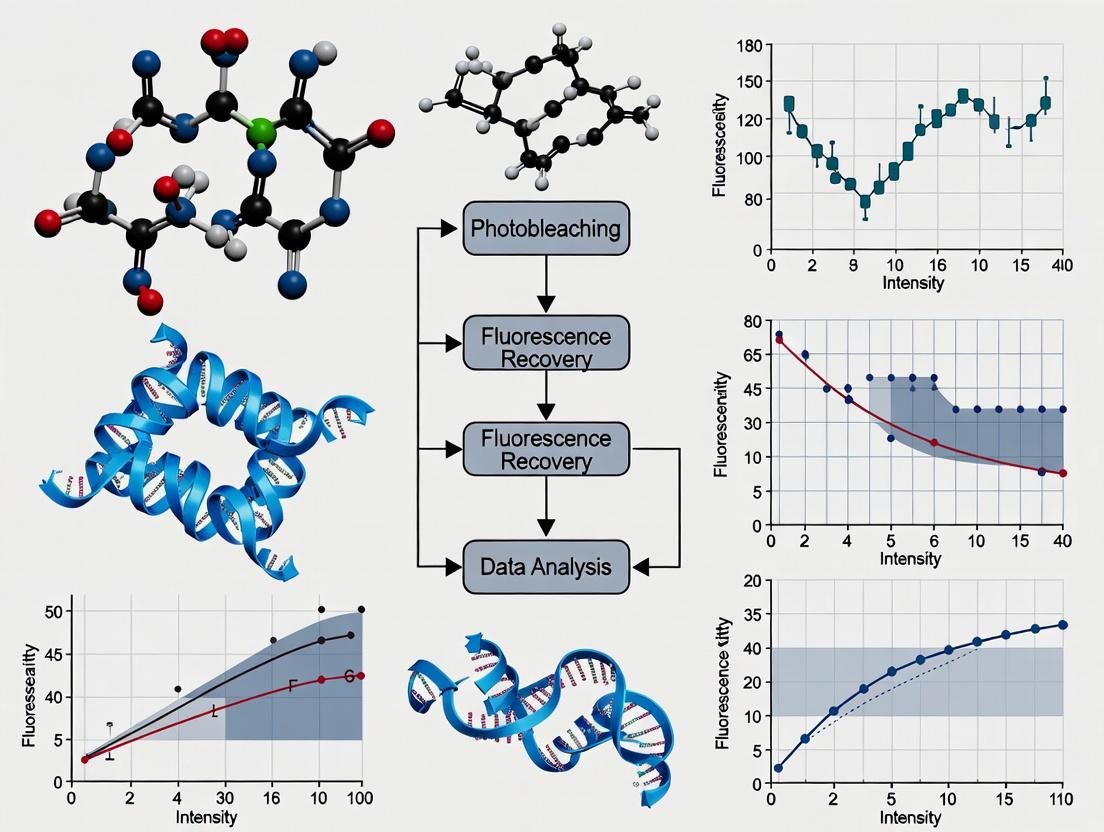
This article provides a comprehensive guide to Fluorescence Recovery After Photobleaching (FRAP) for quantifying the dynamic properties of biomolecular condensates.
FRAP Fluorescence Recovery: Measuring Biomolecular Condensate Dynamics for Drug Discovery
Abstract
This article provides a comprehensive guide to Fluorescence Recovery After Photobleaching (FRAP) for quantifying the dynamic properties of biomolecular condensates. Aimed at researchers and drug developers, it explores the foundational principles of phase separation and FRAP methodology, details step-by-step experimental protocols and applications in disease modeling, addresses common troubleshooting and optimization challenges, and validates FRAP against complementary techniques. The synthesis offers a practical framework for using FRAP to probe condensate material states, assess drug effects, and advance targeted therapeutic strategies.
Biomolecular Condensates and FRAP: Unveiling Liquid-Liquid Phase Separation Dynamics
Application Notes
The Role of Biomolecular Condensates in Cellular Organization
Biomolecular condensates are membraneless organelles formed via liquid-liquid phase separation (LLPS) of proteins and nucleic acids. They concentrate specific biomolecules to regulate key cellular processes, including transcription, RNA processing, stress response, and signal transduction. Dysregulation of condensate dynamics is implicated in neurodegenerative diseases (e.g., ALS, FTD) and cancers, making them novel targets for therapeutic intervention.
Quantifying Condensate Dynamics via FRAP
Fluorescence Recovery After Photobleaching (FRAP) is the cornerstone technique for analyzing the material properties and dynamics of condensates in vitro and in vivo. It measures the exchange rate of fluorescently tagged molecules between the condensate and the surrounding nucleo/cytoplasm, providing parameters like recovery half-time (t½), mobile fraction, and diffusion coefficients.
Table 1: Key Quantitative Parameters from FRAP Analysis of Model Condensates
| Condensate System | Mobile Fraction (%) | Recovery Half-time (t½ in seconds) | Interpreted State | Reference Context |
|---|---|---|---|---|
| FUS (WT) in vitro | 70 - 85 | 5 - 20 | Liquid-like, dynamic | (Patel et al., 2015; Cell) |
| FUS (ALS-mutant) in vitro | 10 - 40 | >100 (often incomplete) | Gel-like/Solid-like | (Patel et al., 2015) |
| Nucleolar Granules (in vivo) | 50 - 70 | 30 - 60 | Viscoelastic fluid | (Brangwynne et al., 2011; PNAS) |
| Stress Granules (Core) | 20 - 50 | 50 - 200 | Less dynamic core | (Wheeler et al., 2016) |
| HP1α Mediated Heterochromatin | 30 - 60 | 40 - 120 | Chromatin-associated | (Strom et al., 2017; Nature) |
Table 2: FRAP-Based Classification of Condensate Material Properties
| Property | Mobile Fraction | Recovery Kinetics | Implication for Function |
|---|---|---|---|
| Liquid | High (>70%) | Fast, single exponential | Rapid exchange, reaction hubs |
| Viscoelastic | Moderate (40-70%) | Slower, sometimes multi-phase | Balanced stability and exchange |
| Gel-like | Low (<40%) | Very slow, often partial | Storage, sequestration |
| Solid | Near 0% | No recovery | Pathological aggregates |
Experimental Protocols
Protocol: In Vitro FRAP Assay for Recombinant Protein Condensates
Objective: To measure the internal dynamics of phase-separated droplets formed by a purified, fluorescently tagged protein (e.g., FUS, hnRNPA1).
Materials: See "The Scientist's Toolkit" below.
Procedure:
- Sample Chamber Preparation:
- Use a glass-bottom dish or chambered coverslip.
- Passivate the surface with a 1 mg/mL BSA solution or PEG-silane to prevent non-specific adhesion of droplets. Incubate for 10 min, then rinse with assay buffer.
Droplet Formation:
- Mix the purified fluorescent protein in its phase separation buffer (e.g., 25 mM HEPES pH 7.4, 150 mM KCl, with or without crowding agent).
- A typical reaction uses 1-10 µM protein. Induce phase separation by adding a molecular crowder (e.g., 5% PEG-8000) or adjusting salt/temperature as required.
- Pipette 10-20 µL of the mixture into the passivated chamber and apply a coverslip.
Microscope & FRAP Setup:
- Use a confocal microscope with a 63x or 100x oil immersion objective, 488 nm or 561 nm laser line appropriate for the fluorophore.
- Set imaging conditions to minimal laser power (<1%) to avoid unintentional bleaching.
- Select round, isolated droplets of medium size (~2-5 µm diameter) for analysis.
FRAP Acquisition:
- Pre-bleach: Acquire 5-10 frames at standard imaging power.
- Bleach: Define a circular region of interest (ROI, ~0.5-1 µm diameter) at the droplet's center. Perform bleaching with 100% laser power for 0.5-2 seconds.
- Recovery: Immediately switch back to low-power imaging and acquire frames every 0.5-5 seconds for 2-10 minutes, depending on recovery speed.
Data Analysis:
- Measure fluorescence intensity in the bleached ROI (Iroi), in the whole droplet (Idroplet) for normalization, and in a background region (I_bg).
- Normalize intensity: I_norm(t) = (I_roi(t) - I_bg) / (I_droplet(t) - I_bg).
- Normalize to pre-bleach average (set to 1.0) and post-bleach minimum.
- Fit the recovery curve to a single or double exponential model to extract the halftime (t½) and mobile fraction.
- Mobile Fraction = (I_plateau - I_initial) / (1 - I_initial).
Protocol: In Vivo FRAP of Nuclear Condensates (e.g., Nucleoli)
Objective: To assess the dynamics of a condensate-localized protein in live cells.
Procedure:
- Cell Preparation:
- Plate cells (e.g., U2OS, HeLa) on glass-bottom dishes.
- Transfect with a plasmid expressing the protein of interest fused to a fluorescent protein (e.g., GFP, mCherry). Use low transfection amounts to avoid overexpression artifacts.
- Culture for 24-48 hours.
Imaging Setup:
- Use a confocal microscope with a environmental chamber (37°C, 5% CO2).
- Select cells with moderate expression and clear condensate morphology.
FRAP Acquisition:
- Pre-bleach: Acquire 5-10 frames.
- Bleach: Target a portion (or entire) of a single condensate. Use a brief, high-power pulse.
- Recovery: Acquire images at intervals (e.g., every 1-10 seconds) for 5-20 minutes.
- Include a control, unbleached condensate in the same cell for fluorescence loss correction (FLIP).
Data Analysis:
- Correct for overall photobleaching during acquisition using the control condensate.
- Normalize and fit as in Protocol 2.1, reporting t½ and mobile fraction.
Visualization Diagrams
Title: In Vitro FRAP Experimental Workflow for Biomolecular Condensates
Title: From LLPS to Function and Dysfunction via Altered Dynamics
The Scientist's Toolkit
Table 3: Essential Research Reagents & Materials for Condensate FRAP Studies
| Item | Function/Description | Example Product/Catalog |
|---|---|---|
| Recombinant Protein | Purified, fluorescently tagged protein (e.g., FUS-GFP, hnRNPA1-mCherry) for in vitro studies. Essential for controlled LLPS assays. | Custom expression & purification. |
| Phase Separation Buffer | Controlled salt/pH buffer to induce and study LLPS. Often includes crowding agents. | e.g., 25 mM HEPES pH 7.4, 150 mM KCl, 1 mM DTT, 5% PEG-8000. |
| Passivation Reagent | Prevents droplet sticking to surfaces, critical for accurate dynamics measurement. | PEG-silane (e.g., (3-(Triethoxysilyl)propyl succinic anhydride), 1 mg/mL BSA. |
| Glass-Bottom Dishes | High-quality optical surface for high-resolution live-cell and in vitro imaging. | MatTek dishes, Ibidi µ-Slides. |
| Fluorescent Protein Plasmid | For expressing protein fusions in live cells (e.g., GFP, mCherry, HALO tag). | Addgene vectors (e.g., pEGFP-C1, pmCherry-N1). |
| Molecular Crowders | Mimic cellular crowding to modulate LLPS propensity in vitro. | Polyethylene Glycol (PEG-8000), Ficoll PM-70. |
| Live-Cell Imaging Medium | Phenol-red free medium with stable pH for prolonged live-cell FRAP. | FluoroBrite DMEM, CO₂-independent medium. |
| FRAP-Compatible Microscope | Confocal system with precise laser control, environmental chamber, and fast acquisition. | Zeiss LSM 880/980, Nikon A1R, Leica SP8. |
| Analysis Software | For processing FRAP time-series and curve fitting. | FIJI/ImageJ (with FRAP profiler plugins), Imaris, custom Python/R scripts. |
Application Notes: Condensate Material Properties in Biomolecular Research
Understanding the material state of biomolecular condensates—whether they exhibit liquid-like viscosity, solid-like elasticity, or viscoelastic behavior—is fundamental to deciphering their physiological and pathological roles. These properties dictate molecular exchange rates, mechanical responsiveness, and functionality in processes like transcription and signal transduction. In drug development, targeting condensate material states presents a novel therapeutic strategy for diseases driven by aberrant phase separation, such as neurodegeneration and cancer.
Key Quantitative Parameters in Condensate Dynamics
Table 1: Key Material Property Metrics and Their Biological Implications
| Property | Typical Measurement Technique | Quantitative Range in Biological Condensates | Biological Significance |
|---|---|---|---|
| Apparent Viscosity (η) | Fluorescence Recovery After Photobleaching (FRAP), Particle Tracking | 10 - 10,000 Pa·s (varies with system) | Determines diffusion rates of client molecules; low η favors rapid exchange. |
| Elastic Modulus (G') | Active or Passive Microrheology, AFM | 1 - 1000 Pa | Indicates solid-like character and structural integrity; resistance to deformation. |
| Viscous Modulus (G'') | Active or Passive Microrheology | 10 - 5000 Pa | Indicates liquid-like, dissipative flow. |
| Fluorescence Recovery Half-time (t₁/₂) | FRAP | 1 sec - 1000+ sec | Direct readout of internal mobility and binding interactions. |
| Molecular Partitioning (Kₚ) | Confocal Imaging, FCS | 10 - 1000-fold concentration | Affinity of molecules for the condensed phase. |
Table 2: Condensate Material States and Disease Correlations
| Material State | Dominant Property | Exemplar Condensate | Dysregulation Link |
|---|---|---|---|
| Liquid | Viscosity (G'' > G') | Nucleoli, P-bodies | Altered viscosity can impair ribosome biogenesis. |
| Viscoelastic Gel | G' ≈ G'' | Nuclear speckles, Stress granules | Pathological hardening implicated in ALS/FTD. |
| Solid/Glass | Elasticity (G' >> G'') | Pathological FUS, TDP-43 aggregates | Irreversible aggregation, toxicity in neurodegeneration. |
Experimental Protocols
Protocol 1: FRAP for Measuring Apparent Viscosity and Mobility
Objective: To quantify the internal dynamics and fluidity of a labeled component within a biomolecular condensate.
Research Reagent Solutions:
- Fluorescent Protein (FP)-tagged Construct: e.g., GFP-FUS. Function: Specific fluorescent labeling of the condensate component of interest.
- Live-cell Imaging Medium (Phenol-red free): Function: Maintains cell health while minimizing background fluorescence.
- Opti-MEM or similar transfection medium: Function: For delivery of plasmid DNA into cells if using transient transfection.
- FRAP-Compatible Mounting Medium: Function: Maintains physiological conditions on the microscope stage.
Methodology:
- Sample Preparation: Transfert cells with plasmid encoding the FP-tagged protein of interest. Culture for 24-48 hours to allow expression and condensate formation.
- Imaging Setup: Use a confocal microscope with a 63x or 100x oil immersion objective, equipped with a FRAP module. Maintain environment at 37°C and 5% CO₂.
- Pre-bleach Acquisition: Identify a condensate. Acquire 5-10 pre-bleach image frames at low laser power to establish baseline fluorescence.
- Bleaching: Define a circular region of interest (ROI) within the condensate. Apply a high-intensity laser pulse (e.g., 100% 488nm laser power for 1-5 iterations) to bleach the fluorophores within the ROI.
- Post-bleach Recovery: Immediately switch back to low laser power and acquire images at a fixed interval (e.g., 0.5-5 sec/frame) for 2-10 minutes.
- Data Analysis:
- Measure fluorescence intensity in the bleached ROI (Iroi), a reference unbleached region in the same condensate (Iref), and a background region (Ibg) for all time points.
- Calculate normalized intensity: Inorm(t) = (Iroi(t) - Ibg) / (Iref(t) - Ibg).
- Fit the recovery curve to a single or double exponential model to extract the recovery half-time (t₁/₂) and the mobile fraction (M_f).
- Apparent diffusion coefficient (Dapp) can be estimated using the formula Dapp ≈ 0.224 * r² / t₁/₂, where r is the bleach spot radius.
Protocol 2: Passive Microrheology via Single-Particle Tracking
Objective: To measure the frequency-dependent viscoelastic moduli (G' and G'') inside condensates.
Research Reagent Solutions:
- Fluorescent Nanoparticles (e.g., 40-100 nm diameter): Function: Inert probes for tracking micro-scale motion.
- Microinjection System or Electroporation Kit: Function: For delivering nanoparticles into cells or purified condensates.
- Purified Recombinant Protein: Function: For in vitro reconstitution of condensates.
- Phase-separation Buffer: Function: Typically contains salts and crowding agents to induce condensation in vitro.
Methodology:
- Probe Incorporation:
- In vitro: Mix fluorescent nanoparticles with purified protein in phase-separation buffer. Incubate to form condensates.
- In cellulo: Microinject or electroporate fluorescent nanoparticles into cells expressing condensates.
- Image Acquisition: Use a TIRF or high-sensitivity confocal microscope. Acquire high-frame-rate movies (50-200 fps) of particles within condensates.
- Particle Tracking: Use tracking software (e.g., TrackMate, u-track) to generate trajectories (x(t), y(t)) for each particle.
- Mean Squared Displacement (MSD) Calculation: Compute MSD(τ) = ⟨ |r(t+τ) - r(t)|² ⟩, where τ is the lag time.
- Rheology Calculation: For a diffusive probe in a viscoelastic medium, the complex modulus G(ω) is related to the MSD via a generalized Stokes-Einstein relation: G(ω) ≈ (k_B T) / (πa iω F{MSD(t)}), where a is particle radius, ω is frequency, and F denotes a Fourier transform. This yields storage (elastic, G') and loss (viscous, G'') moduli.
Protocol 3: Seeded Droplet Fusion Assay for Interfacial Tension
Objective: To assess the liquid-like character and surface tension of condensates.
Methodology:
- Form condensates in vitro from purified components or in cells.
- Use micromanipulation or microfluidics to bring two condensates into contact.
- Image the fusion process with high temporal resolution (ms scale).
- Analyze the time-dependent relaxation of the contour from a double-lobed shape to a sphere. The characteristic fusion time (τf) is related to viscosity (η) and interfacial tension (γ) by τf ~ η R / γ, where R is droplet radius.
The Scientist's Toolkit
Table 3: Key Research Reagent Solutions for Condensate Material Studies
| Reagent / Material | Function / Role | Example Product/Catalog |
|---|---|---|
| Fluorescent Protein Plasmids | Tagging condensate components for live-cell imaging (FRAP, tracking). | mEGFP-FUS, mCherry-DDX4. |
| HaloTag/SNAP-tag Ligands | Covalent, high-contrast labeling with synthetic dyes for superior photostability. | Janelia Fluor HaloTag ligands, SNAP-Cell dyes. |
| Recombinant Purified Protein | For in vitro reconstitution of condensates with controlled composition. | His-/GST-tagged full-length or low-complexity domain proteins. |
| Phase-separation Buffer Kits | Provide optimized salt, pH, and crowding agent conditions for in vitro assays. | Commercial or custom buffers with PEG/dextran. |
| Fluorescent Tracer Particles | Inert probes for microrheology (40nm-1µm polystyrene or silica beads). | Crimson FluoSpheres, silica nanoparticles. |
| Live-cell Imaging Media | Phenol-red free, HEPES-buffered media for maintaining health during imaging. | FluoroBrite DMEM, CO₂-independent medium. |
| Microinjection/Electroporation Systems | For delivering nanoparticles, dyes, or proteins into cells. | Eppendorf FemtoJet, Neon Electroporation System. |
| FRAP/Microscopy Software | For image acquisition, hardware control, and quantitative analysis. | Zen (Zeiss), LAS X (Leica), Fiji/ImageJ with plugins. |
Within the broader thesis on FRAP fluorescence recovery for biomolecular condensate dynamics research, this Application Note details the core principle of Fluorescence Recovery After Photobleaching (FRAP) as a quantitative tool for measuring molecular mobility, diffusion coefficients, and binding kinetics within living cells and condensates. FRAP provides critical insights into the material properties and functional dynamics of membraneless organelles, essential for understanding pathological aggregation and targeted drug development.
FRAP measures the lateral mobility of fluorescently tagged molecules. A high-intensity laser pulse irreversibly photobleaches fluorophores in a defined region of interest (ROI), creating a dark spot within a fluorescent field. The subsequent recovery of fluorescence into the bleached area, driven by the diffusion and exchange of unbleached molecules from the surrounding environment, is monitored over time. The kinetics of this recovery curve are mathematically modeled to extract quantitative mobility parameters.
Core Quantitative Parameters & Data Presentation
The fluorescence recovery curve is analyzed to derive key metrics, summarized in Table 1.
Table 1: Key Quantitative Parameters Derived from FRAP Analysis
| Parameter | Symbol | Unit | Description | Interpretation in Condensate Dynamics |
|---|---|---|---|---|
| Mobile Fraction | Mf | % | Percentage of molecules that can diffuse into the bleached area. | Indicates proportion of dynamically exchanging molecules vs. immobile aggregates. |
| Immobile Fraction | If | % | 100% - Mf. | Suggests irreversible binding, cross-linking, or entrapment within the condensate matrix. |
| Half-Time of Recovery | t1/2 | seconds | Time to reach half of the maximum recovery. | Inversely related to diffusion speed. Longer t1/2 indicates slower mobility. |
| Diffusion Coefficient | D | µm²/s | Measure of the rate of Brownian motion. | Direct measure of molecular mobility; reduced within condensates vs. nucleoplasm/cytoplasm. |
| Effective Binding Constant | Keff | s⁻¹ or nM⁻¹ | Combined kinetic parameter for binding and unbinding. | In a two-state model, describes the residence time of molecules within the condensate. |
Detailed Experimental Protocol: FRAP in Biomolecular Condensates
Materials & Reagent Solutions
The Scientist's Toolkit: Essential FRAP Reagents & Materials
| Item | Function & Specification |
|---|---|
| Confocal Microscope with FRAP Module | Must include a laser scanning system, high-powered bleaching laser (e.g., 405nm, 488nm), acousto-optic tunable filter (AOTF) for rapid laser control, and environmental chamber (37°C, 5% CO₂). |
| Live-Cell Imaging Dish | Glass-bottom dishes (e.g., No. 1.5 coverslip thickness) for optimal high-resolution imaging. |
| Fluorescent Protein Tag | Genetically encoded tag (e.g., GFP, mCherry) fused to the protein of interest. For endogenous labeling, use HaloTag/SNAP-tag with cell-permeable fluorescent ligands. |
| Cell Culture Reagents | Appropriate media, serum, and transfection reagents (e.g., for HEK293T, U2OS cells). |
| Imaging Medium | Phenol-red free medium, supplemented with buffers (e.g., HEPES) for stable pH outside a CO₂ incubator. |
| Analysis Software | FIJI/ImageJ with FRAP plug-ins (e.g., easyFRAP), or commercial software (Imaris, Zeiss ZEN, Leica LAS X). |
Step-by-Step Procedure
Protocol: FRAP on Nuclear Condensates (e.g., Nucleoli, Nuclear Speckles)
Sample Preparation:
- Transfect cells with the plasmid encoding the fluorescently tagged protein of interest.
- Culture cells on glass-bottom imaging dishes for 24-48 hours to ~70% confluency.
- Replace medium with pre-warmed, phenol-red free imaging medium.
Microscope Setup:
- Pre-warm microscope environmental chamber to 37°C for at least 1 hour.
- Select appropriate laser lines: low intensity for imaging (e.g., 488nm @ 0.5-2% power), high intensity for bleaching (e.g., 488nm @ 100% power).
- Set pinhole to 1-1.5 Airy units for optical sectioning.
- Define the experiment timeline: i) 5-10 pre-bleach frames, ii) 1-5 bleach pulses, iii) 200-500 post-bleach frames with rapid acquisition (e.g., 100-500 ms intervals).
Bleaching and Acquisition:
- Locate a cell expressing moderate levels of the fluorescent protein and identify a condensate.
- Define three ROIs: i) Bleach ROI (within the condensate), ii) Reference ROI (in a non-bleached area of the same cell, for background correction), iii) Background ROI (outside the cell).
- Execute the FRAP experiment. Ensure minimal stage drift.
Data Extraction (Using FIJI/ImageJ):
- Measure mean fluorescence intensity over time for all three ROIs.
- Correct for background and photobleaching during acquisition: Icorr = (Ibleach - Ibg) / (Iref - Ibg).
- Normalize the corrected intensity: Inorm(t) = (Icorr(t) - Icorr(post-bleach)) / (Icorr(pre-bleach) - Icorr(post-bleach)).
- Plot Inorm(t) vs. time to generate the recovery curve.
Curve Fitting & Parameter Extraction:
- Fit the normalized recovery curve to an appropriate model. For simple diffusion in a homogeneous medium, use a single exponential: Inorm(t) = Mf (1 - exp(-τ * t)), where τ is related to t1/2 and D.
- For molecules exchanging between bound and free states within condensates, use a reaction-diffusion model (e.g., Axelrod et al. model) to extract D and binding kinetics (Kon, Koff).
Key Considerations for Condensate Research
- Bleach ROI Geometry: Smaller ROIs recover faster; shape should match the condensate (often circular).
- Laser Power & Bleaching Depth: Must be optimized to avoid permanent cellular damage and non-specific bleaching.
- Immobile Fraction Distinction: A high immobile fraction may indicate gelation or solidification of the condensate, relevant in disease contexts.
- Control Experiments: Perform FRAP on the fluorescent tag alone in the nucleoplasm/cytoplasm to establish baseline D.
Visualizing FRAP Workflow & Data Interpretation
Diagram 1: FRAP Experimental Workflow
Diagram 2: From Recovery Curve to Mobility Parameters
This document, framed within a broader thesis on FRAP fluorescence recovery biomolecular condensate dynamics research, details the application of Fluorescence Recovery After Photobleaching (FRAP) for studying biomolecular condensates. FRAP is uniquely suited to quantify two critical parameters: the recovery kinetics (characterized by the half-time of recovery, t₁/₂, and the diffusion coefficient, D) and the immobile fraction (Fᵢₘₘ), which reflects the proportion of molecules within the condensate that are dynamically arrested or strongly bound. This protocol provides a standardized methodology for obtaining robust, quantitative data on condensate dynamics, essential for researchers and drug development professionals investigating condensate biology and therapeutic targeting.
Key Quantitative Parameters and Data Presentation
FRAP analysis on condensates yields specific quantitative outputs. The recovery curve is typically fit to a single exponential equation to extract key parameters.
Table 1: Key FRAP Output Parameters for Condensate Analysis
| Parameter | Symbol | Typical Range in Condensates | Interpretation |
|---|---|---|---|
| Half-time of Recovery | t₁/₂ | Seconds to minutes | Speed of internal rearrangement. Slower indicates higher viscosity/entanglement. |
| Diffusion Coefficient | D | 0.01 – 1 µm²/s | Effective mobility within the condensate phase. |
| Mobile Fraction | Fₘ | 0.5 – 0.95 | Proportion of molecules freely diffusing within the condensate. |
| Immobile Fraction | Fᵢₘₘ | 0.05 – 0.5 | Proportion of molecules that do not recover, indicating stable binding or trapping. |
| Plateau Recovery Level | R∞ | 50-95% | Final normalized fluorescence intensity post-recovery. |
Table 2: Example FRAP Data from Model Condensate Systems
| Condensate System (Protein) | Half-time (t₁/₂) | Immobile Fraction (Fᵢₘₘ) | Conditions / Perturbation | Implication |
|---|---|---|---|---|
| FUS (Full-length) | ~5 s | ~0.15 | In vitro, 10% PEG | Fast dynamics, largely liquid. |
| FUS (LCD domain) | ~30 s | ~0.40 | In vitro, 10% PEG | Domain-specific interactions increase immobility. |
| hnRNPA1 (Wild-type) | ~8 s | ~0.10 | In vivo, nucleus | Highly dynamic in cellular context. |
| hnRNPA1 (D262V disease mutant) | >60 s | ~0.60 | In vivo, nucleus | Pathogenic mutation drastically slows dynamics and increases immobile fraction. |
| + 1,6-Hexanediol (5%) | ~3 s | ~0.05 | Added to FUS (in vitro) | Weakens hydrophobic interactions, accelerates dynamics, reduces immobile fraction. |
Detailed Experimental Protocol: FRAP for Condensates
Protocol 1: In Vitro FRAP of Purified Protein Condensates
I. Sample Preparation
- Protein Purification: Purify recombinant protein with a fluorescent tag (e.g., GFP, mCherry) via standard affinity chromatography.
- Condensate Formation: In a sealed imaging chamber, mix the fluorescent protein with necessary buffers and crowding agents (e.g., 10% PEG-8000, 150 mM NaCl) to induce phase separation. Typical protein concentration: 5-50 µM.
- Equilibration: Incubate chamber at assay temperature (e.g., 25°C) for 15-30 minutes to allow condensate formation and stabilization.
II. Microscopy and FRAP Setup
- Microscope: Use a confocal laser scanning microscope (CLSM) with a high-sensitivity detector (e.g., GaAsP PMT) and a stable environmental chamber.
- Imaging Settings: Use low laser power (0.5-2%) for imaging to minimize unintended photobleaching. Set pinhole to 1-1.5 Airy units.
- Define Regions: Select a circular Region of Interest (ROI, ~0.5-1 µm diameter) within a single, spherical condensate for bleaching. Define control ROIs in the same condensate (non-bleached) and in the dilute phase for background correction.
III. FRAP Acquisition
- Pre-bleach: Acquire 5-10 frames at standard imaging speed.
- Bleaching: Bleach the defined ROI using a high-powered laser pulse (100% power, 488 nm or 561 nm, 1-5 iterations).
- Recovery: Immediately resume time-lapse imaging at a frame rate appropriate for the recovery speed (e.g., 0.5-2 seconds per frame for 2-5 minutes total).
IV. Data Analysis
- Background Correction: Subtract the intensity from a background ROI outside the sample.
- Normalization:
- I₀: Average pre-bleach intensity in the bleached ROI.
- Iᵣₑf: Average intensity in a control, non-bleached condensate ROI.
- I(t): Intensity in bleached ROI at time t.
- Normalized Intensity: Iₙₒᵣₘ(t) = [I(t) – Ibackground] / [Iᵣₑf(t) – Ibackground].
- Double-normalize to pre-bleach average and correct for full-condensate photobleaching.
- Curve Fitting: Fit the normalized recovery curve to a single exponential model:
- I(t) = A (1 – exp(-τ t)), where τ is the recovery rate constant.
- t₁/₂ = ln(2) / τ.
- Fᵢₘₘ = 1 – (Plateau / Pre-bleach normalized level).
Protocol 2: In Vivo FRAP of Nuclear Condensates (e.g., Nucleoli, Nuclear Speckles)
I. Cell Preparation
- Transfection: Transfect cells with plasmid encoding the protein of interest fused to a photostable fluorescent protein (e.g., mEGFP, HaloTag).
- Selection: Allow 24-48 hours for expression. Use low-expression cells to avoid condensation artifacts.
II. Microscopy and FRAP
- Environment: Use a live-cell imaging system with CO₂ and temperature control (37°C).
- Bleach ROI: Target a sub-region within a single condensate. Keep the bleach ROI small relative to the condensate size (<20%) to allow replenishment from the surrounding condensate reservoir.
- Acquisition: Use fast acquisition (e.g., 100-500 ms intervals) for rapid initial recovery, slowing to 5-10 second intervals for longer timescales. Total acquisition: 3-10 minutes.
III. Analysis Follow normalization steps from Protocol 1. For in vivo data, also normalize to the total cellular fluorescence in a separate cell to account for focus drift or overall photobleaching. Fit as described.
Mandatory Visualizations
FRAP Experimental and Analysis Workflow
Molecular Exchange Dynamics Measured by FRAP
The Scientist's Toolkit: Research Reagent Solutions
Table 3: Essential Materials for Condensate FRAP Experiments
| Reagent / Material | Function in Condensate FRAP | Example / Note |
|---|---|---|
| Photostable Fluorescent Protein | Tag for protein of interest; enables tracking. | mEGFP, mCherry, HaloTag (Janelia Fluor dyes). Critical for repeated imaging. |
| Phase-Separation Buffer/Conditions | Induces and controls condensate formation in vitro. | PEG-8000 (10%), Ficoll PM-70, Salt (NaCl/KCl), low temperature. |
| Live-Cell Imaging Medium | Maintains cell health and condensate physiology during in vivo FRAP. | Phenol-red free medium, with HEPES and serum. |
| Pharmacological Perturbants | Probes condensate material properties by altering interactions. | 1,6-Hexanediol (weakens hydrophobic), ATP (dissociates some RNP granules). |
| CLSM with FRAP Module | Microscope system for precise bleaching and sensitive detection. | Zeiss LSM 980, Nikon A1R, Leica SP8. Requires fast laser control and sensitive detectors. |
| Environmental Chamber | Maintains constant temperature (and CO₂) for physiological dynamics. | Okolab, Bold Line chamber. Essential for reproducible in vivo data. |
| Image Analysis Software | For FRAP curve extraction, normalization, and fitting. | Fiji/ImageJ (with FRAP profiler plugins), Imaris, custom MATLAB/Python scripts. |
This application note supports a doctoral thesis investigating the biomolecular condensate dynamics via Fluorescence Recovery After Photobleaching (FRAP). Within the thesis framework, the quantitative extraction of Recovery Half-time (t½), Mobile Fraction (Mf), and Diffusion Coefficients (D) is critical for modeling phase separation kinetics, assessing material properties of condensates, and screening for small-molecule modulators in therapeutic contexts. These parameters collectively describe the internal dynamics, permeability, and molecular interactions within membraneless organelles.
Core Parameter Definitions & Biological Significance
| Parameter | Symbol | Definition | Significance in Condensate Dynamics |
|---|---|---|---|
| Recovery Half-time | t½ | Time for fluorescence intensity in bleached region to recover to half its maximum recovery. | Inversely related to kinetics; slower t½ indicates higher viscosity or binding interactions within the condensate. |
| Mobile Fraction | Mf | Fraction of fluorescent molecules capable of diffusing into the bleached zone. | Reflects proportion of dynamic vs. static molecules. Low Mf suggests strong binding/entrapment. |
| Effective Diffusion Coefficient | D | Measure of the rate of spatial redistribution of molecules. | Quantifies molecular mobility; key for distinguishing liquid-like (high D) from gel-like (low D) states. |
Data Presentation: Quantitative Parameter Ranges
The following table summarizes typical values for key FRAP parameters from recent literature (2023-2024) on various biomolecular condensate systems.
Table 1: Representative FRAP Parameters in Condensate Studies
| Condensate System/Protein | Approx. t½ (seconds) | Mobile Fraction (%) | Diffusion Coefficient D (µm²/s) | Notes & Reference Context |
|---|---|---|---|---|
| FUS LCD droplets (in vitro) | 1 - 5 | 80 - 95 | 0.5 - 3.0 | D varies with salt, crowding agents. [Nat Comms 2023] |
| Nucleolar GC/NFC phases | 30 - 60 (GC) 2 - 10 (NFC) | 60 - 80 (GC) >90 (NFC) | 0.05 - 0.2 (GC) 1.0 - 2.5 (NFC) | Shows subcompartment dynamics. [Cell 2023] |
| Stress Granules (G3BP1) | 20 - 120 | 40 - 70 | 0.01 - 0.1 | Heterogeneous, aging-dependent. [Science Adv 2024] |
| HP1α droplets | 10 - 30 | 70 - 85 | 0.1 - 0.5 | Chromatin context alters dynamics. [Elife 2023] |
| DDR1A Kinase droplets | 5 - 15 | >95 | 2.0 - 5.0 | Highly liquid, drug-sensitive. [Cell Chem Bio 2024] |
Experimental Protocols
Protocol 4.1: FRAP Acquisition for Condensates
Aim: To obtain raw recovery curves for parameter extraction. Materials: See "The Scientist's Toolkit" below. Procedure:
- Sample Preparation: Seed cells expressing labeled condensate protein (e.g., GFP-FUS) on glass-bottom dishes. For in vitro assays, form droplets on passivated slides.
- Microscope Setup: Use a confocal microscope with a 63x/1.4 NA oil objective, 488 nm laser, and environmental control (37°C, 5% CO₂ for cells).
- Define Regions: Using software, define a circular bleach region (ROI~bleach~, diameter ~1µm) within a condensate, a reference ROI in the condensate, and a background ROI.
- Acquisition Settings:
- Pre-bleach: Acquire 5-10 frames at low laser power (0.5-2%).
- Bleach: High-intensity pulse (100% laser power, 5-20 iterations) on ROI~bleach~.
- Post-bleach: Immediate switch to low power; acquire 200-500 frames at appropriate interval (e.g., 0.5-5 sec).
- Data Export: Export mean intensity over time for all ROIs.
Protocol 4.2: Data Analysis & Parameter Extraction
Aim: To calculate t½, Mf, and D from recovery curves. Software: FIJI/ImageJ with FRAP plugin, or custom Python/R scripts. Procedure:
- Background Correction: Subtract background ROI intensity from all other intensities.
- Photobleaching Correction: Normalize bleach ROI intensity (I~bleach~) to reference ROI intensity (I~ref~) to correct for overall photobleaching during acquisition: I~norm~(t) = (I~bleach~(t) / I~ref~(t)) / (I~bleach~(pre) / I~ref~(pre)).
- Curve Fitting: Fit normalized recovery curve to appropriate model. For simple diffusion in a uniform medium: I~norm~(t) = I~final~ - (I~final~ - I~initial~) * g(τ, t) Where g is a function containing diffusion terms. Use software to fit for the recovery halftime τ (which relates directly to t½) and plateau I~final~.
- Calculate Parameters:
- Mobile Fraction (Mf): Mf = (I~final~ - I~initial~) / (I~pre~ - I~initial~) * 100%.
- Recovery Half-time (t½): Directly obtained from fitted τ or interpolated from fitted curve.
- Diffusion Coefficient (D): For a circular bleach spot of radius w: D = 0.224 * w² / t½ (for standard model). Note: Use appropriate model for condensate geometry.
- Statistical Analysis: Repeat on n>10 condensates. Report mean ± SD or median with confidence intervals.
Visualization: Pathways and Workflows
FRAP Workflow for Condensate Dynamics Thesis
FRAP Parameters Link Drugs to Condensate Phenotype
The Scientist's Toolkit: Key Research Reagent Solutions
Table 2: Essential Materials for FRAP Condensate Dynamics Studies
| Item | Function & Relevance in FRAP Experiments | Example Product/Catalog # |
|---|---|---|
| Fluorescent Protein Plasmids | Tag proteins of interest for in vivo visualization (e.g., GFP, mCherry). Critical for specificity. | pmEGFP-FUS (Addgene #98623) |
| Glass-Bottom Culture Dishes | Provide high optical clarity for high-resolution imaging. Essential for minimizing background. | MatTek P35G-1.5-14-C |
| Live-Cell Imaging Medium | Phenol-red free medium with buffers to maintain pH without CO₂. Reduces fluorescence quenching. | Gibco FluoroBrite DMEM |
| Recombinant Protein | For in vitro droplet reconstitution. Allows control over composition and buffer conditions. | Purified His-tagged hnRNPA1 |
| Crowding Agent | Mimics cellular crowding to modulate condensate formation and dynamics (e.g., PEG, Ficoll). | PEG-8000 |
| FRAP-Calibrated Microscope | System with fast laser switching, sensitive detectors, and precise ROI control. | Zeiss LSM 980 with FRAP module |
| Immersion Oil (High-Index) | Matches objective specifications for optimal resolution and light collection during time-series. | Zeiss Immersol 518F |
| Analysis Software | For consistent curve fitting and parameter extraction. Enables batch processing for statistics. | FIJI (FRAP Profiler plugin) |
A Step-by-Step FRAP Protocol for Condensate Analysis in Live Cells
This protocol, framed within a thesis on FRAP (Fluorescence Recovery After Photobleaching) for studying biomolecular condensate dynamics, provides a detailed guide for designing experiments to probe the molecular interactions and material properties of condensates. The design focuses on the critical selection of fluorophores, appropriate control experiments, and relevant cellular models to generate robust, quantitative data on recovery kinetics and mobility.
Fluorophore Selection for Condensate FRAP
The choice of fluorophore is paramount for FRAP experiments investigating condensates, which often exhibit rapid dynamics and complex photophysical behaviors.
Key Considerations
- Photostability: Must withstand repeated imaging pre- and post-bleach.
- Maturation Time: Must be fully mature for accurate intensity measurements.
- Brightness: High signal-to-noise ratio is critical for recovery curve fitting.
- pH Sensitivity: Some condensates have distinct internal microenvironments.
- Oligomerization Tendency: Fluorophores like GFP can weakly dimerize, potentially altering apparent dynamics.
Recommended Fluorophores & Quantitative Properties
Fluorophore performance data is summarized from recent literature searches.
Table 1: Quantitative Properties of Common Fluorophores for Condensate FRAP
| Fluorophore | Excitation Peak (nm) | Emission Peak (nm) | Extinction Coefficient (M⁻¹cm⁻¹) | Quantum Yield | Relative Brightness | Maturation Time (min, 37°C) | Notes for Condensate Studies |
|---|---|---|---|---|---|---|---|
| EGFP | 488 | 507 | 56,000 | 0.60 | 33,600 | ~90 | Standard; can dimerize weakly. |
| mNeonGreen | 506 | 517 | 116,000 | 0.80 | 92,800 | ~60 | Very bright; excellent for low-expression systems. |
| mCherry | 587 | 610 | 72,000 | 0.22 | 15,840 | ~100 | Red variant; good for multicolor. |
| mScarlet-I | 569 | 594 | 100,000 | 0.70 | 70,000 | ~15 | Fast-maturing, bright red fluorophore. |
| TagRFP-T | 555 | 584 | 81,000 | 0.41 | 33,210 | ~60 | Photostable; good for long-term FRAP. |
| SNAP-tag (BG-505) | 504 | 514 | 82,000 | 0.80 | 65,600 | Covalent Labeling | Chemical labeling allows precise control of label stoichiometry. |
| HaloTag (JF549) | 549 | 571 | 120,000 | 0.88 | 105,600 | Covalent Labeling | Extremely bright; ideal for single-molecule sensitivity within condensates. |
Protocol: Validating Fluorophore Suitability
Objective: To ensure the chosen fluorophore does not artifactually influence condensate formation or dynamics.
- Construct Design: Generate two versions of your condensate-forming protein (e.g., a protein with an intrinsically disordered region, IDR): one with the fluorophore at the N-terminus and one at the C-terminus.
- Transfection: Transfect both constructs separately into your chosen cell line.
- Qualitative Assessment: Image live cells to confirm that both constructs localize to expected condensates similarly. Significant differences in localization may indicate the tag is interfering.
- Quantitative FRAP Control: Perform FRAP on both constructs. The recovery half-times (t₁/₂) and mobile fractions should not be statistically different (e.g., using an unpaired t-test, p > 0.05). A difference suggests the tag position is affecting dynamics.
Control Experiments
Proper controls are essential to attribute recovery dynamics specifically to biomolecular interactions and not to experimental artifacts.
Table 2: Essential Control Experiments for Condensate FRAP
| Control Type | Purpose | Protocol Summary | Expected Outcome for Valid Experiment |
|---|---|---|---|
| Photobleaching Control | Distinguish recovery from reversible photobleaching. | Bleach an area in the nucleus outside of any condensate expressing the fluorescent protein. | Recovery curve should be flat (no recovery), confirming that the bleaching event is permanent under imaging conditions. |
| Expression Level Control | Rule out artifacts from overexpression. | Perform FRAP on condensates in cells with low, medium, and high expression levels (quantified by fluorescence intensity). | Recovery kinetics (t₁/₂) and mobile fraction should be independent of expression level. Dependence suggests saturation or artifact. |
| Fluorescence Loss in Photobleaching (FLIP) | Assess connectivity between condensates. | Continuously bleach a single condensate while monitoring fluorescence in a neighboring, unbleached condensate. | Rapid loss in the unbleached condensate indicates a highly dynamic, interconnected pool of molecules. |
| Immobile Reference Control | Normalize for stage drift or whole-cell photobleaching. | Co-express a immobile marker (e.g., H2B-mCherry) with your condensate protein of interest (e.g., IDR-EGFP). | The immobile signal is used to normalize the FRAP recovery curve, correcting for non-specific fluorescence loss. |
| Mutation/Inhibition Control | Test the role of specific interactions. | Perform FRAP after (a) introducing a point mutation known to disrupt key interactions (e.g., charge scramble in IDR), or (b) adding a small molecule inhibitor (e.g., 1,6-Hexanediol for hydrophobic interactions). | Altered recovery kinetics (slower/faster t₁/₂, changed mobile fraction) confirm the molecular determinant being probed. |
Cell Line Selection & Validation
The cellular context can dramatically influence condensate properties.
Commonly Used Cell Lines
- U2OS (Human Osteosarcoma): Robust, flat morphology excellent for imaging; commonly used in condensate studies.
- HeLa (Human Cervical Adenocarcinoma): Widely used, but more variable in shape; ensure clonal selection for consistency.
- HEK 293T (Human Embryonic Kidney): High transfection efficiency, useful for initial screening.
- HCT116 (Human Colorectal Carcinoma): Near-diploid, genetically stable.
- Induced Pluripotent Stem Cells (iPSCs) or Differentiated Progeny: For disease-relevant or developmentally regulated condensate studies.
Protocol: Validating Cell Line Suitability
Objective: To ensure the cell line supports the formation of physiologically relevant condensates for the protein of interest.
- Transfection/Generation of Stable Line: Introduce the fluorescently tagged condensate protein via transient transfection or create a stable, inducible cell line (preferred for consistency).
- Phenotypic Characterization:
- Image cells to confirm condensate formation matches literature expectations (number, size, location).
- Treat with 5-10% 1,6-Hexanediol for 30-60 seconds. Most liquid-like condensates should rapidly dissolve. Reversibility upon washout confirms liquidity.
- Functional Validation (if applicable): If the condensate is linked to a cellular function (e.g., transcription), correlate its presence/absence with a functional readout (e.g., RT-qPCR of target genes).
The Scientist's Toolkit: Research Reagent Solutions
Table 3: Essential Materials for Condensate FRAP Experiments
| Item | Function & Rationale |
|---|---|
| Fluorescent Protein Plasmid(s) | Encoding the protein of interest fused to a fluorophore (e.g., mNeonGreen, mScarlet-I). Enables visualization. |
| Live-Cell Imaging Medium | Phenol red-free medium supplemented with HEPES buffer and serum. Maintains pH and health during imaging without fluorescence interference. |
| Glass-Bottom Dishes/Plates (No. 1.5) | Provides optimal optical clarity and correct working distance for high-NA oil immersion objectives. |
| Transfection Reagent (e.g., PEI, Lipofectamine 3000) | For introducing plasmid DNA into mammalian cell lines. Stable cell line generation is preferred for FRAP. |
| Small Molecule Inhibitors (e.g., 1,6-Hexanediol) | Used as a control to disrupt weak hydrophobic interactions within condensates, testing their liquid-like nature. |
| Immobile Fluorescent Marker (e.g., H2B-FP) | Histone protein for nuclear localization; serves as a non-diffusing reference for normalization during FRAP analysis. |
| Temperature & CO₂ Control System | Live-cell chamber maintaining 37°C and 5% CO₂. Essential for preserving physiological condensate dynamics. |
| High-Sensitivity Camera (sCMOS/EMCCD) | Required to detect low-light fluorescence signals with high speed and minimal noise for accurate recovery curves. |
| Confocal Microscope with FRAP Module | System capable of precise, rapid photobleaching of a defined region and fast time-lapse acquisition. |
| FRAP Analysis Software (e.g., ImageJ/Fiji, proprietary) | To quantify fluorescence intensity over time, normalize data, and fit recovery curves to extract kinetic parameters (t₁/₂, mobile fraction). |
Appendix: Visualizations
Diagram 1: Condensate FRAP Experimental Workflow
Diagram 2: Molecular Interactions & FRAP Perturbation Strategy
Within the broader context of FRAP-based research into biomolecular condensate dynamics, the fidelity of fluorescent labeling is paramount. Accurate labeling enables the quantitative measurement of recovery kinetics, informing on condensate material properties, component exchange rates, and the impact of small molecule perturbations. This document provides application notes and detailed protocols for effective labeling of condensate components, focusing on protein and RNA targets.
Labeling strategies are defined by the target molecule (protein vs. RNA), the timing of label introduction (endogenous vs. exogenous), and the nature of the fluorophore (genetically encoded vs. chemical).
Table 1: Comparison of Primary Labeling Strategies
| Strategy | Target | Typical Fluorophore | Key Advantage | Key Limitation | Suitability for In Vivo FRAP |
|---|---|---|---|---|---|
| Genetically Encoded FP Fusion | Protein | GFP, mCherry, mNeonGreen | Endogenous expression; precise 1:1 labeling | Large tag may perturb phase behavior | Excellent |
| Chemical Conjugation in vitro | Protein, RNA | Alexa Fluor, Cy3, ATTO dyes | Small tag; wide fluorophore choice | Requires purification and microinjection/transfection | Good (post-loading) |
| HaloTag/SNAP-tag | Protein | JF dyes, TMR | Small tag; bright, photostable dyes | Requires genetic encoding of tag | Excellent |
| CRISPR-Cas9 Assisted Tagging | Endogenous Protein | GFP, mScarlet | Endogenous labeling; no overexpression | Technically demanding | Excellent |
| Metabolic RNA Labeling | RNA | FU, EU (for Click chemistry) | Specific for nascent RNA | Requires click chemistry conjugation in vitro | Fair (post-fixation) |
Detailed Protocols
Protocol 1: Genetically Encoded FP Fusion for Live-Cell FRAP
Objective: To label a protein of interest (POI) endogenously with a fluorescent protein for live-cell condensate dynamics studies.
Materials:
- Research Reagent Solutions:
- Plasmid DNA: Encoding POI-FP under native promoter (for knock-in) or a regulated promoter.
- Lipofectamine 3000: For plasmid transfection.
- Opti-MEM: Reduced serum medium for transfection complexes.
- Polybrene (8 µg/mL): For lentiviral transduction enhancement.
- Puromycin (1-2 µg/mL): For selection of stable cell lines.
- Live-cell Imaging Medium: Phenol red-free medium with HEPES.
Procedure:
- Construct Design: Clone the POI sequence in-frame with the FP (e.g., mEGFP) at the N- or C-terminus. Include a flexible linker (e.g., GGSGGS) between domains.
- Cell Transfection:
- Seed HeLa or U2OS cells in a 6-well plate to reach 70-90% confluency at transfection.
- For each well, mix 2.5 µg DNA with 5 µL P3000 reagent in 125 µL Opti-MEM.
- In a separate tube, mix 3.75 µL Lipofectamine 3000 with 125 µL Opti-MEM.
- Combine solutions, incubate 15 min at RT, then add dropwise to cells.
- Stable Line Generation:
- Transduce cells with lentivirus carrying the POI-FP construct.
- 24h post-transduction, add fresh medium containing puromycin. Maintain selection for 5-7 days.
- FRAP Sample Preparation:
- Plate stable cells on 35 mm glass-bottom dishes 24h before imaging.
- Before experiment, replace medium with live-cell imaging medium.
Protocol 2: HaloTag Labeling with Janelia Fluor Dyes for High-Precision FRAP
Objective: To achieve bright, photostable labeling of a POI for extended FRAP time-lapse experiments.
Materials:
- Research Reagent Solutions:
- HaloTag Plasmid: POI cloned in-frame with HaloTag.
- Janelia Fluor 549 (JF549) Halo Ligand: Cell-permeable, bright, photostable dye.
- DMSO, anhydrous: For preparing 1 mM stock solutions of JF ligands.
- Quencher Dye (e.g., Janelia Fluor 646): For control labeling to distinguish bound vs. free ligand.
- Imaging Medium: As in Protocol 1.
Procedure:
- Generate HaloTag-POI Cell Line: Follow Protocol 1 steps 2-3 using the HaloTag plasmid.
- Dye Stock Preparation: Reconstitute JF549 Halo ligand in anhydrous DMSO to 1 mM. Aliquot and store at -20°C.
- Labeling Live Cells:
- Plate HaloTag-POI cells in imaging dishes.
- Dilute JF549 stock in pre-warmed imaging medium to a final concentration of 100 nM.
- Replace cell medium with dye-containing medium. Incubate for 15 min at 37°C, 5% CO₂.
- Remove dye solution and wash cells 3x with fresh, pre-warmed imaging medium.
- Incubate in dye-free medium for 30 min to allow for unbound dye clearance.
- Proceed to FRAP imaging.
Protocol 3:In vitroLabeling of RNA for Microinjection Studies
Objective: To generate fluorescently labeled RNA for introducing specific transcripts into cells to study their condensate incorporation dynamics.
Materials:
- Research Reagent Solutions:
- DNA Template: For in vitro transcription with T7 promoter.
- T7 RNA Polymerase Mix: For RNA synthesis.
- NTP Mix: Including Cy3-UTP or Alexa Fluor 488-UTP.
- DNase I (RNase-free): To digest template post-transcription.
- RNA Cleanup Kit: For purification.
- Microinjection Buffer: 50 mM KCl, 10 mM HEPES, pH 7.4.
Procedure:
- Transcription Reaction: Assemble in nuclease-free tube: 1 µg linearized DNA template, 2 µL 10x transcription buffer, 2 µL NTP mix (with 0.5 mM labeled NTP), 1 µL T7 polymerase. Incubate 2h at 37°C.
- Template Removal: Add 1 µL DNase I, incubate 15 min at 37°C.
- Purification: Purify RNA using cleanup kit. Elute in nuclease-free water. Measure concentration and labeling efficiency (absorbance at 260 nm and fluorophore peak).
- Microinjection:
- Dilute labeled RNA to 50-100 ng/µL in microinjection buffer.
- Load into a microinjection needle. Inject into cell nuclei or cytoplasm of target cells plated on imaging dishes.
- Allow cells to recover for 30-60 min before FRAP experiment on RNA-containing condensates.
Visualizations
Title: Decision Tree for Condensate Component Labeling Strategy
Title: Integrated Workflow from Labeling to FRAP Analysis
The Scientist's Toolkit: Essential Reagents for Labeling
Table 2: Key Research Reagent Solutions for Condensate Labeling
| Reagent Category | Specific Example | Function in Condensate Labeling |
|---|---|---|
| Fluorescent Proteins | mEGFP, mCherry, mNeonGreen | Genetically encoded, provides 1:1 protein label for endogenous dynamics studies. |
| Self-Labeling Tag Systems | HaloTag, SNAP-tag | Enables use of small, bright, and photostable synthetic fluorophores (e.g., Janelia Fluor dyes) on live cells. |
| Bright, Photostable Dyes | Janelia Fluor 549, Alexa Fluor 647 | Critical for prolonged FRAP recovery imaging with minimal photobleaching during acquisition. |
| Modified Nucleotides | Cy3-UTP, Alexa Fluor 488-UTP | Incorporated during in vitro transcription to produce fluorescently labeled RNA for injection studies. |
| Metabolic RNA Precursors | 5-ethynyl uridine (EU) | Incorporated into nascent RNA by cellular polymerases, later conjugated to a dye via click chemistry. |
| Click Chemistry Reagents | Azide-dye, Cu(I) catalyst | For bioorthogonal conjugation of a fluorophore to metabolically labeled (EU-containing) RNA. |
| Microinjection Reagents | Phenol red-free buffer, Capillaries | For precise delivery of in vitro labeled proteins or RNAs into cells or nuclei. |
| Live-Cell Imaging Media | Fluorobrite, Leibovitz's L-15 | Phenol red-free, with buffers for stable pH outside a CO₂ incubator during FRAP experiments. |
Within a broader thesis on FRAP fluorescence recovery for biomolecular condensate dynamics research, precise microscope configuration is the foundational determinant of data quality. This document details the critical setup parameters and protocols for conducting quantitative confocal FRAP experiments to study the biophysical properties of biomolecular condensates, with direct implications for understanding disease mechanisms and informing drug development.
Critical Configuration Parameters
Optical Path and Detector Configuration
The alignment of the optical path must be optimized for the specific fluorophore used to label the condensate component (e.g., GFP-tagged FUS, SC35-mCherry). Key parameters are summarized in Table 1.
Table 1: Critical Optical Configuration Parameters for Confocal FRAP
| Parameter | Recommended Setting | Rationale & Impact on FRAP |
|---|---|---|
| Pinhole Diameter | 1 Airy Unit (AU) | Maximizes axial resolution while allowing sufficient signal for recovery kinetics. Larger pinholes increase signal but reduce z-resolution. |
| Digital Zoom | 4x - 8x | Balances field of view (to include control regions) with sufficient pixel resolution for the bleach region-of-interest (ROI). |
| Scan Speed | 8-12 µs/pixel (Fast) | Minimizes pre-bleach acquisition time and enables rapid post-bleach imaging to capture fast recovery phases. |
| Image Size | 512 x 512 pixels | Standard size for good temporal resolution; 256x256 can be used for very fast kinetics. |
| Averaging | Line or Frame average: 2-4 | Reduces noise without excessively compromising temporal resolution. |
| Detector Gain | Set to avoid saturation (600-800 for PMTs) | Must be consistent pre- and post-bleach. High gain increases noise. |
| Digital Offset | Adjusted to just eliminate background | Ensures accurate quantification of low post-bleach fluorescence. |
Laser and Bleaching Setup
The bleaching protocol must be highly reproducible and controlled. Critical settings are defined in Table 2.
Table 2: Laser and Bleaching Parameters for Condensate FRAP
| Parameter | Recommended Setting | Rationale & Impact on FRAP |
|---|---|---|
| Bleach Laser Power | 50-100% of 405nm, 488nm, or 561nm laser | Must be sufficient for >70% bleaching within a single iteration. Power titration is essential. |
| Bleach Iterations/Dwell Time | 5-20 iterations or 5-10 ms/pixel | Defines the bleach depth. Excessive bleaching can cause photodamage and alter condensate properties. |
| Bleach ROI Geometry | Circle or square, 0.5-1 µm diameter | Sized relative to the condensate (typically 1/3 to 1/2 of condensate diameter). |
| Acquisition Laser Power | 0.5-2% of bleach power | Must be minimized to avoid unintended photobleaching during recovery imaging. |
| Bleach Mode | "Zoomed" or "Tornado" scan | Focuses laser energy exclusively within the bleach ROI for speed and precision. |
Diagram Title: Confocal FRAP Experimental Workflow for Condensates
Detailed Experimental Protocol: FRAP of Nuclear Biomolecular Condensates
Application Note: This protocol is designed for FRAP analysis of GFP-tagged RNA-binding proteins within nuclear speckles or stress granules.
Materials & Reagents
Research Reagent Solutions:
| Reagent/Material | Function in Experiment |
|---|---|
| Live-Cell Imaging Medium | Phenol-red free medium buffered with HEPES or CO₂, to maintain pH without fluorescence interference. |
| #1.5 High-Performance Coverslips (0.17mm thickness) | Optimal for oil immersion objectives; ensures correct working distance and minimal spherical aberration. |
| Immersion Oil (Type NF or similar) | Matched to objective lens dispersion; critical for point spread function stability and signal intensity. |
| Cell Line with GFP-Tagged Condensate Protein (e.g., U2OS FUS-GFP) | Expresses the fluorescently labeled component of the biomolecular condensate of interest. |
| Transfection Reagent (if applicable) | For introducing fluorescent protein constructs into cells. |
| Environmental Chamber | Maintains cells at 37°C and 5% CO₂ during live imaging to ensure physiological conditions. |
Protocol Steps
1. Microscope Pre-configuration (Day of Experiment)
- Turn on lasers and allow 30-60 minutes for power stabilization.
- Mount and clean the oil immersion objective (63x or 100x, NA ≥ 1.4).
- Apply a drop of matched immersion oil.
- Place the sample (cells on coverslip in chamber) on the stage.
- Using transmitted light, find the cell plane.
2. Fluorescence Acquisition Setup
- Switch to the appropriate laser line (e.g., 488 nm for GFP).
- Set the detection bandwidth to 500-550 nm for GFP.
- Set the pinhole to 1 AU. Verify using a sub-resolution fluorescent bead if possible.
- Adjust the digital gain and offset using a representative cell:
- Increase gain until the brightest pixel in the condensate is just below saturation.
- Adjust the offset so that background areas outside the cell have a mean pixel value of 0.
- Set the scan speed to "Fast" (e.g., 8 µs/pixel).
- Set image size to 512 x 512.
- Set digital zoom to encompass several condensates and a cytoplasmic/nuclear background region.
3. Bleaching Parameter Calibration
- Select a representative condensate not used for final data collection.
- Define a circular bleach ROI (0.5-1 µm diameter) within the condensate.
- Set the bleaching protocol to use 100% laser power in "Zoomed" scan mode.
- Perform a test bleach with 5 iterations.
- If bleach depth is <70%, increase iterations in increments of 2 until target depth is achieved. Note this iteration number. Avoid excessive iterations (>20).
4. FRAP Experiment Execution
- Move to a new field of view with healthy, representative cells.
- Define at least 5-10 condensates for bleaching, plus control ROIs for background and fluorescence loss (whole cell/nucleus).
- Program the time series:
- Pre-bleach: Acquire 10 frames at minimum acquisition laser power (0.5-2%).
- Bleach: Execute the calibrated bleach pulse on all target ROIs in a single iteration.
- Post-bleach: Acquire 500-1000 frames immediately. The interval between frames is critical: use the fastest possible scan for very dynamic condensates (e.g., 200ms intervals), or 2-5 second intervals for slower dynamics.
- Start the automated acquisition.
5. Post-acquisition Validation
- Visually inspect the movie for stage drift or focus changes. Discard datasets with significant drift.
- Verify that control, unbleached condensates show no significant loss of fluorescence over time.
Data Normalization and Analysis Considerations
Raw fluorescence intensity data from the bleach ROI, control ROI, and background ROI must be processed. A standard double-normalization method is applied:
- Background Subtraction: Subtract the mean intensity of a cell-free background region from all ROIs.
- Photobleaching Correction: Divide the bleach ROI intensity by the mean intensity of an unbleached control condensate in the same field.
- Pre-bleach Normalization: Normalize all corrected post-bleach values to the average of the corrected pre-bleach values.
The resulting recovery curve is fit with an appropriate model (e.g., single or double exponential) to extract the mobile fraction and half-time of recovery (t₁/₂), which inform on condensate viscosity and binding kinetics.
Diagram Title: FRAP Data Normalization Workflow
A rigorously configured confocal microscope is non-negotiable for generating publishable, quantitative FRAP data on biomolecular condensate dynamics. Adherence to the specified parameters for optical path, bleaching, and acquisition minimizes experimental artifact and ensures that measured recovery kinetics accurately reflect the underlying biophysical properties of the system under study, thereby providing reliable data for thesis conclusions and downstream drug discovery applications.
Within a thesis focused on biomolecular condensate dynamics, Fluorescence Recovery After Photobleaching (FRAP) is a cornerstone technique for quantifying molecular mobility, binding, and compartmental properties. Precise configuration of bleach parameters and acquisition protocols is critical for generating reliable kinetic data on protein and RNA exchange within condensates, informing models of physiological regulation and pathological solidification.
Core Principles & Quantitative Parameters
Effective FRAP experiments balance sufficient bleaching to generate a measurable signal drop with minimal perturbation to the system. Key parameters are interdependent and must be optimized for the specific condensate system under study.
Table 1: Critical Bleach and Acquisition Parameters for Condensate FRAP
| Parameter | Typical Range for Condensates | Function & Consideration |
|---|---|---|
| Bleach Region | 0.5 - 2.0 µm diameter (circular) or line/box scan | Must be representative of condensate interior; smaller regions reduce recovery time. |
| Bleach Laser Power | 50-100% of available 488/561 nm laser | High power reduces bleach time but increases off-target heating and phototoxicity. |
| Bleach Duration/Pulses | 1-50 ms per pulse, 1-10 iterations | Total energy dose = Power x Duration x Iterations. Must be consistent across experiments. |
| Acquisition (Frame) Interval | 100 ms - 10 s | Must capture fast recovery phases; shorter intervals increase photobleaching. |
| Total Acquisition Time | 30 s - 10 min | Must continue until recovery curve plateaus. |
| Pre-bleach Frames | 5-10 frames | Establishes baseline fluorescence and monitors sample stability. |
| Post-bleach Frames | 100-500 frames | Captures the full recovery kinetics. |
| Imaging Laser Power | 1-5% of bleach laser power | Minimized to prevent monitoring photobleaching. |
Detailed Experimental Protocol
Sample Preparation & Setup
- Cell/System Preparation: Seed cells expressing fluorescently tagged condensate protein (e.g., FUS-GFP) on high-quality glass-bottom dishes. For in vitro assays, form condensates on passivated imaging slides.
- Microscope Configuration: Use a confocal microscope (point-scanning or spinning disk) with high-speed laser control and a stable environmental chamber (37°C, 5% CO₂ for live cells).
- Find Focal Plane: Identify a field with well-formed, spherical condensates using minimal imaging laser power.
FRAP Acquisition Programming
The following steps are programmed into the microscope’s FRAP module (e.g., Zeiss ZEN, Leica LAS X, or Nikon NIS-Elements).
Define Regions:
- Bleach Region (ROI₁): Position a circular ROI (~1 µm diameter) centrally within a single condensate.
- Reference Region (ROI₂): Place in the nucleoplasm/cytoplasm (for cells) or dilute phase (in vitro) to monitor overall photobleaching.
- Background Region (ROI₃): Place outside the sample.
Set Acquisition Parameters:
- Set imaging laser power to 2-3% (just above detection threshold).
- Set capture resolution (512x512, zoomed) and scan speed (≥ 1 frame/sec for recovery).
- Define the total acquisition timeline: 5 pre-bleach frames → instantaneous bleach event → 200 post-bleach frames.
Define Bleach Parameters:
- Select the bleach ROI (ROI₁).
- Set bleach laser to 100% power of the appropriate wavelength (e.g., 488 nm for GFP).
- Set bleach duration to 5-10 iterations of a 2-5 ms pixel dwell time.
Execute Experiment:
- Start acquisition. The software automatically records pre-bleach, executes bleach, and continues time-lapse acquisition.
- Repeat on 10-15 condensates per condition across multiple biological replicates.
Data Processing & Normalization
- Extract mean fluorescence intensity over time for ROIs 1, 2, and 3.
- Correct for background:
I_corrected = I_roi - I_background. - Correct for acquisition photobleaching using the reference region:
I_normalized = (I_corrected_ROI₁ / I_corrected_ROI₂). - Normalize to pre-bleach and post-bleach baselines:
F_norm(t) = (I_normalized(t) - I_normalized(post-bleach min)) / (I_normalized(pre-bleach avg) - I_normalized(post-bleach min)). - Plot
F_norm(t)to generate recovery curves. Fit with appropriate models (e.g., single exponential, double exponential, or anomalous diffusion) to extract halftime of recovery (t₁/₂) and mobile/immobile fractions.
Visualizing the FRAP Workflow and Data Analysis
FRAP Experimental and Analysis Workflow
The Scientist's Toolkit: Key Research Reagent Solutions
Table 2: Essential Materials for Condensate FRAP Experiments
| Item | Function & Application in FRAP | Example/Note |
|---|---|---|
| Live-Cell Imaging Medium | Phenol-red free medium with buffers (e.g., HEPES) to maintain pH without CO₂ during imaging. | Gibco FluoroBrite DMEM |
| High-Performance Glass-Bottom Dishes | Provide optimal optical clarity and minimal background for high-resolution imaging. | MatTek dishes, CellVis dishes |
| Fluorescent Protein Constructs | Tag condensate proteins (e.g., FUS, hnRNPA1, TDP-43) for visualization. | GFP, mCherry, or photostable variants like mNeonGreen. |
| Passivated Imaging Slides | Prevent non-specific adhesion of in vitro condensates to glass surfaces. | PEGylated slides, BSA-treated flow cells. |
| Optical Clearing Reagents | Reduce light scattering in thick samples (e.g., organoids, tissues). | SeeDB2, Scale. |
| Environmental Chamber | Maintains precise temperature and CO₂ for live-cell experiments over long acquisitions. | Okolab, Tokai Hit stage top incubators. |
| Immersion Oil (Corrected) | High-quality oil matched to objective correction collar (e.g., 37°C for live cells). | Cargille Type 37L or objective-specific oils. |
| Analysis Software | For processing time-series data, normalization, and curve fitting. | FIJI/ImageJ with FRAP plugins, Prism, custom Python/R scripts. |
Within the broader thesis on FRAP (Fluorescence Recovery After Photobleaching) for investigating biomolecular condensate dynamics, the data analysis workflow is critical. This protocol details the steps from raw FRAP recovery curves to quantitative parameters describing condensate material properties, such as diffusion coefficients, binding constants, and phase separation dynamics, essential for drug development targeting pathological condensates.
Core Experimental Protocol: FRAP for Biomolecular Condensates
A. Sample Preparation & Imaging
- Cell Culture & Transfection: Plate appropriate cells (e.g., U2OS, HeLa) on glass-bottom dishes. Transfect with plasmid encoding the protein of interest (e.g., FUS, hnRNPA1) fused to a fluorescent protein (eGFP, mCherry).
- Condensate Induction: If necessary, induce condensate formation via stress (osmotic, heat), or by leveraging disease-associated mutations.
- Microscope Setup: Use a confocal microscope with a 63x/1.4 NA oil immersion lens, stable environmental control (37°C, 5% CO2), and a FRAP module. Set appropriate laser power for imaging (minimal bleaching) and a high-power pulse for photobleaching.
- FRAP Acquisition:
- Define a Region of Interest (ROI) inside a single, spherical condensate.
- Acquire 5-10 pre-bleach frames.
- Bleach the ROI with a high-intensity laser pulse (e.g., 488nm at 100% power for ~0.5-2s).
- Acquire recovery frames immediately post-bleach at appropriate intervals (e.g., every 0.5s for 60s) to capture the recovery kinetics.
B. Data Pre-processing & Normalization
- Data Extraction: Extract mean fluorescence intensity over time for:
I_bleach(t)(bleached ROI),I_condensate(t)(whole condensate),I_background(t)(cell background). - Double Normalization: Correct for background and total photobleaching during acquisition.
I_corr(t) = [I_bleach(t) - I_background(t)] / [I_condensate(t) - I_background(t)]I_norm(t) = [I_corr(t) - I_corr(post)] / [I_corr(pre) - I_corr(post)]Wherepreis the average pre-bleach intensity andpostis the intensity immediately after bleaching.
Curve Fitting & Modeling
The normalized recovery curve I_norm(t) is fit to physical models to extract quantitative parameters.
A. Common Models for Condensate Dynamics
Table 1: FRAP Recovery Models for Biomolecular Condensates
| Model | Equation | Key Parameters | Interpretation & Applicability |
|---|---|---|---|
| Simple Diffusion | I_norm(t) = A * (1 - τ/t * exp(-τ/t) * I₁(2τ/t)) Where I₁ is a modified Bessel function. |
D (Diffusion Coefficient, µm²/s), A (Mobile Fraction). |
Pure diffusion within a uniform droplet. For spherical bleach spot. |
| Reaction-Diffusion (Two-State) | Numerical solution to: ∂C_free/∂t = D∇²C_free - k_on*C_free + k_off*C_bound ∂C_bound/∂t = k_on*C_free - k_off*C_bound |
D, k_on (binding rate, s⁻¹), k_off (unbinding rate, s⁻¹). |
Molecules diffuse and reversibly bind to a static condensate meshwork. |
| Heterogeneous Diffusion | I_norm(t) = A₁ * f(D₁, t) + A₂ * f(D₂, t) |
D₁, D₂ (Fast & slow D), A₁, A₂ (Fractions). |
Multiple dynamic populations within the condensate (e.g., core vs. shell). |
| Full Immobile Fraction | I_norm(t) = A * f(D, t) + C |
D, A (Mobile Fraction), C (Immobile Fraction). |
A fraction of molecules do not recover on the experimental timescale. |
B. Fitting Protocol
- Model Selection: Based on the system's known biology (e.g., pure scaffold vs. client protein).
- Initial Parameters: Provide sensible estimates (e.g.,
D~0.1-1 µm²/s for proteins in condensates). - Fitting Algorithm: Use nonlinear least-squares regression (e.g., Levenberg-Marquardt) in software like Python (
SciPy.optimize.curve_fit), MATLAB, or GraphPad Prism. - Goodness-of-fit: Evaluate using R², reduced χ², and analysis of residuals.
Data Interpretation in Condensate Research
Extracted parameters inform on the material state and drug effects.
Table 2: Interpretation of FRAP-Derived Parameters in Condensate Studies
| Parameter | Physical Meaning | Low Value Indicates | High Value Indicates | Drug Development Relevance |
|---|---|---|---|---|
| D (Diffusion Coeff.) | Molecular mobility within the condensate. | High viscosity, solid-like state, strong interactions. | Liquid-like fluidity, weak interactions. | A drug that increases D may fluidize pathological gels/solids. |
| Mobile Fraction (A) | Proportion of molecules that are dynamic. | Large static/aggregated fraction. | Highly dynamic system. | A drug that increases A may dissolve irreversible aggregates. |
| k_off (Unbinding Rate) | Inverse of residence time within the condensate. | Stable binding, long residence. | Weak, transient interactions. | A drug that increases k_off may reduce condensate stability. |
| Half-time of Recovery (t₁/₂) | Kinetics of fluorescence recovery. | Slow dynamics. | Fast dynamics. | A direct readout for screening compound effects on kinetics. |
The Scientist's Toolkit: Essential Research Reagents & Materials
Table 3: Key Research Reagent Solutions for FRAP Condensate Studies
| Item | Function / Rationale | Example / Specification |
|---|---|---|
| Fluorescent Protein Plasmids | Tagging protein of interest for visualization. | pEGFP-N1-FUS (WT or mutant), pmCherry-hnRNPA1. |
| Live-Cell Imaging Media | Maintains pH and health during time-lapse. | Phenol-red free medium with 25mM HEPES. |
| Condensate Inducers | To trigger phase separation in cells. | 1,6-Hexanediol (for LLPS disruption control), osmotic stress (Sorbitol), proteasome inhibitors (MG132). |
| Nuclear Export Inhibitor | Retain nucleoplasmic protein pools for calibration. | Leptomycin B (10-20 nM). |
| Fixative for Post-hoc Analysis | Arrest dynamics for correlative imaging. | 4% Paraformaldehyde (PFA) in PBS. |
| Mounting Medium | Preserve samples for fixed imaging. | Antifade mounting medium with DAPI. |
| Analysis Software | For FRAP curve fitting and modeling. | FIJI/ImageJ with FRAP profiler plugins, custom Python scripts (NumPy, SciPy, lmfit), GraphPad Prism. |
Visualizations
Title: FRAP Data Analysis Workflow Diagram
Title: From FRAP Curve to Material State Interpretation
1. Introduction within the Thesis Context
Within the broader thesis investigating the principles of biomolecular condensate dynamics via FRAP (Fluorescence Recovery After Photobleaching), this application note focuses on the translational power of this methodology. The core thesis establishes that the material properties of condensates—liquid-like fluidity versus gel-like/solid immobility—are quantifiable via FRAP recovery kinetics and are fundamental to cellular function. This application extends that foundational research to preclinical drug discovery, where modulating condensate dynamics emerges as a novel therapeutic strategy. In neurodegeneration (e.g., pathologies driven by FUS, TDP-43) and cancer (e.g., driven by transcription condensates), small molecules can alter phase separation, thereby rescuing toxicity or disrupting oncogenic signaling. The protocols herein detail how FRAP-based assays are deployed to quantitatively assess these drug effects.
2. Key Quantitative Data Summary
Table 1: Representative FRAP Recovery Parameters for Condensate-Targeting Compounds
| Disease Context | Target Protein | Compound / Intervention | Half-time of Recovery (t₁/₂) [s] | Mobile Fraction [%] | Interpreted Effect on Condensates |
|---|---|---|---|---|---|
| ALS/FTD | FUS (Pathogenic mutant) | 1,6-hexanediol (control) | N/A (complete dissolution) | N/A | Disassembles weak hydrophobic interactions |
| ALS/FTD | FUS (Pathogenic mutant) | HLM006474 | Increase from 2.5 to 15.2 | Decrease from 85% to 32% | Solidifies/drives gelation |
| Alzheimer's | Tau (RD ΔK280) | Congo Red derivative | Decrease from ~40 to ~18 | Increase from ~55% to ~80% | Liquefies, reverses pathological hardening |
| Prostate Cancer | MED1-IDR (in transcription condensates) | Enzalutamide | Increase from 4.1 to 9.7 | Decrease from 78% to 41% | Dissolves androgen receptor coactivator condensates |
| Breast Cancer | Estrogen Receptor α (ERα) | 4-OHT (Tamoxifen metabolite) | Significant Increase | Significant Decrease | Disrupts ERα transcriptional condensates |
Table 2: Key FRAP Assay Parameters for Drug Screening
| Parameter | Typical Setup | Purpose in Drug Assessment |
|---|---|---|
| Bleach Region | 0.5-1.0 µm radius circle/box inside condensate | Standardizes the perturbed volume |
| Bleach Depth | 70-80% intensity reduction | Ensures measurable recovery signal |
| Acquisition Rate | 0.1 - 1.0 sec intervals for 60-180 sec | Captures recovery kinetics appropriate for liquid phases |
| Analysis Outputs | t₁/₂, Mobile/Immobile Fraction, Recovery Curve Shape | Quantifies drug-induced changes in material state |
| Controls | DMSO vehicle, 1,6-hexanediol (liquefier), known inert compound | Benchmarks for dissolution, liquefaction, and baseline dynamics |
3. Detailed Experimental Protocols
Protocol 1: FRAP Assay for Drug Effect on Nuclear Transcription Condensates in Live Cancer Cells
Objective: To quantify the effect of a small-molecule inhibitor (e.g., Enzalutamide) on the fluidity of MED1-IDR-labeled transcriptional condensates. Materials: See "The Scientist's Toolkit" below. Procedure:
- Cell Preparation: Plate prostate cancer cells (e.g., LNCaP) stably expressing MED1-IDR tagged with HaloTag or GFP in glass-bottom dishes. Allow to adhere for 24h.
- Labeling & Treatment: Incubate cells with Janelia Fluor 646 HaloTag ligand (10 nM, 15 min). Replace medium with compound-containing medium (e.g., 10 µM Enzalutamide or DMSO control). Incubate for the optimized time (e.g., 4-6h).
- Microscope Setup: Use a confocal microscope with a 63x/1.4 NA oil objective, maintained at 37°C/5% CO₂. Set imaging laser (e.g., 640nm) to minimal power (0.5-1%). Configure the FRAP module.
- Image Acquisition: Select cells with clear condensates. Define pre-bleach (5 frames), bleach (1-3 iterations at 100% laser power on a 0.8µm spot within a condensate), and recovery (200 frames at 0.5-1s intervals) sequences.
- Data Analysis: Use FIJI/ImageJ. Normalize intensity: Inorm = (Iroi / Iref) / (Iprebleach / Irefprebleach). Fit normalized recovery curve to a single exponential model: I(t) = I₀ + A*(1 - exp(-t/τ)). Calculate t₁/₂ = τ * ln(2) and Mobile Fraction.
- Statistical Analysis: Perform ≥30 FRAP measurements per condition across ≥3 biological replicates. Compare t₁/₂ and Mobile Fraction via unpaired t-test.
Protocol 2: In Vitro FRAP of Reconstituted Condensates with Candidate Drugs
Objective: To test direct compound effects on purified protein condensate dynamics, excluding cellular complexity. Materials: Purified recombinant protein (e.g., FUS, TDP-43 LCD) with fluorescent label, compound stocks, chambered coverslips. Procedure:
- Condensate Reconstitution: Mix fluorescently labeled protein (10-50 µM) in physiological buffer (e.g., 150mM KCl, 20mM HEPES pH7.4) with molecular crowding agent (e.g., 5% PEG-8000) to induce phase separation. Incubate 15 min at RT.
- Drug Addition: Pre-mix compound at desired final concentration (e.g., 10 µM) with the protein solution before inducing phase separation, OR add compound solution directly to pre-formed condensates and mix gently.
- FRAP Acquisition: Pipet 10µL sample into chamber. Using a confocal microscope (40x air or 63x oil objective), perform FRAP on multiple condensates as in Protocol 1, but with faster acquisition (0.1s intervals) if needed.
- Analysis: Analyze as in Protocol 1. Direct comparison of recovery kinetics between vehicle (DMSO) and compound-treated samples reveals direct physicochemical modulation.
4. Pathway and Workflow Visualizations
Drug Mechanism in Condensate Pathologies
FRAP-Based Drug Screening Workflow
5. The Scientist's Toolkit: Key Research Reagent Solutions
Table 3: Essential Materials for Condensate-Drug FRAP Assays
| Reagent / Material | Function / Rationale | Example Product/Catalog |
|---|---|---|
| HaloTag / SNAP-tag Systems | Covalent, specific protein labeling in live cells with bright, photostable JF dyes. Superior for FRAP vs. traditional GFP. | Promega HaloTag vectors; Janelia Fluor HaloTag Ligands |
| Opti-MEM or Phenol Red-free Medium | Reduces background fluorescence for sensitive live-cell imaging. | Thermo Fisher Scientific 11058021 |
| Glass-bottom Imaging Dishes | Provides high optical clarity for high-resolution confocal microscopy. | MatTek P35G-1.5-14-C |
| FRAP-Calibrated Confocal System | Microscope with integrated, calibrated FRAP module (e.g., Zeiss LSM with FRAP module, Nikon A1R HD). | Zeiss LSM 980 with FRAP Booster |
| Molecular Crowders (PEG-8000, Ficoll) | Induces and modulates phase separation in vitro by mimicking cellular crowdedness. | Sigma-Aldrich 89510 (PEG 8000) |
| Validated Condensate-Modifying Compounds | Positive/negative controls for assay validation (e.g., 1,6-Hexanediol, ATP). | Sigma-Aldrich 240117 (1,6-Hexanediol) |
| Analysis Software (FIJI/ImageJ + Plugins) | Open-source platform for FRAP curve normalization, fitting, and statistical analysis. | FIJI with FRAP profiler plugin |
Solving Common FRAP Challenges: Artifacts, Pitfalls, and Best Practices
Identifying and Minimizing Phototoxicity During Bleaching
Within a thesis investigating biomolecular condensate dynamics via Fluorescence Recovery After Photobleaching (FRAP), phototoxicity is a critical confounding variable. Uncontrolled photodamage can alter condensate physicochemical properties, leading to erroneous interpretations of recovery kinetics, material state, and drug effects. These application notes provide protocols to identify, quantify, and mitigate phototoxicity to ensure data fidelity in condensate research.
Quantifying Phototoxicity: Key Indicators & Data
Phototoxicity manifests as aberrant biological responses. The following table summarizes quantitative metrics for its detection in condensate studies.
Table 1: Quantitative Indicators of Phototoxicity in FRAP Experiments
| Indicator | Normal Range (Example) | Phototoxic Signature | Measurement Technique |
|---|---|---|---|
| Cellular Viability Post-FRAP | >95% viability 1hr post-bleach. | Sharp decrease to <80% viability. | Propidium iodide/SYTOX staining. |
| Condensate Morphology | Stable size & circularity over time. | Irreversible fusion, dissolution, or irregular bubbling. | Time-lapse shape analysis (e.g., circularity index). |
| Baseline Fluorescence Drift | Stable pre-bleach intensity. | Progressive loss of fluorescence in unbleached regions. | Plot intensity over time in control ROI. |
| Abnormal Recovery Kinetics | Fits standard diffusion/binding models. | Incomplete plateau, secondary decay, or accelerated recovery. | Deviation from model fit (e.g., >15% RSS increase). |
| Mitochondrial Morphology | Tubular network. | Fragmentation or swelling. | Mitotracker staining post-experiment. |
Detailed Experimental Protocols
Protocol 1: Systematic Phototoxicity Titration & Assessment
Objective: Establish a safe laser power/dwell time window for condensate FRAP.
- Cell Preparation: Seed cells expressing a fluorescent condensate marker (e.g., FUS-GFP) in a glass-bottom 35mm dish.
- Imaging Setup: Use a confocal microscope with a 488nm laser and a 63x/1.4NA oil objective. Maintain environment at 37°C, 5% CO₂.
- Titration Matrix: For a fixed bleach ROI (1µm diameter on a single condensate), create a 2D matrix varying laser power (e.g., 1%, 5%, 10%, 20% of 488nm laser) and bleach dwell time (e.g., 1µs/pixel to 10µs/pixel).
- Acquisition: For each condition, acquire 10 pre-bleach and 200 post-bleach frames at minimal imaging power (≤1% laser). Include a control, unbleached condensate.
- Viability Assay: Immediately add 1µM SYTOX Red Dead Cell Stain to the medium. After 15 minutes, image red fluorescence to count dead cells.
- Analysis: Plot viability % and condensate integrity score against total bleach dose (Power x Dwell Time). The "safe window" is where both parameters remain ≥95% of control.
Protocol 2: Implementing Photoprotective Regimens
Objective: Minimize photodamage during long-term FRAP of condensates.
- Oxygen Scavenging System:
- Prepare a stock solution of 50 mM Trolox (a vitamin E analog), 100 nM Pyranose Oxidase, and 50 µg/mL Catalase in imaging medium.
- Replace standard medium with this scavenger medium 30 minutes prior to imaging.
- Reduced Imaging Frequency:
- For slow recovery phases (>10 min), increase the interval between post-bleach frames (e.g., from 1 sec to 30 sec).
- Use software to automate intermittent stage movement, exposing the sample only during acquisition.
- Sensitive Detectors & Bright Probes:
- Use GaAsP or HyD detectors to maximize signal at lower laser power.
- Choose photostable, bright fluorescent proteins (e.g., mNeonGreen, mScarlet) for tagging condensate components.
Diagrams
Title: Phototoxicity Diagnosis Workflow for Condensate FRAP
Title: Phototoxicity Mechanism & Mitigation Pathways
The Scientist's Toolkit
Table 2: Research Reagent Solutions for Phototoxicity Minimization
| Reagent/Material | Function & Rationale | Example Product/Catalog Number |
|---|---|---|
| Trolox (6-hydroxy-2,5,7,8-tetramethylchroman-2-carboxylic acid) | A water-soluble vitamin E analog that scavenges free radicals, reducing ROS-mediated damage during imaging. | Sigma-Aldrich, 238813 |
| Pyranose Oxidase & Catalase System | Enzymatic oxygen scavenging system that depletes local oxygen, suppressing triplet state formation and singlet oxygen generation. | Prepared from P-4234 (Sigma) & C-40 (Sigma). |
| Glucose Oxidase & Catalase System | Alternative enzymatic system for oxygen removal, often used in single-molecule microscopy. | G-2133 & C-40 (Sigma). |
| Ascorbic Acid | Chemical reducing agent that acts as an antioxidant to mitigate photobleaching and phototoxicity. | Sigma-Aldrich, A92902 |
| Methylviologen (with Tricine) | A redox agent used in "ROXS" buffers to quench triplet states, enhancing fluorophore stability. | Sigma-Aldrich, 856177 |
| High-Sensitivity Detectors (GaAsP/HyD) | Detectors with high quantum yield, allowing lower excitation laser power to achieve sufficient signal. | Leica HyD, Zeiss GaAsP. |
| Phenol Red-Free Medium | Imaging medium without phenol red, which can act as a photosensitizer, to reduce background and ROS. | Gibco, 21063029 |
| Cyclooctatetraene (COT) / Trolox in MEA | Commercial antifade mounting reagents for fixed samples; COT is a triplet state quencher. | e.g., ProLong Live Antifade |
Correcting for Background Drift and Whole-Bleach Artifacts
Within the broader thesis on Fluorescence Recovery After Photobleaching (FRAP) for quantifying biomolecular condensate dynamics, accurate baseline fluorescence determination is paramount. Two prevalent technical artifacts—background fluorescence drift and whole-bleach effects—severely compromise the fidelity of recovery curves, leading to erroneous estimations of diffusion coefficients and binding kinetics. This application note details protocols for identifying, correcting, and mitigating these artifacts to ensure robust quantification of condensate properties relevant to both basic research and drug discovery targeting phase-separated assemblies.
Quantification of Artifact Impact on FRAP Analysis
The following table summarizes the typical impact of uncorrected artifacts on derived FRAP parameters in condensate studies.
Table 1: Impact of Artifacts on FRAP Recovery Parameters
| Artifact Type | Effect on Pre-Bleach Intensity (I_pre) | Effect on Plateau Intensity (I_inf) | Estimated Error in Mobile Fraction (%) | Error in Half-Recovery Time (t_1/2) |
|---|---|---|---|---|
| Background Drift (Increasing) | Overestimated | Overestimated | Underestimation (10-25%) | Overestimation (15-40%) |
| Whole-Bleach Artifact | Accurate | Severely Underestimated | Severe Underestimation (30-60%) | Severe Overestimation (50-200%) |
| Combined Artifacts | Variable | Underestimated | Compounded Underestimation | Compounded Overestimation |
Detailed Experimental Protocols
Protocol 1: Systematic Measurement for Background Drift Correction
Objective: To acquire the necessary data for post-hoc correction of global background fluorescence drift.
- Imaging Setup: Conduct FRAP experiment using a confocal microscope with environmental control (37°C, 5% CO2) to minimize drift sources.
- Reference Region Selection: Designate at least two background Regions of Interest (ROIs) outside cells but within the field of view. Ensure these regions contain no condensates or cellular structures.
- Acquisition Parameters:
- Acquire a minimum of 10 pre-bleach frames at the same laser power and gain used for experimental imaging.
- Perform photobleaching of the target condensate ROI.
- Acquire post-bleach recovery frames for a duration ≥ 4x the expected t_1/2.
- Critical Step: Maintain consistent exposure and illumination settings throughout; do not adjust gain or laser power during acquisition.
- Data Export: Export raw fluorescence intensity values over time for: a) Bleached condensate ROI, b) Unbleached reference condensate ROI (control), c) All background ROIs.
Protocol 2: Post-Acquisition Correction Algorithm
Objective: To mathematically correct raw FRAP data for background drift and whole-bleach effects.
- Background Drift Correction:
- Calculate the average intensity from all background ROIs for each frame (B(t)).
- Model the background drift. A linear fit (B(t) = a + b*t) is often sufficient for short acquisitions.
- Subtract the modeled background B(t) from the raw intensity of every cellular ROI (bleached and control) for each corresponding frame:
I_corr(t) = I_raw(t) - B(t).
- Whole-Bleach Artifact Correction:
- This artifact occurs when the bleached region is a significant fraction of the total cell/condensate pool, causing the post-bleach baseline to drop globally.
- Using the drift-corrected data, normalize intensities to the unbleached reference condensate ROI.
- Calculate the normalized recovery:
I_norm(t) = (I_bleach(t) / I_control(t)) / (I_pre_bleach / I_pre_control). - This double normalization accounts for global loss of fluorescence due to the whole-bleach effect and photo-bleaching during imaging.
Protocol 3: Validation Experiment Using Inert Condensates
Objective: To empirically determine the magnitude of whole-bleach artifact for a given experimental setup.
- Sample Preparation: Use a well-characterized, inert condensate-forming protein (e.g., PEG-RNA systems or FUS LC mutants with minimal binding).
- Perform FRAP: Conduct a standard condensate FRAP experiment.
- Whole-Field Bleach Test: In a separate cell/field, perform a whole-field bleach at equivalent laser power and measure the fractional drop in intensity of an unbleached condensate.
- Correlation: Use this measured fractional drop to validate and calibrate the mathematical correction from Protocol 2, Step 2.
Visualization of Workflows and Artifacts
Title: FRAP Correction Workflow for Drift & Whole-Bleach
Title: Artifact Sources and Their Impacts on FRAP Data
The Scientist's Toolkit: Research Reagent Solutions
Table 2: Essential Materials for Robust Condensate FRAP Experiments
| Item/Category | Specific Example/Product | Function in Artifact Correction |
|---|---|---|
| Environmentally Stable Imaging Medium | FluoroBrite DMEM or Phenol Red-free Leibovitz's L-15 | Minimizes background fluorescence drift by reducing auto-oxidation and providing stable pH without CO2 control. |
| Immobilized Reference Probe | HaloTag-conjugated inert protein (e.g., HaloTag-mCherry) coupled to surface-passivated coverslips. | Serves as a non-bleachable intensity reference in the field to directly quantify laser power drift and background fluctuations. |
| Photostable Mounting Agent | ProLong Glass Antifade Mountant or similar ROXS-based solutions. | Reduces overall photobleaching rate during time-lapse, minimizing the confounding contribution of imaging photobleaching to recovery curves. |
| Calibration Beads | TetraSpeck microspheres (0.1 μm) or similar multi-wavelength beads. | Used to align laser beams, correct for channel crosstalk, and verify spatial uniformity of illumination, critical for accurate background measurement. |
| Software with Drift Correction Module | FIJI/ImageJ with "Correct 3D Drift" plugin or commercial packages (e.g., Bitplane Imaris, Leica LAS X). | Enables computational stabilization of time-series data post-acquisition, correcting for stage drift that can misalign background ROIs. |
| Controlled Photobleaching Module | A point-scanning FRAP module with adjustable bleach ROI geometry and precise pulse control. | Allows creation of standardized, small bleach ROIs relative to condensate size to minimize the whole-bleach artifact at the acquisition stage. |
Thesis Context: Within fluorescence recovery after photobleaching (FRAP) studies of biomolecular condensate dynamics, accurate measurement of internal molecular mobility is paramount. A critical, yet often under-optimized, experimental variable is the geometry of the bleached region of interest (ROI). This protocol details the systematic optimization of bleach ROI size and shape to minimize measurement artifacts—such as unintended full-condensate bleaching, boundary diffusion effects, and signal-to-noise ratio (SNR) degradation—thereby yielding more accurate recovery kinetics for robust biophysical modeling in drug screening applications.
Table 1: Effect of Bleach ROI Diameter (% of Condensate Diameter) on Recovery Curve Artifacts
| ROI Diameter (% of Condensate) | Primary Artifact | Impact on Apparent Recovery Half-time (t₁/₂) | Impact on Immobile Fraction | Recommended Use Case |
|---|---|---|---|---|
| >90% | Near-total condensate bleaching | Artificially increased | Artificially high | Not recommended for standard analysis |
| 60-70% | Significant boundary diffusion contribution | Moderately decreased | Moderately inflated | Useful for large, stable condensates with high SNR |
| 40-50% (Optimal) | Minimized boundary effects; good SNR | Most accurate for internal viscosity | Most accurate | Standard for spherical condensates |
| <30% | Low SNR; photodamage sensitivity | Variable; noise-dominated | Artificially low or high | Small or fragile condensates; requires high laser power caution |
Table 2: Comparison of Bleach ROI Shapes for Non-Spherical Condensates
| ROI Shape | Best For | Analysis Complexity | Key Consideration |
|---|---|---|---|
| Circle | Spherical, symmetric condensates | Low (radial averaging) | Diameter must be << condensate width. |
| Rectangle (Slit) | Elongated structures, fibrils | Moderate (1D recovery) | Align long axis perpendicular to bleach direction. |
| Square | Irregular shapes, defined sub-regions | High (pixel-by-pixel analysis) | Enables spatial mapping of mobility heterogeneity within a single condensate. |
Detailed Experimental Protocols
Protocol 1: Determining Optimal Circular Bleach ROI Diameter
Objective: To establish the maximum circular bleach diameter that minimizes boundary diffusion contributions while maintaining sufficient SNR for a given condensate system. Materials: Live or fixed cells expressing fluorescently tagged condensate-forming protein (e.g., FUS-GFP); confocal microscope with FRAP module. Procedure:
- Sample Preparation: Plate cells on glass-bottom dishes. For drug studies, pre-treat with candidate compound or vehicle control for specified time.
- Image Acquisition: Using a 63x or 100x oil immersion objective, identify condensates with clear boundaries and moderate fluorescence intensity.
- Baseline Acquisition: Acquire 5-10 pre-bleach images at low laser power (0.5-1% of 488nm laser) to minimize pre-bleaching.
- Iterative Bleaching: For a condensate of diameter D, program a series of bleach ROIs with diameters 0.3D, 0.5D, and 0.7D. Perform bleach using high-intensity laser pulse (100% 488nm laser, 5-10 iterations).
- Recovery Acquisition: Immediately post-bleach, switch to low-intensity laser and acquire images every 0.5-1 second for 60 seconds.
- Data Extraction: Measure mean fluorescence intensity within the bleach ROI (Froi), a reference unbleached condensate (Fref), and a background region (F_bg) for each frame.
- Normalization: Calculate normalized intensity: I_norm(t) = (F_roi(t) - F_bg(t)) / (F_ref(t) - F_bg(t)) and normalize to pre-bleach average.
- Analysis: Fit recovery curves to a single exponential model: I(t) = A(1 - exp(-τt)) + C, where C is the immobile fraction. The τ yielding consistent fits across 0.5D ROIs is optimal.
Protocol 2: Implementing a Rectangular (Slit) Bleach for Anisotropic Condensates
Objective: To measure directional mobility within elongated condensates or at condensate interfaces. Materials: As in Protocol 1. Procedure:
- Condensate Orientation: Identify an elongated condensate. Rotate the scan direction or stage so the long axis of the bleach ROI is perpendicular to the long axis of the condensate.
- ROI Definition: Define a rectangular bleach ROI that spans the full width of the condensate but is limited to 30-40% of its length along the axis of interest.
- FRAP Sequence: Execute bleach and recovery as in Protocol 1, steps 3-6.
- Line-Scan Analysis: Instead of a whole-ROI average, perform a line-scan analysis perpendicular to the bleach rectangle. Plot fluorescence intensity profiles over time to visualize the diffusion gradient.
- Modeling: Fit the fluorescence profile data to a 1D diffusion equation to extract the effective diffusion coefficient (D_eff) along that axis.
Mandatory Visualizations
Title: Decision Workflow for Bleach ROI Geometry Selection
Title: From Drug Treatment to Biophysical Model via FRAP
The Scientist's Toolkit: Key Research Reagent Solutions
Table 3: Essential Materials for Condensate FRAP Studies
| Item | Function & Rationale | Example/Supplier Note |
|---|---|---|
| Photo-Stable Fluorescent Protein | Tag for condensate-forming protein; photostability is critical for accurate recovery tracking. | mEGFP, mCherry2, or HaloTag with Janelia Fluor dyes. |
| Glass-Bottom Culture Dishes | Provide optimal optical clarity for high-resolution imaging and precise laser targeting. | MatTek dishes or equivalent, #1.5 cover glass thickness. |
| Live-Cell Imaging Medium | Minimizes fluorescence quenching and maintains cell health during time-lapse FRAP. | Phenol-red free medium, with HEPES buffer. |
| Molecular Crowding Agents | To mimic intracellular crowding and modulate condensate formation in vitro. | PEG-8000, Ficoll PM-70. |
| FRAP-Calibrated Microscope | Confocal system with fast, programmable laser control and sensitive detectors. | Zeiss LSM 880/980, Nikon A1R, or Leica SP8 with FRAP module. |
| Analysis Software with Custom Fitting | Enables quantification of recovery curves and spatial analysis. | FIJI/ImageJ with FRAP profiler plugins, or custom scripts in Python/MATLAB. |
| Positive Control Compounds | Known modifiers of condensate dynamics for system validation. | 1,6-Hexanediol (disruptor), Trimethylamine N-oxide (TMAO, stabilizer). |
Ensuring Proper Sampling Rates for Fast vs. Slow Recovery Phases
Within FRAP (Fluorescence Recovery After Photobleaching) studies of biomolecular condensate dynamics, accurate determination of recovery kinetics is paramount. The recovery curve often exhibits multiphasic behavior, with distinct fast and slow phases reflecting different underlying physical processes, such as rapid surface exchange versus slow internal rearrangement or binding events. Improper temporal sampling leads to misinterpretation of rate constants and fractional contributions, directly impacting conclusions about molecular interactions and drug effects. This application note provides protocols and guidelines for establishing proper sampling rates, framed within a thesis on quantitative condensate dynamics.
Theoretical Foundations: Nyquist-Shannon in FRAP
The Nyquist-Shannon theorem states that to accurately capture a signal, the sampling frequency must be at least twice the highest frequency component of that signal. In FRAP, the "frequency" translates to the rate of recovery.
- Fast Phase Recovery: May represent rapid diffusion or weak binding. Requires high sampling rates (short intervals, e.g., 100-500 ms).
- Slow Phase Recovery: May represent slow internal rearrangement, strong binding, or maturation events. Can be sampled at lower rates (longer intervals, e.g., 2-10 s).
Undersampling the fast phase will alias the data, making the fast component appear artificially slow or distorting its amplitude. Oversampling the slow phase unnecessarily increases photodamage and file size.
Quantitative Guidelines for Sampling Rates
Table 1: Recommended Sampling Rates Based on Recovery Half-Times
| Recovery Phase | Typical Half-Time (t₁/₂) Range | Minimum Sampling Interval (Rule: ≤ t₁/₂ / 4) | Recommended Sampling Interval | Key Biological Process |
|---|---|---|---|---|
| Very Fast | < 2 seconds | ≤ 500 ms | 100 - 500 ms | Free diffusion, weak partitioning. |
| Fast | 2 - 10 seconds | ≤ 2.5 seconds | 1 - 2 seconds | Loose network exchange, fast binding. |
| Slow | 10 - 60 seconds | ≤ 15 seconds | 5 - 10 seconds | Dense rearrangement, strong binding. |
| Very Slow / Immobile | > 60 seconds | ≤ 15 seconds (initial) | 10 - 30 seconds | Aging, gelation, irreversible trapping. |
Table 2: Impact of Improper Sampling on Derived Parameters
| Sampling Error | Effect on Fast Phase | Effect on Slow Phase | Overall Consequence |
|---|---|---|---|
| Undersampling (Interval too long) | Underestimated rate constant (k_fast↓). Amplitude may be aliased. | Minimal direct effect. | Model misfit. Total mobile fraction may be misassigned. |
| Oversampling (Interval too short) | Accurate capture. | Increased photobleaching/ damage over long experiment. | Reduced signal-to-noise in later frames. Phototoxicity artifacts. |
Experimental Protocol: Determining Optimal Sampling Rates
Protocol 1: Preliminary Scouting Experiment
Objective: To empirically determine the approximate recovery half-times for your specific condensate system.
Materials: See "Scientist's Toolkit" below.
Procedure:
- Sample Preparation: Prepare cells expressing the fluorescently labeled condensate protein of interest under standard imaging conditions.
- Microscope Setup:
- Use a confocal microscope with a FRAP module.
- Set imaging laser power to the minimum required for acceptable SNR (typically 1-2%).
- Define a bleach region of interest (ROI) typical for your study (e.g., 1µm diameter circle).
- Initial Test Run:
- Pre-bleach: Acquire 5 frames at a fast interval (500 ms).
- Bleach: Apply high-intensity laser pulse (100% power, 1-5 iterations) to the ROI.
- Post-bleach Recovery: Acquire 100-150 frames using a mixed sampling scheme:
- First 30 seconds: Sample every 1 second.
- After 30 seconds: Sample every 5 seconds.
- Analysis: Plot fluorescence recovery over time in the bleach ROI (normalized). Fit a double-exponential model to estimate t₁/₂ fast and t₁/₂ slow.
- Sampling Calibration: Apply the rule from Table 1 (
Sampling Interval ≤ t₁/₂ / 4) to each phase. The faster of the two calculated intervals sets the initial high-frequency sampling duration.
Protocol 2: Optimized Multiphasic FRAP Acquisition
Objective: To perform a FRAP experiment that accurately captures both fast and slow phases while minimizing damage.
Procedure:
- Define Parameters from Protocol 1: Assume Protocol 1 yielded t₁/₂ fast ≈ 3s and t₁/₂ slow ≈ 40s.
- Required interval for fast phase: ≤ 750 ms.
- Required interval for slow phase: ≤ 10 seconds.
- Program the Acquisition Sequence:
- Pre-bleach: 10 frames @ 750 ms interval.
- Bleach: As determined in Protocol 1.
- Phase 1 (Rapid Sampling): Acquire 60 frames @ 750 ms interval (covers ~45s, >10x t₁/₂ fast).
- Phase 2 (Reduced Sampling): Acquire 30 frames @ 10 second interval (covers additional 300s).
- Total post-bleach duration: 345s, sufficient to observe plateau.
- Execute Experiment: Perform FRAP on at least 15-20 condensates across multiple cells.
- Control Measurement: Simultaneously monitor fluorescence in a control, unbleached condensate to account for whole-cell photobleaching.
Data Analysis Workflow for Multiphasic Recovery
Diagram Title: FRAP Data Analysis Workflow for Phase Determination
The Scientist's Toolkit
Table 3: Essential Research Reagents & Materials
| Item | Function in FRAP Condensate Studies | Example/Note |
|---|---|---|
| Fluorescent Protein Tag | Labels the condensate-forming protein of interest for visualization. | mNeonGreen, mCherry, HaloTag. Choose tags with high photostability. |
| Live-Cell Imaging Medium | Maintains cell health during extended time-lapse imaging. | Phenol-red free medium, supplemented with buffers (e.g., HEPES). |
| Immobilization Substrate | Prevents cellular movement during acquisition. | Poly-D-Lysine, Cell-Tak, or low-concentration Matrigel. |
| FRAP-Compatible Confocal System | Microscope capable of precise, rapid bleaching and imaging. | Systems with 405/488/561nm lasers, acousto-optic tunable filter (AOTF), and sensitive detectors (GaAsP). |
| Environmental Chamber | Maintains constant temperature (37°C) and CO₂ (5%) for live cells. | Essential for preventing experimental drift. |
| Analysis Software | For curve fitting and kinetic parameter extraction. | FIJI/ImageJ with FRAP plugins, or custom scripts in Python/R. |
| Pharmacological Inhibitors | Probes for specific molecular interactions governing phases. | ATP-depleting agents (Azide/2-DG), kinase inhibitors, transcriptional inhibitors. |
Advanced Application: Pathway Modulation & Sampling
Interventions that target specific biochemical pathways can shift the balance between fast and slow phases, necessitating sampling rate re-evaluation.
Diagram Title: Experimental Interventions Shift Recovery Kinetics
Protocol 3: Sampling Adjustment for Pharmacological Studies
- After identifying control recovery kinetics (Protocols 1 & 2), apply the drug/intervention of interest.
- Perform a new scouting experiment (Protocol 1) under the treatment condition. Kinetic rates may change significantly (e.g., a drug may abolish the fast phase).
- Re-define the optimal sampling schedule based on the new kinetics to avoid undersampling any remaining fast activity or inefficient oversampling of a now-dominant slow phase.
Proper sampling in FRAP is not a one-size-fits-all setting but a dynamic parameter that must be empirically determined and justified for each biological system and experimental condition. By following the scouting and optimization protocols outlined here, researchers in condensate dynamics and drug development can generate robust, quantifiable recovery data, ensuring that fast and slow phases are accurately resolved. This rigor is foundational for building valid molecular models and assessing the subtle effects of therapeutic interventions on condensate material properties.
Simple diffusion models, often applied in Fluorescence Recovery After Photobleaching (FRAP) analysis of biomolecular condensates, rely on assumptions of a homogeneous, viscous medium and purely Brownian motion. This document details conditions under which these assumptions break down, providing application notes and protocols for researchers studying condensate dynamics in drug discovery and basic science. Failures occur due to anomalous diffusion, binding interactions, viscoelasticity, and molecular crowding within the phase-separated environment.
The standard approach to FRAP data analysis fits recovery curves to solutions of Fick's second law, extracting an effective diffusion coefficient (D_eff). Within biomolecular condensates (e.g., nucleoli, stress granules, P-bodies), the underlying physics frequently deviates from this simple model. Invalid assumptions lead to significant errors in interpreting molecular mobility, binding kinetics, and material properties.
Table 1: Conditions Leading to Failure of Simple Diffusion Modeling in FRAP
| Failure Mode | Underlying Cause | Typical FRAP Signature | Erroneous Interpretation if Unchecked |
|---|---|---|---|
| Anomalous Diffusion | Obstruction by meshwork, viscoelasticity, binding events. | Incomplete recovery; recovery curve fits to ( \sim t^\alpha ) with ( \alpha \neq 0.5 ). | Misestimation of D_eff by orders of magnitude; missed complexity. |
| Transient Binding | Weak, multivalent interactions within condensate. | Bi- or multi-exponential recovery; plateau shape sensitive to bleach spot size. | Confusion between slow diffusion and binding kinetics. |
| Heterogeneous Viscosity | Sub-domains (core-shell) or dynamic viscosity gradients. | Multi-phase recovery; spatial dependence of recovery profile. | Single D_eff value obscures compartment-specific dynamics. |
| Active Transport | ATP-dependent processes (e.g., helicases, pumps). | Recovery faster than predicted by passive D; inhibited by ATP depletion. | Overestimation of passive mobility; missed biological regulation. |
| Molecular Crowding | Excluded volume effects altering tracer mobility. | Non-linear concentration dependence of D_eff. | Misattribution of slowed diffusion to specific binding. |
Experimental Protocols for Validation
Protocol 3.1: Diagnosing Anomalous Diffusion via FRAP
Objective: To distinguish between normal (Fickian) and anomalous subdiffusion. Materials: Confocal microscope with FRAP module, cells expressing fluorescently labeled condensate protein (e.g., FUS-GFP). Procedure:
- Induce condensate formation (e.g., stress, overexpression).
- Define a circular bleach region (radius ( r )) within a single condensate.
- Acquire pre-bleach images (5 frames), bleach with high-intensity laser (100% power, 1-5 iterations), and monitor recovery (low laser power, 5-10s intervals until plateau).
- Normalize fluorescence intensity: ( I{norm}(t) = (I(t) - I{bleach}) / (I{pre} - I{bleach}) ).
- Fit to anomalous diffusion model: ( f(t) = f0 + (f\infty - f_0) * \text{exp}(-2\Gamma(1/\alpha) * (t/\tau)^\alpha) ), where ( \alpha ) is the anomaly parameter.
- Validation: If ( \alpha ) significantly deviates from 0.5, simple diffusion fails. Perform power-law fit on initial recovery: ( I(t) \sim t^\alpha ).
Protocol 3.2: Dissecting Transient Binding vs. Slow Diffusion
Objective: To decouple binding kinetics from translational diffusion. Materials: As in 3.1; optionally, drugs to disrupt interactions (e.g., 1,6-hexanediol). Procedure:
- Perform FRAP experiments at varying bleach spot radii (e.g., 0.2µm, 0.5µm, 1.0µm).
- For each radius, fit recovery to a reaction-diffusion model (e.g., Axelrod model) and a pure diffusion model.
- Analyze the dependence of the extracted time constant (( \tau )) on ( r^2 ).
- Interpretation: In pure diffusion, ( \tau \propto r^2 ). If ( \tau ) is independent of ( r^2 ), the recovery is reaction-rate limited (binding-dominated). A mixed dependence indicates coupled diffusion-binding.
- Correlative Perturbation: Treat with 1,6-hexanediol (5-10%, brief exposure) to disrupt weak hydrophobic interactions and repeat. A shift toward diffusion-dominated recovery confirms binding contributions.
Protocol 3.3: Probing Viscoelasticity via Photoactivation
Objective: Assess the elastic component of the condensate matrix. Materials: Microscope with photoactivation/photoconversion capability (e.g., PA-GFP fusion protein). Procedure:
- Photoactivate a small sub-region within the condensate.
- Monitor the spreading of the activated signal over time, not just recovery.
- In a purely viscous (Newtonian) fluid, the profile will Gaussianly broaden. In a viscoelastic material, the profile may show delayed spreading or long-term retention of shape.
- Quantify mean squared displacement (MSD) of the activation front. A sublinear MSD (( \text{MSD} \sim t^\alpha, \alpha<1 )) indicates elastic restraint.
Visualization of Key Concepts and Workflows
Diagram Title: FRAP Model Failure Diagnosis Workflow
Diagram Title: Causes of Simple Diffusion Model Failure in Condensates
The Scientist's Toolkit: Essential Research Reagents & Materials
Table 2: Key Reagent Solutions for Advanced FRAP Condensate Studies
| Reagent / Material | Function & Application in Protocol | Critical Notes |
|---|---|---|
| Fluorescent Protein Fusions (e.g., GFP, mCherry tagged IDR proteins) | Visualize specific condensate components for FRAP. | Use monomeric FP variants. Titrate expression to avoid artifacts. |
| 1,6-Hexanediol (5-10% v/v in media) | Disrupts weak hydrophobic interactions. Validates liquid-like properties and binding contributions. | Cytotoxic. Use short pulses (1-2 min). Prepare fresh. |
| ATP Depletion Cocktail (e.g., Sodium Azide/2-Deoxy-D-glucose) | Inhibits active processes. Tests for ATP-dependent recovery components. | Control for pleiotropic effects (pH, stress). |
| Optically Matched Immersion Oil | Maintains NA and point spread function during time-lapse. Critical for quantitative intensity measurements. | Match refractive index (1.518) and dispersion. |
| Recombinant "Tracer" Proteins (e.g., FITC-Dextran, fluorescently labeled BSA) | Inert mobility probes to measure baseline condensate viscosity. | Use size-matched to protein of interest. Microinject or permeabilize. |
| Photoconvertible/Photoactivatable Fusions (e.g., Dendra2, PA-GFP) | Enables photoactivation localization and spreading assays (Protocol 3.3). | Calibrate activation laser power to avoid damage. |
| Live-Cell Compatible Crowding Agents (e.g., PEG, Ficoll) | Modulate crowding in in vitro reconstitution experiments. | Use physiologically relevant concentrations (up to 20% w/v). |
This application note details advanced techniques for Fluorescence Recovery After Photobleaching (FRAP) applied to sub-diffraction biomolecular condensates, and the use of Raster Image Correlation Spectroscopy (RICS) controls. It is framed within a broader thesis investigating the dynamics of biomolecular condensates, phase separation, and their implications in cellular function and therapeutic intervention. Mastery of these methods is critical for accurately quantifying the highly dynamic and transient interactions that govern condensate assembly, disassembly, and molecular exchange, particularly for drug development targeting pathological condensates.
Challenges in Sub-diffraction Condensate FRAP
Traditional FRAP analysis assumes a bleach spot significantly larger than the diffraction limit. For condensates near or below the ~250 nm lateral resolution limit, standard Gaussian fitting models fail, leading to significant errors in recovery half-time (t1/2) and mobile fraction calculations. Key challenges include:
- Partial Volume Bleaching: The bleach region often encompasses the entire condensate and surrounding cytoplasm, complicating signal normalization.
- Photobleaching During Acquisition: Enhanced sensitivity required for small structures increases background bleaching.
- Diffusion-Limited vs. Reaction-Limited Recovery: Distinguishing between physical exchange and internal rearrangements is difficult at small scales.
Protocol: FRAP for Sub-diffraction Condensates
Sample Preparation & Labeling
- Cell Line: U2OS or HeLa cells, plated on #1.5 high-performance cover glass.
- Transfection: Transiently transfect with plasmid encoding the condensate-forming protein of interest (e.g., FUS, hnRNPA1) tagged with a photostable fluorescent protein (mEGFP, mCherry). Use low expression levels to avoid saturation artifacts.
- Imaging Medium: Use phenol red-free medium with 25mM HEPES and add an oxygen-scavenging system (e.g., 0.5 mg/mL glucose oxidase, 40 µg/mL catalase, 5% glucose) to reduce phototoxicity.
Microscope Configuration
- System: Confocal microscope (e.g., Zeiss LSM 880/980, Leica Stellaris) with high-sensitivity GaAsP detectors and a 63x/1.4 NA or 100x/1.45 NA oil immersion objective.
- FRAP Module: 405 nm or 488 nm laser for bleaching, controlled via dedicated software (e.g., Zen, LAS X).
- Settings:
- Pixel Size: 40-60 nm (oversampled for sub-diffraction structures).
- Pinhole: 1 Airy Unit.
- Bleach Parameters: 1-5 iterations at 100% laser power in a circular ROI (0.2-0.3 µm diameter). Pre-bleach (5 frames), bleach (1 frame), post-bleach (300-500 frames at 100-500 ms intervals).
- Laser Power: Use the minimum acquisition power (0.1-0.5%) to track recovery.
Data Analysis Protocol
Correct for Background, Bleed-through, and Overall Photobleaching.
- Measure fluorescence intensity in:
- I(t): Bleached condensate ROI.
- Iref(t): Unbleached reference condensate in same cell.
- Ibg(t): Background region.
- Calculate normalized, corrected fluorescence:
I<sub>norm</sub>(t) = [I(t) - I<sub>bg</sub>(t)] / [I<sub>ref</sub>(t) - I<sub>bg</sub>(t)]then normalize to the mean of the pre-bleach period. - For sub-diffraction structures, do NOT fit to a standard 2D Gaussian recovery model. Instead, fit to an empirical exponential association:
I<sub>norm</sub>(t) = I<sub>final</sub> - (I<sub>final</sub> - I<sub>0</sub>) * exp(-k * t)where k is the recovery rate constant. - Calculate
t<sub>1/2</sub> = ln(2) / k. - Mobile Fraction =
(I<sub>final</sub> - I<sub>0</sub>) / (1 - I<sub>0</sub>).
Table 1: Comparative FRAP Parameters for a Model Condensate Protein (e.g., FUS-GFP)
| Condition | Standard FRAP (Large Droplet) t1/2 (s) | Sub-diffraction FRAP t1/2 (s) | Mobile Fraction (%) | Apparent Diffusion Coefficient (µm²/s) |
|---|---|---|---|---|
| Control (WT) | 5.2 ± 0.8 | 2.1 ± 0.5 | 85 ± 4 | 0.15 ± 0.03 |
| 1,6-Hexanediol | N/R (dissolves) | N/A | N/A | N/A |
| Disease Mutation | 12.5 ± 2.1 | 8.3 ± 1.7 | 62 ± 7 | 0.06 ± 0.01 |
| With RICS Control | 5.0 ± 0.7 | 2.3 ± 0.6 | 87 ± 3 | 0.14 ± 0.02 |
N/R: No recovery; N/A: Not applicable.
Integrating RICS as a Essential Control
Raster Image Correlation Spectroscopy (RICS) analyzes fluctuations in a confocal image stack to determine diffusion coefficients and molecular concentrations without photobleaching. It is a critical control for FRAP experiments to validate that the bleaching event itself does not alter local dynamics.
Protocol: RICS Control Measurement
- Image Acquisition: On the same cell/condensate pre-FRAP, acquire a time series of 100-200 frames at the fastest pixel dwell time (e.g., 2-5 µs/pixel) with a 128x128 pixel ROI. Ensure no saturation.
- Analysis (Using SimFCS or PAM software):
- Compute the spatial autocorrelation function for each frame.
- Fit the averaged correlation function using the RICS model equation that accounts for diffusion, triplet state, and structure factor:
G(ξ,ψ) = γ / N * (1 + (4D(τ<sub>p</sub>ξ + τ<sub>l</sub>ψ)) / ω<sub>r</sub>²)^-1 * (1 + (4D(τ<sub>p</sub>ξ + τ<sub>l</sub>ψ)) / ω<sub>z</sub>²)^-0.5where D is diffusion coefficient, N is particle number, ωr and ωz are radial/axial beam waists, τp and τl are pixel and line times. - Extract the apparent diffusion coefficient (D) for the condensate and nucleoplasm.
Table 2: RICS vs. FRAP-Derived Diffusion Coefficients
| Method | Measurement Principle | Perturbative? | Measures D in Condensate | Best For |
|---|---|---|---|---|
| FRAP | Recovery after bleach | Yes | Yes (average) | Kinetics, mobile/immobile fractions |
| RICS (Control) | Signal fluctuations | No | Yes (instantaneous) | Validating FRAP, detecting heterogeneity |
| FCS | Temporal fluctuations | No | Challenging in dense phases | Dilute phase, cytoplasmic exchange |
The Scientist's Toolkit: Research Reagent Solutions
Table 3: Essential Materials for Condensate FRAP/RICS Studies
| Item & Catalog Example | Function in Experiment |
|---|---|
| #1.5 High-Performance Coverslips (e.g., MatTek P35G-1.5-14-C) | Provides optimal optical clarity and thickness for high-NA objectives. |
| Oxygen-Scavenging System (e.g., GLOX buffer: Glucose oxidase + Catalase) | Reduces photobleaching and free radical generation during live imaging. |
| HaloTag Ligands (e.g., Janelia Fluor 549) | Enables specific, bright labeling of endogenous-tagged proteins for optimal S/N. |
| 1,6-Hexanediol (Sigma 240117) | Chemical perturbant of weak hydrophobic interactions; control for LLPS specificity. |
| Recombinant Protein (e.g., purified FUS) | For in vitro FRAP calibration and establishing baseline biophysical parameters. |
| Mobility-Shifting Compound (e.g., DMSO, ATP analogs) | Pharmacological tool to test sensitivity of condensate dynamics. |
Workflow and Pathway Diagrams
Title: Integrated FRAP and RICS Workflow for Condensates
Title: FRAP and RICS Inform Condensate Dynamics Model
Beyond FRAP: Correlative and Orthogonal Validation of Condensate Dynamics
Within the broader thesis on Fluorescence Recovery After Photobleaching (FRAP) for investigating biomolecular condensate dynamics, a critical limitation arises: FRAP provides ensemble-averaged recovery kinetics but lacks molecular-scale resolution. It cannot distinguish between changes in binding affinity, molecular mobility, or the presence of heterogeneous subpopulations within the condensate. This application note details how correlative microscopy—specifically integrating FRAP with Fluorescence Correlation Spectroscopy (FCS) or Single-Particle Tracking (SPT)—resolves this. By first performing a FRAP measurement to assess bulk condensate properties and then probing the same region with FCS (for diffusion coefficients and concentrations) or SPT (for single-molecule trajectories), researchers can construct a multi-scale model of biomolecular interactions, partitioning, and dynamics within condensates, directly informing drug discovery targeting pathological phase separation.
Table 1: Comparative Outputs of FRAP, FCS, and SPT in Condensate Studies
| Technique | Primary Measurable | Typical Scale | Key Parameters for Condensates | Advantage for Correlation |
|---|---|---|---|---|
| FRAP | Ensemble recovery kinetics. | ~1-5 µm spot (condensate-scale). | Recovery halftime (t₁/₂), mobile/immobile fraction. | Defines region of interest (ROI) & bulk fluidity. |
| FCS | Diffusion time (τ_D), particle number (N). | ~0.5 fL observation volume (sub-condensate). | Diffusion coefficient (D), concentration (c), binding kinetics. | Quantifies molecular mobility & interactions in situ. |
| SPT | Individual particle trajectories. | Single molecules. | Mean squared displacement (MSD), diffusion mode (confined, anomalous). | Reveals heterogeneity and spatial mapping of dynamics. |
Table 2: Exemplar Data from a Correlative Study on FUS Condensates
| Condition | FRAP t₁/₂ (s) | Mobile Fraction (%) | FCS: D in Condensate (µm²/s) | SPT: Anomalous Diffusion Exponent (α) |
|---|---|---|---|---|
| Wild-Type FUS | 12.5 ± 2.1 | 85 ± 5 | 0.25 ± 0.05 | 0.65 ± 0.08 (subdiffusive) |
| Patient-Derived Mutant FUS | 45.3 ± 5.7 | 60 ± 8 | 0.08 ± 0.02 | 0.45 ± 0.10 (more restricted) |
| + Small Molecule Inhibitor | 18.4 ± 3.2 | 82 ± 6 | 0.18 ± 0.03 | 0.72 ± 0.07 (less restricted) |
Detailed Experimental Protocols
Protocol 1: Correlative FRAP-FCS on Biomolecular Condensates Objective: To measure bulk recovery and single-molecule diffusion in the same condensate.
- Sample Preparation: Use a confocal microscope with integrated FRAP and FCS capabilities. Prepare cells expressing fluorescently labeled protein of interest (e.g., GFP-FUS) or reconstitute purified protein in vitro.
- Condensate Identification: Image using a low-intensity 488 nm laser to locate condensates without perturbation.
- FRAP Experiment:
- Define a circular ROI (~1 µm diameter) entirely within a single condensate.
- Acquire 5 pre-bleach frames.
- Bleach with 100% 488 nm laser power for 1-2 seconds.
- Monitor recovery with low-intensity imaging every 500 ms for 2-5 minutes.
- Fit recovery curve to extract t₁/₂ and mobile fraction.
- Correlative FCS Measurement (Immediate):
- Without moving the stage, position the FCS observation volume (aligned via calibration beads) at the center of the post-recovery FRAP ROI.
- Switch to FCS mode. Use the same 488 nm laser at minimum power for photon counting.
- Record fluorescence fluctuations for 5x 10-second runs.
- Calculate the autocorrelation function (ACF). Fit with appropriate model (e.g., 2D/3D diffusion + triplet state) to derive diffusion time (τ_D) and number of particles (N), converting to diffusion coefficient (D) and concentration.
- Data Correlation: Correlate slow FRAP recovery with a decreased D from FCS to imply high viscosity. A low mobile fraction with a low particle count (N) from FCS may indicate stable binding.
Protocol 2: Correlative FRAP-SPT in Live Cells Objective: To link bulk condensate stability to single-molecule trajectory behaviors.
- Sample Preparation: Use a TIRF or HILO microscope. Transfect cells with a protein tagged with a photoswitchable/photoconvertible fluorescent protein (e.g., mEos4b) at very low expression levels to ensure sparse single-molecule detection.
- FRAP on Condensate:
- Locate a condensate. Use a 405 nm laser to photoconvert all mEos4b within a small sub-region of the condensate from green to red emission.
- Rapidly bleach the red fluorescence in that sub-region using a high-power 561 nm pulse (this is the "FRAP" event for the red channel).
- Monitor the recovery of red fluorescence in the bleached zone from unconverted green molecules moving in.
- Immediate SPT Acquisition:
- Immediately after FRAP, use very low-power 561 nm illumination to image single red (photoconverted) molecules that were outside the bleach zone and are now moving into it.
- Acquire a high-frame-rate movie (e.g., 30-100 ms/frame) for 1-2 minutes.
- Trajectory Analysis:
- Localize single molecules and reconstruct trajectories using software (TrackMate, ThunderSTORM).
- Calculate Mean Squared Displacement (MSD) for molecules inside, outside, and at the periphery of the condensate.
- Classify trajectories as free, confined, or anomalous.
- Data Correlation: Correlate a low FRAP mobile fraction with a high proportion of SPT trajectories showing confined diffusion within the condensate. Map trajectory confinement zones relative to the FRAP ROI.
Visualization Diagrams
Decision Workflow for Correlative FRAP-FCS/SPT
Correlative FRAP-SPT Experimental Workflow
The Scientist's Toolkit: Research Reagent Solutions
Table 3: Essential Materials for Correlative Microscopy Studies
| Item | Function/Description | Example Product/Catalog |
|---|---|---|
| Photoswitchable FP | Enables correlative FRAP-SPT; allows separate ensemble bleaching and single-molecule tracking. | mEos4b: Superior photostability for extended SPT. |
| Inert Fiducial Markers | For precise stage drift correction and alignment between FRAP and FCS/SPT modalities. | Tetraspeck Beads (0.1µm): Multicolor beads for alignment. |
| Optically Superior Slides | Minimize background for high-sensitivity FCS and SPT. | #1.5H High-Precision Coverslips: Thickness tolerance ± 5µm. |
| Live-Cell Imaging Medium | Prevents phototoxicity and maintains health during long acquisitions. | Phenol-red free medium with HEPES and oxygen scavengers. |
| Recombinant Protein (in vitro) | For controlled, reductionist studies of condensate formation and dynamics. | Purified, labeled protein (e.g., Cy3b-FUS LCD). |
| FCS Calibration Dye | To precisely measure the confocal volume dimensions for accurate D calculation. | ATTO 488 (or matching fluorophore): Known diffusion coefficient. |
| Small Molecule Modulators | To perturb condensate dynamics and test drug efficacy in correlative assays. | 1,6-Hexanediol (control), targeted inhibitors. |
Application Notes: Integrating FRAP into a Condensate Dynamics Toolkit
Within the thesis framework of "FRAP Fluorescence Recovery Biomolecular Condensate Dynamics Research," a multi-assay approach is essential for a holistic understanding of material state, internal architecture, and dynamic exchange. Fluorescence Recovery After Photobleaching (FRAP) provides unique kinetic and mobility data that directly complements the mesoscale physical parameters derived from Droplet Fusion and Microrheology assays.
- FRAP quantifies the effective diffusion coefficient (D_eff) and mobile fraction of fluorescently tagged components within a condensate, reporting on internal permeability, binding interactions, and molecular exchange rates with the surrounding nucleoplasm/cytoplasm.
- Droplet Fusion Assays measure the characteristic fusion time (τ) and surface tension, providing insights into condensate fluidity, viscoelasticity, and the role of interfacial mechanics.
- Microrheology (using embedded tracer particles) extracts absolute values for viscosity (η) and shear modulus (G), defining the fundamental material properties.
Critically, FRAP data bridges the gap between fusion kinetics and bulk rheology. A high mobile fraction and fast recovery in FRAP correlate with rapid fusion (low τ) and low viscosity (η), indicative of liquid-like behavior. Conversely, a low mobile fraction and slow recovery suggest gel-like or glassy states, aligning with slow fusion and high viscosity. Discrepancies, such as fast fusion but slow FRAP recovery, can reveal complex internal structures or surface-dominated dynamics.
Table 1: Comparative Outputs of Condensate Material State Assays
| Assay | Primary Measured Parameters | Physical Property Inferred | Typical Output for Liquid-like Condensates |
|---|---|---|---|
| FRAP | Recovery half-time (t₁/₂), Mobile Fraction (Mf), Effective Diffusion (Deff) | Internal dynamics, binding affinity, exchange rate | Fast t₁/₂ (<10s), Mf > 0.8, Deff ~ 0.1-1 µm²/s |
| Droplet Fusion | Fusion time (τ), Relaxation time | Surface tension (γ), interfacial fluidity | Fast coalescence (τ < 1 s), spherical shape relaxation |
| Passive Microrheology | Mean Squared Displacement (MSD), Viscoelastic Moduli (G', G'') | Bulk viscosity (η), shear elasticity | MSD ~ linear in time, η ~ 10-1000 Pa·s, G'' > G' |
Detailed Experimental Protocols
Protocol 1: FRAP on Biomolecular Condensates
Objective: To measure the mobility and binding kinetics of a protein within a condensate.
- Sample Preparation: Express fluorescently tagged protein of interest (e.g., GFP-FUS) in cells or reconstitute purified protein with RNA in vitro. Form condensates in appropriate buffer.
- Imaging & Bleaching: Use a confocal microscope with a 488nm laser. Define a circular Region of Interest (ROI, ~0.5µm diameter) inside a condensate and a control ROI outside. Acquire 5 pre-bleach frames. Apply a high-intensity laser pulse (100% power, 5-10 iterations) to the internal ROI.
- Recovery Acquisition: Immediately switch to low-intensity laser (2-5% power) and acquire images every 0.5-1s for 60-180s.
- Data Analysis:
- Measure fluorescence intensity in bleached ROI, control condensate ROI, and background.
- Normalize intensities: Inorm(t) = (Iroi(t) - Ibg) / (Ictrl(t) - Ibg).
- Fit normalized recovery curve to a single exponential: I(t) = I0 + (I∞ - I0)(1 - exp(-t/τ))*.
- Calculate mobile fraction: Mf = (I∞ - I0) / (Ipre - I0). Calculate Deff from τ and bleach radius.
Protocol 2: Droplet Fusion Kinetics Assay
Objective: To quantify surface tension and fluidity via coalescence.
- Sample Preparation: As in Protocol 1. Use a chambered coverglass to allow 3D imaging.
- Imaging: Acquire high-temporal resolution video (≥5 fps) on a spinning-disk confocal or brightfield microscope.
- Triggering Fusion: Gently flow in buffer or use optical tweezers to bring two condensates into contact.
- Data Analysis: Track the aspect ratio (length/width) of the fusing pair over time. Fit the relaxation to: R(t) = R_∞ exp(-t/τ) + C, where τ is the characteristic fusion time, related to viscosity/surface tension (η/γ).
Protocol 3: Passive Microrheology within Condensates
Objective: To measure local viscoelastic modulus.
- Sample Preparation: Form condensates with a low concentration of embedded inert tracer particles (e.g., 100nm fluorescent polystyrene beads) or use a condensate component labeled with a photoactivatable/switchable fluorophore for single-particle tracking.
- Imaging: Acquire high-speed, single-particle movies with high magnification (100x-150x oil objective).
- Tracking: Use software (e.g., TrackMate, DiPer) to track particle trajectories (x,y) over time.
- Analysis: Calculate Mean Squared Displacement (MSD) for each track. Fit the MSD vs time delay (Δt) curve. For a viscous liquid: MSD(Δt) = 2dDΔt, where d is dimensions. Viscosity is derived via Stokes-Einstein: η = k_BT / (6πa D), where a is particle radius.
Visualizations
Title: Three Assays Inform Condensate State Model
Title: Four-Step FRAP Workflow
The Scientist's Toolkit: Key Research Reagent Solutions
Table 2: Essential Materials for Condensate Dynamics Assays
| Item | Function in Experiments | Example/Catalog Considerations |
|---|---|---|
| Fluorescent Protein/ Dye Conjugates | Tagging condensate components for visualization and FRAP. | mEGFP, HaloTag ligands (Janelia Fluor), ATTO dyes. High photo-stability is critical. |
| Inert Tracer Particles | Probes for passive microrheology within condensates. | Carboxylated polystyrene beads (100nm, red fluorescent). Ensure no surface interactions. |
| Photoactivatable/ Switchable Probes | Enable single-particle tracking for microrheology. | paGFP, Dronpa; allow controlled activation of sparse subsets. |
| Optimal Imaging Chamber | Provides stable, evaporation-free environment for time-lapse. | Chambered #1.5 coverglass (e.g., Lab-Tek, µ-Slide). |
| Recombinant Protein Purification Kits | For in vitro reconstitution of condensates with high purity. | His-tag or GST-tag purification systems. |
| RNA Oligonucleotides | Essential co-factor for many RNP condensates in vitro. | Defined length, sequence (e.g., polyU/ polyA), HPLC-purified. |
| Live-Cell Imaging Media | Maintains cell health and minimizes fluorescence photobleaching. | Phenol-red free, with stable pH buffering (e.g., HEPES). |
Within the context of a broader thesis on FRAP (Fluorescence Recovery After Photobleaching) for investigating biomolecular condensate dynamics, validating biophysical interactions and mechanisms is paramount. FRAP data suggesting altered diffusion or binding within condensates must be corroborated by orthogonal techniques that provide complementary information on molecular affinities, stoichiometries, conformations, and complex assembly. This application note details protocols for employing Nuclear Magnetic Resonance (NMR), Isothermal Titration Calorimetry (ITC), and In Vitro Reconstitution to cross-validate findings from FRAP-based condensate studies, strengthening the mechanistic model for drug discovery targeting condensate dynamics.
Application Notes
The Necessity of Orthogonal Validation in Condensate Research
FRAP assays in condensate research yield quantitative parameters like recovery half-time (t₁/₂) and mobile fraction. These parameters can suggest changes in binding strength or network formation upon introducing a small molecule or mutation. However, FRAP alone cannot elucidate the precise molecular interaction. NMR provides atomic-resolution insight into conformational changes and binding interfaces. ITC delivers rigorous thermodynamic parameters (Kd, ΔH, ΔG, ΔS, stoichiometry n). In Vitro reconstitution confirms that identified interactions are sufficient to recapitulate observed condensate phenotypes. Together, these techniques form a robust validation framework.
Key Quantitative Data from Orthogonal Techniques
The following table summarizes the type of quantitative data obtained from each orthogonal method, which can be directly correlated with FRAP recovery kinetics.
Table 1: Quantitative Outputs from Orthogonal Validation Techniques
| Technique | Primary Measured Parameters | Relationship to FRAP Condensate Dynamics |
|---|---|---|
| NMR (Chemical Shift Perturbation) | Chemical Shift Changes (δ in ppm), Peak Broadening | Maps binding sites; conformational changes that affect binding avidity in condensates. |
| ITC | Binding Affinity (Kd in nM-μM), Enthalpy (ΔH), Entropy (ΔS), Stoichiometry (n) | Quantifies interaction strength & thermodynamics underlying altered condensate stability. |
| In Vitro Reconstitution (Turbidity/Phase Diagram) | Saturation Concentration (Csat), Phase Boundary Concentrations | Measures direct impact of interaction on condensate formation propensity. |
| FRAP (Reference) | Recovery Half-time (t₁/₂), Mobile/Immobile Fraction | Reports on effective material properties (viscosity, binding kinetics) within condensates. |
Detailed Experimental Protocols
Protocol 1: NMR for Binding Interface Analysis
Objective: To identify the binding interface and conformational changes of a condensate-forming protein (e.g., a prion-like domain of FUS) upon titration with a small molecule inhibitor identified from FRAP screens. Materials: Purified ¹⁵N-labeled protein, NMR buffer (20 mM phosphate, 50 mM NaCl, 1 mM DTT, pH 6.8), ligand compound, 500 MHz+ NMR spectrometer. Procedure:
- Prepare a ~200 µM sample of ¹⁵N-labeled protein in 90% NMR buffer / 10% D₂O.
- Acquire a reference 2D ¹H-¹⁵N HSQC spectrum at 25°C.
- Titrate concentrated ligand solution into the NMR tube in steps (e.g., 1:0, 1:0.5, 1:1, 1:2 molar ratios). After each addition, allow equilibration for 10 min, then acquire a new HSQC.
- Process and overlay spectra. Calculate weighted chemical shift perturbations (CSP) for each resolved backbone amide peak: Δδ = √((ΔδH)² + (ΔδN/5)²).
- Map residues with significant CSP (e.g., > mean + 1 STD) onto the protein structure to identify the binding site.
Protocol 2: ITC for Thermodynamic Profiling
Objective: To rigorously determine the affinity, stoichiometry, and thermodynamics of the interaction between a condensate component and a partner protein/molecule. Materials: MicroCal PEAQ-ITC or equivalent, purified protein A (in cell), purified ligand B (in syringe), dialysis-matched ITC buffer (e.g., 25 mM HEPES, 150 mM NaCl, pH 7.4). Procedure:
- Dialyze both protein and ligand extensively against the same batch of ITC buffer.
- Load the syringe with ligand B at a concentration 10-20x that of protein A in the cell (typical cell conc.: 10-50 µM).
- Perform the titration at constant temperature (25°C). Settings: 19 injections of 2 µL each, 150 s spacing, reference power of 5-10 µcal/s.
- Fit the integrated heat data (after subtracting control dilution heats) to a single-site binding model using instrument software.
- Report Kd, ΔH, ΔS, and n. A strong exothermic (negative ΔH) interaction with favorable entropy suggests specific binding.
Protocol 3:In VitroReconstitution and Phase Diagram Assay
Objective: To validate that the biophysically characterized interaction is sufficient to modulate condensate formation, as suggested by cellular FRAP. Materials: Purified recombinant proteins (fluorescently labeled and unlabeled), assay buffer (with appropriate salts and crowders, e.g., 150 mM KCl, 10% PEG-8000), glass-bottom 384-well plate, confocal microscope. Procedure:
- Prepare a dilution series of the key protein component across a range of concentrations (e.g., 1-100 µM) in assay buffer.
- For each concentration, prepare conditions: protein alone and protein + binding partner/molecule at the stoichiometry determined by ITC.
- Dispense 20 µL of each mixture into separate wells. Incubate for 15-30 min at RT.
- Image using a 60x objective. Score each condition for the presence of spherical, diffraction-limited condensates.
- Plot a phase diagram: concentration vs. condition. Determine the shift in saturation concentration (Csat) upon addition of the binding partner.
Diagrams
Title: Orthogonal Validation Workflow from FRAP Hypothesis
Title: Molecular Interaction Pathway in Condensate Assembly
The Scientist's Toolkit: Research Reagent Solutions
Table 2: Essential Materials for Orthogonal Cross-Validation
| Item | Function & Relevance |
|---|---|
| ¹⁵N/¹³C-labeled Recombinant Proteins | Essential for NMR spectroscopy to assign signals and monitor chemical shift perturbations at atomic resolution. |
| High-Purity Ligands/Compounds | Required for ITC and NMR to ensure measured heats/chemical shifts are due to specific binding, not impurities. |
| Dialysis Cassettes/Tubing | Critical for exhaustive buffer matching prior to ITC to eliminate heat artifacts from buffer mismatch. |
| MicroCal PEAQ-ITC System | Gold-standard instrument for label-free, quantitative thermodynamic characterization of biomolecular interactions. |
| Phase Separation Assay Buffer Kit | Standardized buffers with controlled pH, salt, and crowder concentrations for reproducible in vitro condensate reconstitution. |
| Fluorescent Protein Labeling Kits (e.g., Alexa Fluor NHS ester) | For labeling purified proteins to visualize condensates in reconstitution assays without affecting phase behavior. |
| High-Grade Deuterated Solvents & NMR Tubes | Required for preparing stable, high-quality samples for sensitive NMR experiments. |
Within the broader thesis on "FRAP Fluorescence Recovery for Biomolecular Condensate Dynamics Research," this case study addresses a critical validation step. The thesis posits that Fluorescence Recovery After Photobleaching (FRAP) is a powerful, quantitative tool for probing the material properties and dynamics of biomolecular condensates. However, a key challenge is ensuring that parameters derived from FRAP analysis (e.g., recovery half-time, mobile fraction, diffusion coefficients) are biologically meaningful and not artifacts of the experimental system. This case study demonstrates a rigorous validation protocol applied to a disease-relevant in vitro model of Fused in Sarcoma (FUS) protein condensates, implicated in Amyotrophic Lateral Sclerosis (ALS).
Table 1: FRAP-Derived Parameters for Wild-Type (WT) and ALS-Linked P525L FUS Condensates
| Parameter | WT FUS Condensates (Mean ± SD) | P525L FUS Condensates (Mean ± SD) | p-value (t-test) | Biological Interpretation |
|---|---|---|---|---|
| Mobile Fraction (%) | 78.5 ± 5.2 | 45.3 ± 8.7 | <0.001 | P525L condensates have a significantly larger immobile, aggregated phase. |
| Recovery Half-time, t₁/₂ (s) | 12.4 ± 3.1 | 58.7 ± 15.6 | <0.001 | P525L condensates exhibit slower internal dynamics. |
| Apparent Diffusion Coefficient, D* (µm²/s) | 0.15 ± 0.04 | 0.03 ± 0.01 | <0.001 | Reduced molecular mobility within mutant condensates. |
| Immobile Fraction (%) | 21.5 ± 5.2 | 54.7 ± 8.7 | <0.001 | Correlates with increased pathological aggregation propensity. |
Table 2: Validation Correlation Data (FRAP vs. Orthogonal Methods)
| Validation Method | Metric Compared to FRAP | Correlation Coefficient (R²) | Validation Outcome |
|---|---|---|---|
| Single-Particle Tracking (SPT) | D* (Apparent Diffusion) | 0.94 | Strong agreement confirms FRAP measures bulk diffusion accurately. |
| Fluorescence Loss in Photobleaching (FLIP) | Mobile Fraction | 0.89 | Good agreement validates the mobile/immobile fraction partitioning. |
| Scanning Fluorescence Correlation Spectroscopy (sFCS) | Dynamics at condensate interface | 0.91 | Confirms FRAP sensitivity to surface vs. core dynamics. |
Experimental Protocols
Protocol 1: Formation and Imaging of FUS Condensates for FRAP
Objective: To generate reproducible, phase-separated FUS condensates suitable for quantitative FRAP analysis.
- Protein Preparation: Purify recombinant, fluorescently labeled (e.g., Alexa Fluor 488) human FUS protein (WT and P525L mutant). Store in a high-salt buffer (500 mM NaCl, 25 mM HEPES pH 7.4) to prevent premature aggregation.
- Condensate Formation: Dilute FUS protein to a final concentration of 10 µM into a low-salt condensation buffer (150 mM NaCl, 25 mM HEPES pH 7.4, 1 mM DTT) on a glass-bottom imaging dish. Incubate for 15 minutes at room temperature.
- Microscopy Setup: Use a confocal microscope with a temperature-controlled chamber (set to 25°C), a 63x/1.4 NA oil immersion objective, and appropriate laser lines. Use minimal laser power for acquisition to avoid unintended bleaching.
- Sample Selection: Identify spherical, liquid-like condensates of 1-2 µm diameter for analysis. Avoid very large or irregular clusters.
Protocol 2: FRAP Acquisition and Analysis Workflow
Objective: To perform standardized FRAP and extract quantitative recovery parameters.
- Pre-bleach Acquisition: Acquire 5-10 image frames at low laser power (e.g., 0.5-1% of 488 nm laser) to establish baseline fluorescence.
- Bleaching: Define a circular Region of Interest (ROI, diameter ~0.5 µm) inside the target condensate. Bleach using high-intensity laser pulse (100% 488 nm laser for 0.5-1 s).
- Post-bleach Recovery: Immediately resume time-lapse imaging at low power (e.g., 1 frame every 0.5 s for 120 s).
- Data Normalization & Fitting:
- Measure mean intensity in the bleached ROI (Iroi), a reference condensate (Iref), and a background area (Ibg).
- Calculate corrected fluorescence: Icorr = (Iroi - Ibg) / (Iref - Ibg).
- Normalize to pre-bleach (100%) and immediate post-bleach (0%) intensity.
- Fit the normalized recovery curve to a single exponential model:
f(t) = Mf * (1 - exp(-τ * t)), whereMfis the mobile fraction andτis the recovery rate constant. Calculate half-time: t₁/₂ = ln(2) / τ.
Protocol 3: Orthogonal Validation via Single-Particle Tracking (SPT)
Objective: To validate FRAP-derived diffusion coefficients with a single-molecule method.
- Sample Preparation: Form condensates with a sparse sub-population of FUS labeled with a photoactivatable dye (e.g., PAmCherry) at a 1:1000 labeled:unlabeled ratio.
- Data Acquisition: Use a Total Internal Reflection Fluorescence (TIRF) or highly inclined illumination microscope. Photoactivate single molecules within the condensate and acquire high-speed video (50-100 fps).
- Analysis: Track individual molecule trajectories using software (e.g., TrackMate). Calculate the Mean Squared Displacement (MSD) for each track. Fit the MSD vs. time plot to the equation
MSD(τ) = 4Dτfor 2D diffusion to extract the diffusion coefficient (D).
Visualizations
Diagram Title: FRAP Validation Workflow for Thesis
Diagram Title: Pathways Linking FUS Condensates to ALS
The Scientist's Toolkit: Research Reagent Solutions
Table 3: Essential Reagents and Materials for FRAP Condensate Validation Studies
| Item/Category | Specific Example/Product | Function & Importance in Validation |
|---|---|---|
| Recombinant Protein | Purified, fluorescently labeled FUS (WT and disease mutants). | The core component for forming defined condensates. Site-specific labeling ensures accurate fluorescence reporting. |
| Orthogonal Labeling Dye | Photoactivatable/Photoswitchable proteins (PAmCherry, mEos) or HaloTag ligands (Janelia Fluor dyes). | Enables complementary single-molecule techniques (SPT, sFCS) for validation of FRAP-derived diffusion coefficients. |
| Phase Separation Buffer Kits | Commercial or formulated buffers (PEG, salt, molecular crowding agents). | Provides controlled, reproducible conditions for inducing and modulating biomolecular condensation. |
| Live-Cell Imaging Media | Phenol-red free medium with stable pH buffering (e.g., HEPES). | Essential for maintaining cell health and condensate state during time-lapse FRAP/FLIP experiments in cellular models. |
| Immobilization Substrate | Functionalized glass-bottom dishes (PLL-PEG, passivated surfaces). | Prevents nonspecific protein adhesion, ensuring condensates are free-floating and dynamics are not artifacts of surface sticking. |
| Validated Analysis Software | FRAP: FIJI/ImageJ (FRAP profiler), easyFRAP. SPT: TrackMate, SLIMfast. Fitting: Prism, custom Python/R scripts. | Standardized, transparent analysis pipelines are critical for reproducible parameter extraction and cross-lab validation. |
| Calibration Standards | Fluorescent beads with known diffusion coefficients. | Allows calibration of the microscope's spatial and temporal resolution, converting recovery times to absolute diffusion coefficients. |
This document serves as an application note for a thesis investigating biomolecular condensate dynamics via Fluorescence Recovery After Photobleaching (FRAP). While FRAP is a cornerstone technique for probing mobility within these membraneless organelles, a rigorous understanding of its inherent limitations and appropriate scope is essential for accurate data interpretation in the context of drug discovery targeting pathological condensates.
Core Principles and Quantitative Scope
FRAP measures the mobility of fluorescently tagged molecules by selectively photobleaching a region of interest (ROI) and monitoring the subsequent fluorescence recovery due to the influx of unbleached molecules. The recoverable parameters and their limits are summarized below.
Table 1: Quantifiable Parameters and Their Practical Limits in FRAP for Condensate Studies
| Parameter | What FRAP Measures | Typical Scope/Limitation | Notes for Condensate Research |
|---|---|---|---|
| Mobile Fraction (Mf) | Percentage of molecules free to diffuse into bleached area. | 0% (immobile) to 100% (fully mobile). | Low Mf suggests stable binding/entrapment within condensate mesh. |
| Immobile Fraction | Complement of Mf (1 - Mf). | 0% to 100%. | High values may indicate irreversible aggregation or cross-linking. |
| Recovery Half-time (t₁/₂) | Time for recovery to half its maximum. | Millisecond to minute scale, limited by imaging speed & bleach duration. | Fast t₁/₂ indicates rapid exchange with surroundings; slow t₁/₂ suggests viscous interior. |
| Effective Diffusion Coefficient (D_eff) | Apparent diffusion rate derived from recovery kinetics. | ~0.01 - 100 µm²/s (practical imaging limits). | Not a true coefficient for anomalous diffusion common in condensates. |
| Binding/Residence Time | Estimated from recovery kinetics using binding models. | Microseconds to seconds; requires appropriate model validation. | Critical for understanding drug-target engagement within condensates. |
Key Limitations: What FRAP Cannot Measure Directly
- Absolute Diffusion Coefficients in Anomalous Environments: FRAP models often assume simple Brownian diffusion. Within condensates, where diffusion is frequently anomalous (sub-diffusive), the derived
D_effis model-dependent and not absolute. - Molecular Binding Stoichiometry or Specific Binding Partners: FRAP senses mobility changes due to binding but cannot identify the specific molecular interactors causing immobilization.
- Direct Measurement of On/Off Rates: Recovery curves reflect the net effect of binding and unbinding. Extracting precise kinetic rates (kon, koff) requires a priori knowledge of the binding mechanism and stringent model fitting.
- Dynamics of Immobile Populations: The immobile fraction is a "black box"; FRAP provides no dynamic information about these molecules.
- Fast Dynamics Below Bleach Time: Events occurring on timescales faster than the bleach pulse duration (~ms) are not resolvable.
- Internal Condensate Architecture: FRAP is blind to spatial heterogeneity within the bleached ROI unless combined with super-resolution techniques.
Detailed Experimental Protocol: FRAP for Biomolecular Condensates
Protocol Title: FRAP Assay for Protein Mobility within Stress Granule Condensates
Objective: To quantify the mobile fraction and recovery kinetics of a GFP-tagged RNA-binding protein (e.g., G3BP1) within cytoplasmic stress granules.
Materials & Reagent Solutions: Table 2: Scientist's Toolkit - Key Reagents & Materials
| Item | Function/Description |
|---|---|
| Live-Cell Imaging Chamber | Maintains cells at 37°C, 5% CO₂ during time-lapse imaging. |
| Cell Line | U2OS cells stably expressing GFP-G3BP1. |
| Induction Reagent | Sodium arsenite (0.5 mM) to induce oxidative stress and stress granule formation. |
| Imaging Medium | FluoroBrite DMEM, phenol-red free, supplemented with 10% FBS and 25mM HEPES. |
| High-NA 63x or 100x Oil Objective | Required for high-resolution bleaching and imaging. |
| Confocal Microscope with FRAP Module | System equipped with 488nm lasers for precise bleaching and acquisition. |
Methodology:
- Cell Preparation: Seed GFP-G3BP1 U2OS cells in an imaging chamber 24-48 hours prior. Induce stress granules by treating with 0.5 mM sodium arsenite in imaging medium for 30-60 minutes before the experiment.
- Microscope Setup:
- Use a 63x or 100x oil immersion objective.
- Set the 488nm laser to low power (e.g., 0.5-2%) for imaging.
- Define a circular bleach ROI (diameter ~0.5-1µm) within a single stress granule.
- Define control ROIs in the same granule (non-bleached) and in the nucleoplasm for background correction.
- Acquisition Parameters:
- Pre-bleach: Acquire 5-10 frames at minimum laser power to establish baseline.
- Bleach: Deliver a high-intensity 488nm laser pulse (100% power, 5-20 iterations) to the target ROI.
- Post-bleach: Immediately resume time-lapse imaging at high frequency (e.g., 100ms intervals for 10s, then 1s intervals for 50s).
- Data Analysis:
- Background Correction: Subtract the intensity from a cell-free region from all ROIs.
- Bleach Correction: Normalize the bleached ROI intensity to the control granule ROI to account for overall photobleaching during imaging.
- Normalization: Express the corrected bleached ROI intensity as a fraction of the average pre-bleach intensity.
- Curve Fitting: Fit the normalized recovery curve to an appropriate model (e.g., single or double exponential) to extract the mobile fraction (
Mf) and half-time of recovery (t₁/₂).
Visualizing FRAP Workflow and Data Interpretation Logic
FRAP Workflow with Inherent Limitations
FRAP Measures Net Protein Binding in Condensates
Conclusion
FRAP remains an indispensable, accessible tool for quantifying the dynamic material properties of biomolecular condensates, directly linking molecular interactions to mesoscale function. By mastering foundational principles, rigorous methodology, troubleshooting, and complementary validation, researchers can reliably extract parameters that inform on condensate state, regulation, and response to perturbations. The future of FRAP in biomedicine lies in its integration with high-throughput screening and super-resolution imaging to identify and characterize pharmacological modulators of condensates, paving the way for novel therapeutic strategies in neurodegenerative diseases, cancer, and beyond.