Biased Data, Skewed Results: Mitigating Training Set Bias in Biomedical AI and ML Optimization
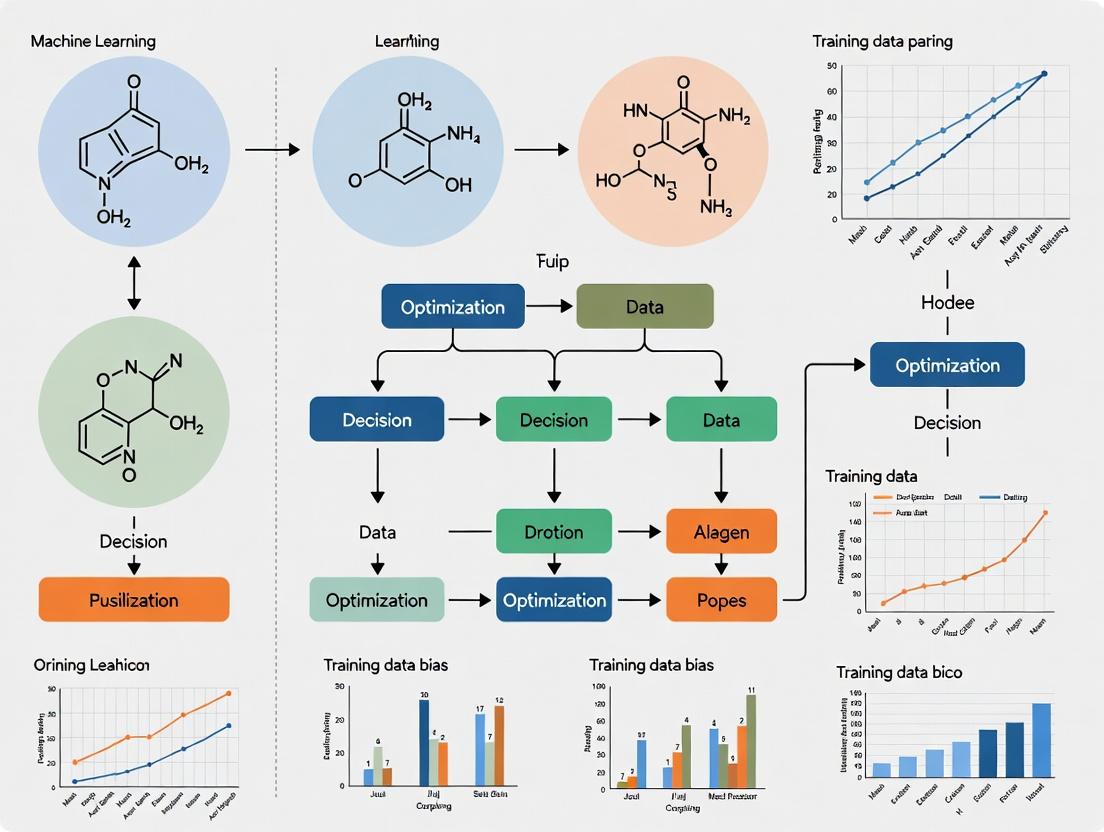
Training data bias presents a critical, often hidden, challenge in machine learning for drug discovery and biomedical research, leading to models with poor generalizability and clinical translatability.
Biased Data, Skewed Results: Mitigating Training Set Bias in Biomedical AI and ML Optimization
Abstract
Training data bias presents a critical, often hidden, challenge in machine learning for drug discovery and biomedical research, leading to models with poor generalizability and clinical translatability. This article provides a comprehensive framework for researchers and drug development professionals to understand, identify, and remediate bias. We explore the origins and typologies of bias in biomedical datasets, detail methodological strategies for bias-aware model development and data curation, offer troubleshooting protocols for diagnosing and optimizing biased models, and present robust validation frameworks to assess model fairness and comparative performance. The goal is to equip practitioners with the tools to build more reliable, equitable, and effective AI-driven solutions.
The Bias Blind Spot: Understanding the Sources and Impact of Training Data Bias in Biomedical ML
Technical Support Center: Troubleshooting Data Bias in Biomedical ML
Frequently Asked Questions (FAQs)
Q1: During model development for patient stratification, my algorithm shows high accuracy on our hospital's data but fails on external validation. What specific bias might be the cause? A1: This is a classic case of Site-Specific or Cohort Bias. Your training data likely contains artifacts specific to your institution's patient demographics, local diagnostic protocols, imaging equipment, or lab assay kits. The model has learned these site-specific "shortcuts" rather than generalizable biomedical patterns.
Q2: Our drug response prediction model, trained on cell line data, does not translate to patient-derived xenograft models. What went wrong? A2: This indicates a Biological Context Bias. Immortalized cell lines often have different genetic and phenotypic profiles (e.g., faster doubling, adapted to plastic) compared to primary tissues or in vivo models. Your training data lacks the biological complexity and tumor microenvironment present in the target application.
Q3: The performance of our diagnostic AI for skin lesions degrades significantly when used on patients with darker skin tones. How do I diagnose this bias? A3: This is Demographic Representation Bias or Phenotypic Spectrum Bias. Your training dataset is almost certainly under-representative of darker skin tones. You must audit your dataset's Fitzpatrick skin type distribution and likely augment it with data from diverse populations.
Q4: We trained a model to identify a disease biomarker from electronic health records (EHR). It appears to be correlating with billing codes rather than pathophysiology. What is this bias? A4: This is a form of Measurement or Proxy Bias. In EHR data, the recorded variables (like diagnostic codes, frequency of visits, or specific test orders) are often imperfect proxies for the true biological state. The model may latch onto administrative or socioeconomic patterns instead of the intended biomedical signal.
Troubleshooting Guides
Issue: Suspected Batch Effect Bias in Genomic Data Symptoms: Model performance is perfect within a single sequencing run but drops on data from other batches or labs. Diagnostic Steps:
- Perform Principal Component Analysis (PCA) on your normalized feature data.
- Color the PCA plot by experimental batch (e.g., sequencing date, lab site, reagent lot).
- Identification: If samples cluster strongly by batch rather than by disease/control status, batch effect bias is present.
Mitigation Protocol:
- Experimental Design: Randomize samples across batches.
- Bioinformatic Correction: Apply batch effect correction algorithms (e.g., ComBat, limma's
removeBatchEffect). Note: Apply correction after train/test split to avoid data leakage. - Validation: Always hold out an entire batch as an external validation set to test generalizability.
Issue: Label Noise Bias in Histopathology Image Analysis Symptoms: Model predictions are inconsistent, and expert pathologists disagree with a subset of the model's training labels. Diagnostic Steps:
- Conduct a label audit. Have multiple board-certified pathologists re-annotate a random subset (e.g., 10%) of your training images independently.
- Calculate the inter-rater agreement (e.g., Cohen's Kappa) between the original labels and the new consensus.
Table: Label Audit Results Example
| Dataset Subset | Original Labels | Consensus Review Labels | Agreement (Kappa) | Implication |
|---|---|---|---|---|
| NSCLC (n=100) | 75% Adenocarcinoma | 82% Adenocarcinoma | 0.71 | Moderate label noise |
| Melanoma (n=50) | 90% Malignant | 70% Malignant | 0.45 | Severe label noise |
Mitigation Protocol:
- Label Consensus: Implement a multi-reader adjudication process for training data.
- Algorithmic Robustness: Use loss functions robust to label noise (e.g., symmetric cross-entropy, generalized cross-entropy).
- Data Curation: Consider removing samples with persistent label disagreement from the training set.
Detailed Experimental Protocol: Auditing for Demographic Bias
Objective: Quantify representation gaps in a training dataset for a chest X-ray diagnosis model.
Materials: Dataset metadata including patient age, sex, and self-reported race/ethnicity.
Methodology:
- Calculate the frequency distribution of each demographic variable in your training set (
P_train). - Obtain the frequency distribution of the same variables in the target patient population (
P_target). This could be from national health statistics or a large, multi-institutional registry. - Compute the Representation Disparity Ratio (RDR) for each demographic subgroup i:
RDR_i = (P_train_i / P_target_i). - Set an operational threshold (e.g., RDR < 0.8 or > 1.25) to flag significant under- or over-representation.
Table: Example Demographic Audit
| Demographic Subgroup | Training Set % (P_train) |
Target Population % (P_target) |
RDR | Status |
|---|---|---|---|---|
| Female, 20-40 | 15% | 25% | 0.60 | Under-represented |
| Male, 20-40 | 20% | 20% | 1.00 | Adequate |
| Female, 60+ | 30% | 28% | 1.07 | Adequate |
| Male, 60+ | 35% | 27% | 1.30 | Over-represented |
The Scientist's Toolkit: Research Reagent Solutions
Table: Essential Materials for Mitigating Data Bias
| Item | Function in Bias Mitigation |
|---|---|
| Synthetic Minority Oversampling (SMOTE) | Algorithmically generates synthetic samples for under-represented classes to address class imbalance bias. |
| ComBat Harmonization Tool | A statistical method used to adjust for batch effects in genomic and imaging data, removing technical artifacts. |
| DICOM Metadata Anonymizer & Auditor | Software to safely audit and balance metadata (age, sex, scanner type) in medical imaging datasets. |
| Cell-Line Authentication Kit (STR Profiling) | Essential to confirm the identity of biological samples and prevent contamination bias in preclinical studies. |
| Multi-Institutional Data Sharing Agreement Templates | Legal frameworks to enable pooling of diverse datasets, crucial for improving demographic and technical diversity. |
| Inter-Rater Reliability Software (e.g., Cohen's Kappa Calculator) | Quantifies label consistency among human annotators, diagnosing label noise bias. |
Visualizations
Title: Sources and Impacts of Training Data Bias in Biomedicine
Title: Bias Mitigation Workflow for Researchers
Technical Support Center: Troubleshooting Data Bias in ML Research
FAQs & Troubleshooting Guides
Q1: Our model performs well on internal validation but fails on external patient cohorts. What is the likely source of bias? A: This is a classic sign of Cohort Selection Bias. Internal validation sets often share latent features (e.g., imaging machine type, hospital-specific protocols) with the training set. To diagnose:
- Perform Stratified Analysis: Compare the distributions of key covariates (age, sex, ethnicity, disease severity, sample collection date) between your internal and external cohorts. Use statistical tests (Chi-square, t-test, KS test) to quantify differences.
- Check Data Provenance: Audit how subjects were recruited for the internal cohort (e.g., all from a single clinic, all volunteers) versus the external cohort.
Mitigation Protocol:
- Algorithm: Use reweighting techniques like Inverse Probability of Treatment Weighting (IPTW) to balance cohorts.
- Steps:
- Pool internal and external cohort data with a source indicator.
- Fit a logistic regression model to predict the source from covariates.
- Calculate the propensity score (probability of being in the internal cohort).
- Assign a weight of
1/propensity_scorefor internal cohort samples and1/(1-propensity_score)for external cohort samples during training. - Retrain the model using these weights.
Q2: Our NLP model for extracting adverse events from clinical notes seems to be learning phrasing shortcuts instead of medical concepts. How can we confirm this? A: This is likely Annotation Artifact Bias, where spurious correlations in the text (e.g., the phrase "was administered" always preceding a drug name in your notes) are learned as rules.
Diagnostic Experiment:
- Create a "Flipped Label" test set. Manually or semi-automatically modify sentences to contain the artifact but the opposite label (e.g., "The patient was administered saline, and no [DRUG_NAME] was given." but label as 'No Adverse Event').
- If model performance drops precipitously on this adversarial set (>30% drop in F1-score), it confirms reliance on artifacts.
Mitigation Protocol:
- Method: Adversarial Data Augmentation.
- Steps:
- Identify common n-gram or syntactic artifacts in your training data (e.g., "no evidence of", "ruled out").
- Use a template-based or generative model to create new training examples where these artifacts are paired with contrary labels.
- Add these counterexamples to your training set and retrain.
Q3: How can we measure and correct for label noise bias introduced by overworked annotators? A: Label noise is a critical Annotation Bias. Implement a Label Quality Audit.
Audit Protocol:
- Re-annotation: Select a random subset (e.g., 10%) of your training data. Have it re-annotated by expert annotators (the "gold standard") and a sample of the original annotators.
- Calculate Metrics: Compute agreement statistics.
- Analysis: Use the table below to summarize findings and guide correction.
Table 1: Label Noise Audit Metrics for Annotator Performance
| Annotator ID | Samples Annotated | Agreement with Gold Standard (%) | Cohen's Kappa (κ) | Major Error Rate* |
|---|---|---|---|---|
| A-101 | 1,200 | 94.2 | 0.88 | 1.5% |
| A-102 | 1,150 | 85.7 | 0.71 | 5.2% |
| A-103 | 1,180 | 98.1 | 0.96 | 0.8% |
| Pooled Avg | 3,530 | 92.7 | 0.85 | 2.5% |
*Major Error: An error that would critically change the clinical interpretation.
Correction Method: For annotators with kappa < 0.75, flag their labeled data for review or exclude it. Implement Confidence-Weighted Learning where samples with low annotator agreement are given less weight during training.
Q4: What is a standard workflow to systematically audit a dataset for multiple biases? A: Implement a Bias Audit Pipeline. The following diagram outlines the key stages and checks.
Title: Systematic Bias Audit Pipeline for ML Datasets
The Scientist's Toolkit: Research Reagent Solutions
Table 2: Essential Tools for Bias Detection & Mitigation Experiments
| Tool / Reagent | Function in Bias Research | Example Vendor/Platform |
|---|---|---|
| Synthetic Data Generators (e.g., CTGAN, SYN) | Creates balanced counterfactual data to augment under-represented cohorts or break spurious correlations. | Mostly open-source (SDV), Gretel.ai |
| Annotation Platform with QA Dashboards | Provides metrics on annotator agreement, speed, and flags inconsistencies for review during label creation. | Labelbox, Scale AI, Prodigy |
| Model Explainability Suites (SHAP, LIME) | Identifies which features (potentially artifacts) the model is relying on for predictions, revealing shortcuts. | Open-source libraries |
| Statistical Analysis Software (R, Python Pandas) | Performs distribution comparison tests (KS, Chi-square) and calculates propensity scores for reweighting. | Open-source, SAS, JMP |
| Adversarial Testing Frameworks | Automates the creation of "flipped label" or perturbed test sets to stress-test model robustness. | TextAttack (NLP), CleverHans (CV) |
| Cohort Sourcing & Management Platform | Tracks patient/donor metadata comprehensively to audit provenance and enable stratified sampling. | Medidata Rave, Castor EDC, RedCap |
Q5: How do we visualize and correct for a confounding variable in a cohort? A: Use Causal Graph Diagrams to map relationships and apply stratification or matching.
Title: Causal Graph Showing a Confounding Variable and Correction
Technical Support Center
FAQ & Troubleshooting for Bias Mitigation Experiments
Q1: During dataset auditing, our model performance metrics (e.g., accuracy) are high across all pre-defined test sets, yet qualitative review reveals clear stereotyping in outputs for underrepresented subgroups. What is the issue and how do we troubleshoot? A: This is a classic symptom of Underrepresentation Bias compounded by Measurement Bias. High aggregate metrics mask poor performance on small subgroups. The test set itself likely suffers from the same underrepresentation.
- Troubleshooting Protocol:
- Disaggregated Evaluation: Calculate performance metrics (accuracy, F1-score, precision, recall) separately for each identifiable demographic or phenotypic subgroup (see Table 1).
- Slice Discovery Tools: Use tools like
SMASH(Slice Metrics Based on Automated Slice Discovery) or manual error analysis to identify "hidden" subgroups where performance degrades. - Bias Auditing: Apply quantitative bias metrics such as Equalized Odds Difference or Demographic Parity Difference to your model's predictions (see Table 2).
- Root Cause: If bias metrics confirm disparity, augment your training data for underrepresented slices using techniques like SMOTE (Synthetic Minority Over-sampling Technique) or targeted data collection.
Q2: Our drug-target interaction model, trained on high-quality bioassay data, fails to generalize to novel protein classes. We suspect Historical Legacy Bias in the available data. How can we diagnose and address this? A: Historical Legacy Bias arises when available data reflects past research focus (e.g., well-studied protein families like kinases) rather than the true biological landscape.
- Troubleshooting Protocol:
- Data Provenance Analysis: Map the taxonomic and protein family distribution of your training data against a reference database like UniProt. Visualize the over- and under-representation.
- Clustering & Out-of-Distribution (OOD) Detection: Cluster your training data by protein sequence or structural features. Test your model on data from low-density clusters; poor performance indicates legacy bias.
- Mitigation Strategy: Employ domain adaptation techniques or invariant risk minimization (IRM) to learn features that are stable across different protein families. Prioritize experimental validation for predictions on under-represented families.
Q3: When correcting for Measurement Bias in clinical phenotype data, what are the standard methodologies to adjust for inconsistent diagnostic criteria across different source cohorts? A: Measurement bias occurs when the data collection process systematically distorts the true value.
- Experimental Protocol for Harmonization:
- Phenotype Algorithm Audit: Document the specific ICD codes, lab values, and inclusion/exclusion criteria used to define each phenotype in each source cohort.
- Cross-Validation with Gold Standards: For a subset of records, compare the algorithmic phenotype label against a clinician-adjudicated "gold standard" label. Calculate Cohen's Kappa for agreement.
- Statistical Harmonization: Apply methods like Calibration (using Platt scaling or isotonic regression per cohort) or more advanced Data Harmonization via Generative Models (e.g., using VAEs) to align feature distributions across cohorts before model training.
Table 1: Hypothetical Disaggregated Model Performance
| Subgroup | Sample Count (N) | Accuracy | F1-Score | Disparity vs. Majority |
|---|---|---|---|---|
| Majority Group A | 10,000 | 0.92 | 0.91 | Baseline |
| Underrep. Group B | 150 | 0.89 | 0.87 | -0.03 / -0.04 |
| Underrep. Group C | 75 | 0.67 | 0.62 | -0.25 / -0.29 |
Table 2: Common Bias Metrics for Binary Classifiers
| Metric | Formula | Ideal Value | Interpretation |
|---|---|---|---|
| Demographic Parity Difference | P(Ŷ=1 | Group1) - P(ŷ=1 | Group2) | 0 | Equal acceptance rates across groups. |
| Equalized Odds Difference | (FPRGroup1 - FPRGroup2) + (TPRGroup1 - TPRGroup2) / 2 | 0 | Equal false positive and true positive rates. |
Experimental Protocols
Protocol 1: Disaggregated Error Analysis & Slice Discovery
- Partition Data: Split your validation/test data by protected attributes (e.g., ethnicity, gender, age decile) and/or phenotypic clusters.
- Run Inference: Generate model predictions for each partition.
- Compute Metrics: Calculate key performance indicators (KPIs) for each slice independently.
- Identify Underperforming Slices: Flag slices where KPIs fall below a predefined threshold (e.g., >10% drop in F1-score) or where bias metrics exceed a fairness threshold.
- Root Cause Analysis: Manually inspect false positives/negatives in underperforming slices to identify common failure modes.
Protocol 2: Bias Mitigation via Reweighting (Pre-processing)
- Calculate Weights: For each training sample i belonging to group a and class y, compute weight:
w_i = (P_group(a) * P_class(y)) / (P_group,class(a, y)). Where P denotes probability in the target fair distribution (often the overall dataset proportions). - Apply Weights: Use these weights during model training (e.g., in the loss function:
Loss = Σ w_i * L(y_i, ŷ_i)). - Validate: Evaluate the retrained model using the disaggregated analysis from Protocol 1.
Diagrams
Title: Bias Identification & Mitigation Workflow
Title: Legacy Bias Causing Model Failure on Novel Targets
The Scientist's Toolkit: Research Reagent Solutions
| Item | Function in Bias Mitigation Experiments |
|---|---|
Fairness Metrics Library (e.g., fairlearn, AI Fairness 360) |
Provides standardized implementations of quantitative bias metrics (e.g., demographic parity, equalized odds) for model audit. |
Slice Discovery Tool (e.g., SMASH, Domino) |
Automatically identifies coherent subgroups (slices) of data where model underperforms. |
Data Augmentation Tool (e.g., imbalanced-learn, nlpaug) |
Generates synthetic samples for underrepresented classes/subgroups via SMOTE or back-translation. |
| Invariant Risk Minimization (IRM) Framework | A training paradigm that encourages learning of features causally related to the outcome, stable across environments (domains). |
Cohort Harmonization Pipeline (e.g., sva R package, Combat) |
Adjusts for batch effects and systematic measurement differences across data collection sites. |
Interpretability Toolkit (e.g., SHAP, LIME) |
Explains individual predictions to diagnose failure modes in underperforming slices. |
Technical Support Center: Troubleshooting Guides & FAQs
Q1: Our model for predicting novel oncology targets shows high validation accuracy, but all top candidates are proteins highly expressed in male-derived cell lines. How can we diagnose and correct for sex bias in our training data? A1: This indicates a sampling bias where the training data over-represents male biology. Follow this diagnostic protocol:
- Audit Data Provenance: Tabulate the sex origin of all cell lines or tissue samples in your training set.
- Perform Stratified Analysis: Re-run your prediction pipeline on male-only and female-only data subsets separately. Significant performance disparity confirms the bias.
- Corrective Action - Data Rebalancing: Actively source or generate (via techniques like SMOTE) data from under-represented groups. Use a weighted loss function during training to penalize errors on the minority class (e.g., female-derived data) more heavily.
- Validation: Validate final model performance using balanced hold-out sets and external datasets with known sex distribution.
Q2: During clinical trial participant selection using an NLP model on EHR notes, we are inadvertently excluding eligible elderly patients. What is the likely cause and a step-by-step fix? A2: The bias likely stems from the model associating specific linguistic patterns or comorbidities common in elderly patients with ineligibility. Troubleshooting guide:
- Root Cause Analysis: Use SHAP or LIME explainability tools on your model to identify which words or phrases (e.g., "frail," "history of falls," "polypharmacy") are most strongly driving the exclusion classification.
- Protocol for De-biasing:
- Retrain with Fairness Constraints: Implement a fairness penalty (e.g., demographic parity or equalized odds) during model optimization to reduce correlation between the prediction and the protected attribute (age >65).
- Post-processing: Adjust the classification threshold for the elderly subgroup to achieve parity in selection rates, provided predictive performance remains acceptable.
- Continuous Monitoring: Deploy the model with a real-time dashboard tracking selection rates by age decade.
Q3: Our multi-omics drug response predictor fails to generalize to patients of non-European ancestry. What experimental workflow can identify the layer in our pipeline where this racial/ethnic bias is introduced? A3: Implement a bias audit workflow at each stage.
Diagram Title: Bias Audit Workflow for Multi-Omics Pipeline
Detailed Protocol:
- Data Source Audit: Quantify the ancestral composition of your training data using genomic PCA against reference panels (e.g., 1000 Genomes).
- Preprocessing Check: Cluster your normalized data. If clusters separate strongly by ancestry, batch correction methods (e.g., Combat) may be needed.
- Feature Selection Analysis: Test if selected biomarker genes are evenly distributed across ancestry groups or are disproportionately population-specific.
- Model Evaluation: Use ancestry-stratified cross-validation. Performance drops in specific groups indicate biased model generalization.
Summarized Quantitative Data from Recent Studies
Table 1: Documented Bias in Biomedical AI Training Datasets
| Data Type | Biased Variable | Under-Represented Group | Representation % | Study/Year |
|---|---|---|---|---|
| Genomic Data (GWAS) | Genetic Ancestry | Non-European | < 20% | Nature (2023) |
| Cell Line Databases | Sex | Female-derived | ~30% | Cell (2024) |
| Clinical Trial Images | Skin Tone | Fitzpatrick V-VI | < 10% | NEJM AI (2024) |
| EHR Data for NLP | Socioeconomic Status | Low-Income Zip Codes | Variable, often under-coded | JAMA Network (2023) |
Table 2: Impact of Bias on Model Performance Disparity
| Prediction Task | Performance Metric | Majority Group Performance | Minority Group Performance | Performance Gap |
|---|---|---|---|---|
| Diabetic Retinopathy Detection | AUC | 0.95 (Light Skin) | 0.75 (Dark Skin) | 0.20 |
| Polygenic Risk Scores (CHD) | Odds Ratio (Top Decile) | 4.2 (European Ancestry) | 1.5 (African Ancestry) | 2.7 |
| Drug Target Gene Prediction | Precision @ 10 | 0.80 (Male Cell Lines) | 0.45 (Female Cell Lines) | 0.35 |
Experimental Protocols
Protocol: Mitigating Ancestry Bias in GWAS-Based Target Discovery
- Data Collection: Aggregate GWAS summary statistics from diverse cohorts (e.g., All of Us, UK Biobank, BioBank Japan).
- Stratified QC: Perform quality control (imputation quality, MAF) separately per ancestry group.
- Meta-Analysis: Use a random-effects, trans-ancestry meta-analysis model (e.g., MR-MEGA) that includes principal components of genetic variation as covariates to distinguish shared from population-specific effects.
- Polygenic Scoring: Compute ancestry-adjusted polygenic scores using methods like PRS-CSx, which leverages a global prior and shared effects across populations.
- Validation: Test identified targets in in vitro models derived from diverse iPSC lines.
Diagram Title: Trans-Ancestry Target Discovery Workflow
Protocol: Auditing NLP Models for Clinical Trial Criteria
- Synthetic Cohort Generation: Use a language model (LLM) with strict guidelines to generate synthetic patient profiles that vary systematically across protected attributes (age, race, sex) while keeping eligibility factors constant.
- Model Probing: Pass the synthetic profiles through your trial selection NLP classifier.
- Disparity Measurement: Calculate the odds ratio for selection between groups. A ratio significantly different from 1.0 indicates algorithmic bias.
- Adversarial De-biasing: Use the synthetic profiles as a fairness-aware training set to fine-tune the classifier, minimizing prediction difference across groups.
The Scientist's Toolkit: Research Reagent Solutions
Table 3: Essential Reagents for Bias-Aware Biomedical AI Research
| Item | Function | Example/Supplier |
|---|---|---|
| Diverse Reference Panels | Provides ancestral context for genomic analysis and correction. | 1000 Genomes Project, gnomAD, All of Us Researcher Workbench. |
| Ancestry-Informative Markers (AIMs) | A validated set of SNPs to genetically confirm or estimate population ancestry in cell lines/tissues. | Precision AIMs Panel (Thermo Fisher). |
| Commercially Diverse Cell Lines | Pre-characterized cell lines from various ethnicities and sexes for in vitro validation. | ATCC Human Primary Cell Diversity Panel. |
| Synthetic Data Generation Tools | Creates balanced datasets for stress-testing and de-biasing models without privacy concerns. | Mostly AI, Syntegra, or carefully prompted LLMs (e.g., GPT-4 with guardrails). |
| Fairness & Bias Audit Libraries | Open-source code for detecting and mitigating bias in ML models. | IBM AI Fairness 360 (AIF360), Facebook's Fairness Flow, Google's ML-Fairness-Gym. |
| Explainability (XAI) Suites | Identifies which input features drive biased predictions. | SHAP, LIME, Captum (for PyTorch). |
Technical Support Center
FAQs & Troubleshooting Guides
Q1: Our model shows excellent performance on our internal validation set but fails catastrophically on a new, external patient cohort. What could be the cause? A: This is a classic symptom of dataset bias. Your training and internal validation data likely lack representational diversity, causing the model to learn spurious correlations specific to that dataset.
- Troubleshooting Steps:
- Audit Cohort Demographics: Compare the distributions of key variables between your training set and the new cohort. Use the following table as a guide:
Q2: How can we formally test for racial/ancestral bias in our genomic risk prediction model before clinical deployment? A: A rigorous bias assessment protocol is mandatory.
- Experimental Protocol: Bias Disparity Audit
- Stratify Test Data: Partition your held-out test set into subgroups based on genetically inferred ancestry (e.g., AFR, EAS, EUR, SAS) using standardized PCA or ADMIXTURE analysis.
- Calculate Performance Metrics Per Subgroup: Compute key metrics—AUC, Sensitivity, Specificity, Positive Predictive Value (PPV)—for each ancestral subgroup independently.
- Quantify Disparity: Establish disparity thresholds. For example, the FDA's proposed criteria for algorithmic fairness often consider a difference in AUC of >0.05 or a difference in sensitivity/specificity of >0.10 as potentially problematic.
- Mitigation Experiment: If disparity exceeds thresholds, retrain using fairness-constrained optimization (e.g., imposing a penalty on performance variance across subgroups) or use adversarial debiasing to strip away ancestry-correlated features not causally linked to the outcome.
Q3: We suspect batch effects and site-specific protocols are introducing bias into our multi-omics data. How can we diagnose and correct this? A: Technical bias is a major confounder in translational research.
- Diagnostic Workflow:
- Principal Component Analysis (PCA): Plot the first two principal components of your data, colored by collection site/batch. Clear clustering by site indicates strong batch effect.
- Statistical Testing: Perform PERMANOVA on the data matrix using 'Site' as the grouping variable. A significant p-value confirms the effect.
- Correction Methodology:
- ComBat or ComBat-GP: Use these empirical Bayes methods to harmonize data across batches while preserving biological signal. They are standard for genomic and proteomic data.
- Protocol: Normalize data → Identify batch covariates → Apply ComBat adjustment → Validate by re-running PCA to show batch clustering has dissipated.
Visualizations
Diagram: ML Bias Mitigation Workflow (94 chars)
Diagram: Sources of Technical Batch Effect (95 chars)
The Scientist's Toolkit: Research Reagent Solutions
| Item / Reagent | Function in Bias-Aware Research |
|---|---|
| Standardized Reference Cell Lines (e.g., from Cell Line Genomics Consortium) | Provides genetically characterized, common baselines across labs to control for experimental variability. |
| Multiplex Immunoassay Kits with Pre-Mixed Panels (e.g., Olink, MSD) | Minimizes protocol deviation and batch variation in protein biomarker quantification across sites. |
| Synthetic Data Generation Tools (e.g., SynthVAE, CTGAN) | Generates realistic data for underrepresented subgroups to augment training sets without privacy concerns. |
Algorithmic Fairness Libraries (e.g., fairlearn, AIF360) |
Provides pre-implemented metrics (disparate impact, equalized odds) and mitigation algorithms for bias auditing. |
Bioinformatics Pipelines with ComBat/Harmonization (e.g., sva R package, scanpy.pp.harmony in Python) |
Critical for removing technical batch effects from genomic and transcriptomic data prior to analysis. |
Ancestry Inference Tools (e.g., PLINK, EIGENSOFT) |
Enables genetic ancestry stratification of cohorts to assess and correct for ancestral bias in models. |
Building Better Datasets: Proactive Methodologies for Bias-Aware Model Development
Technical Support Center: Troubleshooting Data Curation & Assembly
FAQs & Troubleshooting Guides
Q1: During cohort identification from electronic health records (EHR), my dataset shows a significant demographic skew (e.g., age, ethnicity) compared to the underlying patient population. How can I diagnose and correct this? A: This indicates a sampling bias in your data extraction query or source system enrollment. Follow this protocol:
- Diagnosis: Calculate the prevalence of your condition of interest in your curated dataset across key demographic strata (see Table 1). Compare these proportions to gold-standard epidemiological data (e.g., CDC, WHO) or a prior, comprehensive institutional audit using a Chi-squared test.
- Correction Protocol: Implement stratified sampling or propensity score weighting.
- Stratified Sampling: Re-sample your EHR extract, setting quotas for each demographic subgroup (e.g., 50% female, 30% from Ethnicity A) based on the reference population's distribution.
- Propensity Score Weighting: Build a logistic regression model predicting inclusion in your dataset based on demographics. Use the inverse of the predicted probability (the propensity score) as a weight for each sample in subsequent analyses.
Q2: My image dataset (e.g., histopathology, retinal scans) contains batch effects from different scanner models or staining protocols, causing model overfitting. What is the standard mitigation workflow? A: Batch effects are a common technical bias. Employ this pre-processing pipeline:
- Experimental Protocol for Combatting Batch Effects: a. Metadata Logging: For every image, log critical technical covariates: scanner manufacturer/model, staining lot number, slide thickness, imaging date. b. Quality Control: Apply a standardized filter (e.g., remove out-of-focus images using Laplacian variance). c. Normalization: Apply a stain normalization algorithm (e.g., Structure-Preserving Color Normalization (SPCN) or Macenko) for histology images. For other modalities, use platform-specific calibration. d. Harmonization: Use a computational tool like ComBat (empirical Bayes) or its extensions (ComBat-GAM) to harmonize feature distributions across logged batches, adjusting for known biological variables (e.g., disease stage) to preserve signal.
Q3: When curating genomic data from public repositories like GEO or TCGA, how do I ensure consistency in genomic build alignment and annotation to prevent label leakage? A: Inconsistent genomic coordinates are a source of hidden bias.
- Troubleshooting Guide:
- Symptom: Poor model generalization; high performance on one dataset fails on another.
- Root Cause: Features (e.g., gene expressions, SNP positions) are mapped inconsistently.
- Solution Protocol:
a. Standardize Genome Build: Use
CrossMapor theliftOvertool to convert all genomic coordinates (e.g., SNP arrays, variant calls) to a single reference build (e.g., GRCh38/hg38). b. Re-annotate Uniformly: For gene expression matrices, re-annotate all probe sets to a current gene annotation database (e.g., GENCODE) using the platform-specific annotation files. Do not rely on provided annotations. c. Version Control: Document the exact versions of all reference files used (e.g., GTF, FASTA).
Q4: How can I assess whether my curated "control" group is actually representative for the specific disease context, or if it introduces negative set bias? A: This is a critical validity check. Implement the following methodological review:
- Define "Appropriateness": List the confounding variables that must be balanced (e.g., age, sex, BMI, smoking status, comorbid conditions like hypertension).
- Comparative Analysis: For each potential control source (e.g., general population biobank, "healthy" volunteers, non-diseased tissue from adjacent site), tabulate the distributions of these confounders against your case group.
- Statistical Matching: Use propensity score matching (1:1 nearest neighbor, caliper=0.2) to select the most appropriate control subset from a larger pool. Assess balance post-matching using standardized mean differences (<0.1 indicates good balance).
Table 1: Common Demographic Disparities in Public Biomedical Datasets (Illustrative)
| Dataset / Biobank | Primary Focus | Reported Demographic Skew (vs. US Population) | Potential Bias Risk |
|---|---|---|---|
| UK Biobank | Genomics, Imaging | Higher proportion of older, less ethnically diverse, healthier volunteers | Socioeconomic, "healthy volunteer" bias |
| The Cancer Genome Atlas (TCGA) | Oncology | Underrepresentation of racial/ethnic minority groups, particularly for certain cancers | Limited generalizability of molecular subtypes |
| ADNI (Alzheimer's Disease) | Neuroimaging | Predominantly Non-Hispanic White, highly educated cohort | Skewed model predictions for disease progression |
| GWAS Catalog Summary Stats | Genetics | ~79% of participants are of European ancestry | Reduced predictive utility in non-European populations |
Table 2: Impact of Data Curation Interventions on Model Performance
| Intervention Method | Application Scenario | Reported Effect on Test Set Performance (Generalizability) | Key Metric Change |
|---|---|---|---|
| Stratified Sampling by Demographics | EHR Cohort for Disease Prediction | Increased AUC from 0.72 to 0.78 in underrepresented group | Reduction in AUC disparity from 0.15 to 0.05 |
| Batch Effect Harmonization (ComBat) | Multi-site MRI Study | Improved cross-site classification accuracy by 18% | Decrease in batch-associated variance from 40% to <5% |
| Active Learning for Rare Class | Histopathology (Rare Cancer) | F1-score for rare class improved from 0.31 to 0.65 | Required 60% fewer labeled samples to achieve baseline |
| Synthetic Minority Oversampling (SMOTE) | Imbalanced Molecular Subtypes | Reduced false negative rate by 22% | Precision maintained within 3% of original |
Experimental Protocols
Protocol 1: Implementing Stratified Sampling for EHR Data Extraction Objective: To assemble a cohort from an EHR that mirrors the demographic distribution of a target population. Materials: SQL/OHDSI OMOP CDM access, statistical software (R/Python). Procedure:
- Define the clinical phenotype for
casesusing ICD-10 codes, lab values, and medication records with expert validation. - Query the reference population demographics (e.g., from institutional demographic database) to obtain target proportions for strata:
[Sex] x [Age Group] x [Race/Ethnicity]. - From the pool of identified
cases, calculate the current proportion in each stratum. - For strata where current proportion > target, randomly subsample cases. For strata where current proportion < target, note the deficit (this may require expanded querying or indicate true underrepresentation).
- Apply the same stratified sampling logic to select
controlsfrom patients not meeting case criteria, matching on key confounders like enrollment period.
Protocol 2: Computational Batch Effect Correction for Transcriptomics Data
Objective: Remove technical variation from multiple sequencing batches while preserving biological variation.
Materials: Gene expression matrix (log2 counts), batch metadata file, R with sva package.
Procedure:
- Model Design: Create a full model matrix for biological conditions of interest (e.g.,
~ disease_state + age). Create a null model matrix for covariates to preserve (e.g.,~ age). - Identify Surrogate Variables: Use the
num.svfunction to estimate the number of hidden batch effects. - Run ComBat: Execute
ComBat(dat = expression_matrix, batch = batch_vector, mod = full_model, par.prior = TRUE, prior.plots = FALSE). - Validation: Perform Principal Component Analysis (PCA) on corrected data. Visualize: PC1 vs. PC2 colored by
batch(should show mixing) and bydisease_state(should show separation).
Diagrams
Diagram 1: Bias-Aware Data Curation Workflow
Diagram 2: Common Sources of Bias in Biomedical ML
The Scientist's Toolkit: Research Reagent Solutions
| Item / Resource | Function in Strategic Curation | Example / Note |
|---|---|---|
| OHDSI OMOP CDM | Standardized data model to convert disparate EHR databases into a common format, enabling reproducible cohort identification queries. | Essential for multi-site studies. |
| Phenotype Libraries | Pre-validated, computable definitions for diseases and conditions (e.g., PheCODE, HPO). Reduces label noise and variability in case/control assignment. | Use from reputable consortia. |
Bioconductor sva |
R package containing ComBat and other algorithms for batch effect correction in genomic and other high-dimensional data. | Industry standard for harmonization. |
| Synthetic Data Generators (e.g., CTGAN, Synthetic Minority Oversampling) | Tools to generate realistic synthetic samples for rare classes or to balance datasets, mitigating class imbalance bias. | Use with caution; evaluate fidelity. |
| Labeling Platforms with QA (e.g., Labelbox, CVAT) | Centralized platforms for expert annotation with built-in quality assurance (IQC/EQC), reducing annotation bias and noise. | Critical for imaging/nlp tasks. |
| Fairness Toolkits (e.g., AIF360, Fairlearn) | Libraries to calculate fairness metrics (demographic parity, equalized odds) and apply post-processing bias mitigations to trained models. | Integrate into evaluation pipeline. |
| Liftover Tools (UCSC, CrossMap) | Utilities to convert genomic coordinates between different assembly builds, ensuring consistent feature space across datasets. | Mandatory for integrative genomics. |
Troubleshooting Guides & FAQs
Q1: My bias metrics (e.g., Demographic Parity Difference, Equalized Odds) show high values for a protected attribute (e.g., race, sex), but my overall model accuracy remains high. Is this acceptable for regulatory submission in healthcare? A: No. High accuracy with high bias metrics is a critical failure for regulatory science and ethical deployment. Regulatory bodies like the FDA emphasize fairness. A biased model can perpetuate health disparities. You must mitigate bias even at a potential minor cost to aggregate accuracy. Proceed to debiasing techniques (pre-processing, in-processing, post-processing) and document all steps.
Q2: During adversarial debiasing, my model fails to converge or the fairness-performance trade-off is worse than reported in literature. What are common pitfalls? A: This often stems from incompatible hyperparameters or gradient conflict. Follow this protocol:
- Stabilize Training: Use a smaller learning rate for the adversary (e.g., 0.001) than the predictor (e.g., 0.01).
- Gradient Reversal Tuning: Implement gradient reversal layer with a scaling factor (
lambda). Start withlambda = 0.1and incrementally increase. - Architecture Check: Ensure the adversary network is simpler (e.g., 1 hidden layer) than the predictor to prevent it from overpowering the primary task.
- Monitor Logs: Track loss for both predictor and adversary separately to diagnose collapse.
Q3: When applying reweighting (pre-processing bias mitigation), my model's performance on the minority subgroup decreases further. Why? A: This may indicate intersectional bias or flawed weight calculation. Do not compute weights solely on a single protected attribute (e.g., sex). Instead, compute for intersections (e.g., sex × age group). Use the formula: Weight = (Expected Probability of Subgroup) / (Observed Probability in Training Data). Validate weights on a held-out sample.
Q4: The "Fairness Through Awareness" approach requires a similarity metric. What is a robust choice for high-dimensional biomedical data? A: For clinical or omics data, a carefully calibrated Mahalanobis distance is recommended. Ensure you:
- Standardize Features: Use RobustScaler to minimize outlier influence.
- Regularize Covariance: Compute the covariance matrix with Ledoit-Wolf shrinkage to avoid singularity.
- Validate: Check that the resulting distances correlate with domain expert assessments of similarity for a small sample.
Q5: How do I validate that bias mitigation for a drug response predictor generalizes to a new patient population not seen during training? A: Implement a rigorous external validation protocol:
- Split by Site/Study: Partition data so that entire clinical trial sites or distinct biogeographic groups are in the external test set.
- Stratified Audit: Evaluate all performance and bias metrics (see table below) on each distinct subgroup within the external set.
- Threshold Calibration: Recalibrate decision thresholds on the external set's majority subgroup if necessary, then re-audit fairness metrics.
Table 1: Comparative Performance of Bias Mitigation Techniques on the TOX21 Dataset (Hypothetical Results)
| Mitigation Technique | Overall AUC | Subgroup A AUC | Subgroup B AUC | Demographic Parity Difference | Equalized Odds Difference | Computational Overhead |
|---|---|---|---|---|---|---|
| Baseline (No Mitigation) | 0.89 | 0.92 | 0.81 | 0.18 | 0.15 | Low |
| Reweighting (Pre-Processing) | 0.87 | 0.90 | 0.85 | 0.08 | 0.09 | Low |
| Adversarial Debiasing | 0.86 | 0.88 | 0.86 | 0.05 | 0.06 | High |
| Reduction Post-Processing | 0.88 | 0.91 | 0.84 | 0.04 | 0.10 | Very Low |
Table 2: Common Fairness Metrics Formulas & Interpretation
| Metric | Formula (Simplified) | Ideal Value | Interpretation in Clinical Context |
|---|---|---|---|
| Demographic Parity | P(Ŷ=1 | A=0) = P(Ŷ=1 | A=1) | 0 | Equal rate of positive prediction across groups. |
| Equalized Odds | P(Ŷ=1 | A=0, Y=y) = P(Ŷ=1 | A=1, Y=y) for y∈{0,1} | 0 | Equal TPR and TNR across groups. Critical for diagnostic fairness. |
| Predictive Parity | P(Y=1 | A=0, Ŷ=1) = P(Y=1 | A=1, Ŷ=1) | 0 | Equal PPV across groups. Ensures positive predictions are equally reliable. |
Experimental Protocols
Protocol 1: Benchmarking Bias Metrics in a Drug Toxicity Classification Pipeline
- Data Partitioning: Split dataset into Train (60%), Validation (20%), Test (20%) by patient ID, ensuring no patient leakage. Stratify splits by protected attribute (e.g., genetic ancestry PCA group).
- Baseline Model Training: Train a standard Random Forest or GBDT model on the Train set. Optimize hyperparameters for AUC on the Validation set.
- Bias Audit: On the held-out Test set, calculate all metrics in Table 2 for each protected subgroup. Use the
aif360orfairlearnPython toolbox. - Documentation: Record results in a table formatted like Table 1.
Protocol 2: Implementing and Evaluating Adversarial Debiasing
- Architecture Setup: Implement a predictor network (2-3 hidden layers) and an adversary network (1-2 hidden layers) using PyTorch/TensorFlow. The adversary takes the predictor's penultimate layer as input and predicts the protected attribute.
- Gradient Reversal: Insert a Gradient Reversal Layer (GRL) between the predictor and adversary. The GRL acts as identity during forward pass and negates gradients during backward pass.
- Alternating Training: In each epoch:
- Step 1: Freeze adversary, train predictor to minimize prediction loss.
- Step 2: Freeze predictor, train adversary to minimize protected attribute prediction loss.
- Step 3: Joint training with GRL active to maximize adversary loss while minimizing predictor loss.
- Evaluation: Follow Protocol 1, Step 4, on the Test set.
Diagrams
The Scientist's Toolkit: Research Reagent Solutions
| Item/Resource | Function in Algorithmic Fairness Research |
|---|---|
| AI Fairness 360 (aif360) | Open-source Python toolkit containing a comprehensive set of fairness metrics, bias mitigation algorithms, and explainability tools for benchmarking. |
| Fairlearn | Python package focused on assessing and improving fairness of AI systems, offering reduction algorithms and interactive dashboards for visualization. |
| SHAP (SHapley Additive exPlanations) | Game-theoretic approach to explain model predictions, crucial for identifying feature contributions to bias and ensuring interpretability. |
| MLflow | Platform to track experiments, parameters, metrics (including fairness metrics), and models to maintain rigorous audit trails for regulatory compliance. |
| Synthetic Data Generators (e.g., SDV, Gretel) | Tools to generate bias-controlled or augmented synthetic datasets for stress-testing fairness methods when real-world data is limited or highly sensitive. |
| Protected Attribute Ontologies | Standardized vocabularies (e.g., from NCI Thesaurus, CDISC) for defining race, ethnicity, sex, and genetic ancestry to ensure consistent subgroup analysis. |
Troubleshooting Guides & FAQs
FAQ 1: Why does my SMOTE-augmented dataset lead to overfitting and poor generalization on the external test set?
- Answer: This is a common issue where synthetic samples are generated without considering the underlying data manifold, creating unrealistic or noisy examples. Specifically for biomedical data, SMOTE can create implausible biological states in high-dimensional feature spaces (e.g., gene expression, molecular descriptors). The synthetic points may lie in regions of feature space that do not correspond to viable biological mechanisms, leading the model to learn artificial decision boundaries.
- Solution: Implement Manifold-aware or boundary-focused variants like Borderline-SMOTE or ADASYN, which focus synthesis on harder-to-learn samples. For highly structured data (e.g., images, spectra), consider switching to model-based synthesis (e.g., using VAEs or GANs) that learn the data distribution. Always validate synthesized samples with domain experts (e.g., a medicinal chemist for compound data) for plausibility.
FAQ 2: My CTGAN model for generating synthetic patient cohorts collapses, producing identical samples. How do I fix this?
- Answer: Mode collapse in GANs is often due to an imbalance in the discriminator and generator training dynamics or an overly powerful discriminator.
- Solution:
- Adjust Training Hyperparameters: Use the Wasserstein GAN with Gradient Penalty (WGAN-GP) loss, which provides more stable training signals.
- Monitor Metrics: Track the Frechet Inception Distance (FID) or the classifier Two-sample Test (C2ST) during training to quantitatively assess diversity and quality.
- Architecture Checks: Ensure your generator network has sufficient capacity (e.g., number of layers, nodes) to model the complex distribution of your underrepresented population.
- Data Preprocessing: Normalize continuous variables and use appropriate encoding for mixed data types (continuous and categorical).
FAQ 3: After using augmentation, my model's performance metrics improve on validation data but degrade in real-world deployment for the target minority subgroup.
- Answer: This indicates a domain shift introduced by the augmentation technique. The synthesized data may not accurately represent the true conditional distribution
P(X|Y)of the minority class in the deployment environment, especially if the original training data for that subgroup was biased or too small to estimate the distribution. - Solution: Implement a two-stage validation pipeline:
- Hold out a completely untouched sample of the rare population from the original data as a "sanity test" set.
- Use domain adaptation techniques post-augmentation to align the feature distributions of the synthetic minority data and the held-out real minority data.
- Report performance on the held-out real minority set as the key metric, not just on the overall augmented validation set.
FAQ 4: How do I choose between oversampling (like SMOTE) and undersampling for my highly imbalanced biomedical dataset?
- Answer: The choice depends on dataset size and computational cost.
- See the comparative table below:
| Technique | Recommended Scenario | Primary Risk | Typical Use-Case in Drug Development |
|---|---|---|---|
| Oversampling (SMOTE & variants) | Total dataset size is small to moderate. | Creating unrealistic samples; overfitting. | Augmenting rare adverse event reports or patients with a specific genetic biomarker. |
| Undersampling (Random, Tomek Links) | The majority class is very large, and computational efficiency is critical. | Loss of potentially useful information from the majority class. | Pre-processing large-scale phenotypic screening data before focused model training. |
| Hybrid (SMOTE + Tomek) | Dataset is of medium size and you want to clean the decision boundary. | Increased complexity in pipeline tuning. | Balancing cell image datasets for classification of rare morphological phenotypes. |
| Synthesis (VAE/GAN) | Data has complex, high-dimensional structure (images, sequences). | High computational demand; risk of generating nonsensical data. | Generating synthetic compound structures or histopathology images for rare cancer subtypes. |
Detailed Experimental Protocol: Evaluating SMOTE vs. CTGAN for Imbalanced Assay Data
Objective: To compare the efficacy of SMOTE and CTGAN in improving model performance on an underrepresented "active" class in a high-throughput screening assay.
Materials & Reagents:
- Original Dataset:
assay_data.csvcontaining 10,000 compounds (features: 2048-bit Morgan fingerprints, target: binary activity with 1% positive rate). - Software: Python 3.9, imbalanced-learn 0.10.1, SDV 0.17.1, scikit-learn 1.3.0.
- Validation Set: 20% of original data, stratified by activity, held out before any augmentation.
Methodology:
- Data Splitting: Split original data into 80% training (
n=8000) and 20% held-out test (n=2000). The training set contains ~80 active compounds. - Baseline Training: Train a Random Forest classifier on the original imbalanced training set. Evaluate on the held-out test set, recording Precision, Recall, and F1-score for the active class.
- SMOTE Augmentation:
- Apply SMOTE to the training set only, balancing the active:inactive ratio to 1:1.
- Train an identical Random Forest classifier on the SMOTE-augmented dataset.
- Evaluate on the same, original held-out test set.
- CTGAN Synthesis:
- Train a CTGAN model (default parameters, 100 epochs) exclusively on the minority class data (
n=80) from the training set. - Generate 7920 synthetic active compound fingerprints to create a 1:1 balanced training set.
- Train the Random Forest classifier on this combined dataset.
- Evaluate on the original held-out test set.
- Train a CTGAN model (default parameters, 100 epochs) exclusively on the minority class data (
- Statistical Validation: Repeat steps 2-4 with 10 different random seeds. Perform a paired t-test on the F1-scores across runs to determine if improvements from either method are statistically significant (p < 0.05).
Research Reagent Solutions Toolkit
| Item/Category | Function & Relevance to Bias Mitigation |
|---|---|
| Synthetic Minority Oversampling Technique (SMOTE) | Algorithmic reagent to generate interpolated samples for minority classes, directly addressing population imbalance in training data. |
| Conditional Tabular GAN (CTGAN) | Deep learning-based reagent for generating synthetic, realistic tabular data (e.g., patient records, compound features) conditioned on class labels. |
| Wasserstein GAN with Gradient Penalty (WGAN-GP) | A stabilized GAN variant used as a "reagent" to improve the training stability and output quality of synthetic data generators. |
| Frechet Inception Distance (FID) / Classifier Two-Sample Test (C2ST) | Quantitative assay reagents to measure the quality and diversity of generated synthetic data compared to real data. |
| Domain Adaptation Algorithms (e.g., CORAL, DANN) | Reagents to align the feature distributions between source (augmented) and target (real-world) data, mitigating introduced domain shift. |
Workflow & Pathway Visualizations
Title: Comparative Evaluation Workflow for Augmentation Techniques
Title: Risk-Aware Pathway for Bias Mitigation via Augmentation
Technical Support & Troubleshooting Center
Frequently Asked Questions (FAQs)
Q1: During adversarial debiasing, my adversary network collapses, predicting all outputs as a constant regardless of input. What is the cause and how do I fix it?
A1: This is a common failure mode known as "adversary collapse." It typically occurs when the primary predictor becomes too strong too quickly, providing no useful signal to the adversary. To resolve this:
- Implement Gradient Reversal Correctly: Ensure the gradient reversal layer (GRL) is placed between the shared representation and the adversary, not the predictor. Verify the gradient scaling factor (λ) is correctly applied and reversed.
- Adjust Training Dynamics: Use a two-step or alternating training schedule. First, train the predictor for k steps to learn a useful representation. Then, freeze the predictor and train the adversary for 1 step to catch up. Alternate.
- Tune Hyperparameters: Reduce the learning rate of the main predictor or increase the adversary's learning rate. Start with a small adversary weight (λ) and gradually increase it (annealing schedule).
- Strengthen the Adversary: Increase the capacity of the adversary network (more layers/units) to make it more competitive.
Q2: My fair representation learning model successfully reduces demographic parity disparity but causes a significant drop in overall predictive accuracy. Is this expected?
A2: Yes, there is often a trade-off between fairness and accuracy, formalized as the fairness-accuracy Pareto frontier. Your observation is expected, but the drop may be mitigated.
- Diagnose the Trade-off: Plot accuracy vs. your fairness metric (e.g., demographic parity difference) for different adversary weights (λ). This reveals your model's specific frontier.
- Re-evaluate the Fairness Metric: Ensure demographic parity is the correct objective for your application. For drug development, equalized odds might be more appropriate if false positives/false negatives have different clinical implications across groups.
- Inspect Representation: Use t-SNE or PCA to visualize the learned fair representation. Check if it has become too compressed, losing predictive information. Consider increasing the dimensionality of the encoded representation.
Q3: How do I choose between adversarial debiasing and a fair representation learning approach like variational fair autoencoders (VFAE) for my biomedical dataset?
A3: The choice depends on your data structure and fairness goal.
| Criterion | Adversarial Debiasing | Fair Representation Learning (e.g., VFAE) |
|---|---|---|
| Data Type | Best for structured tabular data or learned representations. | Excellent for high-dimensional, complex data (images, sequences). |
| Fairness Objective | Directly optimizes a defined fairness metric (DP, EO). | Often focuses on independence (Z ⊥ S). |
| Interpretability | Lower; the debiasing process is implicit in the gradient battle. | Higher; you can inspect the disentangled latent space. |
| Primary Use Case | When you need a performant predictor with a fairness constraint. | When you need a reusable, fair data representation for multiple downstream tasks. |
| Implementation Complexity | Moderate (requires careful balancing of two networks). | High (requires probabilistic model design & tuning). |
Q4: I am getting NaN losses when implementing adversarial debiasing with PyTorch/TensorFlow. What are the likely culprits?
A4: NaN losses usually stem from exploding gradients or numerical instability.
- Gradient Reversal Layer Implementation: Check your custom GRL code. The forward pass should return the input unchanged, but the backward pass should negate and scale the gradient. A sign error here causes instability.
- Loss Functions: Use stable implementations of cross-entropy or log loss. Add a small epsilon (e.g., 1e-8) to log arguments to prevent
log(0). - Gradient Clipping: Implement gradient clipping (e.g.,
torch.nn.utils.clip_grad_norm_) for both the predictor and adversary networks to cap exploding gradients. - Optimizer: Switch from Adam to SGD or lower Adam's
beta1/beta2parameters to reduce the chance of instability from moving variance estimates.
Experimental Protocols
Protocol 1: Standard Adversarial Debiasing Experiment
- Objective: Train a classifier where predictions (
Ŷ) are independent of a sensitive attribute (S), measured by Demographic Parity. - Dataset Split: 60/20/20 (Train/Validation/Test). Ensure stratified splits on
Sand labelY. - Architecture:
- Shared Encoder (h): 3 fully-connected layers with ReLU activations.
- Predictor (p): 2 layers taking
h(X)as input, outputtingŶ. - Adversary (a): 2 layers taking
GRL(h(X))as input, outputtingŜ.
- Training:
- Loss Functions:
- Predictor Loss:
L_p = CrossEntropy(Ŷ, Y) - Adversary Loss:
L_a = CrossEntropy(Ŝ, S) - Combined Loss:
L = L_p - λ * L_a(Note the negative sign for adversarial).
- Predictor Loss:
- Procedure: Use alternating optimization. In each epoch:
- Step 1: Update predictor parameters (θh, θp) to minimize
L. - Step 2: Update adversary parameters (θ_a) to minimize
L_a.
- Step 1: Update predictor parameters (θh, θp) to minimize
- Hyperparameter Tuning: Sweep λ ∈ [0.1, 1.0, 10.0, 100.0]. Use validation set to select the model with the best fairness-accuracy trade-off.
- Loss Functions:
Protocol 2: Variational Fair Autoencoder (VFAE) for Fair Representation
- Objective: Learn a latent representation
Zindependent ofS, useful for downstream prediction tasks. - Architecture:
- Encoder (q): Inference network mapping
X, Sto parameters of Gaussian posteriorq(Z|X, S). - Decoder (p): Generative network reconstructing
XfromZ. - Prior: Standard Gaussian
p(Z) = N(0,I). - Maximum Mean Discrepancy (MMD): Penalty applied to match moments of
q(Z|S=0)andq(Z|S=1).
- Encoder (q): Inference network mapping
- Training:
- Loss Function (ELBO with MMD penalty):
L_vfae = E[log p(X|Z)] - β * KL(q(Z|X,S) || p(Z)) - α * MMD(q(Z|S=0), q(Z|S=1)) - Procedure: Train end-to-end via stochastic gradient descent with reparameterization trick.
- Tuning: Sweep α (MMD weight) to control fairness-independence vs. reconstruction quality. A higher α forces greater independence.
- Loss Function (ELBO with MMD penalty):
Mandatory Visualizations
Adversarial Debiasing Training Workflow
Variational Fair Autoencoder (VFAE) Architecture
The Scientist's Toolkit: Research Reagent Solutions
| Item / Solution | Function in Experiment | Example / Specification |
|---|---|---|
| Gradient Reversal Layer (GRL) | A "pseudo-function" that acts as the identity in the forward pass but negates and scales the gradient during backpropagation. Enables adversarial training. | Custom layer in PyTorch/TensorFlow. Key parameter: lambda (scaling factor). |
| Maximum Mean Discrepancy (MMD) | A kernel-based statistical test used to measure the distance between two probability distributions. Used as a loss to enforce similarity of latent distributions across groups. | Use a Gaussian RBF kernel. Implementations in torch_two_sample or Alibi. |
| Variational Autoencoder (VAE) Framework | Provides the scaffolding for probabilistic encoder-decoder models, necessary for implementing VFAE and similar fair representation methods. | Libraries: Pyro (PyTorch), TensorFlow Probability, or custom implementations. |
| Fairness Metric Libraries | Pre-built functions to calculate key fairness metrics (Demographic Parity, Equalized Odds, etc.) on model outputs, essential for evaluation. | AI Fairness 360 (IBM), Fairlearn (Microsoft), scikit-lego. |
| Sensitive Attribute Encoder | A method to incorporate sensitive attribute S into the model input or loss, often via one-hot encoding or embedding, without allowing direct leakage. |
Standard one-hot encoding for categorical S. For VFAE, S is an input to the encoder. |
Technical Support Center: Troubleshooting Guides & FAQs
This support center addresses common technical challenges in bias-aware omics and screening pipelines, framed within the thesis context: Addressing training data bias in machine learning optimization research.
Frequently Asked Questions (FAQs)
Q1: During bulk RNA-seq analysis, my ML model for patient stratification shows high performance on the training cohort but fails on external validation. What bias could be at play? A1: This is a classic sign of batch effect or cohort composition bias. The training data likely contains technical (sequencing platform, lab protocol) or biological (age, ethnicity, sample collection site) artifacts that the model learned as predictive. Solution: Implement rigorous batch correction (e.g., Combat, Harmony, or SVA) before model training. Always split data into training/validation sets by batch or cohort to assess generalization, not randomly.
Q2: In high-throughput compound screening, hit rates differ drastically between plates, confounding the identification of true bioactive compounds. How do I mitigate this? A2: This indicates positional or plate-level bias, often from edge effects or liquid handling inconsistencies. Solution:
- Use control compounds (positive/negative) distributed across all plates.
- Apply plate-level normalization (e.g., Z-score or B-score normalization) to remove row/column effects.
- For ML analysis, include plate ID and well position as potential confounder variables in the model to debias the feature set.
Q3: When integrating multi-omics datasets (e.g., proteomics + transcriptomics) from public repositories for ML, how do I handle missing data without introducing bias? A3: Naive imputation (e.g., mean-filling) can create artificial signals. Solution: Use bias-aware imputation:
- For Missing Completely at Random (MCAR) data, use k-NN or matrix factorization methods.
- For Missing Not at Random (MNAR) data (common in proteomics), employ methods like
left-censored imputationor incorporate detection probability models. - Always document the imputation method and percentage of missing values per feature, as this is a source of potential bias.
Q4: My deep learning model trained on TCGA data performs poorly on data from younger patient cohorts. What's the issue? A4: This is population or sampling bias. TCGA data has known under-representation of certain demographic groups. Solution: Apply algorithmic fairness techniques during model optimization:
- Pre-processing: Re-sample the training data to better match the target population's distribution.
- In-processing: Use adversarial debiasing where the model learns features predictive of the outcome but not the protected attribute (e.g., age group).
- Post-processing: Calibrate decision thresholds per subgroup.
Key Experimental Protocols for Bias Mitigation
Protocol 1: Bias-Aware Preprocessing for Transcriptomic Data
- Quality Control & Trimming: Use FastQC and Trimmomatic. Discard samples with >30% low-quality bases.
- Alignment & Quantification: Align to reference genome with STAR. Quantify reads per gene using featureCounts.
- Batch Effect Diagnosis: Perform PCA on normalized counts. Color samples by batch (e.g., sequencing run). If batches cluster separately, proceed to correction.
- Bias Correction: Apply the
removeBatchEffectfunction from limma (for known batches) or run Harmony integration (for complex, unknown covariates). - Validation: Post-correction, re-run PCA. Batch clusters should be mixed. Train ML models on corrected data.
Protocol 2: Normalization for High-Throughput Screening (HTS) Data
- Plate Layout: Include 32 negative controls (e.g., DMSO) and 16 positive controls distributed across each 384-well plate.
- Raw Data Acquisition: Measure raw fluorescence or absorbance.
- Background Subtraction: Subtract the median signal of negative controls on a per-plate basis.
- Normalization:
- For % Inhibition:
Normalized_Value = (Raw - Median_Positive) / (Median_Negative - Median_Positive) * 100. - For Z-score:
Z = (Raw - Plate_Median) / Plate_MAD. - For B-score: Fit a two-way robust median polish to remove row and column effects.
- For % Inhibition:
- Hit Calling: Define hits as compounds with normalized values >3 standard deviations from the plate mean (for Z-score) or >50% inhibition.
Summarized Quantitative Data
Table 1: Impact of Batch Correction on ML Model Generalizability
| Correction Method | Internal AUC (95% CI) | External Validation AUC | Reduction in Batch Association (p-value) |
|---|---|---|---|
| None (Raw Data) | 0.98 (0.96-0.99) | 0.61 | 1.2e-10 |
| ComBat | 0.95 (0.92-0.97) | 0.83 | 0.32 |
| Harmony | 0.94 (0.91-0.96) | 0.85 | 0.45 |
Table 2: Effect of Normalization on HTS False Discovery Rate (FDR)
| Normalization Method | Initial Hit Count | Confirmed Hits (Secondary Assay) | FDR |
|---|---|---|---|
| Raw Intensity | 450 | 45 | 90.0% |
| Plate Mean & SD (Z-score) | 210 | 63 | 70.0% |
| B-score (Row/Column) | 185 | 111 | 40.0% |
Visualizations
Bias Mitigation & ML Training Workflow
HTS Plate Bias & Correction Logic
The Scientist's Toolkit: Research Reagent Solutions
| Item | Function in Bias Mitigation |
|---|---|
| UMI (Unique Molecular Identifier) Adapters | During RNA/DNA library prep, UMIs tag each original molecule, allowing bioinformatic correction for PCR amplification bias, ensuring quantitative accuracy. |
| Spike-in Controls (e.g., ERCC RNA) | Known quantities of exogenous RNA/DNA added to samples pre-processing. Used to normalize for technical variation and detect batch effects in sequencing efficiency. |
| Control Compounds (Agonist/Inhibitor/DMSO) | Essential in HTS to map systematic plate bias (positional effects) and to define the dynamic range for normalizing compound response data. |
| Reference Standard Cell Lines (e.g., MAQC/SEQC) | Genomically characterized cell lines used across labs and experiments to benchmark platform performance and align data, mitigating inter-study bias. |
| Polystyrene Bead Sets (for Cytometry) | Beads with known fluorescence intensity used to calibrate flow cytometers daily, preventing instrumental drift from biasing cell population quantification. |
| DNA Methylation Control Standards | Fully methylated and unmethylated DNA samples used as standards in bisulfite sequencing to calibrate conversion efficiency and prevent coverage bias. |
Diagnosing and Correcting Bias: A Troubleshooting Guide for Underperforming ML Models
Technical Support Center
Issue: Suspected Demographic Bias in Predictive Model Performance User Query: "My model for predicting clinical trial enrollment likelihood shows high overall accuracy but when I check performance by race subgroup, the false positive rate is significantly higher for one group. What steps should I take to investigate this bias?"
Troubleshooting Guide & FAQ
Q1: What are the primary quantitative red flags for bias in model performance? A1: Significant disparities in key performance metrics across protected subgroups (e.g., race, sex, age) are the primary red flags. Investigate if these disparities exceed your predefined fairness thresholds.
Table 1: Key Performance Metrics to Stratify and Compare
| Metric | Formula | Red Flag Threshold (Example) |
|---|---|---|
| False Positive Rate (FPR) | FP / (FP + TN) | Difference > 0.1 between subgroups |
| False Negative Rate (FNR) | FN / (FN + TP) | Difference > 0.1 between subgroups |
| Positive Predictive Value (PPV) | TP / (TP + FP) | Ratio < 0.8 between subgroups |
| Recall (Sensitivity) | TP / (TP + FN) | Difference > 0.15 between subgroups |
| Area Under the ROC Curve (AUC) | Area under ROC plot | Difference > 0.05 between subgroups |
Q2: How do I properly stratify my evaluation to detect such bias? A2: Implement a rigorous subgroup analysis protocol.
- Pre-define Subgroups: Identify legally/economically protected attributes (e.g., self-reported race, ethnic category, biological sex) and medically relevant attributes (e.g., genetic ancestry, disease subtype).
- Calculate Metrics Per Subgroup: Compute all performance metrics from Table 1 separately for each subgroup.
- Statistical Testing: Use statistical tests (e.g., bootstrap confidence intervals, permutation tests) to determine if observed disparities are significant and not due to random chance. A p-value < 0.05 typically indicates significance.
Q3: Beyond performance metrics, how can I detect bias in the predictions themselves? A3: Examine the distribution of prediction scores (e.g., probabilities) across subgroups.
- Calibration Check: A model is well-calibrated if, for example, of patients assigned a risk score of 0.7, 70% truly have the outcome, and this holds across subgroups. Use calibration plots per subgroup.
- Score Distribution Analysis: Plot density histograms of prediction scores for each subgroup. Look for systematic shifts in the distributions.
Table 2: Analysis of Prediction Score Distributions
| Subgroup | Mean Prediction Score | Score Variance | Calibration Error (ECE) |
|---|---|---|---|
| Subgroup A | 0.45 | 0.12 | 0.02 |
| Subgroup B | 0.62 | 0.09 | 0.15 |
| Disparity | 0.17 | 0.03 | 0.13 |
Experimental Protocol: Subgroup Performance Disparity Assessment Objective: To empirically measure and test for significant performance disparities across demographic subgroups. Materials: Held-out test set with ground truth labels and protected attributes; trained model. Procedure:
- Generate predictions for the entire test set.
- Partition the test set
Dinto subsetsD_gfor each subgroupginG(e.g., G={Race1, Race2}). - For each subset
D_g, compute the confusion matrix and derive all metrics in Table 1. - For each metric
M, compute the disparityΔM = max_{g in G}(M_g) - min_{g in G}(M_g). - Null Hypothesis Significance Testing (NHST):
a. Define test statistic
Tas the observed disparityΔM_obs. b. Fori=1toNiterations (e.g., N=1000), permute the protected attribute labels in the test set, breaking any link between subgroup and outcome. c. RecomputeΔM_ifor each permuted dataset. d. The p-value is(count of ΔM_i >= ΔM_obs + 1) / (N + 1). e. A p-value < 0.05 rejects the null hypothesis that the disparity is due to chance. - Report all per-subgroup metrics, disparities, and p-values.
Title: Workflow for Statistical Detection of Model Bias
The Scientist's Toolkit: Research Reagent Solutions for Bias Audits
Table 3: Essential Software & Libraries for Bias Detection
| Tool / Library | Primary Function | Application in Bias Detection |
|---|---|---|
| AI Fairness 360 (AIF360) | Open-source toolkit for fairness metrics and algorithms. | Calculate 70+ fairness metrics, run bias mitigation algorithms. |
| Fairlearn | Python package for assessing and improving fairness. | Compute disparity metrics, create visual dashboards for assessment. |
| SHAP (SHapley Additive exPlanations) | Game theory-based model explanation. | Identify feature contributions to predictions per subgroup to locate bias source. |
| Scikit-learn | Core machine learning library. | Stratified sampling, performance metric calculation, permutation testing. |
| Matplotlib / Seaborn | Data visualization libraries. | Create calibration plots, score distribution histograms, disparity bar charts. |
Title: Bias Detection Loop within ML Optimization Research
Technical Support Center
Troubleshooting Guides & FAQs
Q1: Why does the AI Fairness 360 (AIF360) toolkit's mitigation algorithm fail to run on my dataset, returning "ValueError: Could not find a non-trivial projection"?
A: This error typically occurs when the DisparateImpactRemover algorithm cannot compute a repair transformation. Follow this protocol:
- Check Dataset Scale: Ensure your dataset has more than 50 samples per protected group category. The algorithm requires sufficient data for reliable statistical estimation.
- Verify Protected Attribute: Confirm the protected attribute (e.g., race, gender) is encoded as a binary (0/1) or categorical integer field. One-hot encoded vectors will cause failure.
- Preprocessing Step: Before mitigation, run the following sanity check code:
Q2: When using Fairlearn's GridSearch with a RandomForestClassifier, the optimization runs indefinitely. How do I fix this?
A: This is often due to an excessively large search space. Implement the following constrained experimental protocol:
Limit Hyperparameter Grid: Use the provided configuration.
Enable Early Stopping: Wrap your estimator to use warm_start.
Set a Maximum Grid Size: Fairlearn evaluates all combinations. The number of constraints (constraints) multiplied by the hyperparameter combinations (param_grid) must be kept below 100 for reasonable runtime. Use this calculation:
Q3: How do I interpret a "0.0" fairness metric score from the Fairness Indicators TensorFlow widget? Does it indicate perfect fairness?
A: No, a score of 0.0 does not inherently indicate perfect fairness. It indicates no measured disparity given your current setup. Follow this diagnostic protocol:
- Check Metric Type: Identify if the metric is a difference or ratio.
- For difference metrics (e.g., Equal Opportunity Difference, Demographic Parity Difference), 0.0 means the performance (like true positive rate) is identical across groups.
- For ratio metrics (e.g., Equal Opportunity Ratio, Demographic Parity Ratio), 1.0 means perfect parity, while 0.0 indicates one group has a rate of zero.
- Verify Slicing: A 0.0 difference can occur if the evaluation slices (subpopulations) were not correctly configured. Re-run evaluation ensuring your protected feature is included in the
slicing_features list.
- Examine Base Rates: Use the widget's visualization to check if any subgroup has an extremely small sample size (<50), which can lead to unreliable metric calculation.
Q4: The Aequitas audit toolkit reports a high "False Positive Rate Disparity" for my model. What are the immediate next steps to diagnose the source of this bias?
A: A high FPR disparity means one group is disproportionately incorrectly flagged as positive. Execute this root-cause analysis protocol:
- Isolate the Error: Use the Aequitas
Group() function to generate the following table for your protected attribute.
- Examine Feature Distributions: For the group with high FPR, use SHAP or partial dependence plots to analyze if a specific feature value is causing the false alarms.
- Review Labeling Process: Audit the ground-truth labels for the subset of data from the affected group. Check for systematic labeling errors or ambiguity in the classification guidelines for that group.
Table 1: Aequitas Group Metrics for FPR Disparity Diagnosis
Group
Sample Size
FPR
FPR Disparity
Predicted Positive
False Positives
A
1500
0.12
1.00 (Ref)
210
25
B
1200
0.31
2.58
450
140
Protocol: The disparity of 2.58 for Group B indicates its FPR is 2.58 times that of Group A. Focus investigation on the 140 false positives in Group B.
Research Reagent Solutions
Table 2: Essential Toolkit for Bias Auditing Experiments
Tool/Reagent
Primary Function
Key Consideration for Bias Research
IBM AIF360
Comprehensive suite of 70+ fairness metrics & 10+ mitigation algorithms.
Ideal for comparative studies of post-processing mitigations. Requires structured BinaryLabelDataset.
Fairlearn
Reduction-based approaches for mitigation during model training.
Best for integrating fairness constraints into sklearn-compatible model optimization.
Fairness Indicators
TensorFlow-based visualization tool for sliced model evaluation.
Essential for continuous evaluation of large-scale models; integrates with TFX pipelines.
Aequitas
Bias and fairness audit toolkit from the University of Chicago.
Provides clear "bias audit" reports for stakeholders; less focused on mitigation.
SHAP (SHapley Additive exPlanations)
Explains model output using cooperative game theory.
Critical for diagnosing why a model exhibits bias by revealing feature attribution disparities.
Themis-ML
Scikit-learn-style library for fairness-aware machine learning.
Offers simple, clean APIs for in-processing techniques. Good for prototyping.
DALEX (moDel Agnostic Language for Exploration)
Model-agnostic explanation framework with fairness module.
Useful for comparing fairness metrics across fundamentally different model architectures.
Experimental Protocol: Auditing a Clinical Trial Recruitment Model
Objective: To audit and mitigate bias in a model that screens patient records for suitability for a clinical trial.
Materials: Patient EHR dataset (features: age, biomarkers, medical history), protected attribute (self-reported race), binary label (eligible/ineligible by legacy criteria).
Methodology:
- Baseline Model Training: Train a standard
XGBoostClassifier on the full dataset.
- Pre-Audit Metric Calculation: Use AIF360 to compute
DisparateImpactRatio and EqualizedOddsDifference for the baseline model.
- Bias Mitigation (Post-Processing): Apply
AIF360's CalibratedEqOddsPostprocessing using a 30% validation set split.
- Bias Mitigation (In-Processing): Use
Fairlearn's ExponentiatedGradient with DemographicParity constraint on the training set.
- Post-Mitigation Audit & Comparison: Re-calculate fairness metrics. Use SHAP to generate summary plots for the baseline and mitigated models to analyze shift in feature importance.
Data Presentation:
Table 3: Fairness Metric Comparison for Clinical Trial Model
Model / Condition
Accuracy
Disparate Impact Ratio (Target: 0.8-1.2)
Equalized Odds Difference (Target: <0.05)
AUC
Baseline (XGBoost)
0.87
0.62
0.11
0.89
AIF360 (Post-Process)
0.85
0.91
0.04
0.87
Fairlearn (In-Process)
0.86
0.88
0.06
0.88
Workflow and Relationship Visualizations
Bias Auditing and Mitigation Workflow
Relationship Between Bias Auditing Toolkit Components
Technical Support Center
Troubleshooting Guides & FAQs
Q1: After applying Platt Scaling for probability recalibration, my model’s accuracy on the validation set dropped significantly. What went wrong? A: This typically indicates overfitting during the recalibration phase. Platt Scaling uses a logistic regressor on the held-out validation scores. Ensure you are using a separate, non-overlapping calibration set, distinct from both the training and validation sets used for primary model evaluation. Using the same validation set for both calibration and performance assessment leads to optimistic bias.
Q2: How do I choose between re-weighting and threshold adjustment for class imbalance in a safety-critical medical application? A: For safety-critical applications (e.g., identifying adverse drug reactions), threshold adjustment is often more transparent and controllable. You can set the decision threshold explicitly based on the cost of false negatives vs. false positives. Re-weighting (inverse frequency or cost-sensitive) is applied during training and can be less intuitive to debug. A recommended protocol is:
- Train with moderate class re-weighting.
- Recalibrate probabilities on a balanced calibration set.
- Perform a detailed threshold analysis on a held-out test set to find the optimal operating point for your specific cost function.
Q3: My re-weighted model shows improved recall but drastically reduced precision. How can I balance this? A: This is a classic trade-off. To diagnose, plot the Precision-Recall curve before and after re-weighting. You may need to:
- Tune the re-weighting factor: Use a grid search on a validation set to find the weight that optimizes your target metric (e.g., Fβ-score).
- Combine strategies: Apply a milder re-weighting during training, then use threshold adjustment post-training to "walk" along the Precision-Recall curve to your desired operating point.
- Investigate feature separation: The severe precision drop may indicate inherent label noise or insufficient feature signals for the minority class; mitigation may require data-level interventions.
Q4: When implementing threshold adjustment for multi-class problems, should I adjust a global threshold or class-specific thresholds? A: For multi-class problems derived from one-vs-rest classifiers, class-specific thresholds are almost always necessary. A global threshold shift will affect all classes equally, which is suboptimal if class imbalances and error costs differ. The protocol is:
- For each class i, obtain the model's predicted probability P(i|x) on a validation set.
- For each class, independently determine the threshold that maximizes a per-class metric (e.g., F1-score) or satisfies a per-class constraint (e.g., 95% recall).
- Apply these K thresholds during inference: an instance is assigned to class i only if P(i|x) > τ_i.
Q5: Are post-hoc mitigation strategies like threshold adjustment considered "cheating" or data leakage? A: No, if done correctly. The critical rule is: The set used to determine the mitigation parameters (calibration set for Platt parameters, validation set for optimal thresholds) must be separate from the final held-out test set used to report performance. A standard workflow is: Train Model → Tune Hyperparameters on Validation Set → Learn Mitigation Parameters on a Fresh Calibration Set → Evaluate Final Model+Mitigation on a Never-Before-Seen Test Set.
Table 1: Comparison of Post-Hoc Mitigation Strategies on a Biased Clinical Trial Dataset Dataset: Skin lesion classification with ~5% minority class (malignant melanoma). Baseline CNN AUC=0.91, but Recall=0.35.
| Mitigation Strategy | AUC | Recall (Minority Class) | Precision (Minority Class) | Balanced Accuracy | Optimal Threshold |
|---|---|---|---|---|---|
| Baseline (No Mitigation) | 0.91 | 0.35 | 0.78 | 0.67 | 0.50 |
| Platt Recalibration | 0.91 | 0.40 | 0.75 | 0.69 | 0.44 |
| Inverse Class Re-weighting | 0.90 | 0.65 | 0.52 | 0.77 | 0.50 |
| Threshold Adjustment (for 90% Recall) | 0.91 | 0.90 | 0.31 | 0.83 | 0.12 |
| Re-weighting + Threshold Adjustment | 0.89 | 0.85 | 0.58 | 0.85 | 0.28 |
Table 2: Computational Overhead of Mitigation Techniques Measured on a dataset of 10,000 samples with 100 features.
| Technique | Training Time Overhead | Inference Time Overhead | Memory Overhead (Parameters) |
|---|---|---|---|
| Recalibration (Platt) | Negligible (fit small LR) | Negligible (apply LR) | O(2*C) for C classes |
| Re-weighting (Loss-level) | None (modifies loss fn) | None | None |
| Threshold Adjustment | None (search over scores) | None | O(C) for C thresholds |
Experimental Protocols
Protocol A: Platt Scaling for Probability Recalibration
- Input: Trained classifier f, validation set S_val = {(xi, yi)}.
- Reserve Data: Split S_val into S_calibrate and S_eval (e.g., 50/50).
- Get Scores: For each sample in S_calibrate, obtain the classifier's output score (not final decision), si = f(xi). For binary classification, this is typically the positive class probability.
- Fit Calibrator: Train a logistic regression model (with strong regularization) on the set {(si, yi)}. The learned model is: P(y=1 | s) = 1 / (1 + exp(-(A*s + B))).
- Apply: For new data, first get score s from classifier f, then compute calibrated probability using the learned A and B.
- Validate: Assess calibration error (e.g., via Reliability Diagram, ECE) on S_eval.
Protocol B: Cost-Sensitive Re-weighting via Loss Function
- Input: Training dataset with class counts N1, N2, ..., N_C.
- Calculate Weights: For each class j, compute weight wj = (totalsamples) / (C * N_j). This normalizes weights so average weight across classes is 1.
- Integrate into Loss: For a sample of class j, scale its contribution to the loss function by w_j.
- PyTorch Example:
nn.CrossEntropyLoss(weight=torch.tensor([w_1, w_2, ..., w_C])) - TensorFlow Example: Use
class_weightargument inmodel.fit().
- PyTorch Example:
- Retrain: Train or fine-tune the model using this modified loss function. Monitor validation metrics closely for overfitting to the minority class.
Protocol C: Determining Optimal Classification Threshold via ROC Analysis
- Input: Trained and potentially recalibrated classifier; validation set with true labels and predicted probabilities for the positive class.
- Generate ROC Curve: Calculate the True Positive Rate (TPR/Recall) and False Positive Rate (FPR) at every possible decision threshold.
- Define Cost/Benefit: Establish the relative cost of a false negative (FN) vs. a false positive (FP). E.g., in cancer detection, a FN may be 10x more costly than a FP.
- Calculate Cost Function: For each threshold t, compute an expected cost: Cost(t) = CFN * FNR(t) * P(positive) + CFP * FPR(t) * P(negative), where FNR = 1 - TPR.
- Select Threshold: Identify the threshold t that minimizes Cost(t). Alternatively, select the threshold that yields a target TPR (e.g., 95% recall).
Mandatory Visualization
Title: Workflow for Implementing Post-Hoc Bias Mitigation Strategies
Title: Decision Logic for Global vs. Class-Specific Threshold Adjustment
The Scientist's Toolkit: Research Reagent Solutions
Table 3: Essential Tools & Libraries for Post-Hoc Mitigation Experiments
| Item Name (Tool/Library) | Primary Function | Key Application in Mitigation |
|---|---|---|
| Scikit-learn (v1.3+) | Machine learning toolkit | Provides CalibratedClassifierCV, roc_curve, tools to compute metrics and search thresholds. |
| imbalanced-learn | Handling imbalanced datasets | Offers advanced resampling & re-weighting algorithms beyond simple inverse frequency. |
| Matplotlib / Seaborn | Data visualization | Critical for plotting Reliability Diagrams, ROC/PR curves, and cost curves to visualize threshold effects. |
| NumPy / pandas | Numerical & data manipulation | Foundation for handling prediction scores, labels, and calculating custom metrics. |
| PyTorch / TensorFlow | Deep learning frameworks | Enable implementation of custom weighted loss functions and model retraining. |
| Optuna / Ray Tune | Hyperparameter optimization | Automated search for optimal mitigation parameters (weights, thresholds) on validation sets. |
| Fairlearn | Assessing model fairness | Contains post-processing algorithms for threshold adjustment to meet fairness constraints. |
| MLflow / Weights & Biases | Experiment tracking | Log all mitigation parameters, metrics, and model artifacts for reproducibility. |
Technical Support Center
Troubleshooting Guides & FAQs
Q1: During the iterative debiasing loop, my model's performance on the hold-out validation set drops significantly after the first active learning cycle. What could be the cause? A: This is often due to confirmation bias amplification. The initial biased model selects data points it is confident about, reinforcing existing biases. To troubleshoot:
- Check Selection Criteria: Review the acquisition function (e.g., uncertainty sampling). Implement a diversity constraint (e.g., cluster-based sampling) to prevent over-selection from a narrow feature space.
- Audit New Batch: Manually inspect or use a bias metric (e.g., Sliced Wasserstein Distance) to compare the distribution of the newly selected batch against the target population distribution.
- Adjust Weighting: Apply stronger re-weighting or adversarial debiasing techniques in the next training iteration.
Q2: How do I quantify bias in my training dataset at the start of an experiment? A: Use a combination of statistical and model-based metrics. A standard protocol is below.
Experimental Protocol: Initial Bias Audit
- Define Protected Attributes & Target Variable: Identify attributes like demographic group, assay platform, or compound source that may introduce bias.
- Calculate Descriptive Statistics:
- Compute prevalence of target variable across attribute groups.
- Perform a Chi-squared test for independence.
- Calculate Disparity Metrics: For each group, compute:
Disparate Impact = (Positive Rate for Group A) / (Positive Rate for Group B). A value far from 1.0 indicates bias.Statistical Parity Difference = Positive Rate(A) - Positive Rate(B).
- Train a Simple Classifier: Train a shallow model on the protected attribute to predict the target label. High accuracy indicates the attribute is highly predictive, signaling potential leakage and bias.
Quantitative Bias Metrics Table (Hypothetical Drug Efficacy Dataset)
| Protected Attribute (Compound Source) | Group Size | Positive Efficacy Rate | Disparate Impact (vs. Source B) | Statistical Parity Difference |
|---|---|---|---|---|
| Source A (High-Throughput) | 5,000 | 0.62 | 0.88 | -0.08 |
| Source B (Natural Products) | 800 | 0.70 | 1.00 (reference) | 0.00 |
| Source C (Literature-Derived) | 1,200 | 0.30 | 0.43 | -0.40 |
Q3: The iterative debiasing process is computationally expensive. Are there strategies to improve efficiency? A: Yes. Implement the following:
- Warm-Start Training: Use weights from the previous cycle as initialization, rather than training from scratch.
- Batch Size Scheduling: Start with a larger bias-correction batch, then reduce batch size in later cycles as bias mitigates.
- Proxy Model: Use a smaller "proxy" model (e.g., DistilBERT, TinyCNN) for the active learning selection loop, and only train the full model on the selected batches.
- Caching Embeddings: Pre-compute and cache feature embeddings from an early network layer to speed up similarity/diversity calculations for batch selection.
Q4: How do I know when to stop the iterative debiasing loop? A: Establish convergence criteria before the experiment. Stop when:
- Bias Metrics Plateau: The disparity metrics (see table above) show no significant improvement over 2-3 consecutive cycles.
- Performance-Equity Trade-off Stabilizes: The model's aggregate performance (e.g., AUC) and subgroup performance (e.g., worst-group AUC) reach a stable Pareto frontier.
- Budget Exhausted: Pre-defined limits on labeling budget, computational time, or cycle count are met.
Key Experimental Protocols
Protocol: Core Iterative Debiasing Active Learning Loop
- Initialization: Train Model
M_0on initial (potentially biased) labeled datasetL_0. - Bias Assessment: Apply bias audit (see Q2) to
L_0andM_0's predictions on a balanced validation set. - While stopping criteria not met do:
a. Active Batch Selection: From large unlabeled pool
U, select batchBusing an acquisition function modified for debiasing (e.g., uncertainty + demographic parity constraint). b. Oracle Labeling: Obtain labels forBfrom an unbiased source or simulated oracle. c. Bias-Aware Training: Create new training setL_new = L_prev ∪ B. Apply a debiasing technique (e.g., re-weighting samples fromBbased on group representation, adversarial loss) and train modelM_i. d. Validation & Audit: EvaluateM_ion balanced validation set for overall and subgroup performance. Re-calculate bias metrics. - Output: Final debiased model
M_finaland the curated, less-biased datasetL_final.
Protocol: Implementing a Bias-Constrained Acquisition Function
- Inputs: Unlabeled pool
U, current modelM, protected attributeA, target batch sizek, diversity weightλ. - Step 1 - Uncertainty: For each
xinU, compute uncertainty scores_u(x)(e.g., entropy, margin). - Step 2 - Diversity: Cluster
Uby feature embeddings fromM. For each sample, computes_d(x)as the inverse of the number of already selected samples in its cluster. - Step 3 - Group Fairness: Calculate the current selection ratio per group
A. For eachx, compute a correction scores_f(x)to favor groups that are underrepresented in the current batch. - Step 4 - Composite Score: For each
x:S(x) = s_u(x) + λ * s_d(x) + s_f(x). - Output: Select the
ksamples with the highestS(x).
Diagrams
Title: Iterative Debiasing Active Learning Workflow
Title: Bias-Constrained Batch Selection Logic
The Scientist's Toolkit: Research Reagent Solutions
| Item/Category | Function in Iterative Debiasing Experiments |
|---|---|
Fairness-aware AL Libraries (e.g., AI Fairness 360, Fairlearn) |
Provide pre-implemented bias metrics, adversarial debiasing models, and post-processing techniques for integration into the training loop. |
Active Learning Frameworks (e.g., modAL, ALiPy) |
Offer flexible APIs for crafting custom acquisition functions that incorporate diversity and fairness constraints. |
| Synthetic Bias Injection Tools | Allow controlled introduction of known biases (e.g., label noise correlated with a protected attribute) into clean datasets to rigorously test debiasing algorithms. |
| Subgroup Performance Analyzers | Libraries or custom scripts to compute performance metrics (AUC, Accuracy) stratified by protected attributes, crucial for the validation step. |
| Embedding Caching System | A pipeline for storing and retrieving latent representations from model checkpoints to drastically speed up distance/clustering calculations in batch selection. |
| Weighted Loss Functions | Custom loss modules that apply instance-specific weights, dynamically adjusted based on a sample's group membership and current cycle statistics. |
Troubleshooting Guides & FAQs
Q1: How do I know if my bias correction efforts are no longer improving model performance? A: Monitor key metrics before and after each correction iteration. A point of diminishing returns is reached when the reduction in bias metric (e.g., Subgroup AUC disparity) falls below a pre-defined threshold (e.g., <2% improvement) while overall validation performance (e.g., overall AUC) degrades by more than 5%. Implement a hold-out "bias audit" test set from an underrepresented cohort to assess real-world impact.
Q2: My model's performance on balanced validation sets is good, but it fails on new, real-world data. What should I check? A: This indicates hidden stratification or unresolved latent bias. First, perform error analysis across all available protected variables. Second, use techniques like Representation Clustering to identify hidden subpopulations where error rates cluster. If the discovered subpopulations correlate with no available correction label and require extensive new data collection, it may be a signal to start over with a more diverse data strategy.
Q3: After multiple rounds of re-weighting and adversarial debiasing, my model becomes unstable and hard to train. Is this a sign to restart? A: Yes, instability is a key technical signal. Check the gradient norms for the adversary versus the primary task. If the adversarial component is failing to converge or causing oscillating losses despite tuning (see Table 1), the architectural overhead may be too great. Consider if a simpler, fairness-aware preprocessing of a new dataset would be more efficient.
Q4: What quantitative benchmarks can I use to decide between further correction and a new dataset? A: Use a cost-benefit framework. Compare the marginal improvement in fairness per unit of effort (e.g., engineer-hours, compute cost) against the projected cost of collecting a targeted, minimal new dataset. See Table 2 for a decision matrix.
Data Tables
Table 1: Diagnostic Metrics for Bias Correction Fatigue
| Metric | Healthy Range | Diminishing Returns Signal | Critical "Start Over" Signal |
|---|---|---|---|
| Subgroup AUC Disparity | Decreasing steadily | Improvement < 2% for 3 iterations | Disparity increases or fluctuates wildly |
| Overall Model AUC | Stable or increasing | Decrease > 5% from baseline | Decrease > 10% from baseline |
| Gradient Norm Ratio (Task:Adversary) | 1:1 to 10:1 | Ratio > 50:1 or < 0.1:1 | Adversary loss fails to converge (NaN) |
| Data Collection Cost (Relative) | N/A | Correction cost = 0.5x new data cost | Correction cost > 0.8x new data cost |
Table 2: Decision Matrix: Correct vs. Restart
| Condition | Bias Reduction Target | Data Collection Feasibility | Recommended Action |
|---|---|---|---|
| High disparity, early training | >20% improvement needed | Low (e.g., rare disease) | Correct (Reweighting, Adversarial) |
| Low disparity, late stage | <5% improvement needed | High | Correct (Fine-tuning) |
| Medium disparity, stalled corrections | 5-15% improvement needed | Medium | Pivot (Targeted new data + transfer) |
| High disparity, corrupted latent features | Any | Any | Start Over (New architecture & data) |
Experimental Protocols
Protocol 1: Measuring Diminishing Returns in Debiasing
- Baseline: Train model on original dataset D. Measure overall accuracy (A₀) and bias metric (B₀, e.g., Demographic Parity Difference).
- Iterative Correction: Apply chosen debiasing technique (e.g., Gradient Reversal). After each epoch i, measure Aᵢ and Bᵢ.
- Calculate Marginal Gain: Compute ΔBᵢ = Bᵢ₋₁ - Bᵢ. Compute ΔAᵢ = Aᵢ - A₀.
- Stopping Criterion: If ΔBᵢ < threshold (e.g., 0.001) for 5 consecutive epochs AND ΔAᵢ < 0, flag for "Restart Assessment."
Protocol 2: Auditing for Hidden Stratification
- Cluster Representations: Using the penultimate layer outputs of your model, perform dimensionality reduction (UMAP/t-SNE) followed by HDBSCAN clustering.
- Profile Error Rates: Calculate per-cluster error rates (false negative rate, FNR).
- Identify Novel Subgroups: Test for correlation between high-error clusters and available protected attributes. If no strong correlation exists, these are hidden strata.
- Decision Point: If high-error clusters constitute >15% of your data and are unaddressable with current labels, initiate a new data collection protocol.
Diagrams
Title: Bias Correction Decision Workflow
Title: Cost-Benefit Matrix for Correction
The Scientist's Toolkit: Research Reagent Solutions
| Item | Function in Bias Assessment & Correction |
|---|---|
| Fairness Metric Suites (e.g., AIF360, Fairlearn) | Provides standardized, auditable metrics (Demographic Parity, Equalized Odds) to quantify bias before and after interventions. |
| Adversarial Debiasing Toolkits (e.g., AdversarialDebiasingPretrained) | Implements gradient reversal layers to learn representations invariant to protected attributes. |
| Data Augmentation Libraries (e.g., SMOTE, AugLy) | Generates synthetic or perturbed samples for underrepresented classes to address imbalance at the data level. |
| Causal Discovery Tools (e.g., DoWhy, CausalNex) | Helps identify root-cause relationships between protected variables and outcomes to inform better correction strategies. |
| Model Interpretation Platforms (e.g., SHAP, LIME) | Disaggregates model predictions to identify which features drive disparity across subgroups. |
| Representation Clustering Tools (UMAP/HDBSCAN) | Critical for Protocol 2 to uncover hidden stratification not captured by known labels. |
| MLOps & Experiment Tracking (e.g., MLflow, Weights & Biases) | Tracks the evolution of fairness and accuracy metrics across all correction iterations for clear trend analysis. |
Beyond Accuracy: Rigorous Validation and Comparative Analysis of Debiasing Strategies
Technical Support Center: Troubleshooting Guides and FAQs
Q1: Our model performs well on internal validation sets but fails on external patient cohorts from different demographics. What validation paradigm should we use?
A: This indicates a failure in generalizability due to dataset shift or hidden stratification. Implement a three-tiered validation protocol.
Detailed Protocol: Multi-Tiered External Validation
- Internal Splits: Perform standard 80/20 random split. Repeat with 5-fold cross-validation.
- Temporal/Hold-out Validation: Hold back the most recent 10% of your data (if time-stamped) or a randomly selected institutional cohort not used in initial splits.
- External Validation: Partner with at least two independent clinical/research centers. Obtain fully de-identified data cohorts that differ by:
- Geography: Different regions/countries.
- Demographics: Deliberately oversample underrepresented groups (e.g., specific ethnicities, age brackets, sexes).
- Acquisition Technology: Data from different scanner models or assay kits.
Q2: During fairness auditing, we discover our diagnostic algorithm has significantly lower sensitivity for a specific patient subgroup. How do we diagnose and mitigate this?
A: This is a critical fairness violation. Follow this diagnostic and mitigation workflow.
Diagnostic Protocol: Subgroup Performance Analysis
- Stratified Performance Metrics: Calculate sensitivity, specificity, and AUC not just globally, but for each predefined subgroup (e.g., by sex, ethnicity, disease subtype).
- Error Analysis: Manually review 100-200 false negatives from the underperforming subgroup. Look for systematic data artifacts (e.g., poorer image quality, different biomarker baselines).
- Feature Attribution Analysis: Use tools like SHAP or LIME on misclassified cases. Check if the model is relying on spurious, subgroup-correlated features (e.g., background tissue density in imaging, common co-medications).
Table 1: Example Fairness Audit Results for a Hypothetical Drug Response Predictor
| Subgroup (by Self-Reported Ethnicity) | N (Samples) | AUC | Sensitivity | Specificity | Disparity in Sensitivity (vs. Group A) |
|---|---|---|---|---|---|
| Group A (Reference) | 1250 | 0.92 | 0.88 | 0.85 | 0.00 |
| Group B | 680 | 0.91 | 0.86 | 0.84 | -0.02 |
| Group C | 430 | 0.87 | 0.78 | 0.83 | -0.10 |
| Group D | 210 | 0.82 | 0.74 | 0.79 | -0.14 |
Q3: What is the best practice for splitting data when dealing with correlated samples (e.g., multiple images from the same patient)?
A: Never split correlated samples randomly across train/validation/test sets. This leads to data leakage and inflated performance estimates. Use patient-level (or subject-level) splitting.
Protocol: Patient-Level Data Splitting
- Assign a unique identifier to each patient/subject/donor.
- Perform all random sampling operations (simple split, stratified split, k-fold) based on this identifier list.
- All data points (images, measurements, time points) associated with the selected identifiers are moved together into the respective set. This ensures the model is tested on completely unseen patients.
Q4: How do we validate a model for "fairness" when sensitive attributes (like race) are often missing, poorly recorded, or considered protected?
A: Use proxy metrics and latent fairness auditing.
Protocol: Fairness Validation with Incomplete Sensitive Attributes
- Proxy Variables: Utilize geographically-linked socioeconomic data (e.g., zip code indices), surname analysis (where legally and ethically permissible for audit purposes), or self-reported data from consenting sub-cohorts to infer likely subgroups for testing.
- Performance Cliff Analysis: Continuously monitor model performance (confidence, accuracy) across a continuum of non-protected but potentially correlated clinical/demographic variables (e.g., age, BMI, lab value ranges). A sudden drop in performance for a sub-range may indicate an embedded fairness issue.
- Adversarial Debiasing: Implement an adversarial network during training that tries to predict the sensitive attribute from the model's latent representations. The primary model is then penalized if these representations contain information about the sensitive attribute. Validate by confirming the adversary's failure post-training.
The Scientist's Toolkit: Key Research Reagent Solutions
| Item/Reagent | Function in Validation & Fairness Research |
|---|---|
| SHAP (SHapley Additive exPlanations) | A game theory-based method to explain individual model predictions, crucial for error analysis and identifying feature dependence in subgroups. |
| Fairlearn | An open-source Python toolkit to assess and improve fairness of AI systems, containing multiple unfairness mitigation algorithms and evaluation metrics. |
| Diverse, Multi-Center Datasets (e.g., UK Biobank, All of Us, TCGA) | Provide large-scale, clinically-annotated data from diverse populations, essential for external validation and stress-testing generalizability. |
| Synthetic Data Generators (e.g., SDV, Gretel) | Create synthetic cohorts to augment underrepresented subgroups or simulate edge cases, helping to balance training data and test robustness. |
| MLflow / Weights & Biases | Experiment tracking platforms to log hyperparameters, code versions, metrics, and artifacts across hundreds of runs, enabling rigorous comparison of different validation splits and fairness interventions. |
| Adversarial Robustness Toolbox (ART) | Provides tools to generate and defend against adversarial examples, which can be used to test model stability and uncover brittle decision boundaries linked to subgroups. |
Visualization: Validation and Fairness Workflows
Title: Three-Tiered Validation Protocol for Generalizability
Title: Fairness Audit & Mitigation Diagnostic Loop
Troubleshooting Guides & FAQs
Q1: During bias audit, my Disparate Impact (DI) ratio is 0.78, indicating potential bias. What are the immediate next steps to validate this finding?
A: A DI ratio below 0.8 or above 1.25 often signals a significant disparity. First, verify your population groups are correctly defined and sized. Run a statistical significance test (e.g., Fisher's exact test) to confirm the disparity is not due to chance. Next, segment your analysis by key confounding variables (e.g., age, clinical trial site) to check if the disparity persists across segments. Ensure your denominator (base rate) for the privileged group is stable.
Q2: I've optimized for Demographic Parity (Disparate Impact), but my model's performance (AUC-ROC) dropped significantly across all groups. Is this expected?
A: Yes, this is a common trade-off. Enforcing strict Demographic Parity often constrains the model, potentially separating the decision boundary from the optimal likelihood ratio. Consider shifting your optimization objective to Equalized Odds or Equal Opportunity, which allow for performance-based differences while demanding error rate equality. This often preserves overall accuracy better. Also, check if your mitigation technique (e.g., post-processing, in-processing) is overly aggressive; you may need to tune the fairness constraint weight.
Q3: When calculating Equalized Odds, my False Positive Rates (FPR) are equalized, but False Negative Rates (FNR) show a large gap. What does this imply?
A: This indicates your bias mitigation is incomplete. Equalized Odds requires both FPR and FNR to be equal across groups. A gap in FNR suggests the model is systematically failing to identify positive outcomes for one group, which could have severe ethical and efficacy implications (e.g., missing effective drug responses for a demographic). You should investigate your training data for label bias or feature representation issues specific to the under-performing group. Consider using a fairness regularizer that specifically targets both types of errors.
Q4: Implementing the "reduction" approach for Equalized Odds in-processing leads to unstable, oscillating loss during training. How can I stabilize it?
A: Oscillation is typical when using Lagrangian multipliers or adversarial debiasing with sensitive attributes. Try these steps:
- Reduce the learning rate for the fairness penalty term specifically.
- Apply gradient clipping to prevent explosive updates from the fairness constraint.
- Use a smoother penalty function (e.g., squared difference in odds instead of absolute difference).
- Warm-up phase: Train for a few epochs without the fairness constraint to allow the model to learn a useful representation before introducing the fairness penalty.
Q5: My Fairness-Accuracy Pareto curve shows severe degradation. Are there specific hyperparameters I should prioritize tuning to improve the trade-off?
A: Focus on hyperparameters controlling the fairness-accuracy balance:
- Constraint weight (λ): The most direct knob. Perform a fine-grained sweep.
- Classifier complexity: A model with too high capacity may "overfit" to the bias. Try slightly reducing model capacity (e.g., dropout rate, layer size) when fairness constraints are active.
- Batch composition: For adversarial methods, ensure each training batch contains sufficient examples from all sensitive groups to estimate group-specific statistics reliably.
Quantitative KPI Comparison Table
| KPI | Formula / Definition | Threshold for Fairness | What It Measures | Primary Limitation |
|---|---|---|---|---|
| Disparate Impact (DI) | (Pr(Ŷ=1 | A=unprivileged) / Pr(Ŷ=1 | A=privileged)) |
0.8 ≤ DI ≤ 1.25 |
Difference in favorable outcome rates. Legal/compliance focus. | Ignores model performance; can be satisfied by incorrect predictions. |
| Statistical Parity Difference | Pr(Ŷ=1 | A=unpriv.) - Pr(Ŷ=1 | A=priv.) |
≈ 0 |
Direct difference in selection rates. Simpler than DI. | Same as DI: blind to ground truth labels. |
| Equal Opportunity Difference | TPR(A=unpriv.) - TPR(A=priv.) |
≈ 0 |
Gap in True Positive Rates. Focuses on benefit. | Only considers one error type (FN). |
| Equalized Odds Difference | ΔFPR + ΔFNR (or max of both) |
≈ 0 |
Sum or maximum of gaps in FPR and FNR. | More stringent; harder to achieve technically. |
| Average Odds Difference | (ΔFPR + ΔTPR) / 2 |
≈ 0 |
Average of FPR and TPR differences. | Can mask opposing disparities. |
| Theil Index | (1/n) Σ (y_i - ŷ_i)² / ŷ_i (Group-wise) |
≈ 0 |
Inequality in prediction error across groups. | A generalized inequality metric; less intuitive. |
Table 2: Experimental Results from a Benchmark Study on Bias Mitigation Source: Adapted from recent ML fairness benchmark studies (2023-2024).
| Mitigation Technique | Base Accuracy | Disparate Impact (After) | Equal Opp. Diff (After) | Avg. Odds Diff (After) | Accuracy-Fairness Trade-off Score* |
|---|---|---|---|---|---|
| Unmitigated (Baseline) | 88.5% | 0.72 | +0.15 | +0.12 | 0.65 |
| Reweighting (Pre-process) | 87.1% | 0.89 | +0.08 | +0.07 | 0.78 |
| Adversarial Debiasing | 85.6% | 0.95 | +0.04 | +0.03 | 0.85 |
| Equalized Odds Post-process | 86.0% | 0.98 | +0.02 | +0.01 | 0.91 |
| Threshold Optimization | 87.8% | 0.91 | +0.05 | +0.04 | 0.88 |
*Trade-off Score: Harmonic mean of normalized accuracy and (1 - max fairness violation).
Experimental Protocols
Protocol 1: Auditing for Disparate Impact & Equalized Odds
- Data Partitioning: Split data into training/validation/test sets, ensuring proportional representation of sensitive attribute
Ain each set. Never use test set for mitigation tuning. - Baseline Model Training: Train a classifier on the training set without any fairness constraints. Predict on the validation set.
- KPI Calculation (Validation Set):
- Calculate
Pr(Ŷ=1)for each groupA=ato determine Disparate Impact. - Generate confusion matrices for each group
A=a. - Compute group-specific
TPR = TP/(TP+FN)andFPR = FP/(FP+TN). - Calculate Equal Opportunity Difference (
ΔTPR) and Average Odds Difference ((ΔFPR + ΔTPR)/2).
- Calculate
- Mitigation Application: Apply chosen mitigation technique (e.g., in-processing regularizer, post-processing) using only the training and validation sets.
- Evaluation: Calculate all KPIs on the held-out test set to report final, unbiased performance.
Protocol 2: Implementing Equalized Odds via Post-Processing
- Train a Probabilistic Classifier: Train any standard model (e.g., Logistic Regression, Gradient Boosting) on the training data to output probability scores
P(Y=1 | X). - Determine Group-Specific Thresholds on Validation Set: For each group defined by sensitive attribute
A, solve for two thresholdsτ_athat satisfy:FPR(A=a) ≈ FPR(A=ref)andTPR(A=a) ≈ TPR(A=ref). This is typically done via linear programming or a randomized search to find thresholds that minimally perturb the classifier's scores.
- Apply Thresholds: On the test set (or in deployment), apply the group-specific threshold
τ_ato the model's score for an individual in groupato make the final binary prediction.
Protocol 3: Adversarial Learning for In-Processing Mitigation
- Model Architecture: Build two interconnected networks:
- Predictor (
P): Main model mapping featuresXto predictionŶ. - Adversary (
A): Model trying to predict sensitive attributeAfrom the predictor's predictions or hidden layers.
- Predictor (
- Training Loop (Minimax Game):
a. Train Predictor: Update
Pto minimize primary prediction loss (e.g., cross-entropy forY) while maximizing the adversary's loss (makingAfail). b. Train Adversary: UpdateAto minimize its loss (accurately predictAfromP's output). - Objective: This forces the predictor to learn representations that are predictive of
Ybut non-predictive of the sensitive attributeA, encouraging statistical independence.
Visualizations
Title: ML Bias Mitigation Experimental Workflow
Title: Equalized Odds Calculation from Confusion Matrices
The Scientist's Toolkit: Key Research Reagent Solutions
| Item / Solution | Function in Bias Mitigation Research | Example/Tool |
|---|---|---|
| Fairness Metric Suites | Provides standardized, peer-reviewed implementations of KPIs (DI, Equalized Odds, etc.) for auditing. | AI Fairness 360 (IBM), Fairlearn (Microsoft), scikit-fairness. |
| Adversarial Debiasers | In-processing libraries implementing the minimax game to remove sensitive attribute information. | TF-Adversarial-Debiasing, Fair-Distillation frameworks. |
| Threshold Optimizers | Post-processing algorithms to find group-specific thresholds satisfying fairness constraints. | Reductions approach in Fairlearn, ThresholdOptimizer in scikit-fairness. |
| Bias-Scan Simulators | Generates synthetic datasets with known bias structures to test mitigation techniques. | Synthetic Data Vault (SDV) with fairness plugins, fairness-simulator. |
| Sensitive Attribute Encoders | Tools for safe, privacy-preserving handling of sensitive features during training. | Crypten for MPC, differential privacy libraries (Opacus, TensorFlow Privacy). |
Technical Support Center
Troubleshooting Guides & FAQs
Q1: During pre-processing debiasing, my model's overall accuracy on the holdout set drops significantly. What is the likely cause and how can I mitigate this? A: A sharp drop in overall accuracy often indicates that useful, non-biasing signal was removed alongside the bias. This is a common trade-off of pre-processing methods like reweighting or adversarial filtering. Mitigation Strategy: Implement a hybrid approach. Use a less aggressive bias removal threshold (e.g., a milder regularization parameter in adversarial debiasing) and combine it with in-processing techniques. Monitor performance on both biased and debiased validation slices.
Q2: When using in-processing adversarial debiasing, the training becomes unstable and fails to converge. How can I stabilize the training process? A: Unstable training in adversarial setups is typically due to competitive optimization between the predictor and the adversary. Mitigation Strategy: 1) Use a gradient reversal layer with a slowly increasing scale factor. 2) Implement a "warm-up" phase where only the main predictor is trained for the first N epochs. 3) Tune the learning rates, using a lower rate for the adversary. 4) Ensure your bias labels for the adversary are clean and reliable.
Q3: Post-processing techniques (like calibrated thresholds) work on the validation set but fail to generalize to new test distributions. What went wrong? A: Post-processing methods are highly sensitive to distribution shift between validation and test data. If the bias attribute distribution differs, the calibration will break. Mitigation Strategy: Diversify your validation set to better represent expected test distributions. Consider using an ensemble of post-processing rules derived from multiple validation slices. Ultimately, complement post-processing with in-processing to build more inherent fairness.
Q4: My debiasing method improved fairness metrics but degraded performance on a critical minority subgroup. Is this acceptable in drug development research? A: This is a critical ethical and regulatory concern. In drug development, degraded performance for a genomic or demographic subgroup can lead to inequitable efficacy or safety profiles. Mitigation Strategy: Abandon a one-size-fits-all fairness metric. Closely analyze per-subgroup performance (disaggregated evaluation). You may need to implement subgroup-specific debiasing strategies or prioritize minimal performance harm over perfect parity, documenting the rationale thoroughly.
Q5: How do I choose between a bias-aware model and a bias-blind model when deploying for clinical trial patient selection? A: The choice hinges on interpretability and regulatory scrutiny. Bias-aware models (e.g., using adversarial training) can be more complex to validate. Recommendation: For high-stakes applications, a bias-blind model trained on meticulously debiased (pre-processed) data can be preferable for its simpler audit trail. However, you must provide extensive documentation on the debiasing protocol and its impact on all relevant subgroups.
Data Presentation
Table 1: Comparative Performance of Debiasing Methodologies on a Drug Response Prediction Task
| Methodology | Overall Accuracy (Δ from Baseline) | Disparate Impact (DI) Ratio (Closer to 1.0 is better) | Subgroup (SG) A Accuracy | Subgroup (SG) B Accuracy | Computational Overhead |
|---|---|---|---|---|---|
| Baseline (No Debiasing) | 88.5% (0.0) | 0.72 | 92.3% | 81.4% | 1.0x |
| Pre-processing (Reweighting) | 86.1% (-2.4) | 0.89 | 89.9% | 84.7% | 1.1x |
| In-processing (Adversarial) | 87.3% (-1.2) | 0.95 | 90.1% | 87.8% | 1.8x |
| Post-processing (Threshold Opt.) | 88.2% (-0.3) | 0.93 | 90.5% | 86.1% | 1.05x |
| Hybrid (Reweight + Adversarial) | 87.8% (-0.7) | 0.97 | 90.8% | 88.2% | 1.9x |
Note: Subgroups A & B represent populations with different genetic ancestry markers. Disparate Impact (DI) measures selection rate fairness.
Experimental Protocols
Protocol 1: Evaluating Pre-processing via Reweighting
- Bias Identification: Annotate training data with bias attribute
Z(e.g., self-reported ethnicity from patient records). - Weight Calculation: For each sample
(x, y, z), compute weightw = (P_empirical(z) * P_empirical(y)) / (P_observed(z, y)). This up-weights underrepresented (z,y) pairs. - Training: Train a standard classifier (e.g., XGBoost or MLP) using the weighted loss function:
L_weighted = Σ w_i * L(y_i, ŷ_i). - Evaluation: Measure accuracy and fairness metrics on an unweighted, held-out test set.
Protocol 2: In-processing via Adversarial Debiasing
- Model Architecture: Build a shared representation network
Φ(x). Connect a primary predictorP(ŷ|Φ(x))and an adversarial predictorA(ž|Φ(x)). - Adversarial Objective: The adversary
Aaims to accurately predict the bias attributezfrom the representations. The main network aims to predictyaccurately while minimizing the adversary's performance (via gradient reversal). - Training Loop: For each batch: a) Update
Pto minimize prediction loss fory. b) UpdateAto minimize prediction loss forz. c) Apply reversed gradients fromAtoΦto make representations uninformative ofz. - Convergence: Train until primary task performance stabilizes and adversary's accuracy approaches random chance.
Mandatory Visualization
Debiasing Methodology Selection Workflow
Decision Logic for Choosing a Debiasing Method
The Scientist's Toolkit: Research Reagent Solutions
| Item | Function in Debiasing Research | Example/Note |
|---|---|---|
| Fairness Metric Suite | Quantifies bias and measures success of intervention. | Includes Disparate Impact, Equalized Odds Difference, Demographic Parity. Use fairlearn or AI Fairness 360 toolkit. |
| Adversarial Debiasing Library | Provides pre-built layers and training loops for in-processing. | TensorFlow with GRAD reversal layer or PyTorch with adversarial-robustness-toolbox. |
| Synthetic Data Generator | Creates controlled biased datasets for method validation. | SDV (Synthetic Data Vault) or custom generators to simulate clinical trial population imbalances. |
| Subgroup Analysis Pipeline | Automates model performance evaluation across all subgroups. | Custom scikit-learn meta-evaluator that slices test data by protected attributes and computes metrics per slice. |
| Interpretability Tool | Explains model decisions to audit for residual bias. | SHAP or LIME applied per subgroup to identify feature importance disparities. |
| Bias-Annotated Benchmark Dataset | Standardized dataset for comparing debiasing methods. | e.g., Drug Response by Ancestry dataset (synthetic example), with genomic, response, and ancestry label. |
Technical Support Center: Troubleshooting & FAQs
Q1: I am experiencing poor model generalization when switching from the TCGA (The Cancer Genome Atlas) dataset to a smaller, institution-specific cohort. What are the likely causes and solutions?
A: This is a classic symptom of training data bias, where a model overfits to the demographics, sequencing platforms, or bioinformatics pipelines of the large public dataset.
- Likely Cause: Batch effects and cohort shift. TCGA data is processed through standardized pipelines (e.g., UCSC Xena), while your local data may differ in sample preparation, sequencing depth, and normalization.
- Troubleshooting Guide:
- Diagnostic: Perform Principal Component Analysis (PCA) or UMAP visualization colored by data source (TCGA vs. local). Clustering by source indicates strong batch effects.
- Mitigation:
- Apply Batch Correction: Use tools like ComBat (from the
svaR package) or Scanorama for harmonization. Caution: Avoid over-correction that removes true biological signal. - Algorithmic Robustness: Employ domain adaptation methods (e.g., DANN - Domain-Adversarial Neural Networks) during training to learn source-invariant features.
- Re-evaluate Splits: Ensure your validation/test splits within TCGA are not leaking data; use official sample splits if available.
- Apply Batch Correction: Use tools like ComBat (from the
Q2: When benchmarking on multiple public datasets (e.g., GEO, ArrayExpress), how do I handle inconsistent labeling and missing metadata?
A: Inconsistent annotation is a major challenge that introduces label noise bias.
- Protocol for Metadata Harmonization:
- Source Standard Vocabularies: Map disease terms to ontologies like MeSH (Medical Subject Headings) or MONDO. For cell types, use Cell Ontology.
- Automated Curation Pipeline: Implement a rule-based text-mining script (using regular expressions) to extract key fields (e.g., stage, grade, treatment-naïve status) from sample descriptions. Always follow with manual audit of a random subset.
- Document Ambiguity: Create a "confidence" column in your metadata table (High/Medium/Low) for each label. Models can be weighted or evaluated considering this uncertainty.
Q3: My model performs well on public benchmark leaderboards but fails in prospective validation. What steps should I take to diagnose this?
A: This indicates a failure to address the "hidden" biases in public benchmark construction, such as data leakage or non-representative task formulation.
- Diagnostic Experimental Protocol:
- Controlled Retrospective Validation: Split your public data by recruitment center or sequencing date—not randomly—to simulate a real-world temporal/generalization gap. Retrain and evaluate.
- Ablation Study on Confounders:
- Train a simple model (e.g., logistic regression) to predict potential confounders (e.g., patient age, institution ID) from your model's primary input features. High accuracy suggests the features are conflated with these confounders.
- Quantify and report performance disparity across subgroups (e.g., using Slice Discovery Models or fairness metrics like equalized odds difference).
Q4: What are the best practices for creating a new, less biased benchmark for a specific task (e.g., drug response prediction)?
A: The core principle is diversity and transparency.
- Methodology for Benchmark Creation:
- Dataset Collection: Systematically aggregate data from >5 distinct sources (e.g., CCLE, GDSC, CTRP for cell lines; public and partner institutional data for patients).
- Define Clear Splits: Create multiple, predefined train/validation/test splits:
- Random Split: Baseline.
- Stratified by Source: Test generalization to unseen data sources.
- Temporal Split: If data has timestamps, train on older, test on newer samples.
- Genetic Ancestry Split: Ensure representation across ancestry groups in training; test on held-out groups.
- Provide a Data Card: Publish a detailed datasheet documenting known biases, demographics, missingness, and collection protocols.
Table 1: Overview of Key Public Biomedical Datasets and Common Challenges
| Dataset | Primary Domain | Sample Size (Approx.) | Key Strength | Common Bias/Challenge |
|---|---|---|---|---|
| The Cancer Genome Atlas (TCGA) | Oncology | >11,000 patients | Multi-omic, standardized, rich clinical data | Over-represents Western populations, frozen samples only, treatment heterogeneity |
| UK Biobank | Population Health | 500,000 participants | Longitudinal, diverse phenotypes, imaging | Healthy volunteer bias, predominantly European ancestry |
| Genotype-Tissue Expression (GTEx) | Normal Tissue Biology | 1,000 donors, 54 tissues | Baseline tissue-specific expression | Post-mortem donors, limited disease states, age bias |
| Cancer Cell Line Encyclopedia (CCLE) | Pre-clinical Models | 1,000+ cell lines | Deep molecular profiling, drug screens | Genomic drift in vitro, lacks tumor microenvironment |
| All of Us | Population Health | 1,000,000+ (target) | Diverse ancestry, EHR-linked | Early-phase data, uneven geographic recruitment |
Table 2: Common Bias Mitigation Techniques and Their Trade-offs
| Technique | Description | Best For | Potential Risk |
|---|---|---|---|
| ComBat | Empirical Bayes batch effect adjustment. | Harmonizing gene expression from different platforms. | Removing subtle biological signals correlated with batch. |
| Domain Adaptation | Algorithms (e.g., DANN) that learn domain-invariant features. | Transferring models between datasets with distribution shift. | Increased complexity, requires source/target data at train time. |
| Subgroup Analysis | Evaluating performance per demographic/clinical subgroup. | Auditing model fairness and identifying failure modes. | Requires high-quality subgroup labels, which are often sparse. |
| Causal Graph Modeling | Using DAGs to model confounding structures. | Disentangling biological causes from correlated proxies. | Requires strong domain knowledge to build accurate graph. |
Experimental Protocols
Protocol 1: Assessing Dataset Representativeness via Genetic Ancestry PCA
- Data: Obtain genotype (SNP array or WGS) data from your benchmark dataset and a reference panel (e.g., 1000 Genomes Project).
- Merge & Prune: Merge datasets, prune SNPs for linkage disequilibrium (LD) using
plink --indep-pairwise 50 5 0.2. - PCA: Perform PCA on the merged genotype data using tools like
plink --pcaor flashpca. - Visualize: Plot the first two principal components (PCs), coloring samples by dataset (benchmark vs. reference) and by known ancestry.
- Analysis: Quantify the overlap. If your benchmark clusters tightly within one ancestral group (e.g., EUR), it lacks ancestral diversity, introducing bias.
Protocol 2: Robust Train-Validation-Test Split for Generalization
- Objective: Create splits that test generalization to unseen data sources.
- Method:
- Identify all unique data sources (labs, sequencing centers, studies).
- Training Set (70%): Include data from a randomly selected subset (e.g., 70%) of these sources. Use all samples from these chosen sources.
- Validation Set (15%): Hold out all samples from a disjoint set of sources (15% of sources).
- Test Set (15%): Hold out all samples from the remaining, unseen sources.
- Rationale: This prevents data leakage where highly correlated samples from the same source/lab are in both training and test sets, giving an over-optimistic performance estimate.
Diagrams
Biomedical Benchmark Creation & Validation Workflow
Domain Adaptation for Batch Effect Correction
The Scientist's Toolkit: Research Reagent Solutions
Table 3: Essential Resources for Bias-Aware Benchmarking Research
| Resource / Tool | Category | Function in Addressing Bias | Example / Link |
|---|---|---|---|
| UCSC Xena Browser | Data Platform | Provides uniformly processed, co-analyzed multi-omic public data (TCGA, GTEx), reducing technical batch effect biases in initial analyses. | https://xenabrowser.net/ |
| CellO | Ontology Tool | Provides automated cell type annotation using the Cell Ontology, standardizing labels across single-cell datasets to reduce label noise bias. | https://cello.hoffmanlab.org/ |
| sva / ComBat | R Package | Empirical Bayes method for removing batch effects in high-throughput genomic data, a key step in data harmonization. | Bioconductor sva package |
| Fairlearn | Python Library | Contains metrics and algorithms for assessing and improving fairness of AI systems, enabling subgroup analysis. | https://fairlearn.org/ |
| MC Dropout | Algorithmic Technique | A simple Bayesian approximation method to estimate model uncertainty; helps identify out-of-distribution samples where predictions are unreliable. | Implemented in deep learning frameworks (PyTorch, TensorFlow). |
| Data Cards | Framework | A framework for transparent documentation of datasets (motivation, composition, collection process), crucial for understanding inherent biases. | Gebru et al., 2021. "Datasheets for Datasets." |
Technical Support Center: Troubleshooting Debiasing Experiments
FAQs & Troubleshooting Guides
Q1: Our model's performance metrics drop significantly after applying a debiasing algorithm on our clinical trial dataset. What could be the cause? A: This is often due to over-debiasing or information loss. The algorithm may be removing predictive features that are legitimately correlated with the outcome, not just spurious correlations from bias. First, conduct a feature attribution analysis (e.g., SHAP) pre- and post-debiasing. Compare which features saw the largest reduction in importance. Validate if removed features have a known biological mechanism. Use a more targeted debiasing method (e.g., adversarial debiasing on specific protected attributes) rather than a broad fairness regularizer.
Q2: We cannot replicate the improved fairness-accuracy trade-off reported in a paper using our own similar dataset. A: This typically stems from differences in data preprocessing pipelines. Even small variations in handling missing data, normalization, or label definition can alter latent biases. Request the original author's preprocessing code. If unavailable, document your pipeline exhaustively and perform a sensitivity analysis. The table below summarizes critical pipeline steps that must be controlled:
| Pipeline Step | Common Divergence Points Impacting Reproducibility |
|---|---|
| Data Splitting | Stratification variables (e.g., by phenotype and demographic), random seed propagation. |
| Missing Imputation | Method (mean vs. k-NN vs. model-based) can reintroduce bias for subgroups with more missing data. |
| Feature Scaling | Scaling fitted only on training set vs. entire dataset leaks information and alters bias distribution. |
| Label Assignment | Clinical outcome adjudication criteria must be identically operationalized. |
Q3: Our adversarial debiasing training fails to converge, with the discriminator loss crashing to zero. A: This indicates the discriminator is too powerful, immediately identifying the protected attribute and preventing the main model from learning. Implement gradient clipping for the discriminator, use a less complex discriminator architecture, or introduce a gradient reversal layer with a scheduled annealing schedule for the reversal strength. Ensure your batch sizes are large enough to contain meaningful representation from all subgroups.
Q4: How do we audit our training dataset for unknown or intersectional biases? A: Employ bias discovery through unsupervised clustering. Embed your data (e.g., using penultimate layer activations) and perform clustering (e.g., DBSCAN). Statistically test for label distribution differences across clusters. This can reveal latent subgroups where model performance may degrade. Use the following protocol:
Experimental Protocol: Latent Bias Audit
- Train a Baseline Model: Train a standard, non-debiased model on your primary task.
- Generate Embeddings: For the entire training set, extract feature embeddings from the model's final latent layer.
- Dimensionality Reduction: Apply UMAP or PCA to reduce embeddings to 2-5 dimensions for clustering.
- Cluster: Apply HDBSCAN to identify dense clusters. Use conservative parameters to find core groups.
- Statistical Audit: For each cluster
C_i, perform a Chi-squared test against the global distribution for key labels and metadata. Calculate performance metrics (e.g., precision, recall) forC_i. - Report: Flag any cluster with statistically significant (p < 0.01 after correction) distribution shifts and/or performance drops >10% from the global baseline.
Q5: Debiasing results are unstable across different random seeds. How can we report robust metrics? A: The variance of fairness metrics across seeds is a critical, often unreported, finding. You must perform a multi-seed evaluation. Run your entire training pipeline (including data splitting) across at least 10 different random seeds. Report the mean and standard deviation of both primary performance and fairness metrics. Use statistical tests (e.g., paired t-test across seeds) to confirm if debiasing significantly alters metrics compared to the baseline. The table below illustrates a robust reporting format:
| Model Variant | Accuracy (μ ± σ) | Disparity Ratio (μ ± σ) | p-value vs. Baseline (Accuracy) | p-value vs. Baseline (Disparity) |
|---|---|---|---|---|
| Baseline (No Debiasing) | 87.3% ± 0.5% | 0.72 ± 0.08 | - | - |
| Adversarial Debiasing | 85.1% ± 0.9% | 0.94 ± 0.06 | <0.001 | <0.001 |
| Pre-processing Reweighting | 86.8% ± 0.6% | 0.89 ± 0.10 | 0.023 | <0.001 |
The Scientist's Toolkit: Research Reagent Solutions
| Item | Function in Debiasing Research |
|---|---|
| AI Fairness 360 (AIF360) | An open-source toolkit containing 70+ fairness metrics and 10+ debiasing algorithms for comprehensive benchmarking. |
| Fairlearn | A PyTorch & scikit-learn compatible package for assessing and improving fairness of AI systems, with post-processing algorithms. |
| SHAP (SHapley Additive exPlanations) | A unified measure of feature importance critical for diagnosing which features a debiasing method is altering. |
| Weights & Biases (W&B) / MLflow | Experiment tracking platforms to log hyperparameters, metrics, and model artifacts for full reproducibility across seeds and runs. |
| Synthetic Data Generators (e.g., SDV, SYNTHPOP) | Tools to create bias-controlled synthetic datasets for stress-testing debiasing algorithms under known bias conditions. |
| Adversarial Robustness Toolbox (ART) | Provides implementations of adversarial attacks and defenses, useful for testing the stability of debiased models. |
Experimental Workflow & Pathway Diagrams
Diagram Title: Reproducible Debiasing Experimental Workflow
Diagram Title: Adversarial Debiasing Training Pathway
Conclusion
Addressing training data bias is not a one-time fix but an essential, continuous practice integrated throughout the machine learning lifecycle in biomedical research. From foundational awareness of bias sources to the application of sophisticated debiasing methodologies, rigorous troubleshooting, and comprehensive validation, a multi-faceted approach is required. The future of trustworthy AI in drug development hinges on building models that are not only accurate on average but also fair and generalizable across diverse populations and conditions. Moving forward, the field must prioritize the development of standardized bias reporting frameworks, foster collaboration to create more diverse and inclusive datasets, and embed ethical AI principles into the core of computational research. This will accelerate the development of therapeutics that are effective for all.