2-AB Labeling for UPLC N-Glycan Analysis: A Comprehensive Guide for Glycobiology Researchers
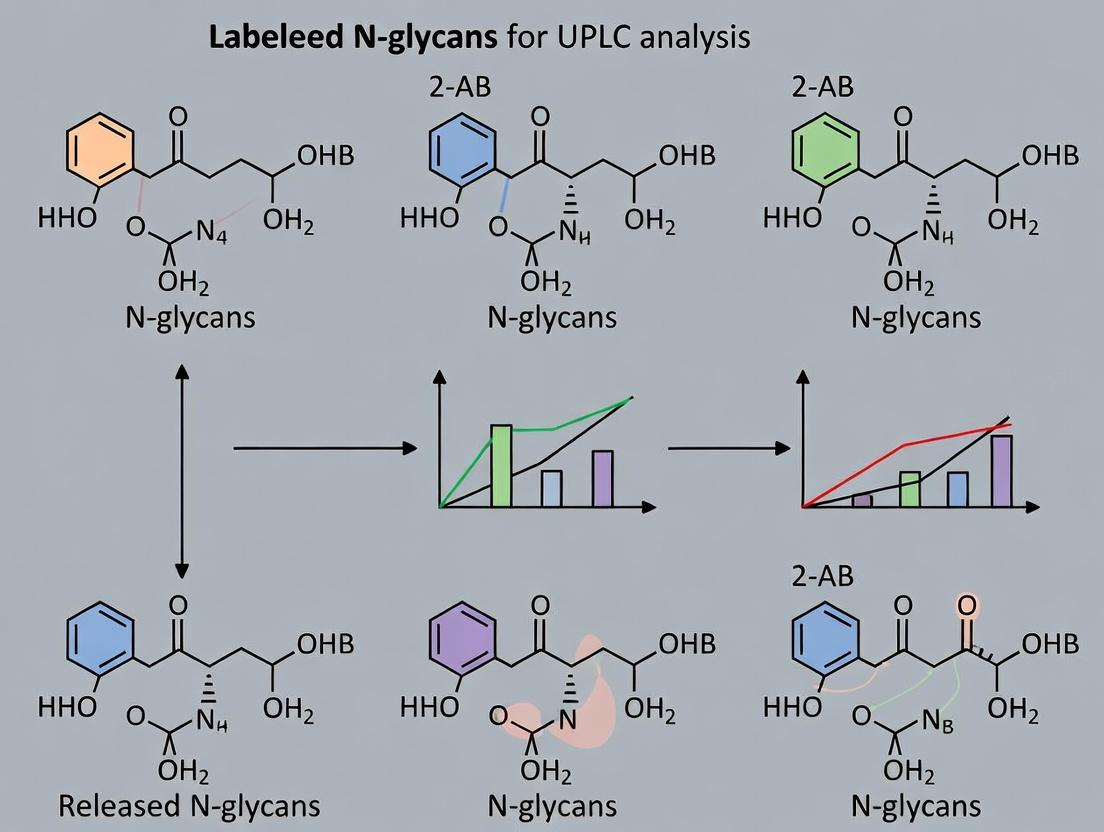
This article provides a detailed guide to the 2-aminobenzamide (2-AB) labeling of enzymatically released N-glycans for Ultra-Performance Liquid Chromatography (UPLC) analysis.
2-AB Labeling for UPLC N-Glycan Analysis: A Comprehensive Guide for Glycobiology Researchers
Abstract
This article provides a detailed guide to the 2-aminobenzamide (2-AB) labeling of enzymatically released N-glycans for Ultra-Performance Liquid Chromatography (UPLC) analysis. We explore the foundational principles of glycan release and labeling, present a step-by-step methodological protocol, address common troubleshooting and optimization challenges, and validate the technique through comparative analysis with alternative methods. Aimed at researchers and drug development professionals, this resource synthesizes current best practices to ensure robust, reproducible, and high-resolution N-glycan profiling for applications in biopharmaceutical characterization and biomarker discovery.
The Why and What: Fundamentals of N-Glycan Release and 2-AB Labeling
Core Principles and Quantitative Impact of N-Glycosylation
N-linked glycosylation (N-glycosylation) is a co- and post-translational modification where oligosaccharides (glycans) are covalently attached to asparagine residues within the consensus sequence Asn-X-Ser/Thr (where X ≠ Proline) of nascent polypeptides. This process, initiated in the endoplasmic reticulum (ER) and elaborated in the Golgi apparatus, creates a diverse repertoire of branched structures critical for protein biology.
Table 1: Impact of N-Glycan Traits on Therapeutic Protein Attributes
| N-Glycan Feature | Quantitative Impact on PK/PD | Effect on Protein Function |
|---|---|---|
| Sialylation (Terminal SA) | Serum half-life: Can increase from hours (e.g., ~3h for asialo) to days (e.g., ~30h for high sialo forms in IgG). | Masks galactose, inhibits clearance via asialoglycoprotein receptor (ASGPR) in hepatocytes. |
| Galactosylation (Terminal Gal) | Complement activation (CDC): Up to 2-3 fold increase for IgG1 with G2F vs G0F. | Enables binding to mannose receptor; modulates antibody-dependent cellular cytotoxicity (ADCC). |
| Fucosylation (Core Fuc) | ADCC potency: Reduces FcγRIIIa binding affinity by ~10-50 fold, decreasing ADCC. | Impairs interaction with FcγRIIIa on NK cells; desired for reduced effector function in some therapeutics. |
| High Mannose (e.g., Man5-9) | Serum clearance: Can be up to 5x faster for Man5 vs complex types due to mannose receptor uptake. | Enhances binding to mannose receptors on antigen-presenting cells, potentially increasing immunogenicity. |
| Bisecting GlcNAc | ADCC potency: Can increase FcγRIIIa binding by ~2-5 fold, enhancing ADCC. | Sterically hinders core fucosylation, indirectly promoting stronger effector cell engagement. |
Application Notes: 2-AB Labeling for UPLC Analysis in a Research Context
Fluorescent labeling of released N-glycans with 2-aminobenzamide (2-AB) is a cornerstone technique for sensitive, quantitative profiling via hydrophilic interaction liquid chromatography (HILIC)-UPLC.
Table 2: Representative UPLC Retention Time (RT) and Relative Abundance Data for Common 2-AB Labeled N-Glycans
| Glycan Structure (Common Name) | Approximate GU Value (Glucose Unit) | Typical Relative % Abundance (Recombinant IgG Example) | Key Functional Implication |
|---|---|---|---|
| FA2 (G0F) | ~7.5 | 5-30% | Low ADCC, standard baseline form. |
| FA2G1 (G1F) | ~6.8 | 10-40% | Intermediate effector function. |
| FA2G2 (G2F) | ~6.2 | 20-60% | Higher CDC potential. |
| FA2[6]G2S1 (Monosialylated) | ~5.3 | 0-5% (IgG) | Impacts half-life, charge heterogeneity. |
| Man5 | ~9.1 | 0-5% (dependent on process) | Rapid clearance, potential immunogenicity. |
| FA2B (Bisected G0F) | ~8.3 | 0-10% | ADCC enhancer. |
Protocols
Protocol 1: Release and 2-AB Labeling of N-Glycans from a Therapeutic Monoclonal Antibody
Objective: To enzymatically release, fluorescently label, and purify N-glycans from 100 µg of a monoclonal antibody for downstream UPLC analysis.
Materials (Research Reagent Solutions):
- PNGase F: Recombinant peptide-N-glycosidase F enzyme. Cleaves intact N-glycans from the protein backbone.
- 2-AB Labeling Kit: Contains 2-aminobenzamide (label), sodium cyanoborohydride (reducing agent), and dimethyl sulfoxide (DMSO) solvent.
- Glycan Clean-up Cartridges: Normal-phase solid-phase extraction cartridges (e.g., packed with porous graphitized carbon or hydrophilic resin) for desalting and purification.
- HILIC-UPLC System: Equipped with a fluorescent detector (λex = 330 nm, λem = 420 nm) and a BEH Glycan or similar column (1.7 µm, 2.1 x 150 mm).
- Ammonium Formate Buffer: 50 mM, pH 4.5, used as the mobile phase modifier.
Procedure:
- Denaturation: Dilute 100 µg of mAb in 50 µL of water. Add 20 µL of 5x denaturation buffer (typically containing SDS). Heat at 65°C for 10 minutes.
- Release: Cool the sample. Add 10 µL of 10% NP-40 detergent (to counteract SDS) and 5 µL (500 units) of PNGase F. Incubate at 37°C for 18 hours.
- Labeling: Follow kit instructions. Typically, dry the released glycans under vacuum. Reconstitute in 10 µL of labeling mixture (2-AB in DMSO/acetic acid with cyanoborohydride). Incubate at 65°C for 2-3 hours.
- Clean-up: Load the labeling reaction onto a pre-conditioned glycan clean-up cartridge. Wash with water to remove salts and unreacted dye. Elute purified 2-AB glycans with 30-50% acetonitrile in water. Dry the eluate under vacuum.
- Analysis: Reconstitute in 100 µL of 70% acetonitrile. Inject 5-10 µL onto the HILIC-UPLC system. Use a gradient from 70% to 50% of 50 mM ammonium formate, pH 4.5, over 25 minutes at 0.4 mL/min, 40°C. Identify peaks by comparison to a 2-AB labeled dextran ladder (for Glucose Unit assignment) and known standards.
Protocol 2: Exoglycosidase Sequencing for N-Glycan Structural Confirmation
Objective: To confirm the structure of a specific N-glycan peak collected from UPLC analysis using a sequence of exoglycosidase digestions.
Procedure:
- Peak Collection: Isolate the target glycan peak from multiple UPLC runs into a low-binding microcentrifuge tube. Dry completely.
- Enzyme Digestion: Reconstitute the glycan in 10 µL of the appropriate enzyme buffer. Add 1-2 µL (1-5 mU) of the specific exoglycosidase (e.g., Arthrobacter ureafaciens sialidase, bovine β1-4 galactosidase, Streptococcus pneumoniae β1-4 galactosidase, Xanthomonas manihotis α1-2,3,6 mannosidase, etc.). Incubate at 37°C for 4-18 hours.
- Analysis: Stop the reaction by heating at 80°C for 5 minutes. Analyze the digest product by HILIC-UPLC under the same conditions as Protocol 1. A shift in GU value indicates the presence of the susceptible monosaccharide linkage. A sequence of digestions maps the glycan structure.
The Scientist's Toolkit: Essential Reagents for 2-AB Based N-Glycan Analysis
| Item | Function |
|---|---|
| PNGase F (Recombinant) | Gold-standard enzyme for efficient, non-reductive release of intact N-glycans from glycoproteins. |
| RapiGest SF Surfactant | Acid-labile surfactant for protein denaturation; easily removed post-release to avoid interference. |
| 2-Aminobenzamide (2-AB) | Fluorescent tag conferring high sensitivity for UPLC-FLR detection while maintaining glycan hydrophilicity. |
| Sodium Cyanoborohydride | Reducing agent for reductive amination, driving the coupling of 2-AB to the reducing end of the glycan. |
| Porous Graphitized Carbon (PGC) Cartridges | Solid-phase extraction medium for effective clean-up of labeled glycans from labeling reagents and salts. |
| 2-AB Labeled Dextran Ladder | Mixture of linear glucose oligomers used to create a GU calibration curve for glycan identification. |
| Exoglycosidase Array Kits | Sets of enzymes (sialidases, galactosidases, hexosaminidases) for sequential trimming to elucidate linkages. |
| HILIC BEH Glycan UPLC Column | Stationary phase providing high-resolution separation of labeled glycans based on hydrophilicity and size. |
Diagrams
Title: N-Glycan Release & 2-AB Labeling Workflow
Title: N-Glycan Features Drive Therapeutic Function
Why Release and Label Glycans? The Rationale for Analytical Derivatization.
Glycan analysis is a cornerstone of glycobiology, crucial for understanding structure-function relationships in biotherapeutics, biomarker discovery, and basic research. Native glycans, however, present significant analytical challenges due to their structural complexity, isomeric heterogeneity, and lack of a chromophore or fluorophore. This necessitates a two-step strategy: release from the conjugated protein or lipid, followed by chemical derivatization with a fluorescent tag. Within the context of a thesis focused on 2-Aminobenzamide (2-AB) labeling for Ultra-Performance Liquid Chromatography (UPLC) analysis, this protocol outlines the rationale and detailed methods for preparing N-glycans for high-resolution, quantitative profiling.
Core Rationale: The Imperative for Release and Labeling
Release liberates glycans from their conjugate, enabling dedicated analysis. For N-glycans, this is typically achieved enzymatically using Peptide-N-Glycosidase F (PNGase F), which cleaves the bond between the asparagine residue and the innermost GlcNAc.
Labeling (Derivatization) with a fluorophore like 2-AB serves multiple critical functions:
- Detection: Introduces a fluorophore for highly sensitive fluorescence detection, far superior to UV detection of native glycans.
- Improved Chromatography: The hydrophobic tag modulates glycan interaction with the reversed-phase (RP) or hydrophilic interaction liquid chromatography (HILIC) stationary phase, enhancing separation and resolution.
- Quantification: Provides a consistent molar response factor, allowing for relative quantification of glycan species.
- Reducing End Stabilization: Converts the reducing end to a stable, closed-ring derivative, minimizing anomerization and heterogeneity.
Table 1: Quantitative Impact of 2-AB Labeling on UPLC Analysis
| Parameter | Native (Unlabeled) N-Glycans | 2-AB Labeled N-Glycans |
|---|---|---|
| Detection Sensitivity | Low (UV ~pmol) | High (FLR ~fmol) |
| Chromatographic Resolution | Poor (broad peaks, co-elution) | Excellent (sharp peaks, isomer separation) |
| Quantitative Reliability | Low (variable response) | High (uniform molar response) |
| Anomerization Artifacts | High (α/β anomers) | Eliminated (stable derivative) |
| Compatibility with RP-UPLC | None | Excellent |
| Compatibility with HILIC-UPLC | Moderate | Excellent |
Glycan Prep Workflow & Rationale
Detailed Protocols
Protocol 3.1: Release of N-Glycans from Purified Glycoprotein using PNGase F
Principle: PNGase F catalyzes the hydrolysis of the amide bond between the asparagine residue and the innermost N-acetylglucosamine (GlcNAc) of N-linked glycans.
Materials (The Scientist's Toolkit):
- PNGase F (Recombinant): Core enzyme for specific, efficient N-glycan release.
- Ammonium Bicarbonate Buffer (100 mM, pH 7.5): Optimal buffer for enzyme activity.
- RapiGest SF Surfactant (0.1% w/v): Denaturant to unfold protein and improve enzyme accessibility, hydrolyzable for easy removal.
- Dithiothreitol (DTT, 10 mM) & Iodoacetamide (IAA, 25 mM): Reducing and alkylating agents to break disulfide bonds (optional but recommended for complex samples).
- Microcentrifuge & Thermonixer: For sample incubation and processing.
- SpeedVac Concentrator: For drying samples.
Procedure:
- Denature 10-50 µg of glycoprotein in 20 µL of 0.1% RapiGest/100 mM NH₄HCO₃ buffer at 80°C for 10 min.
- Cool to room temperature. Optional: Add DTT to 10 mM, incubate 30 min at 60°C; then add IAA to 25 mM, incubate 30 min in the dark at RT.
- Add 1-2 µL (500 units) of PNGase F.
- Incubate at 37°C for 16-18 hours (overnight).
- Acidify by adding 1 µL of pure formic acid to hydrolyze RapiGest (incubate 30 min, RT). A precipitate will form.
- Centrifuge at 13,000 x g for 10 min to pellet precipitated protein and surfactant.
- Carefully transfer the supernatant containing released glycans to a new tube.
- Dry the supernatant in a SpeedVac concentrator. Proceed to labeling.
Protocol 3.2: Purification and Fluorescent Labeling with 2-Aminobenzamide (2-AB)
Principle: The free reducing end of the released glycan reacts with the amine group of 2-AB via reductive amination, forming a stable, fluorescent conjugate.
Materials (The Scientist's Toolkit):
- 2-AB Labeling Kit: Typically contains 2-AB dye, sodium cyanoborohydride (reducing agent), and dimethyl sulfoxide (DMSO)/acetic acid solvent mix. Provides standardized, reliable reagents.
- Non-Porous Graphitized Carbon Solid-Phase Extraction (SPE) Plates/Cartridges: For post-labeling cleanup to remove excess dye and salts. Superior for polar analytes.
- Acetonitrile (ACN), HPLC-grade: For SPE equilibration and washing.
- Trifluoroacetic Acid (TFA, 0.1% v/v): Wash solvent for SPE.
- Ammonium Hydroxide (NH₄OH, 2% v/v) in ACN/Water (50:50): Elution solvent for SPE.
- Microplate Sealers & Centrifuge (for SPE plates): For processing multiple samples.
Procedure:
- Labeling Reaction: Reconstitute dried glycans in 5 µL of HPLC-grade water. Add 10 µL of freshly prepared 2-AB labeling solution (per kit instructions). Incubate at 65°C for 2-3 hours.
- SPE Cleanup - Conditioning: Load a 96-well GCB plate. Condition each well with 200 µL of 0.1% TFA in ACN, then equilibrate with 200 µL of 0.1% TFA in water. Centrifuge at 500 x g for 1 min between steps.
- Sample Application: Dilute the labeling reaction with 200 µL of 0.1% TFA in water. Load onto the conditioned GCB plate. Centrifuge to pass through.
- Washing: Wash wells sequentially with 200 µL of 0.1% TFA in water (x2) and 200 µL of 0.1% TFA in 96% ACN (x1). Centrifuge after each wash.
- Elution: Elute purified 2-AB labeled glycans with 100 µL of 2% NH₄OH in 50% ACN (x2) into a collection plate. Combine eluates.
- Final Preparation: Dry the eluate completely in a SpeedVac. Reconstitute in 20-50 µL of HPLC-grade water or ACN/water mixture compatible with your UPLC system (e.g., 75:25 ACN:H₂O for HILIC). Vortex thoroughly, centrifuge, and transfer to a UPLC vial for analysis.
2-AB Labeling Protocol Steps
Applications and Data Interpretation
The prepared 2-AB labeled N-glycans are analyzed by HILIC-UPLC with fluorescence detection. Data is processed to generate a chromatographic profile where peak area corresponds to relative abundance. This profile is used for:
- Biotherapeutic Lot Consistency: Monitoring glycosylation batch-to-batch.
- Biomarker Screening: Comparing profiles from disease vs. control cohorts.
- Glycoengineering Assessment: Evaluating the impact of cell line or process changes.
Table 2: Typical UPLC-FLR Profile Data for a Monoclonal Antibody
| Peak ID | Retention Time (min) | Relative % Area | Proposed Assignment (GU Value Reference) |
|---|---|---|---|
| G0 | 10.2 | 5.1% | Agalactosyl (G0) |
| G0F | 11.5 | 28.7% | Core-fucosylated agalactosyl (G0F) |
| G1F(α1,6) | 12.8 | 34.2% | Monogalactosyl, core-fucosylated isomer 1 |
| G1F(α1,3) | 13.4 | 18.5% | Monogalactosyl, core-fucosylated isomer 2 |
| G2F | 14.9 | 13.5% | Digalactosyl, core-fucosylated (G2F) |
Properties and Quantitative Advantages of 2-AB
2-Aminobenzamide (2-AB) is a staple fluorescent tag for the derivatization and analysis of released N-glycans via hydrophilic interaction liquid chromatography (HILIC)-UPLC with fluorescence detection. Its properties offer distinct advantages for glycan profiling in biotherapeutic and biomedical research.
Table 1: Key Physicochemical and Analytical Properties of 2-AB
| Property | Description / Value | Advantage for N-Glycan Analysis |
|---|---|---|
| Absorption Max (λₐₓ) | ~330 nm | Compatible with standard HPLC/UPLC FLD systems. |
| Emission Max (λₑₘ) | ~420 nm | Minimal interference from biomolecule autofluorescence. |
| Quantum Yield | Moderate (~0.3-0.4) | Provides strong, quantifiable signal. |
| Hydrophilicity | High | Improves chromatographic resolution on HILIC columns by aligning with glycan hydrophilicity. |
| Labeling Efficiency | High (>85% under optimal conditions) | Ensures representative glycan profiling with minimal sample loss. |
| Ex/Em Bandwidth | Relatively narrow | Reduces spectral crosstalk, enhancing detection specificity. |
| Stability | High (stable for months at -20°C) | Enables batch processing and reproducible long-term studies. |
Table 2: Comparison of 2-AB with Common Fluorescent Tags
| Tag | λₐₓ/λₑₘ (nm) | Hydrophilicity | Labeling Chemistry | Key Limitation vs. 2-AB |
|---|---|---|---|---|
| 2-AB | ~330/420 | High | Reductive amination | — (Benchmark) |
| 2-AA | ~360/420 | Moderate | Reductive amination | Less hydrophilic, altering HILIC elution order. |
| Procamide | ~310/370 | Very High | Reductive amination | Specialized instrumentation required for optimal detection. |
| RapiFluor-MS | ~265/425 | High | Rapid reductive amination | Designed for MS compatibility; cost. |
The Scientist's Toolkit: Key Research Reagent Solutions
Table 3: Essential Materials for 2-AB Labeling of N-Glycans
| Item | Function/Description |
|---|---|
| 2-AB Labeling Solution | 2-AB dissolved in DMSO:acetic acid (70:30 v/v). The fluorescent tagging reagent. |
| Sodium Cyanoborohydride (NaBH₃CN) | A mild, selective reducing agent for reductive amination. Forms stable bonds between 2-AB and the glycan's reducing terminus. |
| DMSO (Anhydrous) | Reaction solvent that dissolves both glycans and 2-AB while maintaining reagent stability. |
| Acetonitrile (HPLC Grade) | Critical for cleanup steps (precipitation, solid-phase extraction) and as the primary mobile phase for HILIC-UPLC. |
| HILIC Solid-Phase Extraction (SPE) Cartridges | Used post-labeling to remove excess dye and salts, purifying the labeled glycan pool. |
| HILIC-UPLC Column (e.g., BEH Glycan) | Stationary phase designed for high-resolution separation of hydrophilic, 2-AB-labeled glycans. |
| Formic Acid & Ammonium Formate | Used to prepare volatile buffers for HILIC-UPLC mobile phases, compatible with FLD and MS. |
| PNGase F (or equivalent) | Enzyme for releasing N-glycans from glycoproteins, the essential first step before labeling. |
Application Notes & Protocols
Core Protocol: 2-AB Labeling of Released N-Glycans
Objective: To derivatize purified, released N-glycans with 2-AB for subsequent HILIC-UPLC-FLR analysis.
Materials:
- Dried, released N-glycan sample.
- 2-AB labeling solution (0.35 M in DMSO:acetic acid 70:30).
- Sodium cyanoborohydride solution (1.0 M in tetrahydrofuran).
- Microcentrifuge tubes (PCR-style tubes recommended).
- Heating block or thermal cycler.
Methodology:
- Sample Preparation: Ensure the glycan sample is thoroughly dried in a vacuum centrifuge.
- Reaction Mixture Assembly:
- To the dried glycans, add 5 µL of the 2-AB labeling solution.
- Vortex vigorously to dissolve.
- Add 5 µL of the sodium cyanoborohydride solution.
- Vortex again to mix thoroughly.
- Incubation:
- Incubate the reaction mixture at 65°C for 2 hours.
- Use a heated lid or mineral oil overlay to prevent evaporation.
- Reaction Termination & Cleanup:
- The reaction can be stopped by dilution with 100% acetonitrile.
- Purify the 2-AB-labeled glycans using HILIC-SPE (detailed protocol in 3.2).
- Storage: Reconstitute the purified, labeled glycans in 80% acetonitrile for immediate analysis or store dried at -20°C.
Protocol: Cleanup of 2-AB-Labeled Glycans via HILIC-SPE
Objective: To remove excess unreacted 2-AB dye, salts, and other reaction contaminants.
Materials:
- HILIC-SPE microplate or cartridge (e.g., hydrophilic-modified silica).
- Solvents: Acetonitrile (ACN), 96% Ethanol, Milli-Q water.
- Vacuum manifold or centrifuge for SPE.
Workflow:
- Conditioning: Load 200 µL of water to the HILIC sorbent, then centrifuge or apply vacuum. Follow with 3 x 200 µL of 85% ACN/water (v/v), discarding all flow-through.
- Sample Application: Dilute the completed 2-AB labeling reaction 10-fold with 85% ACN. Load the entire volume onto the conditioned HILIC-SPE bed.
- Washing: Wash 5-6 times with 200 µL of 85% ACN to elute unreacted dye and hydrophobic impurities. Discard wash fractions.
- Elution: Elute the purified 2-AB-labeled glycans with 2 x 100 µL of Milli-Q water. Collect eluate into a clean microcentrifuge tube.
- Preparation for UPLC: Dry the eluate completely in a vacuum centrifuge. Reconstitute in a known volume (e.g., 50-100 µL) of 80% ACN for UPLC injection.
Diagram Title: 2-AB Labeling and Analysis Workflow
Protocol: HILIC-UPLC Analysis of 2-AB-Labeled N-Glycans
Objective: To achieve high-resolution separation and fluorescence-based quantification of labeled glycans.
Materials:
- Acquity UPLC H-Class System (or equivalent) equipped with FLD.
- BEH Glycan Column (1.7 µm, 2.1 x 150 mm) maintained at 60°C.
- Mobile Phase A: 50 mM Ammonium formate, pH 4.4.
- Mobile Phase B: 100% Acetonitrile.
- 2-AB-labeled glycan sample in 80% ACN.
Chromatographic Method:
- Injection: Inject 5-10 µL of sample.
- Gradient:
- Initial: 75% B for 2.5 min.
- Linear gradient to 50% B over 45 min.
- Column wash: 20% B for 5 min.
- Column re-equilibration: 75% B for 10 min.
- Flow Rate: 0.4 mL/min.
- Detection: FLD with λₑₓ = 330 nm and λₑₘ = 420 nm.
- Data Analysis: Use dedicated software (e.g., Waters Empower) to integrate peaks relative to an external dextran hydrolysate ladder (GU calibration) for structural assignment.
Diagram Title: HILIC-UPLC Separation and Detection Setup
Advantages in Thesis Context: 2-AB for Released N-Glycan UPLC Research
Within a thesis focused on N-glycan profiling for biopharmaceutical characterization, 2-AB labeling is the foundational derivatization method. Its high hydrophilicity ensures that the chromatographic retention on HILIC is governed primarily by the glycan's own structure, allowing accurate Glucose Unit (GU) value determination and library-based identification. The robust, single-step reductive amination chemistry provides quantitative yield, essential for comparative glycan mapping between biosimilar and innovator products. The stable fluorescent signal enables precise, sensitive quantification over a wide linear range, supporting critical analyses like batch-to-batch consistency, monitoring glycosylation changes during cell culture, or identifying disease-associated glycan biomarkers. The well-established protocols and GU databases built on 2-AB make it an indispensable, reliable tool for rigorous UPLC-based glycomic research.
Application Notes
This document details the integrated pipeline for the preparation, 2-AB labeling, and ultra-performance liquid chromatography (UPLC) analysis of protein-derived N-glycans. This workflow is foundational for glycan profiling in biopharmaceutical development, particularly for monitoring critical quality attributes like glycosylation of monoclonal antibodies. The process transforms an intact glycoprotein into a resolved, fluorescently labeled glycan chromatogram suitable for qualitative and quantitative assessment.
Table 1: Critical Steps and Time Requirements in the N-Glycan Analysis Pipeline
| Step | Primary Function | Typical Duration | Key Outcome |
|---|---|---|---|
| Protein Denaturation | Unfolds protein to expose glycans | 10 min, 95°C | Denatured glycoprotein |
| Enzymatic Release (PNGase F) | Cleaves N-glycans from asparagine | 18 hrs, 37°C | Released, free N-glycans |
| Purification | Removes protein and enzyme | 1-2 hrs | Aqueous glycan solution |
| 2-AB Labeling | Attaches fluorescent tag to reducing end | 2 hrs, 65°C | Fluorescently labeled glycans |
| Excess Dye Removal | Cleans up reaction mixture | 2-3 hrs | Purified 2-AB glycans in H₂O |
| UPLC Analysis (HILIC) | Separation by hydrophilicity | 15-30 min run | Fluorescence chromatogram |
Protocol 1: Release of N-Glycans Using PNGase F Principle: Peptide-N-Glycosidase F (PNGase F) enzymatically hydrolyzes the β-aspartylglycosylamine bond of complex and high-mannose N-glycans.
- Denaturation: To 50 µg of dried glycoprotein, add 20 µL of 1% (w/v) SDS in HPLC-grade water. Vortex and heat at 95°C for 10 minutes. Cool to room temperature.
- Enzymatic Reaction: Add 25 µL of a prepared reaction mix containing:
- 18.5 µL HPLC-grade water
- 5.0 µL 4% (v/v) Igepal CA-630
- 1.5 µL 10x reaction buffer (500 mM Sodium Phosphate, pH 7.5)
- 2.0 µL PNGase F (≥5 mU/µL).
- Mix gently and incubate at 37°C for 18 hours.
Protocol 2: 2-Aminobenzamide (2-AB) Labeling of Released Glycans Principle: The fluorophore 2-AB is conjugated via reductive amination to the reducing terminus of the glycan.
- Labeling Solution Preparation: Prepare a fresh labeling mix by combining:
- 70 µL Dimethyl sulfoxide (DMSO)
- 30 µL Glacial acetic acid
- 24 mg 2-Aminobenzamide (2-AB)
- 32 mg Sodium cyanoborohydride (NaBH₃CN). Vortex until fully dissolved.
- Labeling Reaction: To the dried, released glycans, add 10 µL of the labeling mix. Vortex thoroughly.
- Incubate at 65°C for 2 hours in a dry heating block.
- Purification: Remove excess dye using solid-phase extraction (e.g., hydrophilic-lipophilic balance (HLB) cartridges) or paper chromatography. Elute labeled glycans in 500 µL of HPLC-grade water. Dry in a vacuum centrifuge and reconstitute in 50-100 µL of acetonitrile/water (70:30, v/v) for UPLC injection.
Protocol 3: UPLC-HILIC Analysis of 2-AB Labeled Glycans Principle: Hydrophilic Interaction Liquid Chromatography (HILIC) separates glycans based on their hydrophilicity, with larger, more polar glycans eluting later.
- System: Acquire UPLC system with a fluorescence detector (excitation λ=330 nm, emission λ=420 nm).
- Column: Install a bridged ethylene hybrid (BEH) Amide column (e.g., 2.1 x 150 mm, 1.7 µm particle size).
- Mobile Phases:
- A: 50 mM Ammonium formate, pH 4.4, in HPLC-grade water.
- B: 100% Acetonitrile (HPLC grade).
- Gradient: Use a linear gradient from 70% B to 53% B over 23 minutes at a flow rate of 0.4 mL/min. Column temperature: 60°C. Sample temperature: 10°C.
- Injection: Inject 5-10 µL of the reconstituted sample. Data analysis is performed using appropriate chromatography software to integrate peak areas for relative quantitation.
Table 2: The Scientist's Toolkit: Essential Reagents for 2-AB N-Glycan Analysis
| Reagent/Material | Function | Critical Notes |
|---|---|---|
| PNGase F | Enzyme for releasing N-glycans from protein backbone. | Use recombinant for consistency; verify activity on complex/hybrid glycans. |
| 2-Aminobenzamide (2-AB) | Fluorescent label for glycan detection. | Light-sensitive; store desiccated at -20°C. |
| Sodium Cyanoborohydride | Reducing agent for reductive amination labeling. | Toxic. Handle in fume hood. Use fresh powder. |
| BEH Amide UPLC Column | Stationary phase for HILIC separation. | Equilibrate thoroughly in starting buffer. |
| Ammonium Formate Buffer | Mobile phase for HILIC. | pH 4.4 is critical for reproducible elution. |
| HLB or Normal-Phase µElution Plates | For post-labeling cleanup. | Essential for removing quenching salts and excess dye. |
N-Glycan Analysis Pipeline Workflow
Logical Context Within Broader Thesis
Application Notes
The 2-aminobenzamide (2-AB) labeling of released N-glycans followed by Ultra-Performance Liquid Chromatography (UPLC) analysis is a cornerstone technique in biopharmaceutical characterization and clinical biomarker discovery. This method provides high-resolution separation and sensitive detection of glycan structures, enabling precise quantification essential for both fields.
1. Biopharmaceutical Quality Assurance and Control (QA/QC) In the development and production of biotherapeutics like monoclonal antibodies (mAbs), N-glycosylation is a critical quality attribute (CQA) that influences drug efficacy, stability, safety, and pharmacokinetics. 2-AB UPLC profiling is used for batch-to-batch consistency monitoring, comparability studies after process changes, and detection of undesired glycosylation variants.
2. Disease Biomarker Screening Aberrant protein glycosylation is a hallmark of many diseases, including cancer, autoimmune disorders, and congenital disorders of glycosylation (CDGs). High-throughput 2-AB labeling of N-glycans released from serum or tissue proteins, followed by UPLC analysis, enables the discovery and validation of specific glycan structures as diagnostic, prognostic, or predictive biomarkers.
Quantitative Data Summary
Table 1: Key UPLC Metrics for 2-AB Labeled N-Glycan Analysis in QA/QC
| Metric | Typical Target/Value | Purpose |
|---|---|---|
| Gu (Glucose Unit) Value | Based on dextran ladder calibration (1-22 GU) | Standardized retention time for glycan identification. |
| Relative Peak Area (%) | Per individual glycan structure | Quantification of glycoform distribution (e.g., G0F, G1F, G2F). |
| Main Peak Purity | ≥ 98% for major glycoforms (e.g., G0F) | Assess process consistency and product homogeneity. |
| Batch Comparability | ≤ 10% RSD for major glycoforms | Ensure manufacturing consistency. |
Table 2: Representative Glycan Biomarker Changes in Disease Screening
| Disease Context | N-Glycan Alteration | Trend vs. Healthy Control | Potential Clinical Utility |
|---|---|---|---|
| Hepatocellular Carcinoma | Core α-1,6 fucosylation (AFP-L3) | Increased | Diagnostic & prognostic marker. |
| Rheumatoid Arthritis | Agalactosylated (G0) IgG Fc glycans | Increased | Disease activity monitoring. |
| Pancreatic Cancer | Sialylated Lewis antigens | Increased | Early detection biomarker panel. |
| CDG Type Ia | Truncated, incomplete glycans | Increased | Diagnostic screening. |
Experimental Protocols
Protocol 1: Standardized 2-AB Labeling of Released N-Glycans for UPLC
I. Materials & Equipment
- Protein sample (purified mAb or serum/tissue protein extract).
- PNGase F (recombinant, glycerol-free).
- 2-Aminobenzamide (2-AB) labeling kit (e.g., LudgerTag).
- DMSO, Acetic Acid, Acetonitrile (ACN).
- Non-porous graphitized carbon (SPE) cartridges for cleanup.
- Centrifugal evaporator (e.g., SpeedVac).
- UPLC system with FLD (λEx=330 nm, λEm=420 nm) and/or MS detection.
- BEH Glycan or HILIC chromatography column (e.g., 2.1 x 150 mm, 1.7 µm).
II. Procedure
A. N-Glycan Release
- Denaturation: Dilute 50-100 µg of protein in 50 µL of water. Add 20 µL of 5x denaturation buffer (e.g., 1% SDS, 5% β-mercaptoethanol). Heat at 65°C for 10 minutes.
- Enzymatic Release: Add 10 µL of 10% NP-40 and 10 µL of 10x reaction buffer to the cooled mixture. Add 2 µL (≥ 5 mU) of PNGase F. Incubate at 37°C for 18 hours.
B. 2-AB Labeling & Cleanup
- Labeling Reaction: Transfer the entire release mixture to a tube containing dried 2-AB label. Add 50 µL of labeling reagent (2-AB in DMSO:Acetic Acid, 70:30 v/v). Incubate at 65°C for 2 hours.
- SPE Cleanup (Carbon Cartridge):
- Condition cartridge sequentially with 5 mL each of: 80% ACN / 0.1% TFA (aq), Water, 30% ACN / 0.1% TFA (aq).
- Dilute labeling reaction with 1 mL of 0.1% TFA (aq) and load onto cartridge.
- Wash with 5 mL of 0.1% TFA (aq) to remove salts and unreacted dye.
- Elute glycans with 2 mL of 30% ACN / 0.1% TFA (aq), followed by 2 mL of 50% ACN / 0.1% TFA (aq). Collect eluates.
- Sample Preparation: Combine and dry the eluates in a SpeedVac. Reconstitute the dried glycans in 100 µL of 80% ACN for UPLC injection.
C. UPLC Analysis
- Chromatography: Inject 5-10 µL onto a BEH Glycan column at 40°C.
- Mobile Phase: A = 50 mM ammonium formate, pH 4.5; B = 100% ACN.
- Gradient: 30-50% A over 30 minutes at 0.4 mL/min.
- Detection: Use fluorescence detection. Calibrate with a 2-AB labeled dextran ladder to assign Glucose Unit (GU) values.
- Data Analysis: Integrate peaks and report as relative percentage area. Compare GU values to reference libraries (e.g., GlycoBase).
Visualizations
2-AB N-Glycan Analysis Core Workflow
Glycan Data Drives Biopharmaceutical QA/QC Decisions
From Disease Mechanism to Glycan Biomarker Discovery
The Scientist's Toolkit: Research Reagent Solutions
Table 3: Essential Materials for 2-AB N-Glycan Analysis
| Item | Function | Key Consideration |
|---|---|---|
| PNGase F (Glycerol-free) | Enzymatically releases N-glycans from protein backbone. | Glycerol-free is critical to prevent interference in downstream labeling and UPLC. |
| 2-AB Labeling Kit | Provides optimized dye & reductant for efficient, quantitative glycan labeling. | Ensures high labeling efficiency & minimal side products; includes cleanup reagents. |
| Graphitized Carbon SPE Cartridges | Purifies labeled glycans, removing salts, proteins, and excess dye. | Essential for clean chromatograms and prolonged UPLC column life. |
| BEH Glycan UPLC Column | Provides high-resolution HILIC separation of labeled glycans. | Superior resolution over older column chemistries; requires specific solvent conditions. |
| 2-AB Labeled Dextran Ladder | Calibration standard for assigning Glucose Unit (GU) values to sample peaks. | Enables reproducible identification across platforms and laboratories. |
| Glycan Reference Library (e.g., GlycoBase) | Database of GU values for known glycan structures. | Vital for peak assignment and structural interpretation. |
Step-by-Step Protocol: Optimized 2-AB Labeling and UPLC Analysis of N-Glycans
Application Notes for 2-AB Labeling of N-Glycans in UPLC Research
The success of glycan analysis by UPLC following 2-Aminobenzamide (2-AB) labeling is fundamentally dependent on the purity and performance of core reagents. Impurities can introduce spurious peaks, cause inefficient labeling, or degrade chromatographic resolution. This protocol details the sourcing and use of high-purity materials within the workflow for preparing 2-AB-labeled N-glycans from glycoproteins.
1. The Scientist's Toolkit: Research Reagent Solutions
| Item | Recommended Specification/Source | Critical Function in 2-AB Labeling |
|---|---|---|
| PNGase F | Recombinant, glycerol-free, ≥95% purity (e.g., ProZyme PKF-400, NEB P0710). | Enzyme for releasing N-glycans from glycoproteins. Must be free of exoglycosidases and carryover glycerol. |
| 2-Aminobenzamide (2-AB) | ≥99% purity, HPLC grade (e.g., Sigma A89804, Ludger LT-AB). | Fluorescent label for glycan derivatization. Impurities lead to high background fluorescence and side-products. |
| Sodium Cyanoborohydride (NaBH₃CN) | ≥95% purity, reagent grade (e.g., Sigma 156159). | Reductant for reductive amination. Must be fresh; hydrolyzes to cyanide and borane, losing activity. |
| Dimethyl Sulfoxide (DMSO) | Anhydrous, ≥99.9% (e.g., Sigma 276855). | Anhydrous solvent for labeling reaction. Water quenches the reductive amination. |
| Acetic Acid, Glacial | ≥99.8% purity, for analysis (e.g., Sigma 27225). | Provides optimal pH (~4.5) for the reductive amination reaction. |
| Non-Porous Graphitized Carbon (NPC) Cartridges | 1mL or 5mL cartridges (e.g., Thermo Hypercarb, Waters tC18). | For post-labeling cleanup to remove excess dye and salts. |
| UPLC Columns | Acquity UPLC Glycan BEH Amide, 1.7µm, 2.1 x 150mm (Waters). | High-resolution stationary phase for HILIC separation of labeled glycans. |
2. Quantitative Specifications for Critical Reagents Table 1: Key Purity and Handling Criteria for Core Reagents
| Reagent | Target Purity | Key Contaminants to Avoid | Storage & Stability |
|---|---|---|---|
| PNGase F | ≥95% (SDS-PAGE) | Exoglycosidases, glycerol, protease activity | -20°C (lyophilized); avoid freeze-thaw of solutions |
| 2-AB | ≥99% (HPLC) | Unknown fluorescent compounds, oxidation products | +2 to +8°C, desiccated, protected from light |
| NaBH₃CN | ≥95% | Sodium borohydride (NaBH₄), moisture | Desiccated at room temp under inert gas; prepare solution fresh |
| DMSO | Anhydrous, <0.005% H₂O | Water | Sealed under nitrogen; use anhydrous solvent dispenser |
3. Detailed Protocol: 2-AB Labeling of Released N-Glycans
A. N-Glycan Release with PNGase F
- Denature 10-100 µg of glycoprotein in 20 µL of 1x PBS with 0.1% SDS and 50 mM DTT at 60°C for 10 min.
- Cool, add 10 µL of 7.5% (v/v) Nonidet P-40 (or 1% Triton X-100) to sequester SDS.
- Add 2 µL (≥5 mU) of high-purity, glycerol-free PNGase F.
- Incubate at 37°C for 16-18 hours.
- Release can be verified by SDS-PAGE shift of the deglycosylated protein.
B. 2-AB Labeling via Reductive Amination Reagent volumes are for a 50 µL total reaction.
- Combine the following in a low-protein-binding microtube:
- Released glycan sample (in aqueous solution).
- 5 µL of 2-AB solution (24 mg/mL in DMSO/acetic acid, 70:30 v/v).
- 5 µL of sodium cyanoborohydride solution (32 mg/mL in DMSO/acetic acid, 70:30 v/v).
- Bring to 50 µL with DMSO/acetic acid (70:30 v/v). Final concentration: ~0.35 M acetic acid.
- Seal tube tightly, vortex, and centrifuge briefly.
- Incubate at 65°C for 3 hours in a dry block heater.
- Cool to room temperature before cleanup.
C. Cleanup of 2-AB-Labeled Glycans using NPC Solid-Phase Extraction
- Condition a 1mL NPC cartridge sequentially with 2 mL acetonitrile (ACN) and 2 mL HPLC-grade water.
- Dilute the labeling reaction with 450 µL of HPLC-grade water (1:10 dilution) and load onto the conditioned cartridge.
- Wash with 2 mL of water to remove salts, acids, and unreacted 2-AB.
- Elute labeled glycans with 1 mL of 25% (v/v) ACN in water, followed by 1 mL of 50% (v/v) ACN in water. Collect both fractions into a single tube.
- Dry the eluate in a vacuum centrifuge (SpeedVac) and reconstitute in 50-100 µL of 70% (v/v) ACN for UPLC injection.
4. Experimental Workflow and Pathway Visualization
Diagram 1: Workflow for 2-AB Labeling and UPLC Analysis of N-Glycans
Diagram 2: Reductive Amination Chemistry for 2-AB Labeling
This application note details the critical first stage of preparing N-glycans for ultra-performance liquid chromatography (UPLC) analysis following 2-aminobenzamide (2-AB) labeling. The efficient and complete release of N-glycans from glycoproteins is foundational for robust glycomic profiling. The enzymatic release using Peptide-N-Glycosidase F (PNGase F) is the gold standard, with the choice between in-solution and in-gel digestion being a key methodological decision impacting yield, purity, and applicability.
Comparison of In-Solution vs. In-Gel Release
The choice of release method depends on sample purity, complexity, and downstream requirements.
Table 1: Quantitative Comparison of In-Solution vs. In-Gel PNGase F Release
| Parameter | In-Solution Release | In-Gel Release |
|---|---|---|
| Typical Sample Input | 10 µg - 1 mg purified glycoprotein | 1 - 50 µg from a gel band |
| Average Release Efficiency | 85-98% for pure, denatured proteins | 70-90% (varies with gel extraction efficacy) |
| Processing Time | ~24-48 hours (including denaturation) | ~48-72 hours (including destaining) |
| Co-Isolated Contaminants | Salts, lipids, other proteins | Gel artifacts, SDS, Coomassie dye |
| Compatibility with Complex Mixtures | High (if protein is purified) | Excellent for specific bands from SDS-PAGE |
| Suitability for Membrane Proteins | High (with strong detergents) | High (SDS in-gel is compatible) |
| Downstream Cleanup Required | Essential (e.g., C18, porous graphitized carbon) | Essential, often more stringent |
Detailed Experimental Protocols
Protocol A: In-Solution Release of N-Glycans with PNGase F
Objective: To release N-glycans from a purified glycoprotein solution for subsequent 2-AB labeling.
Denaturation:
- To 10-100 µg of dried glycoprotein, add 20 µL of denaturation buffer (0.1% w/v SDS, 50 mM β-mercaptoethanol).
- Heat at 60°C for 10 minutes, then cool to room temperature.
- Add 5 µL of non-ionic detergent solution (10% v/v NP-40 or Triton X-100) to sequester SDS (final SDS concentration <0.1%).
Enzymatic Digestion:
- Add 5 µL of 10X reaction buffer (500 mM Sodium Phosphate, pH 7.5).
- Add 2-5 µL (10-25 units) of PNGase F (e.g., recombinant, glycerol-free).
- Make up to a final volume of 50 µL with LC-MS grade water.
- Vortex mix gently and centrifuge briefly.
- Incubate at 37°C for 18 hours.
Initial Cleanup:
- Terminate the reaction by heating at 65°C for 10 minutes.
- Cool and proceed to desalting/purification (e.g., using a porous graphitized carbon microplate) prior to 2-AB labeling.
Protocol B: In-Gel Release of N-Glycans with PNGase F
Objective: To release N-glycans from a glycoprotein band excised from an SDS-PAGE gel.
Gel Destaining:
- Excise the protein band of interest and dice into 1 mm³ pieces. Place in a low-binding microcentrifuge tube.
- Wash with 500 µL of 50% v/v acetonitrile (ACN) in 50 mM ammonium bicarbonate (ABC) pH 8.0. Vortex for 15 minutes, then discard supernatant.
- Repeat until the Coomassie stain is removed.
- Dehydrate the gel pieces with 100% ACN for 5 minutes. Remove ACN and air-dry the gel pieces completely.
Enzymatic Digestion:
- Rehydrate the gel pieces with 20-50 µL of PNGase F solution (5-10 units/µL in 20-50 mM ABC buffer, pH 8.0). Ensure gel pieces are fully covered.
- Incubate at 37°C for 18 hours.
Glycan Extraction:
- After incubation, add 100-200 µL of HPLC-grade water, vortex, and sonicate for 15 minutes. Transfer the supernatant (containing released glycans) to a new tube.
- Perform a sequential extraction by adding 100-200 µL of 50% ACN/5% formic acid to the gel pieces. Vortex and sonicate for 15 minutes. Combine with the first extract.
- Perform a final extraction with 100% ACN, combine, and dry the pooled extracts in a vacuum centrifuge.
- Reconstitute in water for cleanup prior to 2-AB labeling.
Visualization of Workflows
In-Solution N-Glycan Release Workflow
In-Gel N-Glycan Release Workflow
Overall Thesis Workflow for 2-AB UPLC
The Scientist's Toolkit: Key Research Reagent Solutions
Table 2: Essential Materials for PNGase F Release of N-Glycans
| Item | Function & Critical Notes |
|---|---|
| Recombinant PNGase F (Glycerol-free) | Enzyme cleaving between GlcNAc and Asn. Glycerol-free preferred for downstream labeling. High specificity for N-glycans. |
| Denaturation Buffer (SDS/β-mercaptoethanol) | Unfolds protein tertiary structure to fully expose N-glycosylation sites for enzymatic access. |
| Non-Ionic Detergent (e.g., 10% NP-40) | Neutralizes ionic denaturant (SDS) which inhibits PNGase F, while maintaining protein solubility. |
| Reaction Buffer (500 mM NaPhosphate, pH 7.5) | Optimal pH buffer for PNGase F activity. Alternative: Ammonium Bicarbonate (ABC) pH 8.0 for in-gel digests. |
| Porous Graphitized Carbon (PGC) Cartridges/Plates | Primary cleanup method post-release. Binds glycans for desalting; elutes with ACN/water with TFA. |
| Acetonitrile (ACN), LC-MS Grade | For gel dehydration, glycan extraction, and as a component of UPLC mobile phases. |
| Ammonium Bicarbonate (ABC) Buffer | Volatile buffer suitable for in-gel digestion and compatible with mass spectrometry. |
| 2-Aminobenzamide (2-AB) Labeling Kit | Provides reductive amination reagents (2-AB dye, sodium cyanoborohydride) for glycan derivatization. |
| Low-Binding Microcentrifuge Tubes | Minimizes adsorptive losses of low-abundance glycans throughout the process. |
This protocol details the reductive amination reaction for labeling released N-glycans with 2-aminobenzamide (2-AB), a critical step in the broader thesis workflow for preparing fluorescently tagged glycans for UPLC and UPLC-MS analysis. 2-AB labeling provides a sensitive, cost-effective method for quantitative profiling, enabling fluorescence detection without significantly altering glycan charge or chromatographic behavior.
Chemical Reaction & Stoichiometry
The reaction is a classical reductive amination. The aldehyde group at the reducing end of the released glycan reacts with the primary amine of 2-AB to form a Schiff base, which is subsequently reduced by sodium cyanoborohydride (NaBH₃CN) to a stable, fluorescent secondary amine.
Reaction Summary: Aldo-sugar (Glycan) + 2-Aminobenzamide (2-AB) → [Schiff Base Intermediate] → (Reduction by NaBH₃CN) → Stable 2-AB-labeled Glycan
Table 1: Reaction Stoichiometry and Component Functions
| Component | Typical Quantity per Reaction | Role & Critical Notes |
|---|---|---|
| Dry, Clean N-glycans | 0.5 - 50 nmol (from Stage 1) | Substrate. Must be free of amines, ammonium salts, and drying aids. |
| 2-AB Labeling Solution | 20 µL (in DMSO:AcOH, 70:30 v/v) | Fluorescent tag donor. Contains 2-AB and reductant. |
| 2-Aminobenzamide (2-AB) | 24.8 mM final conc. | Fluorophore. Provides primary amine for conjugation. |
| Sodium Cyanoborohydride (NaBH₃CN) | 52.8 mM final conc. | Reductive agent. Selective for imine reduction in acidic pH. |
| Dimethyl Sulfoxide (DMSO) | ~70% of reaction volume | Polar aprotic solvent. Dissolves all components. |
| Glacial Acetic Acid (AcOH) | ~30% of reaction volume | Provides acidic pH (~4.5) to catalyze Schiff base formation. |
Table 2: Recommended Mass-Amount-Based Scaling
| Amount of Glycans (nmol) | Volume 2-AB Solution (µL) | Incubation Time (h) at 65°C |
|---|---|---|
| 0.5 - 5 | 5 - 10 | 2 |
| 5 - 20 | 10 - 20 | 2 - 3 |
| 20 - 50 | 20 - 50 | 3 |
Detailed Protocol: 2-AB Labeling
I. Preparation
- Glycan Sample: Ensure your released N-glycans from PNGase F digestion are thoroughly dried in a vacuum concentrator. Avoid carryover of volatile amines or ammonium salts.
- 2-AB Labeling Solution (Fresh or Aliquot):
- Weigh 19.2 mg of 2-aminobenzamide.
- Weigh 31.2 mg of sodium cyanoborohydride (CAUTION: Toxic. Handle in fume hood).
- Dissolve both in 1.0 mL of a premixed solvent of DMSO:Glacial Acetic Acid (70:30, v/v).
- Vortex vigorously until fully dissolved. The solution should appear pale yellow.
- Aliquot and store at -20°C under desiccant for up to 3 months (avoid repeated freeze-thaw).
II. Labeling Reaction
- To the tube containing the dried glycans, add the appropriate volume of 2-AB labeling solution (see Table 2).
- Vortex vigorously for 30 seconds, then briefly centrifuge to collect the solution at the bottom.
- Incubate the reaction mixture at 65°C for 2-3 hours in a thermal mixer or heating block.
III. Reaction Termination and Cleanup (via Paper Chromatography) Note: This is a classic, effective cleanup method.
- Spotting: Following incubation, briefly centrifuge the tube. Using a pipette, spot the entire reaction mixture onto a large sheet of chromatography paper (e.g., Whatman 3MM). Pre-draw a pencil line ~4 cm from the bottom. Apply sample in multiple, small, dried spots.
- Development: Place the paper in a tank pre-equilibrated with development solvent (Acetonitrile:Water, 60:40 v/v). Ensure the solvent level is below the sample line.
- Run & Dry: Allow the solvent front to migrate to near the top of the paper (~15-20 cm). Remove and air-dry the paper completely in a fume hood.
- Elution: Under UV light (366 nm), the labeled glycans will appear as a fluorescent band near the solvent front (Rf ~0.6-0.8), while excess, unreacted 2-AB remains at the origin. Cut out the fluorescent band(s) and cut into small pieces.
- Recovery: Place the paper pieces in a tube and elute the glycans with 2 x 2 mL of ultrapure water for 30 minutes each with gentle agitation. Filter the eluent through a 0.45 µm syringe filter to remove paper fibers.
- Final Product: Lyophilize or vacuum concentrate the filtered eluent. The 2-AB labeled N-glycans are now ready for UPLC analysis. Reconstitute in 50-200 µL of water or acetonitrile for injection.
The Scientist's Toolkit: Key Research Reagent Solutions
| Item | Function in 2-AB Labeling |
|---|---|
| 2-AB Labeling Solution | Master mix containing the fluorophore (2-AB) and reducing agent (NaBH₃CN) in an acidic DMSO matrix to drive the reductive amination. |
| Chromatography Paper (Whatman 3MM) | Porous cellulose medium for separating labeled glycans from excess dye and reaction by-products via ascending chromatography. |
| Acetonitrile:Water (60:40) | Mobile phase for paper chromatography cleanup. Effectively moves hydrophilic labeled glycans, leaving hydrophobic contaminants behind. |
| Ultrapure Water (HPLC Grade) | Solvent for eluting purified glycans from the paper chromatography matrix and for final sample reconstitution prior to UPLC. |
| Sodium Cyanoborohydride | Mild, selective reducing agent stable at acidic pH, reduces the labile Schiff base to a stable amine linkage without reducing aldehyde substrates. |
| DMSO:Acetic Acid (70:30) | Optimal reaction solvent. DMSO dissolves glycans, AcOH provides the catalytic acidic environment (pH ~4.5) for imine formation. |
Visualization: 2-AB Labeling Workflow & Chemistry
Diagram Title: 2-AB Labeling Protocol and Chemical Reaction
Within the broader thesis on 2-AB labeling of released N-glycans for UPLC analysis, the cleanup and purification stage is critical. Following fluorescent labeling (e.g., with 2-aminobenzamide), the reaction mixture contains excess dye, salts, and other reaction byproducts that can interfere with downstream UPLC separation and detection. Hydrophilic Interaction Liquid Chromatography Solid-Phase Extraction (HILIC SPE) is the predominant method for purifying labeled glycans, selectively retaining them while impurities are washed away. This application note details a robust protocol and its optimization.
Key Research Reagent Solutions
| Reagent/Material | Function in HILIC-SPE Cleanup |
|---|---|
| HILIC SPE Cartridge (e.g., PhyTip, packed with porous graphitized carbon or amide-based media) | The solid phase that selectively retains labeled glycans via hydrophilic interactions. |
| Acetonitrile (ACN), HPLC Grade | Provides a strong organic solvent environment to condition the cartridge and promote glycan binding. |
| Ultrapure Water | Weak elution solvent; used to rewet the cartridge and finally elute purified glycans. |
| Ammonium Formate Buffer (e.g., 100-250 mM, pH 4.4) | A volatile salt solution used as an aqueous modifier. It helps disrupt weak interactions with impurities and can be used in washing steps. |
| Trifluoroacetic Acid (TFA), 0.1% v/v in water | A strong acid wash used to remove basic impurities and excess dye. |
| Dimethyl Sulfoxide (DMSO) | Often present in the labeling reaction; its concentration must be managed during loading. |
| Collection Plates/Tubes (Low-binding) | To collect the purified glycan eluate, minimizing adsorptive losses. |
Detailed HILIC-SPE Protocol for 2-AB Labeled N-Glycans
Principle: Under high organic solvent conditions (≥85% ACN), the hydrophilic labeled glycans are retained on the HILIC sorbent. Excess hydrophobic dye and other impurities are not retained or are removed with specific wash steps. Glycans are then eluted with a low organic solvent (water).
Materials Preparation:
- Wash Solution 1: 5% (v/v) water in ACN.
- Wash Solution 2: 1% (v/v) trifluoroacetic acid in water.
- Elution Solvent: Ultrapure water.
- Sample Dilution: Ensure labeling reaction mixture is in ≤25% aqueous content (e.g., dilute with 100% ACN if necessary).
Step-by-Step Procedure:
- Conditioning: Load 200 µL of ultrapure water to the HILIC sorbent. Follow with 200 µL of acetonitrile. Apply gentle positive pressure or centrifugation (~1000 x g for 1 min) for all steps.
- Equilibration: Apply 200 µL of Wash Solution 1 (5% water in ACN). Repeat twice. The sorbent must not dry out.
- Sample Loading: Dilute the 2-AB labeling reaction mixture 1:5 with 100% ACN to reduce aqueous content. Load the entire volume onto the conditioned cartridge. Collect and save the flow-through in case of loading failure.
- Washing:
- Wash with 200 µL of Wash Solution 1. Repeat three times. This removes salts and weakly polar contaminants.
- Optional Stringent Wash: For challenging samples, wash with 100 µL of Wash Solution 2 (1% TFA) to remove excess cationic dye reagents. Follow immediately with 2x 200 µL washes of Wash Solution 1 to re-establish high organic conditions.
- Elution: Elute purified 2-AB labeled glycans with 2 x 100 µL aliquots of ultrapure water into a low-binding collection tube. The eluate is now ready for drying (via vacuum centrifugation) and subsequent UPLC analysis.
Table 1: Recovery and Purity Metrics for 2-AB Labeled Glycan Cleanup via HILIC-SPE
| Parameter | Typical Value | Measurement Method | Key Influence Factor |
|---|---|---|---|
| Glycan Recovery | 85 - 98% | Fluorescence measurement pre- and post-cleanup | Aqueous content during sample loading; elution volume |
| Dye Removal Efficiency | >99% | Fluorescence of flow-through vs. eluate | Stringency of washes (e.g., TFA step inclusion) |
| Sample Volume Post-Cleanup | 200 µL (water eluate) | - | Elution protocol |
| Concentration Factor | Up to 5x (from original reaction) | Starting vs. final volume | Evaporation of eluate to dryness and reconstitution in smaller volume |
| UPLC Signal-to-Noise Improvement | 10 to 50-fold increase | Comparison of chromatograms | Effective removal of fluorescent contaminants |
Workflow and Pathway Diagrams
Title: HILIC-SPE Workflow for Purifying 2-AB Labeled Glycans
Title: Mechanism of HILIC Retention and Elution
Application Notes & Protocols
Thesis Context: This document details the optimized protocols for UPLC-FLR analysis within a comprehensive thesis investigating the 2-AB (2-aminobenzamide) labeling of enzymatically released N-glycans for biopharmaceutical characterization. The methods are critical for achieving high-resolution separation, sensitive detection, and reproducible quantitation of complex glycan profiles.
1. UPLC-FLR System Configuration & Setup
Optimal analysis of 2-AB labeled N-glycans requires precise instrument configuration. The following setup parameters are essential for maintaining sensitivity and resolution.
Table 1: UPLC-FLR System Configuration for 2-AB N-Glycan Analysis
| Component | Recommended Specification/Setting | Function/Rationale |
|---|---|---|
| Binary Solvent Manager | High-pressure capable (>15,000 psi) | Delivers precise, pulse-free gradients at low flow rates. |
| Sample Manager | Cooled (4-10°C), Low-volume injection kit | Preserves sample integrity; minimizes carryover and dispersion. |
| Column Heater | Temperature controllable (±0.5°C) | Maintains consistent column temperature for retention time stability. |
| FLR Detector | Excitation Filter: 330 nm, Emission Filter: 420 nm | Matches the spectral properties of the 2-AB fluorophore for optimal S/N. |
| Detection Cell | Low-volume, high-pressure flow cell (≤ 500 nL) | Reduces post-column band broadening. |
| Data Acquisition Rate | 20 Hz | Ensures sufficient data points per peak for accurate integration. |
| Mobile Phase A | 50 mM ammonium formate, pH 4.4 | Volatile buffer compatible with MS; acidic pH controls sialic acid ionization. |
| Mobile Phase B | Acetonitrile (HPLC grade) | Organic modifier for HILIC-based separation. |
2. Column Selection and Comparative Performance
Column choice is paramount for resolving structurally similar glycan isomers. Hydrophilic Interaction Liquid Chromatography (HILIC) is the standard mode for 2-AB labeled glycans.
Table 2: Comparison of UPLC HILIC Columns for 2-AB Labeled N-Glycan Analysis
| Column Chemistry | Particle Size | Dimensions (mm) | Optimal Temp. | Key Separation Characteristics | Best For |
|---|---|---|---|---|---|
| BEH Amide | 1.7 µm | 2.1 x 150 | 60°C | Excellent robustness, high efficiency, broad isomer separation. | Routine high-resolution profiling of complex mixtures. |
| BEH Glycan | 1.7 µm | 2.1 x 150 | 60°C | Specifically engineered for glycans; enhanced separation of sialylated isomers. | Detailed analysis of charged glycan variants. |
| CSH Fluoro-Phenyl | 1.7 µm | 2.1 x 100 | 40°C | Alternative selectivity; good for high mannose and hybrid structures. | Method orthogonalization or specific isomer challenges. |
3. Detailed Experimental Protocol: UPLC-FLR Analysis of 2-AB N-Glycans
Materials: Purified 2-AB labeled N-glycan sample, Mobile Phase A (50 mM ammonium formate, pH 4.4), Mobile Phase B (ACN), 100% DMSO (for needle wash), Water:ACN (25:75 v/v) (seal wash).
Instrument: Waters ACQUITY UPLC H-Class Plus or equivalent, equipped with FLR.
Protocol:
- Column Equilibration: Install a BEH Glycan column (1.7 µm, 2.1 x 150 mm) in a column heater set to 60°C.
- Mobile Phase Preparation: Filter and degas Mobile Phase A (aqueous buffer) and B (ACN). Prime the system according to the manufacturer's instructions.
- System Pre-run: Establish initial conditions at 70% B, flow rate of 0.4 mL/min. Allow the system to equilibrate for at least 30 column volumes (~45 mins) or until a stable baseline is achieved.
- Sample Preparation: Dissolve dried 2-AB labeled glycans in 20-50 µL of 70% ACN. Centrifuge at 13,000 x g for 5 minutes to pellet any particulates.
- Injection: Set the sample manager temperature to 10°C. Load samples into polypropylene vials. Program an injection volume of 5-10 µL (partial loop with needle overfill mode).
- Gradient Elution: Initiate the following linear gradient program:
- 0.0 min: 70% B
- 46.5 min: 53% B
- 47.0 min: 50% B
- 52.0 min: 50% B
- 52.1 min: 70% B
- 60.0 min: 70% B (re-equilibration)
- FLR Detection: Set the FLR detector to Excitation = 330 nm, Emission = 420 nm. Set the Gain to optimal (typically 10-100). Ensure data is collected at 20 points per second.
- Post-run: After the run, store the column in 90% ACN. Process chromatograms using dedicated software (e.g., Empower, Chromeleon) for peak identification and relative quantitation (% area).
4. The Scientist's Toolkit: Key Research Reagent Solutions
Table 3: Essential Reagents for 2-AB N-Glycan UPLC-FLR Analysis
| Reagent/Material | Function & Importance |
|---|---|
| 2-Aminobenzamide (2-AB) | Fluorescent label; introduces chromophore for FLR detection, allows quantitative analysis. |
| Sodium Cyanoborohydride (NaBH3CN) | Reducing agent for reductive amination; drives conjugation of 2-AB to the reducing end of glycans. |
| Dimethyl sulfoxide (DMSO) / Acetic Acid Glacial | Solvent/catalyst mixture for the 2-AB labeling reaction. |
| PNGase F (Recombinant) | Gold-standard enzyme for releasing N-glycans from glycoproteins. |
| Hydrophilic Interaction (HILIC) µElution Plates | For post-labeling clean-up; removes excess dye and salts via solid-phase extraction. |
| Ammonium Formate, pH 4.4 | Volatile buffer component of Mobile Phase A; provides ionic strength for HILIC separation and MS compatibility. |
| Acetonitrile (HPLC Grade) | Primary organic mobile phase (B); critical for HILIC retention and resolution. |
| Glucose Homopolymer (Dextran) Ladder, 2-AB labeled | External standard for assigning Glucose Units (GU) to unknown peaks, enabling structural identification via database matching. |
5. Visualization of Workflow and Logic
Title: N-Glycan Analysis via 2-AB Labeling and UPLC-FLR
Title: Reductive Amination 2-AB Labeling Chemistry
Application Notes
This protocol details the acquisition and processing of ultra-performance liquid chromatography (UPLC) data to generate a normalized N-glycan profile, culminating in the assignment of Glucose Unit (GU) values. Framed within a thesis focused on 2-aminobenzamide (2-AB) labeling of released N-glycans, this process is fundamental for comparative glycomics in biotherapeutic development.
The core principle involves the separation of fluorescently labeled N-glycans on a UPLC system equipped with a BEH Amide column. Accurate GU assignment is achieved by analyzing a dextran ladder standard (hydrolyzed glucose oligomers) co-injected or run sequentially with samples. GU values normalize retention times, enabling robust inter-laboratory comparison and library matching.
Key Quantitative Data for UPLC-Based 2-AB N-Glycan Analysis
Table 1: Typical UPLC Instrument Parameters for 2-AB Labeled N-Glycan Separation
| Parameter | Specification | Purpose/Note |
|---|---|---|
| Column | ACQUITY UPLC BEH Amide, 1.7 µm, 2.1 x 150 mm | High-resolution, hydrophilic interaction chromatography. |
| Column Temperature | 60°C | Optimizes resolution and reproducibility. |
| Flow Rate | 0.4 mL/min | Standard for given column dimensions. |
| Mobile Phase A | 50 mM Ammonium Formate, pH 4.4 | Aqueous buffer. |
| Mobile Phase B | 100% Acetonitrile | Organic modifier. |
| Injection Volume | 1-10 µL (partial loop) | Dependent on glycan concentration. |
| Detection | Fluorescence (Ex: 330 nm, Em: 420 nm) | Specific for 2-AB label. |
| Gradient | Non-linear (e.g., 20-58% A over 45-50 min) | Optimized for complex glycan separation. |
Table 2: Example Dextran Ladder Peaks and Corresponding GU Values
| Peak Number (Dextran Hydrolysate) | Approximate Glucose Units (GU) | Use in Calibration |
|---|---|---|
| 1 (DP1) | 1.00 | Assigned reference. |
| 2 (DP2) | 2.00 | Calibration point. |
| 3 (DP3) | 3.00 | Calibration point. |
| 4 (DP4) | 4.00 | Calibration point. |
| 5 (DP5) | 5.00 | Calibration point. |
| ... | ... | ... |
| 18 (DP18) | 18.00 | Upper calibration limit. |
Table 3: Calculated GU Values for Common Human IgG N-Glycans
| Glycan Structure (Common Name) | Typical GU Value (±0.2 GU) | Relative % Abundance (Example) |
|---|---|---|
| FA2 (G0F / G0) | 5.75 | ~15% |
| FA2G1 (G1F) | 6.25 | ~5% |
| FA2[6]G1 (M5) | 6.50 | ~2% |
| FA2G2 (G2F) | 6.85 | ~70% |
| FA2G2S1 (Monosialylated) | 7.95 | <5% |
Experimental Protocols
Protocol 1: Dextran Ladder Calibration Run for GU Assignment
Objective: To generate a standard curve for converting sample glycan retention times (RT) to GU values.
- Preparation: Reconstitute the 2-AB labeled dextran ladder hydrolysate (e.g., from Ludger) in 100 µL of HPLC-grade DMSO, followed by 900 µL of acetonitrile. Vortex thoroughly.
- Instrument Setup: Configure the UPLC system per Table 1. Set the fluorescence detector to Ex 330 nm / Em 420 nm.
- Injection: Inject 5 µL of the prepared dextran ladder.
- Data Acquisition: Run the specified gradient. Ensure all peaks (typically up to DP18) are clearly resolved and detected.
- Calibration Curve: In the chromatography software (e.g., Empower, Chromeleon), create a processing method. Manually integrate all major dextran peaks. Assign the known GU value to each peak (DP1=1.0, DP2=2.0, etc.). Generate a calibration curve by plotting Log(_{10})(GU) against the peak RT. Apply a cubic or quadratic fit. The R² value should be >0.999.
Protocol 2: Sample N-Glycan Analysis and GU Calculation
Objective: To analyze 2-AB labeled sample N-glycans and assign GU values using the established calibration.
- Sample Preparation: Ensure the 2-AB labeled, released N-glycan sample is dried and reconstituted in 100 µL of acetonitrile.
- Injection: Inject 1-10 µL (based on expected glycan yield) onto the UPLC system under identical conditions to the dextran ladder run.
- Peak Detection & Integration: Process the chromatogram using the same processing method. Integrate all significant sample peaks.
- GU Assignment: Apply the calibration curve from Protocol 1 to each integrated sample peak RT. The software will interpolate and output a calculated GU value for each peak.
- Normalization for Profiling: For quantitative profiling, normalize the peak areas (from fluorescence response) to 100% to determine the relative percentage of each glycan structure based on its GU.
Mandatory Visualization
UPLC N-Glycan GU Assignment Workflow
Glucose Unit Calibration Logic
The Scientist's Toolkit
Table 4: Essential Research Reagent Solutions for 2-AB N-Glycan UPLC Profiling
| Item | Function/Benefit |
|---|---|
| 2-Aminobenzamide (2-AB) Labeling Kit | Contains all reagents (2-AB dye, reducing agent, acid) for efficient, non-destructive fluorescent tagging of released glycans. |
| Dextran Ladder Hydrolysate (2-AB Labeled) | Mixture of isomalto-oligosaccharides (DP1-DP18) providing the primary GU calibration standard. |
| UPLC BEH Amide Column (1.7 µm) | Provides high-resolution separation of glycans by hydrophilic interaction liquid chromatography (HILIC). |
| Ammonium Formate (50 mM, pH 4.4) | Volatile aqueous buffer for Mobile Phase A; compatible with MS detection if used. |
| LC-MS Grade Acetonitrile | Low-UV absorbance organic solvent for Mobile Phase B and sample reconstitution. |
| Dimethyl Sulfoxide (DMSO), HPLC Grade | Solvent for initial reconstitution of dried 2-AB labeled glycans prior to acetonitrile dilution. |
| Glycan Release Enzyme (e.g., PNGase F) | For initial cleavage of N-glycans from glycoprotein (thesis context prerequisite). |
| Solid Phase Extraction (SPE) Plates (e.g., HILIC µElution) | For post-labeling cleanup to remove excess 2-AB dye and salts. |
Solving Common Problems: A Troubleshooting Guide for 2-AB Labeling and UPLC Runs
Within the context of a broader thesis on optimizing N-glycan analysis for biotherapeutic development, the fluorescent derivatization of released glycans with 2-aminobenzamide (2-AB) is a critical preparatory step for UPLC analysis. Incomplete labeling directly compromises sensitivity, quantitation accuracy, and reproducibility, leading to inefficient data generation. This document details the primary causes of low 2-AB labeling efficiency and provides validated protocols to ensure complete derivatization.
Causes of Incomplete Derivatization: Quantitative Analysis
The following table summarizes the key factors contributing to suboptimal 2-AB labeling, their mechanistic impact, and observable consequences.
Table 1: Causes and Impacts of Incomplete 2-AB Derivatization
| Factor | Optimal Range / Condition | Deviation Leading to Low Efficiency | Primary Consequence |
|---|---|---|---|
| Reducing Agent (NaCNBH₃) | Fresh stock in DMSO, 1.0 M, used at ~50-fold molar excess to glycan | Degraded (hydrolyzed) stock, insufficient molar excess | Low reductive amination yield; unlabeled glycans. |
| Reaction Water Content | <30% (v/v) of total reaction volume | Excessive water (>35% v/v) | Competes with glycan for Schiff base formation; quenches reaction. |
| Reaction Time & Temperature | 2-4 hours at 65°C | Shorter times (<1h) or lower temps (e.g., 37°C) | Reaction does not reach completion. |
| Sample Purity (Carryover) | Clean, salt-free glycan pool | Contamination with amines (e.g., Tris), salts, acids | Compete with 2-AB; alter reaction pH/kinetics. |
| 2-AB Reagent Purity & Stability | High-purity, dry, stored desiccated at -20°C | Aged, oxidized, or impure reagent | Reduced effective concentration; side reactions. |
Validated Protocol for Complete 2-AB Labeling
Adapted from the "Rapid Fluorescent Labeling" method for UPLC application.
Materials:
- Released and purified N-glycan sample (dried).
- 2-Aminobenzamide (2-AB), ≥98% purity.
- Sodium cyanoborohydride (NaCNBH₃), powder, ≥95% purity.
- Dimethyl sulfoxide (DMSO), anhydrous, ≥99.9%.
- Acetic acid (glacial), ≥99.8%.
- Acetonitrile (ACN), HPLC grade.
- 0.5 mL and 1.5 mL screw-top microcentrifuge tubes.
Procedure:
- Fresh Reagent Preparation:
- Prepare a 1.0 M NaCNBH₃ stock in anhydrous DMSO in a 1.5 mL tube. Vortex until fully dissolved. Prepare fresh weekly; store desiccated at -20°C.
- Prepare the labeling solution by combining the following in a 0.5 mL tube:
- 2-AB (to a final concentration of 48 mg/mL in the final mix).
- The fresh 1.0 M NaCNBH₃ in DMSO stock (to a final concentration of 1.0 M).
- Acetic acid (to a final concentration of 30% v/v in the final mix).
- Vortex the labeling solution vigorously until the 2-AB is fully dissolved (solution appears clear, pale yellow).
Labeling Reaction:
- Transfer the dried glycan sample to a 0.5 mL screw-top tube.
- Add the prepared labeling solution (typically 5-10 µL per µg of glycan).
- Securely close the tube and vortex vigorously.
- Centrifuge briefly to collect contents.
- Incubate at 65°C for 2.5 hours.
Reaction Termination & Cleanup:
- Remove the tube and allow it to cool to room temperature.
- Dilute the reaction mixture 10-fold with HPLC-grade water.
- Purify the labeled glycans immediately using a validated method (e.g., HILIC-SPE microplate or paper chromatography) to remove excess reagents and reaction byproducts.
- Elute in water, dry, and reconstitute in an appropriate UPLC injection solvent (e.g., 75:25 ACN:H₂O).
The Scientist's Toolkit: Key Research Reagent Solutions
Table 2: Essential Materials for Efficient 2-AB Labeling
| Item | Function | Critical Consideration |
|---|---|---|
| Anhydrous DMSO | Reaction solvent; minimizes water content. | Must be anhydrous grade (<0.01% H₂O) to control total reaction water. |
| Fresh NaCNBH₃ in DMSO | Reductive agent for Schiff base stabilization. | Prone to hydrolysis. Aliquoting and strict desiccated storage are mandatory. |
| High-Purity 2-AB | Fluorescent tag for glycan detection. | Impurities reduce active reagent concentration. Use desiccated storage. |
| Acetic Acid (Glacial) | Acid catalyst for reductive amination. | Provides optimal reaction pH (~4.5). |
| HILIC-SPE Microplates | Post-labeling cleanup. | Efficiently removes excess dye and salts, critical for UPLC column health and data quality. |
| Screw-Top Reaction Tubes | Securely contains volatile reaction at 65°C. | Prevents evaporation and concentration changes, ensuring reaction consistency. |
Visualization of Workflow and Problem-Solving Logic
Title: Root Cause & Solution Map for Incomplete 2-AB Labeling
Title: Optimized 2-AB Labeling and Cleanup Workflow
Sample loss during the cleanup of 2-AB labeled N-glycans is a critical challenge in UPLC-based glycan profiling for biopharmaceutical characterization. This protocol details strategies to maximize recovery, directly supporting reproducible and quantitative analysis within a research thesis focused on 2-AB labeling for UPLC.
The primary mechanisms of loss occur during desalting, solvent exchange, and non-specific binding. The following table summarizes recovery rates from optimized versus standard protocols for key cleanup steps.
Table 1: Comparative Recovery Rates in N-Glycan Cleanup Steps
| Cleanup Step | Standard Protocol Avg. Recovery | Optimized Protocol Avg. Recovery | Key Mitigation Factor |
|---|---|---|---|
| Post-Labeling Desalting (Graphitized Carbon) | 65-75% | 88-92% | Pre-equilibration of cartridges with elution solvent |
| Organic Solvent Evaporation (SpeedVac) | 85-90% | 95-98% | Use of 30% acetic acid as keeper; controlled temperature |
| Filter Membrane Binding (0.22 µm PVDF) | 70-80% | >95% | Pre-wetting with acetonitrile/water (70:30 v/v) |
| Total Workflow Recovery (Labeling to Injection) | 45-60% | 75-85% | Combinatorial application of all optimizations |
Detailed Experimental Protocols
Protocol 1: Optimized Glycan Cleanup via Graphitized Carbon Cartridge (GCC)
This protocol supersedes traditional C18 cleanup for hydrophilic labeled glycans.
- Cartridge Preparation: Condition a 1 mL graphitized carbon cartridge (e.g., Supelclean ENVI-Carb) sequentially with 3 mL of 80% acetonitrile (ACN) containing 0.1% trifluoroacetic acid (TFA), followed by 3 mL of H₂O. Do not allow the cartridge to dry.
- Sample Loading: Dilute the 2-AB labeling reaction mixture (typically in DMSO:acetic acid) with 1 mL of 0.1% TFA in H₂O. Load onto the cartridge at a flow rate of 1-2 mL/min.
- Washing: Wash with 3 mL of 0.1% TFA in H₂O to remove salts and excess label, followed by 3 mL of H₂O:ACN (98:2 v/v) to remove hydrophobic contaminants.
- Elution (Critical Step for Recovery): Pre-wet the cartridge bed with 1 mL of elution solvent (ACN:H₂O, 70:30 v/v containing 0.1% TFA) and let it stand for 1 minute. Elute glycans with 2 mL of the same solvent, collecting the entire fraction.
- Concentration: Add 20 µL of 30% acetic acid as a "keeper" to the eluate. Concentrate in a SpeedVac at ≤35°C until approximately 50 µL remains. Do not dry to completeness.
Protocol 2: Low-Binding Microcentrifuge Filtration for UPLC Sample Prep
- Membrane Pre-treatment: Pipette 200 µL of ACN:H₂O (70:30 v/v) onto a low-binding hydrophilic PVDF membrane filter (0.22 µm, 500 µL capacity).
- Centrifuge: Spin at 8,000 x g for 2 minutes to wet the membrane. Discard the flow-through.
- Sample Application: Reconstitute or dilute the cleaned 2-AB glycan sample in 100 µL of the initial UPLC mobile phase (typically 95-100 mM ammonium formate, pH 4.5). Apply to the center of the pre-wet membrane.
- Filtration: Centrifuge at 5,000 x g for 5 minutes. The filtrate is now ready for UPLC injection. Rinse the membrane with 50 µL of mobile phase and combine if sample is highly dilute.
Visualized Workflows
Diagram 1: Optimized 2-AB Glycan Cleanup & Recovery Workflow
Diagram 2: Key Loss Mechanisms & Mitigation Strategies
The Scientist's Toolkit: Research Reagent Solutions
Table 2: Essential Materials for High-Recovery Glycan Cleanup
| Item | Function & Rationale |
|---|---|
| 2-Aminobenzamide (2-AB) | Fluorescent label for glycan detection; requires cleanup of excess reagent. |
| Graphitized Carbon Cartridges (GCC) | Superior for hydrophilic glycan retention and salt removal vs. C18. |
| Low-Binding Microcentrifuge Tubes | Minimizes non-specific adsorption of labeled glycans to plastic surfaces. |
| Hydrophilic PVDF Syringe Filters (0.22 µm) | Low protein/ glycan binding; pre-wetting prevents sample absorption into membrane. |
| 30% Acetic Acid (as 'Keeper') | High-boiling solvent prevents complete drying, allowing easy sample reconstitution. |
| Anhydrous DMSO | Essential for efficient 2-AB labeling reaction; must be dry to prevent hydrolysis. |
| Acetonitrile (HPLC Grade) | Key component of GCC wash and elution buffers; ensures clean baseline in UPLC. |
| Ammonium Formate, pH 4.5 | Preferred UPLC mobile phase buffer for HILIC separation; volatile for MS compatibility. |
Within the broader thesis on 2-aminobenzamide (2-AB) labeling of released N-glycans for UPLC research, achieving optimal chromatographic performance is non-negotiable. The hydrophilic interaction liquid chromatography (HILIC-UPLC) analysis of 2-AB labeled glycans is exceptionally sensitive to method parameters and system condition. Poor resolution compromises the separation of complex glycan isomers, peak tailing introduces quantitation inaccuracies, and high background noise obscures low-abundance species—all of which invalidate critical structural and comparative data essential for biopharmaceutical development.
Systematic Troubleshooting & Solutions
The following table summarizes common root causes and targeted solutions for the three core issues, based on current chromatographic best practices.
Table 1: Troubleshooting Guide for UPLC Issues in 2-AB N-glycan Analysis
| Issue | Primary Root Causes | Quantitative/Diagnostic Check | Corrective Action |
|---|---|---|---|
| Poor Resolution | - Suboptimal gradient slope- Column temperature too low- Column overloading / injection volume too high- Deteriorated column performance | - Asymmetry factor (As) >1.5- Plate count (N) drop >25% from benchmark- Critical pair resolution (Rs) <1.5 | - Flatten gradient: e.g., from 1%/min to 0.7%/min.- Increase temperature: Test range 40-60°C.- Reduce injection volume: Typically to ≤ 5 µL for 2.1 mm ID columns.- Replace column guard or analytical column. |
| Peak Tailing | - Secondary interactions with active sites- Mobile phase pH mismatch- Void formation at column inlet | - Asymmetry factor (As) at 10% peak height > 1.3 | - Add mobile phase modifier: 10-50 mM ammonium formate, pH 4.4.- Ensure mobile phase is fresh and pH-adjusted.- Replace column frit or entire column. |
| High Background | - Fluorescent contaminant leaching from system components- Insufficient cleaning of labeled glycans- Degraded mobile phase reagents | - Baseline noise > 100 µAU (at 265 nm ex / 425 nm em)- High baseline drift during gradient | - Implement rigorous seal/purge seal wash protocol.- Use SPE clean-up (e.g., hydrophilic-modified polystyrene DVB resin) post-labeling.- Prepare fresh mobile phase daily from HPLC-grade reagents. |
Detailed Experimental Protocols
Protocol 1: Optimized HILIC-UPLC Separation of 2-AB Labeled N-Glycans
- Objective: Achieve baseline resolution (Rs ≥ 1.5) of a complex glycan standard.
- Materials: ACQUITY UPLC BEH Glycan, 1.7 µm, 2.1 x 150 mm column; 50 mM ammonium formate, pH 4.4 (Mobile Phase A); Acetonitrile (Mobile Phase B); 2-AB labeled N-glycan sample.
- Method:
- Equilibrate column at 60°C.
- Maintain mobile phase flow rate at 0.4 mL/min.
- Employ a linear gradient: 70-53% B over 40 minutes.
- Use a 5-minute post-run re-equilibration at 70% B.
- Inject 5 µL of sample (dissolved in 70-80% acetonitrile).
- Monitor fluorescence with λex = 265 nm, λem = 425 nm.
- Validation: Calculate plate count (N) and asymmetry (As) for the mannose 5 (M5) peak. Acceptable criteria: N > 15,000 plates/m, As between 1.0 - 1.2.
Protocol 2: Post-Labeling Cleanup to Reduce Background
- Objective: Remove excess 2-AB dye and salts causing high background.
- Materials: GlykoClean S cartridges (or equivalent); 96% Acetonitrile (Wash Solution); Ultra-pure water (Elution Solution).
- Method:
- Condition cartridge with 1 mL water, then 1 mL 96% acetonitrile. Do not let dry.
- Apply 2-AB labeling reaction mixture (~50 µL) in 70-80% acetonitrile.
- Wash 3x with 1 mL of 96% acetonitrile to remove unreacted dye.
- Elute purified glycans with 3 x 0.5 mL of ultrapure water into a low-binding microcentrifuge tube.
- Lyophilize the eluent and reconstitute in 50-100 µL of 70% acetonitrile for UPLC injection.
Visualization: Workflow and Relationship Diagrams
Diagram Title: UPLC Issue Diagnostic & Resolution Workflow
Diagram Title: 2-AB N-Glycan Analysis Core Workflow
The Scientist's Toolkit: Key Research Reagent Solutions
Table 2: Essential Materials for Robust 2-AB N-glycan UPLC Analysis
| Item | Function & Importance | Example/Specification |
|---|---|---|
| PNGase F | Enzyme for efficient, non-reductive release of N-glycans from glycoproteins. Critical for complete recovery. | Recombinant, glycerol-free, >5000 U/mL. |
| 2-Aminobenzamide (2-AB) | Fluorescent label for sensitive detection. Introduces chromophore without significantly altering glycan hydrophilicity for HILIC. | ≥99% purity, stored desiccated, in the dark. |
| Sodium Cyanoborohydride | Reducing agent for reductive amination during labeling. Specific for imines, minimizes side reactions. | Powder, 95%, in NaOH pellets for fresh 1M stock in DMSO. |
| ACQUITY UPLC BEH Glycan Column | Stationary phase designed for glycan separation. 1.7µm BEH particles with amide surface for HILIC. | 1.7 µm, 2.1 x 150 mm, maintained at 60°C. |
| Ammonium Formate, pH 4.4 | Mobile phase modifier (Buffer A). Volatile salt suppresses ionization of silanols, reducing tailing, and provides consistent ionic strength. | 50 mM, HPLC-grade, pH adjusted with formic acid, filtered (0.22 µm). |
| Hydrophilic SPE Cartridges | For post-labeling cleanup. Removes excess dye, salts, and protein, drastically reducing background noise. | e.g., GlykoClean S, packed with hydrophilic-modified DVB resin. |
| HPLC-Grade Acetonitrile | Primary organic mobile phase (Buffer B). Low UV absorbance and particle content are essential for low background. | ≥99.9%, far-UV grade, in glass bottles. |
Optimizing Reaction Time, Temperature, and Reagent Ratios for High-Throughput
Within the broader thesis on advancing UPLC analysis of therapeutic glycoproteins, the 2-aminobenzamide (2-AB) labeling of released N-glycans is a critical bottleneck. This application note details a systematic optimization of the key reaction parameters—time, temperature, and reagent ratios—to achieve robust, high-throughput labeling suitable for drug development workflows. The goal is to maximize labeling efficiency (>95%) while minimizing side-products and process time for large sample batches.
Key Optimization Data
The following tables summarize quantitative findings from parameter screening experiments.
Table 1: Optimization of Reaction Time and Temperature Conditions: 100 pmol of released glycans, 2-AB reagent in 70% DMSO/30% acetic acid, sodium cyanoborohydride reductant.
| Temperature (°C) | Time (min) | Labeling Efficiency (%) | Degradation By-Products (%) |
|---|---|---|---|
| 40 | 60 | 78.2 ± 2.1 | <1 |
| 50 | 60 | 92.5 ± 1.5 | 1.2 ± 0.3 |
| 60 | 60 | 96.8 ± 0.8 | 3.5 ± 0.7 |
| 65 | 60 | 97.1 ± 0.5 | 8.9 ± 1.2 |
| 60 | 30 | 89.4 ± 1.8 | 1.8 ± 0.4 |
| 60 | 90 | 97.5 ± 0.6 | 4.1 ± 0.9 |
| 60 | 120 | 97.3 ± 0.7 | 5.5 ± 1.1 |
Table 2: Optimization of Reagent Ratios Conditions: 100 pmol glycans, 60°C for 60 minutes.
| 2-AB (moles) : NaBH₃CN (moles) : Glycan (moles) | Labeling Efficiency (%) | Unreacted Glycan (%) |
|---|---|---|
| 50:50:1 | 85.7 ± 3.2 | 12.5 ± 2.8 |
| 100:100:1 | 96.2 ± 1.1 | 3.1 ± 0.9 |
| 200:200:1 | 98.5 ± 0.7 | <1 |
| 500:500:1 | 98.8 ± 0.5 | <1 |
Experimental Protocols
Protocol 1: High-Throughput 2-AB Labeling of Released N-Glycans Materials: See "The Scientist's Toolkit" below.
- Sample Preparation: Dry 5-100 pmol of purified, released N-glycans in a 0.5 mL PCR tube or 96-well plate.
- Reagent Mix Preparation: For each sample, prepare a labeling master mix containing:
- 2-AB dye solution (0.35 M in 70% DMSO/30% acetic acid): 2 µL per sample.
- Sodium cyanoborohydride solution (1.0 M in Tetrahydrofuran): 2 µL per sample.
- Reaction Assembly: Resuspend dried glycans in 10 µL of ultra-pure water. Add 4 µL of the labeling master mix. Vortex thoroughly and pulse-spin.
- Incubation: Seal the plate/tubes and incubate at 60°C for 60 minutes in a thermal cycler with a heated lid (≥80°C) to prevent condensation.
- Reaction Quench: The reaction is stopped by drying the sample to completeness in a vacuum concentrator (approximately 60-90 minutes).
Protocol 2: Purification and UPLC Sample Preparation (96-Well HILIC µElution)
- Resuspension: Reconstitute the dried reaction mixture in 100 µL of acetonitrile (ACN)/water (95/5, v/v).
- Plate Conditioning: Condition a 96-well HILIC µElution plate (e.g., Glycan BEH amide) with 200 µL of water. Centrifuge at 1,000 x g for 1 minute.
- Equilibration: Equilibrate the plate with 200 µL of ACN/water (95/5, v/v). Centrifuge at 1,000 x g for 1 minute. Repeat.
- Sample Loading: Apply the reconstituted sample to the plate. Centrifuge at 1,000 x g for 2 minutes to pass through.
- Washing: Wash the plate twice with 200 µL of ACN/water (95/5, v/v). Centrifuge at 1,000 x g for 2 minutes each.
- Elution: Elute labeled glycans with 2 x 50 µL of ultra-pure water into a clean collection plate. Centrifuge at 1,000 x g for 2 minutes each.
- Analysis: Combine eluates, dry, and reconstitute in 50-100 µL of ACN/water (70/30, v/v) for UPLC-FLR analysis.
Mandatory Visualizations
Title: High-Throughput 2-AB Labeling and Purification Workflow
Title: Parameter Interplay for Optimal Labeling
The Scientist's Toolkit: Key Research Reagent Solutions
| Item | Function/Benefit |
|---|---|
| 2-Aminobenzamide (2-AB), 0.35M in DMSO/AcOH | Fluorescent label for glycans; excites at 330 nm, emits at 420 nm. Pre-formulated solution ensures consistency and safety (avoids weighing hazardous powder). |
| Sodium Cyanoborohydride, 1.0M in THF | Reducing agent for reductive amination. Stable, pre-dissolved solution minimizes exposure to moisture and toxic fumes. |
| Glycan BEH Amide HILIC µElution Plate (96-well) | High-throughput solid-phase extraction for desalting and purifying labeled glycans from excess dye and reagents. |
| Acetonitrile (HPLC Grade) | Critical solvent for HILIC purification and UPLC mobile phase preparation. High purity minimizes background fluorescence. |
| Dimethyl Sulfoxide (DMSO), Anhydrous | High-purity solvent for labeling reactions; ensures high solubility of 2-AB and reaction efficiency. |
| Acetic Acid, Glacial | Provides acidic catalysis for the reductive amination reaction in the labeling mix. |
| Sealing Foil/Mats for 96-well Plates | Prevents evaporation and cross-contamination during thermal incubation. Must withstand 65°C+. |
Within the framework of a thesis investigating 2-aminobenzamide (2-AB) labeling of released N-glycans for ultra-performance liquid chromatography (UPLC) analysis, managing glycan stability is paramount. Sialylated glycans are prone to desialylation under acidic conditions or via neuraminidase activity, while high-mannose glycans can be susceptible to the action of endogenous or microbial mannosidases. This instability directly impacts the accuracy, reproducibility, and biological relevance of glycan profiling data in biopharmaceutical development and basic research. These application notes detail protocols and considerations for preserving these labile structures from sample preparation through analysis.
Table 1: Stability of Sialylated Glycans Under Various Conditions
| Condition | Parameter | Stability Outcome (Time to >10% Loss) | Key Factor |
|---|---|---|---|
| Sample Storage (in solution) | pH 4.0, 4°C | < 24 hours | Acid-catalyzed desialylation |
| Sample Storage (in solution) | pH 5.5-7.5, -80°C | > 6 months | Neutral pH, low temperature |
| 2-AB Labeling Reaction | 65°C, DMSO/Acetic Acid | Potential partial desialylation | Temperature & reaction medium acidity |
| Dried Storage (labeled) | -20°C, desiccated | > 1 year | Removal of hydrolytic water |
| UPLC Solvent | 0.1% Formic Acid | Potential in-source loss (MS) | LC-MS interface conditions |
Table 2: Stability of High-Mannose Glycans Under Handling Conditions
| Condition | Risk Factor | Mitigation Strategy | Evidence of Instability |
|---|---|---|---|
| Cell Culture / Harvest | Endoplasmic reticulum α-mannosidases | Rapid protease inhibition & denaturation | M9 to M8 conversion |
| Sample Preparation | Microbial contamination | Use of sterile, nuclease-free tubes & inhibitors | Trimming to M5 or lower |
| Enzymatic Release (PNGase F) | Buffer Composition, Time | Standard 37°C, 18h incubation is stable | No trimming observed |
| Long-term Storage (-80°C) | Trace glycosidase activity | Heat inactivation of samples post-release | Maintains original profile |
Core Protocols
Protocol 3.1: Stabilized Release and 2-AB Labeling of N-Glycans
Objective: To release and label N-glycans from a glycoprotein while minimizing loss of sialic acid and high-mannose structures.
Materials:
- Glycoprotein sample (100 µg)
- PNGase F (recombinant, glycerol-free)
- Denaturation buffer: 2% (w/v) SDS, 1.2% (v/v) β-mercaptoethanol
- Nonidet P-40 (10% v/v)
- Phosphate buffer (0.5 M, pH 7.5)
- 2-AB labeling kit (containing 2-AB, Sodium cyanoborohydride, DMSO/Acetic acid mix)
- SPE plates (hydrophilic, HILIC)
Procedure:
- Denaturation: Incubate glycoprotein in 50 µL denaturation buffer at 65°C for 10 min.
- Release: Add 10 µL Nonidet P-40, 25 µL phosphate buffer, and 2 µL PNGase F (5 mU). Incubate at 37°C for 18 hours. For immediate stabilization, proceed to step 3 or freeze at -80°C.
- Labeling: Apply released glycans directly to a 2-AB labeling reaction. Use a commercial kit per manufacturer's instructions but note: the standard 65°C, 2-hour incubation may risk desialylation. Consider validating a 50°C, 4-hour protocol for sialylated samples.
- Cleanup: Purify labeled glycans using HILIC-SPE. Equilibrate plate with water, load sample, wash with 5% acetonitrile/1% formic acid (to remove neutral contaminants and stabilize sialic acids), and elute with 60% acetonitrile.
- Storage: Dry eluate completely in a vacuum concentrator. Store dried, labeled glycans at -20°C in a desiccator. Reconstitute in 50-100 µL water or 20% acetonitrile immediately before UPLC analysis.
Protocol 3.2: UPLC Analysis with In-Source Stability Preservation
Objective: To separate 2-AB labeled glycans by UPLC with minimized on-column or in-source desialylation.
Chromatography Conditions:
- Column: BEH Glycan, 1.7 µm, 2.1 x 150 mm
- Mobile Phase A: 50 mM Ammonium formate, pH 4.4
- Mobile Phase B: Acetonitrile
- Gradient: 70-53% B over 25 min (for sialylated complex glycans) or a shallower gradient for high-mannose separation.
- Temperature: 40°C
- Detection: Fluorescence (Ex: 330 nm, Em: 420 nm) with optional inline ESI-MS.
- Critical MS Settings: For MS coupling, use the lowest possible source temperature and desolvation gas temperature that maintains sensitivity. Avoid in-source fragmentation voltages >80-100 V. Consider ammonium-containing buffers over formic acid for mobile phases.
Visualization of Workflows
Diagram Title: Stabilized Glycan Processing Workflow for UPLC.
Diagram Title: Key Stability Threats and Mitigation Strategies.
The Scientist's Toolkit
Table 3: Essential Research Reagent Solutions for Glycan Stability
| Reagent / Material | Primary Function in Stability Context | Key Consideration |
|---|---|---|
| Glycerol-free PNGase F | Enzymatic release of N-glycans. | Glycerol can hinder HILIC cleanup and introduce contaminants. |
| Ammonium Formate (pH 4.4) | UPLC mobile phase buffer. | Volatile, MS-compatible, and less acidic than formate/acetic acid, preserving sialic acids. |
| HILIC-SPE Plates (e.g., Hydrazide) | Post-labeling purification of 2-AB glycans. | The wash step with 1% formic acid/5% ACN removes salts and stabilizes sialic acids prior to elution. |
| Protease Inhibitor Cocktails (Broad-Spectrum) | Added during cell lysis/protein extraction. | Inhibits endogenous proteases and glycosidases, preserving high-mannose structures. |
| Sodium Cyanoborohydride | Reducing agent for 2-AB reductive amination. | More stable and selective than borohydride; use fresh, dry aliquots. |
| Nonidet P-40 | Non-ionic detergent for PNGase F reactions. | Replaces SDS after denaturation to allow enzyme activity without degrading glycans. |
| Deionized, Nano-pure Water | For all buffers and reconstitution. | Minimizes microbial and glycosidase contamination. |
Benchmarking Performance: How 2-AB/UPLC Compares to Other Glycan Analysis Techniques
Application Note Summary
Within the broader thesis on 2-aminobenzamide (2-AB) labeling of enzymatically released N-glycans for ultra-performance liquid chromatography (UPLC) research, this note quantitatively compares the performance characteristics of three common fluorescent tags: 2-AB, 2-anthranilic acid (2-AA), and procainamide. The primary metrics of interest are detection sensitivity and response linearity across a defined concentration range, critical for robust glycan quantification in biotherapeutic development and biomarker discovery.
Quantitative Performance Data
Table 1: Comparative Sensitivity and Linearity of Fluorescent Tags for N-Glycan Analysis
| Fluorescent Tag | Excitation (nm) | Emission (nm) | Relative Fluorescence Yield | Linear Range (pmol) | Limit of Detection (LOD, fmol) | Key Advantage | Key Disadvantage |
|---|---|---|---|---|---|---|---|
| 2-Aminobenzamide (2-AB) | 330 | 420 | 1.0 (Reference) | 5 - 500 | ~50 | Robust, established protocols; excellent UPLC profile. | Moderate sensitivity; requires reductive amination catalyst. |
| 2-Anthranilic Acid (2-AA) | 230 | 425 | ~3.0 | 2 - 1000 | ~10 | Higher molar absorptivity; increased sensitivity. | Requires UV/FLD detector; potential for higher background. |
| Procainamide | 310 | 370 | ~5.0 | 0.5 - 200 | ~5 | Highest sensitivity; excellent charge for MS detection. | Higher cost; labeled glycans more hydrophobic. |
Experimental Protocols
Protocol 1: Standardized N-Glycan Release and Labeling for Comparative Studies
Objective: To generate a consistent pool of neutral N-glycans from a reference glycoprotein (e.g., human IgG or bovine fetuin) for subsequent labeling with 2-AB, 2-AA, and procainamide.
Materials: Glycoprotein substrate, PNGase F (recombinant), ammonium bicarbonate buffer (50 mM, pH 7.8), 2-AB labeling kit, 2-AA, procainamide, sodium cyanoborohydride (or 2-picoline borane), dimethyl sulfoxide (DMSO), acetic acid, Whatman Glycan purification cartridges (or HILIC µElution plates).
Methodology:
- Denaturation & Release: Denature 100 µg of glycoprotein at 90°C for 3 minutes. Incubate with PNGase F (5 mU) in 50 mM ammonium bicarbonate, pH 7.8, for 18 hours at 37°C.
- Glycan Isolation: Dry the release mixture in a vacuum concentrator. Reconstitute in 200 µL of water and pass through a conditioned Glycan Clean-up S cartridge. Wash with 5x1 mL water. Elute glycans with 2x500 µL 30% (v/v) acetic acid. Dry eluate.
- Labeling Reaction:
- For 2-AB: Follow kit instructions. Typically, incubate dried glycans with 20 µL of 2-AB/NaBH3CN in DMSO:acetic acid (70:30, v/v) for 2 hours at 65°C.
- For 2-AA/Procainamide: Reconstitute dried glycans in 20 µL of labeling solution (0.35 M 2-AA or procainamide, 1.0 M 2-picoline borane in DMSO:acetic acid, 70:30, v/v). Incubate for 2 hours at 65°C.
- Clean-up: Purify labeled glycans using HILIC µElution plates. Equilibrate with water, load reaction mixture, wash with 5x200 µL of acetonitrile, elute with 2x50 µL of water. Dry and store at -20°C.
Protocol 2: Determination of Sensitivity and Linearity by UPLC-FLR
Objective: To establish calibration curves and determine LOD for each tag.
Materials: UPLC system with FLD detector (configured for respective Ex/Em), BEH Glycan or similar HILIC column (1.7 µm, 2.1 x 150 mm), ammonium formate buffer (50 mM, pH 4.4), acetonitrile, purified glycan standards from Protocol 1.
Methodology:
- Sample Preparation: Prepare a serial dilution of each purified, labeled glycan pool in water to cover a range from 0.1 pmol to 1000 pmol (injection amount).
- UPLC-FLR Analysis: Inject 5-10 µL of each dilution. Use a HILIC gradient: 75% to 50% Buffer B (50 mM ammonium formate, pH 4.4) over 45 minutes, with Buffer A as 100% acetonitrile. Flow rate: 0.4 mL/min. Column temperature: 40°C.
- Data Analysis: Plot the peak area (or summed total area for glycan profiles) against the injected amount (pmol) for each tag. Perform linear regression analysis. The LOD is calculated as 3.3 * (Standard Error of the Regression / Slope of the Calibration Curve).
The Scientist's Toolkit
Table 2: Essential Research Reagent Solutions for Fluorescent Glycan Labeling
| Item | Function/Explanation |
|---|---|
| PNGase F (Glycoamidase F) | Enzyme that cleaves N-linked glycans from the asparagine residue of glycoproteins, essential for releasing intact glycan pools. |
| 2-Picoline Borane | A non-toxic, mild reducing agent used as an alternative to sodium cyanoborohydride in reductive amination labeling reactions. |
| HILIC µElution Plate (96-well) | Solid-phase extraction format for high-throughput purification of labeled glycans, removing excess dye and salts. |
| BEH Glycan UPLC Column | Stationary phase designed for high-resolution separation of labeled glycans based on hydrophilicity and size. |
| Ammonium Formate Buffer (pH 4.4) | Volatile buffer for HILIC-UPLC mobile phase, compatible with downstream mass spectrometry analysis. |
Experimental Workflow for Comparative Analysis
Decision Logic for Tag Selection
Within the context of developing a robust thesis on 2-aminobenzamide (2-AB) labeling of released N-glycans for UPLC research, a critical evaluation of separation technologies is required. The resolution of complex glycan mixtures is paramount for accurate structural assignment and quantification in biopharmaceutical characterization. This application note provides a comparative analysis of Ultra-Performance Liquid Chromatography (UPLC), Hydrophilic Interaction Liquid Chromatography (HPLC), and Capillary Electrophoresis with Laser-Induced Fluorescence detection (CE-LIF), detailing specific protocols for 2-AB labeled N-glycan analysis.
Comparative Performance Data
Table 1: Comparative Resolution Metrics for 2-AB Labeled N-Glycan Separation
| Parameter | UPLC (BEH Glycan) | HILIC-HPLC (Amide) | CE-LIF (APTS Label) |
|---|---|---|---|
| Typical Peak Capacity | 250-350 | 150-220 | 200-300 |
| Separation Time (min) | 15-25 | 40-80 | 10-20 |
| Theoretical Plates/m | >200,000 | ~100,000 | >500,000 |
| Resolution (Rs) of Isomers* | 1.5-2.5 | 1.0-1.8 | 2.0-3.5 |
| Detection Sensitivity (fmol) | 10-50 | 50-100 | 1-5 |
| Inter-day RSD (Retention Time) | <0.5% | <1.5% | <1.0% |
| Key Strength | High throughput, robust quantification | Excellent for preparative scale | Superior separation of isomers, high sensitivity |
*Example isomers: A2G1/A2G1' (bisecting vs. branching).
Detailed Experimental Protocols
Protocol 1: 2-AB Labeling of Released N-Glycans for UPLC/HILIC Analysis
Materials: PNGase F, 2-Aminobenzamide, Sodium cyanoborohydride, DMSO, Acetic acid, Whatman paper, Centrifugal evaporator. Procedure:
- Glycan Release: Denature 100 µg glycoprotein in 50 µL 1% SDS, 50 mM β-mercaptoethanol at 60°C for 10 min. Add 150 µL 4% NP-40 in 50 mM sodium phosphate (pH 7.5) and 2.5 µL PNGase F. Incubate at 37°C for 18 hours.
- Cleanup: Load digest onto paper chromatography strips (Whatman 3MM). Wash in acetonitrile for 45 min to remove contaminants. Elute glycans with ultrapure water into a microcentrifuge tube. Dry using a centrifugal evaporator.
- Labeling: Prepare labeling solution: 2-AB (19.2 mg/mL) and sodium cyanoborohydride (31.2 mg/mL) in DMSO/acetic acid (70:30 v/v). Add 5 µL to dried glycans. Vortex and incubate at 65°C for 2 hours.
- Cleanup: Use hydrophilic solid-phase extraction (SPE) cartridges. Condition with water, then load sample. Wash with 95% acetonitrile to remove excess label. Elute labeled glycans with water. Dry and reconstitute in 80% acetonitrile for analysis.
Protocol 2: UPLC Analysis of 2-AB Labeled N-Glycans
Instrument: ACQUITY UPLC H-Class System with FLR detector (Ex: 330 nm, Em: 420 nm). Column: ACQUITY UPLC BEH Glycan, 1.7 µm, 2.1 x 150 mm. Method:
- Mobile Phase A: 50 mM ammonium formate, pH 4.4.
- Mobile Phase B: Acetonitrile.
- Gradient: 70-53% B over 15 min at 0.56 mL/min, 45°C.
- Injection: 1-10 µL of sample.
- Data processed with Waters Empower or equivalent using a dextran ladder calibration (GU values).
Protocol 3: CE-LIF Analysis of APTS-labeled N-Glycans (Comparative Method)
Note: While 2-AB is standard for LC, CE-LIF typically uses 8-aminopyrene-1,3,6-trisulfonic acid (APTS) for superior charge-based separation and sensitivity. Labeling: Dry released glycans. Add 2 µL 20 mM APTS in 1.2 M citric acid and 2 µL 1 M sodium cyanoborohydride in THF. Incubate at 37°C for 16 hours. Dilute 1:100 with water. Instrument: PA 800 Plus Pharmaceutical Analysis System with LIF (Ex: 488 nm, Em: 520 nm). Capillary: N-CHO coated capillary, 50 µm i.d., 50 cm total length. Method: Separation Buffer: 50 mM phosphate/50 mM SDS, pH 2.5. Injection: 0.5 psi for 5 sec. Separation Voltage: 30 kV. Temperature: 25°C.
Visualization of Workflows
Title: N-Glycan Analysis Workflow from Release to Data
Title: Core Separation Principles of UPLC, HILIC, and CE-LIF
The Scientist's Toolkit: Essential Research Reagents & Materials
Table 2: Key Reagent Solutions for 2-AB N-Glycan Analysis
| Item | Function & Critical Detail |
|---|---|
| PNGase F (Peptide-N-Glycosidase F) | Enzymatically releases N-linked glycans from the protein backbone. Must be recombinant, glycerol-free for optimal release efficiency. |
| 2-Aminobenzamide (2-AB) | Fluorescent label for glycans. Provides sensitive detection in FLR without altering glycan charge for HILIC separation. |
| Sodium Cyanoborohydride (NaBH3CN) | Reductive amination agent. Drives the conjugation of the 2-AB label to the reducing terminus of the glycan. |
| ACQUITY UPLC BEH Glycan Column | Ethylene bridged hybrid (BEH) particles with amide functionality. Designed for high-resolution, high-speed glycan separations at high pH stability. |
| Amine Binding/HP-SPE Plates | For post-labeling cleanup. Remove excess dye and salts via hydrophilic interaction and ionic interactions. |
| Dextran Hydrolyzate Ladder | Calibration standard for assigning Glucose Unit (GU) values to peaks, enabling database matching for structural identification. |
| Ammonium Formate Buffer (pH 4.4) | Volatile mobile phase additive for UPLC. Provides excellent peak shape and is MS-compatible. |
| APTS (for CE-LIF) | Charged, trisulfonated fluorophore. Imparts a uniform negative charge for CE separation and enables ultra-sensitive LIF detection. |
| N-CHO Coated Capillary | CE capillary with a hydrophilic coating. Minimizes electroosmotic flow (EOF) and analyte-wall interactions for glycan separations. |
This application note is framed within a broader thesis investigating the optimization of 2-Aminobenzamide (2-AB) labeling of released N-glycans for Ultra-Performance Liquid Chromatography (UPLC) profiling. The central thesis posits that the choice of labeling and cleanup methodologies profoundly impacts the compatibility of the glycan sample with subsequent, information-rich analytical techniques, namely Mass Spectrometry (MS) coupling and Exoglycosidase Sequencing. This document details protocols and data validating that a standardized 2-AB labeling protocol, followed by solid-phase cleanup, yields glycan pools amenable to both detailed structural interrogation via MS and sequential enzymatic sequencing, thereby maximizing structural information yield from a single sample preparation workflow.
Table 1: Comparison of Downstream Analysis Compatibility for Different 2-AB Cleanup Methods
| Cleanup Method | % Recovery (Fluorescence) | MS Signal-to-Noise Ratio (Avg) | Exoglycosidase Efficiency (%) | Salt/Detergent Carryover |
|---|---|---|---|---|
| SPE (PVDF) | 92 ± 5 | 450:1 | 98 ± 2 | Negligible |
| Paper Disk | 85 ± 7 | 380:1 | 95 ± 3 | Low |
| Ethanol PPT | 65 ± 10 | 120:1 | 70 ± 8 | High |
| Dialysis | 88 ± 6 | 410:1 | 40 ± 15 | Negligible |
Table 2: Impact of Labeling Reaction Purity on Exoglycosidase Sequencing Step Success Rate
| Contaminant (Post-Labeling) | Concentration Threshold for Inhibition | Primary Affected Enzyme(s) | Effect on UPLC Profile |
|---|---|---|---|
| Sodium Dodecyl Sulfate (SDS) | >0.01% | All (esp. Neuraminidase) | Peak broadening, loss of sialic acid peaks |
| Sodium Cyanoborohydride | >1 mM | β1-4 Galactosidase | Incomplete galactose removal |
| Free 2-AB Dye | High (Fluorescence interference) | None | High background in GU calibration |
| Acetic Acid | >2% | None (alters pH) | Requires re-buffering before enzyme step |
Detailed Experimental Protocols
Protocol 3.1: Universal 2-AB Labeling and Cleanup for Downstream Compatibility
Objective: To fluorescently label released N-glycans in a manner optimized for subsequent MS analysis and exoglycosidase sequencing. Reagents: 2-AB labeling solution (2-AB in DMSO:Acetic Acid 7:3), Sodium cyanoborohydride (1M in THF), PVDF SPE plates (0.45 μm), Acetonitrile, Water. Procedure:
- Labeling: Dry 5-10 μg of released glycans in a 0.5 mL tube. Resuspend in 5 μL of 2-AB labeling solution. Add 5 μL of sodium cyanoborohydride solution. Incubate at 65°C for 2 hours.
- SPE Cleanup (Critical Step): a. Condition PVDF plate with 200 μL 100% acetonitrile (x2), then 200 μL 70% acetonitrile (x2). b. Dilute labeling reaction with 190 μL 70% acetonitrile and load onto the conditioned plate. c. Wash 5 times with 200 μL 70% acetonitrile to remove unreacted dye and salts. d. Elute labeled glycans with 100 μL HPLC-grade water (x2) into a clean 96-well collection plate.
- Sample Division: Divide the eluted, dried sample into two equal aliquots: one for direct MS injection (resuspend in 80% ACN/0.1% FA) and one for exoglycosidase sequencing (resuspend in appropriate enzyme buffer).
Protocol 3.2: Sequential Exoglycosidase Sequencing Post-2-AB Labeling
Objective: To determine monosaccharide linkage and sequence using enzyme arrays on 2-AB labeled glycans. Reagents: Exoglycosidase enzymes (e.g., ABS Arthrobacter ureafaciens sialidase, BTG Bovine testes β1-4 Galactosidase, GUH β-N-Acetylglucosaminidase), corresponding ammonium acetate buffers (pH 5.0-5.5). Procedure:
- Sample Preparation: Dry one aliquot of cleaned-up 2-AB glycans. Resuspend in 10 μL of the appropriate buffer for the first enzyme.
- Enzyme Addition: Add 1 μL (typically 1-10 mU) of the first exoglycosidase. Mix gently.
- Incubation: Incubate at 37°C for 18 hours.
- Enzyme Inactivation: Heat at 70°C for 10 minutes. Centrifuge briefly.
- UPLC Analysis: Analyze an aliquot (typically 50%) by HILIC-UPLC to observe the shift in Glucose Unit (GU) values.
- Iteration: Repeat steps 1-5 with the next enzyme in the sequential array, using the same sample if possible, or a fresh aliquot treated with an enzyme cocktail for a known pathway.
- Data Interpretation: Compare GU shifts to known standards (e.g., GlycoBase) to assign structure.
Protocol 3.3: Direct Coupling of 2-AB Labeled Glycans to MS (LC-ESI-MS)
Objective: To obtain mass and fragmentation data from 2-AB labeled glycan samples. Reagents: 0.1% Formic acid in water (Solvent A), 0.1% Formic acid in acetonitrile (Solvent B), C18 or HILIC LC column. Procedure:
- LC Conditions (HILIC Coupling): Use a BEH Amide column (1.7 μm, 2.1 x 150 mm). Gradient: 75% B to 55% B over 25 min at 0.4 mL/min. Column temperature: 60°C.
- MS Parameters (ESI Positive Ion Mode): Capillary voltage: 2.8 kV. Cone voltage: 30 V. Source temp: 120°C. Desolvation temp: 350°C. Data acquisition: m/z 300-2000.
- Injection: Inject 5-10 μL of the cleaned-up 2-AB glycan sample (resuspended in 80% ACN).
- Data Analysis: Deconvolute [M+2H]²⁺, [M+Na]⁺, and [M+H]⁺ adducts to determine neutral mass. Use in-source CID or MS/MS for linkage information. Correlate LC retention time (GU) with mass.
Visualization of Workflows and Relationships
Diagram Title: Integrated Downstream Analysis Workflow from 2-AB Labeled Glycans
Diagram Title: Example Sequential Exoglycosidase Pathway on a 2-AB Labeled Glycan
The Scientist's Toolkit: Essential Research Reagent Solutions
Table 3: Key Reagents and Materials for Compatible Downstream Analysis
| Item | Function & Rationale | Critical for Compatibility? |
|---|---|---|
| 2-AB Labeling Kit (with NaBH3CN) | Provides optimized, consistent reagent ratios for efficient fluorescent tagging. Minimizes side products. | Yes – Consistent labeling efficiency is key for quantitative MS and enzyme kinetics. |
| Hydrophilic PVDF 96-well SPE Plate | Removes labeling salts, free dye, and detergents that inhibit enzymes and suppress MS ionization. | Absolutely Critical – Primary determinant of downstream success. |
| Ammonium Acetate Buffers (pH 5.0, 5.5) | Ideal volatile buffers for exoglycosidase reactions; can be dried post-reaction without salt crystal formation for MS. | Yes – Maintains enzyme activity without introducing non-volatile salts. |
| Exoglycosidase Array Kits | Pre-tested, specific enzymes for sequential digestion (e.g., Sialidase, β1-4 Galactosidase, Hexosaminidase). | Yes – Enzymatic sequencing is the gold standard for linkage determination. |
| LC-MS Grade Solvents (ACN, Water, FA) | Ultra-pure solvents prevent background ions and column contamination in sensitive LC-ESI-MS. | Yes – Essential for high S/N ratio and reproducible retention times (GU). |
| BEH Amide UPLC Column | Standardized HILIC separation platform. Provides GU values that can be matched to curated databases. | Yes – Bridges the data between enzymatic shifts and MS mass assignments. |
| Glycan Structure Databases (e.g., GlycoBase) | Public repositories linking GU values, MS masses, and exoglycosidase sensitivity to known structures. | Yes – Enables integrated data interpretation from both downstream methods. |
This case study is a core chapter within a broader thesis investigating the optimization and standardization of the 2-Aminobenzamide (2-AB) labeling protocol for released N-glycan analysis by UPLC. The thesis posits that variability in sample preparation, particularly the labeling and clean-up steps, is a critical source of inter-laboratory discrepancy. This inter-lab comparison study tests that hypothesis by examining the reproducibility of N-glycan profiling results for a reference monoclonal antibody (mAb) across multiple independent laboratories using a prescribed but not fully detailed 2-AB UPLC protocol.
A consortium of eight independent laboratories (Lab A-H) was provided with identical aliquots of:
- A reference IgG1 monoclonal antibody (mAb).
- A detailed, stepwise protocol for N-glycan release, 2-AB labeling, and clean-up.
- The same lot of 2-AB labeling kit and clean-up cartridges.
Each lab performed the analysis in triplicate. The primary readout was the relative percentage (%) of major glycan species, as determined by hydrophilic interaction liquid chromatography with ultra-performance liquid chromatography (HILIC-UPLC) with fluorescence detection.
Table 1: Inter-laboratory Reproducibility of Major N-Glycan Percentages (Mean ± %RSD)
| Glycan Species (Guy's Notation) | Lab A | Lab B | Lab C | Lab D | Lab E | Lab F | Lab G | Lab H | Overall Mean | Inter-lab %RSD |
|---|---|---|---|---|---|---|---|---|---|---|
| G0F | 42.1 ± 1.2 | 40.8 ± 2.1 | 43.5 ± 1.8 | 41.2 ± 3.0 | 39.5 ± 2.5 | 44.0 ± 1.5 | 41.8 ± 1.9 | 42.5 ± 1.0 | 41.9 | 3.5 |
| G1F | 27.5 ± 1.5 | 28.8 ± 1.8 | 26.2 ± 2.0 | 28.1 ± 2.2 | 29.1 ± 1.7 | 25.9 ± 1.4 | 27.9 ± 1.6 | 27.0 ± 1.2 | 27.6 | 4.1 |
| G2F | 15.2 ± 1.0 | 14.9 ± 1.2 | 14.8 ± 1.5 | 15.5 ± 1.8 | 16.2 ± 1.4 | 14.5 ± 1.1 | 15.5 ± 1.3 | 15.1 ± 0.9 | 15.2 | 3.4 |
| Man5 | 6.5 ± 0.8 | 7.1 ± 1.0 | 6.8 ± 0.9 | 6.8 ± 1.1 | 6.5 ± 0.7 | 7.2 ± 0.8 | 6.2 ± 0.8 | 6.8 ± 0.6 | 6.7 | 5.2 |
| Total Afucosylated | 3.1 ± 0.5 | 2.9 ± 0.6 | 3.5 ± 0.7 | 2.8 ± 0.5 | 3.5 ± 0.6 | 2.9 ± 0.4 | 3.2 ± 0.5 | 2.9 ± 0.5 | 3.1 | 8.9 |
Table 2: Summary of Critical Method Parameters and Observed Variability
| Parameter | Target / Prescribed Step | Major Source of Inter-lab Variability Identified | Impact on Profile |
|---|---|---|---|
| Denaturation Efficiency | 10 min at 70°C | Use of different heating block vs. water bath. | Minor impact on overall recovery. |
| PNGase F Digestion | Overnight (~18h) incubation at 37°C | Exact duration varied (16-20h). Shorter times reduced G2F. | Significant for later eluting species. |
| Labeling Reaction Clean-up | Specific solid-phase extraction (SPE) cartridge | Technique variance in loading/washing/elution steps. | Major impact on relative percentages and sample recovery. |
| UPLC Injection Volume | 10 µL of sample | Calibration of autosampler. | Affected peak height but not relative %. |
| Data Processing | Manual integration vs. auto-integration | Threshold setting for peak detection/baseline. | Key source of % variation for minor peaks. |
Detailed Experimental Protocols
Protocol 1: Release and 2-AB Labeling of N-Glycans from mAb
Based on the Ludger Glycan Preparation and 2-AB Labeling Kit.
I. Denaturation and Release
- Transfer 100 µg of mAb (10 µL of 10 mg/mL stock) to a low-protein-binding microcentrifuge tube.
- Add 10 µL of 5x Denaturation Buffer (final: 1% SDS, 50 mM DTT). Mix thoroughly.
- Heat at 70°C for 10 minutes. Cool to room temperature.
- Add 25 µL of 4x Reaction Buffer (final: 250 mM Na₂HPO₄, pH 7.5) and 55 µL of HPLC-grade water.
- Add 5 µL (250 units) of PNGase F (recombinant, glycerol-free). Mix gently by pipetting.
- Incubate at 37°C for 18 hours in a thermomixer with gentle agitation (300 rpm).
II. 2-Aminobenzamide (2-AB) Labeling
- Prepare the 2-AB labeling mix fresh: Combine 25 µL of 2-AB dye solution and 25 µL of Reducing Agent Solution (sodium cyanoborohydride in DMSO).
- Post-digestion, add the 50 µL labeling mix directly to the 100 µL release reaction. Vortex for 30 seconds.
- Incubate at 65°C for 2 hours in a thermomixer (protected from light).
Protocol 2: Clean-up of 2-AB Labeled Glycans via Solid-Phase Extraction (SPE)
Critical Step for Reproducibility.
- Conditioning: Load 1 mL of HPLC-grade water to a LudgerClean S-cartridge (or equivalent HILIC SPE). Apply gentle vacuum to draw through.
- Equilibration: Load 1 mL of 95% Acetonitrile (ACN) / 5% water. Draw through completely. Do not let the cartridge dry.
- Sample Application:
- Dilute the 150 µL labeling reaction with 450 µL of 95% ACN / 5% water (1:4 dilution). Vortex.
- Load the entire 600 µL diluted sample onto the equilibrated cartridge. Draw through slowly (~1 drop/sec).
- Washing:
- Wash with 1 mL of 95% ACN / 5% water. Draw through completely.
- Wash with 1 mL of 85% ACN / 15% water. Draw through completely.
- Elution:
- Place a fresh collection tube under the cartridge.
- Elute labeled glycans with 3 x 100 µL aliquots of HPLC-grade water. Apply vacuum slowly after each addition. Combine eluates (300 µL total).
- Storage: The eluted glycans can be stored at -20°C in the dark prior to UPLC analysis.
Protocol 3: HILIC-UPLC Analysis of 2-AB Labeled Glycans
Based on Waters ACQUITY UPLC BEH Glycan Column.
Chromatography Conditions:
- Column: ACQUITY UPLC BEH Glycan, 1.7 µm, 2.1 x 150 mm
- Column Temp.: 40°C
- Sample Temp.: 10°C
- Flow Rate: 0.4 mL/min
- Injection Volume: 10 µL (partial loop)
- Detection: Fluorescence (λex = 330 nm, λem = 420 nm)
- Mobile Phase A: 50 mM Ammonium Formate, pH 4.5
- Mobile Phase B: 100% Acetonitrile
Gradient:
| Time (min) | %A | %B | Curve |
|---|---|---|---|
| 0 | 25 | 75 | Initial |
| 30 | 46 | 54 | 6 (Linear) |
| 31 | 100 | 0 | 6 |
| 34 | 100 | 0 | 6 |
| 35 | 25 | 75 | 6 |
| 40 | 25 | 75 | 6 (Re-equilibration) |
Diagrams of Workflows and Pathways
Title: 2-AB N-Glycan Profiling Workflow
Title: Key Sources of Inter-lab Variability
The Scientist's Toolkit: Research Reagent Solutions
| Item / Reagent Solution | Function & Importance for Reproducibility |
|---|---|
| Glycerol-free PNGase F | Essential for complete, in-solution digestion. Glycerol-containing enzymes can inhibit the subsequent labeling reaction. |
| Standardized 2-AB Labeling Kit | Pre-formulated dye/reducing agent mixes minimize variability in labeling efficiency and reduce handling of toxic cyanoborohydride. |
| HILIC SPE Clean-up Cartridges | Critical for removing excess dye, salts, and proteins. Consistent cartridge chemistry and operator technique are vital. |
| UPLC BEH Glycan Column | Provides high-resolution separation of glycan isomers. Column lot consistency and dedicated use for glycans are recommended. |
| Fluorescent Detector Calibration Solution | Regular calibration ensures consistent fluorescence response across instruments and over time. |
| Characterized mAb Reference Standard | A well-defined standard with known glycan profile is mandatory for inter-lab comparison and system suitability testing. |
| Glycan Peak Assignment Standard (GU Library) | A dextran ladder or characterized glycan standard mix is needed to assign peaks using Glucose Unit (GU) values. |
1. Introduction This document provides application notes and protocols for implementing a 2-aminobenzamide (2-AB) labeling workflow for released N-glycan analysis by UPLC within a research or biopharmaceutical development setting. The primary focus is a structured cost-benefit analysis evaluating throughput, instrument access demands, and direct operational expenses. This analysis supports strategic decision-making for resource allocation in glycosylation characterization.
2. Core Quantitative Analysis The following tables consolidate cost and time data for key stages of the 2-AB N-glycan workflow.
Table 1: Time Investment & Throughput Analysis
| Process Stage | Hands-On Time (Per 96-well plate) | Incubation/Wait Time (Total) | Plates Processed per Week (Single Operator) |
|---|---|---|---|
| N-Glycan Release | 2.5 hours | 18 hours (Overnight) | 4-5 |
| 2-AB Labeling | 3 hours | 2 hours | 8-10 |
| Cleanup (SPE) | 4 hours | 1 hour | 5-6 |
| UPLC Analysis | 0.5 hours (setup) | ~16 hours (96 injections @ 10 min/run) | 3-4 (instrument limited) |
| Total Estimate | ~10 hours | ~37 hours | ~3-4 plates (bottleneck: UPLC time) |
Table 2: Operational Cost Breakdown (Per Sample, Approx.)
| Cost Category | Low-End Estimate (USD) | High-End Estimate (USD) | Primary Drivers |
|---|---|---|---|
| Enzymes & Chemicals | $8 | $25 | PNGase F source, 2-AB reagent grade, solvent purity |
| Consumables | $5 | $15 | 96-well plates, SPE plates, UPLC vials, tips |
| UPLC Operational Cost | $3 | $10 | Column wear, solvent cost, waste disposal |
| Total Direct Cost | $16 | $50 | Scale, reagent sourcing, automation level |
3. Detailed Experimental Protocols
Protocol 1: 2-AB Labeling of Released N-Glycans Objective: To derivative purified N-glycans with the fluorescent tag 2-aminobenzamide for sensitive UPLC detection. Materials: Released N-glycans in water, 2-AB labeling solution (prepared per Sigma MS-ABF21 kit or equivalent: 2-AB in DMSO/ acetic acid), sodium cyanoborohydride solution, SPE equipment (normal phase or HILIC plates). Procedure:
- Dry purified N-glycans completely in a 96-well PCR plate using a centrifugal vacuum concentrator.
- Prepare labeling mix: 2-AB (19.2 mg/mL in DMSO/acetic acid 7:3 v/v) and sodium cyanoborohydride (29.4 mg/mL in DMSO). Mix 1:1 (v/v).
- Add 5 µL of the labeling mix to each dried glycan sample. Seal plate securely.
- Incubate at 65°C for 2 hours in a thermal cycler or oven.
- Allow samples to cool to room temperature before proceeding to cleanup.
Protocol 2: Cleanup of 2-AB Labeled N-Glycans via HILIC-SPE Objective: To remove excess unreacted 2-AB dye and reaction salts. Materials: 96-well HILIC-SPE plate (e.g., Waters Milford Glycan BEH Amide), acetonitrile (ACN), 96% and 50% ACN in water, water, collection plate. Procedure:
- Condition each well of the HILIC plate with 200 µL of water. Apply vacuum to waste.
- Equilibrate each well with 200 µL of 96% ACN. Apply vacuum to waste.
- Dilute the 5 µL labeling reaction with 200 µL of 96% ACN and load onto the conditioned plate.
- Wash 3x with 200 µL of 96% ACN each, applying vacuum after each wash to dry the membrane.
- Elute labeled glycans with 2x 100 µL of 50% ACN into a clean collection plate.
- Dry eluted glycans in a centrifugal vacuum concentrator. Reconstitute in 100-200 µL of 96% ACN for UPLC analysis.
4. Visualization of Workflow and Decision Logic
Title: Cost-Benefit Decision Logic for 2-AB Workflow
Title: Core 2-AB N-Glycan UPLC Analysis Workflow
5. The Scientist's Toolkit: Key Research Reagent Solutions
| Item | Function & Role in Cost-Benefit Analysis |
|---|---|
| Recombinant PNGase F | Enzyme for releasing N-glycans. Purity affects release efficiency and cost. High-throughput formulations available. |
| 2-AB Labeling Kit | Pre-optimized reagent mix (e.g., LudgerTag, Sigma). Reduces hands-on prep time at a higher unit cost. |
| 96-well HILIC SPE Plate | For parallel cleanup of labeled glycans. Essential for throughput; major consumable cost driver. |
| UPLC HILIC Column | (e.g., BEH Amide). Core separation tool. Column lifetime and performance directly impact per-run cost. |
| Hydrophilic Solvents | High-purity ACN and water. Bulk purchasing significantly reduces operational expenses. |
| Fluorescence Detector | Standard for 2-AB detection. Sensitivity determines required sample amount, influencing upstream scale/cost. |
Conclusion
The 2-AB labeling protocol coupled with UPLC analysis remains a cornerstone technique for robust, reproducible, and high-resolution N-glycan profiling. This guide has detailed the foundational science, a reliable methodology, key optimization strategies, and validation benchmarks. The technique's excellent balance of sensitivity, quantitative capability, and compatibility with orthogonal methods like MS solidifies its role in critical areas such as biopharmaceutical development and clinical glycosignature discovery. Future directions point toward increased automation, integration with multi-attribute monitoring (MAM) platforms, and the development of even more sensitive isobaric tags, ensuring 2-AB-based workflows will continue to be vital for advancing glycoscience research and therapeutic innovation.